
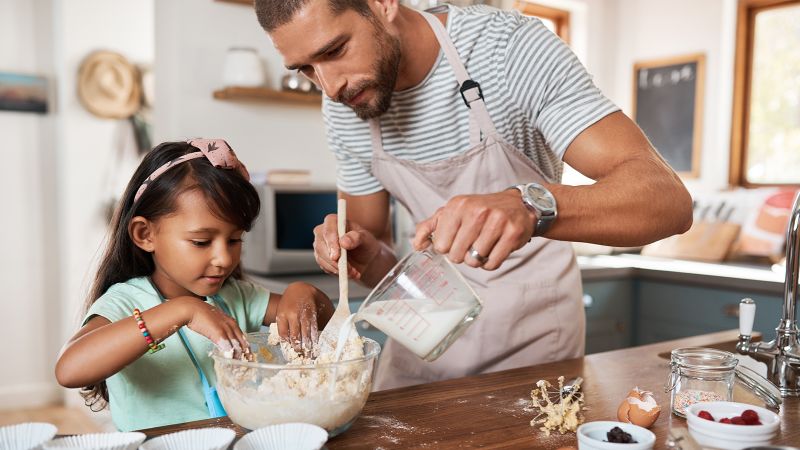
10 tools to get kids cooking with you in the kitchen, recommended by experts

10 tools to get kids cooking with you in the kitchen, recommended by experts

Cooking with kids is a bit like parenting overall: you’re going to need a lot of patience and some creativity, and you never know exactly how it’s going to turn out. Plus, it’s a learning and growing experience — for all concerned.

“If you’re cooking with kids,” says Jessica Battilana, cookbook author and staff editor with King Arthur Baking, “you just have to expect and plan for it to take longer, be messier and more chaotic, and possibly have an outcome that’s different than it would be if you were cooking alone.”

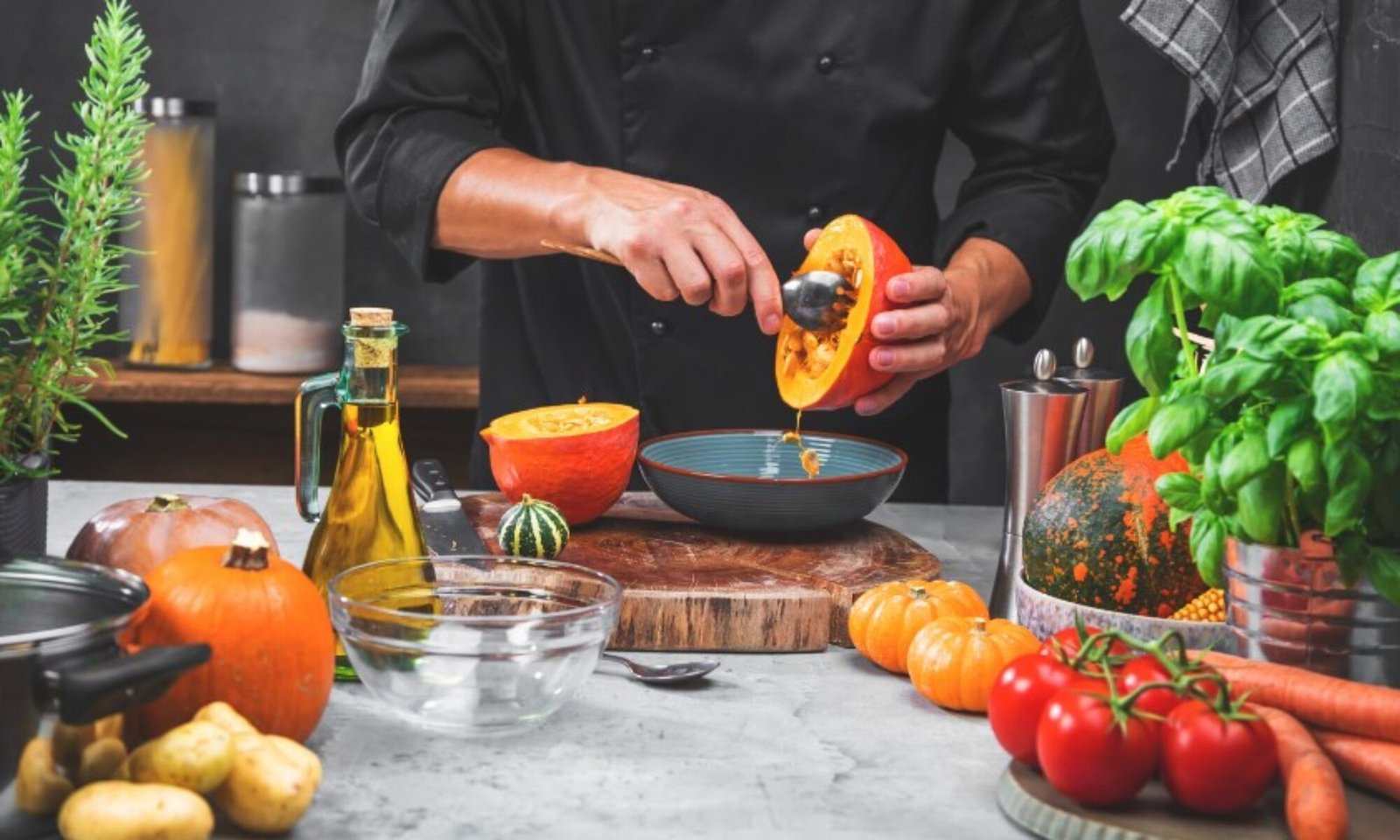
Set new bakers up for success by doing a bit of advance preparation — tasks like laying out ingredients, preheating the oven, or getting your bowls and kitchen tools ready. Battilana then recommends bringing kids in at the “action point,” where they can actively help by chopping or measuring or maybe sneaking a few chocolate chips.

For Melissa Jameson, deputy editorial director at Buzzfeed, breakfast is a good place to start because it’s inexpensive (important if you need to remake a recipe) and there’s “plenty of kid-friendly starter tasks like whisking batter, cracking eggs or layering a yogurt parfait.”

She recommends considering copycat recipes — where you try to remake a dish at home from a restaurant. For Jameson’s six-year-old son, that was Starbucks’ egg bites, easy to recreate with eggs baked in muffin tins.

“Not only is it fun to recreate something you love,” says Jameson, who oversees the food and cooking content for Buzzfeed and Tasty, “but it’s also valuable to teach that we can do it ourselves. Plus, kids are nearly guaranteed to devour the end result.”

The journey to the kitchen could even begin in your living room watching kids’ cooking shows like MasterChef Junior or Is It Cake? as a way to inspire budding young chefs. But don’t jump immediately into the most complicated cakes or dinners. Instead, Jameson suggests smaller tasks like mashing avocados, blending a smoothie or assembling the toppings on an English muffin pizza.

“Cooking and baking together is about being together,” adds Battilana. “The food you make, or you know, later have to compost, is just the cherry on top.”

The food editors we spoke with picked out these 10 useful tools to help get your kids started in the kitchen.

guidecraft classic kitchen helper stool_inline_cnnu.jpeg

Amazon

Give kids a leg up with the Guidecraft Classic Kitchen Helper Stool. It has an adjustable platform (either 15 inches or 18 inches off the ground) and folds up so it can be stored when it’s not in use.

“Get [kids] on your level so they can fully see, touch and feel like they’re a part of the process,” says Jameson. A helper stool (sometimes called a toddler tower) lets toddlers reach a counter, with guards to keep them from falling before they’re ready to use a step stool or are tall enough to stand on the floor.
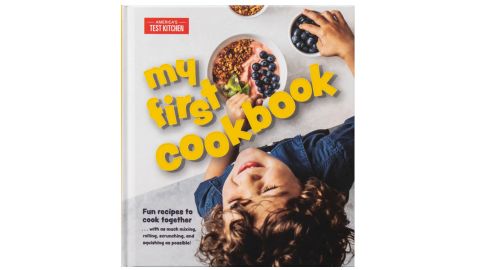
my first cookbook by americas test kitchen kids

Amazon

Let your kids decide what they want to make with My First Cookbook by America’s Test Kitchen Kids. The hardcover book (note: easier to wipe off spills) with more than 60 recipes breaks snacks and meals into steps with clear photos and directions. Jameson appreciates the “approachable, kid-friendly recipes,” because “each one is photographed in an eye-catching, step-by-step way so smaller cooks can visually follow along — or even flip through on their own to find their next project.”

oxo good grips mixing bowl set_inline_cnn

Amazon

With non-skid bases and wide pour spouts, the OXO Good Grips Mixing Bowl Set deserves a spot in your kitchen drawers. With sizes ranging from 1.5-quart to 5-quart, you and your helper can whip up a little bit of whipped cream or a family-size batch of pancakes. The small bowl is easier for smaller hands to grip while the big bowl can hold popcorn on movie night.
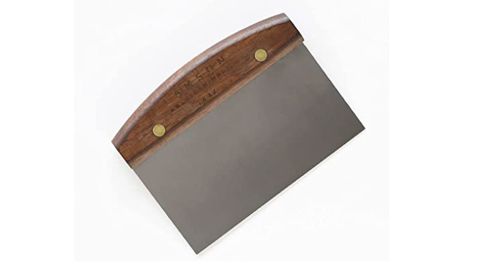
lamson stainless steel dough scraper_inline_cnnu

Amazon

The Lamson Stainless Steel Dough Scraper is a baker’s friend, functioning as a knife and cleaning tool. With a walnut handle that’s easy to hold and a wide blade (that’s less sharp than the other knives in your drawer), it’s also a great tool for kids. Battilana notes that “bench knives are great for a whole variety of tasks, from transferring ingredients to a bowl, to cutting biscuits or scones, to cleaning your work surface.”

ateco offset spatula_inline_cnnu

Amazon

The Ateco Offset Spatula is a must-have if you’re going to venture into the word of decorating cakes. The rounded, nearly 8-inch blade helps create even edges and smooth icing, while the narrow wooden handle fits in a child’s grip. It also can be used to spread jelly on sandwiches, lather cream cheese on bagels at brunch, and flip tofu on a baking sheet.

opinel le petit chef 3-piece kitchen set_inline_cnnu

Amazon

Battilana recommends the Opinel Le Petit Chef set because she believes in giving kids “real tools for real jobs.” The knife with a rounded tip and the y-shaped peeler, with guards that fit around a single finger, have beechwood handles designed for a kid’s hand. The included finger guard is a great way to show kids proper technique while protecting their hands.

“It’s wonderful because the knife and finger guard and peeler are scaled for small hands, but in every way it’s similar to the knife I use,” adds Battilana.

oxo good grips silicone baking cups set of 12

Amazon

The bright colors of the silicone baking cups from OXO will appeal to kids and Jameson likes them because the “grip tabs on each make them easy for kids’ hands to maneuver.” She uses them for muffins, cupcakes and egg bites. The non-stick cups are reusable, turn inside out for quick cleaning, and have a fill line to ensure your cupcakes are even.
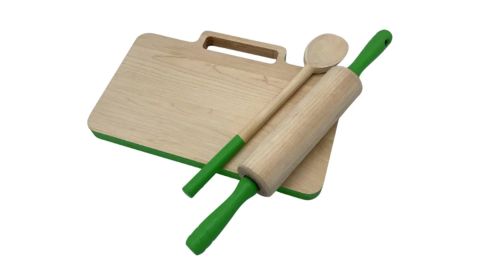
jk adams childrens baking set_inline_cnnu

Nordstrom

Kids can roll out dough, chop vegetables, and taste soup with the JK Adams Children’s Baking Set. Battilina recommends this set, which comes with a maple rolling pin, cutting board and spoon. By giving your kids a dedicated collection of their own tools, you can teach them about how to prep, cook and clean up after dinner.

ove glove oven mitt_inline_cnnu

Amazon

The Ove Glove Oven Mitt is how you can get your kids comfortable with handling hot pans out of the oven and boiling pots of water on the stove. The kevlar glove can be used as an adult’s grill gloves, but can also be used by kids in the kitchen, as the silicon grips and articulated fingers work better for smaller hands than a standard oven mitt. The gloves are rated to handle heated pans up to 540 degrees Fahrenheit.

zulay milk frother_inline_cnnu

Amazon

The Zulay Milk Frother is an inexpensive dynamo. While it can be used to add body and lightness to an afternoon chai latte, it’s also an easy way to whip up a personal batch of whipped cream for a treat after dinner. With a wide range of colors and simple operation (you depress a button at the top of the frother), this is a nifty little tool that kids will enjoy using.

Pollination loss removes healthy foods from global diets, increases chronic diseases causing excess deaths — ScienceDaily

Pollination loss removes healthy foods from global diets, increases chronic diseases causing excess deaths — ScienceDaily

Insufficient pollination has led to a 3-5{d2b09b03d44633acb673e8080360919f91e60962656af8ade0305d5d8b7e4889} decline of fruit, vegetable, and nut manufacturing and an estimated 427,000 surplus fatalities on a yearly basis from misplaced healthier meals usage and related illnesses, together with coronary heart sickness, stroke, diabetic issues, and certain cancers, in accordance to investigation led by Harvard T.H. Chan College of Public Health. It is the very first examine to quantify the human health and fitness toll of inadequate wild (animal) pollinators on human wellness.

“A critical lacking piece in the biodiversity dialogue has been a deficiency of immediate linkages to human health. This research establishes that decline of pollinators is previously impacting health on a scale with other world wide wellbeing risk elements, this kind of as prostate cancer or substance use conditions,” stated Samuel Myers, principal investigate scientist, planetary health, Division of Environmental Well being and senior creator of the analyze.

The review will be printed December 14, 2022 in Environmental Well being Perspectives.

Expanding human force on pure programs is leading to alarming losses in biodiversity, the topic of the COP 15 UN Biodiversity Meeting now having area in Montreal. This consists of 1-2{d2b09b03d44633acb673e8080360919f91e60962656af8ade0305d5d8b7e4889} yearly declines of insect populations, primary some to warn of an impending “insect apocalypse” in the coming many years. Vital between insect species are pollinators, which improve yields of three-fourths of crop kinds and are significant to expanding balanced meals like fruits, greens, and nuts. Changes in land-use, use of dangerous pesticides, and advancing weather adjust threaten wild pollinators, imperiling human supply of healthier food items.

The researchers employed a model framework, which integrated empirical evidence from a network of hundreds of experimental farms throughout Asia, Africa, Europe and Latin The united states, that appeared at “pollinator produce gaps” for the most essential pollinator-dependent crops, to clearly show how a great deal crop loss was because of to insufficient pollination. They then employed a world-wide threat-disorder product to estimate the wellbeing impacts the variations in pollination could have on dietary dangers and mortality by place. Additionally, they calculated the decline of economic price from lost pollination in a few case analyze countries.

The results confirmed that dropped foods manufacturing was concentrated in reduce-profits nations around the world but that the health and fitness burden was larger in middle- and increased-earnings nations around the world, exactly where charges of non-communicable conditions are greater. The geographic distribution was fairly unconventional in that typically the wellbeing consequences from international environmental adjust are centered amid the poorest populations in areas such as South Asia and Sub-Saharan Africa. Right here, center-money nations around the world with big populations — China, India, Indonesia, and Russia — suffered the biggest burden.

The examination also showed that lower-income international locations dropped sizeable agricultural income thanks to inadequate pollination and decreased yields, probably 10-30{d2b09b03d44633acb673e8080360919f91e60962656af8ade0305d5d8b7e4889} of complete agricultural price.

“The results might feel surprising, but they mirror the complex dynamics of elements guiding meals systems and human populations close to the earth. Only with this form of interdisciplinary modeling can we get a better correct on the magnitude and impression of the trouble,” explained co-creator Timothy Sulser, senior scientist, Global Foods Coverage Analysis Institute.

Tactics to secure wild pollinators are not just an environmental challenge, but a overall health and financial one particular as very well. “This review reveals that accomplishing far too minimal to enable pollinators does not just hurt mother nature, but human wellness as very well,” said direct writer Matthew Smith, study scientist, Division of Environmental Health.

Guidance for the study was provided by grants from the Gordon & Betty Moore Foundation, Weston Meals Inc., Fifth Technology Inc., and the CGIAR Research Method on Insurance policies, Establishments, and Markets.

A taste of home: Park woman shares French culture through food

A taste of home: Park woman shares French culture through food

Photos courtesy of Gerard and Belevender
Marie Wallace is in her happy place making crêpes at The French Cow, a fixture at Eastern Market.

The reason Marie Wallace came to the United States from France and a big reason she remains are about as far apart as her home country and current residence.
“I was 23 and a big Eminem fan,” Wallace recalled. “I loved hip-hop and Eminem. I wanted to write a screenplay; I’m a screenwriter. My dream was to come to Detroit, meet Eminem, give him my screenplay and he would produce it.”
Though she came close — she met Eminem’s manager, Paul Rosenberg, multiple times and, as a singer, worked with Luis Resto, who co-produced the rapper’s Oscar-winning “Lose Yourself,” from the film “Eight Mile” — she has yet to meet the man himself and her screenplay was turned down.
But the rejection turned out to be a blessing in disguise. Wallace at the time was starting a business that has since become a popular Eastern Market destination.
“I’m very passionate about French food, about food in general,” she explained. “I was disappointed when I tasted crêpes here. They’re not the quality I was used to (in France). I had crêpes all the time with my family; we made crêpes constantly.”
In 2008, Wallace mentioned to her husband she’d like to start a crêpe business, but the timing wasn’t right as she was busy raising their two sons.
“Then Good Girls Go to Paris Crêpes opened in Detroit,” she said. “It broke my heart. It was very popular and it got big. People were lining up for crêpes.
“… When I got my divorce, I took my kids there and they said, ‘You should make your own,’” she added.
That’s exactly what she did. Using her own crêpe recipe and with her mother’s help, Wallace set about creating The French Cow crêpes shop.
“I started at Coffee & … on Jefferson and Chalmers,” she said. “I was scared. I didn’t know if people would like it.”
She voiced her concerns to the cafe owner, who encouraged Wallace to give it a try.
“She kept saying, ‘Just do it,’” Wallace recalled. “So each month, I had a pop-up there.”
Though she had some success, the shop wasn’t enough to support her, so she landed a job at Selden Standard in Detroit, which helped her learn more about the industry.
“They hired me knowing I was starting my own company,” she said. “I studied a lot there. I learned about kitchen service. I learned the ropes through Selden. Two years later, I started at Eastern Market.”
Wallace said some customers were skeptical at first. Her savory crêpes, for instance, are made with buckwheat flour, so they come out darker.
“But that’s how we make them in France,” she explained. “Black is for savory, white is for sweet. Little by little, they began tasting them. They say, ‘This is how they’re done in France? OK, let’s try it.’
“Now people are there before we even open, every time,” she continued. “We sell 200 to 350 crêpes, which is a lot. Now I have employees, two to four during the season. I started with just my mother.”
The French Cow currently is a fixture at Eastern Market on Saturdays, though during summer months, hungry patrons can find the shop there three days a week. The French Cow also handles catering requests.
“Anything where we can sell crêpes we are doing,” Wallace said. “I also make baguette sandwiches and sell them at Milwaukee Cafe near New Center.”
Among The French Cow’s most popular savory crêpes are the Pigalle and the Big Mack.
“The Pigalle is inspired from the Red District of Paris,” Wallace said. “It’s delicious, but also a little bit dirty. It’s Swiss cheese, ham, caramelized onions, then I make a homemade cilantro-garlic sauce I put on top.
“The Big Mack has corned beef,” she added. “I named it after a customer who’s Irish, named Cormack. The crêpes have some very strange names because they’re named after things in my life, like The Wallace Boys — Nutella, bananas and walnuts — is named after my sons.”
Another popular sweet crêpe is Jessica’s Secret, featuring homemade rhubarb jam, strawberries and ricotta. But don’t expect to find this tasty treat at the shop during winter.
“I try to do everything seasonal and strawberries are not in season now,” Wallace said. “I use the freshest ingredients. The market is an amazing place to find fresh ingredients all year round. So many people don’t know that Eastern Market is open all year. It’s one of the only cities in the United States that has that.”
Wallace currently is compiling a cookbook, “with crêpes and other things, picturing the authentic French way of living,” she said.
“I feel like sometimes Americans are infatuated (with France) for the wrong reason,” Wallace said. “They fall in love with Paris because of the Eiffel Tower, because it’s so romantic. They don’t dig deep into what the culture really is, of what the feeling of sharing food really is. It’s not that they don’t want to, but now I’m forcing them to. If I ever open a shop, it will be a real culture shock for them, because I will keep it authentic.
“I would love to have my own place in Grosse Pointe Park,” she added. “I would love it to have a Parisian feel where people can walk to it.”

Grosse Pointe Park resident Marie Wallace brings an athentic Parisian food experience to Eastern Market with sweet and savory crêpes inspired by her hometown.

Wallace said making crêpes helps her express her creative side, which knows no limits.
“I’m also a trained actor and screenwriter and a singer,” she said. “I love to decorate. I feel like crêpes may seem odd, but I create a lot when I’m coming up with a menu or decorating the booth creatively at the market. I am a content creator and a constant creator.”
Wallace put her creativity to use during the pandemic by writing the screenplay, “13 Weeks,” for which she is trying to get representation.
“It’s about two people who start a conversation during the pandemic, apart from each other, in different cities,” she said of the romance.
When she’s not peddling crêpes, Wallace, who has lived in Grosse Pointe Park since 2016, enjoys spending time with her two boys, ages 12 and 14, both students at Pierce Middle School.
Learn more about The French Cow on Instagram @thefrenchcow, on Facebook at The French Cow crêpes, by visiting thefrenchcowcrepesshop.net or emailing thefrenchcowcrepes@gmail.com

Vegan Peppermint Chocolate Recipe – Brit + Co

Vegan Peppermint Chocolate Recipe – Brit + Co

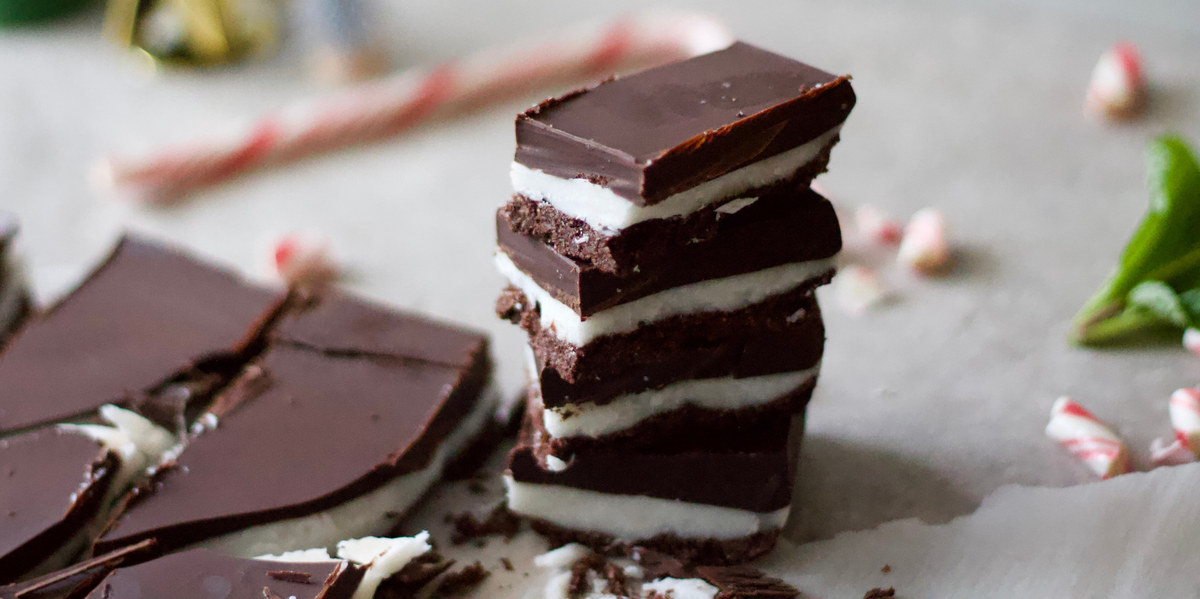
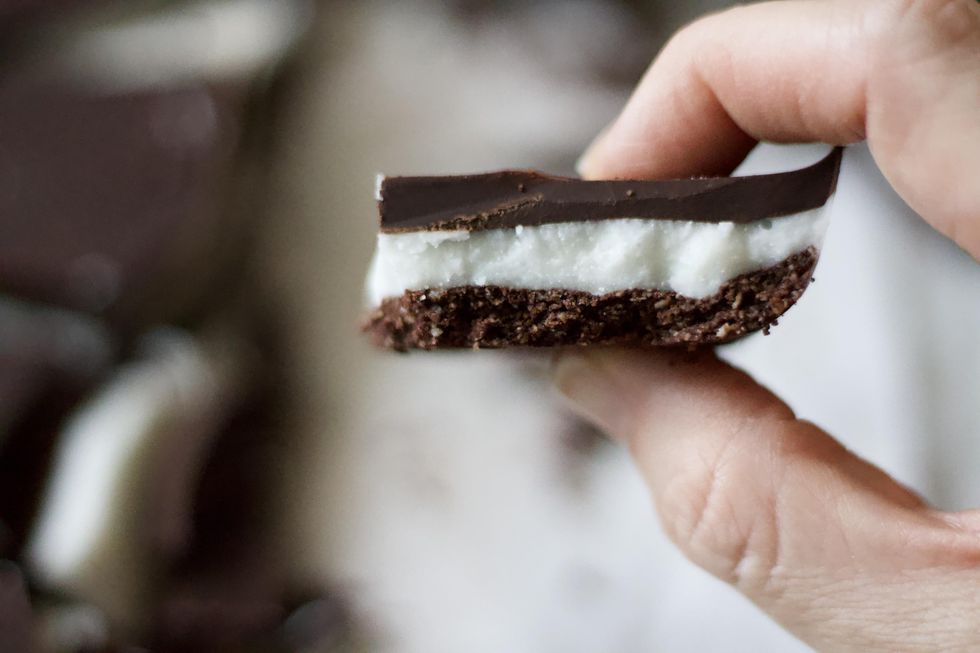
Peppermint and chocolate undoubtedly make the perfect pair for the holiday season. It’s the rich, sweet flavor found in our fave seasonal Starbucks mocha order, the sweet scents of Christmas candles and what completes this delicious peppermint dessert for the wintertime. This vegan peppermint chocolate recipe is a prime choice for homemade candy when celebrating with friends and family this time of year. A light crust with thick peppermint-infused filling topped with a decadent layer of dark vegan chocolate will keep everyone going back for more and more. It’s super quick to make and can be stored in the fridge for a while for easy access. Make this treat with a seasonal cocktail in hand, and let’s get to snacking!


What You Need To Make Vegan Peppermint Chocolate

Vegan Peppermint Chocolate recipe for the holidays and Christmas

For the crust:

  • 1 cup almond flour
  • 1/4 cup cocoa powder
  • 1/4 teaspoon pink salt
  • 2 tablespoons melted coconut oil
  • 2 tablespoons maple syrup

For the peppermint filling:

  • 1 cup coconut butter
  • 1 cup coconut oil
  • 1/4 cup maple syrup
  • 1 teaspoon peppermint extract

For the dark chocolate topping:

  • 9 ounces vegan dark chocolate chips (about 2 cups)
  • 1 tablespoon coconut oil

How To Make Vegan Peppermint Chocolate

Vegan peppermint chocolate recipe for the holidays and christmas

  1. Preheat the oven to 350 degrees F. Line an 8×8 inch baking dish with parchment paper and set aside.
  2. Start with the crust. In a small mixing bowl, add in the almond flour, cocoa powder, and salt and mix until it looks uniform. Stir in the melted coconut oil and maple syrup until the batter comes together. Using your hands, gently spread the crust over the top of the parchment paper in the baking dish, going all the way to the edges. If the crust is sticking, use a bit of water on your hands to help spread it evenly. Bake the crust in the oven for 15 minutes. Remove it from the oven and let it cool completely.
  3. While the crust is baking, mix together the peppermint filling ingredients in a separate mixing bowl. If the coconut butter is hard and flaky, melt it gently over low heat in a small saucepan until just melted, then combine it with the remaining ingredients. It should come together easily but not be overly drippy or with too many lumps in it. Pour the peppermint filling over the completely cooled crust, then place the entire dish in the freezer to set (about 10-15 minutes).
  4. Next, melt the chocolate chips and coconut oil in a saucepan or pot over low heat until just melted. Remove the dish from the freezer and top the peppermint filling with the dark chocolate, then place back in the freezer to set the topping, for about 20 minutes.
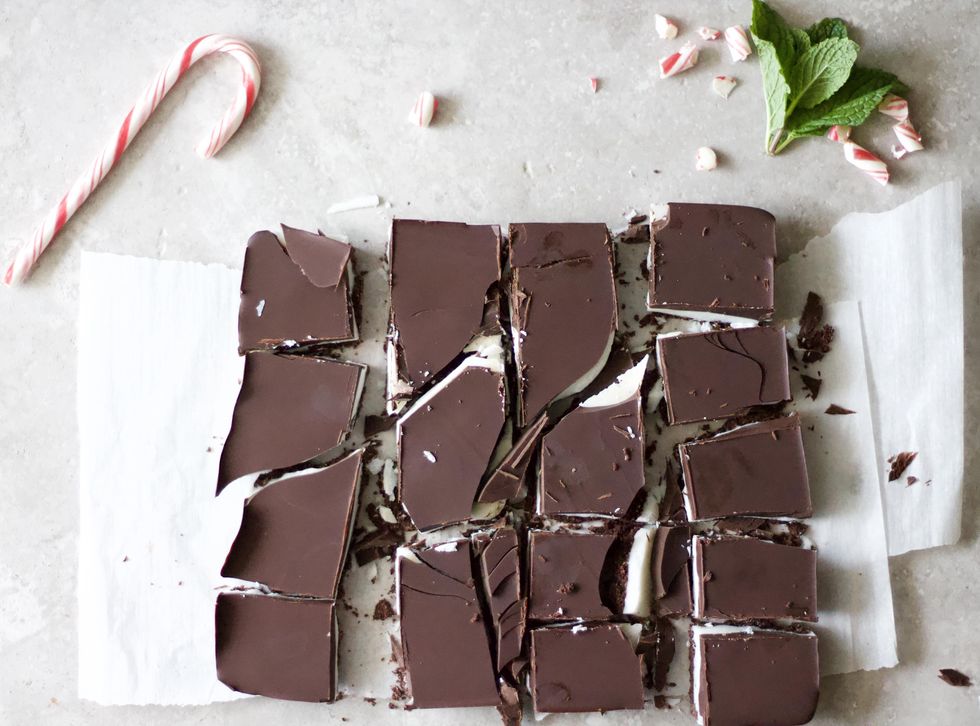
  5. Cut the bars into 16 pieces and serve immediately. They should be stored in the freezer or refrigerator for the best results. If the bars are very hard, run sharp knife under hot water for 30 seconds, dry it off, then cut the bars.

Recipe development and photography by Sarah Anderson.

Sign up for our newsletter for more spectacular holiday recipe ideas!

Tips for overcoming age-related cooking challenges

Tips for overcoming age-related cooking challenges

Cooking at home is a mood-booster, exercises muscles and the mind, and can help us maintain a healthy diet, especially as we age.

But with age-related medical conditions come new challenges in the kitchen. People with dementia or memory loss may worry about forgetting the roast they put in the oven.

Perhaps the meals you used to prepare for a family of five no longer make sense for a solo diner.

Arthritis, lost muscle mass, decreased height, and vision problems can all affect how you cook.Here are some tips to get the most out of home cooking.

Consider what you’re cooking

Research shows that people who cook for themselves eat out less often and consume less fast food, said Julia Wolfson, an associate professor at Johns Hopkins Bloomberg School of Public Health who studies food systems and food policy.

That can be especially important for older adults, whose metabolism has slowed and who may be at risk for type 2 diabetes, high blood pressure, or high cholesterol — all medical conditions that are influenced by diet.

But, Wolfson said, “Just purely the act of cooking itself does not equal healthy eating.”

Get the most out of home cooking by planning meals that balance protein and high-fiber vegetables with fat and carbs. Think about portion sizes, and the amount of salt and sugar you use.

For instance, packaged spice blends often contain lots of salt. Making your own spice blend may be one way to cut down on salt and amp up flavor.

Stock the freezer

In a 2020 study, Wolfson and her former colleagues at the University of Michigan found that older adults were more likely than the general adult population to cook for themselves at home.

But people’s relationship with food can change as they go through different life stages, such as children moving out or the death of a spouse.

Preparing and eating a favorite meal associated with fond memories can be comforting. Make the meal you love, then freeze leftovers in individual-serving packages, rather than in one large container. You’ll have dinner for the future and reduce the amount of time you have to spend cooking.

Load the slow cooker

Slow cooker meals are perfect for people who may have balance or strength issues that limit their ability to cook on the stove. Bending and lifting to use the oven can also become challenging with age.

Slow cookers sit on the counter, are designed to be left on all day and are a good way to prepare larger meals that can be frozen, said Heath Jones, an occupational therapist with Wesley Enhanced Living Main Line, a senior living center in Media, Delaware County.

Eliminate access issues

Put everything you use most frequently in easy-to-reach spots, Jones suggested.Plates and cups don’t have to live in high-up cabinets. Leave them on the counter.

Reorganize the refrigerator so that the items you need are within easy reach, without needing to bend down or dig to the back of the fridge. And when it’s time to replace your fridge, consider one with the freezer on the bottom or side, rather than on top.

Simplify cleanup

Disposable kitchen items, such as paper plates and aluminum pans, can make the difference between eating a healthy home-cooked meal or turning to processed foods.

Too environmentally conscious to stock up on foil baking pans, paper plates and plastic utensils? Line baking sheets with aluminum foil to avoid baked-on food that’s hard to scrub off.

Try single-pan meals to at least reduce the number of dirty dishes.

5 Longevity-Boosting Blue Zones Recipes

5 Longevity-Boosting Blue Zones Recipes
The wait is finally over, and the one item your holiday wishlist has been missing has finally hit the (book) shelves. Dan Buettner, the New York Times bestselling author of titles like The Blue Zones Kitchen and The Blue Zones and a National Geographic Fellow, has released his latest (and potentially greatest) book yet, The Blue Zones American Kitchen: 100 Recipes to Live to 100. And we couldn’t be more excited to share the news.

Buettner, who has closely studied the hotspots that are home to the longest-living people in the world, focuses on reconstructing a largely-forgotten American diet that closely resembles the dietary patterns found in the Blue Zones in this new release. “For the book, I’ve exhumed more than 60 oral histories, scientific reports, and academic papers to reconstruct four traditional American diets from the early 20th century,” Buettner says. “The scope of the work is ethnically and racially diverse—it precisely captures the diets of Mexican Americans, Asian Americans, African Americans, as well as Native Americans.”

The book is comprised of more than 100 plant-based recipes that, according to Buettner, “showcase the ingenuity of our Indigenous people and our immigrants who brought their time-honored cooking techniques from the Old World and blended New World ingredients to produce ingenious food that just may help you live to 100.” He also notes that the data-driven representation of what Americans were really eating a century ago closely represented what was found in his original Blue Zones research.

To get an inside glimpse into the book, Buettner kindly has shared a few of his favorite five-ingredient (or less) recipes so you can get cooking right away. And they’re filled with longevity-boosting ingredients to nourish your body with the same type of nutrient-rich foods found in the Blue Zones, where people live well into their 100s.

5 longevity-boosting recipes from The Blue Zones American Kitchen

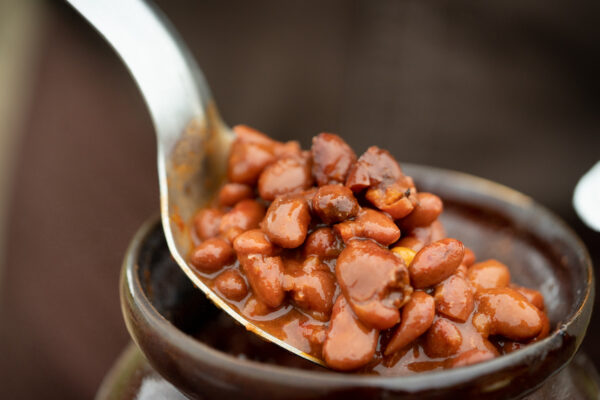
blue zones American kitchen beans
Photo: David McLain

Mohawk Baked Beans

Recipe by Dave Smoke McCluskey
Yields 6-8 servings

Ingredients
2 pounds dried cranberry beans
1 large onion, diced
1/4 cup darkest maple syrup
2 Tsp tomato paste
2 Tbsp yellow mustard
Salt
Freshly ground black pepper

1. Place the beans in a large pot and cover them with cold water. Soak them overnight. Drain.

2. Put the beans in a Dutch oven or oven-safe pot and cover them with water. Bring them to a boil over medium-high heat, then reduce the heat to low and simmer for 1 to 1 1/2 hours, until the beans are al dente.

3. Once the beans are al dente, add the onion, maple syrup, tomato paste, and mustard. Put them in the oven and set the oven to 225°F. Let the beans cook 8 hours or overnight, checking occasionally and adding water if needed. Season with salt and pepper to taste. Serve hot.

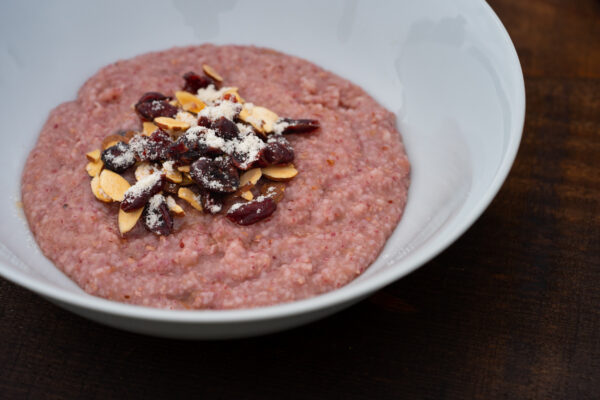
blue zones American kitchen mash
Photo: David McLain

Warriors of the Rainbow Cranberry Mush

Recipe by Dave Smoke McCluskey
Yields 6 servings

Ingredients
4 cups water
4 cups almond milk
1 pound fresh cranberries or 1/2 pound dried cranberries
3 cups hominy grits
1 cup maple syrup, or to taste
Optional toppings: pumpkin seeds, pecans, dried cherries, or maple sugar

1. In a large pot, combine the water, almond milk, and cranberries and bring to a boil over high heat.

2. Reduce the heat to medium-low, stir in the grits, and let simmer for 45 to 60 minutes, stirring occasionally, until the grits have absorbed the liquid and are very tender.

3. Stir in the maple syrup and serve hot with desired toppings, if using.

blue zones American kitchen coconut rice
Photo: David McLain

Coconut Rice

Recipe by Nicole Marquis
Yields 6 servings

Ingredients
2 Tbsp dried coconut shreds
3 cups long-grain rice
2 cans unsweetened coconut milk
2 1/2 cups water
2 Tsp cane sugar

1. In a small sauté pan over medium-low heat, sauté the dried coconut until golden brown throughout. Set aside.

2. In a rice cooker, combine the rice, coconut milk, water, and sugar. Cover and turn on the rice cooker. (Alternatively, cook the rice in a covered pot.)

3. Once the rice is cooked, fold in the toasted coconut.

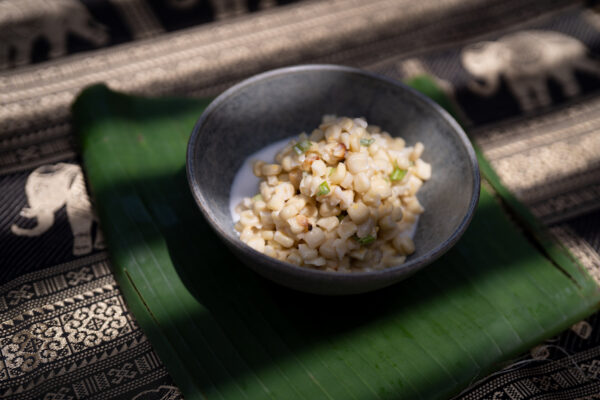
blue zones American kitchen corn
Photo: David McLain

Cambodian Coconut Corn

Recipe by Chad Phuong
Yields 3 servings

Ingredients
2 cups fresh corn kernels
1/2 cup unsweetened coconut milk
1/3 cup sugar
1/2 Tsp salt
1/4 cup chives, chopped

1. Preheat the oven to 350°F. Spread the corn kernels in a baking dish in an even layer and roast them in the oven for 10 minutes.

2. Meanwhile, in a small saucepan, bring the coconut milk to a boil.

3. Add the sugar and salt and reduce the heat to low. Simmer for 5 minutes.

4. Add the chives and simmer for 1 minute more.

5. Pour the coconut milk mixture over the corn kernels and return the dish to the oven to bake for about 5 minutes, until lightly brown on top.

blue zones American kitchen succotash
Photo: David McLain

1620s Plymouth Succotash

Recipe by Paula Marcoux
Yields 5 servings

Ingredients
2 pounds cooked, hulled corn (or reconstituted dry whole hominy, frozen hominy, or pozole)
8 ounces dried cranberry beans (or Jacob’s cattle beans or other similar beans), soaked and cooked until just tender
Salt

Optional add-ins:
2 turnips, peeled and chopped
2 carrots, peeled and chopped
1 acorn squash or other winter squash, seeded and sliced
Few handfuls of chopped cabbage, collards, or turnip greens
2 leeks or onions, sliced
Few handfuls of chopped lettuce, spinach, endive, chicory, or arugula (or a combination)
Tender strawberry or violet leaves
1 cup ground walnuts, chestnuts, or hazelnuts
Freshly ground black pepper
Few chives or scallions, chopped
Calendula petals
Fresh mint or parsley

1. In a large soup pot, stir together the corn, beans, and salt.

2. Add the optional turnips, carrots, squash, cabbage or other winter greens, and leeks or onions, and simmer until they are almost tender, about 10 minutes. (Add oil, if needed.)

3. When the above are nearing tenderness, add the leafy greens (lettuce, spinach, endive, chicory, or arugula), strawberry or violet leaves, ground nuts, and pepper, and simmer for a few minutes more.

4. Stir in the chives or scallions, calendula petals, and mint or parsley.

An herbalist shares her brain-boosting herbal shot for longevity:


Our editors independently select these products. Making a purchase through our links may earn Well+Good a commission.