Parenting advice from Care and Feeding.

Parenting advice from Care and Feeding.

Care and Feeding is Slate’s parenting advice column. Have a question for Care and Feeding? Submit it here or post it in the Slate Parenting Facebook group.

Dear Care and Feeding,

My husband and I taught our children about eating healthily, but we’ve never tried to demonize any foods, focusing on how anything can be healthy if eaten in moderation. We don’t tend to keep a lot of sweets in our house. I’m an immigrant from a country noted for its sweets, but diabetes runs in both my husband’s and my own family, so we keep such things to a minimum.

Recently, my daughter fell ill and had to stay at home for a few days. She had a high fever and was bedridden. I work from home, so I was checking up on her whenever I had free time. While I was bringing her lunch up to her room, I saw her eating chocolate. I was curious as to where the chocolate came from, and I eventually discovered that she had chocolate everywhere in her room. There were chocolate and candy wrappers in her sock drawer and under her bed, and in her glasses case, in her tablet case, and everywhere else.

When I found this, she broke down crying. She said that her brother was getting paid by our neighbor to feed and walk her dog whenever she left town. He was using the money from his raise to buy candy and chocolate every week. When my daughter found the candy, she asked for a bribe to keep quiet.

I have no idea how to proceed now. We said that we weren’t happy that they were eating this much chocolate, but we were much more upset that they were trying to hide it. I don’t want to become authoritarian and check up on their rooms at random times to make sure they aren’t sneaking chocolate, but the fact that they’re sneaking chocolates at all is a bad sign, right? How should we proceed?

— Stopping the Chocolate

Dear Stopping the Chocolate,

Your impulse to avoid the “good food-bad food” dichotomy and teach that all food can be enjoyed in moderation is right on, according to nutritionists. But it seems like you sent your kids a different message when it comes to sweets. And by restricting them, you may have made them seem even more appealing. The research in fact shows that restricting a particular food leads instead to increased consumption of that food whenever kids can get it.

And let’s be real—sugar consumption alone is not a cause of diabetes, and having sweets from time to time is unlikely to lead your otherwise healthy kids to develop it. In fact, even people with diabetes are able to have sweets in moderation.

So rather than “stopping the chocolate,” I’d start incorporating sweets into the family diet, like offering a serving of dessert at dinner or including them as an option in scheduled snack times. Let your kids know that they do not have to hide to eat sweets or keep it a secret. It might make you feel uncomfortable, but you have to treat these foods neutrally and avoid managing your children’s portions or making comments or reacting nonverbally to their consumption of them. This will take the power away from sweets and teach your kids to regard them as they would any other food.

Most of all, remain calm and don’t shame your kids for what you found. The last thing you want is for your kids to associate any kind of food with shame or punishment. This may all feel counterintuitive given what society teaches us about food and health, but as you saw firsthand, restricting food simply does not work and in fact has the opposite of its intended result. If you truly want to teach moderation, you have to start by removing the value judgments from food.

Want Advice From Care and Feeding?

Submit your questions about parenting and family life here. It’s anonymous! (Questions may be edited for publication.)

Dear Care and Feeding,

I have three kids—an 8-year-old and 6-year-old twins. Their father is my ex-husband, who abandoned them after we divorced in 2020. The last the kids saw him was at his wedding to a woman who made it clear she wouldn’t be their stepmother. He’s since left the state, and it’s a struggle to get child support. I didn’t have family left when we married, and I became very close to my ex-husband’s family.

During and after the divorce, my ex-husband’s parents and sisters all took my side. None of them attended his wedding, causing a major argument, and now none of them talk to him.

I’m struggling a lot as a single mother. My kids fight all the time. I’m stretched financially. All three of my kids need glasses. One of my kids has a condition that causes her to need regular physical therapy. Knowing that I’m stretched pretty thin, my in-laws often help me out. They subsidize our apartment, and they help with childcare, and all the healthcare costs. They’ve basically adopted me into the family.

I feel so guilty, because I know that without their generosity I wouldn’t be able to afford any of this. I’ve been able to enjoy my divorced life only because of my ex-husband’s family. I can’t ever think of a way to repay them. When I brought up my feelings of endless gratitude to my sister in-laws, they told me I am their sister and I never need to repay them, and I’m sure my mother and father in-law would say the same thing if I asked. How can I stop beating myself up over this?

— Overwhelmed By Help

Dear Overwhelmed By Help,

Asking for and accepting help can be a very vulnerable thing to do, especially for those of us with the internalized belief that our needs are a burden on others. But one single mom to another: learning to do so is, in my experience, the only way to make it work. Now I accept help from everybody: family, friends, other moms in the neighborhood, people who look nice enough on the bus (jk on that last one). I try to trust that others will not offer help they don’t want to or can’t afford to give.

When I told a friend I was struggling to manage the household laundry, and she sent over a hefty gift card for a wash-and-fold with home delivery, I felt guilty. But it helped me to think about how I would feel (and want her to feel) if the roles were reversed. I hope anyone I love would know that I am there and ready to support them if they need anything.

I’ll take it a step farther and say: When someone asks me for help, I truly feel that they are giving me a gift because they are allowing me to be of service to someone I love. It makes people feel good to help! When you allow your in-laws to help you, you are giving them something as well, and you are deepening your relationship and connection. Generosity is a two-way street.

And while you are currently the one in need, that may not always be the case. When the time comes for you to show up for them as they have for you, you’ll be ready to do so. In the meantime, look for little ways to reciprocate, even if it’s as small as washing a dish or sending a loving note.

It’s incredible that your ex’s family shows up for you and your kids in this way, so try to redirect your guilty feelings back to your deep feelings of gratitude and simply thank them and the universe for helping to provide for you. And remember: You and your children are more than worthy of this help.

Dear Care and Feeding,

I don’t have any children of my own, but I’m the honorary aunt to my friend’s awesome daughter, Gabby. She just turned 9, and I’m probably biased, but she’s remarkably curious, social, and empathetic for her age. Her parents emigrated here in their teens, and English is not their first language, so occasionally they’ll ask me for help with answering complicated questions she poses that they aren’t quite sure how to explain in English.

Recently, I’ve noticed Gabby’s questions are becoming more anxious. She’s asked me about car accidents, animal attacks, and some scars I have from various surgeries. Each time, it seems like she’s trying to figure out what somebody did that caused it, or what she can do to prevent it. Her mom told me that after she heard about a school shooting, Gabby asked if the children were bad or misbehaving, and was worried that someone would come to school and shoot her if she was “bad.”

When Gabby asks me these kinds of questions, how do I balance explaining that sometimes bad things just happen, and it’s not your fault, but also, there are things you can do to protect yourself, like wearing a seatbelt, or not feeding wild animals? How do you teach kids that sometimes the world is a scary place, but that doesn’t mean you have to live being scared of everything?

— Sometimes I’m Scared Too

Dear Sometimes I’m Scared Too,

These are super tough topics to tackle and while I’m sure you’re an amazing aunt, they may be best handled by Gabby’s parents. Can you touch base with them and let them know what you’ve observed about the nature of Gabby’s questions? Ask them if they feel comfortable with you having these discussions with her, and if so, how they’d like you to handle these big questions. If you feel comfortable doing so and think they’ll be open to hearing it, let them know that you’ve noticed Gabby seeming increasingly anxious. They may want to have her screened for clinical anxiety, which current guidelines recommend doing at age 8 anyway.

If you do continue these conversations with Gabby, you can start by validating her feelings, encouraging her to talk about them, and letting her know that you also feel scared and sad sometimes. Explain scary events in age-appropriate language, and correct her misconceptions, like the idea that school shootings happen if you are bad. Reassure her that she is safe and that her parents are here to protect her. Remind her of the precautions we take to help us stay safe, such as wearing our seat belts in the car. When relevant, you can remind her or go over the plans and procedures in place at home or school to respond to the event. And let her know that these events like school shootings are very rare, and that there is more good in the world than bad.

It’s been recommended a million times, but Mister Rogers’ quote about “looking for the helpers” is a classic for a reason. It reads: “When I was a boy and I would see scary things in the news, my mother would say to me, ‘Look for the helpers. You will always find people who are helping.’ To this day, especially in times of ‘disaster,’ I remember my mother’s words, and I am always comforted by realizing that there are still so many helpers – so many caring people in this world. Talk about the first responders like firemen and EMTs who charge in to help and get scary situations under control. It’s clear each time these words of wisdom go viral that they provide comfort for all of us, kids and adults alike.

Catch Up on Care and Feeding

• If you missed Monday’s column, read it here.
• Discuss this column in the Slate Parenting Facebook group!

Dear Care and Feeding,

My second-grade daughter, “Libby,” has a classmate who regularly exhibits classic “mean girl” behavior. Anna lies, accuses other kids of doing things they haven’t done (like cheating or pushing her), and has even gotten physically pushy with other girls before. I’ve talked to my daughter about how to deal with this classmate, “Anna,” and for the most part, Libby isn’t too bothered by it. She has plenty of other friends and just sort of avoids Anna.

Anna has a birthday party coming up in a couple weeks, and apparently it’s all she’s been talking about. She has a limit of 12 people she can invite, but there are 15 girls in their entire grade, so that leaves out only a few girls. Anna has been very vocal about the party, explicitly telling kids that she’s not inviting them. Libby was a bit upset, but considering she doesn’t really like Anna, she moved on pretty quickly.

Today, Anna told Libby that she is now going to invite her to the party, but only because a couple other girls can’t attend, so now she has room for more. Basically, my kid was Anna’s 12th choice, and she knows she’s only invited because two other friends can’t attend.

I really, really don’t want Libby to go to the party. I feel like if I did, I’d be teaching her that it’s okay to let people treat you like this. But I also don’t want to force her to miss out. Her preference is to go—not because she likes Anna, but because she is social and wants to be with her friends. However, she’s really mature, so I’m confident she wouldn’t put up a fuss if I said no and explained my reasoning.

Any advice?

— Unsure Mama

Dear Unsure Mama,

I want to give Anna and her parents the benefit of the doubt and assume there is a valid reason they capped the guest list at 12, but either way it certainly sounds like Anna is lording the invites over the other girls in the class. Here’s my take on birthday party etiquette: It’s OK to invite just a few people from the class, but if you’re going to invite most of the class, you’ve gotta invite everybody. It’s not fair to exclude just a few people.

But kudos to Libby for not getting involved in the drama and just wanting to scope the party scene. Since it seems as if the whole thing is bothering you more than it is her, I don’t think you should push the issue. You may end up making her feel bad about herself where she didn’t before, and it sounds like her self-esteem is currently pretty solid.

My only real concern is for the (one?) kid in the class who is still not invited to the party. Can you ask Libby for the deets on who is still being excluded and why, and if she knows how that student feels about the situation? Depending on what you find out, the bigger issue at play may be whether Libby wants to attend the party while someone is still actively being excluded, or if that feels like participation in the mean girl culture you both dislike.

—Emily

More Advice From Slate

A distant relative who is close to my age works at a day care center several states away from me. We follow each other on social media, and she frequently shares things that really make me uncomfortable. For example, she often posts pictures or takes Snaps of kids crying in a way that’s shaming them, like “He was hungry, so I gave him a snack” or “She wanted to go outside, but it’s not time.” (Think of the “Why my toddler is crying?” meme, only they’re not her kids.) She and her co-workers also appear to play a game where they hide the head of a decapitated baby doll around the center, in view of the children, in order to scare one another…

Harvard diet may be the standard for living a long and healthy life

Harvard diet may be the standard for living a long and healthy life

You’ve surely heard of the Mediterranean diet plan and the MyPlate strategy, but what about Harvard University’s Healthier Consuming Plate?

Back again in 2011, nutrition industry experts at the Harvard T.H. Chan College of Public Overall health worked together with researchers at Harvard Wellness Publications to compile an taking in program for best well being.

“In phrases of big long-term illnesses like avoidance of cardiovascular disorder, diverse varieties of cancers [and] Sort 2 diabetes, this way of having is going to be beneficial to avoid all those ailments that are popular in The us, and the entire world,” suggests Lilian Cheung, lecturer of nutrition at Harvard’s faculty of public health and fitness.

Now that the subject areas of longevity and healthy ageing are more common than at any time, persons are hunting for far more means to stay more time, and the Harvard eating plan has discovered its way again into the news cycle.

What is the ‘Harvard diet’?

The Harvard diet is really Harvard’s Nutritious Having Plate, and it can be utilised as a guidebook for “making wholesome, balanced foods,” in accordance to “The Nutrition Source,” a segment of Harvard’s website that offers dietary information.

For the food plan, you really should prioritize greens and fruits for 50 percent of every single food and health supplement the other 50 {d2b09b03d44633acb673e8080360919f91e60962656af8ade0305d5d8b7e4889} with whole grains and healthy proteins.

Here is a thorough breakdown of how to set your plate.

1. Vegetables and fruits really should be well known in most meals (1/2 of your plate)

When plating your greens, “aim for colour and selection,” and eat a bit additional veggies than fruits, the researchers recommend.

Continue to keep in brain that for this food plan: “A potato is not a vegetable from a diet stage of view,” states Cheung.

Why? You might inquire. Very well, “potatoes practically behave like a refined carbohydrate. It will increase your blood sugar,” she provides.

Whole fruits are also significant to incorporate to meals, and Cheung particularly endorses achieving for them more than juice.

2. Include in complete grains (1/4 of your plate)

In comparison to the U.S. Division of Agriculture’s MyPlate strategy, the Harvard eating plan specifies the type of grains that you need to take in. The program strongly encourages ingesting whole grains, as opposed to refined grains.

“Complete grains have a great deal extra nutritional vitamins and also phytochemicals and minerals, which is a great deal more healthy for us and will not likely raise [our] blood sugar so quick,” Cheung suggests.

A couple total grains that you need to look at are:

  • Oats
  • Quinoa
  • Barley
  • Full wheat (such as full wheat bread and pasta)
  • Brown rice

3. Get some wholesome protein (1/4 of your plate)

Extra than most diet programs, the Healthy Having Plate dives into which proteins are healthy for you and which you ought to restrict in your food plan.

Some healthier proteins incorporate:

You must purpose to restrict your crimson meat intake, and fully stay away from processed meats like bacon and sausage if you can, according to Cheung.

4. Cook dinner with nutritious oils (in moderation)

In buy to stay clear of consuming harmful trans fats, you might be advised to not cook with partly hydrogenated oils like margarine and specific vegetable oils.

As a substitute, Cheung recommends reaching for healthier possibilities like:

  • Olive
  • Canola
  • Soy
  • Corn
  • Sunflower
  • Peanut (until you might be allergic)

5. Go for drinking water, tea and coffee in excess of milk

“We were being seriously deliberate in terms of the drinks,” states Cheung. For several years, it was encouraged that persons really should consume a few cups of milk just about every day, she provides.

“We failed to think that it was the most prudent way to go about it, primarily mainly because there are some populations in the U.S. that are lactose intolerant,” says Cheung.

“Even with just the amount of money of calories from ingesting [milk] that way, it would be much more preferable to be consuming h2o, tea or espresso.”

The Harvard diet encourages you to alternate among water, tea and coffee to pair with your meals, specially with minor to no sugar.

On top of that, they propose reducing milk and dairy usage to one to two servings a day and juice to one compact glass for each working day. You need to stay clear of sugary drinks altogether if feasible.

6. Shift your physique

But what can make the consuming approach special is the disclaimer to remain lively, which is just about as prominent as the breakdown of food items and drinks.

“We have to have to be engaging [for] fifty percent an hour a working day, or at least 5 instances a 7 days, in vigorous action,” Cheung notes.

She encourages you to think about engaging in actual physical exercise via brisk strolling and physical fitness courses. Yet, the critical is to avoid getting sedentary for most of your working day.

“We’re all growing older, and we really should sort fantastic patterns while we are younger,” says Cheung, “so they turn into section of our behavior and our routine.”

Don’t Skip: Want to be smarter and additional productive with your income, do the job & existence? Indicator up for our new newsletter!

Get CNBC’s free Warren Buffett Information to Investing, which distills the billionaire’s No. 1 finest piece of guidance for common traders, do’s and don’ts, and three crucial investing rules into a obvious and easy guidebook.

How Casetify turned custom phone cases into $300 million a year in sales

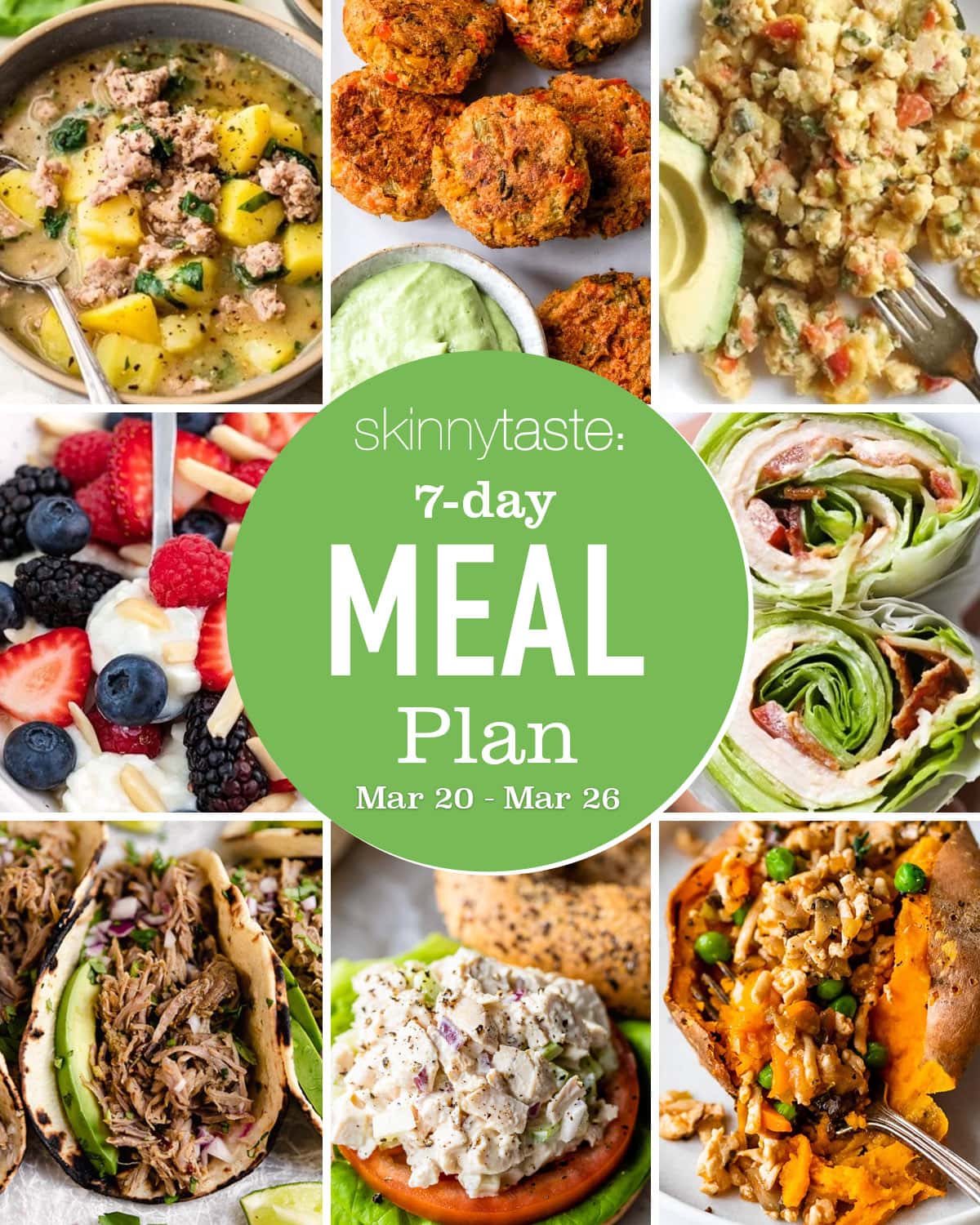
7 Day Healthy Meal Plan (March 20-26)

7 Day Healthy Meal Plan (March 20-26)
This post may contain affiliate links. Read my disclosure policy.

A free 7-day, flexible weight loss meal plan including breakfast, lunch and dinner ideas and a shopping list. All recipes include macros and WW points.

Spring finally arrives this week! I love this season of rebirth and renewal and I’m ready to see green grass and blooms! I want to thank everyone for their kind words and excitement on my new book- Skinnytaste Simple: Easy, Healthy recipes with 7 Ingredients or Fewer, which you can pre-order here on Amazon or wherever books are sold.

With grocery prices soaring, many of us are having to adjust, scale back and/or get more creative with our meals. One of the absolute BEST ways to stay within a budget and maintain healthy eating habits is to MEAL PLAN. You can get more 5-day Budget Friendly Meal Plans by signing up for Relish+ (get a 14-day free trial here!)

Ultimate Skinnytaste Meal Planner

Skinnytaste Ultimate Meal Planner

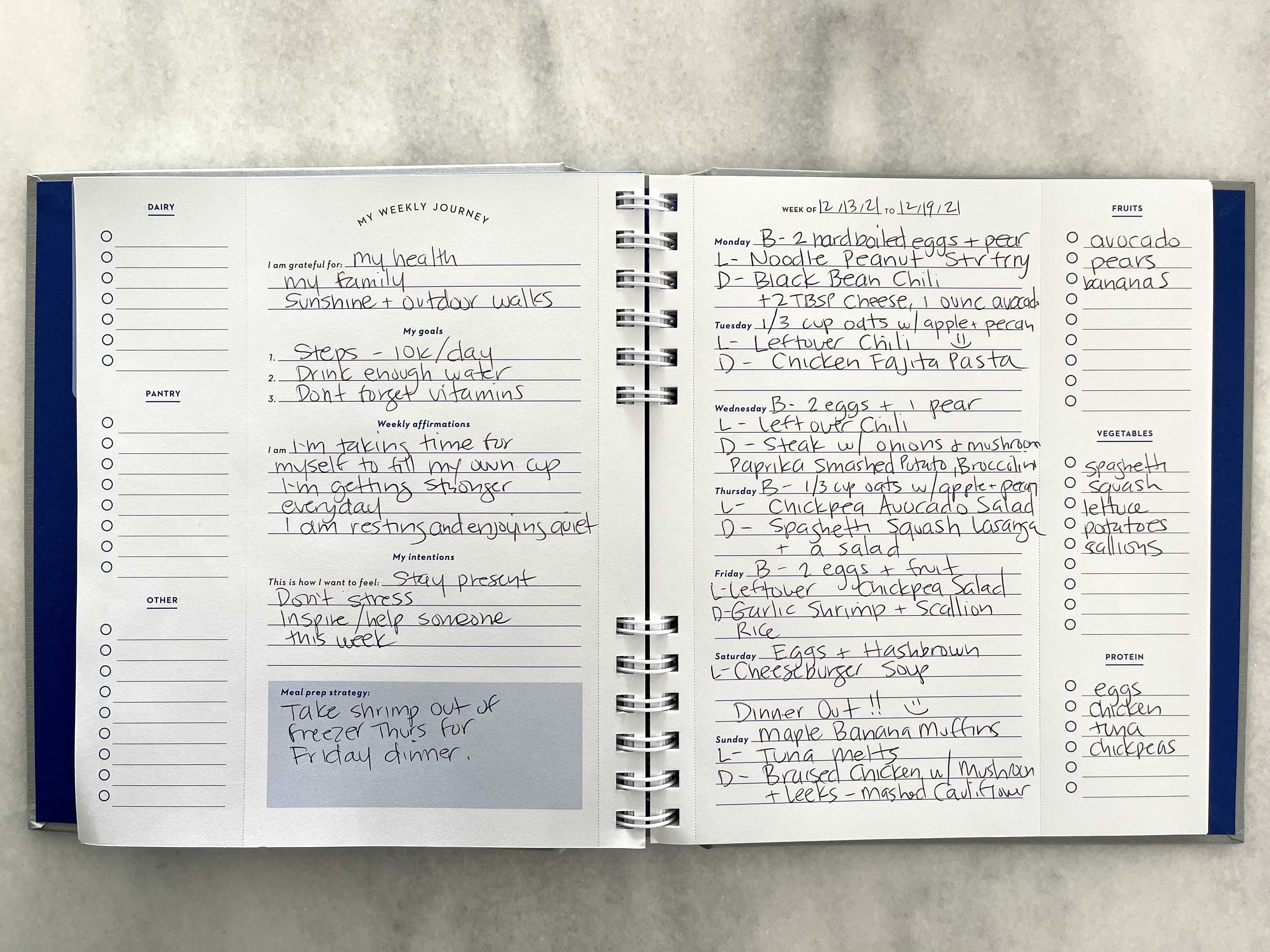
Get the Skinnytaste Ultimate Meal Planner! The 52 week spiral bound meal planner has weekly meal planning grids you can tear out and put on your fridge if you wish, a 12-week meal plan, 30 (15 new) recipes, and tear-out grocery lists. I love starting my week with gratitude, affirmations and intentions, so I included a space for that as well. I hope you will love this as much as I do!

Skinnytaste Ultimate Meal Planner

Buy the Skinnytaste meal planner here:

A note about WW Points

All recipe points have been updated to reflect the new WW program, points will display under the recipe title. I will keep the ww button in the recipe card, click on that and it takes you to the Weight Watchers website where you can see the recipe builder used to determine those points and add it to your day (US only, you must be logged into your account). All cookbook recipes in the cookbook index are also updated!

About The Meal Plan

If you’re new to my meal plans, I’ve been sharing these free, 7-day flexible healthy meal plans (you can see my previous meal plans here) that are meant as a guide, with plenty of wiggle room for you to add more food, coffee, beverages, fruits, snacks, dessert, wine, etc. or swap recipes out for meals you prefer, you can search for recipes by course in the index. Depending on your goals, you should aim for at least 1500 calories* per day. There’s no one size fits all, this will range by your goals, your age, weight, etc.

There’s also a precise, organized grocery list that will make grocery shopping so much easier and much less stressful. Save you money and time. You’ll dine out less often, waste less food and you’ll have everything you need on hand to help keep you on track.

Lastly, if you’re on Facebook join my Skinnytaste Facebook Community where everyone’s sharing photos of recipes they are making, you can join here. I’m loving all the ideas everyone’s sharing! If you wish to get on the email list, you can subscribe here so you never miss a meal plan!

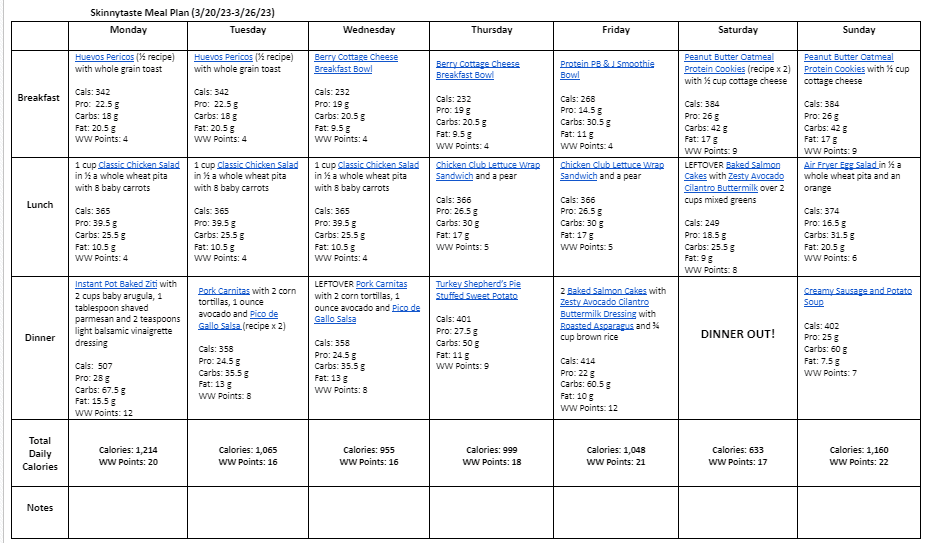
Meal Plan:

Breakfast and lunch Monday-Friday, are designed to serve 1 while dinners and all meals on Saturday and Sunday are designed to serve a family of 4. Some recipes make enough leftovers for two nights or lunch the next day. The grocery list is comprehensive and includes everything you need to make all meals on the plan.

MONDAY (3/20)
B: Huevos Pericos (½ recipe) with whole grain toast
L: 1 cup Classic Chicken Salad  in ½ a whole wheat pita with 8 baby carrots
D: Instant Pot Baked Ziti with 2 cups baby arugula, 1 tablespoon shaved parmesan and 2 teaspoons light balsamic vinaigrette dressing

Total Calories: 1,214*

TUESDAY (3/21)
B: Huevos Pericos (½ recipe) with whole grain toast
L: 1 cup Classic Chicken Salad  in ½ a whole wheat pita with 8 baby carrots
D: Pork Carnitas with 2 corn tortillas, 1 ounce avocado and Pico de Gallo Salsa (recipe x 2)

Total Calories: 1,065*

WEDNESDAY (3/22)
B: Berry Cottage Cheese Breakfast Bowl
L: 1 cup Classic Chicken Salad  in ½ a whole wheat pita with 8 baby carrots
D: Pork Carnitas with 2 corn tortillas, 1 ounce avocado and Pico de Gallo Salsa
Total Calories: 955*

THURSDAY (3/23)
B: Berry Cottage Cheese Breakfast Bowl
L: Chicken Club Lettuce Wrap Sandwich and a pear
D: Turkey Shepherd’s Pie Stuffed Sweet Potato

Total Calories: 999*

FRIDAY (3/24)
B: Protein PB & J Smoothie Bowl
L: Chicken Club Lettuce Wrap Sandwich and a pear
D: 2 Baked Salmon Cakes with Zesty Avocado Cilantro Buttermilk Dressing with Roasted Asparagus and ¾ cup brown rice

Total Calories: 1,048*

SATURDAY (3/25)
B: Peanut Butter Oatmeal Protein Cookies (recipe x 2) with ½ cup cottage cheese
L: LEFTOVER Baked Salmon Cakes with Zesty Avocado Cilantro Buttermilk over 2 cups mixed greens
D: DINNER OUT

Total Calories: 633*

SUNDAY (3/26)
B: Peanut Butter Oatmeal Protein Cookies with ½ cup cottage cheese
L: Air Fryer Egg Salad in ½ a whole wheat pita and an orange
D: Creamy Sausage and Potato Soup

Total Calories: 1,160*

*This is just a guide, women should aim for around 1500 calories per day. Here’s a helpful calculator to estimate your calorie needs. I’ve left plenty of wiggle room for you to add more food such as coffee, beverages, fruits, snacks, dessert, wine, etc.

*Google doc

Adhering to recommended diets lowers risk of chronic diseases, 32-year study finds

Adhering to recommended diets lowers risk of chronic diseases, 32-year study finds
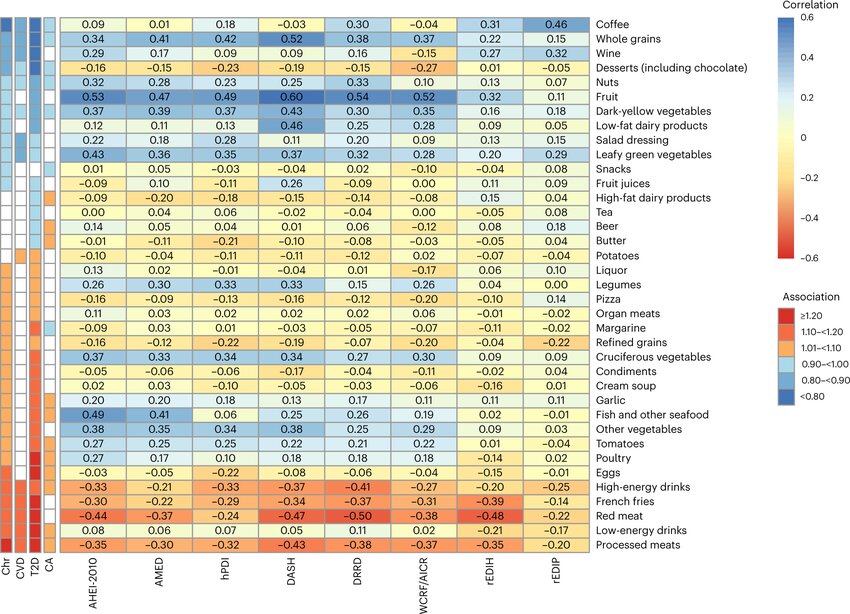
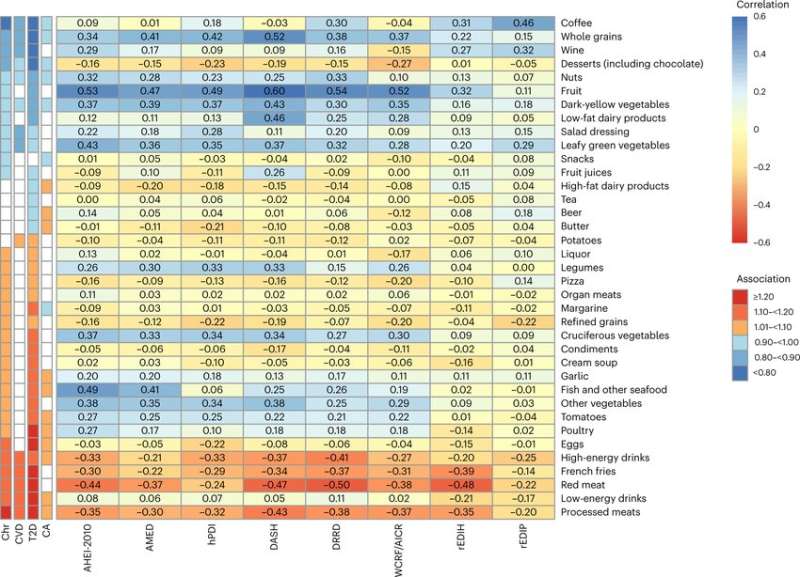
Baseline Spearman’s correlations amongst vitality-modified cumulative ordinary nutritional patterns and foods groups in the pooled data of three cohorts (n = 205,852 contributors) Spearman’s correlation coefficients are proven and highlighted in colour. Food items teams are requested based mostly on the HRs of their associations with important long-term condition. The associations of foods teams (evaluating the 90th with the 10th percentile) with key serious ailment (Chr), major CVD, sort 2 diabetic issues (T2D) or overall cancer (CA) are indicated on the left of the figure. We documented unadjusted P values based mostly on two-sided statistical exams. Major associations (P < 0.05) are highlighted in color according to the magnitude of the HRs. Credit: Nature Medicine (2023). DOI: 10.1038/s41591-023-02235-5

Researchers at the Harvard T.H. Chan School of Public Health in Boston, Massachusetts, have good news for anyone sticking to a healthy diet: Good food choices are associated with a lower risk of developing a chronic disease.

In a robust review of several recommended diets, the study, “Optimal dietary patterns for prevention of chronic disease,” published in the journal Nature Medicine, found that falling in line with any one of them is linked to better health outcomes.

To find the influence of recommended diets on health outcomes, researchers analyzed 32 years of data from 205,852 participants between 25 and 75 years of age when data collection began. The cohorts included 162,667 women from the Nurses’ Health Study and Nurses’ Health Study II and 43,185 men from the Health Professionals Follow-up Study.

Participants regularly reported details about their lifestyle, medical history and food intake, with a median follow-up of 26 years per participant. There were 44,975 major chronic disease events observed, 12,962 major cardiovascular diseases, 18,615 cases of diabetes and 17,909 total cancers.

While individuals in the study were not explicitly adhering to recommended diets, the study categorized reported diets into levels of adherence on a weighted system. It compared health outcomes against levels of adherence to several dietary pattern groups: Alternative Healthy Eating Index-2010, Alternate Mediterranean Diet, Dietary Approaches to Stop Hypertension, Diabetes Risk Reduction Diet, Healthful Plant-Based Diet Index, reversed Empirical Dietary Index for hyperinsulinemia, reversed Empirical Dietary Inflammation pattern, or World Cancer Research Fund/American Institute for Cancer Research diet.

Participants were then ranked by comparison of the top 90th percentile vs. bottom 10th percentile in adherence. Overall the study found that regardless of which diet pattern an individual was most adhering to, being near the top of any of them correlated to lower disease risk. So, for instance, an individual might make it into the top 90{d2b09b03d44633acb673e8080360919f91e60962656af8ade0305d5d8b7e4889} in the Healthful Plant-Based Diet Index but fall below 90{d2b09b03d44633acb673e8080360919f91e60962656af8ade0305d5d8b7e4889} adherence in others due to coffee or wine intake.

Individuals who adhered to guidelines designed to lower the risk of inducing inflammation, high blood insulin levels or diabetes were less likely to develop type 2 diabetes, heart disease and cancer.

Certain food groups were linked to worse health outcomes. Diets that frequently included processed meats, energy drinks, red meat, french fries, and eggs were positively associated with major chronic diseases.

Consuming larger amounts of coffee, whole grains, wine and desserts had lower risk of associated major chronic diseases. However, it should be noted that these were pulled from groups of dietary patterns with many associated food intake strategies. Unfortunately, there was no coffee, whole grain, wine and dessert-based diet to choose from.

More information:
Peilu Wang et al, Optimal dietary patterns for prevention of chronic disease, Nature Medicine (2023). DOI: 10.1038/s41591-023-02235-5

© 2023 Science X Network

Citation:
Adhering to recommended diets lowers risk of chronic diseases, 32-year study finds (2023, March 16)
retrieved 17 March 2023
from https://medicalxpress.com/news/2023-03-adhering-diets-lowers-chronic-diseases.html

This document is subject to copyright. Apart from any fair dealing for the purpose of private study or research, no
part may be reproduced without the written permission. The content is provided for information purposes only.

Most Americans Don’t Know What ‘Ultra-Processed’ Foods Are

Most Americans Don’t Know What ‘Ultra-Processed’ Foods Are

d3signal/Getty Visuals


You have likely heard of processed foods—but could you discover an ultra-processed food? If you’re like most People in america, the response is no.


In accordance to a September 2022 study conducted by the Global Meals Information Council (IFIC), about 76{d2b09b03d44633acb673e8080360919f91e60962656af8ade0305d5d8b7e4889} of Us residents are unfamiliar with what qualifies as an ultra-processed foods. Far more precisely, 66{d2b09b03d44633acb673e8080360919f91e60962656af8ade0305d5d8b7e4889} of people claimed they’d never ever listened to the expression “ultra-processed,” though 10{d2b09b03d44633acb673e8080360919f91e60962656af8ade0305d5d8b7e4889} explained they ended up uncertain.

The study was conducted among 1,000 older people ages 18 and more than to figure out buyer perceptions and paying for routines about processed meals. According to professionals in the meals and nourishment business, its results are not astonishing, as the notion of ultra-processed meals is relatively new.


“Most Americans never know exactly which food items depend as extremely-processed because scientists have only just lately started out looking at whether or not highly-processed foods can cause harm,” Bonnie Liebman, MS, Director of Diet for the Heart for Science in the Community Desire (CSPI), who was not affiliated with the survey, explained to Health and fitness. Liebman mentioned that the phrase “ultra-processed foods” was very first launched all-around 2010, when a Brazilian analyze proposed classifying meals by their amount of processing.


Because that time, the concept has gained traction (and clarity) as a rising system of study has described ultra-processed foods and their opportunity to negatively effect wellness. The IFIC study not only sheds mild on how tiny buyers know about extremely-processed foods but may well also be practical as the 2025 Nutritional Tips Advisory Committee starts to look at its messaging about processed foodstuff.


So, what specifically are extremely-processed foods—and ought to you continue to keep them off your plate? 


Apart from an orange picked straight off a tree or a spinach leaf plucked from your backyard backyard garden, the vast vast majority of foods we consume are processed in some way. This is not constantly a bad detail. Processing meals may well simply require heating, canning, cleansing, drying, or packaging them for cargo. Approaches like these protect foodstuff for harmless for a longer period-expression consumption.


Extremely-processed meals, on the other hand, choose processing to the up coming level—and not in a superior way. Even though there’s no one exact definition of ultra-processed foods, the Heart for Epidemiological Scientific studies in Health and Nourishment at the University of Sao Paulo, Brazil, has created a processing classification program referred to as NOVA to present some clarity.


“NOVA classifies food stuff as Group 1, Team 2, Group 3, and Team 4,” registered dietitian Toby Amidor, MS, RD, CDN, FAND, an award-successful nourishment skilled and finest-advertising writer of The Spouse and children Immunity Cookbook, told Well being. “Group 4 is ‘ultra-processed food’ and is described as ‘industrial formulations built completely or mainly from substances extracted from food items (oils, fat, sugar, starch, and proteins), derived from food items constituents (hydrogenated fat and modified starch), or synthesized in laboratories from food stuff substrates or other natural resources (flavor enhancers, hues, and several foods additives utilised to make the products hyper-palatable).’”


In less difficult phrases: “We employed to refer to ultra-processed foodstuff as junk foodstuff,” claimed Bonnie Taub-Dix, RDN, creator of BetterThanDieting.com and author of Study It In advance of You Eat It—Taking You from Label to Desk. “Ultra-processed foodstuff may possibly be sweet, soda, pastries, warm canines, and other food items we should be consuming fewer often—basically food items that incorporate a large amount of sugar, salt, saturated body fat, preservatives, and so on.”


Even though you may possibly associate extremely-processed meals with your community comfort retailer or gas station, according to Taub-Dix, they can be identified anyplace. Even superior-finish grocery suppliers and health food items suppliers may perhaps sell extremely-processed foodstuff.


In addition to made up of concerning nutrition, extremely-processed food items also typically harbor various additives. “A several components typically utilised in extremely-processed foods include things like salt, disodium inosinate, disodium guanylate, mono- and diglycerides, superior fructose corn syrup, hydrolyzed soy protein, potassium sorbate, sodium benzoate, colour additives, modified foods starches, and other folks,” reported Bryan Quoc Le, PhD, foods scientist, food items industry consultant, and author of 150 Foodstuff Science Inquiries Answered.


Scientists have lengthy known that diets superior in some varieties of processed foods could direct to wellbeing complications. But narrowing the emphasis on ultra-processed meals has revealed that far-from-nature objects could have an affect on wellness a lot more negatively than just processed meals like canned beans or whole grain cereals.


A 2022 analyze in BMJ on almost 23,000 topics, for case in point, observed that people today who ate substantial quantities of ultra-processed meals had bigger hazard of coronary heart condition and dying overall. Other analysis, also released in 2022 in BMJ, joined taking in much more extremely-processed foodstuff to an improved risk of colorectal most cancers.


Research has demonstrated that persons received a lot more weight on a diet plan high in really processed foods. Bigger use of people foods is also correlated with better ranges of anxiety and despair.


Still, additional facts is necessary to tease apart whether specific formulations of food items truly lead to well being conditions—and if so, what it is about all those foods which is selling condition.


“Studies have claimed a larger risk of cardiovascular disorder, diabetic issues, and some cancers in people who take in far more extremely-processed foods,” Liebman reported. “However, those experiments simply cannot explain to us whether ultra-processed food items lead to illness, or no matter if a little something else about men and women who eat diet plans higher in extremely-processed foodstuff is to blame.”


Keeping ultra-processed foods out of your diet regime solely may possibly audio like a worthy objective, but that may not normally be sensible or even warranted. “Ultra-processed foods are a lot more like ‘sometimes’ foods, but let us experience it, several are also delicious and enjoyable to try to eat, so I don’t feel any food, until you have a really serious health-related problem or allergy, requires to be eradicated from one’s food plan,” Taub-Dix claimed.


Continue to, she and other authorities inspire restricting extremely-processed meals when doable. To hold them to a least, the to start with action is determining them. The finest area to start out: the diet specifics label.


“The consumer ought to be on the lookout at the nourishment information panel to determine if the meals presents nutrition and determine the greatest healthy for their diet program,” Amidor explained. “For case in point, pastries, cakes, and cake mixes are not your nutrient-dense alternatives, but a food stuff like cereal that is usually fortified with a lot of vitamins and minerals (specially people that Us residents never get ample of) and are extensively consumed with cow’s milk and fruit—that is a food items I would not recommend keeping away from and truly motivate consuming.”


Examining ingredient lists is another basic way to slash via confusion and make healthier selections. “The food items label is the ideal weapon we have to fight against getting elements in our foodstuff that we really really do not want. Food labels tell a story of what goes into every single package deal,” claimed Taub-Dix. Sugars, sodium, additives, and dyes are all hallmarks of extremely-processed foodstuff. Seem for these components as purple flags to prevent.


Lastly, you just cannot go incorrect picking fresh new, complete foods as often as time and finances permit. “People ought to intention for a food plan loaded in unprocessed foodstuff like refreshing fruits and veggies, complete grains, beans, and nuts, rather than junk foods like chips, cookies, donuts, and sugary beverages,” Liebman said. “A great rule of thumb is to fill half your plate with refreshing fruit or vegetables, leave a quarter of your plate for nutritious protein foodstuff, and fill yet another quarter with full grains.”

There’s no one ‘best’ diet for promoting health

There’s no one ‘best’ diet for promoting health

Access options

Hire or buy this short article

Get just this write-up for as very long as you will need it

$39.95

Rates might be topic to nearby taxes which are calculated in the course of checkout

doi: https://doi.org/10.1038/d41586-023-00752-4

Topics