Millefeuille and figgy Eton mess: Yotam Ottolenghi’s recipes for alternative Christmas desserts | Food

Millefeuille and figgy Eton mess: Yotam Ottolenghi’s recipes for alternative Christmas desserts | Food

There are few things more festive than a festive dessert. They offer the most jolly excuse (not that we need one at this time of the year) to pile all sorts of sweet, seasonal flavours into a tart or on to a plate. Caramelised nuts, plates dusted with icing sugar, boozy double cream, cinnamon and allspice, dried fruit … so bring me some figgy pudding (and then some!) indeed!

Piloncillo tart (pictured top)

Piloncillo is an unrefined, dark sugar from Mexico, packed full of organic impurities that give it a complex, molasses flavour that’s similar to jaggery or panela. You can buy it in Latin and South American food shops, but if you can’t get hold of any, use jaggery instead. The dough can be made ahead of time, and even frozen. You will have lots of egg whites left over, which is the perfect excuse to make some snowy-looking, festive meringues (otherwise, freeze them for another time). This tart benefits hugely from a night in the fridge after baking.

Prep 10 min
Chill 1 hr
Cook 2 hr
Rest 1 hr
Serves 12

For the tart case
150g plain flour, plus extra for dusting
40g fine cornmeal, or polenta
135g fridge-cold unsalted butter, cut into small cubes
25g caster sugar
½ tsp allspice
½ tsp cinnamon
1 tsp finely grated lime zest
Fine sea salt
, plus flaked sea salt to finish
50ml fridge-cold whole milk

1 egg yolk
1 tsp double cream

For the filling
220g piloncillo, finely grated, or jaggery or dark brown sugar
50ml Pedro Ximénez, or marsala or madeira
750ml double cream
11 egg yolks
25g caster sugar

First, make the dough. Put the first seven ingredients and a quarter-teaspoon of fine sea salt in the bowl of a food processor and pulse until the mix resembles breadcrumbs. Tip into a large bowl, then gradually add the milk, mixing constantly, until everything comes together into a dough. Tip out on to a lightly floured work surface and knead gently just to bring it together – it should be slightly tacky, but not stick to your hands. Wrap and chill for at least an hour.

Take the dough out of the fridge, put it on a well-floured work surface and roll out into a 38cm circle about 2mm thick. Loosely roll the pastry around the pin, then carefully lift and place over a 2½cm-deep 28cm fluted tart case. Using your hands, quickly press the dough into the corners and sides of the tin, leaving any overhang. Cover with a large sheet of greaseproof paper, fill with baking beans, then return to the fridge for another hour.

Heat the oven to 200C (180C)/390F/gas 6. Cut any overhanging pastry off the tart case and set aside, then bake the case for 30 minutes, until the edges turn golden. Lift out the paper and beans, use the reserved excess pastry to patch up any holes, then bake for another 20 minutes, until the base is lightly browned. Whisk the egg yolk and cream in a small bowl, brush all over the exposed pastry, then return to the oven for just two minutes more. Remove and leave to cool.

Turn down the oven to 160C (140C fan)/325F/gas 3. Now make the filling. Melt the piloncillo in a large saucepan on a medium-high heat, swirling the pan gently until the sugar is completely liquid. Off the heat, carefully stir in the sherry, then return to a low heat and whisk in the cream.

In a large bowl, whisk the egg yolks, caster sugar and an eighth of a teaspoon of fine sea salt, until smooth, then quickly whisk in a quarter of the hot cream mixture. Pour in the remaining cream mixture, mix to combine, then pass through a sieve back into the pan.

Put the tart case on an oven tray, pour in three-quarters of the custard, then carefully slide the tray into the oven. Pour in the remaining custard so it fills the case all the way up to the top, then bake for 35 minutes, until the custard is set but still wobbly. Remove and leave to cool completely, and serve with a big pinch of sea salt sprinkled over the top.

Caramelised fig Christmas mess

All the flavour and less of the waiting … Yotam Ottolenghi’s caramelised fig Christmas mess.
All the flavour and less of the waiting: Yotam Ottolenghi’s caramelised fig Christmas mess.

These caramelised figs are inspired by my love for figgy puddings, and give you all the flavour and less of the waiting. Make sure you weigh out all the ingredients first, because the cooking moves along very quickly. If you want to get ahead, make the meringue a day before and store in an airtight container (or use shop-bought ones).

Prep 10 min
Cook 2 hr
Serves 6

160g caster sugar
65g egg whites
(ie, from 2 eggs )
⅛ tsp cream of tartar
Fine sea salt
60g unsalted butter
, diced
6 fresh black figs, tips removed, then cut in half vertically
½ tsp allspice
2 tbsp whisky
1 tbsp fresh lime juice (ie, from 1-2 limes)
50g creme fraiche
200ml double cream
1 tbsp icing sugar
, plus 1 tsp extra for dusting
4 amaretti biscuits, roughly crumbled
4 sprigs fresh thyme, leaves picked

Heat the oven to 180C (160C fan)/350F/gas 4. Scatter 115g of the sugar over an oven tray lined with greaseproof paper and bake for 10 minutes. A couple of minutes before the time is up, put the egg whites, cream of tartar and a pinch of salt in the bowl of a stand mixer and whisk on a medium speed, until frothy.

Take the sugar tray out of the oven and turn down the heat to 120C (100C fan)/250F/gas ½. Turn the mixer speed to low and, using the paper to help you, slowly stream in the warm sugar until it’s all incorporated. Turn the speed back up to high and beat for five or six minutes, until the meringue mix is glossy and forms stiff peaks.

Line a 40cm x 30cm oven tray with baking paper and, using a spatula, thinly spread the meringue evenly on top, so it’s about 35cm x 25cm in size. Bake for 80-90 minutes, until completely dried out. Remove and leave to cool, then roughly break into random shards.

Put a medium frying pan on medium-high heat, add 10g butter and, when that’s melted, lay in the figs cut side down and cook for a minute, just until they are lightly coloured. Stir the remaining sugar into the pan, then cook for another 90 seconds, swirling the pan occasionally, until the sugar is mostly melted and the figs are starting to caramelise. Add the remaining butter and the allspice, swirl again to combine, then cook for a minute more.

Carefully flip over the figs, pour in the whisky and cook for 30 seconds, continuously swirling the pan, until the sauce turns syrupy. Off the heat, stir in the lime juice, then tip the figs and sauce into a bowl and chill for 10 minutes, until cool but not set.

Meanwhile, put the creme fraiche, double cream and a tablespoon of icing sugar in the bowl of a stand mixer fitted with a whisk and beat on a medium-high for two to three minutes, until they form soft, fluffy peaks.

To serve, spoon a large dollop of the cream on to six individual plates. Top with two fig halves and decorate with a few shards of meringue. Sprinkle some amaretti crumbs and thyme on top, then put the final teaspoon of icing sugar in a small sieve and dust over each plate.

Chestnut and pecan millefeuille

Yotam Ottolenghi’s chestnut and pecan millefeuille.
Layer cake: Yotam Ottolenghi’s chestnut and pecan millefeuille.

All the various elements can be made ahead of time, ready to be assembled just before serving. Keep the cream in the fridge, the baked puff pastry well wrapped and the nuts in an airtight container. To make it child-friendly, omit the rum and coffee.

Prep 30 min
Cook 35 min
Assembly 15 min
Serves 8

2 x 320g packs ready-rolled all-butter puff pastry
2 tbsp icing sugar

For the chestnut cream
400ml whole milk
1 tsp vanilla bean paste
4 egg yolks
(save the whites for another use)
20g cornflour
75g caster sugar
⅛ tsp flaked salt
40g unsalted butter
, cut into cubes
200g sweet chestnut puree – I like the one by Clement Faugier
1½ tbsp rum or brandy (optional)
330ml double cream

For the sticky pecans
150g pecans, roughly chopped
15g unsalted butter
1½ tbsp maple syrup
¼ tsp flaked salt

For the coffee dusting (optional)
1 tbsp ground coffee
1 tbsp cocoa powder
½ tsp ground cinnamon

Heat the oven to 200C (180C fan)/390F/gas 6.

Unroll one puff pastry sheet on a clean work surface, then roll it out to a slightly thinner 26cm x 38cm rectangle. Using a sharp knife, cut this in half widthways, then carefully lift the two rectangles one by one on to a large, flat oven tray lined with greaseproof paper. Repeat with half the remaining pastry sheet (save the rest for another use) and put that on a second paper-lined tray. Refrigerate the pastry trays for 10 minutes, just to firm up, then prick the three rectangles all over with a fork. Dust both sides of each rectangle with a teaspoon of icing sugar (I do this with a small sieve), then cover with a large sheet of greaseproof paper. Put a tray on top and weigh it down with a heavy ovenproof tray or pan.

Bake for 25 minutes, then lift off the weights and top sheet of paper, and bake uncovered for another 10 minutes, until golden and cooked through. Carefully lift the pastry rectangles off the trays and on to a large rack (or racks) and leave to cool for 20 minutes.

Meanwhile, make the chestnut cream. Put the milk and vanilla bean paste in a medium saucepan and bring to a boil on a medium-high heat. Put the egg yolks, cornflour, sugar and salt in a medium bowl and whisk smooth. Pour in a quarter of the hot milk mix, whisk to incorporate, then, still whisking, pour in the rest of the milk. Sieve the mixture back into the pan, put on a medium-low heat and cook for two to three minutes, until it thickens enough to hold its shape when you stir it. Take off the heat, mix in the butter and scrape on to a medium tray lined with greaseproof paper. Cover, ideally with reusable wrap, leave to cool for 10 minutes, then chill for 30 minutes.

Once cool, put the cream mixture in a large bowl and stir in the chestnut puree and a tablespoon of rum, if using. Whisk the double cream to soft peaks, fold a third of this into the chestnut cream, then refrigerate for 20-30 minutes, to set.

Now make the sticky pecans. Put the nuts and butter in a medium frying pan and cook on a medium-high heat, stirring frequently, for six to seven minutes, until toasted. Stir in the maple syrup and a quarter-teaspoon of salt, cook for another minute, until sticky, then tip out on to a tray and leave to cool.

Mix all the ingredients for the coffee dusting, if using, in a small bowl.

To assemble, spread a spoonful of the chestnut mixture on a large, flat platter and lay one sheet of pastry on top. Gently spoon over half the remaining chestnut mixture and spread it out evenly. Using a small sieve, dust the top with the coffee dusting, until the cream layer is covered, then scatter over half the pecans. Lay a second sheet of pastry on top and repeat, then put the third pastry sheet on top.

Stir the remaining half-tablespoon of rum into the remaining cream, swirl the cream over the top pastry sheet and sieve over the remaining coffee dust. Cut the millefeuille into rectangles – use a sharp serrated knife, ideally – and serve.


This Is The Most Searched Christmas Recipe In The South

This Is The Most Searched Christmas Recipe In The South

A classic holiday cookie earns the top spot.

<p>Antonis Achilleos; Food Styling: Emily Nabors Hall; Prop Styling: Missie Neville Crawford</p>

Antonis Achilleos; Food Styling: Emily Nabors Hall; Prop Styling: Missie Neville Crawford

The holiday season calls for festive dishes, shareable bites, and a lively blend of well-worn recipe classics and new additions to a home cook’s repertoire. And many cooks turn to the Internet to find their newest cooking adventures. When Southern Living fans in the South are searching for recipes in the days following Thanksgiving 2022, fun and travel-friendly desserts are at the forefront of their minds. The following treats are proving especially search-worthy to our readers.

Cookies were the biggest draw for pre-holiday recipe searches

Cookie swaps are a much-loved holiday tradition, so it’s no surprise that Christmas cookie recipes have been in high demand so far this season. Among all Dotdash Meredith (that’s the parent company of Southern Living) recipe searches in the Southeast region of the U.S., the top December spot for desserts goes to Easy Sugar Cookies, This straightforward recipe yields 2 dozen sugar cookies in just 15 minutes of active cook time, and these sweet, nostalgic confections are perfect blank canvases for icing, sprinkles, and other holiday-themed edible decorations.

Our roundup of 30 Easy Christmas Cookie Recipes to Bake With Your Kids is also garnering plenty of clicks this year; this collection is a one-stop shop for flavorful and engaging treats like Peppermint Meltaway Cookies, Peanut Butter Kiss Cookies, and Pecan Snowball Cookies, all easy-to-execute and ideal for party platters and giftable parcels.

:

A classic Southern cake also inspired a great deal of interest

Cookies may represent the most sought-after holiday dessert recipes among Southerners in 2022, but cake—an unquestionably festive sweet—also gets lots of love from Dotdash Meredith recipe seekers in the Southeast. Million Dollar Pound Cake, an endlessly-customizable vanilla almond cake recipe that can be garnished with chocolate syrup, fresh fruit, preserves, or even Christmassy sprinkles, has been a popular post-Thanksgiving search, as is White Cake with Cranberry Filling and Orange Buttercream, a stylish Southern Living recipe that features classic holiday fruit flavors and colors.

But the #1 cake search in the South this December goes to Hummingbird Cake, an absolute Southern dessert staple. This banana, pineapple, and cinnamon-flavored cake slathered in a perfectly-balanced cream cheese frosting first came to the American South in the 1970s by way of Jamaica, and in 1978, Southern Living published a hummingbird cake recipe that has become one of our magazine’s most celebrated recipes ever. Therefore, it’s fitting to see this iconic treat on our most-searched list for the holidays—it’s party-friendly, it’s crowd-pleasing, and it’s quintessentially Southern.

:

For more Southern Living news, make sure to sign up for our newsletter!

Read the original article on Southern Living.

10 Kitchen Tools I’m Obsessed With This Christmas Season That Also Make Amazing Gifts

10 Kitchen Tools I’m Obsessed With This Christmas Season That Also Make Amazing Gifts

Hands smeared with butter, flour spraying out of the bowl, I gushed about my electric mixer for a good 10 minutes in a live demo for an audience of two. More specifically, I was trying to convince my close friends I gathered to bake with last weekend that I wasn’t crazy for bringing my own electric beaters (and apron, and baking sheets…) to someone else’s house. So I launched into a passionate show-and-tell (while making cookie dough, of course) about why my electric beaters are superior to theirs.

Here’s the thing. I can get pretty obsessive over the gear, gadgets and tools I love to use most. And with good reason. I’ve spent a lot of time, energy and money over the years upgrading from good-but-basic tools to items I actually love and am convinced make me a better cook. While many terrific kitchen tools I love cost under $25, I also wanted to share my running list of favorite kitchen items that cost a little bit more and are worth every penny. I bought (or was gifted) every one of these tools and I use them weekly, if not daily.

If you’re looking for a kitchen gift for an aspiring or established foodie, these are tried and tested in the crucible of my galley kitchen. Better yet, you might even want to give one of these to yourself. After all, you can never have too many aprons. 

Breville

I had an inexpensive pair of electric beaters that always gave me trouble — ditching it for this Breville Handy Mix Scraper was one of the best decisions I made, especially during this season of abundant baking. This mixer seriously does it all: It comes with whisks, creamer inserts and dough hooks! It has a built-in light so you can see what’s in the bowl! There’s a stopwatch feature so you can see how long you’ve been mixing and a pause button that keeps track of your speed settings and time while you take a break to scrape down the bowl! The cord base can rotate to get out of your way! And it has a convenient storage situation where you can keep all the beater wands!

You’re receiving price alerts for Breville Handy Mix Scraper Hand Mixer, Silver, BHM800SIL

Shun

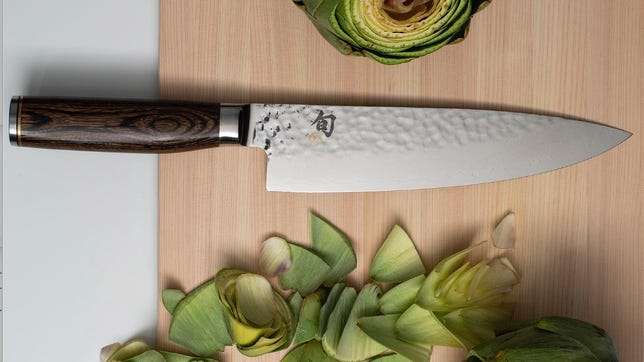
I have lusted after Shun Premier knives for over a decade and finally bought two for my new kitchen: the 8-inch chef’s knife and a 3.5-inch paring knife. Over Black Friday, I added a 7-inch Santoku blade to the mix. I adore the way the rounded handles balance, and the stunning, wavy pattern on the forged blade boasts an edge designed to hold sharpness far longer than average. That’s good for me, because the sound of knife sharpening sets my every tooth, bone and neuron on fire.

Shun Premier knives come in gray and brown wood handle options. The Classic knives are cheaper and also very good (yes, I’ve tried them out, too). But my heart belongs to the Premier line for the way they feel in my hand, and the extra aesthetics on the blade (69 layers of Damascus steel, if you’re wondering). I store them in a drawer with a blade guard case to protect the knife sharpness (and my fingers). Here are other recommended chef’s knives as well.

Screenshot by Nina Raemont/CNET

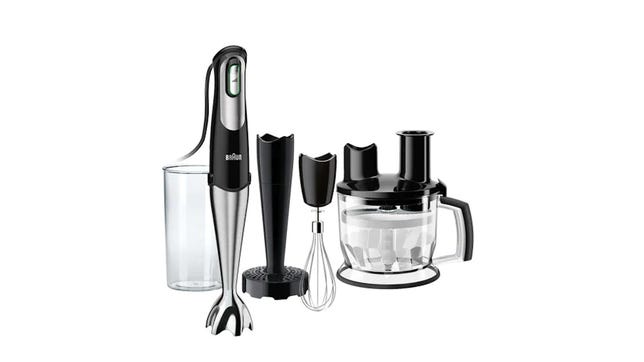
I’ve owned an immersion blender for years, but recently upgraded myself to the Braun MultiQuick 7 for its robust design, powerful motor and fun extras, like a mini food processor attachment (like, for making quick work of onions and herbs) and a balloon whisk attachment for quickly whipping or whisking without having to go full-bore with the electric beaters. 

I use this tool constantly, to process soups right in the pan, make salsa in the included beaker, whip cream into soft peaks and make quick work of pulverizing onion without hefting the food processor to the counter. It’s also wonderfully easy to clean and dry, and small and light enough to pull out from the pantry any time I need it. I can’t recommend it enough.

You’re receiving price alerts for Braun MQ7027X Multiquick 7 ACTIVEBlade Technology Hand Blender

Chris Monroe/CNET

I may have spoiled myself buying the Google Nest Hub smart speaker display for my kitchen. I have it set up on a riser shelf on my counter, next to a phone stand where I can also keep my phone away from the worst of tea splatters and flying onions. I use the Nest Hub for everyday things like checking the weather as I’m making my morning cuppa and playing music (with song lyrics!) while I cook. I use the two hands-free timers multiple times a day, and look up recipes on the screen (you can follow these step-by-step). 

There’s also an extra function where you can program the Nest Hub to forgo the “OK, Google” or “Hey, Google” wake word when you look at it and start listening to you with just a glance (Google calls this Look and Talk). That’s ultra convenient for saving some time and breath every time you want to ask for unit conversion measures, adding to or canceling a timer and skipping to the next track.

Read our Google Nest Hub (2nd gen) review.


You’re receiving price alerts for Google Nest Hub (2nd gen, Sand)

Amazon

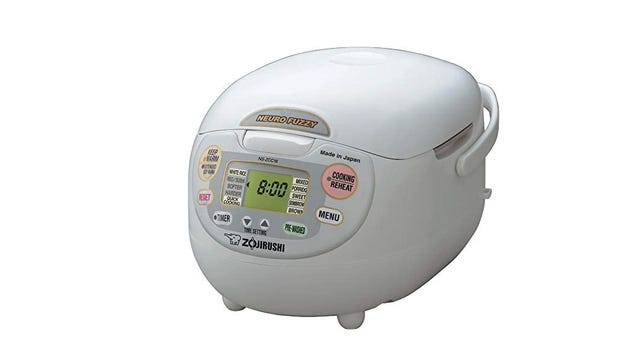
Zojirushi has an excellent reputation for countertop appliances that hit the high-water mark. I’ve been beyond happy with my Neuro Fuzzy rice cooker since I bought it earlier this year. My pantry is stuffed with six kinds of rice and at least four other grains I routinely cook up. The settings are easy to use and whether I wash the grains or not, whatever I’m making comes out evenly cooked. Plus, it plays a song when starting and ending a cycle, which is much nicer than a loud beep or buzz.

The Neuro Fuzzy in particular takes up more counter space than the most compact models, and rice can take an hour for a typical cycle of even cooking. But there are lots of settings, including a quick cook mode, and cleanup is easy. (Here are meals you can make in the rice cooker other than rice.)

You’re receiving price alerts for Zojirushi Neuro Fuzzy rice cooker: $185

Breville

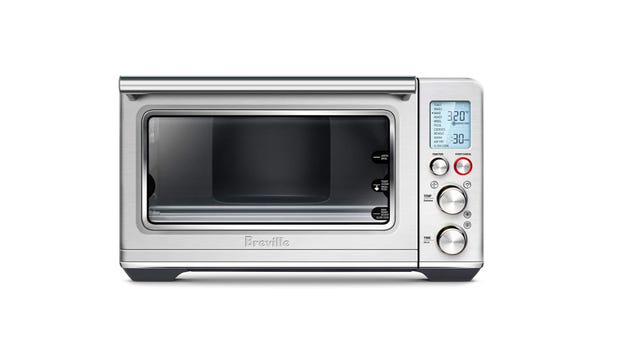
Buying the Breville Smart Oven Pro Toaster Oven (BOV845BSS) was one of my best kitchen decisions. It toasts, it broils, it roasts. And since it has a convection oven function, you can totally skip the separate air fryer — and cook more stuff at once. I love the countdown clock that takes the mystery out of when your food will be done, and I love that I can bake a single batch of cookies or toast walnuts faster than a standard oven, and without having to heat the whole thing first. Plus, the brushed stainless steel body looks pretty great on my countertop.

You’re receiving price alerts for Breville Smart Oven Pro toaster oven: $260 (Save $90)

Screenshot by Nina Raemont/CNET

Le Creuset dutch ovens are all the rage (I actually really love my Staub Cocotte), but one of the best gifts I ever received was this Le Creuset casserole dish that can go straight from oven to table (to fridge!) while cooking food evenly and looking awesome. I would buy this all over again, and gift it, too. It comes in a range of striking colors, and shockingly cleans easily — with a little soak in soapy hot water and a dirt-cheap pan scraper. I’m the kind of person who excels at ruining dutch ovens with burned-on spots. After a couple years, this dish has remained spot-free, even after roasting dark, sticky stews (yum!).

You’re receiving price alerts for Le Creuset Stoneware Heritage Covered Rectangular Casserole, 4 qt. (12″ x 9″), Oyster

Screenshot by Nina Raemont/CNET

A workhorse apron is worth its weight in gold. I’m thankful I finally stumbled on Hedley & Bennett, which makes a seemingly endless supply of thick, sturdy aprons I now can’t fail to miss seeing seemingly any time I walk into a restaurant. If these aprons can handle the stresses of a professional kitchen, they can handle the flying sauces and batter in mine. I bought myself two styles, including a Cookie Monster print that never fails to make my inner child giggle. The apron’s neck loop is adjustable, there are a lot of pockets, and so far the waist straps haven’t gotten scrunched, twisted or mangled in the washer or dryer.  

Screenshot by Nina Raemont/CNET

I’m not the kind of wine enthusiast who owns a different glass for every varietal — not yet, anyway. Instead, I opt for one all-rounder that will work beautifully no matter which bottle I open, erring on the side of big, bold reds. I’ve been using these “Burgundy” glasses from Schott Zwiesel for years, and my Amazon search history told me I bought them five times, twice for myself and three times as a gift. Yes, I do drink white wine, rose and sparkling out of them (gasp!), and they all taste terrific. Better in my mind to drink from a glass with a too-big bowl than a cramped glass that stifles all that great wine nose.

You’re receiving price alerts for Schott Zwiesel Tritan Crystal Glass Forte Stemware Collection Claret Burgundy Red Wine Glass, 25-Ounce, Set of 6

Screenshot by Nina Raemont/CNET

If you don’t use an electric kettle yet, drop everything and get yourself one. This indispensable kitchen savior rapidly heats water for tea, coffee and hot chocolate, and it gives you a head start on boiling vats of water for pasta, blanching or anything else you need. I’ve owned and gifted a lot of electric kettles, and most work about the same way. This Zwilling Enfingy Electric Kettle has a sleeker, more sophisticated look and variable temperature controls. I also like that it’s got a cool-touch exterior that won’t burn you when you pick it up. 

There’s no viewing window for water height and you have to feel comfortable with capacitive controls that you press and hold, but these aren’t deal-breakers for me by any means.

You’re receiving price alerts for Zwilling Enfingy electric kettle: $120

For even more top kitchen picks, see our best kitchen gifts under $25 and best stainless steel frying pans.

Thomasina Miers’ recipe for juniper and lemon martinis and deep-fried olives | Christmas food and drink

Thomasina Miers’ recipe for juniper and lemon martinis and deep-fried olives | Christmas food and drink

The joy of entertaining at home is underrated. You can have fun creating a great menu, like this glamorous combination. Preparing the olives ahead makes them achievable snacks; throw in some infused gin martinis and you have the makings of a serious party – something we all deserve this year.

Juniper and lemon martinis with deep-fried olives

The infused gin recipe makes enough for six to eight martinis, but in the method below, I have given the quantities for making two.

Prep 20 min
Infuse 3-4 days
Chill 1 hr
Cook 15 min
Makes 2 martinis, olives and gin for 6

For the martinis
2 unwaxed lemons
350ml good-quality gin
2 tbsp juniper berries
2 sprigs rosemary
1-2 tsp agave syrup
Dry vermouth

For the fried olives
1 anchovy fillet in oil
½ orange
50g cream cheese
1 garlic clove,
peeled and minced
1 tsp thyme leaves
Salt and black pepper
200g pitted
green gordal or queen olives
3-4 tbsp
plain flour
1 egg, beaten
100g panko breadcrumbs
Vegetable oil,
for frying

To infuse the gin, use a vegetable peeler to pare the zest from the lemons, then add to a sterilised jar with the gin and juniper berries. Add the rosemary and agave, leave for three to four days, then strain.

To make the olives, chop the anchovy with the flesh from a quarter of an orange and the zest from half. Mix with the cheese, garlic and thyme, and lightly season. Pop this into a piping bag and use it to fill the olives.

Put the flour on one plate, the egg on another and the breadcrumbs on a third. Season the flour with some pepper. Roll each olive in the flour, then the egg and finally the breadcrumbs. Refrigerate for an hour to ‘set’, or longer if you want to make them in advance.

When you’re ready to cook, fill a small, high-sided pan two-thirds of the way with vegetable oil and heat to 180C/350F – it’s ready when a piece of bread dropped in sizzles and turns golden in about 30 seconds. Fry the olives in batches (so as not to crowd the pan) for two minutes or until golden; drain on kitchen paper. You can either do this as your guests arrive for a bit of drama or fry the olives in advance then simply reheat in a moderate oven (150C (130C fan)/300F/gas 2) just before they arrive.

To make the martinis (I make two at a time), fill a mixing glass with ice. Measure out 100ml of the gin and pour into the glass with 20ml vermouth. Stir with a long spoon until the gin is ice-cold. Pour into martini glasses, offering your guests a choice between a dirty martini (with a trickle of olive juice from your jar) or one with a twist of lemon peel squeezed over the surface of the drink to release its oils. Serve at once.

Christmas pudding: Has Gen Z killed them off the best recipe once and for all?

Christmas pudding: Has Gen Z killed them off the best recipe once and for all?

Another day, another story about young people killing off a time-honoured tradition. First, they came for the Brussels sprouts (or are they cool again? I lose track). Now, Gen Z is cancelling Christmas pudding.

According to what can only be described as truly groundbreaking research, almost half of 10-25-year-olds say they don’t like the traditional festive dessert, despite more than a third admitting they’ve never tried it. Because of this, the traditional Christmas pudding could be extinct by 2025, the researchers declared.

I don’t know what I find more alarming about these statistics. That researchers who canvassed British 10-year-olds were astounded to learn that they don’t want a boiled fruit cake on Christmas Day, or that the blame for young people killing stuff off has finally passed to Gen Z. We ageing millennials carried the torch for so long – now we’re just as overlooked as Gen X and the boomers.

They’re hardly the first generation to be accused of killing it off. Just five years ago, I was editing pieces about my own cohort ruining Christmas – apparently we’re now wiping out marriage and the 9-5 working day. And we all know boomers are to blame for unaffordable housing and Brexit. It won’t be long before people born after 2012 will be taking up the mantle. That prospect is about as horrifying as setting a fermented, boozy pudding on fire and eating it after you’ve stuffed yourself with an enormous roast dinner.

Which begs the question: has Christmas pud ever been good?

The last time it was talked about with any reverence was at the Cratchits in A Christmas Carol, but even Dickens struggled to make it sound appealing. The smell when it comes out of the copper pot is “like an eating-house and a pastrycook’s next door to each other, with a laundress’s next door to that”, he wrote. When Mrs Cratchit finally serves it, it’s a weight off her mind, while Mr Cratchit regards it as “the greatest success achieved by Mrs Cratchit since their marriage”. Not one of the family dares to pass judgement. “It would have been flat heresy to do so.”

But there are still some modern-day Cratchits that might have a thing or two to say to our 10-year-old heretics. One is Lloyd Morse, head chef at The Palmerston, a reasonably traditional restaurant in Edinburgh. “The idea that Christmas pudding will be disappearing from British tables within three years like an endangered white rhino is utterly absurd,” he tells me furiously. “This is the food that normal, everyday people have in their homes, not the food that Insta-chefs and influencers present to the world.

“Go to any top British chef’s mum’s house for Christmas and I bet there’s a Christmas pudding on the table,” Morse insists.

It seems the Christmas pudding is as divisive as it is misunderstood. Some sources say it first appeared in the 14th century as frumenty, a type of porridge with cinnamon and saffron. Recipes from the time also added beef, mutton, dried fruit, wine and spices. Others believe it stems from medieval English sausages, where the ingredients were stuffed into animal stomachs and intestines to keep them fresh for longer. Like a fruit cake crossed with haggis. Sounds delicious. Wonder why we stopped serving it…

It wasn’t until the 16th century that it transitioned from savoury to sweet and became sufficiently associated with Christmas. In the 17th century, Oliver Cromwell banned the pudding along with a bunch of other silly traditions (maybe he was onto the right idea). Skip forward a few centuries and the Victorians – with a little help from Dickens – fine-tuned the recipe into what we know it as today, but with a strict set of rules that are as follows. First of all the pudding must be assembled on Stir-Up Sunday, the last Sunday before Advent, so-called because family members take turns stirring the mixture east to west (symbolising the journey taken by the three wise men) with a wooden spoon (symbolising the manger), then it’s boiled in a pudding cloth and kept in a cool, dry place for the next five weeks (symbolism… questionable). A true Christmas pudding should have 13 ingredients to represent Jesus and the 12 disciples; traditionally these are raisins, currants, suet, brown sugar, breadcrumbs, citron, lemon peel, orange peel, flour, mixed spices, eggs, milk and brandy. When it’s finally time to serve, you must steam or boil it for eight hours, then pour over the brandy and set it alight to represent the passion of Christ. I don’t recall him being boiled alive or burnt at the stake but I suppose any old symbol would do by that point.

A woodcut illustration of a Victorian woman carrying a Christmas pudding

(iStock)

Needless to say, it’s an arduous process. Is it any wonder that Gen Z, with their air fryers, 60-second TikTok recipes and Deliveroo Plus accounts dropping whatever food they want on their doorsteps with the tap of a smartphone screen, aren’t that enamoured by a religious cake you keep in the cupboard for a month – or, if legends are to be believed, up to two years? “Tastes change and fewer people like raisins, dried fruit and booze-soaked cakes anymore,” says Amy Poon, who resurrected her family’s famous Chinese restaurant chain and turned it into a series of pop-ups, residences and fresh wonton deliveries. “Now that we have Instant Pots, hacks and recipes that can be done in 15 minutes, people just don’t have the effort and time. But food, much like history, comes in cycles. For example, who would have thought that prawn cocktail would not only be acceptable again, but quite celebrated.” That said, to appease her youngest daughter, Poon makes crêpes suzette instead of Christmas pudding, “so that we still have some flambé drama”, and she herself prefers a “good, sharp sorbet” after such a heavy meal.

Ivan Tisdall-Downes, head chef at Native, an eco-conscious British restaurant in London, agrees and says that the ability to have whatever we want, whenever we want it has made us forget that a lot of our food traditions were born out of necessity. “The tradition of having spiced foods at Christmas was originally due to their price and difficulties in shipping to Europe, meaning they were saved for a special occasion,” he tells me. Nostalgia and the memory of setting the thing alight is what keeps the tradition alive for him. But, he adds, “a lack of tradition can also be a lack of joy in food, so it is quite important to hold onto – whether that’s a Christmas pudding or a Chinese takeaway on Christmas Eve”.

Even Bob Cratchit, who had to support a wife and six children on 15 shillings a week, wouldn’t think Christmas dinner complete without the pudding. But in the middle of our cost of living crisis, the same ingredients could set you back £30 at the average supermarket. That’s a lot for a small pudding when some people would be looking to spend no more than that for their entire dinner this year. When you can buy a half-decent pre-made Christmas pudding for a fiver or less without having to conjure Christ, it seems like a no-brainer.

Christmas pudding probably won’t be facing extinction any time soon

(iStock)

But, jesting aside – and I am mostly jesting – food is an undeniably important part of culture, and traditions like these are perhaps especially precious during hard times. Recipes passed down through the generations help to preserve the history of the people who cooked them. While I imagine very few British people feel any kind of connection with their Victorian or medieval ancestors in the same way other cultures do, I’d no sooner slate Christmas pudding from ye olde England than I would French baguettes, Ukrainian borscht or Chinese tea culture, to name a few.

“I always compare Christmas here with new year in Japan, which is all about traditional food and customs,” says Shuko Oda, head chef at Koya, an udon noodle bar chain in London serving authentic udon, donburi and Japanese small plates. She spent her childhood between London, Tokyo and LA. “Not everyone likes the food you eat on New Year’s Day (known as osechi), but I still believe it’s important to have them on the table. Food is a big part of each culture, and you can only own your identity if you grew up with it.” That’s not to say traditions must be centuries old and steeped in history, though. Oda will be spending Christmas in Tokyo this year, where sharing a big bucket of KFC with friends and family is the norm – not such a far cry from fish and chips.

If it’s survived the past 800 years, Christmas pudding won’t be facing extinction any time soon, but it’s good to remind ourselves of traditions that we might have forgotten about, even while we make new ones. As Morse tells me, “you can’t be ‘in with the new’ without the old.”

After all, he adds: “What else do you eat brandy custard with?”

Beloved Christmas dessert recipes and more holiday food ideas from our editors

Beloved Christmas dessert recipes and more holiday food ideas from our editors

Food is a central part of the holidays for so many of us. So is nostalgia. This is often the time when we pull out our tried-and-true recipes, either dishes we’ve made many times beforehand or those that our parents or grandparents lovingly prepared for us as kids. 

At Broadview, we wanted to share the Christmas recipes that we and our families have been making for, in some cases, decades. We hope you enjoy them and please share some of your own in the comments.


The main Christmas food tradition we have in our house is something I don’t actually bake! Every year, a lovely friend of ours gifts us a box of my kids’ favourite treats… Christmas Crack (it’s called crack because you can’t stop eating it). I don’t have her recipe (it’s her gift to us after all), but this Betty Crocker recipe is the closest I can come up with.

— Kristy Woudstra, Features Editor and Digital Strategist

Christmas Crack

  • 40 Ritz crackers
  • 1 cup butter
  • 1 cup sugar
  • 1/2 tsp. salt
  • 1 tsp. vanilla
  • 1 bag milk chocolate chips
  • Sea salt for sprinkling on top

Directions:

  1. Preheat oven to 350F. Line a bar pan with foil and spray foil with cooking spray.
  2. Place crackers in a single layer at the bottom of the pan.
  3. In a saucepan, combine butter, sugar and salt over medium heat until butter melts. Stir frequently.
  4. Heat to boiling, stirring constantly. 
  5. Boil 7 to 9 minutes, stirring constantly, until light brown in colour. Remove from heat. 
  6. Stir in vanilla. Pour mixture evenly over crackers. Spread to cover.
  7. Bake in preheated oven for 13 to 15 minutes or until bubbly and brown in colour. Remove from oven. 
  8. Sprinkle chocolate chips over cracker mixture. Let stand for 5 minutes. Spread chocolate evenly. 
  9. Sprinkle sparingly with sea salt (or any other topping you like, such as candy sprinkles, toffee bits or nuts). Cool completely (about 2 hours). Break into pieces. 

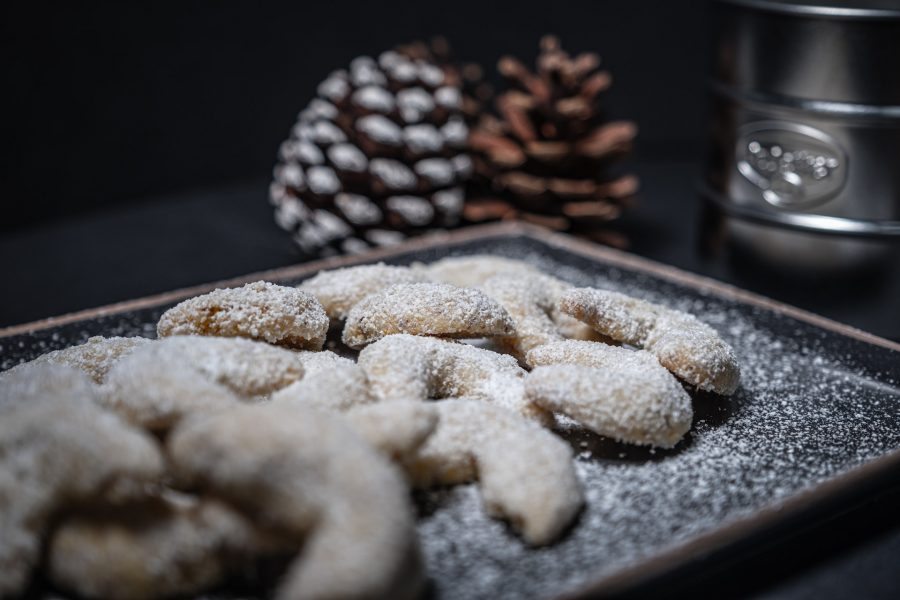
My mother makes a variety of cookies for the holidays, but these delicate, buttery crescents dusted in icing sugar are the family favourite.

— Caley Moore, Managing Editor, Print

viennese crescent cookies on plate
Viennese crescents. (Stock photo: Marc Markstein/Unsplash)

Viennese Crescents

  • 1 cup butter                 
  • 1/4 cup sugar
  • 1 tsp. vanilla  
  • 2 cups flour  
  • 1 cup ground almonds                             
  • Icing sugar

Directions:

Mix butter and sugar, then add vanilla. Add flour and ground almonds and mix.

Shape dough into crescents. Roll crescents in icing sugar and bake at 325 F for 35 minutes. Cool and roll again in icing sugar.


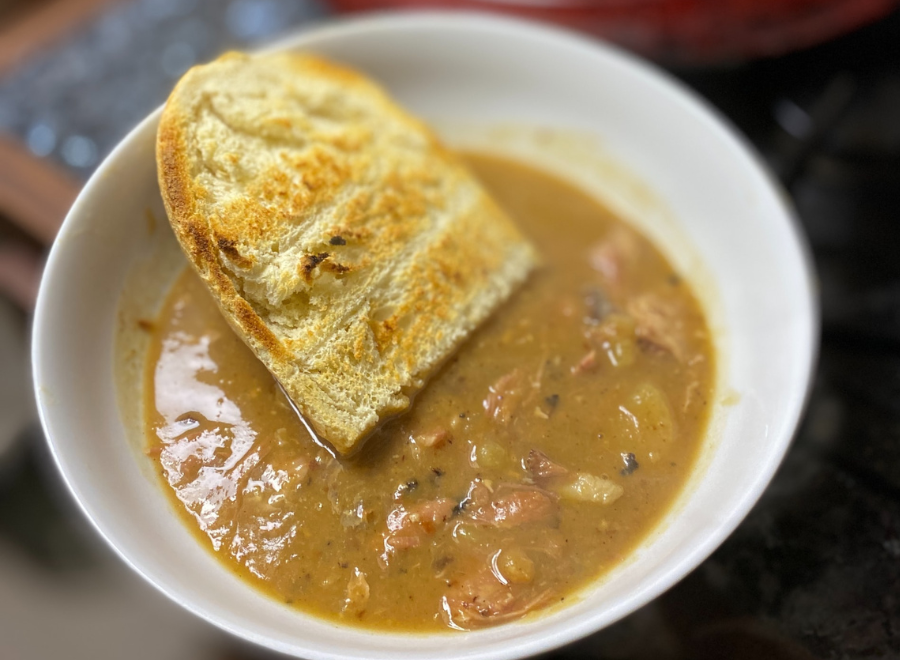
On Christmas Eve, my family enjoys French-Canadian food: pea soup, tourtiere and buche de noel. This is a way of celebrating our family’s French-Canadian heritage.

— Trisha Elliott, Director of Development

Stock photo: Jesson Mata/Unsplash

Pea Soup

  • 2 cups of dried yellow peas
  • 8 cups water
  • 1⁄2 pound ham bone
  • 1 onion, chopped
  • 1⁄2 cup celery, chopped
  • 1⁄3 cup carrot, diced finely
  • 1 tsp. dried savory and thyme
  • Bay leaf
  • Salt and pepper

Directions:

Wash and sort peas and put them in water, bring the water to a boil and then remove it from the heat and let it sit for an hour.

Add ham, onion, celery, carrots, savory and 1 tsp. salt. Bring to a boil; reduce heat and simmer until peas are soft, about 2 or so hours. Fish out the bay leaf.

Sometimes I puree half the soup to make it more creamy.

Season to taste with salt and pepper.


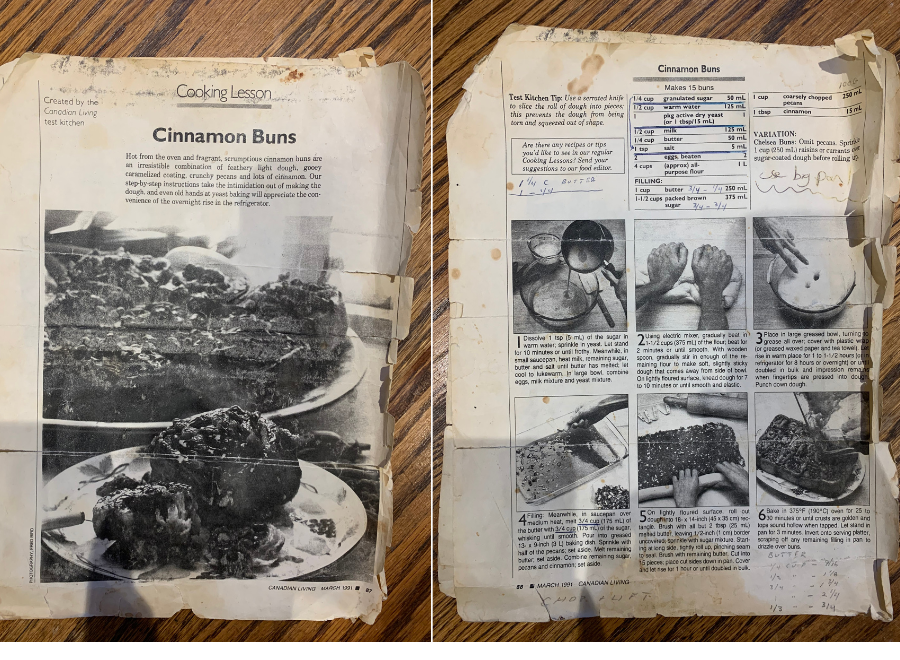
My Grandpa’s cinnamon buns, taken from a recipe from Canadian Living, March 1991.

Every Christmas, my grandfather, Jim Walker, would make these cinnamon buns, which we would enjoy Christmas morning —  with a mimosa when us “kids” became adults. After he died, I took up the challenge, and have been making these buns for my family every Christmas for almost 15 years. My grandmother, his wife, insists mine are better than his, but I don’t believe her. I just need a few more years of practice and then maybe mine will come close to how delicious his buns were.

— Chloe Tejada, Digital Marketing and Social Media Editor

Cinnamon Buns

Ingredients:

Buns:

  • 1/4 cup granulated sugar
  • 1/2 cup warm water
  • 1 package active dry yeast (or 1 tbsp.)
  • 1/2 cup milk
  • 1/4 cup butter
  • 1 tsp. salt
  • 2 eggs, beaten
  • 4 cups all-purpose flour

Filling:

  • 1 cup butter
  • 1 -1/2 cups packed brown sugar
  • 1 cup coarsely chopped pecans
  • 1 tbsp. cinnamon

Directions:

  1. Dissolve 1 tsp. of the granulated sugar in warm water; sprinkle in yeast. Let stand for 10 minutes or until frothy. Meanwhile, in a small saucepan, heat milk, remaining sugar, butter and salt until butter has melted; let cool to lukewarm. In a large bowl, combine eggs, milk mixture and yeast mixture.
  2. Using an electric mixer, gradually beat in 1-1/2 cups of the flour; beat for 2 minutes or until smooth. With a wooden spoon, gradually stir in enough of the remaining flour to make soft, slightly sticky dough that comes away from the side of the bowl. On a lightly floured surface, knead dough for 7 to 10 minutes or until smooth and elastic.
  3. Place in a large greased bowl, turning to grease all over; cover with plastic wrap (or greased waxed paper and tea towel). Let rise in a warm place for 1 to 1-1/2 hours (or in a fridge for 8 hours or overnight) or until doubled in bulk and impression remains when fingertips are pressed into dough. Punch down dough.
  4. Filling: Meanwhile, in a saucepan over medium heat, melt 3/4 cup of the butter with 3/4 cup of the brown sugar, whisking until smooth. Pour into greased 13- x 9-inch baking dish. Sprinkle with half of the pecans; set aside. Melt remaining butter; set aside. Combine remaining brown sugar, pecans and cinnamon; set aside.
  5. On a lightly floured surface, roll out the dough into 18- x 14-inch rectangle. Brush with all but 2 tbsp. melted butter, leaving 1/2 inch border uncovered; sprinkle with sugar mixture. Starting at long side, tightly roll up, pinching seam to seal. Brush with remaining butter. Cut into 15 pieces; place cut sides down in pan. Cover and let rise for 1 hour or until doubled in bulk.
  6. Bake in 375F (190C) oven for 25 to 30 minutes or until crusts are golden and tops sound hollow when tapped. Let stand in pan for 3 minutes. Invert onto serving platter, scraping off any remaining filling in pan to drizzle over buns.

I know a lot of people think they make the best shortbread ever, but that’s not true. My grandmother did.

I have many memories of making this recipe as a child. I remember how I’d be coaxed to gently work the dough in my hands and firmly press it into the pan. Then I’d get to prick it all over with a fork — our way of turning this humble but delicious treat into something fancy. From a young age, we kids would cover the shortbread in red and green coloured sugar to make it festive. And when I say cover, I mean cover. I think our mother eventually had to hide the little shakers.

The trick to getting this recipe right is in the kneading. As my mother explains, when we work it with our hands — warming up the butter and mixing it better — it makes the shortbread taste better. For me, the memory of the women in my family before me using their hands to create this treat also magically sweetens the flavour. Memory and hands commingle with the mere four ingredients and out comes something that melts in my mouth.

— Julie McGonegal, Associate Editor

Stock photo: Skön Communication/Unsplash

Shortbread

  • 2.5 cups all-purpose flour
  • ½ cup white sugar
  • ¼ tsp. salt
  • 1 cup butter

Directions:

Mix dry ingredients and blend in butter until the mixture forms small beads. Then work the mixture into a ball. Divide in half. Put each ball into a separate 8-inch tin. Press down evenly with your hands and prick all over with a fork. Bake at 275 degrees Fahrenheit for approximately 45 minutes or until lightly browned. When cool, cut into squares or triangles. Add festive sugar sprinkles (as many as you want!).


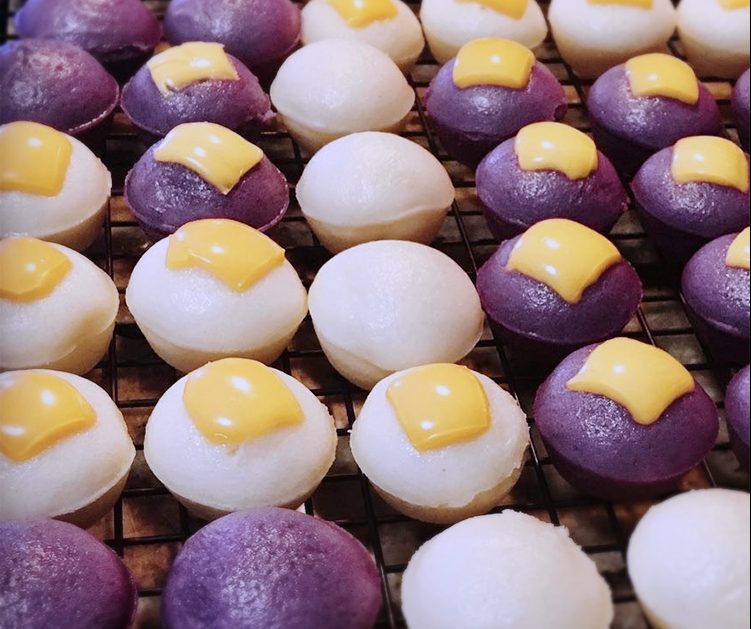
Cheese puto is a traditional Filipino steamed cake/muffin. There are tons of variations for Christmas, but we opt for the simplest version!

— Robert Liwanag, Associate Editor

Stock photo: Joost Nusselder/Flickr via Creative Commons

Cheese Puto

  • 1 cup all-purpose flour
  • 1/2 cup granulated white sugar
  • 3 teaspoons baking powder
  • 1 cup fresh milk
  • 1/4 tsp. vanilla extract
  • 3/4 cup shredded sharp cheddar cheese
  • 5 cups water (for steaming)
  1. Pour the water into a steamer or cooking pot. Bring to boil.
  2. Sift flour, sugar and baking powder. Combine ingredients in a separate bowl. Mix well.
  3. Slowly add the milk while stirring. Continue to stir until the texture of the mixture becomes smooth.
  4.  Stir in the vanilla extract and half of the shredded cheese.
  5. Pour the mixture into small- to medium-sized molds. Arrange in the steamer. Cover and steam for 25 minutes. Top each puto with the remaining shredded cheese. Steam for another 5 minutes.
  6. Take the puto out of the steamer. Cool down.
  7. Remove the puto from the mold with the help of a spatula.

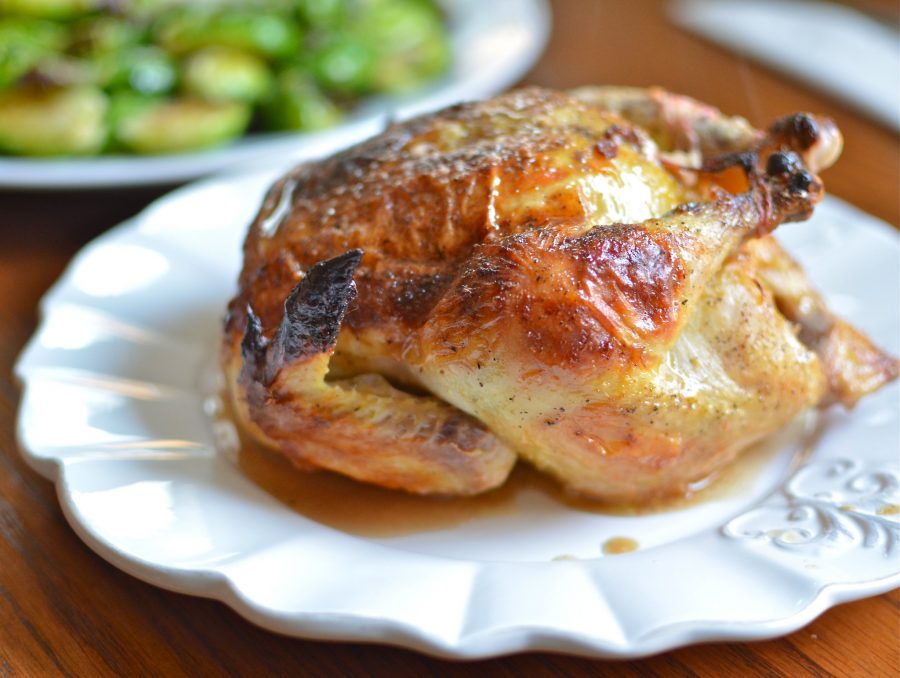
My family likes to have roasted Cornish hens for Christmas dinner. Everyone gets their own individual hen with red currant jelly. For sides, we have ginger sweet potato and french beans.

— Anne Brooks, Editorial Administrator

Stock photo: Gina/Flickr via Creative Commons

Cornish Hens with Lemon & Herbs

  • Cornish hens (about 1 3/4 lbs each) room temperature
  • 1 bunch fresh thyme, plus more for garnish
  • 4 lemons, halved, plus wedges for serving
  • 1/2 cup loosely packed fresh flat-leaf parsley
  • 6 tbsp. unsalted butter
  • Coarse salt & fresh ground pepper

Directions:

Preheat the oven to 450 degrees. Place hens in a roasting pan, breast sides up. Place thymes sprigs and lemon halves in each cavity. Place remaining thyme and the parsley under the skin. Squeeze remaining lemon halves over hens and rub butter all over hen. Season generously with salt and pepper.

Roast hens, rotating pan halfway through until skin turns gold brown and thermometer registers 180 degrees. Depending on the appetites of those you are serving, you can cut the hens in half lengthwise.


Christmas morning deserves a special breakfast, in my opinion. I make this recipe a day ahead. When we wake up, I pop it in the oven before we open our stockings. By the time we’re done, this hot breakfast is coming out of the oven. My son gets impatient to open the gifts under the tree, but we make him slow down and savour the moment — with a sweet slice of French toast.

— Jocelyn Bell, Editor/Publisher

Baked French Toast with Caramelized Pear Sauce

(Canadian Living January 2013)

Hands-on time: 20 minutes

Total time: 2 1/2 hours

Makes: 10 to 12 servings

  • 4 pears (Bartlett or Anjou, ripe but still firm)
  • 1/3 cup butter, softened
  • 1 cup packed brown sugar
  • 2 tbsp. corn syrup
  • 1 cup thawed frozen cranberries
  • 2 tbsp. all-purpose flour
  • 6 thick (1-inch) slices egg bread
  • 1 1/4 cups milk
  • 1/2 cup whipping cream (35{d2b09b03d44633acb673e8080360919f91e60962656af8ade0305d5d8b7e4889})
  • 5 eggs
  • 1 tsp. vanilla
  • Pinch each nutmeg and salt

Topping: 

  • 2 tbsp. granulated sugar
  • 1/2 tsp cinnamon

Directions:

Peel, core and cut pears into 1/4-inch thick slices; set aside.

In skillet, melt butter over medium heat; cook brown sugar and corn syrup, stirring, until sugar is dissolved, about 1 minute.

Add pears and cranberries; cook over medium-high heat, stirring often, for 5 minutes. Whisk flour with 2 tbsp. water; whisk into pan and cook until pears are tender and sauce is thickened and syrupy, about 12 minutes. Spread in greased 13×9-inch baking dish; let cool for 20 minutes.

Layer bread over pear mixture. Whisk together milk, cream, eggs, vanilla, nutmeg and salt; pour over bread, making sure bread gets fully soaked. (Make-ahead: Refrigerate for up to 24 hours.)

Topping: Stir sugar with cinnamon; sprinkle over bread. Bake, uncovered, in 350 F oven until puffed and golden, about 50 minutes. Let stand 10 minutes before serving


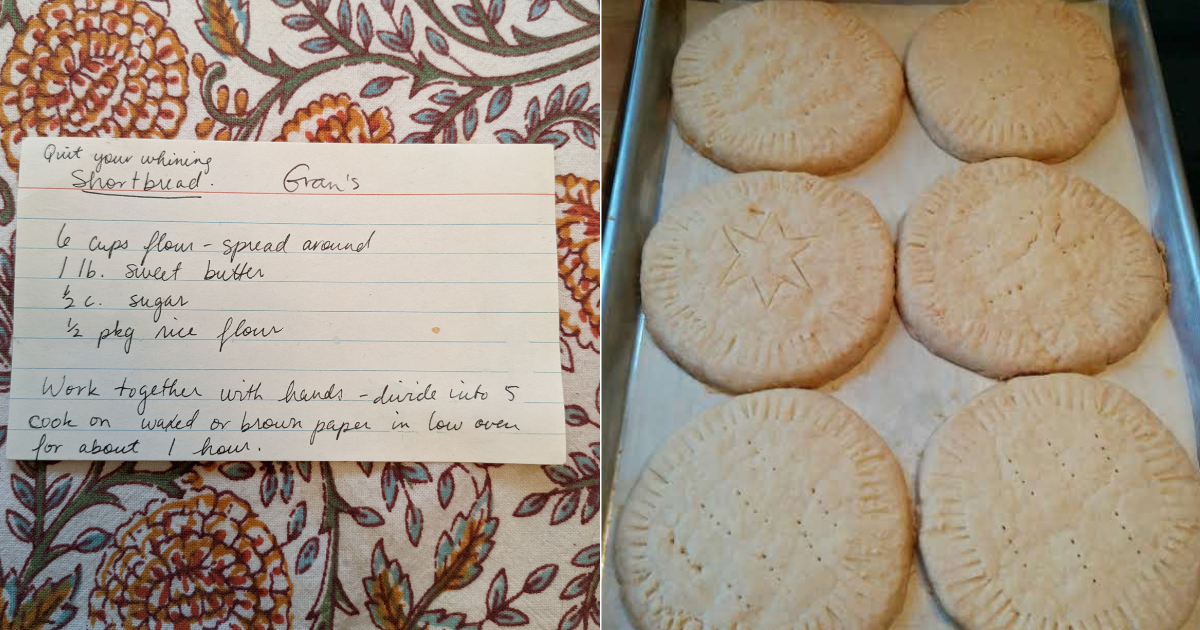
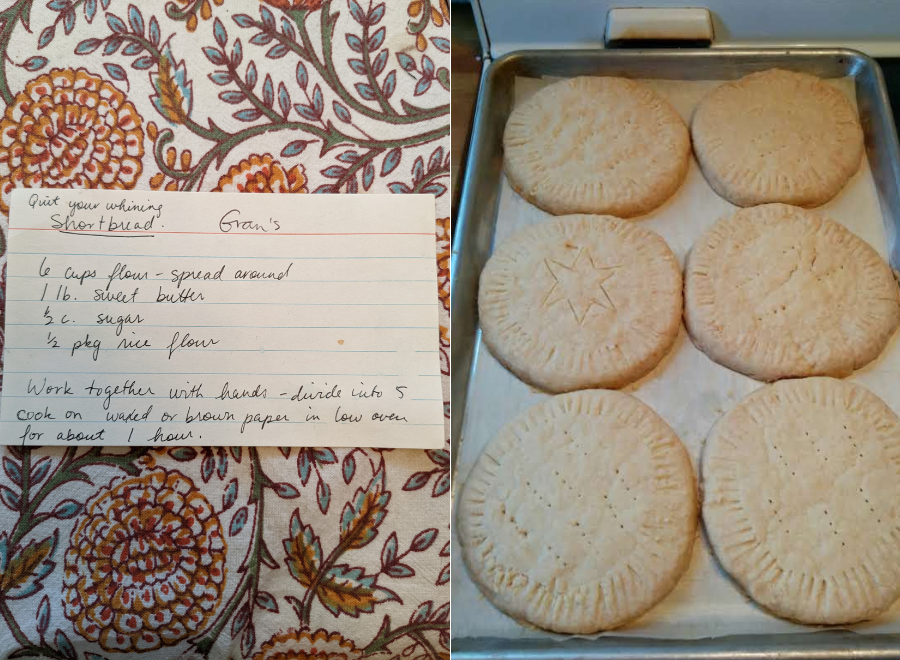
Picture and recipe card of my maternal Gran’s shortbread recipe, as transcribed by my loving sister for my wedding shower recipe box. We are different people; she preferred my paternal Nana’s (overly sweet) pavlova recipe, I prefer my Gran’s barely sweet, very short, shortbread. Hence her commentary on the top of the card!

I defy anyone to make it without adding an extra 1/3 lb. of butter to get them to hold together!

— Sarah Watt, Circulation Marketing Manager

Shortbread

  • 6 cups flour — spread around
  • 1 lb. sweet butter
  • 1/2 cup sugar
  • 1/2 pkg. rice flour

Directions:

Work together with hands — divide into 5. Cook on waxed or brown paper in low oven for about 1 hour.