When you’re on the go with a growling stomach, you may find yourself in a fast food restaurant where healthy food choices are hard to find. Could one of many new, plant-based options – whether it’s Burger King’s Impossible Whopper or Subway’s Meatless Meatball Marinara – be the answer?
Melissa Keeney, RDN, a registered dietitian at St. Vincent’s Medical Center, dives into the world of plant-based fast food.
Many plant-based options may leave you feeling mentally good about your choice, but the nutrients may not reflect the same goodness.
“In general, fast food does not offer much nutrition. Most foods at fast food restaurants are high in sodium and saturated fat and low in fiber,” notes Melissa Keeney, RDN, a registered dietitian at St. Vincent’s Medical Center. “Nutritionally, plant-based burgers are not too different from hamburgers.”
The nutritional breakdown
The problem is introducing plant-based products into fast food kitchens. Plant-based burgers and meat at McDonald’s and Burger King have comparable levels of saturated fat and protein. The kicker? The plant-based burgers actually have higher levels of sodium.
“For reference, the American Heart Association recommends no more than 2,300 mg of sodium daily and an ideal limit of less than 1,500 mg per day for most adults. All of the burgers listed had more than 1,000 mg of sodium, with some almost at the ideal limit for the entire day,” she says.
Plant-based “meat” has changed in the past few years
Many fast food restaurants added plant-based products to their menus in 2020 and 2021. These newer products – many produced by plant-based brands like Impossible or Beyond – are a major evolution from the original veggie burgers.
“These new plant-based burgers are different from the veggie burgers made with vegetables, grains and beans that have been around for a while. They were created to look, smell and taste like a regular burger. They even ‘bleed’ like real beef!” she notes.
But wait – a plant-based diet could still be a good choice
It’s not time to totally write off your dreams of a plant-based diet.
Typically, Keeney says research indicates that eating more plant-based meals decreases risk of:
“Eating more plant-based meals may improve sleep, quality of life, immune function and digestive health,” she says.
Developing a healthy relationship with food
Grabbing plant-based fast food – or any fast food – occasionally isn’t going to ruin your attempts at living a healthy lifestyle, Keeney says.
“Being healthy is not just about eating healthy foods; it is also about having a healthy relationship with food. No single food or meal is going to make or break your diet. If you are having the fast food occasionally, go ahead and eat it,” she says.
To reap the benefits of plant-based nutrition, start with making plants the star of your meal a few times per week. Add nuts or seeds to a salad instead of meat or fish, swap a deli sandwich for a veggie and hummus wrap, or make vegetarian chili with beans or lentils.
If you are interested in adding more plant-based foods to your diet, talk with a registered dietitian.
Coworkers may possibly be capable to influence your nutritious foods possibilities.
Even if you get the job done from property, your employer and coworkers could nonetheless sway your ingesting patterns and behaviors.
Peer pressure, encouragement, and social norms might clarify this marriage.
Your coworkers might assistance you adopt a more healthy diet program, in accordance to a new study published in BMC Community Well being.
For example, likely to the business cafeteria with your coworkers who are a lot more likely to consume fruit and greens might lead you to order a salad alternatively of a burger. Anne van der Place, MS, a co-writer of the study and a PhD prospect at the department of sociology at Utrecht University, reported that peer stress is partially responsible for this preference, but other elements are at engage in.
“We are close to them so much and we see what they eat and what they do,” van der Set informed Verywell. “I see my colleagues much more frequently than my good friends. I even see some colleagues more frequently in a working day than my associate.”
Previous studies have revealed the affect of social groups on overall health. The landmark Christakis and Fowler study posted in the New England Journal of Medication in 2007 was one particular of the very first to join the danger of building obesity with social ties and stated the risk greater by 57{d2b09b03d44633acb673e8080360919f91e60962656af8ade0305d5d8b7e4889} if an individual’s buddy developed weight problems.
Though research has proven that close friends can affect health and fitness behaviors, experts are still learning how everyday associations, like coworkers, can effects our eating routines.
“We’re social creatures and we are vulnerable to social affect from our friends. It would not be stunning to see that in the place of work, far too,” explained Douglas E. Levy, PhD, MPH, an associate professor of medicine at Harvard Health-related University who also studied the connection concerning food items preference and the role of colleagues just before.
Levy’s crew reviewed food decisions from 7 medical center cafeterias that used a “traffic light” labeling program to recognize nutritious (eco-friendly) and harmful (pink) food items. They uncovered that coworkers who ate alongside one another ended up probably to influence each other’s ingesting styles, specifically when it arrived to healthful foodstuff.
“It could be peer tension, or it could be just exposure to a particular norm,” Levy reported.
When Levy located that coworkers had been additional probably to motivate healthy eating behaviors, it is also feasible for coworkers to have a poor influence.
“You go to lunch with your coworkers and any individual gets a cheeseburger and fries, that form of provides every person else permission to get cheeseburger and fries. It claims, ‘we’re not heading to decide you adversely for performing so,’” Levy claimed.
What If You Do the job from House?
Both van der Put’s and Levy’s exploration examined how coworkers influence nutritional practices when they share a workspace or take in in the very same cafeteria. But these experts believe that the affect could extend to digital office interactions as perfectly.
van der Put stated she’s doing work on a analyze that observed that even if personnel get the job done from home, their ingesting patterns and behaviors could nevertheless be impacted by employers and colleagues.
“We considered it was intriguing mainly because if you perform from residence, you have less call with your colleagues but they are nonetheless an essential reference team,” van der Place claimed.
Levy included that some contributors in the 2007 Christakis and Fowler study did not are living close to every other, nonetheless they even now influenced their peers to consume more healthy. Remote personnel who hook up on the internet often, then, may continue to be prone to peer impact.
“The effects of the pandemic on the workplace and coming back again to the place of work are continue to very much performs in progress,” Levy said.
How Substantially Influence Do Your Workers Definitely Have?
Tricia Leahey, PhD, a professor specializing in behavioral medicine and way of life interventions for weight problems treatment at the College of Connecticut, informed Verywell that the thought of homophily, or the tendency to link with folks who are related to us, may well also impact the study findings.
“We’re attracted to persons who have equivalent perspectives or interact in comparable behaviors,” Leahey claimed. “It may perhaps be that we select to dangle out with coworkers who are like us.”
On the other hand, she mentioned the workplace can provide people alongside one another who would not otherwise interact. The character of these interactions could lead to social impact as a result of modeling.
“You’re going to the cafeteria with a new colleague and possibly they opt for a balanced salad then maybe you’re much more likely to decide on a wholesome salad. You could see wherever that could participate in out,” she reported.
Whether or not it’s peer tension, encouragement, or a bond strengthened by sharing balanced practices, evidence indicates that coworkers can impact your taking in behaviors. Now, scientists want to determine how to translate this analysis into successful workplace wellness packages.
“Creating a much healthier workplace society is a collective effort,” van der Place mentioned. “It definitely only will help if you have this assistance all through the organization.”
What This Suggests For You
Accessibility to healthy foods will also assist staff members make nutritious decisions. The food items possibilities available in a split area or cafeteria will also impact what coworkers consume when they are with each other.
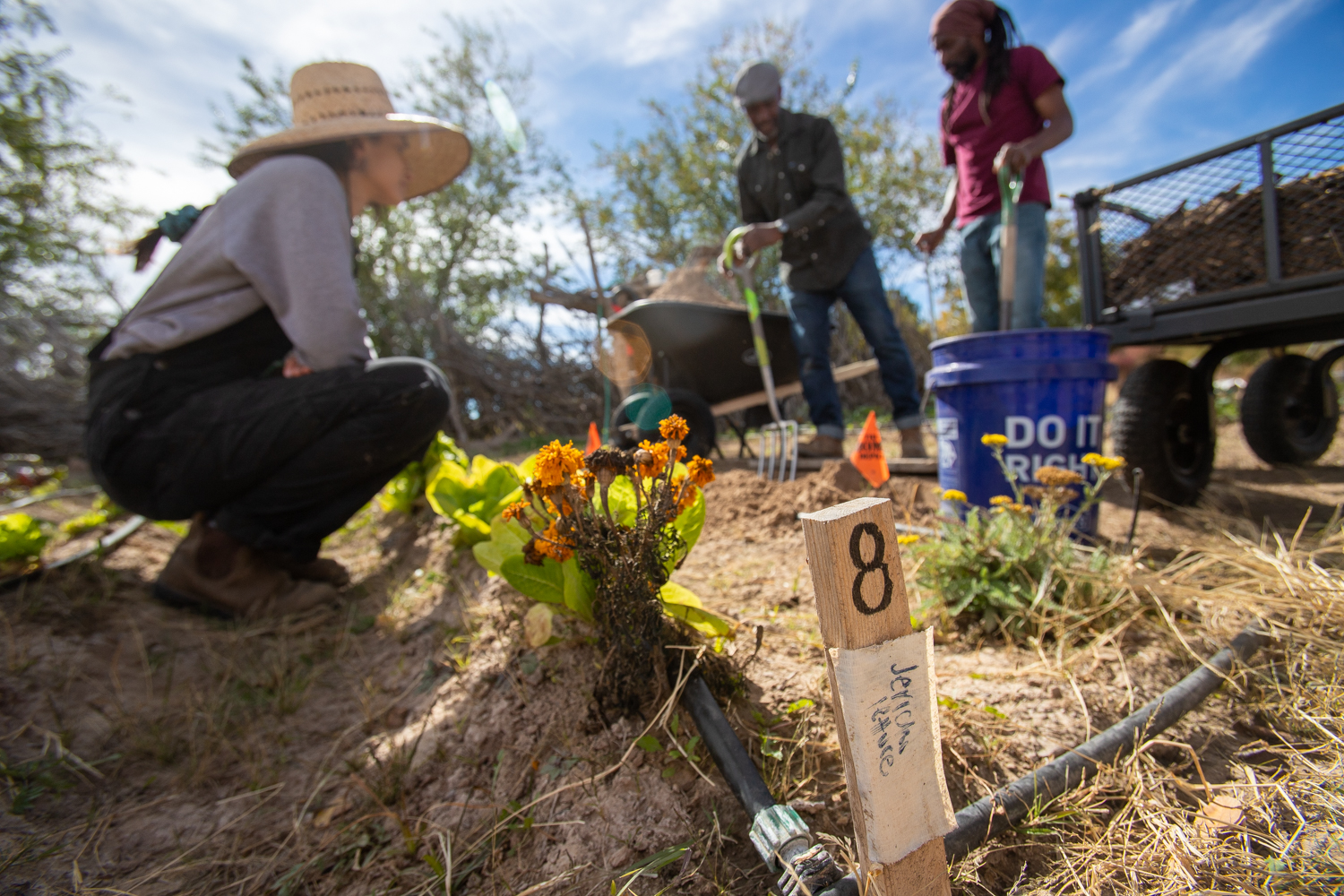
LA UNION, N.M. —Shahid Mustafa is talking about the importance of soil on a chilly November morning on Taylor Hood Farms, as he and Lindsey McKee lead a workshop on regenerative agriculture, a way of farming that focuses on soil health and biodiversity.
Three participants from Las Cruces sit on the raised carrot beds as Chico the bearded, brown billy goat grazes nearby. They’re eager to learn how to grow their own food. But before these students get their hands on a shovel, they learn about how nutrition starts underground.
“Soil is a living entity,” Mustafa said. “It’s not just something you walk on or kick off your shoes. There are more microorganisms in a teaspoon of soil than people on the planet. When you bring life back into soil, consequently that’s what happens with your food. If you ingest that, it becomes part of your own biology.”
That’s the crux of what Mustafa and McKee teach: Healthier soil leads to healthier food, which can lead to healthier people. They’re among a small group of farmers in the Paso del Norte region who are growing food with this mindset.
Research seems to support the link between healthy soil and healthy food. A study published in 2022 shows farms that practiced soil regeneration grew crops with higher levels of vitamins and minerals than farms using conventional farming methods.
The end of World War II ushered a boom in agricultural output, bolstered by improved machinery, genetically-modified seeds and the widespread use of pesticides and chemical fertilizers. But mounting evidence shows many of our fruits, vegetables and grains are less nutritious than they were 40 to 70 years ago: In other words, the apple you’re eating today has fewer nutrients than an apple in 1950.
Taylor Hood Farms in southern New Mexico practices and teaches regenerative agriculture. (Corrie Boudreaux/El Paso Matters)
Mustafa would like to see more research address the connection between farming practices and public health, but doesn’t think it’s a topic that the industrial food system prioritizes.
“In terms of measuring nutrient density, it’s generally not a focus on production because they (industrial farms) grow for volume and they grow for appearance, so it looks a certain way and hopefully the farmer was able to get enough yield to be profitable,” Mustafa said. “But beyond that there’s not a lot of data to support its nutrient value.”
Regenerative farms feed families across the borderland
Mustafa shares a 2.5-acre plot with an artist residency in La Union in southern New Mexico just west of El Paso. Taylor Hood Farms and other small-scale food growers in this area serve customers from El Paso to Las Cruces.
Less than five miles north, Andre Gutierrez of O.G. Farms spent his summer trialing different, drought-resistant melon varieties in a pruned pecan orchard, saving the seeds for next season. In Berino, N.M., just eight miles away from O.G. Farms, Yvonne Diaz of De Colores Farms tends to a field of Mexican June, a white corn historically grown in the Southwest, without using synthetic pesticides. The fruits and vegetables grown on O.G. Farms and De Colores go to distributors like Desert Spoon Food Hub in El Paso that offer weekly grocery boxes for delivery or pickup online.
Andre Gutierrez carries freshly harvested chard at Granja La Capilla in Mesilla, New Mexico on Nov. 5. (Corrie Boudreaux/El Paso Matters)
Most of the farmers from these operations have some kind of connection to La Semilla Food Center, such as Gutierrez, who worked on La Semilla’s farm before starting his own. Established in 2010, the nonprofit center’s programs include farm training, youth camps and produce deliveries.
“We support farmers while they get established and even after establishment,” said La Semilla farm manager Josh Jasso. “Whether that’s stipends to come co-teach and share their knowledge with other beginning farmers or supplies if we can afford them or space.”
On a recent November morning, Jasso checks on a row of rainbow chard, pulling back the tarp that protects the crops from wind and freeze. He points out an assassin bug, which is known for being beneficial to plants because they prey on insects that eat foliage.
La Semilla grows food using organic and regenerative practices, but Jasso said labels are a tricky issue: They help people make decisions when purchasing food, but many people don’t know what those labels entail. The organic certification requires farms to not use prohibited substances – such as synthetic fertilizers – but doesn’t go far enough, he believes.
“Organic practices, even at a large scale, are ripping up the earth and extractive,” he said. “They’re just paying for the label and using the required materials, so it’s not like a mindset. … Regenerative ag is sort of a buzz word right now. The word we use is agro-ecological. It’s about your relationship with soil more than any standards or certificates.”
Josh Jasso sits among beds of chard at La Semilla Farm in Anthony, New Mexico on Nov. 11. (Corrie Boudreaux/El Paso Matters)
At La Semilla, the farmers try to minimize tilling because tilling breaks up soil structure and disturbs mycelium, the network of fungal strands that help plants absorb nutrients and water. This disruption also causes soil to erode faster.
A couple weeks prior, they planted cover crops ofbarley, oats, yellow field peas, clover and bitter vetch. Legumes like peas, clover and vetch have a relationship with soil-dwelling bacteria that fix nitrogen out of the atmosphere and into the soil. Since the crops grown for harvest suck out nitrogen from the soil, it’s essential to replenish the soil for the next crop, Jasso said.
Researchers recently conducted what they call a first-of-its-kind study to test these practices. Published in the journal PeerJ this year, the study analyzed 10 farms across the country that had practiced no-till, cover cropping and crop rotations for at least five to 10 years. The farmers grew peas, sorghum, corn or soybeans on one acre using the regenerative practices, and the same crop on a neighboring plot using conventional farming methods.
The crops grown with regenerative practices had higher levels of vitamins K, E, B1 and B2, the results show. These vitamins are essential for the human diet because they’re involved with building bones, protecting cells from damage and converting food into energy. The regenerative crops also had more calcium, a mineral that supports the development of healthy bones and strengthens teeth.
Desiree Miller, a 22-year-old intern at La Semilla, grew up in El Paso where she didn’t pay much attention to the environment or where her food came from. Fresh fruits and vegetables weren’t a significant part of her diet, she remembers. She came to the farm because she cares about transforming the food system.
While completing her undergraduate degree in environmental biology at the University of Texas at El Paso, she researched the gut microbiome and examined soil nutrients. She didn’t connect the two separate assignments – soil health and human health – until after she graduated and started farming at La Semilla.
La Semilla Food Center in southern New Mexico is training the next generation of food and farm workers, such as Desiree Miller from El Paso (pictured left). (Corrie Boudreaux/El Paso Matters)
Ultimately, she hopes to combine her science background with her knowledge of regenerative farming to make food both healthier and more accessible.
“Getting people to actually see where their food comes from I think would be a big step in addressing nutrition because I think we’re just very disconnected,” Miller said. “Buying stuff from a store just feels like buying a product on a shelf, like any other thing you buy. When you come here and see where your food comes from, you’re like, ‘Oh, I understand what it’s like to be part of an ecosystem.’”
How industrial agriculture affects public health
On a recent tour of O.G. farms, Andre Gutierrez pulls a bunch of radishes from the ground, adding them to the bouquet of leafy fall harvest he’s carrying. There was a freeze overnight, but the hardy root vegetable survived. Under the light of day, the sun now warms the rows of beets, onions, carrots and turnips.
The former landscaper from El Paso started helping his dad care for livestock in Anthony, New Mexico, about 12 years ago, mostly cows and sheep – “expensive pets” he refers to them in jest. He eventually took an interest in growing food.
It’s a good sign when he finds earthworms in the beds, he said. The animals break down organic matter into forms of nutrients that plants can use.
Gutierrez scoops a handful of soil out of a wheelbarrow. It contains fungal compost from Full Circle Mushrooms, a farm that grows specialty mushrooms just north of O.G. Farms.
“In essence, I’m farming the soil and I let the soil do the work,” Gutierrez says.
Andre Gutierrez practices regenerative farming at O.G. Farms in Anthony, New Mexico. (Corrie Boudreaux/El Paso Matters)
Gutierrez grows a variety of fruits and vegetables, and tries to avoid planting the same type of crop in the same bed in back-to-back seasons, a practice called crop rotation.
This stands in contrast to monoculture, the practice of growing a single type of crop on the same plot of land repeatedly. This practice depletes the soil of nutrients and organic matter, which are vital for plant growth. Farmers then lean on synthetic fertilizers to provide their plants the nitrogen, phosphorus and potassium that’s been depleted. But long-term application of synthetic fertilizers can decrease bacterial biodiversity in soil.
Some scientists warn that decades of soil degradation has created a public health problem.
In 2004, researchers from the University of Texas at Austin published a study in the Journal of the American College of Nutrition that analyzed USDA nutrient data published in 1950 and 1999. They found changes in dozens of different crops including strawberries, watermelon, broccoli, asparagus and cucumbers.
Overall, there were declines in protein, calcium, iron and vitamin C, along with other essential vitamins and minerals, though the level of decline varied. Protein is a fuel source and building block for body tissue. Iron is needed for transporting oxygen throughout the body while vitamin C is critical to the growth and repair of body tissue.
When asked what it would take for farmers to transition to more regenerative practices, Mustafa says the agriculture industry doesn’t easily allow farmers to take that financial risk.
“I wouldn’t say it’s the farmer’s fault, especially because they’re so entrenched in their infrastructure,” Mustafa said. “Changing it for us on two acres is a lot easier than someone growing a thousand acres of anything. The amount of input to add or change in terms of how they practice, they’d have to take out a loan and there’s no subsidy supporting that.”
Andre Gutierrez harvests radishes from rows planted between pecan trees at Granja La Capilla in Mesilla, New Mexico on Nov. 5. (Corrie Boudreaux/El Paso Matters)
Mustafa, as well as other farmers and food activists, point to various ways to improve public health through agriculture.
Jasso suggests collaborative relationships between regenerative farms and universities, so farmers and scientists can work directly together to produce more research. The problem, he said, is that many regenerative growers tend to bounce around different plots of land in their lifetime. Soil health and microbial communities are dynamic, so these types of studies would need to be long term, he said.
The Bionutrient Food Association is one organization trying to collect more data. In 2020, the nonprofit published a report that identified mostly positive correlations between soil health and nutrient density. There were significant variations, however, and no single farming practice is a “silver bullet,” said Dan Kittredge, executive director of the Bionutrient Food Association.
The data collected is also used to fine-tune a handheld bionutrient meter, which would allow a grocery shopper to measure the nutrients in their produce before buying. This could incentivize the agriculture industry to grow food for nutrients, Kittredge said.
Shahid Mustafa, left, explains the “double dig” technique to workshop participants at Taylor Hood Farms in La Union, New Mexico on Nov. 5. (Corrie Boudreaux/El Paso Matters)
Mustafa agrees that it’s going to take a combination of factors to change the food system: increasing demand for more nutrient-dense food and educating people. Some people have suggested change through policymaking, such as the investment of federal dollars into regenerative farming practices.
“Policy would be helpful but there’s so much economy tied into this existing infrastructure,” Mustafa says.
He believes it will take the next generation of farmers coming up to help move the needle.
Standing among the carrot beds, Terrill Currington, one of the participants at Mustafa’s workshop, describes eating as a temporary satisfaction for people. They don’t think about how it interacts with their body in the long run, he says.
“It’s not as important to them until they have a health crisis,” Mustafa adds. “That’s when I see, ‘Oh, something happened!’ And now you’re paying a lot more attention.”
Not extensive back, my brother decided he wanted to go vegetarian. When my grandmother heard about this, she was concerned. Was he receiving enough protein, sufficient diet? Would he be ready to endure this drastic adjust in diet. It turns out that this transform, if managed correctly, could be much better for him than what we were being feeding on on a daily basis.
There have been numerous scientific tests completed on the subject of plant-dependent meal plans. It has been established that plant-dependent diet plans, which reduce out meat and some other body fat weighty foodstuff, lessen people’s danger for coronary heart sickness and some sorts of most cancers. These meal plans guide to people keeping healthier more time. Plant proteins are healthier for the reason that of the reduce of chemicals for processing and fat located in them. These scientific tests advise that a plant-centered substitute may possibly be improved for people in the long run.
Not all plant-dependent food items are healthy. Foodstuff like potato chips and soda are plant-centered and all right in moderation, but not a aspect of a balanced diet.
Dieticians suggest that individuals commence by adding much healthier, plant-centered foods to their meal plans, instead of entirely having away foodstuff. Foodstuff these types of as entire grains and beans are very good substitutes to fattier proteins. Ultimately, these plant-centered food items will crowd out animal items and make your total weight loss plans more healthy.
Analysis also shows that, if you take in a plant-based mostly food plan with a assortment of components, you will get all the nutrition and proteins that you want. As extended as you eat a variety of food items, these kinds of as lentils, wheat, rice and beans, you will get protein and other items your entire body may perhaps need to have.
Switching to a thoroughly plant-centered diet program may well be much too major of a modify for some people, nevertheless. They could not be able to entry balanced plant foods, or get sufficient nutrients from the food items they can get. This is in particular an situation with the inflation in our present-day overall economy.
More healthy food items often price a lot more and a lot of may well be not able to entry them. This is a issue, particularly densely populated communities, these as Harrisburg. If we want to have more healthy diets, we will need to beat these troubles.
The very good information for these people is that there are alternatives to this. We as a group have to have to place extra force on the spots we buy from to present more healthy foodstuff for us. If we have the means to assist other folks, we can offer healthier foodstuff to them in an obtainable way.
We can petition to law and policy makers for the authorities to supply these providers to us. In reality, there is a full department correct in Harrisburg to assistance with this. The U.S. Meals and Nutrition Assistance, who aid with access to foods in the Harrisburg space, is a excellent location to reach out to about this issue. If adequate persons come jointly to overcome this challenge, transform could be accomplished.
If, right after all this, you even now can not have a fully plant-based mostly eating plan, do not fear. You really do not have to minimize out all meat and go entirely plant based mostly to have a much healthier diet program. A great deal of folks consume a far more plant-based mostly diet regime and come to be what they simply call “flexitarians,” who however take in meat once in a while. My brother states that he is a lot more of a flexitarian than a vegetarian, as well. There are a great deal of weight loss plans that are healthier, but do not reduce out meat totally.
Taking in a lot more plant-primarily based, much more vegetarian, as my brother and our whole dwelling is now accomplishing, is a step toward encouraging folks everywhere eat much healthier. This increases people’s in general wellbeing and will allow them to continue to be healthier lengthier. If you take in a various diet regime of plant-centered food items, you will get all that you require and lower dangers that you get from the fat presently in your meals.
If we foyer to our government and make the smaller changes we can, it will guide to a superior result. Including much more vegetation to your diet plan is a small move that potential customers to your local community be much healthier, encouraging anyone in the extended operate.



:max_bytes(150000):strip_icc()/HealthyEatingChoices_1500x1000_final-70c65ccb67244952afbae9574f75f2c4.png "Your Coworkers Might Influence You to Eat Healthier")