

Beat food price inflation with these budget-friendly, plant-based recipes

Beat food price inflation with these budget-friendly, plant-based recipes

When Toni Okamoto was starting her plant-based food journey, like many people, she thought eating healthy had to be expensive.

“I’ve been without a car at times, I’ve worked multiple jobs at times trying to make ends meet, I lived below the poverty line until just a few years ago, and I have found a way, specifically through meal planning, that has helped me get out of debt and become more financially free,” she told CBS News. 

Now, the blogger and social media star shares her money-saving meal tips with more than 570,000 Instagram followers. 

And with inflation affecting shopping staples like eggs and butter, her latest cookbook, “Plant-Based on a Budget: Quick and Easy” (out Tuesday, March 7), shows readers how to make 100 plant-based recipes that save you money and also time, from freezer-friendly and make-ahead breakfasts to one-pot and 30-minute meals. 

“I want to share that it doesn’t have to be a big to-do to incorporate healthier dishes into your family’s dinners, lunches and breakfasts,” she says. “When I think about meal planning, it can be overwhelming, and I wanted to share that it can be a mix of store bought and homemade so that you’re not having to cook from scratch and spend all day Sunday or every night of the week making something nourishing.”

Okamoto also brought her Mexican and Japanese backgrounds into the project with recipes like Sopa de Fideo, which she highlights as one of her favorites in the book. 

“It’s very simple. It’s very affordable. It’s filling, and I grew up eating that as a kid,” she says of the dish. “It reminds me of being a little girl, and I feel like I’m wrapped in a hug from my grandma.”

To help inspire some plant-based, budget-friendly meals in your home, here are 3 recipe excerpts from Okamoto’s book:

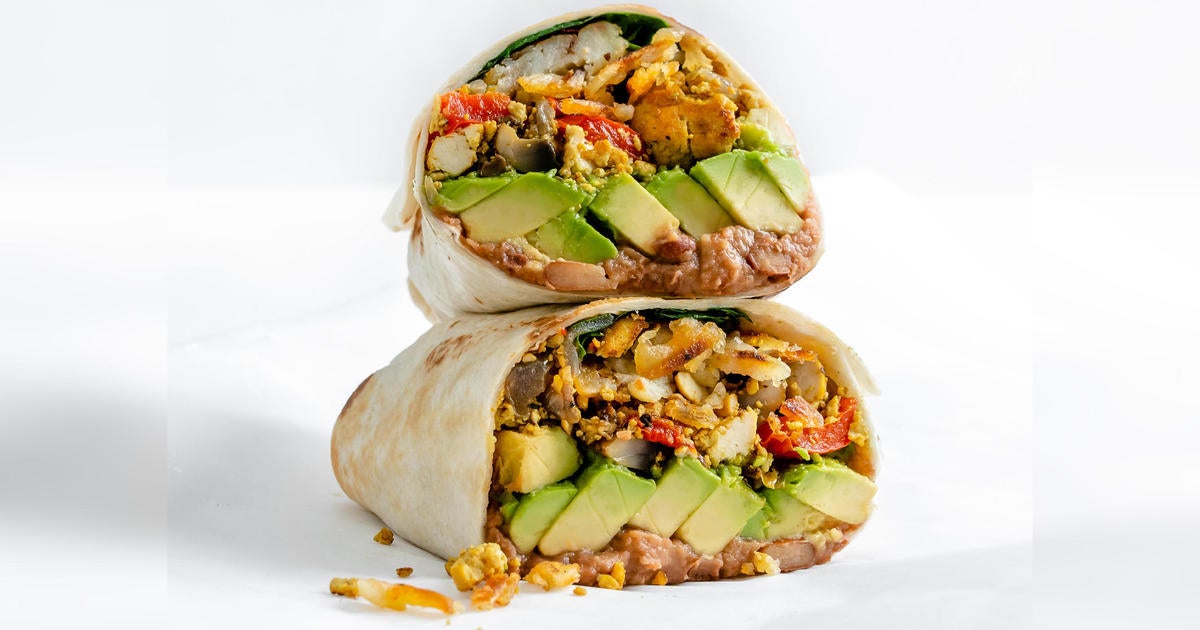
Hash Brown Veggie Breakfast Burritos

Makes 8 burritos | Ready in 20 minutes

Honestly, you can wrap just about anything in a tortilla and it will taste better. Tofu scramble is no exception. With the help of hash browns, refried beans, peppers, and spices, I’ve put a Mexican-inspired twist on this hearty burrito, but you’re welcome to change out this tofu scramble with the version from The Friendly Vegan Cookbook, or simply load up your tortilla with leftover cooked veggies, grains or salad.

Ingredients:
• 2 cups frozen hash brown potatoes
• 1 tablespoon vegetable oil
• 1/2 large yellow or red onion, diced
• 1/2 large red or green bell pepper, diced
• 4-5 cremini or button mushrooms, sliced
• 3 garlic cloves, minced
• 1 1/2 teaspoons ground cumin
• 1/4 teaspoon ground turmeric
• 1 (14- to 16-ounce) package extra- or super-firm tofu, drained and pressed
• Salt, to taste
• 8 burrito-size flour tortillas
• 1 (15-ounce) can vegetarian refried beans

Optional additions and swaps:
• Swap the hash brown potatoes for tater tots
• Swap the oil for 1/4 cup water
• For spice, add 1/2 teaspoon red chili flakes or 1 minced serrano pepper in step 2
• For more flavor, add 1/8 teaspoon smoked paprika in step 3
• For a cheesy flavor, add 1 1/2 teaspoons nutritional yeast in step 3
• Add crumbled cooked Soyrizo in step 6
• Add vegan cheese in step 6

Optional additions for just before serving:
• Diced avocado
• Minced fresh cilantro
• Pico de gallo
• Your favorite salsa or tomatillo salsa 
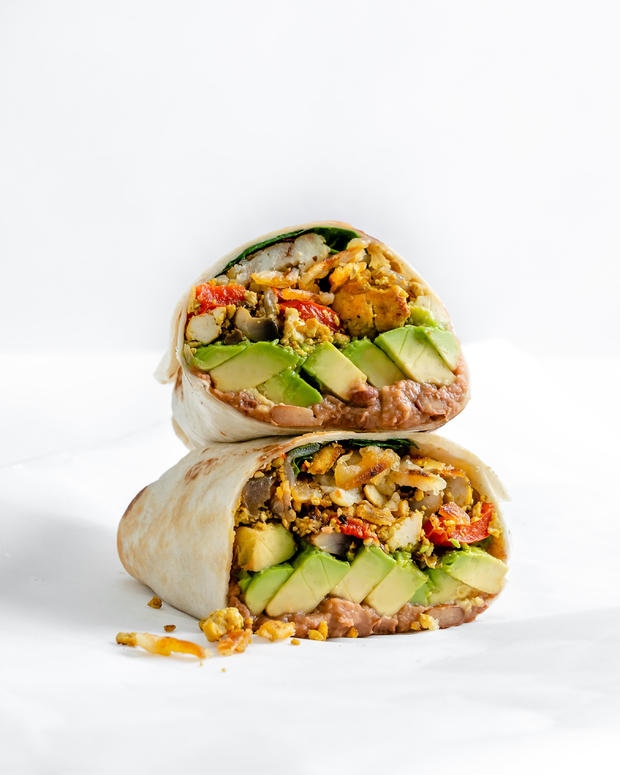
hash-brown-veggie-breakfast-burritos.jpg
Burritos you can prepare and freeze for easy mornings? Sign us up! 

Courtesy of Toni Okamoto


Directions:
1. Cook the hash brown potatoes according to the package instructions and set aside.
2. In a large skillet, heat the oil over medium-high heat. Add the onion, bell pepper, and mushrooms, and sauté until the bell pepper is tender, 3 to 4 minutes.
3. Stir in the garlic, cumin, and turmeric and cook until fragrant, about 1 minute.
4. Using your fingers, crumble the tofu into the pan and sauté until the tofu is golden, 4 to 6 minutes. Season with salt.
5. Warm the tortillas in the microwave for 15 seconds. (Alternatively, heat individual tortillas in another skillet over medium heat until warmed, about 1 minute.)
6. Slather a spoonful of refried beans onto each tortilla. Fill the tortillas with a generous scoop of the tofu filling and some hash brown potatoes. If you’re serving your burritos right away, you can add avocado, cilantro, pico de gallo, and/or salsa now and roll them up. If you’re freezing your burritos for later (see Toni’s tips), it’s best to add these ingredients after thawing. 

Toni’s tips:
When frozen and reheated, these taste as fresh and delicious as the day they were made. After they’ve completely cooled, wrap each burrito individually in aluminum foil and place in a freezer bag or airtight container. Keep frozen for up to 2 months. To reheat, unwrap and microwave for 3 minutes, flip, and then heat for 3 more minutes. If you don’t have a microwave, you can bake at 400 degrees for about 30 minutes, or until your burrito is heated through. 

Pesto Pasta
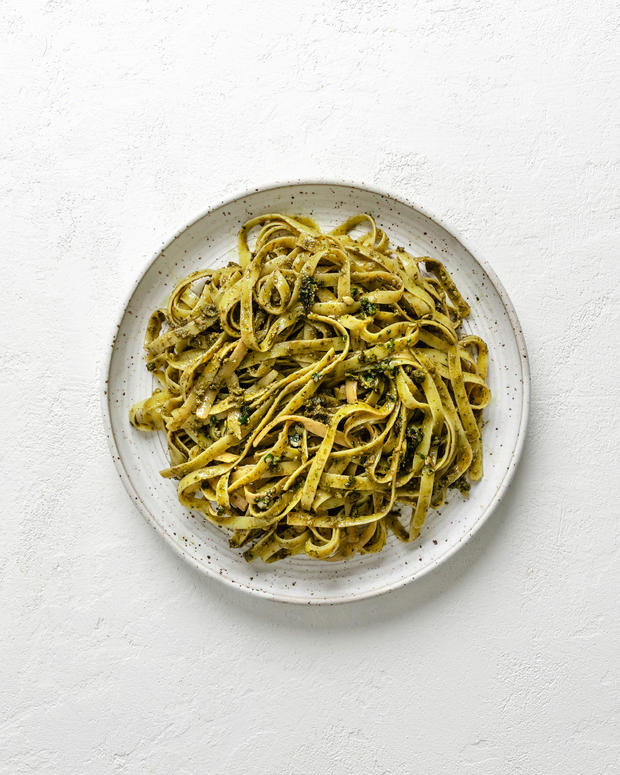
pesto-pasta.jpg
Pine nuts can be expensive. That’s why Toni Okamoto made a pesto recipe that allows for substitutions. 

Courtesy of Toni Okamoto


Serves 4 | Ready in 30 minutes

I love a recipe that allows you to work with ingredients you already have in your pantry, and this Pesto Pasta is just that. While typical pesto calls for expensive pine nuts, this version allows you to use more affordable and readily available pumpkin seeds, sunflower seeds, walnuts or other nuts you have on hand.

Ingredients:
• 1 (1-pound) package your favorite pasta
• 1 1/2 cups tightly packed fresh basil leaves
• 1 cup your choice raw nuts or seeds (walnuts, shelled sunflower or pumpkin seeds, etc.)
• 3 garlic cloves, peeled
• 1/2 cup olive oil
• 1 tablespoon lemon juice
• 1 teaspoon salt
• Black pepper, to taste

Optional additions and swaps:
• Swap the basil for parsley, spinach, arugula, or a combination of any of them
• For spice, add a pinch of red chili flakes in step 2
• Add 2 tablespoons nutritional yeast in step 2
• Add 2 cups your favorite steamed veggies in step 3

Directions:
1. In a large pot, cook the pasta according to package instructions until tender. Drain and transfer to a large bowl.
2. Meanwhile, combine the basil, nuts or seeds, garlic, olive oil, lemon juice, and salt in a blender or food processor, and blend on high until smooth and creamy.
3. Stir the pesto in the pasta. Season with a few grinds of black pepper.

Toni’s tips:
Ice cube trays aren’t just for making ice; try using one to preserve your pesto! Triple or quadruple the pesto in this recipe, pour it into an ice cube tray, freeze it, then pop out your pesto cubes and store them in an airtight container for up to 3 months. To reheat, in a medium pot, add 3 or 4 cubes (or more if you want extra flavor) to a serving of cooked pasta and heat over medium-high heat, stirring until they melt and become a sauce that evenly coats the pasta. 

Depression-Era Vanilla Cupcakes
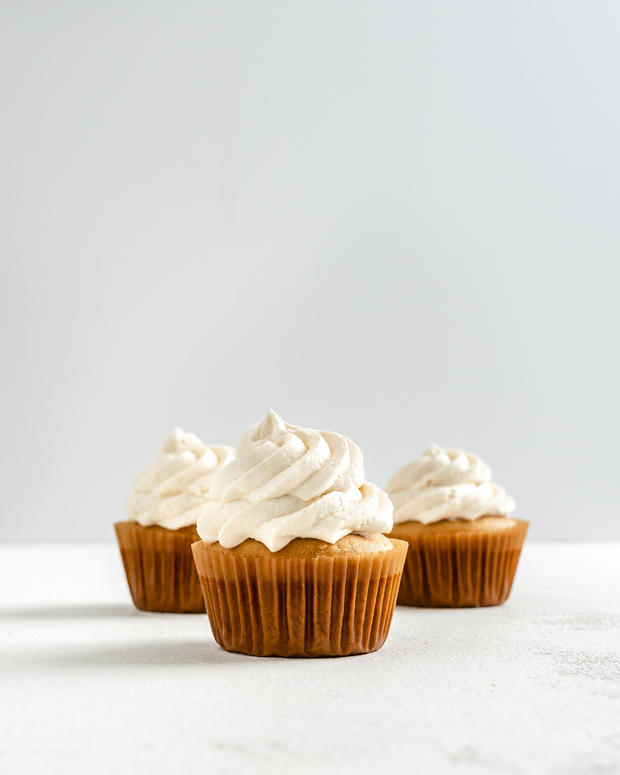
depression-era-vanilla-cupcakes.jpg
Toni Okamoto’s Depression-era vanilla cupcakes skip eggs and dairy for a budget-friendly dessert. 

Courtesy of Toni Okamoto


Makes 12 cupcakes | Ready in 45 minutes

As the name suggests, this type of cake dates back to the Great Depression, when many Americans couldn’t find or afford typical baking ingredients like eggs and butter and had to get creative with pantry staples. I’m all about minimalist baking, so when a simple recipe with easy-to-find ingredients comes along, I hold on to it and never let go.

Ingredients:
• 1 1/2 cups all-purpose or whole wheat flour
• 3/4 cup granulated sugar
• 1 teaspoon baking soda
• 1/2 teaspoon salt
• 2 teaspoons vanilla extract
• 1 teaspoon white or apple cider vinegar
• 1/4 cup + 1 tablespoon vegetable oil
• 1 cup water

Directions:
1. Preheat the oven to 350 degrees. Line a muffin tin with silicone or paper baking cups.
2. In the bowl of an electric mixer (or in a large bowl using a handheld electric mixer), mix together all the ingredients until smooth.
3. Fill each baking cup three-quarters full with batter.
4. Bake for 25 to 30 minutes, or until a toothpick inserted in the center comes out clean. Let the cupcakes cool completely before frosting. 

‘I felt like I failed’: inflation puts healthy food out of reach for millions of Americans | US news

‘I felt like I failed’: inflation puts healthy food out of reach for millions of Americans | US news

In April, Kimberly Hart made a resolution to lose some weight on the advice of her doctor. Hart, who is 61 and lives in New Haven, Connecticut, has high blood pressure and cholesterol. These factors, combined with her age and weight, put her at an elevated risk for developing diabetes, and she wanted to do whatever she could to prevent that from happening.

One element within her control, Hart thought at the time, was her diet. She started seeing a nutritionist, a cost covered by Medicaid, and eating more healthily. But it wasn’t long before her efforts clashed with the reality of rising grocery costs.

In May, Hart began to really feel the pinch of higher prices, and by June, she realized she had to completely upend the way she put food on the table for her and her son.

Kimberly Hart prepares a weekend dinner for her and her son.

She swapped wheat bread for store-brand white bread, “which is too bad” she said, “because I know that wheat bread is healthier for me, but I also know that white bread is cheaper”. She switched from frozen vegetables to cheaper canned ones, despite lower nutritional value and higher sodium content, and no longer buys fresh fruit. Four months since her April resolution, she said, the scale hasn’t budged.

“The more color a plate has the healthier it is, because you get your color from fresh vegetables,” she said. But because of her financial situation, “I can’t really do that”.

Inflation is pushing healthy eating out of reach for millions of people like Hart, a trend that public health experts worry could increase their risk for diet-related diseases in the long run. Over the past year, grocery prices have risen rapidly as agricultural supply chains bowed under the pressure of food scarcity, labor shortages and high fuel costs.

By the end of July, the cost of eating food at home had increased by more than 13{d2b09b03d44633acb673e8080360919f91e60962656af8ade0305d5d8b7e4889} compared to the same period a year ago, according to the Consumer Price Index. According to a survey conducted by the Urban Institute in June and July, more than 20{d2b09b03d44633acb673e8080360919f91e60962656af8ade0305d5d8b7e4889} of adults reported experiencing food insecurity within the past 30 days, an increase of more than 6{d2b09b03d44633acb673e8080360919f91e60962656af8ade0305d5d8b7e4889} from spring of last year.

It might seem counterintuitive but scientists have long pointed to links between poverty and obesity. This week, the Biden administration launched a national strategy to tackle the country’s “urgent, nutrition-related health crisis”, including the “rising prevalence” of diet-related diseases such as obesity.

In response to higher prices, people are buying cheaper, processed foods high in calories, sugar and sodium over costlier options like fruits and vegetables, protein and whole grains, according to public health researchers and anti-hunger experts.

“Highly processed foods are still the most affordable for people and they can stretch longer and they have a longer shelf life,” said Mariana Chilton, professor and director of the Center for Hunger-Free Communities at Drexel University. “People want to buy healthy food, but then they make the choice to get food that is not as healthy but that stays on the shelf longer and can stretch and helps their kids feel fuller.”

Kimberly Hart, 61, gets a can of mushrooms from her pantry to add to a chicken soup.
Hart gets a can of mushrooms from her pantry to add to a chicken soup.

Over the long term, researchers have found that food insecurity – defined by the Department of Agriculture as uncertain access to nutritionally adequate food – is probably associated with obesity, a condition that in turn raises the risk of problems including diabetes, heart disease and strokes.

“People in the United States who are more food insecure have higher rates of overweight and obesity,” said Parke Wilde, a professor of food and nutrition policy at Tufts University. Wilde added that low-income people without access to social safety programs are most harmed by inflation-driven food insecurity, and its associated health risks.

While researchers have investigated the link between food insecurity and obesity for decades, exactly how the two issues are related remains unsettled, Wilde said. One explanation may be in the uncertainty it brings. “Having a boom-and-bust cycle in how much food you have might have sends a signal to your body that it needs to retain food energy, and that might put people at higher risk of overweight and obesity,” Wilde said.

Anti-hunger advocates say that food insecurity driven by inflation illustrates the powerful role that poverty plays in shaping dietary choices and healthy eating, which have historically been framed as a matter of individual decision-making.

“There’s this sense that low-income people don’t know how to eat,” said Thomas Reynolds, the chief executive officer of Northwest Harvest, a network of 300 food banks in Washington state. “I just totally reject that. It’s really about just making very practical decisions, because money is so tight right now.”

a can of unsalted vegetables
Hart cooks a chicken soup with canned unsalted vegetables to watch her sodium intake.

Katrena Ross, 40, a legal assistant and mother of three living in Redford, Michigan, first started worrying about inflation in February. At the time, Ross was already straining to feed her family on a monthly budget of less than $200, a situation that made her especially attuned to even the slightest price increase.

As prices began to rise in the spring, Ross couldn’t afford to buy as much fresh produce and meat. Instead she reached for peanut butter and jelly, pasta, boxed macaroni and cheese and $1 ramen noodles – a food she hadn’t purchased in years.

“I would love to say that I think about what eating like this would do to me and my kids but that’s not really a luxury that I have, because I can only think about: what am I feeding them now? What do I have to make sure that they don’t go to bed hungry?”

Public health experts emphasize that food insecurity takes more than just a physical toll – it can also have harmful psychological impacts.

“A lot of people just think about obesity, diabetes, metabolic syndrome, heart disease and yes, all of those can get exacerbated, but a lot of people tend to forget about the emotional consequences,” said Chilton of Drexel University.

Eventually, Ross made the decision to move her family back home with her mother and stepfather, a move that allowed the merged household to pool resources and shoulder the burden of inflation together. It’s a choice that also gave her a much-needed peace of mind.

“My ability to not provide the basics for my family like food and keeping a roof … that was destroying my mental health,” Ross said. “I felt like I had failed them. I felt like I couldn’t keep them safe or provide for them properly, which for a mom or for any parent really, it really hits your self-worth.”

Reynolds of Northwest Hunger said that there are numerous ways that lawmakers can strengthen the social safety net in order to prevent families like Ross’s from experiencing food insecurity in the first place, as well as help them cope with the unexpected costs of rapid inflation.

“Poverty and hunger are so closely related, it’s almost interchangeable,” he said. He believes policies such as universal basic income, free school meals and higher payments to people in the Supplemental Nutrition Assistance Program (Snap, formerly known as food stamps) could bolster food security and make healthy eating more affordable.

a woman reaches for items in her kitchen
Hart reaches for items in her kitchen.

For Hart, more generous Snap payments could make a significant difference to her life. Before the pandemic, she estimates she received around $400 a month from the program. But her 20-year-old son recently got a part-time job and the additional income caused their household benefits to drop. Her son is now considering taking a higher-paying position, something that she supports, but she worries that will lead to even further cuts in their monthly Snap allotment.

“It’s a catch-22,” she said. These days, she organizes her week around waiting in lines for food pantries, which she relies on for extra produce, dairy and meat.

Hart said she feels demoralized that she hasn’t lost any weight since April. Sometimes, she lies to her nutritionist about following a healthier diet, just to sidestep the fact that she can’t actually afford it. “One day, I might wake up diabetic,” said Hart. “If I could just eat healthier … but I can’t.”