
The 10 Best New Orleans Cocktail Recipes for Mardi Gras

The 10 Best New Orleans Cocktail Recipes for Mardi Gras

A 24-hour drinking city that embraces both the theatrical and the historical, New Orleans has been a font for classic cocktails for upward of a century. The city’s homegrown recipes are known to have quite a range, too, spanning strong and stirred whiskey staples, fiery dessert drinks and even ice-cold holiday favorites. There’s no better way to get to know New Orleans and its nightlife than by experiencing its iconic drinks, one glass—or to-go cup—at a time. But if you can’t get to New Orleans just yet, here are a handful of our favorite perfected recipes to transport you there.

Invented by an Italian bartender named Joseph Santini in New Orleans, the Brandy Crusta was one of the city’s first true calling-card cocktails; originally mixed in the 1850s, it predates even the rye whiskey–based Sazerac. Though it all but disappeared in the early 20th century, today, the Crusta is experiencing a revival of sorts, thanks to bartenders like Chris Hannah, who, in 2004, was the first to bring the drink back to its home city. His version of the Cognac cocktail, shaken and strained into a sugar-rimmed glass, has been balanced to suit the modern palate, but otherwise stays true to the original in its spirit-forward template.

Brandy Crusta Cocktail Recipe

This “incendiary coffee” was first served at New Orleans’ Antoine’s restaurant in the 1880s; it was inspired by pirate Jean Lafitte’s streetside drink-making theatrics, used to distract his audience while his cohorts picked their pockets. A fiery blend of brandy, kirschwasser, clove-studded orange peel and coffee, Café Brûlot has remained a New Orleans tableside dessert staple and a favorite of Dale DeGroff, who introduced the drink while working as the head bartender at New York’s Rainbow Room in the 1990s.

cafe brulot nola coffee cocktail recipe

Despite its name, the Creole Cocktail didn’t actually originate in New Orleans. Instead, according to Bodenheimer in his book Cure: New Orleans Drinks and How to Mix ’Em, the drink “was an ode to New Orleans by an outsider.” When developing the menu for New Orleans’ Elysian Bar, however, Ben Hatch found it an intriguing template to work with. His variation on the drink reads as a love letter to his favorite alpine producers, calling on a subtly herbaceous Piedmontese vermouth and the bitter orange, spiced notes of Bigallet China-China.

creole cocktail NOLA cocktail recipe

The classic Grasshopper, a mix of crème de menthe, crème de cacao and cream, has long been beloved as a guilty-pleasure drink, thanks to its familiar chocolate chip-mint flavor profile and eye-catching color. According to most accounts, the drink was created at New Orleans bar Tujague’s and the version perfected there by bartender Paul Gustings deserves its acclaim. This version, however, comes courtesy of Dale DeGroff, aka King Cocktail, and took top honors at our blind tasting of 10 examples of the drink.

dale degroff best grasshopper cocktail recipe

The origins of this Bourbon Street staple remain a mystery, though some sources point to the 1940s, when Pat O’Brien created the drink to make use of excess rum. Kirk Estopinal, bartender at Cane & Table, created an elevated take on the drink by making a fassionola syrup (passion fruit, sugar, guava, hibiscus) and layering it with a blend of Puerto Rican and Jamaican rums.

hurricane cocktail new orleans

New Orleans has its very own Martini riff. The variation popularized at the historic Lafitte’s Blacksmith Shop in the 1940s is an absinthe-laced dry Martini that lives on at the extant bar and in Brooklyn, where it graced the opening menu at Maison Premiere. There, William Elliott’s recipe has gotten increasingly dry since it debuted in 2011, evolving from a 3:1 version made with London dry gin and Dolin dry vermouth to a 6:1 version made with Thomas Dakin Red Cole gin and Bordiga extra-dry vermouth. “It’s one of the more eyebrow-raising names we’ve had on our menu,” Elliott says. “When you put something [like the Obituary] on the menu, you are forcing somebody to repeat it.”

Obituary martini cocktail

A simple stirred drink made with a 50/50 combination of sweet and dry vermouths plus bitters, the Old Hickory is a classic with a low-proof build that feels surprisingly modern. Neal Bodenheimer, owner of New Orleans bars Cure and Cane & Table, among others, sought to put the forgotten drink back on the map for his Washington, D.C., outpost, Dauphine’s. At the restaurant, the vermouths are batched together and refrigerated ahead of time to enable quick service, but this version makes a single drink. The ingredients are deliberately mixed without ice to avoid overdilution and to preserve the character of the vermouth.

Old Hickory NOLA cocktail recipe

First served in the late 1800s, this classic by Louisiana bartender Henry C. Ramos is a crowd-pleasing drink known for its picture-perfect crown of froth. In our blind tasting of 10 Ramos Gin Fizzes, top honors went to this version from New Orleans–inspired Maison Premiere in Brooklyn. Like most Ramos recipes, its showstopping meringue is a matter of method—topping the drink with seltzer, rather than layering it at the bottom, in this case—and the precise ratio of ingredients.

best ramos gin fizz cocktail recipe

A Cognac highball, the Roffignac has remained a relic because of the drink’s once-fatal flaw: the mistaken inclusion of raspberry syrup. Bodenheimer, who has recently revisited the drink, has revived it by turning instead to raspberry vinegar, which historical research suggests is the correct modifier for the drink. Along with Dauphine’s bar director Donato Alvarez, he’s brought the cocktail into the 21st century by swapping the base spirit for tequila and turning to a cranberry shrub.

Ruffignac Cocktail Recipe

In the early 2000s, this hard-hitting drink saw a resurgence that paralleled the rise of rye whiskey and the expanded distribution of Peychaud’s bitters. While the construction of the Sazerac typically begins with rinsing a glass with absinthe, St. John Frizell’s perfected version calls for using an atomizer to mist absinthe into a rocks glass before stirring and straining rye whiskey, simple syrup, Peychaud’s and Angostura bitters into it. “When guests smell that anise, it makes them turn around and ask questions. It whets their appetite to order a Sazerac,” Frizell says.

st. john frizell's sazerac

First served at New Orleans’ Hotel Monteleone, the Vieux Carré is the city’s own Manhattan variation, an equal-parts mix of rye, Cognac and sweet vermouth with Bénédictine and bitters. Taking first place in our blind Vieux Carré tasting was New York bartender Chip Tyndale, whose recipe dials back the sweet vermouth. Talia Baiocchi, Punch editor-in-chief, praised its “long, complex finish,” noting that “it sticks with you in a good way.”

Best Vieux Carre Recipe

Related Articles

More Stories you may like

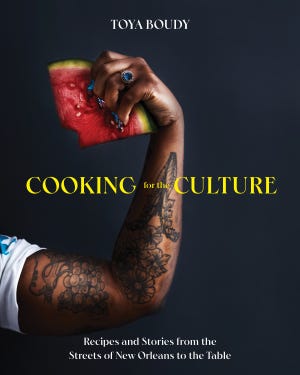
New Orleans chef Toya Boudy’s new book is ‘Cooking for the Culture’

New Orleans chef Toya Boudy’s new book is ‘Cooking for the Culture’

Toya Boudy is a native New Orleans chef. Her new cookbook, “Cooking for the Culture: Recipes and Stories from the New Orleans Streets to the Table,” has the recipes you would expect, like gumbo, jambalaya and barbecue shrimp. Boudy, having said that, is a Black New Orleanian. Her guide is about Black property cooking in the town. The recipes also include collard greens, pepperoni lasagna and yakamein. She shares a society the place cooking is about abundance and thrift is a requirement. And in contrast to so lots of textbooks devoted to home cooking, Boudy includes her individual household on every single web page, from the loving house the place she was elevated, to her expertise as a teenage mom and last but not least to her daily life now, in which she seems on TLC and the Food stuff Network and spreads her joyful, flavorful meals across the web.

New cocktail book is the Cure for tired New Orleans cocktail recipes

New cocktail book is the Cure for tired New Orleans cocktail recipes

Comment

Even the inside cover of “Cure: New Orleans Drinks and How to Mix ‘Em,” Neal Bodenheimer and Emily Timberlake’s gorgeous new cocktail book, reminded me why the Crescent City is my favorite place in the world to get a drink.

That inside cover is a map of some of the most important watering holes, restaurants and live music joints around the city. For people who have the good fortune to know New Orleans, it’s a map of both remembered pleasures and those still to be explored; for those yet to eat, drink and explore this joyful, sorrowful city, it’s a cartographical to-do list, one the book later supplements with a “New Orleans Cocktail Bucket List.”

The map captures something about the spirit of the book, which is not just a celebration of Cure, one of the country’s best cocktail bars — a perennial James Beard nominee that won for Best Bar Program in 2018 — but a celebration of its community and city. Any number of books teach readers about cocktails through the lens of the bar they’re representing and recipes for drinks its mixologists have created. Far fewer also amplify their city and their neighbors (and nominal competitors) so generously.

Bodenheimer almost had to be hogtied and dragged into writing it.

To be fair, it’s not like the man doesn’t have a few other projects on his hands. Along with Cure, which he opened in 2009 after moving back to his native Louisiana after Hurricane Katrina, Bodenheimer owns Cane & Table in the French Quarter, and over the course of the pandemic, while he was writing, he opened Dauphine’s (a New Orleans-inspired restaurant in Washington, D.C.), as well as Val’s (a taqueria and agave spirits bar in the same neighborhood as Cure) and Peychaud’s (a cocktail bar in the courtyard of a French Quarter building that was once home to Antoine Peychaud, the inventor of the red bitters that now give a licorice-y hit to countless cocktails). And he also serves as a partner in Tales of the Cocktail, the annual bar conference that attracts thousands of industry folks and dedicated tipplers to the city every summer.

“Which all makes it sound like I’m … insane … but it wasn’t meant to be that way,” Bodenheimer says, noting how the pandemic played hell with so many plans and threw off so much original project timing. But he knew he’d never get the book done without help, and Timberlake, a longtime food writer and editor based in Oakland, Calif., proved to be the perfect partner in the project. Their calls and planning sessions for the book helped keep him sane during the pandemic, when so much seemed to be coming apart.

Bodenheimer knew he “didn’t want to do another bar-bar book, because so many bars have made bar books that I think it’s a pretty complete genre. And I didn’t want to do a vanity project either … . I want to talk about what Cure is and what it’s done, but I want to put it into the larger context of New Orleans drinking.”

Thus the book provides plenty of drinks that are original to Cure and the many creative mixologists who have worked there over the years, but it also provides the history of many New Orleans classic cocktails, and recipes for iterations of and riffs on such drinks as the French 75 and the Pimm’s Cup, not originally New Orleans drinks but which, through specific bars (Arnaud’s and the Napoleon House, respectively) have become indelibly associated with the city.

Exploring the historical component of New Orleans drinking required some wrestling with the ghost of Stanley Clisby Arthur, the journalist whose 1937 book, “Famous New Orleans Drinks And How to Mix ’Em” inspired the subtitle of the Cure book.

The Clisby Arthur book helped establish an early history of cocktails and of New Orleans’ place in it. The problem with the history it established is that a lot of it is what Bodenheimer describes with an expletive meaning bovine excreta.

In the intro to his book, for example, Clisby Arthur writes of New Orleans, “It was here that your most modern of American beverages, the cocktail, first came into being and was given its jaunty name,” going on to harrumph about a number of fake stories about how the word “cocktail” came into being, before then insisting that Antoine Peychaud himself was responsible for the name via a bastardization of the French word “coquetier,” which referred to a style of egg cup in which the apothecary once served doses of brandy enhanced with his stomach-settling bitters.

Unfortunately, the word “cocktail” is now known to have appeared in print when Peychaud was still in nappies.

And yet in Clisby Arthur’s book also appear such drinks as the Sazerac — the quintessential New Orleans cocktail, and the city’s official one since 2008 — the Vieux Carré, the Cocktail a la Louisiane, the Ramos Gin Fizz, the Roffignac (see recipe below), and multiple absinthe-focused drinks. (The spirit, which was illegal in the United States for nearly a century, largely due to misconceptions of its purported herbal dangers, has had a deep impact on the city’s cocktails and drink style.)

“We used ‘Famous New Orleans Drinks, and How To Mix ’Em’ as a guide when we were opening Dauphine’s,” Bodenheimer says, and that meant he ended up spending a lot of time with the book. “So I have this deep appreciation for him, because he really created this canon of New Orleans drinks. … Without him, I don’t think New Orleans would hold that important place in world drinking. At the same time, I look at some of his history, and I’m like, ‘Man, you were really winging it.’ But that’s also kind of perfect, because that is like the bar world, too. There are a lot of people who are faking it till they make it.”

Happily the Cure team spent plenty of time refining and rejiggering recipes — the book’s precise spec for the Sazerac provides the preferred amount of Peychaud’s down to the very drop — and developing their own terrific drinks. In that development process, Bodenheimer says, Cure has long followed a very specific hierarchy of considerations: “How does it taste? How does it taste? How does it taste? How does it smell? How does it look?”

That is not necessarily a recipe for success in an Instagram-driven world, he acknowledges, but over time, it seems to have worked for the bar. “With Cure, there was our desire to do what we wanted to do, and then there was what New Orleans had always done” with cocktails and their preservation, he says. “Together it kind of created this magic, where people wanted to take the journey with us and see where we were going to go.”

Scale and get a printer-friendly, desktop version of the recipe here.

This upgrade on an old New Orleans drink makes for a more balanced take on what was originally a very sweet drink. The old recipe in Stanley Clisby Arthur’s classic cocktail book called for whiskey, but this version from the bar Cure’s new cocktail book uses Darroze 8 Year Les Grands Assemblages Bas-Armagnac, a French grape brandy, for the base. Co-author Neal Bodenheimer notes that the recipe works “surprisingly well with any number of unaged spirits,” but doesn’t like it with the original whiskey. The raspberry shrub can be refrigerated for several months and can be added to sparkling water, lemonade or other drinks.

Storage: Refrigerate the shrub for up to 3 months.

  • 1/2 cup fresh raspberries
  • 1/2 cup cold water
  • 1/2 cup granulated sugar
  • 1/2 cup white vinegar
  • Ice
  • 1 1/2 ounces bas-armagnac (or your preferred spirit; see headnote)
  • 1 ounce raspberry shrub
  • 2 to 3 ounces soda water, to top
  • Fresh raspberries, for garnish (optional)
  • Mint sprig, for garnish (optional)

Make the shrub: In a blender, combine the raspberries, water, sugar and vinegar and process on high until smooth. Strain through a fine-mesh sieve or cheesecloth, transfer to a bottle and refrigerate until needed. You should get about 1 1/4 cups (enough for about 12 drinks).

Make the drink: Fill a Collins, large coupe or a stemmed punch glass with ice.

Fill a cocktail shaker with ice, then add the armagnac and raspberry shrub. Shake to chill, about 15 seconds, then strain into the glass and top with the soda water. Garnish with the raspberries and a mint sprig, if you like, and serve.

Adapted from “Cure: New Orleans Drinks and How to Mix ‘Em,” by Neal Bodenheimer and Emily Timberlake (Abrams, 2022)

Tested by M. Carrie Allan.