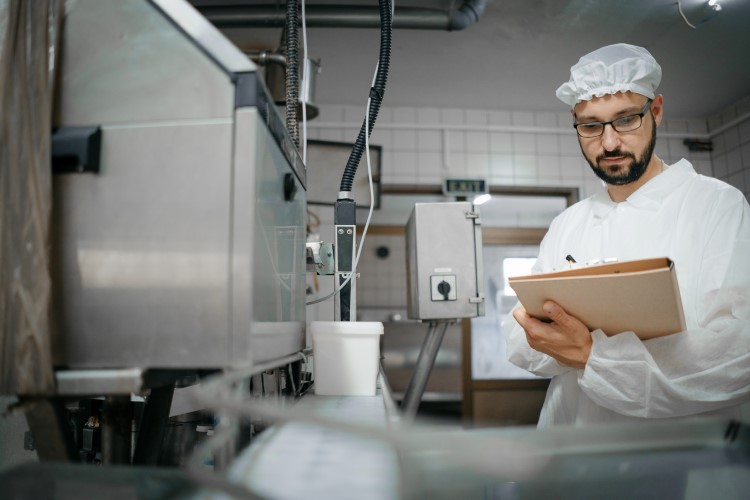
Relevant to anyone from manufacturers and factory workers to restauranteurs and baristas, the guidance has been published by the British Standards Institution (BSI) following extensive sector discussion on food safety culture, including what it is, how to measure it and how to ensure continuous improvements.
Food industry majors – including Walmart, McDonald’s, PepsiCo, HelloFresh, Kerry Foods and 3M – have all been involved in drafting the guidance.
Positive food safety culture
The document – named PAS 320 – includes steps on identifying gaps and then implementing a plan for change. It makes recommendations related to leadership; the organization’s vision, mission, values and policy; organizational structure; responsibilities, accountabilities and authorities; guiding coalition team; interested parties; change champions; influencers; and food safety documentation.
In particular, the guidance also includes advice on how prioritizing people in the sector not only supports improved food safety, but also brings other benefits including investment return, business performance improvement, reduction of the costs associated with poor quality, and enhanced efficiency. For example, the guidance notes that creating and maintaining a strong culture that preserves quality and reduces risk requires management commitment and a mindset that safety is the responsibility of everyone at every stage of the food supply chain.
The guidance is published at a time when packaging and labelling regulations is being led by the Food Standards Agency following the UK’s exit from the European Union through Brexit. New allergen labelling laws that came into force in the UK last year also require businesses to label all food that is pre-packed for direct sale with a full list of ingredients, with the 14 major allergens including milk emphasised in the list.
Neil Coole, director of food and retail supply chains at BSI, commented: “A positive food safety culture that prioritizes people and gives everyone a stake in driving quality can have a transformative effect and help reduce the risk that comes from unsafe food. This starts with leadership taking steps to turn ambition into action in order to build and sustain continuous improvements across their organization and the wider supply chain.
“Ultimately, moving from seeing food safety culture as a compliance issue to an investment in people can offer huge benefits for individuals, organizations and society as a whole.”
Scott Steedman, director general, standards, at BSI added: “It is tragic that so many lives are lost globally every year to contaminated food. This is something nobody in the industry can ignore and urgent steps to change this are required. We understand that the common factor in food safety related risks is people, and it is an organisations culture towards food safety that presents the opportunity for continuous improvement. PAS 320 provides the guidance to empower people to make a positive impact on the future of the food industry.
“Enabling a robust food safety culture is vital for enhancing quality and safety across the food sector. Strengthening understanding of what best practice looks like and how everyone in the food sector can play a role, by enhancing global consistency and offering clarity, can help food sector organizations accelerate change and support the realization of quality and food safety ambitions. This new standard on food safety culture can build confidence in the global food industry and offer long-term benefit for everyone.”
The new guidance is available as a free download from the BSI website.
The Hanky Panky had always been a favorite of Ektoras Binikos, beverage director at Sugar Monk in Harlem, New York. When he set out to develop his own recipe for the drink, a variation of the classic Martinez, he opted not to mess with the “golden ratio” of Ada Coleman’s original recipe. Instead, his approach was to dissect and tweak the drink’s individual components, which are typically equal parts gin and sweet vermouth, plus a bracing bar spoon of Fernet-Branca—a simple and elegant construct, he notes.
First, he subbed genever for gin, in a move that was admittedly more about practicality than preference. Each Monday, Sugar Monk offers classic cocktails to accompany live jazz performances. Because the menu leans on Prohibition-era drinks, it’s a gin-heavy list. “So we thought, let’s try something different,” he says.
At first, he tried a base of unaged whiskey, or moonshine, in place of the traditional gin. “The cocktail was too round, a little heavy,” according to Binikos. He then pivoted to malty genever, which added just enough complexity. Specifically, he uses Old Duff, an unaged Dutch genever distilled from a mix of rye and malted barley, which adds depth while being light enough that it doesn’t put off gin purists.
Juxtaposed against the genever, Binikos adds an equal amount of Carpano Antica, the bar’s vermouth of choice, for its vanilla tones, which harmonize with the maltiness of the genever.
Echoing the original, a teaspoon of Fernet-Branca anchors the drink. While Binikos’ preferred version switches the amaro for Branca Menta, he wasn’t convinced others would love it as much as he did. “Menta can take over,” he concedes. So he returned to Fernet-Branca, which allows the whiskey-like grain notes in the genever to shine.
The final differentiating touch comes via housemade orange bitters. When the pandemic temporarily shut down New York’s bars and restaurants, Binikos began manufacturing herb- and spice-infused amaros, liqueurs and bitters. Although these elaborate flavors had always been part of the bar’s drinks, he took advantage of the enforced downtime to codify the formulas and bottle them for commercial sale.
The orange bitters—one of 17 varieties developed by the bar “to create something unique to Sugar Monk, another layer”—are made by combining coriander and cinnamon with a mix of Seville orange, bergamot, “a little bit of Buddha’s hand if available” and Thai or Japanese chile peppers. The latter ingredient imparts a touch of heat, which distinguishes the bitters from others on the market. While Sugar Monk’s bitters can be purchased at the bar, to approximate the effect at home, Binikos recommends infusing Regans’ orange bitters with fresh chiles.
“There’s a little heat at the end, but not too much,” Binikos says. “It brightens the cocktail a little bit.” Finally, a quick spritz of orange oil over the top of the drink adds enticing aroma and accentuates the bitters.
The result provides an accessible introduction to genever, with just a flicker of spicy heat enlivening a traditional stirred drink. And despite the conventional wisdom that the Martinez is a forerunner of the Martini, Binikos says his version is closer to a Negroni, thanks to its mix of sweet vermouth, orange and aperitif-adjacent Fernet. “It’s like two-thirds of a Negroni,” he says, “but more whimsical.”
In April, Kimberly Hart made a resolution to lose some weight on the advice of her doctor. Hart, who is 61 and lives in New Haven, Connecticut, has high blood pressure and cholesterol. These factors, combined with her age and weight, put her at an elevated risk for developing diabetes, and she wanted to do whatever she could to prevent that from happening.
One element within her control, Hart thought at the time, was her diet. She started seeing a nutritionist, a cost covered by Medicaid, and eating more healthily. But it wasn’t long before her efforts clashed with the reality of rising grocery costs.
In May, Hart began to really feel the pinch of higher prices, and by June, she realized she had to completely upend the way she put food on the table for her and her son.
Kimberly Hart prepares a weekend dinner for her and her son.
She swapped wheat bread for store-brand white bread, “which is too bad” she said, “because I know that wheat bread is healthier for me, but I also know that white bread is cheaper”. She switched from frozen vegetables to cheaper canned ones, despite lower nutritional value and higher sodium content, and no longer buys fresh fruit. Four months since her April resolution, she said, the scale hasn’t budged.
“The more color a plate has the healthier it is, because you get your color from fresh vegetables,” she said. But because of her financial situation, “I can’t really do that”.
Inflation is pushing healthy eating out of reach for millions of people like Hart, a trend that public health experts worry could increase their risk for diet-related diseases in the long run. Over the past year, grocery prices have risen rapidly as agricultural supply chains bowed under the pressure of food scarcity, labor shortages and high fuel costs.
By the end of July, the cost of eating food at home had increased by more than 13{d2b09b03d44633acb673e8080360919f91e60962656af8ade0305d5d8b7e4889} compared to the same period a year ago, according to the Consumer Price Index. According to a survey conducted by the Urban Institute in June and July, more than 20{d2b09b03d44633acb673e8080360919f91e60962656af8ade0305d5d8b7e4889} of adults reported experiencing food insecurity within the past 30 days, an increase of more than 6{d2b09b03d44633acb673e8080360919f91e60962656af8ade0305d5d8b7e4889} from spring of last year.
It might seem counterintuitive but scientists have long pointed to links between poverty and obesity. This week, the Biden administration launched a national strategy to tackle the country’s “urgent, nutrition-related health crisis”, including the “rising prevalence” of diet-related diseases such as obesity.
In response to higher prices, people are buying cheaper, processed foods high in calories, sugar and sodium over costlier options like fruits and vegetables, protein and whole grains, according to public health researchers and anti-hunger experts.
“Highly processed foods are still the most affordable for people and they can stretch longer and they have a longer shelf life,” said Mariana Chilton, professor and director of the Center for Hunger-Free Communities at Drexel University. “People want to buy healthy food, but then they make the choice to get food that is not as healthy but that stays on the shelf longer and can stretch and helps their kids feel fuller.”
Hart gets a can of mushrooms from her pantry to add to a chicken soup.
Over the long term, researchers have found that food insecurity – defined by the Department of Agriculture as uncertain access to nutritionally adequate food – is probably associated with obesity, a condition that in turn raises the risk of problems including diabetes, heart disease and strokes.
“People in the United States who are more food insecure have higher rates of overweight and obesity,” said Parke Wilde, a professor of food and nutrition policy at Tufts University. Wilde added that low-income people without access to social safety programs are most harmed by inflation-driven food insecurity, and its associated health risks.
While researchers have investigated the link between food insecurity and obesity for decades, exactly how the two issues are related remains unsettled, Wilde said. One explanation may be in the uncertainty it brings. “Having a boom-and-bust cycle in how much food you have might have sends a signal to your body that it needs to retain food energy, and that might put people at higher risk of overweight and obesity,” Wilde said.
Anti-hunger advocates say that food insecurity driven by inflation illustrates the powerful role that poverty plays in shaping dietary choices and healthy eating, which have historically been framed as a matter of individual decision-making.
“There’s this sense that low-income people don’t know how to eat,” said Thomas Reynolds, the chief executive officer of Northwest Harvest, a network of 300 food banks in Washington state. “I just totally reject that. It’s really about just making very practical decisions, because money is so tight right now.”
Hart cooks a chicken soup with canned unsalted vegetables to watch her sodium intake.
Katrena Ross, 40, a legal assistant and mother of three living in Redford, Michigan, first started worrying about inflation in February. At the time, Ross was already straining to feed her family on a monthly budget of less than $200, a situation that made her especially attuned to even the slightest price increase.
As prices began to rise in the spring, Ross couldn’t afford to buy as much fresh produce and meat. Instead she reached for peanut butter and jelly, pasta, boxed macaroni and cheese and $1 ramen noodles – a food she hadn’t purchased in years.
“I would love to say that I think about what eating like this would do to me and my kids but that’s not really a luxury that I have, because I can only think about: what am I feeding them now? What do I have to make sure that they don’t go to bed hungry?”
Public health experts emphasize that food insecurity takes more than just a physical toll – it can also have harmful psychological impacts.
“A lot of people just think about obesity, diabetes, metabolic syndrome, heart disease and yes, all of those can get exacerbated, but a lot of people tend to forget about the emotional consequences,” said Chilton of Drexel University.
Eventually, Ross made the decision to move her family back home with her mother and stepfather, a move that allowed the merged household to pool resources and shoulder the burden of inflation together. It’s a choice that also gave her a much-needed peace of mind.
“My ability to not provide the basics for my family like food and keeping a roof … that was destroying my mental health,” Ross said. “I felt like I had failed them. I felt like I couldn’t keep them safe or provide for them properly, which for a mom or for any parent really, it really hits your self-worth.”
Reynolds of Northwest Hunger said that there are numerous ways that lawmakers can strengthen the social safety net in order to prevent families like Ross’s from experiencing food insecurity in the first place, as well as help them cope with the unexpected costs of rapid inflation.
“Poverty and hunger are so closely related, it’s almost interchangeable,” he said. He believes policies such as universal basic income, free school meals and higher payments to people in the Supplemental Nutrition Assistance Program (Snap, formerly known as food stamps) could bolster food security and make healthy eating more affordable.
Hart reaches for items in her kitchen.
For Hart, more generous Snap payments could make a significant difference to her life. Before the pandemic, she estimates she received around $400 a month from the program. But her 20-year-old son recently got a part-time job and the additional income caused their household benefits to drop. Her son is now considering taking a higher-paying position, something that she supports, but she worries that will lead to even further cuts in their monthly Snap allotment.
“It’s a catch-22,” she said. These days, she organizes her week around waiting in lines for food pantries, which she relies on for extra produce, dairy and meat.
Hart said she feels demoralized that she hasn’t lost any weight since April. Sometimes, she lies to her nutritionist about following a healthier diet, just to sidestep the fact that she can’t actually afford it. “One day, I might wake up diabetic,” said Hart. “If I could just eat healthier … but I can’t.”