Food Safety Summit keynote address to cover risk culture

Food Safety Summit keynote address to cover risk culture

Risk Culture: How to Balance Risks for the Safety of Consumers, Team Members, and the Environment will be the focus of the keynote presentation taking place on May 10 during the 25th annual Food Safety Summit in Rosemont, IL.

Michael Eckhardt, Senior Vice President, Chief Legal and Risk Officer, and Secretary, Wawa Inc.;  Randy Huffman, Ph.D, Chief Food Safety and Sustainability Officer, Maple Leaf Foods; and David McDonald, President and Chief Operating Officer, OSI Group will join Lone Jespersen, Ph.D., Principal, Cultivate SA, who will lead this important conversation. To access the full education program, visit www.foodsafetysummit.com. 

“Managing risk is such an important topic for food safety professionals at all levels of business, and we look forward to Lone Jespersen leading this conversation with these three dynamic panelists who are committed to balancing risk and safety,” said Gillian Kelleher, CEO of Kelleher Consultants LLC and Chair of the Summit Educational Advisory Board (EAB). “We are confident that attendees to the Food Safety Summit will gain practical perspectives they can share with their senior leaders at organizations of all sizes.” 

“The keynote session will focus on a conversation with forward-thinking executives on the topic of balancing risks for the safety of consumers, team members, and the environment. Participants will hear how successful food companies manage risks that sometimes compete for investments and leadership attention,” explained Lone Jespersen, PhD, Principal at Cultivate SA and member of the Food Safety Summit EAB. “Learning how to partner with colleagues from human safety and sustainability is a must for a company to improve food safety performance and mature a company’s food safety culture. The executives will also share specific challenges and wins from their respective organizations, along with the cultural solutions that help them successfully manage risk.”

The panel will include:

Michael Eckhardt, Senior Vice President, Chief Legal and Risk Officer, and Secretary for Wawa Inc. Michael has responsibility for the Company’s Internal Audit, Enterprise Risk Management, Legal, Loss Prevention, Quality Assurance, Risk Management and Safety teams. Michael joined Wawa in 2005 and became General Counsel in 2011. He previously held the position of Associate General Counsel at Wawa Inc. 

Randy Huffman, PhD, Chief Food Safety and Sustainability Officer at Maple Leaf Foods. His role encompasses leadership of Food Safety and Quality, Occupational Health, Safety and Security, Environmental Sustainability, and Animal Care. Randy leads a team that has developed and is executing world-class strategies to deliver on Maple Leaf Foods’ commitments to produce safe, great-tasting food produced in a safe work environment and to become the most sustainable protein company on earth. 

David G. McDonald, President and Chief Operating Officer, of OSI Group.David joined OSI Group, a multinational food processing company with nearly 60 facilities in 17 countries, in 1987. Over the years, after serving in a number of capacities, he became President and Chief Operating Officer. He serves on the Board of Managers for OSI Group and many of its companies. In addition, David was formerly the Chairman of the American Meat Institute and the first Chairman of the North American Meat Institute. 

“I look forward to having this important conversation with Michael, Randy, and David and to share with the attendees of the Food Safety Summit how all food safety professionals can work with their senior management teams on balancing risk for consumers, employees, and the environment,” added Jespersen.

Attendees will have access to three days of education sessions including an opening workshop on Got Root Cause? featuring a panel of leaders from FDA, Cargill, Dole Food Company, USDA, Yum Brands, and J&J Snack Foods, who will review how getting to the root cause is a cost-effective approach to management/operations in any organization. In addition, the 11th annual Town Hall: A Conversation with Top Regulators and Advisors will be held on May 11, with insights from FDA, CDC, USDA, and AFDO. 

The Summit’s closing session on Thursday afternoon will focus on Legal Insights to Sharpen Your Food Safety Focus—and Stay Out of the Courtroom. The panel discussion will feature prominent attorneys who work on behalf of consumers and industry — with all advocating on the side of food safety. These internationally recognized expert lawyers will discuss the common gaps or weaknesses they see in company operations, culture, and regulatory adherence that lead to adverse events, such as foodborne illness outbreaks and recalls. 

For access to the full program and for attendee registration, visit https://www.food-safety.com/food-safety-summit. For information on sponsorship or exhibiting opportunities, contact Kim Hansen at hansenk@bnpmedia.com or Adam Haas at haasa@bnpmedia.com. For updates on the 2023 event, visit www.foodsafetysummit.com or follow the event on Twitter, LinkedIn, and Facebook. 

The Food Safety Summit is owned and produced by Food Safety Magazine (www.food-safety.com) and BNP Media (www.bnpmedia.com), one of the country’s leading business-to-business media companies serving industry professionals across 60+ industries through magazines, custom media, e-newsletters, webinars, events, and market research.

(To sign up for a free subscription to Food Safety News,click here)

Positive food safety culture that prioritizes people “key to reducing risk of contamination or recalls”

Positive food safety culture that prioritizes people “key to reducing risk of contamination or recalls”

New industry-led global guidance sets out the role of people and culture in enabling food safety and product quality

LONDON, April 13, 2023 /PRNewswire/ — A food safety culture that prioritizes people and supports collaboration in manufacturing facilities, food service businesses, restaurants or retail stores can help improve quality, minimizing the risks of contamination or recalls while also benefiting productivity and talent retention.

New global guidance from BSI, the business development and standards company, developed through consensus with industry giants including Walmart, McDonald’s, Kerry Foods and 3M, and published this week, identifies that the common factor in food safety incidents, quality failures and recalls is people rather than failures of machinery or technology. Equally, when issues occur, people are the key to avoiding recurrence.

According to the World Health Organization (WHO), consuming contaminated food results in an estimated 600m people falling ill every year, leading to 420,000 deaths. A desire to tackle this led to a round-table discussion at the 2019 International Association for Food Protection (IAFP) Annual Meeting, then, ultimately, the creation of an industry steering group. The resulting document, Developing and sustaining a mature food safety culture (PAS 320), is designed to guide organizations of all sizes across food, beverage and retail to create a culture where people are prioritized, all employees embrace food safety, take responsibility for reporting issues, and are empowered to initiate change.

Relevant to anyone from manufacturers and factory workers to restauranteurs and baristas, the guidance has been published by BSI following extensive sector discussion on food safety culture, including what it is, how to measure it and how to ensure continuous improvements. The document defines food safety culture as the “shared values, beliefs and norms that affect mindset and behavior toward food safety in, across and throughout an organization.”

It notes that creating and maintaining a strong culture that preserves quality and reduces risk requires management commitment and a mindset that safety is the responsibility of everyone at every stage of the food supply chain. Culture is also highlighted as key for employee retention, improving quality and decreasing contamination risk by decreasing turnover rate.

PAS 320 includes steps for identifying gaps and then implementing a plan for change. It makes recommendations related to leadership; the organization’s vision, mission, values and policy; organizational structure; responsibilities, accountabilities and authorities; guiding coalition team; interested parties; change champions; influencers; and food safety documentation. The guidance also includes advice on how prioritizing people in the sector not only supports improved food safety but also brings other benefits, including investment return, business performance improvement, reduction of the costs associated with poor quality, and enhanced efficiency.

The US FDA’s New Era of Smarter Food Safety blueprint states that dramatic improvements in reducing the burden of foodborne illness cannot be made without doing more to influence the beliefs, attitudes, and, most importantly, the behaviors of people and the actions of organizations.

Neil Coole, Director, Food and Retail Supply Chains at BSI, said: “A positive food safety culture that prioritizes people and gives everyone a stake in driving quality can have a transformative effect and help reduce the risk that comes from unsafe food. This starts with leadership taking steps to turn ambition into action in order to build and sustain continuous improvements across their organization and the wider supply chain.

“Ultimately, moving from seeing food safety culture as a compliance issue to an investment in people can offer huge benefits for individuals, organizations and society as a whole.”

Scott Steedman, Director General, Standards, BSI, said: “It is tragic that so many lives are lost globally every year to contaminated food. This is something nobody in the industry can ignore, and urgent steps to change this are required. We understand that the common factor in food safety-related risks is people, and it is an organization’s culture towards food safety that presents the opportunity for continuous improvement. PAS 320 provides the guidance to empower people to make a positive impact on the future of the food industry.

“Enabling a robust food safety culture is vital for enhancing quality and safety across the food sector. Strengthening understanding of what best practice looks like and how everyone in the food sector can play a role, by enhancing global consistency and offering clarity, can help food sector organizations accelerate change and support the realization of quality and food safety ambitions. This new standard on food safety culture can build confidence in the global food industry and offer long-term benefits for everyone.”

Media Contact:
Chad Quinn, PR Manager, Americas, BSI
Email: [email protected]
Phone: +571-758-8638.

Notes to Editors:

Contact us for the copy of the standard

About BSI

BSI is the business improvement and standards company that enables organizations to turn standards of best practice into habits of excellence, “inspiring trust for a more resilient world.” For over a century, BSI has driven best practice in organizations around the world. Working with over 77,500 clients across 195 countries, it is a truly global business with skills and experience across all sectors, including automotive, aerospace, built environment, food and retail and healthcare. Through its expertise in Standards and Knowledge, Assurance Services, Regulatory Services and Consulting Services, BSI helps clients to improve their performance, grow sustainably, manage risk, and ultimately become more resilient.

To learn more, please visit: www.bsigroup.com

Cision View original content to download multimedia:https://www.prnewswire.com/news-releases/positive-food-safety-culture-that-prioritizes-people-key-to-reducing-risk-of-contamination-or-recalls-301792379.html
SOURCE BSI Group Americas Inc.

Adhering to recommended diets lowers risk of chronic diseases, 32-year study finds

Adhering to recommended diets lowers risk of chronic diseases, 32-year study finds
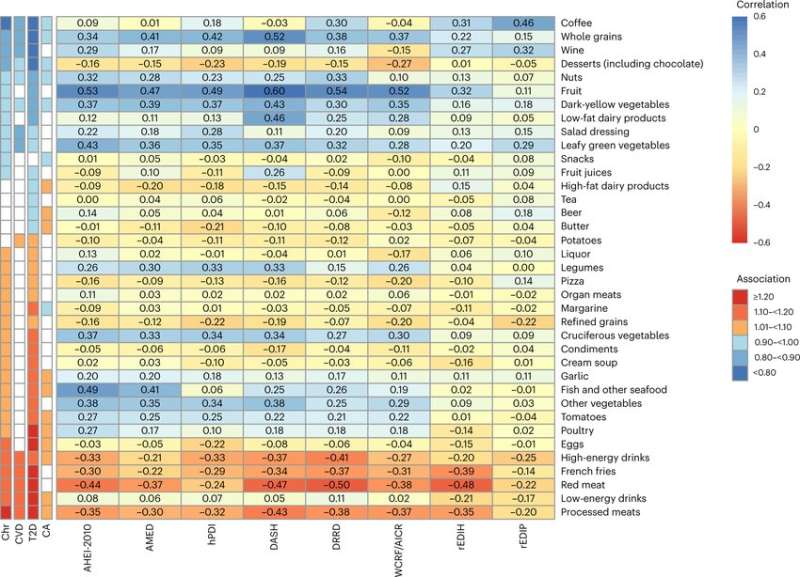
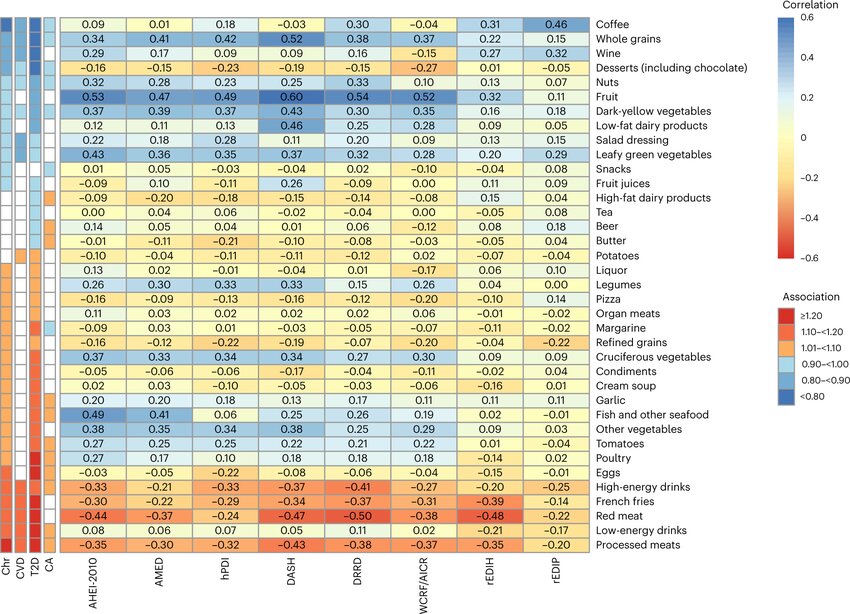
Baseline Spearman’s correlations amongst vitality-modified cumulative ordinary nutritional patterns and foods groups in the pooled data of three cohorts (n = 205,852 contributors) Spearman’s correlation coefficients are proven and highlighted in colour. Food items teams are requested based mostly on the HRs of their associations with important long-term condition. The associations of foods teams (evaluating the 90th with the 10th percentile) with key serious ailment (Chr), major CVD, sort 2 diabetic issues (T2D) or overall cancer (CA) are indicated on the left of the figure. We documented unadjusted P values based mostly on two-sided statistical exams. Major associations (P < 0.05) are highlighted in color according to the magnitude of the HRs. Credit: Nature Medicine (2023). DOI: 10.1038/s41591-023-02235-5

Researchers at the Harvard T.H. Chan School of Public Health in Boston, Massachusetts, have good news for anyone sticking to a healthy diet: Good food choices are associated with a lower risk of developing a chronic disease.

In a robust review of several recommended diets, the study, “Optimal dietary patterns for prevention of chronic disease,” published in the journal Nature Medicine, found that falling in line with any one of them is linked to better health outcomes.

To find the influence of recommended diets on health outcomes, researchers analyzed 32 years of data from 205,852 participants between 25 and 75 years of age when data collection began. The cohorts included 162,667 women from the Nurses’ Health Study and Nurses’ Health Study II and 43,185 men from the Health Professionals Follow-up Study.

Participants regularly reported details about their lifestyle, medical history and food intake, with a median follow-up of 26 years per participant. There were 44,975 major chronic disease events observed, 12,962 major cardiovascular diseases, 18,615 cases of diabetes and 17,909 total cancers.

While individuals in the study were not explicitly adhering to recommended diets, the study categorized reported diets into levels of adherence on a weighted system. It compared health outcomes against levels of adherence to several dietary pattern groups: Alternative Healthy Eating Index-2010, Alternate Mediterranean Diet, Dietary Approaches to Stop Hypertension, Diabetes Risk Reduction Diet, Healthful Plant-Based Diet Index, reversed Empirical Dietary Index for hyperinsulinemia, reversed Empirical Dietary Inflammation pattern, or World Cancer Research Fund/American Institute for Cancer Research diet.

Participants were then ranked by comparison of the top 90th percentile vs. bottom 10th percentile in adherence. Overall the study found that regardless of which diet pattern an individual was most adhering to, being near the top of any of them correlated to lower disease risk. So, for instance, an individual might make it into the top 90{d2b09b03d44633acb673e8080360919f91e60962656af8ade0305d5d8b7e4889} in the Healthful Plant-Based Diet Index but fall below 90{d2b09b03d44633acb673e8080360919f91e60962656af8ade0305d5d8b7e4889} adherence in others due to coffee or wine intake.

Individuals who adhered to guidelines designed to lower the risk of inducing inflammation, high blood insulin levels or diabetes were less likely to develop type 2 diabetes, heart disease and cancer.

Certain food groups were linked to worse health outcomes. Diets that frequently included processed meats, energy drinks, red meat, french fries, and eggs were positively associated with major chronic diseases.

Consuming larger amounts of coffee, whole grains, wine and desserts had lower risk of associated major chronic diseases. However, it should be noted that these were pulled from groups of dietary patterns with many associated food intake strategies. Unfortunately, there was no coffee, whole grain, wine and dessert-based diet to choose from.

More information:
Peilu Wang et al, Optimal dietary patterns for prevention of chronic disease, Nature Medicine (2023). DOI: 10.1038/s41591-023-02235-5

© 2023 Science X Network

Citation:
Adhering to recommended diets lowers risk of chronic diseases, 32-year study finds (2023, March 16)
retrieved 17 March 2023
from https://medicalxpress.com/news/2023-03-adhering-diets-lowers-chronic-diseases.html

This document is subject to copyright. Apart from any fair dealing for the purpose of private study or research, no
part may be reproduced without the written permission. The content is provided for information purposes only.

Harvard Study Links a Variety of Healthy Eating Patterns to a Lower Risk of Premature Death

Harvard Study Links a Variety of Healthy Eating Patterns to a Lower Risk of Premature Death

By

Eating Healthy Vegan Food

The Dietary Pointers for People in america outlines four wholesome taking in patterns: Healthier Having Index 2015, Alternate Mediterranean Diet regime, Healthful Plant-primarily based Diet plan Index, and Alternate Healthy Feeding on Index. These styles promote a balanced eating plan with emphasis on fruits, greens, full grains, healthy fats, and moderation of saturated and trans fats, additional sugars, and sodium.

A Harvard study finds healthier taking in patterns decreased threat of premature loss of life. Researchers found out participants who followed at minimum a single of four healthier ingesting patterns experienced minimized hazard of dying from any cause, which includes cardiovascular ailment, cancer, and respiratory sickness, when compared to those people with lessen adherence. The analyze is steady with the Nutritional Guidelines for America, which endorses many healthy having styles.

“The Nutritional Suggestions for Individuals are supposed to present science-centered dietary suggestions that encourages good well being and minimizes important long-term diseases. So, it is important to take a look at the associations in between DGAs-suggested nutritional styles and extensive-term well being results, specifically mortality,” stated corresponding author Frank Hu, Fredrick J. Stare Professor of Nutrition and Epidemiology and chair of the Division of Nutrition.

The was not long ago published in JAMA Interior Medication.

Few scientific tests have evaluated no matter whether bigger adherence to the DGAs-advised nutritional styles is linked with prolonged-term chance of whole and bring about-specific mortality. The scientists utilised wellbeing knowledge gathered over 36 years from 75,230 females taking part in the Nurses’ Health Review and 44,085 adult males in the Overall health Industry experts Observe-up Research. All members ended up free of charge of cardiovascular disease or cancer at the beginning of the examine and accomplished nutritional questionnaires each and every four a long time. Their information and facts was scored primarily based on just about every of the four dietary sample indexes (Balanced Eating Index 2015, Alternate Mediterranean Food plan, Healthful Plant-dependent Diet program Index, and Alternate Healthy Feeding on Index). All share crucial elements together with entire grains, fruits, veggies, nuts, and legumes, though other components vary throughout unique feeding on styles.

A higher rating on at minimum just one of the indexes was associated with a lessen threat of premature death from all causes, and from cardiovascular condition, cancer, and respiratory sickness. Greater scores on the AMED and the AHEI have been linked with a reduced hazard of death from neurogenerative ailment. The benefits ended up consistent for non-Hispanic white, non-Hispanic Black, and Hispanic folks.

The existing DGAs (2015–2020) propose numerous healthy eating styles that can be adapted to personal foods traditions and tastes. An updated variation of the Rules is produced each five many years by the U.S. Departments of Wellbeing and Human Providers (HHS) and Agriculture (USDA).

“It is vital to examine adherence to DGAs-recommended ingesting designs and wellbeing outcomes, such as mortality, so that timely updates can be built,” explained Hu. “Our findings will be beneficial for the 2025-2030 Dietary Rules Advisory Committee, which is staying shaped to consider present-day proof surrounding unique taking in styles and overall health outcomes.”

Reference: “Healthy Eating Styles and Risk of Full and Result in-Distinct Mortality” by Zhilei Shan, MD, Ph.D., Fenglei Wang, Ph.D., Yanping Li, MD, Ph.D., Megu Y. Baden, MD, Ph.D., Shilpa N. Bhupathiraju, Ph.D., Dong D. Wang, MD, ScD, Qi Solar, MD, ScD, Kathryn M. Rexrode, MD, MPH, Eric B. Rimm, ScD, Lu Qi, MD, Ph.D., Fred K. Tabung, Ph.D., Edward L. Giovannucci, Ph.D., Walter C. Willett, MD, DrPH, JoAnn E. Manson, MD, DrPH, Qibin Qi, Ph.D. and Frank B. Hu, MD, Ph.D., 9 January 2022, JAMA Inner Medicine.
DOI: 10.1001/jamainternmed.2022.6117

The examine was funded by the NHLBI Division of Intramural Study.