Thanksgiving Day is like the Met Gala for old-timey recipes! The grandmas, aunties, and other elders prep the feasts early in the week, from the show’s star (the turkey) to the gatekeepers of ITIS (desserts). And sweet potato pie shines every holiday, but this Thanksgiving, home cooks, are showing the limitless creations that can come with a lil’ ingredients remix.
Now, we KNOW Thanksgiving is not the time to be experimenting, but here are four sweet potato creations to add to your low-vibrational plates this festive season!
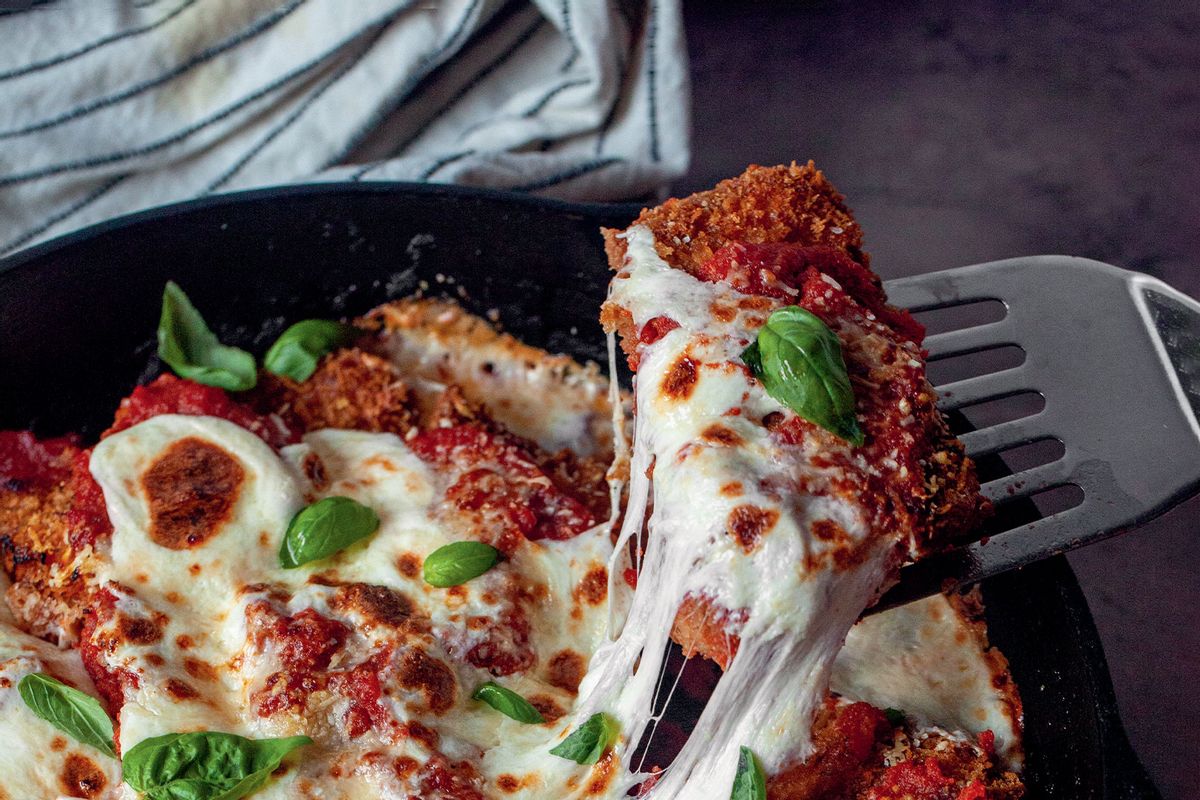
Mac & Cheese Sweet Potato Pie
If you like your candied yams and macaroni and cheese touching, this might be the recipe for you! Baker Nikki Moore decided to combine two of soul food’s staples, and the result is giving mouth-watering!
And if you looked at this recipe and thought, “heart attack,” here’s what Nikki had to say to that:
Sweet Potato Cornbread
Another combination of classics! This time last year, Miles Barnett had folks in a chokehold with his sweet potato cornbread. And the home chef is back to whipping up his moist, fluffy, and honey-buttered goodness this holiday season. Kick off your Blackity BLACK Friday shopping by adding his recipe to your cookbook for under $2!
definitely call dibs on bringing the (sweet potato) cornbread to the table this year! pic.twitter.com/gKsyBZUvSB
Think candied yams, but not really, and as a casserole! Home chef, Candace, boasts a social audience of 100,000+ followers, who she teaches how to throw down in the kitchen. Amid her remixed recipes like cornbread dressing and cajun butter-infused turkey, Candace also shared one of the ways she serves up sweet potatoes! Besides using all the essential ingredients, Candace topped her remix with a streusel and added marshmallows on top!
Looking for an option with nuts? Check out this similar recipe by another home chef, @cookingwithkryskrys, on TikTok!
Though the sweet potato cinnamon roll recipe isn’t new, a baker named Sweet Roll Dealer has social media yanked by the tongues with hers! Owner of Cranky Granny’s Sweet Rolls in Texas, the Dealer specializes in stuffed rolls–both sweet and savory!
And this holiday season, the Dealer also added a special Thanksgiving roll to the menu. Keep scrolling to see her turkey, mac & cheese, and candied sweet potatoes roll drizzled with gravy! Chile, pass us TWO!
What if, instead of always chasing after a better meatball, you found your forever one? What if you had a pound cake that made your forget all the other pound cakes? After creating one of the most popular food blogs in the world and publishing two best-selling cookbooks and thousands of recipes, Smitten Kitchen’s Deb Perelman now wants to help you settle down.
For “Smitten Kitchen Keepers: New Classics for Your Forever Files,” Perelman once again offers the kind of real world, real family cooking that makes her such a trusted muse to millions of fellow home cooks. It’s a book that understands that feeding yourself and others is an act of love (but some nights, also, an act of juggling). Perelman joined us recently for a spirited conversation about what makes a dish a “keeper” and the deep joy of a fish spatula.
This interview has been edited for length and clarity.
You have published thousands of recipes. I’ve tried to cook my way through most of them myself. To now call a book “Keepers,” there’s an implication of a stopping point in a recipe. There’s an implication of a curated capsule collection. What does a “keeper” mean to you, Deb?
I think of it like, you’re waving the fork a little bit and you’re like, “This is the one. This is the apple cake I want to make. This is the pound cake. This is the spaghetti and meatballs.”
“A lot of us just want to find the recipe, and then just keep making that recipe again and again.”
I was trying to chase that feeling with these recipes because it comes up a lot. I think a lot of us, we’re not really interested in the forever hunt for the perfect spaghetti and meatballs. We really just want to find the recipe and then just keep making that recipe again and again. That was the energy that drove me to write this book. I wanted to collect as many recipes where I felt we had this, “That’s a keeper” moment as possible.
You were out there in this space in 2006, with no culinary training. You really are an internet veteran. What advice would you give to somebody who wants to do what you do now?
I think you should do it. Hopefully, looking at me, you should see that anyone can do it. If you have something to say, something to offer, and there’s something you want to do that you don’t see out there, I think you should go out there and do it. You should not feel that you have to do it a certain way. I don’t think anyone is going to be excited to see another thing that’s exactly like the last thing. So go and do it the way that feels fresh to you. Because I think there’s always space for that. There’s always more room.
Want a daily wrap-up of all the news and commentary Salon has to offer? Subscribe to our morning newsletter, Crash Course.
Let’s talk about the things that are in this book that distinguish it from your prior books. It has this particular voice and energy. You’re raising older kids now. What was the driving force when you were putting together the recipes for this one?
I was definitely thinking about longevity. I always would say, “Here’s the cool thing, let me tell you about something fun.” But we were home a lot in the last couple of years and it really got me thinking, “Do I have a chicken parm recipe that I want my kids to make? Why do I not use most chicken parm recipes? And what do I wish they were?” I knew more than any other book that my kids were 100 percent going to be reading this, and asking to make things from it. It’s not a kid cooking cookbook, it is not a pandemic cookbook. But I definitely was thinking, “What is a really good collection of a hundred recipes that we should want to have and hopefully use again and again?” I understand that not every recipe is going to be a forever recipe for every person, but I think if you’ve found a few in there, it’s a pretty good value.
We live now in a culture where there’s such an emphasis on novelty and what recipe has just gone viral. But I think it can give you a feeling of food FOMO in our lives, where I’ve got to be chasing that next thing The idea of settling on something and putting a ring on it can be hard. How do you overcome that?
It’s a little bit terrifying. What, I’m never going to want to change this? I’m never going to learn something new? I might. I might, ten years from now, say, “Actually if you do this step, I think that’s really cool.” But I think that I’ve gotten much better at understanding where that keeper moment is. “This is the one. I know it. This is it.” I’m better at getting there and I’m better at recognizing it when it’s there and just knowing, I’m just going to stop right here. I don’t want to change this. This to me is the right balance of effort, of ease of shopping, of number of steps, number of bowls. Maybe I could add something by adding another pan to saute a topping, but I don’t want to, because I won’t make it as often. I’m not going to make it on a Thursday. I’m going to remember I have to take out a second skillet right when I’m tired of cooking and I don’t want to do that.
One of the things that’s been a great advantage for me is that I just had all of these years of practicing putting these recipes out and hearing where people lose interest. And hearing where we just don’t even feel like making it anymore, and trying to stop before we get there to keep it within what we’re willing to do.
A good gut check for me is that I am like, “I don’t feel like making this tonight. This feels like a lot of work. I hate that last step.” It’s a little thing, but we all do it. Even at the grocery store, just the thought of one extra step or just that one bit pushes you over the edge to making tuna melts instead. Which is, by the way, a very wonderful thing that you should make if you’re craving them. But it can be just the smallest thing that pushes you off the edge, and you leave that recipe and you don’t come back.
You’re going to get people reading this book who are coming as beginners. What would you say from start to finish, appetizer to dessert, would be your dream dishes for a beginner who’s just getting comfortable in the kitchen?
I want you to make the green salad. I feel like the green salad is such a thing. Wait, I don’t need a recipe for a green salad? That’s why it’s taken me 16 years to write a recipe for a green salad. I realize I’ve learned so many things along the way. And you’re only going to have to read it once. You’re going to know it after that. Just these little tips about the easiest way to wash lettuce. The easiest way to dry lettuce. The easiest way to dress salad in advance. The best way to handle heavier ingredients in salads. So I want you to start with that because I feel like once you have that, you’ll tuck it away forever and you’ll be able to apply it to any salad. It’ll hopefully stay with you.
Want more great food writing and recipes? Subscribe to Salon Food’s newsletter, The Bite.
Assuming you eat meat, I want to give you something really simple to make. And I’m thinking of the fettuccine with white ragu. It’s so few ingredients, but it smells unbelievable when you’re making it. It doesn’t seem like something that’s going to turn into what it does. You’re literally taking ground pork and a little bit of garlic and just a little bit of seasoning and it turns into this entire sauce. It’s a really cool technique. And it’s really nice to know that if I have a box of fettuccine and a pound of ground pork and just a couple other things, I could make this incredible, cozy, comforting dish that will steal the show, but also be humble in it’s own way. Not being too, “Look at me.” It’s definitely not a “Look at me” dish.
And what about a dessert?
Ooh, what should we make? I don’t want you to get too mad at me if it’s difficult. I love the Linzer tart so much. Sorry, it’s a raspberry crostada. It looks like a Linzer tart. It’s not hard to make the recipe. It’s fully followable by anybody. But I think it’s such a classic thing that’s so nice to have in your repertoire. It’s like a nice jam tart. I like it because it goes well with tea and cake. It goes well as dessert, not too sweet, but it also is just a really nice thing to have on the counter. And it’s very classic. So it’s a nice thing to tuck into your repertoire. When I was thinking of desserts, of course, immediately I thought of the Rice Krispies bars, which are one of your absolute all time bangers, Deb. When people talk to you about the recipes of yours that have changed the game for them, what are the ones that people say, “Oh my God, Deb, this is the killer”?
I definitely hear that about the Rice Krispies treats. They were in my first book too. I love it because it’s just more butter, more salt, and you brown it, but it shows up. I always make them around this time of year for parties because it’s such a nice candy replacement too.
“I want everybody to make the French toast forever.”
I am secretly hoping that the cover dish will have that effect on people too, because I was just playing around with ingredients I liked. Then I was like, but what if I just did this? All of a sudden I had this absolute luxury of a vibrant green pasta sauce that became the easiest thing to make. It’s the kind of thing that you’re going to make once and I don’t think you’re going to need to look at the recipe after that because it’s so few ingredients and you’re just going to have it down. What else? I want everybody to make the French toast forever. It’s just a baguette French toast. But a couple things just make it so much easier and so much better. I have not made another French toast recipe since I started making it this way a few years ago.
One of the things I really love about Smitten Kitchen is that so often what I have relied on it for has been just one ingredient. One thing. The crispy egg. The roasted sweet potato. There are certain things that just get one thing down and you can do it right. For people who are starting to cook or just tired of cooking, do you have one thing, or one way to make a thing, that you figure out and you’re good to go?
I love the braised winter squash wedges in the book so much because you are just taking fat pieces of winter squash and you are cutting into big wedges. Or you could maybe have somebody cut into wedges for you, depending on where you get it, because it’s nice to use an oversized one. And then we’re just going to roast it. It starts out so simply. We just roast it, we flip it over, we roast it again, then we add a little bit of liquid to the pans. Some broth, some apple cider vinegar and some garlic cloves. What happens, it drinks it up a little bit. You’ve got this otherworldly flavor. You’ve got a little puddle of pan sauce in there. I literally spoon it over plain yogurt, that’s the sauce. We add some arugula and it’s just this fork and knife squash centerpiece of a meal. But you’ve started with the most basic ingredients, stuff you probably have around.
I want us to make that. That’s what we should be eating for lunch in November. This is what we should be eating for lunch today. Go cut open a jack o’lantern.
See my thing is when you talk about techniques and things that slow you down, it’s cutting a squash. I love squash, but cutting a squash?
Well, It’s scary. Always cut against a flat surface. Even when I’m cutting a pumpkin, I will cut a little bevel on the bottom, just cut a little edge off, and now it is solid on the board. And when you cut down, it’s not going to waffle. Don’t try to cut into a soccer ball. Cut a little edge off the bottom, get it solid on the surface and then you can really push down on the knife if you need to.
In the book, when you talk about the tatin and how tatin was your nemesis for a long time. Even now, do you have other things that are just intimidating or too much work? You have taken on some really big culinary challenges for a home cook who makes family dinners.
I love to do a mix because I think it’s fun when you’re feeling that craving for a bigger project. I think it’s really fun. “I’ve always wanted to make a Russian honey cake” or “I’ve always wanted to make a classic lasagna bolognese with the noodles, everything.” But I have never gotten croissants right at home. I’ve gotten them okay. I’ve never gotten them a fraction as good as the ones I can buy near here. You can follow a recipe, you can do it exactly right. You can do the right waiting times. But there’s a bit of artistry. There’s a bit of finesse at the end where you really need to get them on this final rise till they’re kind of steamed under a dome. It’s very hard to do in a home kitchen and it’s rarely going to taste as good.
I’m always tweaking. I mean, the idea of a New Yorker making bagels at home is crazy. I have so many bagel shops. I can point to a couple right now. I’m so close to bagel shops, but I love tweaking it at home and I’m working on trying to find the easiest way for those of us who do not have bagel shops within a block away to make it at home from as few extra steps, as little extra stress as possible. Because I think it’s a fun trick to have up your sleeve.
Deb, I have gone on the pretzel journey with you over and over. I want to master it.
Your keeper recipe. You’re like, if I know this is going to work a hundred percent of the time, I will just tuck this one away. And then every time it’s a Super Bowl party or the World Series and I want to make soft pretzels, I’ll just make these. If you knew it was going to be reliable and you knew it would work every time and you knew somebody had tested it to the hilt, you would just use that recipe. You would stop with the others.
I would. I’m still seeking.
It’s my dream. I want the one. I want the one in people and I want the one in recipes.
Because I love whenever you peek into your kitchen or your pantry. What is your ride or die kitchen tool?
I love the small offset spatula. I use it to put peanut butter and jelly on kids’ sandwiches. I use it to spread cream cheese. I use it to level my flour when I’m scooping it out of a canister. I also really, I want everybody to stop right now and go buy yourself a flexible fish spatula. I don’t know that I’ve ever used it for fish. I use it for everything else.
As the Strategist’s kitchen and dining writer, I live and breathe the equipment, tools, tableware, and ingredients you need to make your cooking (and serving) as efficient, effortless, and fun as it can be. Black Friday, of course, is the perfect opportunity to buy anything you might be missing, whether that’s an upgrade to the coffee maker you’ve been using since college, a chili crisp you never knew you needed (you do), a holiday gift for the chef in your life, or a fancy new appliance that’s usually out of your price range. But it’s also true that the sheer number of discounted items out there can be more overwhelming than exciting — and we all know that decision fatigue can lead to a regretful purchase, or even no purchase at all.
To help you navigate all that’s available, I did the work for you and rounded up some of the very best kitchen products on sale right now. There are options from some of our favorite smaller companies, like Material Kitchen’s gorgeous new table linens and a collection of Fly by Jing’s essential condiments, as well as choice picks from larger retailers like Amazon and Target that are some of the lowest prices we’ve ever seen. And to make it easier to sort through, this list has been organized alphabetically by merchant.
While I’m done updating this post for today, I’ll be back on Cyber Monday with even more new sales. In the meantime, if you want to keep shopping over the weekend, take a look at all of our Black Friday guides here, and sign up for our email newsletter to stay on top of our deals coverage.
It’s no secret that Amazon loves a good sale. While the site is at the top of our list for good Black Friday deals, the volume of discounted products it offers can be a lot to take in — which is why we picked out a handful of kitchen products here that we’ve written about (and strongly endorsed) in the past. But for even more Amazon promotions, check out our dedicated (and highly curated) post.
An air fryer is basically a small convection oven that heats up in no time and results in the most evenly cooked, crispy food you can imagine. This one from Breville is an expert-recommended model that doubles as a toaster oven. Food writer and editor Alyse Whitney says it’s so efficient that she uses it as her regular oven most days of the week (and as an extra oven when she’s hosting).
If your coffee maker needs an upgrade, consider this one from tried-and-true brand Oxo. “The real selling point for me is that it has a valve hole in the lid for the coffee to brew directly into the carafe,” says Noah McKeown, a general manager at Go Get Em Tiger in Los Angeles. “It traps heat and aromatics better, and it’s safer because the liquid doesn’t splash out.”
Buying a full knife set can be tricky, given that they often come with more blades than you need or without the particular pieces you might want to use. That said, this one on the larger end will have you fully covered if you’re starting from scratch. It includes all the basics, plus kitchen scissors and a collection of steak knives.
For kitchen scissors that don’t come apart, this small but mighty pair will do you well. They’re a chef favorite because the shorter blades mean you have greater control over delicate tasks like snipping herbs — but they’re so sharp they can cut through tough foods, too.
Staub is one of a few companies that reigns supreme when it comes to quality Dutch ovens. This five-quart one in a sleek matte black will look handsome set out on both the stove and table, and fits enough food to comfortably feed at least four people.
We’ve written about how great Stasher’s reusable bags are many times over the years. They come in so many different shapes and sizes to hold anything you would otherwise store in a disposable plastic bag. “They can go in the microwave, freezer, and dishwasher; absolutely never stain or leak; and even though I’ve washed mine in the dishwasher hundreds of times, they haven’t fallen apart or degraded in any way,” Strategist contributor Alison Freer says.
We’ve declared that Hydro Flask makes the very best water bottle because of how many people endorse it — including many members of the Strategist’s own team. It’s incredibly well-insulated, keeping hot and cold drinks at their respective temperatures for hours (even in intense situations, like ice water inside a car on a sunny day). They’re also durable and long-lasting, and come in many shapes, sizes, and colors with lid variations (straw, twist cap, handled, etc.) depending on what fits your lifestyle.
If you tend to put the cork back into an unfinished wine bottle to save it for later, upgrade your system with a set of these basic but well-made stoppers for 30 percent off. They come in dark and muted tones, are easy to rinse off after each use, and seal perfectly well.
This air fryer is one of the simpler models on the market but works especially well for baking, says Gracie Bensimon of Gracie Baked. She leaves it on her counter set to around 370 degrees, and whenever the need for a cookie strikes, she simply turns it on and plops a ball of dough (which she always has on hand) onto a piece of parchment paper inside. Eight minutes later, it’s done.
For an air fryer with even more functionality, try this Ninja. It has options to air fry, roast, reheat, and dehydrate — the last of which is only otherwise found on the much more expensive Breville above.
The First Mess’s Laura Wright says that Vitamix’s 5200 model makes the best smoothies, which she blends and drinks every single day. She’s tried a good handful of other machines before, too (Vitamixes and non-Vitamixes alike) for that job specifically — and none besides this one create the optimal thick-and-creamy texture she is after.
We always anticipate Brightland drops, so you can imagine our excitement to learn that the California-based olive oil company is holding its own Black Friday sale. If you spend $100, you get 15 percent off; if you spend $200, you get 20 percent off; and if you spend $300, you get 30 percent off — plus free shipping on all tiers. The discounts last through November 28 (at 12 a.m. PT).
Though Brightland is known for its olive oil, it also sells honeys and vinegars. This two-pack includes the balsamic and Champagne varieties. “We tried dozens and dozens of types of vinegars and producers and purveyors of all sizes and ultimately, we went with a husband-and-wife team,” founder Aishwarya Iyer told former Strategist writer Nikita Richardson. “They have blackberries on their farm, which they use to double-ferment their balsamic, and they get citrus from a nearby farm for the Champagne vinegar.”
Pretty much every time Fly by Jing discounts its products, we let you know — and this Black Friday is no different. The food and condiments company, which makes its products in the Sichuan province of China, is offering up to 20 percent off its dumplings, up to 30 percent off its sauces, and up to 50 percent off of its sets until November 28, a favorite of which you can find below.
This collection of Fly by Jing’s essential sauces includes its Sichuan Chili Crisp, the tingly, crispy condiment multiple famous folks have told us they can’t live without. But that’s not all: You’ll also get the extra-spicy version (not for the faint of heart); the sweet, tangy, umami-rich dumpling sauce; and the signature potent spice mix, the backbone of many Sichuan dishes.
Food52’s shop is a go-to for some of the most beautiful and useful kitchen tools around. From now until November 28, it’s marked down everything on the site by 20 percent if you use code CHEERS20, a rare offering (usually only select items are on sale at a time). It’s worth perusing everything, but here, we’ve pulled a few products we’ve written about before.
This thoughtfully designed cutting board made by Food52 itself has a moat and pour spout on one side, and a handy phone slot on the other (for reading a recipe or FaceTiming while you cook). It comes in three different sizes, but we find the largest one is particularly useful: big enough to carve a whole roast chicken, but light enough to pick up, move around, and clean easily.
Another beloved product by the site’s own brand is this adjustable rolling pin — perfect for all your pie- and cookie-baking needs for the rest of the season (and beyond). The spacers allow you to roll out dough evenly, which ensures a better final product in both taste and look.
In our exhaustive guide to the best flatware, this set was recommended by Liza Curtiss, principal at Le Whit design studio. She calls it “playful yet refined,” and with 18 different color options (including mixed sets), you’re sure to find one that fits your style.
Great Jones is having its biggest sale ever, with up to 50 percent off most of their beloved cookware until November 28. Plus, if you spend over $200, you’ll get a free Holy Sheet, its nonstick sheet pan, with code HOLYSHEET. And on November 28, its special electric-kettle collab with cult-favorite coffee brand Fellow will be $25 off.
Speaking of that sheet pan, multiple professional cooks and recipe developers have told us how much they love it — and not just because it looks more fun than your standard metal ones. Recipe developer and cookbook author Erin Jeanne McDowell says “its beautiful appearance hasn’t caused its capabilities to suffer in any way. It hasn’t warped, scratched, or chipped.”
There’s no dispute that Lodge’s classic cast-iron skillet is great, but if you want something that stands out, the King Sear will give you all of the function with a bit more style. It comes in three of Great Jones’s signature colors: bright blue, forest green, and mustard yellow.
Wellness and superfood brand Golde is marking down everything on its site by 25 percent until November 28. Below, a few products we’ve written about before that we particularly love.
Strategist contributor Aisha Rickford first tried Golde’s latte blend to help with digestive issues. But what she didn’t expect was for it to “become my go-to for calming my stomach, clearing my skin, boosting my energy, and even serving as the secret ingredient in lots of my homemade baking recipes,” she says.
Along with latte powders, face masks, and supplements, Golde makes a rechargeable milk frother; you simply plug it into a USB. There’s one simple button that goes from fast to superfast and then off, and the whisk head can be detached for easy cleaning.
For Black Friday, kitchenware brand Goldilocks is offering an exclusive to Strategist readers: You can get 20 percent off sitewide using the code STRAT20 from now until November 29.
When Strategist editor Maxine Builder tested a bunch of products from direct-to-consumer kitchenware companies years ago, she found that Goldilocks made the best professional-grade gear overall. In particular, she was fond of its 12-piece utensil set, which she still uses to this day. It includes basics like tongs, two types of spatulas, a wooden spoon, ladle, and microplane-style grater — but also bonus pieces you wouldn’t necessarily think qualify as utensils, like mixing bowls, measuring cups, and a colander.
Macy’s Black Friday sale is one for the books, with steep discounts on items across all departments. But one in particular caught our eye, which you can find below.
We named the Crux the best air fryer for its price — which is now a whopping 70 percent off. Ben Mims, a Los Angeles Times cooking columnist and the author of a cookbook devoted to the appliance, has been using his regularly for years and it has held up great. If you’re interested, act quickly, as this deal only lasts until tomorrow.
Made In is offering great discounts on much of its cookware and tableware from now until December 4. You’ll find 30 percent off glassware sets, its bakeware set, and its carbon-steel grill set; 25 percent off some of its stainless-steel sets and nonstick frying-pan set; 20 percent off of its Dutch oven, knife set, wok, baking dishes, and more; and 15 percent off its nonstick pans and plates, bowls, mugs, and platters. A couple of standouts are below.
We named this comprehensive cookware set the very best you can buy. If you’re stocking your kitchen from scratch or giving it a complete rehaul, you’ll get every piece you could possibly need: two sizes of saucepans, a large stockpot, a sauté pan, a stainless-steel frying pan, a carbon-steel frying pan, and a nonstick pan — the last of which White Bark Workwear founder Charlie Pennes told us has held up for three years with no scratches.
Made In has you covered when it comes to knives, too. This four-piece set has the essentials — a small paring knife, a chef’s knife, and a serrated knife — plus the addition of a straight-edged Nakiri knife. While the Nakiri is not strictly necessary like the others, it’s particularly great at slicing through vegetables with ease.
Material’s holiday sale has been going on for a bit and will run until November 30. You’ll find 20 percent off its products sitewide, including its just-launched glassware and linens. Not only that, but for every purchase you make, you have the opportunity to direct a portion of your savings to the Lower Eastside Girls Club, an easy way to give back.
Cloth napkins are a simple way to upgrade your table setting, and these linen ones that come in six beautiful, muted colors are sure to fit in with any dinnerware you set out. Material also has tablecloths and place mats made from the same fabric, if you’re in the market for other kitchen textiles.
If your nonstick skillet needs an upgrade (and let’s face it: It often does), consider investing in this super-high-quality one. The standout feature is the core, which is made from copper, a material that conducts heat, retains heat, and cools down in an incredibly exacting way. Plus, it’s one of the most attractive options on the market.
Nordstrom’s sales are notoriously good, and this Black Friday, they’re keeping up their reputation with discounts on many actually nice (and giftable) items. For a full list of all the best products, you can head here — but we’ve also rounded up our favorite kitchen items below.
The Stagg EKG is one of those products that has been recommended so many times, it’s almost Strategist royalty. Just about the sleekest-looking electric kettle on the market, it’s built with exacting temperature control and a gooseneck spout for ultra-precise pouring. “The design is amazing,” says Kyle Ramage, co-owner of Black & White Coffee Roasters in Raleigh, North Carolina. “It’s sturdy and eloquent.”
An apron in Marimekko’s signature floral print will have you looking put-together as you cook and bake your way through the holiday season. It has an adjustable neck strap and ties at the back, and can be thrown in the dishwasher whenever it needs a refresh.
Speaking of the holiday season, if you’re hosting out-of-towners, what better way to feed a crowd than with waffles? This All-Clad model is a favorite of Diaspora Co. founder Sana Javeri Kadri, who says that in a “sea of cute-but-useless” versions, she’s found it to be “super-sturdy — like industrial grade.”
These Sophie Lou Jacobson wineglasses are a bit different than your standard set — but undeniably gorgeous. With details in colored glass, they’ll stand out on your bar cart and make you feel stylish every time you sip from them.
Omsom, a Southeast Asian and East Asian spice-mix company, is offering 20 percent off sitewide with the discount applied as soon as you add any item to your cart. Plus, you’ll get free shipping if you spend $35 or more.
In collaboration with some of the most accomplished chefs in New York City, sisters Vanessa and Kim Pham launched a line of spice mixes that pack all the flavor into dishes like larb, lemongrass barbecue, bulgogi, and more. A set of their best sellers would make an excellent gift for the food-loving person in your life who doesn’t always have the most time to spend in the kitchen.
Until November 28, you’ll find up to 30 percent off of Our Place’s cookware, 25 percent off its tableware, up to $125 off its best sellers, and up to $150 off its bundles.
You’ve probably seen this pan around Instagram — and we think it lives up to the hype. While Our Place says it’s meant to replace eight different pieces of cookware with all its different functionalities, the most impressive feature is the high sides, which give it a level of versatility that most nonstick skillets don’t have. You can braise, steam, sauté, and make sauces in it, all while capturing splatter that would otherwise end up on your stovetop.
This tabletop set is owned and loved by multiple Strategist staffers. Junior writer Brenley Goertzen says she loves “the just-thin-enough plates and speckled detailing.” Especially impressive, though, are the stackable glasses, which “feel wonderfully hefty in your hand, look more expensive than they are, and are great for drinking everything from water to old-fashioneds to wine,” writer Dominique Pariso says.
If your pantry or fridge needs an organization overhaul, Our Place’s pretty storage containers that come in amber, teal, and clear will surely inspire you. Strategist senior editor Chelsea Peng says “it’s actually kind of happy-making to see them in the fridge,” where the tinted glass helps make leftovers seem more appealing (and more likely to be used).
Like Amazon, Target has so much to offer that it can leave you feeling overwhelmed. So we sifted through and pulled the best deals, all of which you can find here, with even more kitchen-specific picks below.
Most immersion blenders come with a cord attached — and while many of those function well, the benefits of a cordless model are obvious: It gives you greater flexibility when blending over the stove or counter. Whitney told us that the charge on this one “lasts for a really long time” or 25 uses.
Maybe 2023 is the year you get into vacuum sealing. It’s a great way to sous-vide, but also to preserve everything from meat in the freezer to dry goods in your pantry. Multiple experts recommended FoodSaver to us, the most popular brand on the market for home use because of its straightforward functionality.
For the air-fryer curious, the Dash is a great place to start. The price is always on the lower end, but especially so today, when you can snag it for just $40. Recommended by recipe developer and blogger Madeline Park, it’s small and simple to use, with just two dials for temperature and time. “I live alone and only cook one portion at a time,” she says. “I can cook a dish in 20 minutes, and it’s really intuitive to use.”
Sur La Table is a one-stop shop for some of the nicest kitchenware around, and its Black Friday deals are nothing to sleep on, with up to 60 percent off on tried-and-true brands like Vitamix, Breville, Staub, All-Clad, Cuisinart, Zwilling, and more. Plus, it’s offering free shipping if you spend over $75.
If you’re not in the market for an entire knife set like the one above, Global’s chef’s knife is the cream of the crop — so much so that we named it the best overall in our deep dive into the subject, with many experts citing it as their favorite. It has a comfortable grip, balanced weight, and super-sharp edge.
For a go-big purchase, consider an Ooni pizza oven, which is “brilliant at achieving very high temperatures near 900 degrees,” cookbook authorNik Sharma says. “And not only is this oven wonderful at cooking pizza, I’ve also found it to be an amazing tool to replicate the conditions inside a tandoor oven. Naan, tandoori chicken, and all sorts of kebabs turn out wonderfully.”
Or you could invest in one of the best blenders on the market. Vitamix is by far the most-mentioned brand whenever we talk to chefs and recipe developers about the appliance. This one is on the slightly smaller side compared to other Vitamixes (good for storage) and has manual controls instead of predetermined settings.
The Click and Grow allows you to grow herbs inside, no matter how much natural light you have in your house. It’s small — about the size of a loaf of bread, Strategist senior writer Liza Corsillo says — but with enough space and power to support three plants at a time. It’s also very easy to maintain, she notes. We think this would make a sweet holiday gift for anyone who is mourning their summer garden.
Walmart is another retailer that goes big on Black Friday, offering a wide range of discounts on all sorts of products. Below, one we think is particularly great.
This Instant Pot includes its classic function: pressure-cooking. But it has the addition of an air fryer if you want a workhorse that can turn out pretty much any dish. “It preheats in minutes and I’d argue outperforms the oven for various tasks,” says Courtney Kassel, co-founder and co-writer of the newsletter Sifted. Because it does so much in one, “I can further justify the space it eats up in our limited kitchen storage,” she goes on, “and it’s a lifesaver on nights when the ‘What’s for dinner?’ conversation doesn’t even kick off until 7 p.m.”
Taiwanese general store Yun Hai is offering 15 percent off sitewide through November 28. Just apply the code XIEXIE15 at checkout.
Food writer Cathy Erway told us that her rice cooker, ubiquitous in Taiwan, works like an electric steamer: Instead of mixing rice and water directly together, the Tatung heats water in a larger compartment around the bowl that holds the rice. This generates steam and helps the individual grains cook super evenly. But it also means that “you can steam other foods, like eggs or broccoli, without boiling them,” she says. Yun Hai is currently the sole distributor of Tatung in the U.S. and worked with it to make the machine in these striking colors it had never produced before.
For less than a tenner, throw in this underground “It” bag that’ll provide a fun contrast to your winter fits. It’s “sheer, small, colorful, and light, but the woven nylon can hold the weight of a MacBook comfortably,” Peng says.
The Strategist is designed to surface the most useful, expert recommendations for things to buy across the vast e-commerce landscape. Some of our latest conquests include the best acne treatments, rolling luggage, pillows for side sleepers, natural anxiety remedies, and bath towels. We update links when possible, but note that deals can expire and all prices are subject to change.
Not extensive back, my brother decided he wanted to go vegetarian. When my grandmother heard about this, she was concerned. Was he receiving enough protein, sufficient diet? Would he be ready to endure this drastic adjust in diet. It turns out that this transform, if managed correctly, could be much better for him than what we were being feeding on on a daily basis.
There have been numerous scientific tests completed on the subject of plant-dependent meal plans. It has been established that plant-dependent diet plans, which reduce out meat and some other body fat weighty foodstuff, lessen people’s danger for coronary heart sickness and some sorts of most cancers. These meal plans guide to people keeping healthier more time. Plant proteins are healthier for the reason that of the reduce of chemicals for processing and fat located in them. These scientific tests advise that a plant-centered substitute may possibly be improved for people in the long run.
Not all plant-dependent food items are healthy. Foodstuff like potato chips and soda are plant-centered and all right in moderation, but not a aspect of a balanced diet.
Dieticians suggest that individuals commence by adding much healthier, plant-centered foods to their meal plans, instead of entirely having away foodstuff. Foodstuff these types of as entire grains and beans are very good substitutes to fattier proteins. Ultimately, these plant-centered food items will crowd out animal items and make your total weight loss plans more healthy.
Analysis also shows that, if you take in a plant-based mostly food plan with a assortment of components, you will get all the nutrition and proteins that you want. As extended as you eat a variety of food items, these kinds of as lentils, wheat, rice and beans, you will get protein and other items your entire body may perhaps need to have.
Switching to a thoroughly plant-centered diet program may well be much too major of a modify for some people, nevertheless. They could not be able to entry balanced plant foods, or get sufficient nutrients from the food items they can get. This is in particular an situation with the inflation in our present-day overall economy.
More healthy food items often price a lot more and a lot of may well be not able to entry them. This is a issue, particularly densely populated communities, these as Harrisburg. If we want to have more healthy diets, we will need to beat these troubles.
The very good information for these people is that there are alternatives to this. We as a group have to have to place extra force on the spots we buy from to present more healthy foodstuff for us. If we have the means to assist other folks, we can offer healthier foodstuff to them in an obtainable way.
We can petition to law and policy makers for the authorities to supply these providers to us. In reality, there is a full department correct in Harrisburg to assistance with this. The U.S. Meals and Nutrition Assistance, who aid with access to foods in the Harrisburg space, is a excellent location to reach out to about this issue. If adequate persons come jointly to overcome this challenge, transform could be accomplished.
If, right after all this, you even now can not have a fully plant-based mostly eating plan, do not fear. You really do not have to minimize out all meat and go entirely plant based mostly to have a much healthier diet program. A great deal of folks consume a far more plant-based mostly diet regime and come to be what they simply call “flexitarians,” who however take in meat once in a while. My brother states that he is a lot more of a flexitarian than a vegetarian, as well. There are a great deal of weight loss plans that are healthier, but do not reduce out meat totally.
Taking in a lot more plant-primarily based, much more vegetarian, as my brother and our whole dwelling is now accomplishing, is a step toward encouraging folks everywhere eat much healthier. This increases people’s in general wellbeing and will allow them to continue to be healthier lengthier. If you take in a various diet regime of plant-centered food items, you will get all that you require and lower dangers that you get from the fat presently in your meals.
If we foyer to our government and make the smaller changes we can, it will guide to a superior result. Including much more vegetation to your diet plan is a small move that potential customers to your local community be much healthier, encouraging anyone in the extended operate.
Strawberry pie, blueberry pie, cherry pie. Fluffy lemon meringue and gooey, crunchy pecan. Chocolate cream, banana cream, coconut cream, all piled high with gravity-defying layers of whipped topping.
I’ve never forgotten the lineup of pies at Gray Brothers Cafeteria in Mooresville, Indiana, 10 miles south of Indianapolis International Airport. As a child growing up in nearby Bloomington, an excursion to Gray Brothers, where there’s always pie for dessert, was an extra special treat. And it’s the pie that still draws me to this Indiana institution whenever I’m back in the Hoosier state.
Get local insight on destinations all over the world with our weekly newsletter delivered to your inbox.
With more than 400 seats behind its limestone facade with a steeply pitched roof and dark wood beams, Gray Brothers, which opened in 1944, is just one of the cafeteria-style restaurants that remain popular across Indiana. As Indianapolis-based author Sam Stall notes, “Indiana seems to have this weird proclivity for cafeterias.”
Indiana has plenty of old-school diners, like The Oasis in Plainfield or Nick’s Kitchen in Huntington, serving all-day breakfasts alongside classic Hoosier dishes like pork tenderloin sandwiches, the fried breaded meat overflowing out of its bun. The state has soul-food restaurants drawing on Black culinary traditions and all-you-can-eat buffets, including the Amish-owned Blue Gate Restaurant in Shipshewana, where for one price, you can fill up on soups, roast beef and mashed potatoes.
But for many Hoosiers, like Stall and me, cafeterias hold a special place in our hearts. You pick up a tray and slide it along the metal railing, and the bounty of options is arrayed along the line for you to choose: salads, hot dishes, vegetable sides, and freshly baked rolls, cakes, and pies – especially pies. You help yourself to the cold dishes, which are pre-plated and set behind glass partitions. As you move down the line, servers stand ready to scoop up your requested main dish and its accompaniments, handing you a heaping plate.
“You get to see what you’re going to eat before you order it,” explains Casey McGaughey, president of MCL Restaurant & Bakery, which his grandfather Charles founded as MCL Cafeteria in 1950. “You can shop with your eyes.”
“For an entire generation, or maybe two generations, this was a perfect substitute for that mythical meal at grandma’s house. It was the ultimate comfort food,” says Stall, who researched the state’s steam table eateries and their classic dishes for his book, Tray Chic: Celebrating Indiana’s Cafeteria Culture.
Cafeterias aren’t unique to Indiana. Like many states across the US Midwest and South, Indiana was once home to numerous cafeteria-style eateries.
One of the first launched in Indianapolis in 1900 as Laughner’s Dairy Lunch. The Laughner family eventually operated a dozen Laughner’s Cafeterias in Indiana. By the mid-1900s, its dining rooms were decorated in a faux Tudor style, but its homey menus were not much different than what cafeterias still offer today. Laughner’s operated in the region for more than 100 years.
In the mid-20th century, when the food industry focused on efficiency and mechanization, cafeterias were seen as an innovative high-tech way to deliver food, says McGaughey. They also served a broader population at a time when dining out had been reserved for the wealthy. “A big key in the founding of MCL was to bring good affordable food to everybody.”
Among the 13 locations that MCL currently runs in Indiana, Illinois and Ohio, their Indianapolis branch at 10th St and North Arlington Ave has been serving for 70 years, the chain’s oldest still-operating location.
Indiana was also once home to Jonathan Byrd’s, which claimed to be the largest privately owned cafeteria in the US. Stall recounts that founder Jonathan Byrd secured admission to the Cornell University School of Hotel and Restaurant Administration with an essay on the symbiotic relationship between the US interstate highway system and cafeteria-style restaurants. In the pre-fast-food era, Byrd proposed that drivers could pull off the highway at a roadside cafeteria and quickly load up their plates with a full, homemade meal.
Byrd didn’t stay long at Cornell. The budding entrepreneur returned to Indiana to open a cafeteria in Greenwood, on Indianapolis’ south side. Following his own advice about the best location for cafeteria-style eateries, he located his new restaurant near Interstate 65. Byrd’s operated from 1988 until 2014.
If the word “cafeteria” calls up images of school-lunch mystery meat or dreary hospital fare, think again.
Fried chicken is the must-try main dish at Indiana’s cafeterias. Both its light- and dark-meat versions are among the most popular dishes at Gray Brothers and MCL. This crunchy-skinned poultry that somehow manages to stay crispy on the cafeteria line is a Hoosier staple, long served in farmhouse kitchens and at family dinners on Sundays after church. Even the founder of KFC, Colonel Harland Sanders, was born and raised not in Kentucky, but in Indiana.
Another popular cafeteria plate, according to Indianapolis-based food writer Jolene Ketzenberger, is a roast beef Manhattan. To make this open-faced sandwich that locals claim was invented in Indianapolis, you start by piling sliced roast beef on white bread. “You cut the sandwich in half diagonally,” she explains. “Scoot those diagonals apart. Then you put a scoop of mashed potatoes in the middle, and you pour gravy over the whole thing. And that’s a roast beef Manhattan.”
“It’s not a pickup sandwich,” she cautions. “It’s a knife-and-fork sandwich.” There’s a turkey version, too, with roast turkey substituted for the beef.
On Indiana’s cafeteria lines, you’ll also find hot dishes like meatloaf, chicken and noodles, and fried catfish, along with an array of homestyle sides, including macaroni and cheese, mashed potatoes and gravy, green beans, and collard greens. Diners aren’t lining up for anything “terribly complicated or esoteric,” says Ketzenberger. They’re hungry for traditional homemade dishes, served in hearty portions.
There are green salads, but for many people, they’re not worth the space on your tray. Why eat lettuce when you can dig into fruit-filled Jell-O? “I don’t know how Jell-O salad became a thing,” Ketzenberger says, “but Jell-O salads are always on the cafeteria line.”
Warm rolls are always available, or you might choose a fresh-from-the-oven cinnamon bun.
And pie. So many pies. “That’s the dessert that cafeterias are known for,” says Ketzenberger. She suggests sampling two Indiana pie specialties, if you can find them: sugar cream pie, a custard-filled pastry that’s unofficially been dubbed the state pie, and persimmon pudding, normally a late-autumn dessert. “Persimmon pudding isn’t really a pudding like chocolate pudding. It’s more like a British pudding, like a really moist cake. It’s very Hoosier. And it’s delicious with whipped cream.”
Not all Indiana cafeterias follow the fried chicken-and-cream-pie model. Russian immigrants Louis and Rebecca Shapiro moved to Indianapolis and opened a small grocery store in 1905. By 1940, when their sons took over the business, it had begun its transformation into the kosher-style cafeteria now called Shapiro’s Delicatessen.
According to Shapiro’s president, Brian Shapiro, their location on Indianapolis’ south side was once the hub of a vibrant Jewish community. The cafeteria format worked, particularly during the labor shortages of the World War II era, when the family couldn’t find enough staff for table service.
The first hot dish that Shapiro’s served is still on the menu: spaghetti and meatballs, made from Rebecca Shapiro’s recipe in a heavier, Russian style and using different spices than an Italian–American version. While Shapiro’s isn’t strictly kosher, the meatballs contain beef but no pork or cheese, in keeping with Jewish dietary rules. Brian Shapiro says, “It’s more of a meatloaf meatball.”
These days, Shapiro’s dishes out deli classics, from matzoh ball soup and bagels and lox to chopped liver and stuffed cabbage. They’re known for overstuffed sandwiches, including corned beef, pastrami and brisket. The family runs a quick-serve Shapiro’s at Indianapolis International Airport as well.
Don’t wait to try a Hoosier cafeteria
In 1988, food writers Jane and Michael Stern wrote in The New Yorker that “many cafeterias are helping to preserve a regional cuisine that is unadulterated by faddishness.” With steady lines out the door at Indiana cafeterias like Gray Brothers, MCL and Shapiro’s, this statement seems as true today as it was more than three decades ago.
Yet Stall worries that this Hoosier food tradition may be slowly dying, with just these few popular cafeterias remaining. In the same way that you shouldn’t put off visiting an elderly family member, “if you want to have another cafeteria meal, do it now,” he advises. “It’s not a 21st-century mentality. The stuff they’re serving is the same stuff you would’ve gotten in 1980 – or 1880.”
But plenty of others think that Indiana’s long-running cafeterias are here to stay. After all, as MCL’s Casey McGaughey says, “everything’s better with pie.”
Many of the Bay Area’s most popular restaurants specialize in inventive spins on classic dishes, and this year, the best new cookbooks often did the same.
The level of creativity feels particularly high this year, with chefs tossing chewy Chinese rice cakes with slow-cooked Italian Bolognese, or relying on collard greens for a highly textured version of Indian saag. Baklava might be filled with hazelnut praline, rather than the more typical pistachios or walnuts, while the flavors of cumin lamb get a vegan update thanks to tofu skins. At the same time, many of these books celebrate tradition, too.
These 10 titles are The Chronicle food team’s favorites from 2022, with an emphasis on local authors and fall releases. (Find our spring cookbook recommendations here.) We’re also featuring four excellent recipes. As you think ahead to the season of gifting, any of these books would be a hit. — J.B.
The cover of “Arabiyya: Recipes from the Life of an Arab in Diaspora” by Reem Assil.
Provided by Ten Speed Press
‘Arabiyya’
Much has been written about Reem Assil, the chef behind Reem’s California, a former labor organizer and current force for change in the restaurant industry who is transforming her San Francisco restaurant into a worker-owned business. So it’s a pleasure to read Assil’s own words in her debut cookbook, “Arabiyya,” which is part memoir, part cookbook and part cultural dive into the Arab diaspora. (Assil is the daughter of a Palestinian mother and Syrian father.) The recipes will delight fans of the restaurant who can now make favorites like pillowy mana’eesh and muhammara, the red pepper-walnut dip, at home. Fans of Assil’s now-closed project with Daniel Patterson, Dyafa, may also recognize hits like shakriyah, lamb shank in a pool of garlicky yogurt, and ma’louba, the layered Palestinian rice dish. — J.B.
“Arabiyya: Recipe From the Life of an Arab in Diaspora” by Reem Assil (Ten Speed Press; 304 pages; $35)
“Budmo! Recipes from a Ukrainian Kitchen” by Anna Voloshyna.Provided by Rizzoli
‘Budmo!’
Ukrainian and Eastern European dishes get a contemporary look and oh-so-Californian infusion of local produce in San Francisco chef Anna Voloshyna’s first book, “Budmo!” There are loads of vegetarian dishes, pickles, soups, breads and dumplings, like Voloshyna’s popular sweet cherry varenyky. Many feel sneakily simple: a vegan summer squash spread, made simply by stewing the yellow gourds with carrot, tomato paste and aromatics, felt shockingly rich, while the spicy pickled tomatoes were a small, speedy revelation. The book is also a trove for Georgian recipes, including elegant eggplant rolls filled with herby walnuts, then drizzled with tangy pomegranate molasses. — J.B.
“Budmo!: Recipes from a Ukrainian Kitchen” by Anna Voloshyna (Rizzoli; $39.95; 224 pages)
The cover of “California Soul” by Tanya Holland. It’s the chef’s third book.Ten Speed Press
‘California Soul’
Despite shutting down her famed Oakland restaurant Brown Sugar Kitchen, Tanya Holland is still a force in the food world. Case in point: Holland’s third and quietly subversive cookbook, “California Soul.” It’s a beautiful, dreamy book with stories of Black foodmakers and seasonal recipes that make a strong case for the impact of Black culture on California cuisine. The dishes are often light, produce-forward and not too complicated: A custardy clafoutis might be layered with summer peaches and pecans, while lightly charred Monterey Bay squid is served with a punchy salsa verde made from mustard greens. — J.B.
“Tanya Holland’s California Soul: Recipes from a Culinary Journey West” by Tanya Holland (Ten Speed Press; $35; 256 pages)
Cover of “Cook As You Are” by Ruby Tandoh, illustrated by Sinae Park.Courtesy Alfred A. Knopf
‘Cook as You Are’
British cookbook writer Ruby Tandoh has cultivated a distinctly reassuring voice: one that balances the sensorial beauty of food with an understanding of the many reasons why it can make us anxious, too. So her latest cookbook, “Cook as You Are,” is thoroughly steeped in empathy for the reader and whatever material and emotional resources they’re able to bring to the act of cooking. There’s a phenomenal dish of gnocchi with chile crisp oil, capers and plenty of butter that Tandoh frames as ideal for cooking in a malaise; and more ambitious recipes, like a cacio e pepe lasagna that’s the pasta equivalent of tucking yourself into bedsheets with an astronomically high thread count. As a bonus, Tandoh is a meticulous citer of the cookbooks that inspire her, so you’ll find lots of excellent recommendations here. — S.H.
“Cook as You Are” by Ruby Tandoh (Alfred A. Knopf; $35; 344 pages)
The cover of “First Generation: Recipes from My Taiwanese-American Home” by Frankie Gaw.Provided by Ten Speed Press
‘First Generation’
Rice cake Bolognese. Chinese sausage corn dogs. Oolong milk tea rice crispy treats. “First Generation” is filled with such creative Taiwanese American recipes. The most inventive come from Frankie Gaw, the popular food blogger known as Little Fat Boy, while his parents, Taiwanese immigrants who adapted to life in Cincinnati, contribute other twists and more traditional dishes. They’re all showcased in this stunning, colorful book, full of artistic photography, illustrations and helpful step-by-step imagery, plus Gaw’s touching and, at times, vulnerable narration.You’ll find a mix of quick options such as dan bing, Taiwanese egg crepes showered with sesame seeds, and entrees worth planning ahead for, like a comforting pork belly stew over rice known as lu rou fan. — J.B.
“First Generation: Recipes From My Taiwanese-American Home” by Frankie Gaw (Ten Speed Press; $32.50; 224 pages)
“I Am From Here: Stories and Recipes from a Southern Chef” by Vishwesh Bhatt is one of The Chronicle’s top cookbooks of 2022.W. W. Norton & Company
‘I Am From Here’
Vishwesh Bhatt, a James Beard award-winning chef in Mississippi, braids his Indian heritage with the foodways of the American South in “I Am From Here.” The book is broken up by ingredient, showcasing common staples like corn, peanuts and tomatoes in a series of inventive twists on classics. A seemingly simple tomato soup explodes with warm spices, ginger and black pepper, while grilled summer corn gets rubbed in a powerful mix of toasted cumin, hot cayenne and lime juice. To give more life to saag, the typical Indian restaurant dish, Bhatt reaches for sturdy collards and tart mango powder (see recipe below). When you need inspiration, this collection won’t let you down. — J.B.
“I Am From Here: Stories and Recipes from a Southern Chef” by Vishwesh Bhatt (W. W. Norton & Company; $37.50; 320 pages)
Cover of “Masa” by Jorge Gaviria.Courtesy Chronicle Books
‘Masa’
One of the surprises among this year’s cookbooks is “Masa,” written by Jorge Gaviria, the founder of heirloom corn importer Masienda. It’s a book that goes deep on masa, the nixtamalized corn dough that Gaviria calls “a food staple that is so ubiquitous, yet at the same time unappreciated for the full extent of its role in human civilization.” And thus, the rest of the book is a detailed blueprint for everything that masa can turn into, from Venezuelan arepas to Mexican quesadillas to Tex-Mex puffy tacos. If you want to make your own from dried corn kernels, there are instructions here (but you can skip that and grab a bag of dried masa from Masienda or your local Latin market). The final chapter is a funky collection of recipes from Gaviria’s chef buddies: Santa Monica chef Saw Naing contributes Burmese masa samosas, while cottage baker Karlo Evaristo uses blue masa to tint a sourdough loaf. — S.H.
“Masa: Techniques, Recipes and Reflections on a Timeless Staple” by Jorge Gaviria (Chronicle Books; $35; 271 pages)
The cover of “Mission Vegan” by Danny Bowien.Ecco
‘Mission Vegan’
While supremely meaty dishes like kung pao pastrami and salted cod fried rice catapulted San Francisco’s Mission Chinese Food (and its now-closed sibling restaurants in New York City, one of which became embroiled in public controversy over workplace toxicity) to national culinary stardom, restaurant co-founder Danny Bowien’s new cookbook is entirely vegan. In “Mission Vegan,” Bowien and collaborator J.J. Goode apply the chef’s exploratory and transgressive take on Asian American cuisine to all things plant-based: cumin flavor tofu skin, inspired by meals at Old Mandarin Islamic; chilled tofu in a bath of peanut milk and chile oil; Korean samgyetang soup rebooted as roasted kabocha squash; and probably the best salad dressing I’ve ever had, made with blended radishes, citrus juice and yuzu kosho. There’s a newfound wealth of Korean dishes — stews, chilled noodles and kimchi — that has come along with some soul-searching by Bowien, a Korean adoptee. The recipes here are very doable in a home kitchen, and your efforts will be rewarded with the bold flavors that have distinguished the chef’s restaurants. — S.H.
“Mission Vegan: Wildly Delicious Food for Everyone” by Danny Bowien with J.J. Goode (Ecco; $39.99; 254 pages)
“The Cook You Want to Be” cookbook by Andy Baraghani.
Provided by Lorena Jones Books
‘The Cook You Want to Be’
Longtime Bon Appetit readers know an Andy Baraghani recipe when they see one: It’s almost always laden with fresh herbs, zippy with acidity and very likely vegetable-forward. In many ways, his food is a portal to the Berkeley native’s Bay Area roots — and that perspective is found throughout Baraghani’s first cookbook, “The Cook You Want to Be.” Baraghani, who started his cooking career at Bay Area institution Chez Panisse and went on to become a food writer and recipe developer at Saveur and Bon Appetit, takes humble cabbage to a caramelized, deeply flavorful place with anchovies, dill and lots of lemon. His fennel salad with spicy green olives and toasty pistachios is crunchy, verdant and refreshing. Make your way through the sauce section for condiments that enliven the most basic or slap-dash of meals, like a mayo-free ranch made with nutty tahini and tangy yogurt. Many recipes channel Baraghani’s Iranian roots, from classic rice dish tahdig to chicken braised with pomegranate molasses, inspired by fesenjan, a Persian stew. — E.K.
“The Cook You Want to Be: Everyday Recipes to Impress” by Andy Baraghani (Lorena Jones Books; 336 pages; $35)
It’d be impossible to go looking for a Chinese recipe online without bumping up against the Woks of Life, an astoundingly thorough and personable food blog maintained by the Leung family since 2013. The Leungs have garnered a major fanbase with their multi-generational and inclusive take on Chinese cuisine, and the book continues that work with recipes inspired by Bill’s youth cooking in his family’s Chinese American restaurant, Judy’s childhood in Shanghai, and the daughters’ yearning to learn everything they can. There are recipes here for all skill levels: dim sum-worthy siu mai for beginners, a phenomenal chile oil and Cantonese roast duck for those looking for a big project. — S.H.
“The Woks of Life: Recipes to Know and Love from a Chinese American Family” by Bill, Judy, Sarah and Kaitlin Leung (Clarkson Potter; 320 pages; $35)
Janelle Bitker is the San Francisco Chronicle’s senior editor of Food & Wine, Soleil Ho is The Chronicle’s restaurant critic and Elena Kadvany is a Chronicle staff writer. Email: janelle.bitker@sfchronicle.com, soleil.ho@sfchronicle.com, elena.kadvany@sfchronicle.com
Saag-?Style Collards from “I Am From Here: Stories and Recipes from a Southern Chef” by Vishwesh Bhatt (W. W. Norton & Company).Vishwesh Bhatt
Saag-Style Collards from ‘I Am From Here’
Serves 4 to 5
If you have ever eaten at an Indian buffet, there is a good chance you have had saag, a generic Hindi word for greens. Too often, at Indian restaurants in the United States, it translates as little more than overcooked spinach. A few years ago, when my good friend Meherwan Irani invited me to cook with him for a video segment at the Southern Living test kitchen, we decided to make a proper saag. Since we were in Birmingham, Alabama, we used readily available collard greens. We served our saag with Meherwan’s makki ki roti for a play on greens and cornbread — as fine a Southern lunch as you can have.
This recipe calls for two ingredients that might be new to you: amchur (dried mango powder) and mustard oil. Both are available at Indian grocery stores, or you can order them online. — Vishwesh Bhatt
1 teaspoon coriander seeds
½ teaspoon cumin seeds
2 tablespoons ghee
2 cups minced yellow onion (1 to 1½ large onions)
1 tablespoon minced ginger
1½ teaspoons minced garlic
1 tablespoon tomato paste
2¼ teaspoons garam masala
¼ teaspoon ground turmeric
2½ pounds collard greens, tough ribs and stems removed, leaves finely chopped (8 to 10 cups, from about 2 bunches)
1½ teaspoons salt
1 cup heavy cream
1 teaspoon mustard seed oil or peanut oil
½ teaspoon amchur (dried mango powder)
½ teaspoon sugar
Toast the coriander seeds in a small, dry pan over medium heat for about 1 minute. Add the cumin seeds and toast, shaking the pan gently so that the seeds toast evenly and do not burn, until both spices are fragrant, about 1 more minute. Remove from the heat and, when cool enough to handle, crush with a mortar and pestle or grind coarsely in a spice grinder or coffee grinder. Set aside.
Heat the ghee in a Dutch oven or other wide, heavy-bottomed pot over medium-low heat until fragrant, 1 to 2 minutes. Add the onions and cook, stirring occasionally, until they are caramelized, about 20 minutes. Cooking the onions low and slow until they caramelize is the key to this recipe; be patient and do not rush this step. You are looking for most of the liquid to cook out and for the onions to take on a caramel-brown color. They will break down to more of a paste consistency than individual pieces.
Once the onions have caramelized, add the ginger and garlic and cook, stirring, for 3 to 4 minutes. Add the tomato paste, stir, and cook for 3 to 4 minutes more. Stir in the crushed coriander and cumin, garam masala, and turmeric and cook for 2 to 3 more minutes, until fragrant. Add ¾ cup water and stir, scraping up any bits that may have stuck to the bottom. At this point, you should have a richly fragrant brown paste in the bottom of the pot. Stir in the greens and salt. Mix very well to coat the greens in the onion and spice paste. Turn the heat down to low, cover, and cook until the greens have begun to soften and are no longer crunchy, about 20 minutes. They will wilt and reduce substantially. Stir in the cream, cover, and cook for 8 to 10 minutes, until the cream has thickened and the greens are cooked through. You may need to add a touch more water if the greens appear too dry. Stir in the mustard oil, amchur, and sugar. Taste and season with additional salt if needed. Indian restaurants in the United States often serve a very smooth saag. If you prefer that smooth texture, blend the greens with an immersion blender before serving. (I do not blend my saag.) Serve hot.
Lu Rou Fan, a Taiwanese pork belly with rice dish, from “First Generation” by Frankie Gaw.Courtesy Franklin Gaw
Lu Rou Fan from ‘First Generation’
Serves 4
Lu rou fan is a homey dish that’s beloved in Taiwan, and perhaps just as iconic as Taiwanese beef noodle soup. It’s a bowl of comfort: diced pork belly and shiitake mushrooms are braised in soy sauce and Shaoxing wine to create a fatty, lick-your-lips meat sauce destined to be eaten over white rice. Every salty bite is an indulgence, the shiny sauce glistening with pork fat coating fragrant tender meat as it dribbles over each grain of rice. — Frankie Gaw
1 cup dried shiitake mushrooms
Spice packet:
1 three-inch-long strip orange zest
3 thumb-sized slices of ginger
1 cinnamon stick
2 bay leaves
3 star anise pods
2 whole cloves
Meat sauce:
Canola oil or vegetable oil
3 shallots, diced
1 pound pork belly, diced
¼ cup soy sauce
¼ cup Shaoxing wine
2½ teaspoons light brown sugar
2 cups cooked white rice
4 Soft-Boiled Tea Eggs, optional
Chopped cilantro for garnish
Prep the mushrooms: In a medium mixing bowl, cover the mushrooms with 3 cups of water. Set aside to soak, at least 30 minutes and up to 1 hour. Drain, reserving 2 cups of the soaking water. Dice the mushrooms and set aside.
Make the spice packet: Place the orange peel, ginger, cinnamon stick, bay leaves, star anise and cloves on a large piece of cheesecloth and tie the ends together with a piece of string.
Make the meat sauce: In a large pot over medium heat, warm a generous glug of oil. Add the shallots and sauté until translucent and softened, about 2 minutes. Add the pork belly and stir-fry until the pork has browned a bit in color. Add the diced mushrooms and stir-fry for about 1 minute. Add the reserved 2 cups mushroom soaking water, the soy sauce, Shaoxing wine, brown sugar, and the spice packet and stir to combine.
Bring the sauce to a boil, then lower the heat and let it gently simmer for 1 to 1½ hours, stirring occasionally, until the pork is tender and the sauce has thickened. When the sauce is done, remove the spice packet. Divide the rice among four bowls and and spoon the meat sauce over. Top with a halved egg, if using, and sprinkle with cilantro. Serve immediately.
Reprinted with permission from “First Generation: Recipes from My Taiwanese-American Home” by Frankie Gaw. Text and photography by Franklin Gaw copyright 2022. Published by Ten Speed Press, an imprint of Penguin Random House.
Mom’s Famous Spicy and Sour Tomatoes from “Budmo!” by Anna Voloshyna.Courtesy Anna Voloshyna
Mom’s Famous Spicy and Sour Tomatoes from ‘Budmo!’
Serves 8
These tomatoes are hands down the most popular zakuska I serve at my dinners. As you can guess from the name, these are another of my mom’s creations. They are very different from traditional pickled tomatoes, which typically call for a vinegary pickling liquid. My mom immerses her tomatoes in a thick, spicy sauce made from fresh herbs, chile, oil and vinegar. This incredible mixture makes the tomatoes wonderfully refreshing, with a bright pop of acid and a flavor riot of herbs and garlic. I have to warn you, however, that because thee might be the most delicious pickled tomatoes youu will have ever tasted, it will be hard to wait the three days they need to sit before trying one. I have personally witnessed diners at my pop-ups drinking the leftover pickling liquid once the tomatoes have been wiped out. — Anna Voloshyna
2 pounds small red tomatoes (such as Campari or Pearl), halved lengthwise
1 large green bell pepper, seeded and roughly chopped
1 medium-size fresh jalapeño chile
4 garlic cloves
1 cup chopped mixed fresh herbs (such as dill, flat-leaf parsley and cilantro)
⅓ cup sunflower or grapeseed oil
⅓ cup distilled white vinegar
2 tablespoons sugar
1 teaspoon salt
Pack the tomato halves into a clean, widemouthed 2-quart glass jar with a tight-fitting lid.
To make the pickling marinade, in a food processor, combine the bell pepper, chile, garlic, herbs, oil, vinegar, sugar and salt and pulse until a thick, slightly chunky mixture forms, about 30 seconds. Pour the marinade over the tomatoes and screw the lid on the jar.
Refrigerate for at least 3 days before serving. The tomatoes will keep in the refrigerator for up to 1 month. Over time, they will develop even brighter acidity and more complex flavor of slightly fermented tomatoes.
An illustration of cacio e pepe lasagna from Ruby Tandoh’s book, “Cook As You Are.”Courtesy Sinae Park
Cacio e Pepe Lasagna from ‘Cook As You Are’
Serves 6
Cacio e pepe is ordinarily pasta with grated pecorino cheese and lots of black pepper. In a little of the pasta cooking water, the cheese emulsifies to create a slippery, salty sauce flecked with fiery pepper pieces. In this wildly unconventional take on that classic, I’ve incorporated the pecorino and black pepper into an intensely creamy lasagna — no meat, no ragù, no veg, just cheese.
I know I’m playing with fire here. There’s an infamous clip from This Morning in which Holly Willoughby suggests that a macaroni and cheese, if it had ham in it, would be a bit like a “British carbonara.” Gino D’Acampo freezes, fork midair, in shock. “If my grandmother had wheels,” he fires, “she would’ve been a bike!” There are times when a dish is a dish is a dish: it is itself, and it’s not there to be played around with. Especially if a food culture is seldom taken seriously, the greatest respect you can give it is to make recipes as they were intended, as tradition dictates, without trying to reinvent the wheel for a Western, and often white, palate. But I really don’t think there’s any risk of Italian food being underappreciated or under-respected in our foodscape. Cacio e pepe will live to tell the tale, under the Italian sun and in fancy small- plates pasta restaurants. Besides, you don’t need to take my word for it: Italian chef Rita Sodi has made a name for herself with a 21-layer cacio e pepe lasagna in her Manhattan restaurant, I Sodi. If it’s good enough for her . . . — Ruby Tandoh
For the béchamel sauce:
6 tablespoons salted or unsalted butter
¾ cup all-purpose flour
5 cups whole or reduced-fat milk (low-fat milk isn’t rich enough for this outrageous dinner)
Pinch of ground nutmeg
Lots of freshly and coarsely ground black pepper
Salt, to taste
To assemble:
Vegetable oil, to grease
15 dried lasagna sheets
1¾ cups pecorino, Parmesan or Grana
Padano or vegetarian alternative(s), finely grated
2 cups coarsely grated mozzarella Lots of freshly and coarsely ground black pepper
Start by making the béchamel sauce. This white sauce will be the foundation of the lasagna. In a medium to large saucepan, melt the butter over a medium-low heat. Once it’s sizzling, add the flour and whisk to combine. Let cook for 2-3 minutes, whisking all the time, until the flour is slightly toasted and the paste is bubbling. Add the milk very gradually, whisking all the time and keeping the pan on the heat. At first it’ll create a thick, gummy paste, then slacken to a custard-like soup before relaxing back into milkiness. Add the nutmeg, then increase the heat slightly and bring to a simmer, stirring all the time so the sauce doesn’t become lumpy. By the time it’s bubbling, it should have thickened slightly. Turn off the heat and season with lots of coarsely ground black pepper and a little salt — you’ll need more or less salt depending on whether your butter was salted, but best to err on the side of under-seasoning this sauce, as you’ll be adding lots of salty cheese when you assemble everything.
Once the béchamel is ready, preheat the oven to 400 degrees and get out a large roasting pan. Bring a large pot of salted water to a boil, and lightly grease a couple of baking sheets with vegetable oil. Have your cheeses ready and grated and your black pepper at hand.
Working in a couple of batches, parboil the lasagna sheets for 4 minutes in the boiling water. If you stir the pasta as soon as it goes in the water, it shouldn’t stick. Once cooked, pluck the sheets from the pan with tongs or a couple of forks, and lay them out on your greased baking sheets (if you tip the lasagna sheets into a colander together, they’ll congeal into a thick pasta brick).
Now, assemble the lasagna: You’ll need a large 13×9 inch roasting pan. Start with an introductory ladleful of béchamel, spreading it across the bottom of the roasting pan — you’ll need about a sixth of the sauce. Next, lay down three lasagna sheets, followed by a generous ladle of béchamel, a sprinkle of hard cheese, a sprinkle of mozzarella and a good couple of pinches of black pepper. You’ll repeat these layers — lasagna, sauce, cheese, pepper — another four times, so you’ll be using roughly a fifth of the ingredients for each layer.
Bake the lasagna in the preheated oven for 30 minutes. It’s ready when it’s bubbling, with mottled patches of bronze and gold across the top. Let sit for 5-10 minutes to settle and firm before serving with something fresh and green.
Variations and substitutions: You can use fresh lasagna sheets instead of dried (there’s no need to parboil them).