Jewish Food and Culture Festival to raise money for temple restoration | Life

Jewish Food and Culture Festival to raise money for temple restoration | Life

The best way to learn about another culture is to eat its food, says Carla Bluhm, one of the organizers of Sunday’s Jewish Food and Culture Festival in downtown Brunswick.

“This has been shown throughout history when immigrants have shared their cuisine with their towns and cities,” Bluhm said. “This is a great opportunity for us to share through the language of food more about Jewish life and culture.”

Recipes: Bring On Dessert with Better-for-You Sweets

Recipes: Bring On Dessert with Better-for-You Sweets

If healthier eating holds a prominent spot on your list of goals, you may feel it’s necessary to eliminate some of your sweetest favorites. However, committing to a nutritionally friendly way of life doesn’t have to leave desserts by the wayside.

Instead, rethinking nighttime treats with better-for-you ingredients like California Prunes as a quick substitution can make healthier eating easy. As a versatile ingredient that can replace added sugar, fats and eggs in all kinds of recipes, prunes can also add nutrients important for bone and gut health.

Plus, the copper in prunes inhibits bone breakdown, while boron plays a role in calcium metabolism and polyphenols can help decrease bone breakdown through their antioxidant power. As a fruit that’s high in vitamin K, which helps improve calcium balance and promotes bone mineralization, prunes are also a “good gut food,” meaning a single serving (roughly 4-6 prunes) can help support a healthy microbiome.

They’re easy to use in recipes that can become favorites in your household such as these Chocolate Energy Balls. Enjoyed as an easy, on-the-go snack, they’re a perfect way to refuel for an adventure, recharge after a workout or to simply savor as a healthy snack.

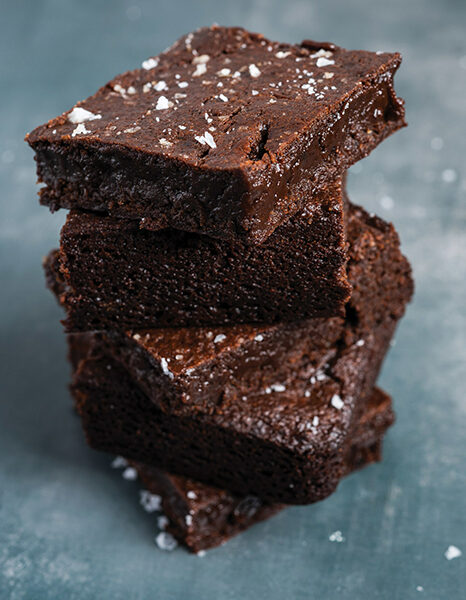
Chocolate lovers rejoice: This rich, delicious, gluten-free, grain-free Chocolate Covered Prune Fudge Cake is naturally sweetened using prunes instead of added sugar. If brownies are more your style, prunes can also take the place of eggs in these Vegan Brownies for a family-friendly treat that won’t wreck your eating plan.

To find more better-for-you desserts, visit californiaprunes.org.

Vegan Brownies
Prep time: 10 minutes
Cook time: 25 minutes
Servings: 9

Prune Puree:
16 ounces pitted California prunes
1/2 cup hot water

Brownies:
nonstick cooking spray
6 ounces unsweetened chocolate
1/2 cup California extra-virgin olive oil
2 cups light brown sugar
10 ounces California prune puree
1 1/2 cups all-purpose flour
1 tablespoon baking powder
1/4 cup cocoa powder
2 teaspoons vanilla extract
flaky sea salt, for garnish

To make prune puree: In blender, combine prunes and water. Pulse to combine then blend until smooth, pourable consistency forms, scraping sides, if necessary.

Store puree in airtight container in fridge up to 4 weeks.

To make brownies: Preheat oven to 350 F. Line 9-by-9-inch baking pan with parchment paper then lightly grease with nonstick cooking spray.

Using double boiler, melt chocolate and olive oil. Whisk in sugar and prune puree; mix until dissolved.

Into large bowl, sift flour, baking powder and cocoa powder. Gently fold in chocolate and prune mixture then add vanilla.

Spread batter in prepared pan, sprinkle with flaky sea salt and bake 20-25 minutes, or until top starts to look dry and brownies are just beginning to pull away from sides of pan.

Cool in pan. Remove then cut brownies into 3-inch squares.

Chocolate Covered Prune Fudge Cake
Prep time: 15 minutes
Cook time: 55 minutes
Yield: 1 cake (8 inches)

Cake: 
Coconut oil spray
14 tablespoons butter, chopped
2 teaspoons vanilla extract
3/4 cup cocoa powder
10 soft, pitted prunes, chopped small 
1/3 cup maple syrup
6 eggs
1/2 cup coconut sugar
1 cup almond meal

Ganache:
1 cup full-fat coconut milk
1 1/3 cups dark chocolate morsels

To make cake: Preheat oven to 300 F. Lightly spray bottom and sides of 8-inch springform pan with coconut oil spray. Place round piece of parchment paper in bottom of pan and lightly spray with coconut oil spray.

In small saucepan over low heat, place butter and vanilla. Use sieve to sift cocoa into saucepan. Stir with spatula until completely smooth. Remove from heat and set aside.

In bowl of food processor fitted with “S” blade, place prunes and syrup. Top with cooled butter mixture then process until smooth. Transfer to large mixing bowl, scraping all chocolate mixture from food processor with spatula.

In bowl of stand mixer fitted with whisk attachment, whip eggs and coconut sugar on high speed 7 minutes, or until tripled in volume.

Add one-third of egg mixture to bowl with chocolate mixture. Using spatula, gently fold together until completely combined. Add almond meal and remaining egg mixture to bowl and gently fold to combine.

Pour batter into prepared pan and bake 55 minutes, or until set. Once cooked through, transfer cake to cooling rack and cool completely in pan.

To make ganache: In top of double boiler, melt coconut milk and dark chocolate until completely smooth. Pour prepared ganache over cake. Serve immediately for molten fudge effect or allow to completely set.

Chocolate Energy Balls
Recipe courtesy of Meg van der Kruik on behalf of California Prunes
Prep time: 10 minutes
Cook time: 30 minutes
Yield: 24 pieces

Prune Puree:
16 ounces pitted California prunes
1/2 cup hot water

Energy Balls:
1 cup old-fashioned or gluten-free oats
2/3 cup toasted, unsweetened shredded coconut
1/2 cup creamy natural nut butter (peanut or almond)
1/2 cup pecan meal
1/2 cup prune puree
1/4 cup unsweetened cocoa powder
1 teaspoon vanilla extract

To make prune puree: In blender, combine prunes and water. Pulse to combine then blend until smooth, pourable consistency forms, scraping sides, if necessary.

Store puree in airtight container in fridge up to 4 weeks.

To make energy balls: In mixing bowl, stir oats, coconut, nut butter, pecan meal, prune puree, cocoa powder and vanilla until completely combined.

Cover and chill in refrigerator 30 minutes. Once chilled, use small cookie scoop or measuring spoon to measure equal-sized amounts of mixture then form into balls by applying gentle pressure to dough using palms. Do not roll as balls will break apart.

Store covered in airtight container in refrigerator up to 1 week.


About Family Features Editorial Syndicate

A leading source for high-quality food, lifestyle and home and garden content, Family Features provides readers with topically and seasonally relevant tips, takeaways, information, recipes, videos, infographics and more. Find additional articles and information at Culinary.net and eLivingToday.com.


SOURCE Family Features Editorial Syndicate

Essential French Desserts for Every Skill Level

Essential French Desserts for Every Skill Level

We have classic French dessert recipes for everyone—regardless of whether you’re just starting out or are already a pastry pro.

The world of French desserts is vast. Look into the window of a pâtisserie, and chances are you’ll see an assortment of éclairs, madeleines, financiers, cream puffs, macarons, tarts, and cakes like the Opera or Fraisier. Your favorite bistro likely has a crème brûlée or chocolate mousse on their dessert menu, if not both. And if you enjoy eating ice cream, then you’ve likely had crème anglaise, the custardy sauce that’s also used as a base used to make French-style ice creams. Add to that towering soufflés, meringues that are light as air, and the chocolate ganache essential for making your favorite truffles, and it can be hard to know where to start.

<p>Serious Eats / Amanda Suarez</p>

Serious Eats / Amanda Suarez

Over centuries, the French have mastered the art of pâtisserie and created some of the world’s most popular desserts. Some of their contributions to the world of pastry, like the croquembouche, are a little more extravagant and time-consuming to make. Others, like clafoutis, are simple enough to whip up on a busy weeknight. You don’t have to be a trained pastry chef to tackle either of these—all you need are a few essential techniques and recipes to use as building blocks. Master meringue, and you’ll be able to make macarons, chocolate mousse, and sweet soufflés. Learn how to make choux pastry, and you’ll have opened the door to cream puffs, éclairs, croquembouche, and more. Overcome your fear of making crème anglaise, like I did, and the world of custard-based ice creams is yours—not to mention easy desserts like fresh berries with chilled crème anglaise as the sauce.

The beauty of French pastry is that once you feel comfortable with the basic techniques and understand the science behind them, you’ll be able to mix and match recipes to create a laundry list of classic confections—or even a dessert of your own. No matter the skill level, there’s something sweet and celebratory for everyone. Here, we’ve highlighted our favorite French desserts, organized by the skill level required to make them. To be clear, all the recipes are thoroughly tested, clearly written, and doable by anyone—if you’re feeling ambitious, go ahead and jump into the deep end, we’re right there with you. Or follow the progression we’ve outlined here, starting with recipes for beginners (or whatever you think your current skill level is), then work your way up. By the time you’ve finished with the advanced recipes, you’ll have gained much of the fundamental skills required in even the most elite French pastry kitchens.

With whisper thin, crisp exteriors, light-yet-buttery centers, and those signature humps, these are madeleines that Proust would be proud of. Not only are these cakes easy to whip up, but they’re also extremely versatile: The batter can be flavored with nuts, cocoa powder, warm spices, citrus zest, herbs, and extracts.

Once baked, they can be glazed, filled, or served plain. Start simple, then play around with different flavors.

Deeply satisfying to eat, these tender-crisp financiers benefit from nutty brown butter and ground toasted almonds.

Resting the batter in the refrigerator allows the ingredients to hydrate, yielding moist, tender cakes. And while they’re delicious on their own, you can dress them up with a glaze or dip them into melted chocolate.

Cherry clafoutis is a dessert that’s guaranteed to impress and please. Its simplicity can’t be overstated: Pour a simple batter made from egg, milk, sugar, and flour over cherries, bake, and serve. Butter in the batter adds extra flavor and helps crisp the edges more, while balanced amounts of egg and sugar produce a light-textured clafoutis that’s just sweet enough and not too eggy.

Sweetened dairy stars in this dessert that’s shaped into a heart and served with strawberry sauce. All you have to do is beat cream cheese and cream with powdered sugar, the seeds of a vanilla bean, and lemon zest before allowing the mixture to set overnight. To successfully unmold your dessert, line your dish with a damp paper towel or cheesecloth and invert.

Crème anglaise is many things: It’s a sauce. It’s a custard. It’s a sauce and a custard you can churn into ice cream. At its most basic, crème anglaise is a mixture of milk and/or cream, egg yolks, sugar, and a vanilla bean that has been cooked until just thick enough to coat a spoon. Though cooking an egg-based custard can be anxiety-inducing, a bit of care and good technique is all you need to prevent scrambled sauce is an unlikely outcome.

The grown-up version of a Pop-Tart, gâteau Basque combines elements of a cookie, a tart, and a pie, with a filling of pastry cream or cherry jam. The tender, slightly crumbly crust—which is easily rolled out once chilled—comes together easily in a stand mixer.

Here, the addition of almond flour and extract in both the dough and pastry cream adds a rich, nutty flavor.

Vanilla bean-flecked pastry cream meets flaky pie crust in this cake on an essential French pastry.

Here, pie dough makes for a tender, flaky crust that’s sturdy enough to support the pastry-cream filling, and brushing the surface of the flan with egg yolk produces a glossy, deeply bronzed finish.

Chouquettes are small choux pastry puffs topped with snowy white grains of pearl sugar. They bake up quickly and make a delicious snack or after-dinner treat. The secret to choux pastry that develops good color without over-baking?

Use milk—which has additional proteins and sugars that promote browning—in the choux paste.

Rich with bittersweet flavor and light as a cloud, chocolate mousse is a simple, elegant dessert that’s deeply satisfying to eat. For an easy mousse that won’t seize or deflate, melt your chocolate together with the cream. This stabilizes the chocolate and prevents it from seizing and also lightens up the chocolate mixture, making it easier to fold together with the egg whites without deflating the mixture.

Made well, crème brûlée is a magnificent dessert of silky, vanilla-scented custard beneath a shatteringly crisp topping of caramelized sugar. For a velvety custard that doesn’t curdle, be sure to bake your crème brûlée in a water bath.

Got a blowtorch? This is the time to pull it out. Using it to caramelize the raw sugar topping results in an evenly caramelized crust that shatters easily.

This simple, elegant dessert of “floating islands” suspended in a pool of crème anglaise is a French classic. For a more stable meringue that’s less likely to deflate, whisk your egg whites at a lower speed for longer, and slowly add the sugar to ensure it’ll dissolve properly. Don’t feel like making crème anglaise from scratch? You can melt a pint or two of good quality, egg-free vanilla ice cream in a saucepan or microwave instead.

Light and crisp cream puffs, filled with your choice of rich pastry cream, whipped cream, or crème légère, will satisfy dessert lovers everywhere.

Our easy recipe for choux pastry takes almost all the guesswork out of the traditional technique, producing puffs that are golden and crispy on the outside and hollow within.

Served à la minute, chocolate soufflé is the go-to classic dessert for chocolate lovers everywhere. For a soufflé that rises successfully, you’ll want to liberally butter and sugar your ramekins, which will ensure that the soufflé rises up without any cracks. For maximum loft, you’ll want to whip egg whites and sugar until they reach stiff, glossy peaks before folding it into chocolate ganache. Just make sure your egg whites and your mixing bowl are clean!

Canelés require plenty of patience, but it’s well worth it for the glassy, caramelized exterior and custardy center you get.

To make this southwestern French specialty, you’ll want to coat your molds in a mixture of beeswax and butter, and start baking at a very high temperature to encourage a crisp skin to form.

Time and temperature are both key to mastering this dessert, and as long as you keep an eye on both, you’ll be able to make a canelé worthy of a French bakery.

Crisp choux pastry, a rich vanilla bean-infused pastry cream, and an intense chocolate glaze? It’s easy to see why éclairs remain one of France’s most beloved treats. With éclairs, how they’re piped is how they bake, so it’s crucial to take your time and do it well. After they’re baked, you’ll use a sharp paring knife to poke holes in the bottom of each éclair while they’re still hot. This will dry out the insides of the pastries and keep them crisp.

A towering masterpiece of caramel-covered cream puffs surrounded by golden threads of spun sugar, the croquembouche is the celebration cake of France. Making it is a labor of love and requires a bit of advance planning and plenty of organization.

You’ll want to make a template for your puffs to ensure they’re all uniform in size, then prepare all the mise en place for the choux pastry, the pastry cream, and the caramel before assembling.

Tarte Tatin can be a tricky dessert to make and involves a nuanced culinary dance that requires a fine-tuned sense of just about… everything.

The key to success is breaking the recipe down into more discrete parts, and understanding the science of how apples cook and soften. With the right technique, you can make a stellar tarte Tatin that rivals even those served in a French bistro.

Almond-studded choux pastry and rich, nutty praline crème mousseline join forces in this impressive French dessert. Piping and building the Paris-Brest may seem like the most intimidating part, but there’s no wrong way to do it as long as the filling sits tall inside the bottom half. We promise it’ll be delicious, no matter how professional the filling looks.

This French dessert gets its name from the way its layers of thinly sliced apple seem to disappear into the light batter that binds them. In a nod to the popularity of gateau invisible in Japan, this version is subtly flavored with salty-sweet white miso, and served with a miso caramel sauce. Despite its impressive layers, all you really have to do is whisk eggs and sugar until glossy, add in the flour, then gently fold in apples until they’re evenly coated. The hardest part may very well be slicing the apples thinly and layering the cake. The thinner the apples, the more layers you’ll get, and the more cohesive the baked cake will be.

Header Image Photography by Amanda Suarez
Art Direction and Graphics by Sarah Maiden

‘The Book of Jewish Food’ Tells the Story of Jewish Food and Jewish Life

‘The Book of Jewish Food’ Tells the Story of Jewish Food and Jewish Life

In 1981, at the Oxford Symposium on Food and Cookery, an annual gathering of some of the finest minds in the food world, the cookbook writer Claudia Roden, already famous for her authoritative first book, A Book of Middle Eastern Food, declared, “There is really no such thing as Jewish food.”

Because the Jewish God has a sense of humor, Roden shortly afterward embarked (at the suggestion of her British editor) on a new project about, yes, Jewish food. The Book of Jewish Food: An Odyssey from Samarkand and Vilna to the Present Day (the American edition is subtitled An Odyssey from Samarkand to New York) took 16 years to finish, plenty of time to consider the Jewish food question.

But, I hear you cry, isn’t it obvious? Bagels! Lox! Gefilte fish! The maddeningly complex laws of kashrut, which have been subject to debate for several millennia! Of course there is Jewish food!

Well, yes and no. There are entire communities of Jews, including the one in Cairo in which Roden grew up, who have never eaten bagels and lox. And not all Jews keep kosher. As Roden traveled the world talking to Jews about their food, she realized that everyone had their own personal idea of what made food Jewish. Jewishness isn’t a place. Jews move around too much for that. Jewishness is a state of mind, and Jewish food is often eaten in exile.

For Roden, Jewish food was the dishes her grandparents had brought to Egypt from Constantinople and Aleppo at the turn of the 20th century: kibbeh and little meat and spinach pies and a chicken soup called melokheya, named after the distinctive-smelling leafy green vegetable that floated in it. For a Jew in Samarkand, it would have been khalti barsh, rice mixed with meat and liver and cooked overnight in a linen bag, and for a Jew in Morocco, couscous with stuffed meatballs. Only an American or Canadian would consider bagels and lox central to Jewish cuisine, and they would argue with a Brit about the proper preparation of gefilte fish because in England, instead of serving the fish balls in cold jelly, they fry them. The only common denominator appears to be matzo, unleavened bread of affliction that’s eaten at Passover, and a cookbook devoted to that would be very short and unspeakably sad.

This lack of consensus is a very big problem for someone who is trying to write the definitive book on Jewish food.

At first, Roden thought she would collect every Jewish dish in every Jewish community in living memory, until she realized this quest would probably take her the rest of her life. So she decided to limit the book to the largest and best-known communities and select the very best she could find. She still ended up with 800 recipes.

Not all Jewish dishes are exclusive to Jews. Everybody in countries like Egypt, Lebanon, and Yemen eats falafel, for example. But Roden found that Jews tend to put their own twists on common regional foods to make them conform to the kosher laws, like using oil instead of butter. Sometimes, after leaving — or being expelled — from one country, they would bring their food to another, like the Yemeni Jews who brought a spicy relish from Arabia to Israel where they served it on falafel and therefore made falafel Jewish. Was this relish considered Jewish in Yemen? Would it have ever been served with falafel if not for the Jews?

Instead of trying to be completist or hand down definitive judgments, Roden decided — and this is the reason this book is wonderful — to put all these recipes back in the context in which they were first eaten by Jews. Food becomes a means of time travel. Even if there were no recipes at all, the descriptions of the Jewish communities of the past and what they ate would make the book worth reading.

The places she brings us are almost uniformly beautiful. Most of them no longer exist. Maybe they never did. Roden describes a series of tight-knit communities, some more prosperous than others, where people always keep the door open for their neighbors and an extra seat at the table for a stray visitor or someone going through a hard time. Friday night is a time to gather, to shake off the worries of the workweek and enjoy a glorious meal that took all day to prepare. Even the Eastern European shtetls, which I firmly believe are the source of much inherited trauma for American Jews, are bathed in this golden light. (The lone exception is America, the land of Crisco, difficult to romanticize because it still exists.) Roden did meticulous research, and the pictures she paints are beautifully detailed. But, like those Renaissance artists who gave Biblical characters the faces of people they knew, Roden is really telling the story of her own lost world.

The Zamalek neighborhood of Cairo, where Roden was born, was a close and cosmopolitan community where Jews mingled freely with their Muslim neighbors. They spoke French and ate Syrian food prepared by their Egyptian cooks. Roden’s relatives were all merchants; the family traveled to Europe for several months every year. At home, in the words of Roden’s father, “we spent our time on the balcony talking to passersby.”

In 1951, when she was 15, Roden left Egypt to go to boarding school in Paris, and then, three years later, to London to study painting at Central Saint Martins. In the fall of 1956, in the wake of the Suez Crisis and the failed invasion of Egypt by Israel, Britain, and France, the Egyptian president Gamal Adbel Nasser expelled all foreigners and Jews, some with as little as 24 hours’ notice. Roden’s parents, Nelly and Cesar Douek, joined her and her two brothers in London, and none of them saw Egypt again for 30 years.

In the immediate aftermath of the exodus, the Doueks’ North London home became a place for the exiles from Zamalek to gather. Many of them were passing through on their way to New York or Jerusalem or South America. They were all grieving. In Cairo, very few of them had cooked — everyone had servants — but they still had their family recipes. Roden would learn later on, once she started reading the work of anthropologists, that every family has its own culinary code. “In the selection of dishes,” she writes in the introduction to The Book of Jewish Food, “there is a logic that combines mythological, historic, and moral significance to create a symbol.” Those codes put a particular stamp on each family’s version of a dish. In Egypt, recipes were closely kept secrets. No one ever shared. But in exile, things were different.

“They were desperate,” Roden has recalled to multiple interviewers. “They would say, ‘Please, give me your recipe for that. It’ll be something I’ll remember you for because I might never see you again.’ And for most of those people, we never, ever saw them again. And those recipes were so precious, I found.”

She tells this story the same way every time because it is her origin story. After a while, she began collecting recipes from outside her family’s immediate social circle. She would go to places like carpet stores and the Iranian embassy and ask random people. This has remained her method throughout her life. People always give them to her. No one has ever gotten angry at her for publishing them. Quite often, she gets multiple recipes for the same dish. The Book of Jewish Food is full of variations: This is how the Syrians make it, and this is how the Iranians do it, and this is how you would have found it in Thessaloniki before World War II, when it was still called Salonika.

Roden’s quest for more recipes eventually took her to the British Museum in search of Arab cookbooks. The only ones she could find were from the Middle Ages. She also found a Ph.D. dissertation about a 13th-century cooking manual from what is now Lebanon. It explored not just how to prepare food but also what the food said about the society: which class of people was eating these dishes and which class of people was preparing them and the trade routes that made foreign ingredients available. For Roden, it was an epiphany. “I just realized how food can tell you so much,” she recalled later.

In The Book of Jewish Food, Roden divides the Jewish world into two cultures: the Ashkenazi of Eastern Europe, and the Sephardi of Mediterranean Europe, North Africa, India, and Southwest and Central Asia. (These non-European Jews are also often referred to as Mizrahi.) The two cultures speak differently, pray differently, and eat vastly different food. Although Roden has by now lived most of her life among the Ashkenazim (including marriage to, and then divorce from, a British Jew of Russian descent), she is still very much Sephardi.

Sephardic recipes take up two-thirds of The Book of Jewish Food, and while Roden makes an effort to give Ashkenazi food its due, her heart is clearly not in it: In a New Yorker profile, the writer Jane Kramer points out to Roden that her matzo balls are a spectacular failure (no seltzer water!) and Roden shrugs and “admit[s] to having been less than discerning when it came to some of the Ashkenazi dishes.” In the section on fish, you can almost hear Roden gloat when she shares her discovery that fish and chips, the most beloved food of her adopted country, was not, in fact, invented by an Eastern European Jew, as was widely believed, but brought to London much earlier by Portuguese Jewish immigrants.

This focus on Sephardic food was quite novel in the English-speaking world in 1996 when the book was first published. But in the past quarter-century, Roden’s disciples, notably Yotam Ottolenghi in England and Michael Solomonov in the U.S., have made many converts. At this point, with the slow and painful death of the Jewish deli and the realization that schmaltz, the central fat of Ashkenazi cuisine, can actually kill you, there are probably more Jews eating eggplant, yogurt, and falafel than pastrami.

The overall experience of cooking from The Book of Jewish Food is less like a lesson from your bubbe or your aunties, the way cooking (allegedly) used to be, and more like a choose-your-own-adventure. With 800 recipes, who has time for hand-holding? This can get challenging when you are making a dish you have never seen or even heard of before, especially if you’re a nervous cook like I am.

I did not attempt the kibbeh, even with the aid of YouTube tutorials. Roden writes that it was “the standard by which once upon a time women were judged,” and the pressure was too much. I also did not attempt any of the many pies because, according to Roden, you can’t make just a few, you have to make dozens, and doing it solo instead of with a kitchen full of friends and relatives makes one tend to feel lonesome and sorry for oneself.

I did make anjuli, a cold fish and potato salad from India, because Roden is very enthusiastic and persuasive about the Indian recipes she’s collected. It had a delicate flavor, and now I think coconut milk is a very underrated ingredient in fish salads. The Sephardi rice pudding, which I made the Egyptian way (baked until it developed a brown crust, like the top of a Portuguese egg tart) and then the Spanish way (unbaked and flavored with vanilla and lemon zest), was also very good.

Rice pudding, as it happens, was one of the dishes Roden ate when she finally returned to Cairo after years of exile. It was in a tiny dairy in Sakakini, the neighborhood where her parents had been born, and after she told this to the shopkeeper, he told her the pudding was on the house. That pudding welcomed her home. Was I tasting it now in Chicago in 2023? I didn’t think so — I had been slightly confused by the recipe and I’m quite sure the rice and milk I used had a different flavor. Plus I was eating it standing in my kitchen, not outdoors at a little table staring up at an old palace. Context is everything.

But I could still flip open the book to the description of old Cairo and I could read and imagine the smells of sizzling garlic and crushed coriander seeds with an overlay of rosewater, the domes and minarets, the courtyards behind metal grilles, and the sound of voices from the balcony, the family chatting with the passersby.

Aimee Levitt is a freelance writer in Chicago.

Refreshing Beverage Recipes | Seasonal Food and Country Style Recipes

Refreshing Beverage Recipes | Seasonal Food and Country Style Recipes

Pineapple Orange Drink

  • 1 (46-ounce) can pineapple juice
  • 1 package orange Kool-Aid
  • 1 cup sugar

Mix ingredients and add enough cold water to make 1 gallon.

Recipe by the Hoovers, Annville, Pennsylvania


Coffee Milk

  • 1 tablespoon instant coffee
  • 1/2 cup sugar
  • 3/4 cup hot water
  • 1/2 teaspoon vanilla
  • 1 quart milk

Dissolve coffee and sugar in hot water. Cool. Stir mixture and vanilla into cold milk. Serve.

This is a cool, refreshing drink for a hot summer day.

Recipe by the Hoovers, Annville, Pennsylvania


Tea Syrup

  • 4 quarts boiling water
  • 3 cups sugar
  • 1 quart tea (such as mint), tightly packed (stems and all)

Put tea in boiling water and let steep for 20 minutes. Strain. Add sugar to liquid. Heat liquid until sugar is dissolved. Cool and freeze. To serve, add 2 quarts water to 1 quart of concentrate.

This tastes like fresh-cut tea in wintertime.

Recipe by the Hoovers, Annville, Pennsylvania


Frappes

  • 2 tablespoons hot water
  • 2 tablespoons instant coffee
  • 2 teaspoons sugar
  • 1/2 cup ice cubes
  • 1/2 cup milk
  • 1-1/2 cups vanilla ice cream
  • 1/2 teaspoon vanilla extract
  • Whipped dairy topping, optional
  • Caramel sauce, optional

Dissolve coffee and sugar in hot water. Blend coffee mixture, ice, milk, ice cream and vanilla in a blender until smooth. Pour into glasses and top with whipped dairy topping and caramel syrup, if desired.

Frappes can be your morning coffee in the summer or a chilly dessert.

Recipe by the Reiffs, Mifflinburg, Pennsylvania


Strawberry Banana Breakfast Smoothie

  • 1-1/2 cups milk
  • 1 cup fresh or frozen strawberries
  • 1 banana, fresh or frozen, sliced
  • 1 cup yogurt
  • 1-2 teaspoons honey
  • 1 cup ice cubes

In a blender, pour in milk and add rest of ingredients. Blend until smooth.

Recipe by the Reiffs, Mifflinburg, Pennsylvania


Best Lemonade Ever

  • 1-3/4 cups sugar
  • 8 cups water, divided
  • 1-1/2 cups lemon juice

In a small saucepan, combine sugar and 1 cup water. Bring to a boil and stir to dissolve sugar. Allow to cool to room temperature; then refrigerate until chilled. Remove seeds from lemon juice, but leave pulp. Stir together chilled syrup, lemon juice and remaining 7 cups water.

Recipe by the Zimmermans, Akron, Pennsylvania


Whipped Coffee

  • 2 tablespoons instant coffee
  • 2 tablespoons sugar
  • 2 tablespoons hot water

Combine ingredients and beat with hand mixer for 5 minutes or until peaks form. In a glass, layer ice cubes, then coffee mixture, and add desired amount of milk. Stir.

Recipe by the Zimmermans, Akron, Pennsylvania


Coffee Punch

  • 2 cups boiling water
  • 1-1/2 cups sugar
  • 3-4 tablespoons instant coffee
  • 1 gallon milk
  • 1 quart vanilla ice cream
  • 1 quart chocolate ice cream

Combine boiling water, sugar and coffee. Stir until dissolved. Cool. To serve, combine coffee mixture with milk and pour in a punch bowl.

Serves 8-10.

This is very delicious.

Recipe by Jalisa Martin, Port Trevorton, Pennsylvania


After-School Blueberry Blendies

  • 15-ounce package frozen blueberries
  • 1 cup milk
  • 2 tablespoons honey
  • Pinch cinnamon (optional)
  • Pinch cardamom (optional)

In a blender, combine all ingredients and blend and until smooth. Serve immediately.

Servings: 4.


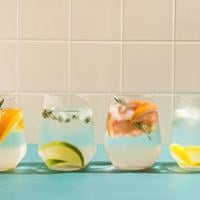
Strawberry Melon Fizz

  • 2 cups sugar
  • 1 cup water
  • 5 fresh mint sprigs
  • 1 quart fresh strawberries, halved
  • 2 cups cubed honeydew
  • 1-3/4 cups cubed cantaloupe
  • Ginger ale or sparkling white grape juice

In a large saucepan, combine the sugar, water and mint; bring to a boil. Reduce heat; simmer 10 minutes. Remove from the heat; allow to cool completely. Discard mint.

Combine strawberries and melon. Just before serving, fill tall glasses with fruit and drizzle each with 1 tablespoon sugar syrup. Add ginger ale to each glass.


Dirty Chai Latte

  • 1 black tea bag
  • 1 to 2 shots espresso (or 2 to 4 ounces strong coffee)
  • 1 to 2 tablespoons homemade chai tea concentrate (see recipe at right)
  • 1/3 cup milk
  • Ground cinnamon

Place tea bag in a large coffee cup. Cover with 1 cup boiling water and let steep for 3 to 5 minutes.

Discard tea bag, then add hot espresso to tea.

Stir in 1 to 2 tablespoons of chai tea mix (to taste).

Microwave milk until hot (about 45 seconds), then froth using a milk frother (or shake in a sealed mason jar).

Add frothed milk to drink, then sprinkle with cinnamon, if desired.

Serve hot.


 Maple Syrup Milkshake

  • 1/4 cup pure maple syrup, plus more for serving
  • 1/4 cup milk
  • 1 teaspoon vanilla extract
  • 1 pint vanilla ice cream

Puree ingredients until smooth; pour into serving glasses and drizzle with more syrup, if you like.


Maple Latte

  • 8 ounces strong coffee
  • 1/4 cup milk
  • 1-2 tablespoons maple syrup
  • Pinch of ground cloves
  • Pinch of allspice
  • Pinch of fresh nutmeg

Add maple syrup and spices to the bottom of a mug; stir to combine.

Place milk into a microwave safe jar and heat for about 30 seconds, until warm. Tightly screw lid onto jar and shake for a few seconds, until milk is foamy.

Pour hot, strong coffee over maple syrup. Top with foamy milk. Garnish with more spices if desired.


Homemade Chai Tea Concentrate

  • 1 (14-ounce) can sweetened condensed milk
  • 1 teaspoon ginger
  • 1 teaspoon cardamom
  • 1/2 teaspoon cinnamon
  • 1/2 teaspoon nutmeg
  • 1/2 teaspoon cloves
  • 1/4 teaspoon black pepper

Pour condensed milk into a small bowl.

Add spices to milk and stir until completely combined.

To use, brew a strong cup of black tea, then mix in a heaping tablespoon of concentrate. Serve.

Keep concentrate in refrigerator.

SNAP Users Can Purchase Healthy Food and More Through FarmboxRx

SNAP Users Can Purchase Healthy Food and More Through FarmboxRx
Rafa Jodar / iStock.com

Rafa Jodar / iStock.com

The the latest close of crisis food stuff stamp allotments accepted for the COVID-19 pandemic arrived at a lousy time for a pair of factors. 1st, food stuff costs stay at historic highs thanks to the soaring inflation fee. 2nd, diet program-linked health care situations these as diabetic issues and obesity are on the increase in the United States, particularly amongst low-earnings family members that count on food stamps to invest in groceries.

See: When Scheduled SNAP Added benefits Are Sent in March 2023
Discover: What Is the Maximum SNAP EBT Advantage for 2023?

Foods stamps, officially identified as Supplemental Nourishment Guidance Application (SNAP) added benefits, are offered to qualifying homes to guide with foodstuff purchases. Several of these homes received extra positive aspects through the pandemic, but those crisis payments ended at the beginning of March.

When that happened, many SNAP recipients observed their regular payments slide by $95 or far more — making it even extra complicated to find the money for wholesome foods.

The finish of emergency SNAP allotments coincided with a new examine from the Journal of the American Health-related Association (JAMA) displaying that diabetes and weight problems are both on the rise. As Wellbeing Exec reported, almost 13,000 clients had been included in the analyze. Collectively, their data showed many cardiovascular threat variables have enhanced in prevalence above time. For illustration, hypertension prevalence rose from 9.3{d2b09b03d44633acb673e8080360919f91e60962656af8ade0305d5d8b7e4889} in 2009-2010 to 11.5{d2b09b03d44633acb673e8080360919f91e60962656af8ade0305d5d8b7e4889} in 2017-2020.

Healthier consuming can enable people steer clear of these forms of health care situations, but also number of individuals who qualify for SNAP possibly really do not go after or cannot pay for healthier diet program choices.

As earlier documented by GOBankingRates, investigate has revealed a lack of vegetable intake is extra common in People whose residence incomes tumble at or below the poverty degree. Only 7{d2b09b03d44633acb673e8080360919f91e60962656af8ade0305d5d8b7e4889} of grownups at the poverty degree are acquiring adequate veggies, when compared to 11.4{d2b09b03d44633acb673e8080360919f91e60962656af8ade0305d5d8b7e4889} for these in the maximum household income group.

On a favourable note, SNAP recipients in numerous pieces of the country do have obtain to much healthier food items and wellness choices than in former decades. Many farmer’s marketplaces all around the state accept SNAP, supplying beneficiaries entry to affordable nearby and organic and natural fruits and veggies.

SNAP Advantages: How Prolonged Do They Last?

SNAP recipients can also acquire healthy food stuff from corporations these kinds of as FarmboxRX, which delivers clean generate to underserved communities and also gives nutritional training and wellness programming. These varieties of solutions are specifically vital as millions of SNAP homes encounter more compact monthly payments.

“Dramatic cuts like this to SNAP budgets with out substitute protection nets in place for individuals who have come to depend on these packages will trickle down to hit already overburdened Medicare and Medicaid budgets,” FarmboxRx Founder and CEO Ashley Tyrner mentioned in a statement shared with GOBankingRates.

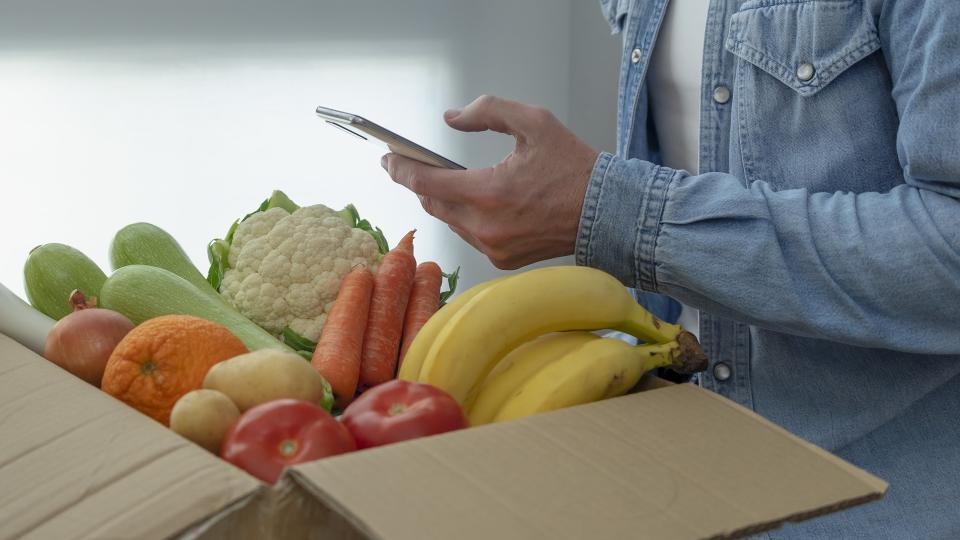
FarmboxRx’s reaction to food items insecurity is to supply foods packing containers hefty on nutritious fruits and veggies, usually tailor-made to specific diet programs. The containers include things like recipes authorised by registered dieticians and nutritionists, routines and game titles to make improvements to mental well being, and tips for ingesting healthy on a funds. Its wellness method also includes academic seminars and meal prepping guides.

The company is on a mission to enable minimal-earnings and at-danger households strengthen their health by what it phone calls “food as drugs” deliveries, with the ultimate intention of steering households absent from significant health and fitness issues.

Discover: Amazon Clean Ends Free Delivery for Orders Under $150
Explore: 5 New Ways To Conserve on Groceries You In all probability Have not Tried Still

“With nowhere else for people today to transform, we can hope to see an improve in emergency division visits thanks to reduced blood glucose incidents, and a even more boost in serious illnesses as persons flip to less wholesome/far more caloric-dense finances-friendly foodstuff selections to endure,” Tyrner explained.

More From GOBankingRates

This write-up at first appeared on GOBankingRates.com: Foods Stamps: SNAP Consumers Can Buy Healthier Foods and More Through FarmboxRx