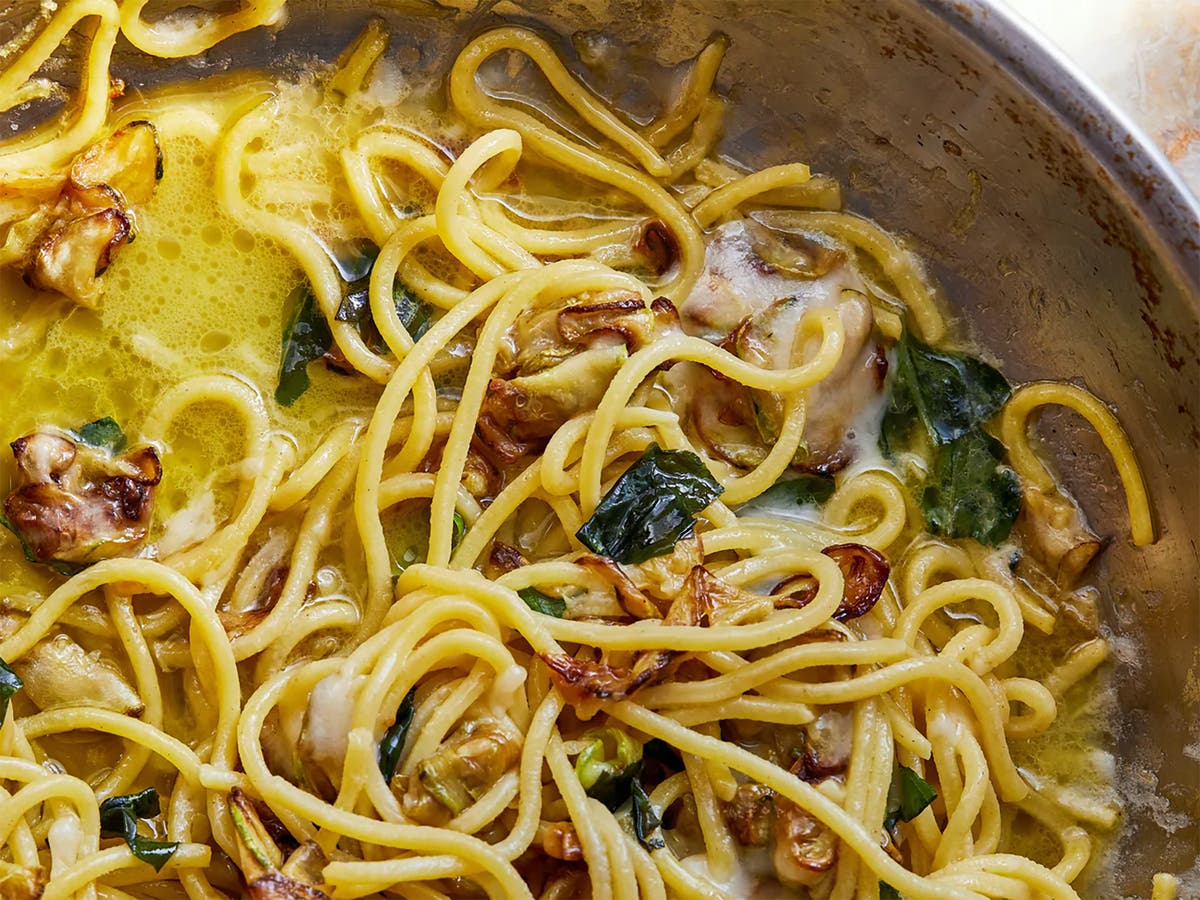
With Thanksgiving almost here, there’s a big question going on in the minds of those of us who cook: What exactly are we going to do with all the leftovers from the big Thanksgiving meal?
There’s usually so much food left over, and it’s a pity to throw it away. So get creative and try creating new meals from the leftovers over the next days—or maybe even weeks—if you plan on freezing the leftovers.
Related: 58 Mini Thanksgiving Dessert Recipes
What to Do With Thanksgiving Leftovers
While repurposing new dishes from the remains of Turkey Day does require some thought and effort (unless you don’t mind eating turkey sandwiches for a whole week), the results can be quite a pleasant surprise.
(scroll to keep reading)
From leftover stuffing muffins and leftover turkey corn chowder, to turkey dinner hash, ham and potato soup, crack turkey salad and mashed potato bagels, there are plenty of ingenious ideas to use up those tasty leftovers included here. Pick your favorites and get ready to put those leftovers to good use.
Related: 8 Leftover Thanksgiving Turkey Recipes
Best Thanksgiving Leftover Recipes
Leftover Thanksgiving Pizza
Community Table
What’s the best way to use your Thanksgiving leftovers? Turn them into a pizza!
Get the recipe: Leftover Thanksgiving Pizza
Related: 30 Warm and Cozy Turkey Soup Recipes
Leftover Pumpkin Pie Spice Bread
Gayle Covner
Re-purpose any leftover cooked pumpkin to make this leftover pumpkin pie spice bread.
Get the recipe: Leftover Pumpkin Pie Spice Bread
Open-Face Turkey Cranberry Sandwiches
Sarah Walker Caron
This four-ingredient open-face turkey-cranberry sandwiches recipe takes the best parts of Thanksgiving dinner and turns them into a seriously satisfying sandwich.
Get the recipe: Open-Face Turkey Cranberry Sandwiches
Thanksgiving Leftovers Ring
Delish
Thanksgiving leftovers ring is a fun new way to enjoy turkey, cranberry sauce and your favorite side dishes all over again.
Get the recipe: Thanksgiving Leftovers Ring
Leftover Turkey Noodle Soup
Gayle Covner
The best way to make soup is to repurpose that Thanksgiving turkey of yours, bones and all. In fact, throw in any and all carcasses and bones that remain from your extravagant feast.
This mouth-watering mashed potato casserole is loaded with creamy mashed potatoes and topped with crispy chicken tenders, corn, cheddar cheese, and a drizzle of brown gravy!
This leftover turkey cornbread casserole is the perfect way to use up your Thanksgiving leftovers. Turkey and veggies are topped with flavorful gravy and baked with fluffy, golden-brown cornbread.
These leftover potato cups with cheddar and chives are so easy to make, budget-friendly and they taste divine. They have a crunchy crust and a creamy and flavorful filling.
This creamy leftover ham tortellini uses leftover ham in a delicious creamy pasta. It’s super quick to make and freezes well. You could even double the recipe to make an extra large portion and freeze some for easy meals later on.
This leftover ham and spinach casserole is stuffed with spinach, ham, cheese and ziti noodles for a delicious dinner recipe! Perfect recipe to use leftover ham up!
Kind of like potato dauphinoise, but made even better with pieces of ham and caramelised onions. These scalloped potatoes with leftover ham are comfort food heaven!
Try this easy recipe for leftover mashed potato pancakes with cheese! Made with four simple ingredients and ready in just 15 minutes, they make the best quick meal or appetizer.
Put your leftover Thanksgiving turkey to great use with this tasty twist on a comforting classic that’s full of hearty cornbread dumplings. Turkey and cornbread dumplings is an easy meal that will keep you warm all winter long!
Crisp, buttery Turkey croissant panini with sliced Brie, cranberry relish, and baby arugula are an easy way to enjoy your holiday leftovers. Great for lunch!
Turkey salad loaded with cheddar, bacon, and ranch. A great way to use up all that leftover Thanksgiving turkey! Serve on a croissant for the best turkey sandwich ever!
Deep fried balls that are dipped in panko and stuffed with dressing, chopped turkey, Parmesan cheese then drizzled and dipped in gravy? It’s Thanksgiving in a bite and the best vehicle for leftovers.
Thanksgiving turkey egg rolls are the most delicious way to use up Thanksgiving leftovers. A crispy, golden brown egg roll wrapper surrounds your favorite Thanksgiving flavors. Dip in leftover gravy or spread on extra cranberry sauce.
Thanksgiving leftover sliders are the perfect way to use your thanksgiving leftovers! Use your leftover turkey, stuffing and cranberry sauce in these cute and delicious sliders!
Turkey and cranberry sauce are nestled between two slices of buttery bread that have been grilled to perfection, all held together by melted cheddar cheese.
In this leftover turkey pot pie recipe, a delicious filling made with a from-scratch sauce sits between two layers of flaky, buttery homemade pie crust for a meal your entire family will love.
This baked turkey and dumplings casserole dish is made with leftover turkey, veggies, homemade dumplings that are layered with a flavorful gravy for the perfect comfort food on a busy night.
This savory Leftover turkey dinner hash is a delicious way to repurpose a fridge full of leftovers after a big feast. 15 minutes and done. Brunch is served!
This delicious ham and vegetable soup is the perfect way to cook with a leftover ham bone that you might have on hand from a special Sunday supper or a holiday meal!
These leftover turkey salad sandwiches are a post-Thanksgiving classic! Make these delicious turkey salad sandwiches with leftover Thanksgiving turkey, dried cranberries, and celery.
We all need some ideas to use up the extra food from the big feast, and this three-cheese turkey, cranberry, and sage quesadilla is the solution. Skip the sandwich and use this Thanksgiving leftover recipe instead!
Thanksgiving leftover stuffing muffins are made in minutes with leftover stuffing and turkey for a tasty breakfast or snack that you can dip in cranberry sauce or gravy!
This leftover turkey skillet pot pie is made in one skillet for easy clean up and uses store bought biscuits for the topping. Don’t have leftover turkey? Leftover shredded chicken works too!
Extend the holiday cheer to the day after, by transforming boring leftovers into this delicious Thanksgiving Leftover Savory Bread Pudding – where flavourful stuffing, soaked in a herby custard, is baked with juicy pieces of turkey and sweet cranberries and then topped with melted cheddar cheese.
This twist on the classic matrimonial squares (also called Date Squares) uses cranberry sauce as a filling instead of a date purée. They’re super easy to make and are a fabulous use for leftover cranberry sauce.
In true, easy Thanksgiving leftovers fashion, all you need is your choice of stuffing, mashed potatoes, diced turkey, and egg roll wraps to get delicious egg rolls!
This recipe for brown sugar-glazed turkey meatballs packs a bite-size punch of sweet and spicy, juicy and delicious. These meatballs are baked to perfection and are a perfect appetizer for sharing with friends!
This turkey pot pie soup has something a little bit special going on, and that little special something comes in the form of buttermilk biscuit “croutons.”
These Thanksgiving stuffing waffles take everyone’s favorite holiday side dish and bring it to a whole new crispy, delicious level—by cooking it in a waffle iron. Perfect for the big holiday, or just for using leftovers!
This Thanksgiving pizza recipe is the best way to eat Thanksgiving leftovers. It has turkey, mashed potatoes, stuffing and more all in a puff pastry crust!
Mashed potato balls are the perfect way to use up leftovers from Thanksgiving! They’re loaded with cheddar cheese, parmesan, garlic, chives, spices, and coated with crunchy panko. This is the perfect way to use up those mashed potatoes for a crispy snack or appetizer!
Leftover turkey, sweet potato, spinach and Gruyere cheese frittata– trust me, you’ll want to save some Thanksgiving turkey because this breakfast frittata is so good!
At first made in the early 1970s at the British Virgin Islands’ Soggy Dollar bar—reachable only by sea—the Painkiller is a textbook boat consume. A mix of rum, pineapple and orange juices (both typically from a can) and coconut product, it places refreshment earlier mentioned complexity, inviting bartenders to attempt their hand at balance in a cocktail that by no means experienced it in the first location. “There’s no acidity,” notes rum qualified Paul McGee, of the normally cloying combination of components. “It just starts off with a awful recipe.”

But judging by a modern tasting of 10 recipes submitted by bartenders throughout the region, the Painkiller is not a dropped trigger. Though some pulled the method also far into Major Cocktail territory, with unorthodox additions these as Pedro Ximénez sherry and cold-brew concentrate, those that succeeded managed to honor the uncomplicated nature of the unique, contacting for considerate variations that produced the holiday consume experience worthy of a place on any contemporary cocktail menu.


Amongst the most widespread difficulties plaguing the entries was a inclination for overdilution. The quantity of the drink is massive to start out with—eight and a 50 percent ounces, of which five are juice. Increase to that the dilution from shaking with ice cubes, or buzzing the drink with pebble ice in a stand-up mixer, and it can rapidly grow to be a watery mess. Other frequent faults were a lack of acid, far too a great deal rum or too small rum.


On that very last point, even with the cocktail’s trademark staying owned by Pusser’s Rum (who, it should to be known, did not even generate the recipe), number of of the submitted Painkillers called for the manufacturer. In virtually each recipe, Jamaican rum created an overall look as section of the foundation-spirit mix, a collection that the judges (myself, McGee, Sunken Harbor Club’s St. John Frizell and Punch editor-in-main, Talia Baiocchi) uncovered favorable for its skill to boost the tropical banana and pineapple notes.
Getting major honors was Matthew Belanger, of Loss of life & Co. Los Angeles. His interpretation of the Painkiller leans on a mix of Smith & Cross Jamaican rum, El Dorado 15-year Guyanese rum and Lemon Hart 151 Demerara rum for the foundation, with only an ounce and a 50 percent of pineapple juice (in contrast to four ounces in the unique spec) along with an ounce of Coco Lopez and 3-quarters of an ounce of orange juice. It was among the the most rum-forward of the bunch, and the judges unanimously liked the unorthodox garnish of a lavish mint plume alongside the requisite freshly grated nutmeg. Frizell observed that the drink’s spirit-forward development could possibly be “too significantly of a very good point,” but praised the drink for its refreshing features and prolonged end.

Second put went to Jelani Johnson, assistant distiller at Excellent Jones Distilling Co. The judges swiftly picked up an additional resource of acid, in this case lemon juice, and similarly identified the rum to glow via thanks to 4 distinct expressions, led by Coruba Jamaican rum together with Plantation O.F.T.D., El Dorado 12-12 months and a teaspoon of Rum Hearth. The judges imagined the nutmeg was significantly properly built-in many thanks to Johnson’s decision to shake the drink with grated nutmeg, instead than simply just dusting it atop the concluded drink. Johnson’s was also the only drink served on Kold-Draft ice cubes rather than with pebble ice, earning it read additional like a conventional cocktail than a colada. As McGee noticed, “It preferences like a Painkiller you would get at a cocktail bar.”

Third location went to Chris Coy, of the Inferno Home in Indianapolis, whose recipe equally called on a break up rum base of four expressions in equivalent 50 {d2b09b03d44633acb673e8080360919f91e60962656af8ade0305d5d8b7e4889}-ounce measures: Bounty Dark Rum and Bounty Spiced Rum from St. Lucia, pot-however Jamaican rum Worthy Park 109 and the Guyanese Hamilton Demerara rum. To that, he extra a few ounces of pineapple juice, two ounces of retail outlet-acquired toasted coconut syrup and a person ounce of orange juice, all flash-blended and topped with an impressive arrangement of a pineapple fan, pineapple fronds, an orange wedge and an orchid. The coconut and rum harmonized effectively in virtually Piña Colada–like style. As any Painkiller should to be, Frizell dubbed it “a crowd-pleaser.”
NEW YORK — It is really probable you have experienced an espresso martini. Past summer, the caffeinated cocktail created headlines for its write-up-lockdown attractiveness. It continues to be an oft-requested drink at bars — including at Caffe Dante, a New York Metropolis institution that’s among the Top rated 50 World’s Very best Bars.
But Dante’s “One more Espresso Martini” isn’t the typical espresso vodka consume uncovered at most bars. The $19 cocktail has a bit of a twist.
Head bartender Eloy Pacheco, who has 8 decades of mixology encounter including 4 at Dante, refocuses the drink with tequila.
“Espresso is a component of Dante’s DNA and our special mix makes a difference in our espresso cocktails,” Pacheco says. “And due to the fact the Espresso Martini is the cocktail of the second, we determined to build a variation for it, this time with Tequila and Galliano.”
Pacheco says that the bitterness of the Galliano, an Italian herbal liqueur, and the spiciness from the chili tincture create a “ideal stability.”
The method for producing the consume starts in the early morning, prior to Dante opens.
One particular critical to getting ready “A further Espresso Martini” is making espresso in advance and trying to keep it chilled. If combined even though the espresso is sizzling, the martini could turn into watery thanks to ice melt.
Pacheco walked me through the steps at Caffe Dante in Greenwich Village, which opened its doors in 1915. Now, the bar has two locations in Manhattan (the primary in Greenwich Village and a sister cafe, Dante West Village, in the West Village) along with partnerships with other venues in the metropolis.
The method took a couple minutes for me, very a great deal a newbie bartender. But it built me so psyched to proceed hoping to combine distinct cocktails at household, primarily to test things outdoors of my comfort zone (which currently contains mixing a gin martini and a margarita, but only if I have a recipe in entrance of me).
Dante’s One more Espresso Martini recipe
Served at Dante NYC.
Components:
1 ounce Cazadores Reposado
½ ounce Galliano
½ ounce Mr. Black Coffee Liqueur
¾ ounce Agave
3 dashes Chocolate Bitters
2 dashes Chili Tincture
1.5 ounces espresso
Recommendations:
To make this consume, Pacheco had me insert the substances (I did spill some Galliano – yikes) into a shaker and then increase ice to the brim. Then, we experienced to shake forcefully for 30 seconds. Soon after, we strained the drink in excess of a coupe glass and grated chocolate about the glass to incorporate a pleasant garnish.
Unsurprisingly, Pacheco’s cocktail turned out very nicely when mine had area for enhancement. The motive? I failed to shake vigorously more than enough (of course, this was a superior reminder that my arm toughness could use some function… 5 pound dumbbells, here I appear).
Verify out these recipes to up your kitchen activity:
If you’ve seen Stanley Tucci’s Searching for Italy series, you might’ve caught the man himself waxing lyrical about a seemingly humble dish of spaghetti with courgettes – or zucchini to the Italians. In a picture-postcard scene, Stanley samples the dish at a cliffside restaurant with views of the sea, before confidently claiming it’s “one of the best things he’s ever eaten”. The dish in question? That’d be spaghetti alla Nerano.
Spaghetti alla Nerano is a dish of pasta, fried courgettes and cheese that hails from the southern Italian region of Campania. More specifically, the dish’s origins can be traced back to one woman and one Campanian village. That woman is Maria Grazia, who created the dish at her namesake restaurant, Mariagrazia, in 1952. Hidden away in the picturesque fishing village of Nerano, on the sun-kissed Amalfi coast, the restaurant (and the recipe) have been passed down the generations – and both are still going strong today.
The dish itself is a lesson in how to make simple ingredients sing; the original recipe involves little more than pasta, courgettes, Provolone del Monaco cheese and basil. Provolone del Monaco is a buttery, somewhat spicy cow’s milk cheese that’s typical of the Sorrento region, but it’s much harder to find than regular Provolone in the UK. If you can’t find either, a mix of Pecorino and Parmigiano Reggiano cheese works well.
Serves: 4
Prep time: 10 minutes | Cook time: 30 minutes
Ingredients:
400g spaghetti
6 medium courgettes (roughly 1kg), sliced into thin rounds
Handful of fresh basil leaves, torn
200g Provolone (or 100g each of Pecorino and Parmigiano Reggiano), grated.
500ml sunflower oil, for frying the courgettes
50g butter
Salt and pepper, to taste
Method:
Heat the sunflower oil in a large, high sided frying pan. You want the oil to be hot, so test it by dropping in a single disc of courgette and checking if it sizzles.
Once the oil is suitably hot, add your sliced courgettes and deep-fry until golden (you might need to do this in batches depending on the size of your pan).
Remove your courgette rounds with a slotted spoon and drain on kitchen paper, then put them in a bowl and leave to cool to room temperature.
Next, bring a pan of well salted water to the boil and start cooking your pasta – aim for a couple of minutes less than the packet instructions.
While the pasta is cooking, put a frying pan on medium and heat your cooled courgette, stirring occasionally and adding a couple of ladles of pasta water.
Once the courgettes start to soften, add the butter and stir until it melts, breaking the courgettes up with the back of a wooden spoon as you go.
Once your pasta is al dente, drain it (reserving some more pasta water) and add to your pan of courgettes, along with most of the cheese.
Remove your pan from the heat and toss to combine, adding more pasta water if you need (you’re looking for a silky sauce that coats your pasta).
Season to taste, then serve sprinkled with more cheese and some torn basil leaves.
Looking for comfort? Reach for layers
(Pasta Evangelists)
Looking for comfort? Reach for layers. Only today, they’re not in the form of a worn-in jumper or fluffy fleece, but layers of golden fried aubergine, melting mozzarella and smooth tomato sauce. Aubergine parmigiana – or parmigiana di melanzane to the Italians – is a true comfort classic, and for good reason.
From just a handful of ingredients, some gentle frying and a healthy hit of Italian cheese, comes a warming dish rich in savoury flavour. In contrast to many other comfort foods, aubergine parmigiana is also low-carb (and no less delicious for it). It’s very easy to make too, with the only real effort coming from frying the aubergine slices in batches (a crucial step, so don’t rush it).
Like many classic Italian dishes, the origins of parmigiana di melanzane are contested. The regions of Campania and Sicily both claim to have birthed it, but we like to think of aubergine parmigiana as a collaborative effort; it was likely that it did first emerge from the island of Sicily, where Arab colonisers first introduced the aubergine to Italy. The dish was then improved on in Naples with the addition of milky mozzarella.
Serves: 4-6
Prep time: 20 minutes | Cook time: 1 hour
Ingredients:
4 large aubergines
100ml olive oil, for frying and drizzling
300ml homemade tomato sauce or shop-bought passata
300g mozzarella (two balls)
150g parmesan, grated
15g fresh basil leaves, torn
50g breadcrumbs, fresh or dried
Chef’s tip: If you want to make this dish vegetarian, just swap out the parmesan for a vegetarian alternative.
Method:
Prep and fry the aubergines.
Drain the mozzarella and cut into thin slices.
Slice the aubergines into 5mm rounds.
In a deep frying pan, heat two inches of oil until hot.
Fry your aubergines in batches until golden on both sides.
Remove from the pan and drain on a baking tray lined with kitchen roll.
Assemble your parmigiana: in a large rectangular baking dish (pyrex is perfect), make a layer of aubergine slices, overlapping them as you go.
Cover your aubergine base with a thin layer of passata, then top with a quarter of the mozzarella, parmesan and basil.
Repeat the layers in this pattern (aubergine, sauce, cheese) until you’ve used it all up, (don’t worry if you end on a layer of aubergine).
Top with a final dusting of parmesan, a scattering of breadcrumbs and a drizzle of olive oil.
Bake your parmigiana: preheat your oven to 180C (160C fan/gas mark 4).
Once hot, bake your parmigiana for 30 minutes, or until golden.
Remove your parmigiana from the oven and leave to rest, before serving warm.
Chef’s tip: If you have time to get ahead, your parmigiana will benefit from being left to sit for 4-12 hours after the first bake. This intensifies the flavours and helps the parmigiana layers to firm up. When you’re ready to eat, simply reheat at 180C (160C fan/gas mark 4) for 10-15 minutes, then slide under a hot grill for a few minutes until the top is a riot of golden bubbles.
Spaghetti alla chitarra translates to ‘guitar spagehtti’
(Pasta Evangelists)
Spaghetti alla chitarra – which translates to “guitar spaghetti” – is so named because it’s made by pushing a sheet of pasta dough onto a wooden pasta cutter lined with guitar-like wire strings. The chitarra cuts the dough into long strands that resemble a thicker, squarer spaghetti – qualities that make this pasta shape an ideal partner for creamy sauces and chunky meat ragú.
Traditionally made from a fresh flour and water dough, spaghetti alla chitarra is a typical shape of the central Italian region of Abruzzo, as well as its neighbour Lazio (where it’s instead known as tonnarelli). In Lazio, you’ll often find this shape paired with cacio e pepe, but in Abruzzo it’s more commonly served alongside the region’s famous lamb ragú.
Abruzzo’s rocky, mountainous interior is prime sheep-rearing country, and you won’t go far without spotting a flock of hardy sheep roaming the craggy hillsides. It’s no surprise then, that the Abruzzese love to eat lamb. Arrosticini – skewers of lamb roasted over an open fire – are a big favourite, but this lamb ragú with red peppers is the area’s signature pasta sauce. The sweet peppers cut through the rich lamb perfectly, creating a sauce that’s good all year round.
Serves: 4
Prep time: 15 minutes | Cook time: 2 hours
Ingredients:
400g spaghetti alla chitarra, fresh or dried
400g lamb shoulder, cut into small cubes
2 large red peppers, deseeded and cut into thin strips
3 cloves of garlic, thinly sliced
1 tin of peeled plum tomatoes
500ml lamb or chicken stock
125ml dry white wine
2 tbsp olive oil
3 bay leaves
Salt and pepper, to taste
50g grated pecorino, to finish
Method:
Put a large saucepan over a medium heat and add the olive oil. Once hot, add the lamb and fry until evenly browned.
Add the garlic, bay leaves and a pinch of salt, then fry until the garlic is golden (be careful not to let it burn). Pour in the wine and let it reduce by about half.
Add the tomatoes and red peppers, breaking the tomatoes up with the back of a spoon. Pour in half of the stock, stir and bring to a simmer.
Cover and reduce the heat to low, then let everything bubble away for 1½ – 2 hours, until the lamb is tender. Add more stock if it starts to look dry.
Boil a large pan of water. Salt well, add the pasta, stir, then cook until al dente (3-4 minutes for fresh, 2 minutes less than the packet instructions for dried).
Drain the pasta, reserving some cooking water. Transfer the pasta to your pan of ragú and toss until well coated, adding a splash of pasta water to loosen.
Divide between bowls, season with salt and pepper and top with a generous handful of pecorino. Buon appetito!
Pasta alla gricia is one of Rome’s most quintessential pasta dishes
(Pasta Evangelists)
Pasta alla gricia is one of Rome’s most quintessential pasta dishes. Combining guanciale (cured pork cheek), pecorino romano cheese, black pepper and a swish of pasta water into a silky sauce, pasta alla gricia packs a rich, porky punch despite its deceptively simple ingredients list.
Guanciale is the heart and soul of this dish. Across Rome, salumerie counters are piled high with thick slabs of this fat-marbled marvel, which is made from salt-cured pig cheek. Fattier than its famous cousin, pancetta, guanciale releases this deeply flavoured fat when fried – enriching pasta alla gricia with its seriously savoury flavour.
Although it’s less well known than the three other classic Roman pastas: carbonara, amatriciana and cacio e pepe, pasta alla gricia has actually been around for a lot longer. Indeed, pasta alla gricia is commonly thought of as the foundation on which these dishes were built (add egg and you have a carbonara, add tomatoes and you have amatriciana).
As a dish that relies on very few ingredients, using the best quality you can lay your hands on is important – for Romans, it’s not pasta alla gricia unless you use guanciale and pecorino romano. When it comes to picking the right pasta shape, we’d lean towards the sauce-catching ridges of rigatoni, but spaghetti is also a traditional pairing in Rome’s trattorie.
Serves: 4
Prep time: 5 minutes | Cook time: 15 minutes
Ingredients:
400g rigatoni (spaghetti, bucatini or penne would also work well)
250g guanciale, cut into thin batons
120g pecorino romano, grated
2 tbsp olive oil
Salt and freshly ground black pepper, to taste
Chef’s tip: If you’re struggling to find guanciale, replace it with the same amount of good quality, unsmoked pancetta – we promise not to tell any Romans.
Method:
Bring a large pan of water to the boil, salt generously, add the pasta, stir, then cook until al dente (typically 2 minutes less than the packet instructions).
While the pasta cooks, add the oil and guanciale to a large frying pan and put on a medium heat.
Fry gently, until the fat has rendered and the guanciale pieces are starting to turn golden.
Add a ladle of your pasta water to the pan of guanciale, turn the heat down and let it bubble away until the pasta is ready.
Once the pasta is ready, drain, reserving some of the pasta water. Add the pasta to the frying pan along with two-thirds of the cheese and toss well.
Continue adding splashes of the reserved pasta water and tossing everything together until you have a glossy sauce.
Remove from the heat, top with the remaining cheese and a healthy grind of black pepper, then serve immediately. Buon appetito!
In Puglia, one pasta shape dominates
(Pasta Evangelists)
In Puglia, the sun-soaked heel of Italy’s boot, one pasta shape dominates. Named after the ‘little ears’ that each shape is said to resemble, orecchiette (pronounced oh-reck-ee-ET-tay) are a prime example of the region’s simple, rustic cuisine. From a vegan pasta dough of flour, water and salt, Pugliese nonne have been hand-rolling orecchiette since the 12th century. Even today, in the cobbled old town of the region’s capital, Bari, women craft orecchiette on tables along la strada delle orecchiette (an unofficial, but fitting moniker).
Puglia’s classic and most authentic orecchiette dish is orecchiette con cime di rapa – which sees the shape paired with a sauce of garlic, anchovies and cime di rapa. Known in the UK as turnip tops or rapini, cime di rapa has a mustardy, slightly-bitter flavour profile. Once boiled, its bitter-sweetness comes to the fore – making it a perfect match for this salty, savoury sauce.
Although it’s popping up more and more in greengrocers and farmers markets, cime di rapa can sometimes be hard to find in the UK. If you’re struggling to source it, chard, kale and spring greens are all good substitutes.
Serves: 4
Prep time: 10 minutes (plus 1 hour to make the fresh pasta) | Cook time: 20 minutes
Ingredients:
500g turnip tops, tough stalks trimmed and cut into 4cm lengths
8 anchovies
3 garlic cloves, sliced
½ teaspoon red chilli flakes
100ml extra virgin olive oil
50g pecorino cheese, grated (optional)
Salt and black pepper, to taste
400g dried orecchiette
Chef’s tip: If you want to keep this dish vegan, you can leave out the pecorino cheese and anchovies
Method:
Put a large pan of water on to boil for your pasta.
Put half of the olive oil in a wide frying pan with the anchovies and garlic, then put on a low heat.
Warm gently for 6 minutes, or until the anchovies dissolve. Add the chilli flakes, then take the pan off the heat.
Once the pan of water boils, add salt, then throw in the turnip tops and stir.
If you’re using fresh pasta, let the turnip tops boil for 5 minutes, then add the orecchiette and cook for another 3 minutes.
If you’re using dried pasta, add it at the same time as the turnip tops and cook for 2 minutes less than the packet instructions.
Drain your pasta and turnip tops, saving some pasta water, then add them to the anchovy and garlic pan and place over a medium heat.
Toss everything together with a ladle or two of pasta water, until the pasta is well coated.
Serve drizzled with the remaining olive oil and a dusting of grated cheese, if using.
For more delicious recipes and essential guides to right your pasta wrongs, head to the Pasta Evangelists blog, or sign up to receive their authentic fresh pasta recipe boxes on their website, pastaevangelists.com.
Tiramisu usually means “pick-me-up”: each a guarantee and a command. And it has my heart. It is just one of 3 Sodha family members puddings of option for all key instances (trifle and cheesecake are the other individuals, because you question), so it was just a issue of time before I accomplished the set in this column. I’m of course biased, but I consider this recipe has positive aspects in excess of the original. Without regular dairy and eggs, it is magnificent without having getting as well abundant, and rather of the elongated savoiardi biscuits, there is a flat sponge that can be slice into any shape to match any serving dish of your selection.
Vegan tiramisu
I adore a sponge-to-product ratio of 30:70 and are inclined to make two medium-sized tiramisus in lipped serving plates (play with the ratios to your possess preference). You are going to need an electric whisk and a blender. For these budgeting, this is costed at about 75p a portion, and can be built more affordable even now by applying liquor you by now have in the dwelling or by leaving it out entirely.
Prep 5 min Prepare dinner 35 min, moreover resting time Chill 2 hr+ Serves 8-10
For the sponge 170g plain flour (gluten-absolutely free, if you like) 85g caster sugar ¾ tsp baking powder ¼ tsp bicarbonate of soda 150ml entire oat milk 50ml light-weight olive oil ¾ tsp apple cider vinegar 250ml brewed espresso – either espresso, or 2 tbsp espresso powder + 250ml just-boiled h2o 3 tbsp brandy or rum, optional
For the cream 290g silken tofu, drained 100g vegan comfortable cheese – Sainsbury’s own-label or Sheese perform very best below 90ml light-weight olive oil 100g caster sugar 3 tbsp sweet marsala 250ml whippable plant product – I discover Oatly performs effectively 1 tbsp cocoa powder 1 sq. 70{d2b09b03d44633acb673e8080360919f91e60962656af8ade0305d5d8b7e4889} dark chocolate, optional
Warmth the oven to 200C (180C supporter)/390F/gasoline 6 and line a shallow, approximately 34cm x 24cm baking tray with greaseproof paper. Force the paper well into the corners, and really do not get worried too considerably about wrinkles.
First make the sponge. Put all the dry substances (ie, the initial 4) in a huge bowl, make a perfectly in the centre and add the milk, oil and vinegar. Whisk to mix until finally easy, then scrape into the lined tray and gently shimmy it back again and forth so the batter ranges out. Pop the tray in the oven for 15 minutes, until the sponge is golden on top.
To make the product, place the drained tofu, delicate cheese, oil, sugar and marsala in a blender and blitz sleek. In a bowl, whip the cream for about 3 or four minutes, till it can hold its form. Fold the tofu combination into the cream right up until combined, then pop the bowl in the fridge.
To assemble the tiramisu, stir the brandy or rum, if working with, into the espresso. Slice the sponge into parts to cover the foundation of your dish(es), then gradually and evenly pour the boozy espresso all more than the leading. Spoon on the product mixture, so it thoroughly handles the tiramisu(s). Using a fantastic-mesh sieve, shake the cocoa above the prime, then grate on the chocolate, if working with. Pop the tiramisu(s) in the fridge for at least a few of hrs (and for up to a few of times), to set and for the flavours to occur alongside one another.
In 2015, when Alex Day and Devon Tarby sought to “crack the code” on a beautifully transparent root beer–like cocktail for the now-shut Walker Inn in Los Angeles, they uncovered that the essential was including a bit of lactic acid to vanilla syrup.

To produce a root beer syrup with vanilla taste and strong texture, Day, now husband or wife at the hospitality group Gin & Luck, recollects that lactic “created that creaminess without having the baggage of ‘cream’ right.”


Because then, powdered lactic acid dissolved into uncomplicated syrup has turn out to be a go-to secret component for the Gin & Luck team (which consists of Dying & Co.), used to suggest “creaminess” without the need of the density of dairy or nut milks.


Of program, science-minded bartenders have lengthy employed acids to mimic or amplify flavors, using citric acid in spot of refreshing juice, or malic acid to generate the tart pucker of Granny Smith apples. Lactic acid in specific references the tang of yogurt or kefir, but also adds a subtle richness to drinks. Most often, lactic acid powder is dissolved in h2o, offering cocktails like White Lyan’s Creamy Martini a fuller mouthfeel. But dissolving lactic acid into easy syrup helps make it a extra all-natural addition to cocktails, and offers syrups a “rounder” texture, suggests Day.

Day very first learned about substitute acids—“specifically citric acid to brighten up flavors in syrups”—while operating with Eben Freeman at Tailor, an influential late-aughts New York bar acknowledged for its groundbreaking work in molecular mixology. He also credits as inspiration Dave Arnold’s groundbreaking perform with acids, which include lactic and malic acids, as nicely as Take care of the Pumps writer Darcy O’Neil, for researching and then reviving Lactart, originally an 1880s product or service manufactured with lactic acid that is supposed to increase the taste of foods and drinks.

Right now, lactic-laced easy syrup seems in a huge range of Death & Co. beverages, sweetening and balancing citrus in sours and highballs and creating an overall look in additional spirituous drinks, where, Working day claims, “we may use a quarter- or 50 percent-ounce just to give an perception of creaminess or richness.”

The Vanilla Lactic Syrup is a notably functional player. For instance, in Tyson Buhler’s Pompadour, constructed on a split base of rhum agricole and Pineau des Charentes, the sweetener accents the rum and plays up three-quarters of an ounce of lemon juice.

Above time, the Vanilla Lactic Syrup has evolved. A reasonably elaborate version, involving an immersion circulator to infuse the syrup with a break up vanilla bean, appears in Loss of life & Co.’s next book, Cocktail Codex, published in 2018. (A extra streamlined, residence-friendly variation was created later.) Loss of life & Co. alum Natasha David introduced the syrup to Nitecap, her now-shuttered New York bar, and consists of it in her lately published ebook Consume Lightly, where it is featured in beverages like the Crimson Sour, made with blood orange juice, cacao nib–infused Campari and sweet vermouth.

An adaptable foundation alone, the vanilla syrup also works effectively with fruit flavors. For example, Death & Co. included orange extract and sparkling drinking water for an “orange product soda” result, echoed in David’s Highball to Heaven, which mixes just one component orange juice to two pieces Vanilla Lactic Syrup, to develop what she calls “Orange Cream Syrup.”

In the same way, Dying & Co. channels the common blend of strawberry and product by combining a clarified strawberry combination with the Vanilla Lactic Syrup to generate Strawberry Product Syrup, which the bar works by using in the Twist of Menton, a Final Phrase variation. (Day notes that a very well-strained dollop of strawberry jam would make a very similar taste.)

Adding just a little amount of lactic suggests “a syrup that’s bursting with lively strawberry and just has a bit of creamy roundness to it,” Working day says. In its place of complicating a consume by introducing additional flavors, this method “enhances the complexity of [existing] flavor.” That’s the magnificence of the lactic acid syrup—it makes a improve that, when done appropriate, is pretty much not possible to detect.

“You take a sip and the mouthfeel is outstanding, but you just cannot pick out what it is,” Working day describes. “I locate subtlety to be the greatest execution of some of these elements.”