Cast-iron skillets have been beloved by many generations of cooks. They’re a kitchen workhorse and the stuff of lore, often passed down as heirlooms within families.
But all that legend sometimes leads to fear or confusion. Will I ruin the coveted seasoning? Should I only use it on a gas cooktop? Can I really not clean it with soap?
So how much do you know about taking care of your cast-iron skillet? Take our quiz to find out how to ensure it stays in the best shape for many years to come.
Question 1 of 7
You have to season cast iron before you use it.
Seasoning is what happens when fats are heated to a certain point that causes them to reorganize into something resembling a plastic coating and bond to the metal. That coating is smooth and slick, allowing for foods to easily release from the pan. There’s a reason cast iron is often called “the original nonstick cookware.”
Most of the cast iron you buy comes preseasoned. That means you can start cooking in it right away. At that point, the best thing you can do is use the pan as much as possible so the seasoning gets better over time. To maintain it, clean the pan after each use, return it to the burner over medium-low heat, and rub it down with oil and paper towels until it’s smooth and shiny with no visible residue. You can do your coat of maintenance oil in a 200-degree oven for 15 to 20 minutes, too.
Question 2 of 7
Some fats are better than others for seasoning.
Most experts generally prefer to season cast iron with unsaturated fats, Daniel Gritzer says on Serious Eats, as these oils are easier to spread than saturated options such as butter, shortening or lard. Plus, unsaturated fats tend to build up seasoning faster. Canola, corn, soybean, sunflower and flaxseed (be sure to get culinary-grade) are accessible and affordable. Olive oil isn’t the best pick since it’s more expensive and has a lower smoke point, meaning it is more likely to burn.
Story continues below advertisement
Story continues below advertisement
Question 3 of 7
You can’t use dish soap on cast iron.
Mild dish soap is not strong enough to damage the seasoning, though you can skip it if you prefer. Remove food debris with a brush or the scrubby side of a soft sponge. If you need to scrape up crusted-on food, a paste of kosher salt mixed with oil or water can do the job. Chain mail scrubbers are another option. Just don’t use harsh cleaners or abrasives such as Bar Keepers Friend, which can actually remove the seasoning.
Question 4 of 7
It’s okay to use cast iron to cook acidic foods.
A well-seasoned pan can stand up to acidic foods such as tomato sauce, to a certain extent. To protect the seasoning and prevent metallic flavors in your food, Cook’s Illustrated recommends limiting the cook time for acidic foods to 30 minutes and then removing the food immediately. J. Kenji López-Alt also suggests staying away from cooking liquid-based dishes in cast iron until the seasoning is well-established.
Question 5 of 7
You should not put your cast-iron skillet in a dishwasher.
Dishwasher detergents can be harsh enough to damage the seasoning. Plus, extended exposure to moisture can cause rust. Wash your cast-iron pans by hand. Avoid soaking them for any longer than a few minutes, if at all, and dry with a clean towel right away. Briefly returning the pan to the burner can quickly evaporate any remaining water.
Question 6 of 7
You can’t use your cast-iron skillet on a glass cooktop.
Stove manufacturers who don’t recommend cast iron are likely covering themselves in the event that consumers damage the glass and call for repairs or replacements. But you can safely use cast-iron cookware on your ceramic cooktop, whether it’s traditional electric or induction. The key things to remember are not to drag the cookware on the glass and, of course, not to drop it. Superficial scratches won’t affect the performance of the cooktop (or the skillet).
Story continues below advertisement
Story continues below advertisement
Question 7 of 7
Eventually you will have to replace your cast-iron skillet.
Cast iron can handle way more than you may realize. When we collected reader stories about their beloved pans, several people told us their skillets have survived house fires. Unless it has cracked or rusted all the way through, “there isn’t much that can ‘ruin’ a cast-iron skillet,” America’s Test Kitchen says.
There are a variety of strategies for stripping and reseasoning cast iron when needed. For small patches of rust, use steel wool to rub it down before reseasoning. Manufacturer Lodge’s preferred method is to rub the seasoning oil or melted vegetable shortening all over the pan and let it bake on the middle rack of the oven at 350 degrees for an hour, with a sheet of aluminum foil underneath to catch any drips. Repeat as necessary until the seasoning is where you want it to be.
If you have a truly abused skillet, you will need to strip the seasoning and do multiple rounds of restoring it. Strategies vary on how to strip seasoning, including using the self-cleaning feature of your oven. You’ll find plenty of guidancefromexperts online.
My husband and I taught our children about eating healthily, but we’ve never tried to demonize any foods, focusing on how anything can be healthy if eaten in moderation. We don’t tend to keep a lot of sweets in our house. I’m an immigrant from a country noted for its sweets, but diabetes runs in both my husband’s and my own family, so we keep such things to a minimum.
Recently, my daughter fell ill and had to stay at home for a few days. She had a high fever and was bedridden. I work from home, so I was checking up on her whenever I had free time. While I was bringing her lunch up to her room, I saw her eating chocolate. I was curious as to where the chocolate came from, and I eventually discovered that she had chocolate everywhere in her room. There were chocolate and candy wrappers in her sock drawer and under her bed, and in her glasses case, in her tablet case, and everywhere else.
When I found this, she broke down crying. She said that her brother was getting paid by our neighbor to feed and walk her dog whenever she left town. He was using the money from his raise to buy candy and chocolate every week. When my daughter found the candy, she asked for a bribe to keep quiet.
I have no idea how to proceed now. We said that we weren’t happy that they were eating this much chocolate, but we were much more upset that they were trying to hide it. I don’t want to become authoritarian and check up on their rooms at random times to make sure they aren’t sneaking chocolate, but the fact that they’re sneaking chocolates at all is a bad sign, right? How should we proceed?
— Stopping the Chocolate
Dear Stopping the Chocolate,
Your impulse to avoid the “good food-bad food” dichotomy and teach that all food can be enjoyed in moderation is right on, according to nutritionists. But it seems like you sent your kids a different message when it comes to sweets. And by restricting them, you may have made them seem even more appealing. The research in fact shows that restricting a particular food leads instead to increased consumption of that food whenever kids can get it.
And let’s be real—sugar consumption alone is not a cause of diabetes, and having sweets from time to time is unlikely to lead your otherwise healthy kids to develop it. In fact, even people with diabetes are able to have sweets in moderation.
So rather than “stopping the chocolate,” I’d start incorporating sweets into the family diet, like offering a serving of dessert at dinner or including them as an option in scheduled snack times. Let your kids know that they do not have to hide to eat sweets or keep it a secret. It might make you feel uncomfortable, but you have to treat these foods neutrally and avoid managing your children’s portions or making comments or reacting nonverbally to their consumption of them. This will take the power away from sweets and teach your kids to regard them as they would any other food.
Most of all, remain calm and don’t shame your kids for what you found. The last thing you want is for your kids to associate any kind of food with shame or punishment. This may all feel counterintuitive given what society teaches us about food and health, but as you saw firsthand, restricting food simply does not work and in fact has the opposite of its intended result. If you truly want to teach moderation, you have to start by removing the value judgments from food.
I have three kids—an 8-year-old and 6-year-old twins. Their father is my ex-husband, who abandoned them after we divorced in 2020. The last the kids saw him was at his wedding to a woman who made it clear she wouldn’t be their stepmother. He’s since left the state, and it’s a struggle to get child support. I didn’t have family left when we married, and I became very close to my ex-husband’s family.
During and after the divorce, my ex-husband’s parents and sisters all took my side. None of them attended his wedding, causing a major argument, and now none of them talk to him.
I’m struggling a lot as a single mother. My kids fight all the time. I’m stretched financially. All three of my kids need glasses. One of my kids has a condition that causes her to need regular physical therapy. Knowing that I’m stretched pretty thin, my in-laws often help me out. They subsidize our apartment, and they help with childcare, and all the healthcare costs. They’ve basically adopted me into the family.
I feel so guilty, because I know that without their generosity I wouldn’t be able to afford any of this. I’ve been able to enjoy my divorced life only because of my ex-husband’s family. I can’t ever think of a way to repay them. When I brought up my feelings of endless gratitude to my sister in-laws, they told me I am their sister and I never need to repay them, and I’m sure my mother and father in-law would say the same thing if I asked. How can I stop beating myself up over this?
— Overwhelmed By Help
Dear Overwhelmed By Help,
Asking for and accepting help can be a very vulnerable thing to do, especially for those of us with the internalized belief that our needs are a burden on others. But one single mom to another: learning to do so is, in my experience, the only way to make it work. Now I accept help from everybody: family, friends, other moms in the neighborhood, people who look nice enough on the bus (jk on that last one). I try to trust that others will not offer help they don’t want to or can’t afford to give.
When I told a friend I was struggling to manage the household laundry, and she sent over a hefty gift card for a wash-and-fold with home delivery, I felt guilty. But it helped me to think about how I would feel (and want her to feel) if the roles were reversed. I hope anyone I love would know that I am there and ready to support them if they need anything.
I’ll take it a step farther and say: When someone asks me for help, I truly feel that they are giving me a gift because they are allowing me to be of service to someone I love. It makes people feel good to help! When you allow your in-laws to help you, you are giving them something as well, and you are deepening your relationship and connection. Generosity is a two-way street.
And while you are currently the one in need, that may not always be the case. When the time comes for you to show up for them as they have for you, you’ll be ready to do so. In the meantime, look for little ways to reciprocate, even if it’s as small as washing a dish or sending a loving note.
It’s incredible that your ex’s family shows up for you and your kids in this way, so try to redirect your guilty feelings back to your deep feelings of gratitude and simply thank them and the universe for helping to provide for you. And remember: You and your children are more than worthy of this help.
Dear Care and Feeding,
I don’t have any children of my own, but I’m the honorary aunt to my friend’s awesome daughter, Gabby. She just turned 9, and I’m probably biased, but she’s remarkably curious, social, and empathetic for her age. Her parents emigrated here in their teens, and English is not their first language, so occasionally they’ll ask me for help with answering complicated questions she poses that they aren’t quite sure how to explain in English.
Recently, I’ve noticed Gabby’s questions are becoming more anxious. She’s asked me about car accidents, animal attacks, and some scars I have from various surgeries. Each time, it seems like she’s trying to figure out what somebody did that caused it, or what she can do to prevent it. Her mom told me that after she heard about a school shooting, Gabby asked if the children were bad or misbehaving, and was worried that someone would come to school and shoot her if she was “bad.”
When Gabby asks me these kinds of questions, how do I balance explaining that sometimes bad things just happen, and it’s not your fault, but also, there are things you can do to protect yourself, like wearing a seatbelt, or not feeding wild animals? How do you teach kids that sometimes the world is a scary place, but that doesn’t mean you have to live being scared of everything?
— Sometimes I’m Scared Too
Dear Sometimes I’m Scared Too,
These are super tough topics to tackle and while I’m sure you’re an amazing aunt, they may be best handled by Gabby’s parents. Can you touch base with them and let them know what you’ve observed about the nature of Gabby’s questions? Ask them if they feel comfortable with you having these discussions with her, and if so, how they’d like you to handle these big questions. If you feel comfortable doing so and think they’ll be open to hearing it, let them know that you’ve noticed Gabby seeming increasingly anxious. They may want to have her screened for clinical anxiety, which current guidelines recommend doing at age 8 anyway.
If you do continue these conversations with Gabby, you can start by validating her feelings, encouraging her to talk about them, and letting her know that you also feel scared and sad sometimes. Explain scary events in age-appropriate language, and correct her misconceptions, like the idea that school shootings happen if you are bad. Reassure her that she is safe and that her parents are here to protect her. Remind her of the precautions we take to help us stay safe, such as wearing our seat belts in the car. When relevant, you can remind her or go over the plans and procedures in place at home or school to respond to the event. And let her know that these events like school shootings are very rare, and that there is more good in the world than bad.
It’s been recommended a million times, but Mister Rogers’ quote about “looking for the helpers” is a classic for a reason. It reads: “When I was a boy and I would see scary things in the news, my mother would say to me, ‘Look for the helpers. You will always find people who are helping.’ To this day, especially in times of ‘disaster,’ I remember my mother’s words, and I am always comforted by realizing that there are still so many helpers – so many caring people in this world. Talk about the first responders like firemen and EMTs who charge in to help and get scary situations under control. It’s clear each time these words of wisdom go viral that they provide comfort for all of us, kids and adults alike.
My second-grade daughter, “Libby,” has a classmate who regularly exhibits classic “mean girl” behavior. Anna lies, accuses other kids of doing things they haven’t done (like cheating or pushing her), and has even gotten physically pushy with other girls before. I’ve talked to my daughter about how to deal with this classmate, “Anna,” and for the most part, Libby isn’t too bothered by it. She has plenty of other friends and just sort of avoids Anna.
Anna has a birthday party coming up in a couple weeks, and apparently it’s all she’s been talking about. She has a limit of 12 people she can invite, but there are 15 girls in their entire grade, so that leaves out only a few girls. Anna has been very vocal about the party, explicitly telling kids that she’s not inviting them. Libby was a bit upset, but considering she doesn’t really like Anna, she moved on pretty quickly.
Today, Anna told Libby that she is now going to invite her to the party, but only because a couple other girls can’t attend, so now she has room for more. Basically, my kid was Anna’s 12th choice, and she knows she’s only invited because two other friends can’t attend.
I really, really don’t want Libby to go to the party. I feel like if I did, I’d be teaching her that it’s okay to let people treat you like this. But I also don’t want to force her to miss out. Her preference is to go—not because she likes Anna, but because she is social and wants to be with her friends. However, she’s really mature, so I’m confident she wouldn’t put up a fuss if I said no and explained my reasoning.
Any advice?
— Unsure Mama
Dear Unsure Mama,
I want to give Anna and her parents the benefit of the doubt and assume there is a valid reason they capped the guest list at 12, but either way it certainly sounds like Anna is lording the invites over the other girls in the class. Here’s my take on birthday party etiquette: It’s OK to invite just a few people from the class, but if you’re going to invite most of the class, you’ve gotta invite everybody. It’s not fair to exclude just a few people.
But kudos to Libby for not getting involved in the drama and just wanting to scope the party scene. Since it seems as if the whole thing is bothering you more than it is her, I don’t think you should push the issue. You may end up making her feel bad about herself where she didn’t before, and it sounds like her self-esteem is currently pretty solid.
My only real concern is for the (one?) kid in the class who is still not invited to the party. Can you ask Libby for the deets on who is still being excluded and why, and if she knows how that student feels about the situation? Depending on what you find out, the bigger issue at play may be whether Libby wants to attend the party while someone is still actively being excluded, or if that feels like participation in the mean girl culture you both dislike.
—Emily
More Advice From Slate
A distant relative who is close to my age works at a day care center several states away from me. We follow each other on social media, and she frequently shares things that really make me uncomfortable. For example, she often posts pictures or takes Snaps of kids crying in a way that’s shaming them, like “He was hungry, so I gave him a snack” or “She wanted to go outside, but it’s not time.” (Think of the “Why my toddler is crying?” meme, only they’re not her kids.) She and her co-workers also appear to play a game where they hide the head of a decapitated baby doll around the center, in view of the children, in order to scare one another…
I’ll never forget when the great Gennaro Contaldo taught me that “restraint is the most important ingredient”. To be fair, he’s taught me quite a bit, but it’s this one piece of advice I come back to time and again. It was some years ago and we were on an Italian island, making crudo. Fresh fish, salt, lemon and olive oil, that’s it, but it tastes out of this world. I probably wanted to add something else – a little bit of chilli, garlic, how about some herbs, Gennaro? – but he wasn’t having any of it. “Restraint is the most important ingredient, Jamie!”
In that moment, I learned how important it is to celebrate simplicity, to concentrate on the quality of ingredients and diligence of cooking. It’s so easy to add just another ingredient – it’s a sign of skill to leave your ingredients to sing.
Cook with wine you want to drink
José Pizarro, chef-owner, Pizarro, London
Cook with wine or sherry that you want to drink. Don’t be tempted to buy a much cheaper bottle just for cooking, as the flavour will affect the finished dish. If in doubt, use a splash (or more) of the wine or sherry you might drink with the finished meal. And definitely don’t use a wine that’s corked – the bad taste will come through in your food.
Whisk your mince
Selin Kiazim, chef, London
Use a whisk when cooking with mince to break it up really easily, and stop clumps of meat forming, rather than hacking away at it with a spoon. I learned this when I was working at Peter Gordon’s restaurant, the Providores, from a chef called Moondog, and it’s really useful, especially if you’re making a big batch of something. Use the whisk for four or five minutes while the mince breaks up and starts to colour, and then you can go back to using a spoon.
Prepping vegetables? Use a tomato knife. Cooking them? Use a sandwich toaster
Jane Baxter, co-founder of Wild Artichokes food events company
For prepping vegetables, I swear by a tomato knife. We use them a lot at work: small, serrated Victorinox knives with red handles. If you’re struggling with a peeler for celeriac or butternut squash, a tomato knife with its sawing action can get right through it. I wouldn’t use it to bone a leg of lamb, but for all kinds of vegetable cookery, they’re really good. And they stay sharper for longer as well.
Sandwich toasters are a really quick and easy way of cooking vegetables. Most people seem to have been given one at some time in their life, and it’s stuck at the back of the cupboard. I like to use it for purple sprouting broccoli, because you’re slightly charring and steaming them at the same time. (You can oil them a little beforehand but I don’t think it’s necessary.) I’ll cut a leek lengthways and grill that and chop it up. You could do French beans or slices of cabbage … I’ve even put in whole chunks of cavolo nero, squashing it down with the lid – it retains the flavour more than boiling. My son does it now as well. It’s how we cook vegetables in our house because it’s easy and tasty.
Cooking needs patience. In 30 years as a chef, I’ve found that whenever I rush something, or think I can cut a corner, it never works out. This is particularly the case with the pastry side of the kitchen. The recipe says to rest the pastry for half an hour, but you think, ah, it’ll be fine, I won’t bother, and then it comes out of the oven all wonky. If you’re impatient with a stock or a sauce, you’ll end up with a bit of a mess, whereas if you take your time and skim the impurities off the top, you’ll get something far superior.
Always measure ingredients. Recipes always say a pinch of this or a handful of that, but I’ve got hands like a bear, so my pinch is completely different to another person’s pinch. I’ve got to a point now where I weigh everything in grams. Digital scales are great for measuring things properly. They’re not actually that expensive any more – I bought one in Tesco the other day for less than £15.
Buy a good quality knife, keep it sharp
Angela Hartnett, chef-owner, Murano, London, and co-host of Dish podcast
I don’t think you need to have the most expensive knives in your kitchen, but you do have to have a decent knife, and if the knife isn’t sharp, you might as well forget it. You’re never going to be able to cook with blunt knives, that’s why people cut themselves. To me, your best bit of equipment is a good knife you feel comfortable with, that you handle well, and is sharp. To sharpen it, I’d use a whetstone, with a steel to keep it honed. Get someone to teach you how to use one, or I’m sure there are 15 different YouTube videos about how to sharpen a knife.
Illustration: Steven Gregor/The Observer
Wash up as you go
Jeremy Lee, chef-patron, Quo Vadis, London, and the author of Cooking (4th Estate)
The best cooking advice I ever got was: clear the decks and keep them clear, washing as you go. It’s so easy to descend into chaos in the kitchen and then it all becomes a bit overwhelming. You’re confronted with devastation afterwards, wondering why on earth you put yourself through it. It took me a while to learn this. When you turn the corner, you’re like, oh God, why didn’t I do this all along?
A great pile of bowls is a boon to the cook. The best proof of this is artichokes. Whittling away at bunches of artichokes over a bowl for the leaves and a bowl of cold water with a few slices of lemon in readiness for those prepared, you get pretty nifty at these wee darlings. (Do lots, they keep remarkably well covered in olive oil in the fridge.) And you can whittle away without having this awful mess on the table and everything going on the floor. I’m constantly putting bowls in front of cooks. It helps enormously.
For a quick fresh chicken stock, add a cube of chicken bouillon
Adejoké Bakare, chef-owner, Chishuru, London
If you need to make a chicken stock in a hurry, prepare one as normal but add a cube of chicken bouillon and you’ve got a workable stock in 20 minutes. This gives you the depth of flavour your dish needs but without the intense energy usage that comes from boiling stock for hours. I sometimes grill the vegetables and the bones off in the oven, then add them to the heated bouillon water and let it simmer for a few minutes longer before draining. It’s a cheap and quick way to make a stock: not too much energy, not too much time.
Take care with temperature
Jacob Kenedy, chef-patron, Bocca di Lupo, London
Understand the appropriate heat for what you’re cooking, which quite often means turning it down. I learned this when I was first training as a chef with Sam and Sam Clark at Moro. As a young chef, you think that the more you turn the heat up, the better browning you’ll get, but almost the inverse is true. As long as whatever it is you’re cooking isn’t sweating in the pan, if you cook it over a medium heat, let’s say, it will have longer to brown and it will get crisper deeper into the middle. If you put it on a very high heat, there’s only time for the heat to penetrate the outside. Sometimes, for quick-cooking things such as squid or thin pieces of fish, you do need fierce heat. But if you want a piece of skin to get properly crisp or a thick steak to get properly browned, turn it down a bit. Generally, the larger the object or the longer it needs cooking, the lower the heat that’s needed to get the best result.
Crushing garlic? Add salt. Sautéeing veg? Keep them shallow. Need a belt? Use some clingfilm
Sam and Sam Clark, chef-owners, Moro and Morito, London
Illustration: Steven Gregor/The Observer
When crushing garlic in a pestle and mortar or with a knife, to make a dressing or an alioli, a hummus or babaganoush, make sure you add plenty of salt so the garlic breaks down completely into a smooth, creamy paste, avoiding lumpy bits of raw garlic that can be unpleasant.
When slow-cooking, braising or sautéeing vegetables, choose a pan where the vegetables sit no more than 3cm deep. In this way the water can evaporate successfully and you concentrate the delicious flavour and encourage caramelisation. Otherwise they boil and sweat in their own juices. I often say to chefs that, when cooking vegetables, our job is to get rid of the water in them, so we’re left with the essence of the vegetable.
Clingfilm makes a great emergency belt for your too-loose chef trousers or apron with missing string.
Taste, taste and taste some more; adapt your ingredients
Shuko Oda, chef and co-owner, Koya restaurants, London
Taste, taste, taste! It’s a pretty basic idea, but easy to forget, and it’s the most important thing you can do to evolve as a cook. If it’s something you’ve prepared from scratch, like a fresh batch of dashi, you have to taste it, otherwise it wouldn’t be right to serve it to people. If you’re finishing off a dish someone else has started, you need to taste it. Tasting is part of the communication between chefs (we keep a little plate nearby and taste from that, so we’re not double-dipping our spoons), and it allows you to modify a dish if it isn’t quite right. At home, I think it’s nice to let my kids taste things before they’re cooked, to see, for example, how the texture and flavour of a piece of vegetable can change if you’re simmering it for a long time.
Remember to adapt each ingredient to the dish. A good example of this is a carrot – the way you slice your carrot could change a dish, and even ruin it if it’s cut the wrong way. Think about how you want this carrot to stand out or not, and how it should feel in your mouth. For example, if I wanted to make a minestrone with lots of carrots, I need to make sure the carrots are cooked through and have a cosy, homey feel.
The way that people cut their vegetables differently always interests me. Different households have different ways. There’s no clear rule, but you can definitely get it wrong, like if you end up with huge chunks of onion in your risotto.
Add cold syrup to hot cake, hot syrup to cold cake
Georgina Hayden, food writer and author of Nistisima (Bloomsbury)
In Greece and the Middle East we have a lot of syrupy cakes: it’s a way of keeping things moist and fresh in hot climates. My gran always taught me to add cold syrup to hot cakes, and vice versa, so that it absorbs properly. If both were hot, the syrup would sink to the bottom, and if both were cold, the syrup would just sit on top. I always make my sugar syrup in advance and let it cool so that it’s ready to pour over the hot cake or bake, straight out of the oven. The best way to keep a cake moist is by putting a syrup on it, so regardless of where you’re from or what kind of baking you’re doing, I think it’s good advice.
How to fix a creme anglaise that has split
Ravneet Gill, author of The Pastry Chef’s Guide and founder of Countertalk
If you’re making a creme anglaise and it splits – which it often does, especially in big batches – don’t freak out and throw it away. Put it in a bowl on top of an ice bath [a container of ice cubes and cold water]; then take a stick blender and blend it for about 20 seconds. It comes back together like magic. So if you’re getting to the point where you see the creme anglaise catching at the bottom of the pot and curdling a bit, that trick will save you. (The same goes with buttercream.) A chef called Marianne who worked with me briefly at St John taught me that. I was making litres of creme anglaise and it was splitting and she said, “Don’t worry, let’s just fix it.” It’s never failed me yet.
For Chinese cooking, make your sauces well in advance
Andrew Wong, chef-owner, A Wong, London
A good tip for Chinese cooking is to make all the sauces beforehand and leave them in the fridge – they can sit there for a week no problem. Then, when you’re having a dinner party or whatever, just stir fry the ingredients, add the sauces, and you’re done, it’s perfect. With Chinese food, the sauces are probably the most important part.
Illustration: Steven Gregor/The Observer
Lay the table first; season as you go; add fresh lemon; never apologise
Rukmini Iyer, food writer and author of India Express (Square Peg)
Season a dish lightly as you go. If you’re making a curry, for example, add a pinch of salt along with the spices once the onions have browned, then again when the dish is close to being finished. What you’re doing is building up layers of seasoning and flavour. If you season right at the end of the dish, you’re more likely to over-season it (which I’m sadly finding to be true, cooking saltless meals for two adults and a nine-month-old baby).
If you think a dish has enough salt but still doesn’t taste right, add fresh lemon or lime juice. It enhances the flavour immensely and will round off the flavours. It’s usually a good idea to add lemon right at the end, especially if cooking on the stovetop on a high heat.
Never apologise for your food. Your friends and family ought to be delighted that you’ve cooked for them, and if you forgot to add olives or parsley or grapefruit to a dish, they’re none the wiser as long as you don’t apologise profusely for forgetting them. Ditto if you’re running late with dinner: have extra posh crisps and plenty of wine on hand and everyone will be both mildly tipsy and oblivious.
My mum’s amusing if retrograde tip, which she read in an American magazine in the 1970s, is: lay the table first, so your returning husband, or arriving guests, will think you’re further on with dinner than you really are. I ignore this (as does she: Dad lays the table at theirs), but I enjoy the general message that the illusion of having everything under control can help make it so.
Horseradish sauce needs sugar; keep your utensils close
Simon Hopkinson, chef, food writer and author of Roast Chicken and Other Stories (Ebury)
It was the wine merchant Bill Baker who first alerted me to the essential addition of sugar when making a proper creamed horseradish sauce. It would have been about 30 years ago and Bill had driven me out into the countryside to dig up wild – often roadside – horseradish roots to make into sauce for roast beef for Sunday lunch. He had learned the addition of sugar from his mother, an excellent cook. Today, I continue to find it extraordinary that most good chefs I know (bar Jeremy Lee, who once worked with me at Bibendum) have not a clue about this trick. The sugar emphasises the heat; encourages it. One only has to take a spoonful of the Jewish condiment chrain (the coarse puree of cooked beetroot and horseradish most often served at Passover) to know that the natural sweetness of the beetroot kicks the horseradish into that marvellous nose tingle. I use a ratio of about 1 part freshly grated horseradish to 4 parts double cream, stirred together with salt, lemon juice and caster sugar to taste – more than you think. Without the sugar, the sauce is nothing.
Never lend another cook in the kitchen your potato peeler.
Illustration: Steven Gregor/The Observer
Recipes are a guide – not gospel
Imad Alarnab, chef-owner, Imad’s Syrian Kitchen, London
Don’t follow the recipe to the last detail. Obviously, follow the instructions and techniques, but in terms of portions and ingredients I think it’s all about experiencing and trying. If you don’t like cumin seeds, just leave them out. If the dish turns out a bit bland, add more salt. I’m not saying you don’t need recipes, they’re really useful for home cooking, especially pastry, but don’t be scared to add things according to your taste. Cooking should be intuitive and fun.
Forgive yourself
J Kenji López-Alt, author of The Wok and The Food Lab (both WW Norton)
For me, the most important thing in home cooking is to learn to be forgiving of yourself and understand mistakes happen. Once you’re past the subsistence level, the basic goal of food is to get people around the table to enjoy each other’s company or to take a little pause in your day to sit down and collect your thoughts and enjoy yourself. Once you’re sitting at the table, whether it’s by yourself or with other people, the food has already done its job, so even if it doesn’t come out exactly the way you saw some chef make it, or the way the recipe photo looks, it doesn’t really matter. Luckily, we all eat multiple times a day, so if something doesn’t come out right once, you’re going to have another opportunity to practise and get better at it.
Check out “Shaq’s Family Style” for recipes and stories. Contributed photo
Lisa Boykin Batts
I couldn’t wait to show my coworkers the new cookbook that arrived in the mail several weeks ago.
“Look what I got!” I said while waving my copy of “Shaq’s Family Style” in the air.
They all had the same, kind of pleasantly shocked response to basketball legend Shaquille O’Neal’s new cookbook.
“He cooks?”
“Let me see it.”
We flipped through the pages together and admired the pretty food images and recipes from best buttermilk fried chicken thighs to Oreo cookie brownie sundae.
Yes, the cookbook is filled with recipes I’d like to try, but there’s much more to the book.
Shaq tells stories about his history with food throughout the 232-page book. Much of it is a tribute to his mama, who kept Shaq and his family fed.
“Even though we didn’t have much, we always had good meals,” he writes in the introduction. He calls his mama a “stretcher” because she knew how to “make a lot from a little.”
A few years ago, Shaq decided to learn how to cook. He said he learned from some all-stars, including his mama, Lucille O’Neal; his personal chef, Alex Conart; and his executive chef partners, Matt Silverman and Matt Piekarski. The “Matts” comment on most recipes with tips or ideas.
Shaq said he learned to cook by trying simple recipes from his childhood and following directions.
It’s many of those straightforward, no-fuss recipes that you’ll find in this cookbook. Recipes that his mama made, including meatloaf and banana pudding, are sprinkled throughout the book.
The recipes are accompanied by a little commentary from Shaq, along with some humor. In this case, the humor is at the expense of another basketball icon. He says smack ramen chicken Alfredo is so easy, “even Charles Barkley could do it.”
It’s fun to read Shaq’s many references to his favorite foods, including boneless chicken thighs, pancakes and Frosted Flakes. His favorite cereal appears in a few of the recipes. Shaq also references his line of kitchen appliances and his chicken restaurant.
I really enjoyed reading this cookbook. I’ve marked several recipes to try and have made the slow-cooker Southern mac ’n’ cheese. Shaq says in the cookbook that it’s his mom’s recipe and one of his favorite things to eat.
“She called it ‘Li’l Shaq’s Easy Mac,’ and when I was a kid, she made it for me after every game,” he wrote.
We enjoyed it. I do like my baked recipe better, but it’s a good quick and easy option.
I think this book would make a great gift for a basketball fan or anyone who’d like straightforward and tasty recipes such as Southern-style turkey chili with cheddar cornbread waffles, traditional beef stew with sour cream dumplings or Frosted Flake Chocolate Chip Cookies.
Lisa Boykin Batts has been writing a weekly food column since 2001. Her column includes recipes she and her family enjoy.
Slow-Cooker Southern Mac ’n’ Cheese
1 pound elbow pasta
1 pound Velveeta, cut into 1/2-inch cubes
3 cups whole milk
1 1/2 cups evaporated milk
1/4 cup unsalted butter
1 tablespoon kosher salt
1 teaspoon freshly ground black pepper
1 cup shredded sharp cheddar cheese
Lightly coat the insert of a 6-quart cooker with nonstick cooking spray. In the prepared insert, combine the pasta, Velveeta, whole milk, evaporated milk, butter, salt and pepper and mix well to incorporate. Cover the slow cooker and turn the heat to high. Cook, covered, for 2 hours, stirring every 30 minutes or so. Top the pasta with the cheddar. Replace the cover and cook for 20 minutes.
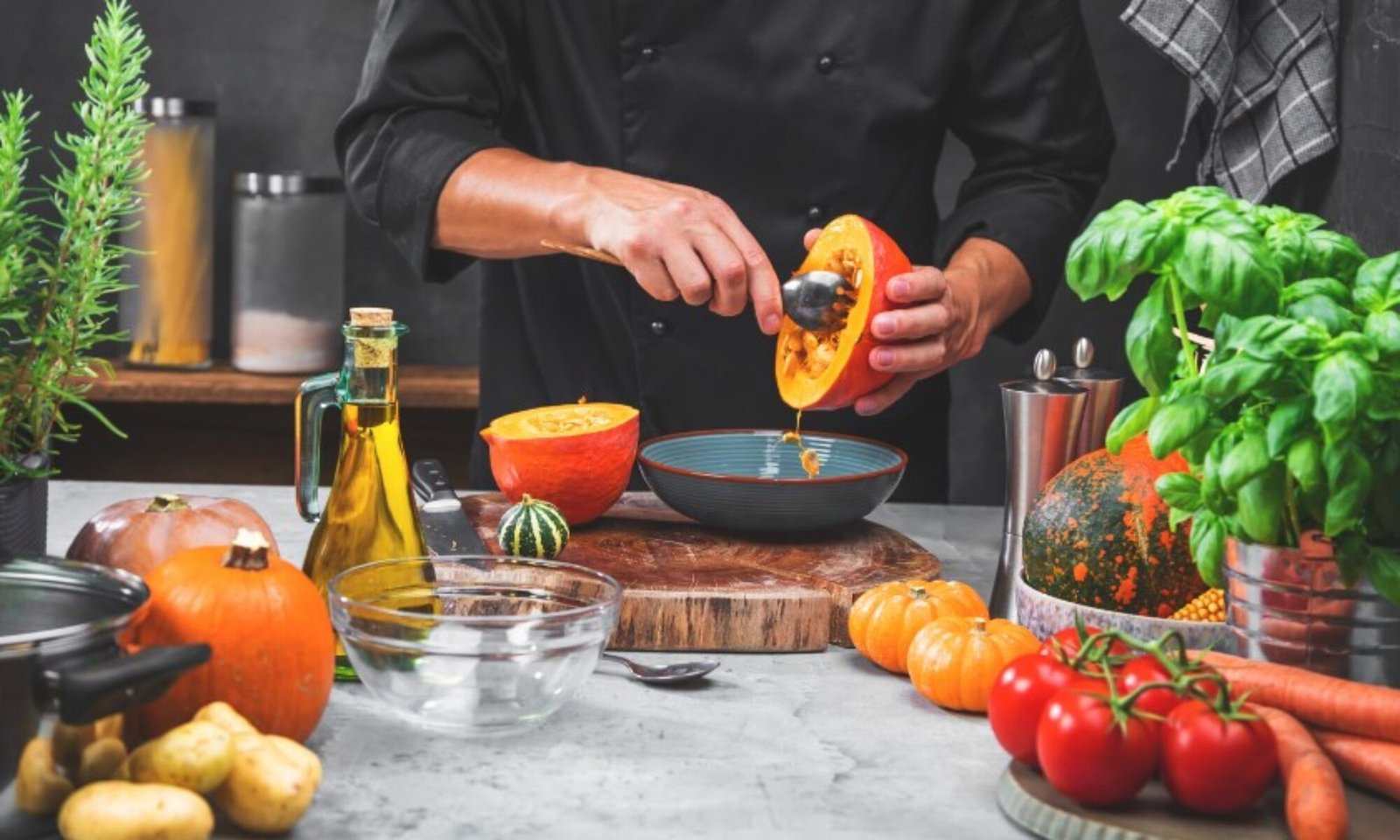
Even qualified chefs want cooking suggestions. With pointers on everything from how to make an great quiche to how to grill the ideal steak, it can get a small tricky to know which tips to observe and which types to skip. That’s why we tapped many cooks and other food execs and requested them to share the most effective cooking guidance they have ever gained. From cooking with like to cleaning as you cook, keep reading through for some guidelines that the professionals swear by!
“If you wreck something, just cover it with a salsa and eat it in a taco.” –Pati Jinich, chef, host of PBS’ La Frontera and Pati’s Mexican Desk, and author of three cookbooks. Her most recent is Treasures of the Mexican Desk
“The greatest cooking tips I have been given arrived from my Master Chef mentor, Saverio Stassi. Very first, that in the kitchen, nothing is private. As cooks we are under a great deal of pressure and tend to elevate our voices, but after assistance is around, that should all be left guiding. He also reminded me that we are blessed with a diversity of ingredients manufactured on our island, and the traces of our heritage contained in our countrywide dishes have to continue being alive.” -Chef Noemi Guzman of Jalao, a standard Dominican restaurant in New York Metropolis
“My father would say, ‘Time is the most treasured asset that we have.’ It truly is constantly a reminder for me to love every second of my existence. I discover it also applies to cooking, mainly because when you love your time cooking, your food stuff will come out superior. It really is designed with joy. Functioning a restaurant, I’m not able to cook dinner for my family members each individual night, but arrive Sunday afternoon we crank up the songs, get pleasure from some wine, and make dishes to take in in the course of the 7 days when the youngsters play.” -Fernando Navas, chef and owner of BALVANERA
“Thoroughly clean as you go, clear as you cook. You want to have a crystal clear thoughts when you prepare dinner. If you cook dinner messy and you have items all more than the spot, you far more easily get overcome and you you should not cook dinner with enough really like and intention for the dish. I realized this early in my occupation, and I even now adhere to this suggestions even to this working day, and my cooks do this as properly. I discovered this from Jeremy Culver, govt chef of Joseph’s Citarella in New York Town where by I began my culinary job. As soon as my grandma and mom understood I preferred to be in the kitchen, they also gave me the same suggestions. I would like I would have questioned extra queries growing up. In reflecting back again on it now, I should have requested my household before a chef experienced to convey to me. -Chef Nelson German
“For me, my crew, and the chef, it is all about cooking with appreciate. You have to place adore into the foodstuff. If you really don’t put really like into the foods, almost nothing will style suitable. That’s the first component, the to start with system, the 1st almost everything. You have to have that feeling behind it, you have to actually treatment about who you might be cooking for.” -Gerry Torres, founder of City Tacos in San Diego
“Cook dinner for you, but with other people in head.” -Illyanna Maisonet, meals columnist and writer of the impending cookbook, Diasporican
“My father often explained to me: Do it proper or will not do very little. He was the kind of cook dinner that, irrespective of the cost of the resources, he would set plenty of the most effective ingredients [in his food] even nevertheless he could not get paid anything at all from that. That’s what I believe that is real like for cooking and the issue that differentiates his food stuff from other individuals.” -Chef Tomas Matsufuji, of Al Toke Pez in Lima, Peru. “The best piece of cooking tips I at any time gained arrived from my mom. She is the particular person I turned to when I was 1st finding out my way by recipes I missed the most immediately after shifting away for university. I’d call her usually inquiring for recipes for this and that, and throughout a person of our phone calls, she mentioned ‘ponle tu propio estilo‘ or give it your very own spin. I’ve carried individuals straightforward text with me at any time given that, and I experience like they’ve permitted me to be imaginative with the recipes I acquire and the operate I have accomplished as Chicano Eats and it is totally paid off.” -Esteban Castillo, food blogger and creator of the forthcoming cookbook, Chicano Bakes





/cooking-advise-from-chef-2000-d78c75c61dce4479aec2ef361f3b53ee.jpg "Chefs Share the Best Cooking Advice They’ve Ever Received")