Good old bananas are not only reliably available, and ripen a day or two after you bring them home, but they can also be transformed easily into an elegant dessert. Cook them briefly in a caramel-y brown sugar and rum sauce in a recipe similar to the classic 1950s New Orleans specialty Bananas Foster, which is typically flambeed tableside. Lighting the alcohol is mostly for show as very little of it burns off. Use bananas that are a tad underripe so they’re not too sweet and don’t turn to mush in the caramel sauce. Serve the bananas and sauce with ice cream and sprinkle with peanuts for a nice, crunchy-salty contrast, or use toasted pecans or walnuts as a garnish. For a breakfast treat, add the bananas to Greek yogurt or French toast.
3
tablespoons unsalted butter, cut up
½
cup light brown sugar
¼
teaspoon salt
3
tablespoons dark rum
½
teaspoon vanilla extract
4
small bananas, peeled and halved lengthwise
1
pint vanilla ice cream
⅔
cup salted cocktail peanuts or toasted pecans, walnuts, or almonds, coarsely chopped
1. In a large skillet over medium-high heat, heat the butter, brown sugar, and salt. Whisk to blend them and dissolve the sugar. Simmer, whisking, for about 1 minute, or until the mixture thickens slightly.
2. Add the rum and vanilla — watch for spattering — and cook, stirring, for 30 seconds more.
3. Add the bananas and simmer, gently turning the bananas with a rubber spatula, for 1 to 2 minutes, or until they are coated with sauce. Take care that the halves do not break.
4. Spoon some of the caramel sauce into 4 shallow bowls. Add a scoop of ice cream to each. Spoon bananas and sauce on the side. Sprinkle with nuts.
Lisa Zwirn
Serves 4
Good old bananas are not only reliably available, and ripen a day or two after you bring them home, but they can also be transformed easily into an elegant dessert. Cook them briefly in a caramel-y brown sugar and rum sauce in a recipe similar to the classic 1950s New Orleans specialty Bananas Foster, which is typically flambeed tableside. Lighting the alcohol is mostly for show as very little of it burns off. Use bananas that are a tad underripe so they’re not too sweet and don’t turn to mush in the caramel sauce. Serve the bananas and sauce with ice cream and sprinkle with peanuts for a nice, crunchy-salty contrast, or use toasted pecans or walnuts as a garnish. For a breakfast treat, add the bananas to Greek yogurt or French toast.
3
tablespoons unsalted butter, cut up
½
cup light brown sugar
¼
teaspoon salt
3
tablespoons dark rum
½
teaspoon vanilla extract
4
small bananas, peeled and halved lengthwise
1
pint vanilla ice cream
⅔
cup salted cocktail peanuts or toasted pecans, walnuts, or almonds, coarsely chopped
1. In a large skillet over medium-high heat, heat the butter, brown sugar, and salt. Whisk to blend them and dissolve the sugar. Simmer, whisking, for about 1 minute, or until the mixture thickens slightly.
2. Add the rum and vanilla — watch for spattering — and cook, stirring, for 30 seconds more.
3. Add the bananas and simmer, gently turning the bananas with a rubber spatula, for 1 to 2 minutes, or until they are coated with sauce. Take care that the halves do not break.
4. Spoon some of the caramel sauce into 4 shallow bowls. Add a scoop of ice cream to each. Spoon bananas and sauce on the side. Sprinkle with nuts.Lisa Zwirn
Lisa Zwirn can be reached at lzwirn9093@gmail.com.
Grandma probably always had at least one dessert on the table every time you walked through the door, if not more. From cakes to pies to cookies to brownies, we’re sure she didn’t need a special occasion to bake up a homemade dessert. She may even have believed that dessert should be served after every meal.
While Grandma might have been able to whip up these classic, no-fuss dessert recipes without even having to look at the directions or make a trip to the grocery store, we’re here to provide some guidance to help you recreate classic sweet treats in your own kitchen. These dessert recipes are sure to bring back sweet memories of spending time at Grandma’s house after just one bite.
To make sure your pound cake turns out as successful as Grandma’s, make sure that the butter, cream cheese, and eggs are all at room temperature before you begin the baking process.
PHOTOGRAPHER: FRED HARDY II, FOOD STYLIST: EMILY NABORS HALL, PROPS STYLIST: CHRISTINA BROCKMAN
Grandma has always known that peach cobbler is a must-make dessert when fresh peaches are in season.
Victor Protasio; Food Styling: Chelsea Zimmer; Prop Styling: Christine Keely
While Grandma may have a different name for this chocolate dessert that’s made with layers of instant pudding, cream cheese, and whipped topping, we bet it was just as delicious.
Photographer: Jen Causey, Prop Stylist: Christina Daley, Food Stylist: Ana Kelly
Refrigerated pie crust helps this classic pie come together quickly and easily. After prepping the pie crust, all that’s left is stirring the ingredients together and pouring the mixture into the crust.
CAITLIN BENSEL; FOOD STYLING: TORIE COX
This layered dessert salad probably made an appearance at every cookout that Grandma was in charge of brining dessert to. It’s a refreshing alternative to heavier desserts during sweltering Southern summers.
Hannah Zimmerman / Southern Living
There’s a reason these cookies are referred to as the “easiest”. They come together in just 35 minutes and require just four ingredients.
Victor Protasio, Food Stylist: Karen Rankin, Prop Stylist: Claire Spollen
Grandma knew that sheet cakes were just as delicious as layer cakes, and much easier to frost and transport.
Victor Protasio; Food Styling: Margaret Monroe Dickey; Prop Styling: Audrey Davis
While we include directions for making a homemade crust for this classic pecan pie, you can use store-bought if you prefer or are in a bind.
Victor Protasio; Food Styling: Rishon Hanners; Prop Styling: Audrey Davis
Coconut-Pecan Frosting is the true star of this classic cake that rose to popularity in the 1950s.
Antonis Achilleos
Coffee cake is a great excuse to have dessert for breakfast or as an afternoon snack accompanied by a cup of tea or coffee.
This no-bake fudge can be stored in an air-tight container for up to two weeks, so it’s great to keep on hand for guests who drop in at the last minute, just like Grandma did.
Unlike many other pies, apple pie is known for having crust on both the bottom and top.
Jennifer Davick
While it may seem simple, classic caramel icing sandwiched between homemade cake layers is worthy of being served for any occasion year-round.
Antonis Achilleos; Prop Styling: Kay E. Clarke; Food Styling: Emily Nabors Hall
We can’t argue with the fact that desserts just taste a little better when they’re homemade, especially when they came from Grandma’s kitchen.
Photo: Caitlin Bensel; Food Stylist: Torie Cox
While the banana pudding doesn’t require baking, we like browning the top of the meringue slightly before serving but you can skip that step if preferred.
Southern grandmothers know Coca-Cola isn’t just for drinking. You’ll find it as an ingredient in both the cake layers and the frosting in this recipe.
Beth Dreiling Hontzas
This no-frills recipe will take you back to Grandma’s house as soon as the aromas of them baking fill the air in your kitchen,
Jennifer Davick; Styling: Kacy Carroll
Not only are lemon bars a welcome change from super sweet chocolate desserts, they can also be stored in the freezer for up to a month.
Southern Living
This coconut pie is simple enough to serve for dinner after Sunday supper, but is also impressive enough to make an appearance on the menu for holidays.
Iain Bagwell
Fudge pie is decadent dessert that’s best enjoyed with a generous dollop of vanilla ice cream on top.
We live in a time where it’s possible to simply speak into the air in your kitchen and ask for a recipe, when blogs and Pinterest and TikTok, let alone cookbooks galore, offer up an infinite supply of recipes. It’s no surprise then, that sometimes all you want is someone to tell you what to make. Especially if it’s a recipe that comes from someone you know and love.
Today we have some very special (and sweet!) recipes from two tastemakers in Louisville’s culinary scene, and one of my own personal favorites.
Lindsey Johnson of Lush Life Productions and Bar Expo, 114 W. Main St., is sharing her grandmother’s recipe for rainbow cookies. Inspired by cookies found at Italian bakeries in Long Island where Johnson is from, these treats helped her get through the early pandemic quarantine days.
“The amount of work that goes into just one batch was more than I expected,” she told the Courier Journal. “But, I have to say, they turned out so well!”
Kathy Aphaivongs of All Thai’d Up, 211 S. 5th St., is offering up her great Aunt May’s Kentucky State Fair-winning chocolate meringue pie.
“Apparently, I am now the only one in the family who can make it,” she says, “and no matter how many desserts are at the table, if the chocolate meringue isn’t there, I am sure to get grief from everyone!”
And I’m dipping into my time spent in southwest France where I did a culinary writing residency learning about duck. One rainy day, a fellow student and I had some extra duck fat and time on our hands and dreamed up decadent chocolate cookies that I’ve been dreaming about ever since.
Three 8-inch-by-13-inch Pyrex/glass pans (or Teflon, but it needs to have straight sides)
Parchment paper
Almond filling (recipe follows)
Food processor
Mixer with a paddle and whisk attachment
Sifter
Kitchen scale
Double boiler (or use a pot and a bowl)
Almond filling
1 cup blanched almonds
1/2 cup sifted powdered sugar
2 tablespoons unsalted butter at room temperature
1/2 teaspoon almond extract
1 large egg white
To make the almond filling: Whisk (using the mixer with the whisk attachment) egg white until it forms stiff peaks, and set aside.
Process almonds, sugar, and butter in the food processor until the almonds are very finely ground, and stop to scrape the sides of the bowl every 30 seconds or so. This takes longer than you might think.
Add almond extract and the egg white and let the processor go again until it’s all mixed. You can refrigerate this for a week. This makes exactly the amount you’ll need for one batch.
Make sure you bring it down to room temp before you use it in your cookie batter.
Rainbow Cookies
8-ounce almond filling (that’s all of the almond filling you just made)
1-and-1/2-cup butter (room temperature)
1 cup sugar
4 eggs (separated)
2 cups cake flour, sifted
8-ounce raspberry preserves (available canned in the grocery baking section)
12-ounces chocolate chips
Red and green gel food coloring
1/4 teaspoon salt
1 teaspoon almond extract
Preheat the oven to 350 degrees.
Beat the egg whites until they form stiff peaks and set them aside in a bowl.
In your mixing bowl, mix the almond filling, room temp butter, sugar, egg yolks, and extract until very light and fluffy. In a separate bowl, mix together dry ingredients (sifted flour, salt) and slowly incorporate that into your wet ingredients.
Take the mixing bowl off of the mixing stand after all of the ingredients are incorporated. Slowly mix stiff egg whites in with a wooden spoon until they are completely mixed.
Divide the mix into three even bowls (ideally, one pound each). Add red food coloring to one. Add green food coloring to another. Leave one natural.
Grease all three 8-inch-by-13-inch pans and line them with parchment paper; grease that too. Bake each layer separately for 12 minutes at 350 degrees. Make sure you don’t let them brown.
Let the cookies fully cool (ideally overnight). Peel the parchment paper off of each layer and lay on cooling rack.
Warm raspberry filling in a pan. Spread between the layers and let cool. Cut the cookies into three columns.
Set up a double boiler. Once the water in the boiler is at a full boil, add the chocolate to the top pot and let it melt. Once it is fully melted, cover each of the columns in chocolate and let it cool. Once the cookies are fully cooled (ideally put them in the fridge or freezer for an hour or two), cut them into serving sizes.
Kentucky State Fair winning Chocolate Meringue Pie
Courtesy of Kathy Aphaivongs of All Thai’d Up, 211 S. 5th St.
Ingredients:
1 9-inch cooked pie shell
Chocolate filling:
2 cups milk (2{d2b09b03d44633acb673e8080360919f91e60962656af8ade0305d5d8b7e4889} or whole)
1 cup sugar
3 tablespoons cornstarch
1/2 teaspoon salt
2 ounces unsweetened baking chocolate
3 egg yolks
1/4 cup butter
1 teaspoon vanilla
Meringue:
3 egg whites
1 teaspoon cream of tartar
1 teaspoon vanilla
6 tablespoons granulated sugar
To make the chocolate filling: In a saucepan, combine milk, sugar, chocolate, cornstarch and salt. Place on medium heat and stir continuously until the mixture thickens. Remove from heat. Spoon the hot mixture into a bowl with the egg yolk and mix well. Pour egg mixture into pan and stir on med-low heat until mixture bubbles. Remove from heat and stir in butter and vanilla until butter melts. Pour mixture into cooled, baked pie crust.
To make the meringue: In a mixer, add egg whites vanilla and cream of tartar. Beat on high until soft peaks form. Slowly add in sugar and continue to mix until a gloss forms (1-2 minutes).
Once the chocolate filling is cooled, add the meringue and spread covering the filling completely. Place the whole pie in preheated oven at 400F for 2-3 minutes or until the meringue turns a golden brown.
Refrigerate for 1-2 hours before serving.
Double Chocolate Ducky Cookies
Courtesy of Courier Journal freelance food writer Dana McMahan
Note: I made these with what we had in the kitchen. If you prefer white flour to the heartier kind, go for it.
Ingredients:
2 eggs
3/4 cup sugar
1 Tablespoon vanilla
1/2 cup spelt flour
1 cup buckwheat
1/4 cup unsweetened cocoa
1 cup old-fashioned oats
1/3 cup duck fat, room temperature [check Red Hog or Kingsley’s for duck fat; butter will suffice if you can’t get your hands on any]
1/4 teaspoon freshly grated nutmeg
1 teaspoon salt
3/4 cup chocolate chips
Mix eggs, sugar, and vanilla in a bowl.
In another bowl mix flours, cocoa, baking soda, nutmeg, salt and oatmeal. Stir in duck fat.
Mix the two bowls and stir in chocolate chips.
Bake at 300 degrees for about 20 minutes until puffy and browned.
The pancakes of Pancake Day look – and taste – different across the globe. It might be known as Shrove Tuesday, but for culinary reasons I prefer the French translation – “Fat Tuesday”. While the day may be fat, the French crepe is a “a slimmer, more elegant, more luxurious” version of the “ordinary British pancake”, says Felicity Cloake. For sweet crepes, she adds a pinch of salt to the batter to balance out the sugar. Whisk only until smooth – it should have the consistency of single cream.
But if a fluffy, American-style stack is more your style, you’ll need some bicarb soda and buttermilk to start the pancake party (note, this is different from a waffle party). The combination of leavening agent and fermented milk creates fizz and bubbles, resulting in light-as-air pancakes, best drowned in maple syrup, if you’re feeling hedonistic, or a berry compote, if you’re easing your way into Lent. (If berries are on your mind, see that punnet of blueberries through to Ravneet Gill’s blueberry pancakes, too.)
More french toast than pancake, torrijas have come to be associated with Lent in Spain and variations abound in Spanish-speaking countries, including Mexico and Venezuela. Benjamina Ebuehi’s recipe for torrijas sees white bread steeped in a heady mixture of egg yolks, milk and sugar (yes, it’s essentially custard), with the slices fried in butter, sprinkled with more caster sugar and best served cold, as per tradition.
Torrijas, a Spanish fried custard bread snack best served cold. Photograph: The Guardian
In India, some in the Catholic community make coconut pancakes. The recipe calls for a vanilla-scented batter that’s fried, filled with a textural combination of fresh grated coconut, jaggery, nuts and sultanas, and then rolled into sweet little cylinders.
Malasadas, found in Hawaii, Guyana and parts of Portugal, are not pancakes but doughnuts dusted with lemon zest and sugar. They are, however, free of corners, circular in shape and – importantly – eaten to mark the beginning of Lent.
History dictates that Shrove Tuesday pancakes came from followers needing to use up luxury, perishable goods like milk, eggs and butter. It does, however, mean that vegans and the gluten-intolerant are excluded from the pancake celebrations. Enter: kabalagala, Ugandan banana pancakes. They’re not exclusively made for pre-Lent feasting, but they are made with ripe bananas and cassava flour, then deep-fried. The result? Pikelet-sized snacks that are crunchy on the outside and soft in the centre. Try your hand with Sophia Musoki’s five-ingredient recipe.
As Valentine’s Working day methods, WTOP questioned community chefs to share their favourite quick and easy recipes that readers can study to make for their liked kinds.
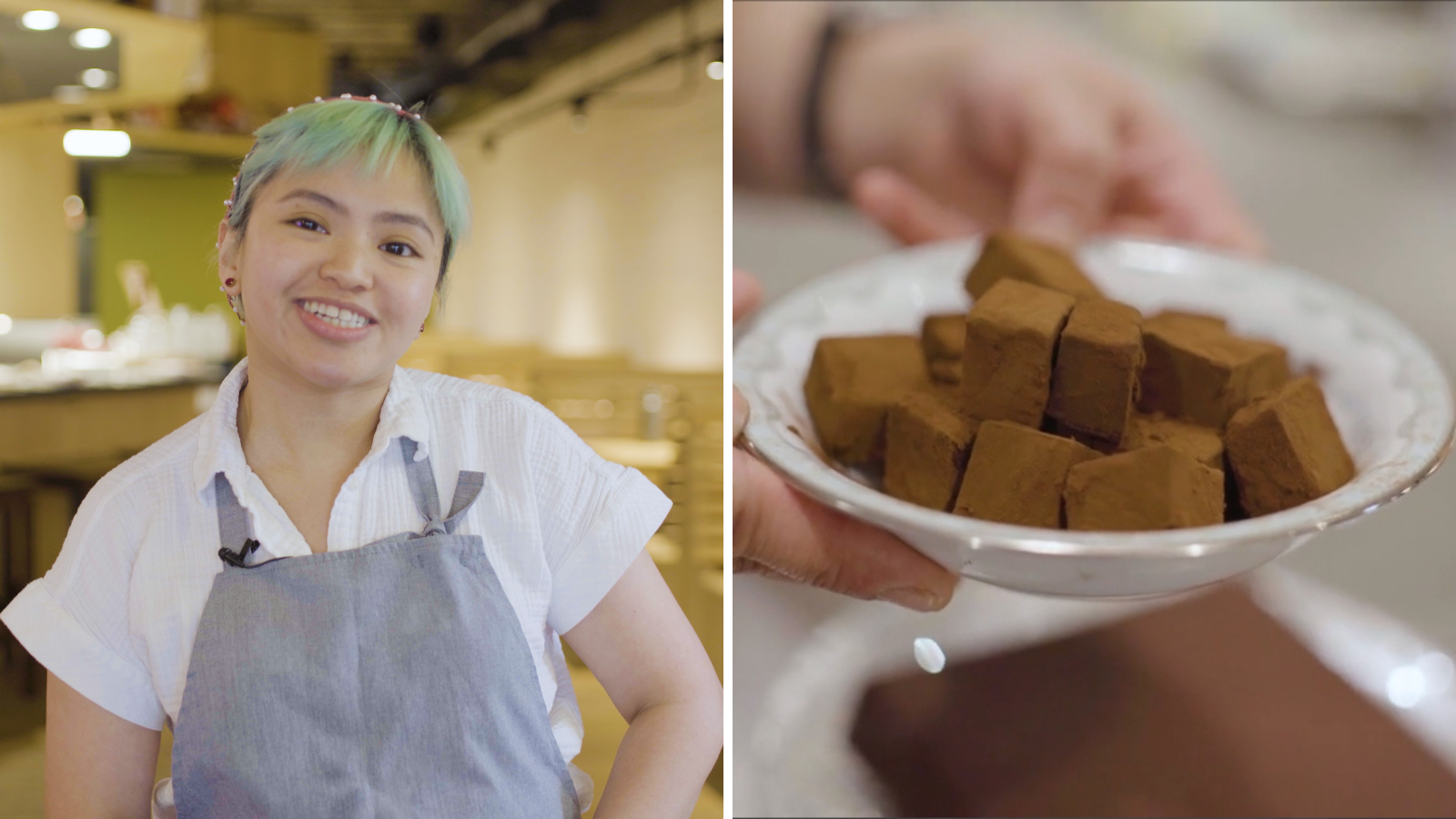
As Valentine’s Working day strategies, WTOP questioned local chefs to share their favored speedy and uncomplicated recipes that audience can understand and cook for their mates and substantial other folks. Tonari Chef Mary Mendoza demonstrated how to make nama chocolate and rice pudding with caviar.
Nama chocolate is a variety of Japanese truffle. The recipe only involves 3 ingredients, but Mendoza says that “the planet is your oyster” when it comes to this dish, as house cooks can incorporate optional matcha powder or strawberry powder as an alternative of cocoa powder when finishing it.
To see a demonstration of how to make nama chocolate, check out out the online video above, filmed at Tonari.
Mendoza also demonstrated how to make yet another delicious dessert — rice pudding. But this approachable and straightforward handle has a twist: It is concluded with grated white chocolate and hazelnuts, with a dollop of caviar on top rated to add a fatty, salty, briny end.
“Rice is lifestyle,” stated Mendoza, who extra that she feels rice receives pushed aside as well frequently. This encouraged her to create a dessert that highlights the fluffy, delicate grain.
Alas, the rice pudding recipe for Hole in the Wall is proprietary and was not furnished to WTOP, but you can use any rice pudding recipe or you can invest in pre-made rice pudding.
See the earlier mentioned video, as effectively, for additional move-by-phase instructions on how to recreate the delightful rice pudding dessert.
Tonari is a Wafu Italian cafe, which indicates Japanese-type Italian. “We want to get Italian dishes and prepare dinner them with Japanese sensibility,” Mendoza stated.
Listed here is the recipe for nama chocolate. Appreciate!
Nama Chocolate
By Gap in the Wall/Tonari chef Mary Mendoza
Ingredients
340 grams dark chocolate, chopped, even dimensions (any would do as very long as it is previously mentioned 67{d2b09b03d44633acb673e8080360919f91e60962656af8ade0305d5d8b7e4889} no lecithin)
I am extremely enamoured by fruit tarts. They always feel celebratory with their glistening tops and flaky bottoms. This one is a perfect combination of almonds, in the way of frangipane, and wonderfully perfumed plums. It is a great dessert to make ahead of time as it will sit happily on the kitchen bench at room temperature.
6 plums, halved and stones removed, sliced 1 egg, for egg wash Demerara sugar, for sprinkling
For the sweet pastry 400g plain flour, plus extra for dusting A pinch of sea salt 2 tbsp caster sugar 250g cold unsalted butter, cubed 1 tbsp white vinegar About 100ml iced water
For the frangipane 75g unsalted butter, softened 75g caster sugar 1 tsp vanilla bean paste or extract 75g almond meal 1 egg 1 tbsp plain flour, sifted
To make the sweet pastry, mix the flour, salt and sugar together in a large bowl. Rub the butter into the flour using your fingertips or a pastry cutter until the mixture is pebbly. You want to rub the butter into flatter pieces rather than into something that resembles breadcrumbs. Drizzle in the vinegar and enough iced water to just bring the dough together. It will still be shaggy, but should hold together when pressed and not be dry or floury. Flatten into a disc, wrap in plastic wrap and refrigerate for at least one hour.
Remove the pastry from the fridge and let it sit at room temperature for 10 minutes to make it easier to roll. Line a 30cm round baking tray with baking paper.
Roll the dough out on a lightly floured work surface into a large circle about 1.5mm thick, massaging the edges as you roll to prevent it from cracking too much. Drape the pastry over the prepared tray and keep refrigerated until needed.
To make the frangipane, place the butter, sugar and vanilla in the bowl of a stand mixer fitted with the paddle attachment. Beat on high speed for about four minutes, until creamy and pale, then beat through the almond meal, egg and flour until combined.
To make the tart, spread the frangipane onto the base of the pastry, leaving a 1.5cm border. Arrange the plums on top of the frangipane filling, then fold the pastry edge over itself to create a ridged edge.
Whisk the egg with 1 teaspoon of water, then brush the egg wash over the pastry edge and scatter generously with demerara sugar. Refrigerate the tart for 30 minutes.
Preheat the oven to 190C.
Bake the tart for 40 minutes or until the pastry is golden. Allow to cool before serving.
Panna cotta with roasted nectarines and blueberries
Panna cotta translates to “cooked cream” and it is one of my favourite Italian desserts. Luckily, it also happens to be one of the simplest. I love it just set – panna cotta should have a good wobble and sit on the plate droopily rather than incredibly stiff. Mine is lightly perfumed with bay and lemon and heavily scented with vanilla. Served with some lightly poached or roasted fruits – nectarines or apricots in summer, rhubarb in spring, and citrus in winter – panna cotta is such an elegant dessert, and an absolute joy to make.
The perfect panna cotta ‘should have a good wobble and sit on the plate droopily’, says Busuttil Nishimura. Photograph: Armelle Habib
Serves 4
500ml pure cream 1 vanilla pod, split and seeds scraped 3 strips lemon peel 1 fresh bay leaf 80g caster sugar 2 titanium-strength gelatine leaves 200g creme fraiche Ice cubes 125g blueberries Boiling water
For the roasted nectarines 5 nectarines, halved and stones removed, cut into wedges 2 tbsp raw sugar
Place the cream in a saucepan with the vanilla seeds and pod, lemon peel and bay leaf. Bring to a simmer over medium heat and cook for two minutes or until slightly thickened – don’t let it boil. Add the sugar and whisk to dissolve, cooking the cream for a further one minute. Remove from the heat.
Meanwhile, soak the gelatine leaves in a bowl of cold water until softened. Squeeze the excess water from the gelatine and whisk it into the cream mixture. Whisk in the creme fraiche, then strain the mixture through a fine sieve into a bowl. Reserve the vanilla pod, bay leaf and lemon peel.
Sit the bowl in a larger bowl filled with ice cubes and whisk the mixture for eight to 10 minutes, until cool. Pour the mixture into a large jug and then divide among four small bowls or ramekins. Chill in the fridge for five hours or until just set. Once the panna cotta has set, cover each bowl or ramekin with plastic or beeswax wrap and return to the fridge.
While the panna cotta is setting, prepare the roasted nectarines. Preheat the oven to 180C. Place the nectarines in a deep baking tray so they are nice and snug and scatter over the sugar. Rinse the vanilla pod, bay leaf and lemon peel that you used to flavour the cream. Add these to the nectarines along with 125 ml of water. Roast in the oven for 30 minutes or until the fruit is tender.
Transfer the nectarines to a large bowl and add the blueberries. Stir to combine and allow to completely cool. You can store the fruit in a container in the fridge until ready to serve.
Dip each panna cotta bowl or ramekin into a bowl filled with boiling water for 20 seconds, then invert onto plates. Serve with the roasted nectarines and blueberries.
Peach custard tart
There is something quite nostalgic, almost child-like, about the combination of peaches and custard. Here I’ve taken that combination and turned it into a rather large peach tart, spiked with lemon and nutmeg, that’s absolutely made for sharing. The pastry and custard can be made well in advance and kept in the fridge until ready to bake.
‘Absolutely made for sharing’: Busuttil Nishimura’s peach custard tart. Photograph: Armelle Habib
Serves 10-12
500g plain flour, plus extra for dusting A pinch of sea salt 1 tbsp caster sugar 300g cold unsalted butter, cubed 1 tbsp white vinegar About 200ml iced water 1 egg, for egg wash 2 tbsp demerara sugar
For the custard 2 egg yolks 100g caster sugar 20g plain flour 20g cornflour 500ml full cream milk 1 vanilla pod, split and seeds scraped
For the peaches 1.2kg peaches (about 8) Iced water A pinch of freshly grated nutmeg 3 tbsp caster sugar Juice of ½ lemon 1 vanilla pod, split and seeds scraped
Mix the flour, salt and sugar together in a large bowl. Rub the butter into the flour using your fingertips or a pastry cutter until the mixture is pebbly. You want to rub the butter into flatter pieces rather than into something that resembles breadcrumbs. Sprinkle the vinegar over the top, then pour over enough iced water to just bring the dough together. It will still be shaggy, but should hold together when pressed and not be dry or floury. Flatten into a disc, wrap in plastic wrap and chill in the fridge for at least one hour.
A slice of nostalgia in the making. Photograph: Armelle Habib
To make the custard, whisk the egg yolks and sugar in a large bowl, until pale and thick. Sift in the flours, mix well and set aside. Warm the milk and the vanilla seeds and pod in a saucepan over low heat (until about 38C on an instant-read thermometer). Strain the milk and add to the egg mixture, just a few tablespoons at a time to begin with, whisking between each addition. After a quarter of the milk has been whisked in, whisk in all of the remaining milk at once. Pour the mixture into a clean saucepan and set over medium heat. Bring to a simmer, whisking constantly as it can scorch easily. Reduce the heat to low and cook, stirring constantly, for two to three minutes, until thick. Transfer to a bowl or container and cover the surface of the custard with plastic wrap. Make sure it is directly touching the custard, to stop a skin forming, then refrigerate until ready to use.
To prepare the peaches, with a knife, cut a shallow cross in the base of each peach. Blanch the peaches in a saucepan of boiling water for 30 seconds to one minute, then drain and refresh in iced water. The skins should now slip away. Cut the peaches in half, remove the stones and slice into wedges. Place in a large bowl with the nutmeg, sugar, lemon juice and vanilla seeds. Toss to combine and set aside.
Preheat the oven to 190C. Line a 40 cm × 25 cm baking tray with baking paper.
Remove the dough from the fridge and let it sit at room temperature for 10 minutes to make it easier to roll. On a lightly floured work surface, roll the dough out into a large rectangle, about 45cm × 30cm, massaging the edges as you roll to prevent it from cracking too much. Drape the pastry over the prepared tray.
Spread the custard over the base of the pastry, leaving a 4cm border. Arrange the peach wedges on top of the custard, then fold the pastry border in towards the tart to create a raised edge. Whisk the egg with one teaspoon of water and brush the pastry edges with the egg wash. Scatter the edges with the demerara sugar and bake for 45to 50 minutes, until the pastry is golden. Serve at room temperature.