4 International Recipes to Try This Holiday

4 International Recipes to Try This Holiday

This month at Shondaland, we’re celebrating once again what the holidays mean to all with our Food, Family, and Traditions series. These snapshots and vignettes from many of our beloved Shondaland stars, pals, and fans festively affirm the importance of communities both big and small coming together to celebrate.


With the holidays quickly approaching, it’s the time of the year when you’re probably finding yourself whipping out a cookbook to prepare for Thanksgiving dinner or perhaps an elaborate New Years Feast. So, maybe this is the year you decide to try something a bit out of your ordinary.

Recently, Shondaland spoke to beloved chefs and authors Amelia Saltsman, Rabia Choudry, Sonoko Sakai, and Zoe Adjonyoh about the traditions that make up their multicultural holiday celebrations. They shared with us their go-to recipes for a memorable meal, which we’re detailing here so you can enjoy with your own family and friends. Whichever you decide to make this year, there’s no doubt that these will be a welcome addition to any celebratory dinner.


Zengoula with Lemon Syrup: Iraqi Funnel Cakes
zengoula with lemon syrup

Staci Valentine

Makes 8 servings.

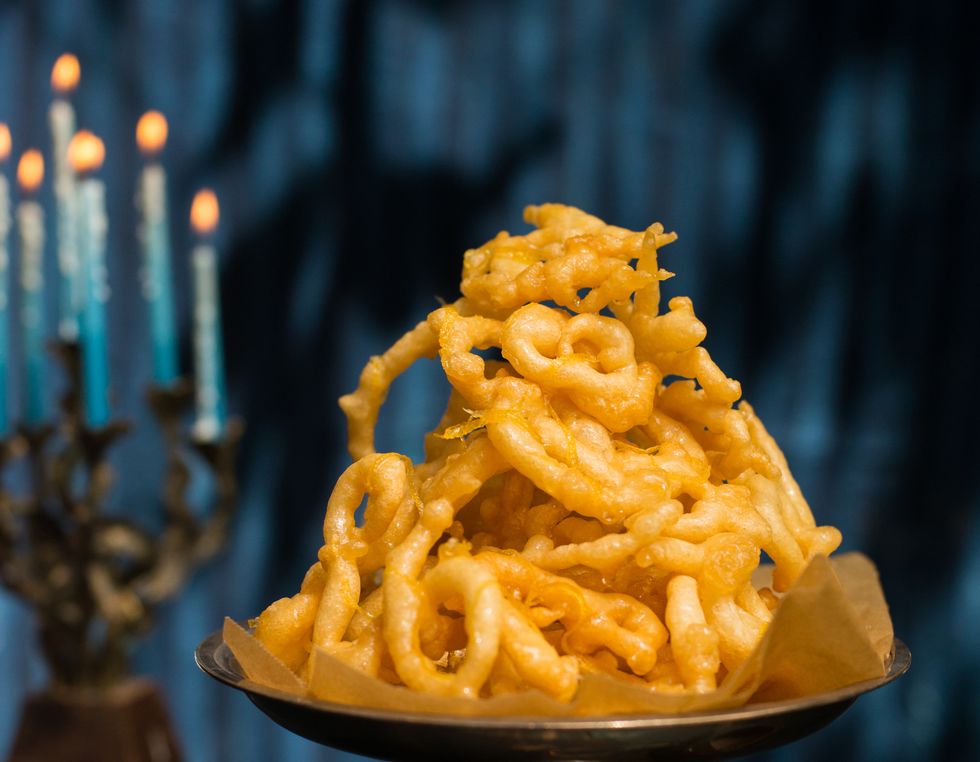
“Also known as jalabi, these crisp fritters, or funnel cakes, were adopted by Iraqi Jews centuries ago as the perfect fried food to celebrate the miracle of Hanukkah. Traditionally soaked in sugar syrup, they are infinitely more wonderful when infused with a tangy lemon syrup. It takes only a few minutes to whisk together the forgiving batter the night before you want to serve zengoula, and the pastries can be fried early in the day you want to serve them. Or, make the frying a Hanukkah party activity. My cousin Elan Garonzik has vivid memories of our grandmother turning out perfect coils, which is how they’re sold at Arab bakeries like Moutran in Nazareth and Jaffa. That takes a bit of practice. Free-form Rorschach-like shapes — sea horses, dolphins, geese — that magically appear as they bubble up in the hot oil are just as delicious. You will need to begin this recipe at least six hours before you want to serve the zengoula.” – Amelia Saltsman

Ingredients

For the dough

  • 1¹⁄8 teaspoons (½ package) active dry yeast
  • 1¼ cups (300 ml) warm water (100° to 110°F/38° to 43°C)
  • 1 cup (125 g) unbleached all-purpose flour
  • ¾ cup (95 g) cornstarch
  • Scant ½ teaspoon salt

For the syrup

  • 2 to 3 lemons
  • ½ cup (120 ml) water
  • 1 cup (200 g) sugar
  • 2 quarts mild oil with a medium-high smoke point, such as grapeseed, sunflower, or avocado, for deep-frying

Instructions

To make the dough:

  1. In a small bowl, stir together the yeast and ¼ cup (60 ml) of the warm water and let stand in a warm place until the mixture bubbles, about 10 minutes.
  2. In a medium bowl, using a fork, stir together the flour, cornstarch, and salt. Stir in ½ cup (120 ml) of the warm water and the yeast mixture. Then slowly stir in enough of the remaining ½ cup (120 ml) warm water until the dough is lump-free and the consistency of thick pancake batter. You should have 1½ to 2 cups (360 to 480 ml) batter.
  3. Cover the bowl with plastic wrap and refrigerate until doubled in bulk, at least 6 hours or up to 24 hours. The dough will be loose and spongy and have a yeasty aroma.

To make the lemon syrup:

  1. Using a five-hole zester, remove the zest from 1 of the lemons in long strands. Halve and squeeze enough lemons to yield ⅓ cup (75 ml) juice. In a small pot, stir together the lemon juice and zest, water, and sugar over medium heat. Bring to a boil and cook, stirring frequently, until the sugar is completely dissolved and clear, about 1 minute. Pour into a pie pan and let cool. (The syrup can be made 1 day ahead, covered, and refrigerated.)

To make the fritters:

  1. Scrape the dough into a 1-gallon (4-L) resealable plastic bag or large pastry bag fitted with a ¼-inch (6-mm) plain pastry tip and set the bag in a bowl for support. Let the dough stand for about 15 minutes before frying. Line a large plate with paper towels. Place the prepared plate, tongs, a small spider or slotted spoon, the syrup, and a tray to hold the finished fritters near the stove.
  2. Pour the oil to a depth of 3½ inches (8.5 cm) into a 4- or 5-quart (4- or 5-L) pot, wok, or electric fryer and heat to 375°F (190°C). If using a plastic bag for the dough, snip ¼ inch (6 mm) off of one of the bottom corners, cutting on the diagonal, to create a piping tip. Roll the top of the pastry bag closed to move the batter toward the opening. Don’t worry about air pockets.
  3. Pipe a bit of the batter into the hot oil. The oil should bubble around the batter immediately. If it does not, continue heating the oil and try again. Pipe the dough into the hot oil, creating 3- to 4-inch (7.5- to 10-cm) coils or squiggles, letting gravity help push the batter out. Be careful not to crowd the pan. Fry the dough, turning once at the halfway point, until bubbled, golden, and crisp, 4 to 5 minutes total. Use a spider or slotted spoon to fish the fritters out of the oil, drain them briefly on the towel-lined plate, and then drop them into the syrup for a moment or two, turning them to coat evenly. Lift them out of the syrup and transfer them to the tray in a in a single layer to cool. Repeat with remaining batter, skimming any loose bits of dough from the hot oil between batches to prevent burning. Scrape any batter that escaped into the bowl back into the pastry bag to make more pastries.
  4. The cooled pastries can be piled on a platter. Pour any remaining syrup over the top. The fritters taste best served the same day they are made, although they will hold their crispness overnight. Store loosely covered at room temperature.

Kitchen note

A couple of 2-inch (5-cm) chunks of raw carrot added to the frying oil act as magnets, attracting all those little brown bits that might otherwise burn and impart an acrid taste to the oil. It’s an old-fashioned trick that works!

Note: Recipe reprinted with permission from The Seasonal Jewish Kitchen © 2015 by Amelia Saltsman published by Union Square & Co. Photography by Staci Valentine.

Lahori Fried Fish

“I admit my bias towards the foods of Lahore, but believe me, there’s a reason Lahori-style fried fish is the gold standard of fried fishes of the region. Karachi, the coastal city that is the largest in Pakistan, has its own style, however, which is usually a whole fish, marinated and fried without any kind of batter or crumb coating. It’s likely loads healthier, but if you’re going to fry fish, you’ve already abandoned any pretext that healthy matters.” – Rabia Choudry

Ingredients

  • 1 pound fish, cut in preferred piece sizes
  • 1 lemon
  • 1 teaspoon garlic and ginger paste
  • 1 teaspoon cumin seeds
  • 1 teaspoon coriander seeds
  • 1 teaspoon carom (also known as ajwain or caraway) seeds
  • 1 teaspoon red curry flakes
  • 1 teaspoon dried fenugreek
  • ½ teaspoon turmeric powder
  • ½ teaspoon red chili powder
  • ½ teaspoon salt
  • 6 tablespoons besan (gram) flour
  • ½ teaspoon orange food coloring (optional)
  • Oil for frying

Instructions

  1. Rinse your fish pieces, then pat them dry. Give the lemon a good roll to soften it up, then cut in half and squeeze the juice onto the fish in a bowl, making sure to remove any seeds. Add the ginger and garlic pastes to the fish and give it a mix so it’s well coated. Lightly crush the fenugreek with your hand and sprinkle it on the fish. Dry-roast the cumin and coriander seeds, and give them a coarse crush with a mortar and pestle or, wrapped in some paper towels, with a rolling pin. Mix the cumin, coriander, and carom seeds, red chili flakes, chili powder, turmeric, salt, and half of the gram flour together in a separate bowl, then massage it onto the fish gently by hand, turning the pieces over so all sides get coated. If the besan is too dry, add a few splashes of water to moisten it up. The coating should be on the thick, dry side. Cover and refrigerate for at least an hour, but you can leave it overnight.
  2. When you’re ready to fry, heat oil, on a medium high flame, 2 inches deep in pan (or you can use an electric deep fryer). As the oil comes to temperature, mix the remaining half of the gram flour with the food coloring and three tablespoons of water. This should give you a fairly thin batter. Pour the batter over the fish and coat well, using your hands. The oil is ready if it starts bubbling and frying and rises to the top when you flick a little batter into it. Turn the flame down to medium low and carefully lower the fish into the pan, making sure not to crowd it: there should be at least an inch of space around each piece.
  3. Let the fish fry for 5 minutes before turning once and frying on the other side for 5 more minutes. (Thinner fillets like flounder will need only 3 minutes on each side.) When done, the color should be very deep golden (or almost orange, like tandoori chicken, if you use the food coloring). Remove and drain on paper towels. Serve with any chutney, and a slaw of chopped or finely julienned radish, red onion, and seeded cucumber dressed with just salt and vinegar.

Note: Adapted from a recipe by Rabia Chaudry in her memoir Fatty Fatty Boom Boom: A Memoir of Food, Fat & Family.

Ozoni: New Year’s Good Luck Soup
ozoni soup

Rick Poon

Makes 4 servings.

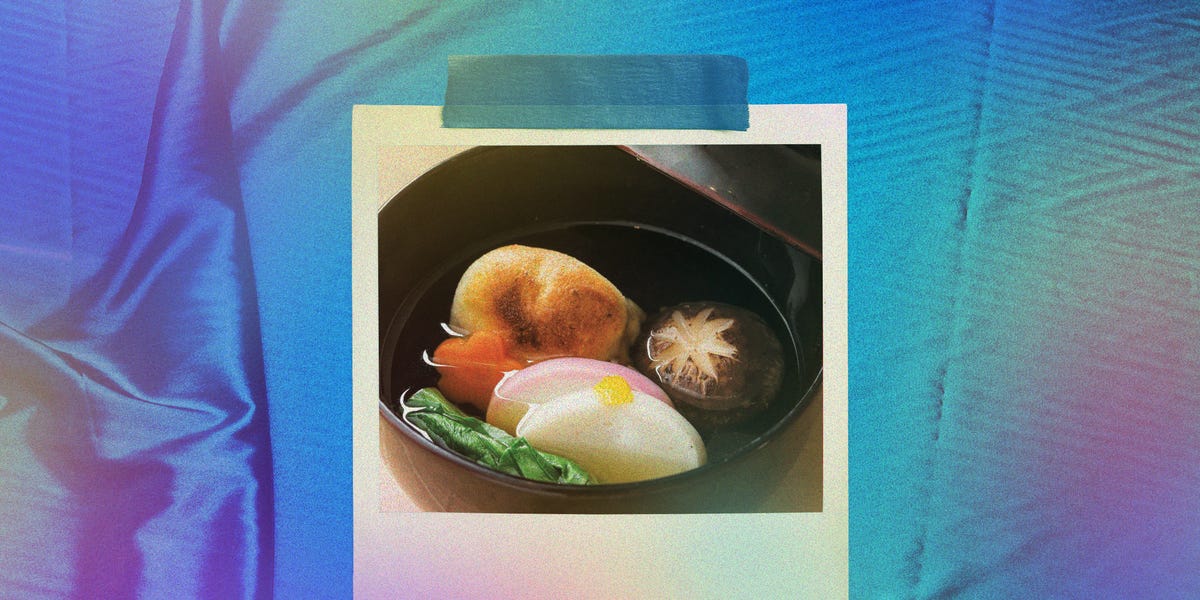
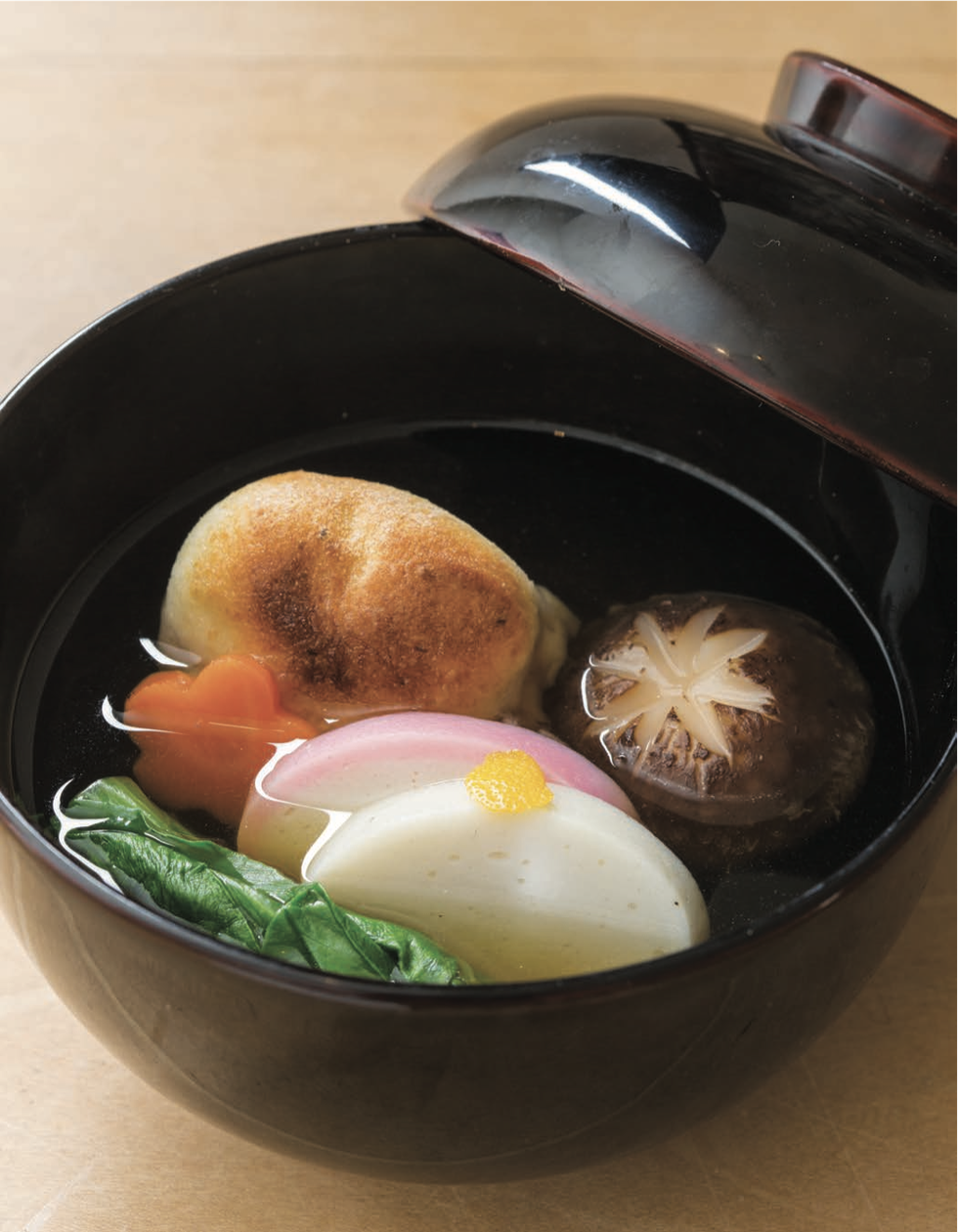
“This is the first soup of the New Year that every Japanese person sips for good luck and good fortune. We drink ozoni each day for breakfast, lunch and dinner for the first five days of the year. I make a big batch of dashi, about 4 quarts (4L) to last me for the whole week. The featured ingredient in this hearty soup is mochi, which symbolizes flexibility and endurance. In my family, the soup is a simple suimono (clear soup) and the mochi is always freshly toasted. The soup also includes bite-sized pieces of kamaboku (fish cake), chicken, carrots, shiitake mushrooms, some greens (such as spinach, kale, or mizuna), and for garnish, some mitsuba leaves and a small bit of lemon or yuzu peel to balance out the colors. Besides this soup, I always make more than a half dozen traditional New Year’s good luck osechi dishes, which celebrate fertility (eggs, beans), endurance and flexibility (mochi), happiness (kombu), forward motion (lotus wheels), fire (carrots), purity (daikon), and groundedness (root vegetables).” – Sonoko Sakai

Ingredients

  • 5 ounces (142 g) spinach or mizuna
  • 1 carrot sliced crosswise and cut into flower shape with a cookie cutter
  • 1 boneless skinless chicken thigh, cut into ½ inch (12mm) pieces
  • 4 cups (960 ml) Bonito and Kombu Dashi
  • 1 tablespoon sake
  • 1 tablespoon usukuchi shoyu (light-colored soy sauce)
  • 1 teaspoon sea salt
  • Four 1 ½ -ounce (50g) pieces of mochi
  • 4 small fresh shiitake mushrooms, stems removed
  • 4 slices kamaboko (fish cake), cut crosswise into ¼-inch (66mm) pieces
  • 1 tablespoon julienned lemon or yuzu peel
  • 4 sprigs mitsuba (Japanese parsley), chervil, or Italian parsley, leaves removed

Instructions

  1. Fill a medium pot with water and bring to a boil over medium-high heat. Have a bowl of ice water ready. Add the spinach to the boiling water and blanch for 1 minute, or until wilted. Strain into a bowl. Transfer the wilted spinach to the ice water, then drain. Squeeze out excess water. Reserve the cooking water. Bunch the spinach up and cut crosswise into 1-inch (5 cm) pieces.
  2. Return the cooking water to the pot, add the carrots, and blanch for 1 minute. Strain into a bowl, reserving the cooking water. Transfer to the ice water, then drain.
  3. Return the cooking water to the pot once more, add the chicken, and blanch for 1 minute (this removes odor from the chicken). Drain and discard the cooking water.
  4. In a medium saucepan, combine the dashi and the chicken and bring to a boil over medium heat. Lower heat and add the sake, soy sauce, and salt. Taste and make adjustments. You can complete the recipe up to this step up to 3 days in advance.
  5. To serve the soup, bring the seasoned dashi and chicken to a boil over medium-high heat and then bring it down to a simmer while you toast the mochi. Remember, you want to serve the mochi freshly toasted so it tastes soft, not hard.
  6. Preheat the broiler. To toast the mochi, line a baking sheet with aluminum foil. Place the mochi on the pan and broil until the pieces are toasted and puffy, turning them once to toast the other side. Be careful when handling the mochi. When you see one side pop, that is when to make the turn. This will take 3 to 5 minutes, depending on the freshness and thickness of the mochi. Put 1 piece toasted mochi in each of 4 serving bowls.
  7. Divide the shiitake mushrooms, kamaboko, carrots, and spinach among the bowls. Pour the hot soup three quarters of the way up the mochi and add the lemon peel and mitsuba. Serve immediately, with chopsticks.

Note: Adapted from a recipe by Sonoko Sakai in her cookbook Japanese Home Cooking: Simple Meals, Authentic Flavors.

Cubeb Spiced Shortbread
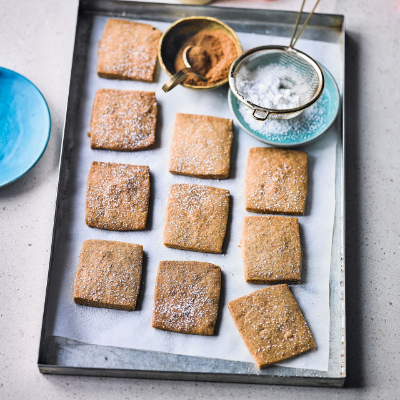
cubeb shortbread

Waitrose Supermarket Chain

“This is a super simple, earthy tasting shortbread recipe that combines sweet and savory notes and smells like Christmas!” – Zoe Adjonyoh

Makes about 15 – 20 biscuits.

Ingredients

  • 125g (4 ½ oz) butter, at room temperature, plus extra for greasing
  • 55g (2 oz) granulated white sugar, plus extra for sprinkling
  • 180g (6 oz) all-purpose flour, plus extra for dusting
  • 1 ½ tablespoons Ghanan Five-Spice Mix (see below)

Instructions

  1. Grease and line a small 8×10 rectangular pan with parchment paper.
  2. Beat the butter and sugar together in a bowl until pale and fluffy.
  3. Mix in the flour and spice mix until you have a smooth dough. Turn out on to a lightly floured work surface and use your hands to bring the dough together, then press the dough into the greased pan.
  4. Sprinkle with the sugar, if you like, and chill in the fridge for 20 minutes. Meanwhile, preheat the oven to 350 degrees.
  5. Bake for 17-18 minutes or until a pale golden brown. Leave to cool in the pan for 10 minutes, then use a serrated knife to cut into bars while still warm. Sprinkle with the extra sugar once cooled if desired. Leave to cool completely before serving.

Ghanan Five-Spice Mix

Ingredients

  • 4 teaspoons ground cubeb pepper
  • 1 teaspoon ground or freshly grated calabash nutmeg
  • 2 teaspoons ground cloves
  • 1 teaspoon ground prekese, or substitute cinnamon and cocoa
  • 1 teaspoon ground ginger

Instructions

Mix all the ingredients together in a bowl. Store in an airtight container in a cool, dark place and use within a few months.

Note: Adapted from a recipe by Zoe Adjonyoh in her cookbook Zoe’s Ghana Kitchen: An Introduction to New African Cuisine – from Ghana with Love.


Get Shondaland directly in your inbox: SUBSCRIBE TODAY


wine database

This infographic was created by Preferabli, wine database experts and more
Around the world in pancakes: 10 international recipes to mix up your pancake day!

Around the world in pancakes: 10 international recipes to mix up your pancake day!

Whether you have your pancakes with chocolate spread, honey, or the classic lemon and sugar, I think we can all agree that Pancake Day is one of the best celebrations of the year. If you want to continue happily tucking into your classic British pancakes, then go ahead, nobody will blame you, but how about, this year, you do something a bit different and bring some international culture into proceedings.

1)French Crêpes

Let’s begin with the well-known French crêpe. Now I personally don’t think you’ve done France right if you haven’t tried a Nutella crêpe which, in my experience, is a life-changing favour sensation that will ruin British pancakes for you forever. These wafer-thin, golden-brown beauties can be enjoyed hot or cold and be filled with anything your heart desires. If you want to elevate your pancake game, French crêpes are a surefire way to do so.  

2)Chinese Congyoubing

Going a bit further afield, these spring onion favoured Chinese pancakes make the perfect appetiser. They have bags of flavour and a gorgeous flaky texture, making them incredibly moreish. The recipe is complex and requires a reasonable amount of technical skill compared to generic British pancakes, but go on, give it a go; you might discover a new, fairly niche skill you never knew you had.

3)Australian Pikelets

The unusually named pikelets are a fascinating creation. Essentially these are mini pancakes that are small and thick with a similar texture to American pancakes, filled with custard or cream. These little delights are a staple for children growing up in Australia and are usually enjoyed as a snack or served for afternoon tea. Top with whipped cream for a perfect mid-afternoon indulgence.

4)Danish Aebleskiver

I don’t know about you, but in terms of sweet treats, I know the Danes for their delicious pastries, so I’m certainly intrigued by their pancake alternative, which looks more like a small, custard-filled doughnut to me. Literally translated as “apple slices” (although most modern recipes don’t seem to include apples), these Aebleskiver are cooked at a very high heat in special pans with circular hollows. They have a light and fluffy texture, almost like a cross between a pancake and a Yorkshire pudding and are enjoyed sprinkled with sugar and served with jam for dipping- my mouth is watering at the thought.

5)American Pancakes

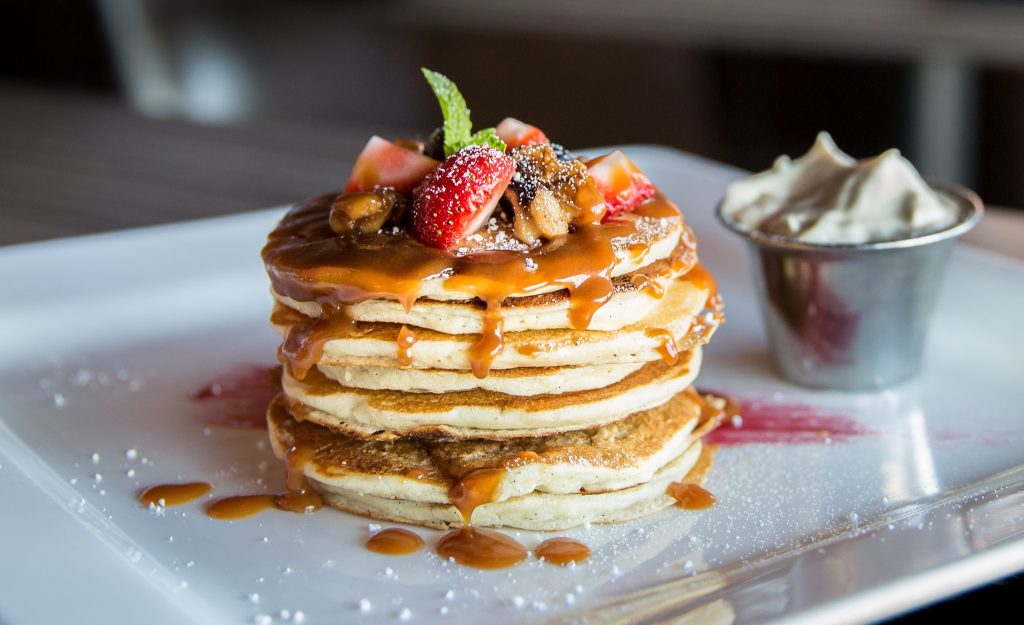
If you have never tried an American pancake, well, sit down, my friend; you’re in for a treat. These fluffy, thick delights are more cake-like in texture and often eaten for breakfast with butter and maple syrup. If you, like me, find that one or two crêpe-style pancakes simply aren’t enough to satisfy your Shrove Tuesday cravings, then perhaps a stack of these more filling sweet treats is the way to go. Give them a go and experiment with the toppings- for me, fruit and yoghurt are perfect for a weekend breakfast treat.

6)Indian Dosa

Dosa, also known as dosai, dosey or dosha, is a thin, crisp pancake from South India made from a fermented batter of ground black lentils and rice. The fermentation process gives it a slightly tangy, savoury taste that pairs nicely with various curries. These pancakes take a bit of effort but are a perfect side or main dish if stuffed with Aloo masala or any other filling your heart desires.  

7)Columbian/ Venezuelan Arepa

I wouldn’t be surprised to hear that you had heard of arepas before; these thick savoury pancakes are becoming increasingly popular at British street food markets, including London’s Maltby Street and Camden Lock. Arepas are made with ground maize and have a mild corn flavour, making them the ideal vehicle for flavourful fillings, often including things like black beans, chicken, avocado and plantain. In Columbia, these tasty additions are used as a topping to their crunchy arepas, whereas in Venezuela, arepas are split open and stuffed with these fillings to create a more sandwich-like snack.

8)Somalian Anjero

Anjero is a staple of Somalian cuisine, used for both sweeter breakfast dishes and savoury main meals. This fermented pancake has a bread-like texture and is traditionally made of only three ingredients: maize, flour, and water. This simple pancake can also be seen in Ethiopia with the injera, which, although made using the same ingredients, has its own character and is much bigger and more sour than the injera. This difference in taste can be attributed to the length of fermentation, which is overnight for the anjero and a couple of days for the injera. Amusingly, Somalians seem to have a British approach to their tea drinking as most people eat an average of three anjeros with a cup of tea, something I can relate to as I can often be found scoffing half a packet of digestives with my morning cuppa.

9)Greek Tiganites

If you want to add an extra splash of history to your pancake day, I recommend trying Greek Tiganites, supposedly the first documented pancake in the world, dating back to the sixth century B.C. If you want to be traditional, top these light and fluffy pancakes with chopped walnuts, but feel free to experiment with sweet and savoury additions. Apparently, Greek people tend to go for familiar toppings like chocolate spread, or they push the boat out and use what we would imagine as typically more Greek flavours like feta and honey, which I could really get behind.

10)Italian Farinata

To finish our culinary journey, we will end in Italy with the farinata, a thin, unleavened pancake made from chickpea flour and cooked in a wood-fired oven. The farinata is made with just three ingredients and is known for its crispy outside and creamy interior. This simple snack is sold in bakeries all over Italy and is given flavour with the addition of rosemary and sea salt. Although this recipe originated in Italy, it can now be found elsewhere in countries along the Mediterranean, with slightly different herbs and spices giving it local character.


Featured Image: Ash on Pexels with License. 

Global affair: OSU students return home with food, culture at International Bazaar | Entertainment

Global affair: OSU students return home with food, culture at International Bazaar | Entertainment

Saani Mohammed stands below a connected banner of international flags in traditional Ghanaian attire and basks in the exposure for his country.

Finally, he feels seen, he said.

Not just a statistic or body walking across Oklahoma State University’s campus.

Mohammed finally acted as if he was home. He was. Kinda.

OSU’s International Student Organization hosted its annual International Bazaar, a three-hour fun fest filled with dozens of global foods, strong flavor and music, on Saturday afternoon in the Wes Watkins Center.

“This is big exposure for us,” Mohammed said. “Mostly Africa is not portrayed in the positive light. But we have our food here. Some of us have our national cultural dresses. People seem them and they’re like, ‘Who are these people?’ Then we talk about it. It makes us feel included.”

More than 200 students and Stillwater residents bounced from 12 booths and sampled deserts and entrees from more than 12 countries or regions.

It’s times like Saturday that show food and community can bring folks together.

“The purpose of today is to show Stillwater community the diversity of international students that we have here on campus,” Salome Suarez, International Student Organization president said. “Each area club has prepared different dishes from their own country. We want everybody to see how the dishes are from other parts of the world.”

Foods ranged from the Bangladeshi students’ tandoori chicken to the Latino American students’ cheese empanadas. Lots of desert, too.

Within hours, the exhibit hall transformed into a multicultural kitchen.

Tim Huff, ISO’s adviser, said the event began more than three decades ago. It’s one of ISO’s five annual events and the purpose remains.

“It gives all these students a home,” Huff said. “They feel like they belong when they’re here. You can see them just relax and get into it. It’s very important to see the true nature and culture of these kids because they settle in here.”

Many of the foods appeared similar. Lots of chicken and different meats. But cultural differences appeared in the bite and the food’s preparation.

The Nepalese Student Organization sold about 750 momos, steamed dumplings filled with chicken and vegetables.

Niranjan Pokhrel, a horticulture master’s student from Nepal said the group started making the food at 6 p.m. Friday night. The job wasn’t finished until 3:30 a.m.

It’s no easy task.

“It takes a lot of effort to make that,” he said. “It’s also a skill thing. Not everyone can make it. We had some people’s friends and seniors were really good at making it.”

In Persian culture, kitchens are the realm of women, Yaser Shamsi, Iran native and doctorate student in OSU’s English department, said. Men perform tasks of manual labor such as moving large pots. But women make the food.

“Even looking at the way people celebrate things and the way people cook (are different),” Shamsi said. “You can cook the same ingredient when you just buy it from a shop like Walmart. But when it goes home and it goes through the process that happens in the kitchen, it is the culture, the background and the people that makes the final dish that you see here.”

His wife made most of the Iranian items, such as falafel.

“Having a community of Iranian people just makes me feel as if it’s not that far away from family,” Shamsi said. “OSU is really international friendly. This is one of the events that I really appreciate.”

OSU boasted 1,519 international students in fall 2022, according to OSU international student statistics provided to The O’Colly.

Mayank Talreja, a master’s student from India, represents OSU’s largest international community. The country’s 418 students make it OSU’s biggest international population.

The Indian Student Association also won the event’s best desert content with its kalakand, an Indian milk cake.

“That is what encourages us and gives me a motivation to do something for students,” Talreja said. “We help students transition their life from India to a new country here. It’s been great that a lot of friends are here from our country.”

ISO will also host its Culture Night on April 8 in the Seretean Center for the Performing Arts, another opportunity for OSU’s international students.

Taste of OSU returns, giving students opportunity to try international foods and watch cultural performances

Taste of OSU returns, giving students opportunity to try international foods and watch cultural performances

The Oriental Dance team performs inside the Ohio Union. Courtesy of Maureen Mille

Savor the flavor and spice up the weekend by participating in Taste of OSU Feb. 17. 

The revival of Taste of OSU, an event founded in 1997, since the start of the COVID-19 pandemic will give students the opportunity to celebrate their culture and experience others through international foods and cultural performances. The Office of International Affairs will host the event in the  Archie M. Griffin Ballroom within the Ohio Union from 5-8:30 p.m., according to the Taste of OSU website. 

The event is free and open to the public, but attendees must buy a $1 food ticket in order to try the food at different booths, according to its website.

When attendees enter the event, they will be greeted with a variety of uniquely decorated cultural booths, Maureen Miller, director of communications for the Office of Internal Affairs, said.

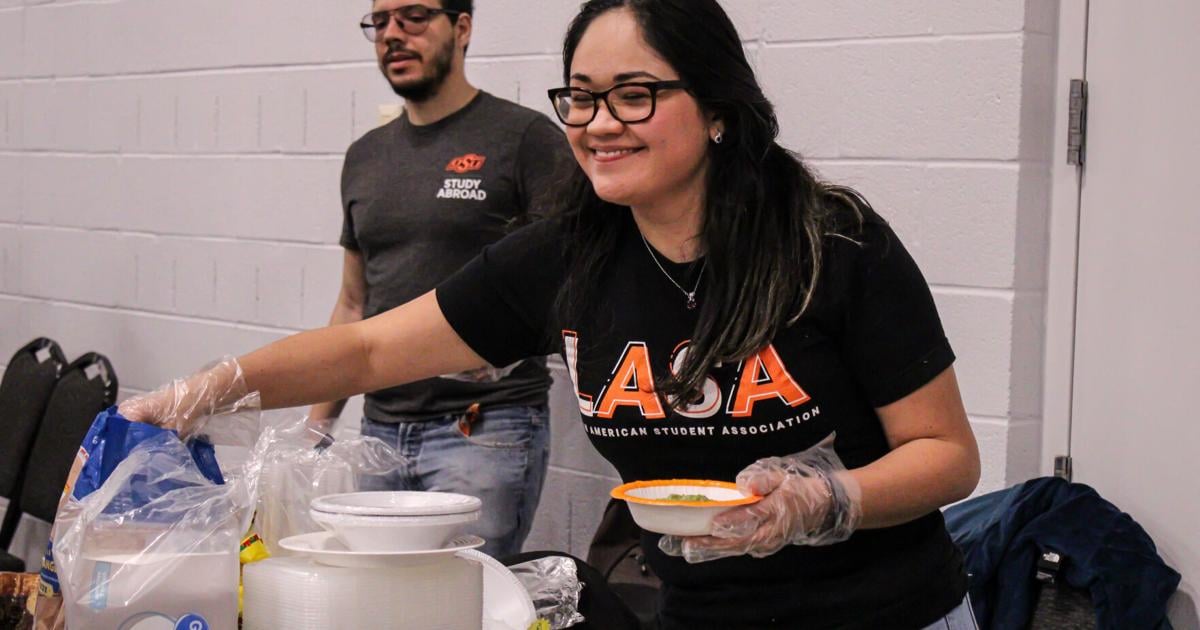
“They might decorate it with posters or flags. Some of them wear T-shirts and clothing representative of their home countries,” Miller said. “Some groups do interactive kinds of things. Some people will do henna, some groups will write your name in their language.”

Each booth typically has two different foods for attendees to try, Mia Miller, student chair of Taste of OSU 2023 and a fourth-year in international studies, said. These would include a type of “rice and then some dessert or whatever they’ve chosen that they think represents their culture.” 

Students can expect to see food and cultural booths from organizations — including the Korean Student Association, Brazilian Students Association and Lebanese Student Organization —will host food and cultural booths. There will be performances by the Aloha Dance Club, Indian Students Association, Salsa Club and more, according to its website.

Since many current students and organizations were unaware of the event, Maureen Miller said she hoped to start reintroducing Taste of OSU slowly by having fewer organizations involved and by only hosting the event in the ballroom.

“Many of the students who have participated in Taste of OSU before had graduated, so we thought we’d bring it back a little bit slowly,” Maureen Miller said. “So, this year, we have 15 international student organizations cooking food, and we have about 20 cultural performances.”

The event is open to anyone, not just Ohio State students, Mia Miller, who attended Taste of OSU before enrolling, said. 

“​​I got to see the celebration and all of the events and everything in its full glory, you could say, because back then there were about 4,000, 3,000 people coming.” Mia Miller said. “It opened to the whole [Columbus] community with 30 student groups.” 

Maureen Miller said before its absence, Taste of OSU had become a popular attraction on campus.

“Right before the pandemic hit, and at that moment in time, Taste of OSU really took over the Ohio Union,” Maureen Miller said. “We had the food and the performance hall and in the ballroom, and then a stage was set up in the atrium area, so everyone could watch the performances right there on the first floor and then all around the balcony on the second floor.

Alison Lee, a fourth-year in biology, participated in the event in 2020 as a volunteer photographer. She’ll now experience Taste of OSU as the president of the Taiwanese American Student Association. 

“I think I’ll get a different perspective because I will be training, cooking and serving food the day of, so I’ll be the one that’s more interacting with a guest,” Lee said. 

Lee said Taste of OSU brings the diversity on Ohio State’s campus together and celebrates it, which is why she decided to participate again in the revival. 

“I’m really passionate about culture and diversity and try to promote that on campus,” Lee said. “So, I think Taste of OSU does that perfectly to showcase the diverse culture that exists on OSU’s campus.”

Food tickets can be purchased ahead of time beginning  Feb. 14, or the day of the event.