At the intersection of food and culture

At the intersection of food and culture

No matter how different we are as individuals, we can all bond over a good meal. 
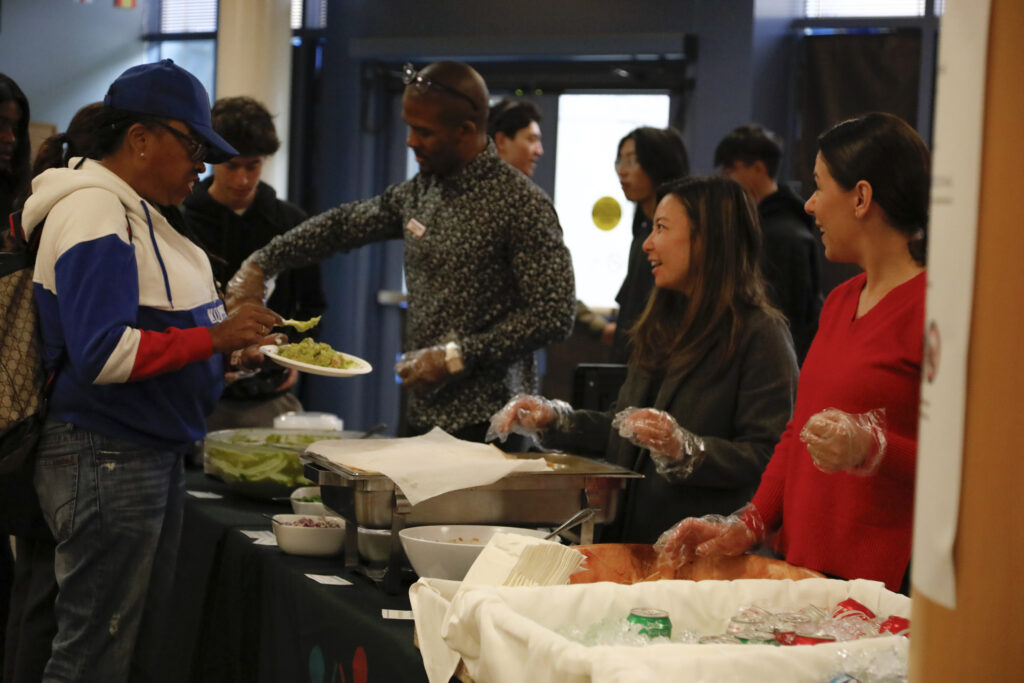
Coordinator of the Brahma Bodega Geremy Mason helps students assemble guacamole bowls in the Multicultural Center at Pierce College in Woodland Hills, Calif., on April 17, 2023. Photo by Rachael Rosenberg

“Food and Culture: Exploring the Intersection” was the first event of its kind at Pierce College. Held at the Multicultural Center on Monday, the event was a collaboration between the Brahma Bodega and the Multicultural Center that brought students and faculty together. 

The event provided an opportunity for people to learn about food and culture while making a dish.

Multicultural Center Coordinator Tatevik Melkumyan came up with the idea of the event while sharing food with her colleagues. Different dishes reminded them of foods from their own culture. 

“We think we’re very different, but really, we’re the same and we’re connected in a lot more ways than we actually know of,” Melkumyan said. “Being able to learn about food from different cultures and learning through food that we’re actually very much connected and very similar. So that’s what sparked the idea for the event.” 

A lot of people can relate to the feeling of having their own comfort foods, so this gives students the opportunity to experience comfort foods associated with various cultures. 

Brahma Bodega Coordinator Geremy Mason spoke about the significance of students exploring different aspects of themselves through traditions and food. 

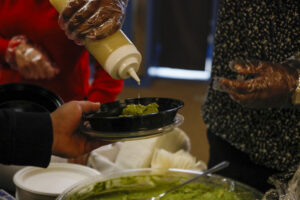
Geremy Mason gets ready to assemble a guacamole bowl in the Multicultural Center at Pierce College in Woodland Hills, Calif., on April 17, 2023. Photo by Rachael Rosenberg
A student assembles a guacamole bowl in the Multicultural Center at Pierce College in Woodland Hills, Calif., on April 17, 2023. Photo by Rachael Rosenberg
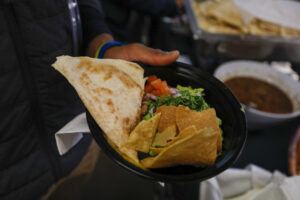
A student’s assembled guacamole bowl in the Multicultural Center at Pierce College in Woodland Hills, Calif., on April 17, 2023. Photo by Rachael Rosenberg

“I think it’s really important that students can explore all aspects of multiculturalism,” Mason said. “Food preparation, as we were talking about in the presentation, is a big part of cultural identity and tradition. We wanted to have some kind of collaboration where we got to discuss that and have an engaging activity.” 

After discussing the importance of food and culture, and the way they are interwoven, the main dish for the event was based on traditional Mexican cuisine. With the use of avocados in many different forms and cultures, students and faculty were able to create their own guacamole. 

Ingredients and materials were prepared at the food station for people to assemble their plates. From tomatoes, avocados, and red onions, to cilantro, salsa, and quesadillas. There was a wide variety of choices, as well as chips and refreshments. 
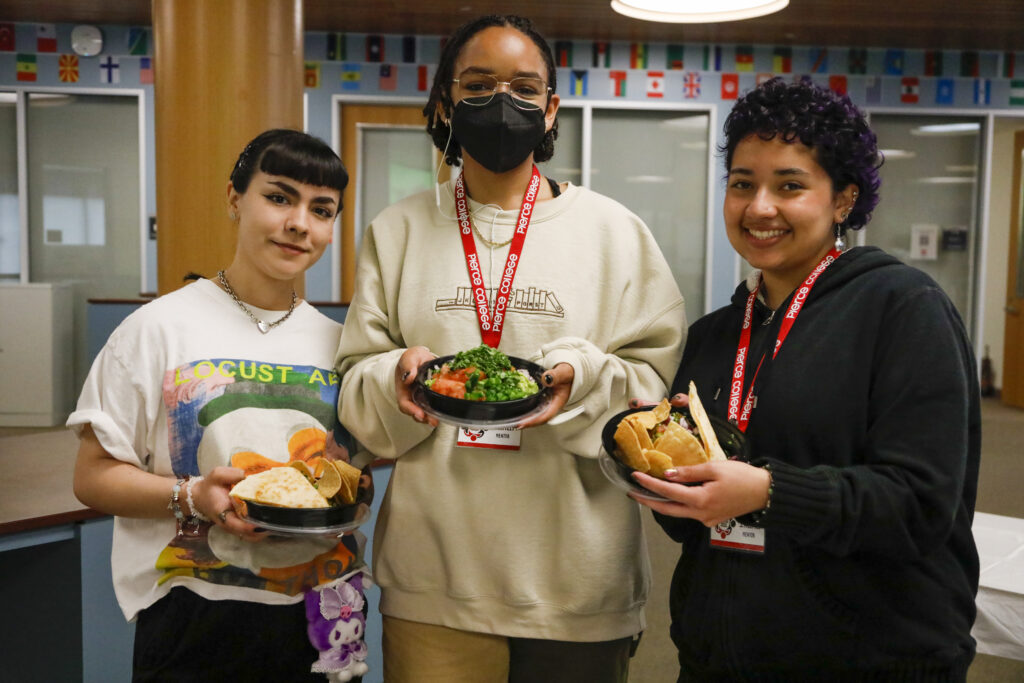
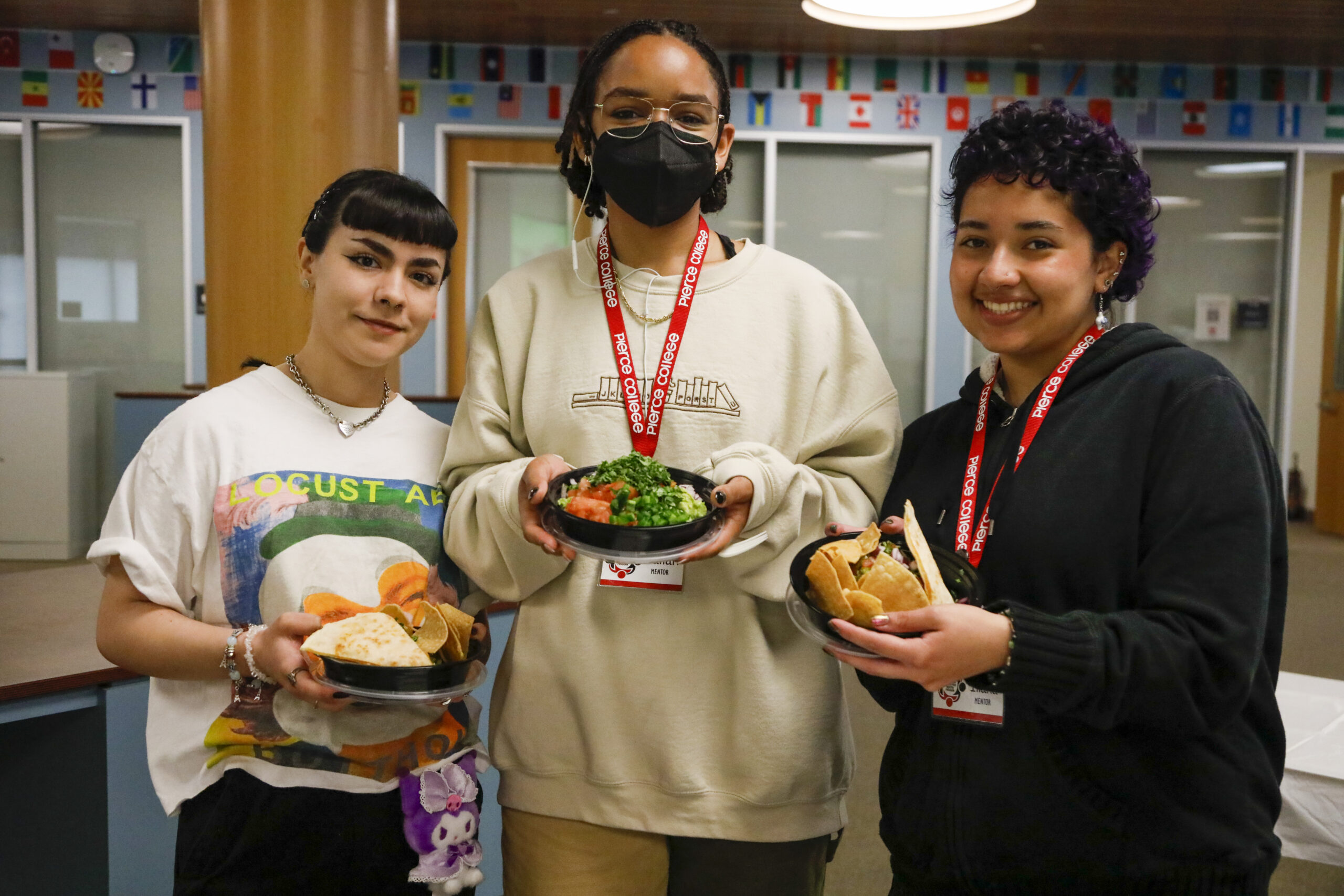
(Left-right) Pierce Students Isabella Vieyra, Nailah Babatunde-Bey, and Lliana Pride hold their guacamole bowls in the Multicultural Center at Pierce College in Woodland Hills, Calif., on April 17, 2023. Photo by Rachael Rosenberg

Pierce student Isabella Vieyra enjoyed the presentation and the making of guacamole. 

“I am Mexican, so it does feel like it hits a little close to home,” Vieyra said. “I think it’s fun and interactive and the presentation was a good explanation of its significance in Mexican culture.”

Dean of Student Engagement Juan Carlos Astorga expressed his connection to family traditions, and why it’s important for students to engage in the food of their culture. 

“It’s an amazing opportunity because as we talk about food and culture and the connection to that, it’s also about a connection to our elders and how we pass on traditions,” Astorga said. “It’s engaging our connection to culture, but also introducing how food does those intersectional connections to each other.” 

Working at the intersection of nutrition and health equity | News

Working at the intersection of nutrition and health equity | News

December 5, 2022—In this Big 3 Q&A, Cindy Leung, assistant professor of public health nutrition at Harvard T.H. Chan School of Public Health, discusses a recent paper she co-authored linking food insecurity and food addiction, as well as her other research efforts. 

Q: Tell us about your recent study and the interesting findings around food insecurity.

A: Food insecurity is a socioeconomic condition of limited access to affordable and healthy food. In my prior research, I found that people experiencing food insecurity are more likely to have poorer quality diets and are at higher risk for chronic conditions. Food addiction is a newer paradigm where we’re seeing experiences of withdrawal and other symptoms similar to those, for example, of alcohol abuse, as a result of eating highly processed foods. Knowing that highly processed foods are abundant in low-income neighborhoods, we wondered if people who are food insecure might be more vulnerable to food addiction.

In two different samples—one of low-income pregnant women in the San Francisco Bay area, and another of mothers of preadolescent children in southeast Michigan—we found a consistent and significant positive association between food insecurity and food addiction, even after adjusting for sociodemographic factors like education, race/ethnicity, and income level.

In our study, we couldn’t tease apart the mechanisms behind this link, but I believe that stress and ubiquitous access to highly processed foods are big components. Food insecurity is a source of chronic stress—a constant cognitive process to manage one’s food resources in relation to the family’s food needs. This chronic stress may alter the reward system to overconsume highly processed foods, increasing the risk of food addiction over time. The combination of high stress and easy access to highly palatable foods may also explain the higher risks of other chronic diseases that we’ve seen in relation to food insecurity.

Q: What other research questions are you looking at?

A: When we talk about interventions for food insecurity, we automatically go to our federal food programs. During the COVID-19 pandemic, we’ve seen swift expansions of our biggest nutrition programs, showing that they are important levers to reduce food insecurity during national emergencies. My colleagues and I are evaluating some of these recent policies. I am also really interested in seeing how poverty alleviation programs might reduce food insecurity. Programs and policies that address the minimum wage or reduce unemployment could have secondary impacts on preventing food insecurity, which is so intimately tied to poverty.

Separate from this, I am interested in testing and evaluating environmental interventions to improve dietary intake. I have been involved in some large-scale interventions to reduce sugar-sweetened beverage consumption. Currently, I am working with a team at the University of Michigan to test various dining hall changes to reduce red meat consumption, which is an important goal for both health and sustainability reasons.

Q: What does it mean to you as an alumna to be back at the School as a faculty member?

I am excited and humbled to be back at Harvard Chan School, where I got my foundational training and launched my career. Now, ten years later, I think I have a more holistic perspective of how I can take my work to the next stage. I also feel very privileged to work alongside my former mentors and colleagues, and the increasingly talented pool of students that we have.

Overall, I am really optimistic about growing my research program at the School, focusing on the intersection of nutrition and health equity. I am deeply committed to serving the public health community in that space.

—Amy Roeder