Relevant to anyone from manufacturers and factory workers to restauranteurs and baristas, the guidance has been published by the British Standards Institution (BSI) following extensive sector discussion on food safety culture, including what it is, how to measure it and how to ensure continuous improvements.
Food industry majors – including Walmart, McDonald’s, PepsiCo, HelloFresh, Kerry Foods and 3M – have all been involved in drafting the guidance.
Positive food safety culture
The document – named PAS 320 – includes steps on identifying gaps and then implementing a plan for change. It makes recommendations related to leadership; the organization’s vision, mission, values and policy; organizational structure; responsibilities, accountabilities and authorities; guiding coalition team; interested parties; change champions; influencers; and food safety documentation.
In particular, the guidance also includes advice on how prioritizing people in the sector not only supports improved food safety, but also brings other benefits including investment return, business performance improvement, reduction of the costs associated with poor quality, and enhanced efficiency. For example, the guidance notes that creating and maintaining a strong culture that preserves quality and reduces risk requires management commitment and a mindset that safety is the responsibility of everyone at every stage of the food supply chain.
The guidance is published at a time when packaging and labelling regulations is being led by the Food Standards Agency following the UK’s exit from the European Union through Brexit. New allergen labelling laws that came into force in the UK last year also require businesses to label all food that is pre-packed for direct sale with a full list of ingredients, with the 14 major allergens including milk emphasised in the list.
Neil Coole, director of food and retail supply chains at BSI, commented: “A positive food safety culture that prioritizes people and gives everyone a stake in driving quality can have a transformative effect and help reduce the risk that comes from unsafe food. This starts with leadership taking steps to turn ambition into action in order to build and sustain continuous improvements across their organization and the wider supply chain.
“Ultimately, moving from seeing food safety culture as a compliance issue to an investment in people can offer huge benefits for individuals, organizations and society as a whole.”
Scott Steedman, director general, standards, at BSI added: “It is tragic that so many lives are lost globally every year to contaminated food. This is something nobody in the industry can ignore and urgent steps to change this are required. We understand that the common factor in food safety related risks is people, and it is an organisations culture towards food safety that presents the opportunity for continuous improvement. PAS 320 provides the guidance to empower people to make a positive impact on the future of the food industry.
“Enabling a robust food safety culture is vital for enhancing quality and safety across the food sector. Strengthening understanding of what best practice looks like and how everyone in the food sector can play a role, by enhancing global consistency and offering clarity, can help food sector organizations accelerate change and support the realization of quality and food safety ambitions. This new standard on food safety culture can build confidence in the global food industry and offer long-term benefit for everyone.”
The new guidance is available as a free download from the BSI website.
Risk Culture: How to Balance Risks for the Safety of Consumers, Team Members, and the Environment will be the focus of the keynote presentation taking place on May 10 during the 25th annual Food Safety Summit in Rosemont, IL.
Michael Eckhardt, Senior Vice President, Chief Legal and Risk Officer, and Secretary, Wawa Inc.; Randy Huffman, Ph.D, Chief Food Safety and Sustainability Officer, Maple Leaf Foods; and David McDonald, President and Chief Operating Officer, OSI Group will join Lone Jespersen, Ph.D., Principal, Cultivate SA, who will lead this important conversation. To access the full education program, visit www.foodsafetysummit.com.
“Managing risk is such an important topic for food safety professionals at all levels of business, and we look forward to Lone Jespersen leading this conversation with these three dynamic panelists who are committed to balancing risk and safety,” said Gillian Kelleher, CEO of Kelleher Consultants LLC and Chair of the Summit Educational Advisory Board (EAB). “We are confident that attendees to the Food Safety Summit will gain practical perspectives they can share with their senior leaders at organizations of all sizes.”
“The keynote session will focus on a conversation with forward-thinking executives on the topic of balancing risks for the safety of consumers, team members, and the environment. Participants will hear how successful food companies manage risks that sometimes compete for investments and leadership attention,” explained Lone Jespersen, PhD, Principal at Cultivate SA and member of the Food Safety Summit EAB. “Learning how to partner with colleagues from human safety and sustainability is a must for a company to improve food safety performance and mature a company’s food safety culture. The executives will also share specific challenges and wins from their respective organizations, along with the cultural solutions that help them successfully manage risk.”
The panel will include:
Michael Eckhardt, Senior Vice President, Chief Legal and Risk Officer, and Secretary for Wawa Inc. Michael has responsibility for the Company’s Internal Audit, Enterprise Risk Management, Legal, Loss Prevention, Quality Assurance, Risk Management and Safety teams. Michael joined Wawa in 2005 and became General Counsel in 2011. He previously held the position of Associate General Counsel at Wawa Inc.
Randy Huffman, PhD, Chief Food Safety and Sustainability Officer at Maple Leaf Foods. His role encompasses leadership of Food Safety and Quality, Occupational Health, Safety and Security, Environmental Sustainability, and Animal Care. Randy leads a team that has developed and is executing world-class strategies to deliver on Maple Leaf Foods’ commitments to produce safe, great-tasting food produced in a safe work environment and to become the most sustainable protein company on earth.
David G. McDonald, President and Chief Operating Officer, of OSI Group.David joined OSI Group, a multinational food processing company with nearly 60 facilities in 17 countries, in 1987. Over the years, after serving in a number of capacities, he became President and Chief Operating Officer. He serves on the Board of Managers for OSI Group and many of its companies. In addition, David was formerly the Chairman of the American Meat Institute and the first Chairman of the North American Meat Institute.
“I look forward to having this important conversation with Michael, Randy, and David and to share with the attendees of the Food Safety Summit how all food safety professionals can work with their senior management teams on balancing risk for consumers, employees, and the environment,” added Jespersen.
Attendees will have access to three days of education sessions including an opening workshop on Got Root Cause? featuring a panel of leaders from FDA, Cargill, Dole Food Company, USDA, Yum Brands, and J&J Snack Foods, who will review how getting to the root cause is a cost-effective approach to management/operations in any organization. In addition, the 11th annual Town Hall: A Conversation with Top Regulators and Advisors will be held on May 11, with insights from FDA, CDC, USDA, and AFDO.
The Summit’s closing session on Thursday afternoon will focus on Legal Insights to Sharpen Your Food Safety Focus—and Stay Out of the Courtroom. The panel discussion will feature prominent attorneys who work on behalf of consumers and industry — with all advocating on the side of food safety. These internationally recognized expert lawyers will discuss the common gaps or weaknesses they see in company operations, culture, and regulatory adherence that lead to adverse events, such as foodborne illness outbreaks and recalls.
For access to the full program and for attendee registration, visit https://www.food-safety.com/food-safety-summit. For information on sponsorship or exhibiting opportunities, contact Kim Hansen at hansenk@bnpmedia.com or Adam Haas at haasa@bnpmedia.com. For updates on the 2023 event, visit www.foodsafetysummit.com or follow the event on Twitter, LinkedIn, and Facebook.
The Food Safety Summit is owned and produced by Food Safety Magazine (www.food-safety.com) and BNP Media (www.bnpmedia.com), one of the country’s leading business-to-business media companies serving industry professionals across 60+ industries through magazines, custom media, e-newsletters, webinars, events, and market research.
(To sign up for a free subscription to Food Safety News,clickhere)
New industry-led global guidance sets out the role of people and culture in enabling food safety and product quality
LONDON, April 13, 2023 /PRNewswire/ — A food safety culture that prioritizes people and supports collaboration in manufacturing facilities, food service businesses, restaurants or retail stores can help improve quality, minimizing the risks of contamination or recalls while also benefiting productivity and talent retention.
New global guidance from BSI, the business development and standards company, developed through consensus with industry giants including Walmart, McDonald’s, Kerry Foods and 3M, and published this week, identifies that the common factor in food safety incidents, quality failures and recalls is people rather than failures of machinery or technology. Equally, when issues occur, people are the key to avoiding recurrence.
According to the World Health Organization (WHO), consuming contaminated food results in an estimated 600m people falling ill every year, leading to 420,000 deaths. A desire to tackle this led to a round-table discussion at the 2019 International Association for Food Protection (IAFP) Annual Meeting, then, ultimately, the creation of an industry steering group. The resulting document, Developing and sustaining a mature food safety culture (PAS 320), is designed to guide organizations of all sizes across food, beverage and retail to create a culture where people are prioritized, all employees embrace food safety, take responsibility for reporting issues, and are empowered to initiate change.
Relevant to anyone from manufacturers and factory workers to restauranteurs and baristas, the guidance has been published by BSI following extensive sector discussion on food safety culture, including what it is, how to measure it and how to ensure continuous improvements. The document defines food safety culture as the “shared values, beliefs and norms that affect mindset and behavior toward food safety in, across and throughout an organization.”
It notes that creating and maintaining a strong culture that preserves quality and reduces risk requires management commitment and a mindset that safety is the responsibility of everyone at every stage of the food supply chain. Culture is also highlighted as key for employee retention, improving quality and decreasing contamination risk by decreasing turnover rate.
PAS 320 includes steps for identifying gaps and then implementing a plan for change. It makes recommendations related to leadership; the organization’s vision, mission, values and policy; organizational structure; responsibilities, accountabilities and authorities; guiding coalition team; interested parties; change champions; influencers; and food safety documentation. The guidance also includes advice on how prioritizing people in the sector not only supports improved food safety but also brings other benefits, including investment return, business performance improvement, reduction of the costs associated with poor quality, and enhanced efficiency.
The US FDA’s New Era of Smarter Food Safety blueprint states that dramatic improvements in reducing the burden of foodborne illness cannot be made without doing more to influence the beliefs, attitudes, and, most importantly, the behaviors of people and the actions of organizations.
Neil Coole, Director, Food and Retail Supply Chains at BSI, said: “A positive food safety culture that prioritizes people and gives everyone a stake in driving quality can have a transformative effect and help reduce the risk that comes from unsafe food. This starts with leadership taking steps to turn ambition into action in order to build and sustain continuous improvements across their organization and the wider supply chain.
“Ultimately, moving from seeing food safety culture as a compliance issue to an investment in people can offer huge benefits for individuals, organizations and society as a whole.”
Scott Steedman, Director General, Standards, BSI, said: “It is tragic that so many lives are lost globally every year to contaminated food. This is something nobody in the industry can ignore, and urgent steps to change this are required. We understand that the common factor in food safety-related risks is people, and it is an organization’s culture towards food safety that presents the opportunity for continuous improvement. PAS 320 provides the guidance to empower people to make a positive impact on the future of the food industry.
“Enabling a robust food safety culture is vital for enhancing quality and safety across the food sector. Strengthening understanding of what best practice looks like and how everyone in the food sector can play a role, by enhancing global consistency and offering clarity, can help food sector organizations accelerate change and support the realization of quality and food safety ambitions. This new standard on food safety culture can build confidence in the global food industry and offer long-term benefits for everyone.”
Media Contact: Chad Quinn, PR Manager, Americas, BSI Email: [email protected] Phone: +571-758-8638.
Notes to Editors:
Contact us for the copy of the standard
About BSI
BSI is the business improvement and standards company that enables organizations to turn standards of best practice into habits of excellence, “inspiring trust for a more resilient world.” For over a century, BSI has driven best practice in organizations around the world. Working with over 77,500 clients across 195 countries, it is a truly global business with skills and experience across all sectors, including automotive, aerospace, built environment, food and retail and healthcare. Through its expertise in Standards and Knowledge, Assurance Services, Regulatory Services and Consulting Services, BSI helps clients to improve their performance, grow sustainably, manage risk, and ultimately become more resilient.
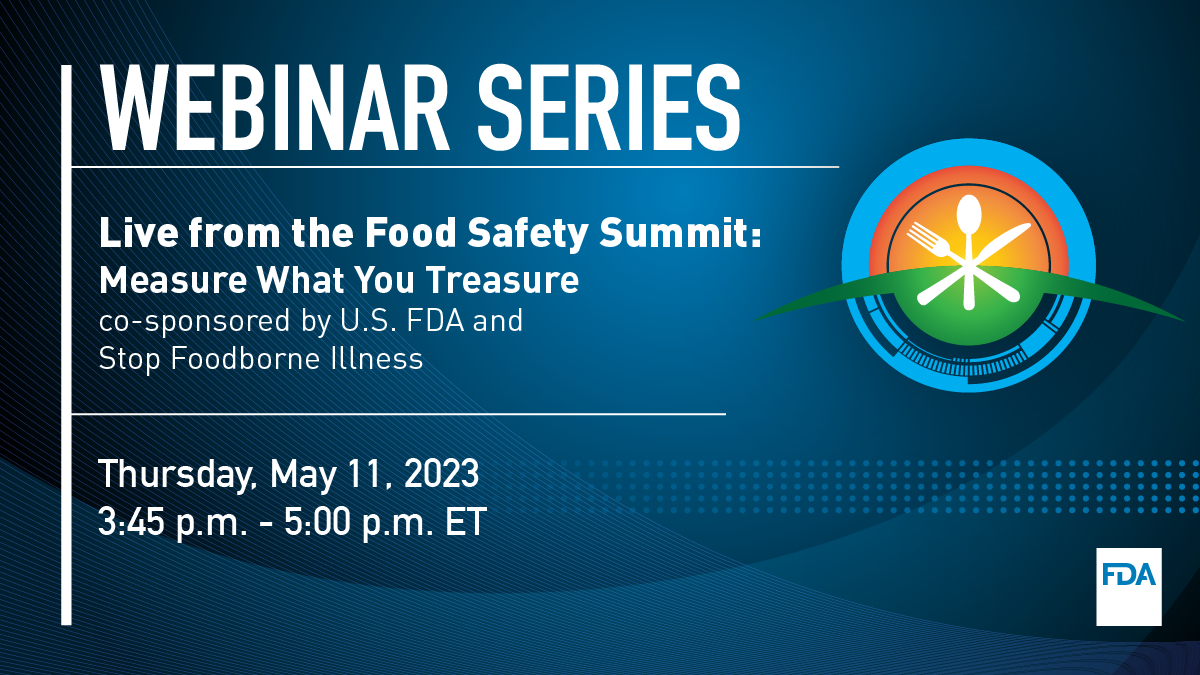
The U.S. Foods and Drug Administration and Quit Foodborne Disease, a non-income public wellbeing corporation, are collaborating on a webinar collection that explores food stuff safety lifestyle, one of the core features in FDA’s New Period of Smarter Food Safety initiative.
The collection, entitled “Collaborating on Lifestyle in the New Era of Smarter Foods Safety,” began on November 4, 2021.
The New Period of Smarter Foodstuff Security blueprint states that spectacular advancements in decreasing the burden of foodborne ailment can’t be produced without doing a lot more to influence the beliefs, attitudes, and, most importantly, the behaviors of persons and the actions of businesses.
The webinar collection engages gurus from the public and private sectors in a collaborative exchange of concepts and encounters related to the value of a robust meals security culture in supporting to ensure safe and sound foodstuff generation.
The sequence will have worthwhile facts for equally these properly-versed on, and those just understanding about, food stuff safety lifestyle.
Upcoming Session
Dwell from the Food stuff Protection Summit: Evaluate What You Treasure
May possibly 11, 2023, from 3:45 pm 5:00 pm ET
The approaching webinar will aim on the great importance of evaluating food stuff basic safety culture in an group.
Guest speakers include things like:
Donald A. Prater, DVM, Acting Director, Workplace of Food Coverage and Response, Fda
Conrad Choiniere, PhD, Director, Workplace of Analytics and Outreach, Heart for Meals Safety and Used Diet, Fda
Lone Jespersen, Principal and Founder, Cultivate SA
Vanessa Coffman, Director, Alliance to End Foodborne Illness
Brian Perry, Executive Meals Basic safety & High quality Leader, TreeHouse Foods, Inc
Karleigh Bacon, Director of U.S. Offer Chain Food items Security, Science & Regulatory, McDonald’s Company
Philip Bronstein, Ph.D., Assistant Administrator, Workplace of Field Operations, Meals Basic safety and Inspection Service, Meals Safety and Inspection Assistance, USDA
Not only is a powerful lifestyle excellent for employees and individuals, but for obvious good reasons, it is also fantastic for the bottom line. In simple fact, a Harvard study of more than 200 companies confirmed a strong tradition boosts web earnings by 765{d2b09b03d44633acb673e8080360919f91e60962656af8ade0305d5d8b7e4889} about 10 yrs.
With the earn-get-win results for a company’s workforce, customers and bottom line connected with obtaining a solid tradition, why is it so tricky for businesses to have the tradition everybody needs to have?
It is all about folks. When it will come to culture, most companies attempt to implement the very same basic applications for fixing course of action or effectiveness difficulties. They think these resources will tutorial them to the enlightened society they crave, points out creator Peter Block in his ebook “Community: The Framework of Belonging.” Dilemma-resolving and method instruments like 5-Why, System-Do-Examine-Act and Define, Measure, Analyze, Improve and Regulate (DMAIC) are wonderful tools for driving out inefficiencies. Corporations have saved thousands and thousands of pounds making use of these instruments. In some circumstances, businesses report extra than $2 billion in financial savings, reviews 6 Sigma Every day. With price discounts like this, why would not an corporation endeavor to use the very same applications to make improvements to culture?
Dilemma-resolving generally begins with amassing facts. Insights into an organization’s society can be gathered by means of surveys and quizzes, but data alone is not the solution. This is obvious when we take into account that only 28{d2b09b03d44633acb673e8080360919f91e60962656af8ade0305d5d8b7e4889} of executives report comprehending their company’s tradition, according to a review by TeamStage.
Amassing info, making use of challenge-solving tactics and developing the very best-laid strategies are lacking an necessary component that is vital to culture — folks. What quite a few businesses are inclined to neglect is lifestyle is about men and women, not method.
Administering quizzes and surveys to individuals will not inform ample about men and women, so restricting the capability to establish a strategic plan to boost society. The starting up area to make improvements to culture is conversing to persons, due to the fact, as Peter Drucker mentioned, culture eats technique for breakfast.
Here’s why. When methods to improve culture are handed down from on superior, it’s a one particular-way drive communication that leaves persons out and, additional importantly, tells them their voice doesn’t subject.
When folks do not really feel valued, they are not engaged at work. Specified Gallup experiences that about 80{d2b09b03d44633acb673e8080360919f91e60962656af8ade0305d5d8b7e4889} of employees are not engaged, a huge element of the workforce is “sitting out” simply because they really feel their voice does not make any difference.
The issue is, with that many people today “sitting out,” any organizational initiative will have issue succeeding, such as lifestyle transform. Therefore why only 15{d2b09b03d44633acb673e8080360919f91e60962656af8ade0305d5d8b7e4889} of firms that acquire on culture alter are productive, according to Kevin Oakes’ guide “Culture Renovation: 18 Management Actions to Develop an Unshakeable Firm.”
In a earth of 500 million tweets, 2 million posts on LinkedIn and 5 billion Snapchats per working day, people are craving to be in the dialogue. They want a conversation where they have a voice to impact what is happening in the earth and in their life, which applies to do the job as properly.
Firms that are keen to hear people’s voices, adapt to understanding their people and satisfy unmet employee requirements are more most likely to acquire. Deloitte reports that only 56{d2b09b03d44633acb673e8080360919f91e60962656af8ade0305d5d8b7e4889} of personnel believe their enterprise executives treatment about their nicely-becoming, although 91{d2b09b03d44633acb673e8080360919f91e60962656af8ade0305d5d8b7e4889} of executives think staff members really feel they care about them. The hole among what executives believe that employees require and what workforce essentially need to have is only widening. It is not rocket science to understand what persons want. Workforce merely need to be invited into the discussion.
Opening up the discussion. That qualified prospects to the initially question, who requirements to invite individuals to have conversations? Professionals. Gallup reveals 70{d2b09b03d44633acb673e8080360919f91e60962656af8ade0305d5d8b7e4889} of the variation in worker engagement is owing to the manager. As John Maxwell mentioned, “a superior leader often includes other folks,” and that wants to increase to all folks. Persons with unique views, these types of as distinct roles, capabilities, ordeals, instruction, race, gender and orientation, improve cultural discussions. Changing tradition, and subcomponents like foods basic safety tradition, normally takes intentional hard work from all, specifically professionals.
Following, how do professionals deliberately interact in new conversations to align with a new society when human brains are wired to have the very same conversations more than and about once more? This is what normally takes intentional action. Possessing new discussions normally takes mental and psychological electricity. And making new discussions looks challenging, but placing in the energy to have them is value it. With the suitable tools, a bit of practice and reflection, managers (or any individual) can have new conversations in no time that will positively shift the society.
1. Hear. No, definitely listen. Salesforce reviews that workers who really feel heard are 4.6 moments much more very likely to be enthusiastic to do their finest. Oprah’s well-known quotation on what individuals want most is, “Do you see me? Do you listen to me? Does what I say issue?” Set down the electronics. Action absent from do the job and distractions. Concentration only on this human being with the intent to hear the this means of their terms. When you actually listen, you will find to realize instead of waiting around for your change to talk, as Steven Covey stated in “The 7 Behaviors of Very Effective Individuals.” Hear to have an understanding of unmet demands that maintain workforce users from getting ready to fully interact at function.
2. See your terms. Visualize this: Edwin exhibits up to the conference five minutes following it’s started off. He’s greeted with “you’re late” or “glad you could eventually make it.” These statements ooze with judgment and are pointedly personalized. These statements inherently explain to Edwin he’s completed some thing “bad.” See how this starts off the interaction with negativity? That style of negativity closes discussions. As a substitute, what if he was greeted with “we’re glad you’re here” or “welcome”? A slight change in phrases has a monumental shift in indicating and impression. When text have unspoken demands, like judgments about people’s behaviors, the conversation is about energy around the other human being. Judith and Ike Lasater, authors of “What We Say Issues,” obstacle people to use open up conversations that are about possessing electrical power with just about every other to categorical demands, empathy and real truth in its place of a lifestyle of blame.
3. Pay out notice to the setting. Contemplate this: a supervisor wishes to assemble their individuals to have a heartfelt conversation about their requirements. The supervisor follows the exact playbook applied for each other assembly and only sends an invite with a regular agenda for an hour the adhering to 7 days. How does this inform the crew to be expecting nearly anything various than what they usually encounter? Obtaining various discussions also usually means environment the phase in different ways. Consider how the heartfelt conference about wants could be different if the supervisor verbally enable workforce know forward of time, ready a distinctive outline and questioned them to carry a personal memento that introduced them joy to share with the team. Now the supervisor has set the stage for a new dialogue.
Creating new behaviors. These resources are uncomplicated. None of these instruments and techniques are new, however they continuously major the lists of “how to strengthen engagement” or “how to make improvements to society.” Why is that?
In accordance to psychiatrist Aaron Beck, humans tumble prey to our imagined cycles, in which we assume, experience and do the identical styles about and around. The similar behaviors, inner thoughts and ideas go on without having intervention in the cycle. It requires energetic and constant do the job to interrupt the considered cycle that drives how we pay attention, what phrases we use and how we set the phase for efficient discussions.
Professionals will have to acquire an awareness of how they pay attention, the terms they use and how they develop a risk-free space for conversations in buy to invite folks into the conversation. Cultivating this self-recognition can be carried out, but leaders normally imagine they’ve obtained it, when they definitely really don’t.
Psychologist Tasha Eurich’s exploration reveals that 95{d2b09b03d44633acb673e8080360919f91e60962656af8ade0305d5d8b7e4889} of people think they are self-mindful, but only 10-15{d2b09b03d44633acb673e8080360919f91e60962656af8ade0305d5d8b7e4889} genuinely are. Companies can assistance administrators in establishing human competencies this sort of as self-recognition to enhance conversations, but they should be thorough with how they do this.
Standard instruction courses will teach managers what to do, but coaching alone does not typically change actions. That is confirmed by the 24X7 study that uncovered only 12{d2b09b03d44633acb673e8080360919f91e60962656af8ade0305d5d8b7e4889} of learners say they implement competencies right to their employment.
As an alternative of education to give people information, a cycle of follow, reflecting and reinforcing new behaviors is essential to translate details to motion. It takes several passes by means of the new neural pathway to have the human brain realize there’s a new most well-liked route. Carving out new neural pathways is challenging operate. It is like guiding a trickle of h2o that likes to spread out to just take the similar route to produce a new trench.
Coaching. Coaching is a potent resource to guidance all those new behaviors and dig the new trenches. It encourages self-understanding, introspection and self-correction that inspire new behaviors, so managers are confident and ready for new discussions.
Even knowing schooling isn’t effective, it will be tempting to “train” folks to have new discussions for the reason that which is the norm, and individuals are unsure of coaching. Supervisors may perhaps consider coaching can take far too considerably strength, is much too a lot talking or is far too a lot like therapy, in accordance to Gallup survey data. Absolutely nothing could be more from the fact.
Just take it from Ted Lasso. He exhibits impressive coaching and how it can come about in the tiny moments. To established the phase, Ted Lasso is an American football mentor who is traveling to England to be a soccer coach. It’s in all probability a very good matter Ted appreciates absolutely nothing about soccer, or he’d likely switch into an “advice monster,” a phrase coined by writer Michael Bungay Stanier to explain the default manner of most individuals.
Hardly ever does Ted convey to his unruly, eccentric workforce and staff what to do to be a improved soccer staff. As a substitute, his limited abilities forces him into asking potent queries, producing observations and participating in new methods with the people close to him. The powerful thoughts he poses make individuals pause and think about their individual actions so they can make a decision to either carry on on that route or improve paths. Essentially, Ted does not supply suggestions, mentor or act as manager. As a substitute, he invites persons to have new discussions. Spoiler alert: by getting new conversations, Ted generates an engaged, loving, variety and effective workforce.
Opposite to perception, coaching isn’t just for executive leaders to drive functionality. Coaching is about building people today. It’s a worthy expenditure with a proven level of return of at the very least 5.7{d2b09b03d44633acb673e8080360919f91e60962656af8ade0305d5d8b7e4889}, in accordance to International Coaching Federation International research, to shift administrators into much better leaders to have new discussions that guideline the new tradition of local community and ownership that travel foods security society.
Produce a society shift. Enhancements in meals protection cultures commence with folks. Managers must be a lot more intentional in how they work with, discuss with and invite people today to be section of discussions and the more substantial group. This undertaking asks supervisors to lean into new conversations to engage folks otherwise to understand their requirements and how their items add to the bigger very good. This is what generates a tradition shift.
Tia Glave and Jill Stuber are co-founders of the complex leadership advancement and food security consulting team Catalyst, LLC.
The Food stuff and Drug Administration will develop a senior placement to oversee meals security and nourishment just after recent foodborne-illness crises, which include a baby method shortage, uncovered significant flaws in the agency’s composition and culture.
The shift is section of Commissioner Robert M. Califf’s reorganization of the FDA’s foods coverage equipment. The agency’s responsibilities are break up involving pharmaceuticals and health care units on a person side and foods protection and nourishment on the other. But Food and drug administration leaders concede that its foods duties have obtained quick shrift, leading to avoidable basic safety problems and extensive-functioning unresolved debates above nutritional and labeling prerequisites.
“You’ve finished up with a sort of jigsaw puzzle that does not fit together,” Califf reported in an interview. “What we’re undertaking below is generating a unified application that has distinct strains of authority, apparent lines of reporting, a concerted effort and hard work to create performance, the enhancement of an organization-large details technological innovation method to aid the functions and a one leader to whom it studies.”
Califf will appoint a deputy commissioner for human meals, he declared Tuesday, who will handle an once-a-year price range of shut to $320 million and oversee the FDA’s Centre for Foods Basic safety and Applied Nourishment, as very well as the Place of work of Foods Plan and Reaction.
Food and drug administration foods protection official resigns, cites flaws in agency’s crisis reaction
Crucially, even though, the FDA’s substantial-run Business office of Regulatory Affairs — accountable for investigations, inspections, laboratory tests and import controls — will continue to be independent and serve features throughout the Fda, which include medicine and clinical equipment.
Some foods protection advocates say that holding regulatory affairs separate, together with the Center for Veterinary Drugs, which operates carefully with the human foods division, could considerably hinder the efficacy of a new food items czar.
“If there’s this sort of dotted-line tactic, that’s not really allowing for the deputy commissioner to be successful,” stated Brian Ronholm, director of food policy at Customer Stories. “I imagine any individual who is effective in government can acknowledge that it’s immediate-line authority that has the most impression in conditions of the place means are directed. Just about anything small of that, it truly operates the risk of almost reinforcing the recent structural dynamics that brought on the infant components disaster.”
Califf’s moves occur months immediately after he requested a feel tank, the Reagan-Udall Foundation, to assess the FDA’s foods basic safety and nutrition programs. The company was contending at the time with the infant system crisis, in which allegedly tainted powdered components was blamed for sickening 4 little ones and killing at least two.
Justice Department opens investigation into Abbott in excess of baby formulation
A whistleblower criticism that flagged possibly catastrophic safety violations at an Abbott Laboratories formula manufacturing facility in Sturgis, Mich., went unseen by the FDA’s major food basic safety official for months. Frank Yiannas, the deputy commissioner for the Office of Food stuff Coverage and Response, blamed extensive-lamented conversation breakdowns for avoiding the allegations from achieving his interest.
Yiannas introduced his resignation final week. In a letter to Califf, he stated organizational flaws “significantly impaired FDA’s capability to operate as an integrated meals crew and guard the public.”
The formula disaster and shortage, which persists in some elements of the region, triggered congressional hearings and phone calls to split up the Fda into independent agencies in the Division of Health and Human Products and services: one particular focused on food stuff and diet and an additional on drug and clinical-machine approvals and basic safety.
The Reagan-Udall Basis proposed that approach, arguing that it would elevate the visibility of the meals method and deliver it with its personal funds. About $1.1 billion — or 18 p.c — of the FDA’s $6.1 billion spending plan in 2021 was expended on its foods software, according to the nonpartisan Congressional Research Services.
Of that total, the Reagan-Udall Basis described, $722.2 million was expended on regulatory affairs, a division with obligations spanning not only foodstuff applications, but also health care products and medicine and veterinary medicine.
Califf would not endorse splitting up the Fda, which would need congressional approval, but explained it “deserves some due consideration.”
“Food is not just about basic safety medical solutions are not just about protection,” he reported. “They’re also about, on the foodstuff facet, diet. And on the health-related product or service side, it is about efficacy, and the balance of advantages and hazards.”
Janet Woodcock, the FDA’s principal deputy commissioner, mentioned dividing the Food and drug administration risked producing two modest organizations that would compete for assets and wrestle to obtain their missions.
“I never see how which is truly a deal with,” Woodcock explained.
But some food basic safety advocates say that Califf’s restructuring does not go much sufficient. Monthly bill Marler, a higher-profile foods basic safety lawyer, said the commissioner’s moves “just rearrange the deck chairs.”
A consortium of client rights and business teams identified as on Califf to unite regulatory and veterinary components less than the new food items deputy commissioner, expressing it would be “foundational to its operational results and important tradition modify.”
The Reagan-Udall report claimed the FDA’s foods method had “a lifestyle of indecisiveness and inaction and developed disincentives for collaboration.”
“Now is the time for true reform at Fda,” Sen. Richard J. Durbin (D-Unwell.) and Rep. Rosa L. DeLauro (D-Conn.) wrote in a letter to Califf on Monday. “It is not the time for half actions or much more excuses.”



 View original content to download multimedia: