

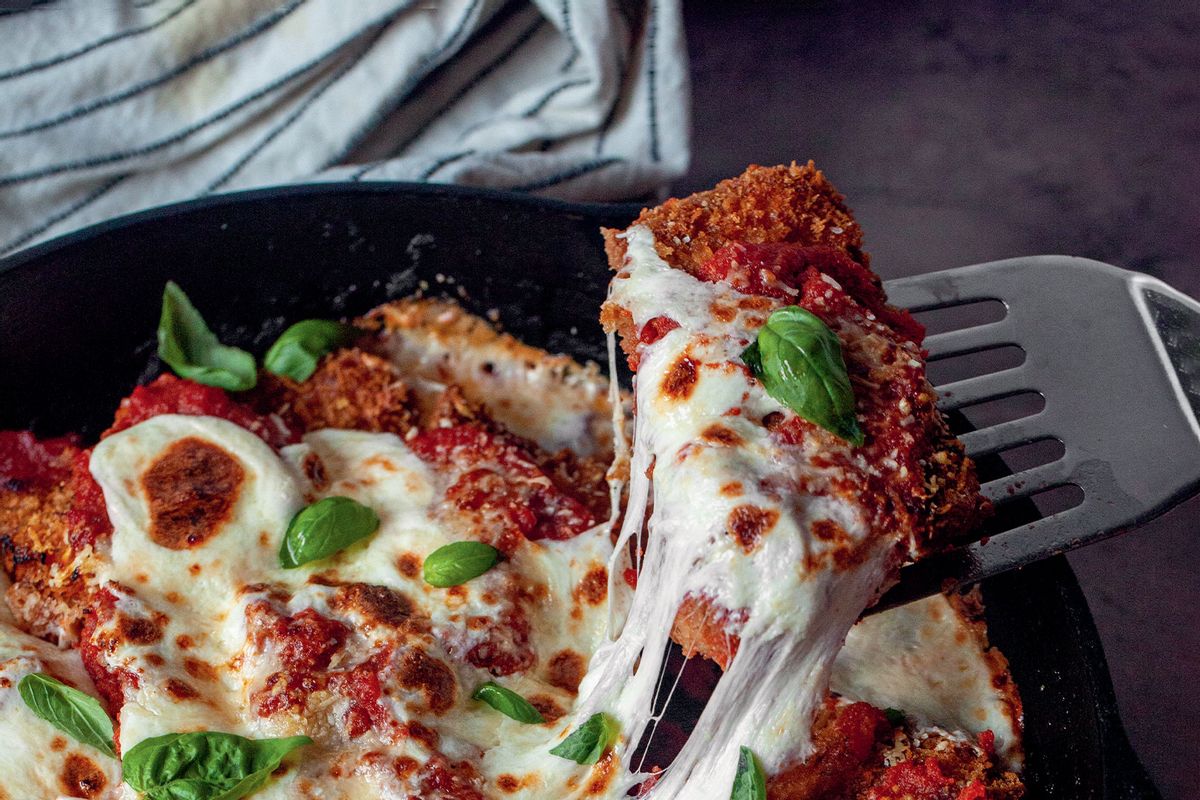
What if, instead of always chasing after a better meatball, you found your forever one? What if you had a pound cake that made your forget all the other pound cakes? After creating one of the most popular food blogs in the world and publishing two best-selling cookbooks and thousands of recipes, Smitten Kitchen’s Deb Perelman now wants to help you settle down.
For “Smitten Kitchen Keepers: New Classics for Your Forever Files,” Perelman once again offers the kind of real world, real family cooking that makes her such a trusted muse to millions of fellow home cooks. It’s a book that understands that feeding yourself and others is an act of love (but some nights, also, an act of juggling). Perelman joined us recently for a spirited conversation about what makes a dish a “keeper” and the deep joy of a fish spatula.
This interview has been edited for length and clarity.
You have published thousands of recipes. I’ve tried to cook my way through most of them myself. To now call a book “Keepers,” there’s an implication of a stopping point in a recipe. There’s an implication of a curated capsule collection. What does a “keeper” mean to you, Deb?
I think of it like, you’re waving the fork a little bit and you’re like, “This is the one. This is the apple cake I want to make. This is the pound cake. This is the spaghetti and meatballs.”
“A lot of us just want to find the recipe, and then just keep making that recipe again and again.”
I was trying to chase that feeling with these recipes because it comes up a lot. I think a lot of us, we’re not really interested in the forever hunt for the perfect spaghetti and meatballs. We really just want to find the recipe and then just keep making that recipe again and again. That was the energy that drove me to write this book. I wanted to collect as many recipes where I felt we had this, “That’s a keeper” moment as possible.
You were out there in this space in 2006, with no culinary training. You really are an internet veteran. What advice would you give to somebody who wants to do what you do now?
I think you should do it. Hopefully, looking at me, you should see that anyone can do it. If you have something to say, something to offer, and there’s something you want to do that you don’t see out there, I think you should go out there and do it. You should not feel that you have to do it a certain way. I don’t think anyone is going to be excited to see another thing that’s exactly like the last thing. So go and do it the way that feels fresh to you. Because I think there’s always space for that. There’s always more room.
Want a daily wrap-up of all the news and commentary Salon has to offer? Subscribe to our morning newsletter, Crash Course.
Let’s talk about the things that are in this book that distinguish it from your prior books. It has this particular voice and energy. You’re raising older kids now. What was the driving force when you were putting together the recipes for this one?
I was definitely thinking about longevity. I always would say, “Here’s the cool thing, let me tell you about something fun.” But we were home a lot in the last couple of years and it really got me thinking, “Do I have a chicken parm recipe that I want my kids to make? Why do I not use most chicken parm recipes? And what do I wish they were?” I knew more than any other book that my kids were 100 percent going to be reading this, and asking to make things from it. It’s not a kid cooking cookbook, it is not a pandemic cookbook. But I definitely was thinking, “What is a really good collection of a hundred recipes that we should want to have and hopefully use again and again?” I understand that not every recipe is going to be a forever recipe for every person, but I think if you’ve found a few in there, it’s a pretty good value.
We live now in a culture where there’s such an emphasis on novelty and what recipe has just gone viral. But I think it can give you a feeling of food FOMO in our lives, where I’ve got to be chasing that next thing The idea of settling on something and putting a ring on it can be hard. How do you overcome that?
It’s a little bit terrifying. What, I’m never going to want to change this? I’m never going to learn something new? I might. I might, ten years from now, say, “Actually if you do this step, I think that’s really cool.” But I think that I’ve gotten much better at understanding where that keeper moment is. “This is the one. I know it. This is it.” I’m better at getting there and I’m better at recognizing it when it’s there and just knowing, I’m just going to stop right here. I don’t want to change this. This to me is the right balance of effort, of ease of shopping, of number of steps, number of bowls. Maybe I could add something by adding another pan to saute a topping, but I don’t want to, because I won’t make it as often. I’m not going to make it on a Thursday. I’m going to remember I have to take out a second skillet right when I’m tired of cooking and I don’t want to do that.
One of the things that’s been a great advantage for me is that I just had all of these years of practicing putting these recipes out and hearing where people lose interest. And hearing where we just don’t even feel like making it anymore, and trying to stop before we get there to keep it within what we’re willing to do.
A good gut check for me is that I am like, “I don’t feel like making this tonight. This feels like a lot of work. I hate that last step.” It’s a little thing, but we all do it. Even at the grocery store, just the thought of one extra step or just that one bit pushes you over the edge to making tuna melts instead. Which is, by the way, a very wonderful thing that you should make if you’re craving them. But it can be just the smallest thing that pushes you off the edge, and you leave that recipe and you don’t come back.
You’re going to get people reading this book who are coming as beginners. What would you say from start to finish, appetizer to dessert, would be your dream dishes for a beginner who’s just getting comfortable in the kitchen?
I want you to make the green salad. I feel like the green salad is such a thing. Wait, I don’t need a recipe for a green salad? That’s why it’s taken me 16 years to write a recipe for a green salad. I realize I’ve learned so many things along the way. And you’re only going to have to read it once. You’re going to know it after that. Just these little tips about the easiest way to wash lettuce. The easiest way to dry lettuce. The easiest way to dress salad in advance. The best way to handle heavier ingredients in salads. So I want you to start with that because I feel like once you have that, you’ll tuck it away forever and you’ll be able to apply it to any salad. It’ll hopefully stay with you.
Want more great food writing and recipes? Subscribe to Salon Food’s newsletter, The Bite.
Assuming you eat meat, I want to give you something really simple to make. And I’m thinking of the fettuccine with white ragu. It’s so few ingredients, but it smells unbelievable when you’re making it. It doesn’t seem like something that’s going to turn into what it does. You’re literally taking ground pork and a little bit of garlic and just a little bit of seasoning and it turns into this entire sauce. It’s a really cool technique. And it’s really nice to know that if I have a box of fettuccine and a pound of ground pork and just a couple other things, I could make this incredible, cozy, comforting dish that will steal the show, but also be humble in it’s own way. Not being too, “Look at me.” It’s definitely not a “Look at me” dish.
And what about a dessert?
Ooh, what should we make? I don’t want you to get too mad at me if it’s difficult. I love the Linzer tart so much. Sorry, it’s a raspberry crostada. It looks like a Linzer tart. It’s not hard to make the recipe. It’s fully followable by anybody. But I think it’s such a classic thing that’s so nice to have in your repertoire. It’s like a nice jam tart. I like it because it goes well with tea and cake. It goes well as dessert, not too sweet, but it also is just a really nice thing to have on the counter. And it’s very classic. So it’s a nice thing to tuck into your repertoire.
When I was thinking of desserts, of course, immediately I thought of the Rice Krispies bars, which are one of your absolute all time bangers, Deb. When people talk to you about the recipes of yours that have changed the game for them, what are the ones that people say, “Oh my God, Deb, this is the killer”?
I definitely hear that about the Rice Krispies treats. They were in my first book too. I love it because it’s just more butter, more salt, and you brown it, but it shows up. I always make them around this time of year for parties because it’s such a nice candy replacement too.
“I want everybody to make the French toast forever.”
I am secretly hoping that the cover dish will have that effect on people too, because I was just playing around with ingredients I liked. Then I was like, but what if I just did this? All of a sudden I had this absolute luxury of a vibrant green pasta sauce that became the easiest thing to make. It’s the kind of thing that you’re going to make once and I don’t think you’re going to need to look at the recipe after that because it’s so few ingredients and you’re just going to have it down. What else? I want everybody to make the French toast forever. It’s just a baguette French toast. But a couple things just make it so much easier and so much better. I have not made another French toast recipe since I started making it this way a few years ago.
One of the things I really love about Smitten Kitchen is that so often what I have relied on it for has been just one ingredient. One thing. The crispy egg. The roasted sweet potato. There are certain things that just get one thing down and you can do it right. For people who are starting to cook or just tired of cooking, do you have one thing, or one way to make a thing, that you figure out and you’re good to go?
I love the braised winter squash wedges in the book so much because you are just taking fat pieces of winter squash and you are cutting into big wedges. Or you could maybe have somebody cut into wedges for you, depending on where you get it, because it’s nice to use an oversized one. And then we’re just going to roast it. It starts out so simply. We just roast it, we flip it over, we roast it again, then we add a little bit of liquid to the pans. Some broth, some apple cider vinegar and some garlic cloves. What happens, it drinks it up a little bit. You’ve got this otherworldly flavor. You’ve got a little puddle of pan sauce in there. I literally spoon it over plain yogurt, that’s the sauce. We add some arugula and it’s just this fork and knife squash centerpiece of a meal. But you’ve started with the most basic ingredients, stuff you probably have around.
I want us to make that. That’s what we should be eating for lunch in November. This is what we should be eating for lunch today. Go cut open a jack o’lantern.
See my thing is when you talk about techniques and things that slow you down, it’s cutting a squash. I love squash, but cutting a squash?
Well, It’s scary. Always cut against a flat surface. Even when I’m cutting a pumpkin, I will cut a little bevel on the bottom, just cut a little edge off, and now it is solid on the board. And when you cut down, it’s not going to waffle. Don’t try to cut into a soccer ball. Cut a little edge off the bottom, get it solid on the surface and then you can really push down on the knife if you need to.
In the book, when you talk about the tatin and how tatin was your nemesis for a long time. Even now, do you have other things that are just intimidating or too much work? You have taken on some really big culinary challenges for a home cook who makes family dinners.
I love to do a mix because I think it’s fun when you’re feeling that craving for a bigger project. I think it’s really fun. “I’ve always wanted to make a Russian honey cake” or “I’ve always wanted to make a classic lasagna bolognese with the noodles, everything.” But I have never gotten croissants right at home. I’ve gotten them okay. I’ve never gotten them a fraction as good as the ones I can buy near here. You can follow a recipe, you can do it exactly right. You can do the right waiting times. But there’s a bit of artistry. There’s a bit of finesse at the end where you really need to get them on this final rise till they’re kind of steamed under a dome. It’s very hard to do in a home kitchen and it’s rarely going to taste as good.
I’m always tweaking. I mean, the idea of a New Yorker making bagels at home is crazy. I have so many bagel shops. I can point to a couple right now. I’m so close to bagel shops, but I love tweaking it at home and I’m working on trying to find the easiest way for those of us who do not have bagel shops within a block away to make it at home from as few extra steps, as little extra stress as possible. Because I think it’s a fun trick to have up your sleeve.
Deb, I have gone on the pretzel journey with you over and over. I want to master it.
Your keeper recipe. You’re like, if I know this is going to work a hundred percent of the time, I will just tuck this one away. And then every time it’s a Super Bowl party or the World Series and I want to make soft pretzels, I’ll just make these. If you knew it was going to be reliable and you knew it would work every time and you knew somebody had tested it to the hilt, you would just use that recipe. You would stop with the others.
I would. I’m still seeking.
It’s my dream. I want the one. I want the one in people and I want the one in recipes.
Because I love whenever you peek into your kitchen or your pantry. What is your ride or die kitchen tool?
I love the small offset spatula. I use it to put peanut butter and jelly on kids’ sandwiches. I use it to spread cream cheese. I use it to level my flour when I’m scooping it out of a canister. I also really, I want everybody to stop right now and go buy yourself a flexible fish spatula. I don’t know that I’ve ever used it for fish. I use it for everything else.
Read more
about of our favorite food conversations


