Frequent sugary food consumption can create the same bodily response as drug addiction, which can be passed down from mother to baby during breastfeeding, a new study has found.
The peer-reviewed study, published in the journal Cell Metabolism, has found that what someone eats alters their brain’s reaction to food.
The study explains that the brain can begin associating neutral signs with cravings, similar to Pavlov’s theory of association. Seeing the sign for a favorite patisserie can cause hunger and/or the drive to consume without the presence of hunger.
The association between the stimuli, in this case the patisserie, and the resulting feeling of hunger or desire for food is subliminally through the central nervous system. In response, the body will release dopamine that will entice future actions.
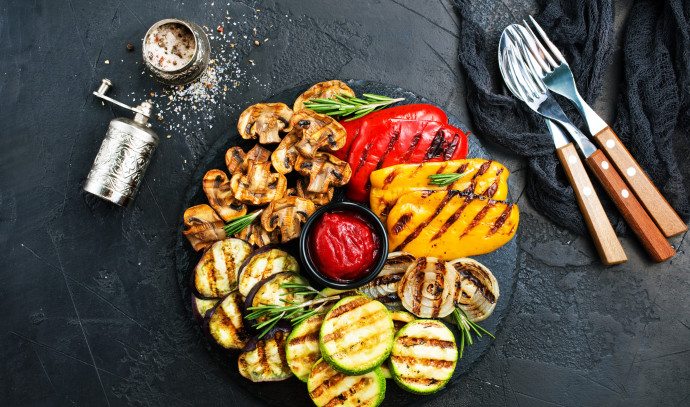
WHY IS sugar addictive? (credit: DAVID DEWITT/THECOZYCOFFEE)
Sugar creates a strong dopamine response in the brain’s pathways that connect frontal lobe regions and the desire to eat sugar is further fueled by the body’s cells using the glucose for energy consumption.
How does a high-fat diet impact food cravings?
Scientists provided rats with a high-fat diet (HFD) and found that not only did the rats gain weight, but their dopamine signaling and functioning were also altered. The rats’ food preferences also changed.
When the scientists stopped the HFD, the rats showed a decreased desire for food.
The same experiment was carried out on mice and provided similar results.
Is the same true for humans?
It was previously not tested whether the diet results shown in animals translate to humans.
The study notes that this is an important question because it extends current models of obesity, which argue that genetic or trait-like factors predispose individuals for weight gain in an environment that is not conducive to weight loss. Furthermore, researchers theorize that if exposure to an HFD rewires brain circuits to impact preference and associative learning, then the cycle of overeating may begin with environmental exposure instead of (or in addition to) a predisposition.
To assess this, healthy, normal-weight participants underwent baseline assessment. Next, the participants were randomly assigned to dietary intervention with a high-fat, high-sugar (HF/HS) or a low-fat, low-sugar (LF/LS) yogurt 2 times a day, in addition to their normal diet, for 8 weeks. Subsequently, all subjects were reassessed (post-intervention session).
Participants were tested on designated days after an overnight fast.
Testing looked at BMI, hunger rating, and a blood draw. Subsequently, the participants received a granola bar for breakfast and performed a fat and sugar concentration preference test and a stop signal task, which tests inhibition responses by asking participants to respond as quickly as possible to a predetermined stimulus but to cease any response when a subsequently presented stop signal is displayed.
After a second blood draw examining glucose level, participants underwent fMRI acquisition during which they carried out a food anticipation and consumption task on a milkshake, showing that when faced with a choice of food products, either for immediate or later consumption, our brain anticipates the likely affect the food will have on us.
Next participants underwent an associative learning task, learning about the relationship between two seemingly unrelated stimuli becoming connected.
Results indicated that indeed the results on animals remained true for humans as well. Repeated exposure to energy-dense, HF/HS food, in the absence of body weight or metabolic change, can rewire brain circuits and shift dopamine-dependent associative learning and preference for particular foods.
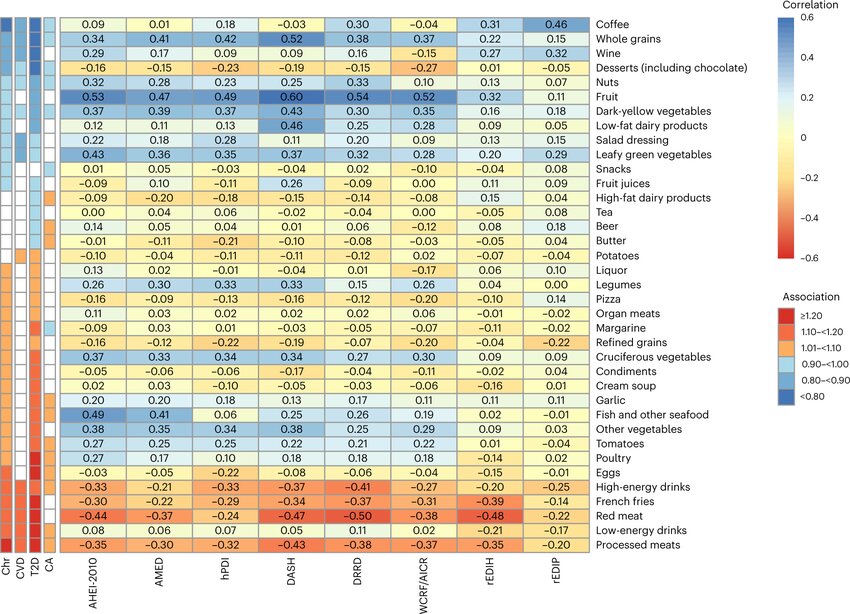
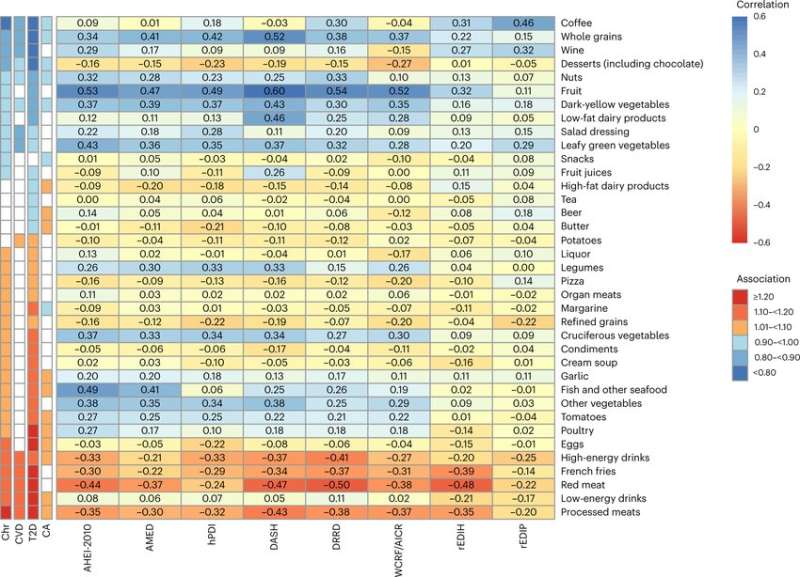
Baseline Spearman’s correlations amongst vitality-modified cumulative ordinary nutritional patterns and foods groups in the pooled data of three cohorts (n = 205,852 contributors) Spearman’s correlation coefficients are proven and highlighted in colour. Food items teams are requested based mostly on the HRs of their associations with important long-term condition. The associations of foods teams (evaluating the 90th with the 10th percentile) with key serious ailment (Chr), major CVD, sort 2 diabetic issues (T2D) or overall cancer (CA) are indicated on the left of the figure. We documented unadjusted P values based mostly on two-sided statistical exams. Major associations (P < 0.05) are highlighted in color according to the magnitude of the HRs. Credit: Nature Medicine (2023). DOI: 10.1038/s41591-023-02235-5
Researchers at the Harvard T.H. Chan School of Public Health in Boston, Massachusetts, have good news for anyone sticking to a healthy diet: Good food choices are associated with a lower risk of developing a chronic disease.
In a robust review of several recommended diets, the study, “Optimal dietary patterns for prevention of chronic disease,” published in the journal Nature Medicine, found that falling in line with any one of them is linked to better health outcomes.
To find the influence of recommended diets on health outcomes, researchers analyzed 32 years of data from 205,852 participants between 25 and 75 years of age when data collection began. The cohorts included 162,667 women from the Nurses’ Health Study and Nurses’ Health Study II and 43,185 men from the Health Professionals Follow-up Study.
Participants regularly reported details about their lifestyle, medical history and food intake, with a median follow-up of 26 years per participant. There were 44,975 major chronic disease events observed, 12,962 major cardiovascular diseases, 18,615 cases of diabetes and 17,909 total cancers.
While individuals in the study were not explicitly adhering to recommended diets, the study categorized reported diets into levels of adherence on a weighted system. It compared health outcomes against levels of adherence to several dietary pattern groups: Alternative Healthy Eating Index-2010, Alternate Mediterranean Diet, Dietary Approaches to Stop Hypertension, Diabetes Risk Reduction Diet, Healthful Plant-Based Diet Index, reversed Empirical Dietary Index for hyperinsulinemia, reversed Empirical Dietary Inflammation pattern, or World Cancer Research Fund/American Institute for Cancer Research diet.
Participants were then ranked by comparison of the top 90th percentile vs. bottom 10th percentile in adherence. Overall the study found that regardless of which diet pattern an individual was most adhering to, being near the top of any of them correlated to lower disease risk. So, for instance, an individual might make it into the top 90{d2b09b03d44633acb673e8080360919f91e60962656af8ade0305d5d8b7e4889} in the Healthful Plant-Based Diet Index but fall below 90{d2b09b03d44633acb673e8080360919f91e60962656af8ade0305d5d8b7e4889} adherence in others due to coffee or wine intake.
Individuals who adhered to guidelines designed to lower the risk of inducing inflammation, high blood insulin levels or diabetes were less likely to develop type 2 diabetes, heart disease and cancer.
Certain food groups were linked to worse health outcomes. Diets that frequently included processed meats, energy drinks, red meat, french fries, and eggs were positively associated with major chronic diseases.
Consuming larger amounts of coffee, whole grains, wine and desserts had lower risk of associated major chronic diseases. However, it should be noted that these were pulled from groups of dietary patterns with many associated food intake strategies. Unfortunately, there was no coffee, whole grain, wine and dessert-based diet to choose from.
More information:
Peilu Wang et al, Optimal dietary patterns for prevention of chronic disease, Nature Medicine (2023). DOI: 10.1038/s41591-023-02235-5
Citation:
Adhering to recommended diets lowers risk of chronic diseases, 32-year study finds (2023, March 16)
retrieved 17 March 2023
from https://medicalxpress.com/news/2023-03-adhering-diets-lowers-chronic-diseases.html
This document is subject to copyright. Apart from any fair dealing for the purpose of private study or research, no
part may be reproduced without the written permission. The content is provided for information purposes only.
The research found that the keto diet generates about 3 kg of carbon dioxide per 1,000 energy consumed, when the paleo food plan produces 2.6 kg per 1,000 energy. Possessing a reduced carbon footprint is vital as it assists to lower the detrimental affect of human routines on the setting and mitigate weather alter.
The keto and paleo diet programs have been found to be the minimum sustainable and gained the least expensive diet quality scores among the the 6 well known weight loss plans that were analyzed.
This may be tough for all those pursuing the keto or paleo meal plans to swallow.
According to a modern review from Tulane University, which evaluated the nutritional excellent and environmental effects of preferred diets, the keto and paleo diet plans, as consumed by American grown ups, received the most affordable scores for over-all diet quality and experienced the greatest carbon footprints.
The keto diet regime, which prioritizes significant quantities of excess fat and low amounts of carbs, was approximated to deliver virtually 3 kg of carbon dioxide for every 1,000 calories consumed. The paleo diet, which eschews grains and beans in favor of meats, nuts, and vegetables, gained the next least expensive food plan top quality rating and also experienced a high carbon footprint, at 2.6 kg of carbon dioxide for every 1,000 energy.
The study, printed in The National Health and Nutrition Examination Survey. Individual diets were assigned point values based on the federal Healthy Eating Index and average scores were calculated for those eating each type of diet.
The study’s senior author Diego Rose, professor and nutrition program director at Tulane University School of Public Health and Tropical Medicine, said that while researchers have examined the nutritional impact of keto and paleo diets, this is the first study to measure the carbon footprints of each diet, as consumed by U.S. adults and compare them to other common diets.
“We suspected the negative climate impacts because they’re meat-centric, but no one had really compared all these diets – as they are chosen by individuals, instead of prescribed by experts – to each other using a common framework,” Rose said.
On the other end of the spectrum, a vegan diet was found to be the least impactful on climate, generating 0.7 kg of carbon dioxide per 1,000 calories consumed, less than a quarter of the impact of the keto diet. The vegan diet was followed by vegetarian and pescatarian diets in increasing impact.
The pescatarian diet scored highest on nutritional quality of the diets analyzed, with vegetarian and vegan diets following behind.
The omnivore diet – the most common diet, represented by 86{d2b09b03d44633acb673e8080360919f91e60962656af8ade0305d5d8b7e4889} of survey participants – sat squarely in the middle of the pack of both quality and sustainability. Based on the findings, if a third of those on omnivore diets began eating a vegetarian diet, on average for any given day, it would be equivalent to eliminating 340 million passenger vehicle miles.
Notably, however, when those on omnivorous diets opted for the plant-forward Mediterranean or fatty meat-limiting DASH diet versions, both carbon footprints and nutritional quality scores improved.
“Climate change is arguably one of the most pressing problems of our time, and a lot of people are interested in moving to a plant-based diet,” Rose said. “Based on our results, that would reduce your footprint and be generally healthy. Our research also shows there’s a way to improve your health and footprint without giving up meat entirely.”
A 2021 United Nations-backed study found that 34{d2b09b03d44633acb673e8080360919f91e60962656af8ade0305d5d8b7e4889} of greenhouse gas emissions come from the food system. The major share of those emissions come from food production, with beef being responsible for 8-10 times more emissions than chicken production and over 20 times more emissions than nut and legume production.
While the environmental impacts of specific foods have been studied extensively, Rose said this study was important because “it considers how individuals select popular diets that are composed of a wide variety of foods.”
Going forward, Rose still has questions about how to encourage eating habits that are better for people and the planet.
“I think the next question is how would different policies affect outcomes and how could those move us toward healthier, more environmentally friendly diets?” Rose said.
Reference: “Popular diets as selected by adults in the United States show wide variation in carbon footprints and diet quality” by Keelia O’Malley, Amelia Willits-Smith and Donald Rose, 1 March 2023, The American Journal of Clinical Nutrition. DOI: 10.1016/j.ajcnut.2023.01.009
ByHarvard T.H. Chan Faculty of Public Health February 7, 2023
The Dietary Pointers for People in america outlines four wholesome taking in patterns: Healthier Having Index 2015, Alternate Mediterranean Diet regime, Healthful Plant-primarily based Diet plan Index, and Alternate Healthy Feeding on Index. These styles promote a balanced eating plan with emphasis on fruits, greens, full grains, healthy fats, and moderation of saturated and trans fats, additional sugars, and sodium.
A Harvard study finds healthier taking in patterns decreased threat of premature loss of life. Researchers found out participants who followed at minimum a single of four healthier ingesting patterns experienced minimized hazard of dying from any cause, which includes cardiovascular ailment, cancer, and respiratory sickness, when compared to those people with lessen adherence. The analyze is steady with the Nutritional Guidelines for America, which endorses many healthy having styles.
“The Nutritional Suggestions for Individuals are supposed to present science-centered dietary suggestions that encourages good well being and minimizes important long-term diseases. So, it is important to take a look at the associations in between DGAs-suggested nutritional styles and extensive-term well being results, specifically mortality,” stated corresponding author Frank Hu, Fredrick J. Stare Professor of Nutrition and Epidemiology and chair of the Division of Nutrition.
The was not long ago published in JAMA Interior Medication.
Few scientific tests have evaluated no matter whether bigger adherence to the DGAs-advised nutritional styles is linked with prolonged-term chance of whole and bring about-specific mortality. The scientists utilised wellbeing knowledge gathered over 36 years from 75,230 females taking part in the Nurses’ Health Review and 44,085 adult males in the Overall health Industry experts Observe-up Research. All members ended up free of charge of cardiovascular disease or cancer at the beginning of the examine and accomplished nutritional questionnaires each and every four a long time. Their information and facts was scored primarily based on just about every of the four dietary sample indexes (Balanced Eating Index 2015, Alternate Mediterranean Food plan, Healthful Plant-dependent Diet program Index, and Alternate Healthy Feeding on Index). All share crucial elements together with entire grains, fruits, veggies, nuts, and legumes, though other components vary throughout unique feeding on styles.
A higher rating on at minimum just one of the indexes was associated with a lessen threat of premature death from all causes, and from cardiovascular condition, cancer, and respiratory sickness. Greater scores on the AMED and the AHEI have been linked with a reduced hazard of death from neurogenerative ailment. The benefits ended up consistent for non-Hispanic white, non-Hispanic Black, and Hispanic folks.
The existing DGAs (2015–2020) propose numerous healthy eating styles that can be adapted to personal foods traditions and tastes. An updated variation of the Rules is produced each five many years by the U.S. Departments of Wellbeing and Human Providers (HHS) and Agriculture (USDA).
“It is vital to examine adherence to DGAs-recommended ingesting designs and wellbeing outcomes, such as mortality, so that timely updates can be built,” explained Hu. “Our findings will be beneficial for the 2025-2030 Dietary Rules Advisory Committee, which is staying shaped to consider present-day proof surrounding unique taking in styles and overall health outcomes.”
Reference: “Healthy Eating Styles and Risk of Full and Result in-Distinct Mortality” by Zhilei Shan, MD, Ph.D., Fenglei Wang, Ph.D., Yanping Li, MD, Ph.D., Megu Y. Baden, MD, Ph.D., Shilpa N. Bhupathiraju, Ph.D., Dong D. Wang, MD, ScD, Qi Solar, MD, ScD, Kathryn M. Rexrode, MD, MPH, Eric B. Rimm, ScD, Lu Qi, MD, Ph.D., Fred K. Tabung, Ph.D., Edward L. Giovannucci, Ph.D., Walter C. Willett, MD, DrPH, JoAnn E. Manson, MD, DrPH, Qibin Qi, Ph.D. and Frank B. Hu, MD, Ph.D., 9 January 2022, JAMA Inner Medicine. DOI: 10.1001/jamainternmed.2022.6117
The examine was funded by the NHLBI Division of Intramural Study.
Your dietary pattern may perhaps help forecast how very long you live. This is the summary from a new research released in The Journal of the American Clinical Affiliation assessing food plan high-quality and mortality. The research identified that persons that consumed a much more nutrient-dense diet regime were being less likely to die early.
The feeding on patterns of 119,315 men and women (75,230 ladies and 44,085 adult males) from the Nurses’ Overall health Analyze and the Overall health Professionals Stick to-Up Examine have been assessed more than 36 many years. In the course of that time frame, they evaluated adherence and outcomes linked to 4 distinctive nutritional styles, all of which adhere in some capacity to the United States Dietary Tips for People in america.
The 4 eating patterns analyzed had been:
The Nutritious Eating Index 2015 (HEI), which measures eating plan good quality and adherence and makes use of recommendations from the Dietary Tips for Us residents in its scoring evaluation.
The Alternate Wholesome Having Index (AHEI), which was designed by scientists at the Harvard T.H. Chan School of Community Health as an different to the initial HEI. Like the HEI, it presents scoring but focuses more on cutting down continual disorder possibility.
The Alternate Mediterranean Diet (AMED), which measures adaptation to the Mediterranean diet plan concepts.
The Healthful Plant-based mostly Diet Index (HPDI), which measures adherence to a balanced plant-dependent diet regime.
The analyze uncovered there are several means to adhere to a healthful diet
Men and women with the finest adherence to at least a single of the healthier having indexes had the cheapest danger of death when compared with folks with the least expensive adherence. This consequence was noticed among all four healthful eating indexes. On top of that, this outcome was regular among multiple racial and ethnic groups. It was also observed in a dose-dependent vogue (the higher the rating, the reduce the chance for early loss of life from cardiovascular illness, respiratory condition, and most cancers). Higher adherence scores for AMED and AHEI have been more involved with a decreased chance of neurodegenerative disease mortality.
There were being many key takeaways from the examine. 1st, it emphasized that there are numerous methods to adhere to a more healthy way of eating. Considering that there is no “one dimensions matches all” diet, it demonstrated that diverse nutritional designs could be tailored to any ethnic or personal choice. Second, there were being lots of similarities among the four ingesting patterns. For instance, all taking in behaviors were being nutrient-dense, offering ample vitamins and minerals. They had been also far more slanted towards much more plant-centered ways. Dr. Frank Hu, chair of section of diet and epidemiology at Harvard T.H. Chan School of Public Health, was the study’s guide writer. He tells Today.com, “While these meal plans differ in some features, they all include high quantities of healthy plant meals this kind of as fruits, vegetables, whole grains, nuts, and legumes, and decreased quantities of refined grains, added sugars, sodium, and red and processed meats.”
For a extended daily life, emphasis on these 5 dietary behaviors:
1. Focus on fiber
Just one of the finest means to consume far more vegetation is to focus on finding much more fiber. A 2019 systematic evaluation and meta-assessment in the journal Lancetuncovered that suitable fiber consumption (concerning 25g to 29g per day) was also linked with a reduction in danger of all causes and decreases in coronary heart ailment, Type 2 diabetic issues, and colorectal most cancers.
2. Nosh on nuts
Nut consumption was emphasised in all four taking in patterns in the study. Nuts are higher in healthful fat, which might enable improve satiety and fullness, a important component of excess weight management. They have also been linked with superior mind well being and might reduced the threat of coronary heart condition.
3. Get vibrant
Shade is essential in the plant environment and arrives from compounds referred to as phytonutrients that deliver the two hue and benefit to the plant. Scientific studies exhibit that consuming colourful fruits and greens can also lead to a longer life.
4. Opt for plant and maritime sources of protein
Beans, legumes and fish were highlighted in numerous of the feeding on designs. The AMED sample, for case in point, encouraged the usage of fatty fish, like salmon, that can supply ample quantities of omega-3 fatty acids. In contrast, beans and legumes present fiber in addition to protein.
5. Find flexibility
The analyze shown that healthier consuming can be tailor-made to the specific — and that pursuing several methods inside of the prevalent themes could lead to major overall health benefits. “In buy for somebody to stick to a balanced eating plan extended-term, a single desires to love it. So it is crucial for people to adapt these healthier eating designs to their personal food items and cultural tastes. Also, a single does not will need to adhere to only just one dietary approach for their whole existence. To improve wide variety and adherence, a person can switch between these different healthier diets or develop their own flexitarian diet regime. Nonetheless, the core healthy taking in principles should keep on being the exact same: Take in extra minimally-processed plant foodstuff these types of as fruits, vegetables, nuts, total grains, and legumes eat less pink meat and extremely-processed foods large in sugar, sodium, and refined starch,” Hu clarifies.
If overhauling your dietary pattern looks frustrating, think about this — child measures will go even more than no movement at all. Hu claims that quite a few balanced dietary patterns have been affiliated with, not only a lengthier everyday living, but a reduction in long-term disease chance complications as properly. Hu describes that, for case in point, “a greater adherence to the Mediterranean eating plan minimizes the threat of cardiovascular complications amongst folks with diabetes.” Also, healthful ingesting designs have been related with improved survival among people with breast or colorectal cancer.”
As Hu states, “it is really by no means also late to adopt a healthy diet.”
Kitchen Tools Industry Latest Research Report. Complete Market Research, Market Analysis, Trends, Major Players, Market Share, Market Size, and Forecast by 2033
NEW YORK CITY, NEW YORK, UNITED STATES, January 16, 2023 /EINPresswire.com/ — This market report Kitchen Tools analyzes market segments by product type, including sales volume, revenue, market share, growth rate, and price analysis for each manufacturer and Williams Sonoma, Kitchen Craft, OXO, Betty Crocker, Cuisinart, Cuisipro, Culinare, Farberware, Gourmet, IKEA, KitchenAid, Kitchen Craft, Maxam, Premier.
“Final Report will provide analysis of the effect of COVID-19 in this industry.”
The “Global Kitchen Tools Market report 2022 provides information on various factors that impact the market, including development and future prospects. The report also includes an analysis of the market’s entire industrial chain. It covers key raw materials suppliers, price analysis, manufacturing cost structure analysis, and alternative product analysis. It provides information about the major distributors, downstream customers, and the effect of the COVID-19 epidemic. The Kitchen Tools market report also shares information on the market’s key players, including their product profiles, market performance (i.e., gross margin, sales volume, and revenue), recent developments, SWOT analysis, and other relevant details.
Market.us new research has been released on the worldwide Kitchen Tools Market. This report explains many market analysis techniques, such as SWOT and five-point analysis. The report analyzes several growth plans and initiatives to expand the business’s regional and international horizons. This report details the industry’s problems and potential development opportunities.
The market’s entire size, manufacturing cost, loss/profit, import/export, and scope are all shown. It also provides details on strategic alliances. It will be possible to increase firm growth by conducting a thorough investigation that is based on market segmentation.
Segment by Type
Bakeware
Cookware
Cutlery
Utensils
Others
Segment by Application
Home Use
Restaurant
Other
Segment by key players
Williams Sonoma, Kitchen Craft, OXO, Betty Crocker, Cuisinart, Cuisipro, Culinare, Farberware, Gourmet, IKEA, KitchenAid, Kitchen Craft, Maxam, Premier
The global Kitchen Tools Market is forecast to increase significantly from 2022 to 2031. Market growth was steady in 2021. The market will continue to grow with key players adopting strategies.
The comprehensive quantitative and qualitative analyses combined in the report provide a complete market view. They include a macro overview of market size, dynamics, and industry chain. Additionally, they detail the micro markets by type and application. This gives the reader a thorough understanding of all aspects of the market.
The report includes information about the industry, including the market share and concentration ratio. It provides details about the most prominent companies so readers can better understand and compare their market share. The book will also cover mergers and acquisitions, emerging market trends, and the impact of COVID-19.
This report is essential for investors, analysts, consultants, business strategists, and anyone with any market stake.
The US was the dominant revenue source in North America’s Kitchen Tools market in 2021. This is due to new technologies and highly skilled publishers. The US holds a high market share due to the many Kitchen Tools providers. Canada is predicted to experience the highest CAGR in the forecast period. The cost-per-sale segment of the product is projected to have the largest market share and highest CAGR in North America’s post-title market during the forecast period.
Europe Kitchen Tools Europe Market-
The UK is expected to show the highest CAGR in Europe’s Kitchen Tools market over the forecast period. Germany held the Europe Kitchen Tools market lead in 2021. Virtual products, which are also expected to grow at the highest projected CAGR, dominated Europe’s Kitchen Tools market in 2020.
Asia Pacific Kitchen Tools Market-
Japan is the top shareholder region. India is projected to grow with a high CAGR in Asia Pacific due to its growing demand for the affiliate market. However, the industry market share of the retail and online-commerce industries is the largest. They are expected to have the highest projected CAGR for the forecast period.
Middle East & Africa Kitchen Tools Market-
South Africa is the biggest shareholder in 2021. The market is expected to grow at the highest CAGR rate in the MEA Kitchen Tools market forecast period. As the retail sector gains momentum, the Middle East & African market for Kitchen Tools will continue to grow.
South America Kitchen Tools Market-
Brazil is South America’s highest shareholder country, Kitchen Tools. In 2021, Brazil will also be growing at the fastest CAGR. According to channel analysis, the direct selling segment has the highest market share and is expected to grow at the highest rate during the forecast period. Direct sales have been a preferred communication channel between buyers and manufacturers, which is why customers love it.