Watch: Secret Tips To Make Perfectly Crispy Aloo Chips That Will Last A Year

Watch: Secret Tips To Make Perfectly Crispy Aloo Chips That Will Last A Year

Whether it is for evening snacking, or late-night munching paired with meals like sandwiches, aloo chips stand out as the preferred option. Homemade aloo chips are commonly seen in Indian households as they offer the same crunch and saltiness, minus the preservatives. But one problem that all home chefs face is that the chips turn black, soggy and unpalatable sooner than expected. Do you also face a similar issue? You are going to thank us for these superb tips that we dug out for you to make long-lasting aloo chips at home.  

In a video posted on the YouTube channel ‘Cooking With Reshu’, we found out some great hacks to make the perfect homemade aloo chips that don’t turn black and remain crispy for a long time. We listed down the recipe with tips for you here.  

(Also Read: Indian Cooking Tips: How To Make Street-Style Crispy And Khasta Samosa)

4931enn

You can easily make aloo chips at home. Image Credit: iStock

How To Make Crispy Aloo Chips I Homemade Aloo Chips Recipe  

1. First, take large-sized potatoes. Wash and peel them and put them in water. This ensures that the potatoes don’t turn black when cooked. Then cut them into round slices.   

Tip: After cutting the slices, immediately put them in water. This is also an important step to prevent the blackening of the chips later.  

2. Now wash all the slices in water.  

Tip: Wash thoroughly 2-3 times. This removes the starch from the potatoes and lengthens their life. With low starch content, the chips will retain shape for a long time. 

3. Now boil some water and add salt to it. When the water starts boiling, add the raw potato slices and cook with the lid closed.  

Tip: The water should be fully boiling when you put the chips, the slices may cook unevenly otherwise. If you put slices in cold or par-boiling water, some of the chips will dunk to the bottom of the vessel and will cook later than others. 

4. Boil the slices for 5-7 minutes, not more than that.   

Tip: Keep shuffling and turning the slices so that all the slices cook evenly at the same time. Take a ladle and keep turning the slices after a minute so that both the sides of the chips get heat from the gas. 

5. When foam forms in the water, take it as a sign that the slices are cooked.   

Tip: Another way to know if the slices are cooked is that the ends slightly curl inwards. The chips should be crispy and should not break when touched.  

6. Take off the slices from the gas, drain the water through a strainer and dry in the sun for 1-2 days.  

Tip: Sun-drying is a long process but it gives an everlasting crispiness to the chips. If the weather is sunny, one day should be enough or else it may take up to 3 days too. Check if the chips have hardened to know they are dried enough.  

7. Store these chips and fry them whenever you want to consume them.   

Also Read: 5 Tricks To Make Perfect Street-Style Aloo Tikki

Try this recipe and these tips to make the perfect homemade potato chips. Watch the complete recipe video here:  

Featured Video Of The Day

Cooking Beyond Boundaries: Chef Gaggan Anand In Conversation With Gargi Rawat

Top tips for healthy eating throughout the year

Top tips for healthy eating throughout the year

Now we’re effectively into February, the vigour you to start with felt when location new year’s resolutions may possibly be commencing to fade, and continual nutritious consuming can really feel like an uphill fight.

But as an alternative of shelling out cash on a takeaway, what if you could adhere to your plans – in a colourful, vivid and tasty way, relatively than settling down with a soggy salad.

If you want to continue to keep up with a healthier diet plan for the rest of the calendar year, these chef-accredited ideas could aid.

Gennaro Contaldo

Contaldo thinks Italian cooking is the perfect vehicle for conserving funds in the kitchen area

(David Loftus/PA)

For chef Gennaro Contaldo, staying healthful is all about balance – and by no means depriving himself fully.

“I consider to do a healthier food plan [but] I’ve never ever been on a diet plan. Do I need to? I really do not consider so. These days is massive flavour of pasta, and tomorrow is major flavour of greens – I check out to do harmony. Now we consume a great deal of meat? Tomorrow we take in a ton of fish. Equilibrium,” says Contaldo, who skilled Jamie Oliver in Italian cooking.

Lately he baked his very own bread laced with pork scratchings from a community butcher. “That lovely bread,” he remembers. “But for the subsequent few days, I will take in something else. I’ll have a slice of toast.

“Sweet cake? Of course, what ever they set in front of me, I will consume it. But only in modest parts, not simply because I are unable to eat it, due to the fact by my age you can’t eat [a lot of] very, really sweet stuff – but I do style everything.”

‘Gennaro’s Cucina: Hearty Cash-Conserving Foods From An Italian Kitchen’ by Gennaro Contaldo (Harper Collins, £25)

Kwoklyn Wan

Kwoklyn Wan’s latest cookbook is all about just one pot or wok cooking

(Sam Folen/PA)

For Kwoklyn Wan, cooking extra Chinese meals at home could be the solution to staying healthy.

“The awesome issue about Chinese food is you can make it wholesome pretty easily,” he explains. “So, instead of utilizing your vegetable oil, your coconut oil or whichever oil, you could use spray oil, [with] stir-fried rooster and vegetables.

“There you go: there’s your protein, you’ve acquired your veggies and your natural vitamins, and then even boiled rice in its place of fried rice.

“Or you could have noodles, or rice noodles. I’m extremely lucky in the perception that I was born into this amazing lifestyle with foods you can make healthful very quickly, and you do not forsake any of the flavour.”

‘One Wok, One particular Pot’ by Kwoklyn Wan (Quadrille, £16.99)

Skye McAlpine

Having healthily does not necessarily mean you have to miss out on out on your favourite foods – it just could possibly need a couple of wise tweaks.

“I really like introducing contemporary veggies to the pasta drinking water when I’m cooking pasta with pesto: green beans, chopped fennel, chunks of zucchini, broccoli florets, broad beans when in season… What ever I have to hand, really,” claims Skye McAlpine.

“Basically, you cook the veggies in the drinking water with the pasta and then incorporate the pesto sauce. It is delicious and would make for a really wholesome and entire meal.”

‘A Table Comprehensive Of Love’ by Skye McAlpine (Bloomsbury Publishing, £26)

Suzanne Mulholland AKA The Batch Woman

Suzanne Mulholland’s major suggestion is to make a strategy

(Haarala Hamilton/PA)

Unsurprisingly for someone who worked as a time administration specialist just before composing cookbooks, Suzanne Mulholland’s best suggestion is to make a program.

“Organise your self in advance and prep as much as you can, so it is all in your fridge… It’s [then] simpler to stick to a routine, is not it?” she states.

“If you’ve manufactured a couscous salad, and you make [extra] that you can just take to work, you’re fewer likely to nip into Pret and eat a sandwich of 700 calories, mainly because you have carried out that in advance and introduced it with you.

“So, undertaking something in progress, expending time imagining about stuff and getting it down on paper or on your telephone – out of your head – signifies you’re much more probably to obtain any aims you want to established.”

‘The Batch Girl: Cooking On A Budget’ by Suzanne Mulholland (HQ, £22)

Heather Thomas

To truly get fired up about ingesting healthily – and then ideally sticking to it outside of January – Heather Thomas is all about taking in seasonally.

And early in the 12 months, it is citrus fruit she’s most thrilled about. “I live – most of the time – in Greece, and I can wander all-around the streets of Athens selecting [oranges and lemons] off trees – they’re everywhere,” she suggests.

Right after the “feasting above Christmas and New Year”, she recommends getting foods that are “really refreshing, zingy and citrusy, and lighter”.

‘The Veggie Christmas Cookbook’ by Heather Thomas (HarperNonFiction, £12.99)

Pleat, eat, repeat: three lunar new year dumpling recipes from Rosheen Kaul | Australian food and drink

Pleat, eat, repeat: three lunar new year dumpling recipes from Rosheen Kaul | Australian food and drink

My family celebrates the lunar new year in the Singaporean-Chinese tradition. And like many cultures that celebrate, the focus is on the dining table. On the menu: whole steamed fish, yee sang 魚生 (prosperity toss salad), longevity noodles, braised pork belly, abalone and pan-fried new year cake, along with more regional delicacies. Each dish symbolises health, prosperity or good fortune.

In Chinese celebrations, dumplings feature prominently, as they look like money bags, and eating them is said to bring wealth. Making dumplings is a wonderful way to bring family together, and the communal rolling, filling and pleating – and eating – is a delicious way to welcome the new year.

Of course, any time of year is a good time for dumplings. Gong xi fa cai!

A hand holding a pair of black chopsticks, and grabbing a boiled dumpling drizzled in spicy dressing.
They’re widely eaten during lunar new year celebrations in the Chinese tradition, but any time of the year is a good time for dumplings. Photograph: Dave Tacon/The Guardian

蛋饺 Dan jiao (Lunar new year egg dumplings in broth)

An egg-wrapped omelette being scooped into a bowl.
One dan jiao comprises a juicy pork and chive filling, encased in a mini omelette wrapping. Photograph: Dave Tacon/The Guardian

Dan jiao are commonly found on lunar new year banquet tables in China’s southern regions. The golden half-moons are considered lucky because of their resemblance to gold ingots. Instead of wheat flour wrappers, a tiny omelette encases a juicy pork and chive filling.

Making these dumplings is a delicate process but worth every tender, savoury mouthful. The egg wrapper absorbs the juices from the meat filling as it cooks, and the dumplings swell with flavour, enriching the broth they’re served in.

The technique for making the wrappers varies, from swilling the egg mixture in a hot ladle rubbed with ginger, to cooking them in the very centre of a wok on low heat. I’ve found success using a small non-stick frying pan, and a thin rubber spatula to lift the edges of the egg wrapper over itself. Once you get the hang of it, they come together quickly and easily.

A hand spooning an egg-wrapped dumpling into a bowl.
Making dan jiao is a delicate process, but worth every mouthful. Photograph: Dave Tacon/The Guardian

Prep 15 mins
Cook 25 mins
Serves 2-4

For the filling
250g pork mince
100g garlic chives
, finely chopped and coated with 1 tbsp vegetable oil
20g ginger, grated
1 egg
½ tsp ground white pepper
3 tsp soy sauce
2 tsp oyster sauce
1 tsp sesame oil

For the egg wrappers
6 eggs
1 tbsp cornstarch
2 tsp water
Neutral-flavoured oil
, for frying

For the broth
1 litre seasoned chicken stock
2 small bunches of leafy green vegetables
, such as wombok, bok choy, gai lan
Soy sauce, sliced spring onions and sesame oil, to serve

To make the filling, combine all the ingredients in a bowl and stir vigorously. Continue stirring and working the mixture until it is thoroughly combined and resembles a smooth paste. Allow to marinate for 30 minutes.

To make the egg wrappers, thoroughly whisk the eggs, cornstarch and water and set aside. In a non-stick frying pan, heat a small amount of oil over medium heat. Gently spoon two tablespoons of the egg mixture into the pan to form a pikelet-sized circle. When the base is cooked but the top is still setting, spoon a teaspoon of filling into the middle of the circle, then use a spatula to fold the egg over. Gently press the edges to seal. Slide on to a plate and repeat with the remaining egg mixture and filling. Note: the dumpling filling is still raw at this point.

In a large pot, bring the stock to a boil and drop in the dumplings. Lower to simmer, and add leafy green vegetables. The dumplings are ready when they float to the surface.

Divide dumplings and vegetables into serving bowls, ladle over the broth, and garnish with soy sauce, spring onions and a sprinkling of sesame oil.

Green chilli and pork guō tiē 鍋貼 (pot stickers) with crispy skirt

Close-up image of fried pork dumplings with a crisp lace on a floral plate.
Lattice appreciate Rosheen Kaul’s green chilli and pork guō tiē with crispy skirt. Photograph: Dave Tacon/The Guardian

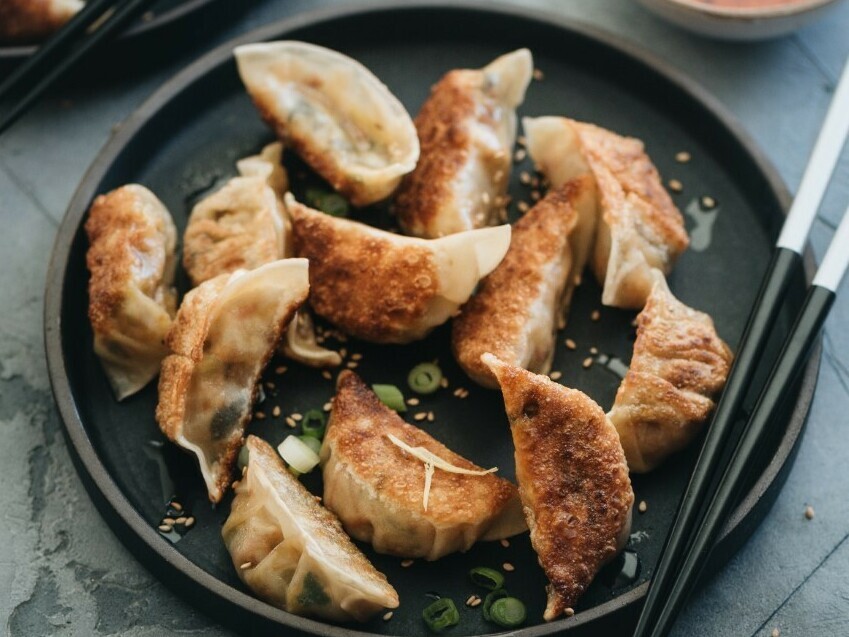
These guō tiē (pot stickers) were a recent discovery from my sister’s refrigerator, and they’ve quickly become one of my favourite dumpling fillings. The green chillies lend less spice or heat, and more of a vegetal flavour. Paired with Sichuan peppercorn and a sprinkling of coriander, they are simply delicious. The dumplings are steam-cooked in a slurry of cornstarch and vinegar, and the result is silky, bouncy dumplings with a lacy golden crust. A non-stick pan is absolutely essential here.

I’ve provided a recipe to make your own dumpling wrappers, but feel free to use store-bought white gyoza wrappers instead. Wonton wrappers will not work – they’re too thin for potstickers and won’t withstand this type of cooking.

Prep 30 mins
Cook 15 mins
Makes 50-60 dumplings

For the dumpling wrappers
(This recipe was originally published in Chinese-ish, the book I co-authored with Joanna Hu)
400g plain flour
240g water
4g salt

For the filling
20g Sichuan peppercorns, whole
120ml hot water
1 tbsp neutral-flavoured oil
, such as vegetable oil
20g ginger, grated
100g long green chillies, deseeded and finely chopped
500g pork mince
50g coriander
, finely chopped
1 tsp ground white pepper
1 tbsp soy sauce
3 tsp oyster sauce
2 tsp sesame oil
1 egg

For the crispy skirt
1 tsp cornstarch
½ tsp plain flour
½ tsp white vinegar
(can substitute with rice vinegar or white wine vinegar)
100ml water

To serve
Soy sauce
Chinkiang black vinegar
Chilli oil

To make the dumpling wrappers: Combine all ingredients and mix by hand, or with a stand mixer, until a smooth dough is formed. Leave to rest for 15-20 minutes before rolling out dough into a long tube roughly 3-4cm in diameter. To make one wrapper, slice off a piece of dough 1-2cm wide. The technique here is to spin the dough with one hand while working the rolling pin with the other, rolling outwards to flatten the dough on a floured benchtop. You’re aiming for a circular shape with a few millimetres of thickness, however, anything more oblong or rectangular is workable. Cover the dumpling wrapper with a damp tea towel to prevent it from drying out. Repeat with the remaining dough to make 50-60 wrappers.

To make the filling: Soak the peppercorns in 120ml of hot water to infuse the flavour. Allow to cool, then strain. Reserve the water, and discard the peppercorns.

In a medium frying pan, heat oil until smoking. Sauté the ginger and green chillies for 1-2 minutes until fragrant. Remove from the pan and set aside to cool.

In a mixing bowl, combine the pork mince and ginger-chilli mixture. Gradually add the peppercorn-infused water and continue combining until the mixture resembles a smooth paste. Add the remaining ingredients, and stir to combine. Check the seasoning by pan-frying or microwaving a small amount of mixture, and adjust to your taste if required.

To fold the dumplings: If you’re using store-bought wrappers, you’ll need a bowl of water on the side. Wet your index finger to seal the edges of the wrappers. If you’re using your own-made wrappers, this won’t be necessary – the dough will still be pliable and seal on its own by pinching.

Place wrapper on a floured surface. Place a tablespoon of filling in the centre, then draw up the sides of the wrapper, and pinch to seal. You can get fancy with pleats, if you so desire. Repeat with remaining wrappers and filling.

To cook the dumplings: In a large non-stick frying pan, heat 2 tbsp oil over medium-high heat. Arrange 8-10 dumplings in the pan, and fry until the bottoms turn light brown.

For the crispy skirt: Whisk the cornstarch, plain flour, vinegar and water thoroughly, then pour a thin layer into the pan and cover tightly with a lid. Steam-cook for approximately 5-6 minutes, then remove lid and continue cooking until all the liquid evaporates and a crispy, golden-brown skirt forms. Invert a plate over the frying pan and in one quick motion, flip the dumplings onto the plate (be careful – the pan will be hot!). Repeat the cooking process with remaining dumplings, while re-whisking the slurry mixture between batches. Serve with a dipping sauce of soy sauce, black vinegar and chilli oil.

Spicy mackerel, lemon and dill shui jiao 水饺

A plate of boiled fish dumplings with a spicy dressing on a floral plate.spicy mackerel, lemon and dill shui jiao.
Rosheen Kaul’s spicy mackerel, lemon and dill shui jiao. Photograph: Dave Tacon/The Guardian

Prep 30 mins
Cook 15 mins
Makes 50-60 dumplings

500g Spanish mackerel flesh, bones and skin removed
100g prawn meat, coarsely chopped
50g garlic chives, finely chopped and tossed with 1 tsp vegetable oil
50g dill, finely chopped
100ml Shaoxing wine
4 tbsp soy sauce
1 tbsp fish sauce

1 lemon, zested
20g ginger, finely chopped
½ tsp white pepper powder
White dumpling wrappers (such as gyoza wrappers)

For the spicy dressing
2 bird’s eye chillies
, thinly sliced
1 stalk spring onion, thinly sliced
2 tbsp Chinkiang black vinegar
1 tbsp soy sauce
1 tbsp chilli oil
¼ tsp sugar

In the bowl of a food processor, blitz the fish to a smooth paste and transfer into a larger mixing bowl. Combine with the rest of the ingredients and stir vigorously to combine. Allow to marinate for 20-30 minutes. Fill the dumplings (see the above green chilli and pork guō tiē recipe) and set aside.

Bring a large pot of water to the boil. Add the dumplings, taking care not to crowd the pot (choosing a large pot will help). Stir with chopsticks or a sieve so they don’t stick together. Return the water to a boil. Add one cup of cold water, return to the boil again, and simmer until the dumplings float to the surface. Repeat with any remaining dumplings.

Meanwhile, while the dumplings are cooking, make the spicy dressing. Combine all the ingredients.

Arrange dumplings in a shallow serving bowl and spoon dressing over the top. Serve immediately.

Chinese New Year Recipe: Healthy Dumplings

Chinese New Year Recipe: Healthy Dumplings

The confetti might be absent from Instances Sq., but there is another new calendar year in town. The Chinese New Year, also acknowledged as the Lunar New Year, is commonly celebrated close to the earth concerning January 21 and February 20 every 12 months, according to Almanac, based on when the next new moon just after the winter season solstice seems. Each new yr is named for 1 of 12 animals in the Chinese zodiac, and this a single will be the Year of the Rabbit.

A variety of international locations moreover China honor the getaway, such as Vietnam and South Korea, as very well as individuals in each corner of the globe who rejoice it as element of their heritage, notes Smithsonian.

A centerpiece for any Lunar New Calendar year accumulating is classic foodstuff. In reality, several of these foodstuff have important symbolic meanings associated to the celebration of the new calendar year. Noodles are eaten for a longer daily life, tangyuan (sweet rice balls) for spouse and children togetherness, and dumplings and spring rolls for greater wealth, reviews the Meals Community.

It can be hard to get pleasure from a traditional Lunar New Calendar year celebration with all these festive meals and however preserve a wholesome diet plan. That is for the reason that, when delectable, several of these food items are higher in processed carbs, salt, and sugar and lower in the important vitamins, minerals, and fiber your human body demands to purpose at its very best.

During Lunar New Year, food holds special meaning. Try these recipes : NPR

During Lunar New Year, food holds special meaning. Try these recipes : NPR

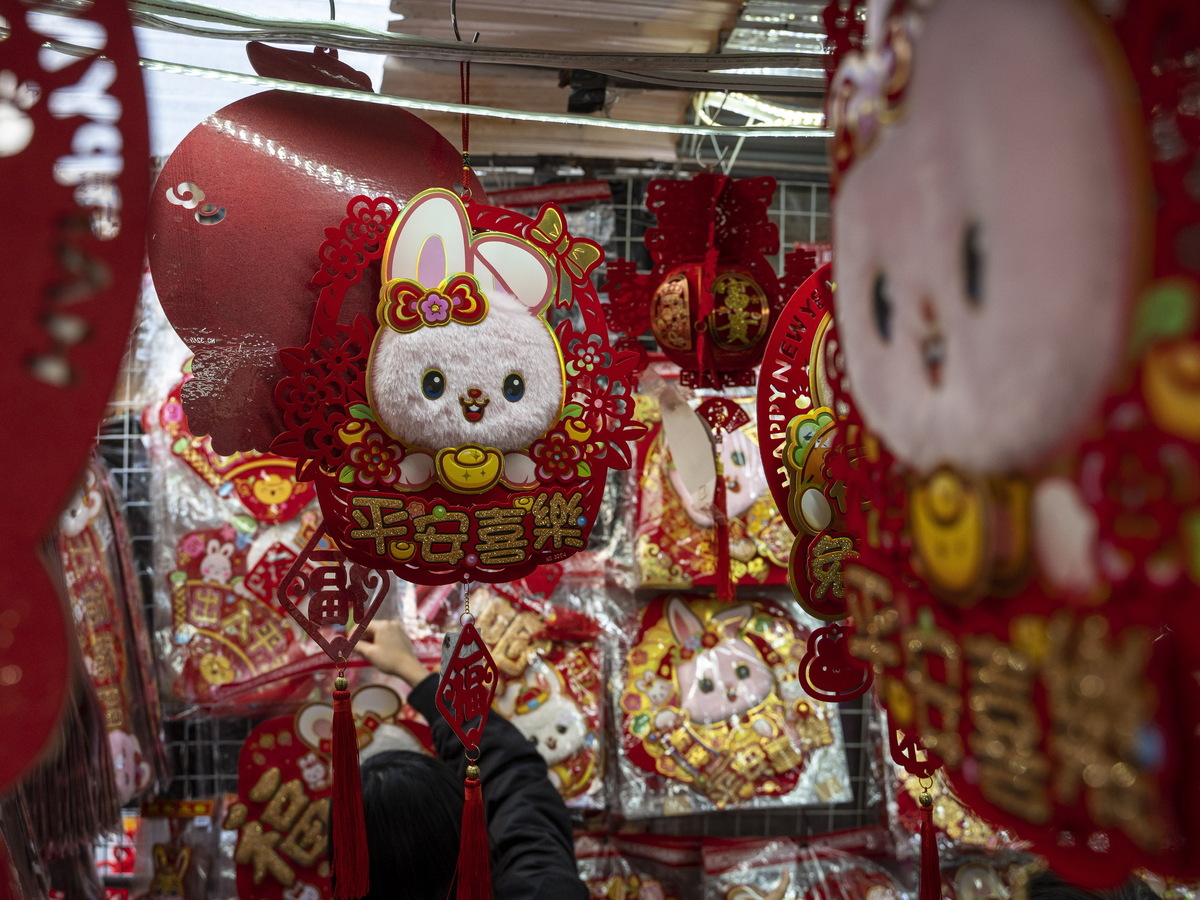
Decorations for Lunar New Year are on display at a shop in Hong Kong. Celebrations start this weekend as millions welcome the year of the rabbit.

Vernon Yuen/NurPhoto via Getty Images


hide caption

toggle caption

Vernon Yuen/NurPhoto via Getty Images


Decorations for Lunar New Year are on display at a shop in Hong Kong. Celebrations start this weekend as millions welcome the year of the rabbit.

Vernon Yuen/NurPhoto via Getty Images

The confetti from Times Square is long gone, but new year celebrations are far from over. For those celebrating Lunar New Year, the party is just getting started.

Sunday marks the beginning of the new year following the lunisolar calendar and what, for many, will be the start of the year of the rabbit.

Lunar New Year is celebrated by more than a billion people, and while traditionally a big holiday in Asian countries, it is also celebrated in communities worldwide. During this time, people pay respect to their elders and enjoy time with their families. Red envelopes stuffed with money are also staples of the holiday – as is a large, bountiful table filled with delicious dishes that have specific meanings.

Ahead of the holiday, NPR’s All Things Considered spoke with chefs around the U.S. about how they celebrate and what they’re making to help inspire your own celebrations.

There are many ways to fold dumplings, but Maggie Zhu of Omnivore’s Cookbook says not to worry about perfection. Folding them like a half-moon works just as well.

Maggie Zhu


hide caption

toggle caption

Maggie Zhu


There are many ways to fold dumplings, but Maggie Zhu of Omnivore’s Cookbook says not to worry about perfection. Folding them like a half-moon works just as well.

Maggie Zhu

Maggie Zhu – Omnivore’s Cookbook, New York, N.Y.

Maggie Zhu started her blog Omnivore’s Cookbook nearly ten years ago. Since then she’s shared traditional Chinese recipes that she has adapted for home cooks. Zhu compares her Chinese New Year celebrations to Thanksgiving in the U.S.

“No matter where you live, even when people are overseas or all over the place, it’s always during this week of the holiday, they come back to home and they make a lot of good food to celebrate,” she said. “This is a really special celebration for family using the form of food.”

Noodles and dumplings are two of the most important dishes included on her family’s table every year, Zhu said. Together with her grandparents, parents and cousins, she works to make hundreds of dumplings on New Year’s Eve.

Instead of filling her dumplings with a meat mixture, Zhu opts for a mix of vegetables like cabbage, carrots and dried mushrooms as well as tofu. The recipe comes from her new cookbook, Chinese Homestyle, and offers diners a mix of textures without being overly seasoned.

Zhu said she knows dumplings can be an intimidating dish for people to take on, but her biggest tip is to keep it simple and have fun.

“I feel like one thing is that you just don’t be too strict about how you fold them. Because I know there are actually many, many ways to fold dumplings,” she said. “If this is your first time to make it, I’d say, you know, you don’t have to be perfect. You can simply fold them like a half moon…like a pierogi. There’s nothing wrong with that.”

Maggie Zhu’s recipe for vegetable dumplings

Kevin Tien – executive chef of Moon Rabbit, Washington, D.C.

While many people are looking forward to the year of the rabbit, Chef Kevin Tien is looking forward to the year of the cat, as the Vietnamese zodiac calendar doesn’t include a rabbit.

Tien is the executive chef of Moon Rabbit in Washington, D.C. He said that new year celebrations were very big in his house when he was growing up.

“My family is Buddhist so we do visit Temple around Lunar New Year, especially when we lived with my grandmother,” he said. “What I remember is definitely there was a lot of making sure that we were paying respects to our ancestors or any older family members that have passed away, which means definitely getting a lot of fruit and a lot of different offerings to put on a little memorial thing that we had in our home.”

Cooking was also a big part of Tien’s celebrations and there was one dish his grandmother always made that he now makes today: thit kho tau, a caramelized braised pork belly dish.

“You start by making a caramel in a pot. As soon as you get those beautiful deep amber color caramel, I take it off the heat and then I’ll add fresh chopped garlic, a little bit of ginger and chilies, and then you’ll really get all the aromatics,” he said.

The pork belly then gets added to the pot and coated in the caramel sauce before a can of coconut soda – Tien prefers the Coco Rico brand – is added to the pot and simmers for an hour and a half until the pork is tender.

While the pork is good, Tien said the soft-boiled eggs that go into the pot at the end to soak up the flavor of the pork are what he really loves and remembers when thinking about making the dish at his grandma’s house.

“I would take the egg and I would eat that with a little bit of sauce,” he said. “The egg was where it’s at.”

If you decide to make thit kho tau, Tien said the hardest part of the recipe is making the caramel, which is a process you can’t rush.

“I recommend just going low and slow until the caramel forms because it goes from something that’s this beautiful amber color to burnt sugar if you step away from the pot,” he said. “It’s a labor of love, and I recommend just sitting there and don’t stir it too much. Let the caramel and the sugar form by itself.”

Kevin Tien’s recipe for thit kho tau

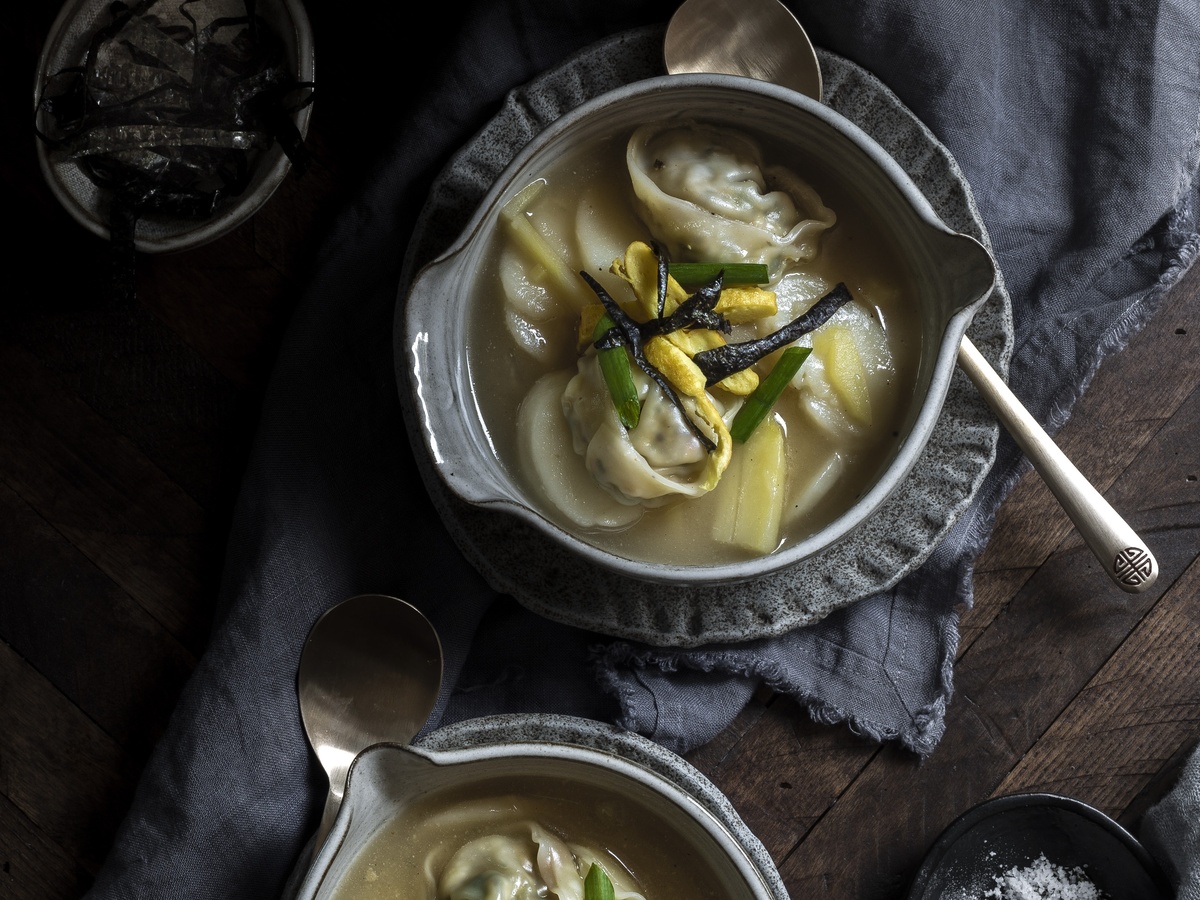
Tteokguk, a Korean rice cake soup, is made from a broth that simmers for hours and soft tteok, rice cakes, representing the purity of a clean slate.

Joanne Lee Molinaro/Penguin Random House


hide caption

toggle caption

Joanne Lee Molinaro/Penguin Random House


Tteokguk, a Korean rice cake soup, is made from a broth that simmers for hours and soft tteok, rice cakes, representing the purity of a clean slate.

Joanne Lee Molinaro/Penguin Random House

Joanne Lee Molinaro – The Korean Vegan, Agoura Hills, Calif.

When Joanne Molinaro thinks about Lunar New Year, she can’t do so without thinking about her maternal grandmother’s tiny apartment where her family would gather every year and eat tteokguk.

“It’s a rice cake soup, and she would make it for all of us,” Molinaro said. “And, as is very traditional in a Korean home, she didn’t have a table. She had one of those Korean-style tables, which is right on the floor, and she’d have these bamboo mats rolled out for all of us. And we’d show up dressed to the nines in our hanboks, which is traditional Korean dress costume.”

Today, Molinaro is an attorney and the writer and content creator behind The Korean Vegan channels popular on TikTok and YouTube. And she still makes tteokguk for the holiday, though her version is vegan.

“I do a lot of radish in my broth, some white onions in my broth, some white potatoes in my broth to give it a great sense of flavor and also dynamic breadth in the broth, which is really important,” she said.

The broth comes together after simmering for three hours or so. Molinaro said the combination doesn’t just create an incredible flavor, it also keeps the broth a light color which, when combined with the white color of the tteok, the rice cakes, represents the purity of the new year.

“The reason for that, it’s supposed to symbolize the purity of a clean slate. Your new year is starting. There’s no blemishes in it yet, and that is a very comforting feeling, knowing that I have this whole year to start over. And that’s what the white rice cakes are meant to symbolize,” she said.

Joanne Lee Molinaro’s recipe for tteokguk

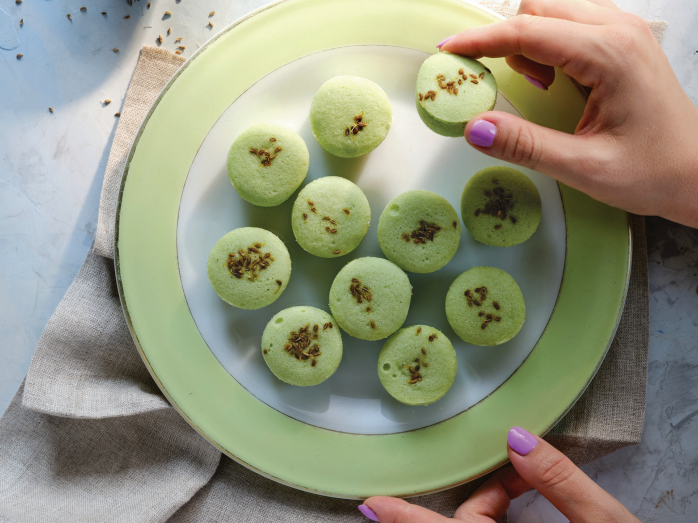
There are endless flavors of puto – Abi Balingit likes to flavor hers with pandan and anise.

Nico Schinco/Harvest, an imprint of HarperCollins Publishers


hide caption

toggle caption

Nico Schinco/Harvest, an imprint of HarperCollins Publishers


There are endless flavors of puto – Abi Balingit likes to flavor hers with pandan and anise.

Nico Schinco/Harvest, an imprint of HarperCollins Publishers

Abi Balingit – The Dusky Kitchen, Brooklyn, N.Y.

Abi Balingit is a Filipino baker based in Brooklyn, from where she shares her recipes on her blog The Dusky Kitchen. Her time is split into days working in the live music industry doing email marketing and nights baking in her home.

When it comes to Lunar New Year, Balingit said she’s made a new tradition with her friends.

“Here in New York, I really have a nice chosen family of friends, and my really good friend … she’ll always do something for Lunar New Year. Usually, it’s a dumpling party,” Balingit said.

When thinking about what she might bring to this year’s celebrations, Balingit chose pandan and anise puto – bite-sized steamed rice cakes – from her upcoming cookbook, Mayumu: Filipino American Desserts Remixed.

There are countless types of puto available, but for her recipe, Balingit chose to flavor her batter with pandan, both the leaves and the extract to add to the light green coloring of the dessert.

“Pandan is also very like, I guess [a] mainstay traditional Southeast Asian flavor. I grew up eating a lot of pandan desserts which I guess another word for it is screwpine leaves, but it is kind of like vanilla-y pistachio-y flavor.”

She said she likes these steamed cakes for fiestas and parties because they don’t require you to turn on the oven to get their signature light and fluffy texture.

“I just really love this because, with the anise on top of this small little rice cake, you get like a lot of refreshing notes of licorice and a palate cleanser before your next dish,” she said. “I would eat it literally even in between certain bites of really savory food if you just want something to be like, really nice and lightly sweet.”

Abi Balingit’s recipe for pandan and anise puto

Growing up, Rosie Nguyen always picked out a sesame ball as a sweet treat with her family on Sundays. Today she said she brings them to her Lunar New Year celebrations because of all the good memories she associates with them.

Rosie Nguyen


hide caption

toggle caption

Rosie Nguyen


Growing up, Rosie Nguyen always picked out a sesame ball as a sweet treat with her family on Sundays. Today she said she brings them to her Lunar New Year celebrations because of all the good memories she associates with them.

Rosie Nguyen

Rosie Nguyen – Rose Ave Bakery, Washington, D.C.

Growing up, Rosie Nguyen remembers going out to eat with her family on Sundays and hitting up an Asian bakery afterward, where she would always pick out three sweet treats: a sesame ball, a pineapple bun and a milk tea.

“Those two pastries just were always at the end of my meal, and it always tasted right,” Nguyen said.

Today, Nguyen is the founder and head chef behind Rose Ave Bakery, one of the D.C. region’s top Asian bakeries. Every year, the bakery staff creates a special Lunar New Year menu.

“It’s very important for us because, as Asian Americans, I celebrate this with my family, but I love to be a part of every else’s celebration so that they can bring treats to their celebration with their friends and family,” Nguyen said.

For her own gathering, she likes to go back to those treats of her childhood and make sesame balls for her family.

“That’s why I’m bringing it to Lunar New Year these days because it just brings back memories, and it means so much to me,” she said.

Vietnamese people usually opt to put a soft, nutty mung bean filling into their sesame balls, Nguyen said, but she prefers a red bean filling because she is “looking for a little bit more sweetness.”

These crispy treats are simple: a sticky mixture of glutinous rice flour, water and sugar is wrapped around a filling of your choice and coated in sesame seeds before being fried to golden brown perfection. They might not be the most elaborate dessert, but they’re enjoyed by one and all — and that’s really what the holiday is about.

“Food in general brings family together. It brings people together,” Nguyen said. “So for Lunar New Year, specifically, food is a way for family and friends to gather so that they can wish each other good luck, good fortune, prosperity and longevity.”

Rosie Nguyen’s recipe for sesame balls

Edited by Mallory Yu.

Recipes

Vegetable dumplings by Maggie Zhu, makes 50 dumplings

Ingredients

1/4 cup (9 g) dried shiitake mushrooms (7 or 8 small mushrooms)

2 cups (480 ml) hot water, or as much as needed to cover mushrooms

2 tablespoons dried wood ear mushrooms (or 1/2 cup, or 75 g. minced bamboo shoots)

1 small bundle (11/2 ounces, or 45 g) dried rice vermicelli noodles

5 tablespoons peanut oil, divided

4 cloves garlic, minced

1 tablespoon minced ginger

1 cup (110 g) finely chopped carrots (about 4 medium carrots)

2 cups (140 g) shredded cabbage 3 tablespoons soy sauce, divided 1 tablespoon Shaoxing wine 1 teaspoon curry powder

1/2 block (8 ounces, or 227 g) firm tofu, crumbled by hand

1 teaspoon maple syrup (or sugar) 1/2 cup (30 g) finely chopped scallions 50 frozen dumpling wrappers, thawed

Dumpling dipping sauce or Chinkiang vinegar, for serving

Directions

In separate medium bowls, cover the dried shiitake mushrooms and wood ear mushrooms with at least 1 cup (240 ml) of hot water each. Let the mushrooms soak for 20 minutes, or until tender throughout.

Strain and gently rinse the mushrooms with water. Squeeze out the excess water from the shitake mushrooms and rub off any debris. Remove and discard the tough stems of the shiitake mushrooms and mince the caps; this should yield about 1⁄4 cup (35 g) loosely packed minced shiitakes. Remove and discard the tough parts of the wood ear mushrooms and mince the mushrooms if they are big, or thinly slice them if small; this should yield about 1⁄2 cup (70 g) loosely packed minced wood ear mushrooms.

Cook the dried rice vermicelli according to the package instructions. Strain the cooked vermicelli and coarsely chop the noodles into 1⁄2-inch (1 cm) pieces.

In a large nonstick skillet, heat 2 tablespoons of the peanut oil over medium heat until hot. Add the garlic and ginger, stirring a few times to release the fragrance. Add the shiitake mushrooms, wood ear mushrooms, and carrots and cook and stir for 2 minutes. Add the cabbage, 1 tablespoon of the soy sauce, Shaoxing wine, and curry powder. Cook and stir for another 2 minutes, until the cabbage turns tender and all the liquid has evaporated. Transfer to a large plate to cool to room temperature.

Heat another 2 tablespoons of the peanut oil in the same pan. Add the tofu and cook for 1 minute, breaking it up into smaller chunks with a spatula. Add the vermicelli, the remaining 2 tablespoons soy sauce, and the maple syrup. Cook and stir until all the liquid has evaporated, 2 minutes or so. Transfer to a large mixing bowl and let cool to room temperature.

Once the tofu and cabbage mixtures have cooled, add the cabbage mixture to the bowl with the tofu, add the scallions, and stir to mix well.

Thit kho tau by Kevin Tien, serves 6

Ingredients

1.5 lbs skin off pork belly cut into 1 inch cubes

2 tablespoons fish sauce

1 teaspoon freshly ground black pepper

6 large eggs

1 cup sugar

¼ cup water

2 shallots minced

3 red thai chiles sliced into thin rings

1 can Coco Rico soda

1 bunch scallions thinly sliced

Steamed white rice for serving

Directions

Toss the pork belly with the fish sauce and pepper and let it marinade in the refrigerator for at least 1 hour or up to overnight.

Bring a medium pot of water to boil and boil eggs for 6 minutes. While the eggs are boiling, prepare an ice bath. Remove the eggs after 6 minutes and cool in ice bath. Once the eggs have cooled, peel and set aside.

In a dutch oven or other heavy bottom large pot, combine the water and sugar and stir over medium-low heat until the sugar dissolves. Leave the mixture alone without stirring for 5-6 minutes to create a caramel, watching closely as the color changes from light golden to a rich amber color. Once this color is reached, immediately remove the pot from heat.

Add the shallots and thai chilis and leave to cook from the residual heat of the caramel until slightly softened and aromatic, about 2 minutes. Return the pot to medium heat, add the pork belly, and toss it in the caramel to evenly coat.

Stir in the soda, increase the heat to high, and bring to a boil. Lower the heat to maintain a simmer, partially cover, and summer for about 1.5 hours until the pork belly is very tender.

Remove the pot from heat and skim the fat from the top if needed. Place the soft boiled eggs into the sauce to stain them a caramel color and infuse them with the flavor of the pork.

Top with scallions and serve with steamed white rice.

Tteok-mandu guk (rice cake soup with dumplings) by Joanne Molinaro, serves 4

Ingredients

1 tablespoon extra- virgin olive oil

1 teaspoon sesame oil ¼ cup chopped white onion

1 clove garlic, minced 2 teaspoons salt, plus more for serving

1½ cups frozen or fresh garraetteok oval discs

1 Yukon Gold potato, cut into half- moons

3 cups vegetable broth (recipe follows)

4 or 5 Mandoo (recipe follows)

1 teaspoon freshly ground black pepper

For garnish:

Strips of gyerranmari

Nori strips

2 scallions, chopped

Directions

In a large pot, heat the olive oil and sesame oil over medium high heat until hot, about 30 seconds. Add the white onion, garlic, and salt and cook until fragrant, about 2 minutes.

Add the rice cakes and the potatoes and stir to coat evenly with oil. Add the broth and deglaze the bottom of the pot. Bring it to a boil, then reduce the heat to low and simmer until the potatoes are nearly cooked, about 15 minutes.

Add the mandoo (dumplings) at the very end and cook for 1 more minute. Season with salt and pepper to taste.

To serve, garnish with the gyerranmari, nori strips, and scallions.

Vegetable broth, makes 6 cups

Ingredients

2 tablespoons sesame oil

2 carrots, roughly chopped

1 stalk celery, roughly chopped

3 cloves garlic, unpeeled

2 white onions, unpeeled and roughly chopped

4 green onions, untrimmed and roughly chopped

1 russet potato, roughly chopped

½ cup roughly chopped daikon radish, unpeeled

2 large or 3 small dried shiitake mushrooms

2 large or up to 4 small dried porcini mushrooms

7 to 8 leaves light- colored cabbage

1 large sheet dashima (kelp)

1 tablespoon black peppercorns

Directions

In a large soup pot, heat the sesame oil over medium heat. Add the carrots, celery, garlic, onions, potato, daikon, dried mushrooms, cabbage leaves, and dashima to the pot and cook for 2 minutes.

Add 12 cups of water and the peppercorns and bring to a boil over medium- high heat. Reduce the heat to low and simmer for 30 minutes.

Remove the dashima and let the broth simmer until reduced in half, about 3 hours.

Discard the vegetables and pour the stock through a fine-mesh sieve or cheesecloth to strain out any bits and pieces.

Mandoo (dumplings) by Joanne Molinaro, makes 40 to 50 small dumplings

Ingredients

1 tablespoon extra-virgin olive oil

1 tablespoon sesame oil

1 potato, roughly chopped

2 carrots, roughly chopped

4 scallions, roughly chopped

10 cremini mushrooms, roughly chopped

1 cup Baechu Kimchi

2 to 3 cloves garlic, roughly chopped

2 teaspoons salt

1 teaspoon freshly ground black pepper

1 tablespoon soy sauce

1 tablespoon toasted sesame seeds

2 ounces sweet potato vermicelli, cooked according to package directions

1 (16-ounce) block extra-firm tofu, pressed

1 tablespoon soup (light) soy sauce

1 (14-ounce) package dumpling wrappers

Directions

In a large skillet, heat the olive oil and sesame oil over medium-high heat. Add the potato, carrots, scallions, mushrooms, kimchi, garlic, salt, and pepper and cook until the vegetables are soft, about 5 minutes. Add the regular soy sauce to deglaze the pan and cook for 1 more minute.

Scrape all the cooked vegetables into a food processor. Add the sweet potato noodles and pulse 16 to 20 times, until the vegetables are at almost a paste like consistency. Transfer the mixture to a large bowl. Add the tofu and use a fork to mash up the tofu and mix it into the processed vegetables. Season with more salt as needed—this is your last opportunity to season the filling. Use the filling to stuff the dumplings right away or place it in the refrigerator until you are ready to wrap. (The process is easier if the filling has been in the refrigerator for about 1 hour.)

Reprinted from The Korean Vegan Cookbook by arrangement with Avery Books, a member of Penguin Group (USA) LLC, A Penguin Random House Company. Copyright © 2021, Joanne Lee Molinaro

Pandan and anise puto by Abi Balingit, makes 48 puto
Ingredients

1 frozen pandan leaf (optional, but it is ideal to use if you want more of an intense flavor instead of just using the extract alone), thawed and tied into a knot
3/4 cup unsweetened, full- fat coconut milk
1 large egg white, at room temperature
1/4 teaspoon pandan extract
1 cup rice flour
1 tablespoon baking powder
1/4 cup plus 2 tablespoons sugar
1/4 teaspoon kosher salt
1/4 teaspoon plus a pinch anise seeds

Directions

In a small saucepan, bring 1/4 cup water to a boil and then add in the pandan knot, if using. Turn off the heat and let the pandan knot steep in the water for 10 minutes. Remove the pandan knot and set the water aside.

Spray 48 mini muffin molds with nonstick spray and set aside. I like to use silicone molds for steaming these cakes because the aluminum pans tend to be too big for my steamer.

In a large measuring cup, whisk together the pandan-infused water, if using the pandan leaf (if not, use 1/4 cup regular water), coconut milk, egg white, and pandan extract until well combined.

In a medium bowl, whisk together the rice flour, baking powder, sugar, and salt until the baking powder is evenly distributed.

Pour the wet ingredients into the bowl. Whisk until the batter is smooth. Let the batter rest uncovered until some tiny bubbles form at the surface, 5 to 7 minutes. This resting time allows for the flour to better absorb the liquid and helps the puto rise better. While the batter is resting, prepare a steamer by filling a large pot with 2 inches of water and fitting the pot with a steel steaming rack. Bring the water to a boil over medium- high heat.

Fill each muffin cavity with 1 tablespoon of the batter. Sprinkle a couple of the anise seeds on top of each one.

Place the molds on the steaming rack and cover the pot with a lid. Depending on the size of your steamer, you may have to steam the puto in multiple batches and add more water as you go. Steam for 7 to 8 minutes, or until a toothpick inserted in one comes out clean. When you gently touch the tops of the puto they should spring back. Be careful not to burn yourself while testing them for doneness.

Using tongs, remove the molds from the steamer and allow the puto to cool for 1 minute before inverting them onto a plate. Repeat this process until all the puto are cooked.

Serve the puto once they’ve cooled to room temperature. Store any leftovers in an airtight container in the fridge for up to 3 days.

Excerpted from the book MAYUMU: Filipino American Desserts Remixed by Abi Balingit. Copyright © 2023 by Abi Balingit. From Harvest, an imprint of HarperCollins Publishers. Reprinted by permission.

Sesame balls by Rosie Nguyen

Ingredients

1/3 cup granulated sugar

1 cup hot water (add more if necessary)

1 1/2 cups glutinous rice flour

7 red bean paste

1/4 cup sesame seeds

4 cups vegetable oil

Directions

Dissolve sugar in the hot water. In a bowl, add the rice flour and pour in the syrup. Start mixing with a spatula and then knead with your hands until the dough is formed and is pliable. Wrap with plastic and let rest for 30 mins at room temp

Wet sesame seeds in a bowl, they should be moist. Set aside.

Weigh out red bean paste to 20 grams each, and set it aside on parchment. Weight out sesame balls to 40 grams.

To assemble, flatten out dough in your hands about 2.5 inches wide (keep a small bowl of water to wet hands if necessary) and place red bean filling in the middle and wrap with the dough to form a ball. Gently roll the ball in your hands until smooth.

Coat in the sesame balls and roll in your hands to adhere the seeds.

Fry in oil of 300 F for 10 mins, as the balls start to float, keep moving them around with a slotted spoon or spider. Fry for another 5-7 mins at 350 F to ensure they are crisper and have good structure.

Transfer to a rack or plate lined with paper towels. Let cool for 5-10 minutes. Best enjoyed warm.


Welcome to America’s Most Underrated Food Destination, Where Lunar New Year Is for Everyone

Welcome to America’s Most Underrated Food Destination, Where Lunar New Year Is for Everyone

A bowl of thịt kho trứng crackles on the table at the Houston restaurant Xin Chào, steam growing from the sizzling stone bowl that cradles the fatty braised pork stomach and crispy rice. “Ah, it smells like childhood,” longtime Houstonian Stevie Vu tells me although spooning golden-brown grains from the bottom of the even now-sizzling pot. Xin Chào’s chef and operator Christine Hà, beams and lifts her have spoon. “Can I dig in for some?” she claims, dishing a caramelly bite of pork onto her plate. Even though Ha, who received the third season of MasterChef, has tasted this Vietnamese dish plenty of times—her late mother’s version as a child, and now her personal, served in a non-common vessel motivated by her husband’s Korean heritage—it by no means ceases to take her back to her childhood.

In a area like Houston, I think about foodstuff memories ought to flood the ambiance for numerous Asian immigrants. On the handful of instances I’ve frequented the Bayou Town, the density and breadth of its Asian eating scene has shocked and dazzled me every time—from Bellaire Boulevard, the key artery of a large six-sq.-mile Chinatown to Saigon-Houston Plaza, anchoring a vibrant Vietnamese neighborhood to the Spring Department suburb, property to a thriving Koreatown district. Houston is, right after all, the fourth most populated city in the state, and virtually one in four inhabitants were being born outdoors of the U.S. Around the previous century, waves of immigrants and refugees have settled down here—some fleeing harmful situations back again house, like Vietnamese individuals who arrived immediately after the tumble of Saigon some drawn by work options others captivated by the inexpensive price of living and heat local climate. These influxes have served the sprawling port town come to be the most assorted metropolitan space in the nation—giving rise to a thoughts-bogglingly multicultural foods scene that Ha, a longtime Houstonian, has extended appreciated. “I truly experience like Houston knows flavor,” she muses. “Diversity in the demographics here translates to range in the foods.” 

At Xin Chào, chef Christine Ha serves thịt kho trứng in a hot stone bowl–a twist impressed by her husband’s Korean American qualifications. Photography by TJ Tran

That variety is only rising. In actuality, locals are increasingly referring to the Asian enclaves in Southwest Houston extra broadly as Asiatown, to accept how deeply multinationality and cultural trade are shaping the eating scene—and that is exactly why I’ve come to the town to ring in the Lunar New 12 months. However the joyous pageant is noticed throughout several Asian cultures, with households making ready auspicious foodstuff to invite excellent fortune for the new 12 months, diverse cultures cook distinctive celebratory dishes. An Asian restaurant scene as varied as Houston’s, I figure, is sure to offer a window into mouth watering cultural deviations.

Senior Society Editor Megan Zhang chats with Stevie Vu (L) and Ha. Images by TJ Tran

To navigate the holiday-themed specialties, I sign up for Vu, director of operations for the Asia Culture Texas Center, and his longtime buddy Terry Wong, co-operator of the beloved Bellaire eatery Blood Bros. BBQ, as they take a look at their restaurateur close friends about Houston and wish them a prosperous new year. The two are among the greatest advocates of the city’s Asian-owned restaurants. In early 2020, the duo teamed up to launch Chow Down in Chinatown, an lively Facebook web page committed to endorsing the area’s Asian-run businesses and combating prejudice and stigma. Its 25,000 customers regularly post mouth-watering photographs of foods they love all-around Asiatown.

For Wong, the seeds of his love for the city’s Asian dining were being planted prolonged in the past, when he was developing up in the southwest Houston suburb of Alief. He on a regular basis hung out at the dining establishments his friends’ people owned, as they bounced from place to place snacking on different Asian dishes. Considering the fact that then, the variety of the culinary choices has flourished, with a new generation of cooks and entrepreneurs including their individual signatures to the combine.

MDK Noodles, a mainstay in Los Angeles’ Koreatown, has expanded into Texas with a Houston location–and quickly, another in Austin. Photography by TJ Tran

The Los Angeles restaurant MDK Noodles opened its initial Texas location two yrs ago in Houston’s Sterling Square procuring plaza. Stacey Shin, who was born and raised in L.A. and whose father owns the initial California spot, skilled there for a couple years before venturing east to broaden the eatery into the South. One of the restaurant’s ideal-cherished orders is tteokguk, or rice cake soup, a new-yr need to-have. “Colors signify a good deal in Korean lifestyle,” Shin clarifies while ladling us helpings of snow-white cakes bobbing in broth. The hue, she clarifies, symbolizes contemporary starts off and new beginnings for the Lunar New Calendar year, which Koreans refer to as Seollal. “You’re finding a clear slate,” she suggests.

As Shin appears to be like ahead to the new calendar year in anticipation of the restaurant’s growth (she’s shortly launching an Austin site), she’s also taking inventory of her family’s journey therefore significantly. As the next generation to operate the cafe, she generally thinks of the tiny noodle store her father and uncle after ran alongside one another in Myeong-dong, a hectic browsing district in Seoul. “We began from humble beginnings,” Shin points out. Their eatery inevitably turned a local community gathering position, in which even individuals who were being homeless could obtain a warm food. “I truly feel like rooster soup, through all cultures, it is type of representative of dwelling,” she provides. After her father immigrated to The united states, he opened his possess business—naming it MDK Noodles as a nod to his sibling (the MD stands for Myeong-dong)—which has due to the fact develop into a preferred Koreatown fixture. Although Shin’s parents collaborated well in jointly running the cafe, they didn’t do the job out as a married pair soon after they divorced, Shin’s mom moved to Texas, the place she uncovered a lively Korean local community that welcomed her much more than she felt Los Angeles ever experienced. Now, Shin lives in this article, way too, slinging rice cakes, noodles, and dumplings along with her mom to build up the relatives business in the Lone Star Point out. Shin hopes MDK Noodles in the South will become—in a continuation of her uncle’s and father’s legacies—an inclusive accumulating place, but for a new audience.

Houston is the most varied metropolitan area in the region. Getty Illustrations or photos

It looks to be par for the class in Houston for not only new places to eat but full eating enclaves to pop up frequently. Bellaire Meals Street, a plaza housing modern eateries like the Malaysian cafe PappaRich, Japanese franchise Pepper Lunch, and shareable stir-fry spot Chongqing Hen Pot, grew to become Asiatown’s latest strip when it started welcoming diners in 2019. A couple several years in the past, the western suburb of Katy crafted an whole Asian Town of its very own, which now boasts a colossal 100,000-square-foot H-Mart Korean grocery store, food and karaoke at Soju 101, and Malaysian and Singaporean road foods at Phat Eatery, helmed by Malaysian-born, Hong Kong-lifted chef Alex Au-Yeung. Each and every year, the James Beard Award semifinalist goes all out for Lunar New Calendar year.

Wong, Vu, and I get there at Au-Yeung’s restaurant shortly soon after 1 p.m. to uncover crowds of expectant diners ready by the entrance for a table. Ahead of extended, Wong and Vu are chatting with some common faces they’ve noticed in the crowd. “Houston is seriously major and genuinely compact at the exact time,” claims Vu, detailing that many folks who work in or with the city’s Asian-owned restaurants know every other. When Au-Yeung appears powering the bar to say hello there, I level out the beautiful decor: fragile paper lanterns, fortunate purple envelopes, and auspicious symbols deck the walls. “The feast of the yr is Chinese New Year,” he says—so of class, heading all the way is a have to.

Yu sheng, or yee sang, also recognized as prosperity toss salad, is an legendary Lunar New Year dish in Malaysia and Singapore. Pictures by TJ Tran

In Au-Yeung’s indigenous Malaysia and its neighboring Singapore, the getaway banquet is not total with out a significant platter of yu sheng, or yee sang, also regarded as prosperity toss salad—a dish I’ve never ever seen in the U.S. just before. The name interprets literally as “raw fish,” which refers to the recipe’s star ingredient: salmon. In Chinese, the pronunciation of the word fish can make it a homophone for the phrase surplus, or abundance—which is why fish is a getaway requirement in Chinese society. Each component in the salad symbolizes a favorable wish for the new year: in accordance to Au-Yeung, the sweet chile sauce represents affectionate and enduring bonds among loved ones, the ginger symbolizes wellbeing and longevity, and the fried wonton strips invite prosperity and prosperity. Throughout the Lunar New Calendar year banquet, the customized is to collect anyone, chopsticks in hand, to toss the salad together—the higher the salad is tossed, the more good luck and fortune the new year will convey.

As with a great deal of Malaysian and Singaporean delicacies, Au-Yeung’s yu sheng attracts influence from other Asian international locations, clear in substances like the Japanese-style seaweed salad some cooks like to consist of. Wong and Vu say that cultural exchange related to what shaped individuals cultures’ foods traditions is flourishing in Houston many thanks to the city’s vast assortment of cafe proprietors and diners of different backgrounds. “‘Have you at any time tried using it with this?’” claims Vu. “‘No, that seems like a fantastic plan!’”

Giovan Cuchapin, the co-operator of Filipino cafe Be Much more Pacific, teaches Zhang how to roll lumpia. Images by TJ Tran

Giovan Cuchapin loves that about his hometown. The born-and-bred Houstonian and co-operator of the Filipino restaurant Be Much more Pacific at first launched the eatery as a foods truck and then brick-and-mortar cafe in Austin, wherever he attended college following leaving Houston, under no circumstances anticipating to return. But the magnetism of his property metropolis in the end compelled him to go back. “The extra I arrived back, the additional I kind of fell in like,” Cuchapin admits. “I believe the largest point that created me want to go back again right here is the variety,” he adds. “You can meet any kind of particular person, eat any type of foods in Houston.” Now, Cuchapin is introducing his hometown audience to Filipino delicacies, which he suggests is still underrepresented in the U.S. over and above mother-and-pop shops primarily frequented by the diaspora local community. Be A lot more Pacific’s breezy outdoor deck, laid-back bar, and present day decor attract numerous a diner who “doesn’t even know what Filipino delicacies is about,” he observes. “They’ll occur in in this article, and it’ll just blow them away.”

Cuchapin calls lumpia the “ultimate get together foodstuff.” Photography by TJ Tran

Filipino delicacies really should really feel approachable and even acquainted for most Americans, Cuchapin provides. Numerous traditional Filipino dishes have roots in other Asian cuisines: lumpia (also referred to as lumpiang Shanghai), or crispy fried spring rolls, attract impact from their Chinese-style counterparts, a typical Lunar New Year dish symbolizing prosperity and very good fortune. “Filipino delicacies in standard, it’s just a melding of a entire bunch of distinctive cultures, from Chinese, Indonesian, Malaysian, Indian,” Cuchapin describes, noting that he in reality perfected his rolling system even though doing work at Shu Shu’s Asian Delicacies, a Chinese cafe in Austin. Spring rolls’ festive connotation lives on in lumpia, which Cuchapin calls “the top bash food”—most Filipino celebrations, together with New Year’s, are sure to characteristic it.

Be Far more Pacific’s exclusive acquire on Filipino meals can make the cuisine feel, I consider, further recognizable to American diners—yet still wholly unanticipated. The restaurant’s kare kare, a loaded peanutty stew common in the Philippines, swaps the more standard oxtail for—in real Texas fashion—cuts of brisket. It also serves a distinctive rendition of lumpia showcasing imitation crab, product cheese, and green onion Cuchapin proudly calls the dish—which was motivated by the American Chinese dish crab rangoon—Gio’s. This Lunar New Calendar year, he’ll be serving his signature lumpia along with his Vietnamese American in-laws’ have edition of spring rolls, also an auspicious dish in Vietnam’s new 12 months celebrations.

I arrived to Texas in research of classic Lunar New Yr dishes that migrated to America along with the Asian immigrants cooking them. But what I discovered is that several of those people dishes transformed alongside the journey, adapting to new inspirations, influences, and preferences as the individuals on their own grew and improved with each passing vacation. This is Houston, right after all, the place multiculturalism is woven into the material of the restaurant scene—and in which cultural exchange and melding that organically lead to experimentation and evolution are welcomed, even celebrated. In this metropolis, on a bedrock of Southern hospitality, there exists a particular “unity concerning individuals that are meals fans and all those that are operators and homeowners,” Vu observes. “They appear collectively and share ideas.”

Rather than determine rigid borders of what a cuisine can and just cannot be, Houston’s Asian eating scene simply just wants cooks to provide the most delicious foods that is legitimate to them. Specially if it usually means excellent fortune for all.