If you’re a passionate lover of cooking, or you’ve recently kickstarted your cooking journey, and want to accelerate it even further in 2023, then you’ve reached the right place. Having an efficient and streamlined cooking process is the key to preparing dishes that simply taste excellent! And the number one aid you need in having an effortless process is an arsenal of great kitchen appliances. With the right kitchen tools and appliances, cooking can be an increasingly fun and simplified process. The right products can reduce your prep time in half, make the little cooking tasks much easier, and help you with tedious and complicated techniques. From a tiny circular grater that turns cooking into a meditative activity to a compact induction cooker that fits every conceivable cooking method in its modular stackable design – these innovative and exceptional appliances are all you need in your kitchen in 2023!
1. The Cookmate
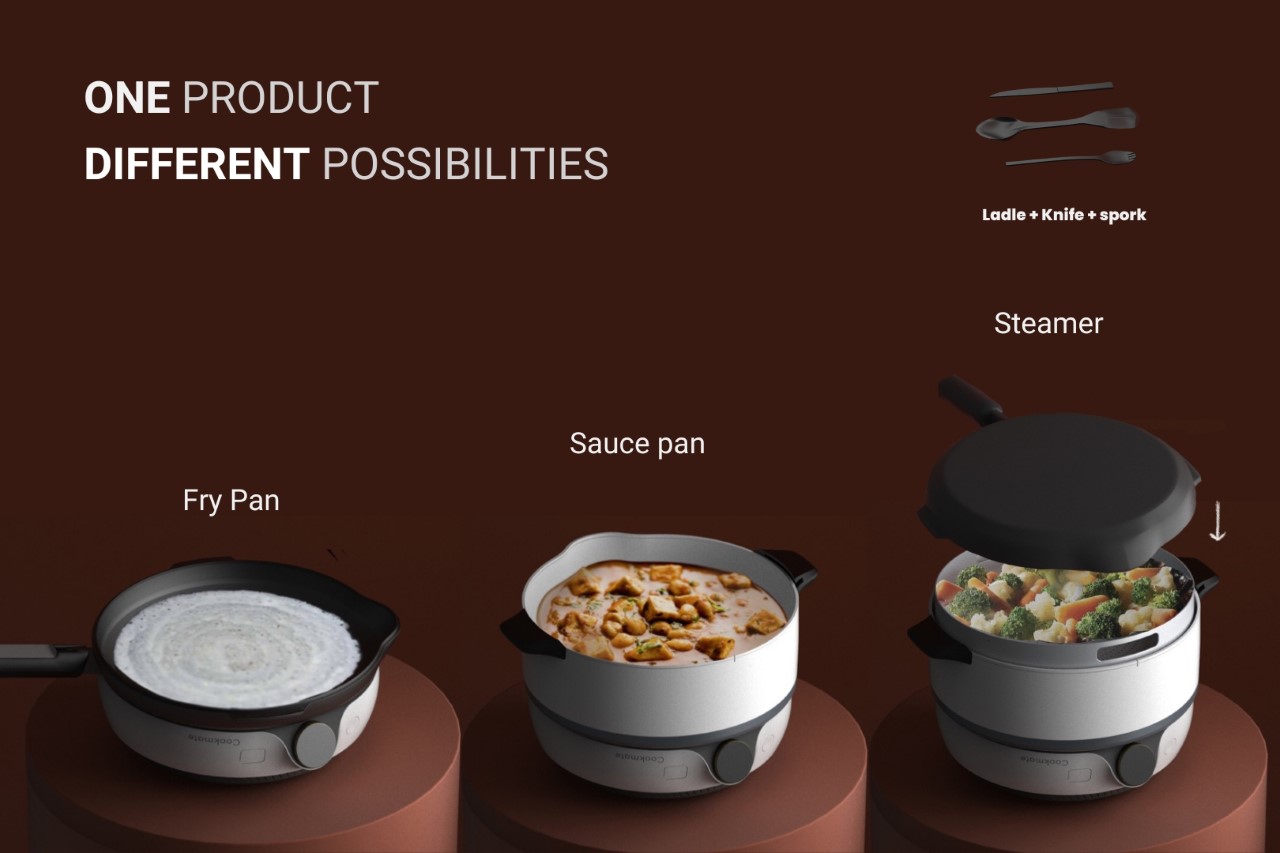
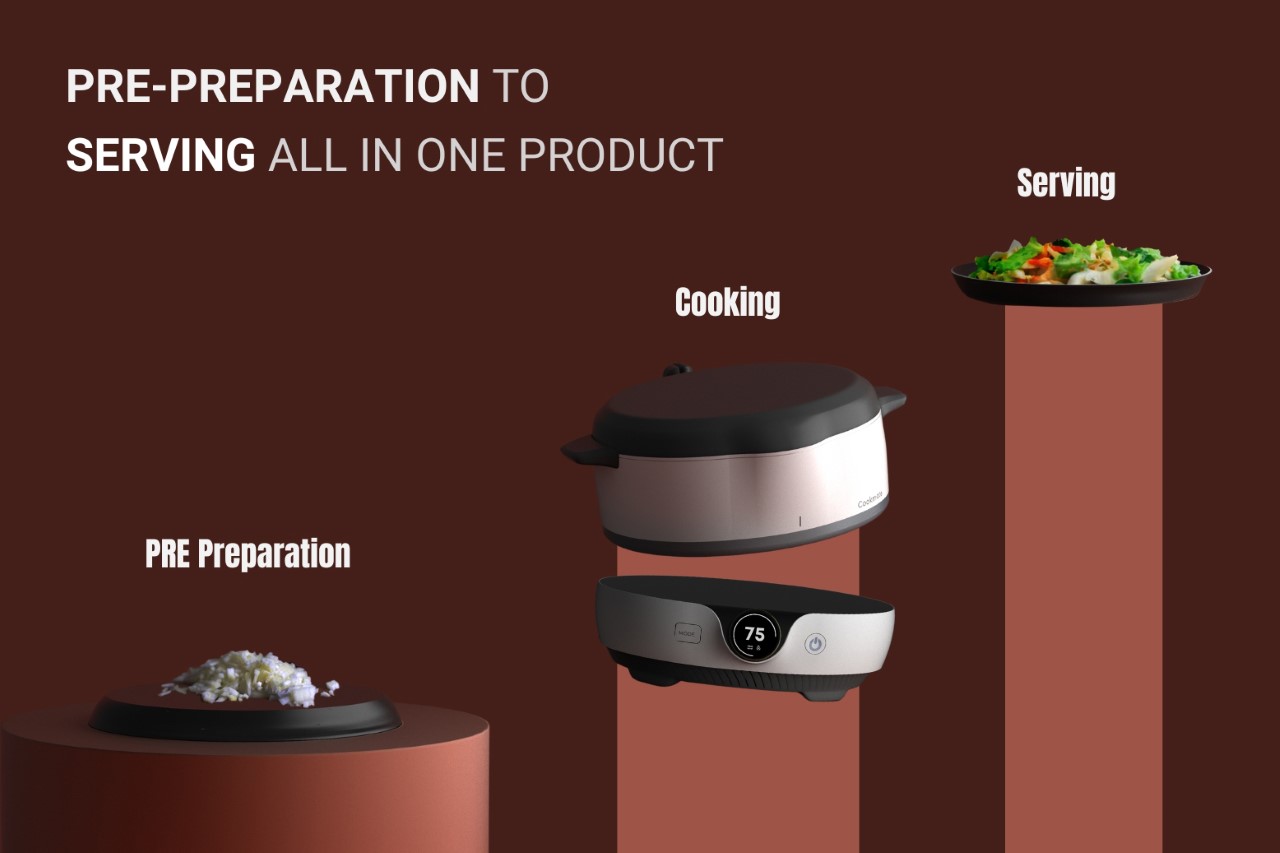
Designed for this new, ‘smaller than life’ home, the Cookmate is an all-in-one kitchen appliance that goes from prep to cooking to serving, in one device. Its modular design has stackable pieces that turn the cooktop into a pan, crock pot, and even a steamer. The induction coil on the inside works on electricity, saving the need to place a gas cylinder under the hob.
Why is it noteworthy?
The Cookmate looks at the cooking process as something that goes from idea to ingredient to table. Rather than focusing on just the cooking, this induction cooktop (although it seems highly reductive to call it just that) considers every aspect of the cooking process. This isn’t just clever, holistic design thinking, it also helps the Cookmate be more universally applicable so you save effort, energy, and space with other utensils.
What we like
Features an integrated weighing scale
Can be split into 6 parts
What we dislike
2. The Cavdle WasteCycler
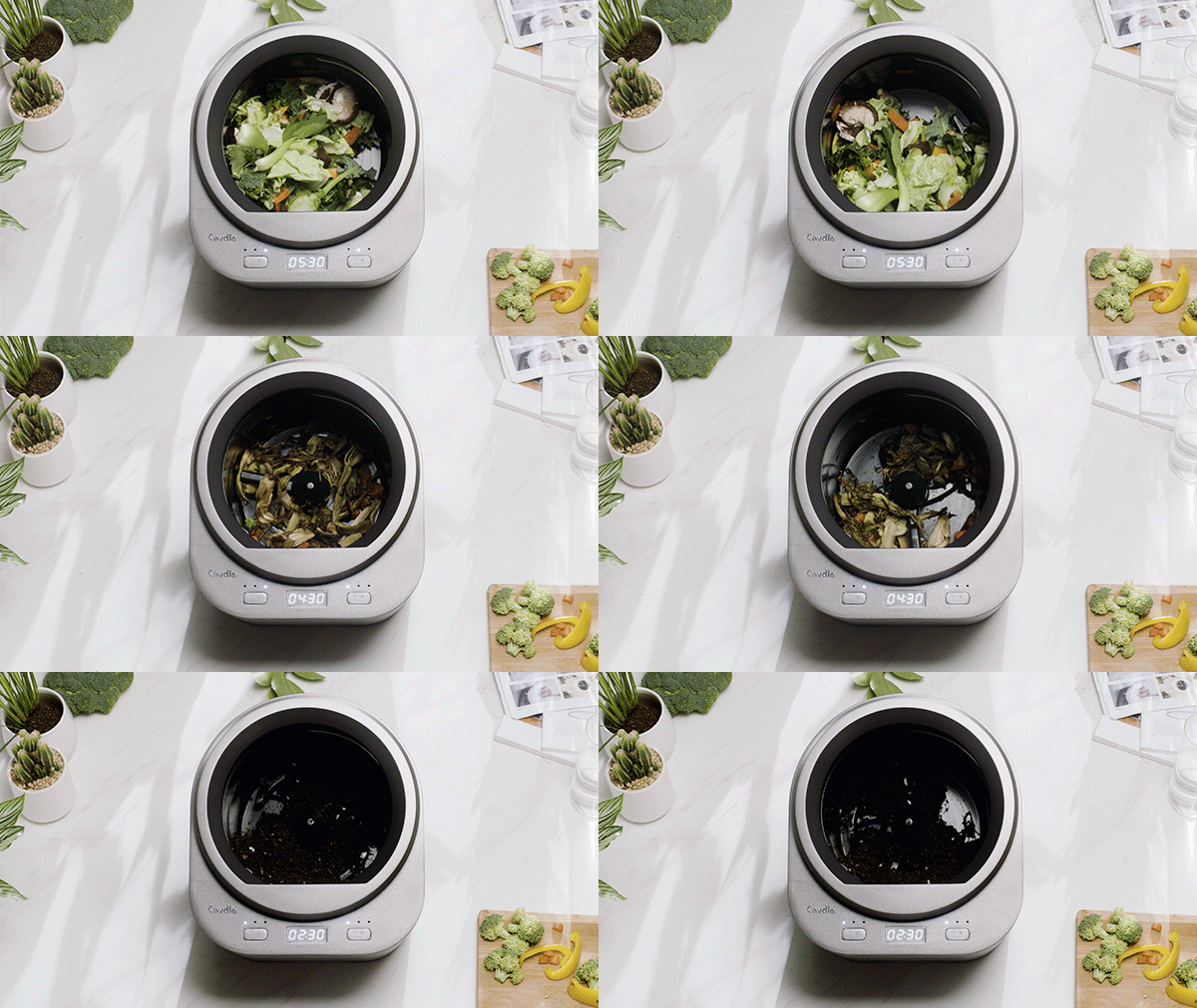
Working both as a garbage disposal system and a compost generator, the Cavdle WasteCycler isn’t the kind of device you’d hide away in the shed. Its cutting-edge design borrows from the aesthetic seen on washing machines, with a clear tinted lid that lets you see the Cavdle WasteCycler go to work at your food waste, breaking it down rapidly using aerobic decomposition.
Why is it noteworthy?
The Cavdle WasteCycler relies on 5 parameters to help turn organic substances into compost – Time, Humidity, Temperature, Dry Organics, and Oxygen. It then goes to work, creating compost without the smell, the mess, or even the sound. Operating at just under 35 decibels, the Cavdle WasteCycler grinds down your food waste while heating it up to the exact temperature needed to help good bacteria thrive while killing off the bad bacteria. At the end of the day, you’re left with a natural fertilizer that you can then use to nourish your plants while resting assured that your food waste isn’t going into a landfill where it generates methane and contributes to global warming.
What we like
The kitchen gadget comes with a transparent-window lid that lets you see how full-empty your device is
What we dislike
3. The Electrolux Adapted
The Electrolux Adapted is the kitchen essential of the future – compact, sleek, and ideal for tiny homes, this masterful concept is for the ‘singletons’ who want to make the most of a small kitchen. If you want to use the countertop for some real cooking, and don’t feel like cramping it with a gazillion appliances, then Adapted is the product for you!
Why is it noteworthy?
Electrolux Adapted is a premium hub that utilizes the vertical space in a kitchen to organize and hold all the important appliances you need on a daily basis. The system is made up of standardized modules that are mounted effortlessly on a backplate, completely eliminating the need for tools usually required for installation. The backplate supplies all the modules with water and electricity, in an attempt to support highly customizable arrangments.
What we like
Can either be mounted on a wall or placed as a free-standing product with an add-on furniture frame
All the modules are connected via an Electrolux app, allowing them to be used simultaneously or in sync, and enabling users to create their own personal routines
What we dislike
4. Peleg’s Fries Clips
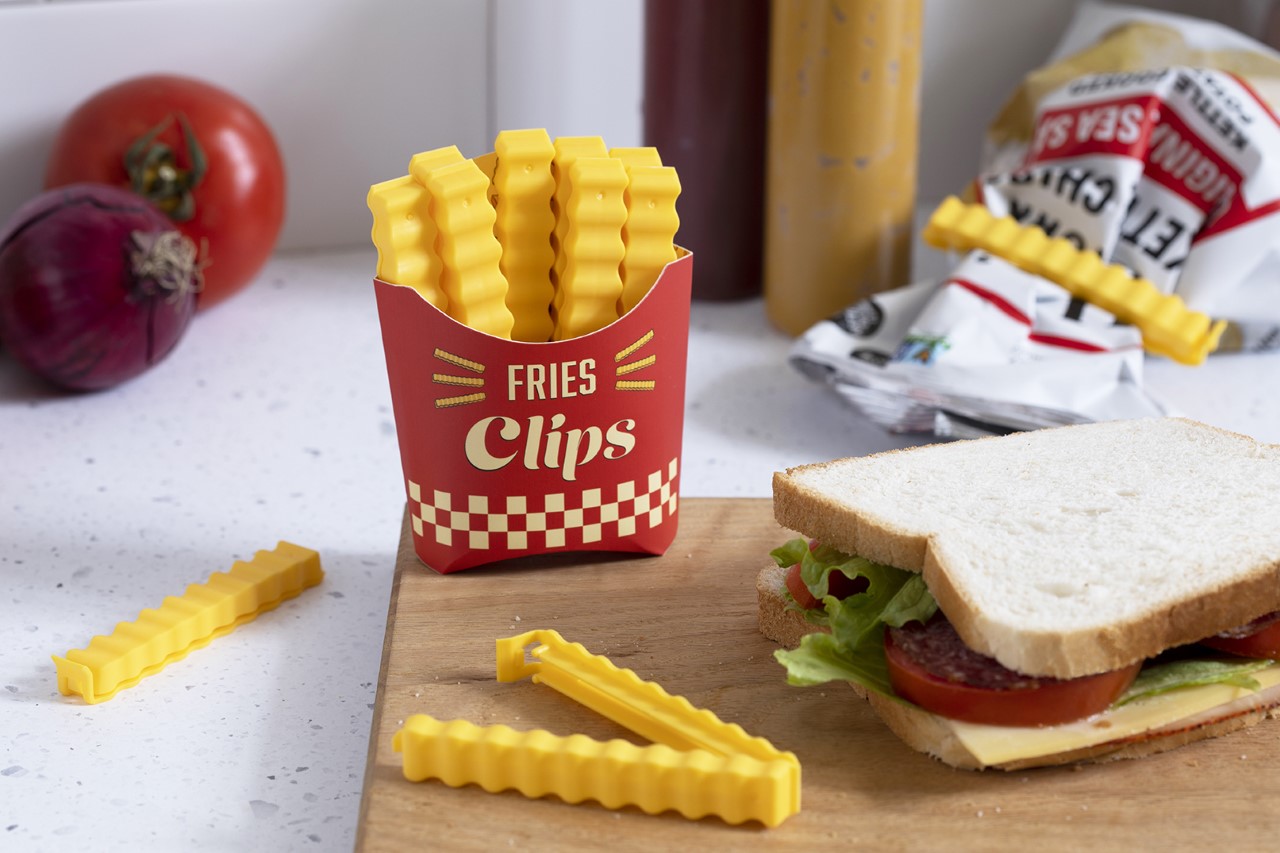
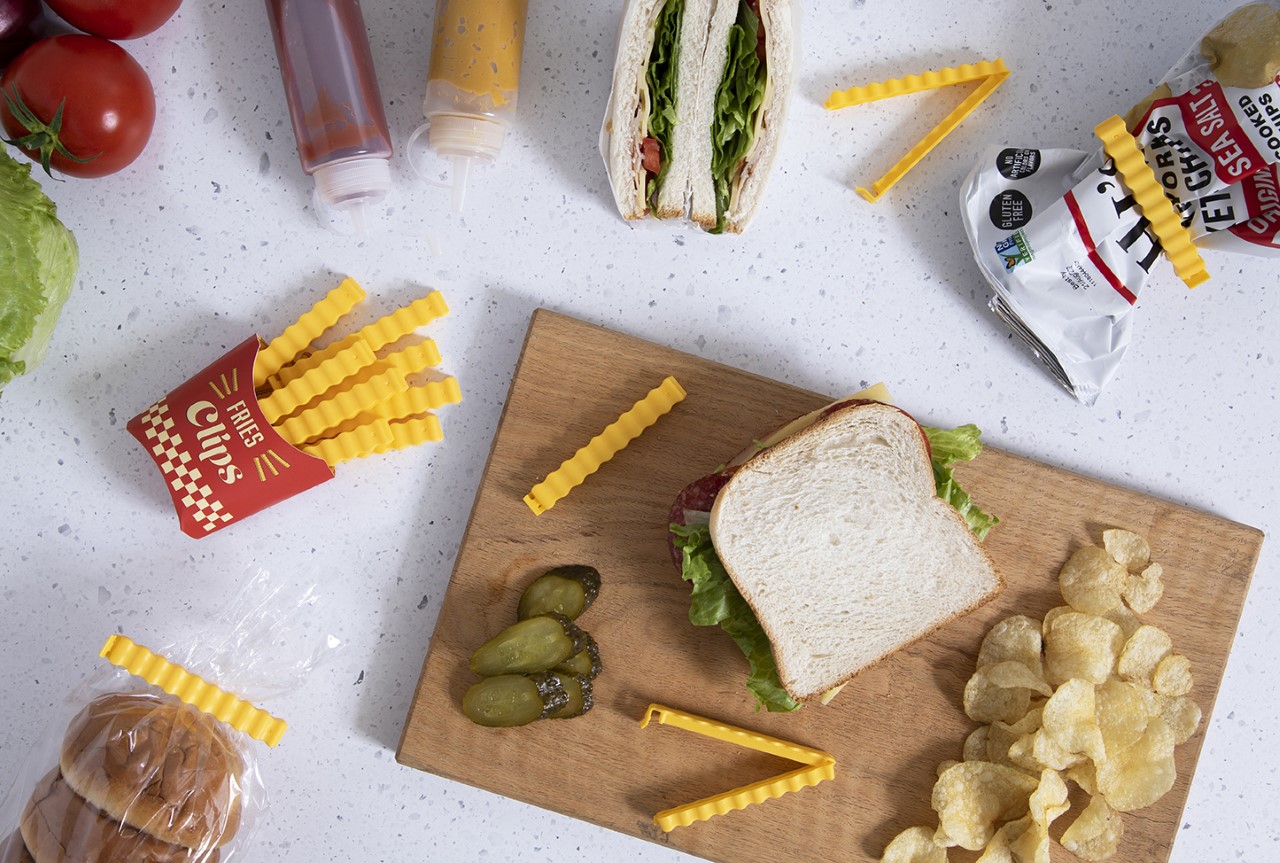
Meet Peleg’s Fries Clips, a set of adorable bag clips designed in the shape of crinkle-cut fries, the kind made popular by Shake Shack. While the clips look pretty delightful (and delicious) on their own, they look absolutely perfect when paired together in Peleg’s fries box, which models itself on the kind popularized by a certain fast food chain.
Why is it noteworthy?
The box acts as a perfect ‘stand’ for the clips and can be placed upright on a kitchen countertop. Armed with a magnet on the back, it can be easily affixed to a refrigerator too, making the bag clips handy when you’re snacking in the kitchen.
What we like
The clips can be reused multiple times
The clips seal the bags, keeping the items inside fresher for longer
What we dislike
5. The Irogami Grater
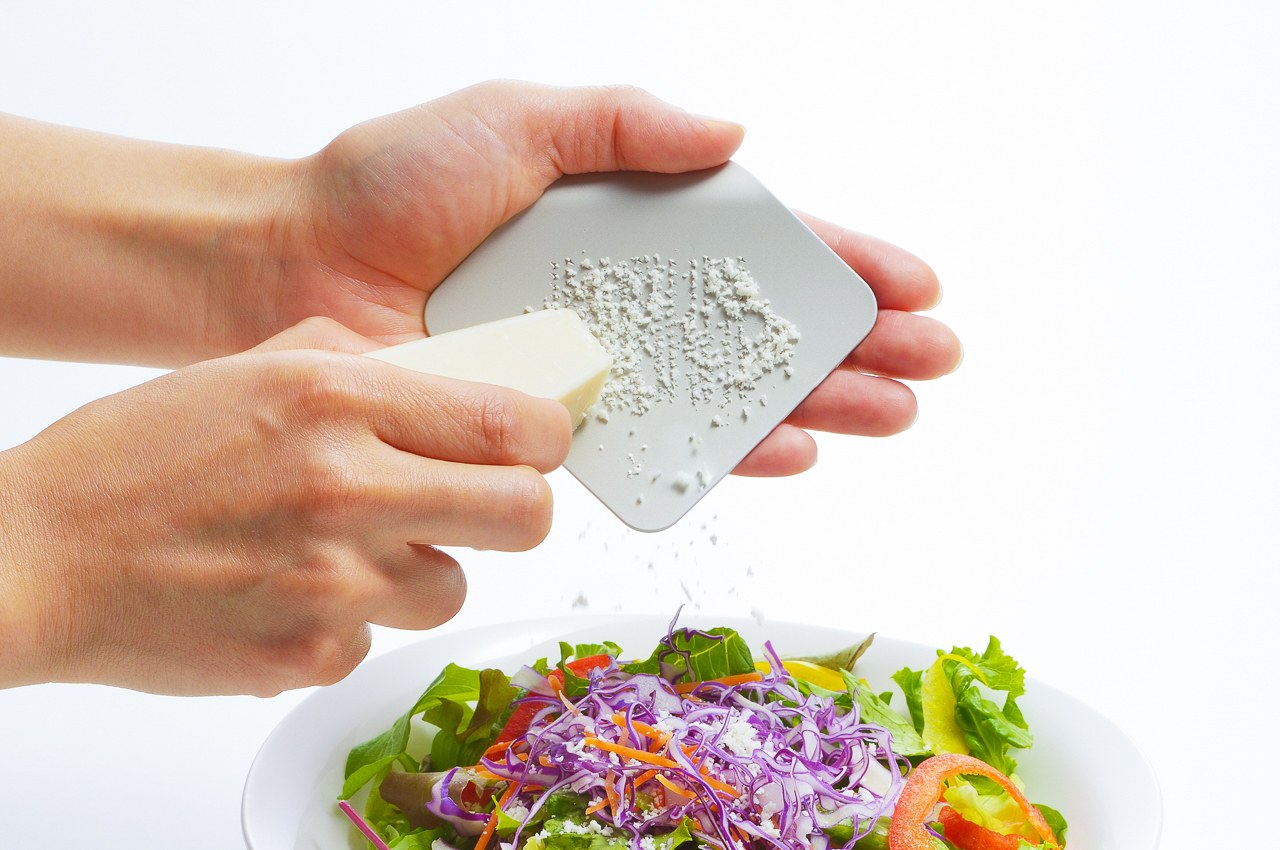
They say that every little thing matters, and that’s especially true for garnishes and grated ingredients. Quite appropriately, this grater is also little, small enough to securely fit in the palm of your hand, almost like a toy. And just like a toy, it is designed to add a bit of fun to your kitchen and dining life while you add a bit of cheese or lemon zest to your dish.
Why is it noteworthy?
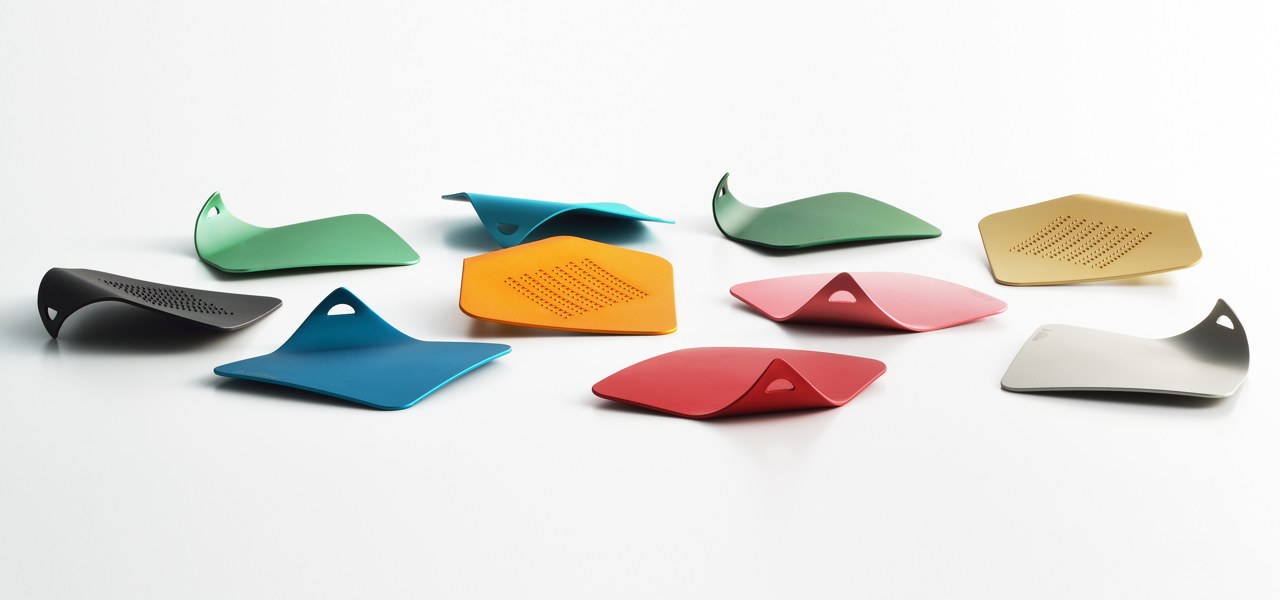
The irogami grater is simple in all aspects that you wonder why home kitchen graters aren’t made this way, too. Instead of multiple pieces of metal bent and curved at different places, the grater is a single sheet of aluminum alloy that curls backward in one corner. The design makes it look almost like a sheet of paper, particularly a colorful sticky note or memo pad, that speaks to both its playful and serious demeanor.
What we like
Compared to those cumbersome graters that you have to hold tight at their handles, this form gives you a firmer grip
Using this playful grater is like a game itself. Simply move the piece of cheese or stick of cinnamon from left to right and watch the tiny pieces fall down on your food
What we dislike
Some people may prefer the form and structure of a traditional grater
6. NiNJA’s Knives
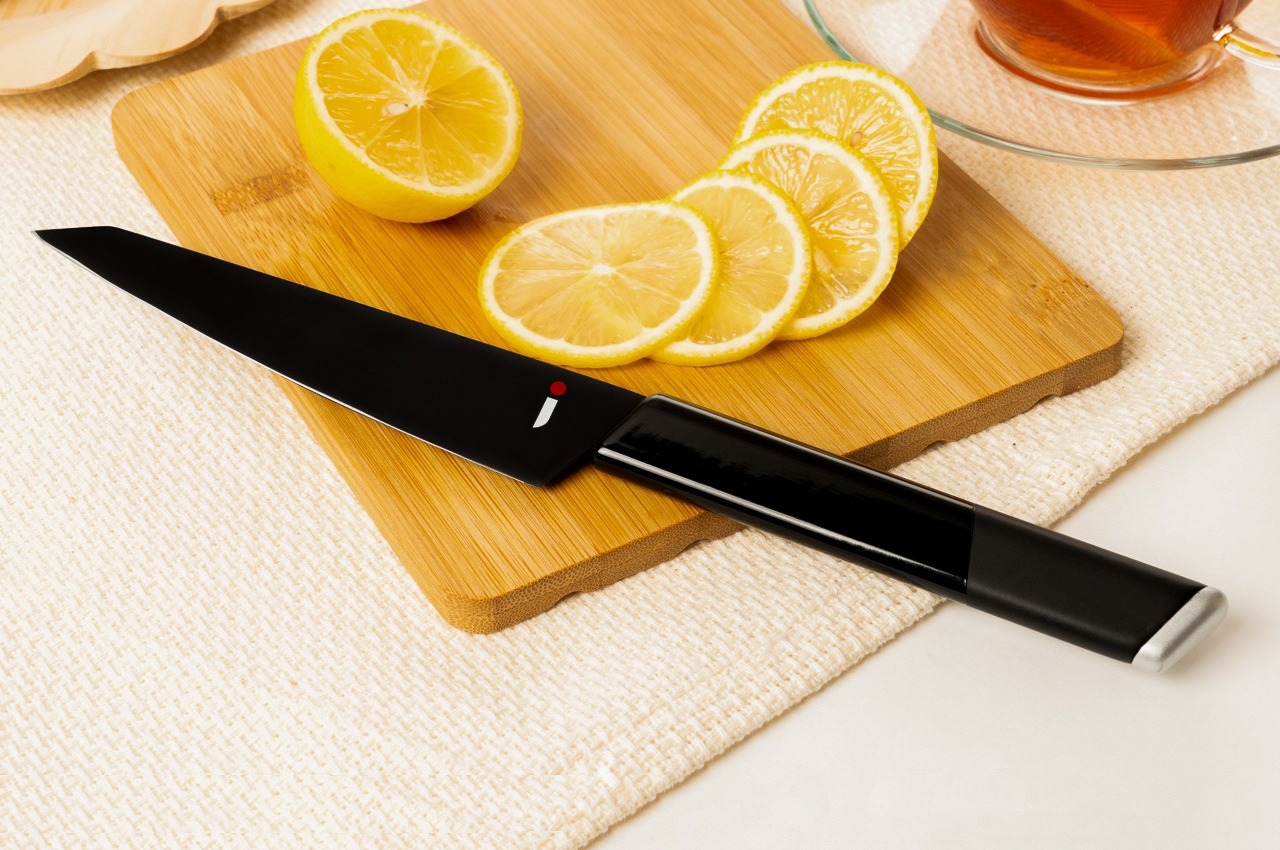
NiNJA’s fashionable kitchen knives are definitely attention-grabbing, particularly because of their black blades. A color that has always been associated with looking smart and sophisticated, it gives the knives a simple yet effective upgrade when it comes to looking cool and modern.
Why is it noteworthy?
There is almost no other embellishment on the blade other than the discreet “i” logo, removing any potential distraction. Like a ninja hiding in the shadows or a secret agent in a black suit, these knives stealthily move in for the kill, cutting ingredients with precision and grace.
What we like
Made of molybdenum vanadium steel, known for its highly durable sharpness
Each blade from this collection is made one by one by an experienced craftsman
What we dislike
7. Byrne’s AI-generated Appliances
Catalan Architect Antoni Gaudi has been one of the most popular and decorated names when it comes to modernist works. What if he also designed much more mundane but still useful things? That is the idea behind this series of designs of regular household appliances based on Gaudi aesthetics using artificial intelligence image generator software.
Why is it noteworthy?
The different appliance designs have various flowing shapes and textured surfaces that bring to mind natural things like trees, caves, and other organic formations. But they have splashes of various colors to add to the opposite of minimalist aesthetics. The designs are combinations of various art styles like neo-gothic, art nouveau, and modernist, creating some interesting looking appliances like a toaster, a mixer, a vacuum cleaner, a microwave, a coffee machine, a kettle, an iron, a hair dryer, etc.
What we like
Make interesting conversation pieces
The designs are a twist on the otherwise typical and traditional kitchen appliances
What we dislike
They’re AI-generated, and not actual products yet
8. The Maruzara
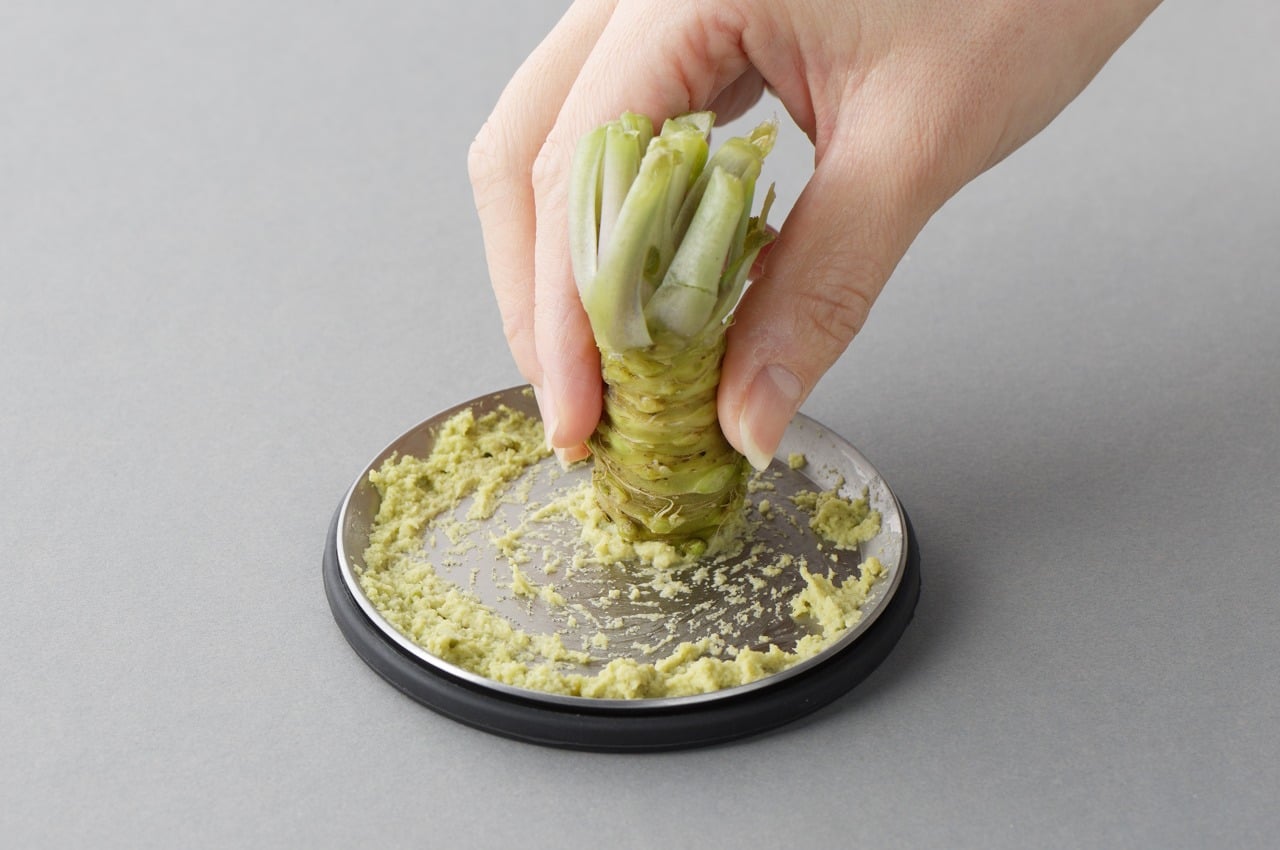
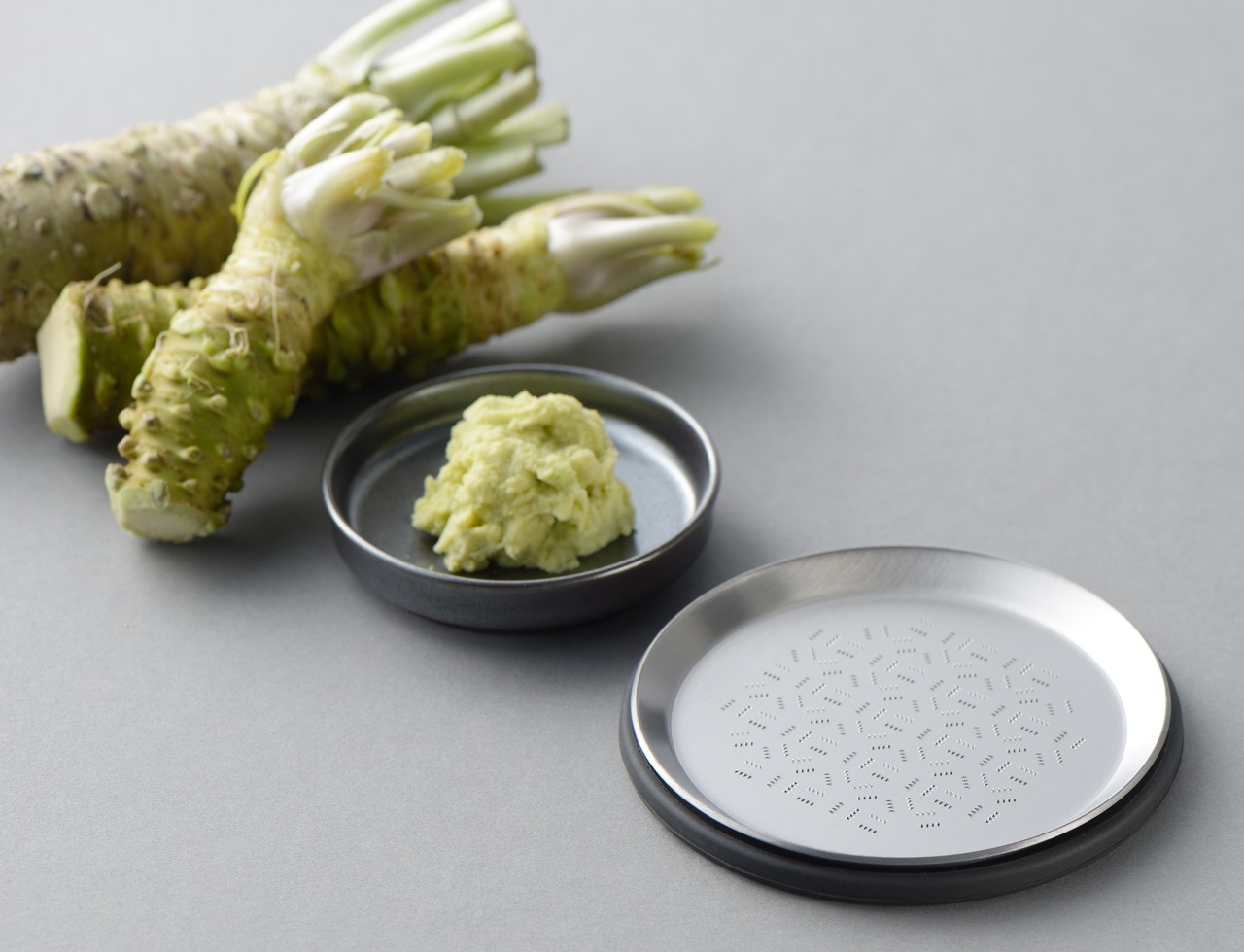
Shaped like a small round plate instead of the typical rectangular sheet of metal, this grater is meant to sit on the table rather than be held up in the air like almost all other graters. Its small design makes it perfect to be placed right on the table, and the unique pattern of the blades gives it a distinctive look even when it’s just sitting unused.
Why is it noteworthy?
That blade arrangement isn’t just for show, though. Unlike a regular grater with rows of blades, you make circular movements to grate ingredients. Rather than falling through holes, the grated pieces accumulate at the sides in full, fluffy lumps. The repetitive action, rather than being tiring and burdensome, becomes almost a mindful practice that puts you in the moment.
What we like
Comes with a silicon rubber base that stops it from slipping on the table while you make your circling motions
What we dislike
It’s designed primarily for wasabi and daikon radish, making it a bit limited
Some people may prefer the form and structure of a traditional grater
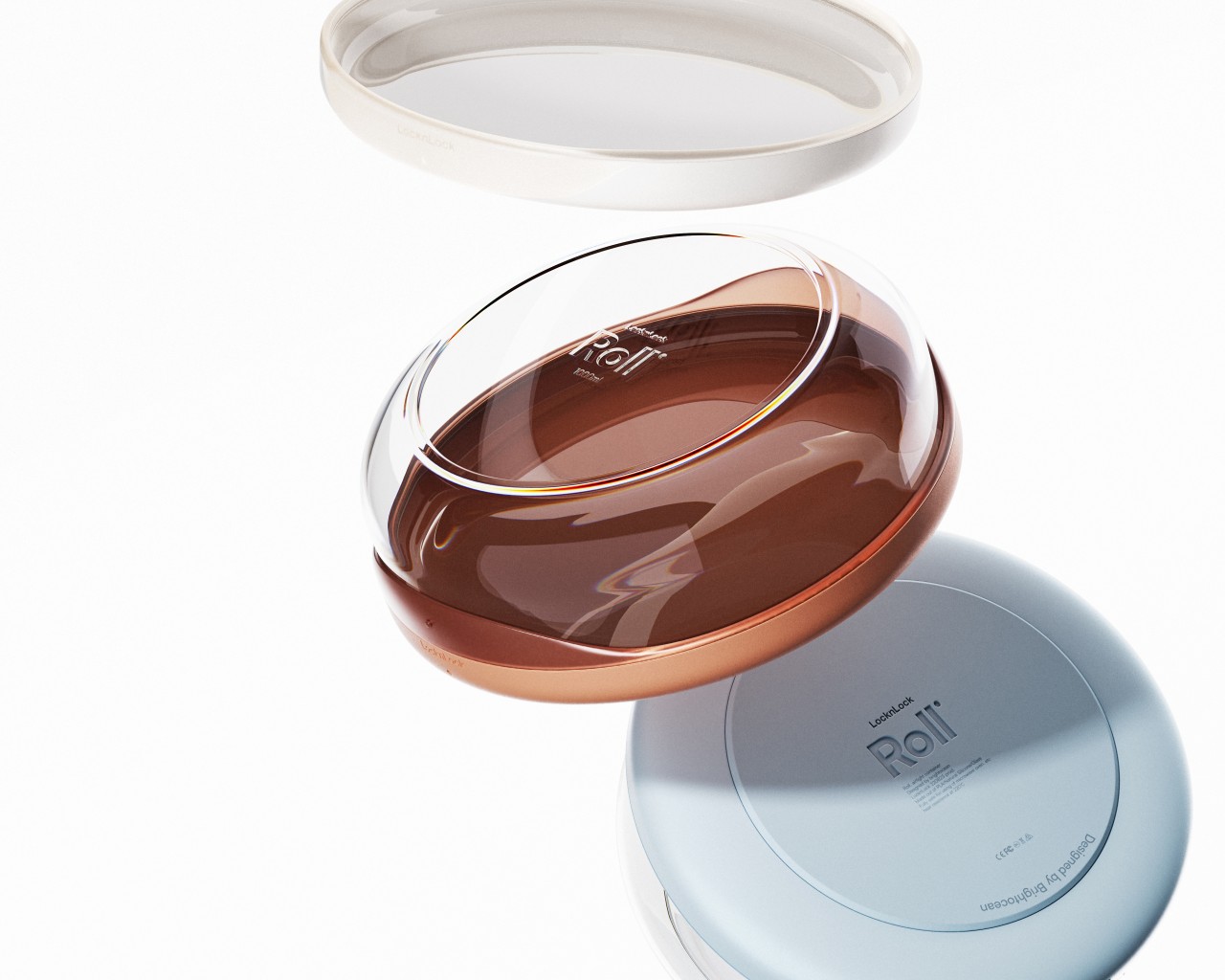
9. Roll
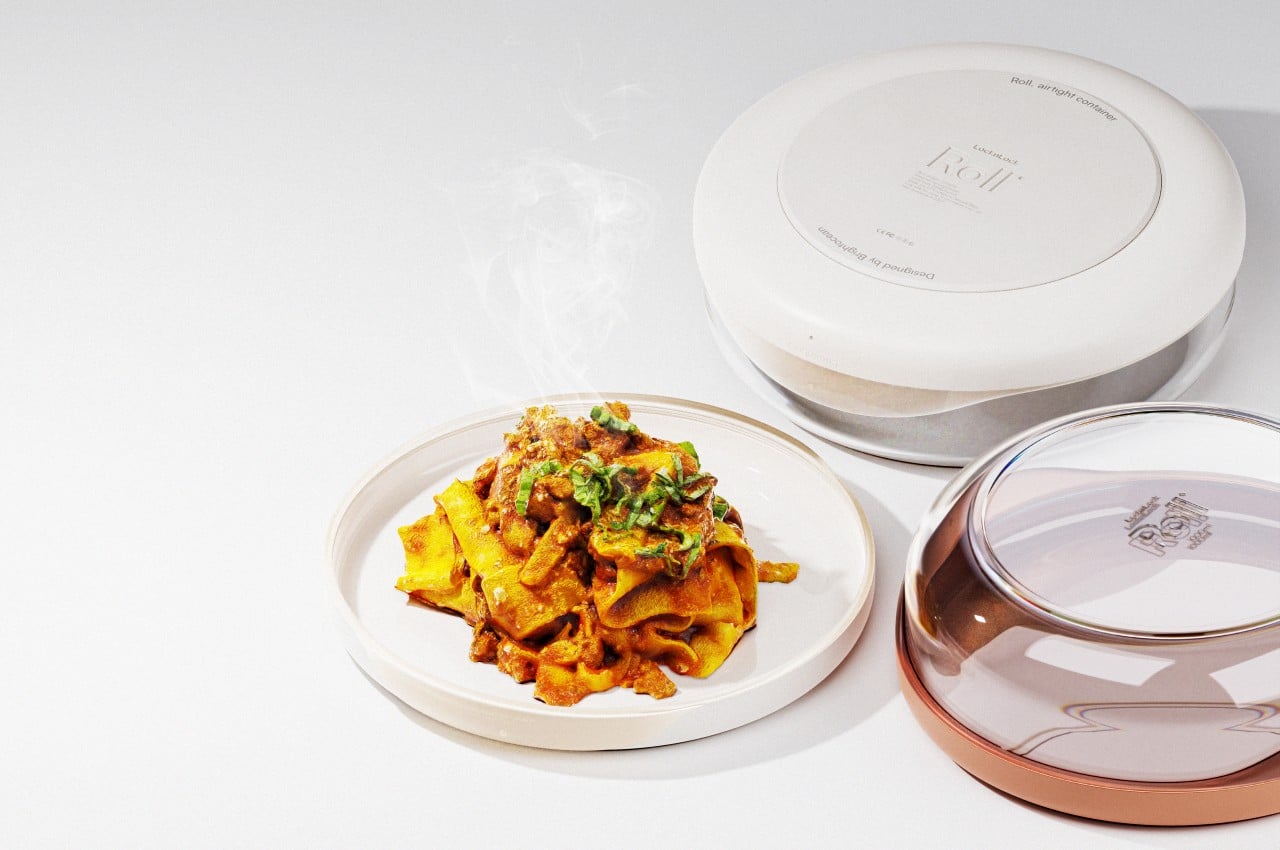
Roll is an attempt to preserve not only the flavors of food but also their presentation. It eschews the traditional square or rectangular shape of food containers in favor of something round.
Why is it noteworthy?
What makes Roll different from bowl food containers (which do exist, of course) is that it wholeheartedly embraces the culture of using the lid or dish cap as a plate. That’s why the cap itself was made to look presentable, using soft and clean tones like ivory, sky blue, and terracotta. The idea is that you set the freshly cooked food on the lid itself and then later just cover it with the glass bowl when it’s time to put it away.
What we like
The next time you want to eat the food, you don’t have to rearrange the food again to make it presentable
Roll takes the food container concept upside-down, literally, by making it usable, whether as a bowl with a round lid or a plate with a bowl cover
What we dislike
Not the most shape-efficient design/shape
10. Jodana
The name Jodana comes from the Hindi word meaning ‘to join’. It references not just the modular nature of the cooker, but also its user base, the lower-mid-income residents of Mumbai who gather from all over the country to make a living in India’s ‘City of Dreams’. The Jodana represents the literal melting pot that is Mumbai and offers a unique way to combine cooktops as well as cultures and cooking techniques.
Why is it noteworthy?
The modular cooktop features the induction cooker itself, as well as a control panel that attaches magnetically, quite similar to how the ROLI Blocks attach to one another to create an electronic musical interface. There are two cooktop styles to choose from, a flat-panel one that serves the role of a traditional induction cooker, as well as a curved surface that’s designed to work with the Kadhai, or the Indian equivalent of a wok. The kadhai plays an integral role in Indian cooking and is used for all sorts of stir-fries, stews, and curries, as well as for frying.
Picture this: it’s the day after a big party – perhaps it was a summer picnic – and among the empty glasses and used plates, slightly soggy crackers and decidedly secondhand-looking wodges of cheese, there’s an assortment of leftover fruit.
Maybe it’s berries or passionfruit that weren’t used on the pavlova, or excess flesh not used in the mango float. More than likely, there’s some sliced lemon that never realised its dream of becoming a garnish. Whatever it is, there’s not really enough of any one thing to do much with, so chances are these odds and sods will either sit on the bench or in containers in the fridge until they’re definitely no good to anyone.
Enter: use it up jam! This recipe allows you to turn bits and bobs of fruit into a delicious preserve that has the potential to last for years in the pantry. It works best with soft summer fruits like cherry, strawberry, blueberry, raspberry, mango, passionfruit, peach, apricot, nectarine and plum.
Anna Matilda’s leftover fruit jam recipe works well with summer berries and stone fruits. Photograph: Anna Matilda
If you’ve never jammed soft fruit before, don’t stress – it’s really not difficult. Boiled down (forgive the pun), it basically amounts to:
Mix fruit with ¾ its weight in sugar.
Leave until it goes runny.
Heat until it goes jelly-like.
Seal it in a very clean jar.
Seriously easy!
Of course it’s important to make sure you do stuff safely – like sterilising jars – but if you’re ever feeling overwhelmed about trying a traditional-type skill for the first time, just remember that once upon a time, people used to learn said skill with no fancy cookbooks, no TV shows, and definitely no internet.
I’ve given an example of weights, but you can absolutely tailor this recipe to whatever you have. Just be sure to add ¾ (75{d2b09b03d44633acb673e8080360919f91e60962656af8ade0305d5d8b7e4889}) as much sugar as you have fruit, and you’ll be fine (from a food-preservation point of view).
Ingredients
Macerating the fruit allows you to boil it to a set more quickly. Photograph: Anna Matilda
Basic: Soft fruit Sugar Lemon
Example: 350g mixed raspberries, blueberries and mango 262g sugar to suit our fruit weight (350g x 75{d2b09b03d44633acb673e8080360919f91e60962656af8ade0305d5d8b7e4889} = 262g) About ½ a lemon’s worth of slices, 1-2 lemons is good for most quantities
Wash the fruit in warm water, then trim off any manky bits.
Chop larger fruit into similar-sized chunks and remove any pips from stone fruit. Lightly smoosh blueberries if using. Combine with sugar in large pot.
Wash lemon, slice in half (if not already in slices), and squeeze juice into the pot, then add the leftover skin and pulp.
Stir until well combined, cover and leave to macerate for a few hours. Macerating is the process of drawing the juices of fruit out using sugar, which turns the sugar into liquid. This allows you to quickly boil jam to a set – meaning the fruit is more likely to stay in pieces rather than turning to mush.
Once the sugar has liquefied, put the pot on the stove and bring it to a rolling boil.
Test to see if a jam is set by dripping a bit on a cold plate, letting it cool, then giving it a poke. Photograph: Anna Matilda
Keep the jam boiling until it sets. A jam or jelly is at setting point when it gels enough to form a wrinkled skin when you push your finger through it. The simplest way to test this is to drip a bit of boiling jam or jelly on a cold plate, letting it cool for five minutes or so, then giving it a poke. If it doesn’t look gelled enough, continue boiling for another five minutes and try again.
Being careful not to burn yourself on the hot, set jam, remove the lemon pieces.
Pour into hot sterilised jars and seal while hot.
Store in a cool dark cupboard, for potentially years before opening, then keep it in the fridge once you’ve cracked the jar.
Notes
Most berries and soft fruits can be frozen, so if only have a tiny bit of fruit on hand, just add them to a container in the freezer until you have enough to make a batch of jam. No need to thaw the fruit before macerating.
Due to the low pectin levels in ripe strawberries and blueberries, this recipe might make a slightly runnier jam than you’re used to. Be sure to add any white bits of strawberry, as these have more pectin in them and can help reach a set.
If your jam just doesn’t want to set, rather than continuing to boil it until it becomes toffee, just jar it up runny and call it syrup! Excellent on ice-cream or yoghurt as a dessert.
Hang on to the bits of lemon you pull out of the jam before jarring up – either dehydrate them to enjoy as sticky, gooey candied treats, or pop into a glass with G&T or bubbles. Deliciously frugal!
Anna Matilda, AKA the Urban Nanna, uses permaculture principles to teach traditional skills, crafts and methods of living in the framework of a modern-day world. Visit her website for more jam-making tips.
Do your 2023 resolutions include a goal to optimize your diet for long-term health? Or a commitment to drinking more water, and eating more fruits, vegetables and whole grains? What about including plant-based meals on a weekly rotation?
Don’t set yourself up for failure by attempting an overnight revamp of your habits. Instead, review these 23 healthy living tips from registered dietician Leslie Beck and incorporate some tips each week. At the end of January, take a moment to review your progress and pick one you feel requires more attention to master in the next month.
1. Keep a food diary for a week
One of the biggest assets in making dietary change is a food diary. It can provide a huge amount of self-awareness and pinpoint areas for improvement. And if your goals include weight loss, research suggests that faithfully keeping a food diary will enhance your success.
Record your food intake – and portion size – after each meal. Don’t wait until the end of the day or you’ll likely forget a few foods.
Assess your food diary at the end of each day. What do you notice? No fruit? Not enough vegetables? Too many sweets? Portion sizes larger than you thought?
Use this information to help focus your efforts over the next few weeks.
Women need nine cups of water each day and men need 13 cups – more if they exercise. All beverages – even coffee! – count to your daily recommended intake.
2. Drink a large glass of water before each meal
Drinking water before each meal helps you feel full and, as a result, may prevent you from overeating. Also, many people don’t drink enough water in the winter months because they don’t feel thirsty. So this easy trick will also help you meet your daily water requirements.
Women need nine cups (2.2 litres) of water each day and men need 13 cups (three litres) – more if they exercise.
Here’s the good news: All beverages – with the exception of alcoholic drinks – count toward your daily water requirements. Yes, even coffee and tea.
3. Eat more fibre at breakfast
It’s estimated that Canadians get only half the fibre they need each day. Women, aged 19 to 50, need 25 grams a day; men should strive for 38 grams. (Older women and men need 21 and 30 grams of fibre a day, respectively.)
To help you meet that target, start by increasing your fibre intake at breakfast. Try one of the following:
Enjoy chia pudding made with milk or your favourite unsweetened non-dairy milk; 2 tablespoons serve up 10 grams of fibre;
Blend ¼ to 1/3 cup of 100-per-cent bran cereal into your breakfast fruit smoothie;
Sprinkle 2 tablespoons of ground flaxseed or pumpkin seeds over oatmeal;
Include whole fruit at breakfast; raspberries and blackberries, for example, provide 8 grams of fibre per one cup;
Add black beans to a veggie omelette or tofu scramble;
If you eat toast, buy 100-per-cent whole grain bread with at least 2 to 3 grams of fibre per slice;
Add ¼ of an avocado to a smoothie or spread on whole grain toast for an extra 3 grams of fibre;
4. Focus on heart-healthy fats
Emphasize polyunsaturated and monounsaturated fats in your daily diet, the types of fat linked to a lower risk of cardiovascular disease. When replaced for saturated (animal) fats, these healthy fats help lower LDL (bad) cholesterol in the bloodstream and may also improve how the body uses insulin.
Good sources of polyunsaturated fats include grapeseed oil, sunflower oil, canola oil, walnuts, chia seeds, ground flax, hemp seeds and pumpkin seeds. Foods that contain mostly monounsaturated fats are olive oil, avocado and avocado oil, peanuts, peanut oil, almonds, cashews, pecans and pistachios.
The following tips can help shift the balance of fats in your diet:
Replace butter or cream cheese on your toast or bagel with peanut or almond butter.
Instead of butter, add a drizzle of olive oil or grapeseed oil to the pan before scrambling or frying eggs.
Snack on a handful of nuts and fruit instead of cheese and crackers.
Swap butter on sandwiches with hummus or avocado.
5. Reduce food waste at home
With climate change firmly on the radar, sustainability underscores food trends for the year ahead. Reducing food waste is something we can all do to help reduce our carbon footprint. Food waste that ends up in landfills produces methane gas, a powerful greenhouse gas that affects climate change.
Practice the following tips to reduce food waste:
Make a weekly meal plan and write a grocery list to match. That way you’ll buy only what you need.
If you don’t eat everything you cook, freeze it for later use instead of throwing it away.
Avoid buying in bulk; purchase only what you need whenever possible.
Buy “ugly produce,” misshapen fruits and vegetables often thrown away by farmers and grocery stores.
Use vegetable scraps to make soup stocks and broths.
Store leftovers at the front of the fridge so you don’t forget them; eat within three or four days.
Buy frozen produce; unlike fresh produce, it doesn’t spoil quickly. Plus, you use only what you need at one time and store the rest.
6. Practise eating slowly
If weight loss is among your 2023 goals, this resolution is well worth making. Studies show that people who eat quickly – and eat until they’re full – are three times more likely to be overweight.
Eating slowly allows appetite-related hormones to kick in and tell your brain you’ve had enough to eat. Since it takes 20 minutes for these signals to register, if you eat too fast you will be more likely to overeat before your body is aware of it.
At breakfast, lunch and dinner: After every bite, put down your knife and fork and chew thoroughly. Don’t pick up that knife and fork until your mouth is 100-per-cent empty. Take sips of water between bites.
Include a variety of vegetables in at least two meals each day.
7. Add vegetables to (at least) two meals
To increase your vegetable intake, be sure to include them in at least two meals each day.
Despite the overwhelming evidence that eating plenty of produce is good for us, most Canadians eat too little of it. Canada’s Food Guide advises making half of your plate vegetables and fruits.
Work toward this target by adding more vegetables to your diet. Try these tips:
Add sliced tomatoes, cucumbers, grated carrot and greens to your sandwich or wrap.
Add leftover grilled or roasted vegetables to your brown-bag lunch.
Add quick-cooking greens such as spinach, kale, rapini or Swiss chard to soups, chili and pasta sauces.
Add baby greens to a breakfast smoothie or protein shake.
Serve poached eggs on a bed of sautéed spinach or kale.
Stir pumpkin purée into your overnight oats or breakfast smoothie.
Bake, microwave or boil a sweet potato for a change from rice or couscous.
Serve a veggie pizza topped with fresh baby arugula.
Snack on carrot sticks, cherry tomatoes, red or yellow pepper strips, broccoli florets and mushroom caps with hummus.
8. Serve your dinner on a smaller plate
This smart strategy that can help you achieve your 2023 weight-loss goal. It really works. In fact, one of my clients did this for six weeks and lost 10 pounds.
Serve your evening meal on a luncheon-sized plate (seven to nine inches in diameter), rather than a full-sized dinner plate.
You’ll put less food on the plate – which means fewer calories – but the plate will look full. You’ll find your appetite adjusts quickly to eating less food.
9: Snack on fruit – at least two servings per day
To get more fibre, vitamins, minerals and antioxidants into your diet, eat at least two servings of fruit each day.
What does one serving look like? It could be one medium-sized fruit (e.g., apple, pear, orange), two clementines, one small banana, one cup of cut up fruit/berries or ¼ cup unsweetened dried fruit.
To help you meet your daily target, snack on fruit (whole fruit, not juice) midmorning and afternoon.
Drinking 3 to 5 cups of green tea a day has been linked with protection from heart disease and high blood pressure.
10. Drink a cup of green tea
Drinking three to five cups of green tea a day has been linked with protection from heart disease and high blood pressure. Studies also suggest that drinking green tea regularly can help lower LDL (bad) cholesterol in the bloodstream. Green tea leaves are an incredibly rich source of phytochemicals called catechins, which have potent antioxidant and anti-inflammatory properties.
Here are a few ways to add green tea antioxidants to your diet:
Start your day with a cup of freshly brewed green tea.
If you drink coffee or diet soft drinks with meals, replace with a cup of green tea.
For a midday snack, try a green tea latte.
Brew green tea in cold water for 20 minutes and use as a liquid in marinades, sauces and gravies.
Use brewed green tea to sauté or stir-fry vegetables.
11. Eat leafy green vegetables
Leafy greens are high in fibre and a good source of cancer-fighting vitamins A and C, vitamin K, folate (a B vitamin), iron, calcium and potassium. What’s more, they’re an exceptional source of lutein and zeaxanthin, phytochemicals thought to protect against cataract and macular degeneration. Also, research suggests that eating lutein-rich leafy greens on a regular basis slows age-related cognitive decline and lowers the risk of Alzheimer’s disease.
Include a leafy green vegetable in your daily diet. Choose from arugula, beet greens, collard greens, dandelion greens, kale, mustard greens, leaf lettuce, romaine lettuce, rapini (broccoli raab), spinach, Swiss chard and turnip greens.
Here are a few serving suggestions:
Sauté kale with fresh garlic and chili peppers and drizzle with roasted sesame oil just before serving.
Add chopped collard greens, along with golden raisins and slivered almonds, to sautéed onion and garlic. Cook for 5 minutes or until tender.
Add sautéed or steamed rapini to a tomato-based pasta sauce.
Toss fresh spinach with sliced strawberries and mandarin orange segments for a salad. (Plus, the vitamin C in the fruit increases the amount of iron your body absorbs from the spinach.)
Add steamed Swiss chard to omelettes, quiches and frittatas.
Use dark green lettuces to makes salads instead of paler greens.
12. Plan a week of meals in advance
The key to successful long-term healthy eating is planning ahead to make sure you’re fuelling your body with nutritious foods. Plus, knowing what you’re going to eat for dinner takes the stress out of having to figure it out at the end of a hectic day.
Try mapping out next week’s dinners. I encourage you to plan breakfasts, lunches and snacks too, if appropriate. As you plan, think about how you can cook once and make two or more meals out of it. Batch cook soups, casseroles, pasta sauce or chili on the weekend and freeze to serve on a busy weeknight. Cook a batch of whole grains such as brown rice, farro or barley in your Instant Pot. Grill or roast an extra portion of salmon or chicken at dinner for a simple, no-prep lunch the next day.
Herbs and spices contain potent antioxidant and anti-inflammatory phytochemicals called polyphenols that may boost brainpower and guard against cancer, diabetes and heart disease.
13. Flavour with herbs and spices
Adding herbs and spices to meals is an effective and tasty way to de-salt your meals. But the benefits of cooking herbs and spices goes beyond reducing your sodium intake. Herbs and spices contain potent antioxidant and anti-inflammatory phytochemicals called polyphenols that may boost brainpower and guard against cancer, diabetes and heart disease.
Try these tips to add herbs and spices to your meals (to convert fresh-to-dried herbs use 1 teaspoon dried for every tablespoon fresh):
Add dried basil to pasta sauces, soups and homemade salad dressings.
Top salmon with fresh dill before baking or grilling or add chopped dill to coleslaw and steamed carrots and green beans.
Add chopped fresh mint to fruit salad, berries, yogurt, smoothies and green and pasta salads or sprinkle over roasted vegetables.
Add ¼ teaspoon turmeric to water when cooking rice or stir into olive oil and drizzle over cauliflower before roasting.
Sprinkle ground cinnamon over oatmeal, mix into Greek yogurt or mix cinnamon with almond butter and add to protein shakes.
14. Eat three plant-based meals per week
There’s no doubt that eating a plant-based diet helps guard against a myriad of health problems, including high cholesterol, high blood pressure, heart disease, stroke, Type 2 diabetes, obesity and certain cancers.
Foods such as beans, lentils, nuts, tofu, edamame and tempeh are loaded with plant protein, as well as vitamins, minerals and many different phytochemicals. Plus, they’re incredibly low in saturated fat and many are excellent sources of fibre.
Replace meat, poultry or fish with a plant-based protein at three meals each week. Here are a few ideas:
Add chickpeas to a green or Greek salad.
Replace meat or chicken with tempeh or cubes of firm tofu in a stir-fry.
Make bean tacos. Swap ground beef or turkey for black beans or pinto beans.
Substitute white kidney beans for ground meat in a marinara pasta sauce.
Instead of a beef or turkey burger, make veggie patties from black beans, chickpeas or lentils.
Make a batch of vegetarian chilli or lentil soup to enjoy for lunches during the week.
Try noodles made from black beans, lentils, chickpeas or edamame for a plant-based pasta meal.
15. Add ground flaxseed to your diet
Tiny flaxseeds offer soluble fibre, omega-3 fatty acids called alpha linolenic acid (ALA) and phytochemicals called lignans. Research suggests that a regular intake of ground flax can help lower LDL blood cholesterol and blood pressure, and possibly guard against breast and prostate cancers.
Two tablespoons of ground flax deliver 60 calories, four grams of fibre and more than a day’s worth of ALA. (You need to eat flaxseeds ground because when whole, they pass through your intestinal tract undigested, meaning you won’t reap all their benefits.)
Add ground flax to hot cereal, overnight oats, smoothies, yogurt, applesauce, muffin and pancake batters, or mix into lean ground beef or turkey when making burgers or meatloaf. Stir it into egg whites to make a “breading” for fish or chicken. You can also try adding a little ground flax to mustard or mayonnaise for a healthier sandwich spread.
Carrots, sweet potato and winter squash are loaded with beta carotene, an antioxidant linked to a lower risk of heart disease and certain cancers.
16. Eat orange vegetables
Carrots, sweet potato and winter squash are loaded with beta carotene, an antioxidant linked to a lower risk of heart disease and certain cancers. Some of the beta carotene you eat is also converted to vitamin A in the body, a nutrient that supports a healthy immune system.
There’s no official recommended intake for beta carotene, but experts maintain that a daily intake of 3 to 6 milligrams is needed to help prevent chronic diseases. Guess what? A medium sweet potato packs 13 milligrams of beta carotene, half a cup of carrot juice has 11 mg, half a cup of cooked carrots has 6.5 mg (half a cup of raw carrots has 5 mg) and half a cup of butternut squash has 4.5 mg. So it’s not hard to get your fill.
Try one of these suggestions:
Add a shredded carrot to soup, green salad, pasta sauce and muffin batters.
Add diced sweet potato or butternut squash to your favourite curry recipe.
Serve roasted sweet potato wedges instead of roasted white potatoes.
Add ¼ cup of carrot juice to a smoothie or protein shake.
Blend pumpkin purée into smoothies or stir into oatmeal and overnight oats.
Enjoy roasted squash as a side dish at dinner; drizzle with maple syrup and a dash of cinnamon.
17. Skip the sugary drinks
Consuming too much sugar – especially from sweetened beverages – is linked with a greater risk of Type 2 diabetes, heart disease and obesity. The goal is simple: Replace all sugary drinks with water, clear tea, black coffee, herbal tea, unsweetened milk or unsweetened non-dairy milk.
What constitutes a sugary drink? Sugar-sweetened soft drinks, sweetened iced tea, lemonade, fruit punch, vitamin waters, energy drinks and sports drinks all count.
While 100-per-cent fruit juice does not have added sugar, it’s still a concentrated source of natural sugar (and calories) that lacks fibre. For this reason, it’s considered a sugary drink. Replace fruit juice with a serving of whole fruit. And if you regularly drink fruit juice to quench your thirst, replace it with water.
18. Cut 100 calories a day
It’s estimated that adults gain, on average, one to two pounds a year. For some people, this gradual creep could lead to obesity. The good news: You don’t have to make major changes to your diet to prevent incremental weight gain.
Instead, studies show that adopting a “small change approach” – cutting 100 to 200 calories a day by eating less, exercising more, or a combination of the two – can do the trick. Making small tweaks to diet and exercise are easier to integrate into your everyday life and easier to maintain long-term than are bigger lifestyle changes required to lose weight.
Here are a few small easy changes to implement:
Eat one medium orange instead of drinking 12 ounces of orange juice to save 117 calories.
Skip the cheese slice on your sandwich to drop 115 calories.
Reduce your portion size of brown rice by one-half-cup to lose 128 calories.
Add one less tablespoon of cooking oil when sautéing and save 120 calories.
Try 2{d2b09b03d44633acb673e8080360919f91e60962656af8ade0305d5d8b7e4889} milk instead of 10{d2b09b03d44633acb673e8080360919f91e60962656af8ade0305d5d8b7e4889} cream in your coffee to cut 80 calories per one-quarter cup.
Add 20 minutes of brisk walking, 12 minutes of hiking or 10 minutes of moderate cycling to your day to burn roughly 100 calories for a 170-pound person.
19. Eat an afternoon snack
If you arrive home from work hungry and ready to eat everything in sight, this tip will help prevent overeating at the end of the day. But that’s not all.
Eating every three to four hours also helps keep your blood glucose (energy) level stable and fuels late-afternoon workouts. Healthy snacks also provide an opportunity to boost your intake of important nutrients such as protein, fibre and calcium.
Snacks should include slow-burning carbohydrates to fuel your muscles and your brain, along with protein and a little healthy fat to keep you feeling energized longer.
Healthy snack ideas include:
Fruit and a small handful of nuts.
Apple slices with almond butter or pumpkin seed butter.
Greek or Icelandic yogurt with berries.
A homemade fruit smoothie made with milk or soy milk.
A cup of black bean, lentil or chickpea soup.
Half of a whole wheat pita with tuna and baby arugula.
Whole-grain crackers and cheddar cheese.
Raw veggie sticks with hummus (or guacamole).
If you like the convenience of energy bars, choose bars made with whole food ingredients such as fruit and nuts.
If the lag time between breakfast and lunch is long, include a midmorning snack too.
20. Eat dinner earlier
If you’re watching your waistline, it’s a wise idea to set a cut-off time for eating dinner. (Unless, of course, you work a night shift.)
Ideally, avoid eating a large meal after 7 p.m. and eat it earlier if you can. If you’ve had an unusually long day and there’s no avoiding eating after that time, keep it light – a bowl of bean soup, salad with lean protein or an omelette with vegetables.
While there’s no scientific evidence that eating after a certain time of the night can make you gain weight, eating late in the day has been tied to increased obesity risk and less successful weight loss, outcomes that couldn’t be explained by differences in calorie intake. Research has also shown that, compared to people who ate dinner early, late-eaters were hungrier during the day and burned fewer calories.
But there are other reasons to avoid eating late. My clients who stick to the rule tell me they sleep better, wake up with an appetite for breakfast and feel less bloated in the morning.
Research suggests that you need to eat at least three servings of whole grains each day to reap their health benefits
21. Eat whole-grain foods
Eating foods made from whole grains is linked with protection from heart disease, Type 2 diabetes and colorectal cancer. Whole grains contain all parts of the grain: the outer bran layer where nearly all the fibre is, the inner germ layer that’s rich in nutrients, antioxidants and healthy fats, and the starchy endosperm.
Research suggests that you need to eat at least three servings of whole grains each day to reap their health benefits. One serving equals: one slice of 100-per-cent whole-grain bread, 30 grams of breakfast cereal, ½ cup cooked whole-wheat pasta or ½ cup cooked whole grains such as oats, brown rice, farro, quinoa and millet.
Ideally, most – if not all – of your grain choices should be whole grain.
Try to replace all “white,” refined grains with a whole grain. The following tips can help you do so:
Read labels on packages of whole grain breads, crackers and breakfast cereals. If you don’t see a statement of “100 per cent whole grain,” scan the ingredient list to make sure the product doesn’t contain refined grains (e.g., wheat flour, rye flour).
If you buy rye bread, look for whole-grain terms such as whole grain, coarse rye meal, rye kernels and rye flakes on the ingredient list.
Try whole-wheat or brown rice pasta instead for white pasta.
Batch cook whole grains so that you have them ready to add to meals; they’ll keep in the fridge for three to four days.
Toss cooked quinoa, bulgur or farro into green salads.
Add barley, red rice or spelt berries to soups, stews and chili.
Make whole-grain bowls with freekeh or brown rice.
More often, replace white pasta with whole wheat, whole-grain spelt or brown rice pasta.
Try one new whole-grain food each week such as barley, farro, freekeh, millet, sorghum, red rice or quinoa.
22. Use the ‘plate model’ at dinner
Use this quick and easy technique to help manage portion sizes and fill half your plate with vegetables at dinner (or lunch).
Here’s how it works: Visualize your dinner plate in quarters, and fill those quarters as follows:
One quarter: Starchy food (e.g. brown rice, quinoa, whole-wheat pasta, sweet potato);
Two quarters: Cooked or raw vegetables and/or salad greens;
It’s also a great strategy for when you’re eating buffet-style: It helps make sure your eyes aren’t bigger than your stomach – and prevents you from needing to loosen your belt after the meal.
23. Review your healthy habits
The last day of January is a perfect time to reflect on the nutrition strategies you’ve embarked upon during the past few weeks.
Changing your eating habits takes practice. It’s easy for things to slip, especially when you’re given a nutrition tip to implement each day. That’s a lot to ask of anybody … so give yourself a pat on the back!
Consider the nutrition tips you’ve worked on this month. Choose one you feel requires more focus and attention in order for you to really master it.
Leslie Beck: The healthy food trends – for you and the planet – to watch for in 2023
Food stuff carts in Portland, Oregon, are below the gun due to new condition wastewater disposal procedures, Portland Regular described this week. The new guidelines, which debut next week, have compelled some of the city’s environment-renowned carts to close—temporarily, they hope—while they try out to figure out regardless of whether and how to comply.
Portland’s beloved foods carts are mostly stationary vending functions that provide food out of spaces they share with other carts. These areas, recognised in Portland as “pods,” normally function a dizzying array of food items that set most any food items courtroom to disgrace pertaining to the selection and top quality of foods they offer. Website visitors to a pod could possibly uncover a schnitzel cart parked next to other cart distributors promoting steamed bao buns, pizzas, empanadas, meats on sticks, and crepes.
“Section of the cause why carts are so well-known [in Portland]: there is a very low barrier to entry to commencing a single, with decrease upfront expenses and a lot less regulation involved than with brick-and-mortar dining places,” the Regular monthly aspects in its exceptional piece. “But with new laws relating to food carts and food stuff cart pods getting effect on January 1, 2023, some cart homeowners are apprehensive about their capability to preserve their enterprises open up, and some have now designed the conclusion to briefly near, including Meliora Pasta and Papi Sal’s.”
The new policies built information this tumble.
“Setting up in January they have to be connected to a sewage line or have their wastewater pumped on a common foundation,” KGW8 documented in October. “In 2019, the Oregon Wellness Authority applied a new rule that food [] carts and pods can no longer shop wastewater. This is an exertion to slice down on spills which generate overall health and basic safety risks.”
When it comes to industrial food stuff wastewater disposal, the general tactic—from the EPA to state and neighborhood regulations—prohibits companies from dumping untreated wastewater into municipal sewage drains or other waters. As a result, lots of foods businesses—food carts included—hire businesses to dispose of this sort of waste.
Currently, the Month to month points out, Portland carts might dispose of wastewater “by connecting directly to the sewer with a grease interceptor, by accumulating drinking water in the cart’s small onboard wastewater tank and frequently emptying that tank, or by collecting water in a significant wastewater dice adjacent to the tank.” The new principles largely do away with the latter option and make the next possibility prohibitively expensive—which is also an inherent and ongoing issue with the first possibility.
Owners of lots of food carts, which Portland Regular monthly rightly phone calls “the heart” of the city’s food items culture, are battling to figure out how to pay out for the new disposal expenditures. Existing disposal fees for carts have been all-around $80 for every week, in accordance to KGW8, and often involve carts emptying waste consistently into an on-internet site wastewater “cube” that can maintain hundreds of gallons of wastewater and is emptied weekly. But the new procedures, Portland Monthly explains, correctly ban such cubes and only allow carts to retail outlet compact amounts of wastewater in onboard tanks.
Daily wastewater disposal can value $70—several periods the present expense KGW8 reported—and that is if a wastewater hauler that works with meals carts can be uncovered and booked. The Month-to-month reviews there are only two very overbooked haulers in the Portland region. Alternately, hooking up a pod to a municipal wastewater line can cost a assets operator tens of countless numbers of dollars—charges the pod entrepreneurs move alongside to their tenant foods carts.
“I’ve bought a bid for a contractor that’s $30,000, and we’re not gonna do that,” Tess Kies, who owns a food items cart pod, tells the Regular monthly. “I know we will not likely retain [the pod] if the value is outrageous. I’m involved that [a lot of the carts around the city] are going to be put out of enterprise.”
The new wastewater restrictions arrive at a specifically unwelcome time for Portland’s foodstuff carts, which (together with other town eateries) have expert declining revenues during this year’s holiday getaway year. A lot of effectively-favored carts in Portland by now closed for excellent this year—even prior to the new guidelines just take outcome. Yet another issue with the new policies is that even though they have been in the performs for years, some food items cart homeowners say they only located out about them in August. That is 1 motive some house owners, the Monthly reviews, are asking the metropolis to delay enforcement.
I assist retaining city sewers absolutely free of untreated industrial cooking grease and other food waste that can overwhelm them. Remember that in 2014, a “fatberg“—a disgusting blob the length of a Boeing 747 built up of employed cooking oil (along with other gag-inducing waste)—was eliminated, over a interval of many times, from a London sewer it was clogging.
Definitely, while, there should be some other means to avoid sewer fatbergs and the introduction of untreated wastewater into rivers and streams than forcing food items cart entrepreneurs to pay back thousands of bucks in new service fees to dispose of their wastewater. Delaying implementation of the new rules, as some are requesting, looks the minimum the point out, county, and metropolis can and should do. But what about, say, escalating penalties for wastewater spills and dumping? And, specified Portland’s wellness office promises wastewater cubes found at pods are at times hit by cars—leading to spills—why not involve those cubes to be put in parts no auto may perhaps access (e.g., by demanding them to be surrounded by cheap bollards)? Since the alternative—putting very important small foods enterprises in Portland’s crisis-ridden downtown out of business—is no alternative at all.
As aspect of our series All Items We’re Cooking, Jan Kincaid describes a fudge recipe she grew up making with her mother and father and continued producing into her adulthood.
EMILY FENG, HOST:
All this season, we’ve been sharing tales from our listeners of their beloved spouse and children recipes. It is a series we connect with All Points We are Cooking. Now we listen to from Jan Kincaid, who provides us a dessert intended for sharing with friends and neighbors.
JAN KINCAID: I was really satisfied to submit a recipe known as Pete Kincaid’s fudge. Pete Kincaid would be my father. Effectively, we designed it as a loved ones. But my father commenced to make it in batch immediately after batch and give it to men and women as a gift at Xmas time. He was the director of vocational education and learning for our college method in East Chicago. So he was in demand of property economics, vocational arts – which would be print shop, woodshop, equipment shop, things that aren’t even made available in universities now. My mom would do the shopping. So she would often get the evaporated milk. She would get chocolate chips. She would get the butter and the sugar.
Then we’d established up in the kitchen. We had a minor, small kitchen in East Chicago. And it was a huge pot. And we might comply with the recipe. And then I would stand on a stool. And I was in charge of stirring it for the 11 minutes – or my father. And we would stand there and talk. With fudge, you won’t be able to double the recipe. You can only make a person batch at a time. And that is in which the persistence arrived in with my father. He was an exceptionally client male. And he could possibly spend hrs just generating batch just after batch.
You know, gift offering wasn’t this sort of a large detail where I grew up. And it just was a gesture of friendship and goodwill. So when I was to start with married, we lived in the Chicagoland spot. And then my previous husband’s task took us to Cincinnati. And so it was a way to make friends. You know, I was there all by yourself with a tiny toddler. I was anticipating another infant. You know, I didn’t know anybody or everyone. And it was a way to type of connect to individuals, to make a gift or knock on the door.
The amusing matter about it getting referred to as Pete Kincaid’s fudge is my mom would generally stand guiding my father and roll her eyes simply because she claimed it was – actually, the fudge recipe arrived from her. But my father was – he was a quite personable, sweet gentleman. And so individuals seriously related to him and preferred him. And so, of class, it turned named immediately after him. My mom give up rolling her eyes after several years. But we always laughed about that. It tastes so excellent because it really is so whole of fat and sugar and chocolate. Be courageous and try it. And you may be actually satisfied with the success.
(SOUNDBITE OF Songs)
FENG: That was Jan Kincaid. She lives around Los Angeles now. You can obtain her fudge recipe and all the recipes in our sequence by searching for All Issues We’re Cooking at npr.org.
NPR transcripts are created on a rush deadline by an NPR contractor. This text may not be in its final type and may be up-to-date or revised in the long term. Precision and availability may possibly fluctuate. The authoritative file of NPR’s programming is the audio document.
Spinach greens are the favourites of a lot of. This versatile leafy vegetable can be incorporated into an array of dishes. Packed with diet, spinach is recommended as a superfood by many nutritionists and dieticians. Even so, it is just not about adding spinach to your eating plan to get the optimum added benefits a person need to follow the right cooking strategies
With the advent of wintertime, the marketplace receives enriched with contemporary eco-friendly leafy vegetables. Nevertheless it is readily available about the calendar year, the colder season provides the most effective ones. This storehouse of nutrition, on the other hand, requires one particular to observe a couple simple culinary suggestions to get its rewards to the fullest prospective. The top secret to finding the most overall health perks of these leafy eco-friendly 1 has to be mindful of their cooking approaches. The mobile partitions of the spinach greens split down through cooking, expanding its nutrients’ bioavailability. A person of them is iron, a needed mineral that supports our immune technique and tends to make it a lot easier for oxygen to transfer among cells. About .8 milligrams of iron are existing in 1 cup of raw spinach, although 3.2 milligrams are in 1/2 cup of cooked spinach.
Picking and cleansing rules
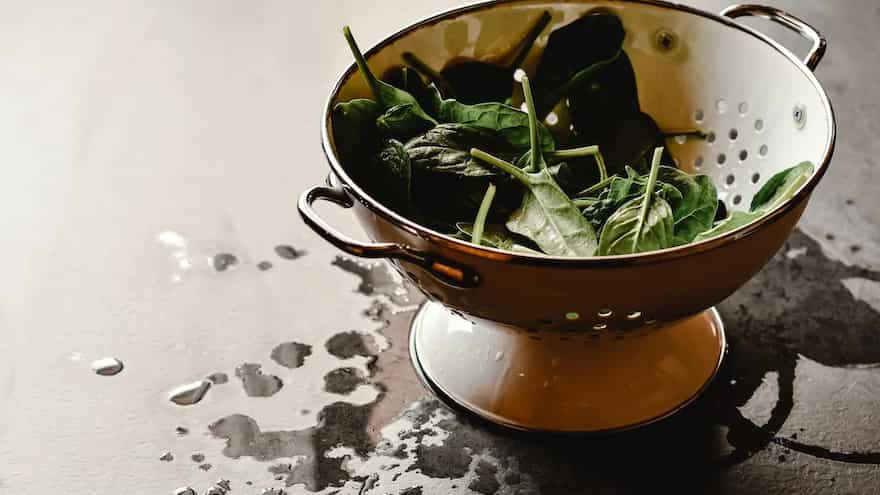
Fill a colander with fresh spinach leaves. Go by way of the leaves and take away any that are sticky or withered. Rinse the leftover spinach in cool water well. Although rinsing, shake the colander to stir the leaves and make sure all the dirt is cleaned out.
Spinach in colander, Graphic Resource: Pexels
Evaluate before cooking
Pay back awareness to how significantly spinach you intend to consume. It is suggested that you weigh it ahead of cooking. Fresh spinach leaves are cooked down to around 1/3 cup from a serving size of 1 cup. So, if you want to eat a cup of cooked greens, multiply the part by three instances.
Cooking with water and oil
To cook spinach with oil, drizzle a minor little bit of olive oil or your preference of oil in a incredibly hot skillet. The very best sticking resistance will come from oil, but it also adds energy and unwanted fat. Drinking water will also do the trick. To sauté the approved amount of spinach leaves, add them to the pan with the oil. Blanch them in h2o as an option. All through the cooking course of action, stir the leaves and then plate them. When spinach leaves produce a further shade of eco-friendly and start out to wilt, they are cooked. Overcooking makes it slimy.
Sauteed spinach in skillet, Impression Supply: Freepik
Gains of broth
You can incorporate spinach leaves into soups and stews towards the end of the cooking process rather than sauteing them in oil or boiling them in water. Any nutrients that leak out of the leaves will be absorbed by the broth utilized to cook them.














/cloudfront-us-east-1.images.arcpublishing.com/tgam/WN3S3UDDKFALVNDNVNHTYSBIFI.jpg "Healthy eating habits for 2023: 23 dietician-approved tips")
:format(webp)/cloudfront-us-east-1.images.arcpublishing.com/tgam/U5A2SSAIC5DHDNZSTBNSL3ARPI.jpg)
:format(webp)/cloudfront-us-east-1.images.arcpublishing.com/tgam/HMV2V3P2C5GN3E4FYNN467TQMQ.jpg)
:format(webp)/cloudfront-us-east-1.images.arcpublishing.com/tgam/UXE27KVCGBDBBDEZG6AV4OOSAI.jpg)
:format(webp)/cloudfront-us-east-1.images.arcpublishing.com/tgam/GDSH4GVWVBEWTOZROZTXBR6XNE.JPG)
:format(webp)/cloudfront-us-east-1.images.arcpublishing.com/tgam/R2G4Z4KEIBEZVAVSFS3ZUDXKLQ.jpg)
:format(webp)/cloudfront-us-east-1.images.arcpublishing.com/tgam/4MGKCOK2ZVA37H7T7MPJSTWS2Q.JPG)