
Dr Michael Mosley’s tips on how to lose weight in winter

Dr Michael Mosley’s tips on how to lose weight in winter

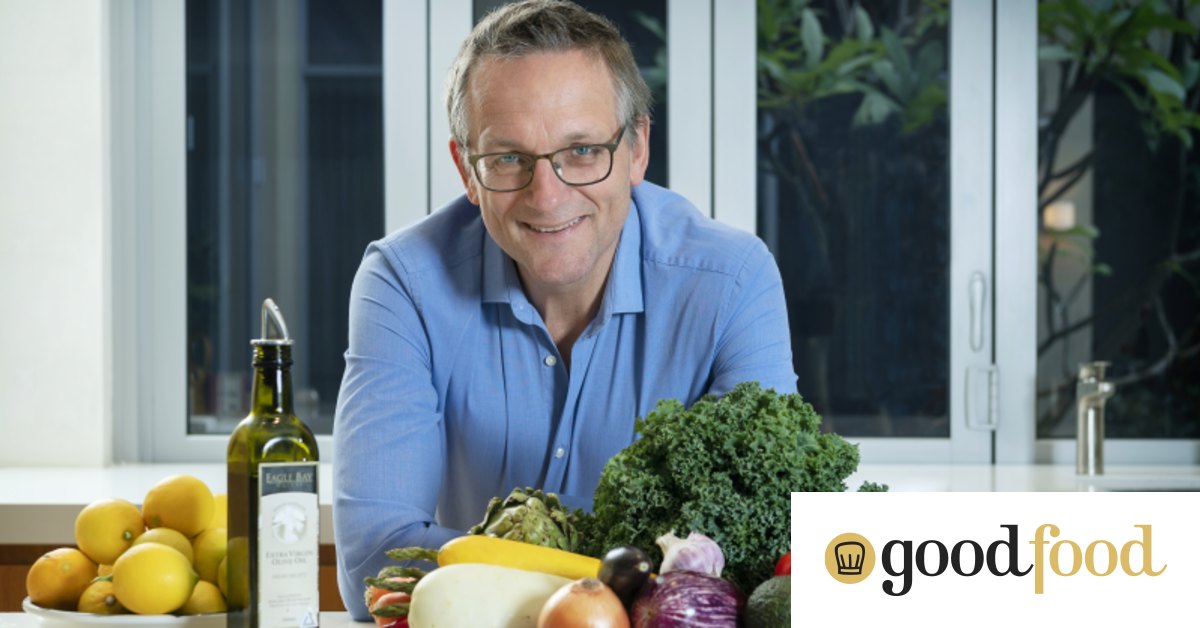
Reframing the way we think about healthy foods can help us manage our physical and mental health through the cooler months ahead, the TV presenter and “5:2 guy” says.

Megan Johnston

Pleasure might not be something many of us associate with weight loss or healthy foods but there’s no reason it can’t be, says Dr Michael Mosley.

In fact, the enjoyment of cooking and eating is central to good health, says the British television presenter and “5:2 guy”, who is visiting Australia for a series of live shows and to work on a new series for SBS called Australia’s Sleep Revolution.

Food that’s good for our body also tends to be good for our brain, and while it may seem counterintuitive, many people feel better rather than worse a few days into a new eating regime, Mosley says.

Don’t fall into the trap of comfort eating over winter, Dr Michael Mosley says.
Don’t fall into the trap of comfort eating over winter, Dr Michael Mosley says.Jody D’Arcy

“People are often surprised,” says Mosley, whose Fast 800 program promotes weight loss through intermittent fasting and an energy-controlled food plan.

They stop feeling hungry and notice a lift in mood “rather than what you might think about going on a diet, which is feeling hungry and miserable all the time”.

Here are his top 10 tips for the cooler months ahead.

Kick comfort eating

One of the biggest mistakes people make in winter is to give into the idea of wintry cravings, says Mosley.

Increasing evidence shows these so-called “comfort foods” can be anything but, ultimately leading to poorer mental health.

“It’s cold, it’s miserable … [we have] a tendency to think, well, it’ll make me feel better if I have that doughnut,” he says.

“Try to resist it because it all adds up. These ‘comfort foods’ don’t really provide long-term comfort. Although it gives you a temporary dopamine lift when you eat junk food, in the long term it can lead to depression and anxiety.”

Feta, pea and mint crustless quiche from The Fast 800 Easy cookbook.
Feta, pea and mint crustless quiche from The Fast 800 Easy cookbook.Smith and Gilmour/Simon and Schuster Australia

Keep it simple

Mosley is a fan of easy, accessible Mediterranean recipes rich in vegetables, oily fish, olive oil and nuts.

“They need to be super healthy, full of nutrients, but also super tasty and easy to prepare,” he says.

Anything that’s quick and affordable will be ultimately more sustainable, as will flexible dishes that can be adapted for other family members who might want to eat different portions or sides.

“What we’re really trying to do is teach long-term habits. So when you come off the diet you have a whole range of recipes and menus that you can call on.”

Keep moving

Staying active over cooler months is important but relying on willpower alone is often tricky, Mosley says.

Rather than trying to squeeze dedicated gym time into an already overpacked schedule, try working exercise into your existing routine and habits, say with a few squats and push-ups first thing in the morning or by doing whatever naturally motivates you and fits into your day.

“Don’t be afraid of going out in all weathers,” Mosley says.

“There’s an expression in England – that there’s no such thing as bad weather, only bad clothes, so embrace the light and embrace the rain.”

Take it outside

Heading outdoors in winter can help you literally lighten up, especially if you bring a friend or two, Mosley says.

“There’s increasing evidence of the impact of light on mood,” he says.

“Another thing we know is one of our greatest sources of happiness is meeting up with friends. Even incidental short meetings can really boost your mood and going or a walk is a perfect excuse.

“Also, in winter you have a tendency to meet people indoors and that means you’re going to be sharing more bugs, whereas when you’re outdoors there are fewer germs floating around than when you’re crowded into a small space.”

Dr Michael Mosley and wife Dr Clare Bailey of The Fast 800 cookbooks and program.
Dr Michael Mosley and wife Dr Clare Bailey of The Fast 800 cookbooks and program.Supplied

Shift your palate

Genetics and family cooking preferences can influence weight gain, but it’s possible to shift your palate and microbiome by making healthier food choices, Mosley says.

Increasing the amount of fibre in your diet and eating more fermented foods can help reduce cravings for treats such as chocolate, for example.

“It seems to be that part of these cravings come from your gut bacteria, and you can change them by changing what you eat,” Mosley says.

Sometimes a stricter approach may be necessary, however.

“I will never crave broccoli in the same way I crave chocolate, to be frank, so I find the best way of coping with that is just keeping it out of the house,” he says.

Harissa yoghurt with soft-boiled eggs and spinach from The Fast 800 Keto Recipe Book.
SMITH and GILMOUR/Hachette Australia

Curb carby cravings

Cravings for carb-heavy foods seem to be linked to a few specific factors, Mosley says.

Lack of light is the first – another good reason to step outside. Poor second is sleep. “We know after a bad night’s sleep you eat on average 300-400 more calories and it’s specifically carbs we seem to seek and give us a lift there,” he says.

Finally, fibre seems to play an important role. “If you can improve the fibre contents of your diet then there’s some evidence that will reduce your carb cravings.”

Keep your gut happy

Gut health is “all about making sure you’re eating lots of different sorts of fibres”, Mosley says.

That means eating a wide variety of fruits and vegetables, and throwing in extra herbs wherever possible.

If fresh produce is in short supply over winter, head to the freezer section of your supermarket to load up on snap-frozen ingredients, which are often just as good as or even better than fresh.

“In winter sometimes fresh fruit and veg is more limited and more expensive but don’t be afraid of the frozen stuff – it’s just as healthy,” Mosley says.

Low-carb sausage “lasagne” from The Fast 800 Easy cookbook.
Low-carb sausage “lasagne” from The Fast 800 Easy cookbook. SMITH and GILMOUR/SIMON and SCHUSTER AUSTRALIA

Smart swaps

When it comes to cooking, Mosley’s wife Dr Clare Bailey suggests skipping the usual stodgy winter dishes for healthier options that are just as satisfying.

Spiralised zucchini is a good swap for spaghetti, for example, or you can mix them together for a lighter pasta dish with extra veg.

Mashed cauliflower works wonderfully on top of a shepherd’s pie instead of the usual potato – or try celeriac for a high-fibre, lower-carb option in place of your usual mashed potato or chips.

If you’re craving lasagne, try blanched cabbage leaves or sliced zucchini in place of pasta sheets, or try just using a single lasagne sheet – “just enough to keep the kids happy”, says Bailey, who co-authored The Fast 800 Easy cookbook.

I will never crave broccoli in the same way I crave chocolate to be frank, so I find the best way of coping with that is just keeping it out of the house.

Dr Michael Mosley

Or simply serve a smaller portion of your usual recipe alongside salad or vegetables.

The couple are also big fans of pulses come wintertime, especially dahl and other legume dishes.

“Beans and lentils hugely benefit from having lots and lots of olive oil added to them,” Bailey says.

“Or make your own baked beans with a tin of mixed beans and tinned tomatoes – it’s super easy.”

Baked nectarines with blackberries from The Fast 800 Easy cookbook.
Smith and Gilmour/Simon and Schuster Australia

Indulge – in moderation

If you’re hoping to lose weight quickly, then alcohol and sweet treats aren’t the best idea in the short term, Mosley says.

Not only do they contain extra energy, but in the case of alcohol, you can become disinhibited and end up reaching for a bowl of chips or snacks.

If you’re looking at more gradual weight loss or just a healthier way of life, however, then the occasional glass of red wine or home-cooked treat is usually fine, Mosley says.

“Nobody’s ever going to give up chocolate entirely, but it’s much better if you make your own [cake or dessert] because then you know what goes into it,” he says.

It’s a similar story for processed food: “Life is busy and if you’re on the road or stuff is happening, try to minimise it rather than say ‘I’m never going to eat it again.’ ”

Easy cauli steak pepperoni pizza from The Fast 800 Keto Recipe Book.
Easy cauli steak pepperoni pizza from The Fast 800 Keto Recipe Book.SMITH AND GILMOUR

Stay on track

Healthy habits and good intentions can easily become unstuck by sickness, stress or just everyday life, so you need a few tricks to keep yourself on track, Mosley says.

Meal planning is key, as is picking a sustainable diet that suits your temperament and lifestyle, whether it’s low-carb or low-calorie, or a version of time-restricted eating and intermittent fasting, where you either fast or limit food for a set period such as early evening to late morning or on certain days of the week.

Mosley also recommends setting yourself specific health-related or weight-loss goals and making them as detailed as possible – for example, a certain number of steps per day, or reducing your blood pressure or waist measurement.

Then keep yourself accountable by actually measuring yourself against them, or even sharing them with friends and family.

For people in middle age or with a family history of diabetes, Mosley suggests buying a blood pressure monitor and a blood sugar monitor so you can easily test yourself.

Stand on the scales once a week, or do as Mosley does and keep track of any creeping weight gain with a “tight belt”, which gives you instant feedback on how your body is changing.

“Individual goals need to be specific, they need to be measurable and they need to be achievable,” Mosley says.

“There’s no point in saying ‘I’m going to run a marathon’ if you know you’re never going to run a marathon.”

The best recipes from Australia’s leading chefs straight to your inbox.

Sign up

From our partners

More from Good Food

If healthy eating extends our lifespan, why aren’t we forced to do it? | Science & Tech

If healthy eating extends our lifespan, why aren’t we forced to do it? | Science & Tech

The Journal of the American Heart Association recently published an article that estimates the benefits of complying with the World Health Organization’s (WHO) recommendations regarding the consumption of salt. In Australia alone — where the study was conducted — reducing sodium intake by 30{d2b09b03d44633acb673e8080360919f91e60962656af8ade0305d5d8b7e4889} over the next two years could prevent 1,700 annual premature deaths and 7,000 diagnoses of heart disease, kidney disease and stomach cancer.

Another 2021 analysis — published by the scientific journal Circulation — calculated that by meeting the goals of America’s National Salt and Sugar Reduction Initiative, which calls for a 20{d2b09b03d44633acb673e8080360919f91e60962656af8ade0305d5d8b7e4889} reduction in the consumption of packaged foods and a 40{d2b09b03d44633acb673e8080360919f91e60962656af8ade0305d5d8b7e4889} reduction in sugary drinks, about 490,000 deaths from cardiovascular disease could be prevented, along with 750,000 new cases of diabetes over the course of several decades.

The benefits of reducing sugar, salt, fat and heavily-processed foods would result in positive social transformations. Smart public policies are key to this. For instance, public awareness campaigns — such as those that encouraged seat belts in cars to drastically reduce accidents — are highly effective. If the negative consequences of a poor diet are clear, wouldn’t it be possible to achieve progress through nutrition by forcing people to eat healthy?

Manuel Franco, a professor of epidemiology at Johns Hopkins University, points out how he believes that notable reductions in the consumption of salt or sugar can occur: “[These habits] must be produced in the social environment, so that I don’t have to make the decision to choose between a food with a lot of salt and one with a little every time I go eat. That won’t work. People, especially those with fewer resources, have little time to cook and choose healthy options. It’s necessary to have policies that have already made the decision,” he explains.

Franco and other researchers have studied dramatic historical experiences that have led to such decisions being made. For instance, after the fall of the Soviet Union in 1991, the U.S. tightened its embargo against Cuba, which was heavily dependent on the USSR for subsidies. This combination of misfortunes caused an intense economic crisis on the island, known as the “Special Period.”

Cubans went from consuming 3,000 calories a day to around 2,200, while the scarcity of fuel forced them to walk everywhere, or use their bicycles. In a study published by the British Medical Journal, Franco showed that a radical change in lifestyle — which the islanders remember as a miserable period — produced benefits for their health.

The combination of diet and exercise led to a widespread loss of ten pounds per person across the country, improving many important health indicators. An analysis of the health of Cubans between 1980 and 2010 showed that this weight loss contributed to cutting deaths stemming from diabetes in half and those caused by coronary disease by a third. It also reduced the number of strokes.

Despite the positive results of that involuntary experiment, it’s unlikely that any society would support a government that would subject its people to rationing, no matter the improvements to health. In addition, according to nutritionist Juan Revenga, “there’s a very powerful industry around [unhealthy] food products that harms our health. Many jobs depend on it. They exist because the products are bought and they are bought because we like them.”

In recent years — driven by a broadening social and political awareness regarding the impact of diet on health — some measures have been taken that have reduced the consumption of salt and sugar, which, when combined with fat, make them attractive as processed foods. In Spain, the Association of Refreshing Drinks (ANFABRA) has promised a cumulative reduction of 53{d2b09b03d44633acb673e8080360919f91e60962656af8ade0305d5d8b7e4889} in the sugar content of its products between 2020 and 2025.

Last year, the Spanish government placed a limit on the amount of salt allowed in bread. It’s estimated that this single measure will reduce the average Spaniard’s consumption of salt — about nine grams per day — by around 20{d2b09b03d44633acb673e8080360919f91e60962656af8ade0305d5d8b7e4889}. However, even with this reduction, the remaining amount will still be above the two to five grams of salt per day recommended by the WHO.

In 2021, to bring down sugar consumption, the Spanish government increased the sales tax on sugary and sweetened beverages from 10{d2b09b03d44633acb673e8080360919f91e60962656af8ade0305d5d8b7e4889} to 21{d2b09b03d44633acb673e8080360919f91e60962656af8ade0305d5d8b7e4889}. An analysis of this policy by the Barcelona-based ESADE Business School’s Center for Economic Policy revealed that, while this tax hike had no effect on beverage consumption among medium and high-income households, it reduced consumption of sugary drinks by 13{d2b09b03d44633acb673e8080360919f91e60962656af8ade0305d5d8b7e4889} — or 11 liters per household — among the poorest third of Spaniards. It also resulted in a 10.5{d2b09b03d44633acb673e8080360919f91e60962656af8ade0305d5d8b7e4889} decrease in the consumption of high-sugar snacks among this lower-income demographic.

The value of sales taxes to modify behavior has also proven useful with harmful non-food products, such as tobacco. In Colombia, a government-mandated tripling of the price of a pack of cigarettes resulted in a 34{d2b09b03d44633acb673e8080360919f91e60962656af8ade0305d5d8b7e4889} overall decrease in consumption.

Beatriz Blasco Marzal, the general director of ANFABRA, believes that self-regulation “has shown that progress can be made” without limiting change to the “partial measures” that include taxes on soft drinks. She assures EL PAÍS that, in her sector — which accounts for 2.1{d2b09b03d44633acb673e8080360919f91e60962656af8ade0305d5d8b7e4889} of the total caloric intake of Spaniards — the professionals are “committed to reducing the consumption of sugar.”

She notes that drinks containing little or no sugar already account for 60{d2b09b03d44633acb673e8080360919f91e60962656af8ade0305d5d8b7e4889} of the beverage industry in Spain. In addition, she mentions other measures that have been taken by the industry, in partial recognition of the notion that many of the products sold are not completely healthy. “We have a commitment not to advertise our products to children under 13 years of age… and not to sell any type of soft drink in primary education centers and only low-calorie or no-calorie drinks in secondary schools.”

Ramón Ortega, a professor of bioethics at Nebrija University in Madrid, has explored other techniques to condition the behavior of groups of people regarding food, without restricting their freedom. “Paternalism is very present in our lives. One case is the seat belt, which [authorities] force us to use for our own good, without leaving us the freedom to choose… or the prohibition of certain substances, such as heroin.”

Ortega’s conception of “libertarian paternalism” would fall somewhere in the middle of these policies. It would consist of exploiting the biases of the population, in order to increase the probability that people make healthy decisions, without directly forcing them.

“An example is what was done in the cafeterias at Google’s headquarters. To reduce the consumption of soft drinks, they put the vending machines in less visible places than the water coolers,” Ortega explains. “With this measure, Google managed to increase water consumption by 47{d2b09b03d44633acb673e8080360919f91e60962656af8ade0305d5d8b7e4889} [among its employees].”

Other examples of these positive nudges described by Ortega — who recently wrote an article about the subject in The Conversation — are offering meat and fish with salad in school cafeterias, while still giving students the opportunity to buy chips. Or, as was done in some Argentine cities, restaurants were required to remove salt shakes from tables. If customers want extra salt, they must request it.

Ortega acknowledges that these policies “involve a certain level of manipulation, without seeking rational acceptance of the measures.” However, he considers this to be a positive alternative when compared to more restrictive public health measures. He also notes that the food-processing industry also exploits these cognitive biases to guide our behavior, “such as when basic foods — including meat or fish — are placed at the back of the supermarket, to make us pass by other products, such as sweets or chips.”

When the possibility of removing temptation (in the form of unhealthy food) from citizens is raised, an appeal is frequently made to the freedom of choice: for consumers and companies to pick what they wish to purchase and produce. However, such freedom is already conditioned. The large amounts of sugar, salt and fat in processed foods often result in combinations that are not found in nature, which have powerful effects on our brains. For instance, this is why we find water bland compared to sugar-flavored drinks.

Some researchers, such as Ashley Gearhardt, from the University of Michigan and Johannes Hebebrand, from the University of Duisburg-Essen in Germany, have analyzed the addictive capacity of some foods.

Gearhardt suggests that certain products — such as pizza, French fries or hamburgers — share some characteristics with addictive substances. This makes it difficult for us to control their intake, even though we know they’re not good for us. Many foods have been modified so that they generate more intense sensations of pleasure… similar to what happens with the coca leaf when it is processed into cocaine.

On the other hand, Hebebrand, who disagrees with the term “food addiction,” believes that excessive consumption of certain products is mainly due to their omnipresence in places such as supermarkets, as well as their wide variety, which maintains consumer interest.

Dr. Franco at Johns Hopkins believes that, for today’s consumers, going back to enjoying less-processed foods that contain smaller amounts of salt and sugar will be a long road.

“We’re not all going to become flexitarians overnight, nor are we going to suddenly enjoy bread without salt. We’re not going to be able to dedicate three hours a day to shopping and cooking, because that would require a brutal change in the economy and society.”

In addition, the food industry, “is not only very powerful, but it also feeds us,” Franco notes. “We can live without tobacco… but not without the food industry. We have to live together while we promote changes.”

Revenga — who questions the value of measures such as reducing salt in processed foods, “because they can give the feeling that it’s safe to consume a product that is still unhealthy” — believes that one of the important steps going forward is that, within schools, “they begin to teach what our mothers knew so well: to buy food and to cook it. Nobody knows how to do that anymore.”

Sign up for our weekly newsletter to get more English-language news coverage from EL PAÍS USA Edition

What to Eat This Week. Healthy Meal Plan for April 17, 2023

What to Eat This Week. Healthy Meal Plan for April 17, 2023

Welcome to Start TODAY. Sign up for our free Start TODAY newsletter to receive daily inspiration sent to your inbox.

You asked, we answered! Hundreds of Start TODAY members told us they wanted more healthy, balanced meal ideas to help them reach their health goals. This dietitian-designed meal plan will help you learn the building blocks of healthy eating gives and gives you the flexibility to ease into spring and summer.

Planning meals is one of the easiest ways to eat healthier, reduce decision fatigue — no more pondering what’s for dinner at 3 PM — and save money by skipping prepared and takeout meals.

This week’s assortment keeps you on track with easy-to-assemble breakfasts and lunches and low-lift dinners. To plan for the week ahead, review the recipes and make a list of any ingredients you need. Consider whether you’ll be cooking dinner every night or if you’ll double — or triple — a recipe to eat as leftovers later in the week. Then head to the store.

With your kitchen stocked and the menu planned, the next step is making your meals. That’s where the real fun comes: Enjoying a range of healthful fare from cold brew oats to creamy pasta to honey mustard-glazed salmon.

What to Eat This Week, April 17

Start TODAY meal plan for the week of April 17, 2023

>>Download this week’s meal plan

Monday

Tuesday

Wednesday

Thursday

Friday

>>Get this month’s workout plan: 30-day walking and resistance band routine

Breakfast

Eating breakfast is associated with better energy and concentration, so get your day off to the right start with these easy-to-make breakfast options.

Baked Eggs in Avocado

Shutterstock

Avocado and eggs go together like peanut butter and chocolate, don’t you think? While the avocado cups are broiling, spread a piece of whole-grain toast with Greek yogurt and top with smoked salmon and tomato. This will bolster the protein, fiber-rich carbs, and veggies in your meal. 

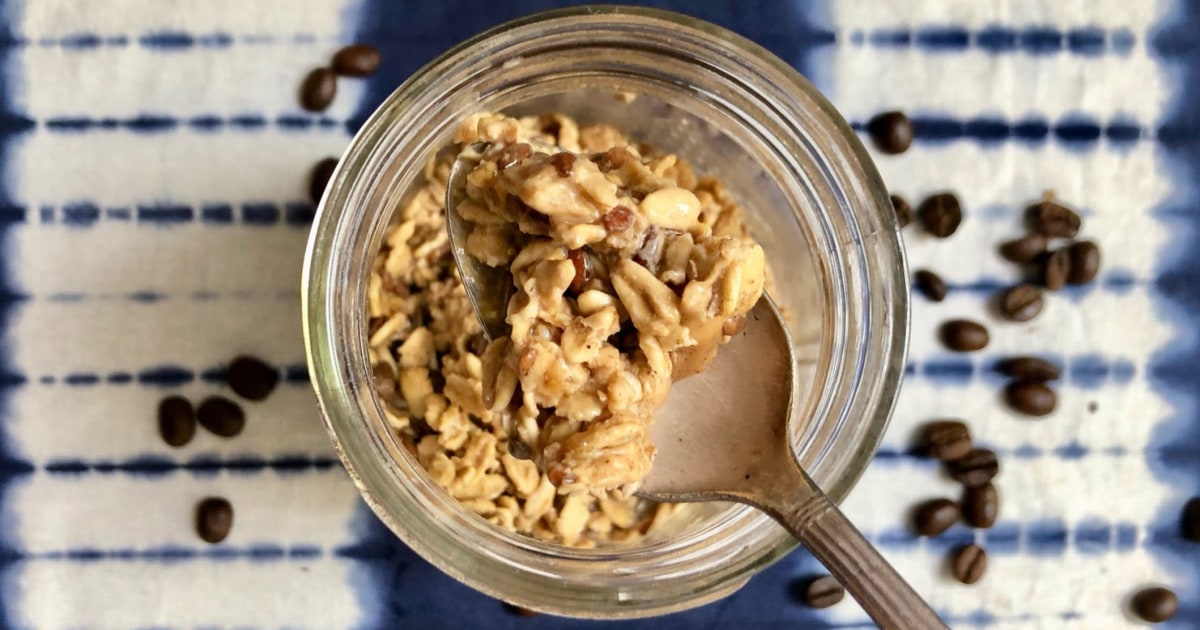
Cold Brew Overnight Oats

Courtesy Frances Largeman-Roth

Cold brew is the clever liquid base in these wholesome overnight oats. While oats are a fiber-rich satisfying breakfast, most people benefit from getting at least 20 grams of protein in the morning. To help hit this goal, pair your oats with a side of plain or low-sugar yogurt.

Whole Grain Toaster Waffle

Spread waffle with Greek yogurt (plain or low sugar) and top with berries.

Get more weekly meal plans

Lunch

This week’s lunches are multi-taskers — both could be transformed into a salad or sandwich. We’ve recommended one of each. Though leftovers are eater’s choice, we think the Edamame-Roasted Corn Succotash would be a perfect packed lunch.

Waldorf Tuna Salad with Greek Yogurt

Carrie Parente

Swapping traditional mayo for Greek yogurt doesn’t just save calories, it also boosts nutrition, providing some calcium and gut-nourishing live and active cultures. We suggest serving this dish over salad greens with whole grain crackers on the side, but you could also stuff it into a whole grain pita and have veggies on the side.

Rotisserie Chicken Sandwich

Spread whole grain bread with mayo and grainy mustard and stack with rotisserie chicken, lettuce and tomato. Serve with baby carrots on the side. For a vegetarian option, use mashed chickpeas.

Dinner

This week’s dinner lineup includes numerous timesaving tactics, such as bottled salad dressing, frozen edamame, and a one-pan dinner. If something catches your eye, make enough for leftovers, the ultimate timesaver.

Sheet-Pan Honey Mustard-Glazed Salmon with Broccoli and Sweet Potatoes

TODAY

A balanced sheet-pan dinner means you don’t have to have multiple dishes cooking at once, and clean up is a breeze.

Edamame-Roasted Corn Succotash

Nathan R. Congleton / TODAY

Since edamame is a plant protein, you can easily serve this dish as a meatless main course. However, if you want another easy protein source, have it with store-bought rotisserie chicken.

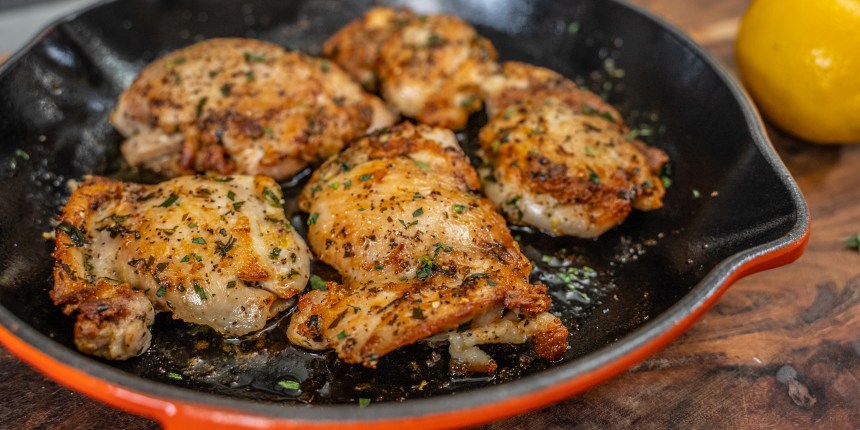
 Lemon Tarragon Chicken

FitMenCook(TM)

This is a dish that’s hard to mess up. The combo of lemon juice, olive oil and fresh tarragon elevates ordinary boneless chicken thighs in under 20 minutes. Serve over brown rice (from frozen, if desired) and roasted vegetables.

Creamy Kitchen Garden Pasta

Raymond Prado

Pasta is an easy and affordable meal, and this version is the perfect mix of creamy and nourishing. What could be better? 

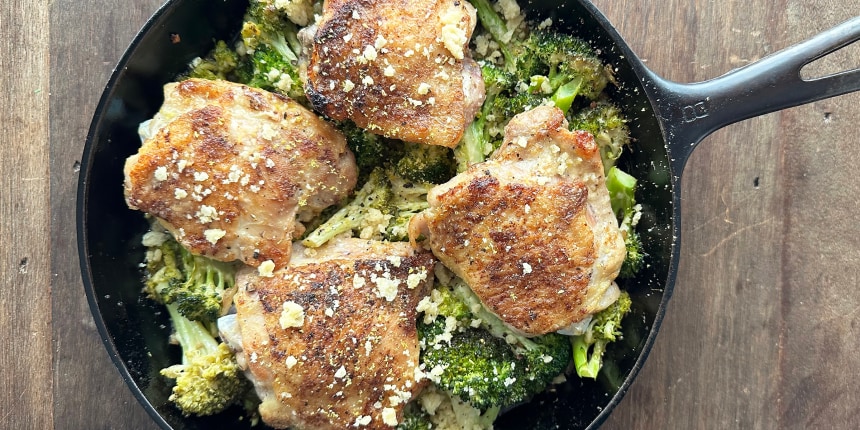
Caesar Chicken Thighs with Broccoli

Nina Elder

A lettuce-less Caesar? You bet! Store-bought Caesar dressing is an easy way to dress up your next chicken dinner. Since this Caesar has no croutons, serve with a slice of sourdough bread to sop up leftover dressing.

Snacks

Snacks that contain whole food sources of protein and fiber offer a winning formula that keeps you full for hours. Here are a few ideas:

● Medjool dates with nut or nutless butter

● Blueberries over ricotta cheese

● Celery spread with cottage cheese

● Baby carrots dipped in protein-boosted mashed avocado. To make the dip, mash chickpeas or white beans into avocado.

● Apple slices sprinkled with cinnamon and drizzled with tahini

Related:


1 in 3 Californians would qualify for program

1 in 3 Californians would qualify for program

New bill aims to prescribe healthy food for low-income Californians


WEEKEND. BACK TO YOU. MIKE: PROVIDING MEDICALLY SUPPORTIVE FOOD AND NUTRITION TO LOW INCOME FAMILIES. THAT’S THE GOAL OF A NEW BILL MAKING ITS WAY THROUGH THE STATE CAPITOL. HERE TO TALK TO US ABOUT THE BILL AND WHY IT’S IMPORTANT IS SPUR DIRECTOR, KATIE ETTMAN. THANK YOU FOR JOINING US. >> THANK YOU FOR HAVING ME. HAPPY TO BE HERE. >> MEDICINE COMES A LOT OF FORMS, BUT WHO’D MEDICINE. WHAT IS THAT? >> WE KNOW BASED ON RESEARCH THAT FOOD CAN HELP REVERSE CHRONIC DISEASES. WE NEED TO GET IT TO PEOPLE IN ORDER FOR THAT TO HAPPEN. LOTS OF LOW INCOME CALIFORNIANS DON’T HAVE ACCESS TO IT. THEY DON’T HAVE THE ECONOMIC MEANS TO GET IT. >> HOW DOES THIS BILL TAKE EFFECT? >> IT IS AUTHORED BY ASSEMBLYMAN — AND ASSEMBLY MEMBER. THEY WILL CREATE FOOD NUTRITION WHICH IS A SPECTRUM OF INTERVENTIONS FOR ALL CALIFORNIANS. THEY ARE ELBOW — ELIGIBLE BASED ON THEIR CONDITIONS. >> WERE TALKING — WHEN YOU SAY LOW INCOME, THAT IS OUR NEIGHBORS. THAT IS A BIG NUMBER ACROSS THE STATE. >> IT IS TRUE THAT ONE IN THREE CALIFORNIANS IS ON MEDI-CAL. THIS IS SOMEONE WHO LIVES IN A CITY OR APRIL PART OF CALIFORNIA. IT DOESN’T AFFECT A SMALL PORTION OF THE POPULATION. IT IS A REALLY FAST SWATH OF INDIVIDUALS. >> WHAT IS THE COST? WHAT WILL THIS COST CALIFORNIANS? I HAVE TO SAY, THIS IS ONE OF MY FAVORITE THINGS ABOUT WORKING THROUGH THE SAFETY NET. MEDI-CAL IS PAID FOR BY THE FEDERAL GOVERNMENT. SOMEWHERE AROUND 60{d2b09b03d44633acb673e8080360919f91e60962656af8ade0305d5d8b7e4889}. AND ONLY ABOUT 40{d2b09b03d44633acb673e8080360919f91e60962656af8ade0305d5d8b7e4889} FALLS TO THE STATE TO COVER. WHAT WE KNOW IS THAT PROVIDING FOR VEGETABLES AND HEALTHY FOODS CAN ACTUALLY SAVE US COST AND LONG-TERM. THERE WERE SOME STUDIES THAT TALK ABOUT OVER $100 BILLION IN SAVINGS NATIONALLY IF WE SUBSIDIZE OR VEGETABLES FOR LOW-INCOME FOLK RED IN THE SHORT-TERM, YOU MIGHT NEED TO PAY FOR FRUIT AND VEGETABLE, BUT LONG-TERM, YOU CAN SAVE MONEY. >> THAT’S TRUE. WHAT ARE THE CONCERNS OUT THERE. I’M SURE THERE ARE SOME. WHAT ABOUT STOCKPILES WITH THE ABILITY TO SUPPORT THIS TYPE OF LEGISLATION. ARE YOU HEARING ANY CONCERNS IN THAT REGARD? >> THAT IS THE OTHER THING THAT REALLY CHANGES THE GAME FOR THESE ORGANIZATIONS. RIGHT NOW, FOOD PANTRIES AND BANKS ARE DOING PRETTY MUCH ALL OF THAT WITH PHILANTHROPIC FUNDING. IF THAT RUNS OUT, IT’S NOT HIGH ENOUGH WE DON’T HAVE ENOUGH FOOD, THE IDEA OF BRINGING THIS TO MEDI-CAL IS THAT THESE ARE NOT INTERVENTIONS. WE WILL PAY FOR THE PROVIDERS OF THE FOOD FOR THE FOOD. THEY WILL HAVE MORE ECONOMIC NEEDS IS AN ORGANIZATION TO ACTUALLY GET IT TO THE PEOPLE. IT WILL MAKE THINGS MUCH EASIR TO PROVIDE IT TO THE PEOPLE WHO NEED IT. >> THE PEOPLE WHO NEEDED ARE FOLKS WHO BITE ALSO HAVE SPECIFIC DIETARY NEEDS. >> WE OFTEN THINK ABOUT A PATIENT WITH GESTATIONAL DIABETES. YOU GO TO A DOCTOR AND SAY YOU HAVE THIS. WHAT WOULD IT LOOK LIKE IF INSTEAD OF YOUR DOCTOR SAYING EAT HEALTHIER, IS SUPER EASY. WHAT IF I AM GOING TO GET YOU A PRODUCE PRESCRIPTION? YOU CAN GO OUT TO THE LOCAL GROCERY STORE OR FARMERS MARKET AND PROVIDE FREE FRUITS AND VEGETABLES. YOU CAN TREAT THAT DIABETES, AND THERE IS A STUDY THAT SHOWS ABOUT 37{d2b09b03d44633acb673e8080360919f91e60962656af8ade0305d5d8b7e4889} OF THE REDUCTION IN CHANCES OF PRETERM BIRTH WHEN YOU PROVIDE A PRODUCE PRESCRIPTION TO A PATIENT WITH DIABETES. >> PRODUCE PRESCRIPTION. THAT SOUNDS FASCINATING. WE’LL GET YOU OUT ON THIS? IF THIS PASSES, WHEN WILL THIS LAUNCH. >> WE HAVE A LONG RUNWAY. A PASSAGE THIS YEAR, AND A YEAR OF GUIDANCE TO MAKE SURE THAT WE KNOW WHAT IS HAPPENING ON THE GROUND, AND THEN WE WILL BE LAUNCHING ABOUT SIX MONTHS BEFORE CURRENT PILOT ENDS IN 2020 SIX. >> WORKING FOLKS GO FOR MORE INFORMATION. >> CODA SPUR.ORG LEAR

New bill aims to prescribe healthy food for low-income Californians

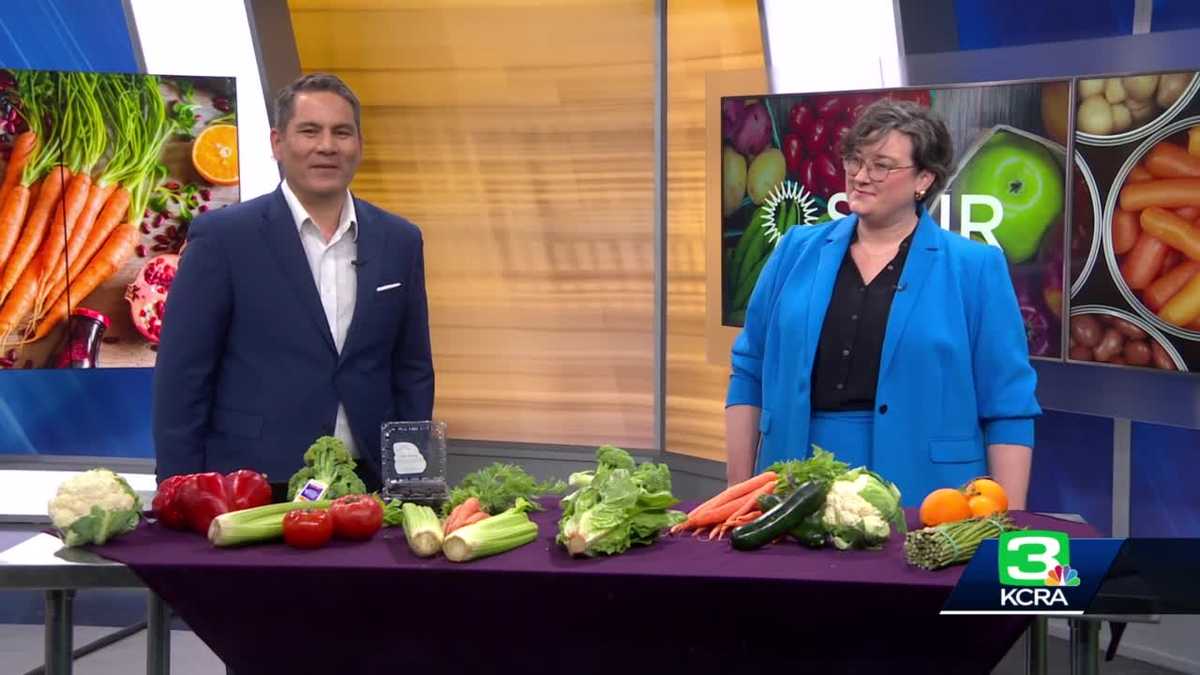
A new bill is making its way through the State Capitol aimed at providing medically supportive food and nutrition to low-income families. The Director of SPUR, Katie Ettman, told KCRA 3 that research has shown that the proper diet can help treat and prevent certain diseases.Health care advocates have long preached the benefits of preventative health care, including exercise and a healthy diet, and SPUR believes providing a prescription for healthy foods can benefit low-income Californians in the long run.”It continues to blow my mind that one in three Californians are on MediCal,” Ettman said. “So this is your neighbor, this is someone that lives in a rural part of California. This is not just a problem that affects a small percentage of the population.”For more information, watch the video above or visit spur.org.

A new bill is making its way through the State Capitol aimed at providing medically supportive food and nutrition to low-income families.

The Director of SPUR, Katie Ettman, told KCRA 3 that research has shown that the proper diet can help treat and prevent certain diseases.

Health care advocates have long preached the benefits of preventative health care, including exercise and a healthy diet, and SPUR believes providing a prescription for healthy foods can benefit low-income Californians in the long run.

“It continues to blow my mind that one in three Californians are on MediCal,” Ettman said. “So this is your neighbor, this is someone that lives in a rural part of California. This is not just a problem that affects a small percentage of the population.”

For more information, watch the video above or visit spur.org.

Becoming a flexitarian: the latest in healthy eating

Becoming a flexitarian: the latest in healthy eating

Estimated read time: 5-6
minutes

NEW YORK — Between 2014 and 2018, Americans who converted to a vegan diet exploded by 600{d2b09b03d44633acb673e8080360919f91e60962656af8ade0305d5d8b7e4889}. Remarkably, 71{d2b09b03d44633acb673e8080360919f91e60962656af8ade0305d5d8b7e4889} of Americans have tried at least one plant-based meat alternative, sending plant-based food sales skyrocketing, topping $7 billion in 2020 and continuing to grow — no pun intended.

Plant-based eating plans have become the norm for many, either out of a desire not to eat animals or for health-related issues. Keto, Paleo, Vegan, Gluten Free and Vegetarianism have become well-known terms in the world of dietary restrictions.

For most people, these are not fad diets but rather lifestyle choices. One of those latest trendier lifestyles is based on plant-based eating and is called flexitarian. Just what is it, and how does it work?

What is a flexitarian?

Flexitarian diets or lifestyle is a form of eating focused on primarily plant-based foods while consuming meat and other animal products in moderation. Initially authored by dietitian Dawn Jackson Blatner, it’s an effort to allow people to reap the benefits of plant-based or vegetarian eating without entirely giving up animal products. Hence, the name combines “Flexible” and “vegetarian” as it is more flexible than vegan or vegetarian diets.

Healthline, a health and wellness site, profiles the facets of a beginner’s guide to the flexitarian diet. The main principles include:

Unlike the trend of other fad diets, which ask people to calorie count, and create portion sizes, the flexitarian way is more of a lifestyle than a diet since it doesn’t have set rules.

Sheri Berger, registered dietician and creator of The Plant Strong Dietitian, has consistently practiced a flexitarian diet for at least five years. She describes a flexitarian diet as focusing on eating whole plant foods such as fruits, vegetables, whole grains, nuts, seeds and legumes.

For protein, the focus is on plants such as beans, lentils, or tofu; however, animal protein from chicken, beef, pork, or fish is not entirely excluded; it is just chosen less often.

Melanie Jordan, a Nationally Board-Certified Health and Wellness Coach and founder of Your Health Life Made Easy, has been a flexitarian for more than 20 years — long before it was a known term.

“When I started, I was primarily vegetarian and mixed in fish one to two times weekly,” she says. “Today, I do eat some poultry at times, but still eat a good amount of meals that are only vegetarian or pescatarian. Some flexitarians will occasionally eat red meat, but I am not a fan.”

The flexitarian trend

According to this Plant-Based News article, 47{d2b09b03d44633acb673e8080360919f91e60962656af8ade0305d5d8b7e4889} of young Americans, aged 20 to 39, identify as flexitarians. This was based on a survey of 2,000 Americans commissioned by Sprouts Farmers Market. The poll also found that 43 percent of those who responded considered it to be more than a diet but rather a permanent lifestyle change.

In a statement released about the survey, Sprouts Chief Executive Officer Jack Sinclair offers:

“The interest in plant-based foods and a flexitarian diet is evident — shoppers are more engaged with their food than ever,” he states. “They are seeking innovative and alternative products to mix up the meals they prepare for themselves and their families.

“We believe consumers will remain focused on incorporating healthy foods into their lifestyles to support immunity and overall well-being in the future,” he continues. “This includes introducing consumers to things they never considered before, like plant-based foods and meat alternatives.”

Becoming a flexitarian

The flexitarian lifestyle is not for everyone but is relatively easy to follow since it has no set rules. However, there are some considerations to determine if that is the route to choose.

Berger offers advice to anyone considering making the switch. “Always remember balance when adapting to a flexitarian diet or any diet,” she says. “Since you will be eating less meat, you want to make sure you are swapping in plant protein sources such as beans, lentils, tofu, or tempeh.”

For those unsure of how to achieve a balanced diet, she recommends consulting a registered dietitian, who are the true nutrition experts.

Jordan also recommends that consulting nutritionists and fitness experts will help choose the best lifestyle change. She points to the USDA’s latest Dietary Guidelines for Americans 2020-2025 as a free and helpful resource on guidelines for healthy eating with a nutrient-dense approach.

For those considering the change, she shares that the best way to adapt is “Practice patience with yourself and some experimentation to see where along the flexitarian scale the right balance is for you that matches your lifestyle, preferences and objectives while skewing towards the plant-based, whole grains, nuts, and seeds side.”

Reaping the benefits

Before going flexitarian, one should consider the result and potential benefits. Berger endorses the lifestyle for the benefit to her health.

“A flexitarian diet has helped me to lower my cholesterol levels because I’ve increased fiber and reduced saturated fat,” she notes. “I also find being flexitarian makes it easier to maintain a healthy weight as fruits and vegetables comprise a large portion of the diet, and they are the lowest calorie foods out there!”

Jordan shares that finding something healthy and satisfying simultaneously came with being flexitarian.

“It was the first step in helping me find a healthy eating pattern that worked for me that I could stick with,” she says. “It was like ‘The Three Bears’ for me — vegan was too strict, vegetarian was close but not quite, but flexitarian was the right fit. It also gives me plenty of variety and flexibility in my healthy food choices, so it’s been easy to stick with long-term without feeling deprived or bored.”

The flexitarian conversion also has some famous followers, including Ellen DeGeneres, Meghan Markle, Drew Barrymore and Diane Keaton, and superstar quarterback Tom Brady.

As healthy eating and lifestyle choices constantly evolve, adapting to a plant-based lifestyle is one way many enhance their health through nutrition. For those not ready to embrace life without consuming animal products, becoming a flexitarian can support those health benefits without giving up the occasional hamburger or cheese tray. After all, it’s about being flexible.

Related stories

Most recent Health stories

Kelley Dukat | Wealth Of Geeks

More stories you may be interested in

What is the healthiest rice? Inside the white and brown rice debate.

What is the healthiest rice? Inside the white and brown rice debate.

Rice is the 3rd most developed agricultural crop globally, just guiding sugarcane and corn. The top rated nine producers of rice are situated in Asia, with China producing 28{d2b09b03d44633acb673e8080360919f91e60962656af8ade0305d5d8b7e4889} of the world’s rice in 2019. That’s around 466,000 kilos. 

Rice has also been an significant staple foods about the entire world, with roots relationship to 8,000 BC. Staying these a big aspect of every day eating plans, rice has the natural way entered the healthful feeding on discussion. Here’s what a diet scientist has to say about the dilemma of the “healthiest” rice possibility.

What is the healthiest rice? Inside the white and brown rice debate.

What is the healthiest rice?

The question of the “healthiest rice” typically pits two styles of rice versus every other – white and brown. And while one particular is usually championed more than the other, the respond to genuinely is dependent on what you are hunting for in your diet plan. 

It’s true – brown rice does have extra fiber, fats and a contact much more protein than white rice simply because of the way it’s processed. Full grains are designed of a few components: the germ, bran and endosperm. Brown rice consists of all of these elements, but producers get rid of the germ and bran for white rice. If you’re wanting to add far more fiber to your diet, brown rice is a fantastic way to do so.