Coffee Talk Episode 2 drink recipe list and how to unlock all special drinks in Hibiscus and Butterfly

Coffee Talk Episode 2 drink recipe list and how to unlock all special drinks in Hibiscus and Butterfly

Knowing all of the drink recipes in Coffee Talk Episode 2: Hibiscus and Butterfly will help you complete the game’s storyline, as well as the Brewpad.

These special drinks not only have unique appearances, but can change pivotal plot moments in Coffee Talk Episode 2: Hibiscus and Butterfly.

Below you’ll find all of the drink recipes for the base ingredients, from Coffee to Milk, along with how to unlock all of the special drinks in Coffee Talk Episode 2 Hibiscus and Butterfly.

If you want to know where some of these special drinks appear in the story mode, then check out our Coffee Talk Episode 2 best endings walkthrough.

On this page:

Drink lists:

Coffee Talk Episode 2: Hibiscus & Butterfly – Announcement Trailer – Nintendo Switch

How to unlock all special drinks in Coffee Talk Episode 2 Hibiscus and Butterfly

Special drinks in Coffee Talk Episode 2: Hibiscus and Butterfly refers to the drink recipes recorded in your Brewpad, which require you to put three ingredients in a specific order to make. This means that standard drinks, like Honey Chocolate, do not count as a special drink as they’re not recorded in the Brewpad.


Honey Chocolate is not considered a special drink.

You’ll know when you’ve brewed a special drink, because it will usually have a distinct appearance when compared to the standard drinks and, as mentioned, its recipe will be recorded in the Brewpad.

You also only need to brew a special drink once for it to be recorded and this can be done in the Story mode and both Endless modes – Free Brew and Challenge. So, if you’re missing a special drink from your Story mode playthrough, you can easily unlock it by jumping into Free Brew and making it without affecting the storyline.
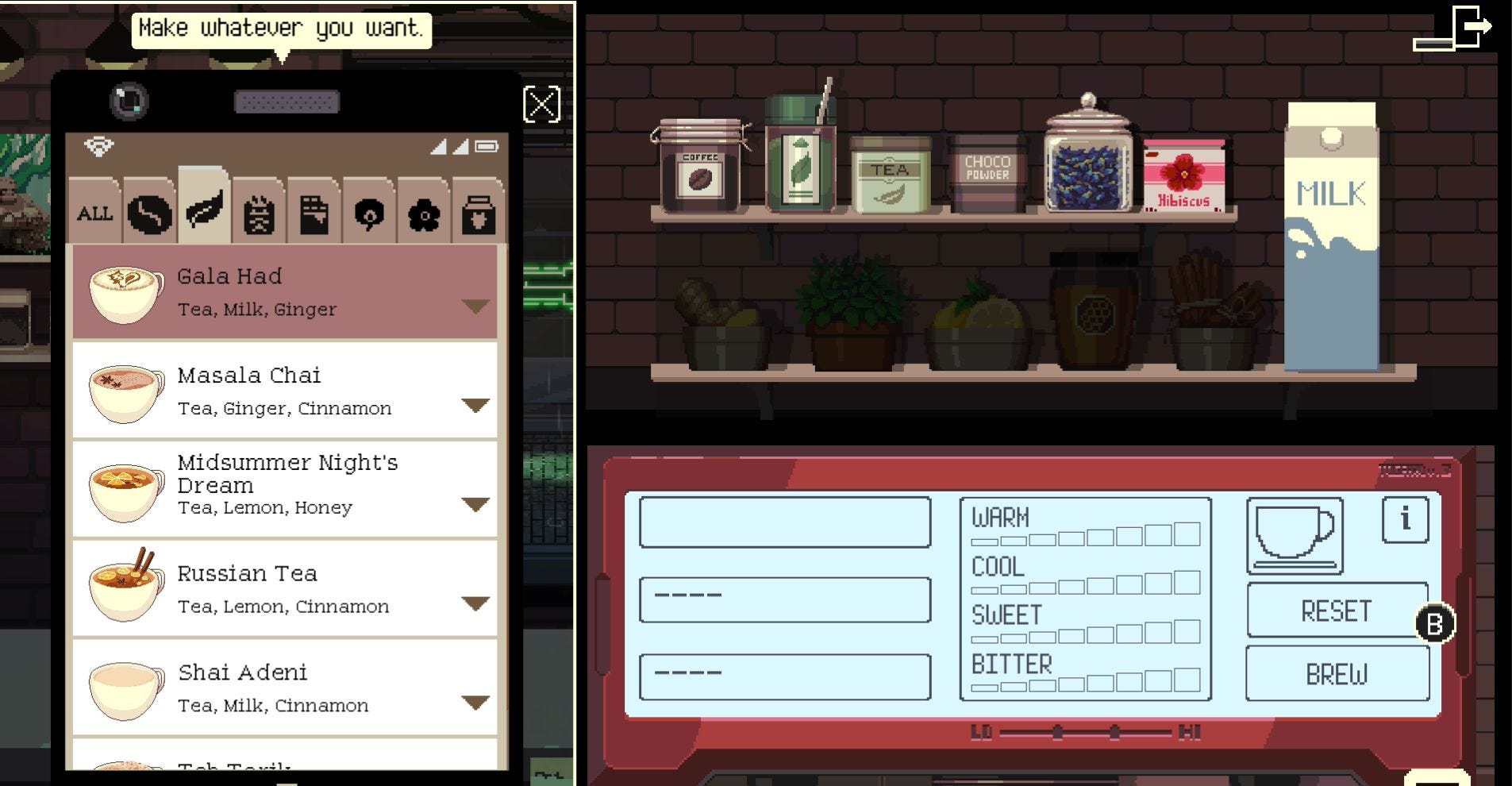

Unlocking all of the special drinks in Coffee Talk Episode 2: Hibiscus and Butterfly will unlock the Master Brewer achievement.

Coffee-based drink recipes in Coffee Talk Episode 2 Hibiscus and Butterfly

Below you’ll find every special Coffee-based drink recipe, organised by the order they appear in the Brewpad, in Coffee Talk Episode 2: Hibiscus and Butterfly:

  • Black Lemon – Coffee, Coffee, Lemon
  • Black Magic – Coffee, Mint, Honey
  • Caffé Latte – Coffee, Milk, Milk
  • Cappuccino – Coffee, Coffee, Milk
  • Espresso – Coffee, Coffee, Coffee
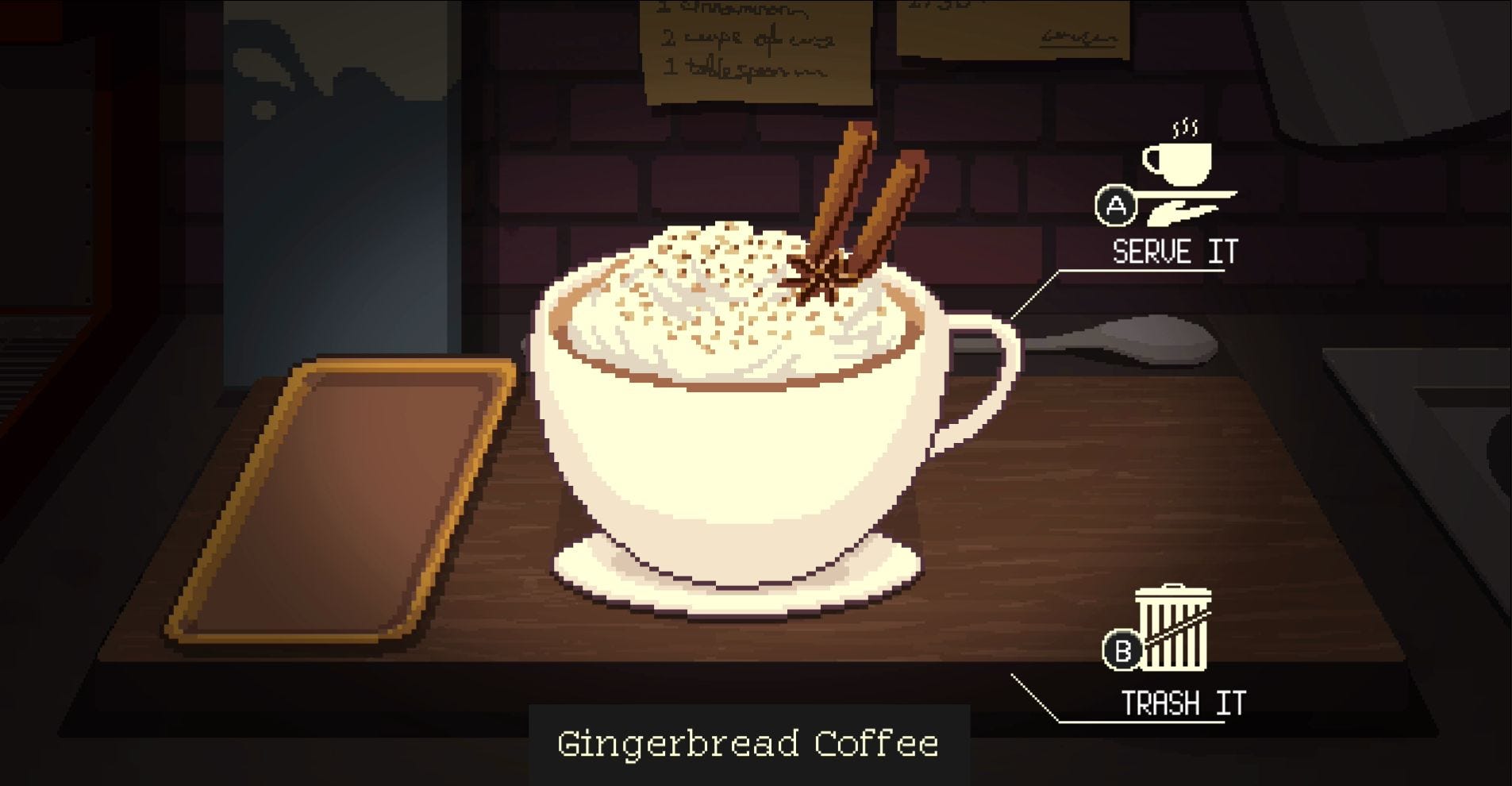
  • Gingerbread Coffee – Coffee, Ginger, Cinnamon
  • Ginger Latte – Coffee, Ginger, Milk
  • Jahe Tubruk – Coffee, Coffee, Ginger
  • Sugar and Spice – Coffee, Honey, Cinnamon
  • Bee’n Buzzy – Coffee, Honey, Milk
  • Cinnamon Latte – Coffee, Milk, Cinnamon
  • Sweet Coffee – Coffee, Coffee, Honey
  • Queimada – Coffee, Honey, Lemon
  • Jingle Bells – Coffee, Coffee, Cinnamon
Tea-based drink recipes in Coffee Talk Episode 2 Hibiscus and Butterfly

Here you’ll find every special Tea-based drink recipe in the order they appear in the Brewpad of Coffee Talk Episode 2: Hibiscus and Butterfly:

  • Gala Had – Tea, Milk, Ginger
  • Masala Chai – Tea, Ginger, Cinnamon
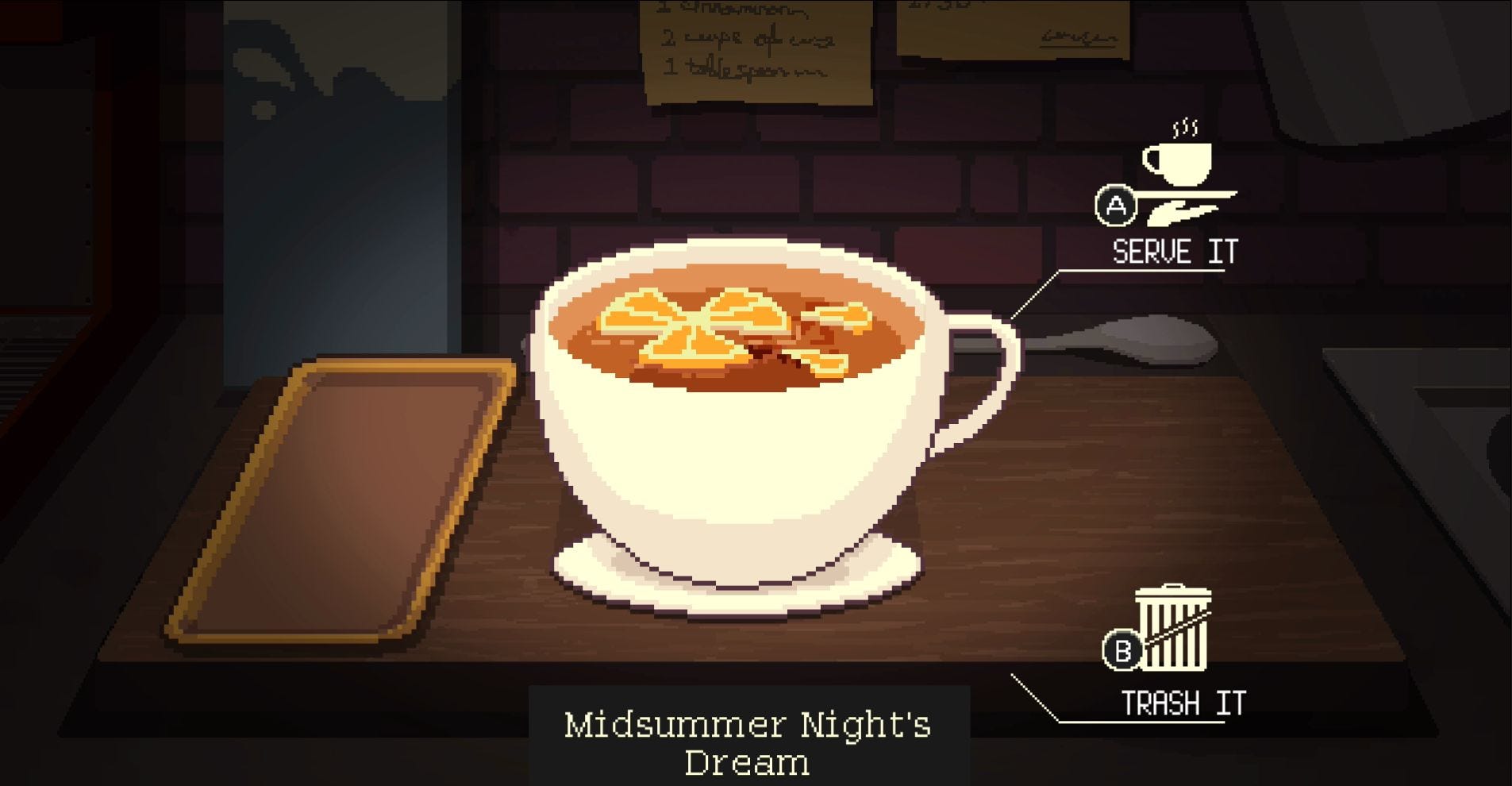
  • Midsummer Night’s Dream – Tea, Lemon, Honey
  • Russian Tea – Tea, Lemon, Cinnamon
  • Shai Adeni – Tea, Milk, Cinnamon
  • Teh Tarik – Tea, Tea, Milk

Green Tea-based drink recipes in Coffee Talk Episode 2 Hibiscus and Butterfly

Here are all of the special Green Tea-based drink recipes, listed in the order they appear in the Brewpad, in Coffee Talk Episode 2: Hibiscus and Butterfly:

  • Cough Syrup – Green Tea, Lemon, Honey
  • Green Tea Latte – Green Tea, Milk, Milk
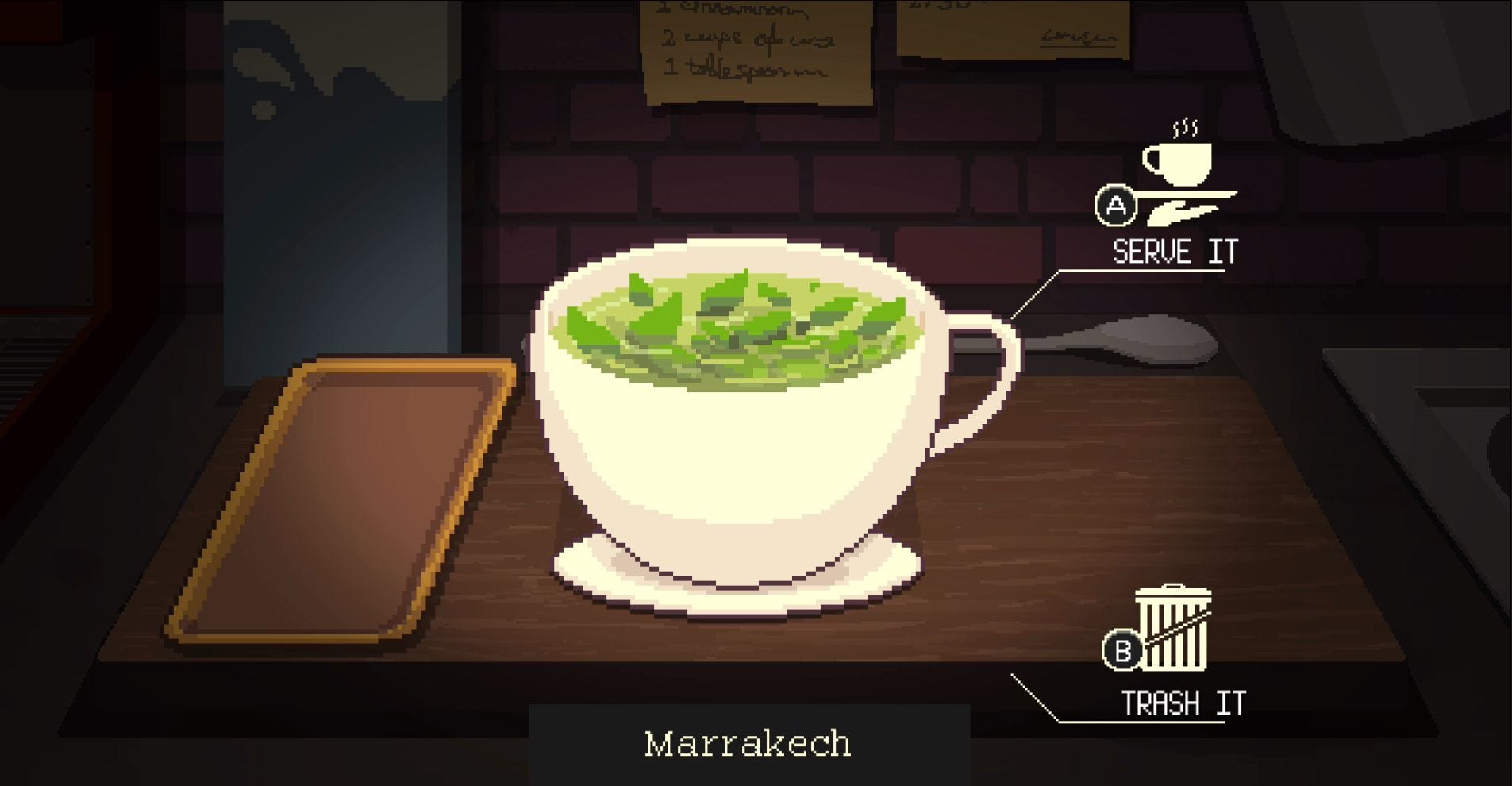
  • Marrakech – Green Tea, Mint, Mint
  • Shin Genmaicha – Green Tea, Green Tea, Ginger
  • The Grinch – Green Tea, Ginger, Cinnamon
  • Matcha – Green Tea, Green Tea, Green Tea
  • “Detox” Tea – Green Tea, Ginger, Lemon
  • “Five Stars!” – Green Tea, Honey, Milk
Chocolate-based drink recipes in Coffee Talk Episode 2 Hibiscus and Butterfly

Below lie all of the special Chocolate-based drink recipes, organised by the order they appear in the Brewpad, in Coffee Talk Episode 2: Hibiscus and Butterfly:

  • Bitter Heart – Chocolate, Ginger, Cinnamon
  • Chocobee Miruku – Chocolate, Honey, Milk
  • Dark Chocolate – Chocolate, Chocolate, Chocolate
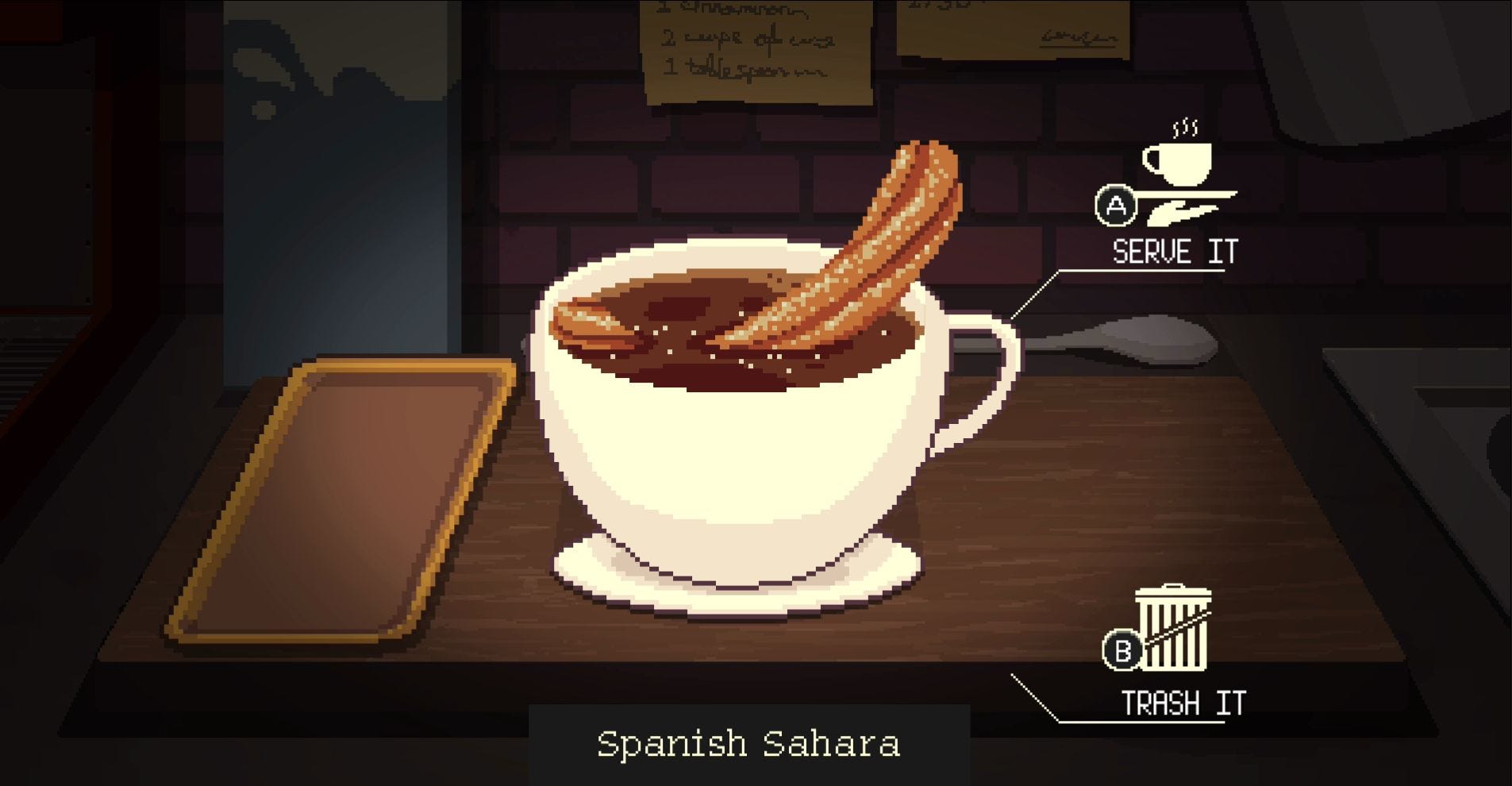
  • Spanish Sahara – Chocolate, Milk, Ginger
  • Spiced Lady – Chocolate, Milk, Cinnamon
  • 299.792.458 – Chocolate, Honey, Ginger
  • After Midnight – Chocolate, Honey, Mint
Blue Pea-based drink recipes in Coffee Talk Episode 2 Hibiscus and Butterfly

Here are all of the special Blue Pea-based drink recipes in the order they’re listed in the Brewpad of Coffee Talk Episode 2: Hibiscus and Butterfly:

  • Butterfly Pea – Blue Pea, Blue Pea, Blue Pea
  • Galaxy Mint-tea – Blue Pea, Mint, Lemon
  • Dreamin’ Blue – Blue Pea, Milk, Honey
  • Aqua’s Tranquilitea – Blue Pea, Mint, Mint
  • Blue Lightning – Blue Pea, Ginger, Ginger
  • Flowerbed – Blue Pea, Honey, Mint
  • Gala Tea – Blue Pea, Milk, Ginger
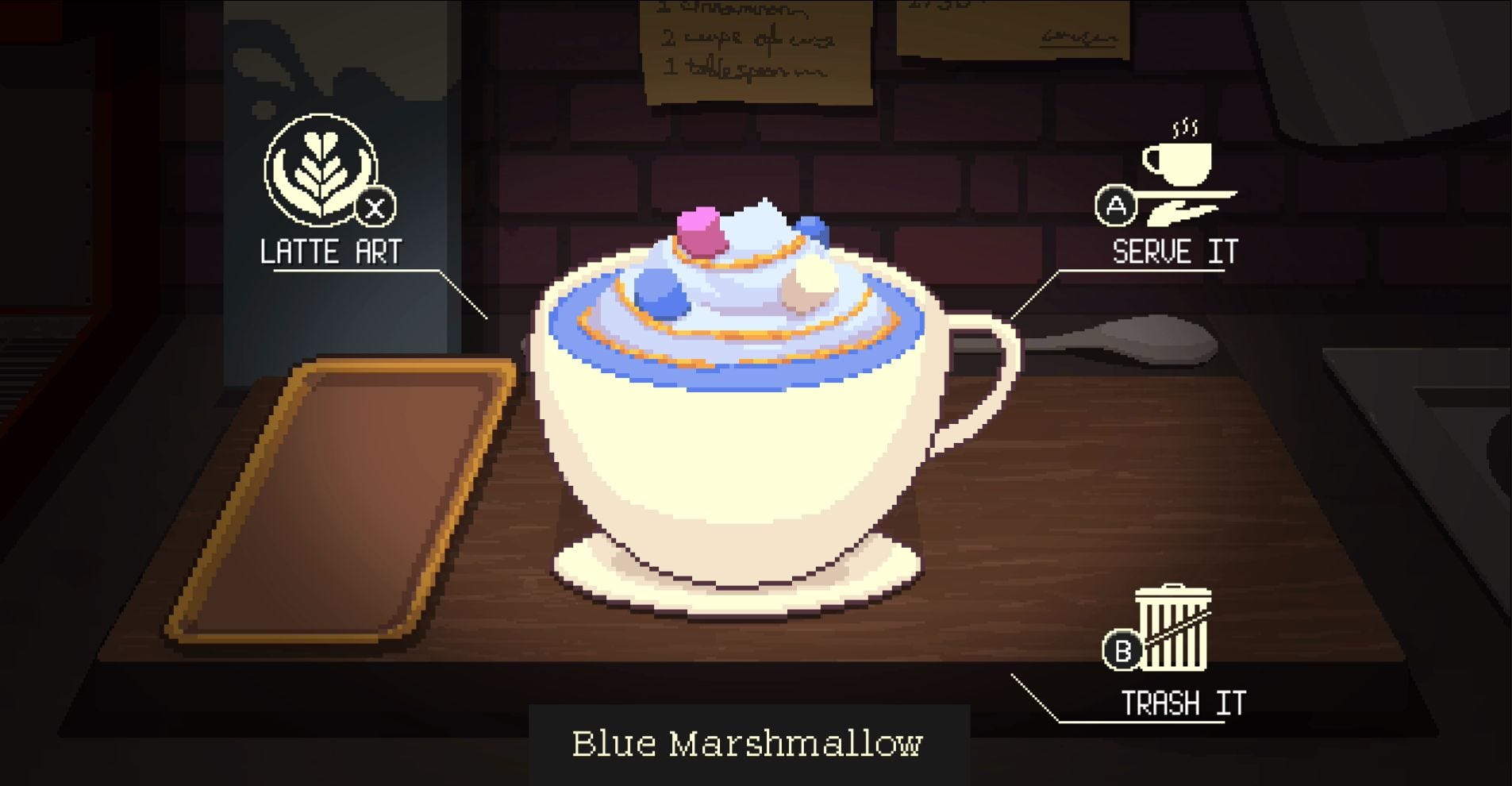
  • Blue Marshmallow – Blue Pea, Honey, Milk
Hibiscus-based drink recipes in Coffee Talk Episode 2 Hibiscus and Butterfly

Below are all of the special Hibiscus-based drink recipes, arranged in the order they appear in the Brewpad, in Coffee Talk Episode 2: Hibiscus and Butterfly:

  • Hibiscus Tea – Hibiscus, Hibiscus, Hibiscus
  • Bissap – Hibiscus, Ginger, Lemon
  • Teh Jahe Rosella – Hibiscus, Ginger, Honey
  • Sweetheart Latte – Hibiscus, Milk, Honey
  • Pink Spice – Hibiscus, Milk, Cinnamon
  • Zobo – Hibiscus, Ginger, Ginger
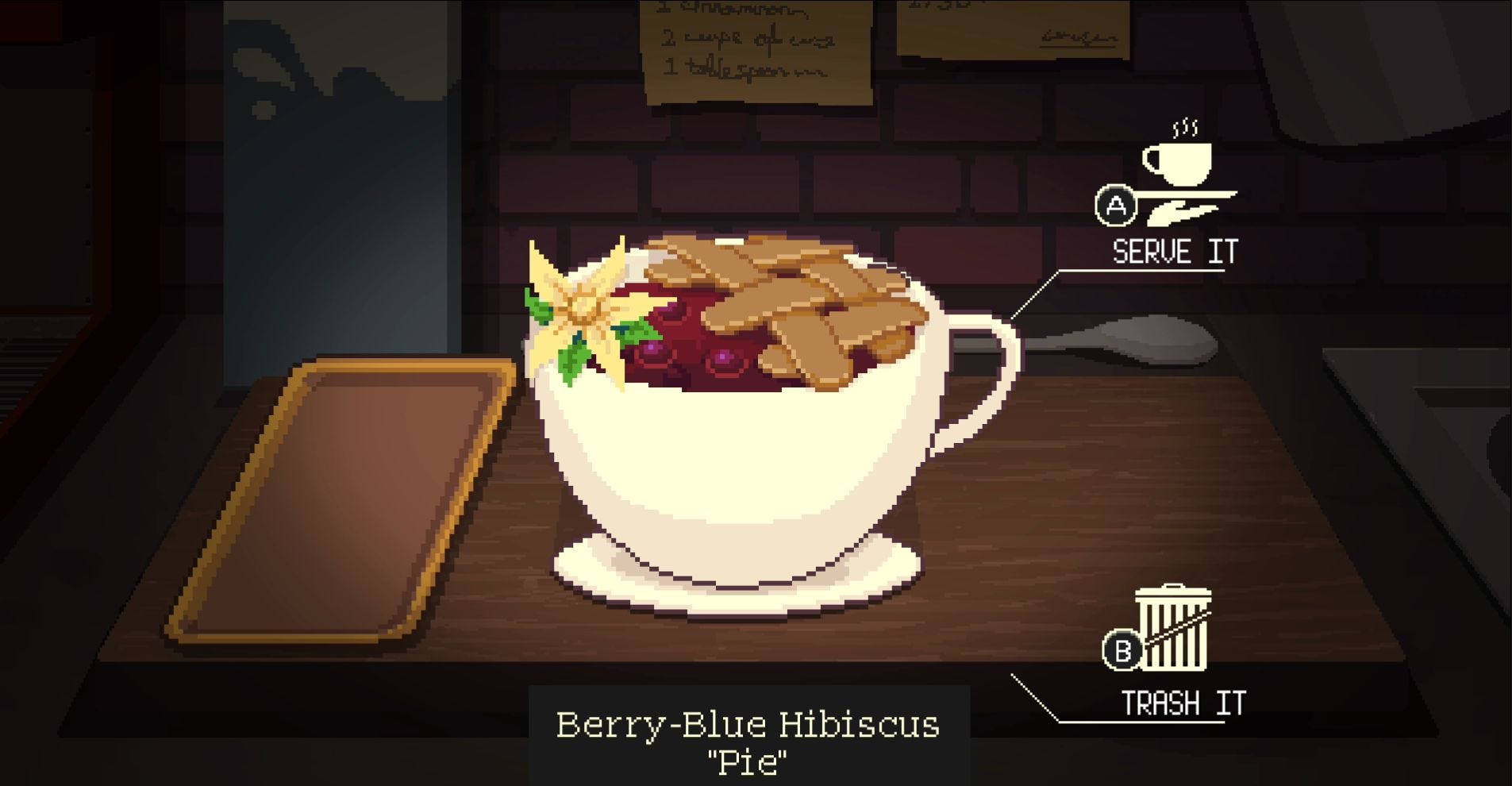
  • Berry-Blue Hibiscus “Pie” – Hibiscus, Honey, Mint
Milk-based drink recipes in Coffee Talk Episode 2 Hibiscus and Butterfly

Here are all of the special Milk-based drink recipes, arranged in their Brewpad order, in Coffee Talk Episode 2: Hibiscus and Butterfly:

  • Bedchamber – Milk, Cinnamon, Honey
  • Le Menthol – Milk, Mint, Lemon
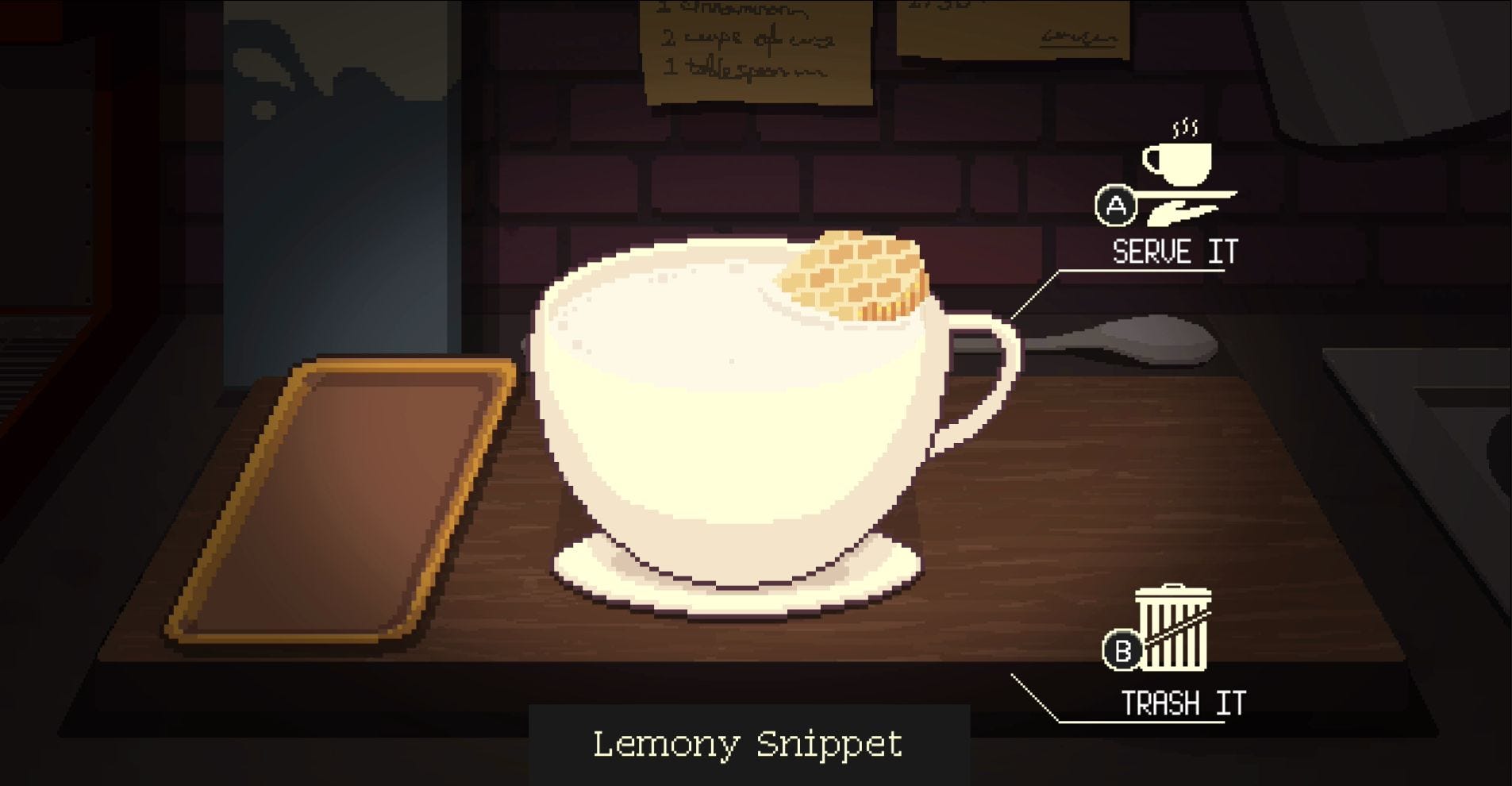
  • Lemony Snippet – Milk, Honey, Lemon
  • Milky Way – Milk, Honey, Mint
  • STMJ – Milk, Ginger, Honey

Good luck unlocking all of the special drinks in Coffee Talk Episode 2: Hibiscus and Butterfly!

6 St. Patrick’s Day Cocktails from Irish Coffee to the Dubliner

6 St. Patrick’s Day Cocktails from Irish Coffee to the Dubliner

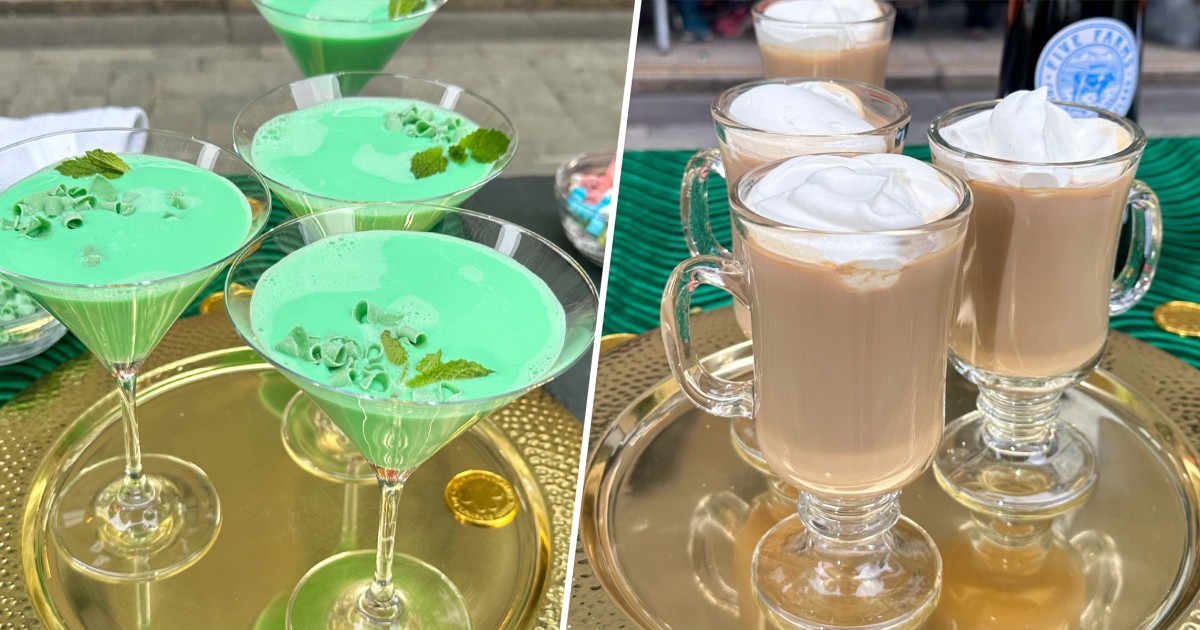
Sommelier and best-selling author Vanessa Price is stopping by the TODAY studio to shake up fun and festive cocktails for St. Patrick’s Day. She shows us how to make marshmallow cereal milkshakes, emerald-hued Grasshoppers, classic Irish coffee cocktails, a bubbly Black Velvet drink, a citrusy Dubliner tipple and a green Chartreuse sipper.

Leprechaun Cereal Milkshakes

Katie Stilo / TODAY

I love this festive milkshake because I can make the nonalcoholic version for the whole family to enjoy when hosting or add a little Irish vodka to make these more adult-friendly for St. Patrick’s Day festivities.

Grasshopper

Katie Stilo / TODAY

This is a classic cocktail typically reserved for after dinner sipping but with its iconic green hue, it’s perfect for sipping anytime on St. Patrick’s Day. First created in 1918 by a bar in New Orleans, it became popular enough to join the International Bartenders Association official list of cocktails. Lesser known today, it’s an easy one to make with a recipe that calls for the three ingredients to be combined in equal parts.

Irish Cream Coffee

Katie Stilo / TODAY

While the espresso martini may currently be giving this liquor-coffee combo classic a run for its money, this remains the true pot o’ gold standard for St. Patty’s Day imbibing.

Black Velvet

Katie Stilo / TODAY

Intricate cocktails have their time and place, but when hosting a large-scale party or simply not in the mood for complicated, a simple drink that you can construct quickly is ideal. Two-ingredient drinks come in many forms and while it may seem counterintuitive, Guinness and Champagne make for a winning combo in the category. As the story goes, the Black Velvet was created by a London steward and was served while the country was in mourning over the 1861 death of Queen Victoria’s husband, Prince Albert, because the dark beer added a somber note to the usually festive Champagne. While that may be this simple cocktail’s origin story, it can certainly be enjoyed on a day of celebration as well!

Dubliner

Katie Stilo / TODAY

Zhuzh up a staple for the holidays! This citrusy take on a Manhattan cocktail was born in the late 1990s New York bar scene, thanks to bartending icon Gary “Gaz” Regan. His book “Joy of Mixology” is a must for any at-home or professional mixologist. For extra St. Patrick’s Day flair, don’t skip the green maraschino cherry garnish!

The Last Word

Katie Stilo / TODAY

Arguably the most popular in the list of green Chartreuse cocktails: the Last Word. This pale-green gin sour is a classic cocktail that was all but lost to history. But with the revival of cocktail culture, this one come back strong. It’s equal parts sharp, sweet and sour, and its ingredient ratios are the equal parts same.

Make sure you pick up the green version of Chartreuse (the yellow version is much sweeter). Yellow Chartreuse is noted with flavors of honey, saffron and anise spice, whereas green Chartreuse shows more prominent flavors of lime, citrus, spice and fresh-cut herbs. Also, in fashion with the Irish holiday, it is a riff on an Irish whiskey cocktail of Prohibition. This cocktail has been lauded by modern mixologists since the rise of cocktail culture up ticked in the 1990s.

If you like those lucky drink recipes, you should also try these:

Valerie's Irish Coffee with Lemon-Vanilla Whipped Cream

Nathan Congleton/TODAY

Shamrock Shake

Casey Barber

The Keoke Coffee Cocktail Recipe Gets a Makeover

The Keoke Coffee Cocktail Recipe Gets a Makeover

Take 50-odd laps around the sun, and the forces of time will catch up to you. Players become has-beens. Sharpness dulls. The culture just up and moves on. 

At a glance, the midcentury Keoke Coffee presents as that sort of tired, lost middle-ager, a bit mistreated by the years, out of step. If you’re saying to yourself, What’s Keoke Coffee?, that kind of proves the point. 


A mix of Kahlúa, coffee, crème de cacao, brandy and heavy cream, the Keoke (keh-oh-kee) Coffee was invented in Southern California in the late 1960s and caught on as a nightcap, dessert drink and après-ski beverage. But its popularity faded. In order for the West Coast original to stage a comeback, the boozy cocktail first needed a little toning and sculpting. 


The drink got just that when Portland, Oregon, bartender Jeffrey Morgenthaler recently gave it a second look, trimming back its build, punching up the ingredients and re-dressing it all in slinkier glassware. “We had an Irish Coffee on our menu,” he says. “But the Keoke Coffee… It’s from the West Coast. It just seemed more appropriate.” 

In placing the Keoke Coffee within the timeline of cocktails from history, Morgenthaler lands on the following: “It’s not not a classic. It’s just never been a particularly respected classic.” In the 1990s—his early years as a bartender—he fielded lots of orders for the Keoke Coffee. Over time, “I’d kind of forgotten about it,” he says. “It’s one of those many coffee drinks that are all sort of the same. No one really knows the recipe. You kind of just throw some liqueurs in a glass, add coffee and top it off with whipped cream.”

A former bartender and regular at Morgenthaler’s bar Pacific Standard got him thinking about the drink again. On one of his daily visits, the guest brought up the Keoke Coffee. Did Morgenthaler know how to make it?, the guest asked, sending him into research mode. 

The original Keoke Coffee, Morgenthaler learned, came from George Bullington, owner of now-closed San Diego steakhouse Bully’s, who is said to have invented the drink in 1967 while experimenting behind the bar. As the story goes, a Hawaiian staffer suggested the drink’s name to honor Bullington (“George” can be translated to “Keoki” in Hawaiian; you sometimes see the drink spelled with an “i”) and it stuck.

“The Keoke Coffee usually is served super hot, because it’s usually served in a massive glass [with] tons of liquor, tons of coffee. And usually coffee that’s been sitting on a hot plate,” Morgenthaler notes. For Pacific Standard’s adaptation, he looked to the Irish Coffee as a model. 

“I put it in an Irish Coffee cup, cut down the proportion and took the Kahlúa out completely,” he says, finding the liqueur unnecessary. “Like the Amaretto Sour, the original recipe is not very good, so I feel like you have more freedom to do whatever you want.” With the sweet Kahlúa out, in went some brown sugar syrup to retain a dessert-like dimension. Morgenthaler’s rendition is then topped with whipped cream and dusted with cinnamon “to hint at those rum and spice flavors.”

Still, Morgenthaler felt the drink needed more backbone, which came in the form of Sacred Bond, a 100-proof bottled-in-bond American brandy from Kentucky’s Heaven Hill Distillery.

To DIY the whipped cream topper, Pacific Standard uses a trick from The Bar Book, Morgenthaler’s 2014 guide to cocktail technique: Heavy cream is poured into a Mason jar, with room left for the liquid to froth up, then the jar is sealed and shaken lightly to yield a fluffy, spoonable whipped cream. 

The hot coffee base used in Pacific Standard’s Keoke Coffee is the bar’s premium house brew, supplied by local Portland roaster Good Coffee because, of course, some standard-issue joe wouldn’t cut it. “Portland is such a coffee town,” notes Morgenthaler, “always has been.” He’d painstakingly selected the blend after sampling Good Coffee’s entire lineup. 

Amid the Espresso Martini’s reign, Pacific Standard is making the case for another caffeinated darling to shine, too. “Having [the Keoke Coffee] right next to the Espresso Martini on the menu, I think it does lead people in,” says Morgenthaler. And once the new-and-improved Keoke Coffee arrived, “it’s been selling like hotcakes ever since.”

Benefits of Coffee-and-Banana Smoothie Vs. Coffee

Benefits of Coffee-and-Banana Smoothie Vs. Coffee
I’ve always loved the idea of starting my day with a smoothie, and sometimes, I even wake up with a craving for a cool, creamy drink. But in my hierarchy of morning beverages, coffee nevertheless reigns supreme. While you might be thinking, But you could just have both, I’ve rarely found it in me to brew coffee and whip up a smoothie before work, particularly when I’m tight on time (read: always). Given that I require caffeine to function, I’ve typically just opted for the coffee over the smoothie. That is, until I had the idea—inspired by a delicious cold-brew coffee-and-banana smoothie at a local juice shop—to (wait for it) combine the two. 

Sure, preparing a coffee-and-banana smoothie would still require me to make coffee in advance. But, streamlining the two drinks into one meant I could satisfy both my need for caffeine and my craving for a smoothie at once. I also just love a blended coffee drink (shout-out to my old pal, the Frappuccino), and the prospect of a coffee smoothie offered me the chance to round out my already-rushed breakfast with a few more nutritious ingredients in no extra time.

Streamlining the two drinks into one meant I could satisfy both my need for caffeine and my craving for a smoothie at once.

To see how the transition from coffee to coffee smoothie might benefit me—not just from a taste and satisfaction standpoint but also from a nutritional one—I decided to give it a try for a month using ingredients that I enjoy on their own and that pack nutritional value. After all, if I was going to overhaul my morning routine (and clean my trusty Magic Bullet every single day), I wanted this experiment to pay off in more ways than one.

The nutritional benefits of swapping a cup of coffee for a coffee-and-banana smoothie

The coffee smoothie that inspired my experiment included a few things that I don’t typically have at home, like frozen coconut milk and cacao nibs—which led me to explore different coffee-smoothie recipes online and experiment with my own version instead.

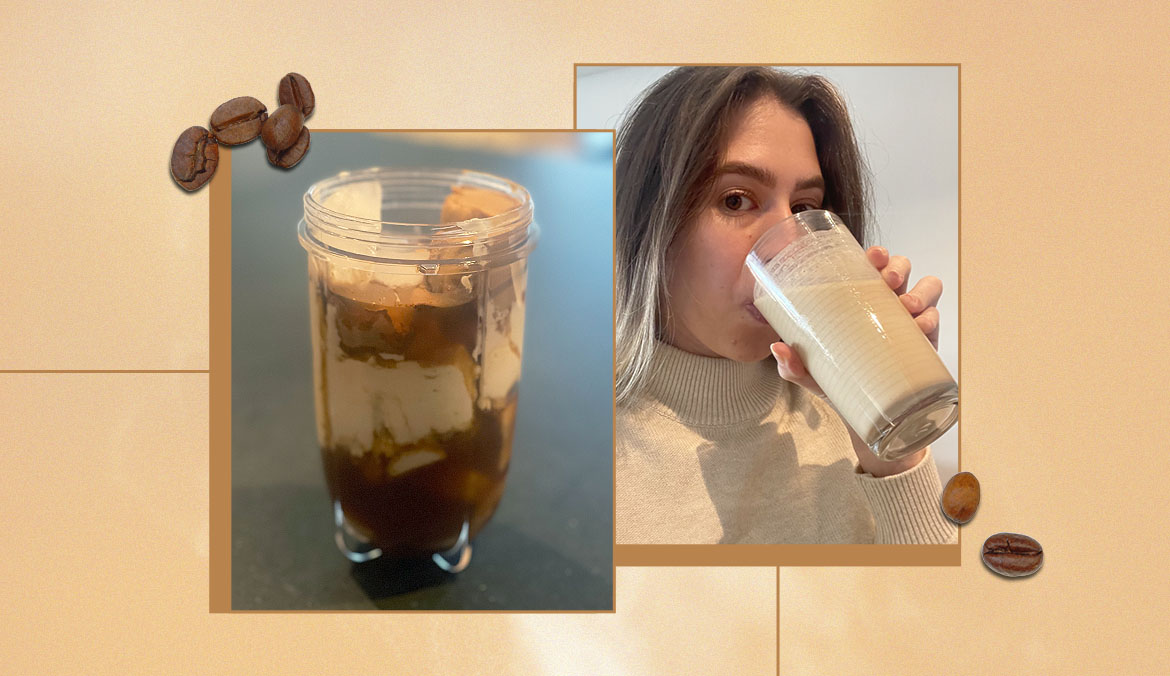
Ultimately, I decided to swap my usual hot coffee with a dash of French vanilla creamer for a smoothie containing about a cup of cold-brew coffee and a frozen banana, along with some variation of vanilla yogurt or unsweetened vanilla almond milk, rolled oats, chocolate protein powder, and peanut butter to fill the remaining space in my Magic Bullet.

Admittedly, this smoothie experiment was not an exact science. I did shift around the ingredients of my coffee-and-banana smoothie and the quantities of each based on what I had available and what I was feeling that day. (As you can probably guess, I’m that person in the kitchen who prefers to just throw things into a pan, pot, or in this case, blender, and see what happens.)

But what remained constant in every rendition was the coffee, a banana, and some additional source of bulky protein and/or fiber to thicken things up—a combination that registered dietitian Lauren Manaker, RDN, says “allows for a lot more satiety than coffee alone.” In other words, I was bound to feel more satisfied after pairing my typical breakfast (scrambled eggs or yogurt with granola) with my new coffee smoothie than I would pairing it with my usual cup of coffee.

All that additional protein I was getting from the protein powder, peanut butter, milk, and/or yogurt would also help inch me closer to the dietitian-recommended 25 to 40 grams of protein for breakfast (more than two eggs alone can provide, ICYWW). And by ramping up my protein intake in the morning, I’d set myself up for a slower, steadier release of energy until lunchtime, says Manaker.

“With this smoothie, you’re already starting your day with fruit, and most people don’t meet the recommended daily servings of fruit and vegetables.” —Lauren Manaker, RDN, registered dietitian

The other benefits of my coffee-and-banana smoothie over my typical cup of Joe come from the banana, says Manaker. “With this smoothie, you’re already starting your day with fruit, and most people don’t meet the recommended daily servings of fruit and vegetables,” she says. (That would be *gulp* five, in case you were wondering.) Not to mention, the banana acts as a natural sweetener, Manaker says, making the end result more palatable without the added sugar included in my usual addition of vanilla creamer, which doesn’t offer any nutritional benefit.

The experiment: Switching from a cup of hot coffee to a coffee-and-banana smoothie every morning for a month

Week 1

I’m typically a big breakfast person—I love breakfast foods—and I didn’t cut down on my usual food choices this week while swapping in my coffee smoothie. As a result, I wound up feeling even more satisfied after my morning meal than usual. My energy levels were higher, too; I found myself not reaching for my typical mid-morning snack and having lunch later in the day than I typically would, around 2 or 3 p.m.

I also occasionally get an upset stomach if I drink my coffee too quickly on an empty stomach, and by sipping it in smoothie form while I made the rest of my breakfast, I felt totally fine on the stomach front.

Week 2

As a regular coffee drinker, I know a thing or two about coffee’s effects on…number two. But wow, my daily B.M.s operated like clockwork this week, about a half hour after I finished my smoothie each day.

Part of that may certainly be attributed to the added regularity of my new routine; by this week, I was on a set schedule of having my coffee smoothie every morning at 9 a.m., and as a result, the result of my morning routine, including my wakeup time, was also more consistent than usual.

But, Manaker says the drink itself could also be credited for my newfound regularity. “The oats and the banana add a good amount of soluble fiber, which is another nutrient that a lot of us are missing and that plays an important role in our overall gut health,” she says, referencing its power to move things through your digestive system. “When you drink coffee with other foods, and especially foods that support the gut, like bananas and oats, it can definitely lead to an easier time in the digestion department.”

Week 3

The regular poops and sustained energy through the morning continued into the third week of my experiment. According to Manaker, the various ingredients I had now worked into my everyday diet are basically a recipe for more energy.

“You’re fueling your body with so many different energy-supporting foods at once,” Manaker says, referring to the benefits of my coffee-and-banana smoothie. “So, instead of just drinking coffee, which gives you the caffeine boost, you’re getting that boost plus the slow-digesting oats, plus the potassium-rich banana, plus the protein from the yogurt or plant-based milk and the protein powder or peanut butter, which, again, offers sustained satiety.”

Week 4

By this point, admittedly, I found the coffee-smoothie ritual was getting a little tough to maintain; on a couple days of the week, I forgot to make my cold brew the night before and had to use hot coffee with ice in my smoothie, which watered things down a bit. But once I had my smoothie in hand each day, I found myself grateful to have made it all the same (as was my digestive system).

This week was a busier workweek, which had me glued to my computer screen all morning each day, practically from the moment I flipped open my laptop. As a result, I wound up sipping my smoothie more slowly each morning, which seemed to make the energetic effects of the coffee last even longer (even though I wasn’t drinking any more of it than usual).

Though I occasionally have a second cup of coffee, I also noticed this week that I hadn’t reached for one throughout the experiment. And my poops had remained as regular as can be.

Though I occasionally have a second cup of coffee, I also noticed this week that I hadn’t reached for one throughout the experiment. And my poops had remained as regular as can be.

The only thing stopping me from keeping up this experiment indefinitely is the logistics of preparing cold brew in advance and whipping up a smoothie every morning—and the fact that, on some cold days, nothing hits quite like a piping-hot cup of Joe. But whenever I find myself craving both coffee and a smoothie and looking for a nutritious way to get both, I’ll be smoothie-fying my coffee from here on out.

This flaming coffee cocktail recipe makes for a delicious spectacle

This flaming coffee cocktail recipe makes for a delicious spectacle

Comment

Coffee after dinner is rarely my thing — I’m perfectly capable of waking up in the middle of the night to doom-scroll without a chemical assist, thank you very much. But my general rule about no caffeine after 4 p.m. goes out the window in one particular circumstance: when it’s being offered in a boozy concoction that’s going to be set on fire.

This does not happen often. Unless you DIY, you’ll have to go looking; the heyday of flambee was decades back. These days, when you encounter booze and coffee in tandem, it’s most often via the ubiquitous espresso martini (vodka, espresso and coffee liqueur), a modern classic. Invented in the 1980s by London bartender Dick Bradsell, it’s best known for Bradsell’s tale of inventing it for an unidentified model, who’d asked him for a drink that would “wake me up and then [mess] me up,” only of course “mess” was not her chosen verb.

I love a potty-mouthed-supermodel origin story as much as the next girl, but the espresso martini doesn’t usually draw me in. I prefer to go further back into the cocktail catalogue. Long before Bradsell’s drink added more confusion to the meaning of the word “martini,” drink makers were mixing their stimulants and depressants into conflagrants. After all, why settle for something that would just “wake you up and then [mess] you up” when you could have something that, if prepared wrong, would also burn the house down?

Setting cocktails on fire adds all sorts of flavor, bringing out the vanilla notes of barrel-aging; mellowing harshness in younger, brash spirits; caramelizing the sugars in syrups; toasting the spices and releasing the aromatic — oh, the hell with it. All of that may be true, but the main reason to set cocktails on fire is that it looks really badass.

James Louie, one of the owners of Huber’s Cafe in Portland, Ore., saw this when he ran across Spanish coffee — a flamed blend of high-proof spirit and coffee — in the late 1970s. He was on a dinner date with his soon-to-be wife at the now-closed Fernwood Inn in nearby Milwaukie and saw how customers were transfixed by the Spanish coffees being served there. “We stole the idea,” he says. “We brought it back but embellished the presentation to make it our own.”

Make it their own they did. The Oxford Companion to Spirits and Cocktails locates the origins of Spanish coffee in Coffee Grog, a drink detailed by Pedro Chicote, a famed Spanish bartender, in his 1928 cocktail book. It came to America in the ’60s and had runs in Massachusetts and Florida, “but found its true home at the venerable Huber’s Cafe in Portland, Oregon.”

The new Oxford guide to cocktails is the drinking buddy you’ve been waiting for

After borrowing it from the Fernwood Inn, Huber’s was still honing the drink when a college friend of Louie’s suggested adding triple sec and a ground nutmeg topping. A customer taught Louie how to light the match that ignites the drink using only one hand, now part of the standard presentation at Huber’s.

For safety reasons, the restaurant eventually enhanced its own enhancements: Originally, they would rim the glass with sugar, add the 151 rum and set it alight, then pour in the triple sec and Kahlua.

But “on a really warm day, the triple sec, even though it was only 30 proof, the room would get warm enough that it would make the triple sec pretty volatile,” Louie says. Back in the early ’80s, a bottle or two of triple sec exploded. Luckily, no one was hurt.

“I would like to say we tried to make it part of the show,” he says jokingly. “The amazing thing is one time when we had a bottle explosion right at the table, and both the man and the woman were covered with triple sec … but that didn’t scare them. They said, ‘We want to go ahead and have our Spanish coffee.’ So we started the whole show over again and they had their Spanish coffee, even though they were kind of sticky.”

A hot toddy won’t cure your cold, but it will warm your spirits

Lest things get stickier, Huber’s changed up its process: Since then, the rum and triple sec are put in the glass, flamed there, then topped with Kahlua (which at 20 percent ABV will not ignite; it douses the fire), then coffee and whipped cream.

Louie estimates that Huber’s serves 200 to 300 Spanish coffees a day, the staff working at impressive speed and volume. “You haven’t reached the black belt of Spanish coffee until you can make three at a time.”

I’ve reached enough of a comfort level making Spanish coffee that I can recommend the process to careful cocktailers. I’m still working up to attempting cafe brulot, a New Orleans tradition dating to the late 1800s, where brandy, citrus and spices are warmed and then ignited in a special bowl.

Traditionally, preparing the drink includes pouring the flaming brandy down a long zest of clove-studded orange peel, “so what you see is the fire going down in a circular motion around that orange peel into the bowl,” says Augie Spicuzza, senior maître d’ at Arnaud’s. The flaming brandy opens up the cells of the orange peel and cloves, adding its flavor to the drink. “You do that three or four times, going back to the bowl and pouring it, all still on fire, then you extinguish it with coffee and add a little sugar.”

Spicuzza says staff work up to making the cafe brulot. “You have to go through multiple training classes before you’re able to do it,” he says, and even then, once you’ve completed the training, you do it with backup from a more-seasoned staffer the first few times you make it for guests.

At Antoine’s, where the drink probably originated, they don’t pour the flaming brandy down the citrus peel. “In a crowded restaurant, we try to keep the fire as much as possible in the bowl,” says Lisa Blount, who handles public relations for the restaurant. Then she sent me a picture of a stunt that more experienced waitstaff have been known to do: splashing the flaming drink onto the tablecloth around the brulot bowl, so that the table appears to be on fire. It’s gasp-inducing, but Blount says it extinguishes itself quickly and barely leaves a mark on the cloth.

I will not be trying that at home. And when I do eventually attempt cafe brulot, I will probably try it outdoors, perhaps sporting an elegant hazmat suit. For now, though, I’ll stick to smaller, delicious fires, using the Spanish coffee template for other conflagrated caffeine.

When working with flaming drinks

  • Tie your hair back, roll up your sleeves. Don’t let anything on you dangle into the fire. Please don’t send me letters reading, “Duh.”
  • Drinks will ignite easily if they’re 50 percent ABV (100 proof) or more, but you can get a flame from spirits at 40 percent ABV (80 proof); some lower-proof combinations flame weakly in some circumstances.
  • Following the proof guidelines above, the template is pretty flexible. Start with a 151 rum and try adding cinnamon, chocolate, or fruit or nut liqueurs with the coffee.
  • Warmth helps release the fumes that ignite a drink, so it’s good to warm the glass or mug before adding the booze. The warmth will help the drink catch fire, and a pre-warmed mug is less likely to crack.
  • Work with small portions of your chosen spirits, and keep the bottles well away from open flames. Do not pour from any bottle of spirits into a flaming drink. It’s all too easy for that flame to leap up a high-proof liquid and follow it to the bottle you’re pouring from. (Come on, people. Have you not seen “Die Hard 2”?)

Flaming Alpine Coffee Cocktail

Scale and get a printer-friendly version of the recipe here.

This basic template — an alcoholic mixture high-proof enough to ignite, and a sugared rim, coffee and a dollop of whipped cream — is a highly flexible one, lending itself to a variety of luxurious flavor combinations. You will need a stemmed Irish coffee mug or another heatproof mug, and a kitchen torch or long matches.

Total time: 10 mins, not including making the coffee and whipping the cream.

Make Ahead: You’ll want to have the whipped cream and hot coffee ready before making the drink.

  • Superfine sugar, to rim the glass
  • 1 ounce 151 rum, preferably Goslings Black Seal
  • 3/4 ounce green Chartreuse
  • 1/2 ounce crème de cacao or another chocolate liqueur
  • 4 ounces hot black coffee
  • Whipped cream, for serving

Have ready your hot coffee and whipped cream. Warm an Irish coffee (or other heatproof) mug by filling it with boiling water.

Line a saucer with fine sugar. Discard the hot water from the mug, wet the rim of the mug, and dip it into the sugar, rolling it so the sugar sticks to the rim.

Add the rum, Chartreuse and chocolate liqueur to the warmed mug, and swirl to allow the mixture to warm up a bit.

Using a kitchen torch or long match, light the mixture in the glass. Let it flame for 10 seconds or so, swirling it to melt the sugared rim. (It’s okay if the sugar doesn’t melt fully.)

Gently pour the hot coffee over the fire in the mug, top with the whipped cream, and serve immediately.

From Spirits columnist M. Carrie Allan; Tested by M. Carrie Allan.

Incorporate coffee into cooking with these recipes

Incorporate coffee into cooking with these recipes

Even so, when cooking with espresso, Hicks says it’s high-quality to use no matter what coffee you have accessible. The most critical thing to recall is that when you are working with ground coffee in a recipe, you are incorporating concentrated coffee taste. “Look for a espresso in a medium-roast array, ideally 1 that is freshly roasted by your nearby espresso roaster. And you want it to be very finely ground.”

A single of the many matters Jarrett Stieber did before he opened his Summerhill cafe, Little Bear, was function a pop-up out of Continuous Hand Pour House coffeehouse. “We incorporated a ton of espresso into our meals. I found that espresso turned an sudden all-purpose condiment.”

All-around that time, he was also establishing recipes for Atlanta food package organization Garnish & Obtain. “They questioned me to do something with quinoa and to use coffee from Cloudland Espresso Company. How espresso beans are fermented and roasted brings out the aromatics, and I recall that particular coffee as owning notes of hazelnut, so it manufactured perception to integrate hazelnuts into the sausage and quinoa dish I designed for them and to use espresso in the vinaigrette.”

Now at Minimal Bear, espresso is typically used in the kitchen and at the rear of the bar. “We make Chinese-style chile crisp and incorporate finely ground coffee. We make our possess variation of espresso liqueur. We like how making use of coffee lets us dial in the flavor and make our dishes a little much more innovative.”

Rachel Anderson, director of functions for Garnish & Gather, explained the enterprise continues to supply coffee for its food kits from Johns Creek-centered Cloudland Coffee Enterprise, and it continues to lookup out techniques to integrate coffee into its meal kits. “We locate it can definitely enhance a dish and acquire it to the upcoming amount. Increase it to a rub or use it to punch up the taste of chili, a soup or a stew. And, of program, introducing coffee to chocolate desserts tends to make them style sweeter and even a lot more chocolatey.”

Adriana Frazier, director of functions and innovation of Suwanee-based mostly Volcanica Espresso, agrees. She’s produced dozens of recipes pairing chocolate and espresso, including her chocolate-espresso toffee crunch muffins. But she also thinks of espresso as an ingredient for savory dishes these as a espresso rub for primary rib or for chile coffee sticky wings.

“When I began functioning here, receiving to know the extra than 150 various coffees we import from volcanic locations about the earth, I started experimenting with espresso a lot more in the kitchen,” she mentioned. “I started out with espresso brownies, placing espresso into the batter, and other sweets, then I started out building recipes making use of coffee in principal dishes and sides. What I have acquired is that coffee is a actually dynamic component that can change a dish.”

RECIPES

Atlanta coffee roasters and cooks offer you 4 solutions for how to use coffee to flavor your meals, no matter if introducing finely floor coffee to a rub or vinaigrette or a bit of brewed espresso to a savory glaze.

Caffeinated Overnight Oats with Maple and Winter season Spices

Richie Hicks, director of retail for Atlanta-based Brash Espresso Roasters, was influenced to generate this recipe by the Vermonter, a seasonal drink they just launched on their menu, an oat milk flat white with maple and winter spices.

Hicks endorses applying a sturdy maple syrup and likes the Small Figures barista oat milk they use at Brash. If you have a house espresso equipment, he implies you could substitute 1/4 cup freshly pulled espresso for the ground espresso mentioned in the recipe.

Chile Coffee Sticky Wings

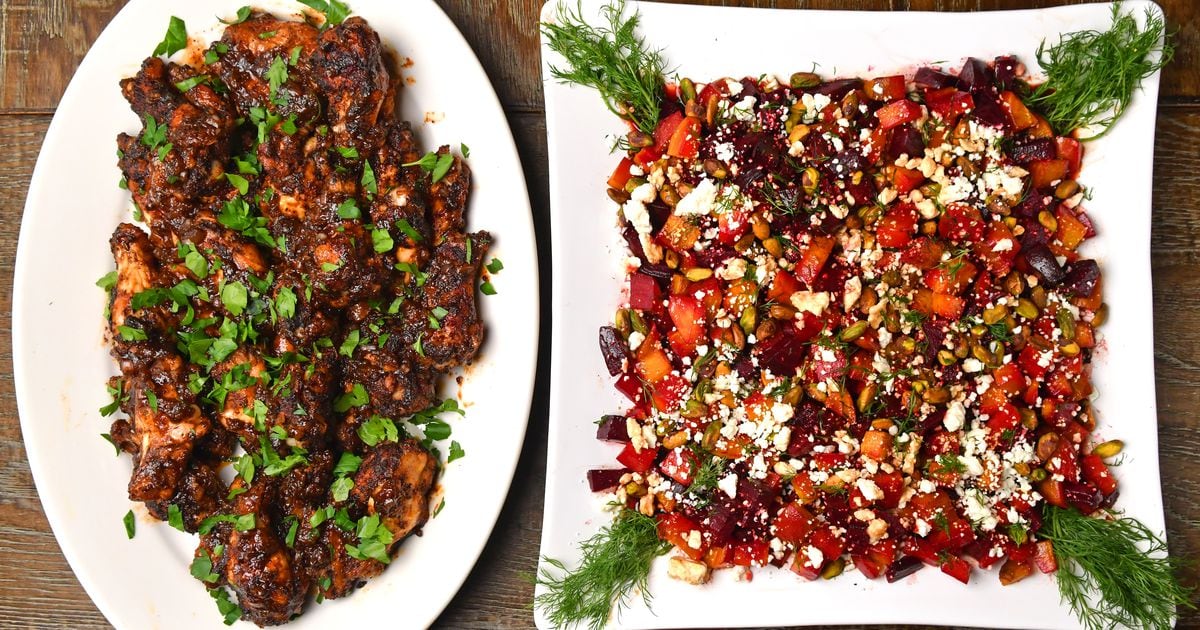
Adriana Frazier, director of operations and innovation of Suwanee-dependent Volcanica Coffee, developed this recipe employing Volcanica’s natural and organic Ethiopian Yirgacheffe espresso. “It’s our best-selling coffee, a medium roast and superior in acidity with notes of lemon, blueberry and blackberry, building it a excellent match for these wings, which are the two sweet and savory.”

The recipe provides wings that are packed with flavor, sweet and savory, but also spicy.

Roasted Beets with Balsamic Coffee Glaze

When she was creating the glaze for this recipe, Adriana Frazier, director of operations and innovation of Suwanee-centered Volcanica Espresso, used their Colombian Supremo coffee. “Most folks are common with Colombian coffee with its flavor notes of chocolate, caramel and a hint of orange. I adore how it pairs with balsamic vinegar, smoothing out the flavor and bringing out the nutty overtones in the vinegar.”

You want about 4 cups raw greens for this recipe. If your beets really don’t appear with their tops or the tops are skimpy, increase with spinach or arugula.

Espresso Balsamic Reduction

This uncomplicated glaze brings out the very best of its 4 elements. We located ourselves incorporating leftover glaze to other roasted vegetables like Brussels sprouts and generating a second batch to use with grilled pork tenderloin.

Sausage above Hazelnut Quinoa with Roasted Carrots and Coffee Vinaigrette

Quite a few many years in the past, Jarrett Stieber of Summerhill cafe Little Bear established this recipe for Atlanta meal package corporation Garnish & Collect to come up with a flavorful way to provide quinoa.

“Quinoa was increasing in level of popularity at the time, especially for the reason that it is effortless to prepare dinner and significant in protein, but it can style extremely bland,” mentioned Stieber. The espresso vinaigrette solves that difficulty deliciously.

Our nutritional evaluation uses pork Italian sausage. Take into account hen sausage if you’d like a decrease-fats version.

InvestigateThe ultimate guide to metro Atlanta food halls

Sign up for the AJC Foodstuff and Dining E-newsletter

Browse far more tales like this by liking Atlanta Cafe Scene on Facebook, following @ATLDiningNews on Twitter and @ajcdining on Instagram.