Indian Cooking Tips: How To Make Soft And Fluffy Poha

Indian Cooking Tips: How To Make Soft And Fluffy Poha

Poha is one of the most popular Indian breakfast dishes. Made with flattened rice that is steamed and cooked with a wide variety of veggies and masalas, poha never fails to disappoint our taste buds. The best part about this dish is that it is super light on the stomach and has a number of variants in different parts of the country. Be it the classic Indori poha,Maharashtrian kanda poha or Nagpuri tarri poha, they all taste equally divine! Now, it may seem easy to make poha at home but it is also something that can go wrong very quickly. Poha tastes best when it is super soft and fluffy, and achieving this consistency at home can be quite challenging. To help you make the perfect poha, we have jotted down some easy tips that’ll definitely come in handy the next time you decide to make this dish at home. Take a look.

Also read: Want To Lose Weight? Try This Protein-Rich Poha For Your Next Breakfast

g3itoj8g

Here’re Some Tips To Make Soft And Fluffy Poha At Home:

1. Rinse The Poha Nicely

The first thing to keep in mind while making poha is to wash it thoroughly. The best way to do this is by rinsing it under running water. Once done, squeeze out all the excess water using a strainer and allow it to dry.

2. Don’t Soak It For Too Long

Once you’ve rinsed the poha, it’s time to soak it in water. However, make sure to soak it only for a few minutes as soaking it for an extended period of time could end up ruining its texture. This would also make the poha extra soggy, and this is something we certainly do not want.

3. Fluff The Poha

Another tip that works like wonders while making poha is to gently fluff it with your hands before cooking. This helps in separating the grains and making the poha less clumpy and mushy. You could also use a fork to fluff the poha.

Also read: Different States, Different Specialities: 5 Poha Recipes From Across India To Spruce Up Your Breakfast

i5qnhn2

4. Cook On Low Flame

Another common mistake that most of us make while making poha is cooking it on medium-high flame. Overcooking the poha can end up making it super dry and hard. In order to retain its moisture, cook it only for a few minutes for the best results.

5. Add A Dash Of Milk Or Lemon Juice

Lastly, if your poha is still a bit dry, you can add a dash of milk or lemon juice. Adding milk or lemon can help add moisture to the poha while enhancing its flavour. Make sure to add either of these ingredients only after switching off the gas. Cover it with a lid for 4-5 minutes for an extra layer of moistness.

So, the next time you make poha at home, keep these tips in mind! Happy Cooking!
 

About Vaishali KapilaVaishali finds comfort in eating parathas and rajma chawal but is equally enthusiastic about exploring different cuisines. When she’s not eating or baking, you can often find her curled up on the couch watching her favourite TV show – FRIENDS.

Cooking With Beer: 7 Vegan Recipes for Beer-Infused Dishes

Cooking With Beer: 7 Vegan Recipes for Beer-Infused Dishes

You’ve heard of cooking with wine, but what about cooking with beer? The popular hoppy beverage has made its way into the food-trend scene, and for good reason: it’s delicious. From moist stout cupcakes and beer-battered tofu tacos to chocolate stout brownies and beer macaroni and cheese, we’ve compiled a list of the tastiest beer-infused vegan dishes to whet your appetite. So, raise your glass, but don’t take a sip. Instead, enjoy beer cooked into your food. Cheers!

But first, which beers are vegan?

Before you get cooking, it’s important to check that the beer you’re using is actually vegan. Sometimes animal products, like casein or gelatin, are used as fining or clarifying agents in the production process. But also, some brands use animal products in their beers. (Stouts, for example, are sometimes brewed with lactose, which comes from cow’s milk.) If you’re not sure which beers are vegan, before you head to the grocery store, check out our ultimate guide to vegan beer.

7 vegan recipes for beer-infused dishes

Once you’ve found the right beer, it’s time to get cooking. Just try to resist drinking all the beer as you go! 

VegNews.beerveganrecipe.Thyme & Love


1 Vegan Beer Brats

With baseball season in swing, beer-infused brats are the perfect addition to any Beer Day celebration. Do like Thyme & Love and cook your favorite Beyond Meat brats in a bath of your go-to summer brew for a flavor you won’t soon forget. Served between soft pretzel buns and loaded with all the fixings, dress up this classic with a side of potato salad (or even baked beans!) for the ultimate meal. 
Get the recipe

VegNews.JackieSobonThaiBBQSlidersVegan Yack Attack

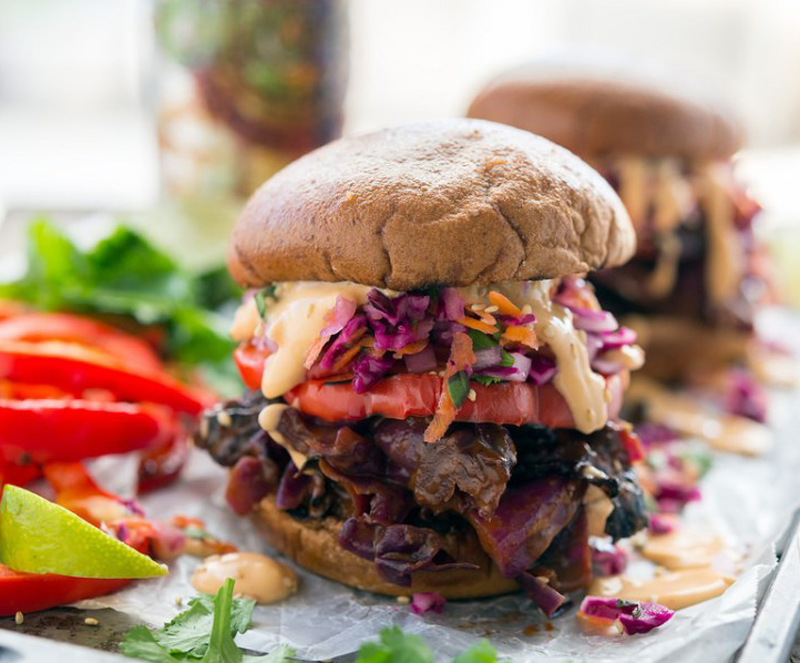
2 Thai BBQ Beer Can Cabbage with Daikon Slaw

If you’re the kind of person who likes to experiment with your food, try these inventive sliders from cookbook author (and VegNews contributor) Jackie Sobon. Packed with barbecued beer cabbage (which involves gutting a cabbage, adding beer into it, and slow-grilling the beer-stuffed cabbage until tender and infused with hoppy goodness), the sandwich’s Asian-inspired barbecue sauce and bright daikon slaw make for an incredible handheld.
Get the recipe

VegNews.JackieSobonThaiBBQVegan Yack Attack

3 Beer & Brat Mac ‘n’ Cheese

Another delicious culinary invention from the kitchen of Jackie Sobon, this Oktoberfest-worthy macaroni and cheese is the ultimate comfort food. The cashew-based sauce is completely swoon-worthy thanks to its luxuriously creamy texture and added oomph from the Golden Ale beer. We’d smother almost anything with it, but Sobon pairs it with perfectly cooked pasta and hearty chunks of vegan seitan bratwurst.
Get the recipe

VegNews.veganchilli.MinimalistBakerMinimalist Baker

4 Vegan Beer Chili

Is it okay to drink alone if you pour the beer into a pot of chili? We say yes, which is why Minimalist Baker’s one-bowl wonder is our staple for nights spent curled up on the couch. Although the recipe serves eight, we find it’s best suited for the single lifestyle. Simple ingredients? Check. Easy prep? Yep (less than an hour). Freezer-friendly? You bet! Plus, the beer gives it a robust flavor, and the beans give this soup substance. Serve it in a pint glass for a festive touch and enjoy your party of one.
Get the recipe 

VegNews.HotforFoodBowlDipHot for Food 

5 Vegan Beer & Cheddar Bread Bowl Dip

Beer and cheese is the harmonious adult equivalent to peanut butter and jelly, which might explain why Hot for Food created the ultimate gooey, cheesy, plant-based dip perfect for a movie night in (Seaspiracy, anyone?). The dip relies on potatoes and cashews for its classically thick consistency, while the beer, spices, and pickled jalapeños enhance its bold, complex flavor. The dip is poured into a bread bowl and topped with vegan cheddar, green onion, and coconut bacon, so forgo the accouterments and start ripping this bowl apart.
Get the recipe

VegNews.veganbeerbatteredtacosHealthy Happy Life


6 Crispy Beer-Battered Tofu Tacos

Those who say they don’t like tofu obviously have never had Kathy Patalsky’s beer-battered creation. The blogger transforms these bland bricks of soy into crave-able, beer-soaked bites that are simple yet satisfying when paired with pickled onions, cabbage, avocado, vegan chipotle mayonnaise, and hot sauce. The tofu is crispy on the outside, tender on the inside, and tastes delicious inside a warm tortilla. We’re making extra to add to our salads, sandwiches, and Buddha bowls.
Get the recipe

VegNews.veganbrownieswithbeer.chocolatecoveredkatieChocolate Covered Katie

7Chocolate Stout Brownies

Stout is an acquired taste, but everyone can learn to love its chocolate accents, thanks to these decadent vegan brownies. Concocted by healthy vegan dessert blog Chocolate Covered Katie, these guiltless brownies are fudgy, stuffed with chocolate chips, and are a surefire pleaser. Note: Katie highly recommends you let these sit overnight in the refrigerator before serving, so plan ahead and make these the night before. We won’t judge if you celebrate a day early by eating the batter.
Get the recipe

For more about beer, read:

Indian Cooking Tips: How To Make Street-Style Crispy And Khasta Samosa

Indian Cooking Tips: How To Make Street-Style Crispy And Khasta Samosa

Be it any occasion, festival or celebration, samosa is always the star of snacks platter. We can never get enough of this classic Indian street food, no matter how many times we have it. It’s available in every nook and cranny of the country, and is even prepared in household kitchens. While making samosa is a fairly easy job, but not everyone is able to replicate the same street-style samosa at home. Do you also often find your homemade samosa turning soggy? Do you wonder why the samosas available in all the street shops are so crispy and not yours? You will get your answers today.

(Also Read: How To Make Street-Style Chicken Biryani In Just 30 Mins)

In a video posted on YouTube channel ‘Cook With Parul’ we found out some amazing tips to make street-style samosa that are khasta and crispy. We noted down the recipe with tips for your reference. So without wasting any time. Let’s get started.

Also Read: 5 Tricks To Make Perfect Street-Style Aloo Tikki

Street-Style Samosa Recipe I How To Make Crispy Samosa At Home:

1.Start with dough for samosa. Knead dough with maida, a dash of salt, crushed ajwain and some oil. Some people add ghee but it is oil that gives more crispiness to the samosa than ghee. Add water gradually to knead the dough.

Tip: Always remember to keep the dough tight, not soft. If the dough is soft, the samosa will turn soft soon after frying. Also ensure that the dough is not too rough. 

2. Let the dough rest for around 15 minutes. 

Tip: Spread some ghee on the dough after it has rested for some time. This will ensure that the outer layer is khasta and crispy. 

3. Make stuffing for the samosa. Saute jeera, hing, crushed whole coriander seeds (dhaniya), ginger, green chillies and peas. Then add crushed boiled potatoes. 

Tip: You should roughly crush the potatoes, not grate it or cut into pieces. 

4. Add seasonings like coriander powder, red chilli powder, cumin powder, turmeric powder and garam masala. Also add salt, amchoor powder/chaat masala, kasuri methi and chopped coriander leaves. 

Tip: Roast the masala well. There should not be any water/moisture left. Saute till dry and let the mixture cool down.

5. Now divide the dough into small parts and roll into small thin rotis. Cut each roti into half. Dab some water on the ends so that it doesn’t open while frying. Place stuffing and seal into the shape of a samosa.

Tip: 1 spoonful of aloo mixture is enough. The stuffing should not be too much or too less. Also, leave the rolled and shaped samosas out in the open for some time before frying.

6. Fry the samosas till crispy brown.

Tip: Fry on medium flame so that samosas cook well to the core and turn out crispy. 
And your perfect samosas are ready!

Also Read: How To Make Pav Bhaji In A Pressure Cooker

Watch the complete recipe video of street-style samosa here:
 

Featured Video Of The Day

Bread Pizza Recipe | How To Make Bread Pizza

Cooking Rice Noodles Like A Pro Is Easy With These Tips

Cooking Rice Noodles Like A Pro Is Easy With These Tips

Rice noodles are becoming a favorite because of to their gluten-no cost character. A staple component in Asian delicacies, rice noodles have to have precise expertise to cook them. Like pasta, they arrive in a variety of shapes and dimensions that need varying cooking occasions. If you’re new to making Asian recipes with rice noodles, cooking it can be scary. These noodles need several cooking approaches. On the other hand, with a few handy ideas, you can ace the process

Over the earlier couple of decades, gluten-cost-free diet plans have attained much reputation. If you are a fan of noodles, then take into consideration rice noodles. The use of noodles made from rice might be traced again hundreds of many years in several Asian areas. These are delightful and absolutely free of charge of gluten. If you have not sampled them nonetheless,  the most straightforward way to devour them is at an eatery. But practically nothing beats a perfect handmade meal. Rice noodles can be a true bear for newbie cooks attempting to make this delicacy for the 1st time at property. Inexperienced cooks frequently discover rice noodles disappointing due to the fact they immediately become inedible mush if they usually are not properly organized. Frequent dilemmas contain regardless of whether or not to use sizzling h2o and whether or not to soak the rice noodles to start with. Oh, do not be concerned. In this article are a number of tips of the trade for making perfect rice noodles, just like a skilled Asian chef.

Right before you begin, you must know that rice noodles, like pasta, arrive in different styles and dimensions. So, firstly, discover the form you are utilizing. The three frequent varieties are vermicelli, fresh new rice noodles, flat rice noodles and bigger, wide flat noodles. 

Soaking vermicelli rice noodles

Common Vietnamese and Thai dishes aspect them frequently. Use these ultra-skinny rice noodles in salads, stir-fries, and soups. This variant has a rough texture. Pour area-temperature water into a huge bowl. Drop the vermicelli into the drinking water, and allow it sit for a few minutes until eventually it turns opaque. Pull the noodles aside with your fingers to individual them. Get the noodles drained. When generating noodle soup, carry the broth to a boil, blend in the noodles, and right away take out from warmth. Make confident to provide right away.

Draining the h2o from noodles, Image Resource: Unsplash

Recommendations to prepare dinner flat rice noodles

To start, fill a bowl with drinking water at place temperature. Insert pad thai or flat rice noodles. Go away in the h2o for at minimum 10 minutes. Toss the noodles in a strainer and operate your fingers via them to take away excessive h2o and reduce them from sticking. Coat the noodles in neutral oil, these as rice bran oil, if you is not going to be cooking them right away. When planning a recipe for stir-fries, flat rice noodles must not be boiled. They are inclined to change into a mushy mess when thrown into a wok. Introducing a bit of drinking water to your pan halfway by cooking will permit the noodles to steam cook dinner with no overheating.

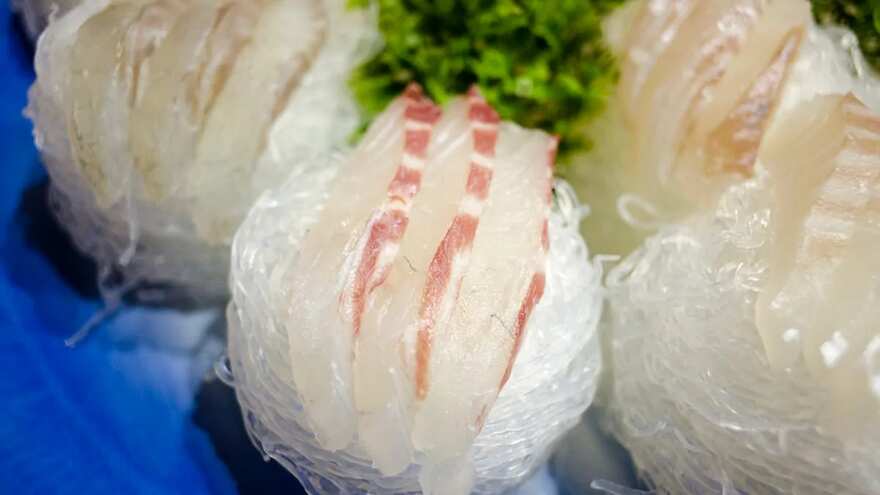
Korean dish with rice noodles and raw fish, Graphic Source: Pexels

On the other hand, new rice noodles are significantly extra delicate than their dried counterparts. These come pre-oiled for sale most of the time. You can usually discover them in your neighborhood supermarket’s refrigerated section or a speciality retailer. Cooks want to work out caution to avoid ruining a batch of clean rice noodles. This variation is fantastic for ending off any meal. You can even convert off the warmth to avoid overcooking refreshing rice noodles. To protect against overmixing, gently toss the noodles with a spatula.

A resolution to the sticking dilemma

Sticky rice noodles are a standard culinary blunder. A fall or two of rice bran oil will reduce cooked noodles from sticking alongside one another as they sit. Drizzle some oil in excess of the noodles and toss them gently to evenly unfold the oil. This must aid in preserving them from clumping alongside one another.

Essential and cheap cooking tools you probably didn’t know you needed

Essential and cheap cooking tools you probably didn’t know you needed

Each individual home cook should really have a couple of simple equipment: knives, wood spatulas, significant spoons. But there are less common resources that can make cooking at dwelling so a lot superior. Mackensy Lunsford, a chef turned food author, and Todd Selling price, an untrained but avid home cook, can’t live devoid of these items in their kitchens. Most of the equipment expense close to $10, so there is no purpose not to add them to your kitchen toolbox.

Offset bread knife: Not all people likes the really feel of an offset bread knife, but I enjoy the way it handles. Offset suggests that the blade is decreased than the cope with, which I really feel offers me better leverage and keeps my knuckles cost-free and clear of the reducing board. Not only is this serrated knife terrific for slicing as a result of baguettes without having smashing the inside, it really is fantastic for chopping sandwiches, extremely ripe tomatoes and tender baked products. Mackensy Lunsford

A thin fish spatula can be used for all kinds of food.

Fish spatula: In typical, I stay clear of single-use resources, which is aspect of the motive it took me many years to get a fish spatula. And other than, I thought my normal spatula was good at flipping fish. Very first, my normal spatulas have been not up to snuff for fish — I just didn’t know it. And second, a fish spatula has so numerous utilizes. Very long, triangular and slotted, the fish spatula slides quickly below anything flat, like a a pork chop, a pancake or even a chocolate chip cookie. I use mine practically each day. Todd Cost

A cheese knife is the perfect tool for cutting though a soft cheese like brie.

Cheese knife: I have pretty a number of knives, which includes a big, undesirable Japanese cleaver, a paring knife, a boning knife and other assorted blades. My cheese knife is probably my most frivolous, single-use slicer. It has no other use but to slice by way of delicate cheeses. But if you are a cheese man or woman like me, you can surprise how you at any time lived with no this knife to effortlessly slice via creamy bries and other comfortable cheeses without ending up with all of that treasured stuff caught to the blade. Lunsford

Cambridge students gets cooking with Chef in the Classroom

Cambridge students gets cooking with Chef in the Classroom

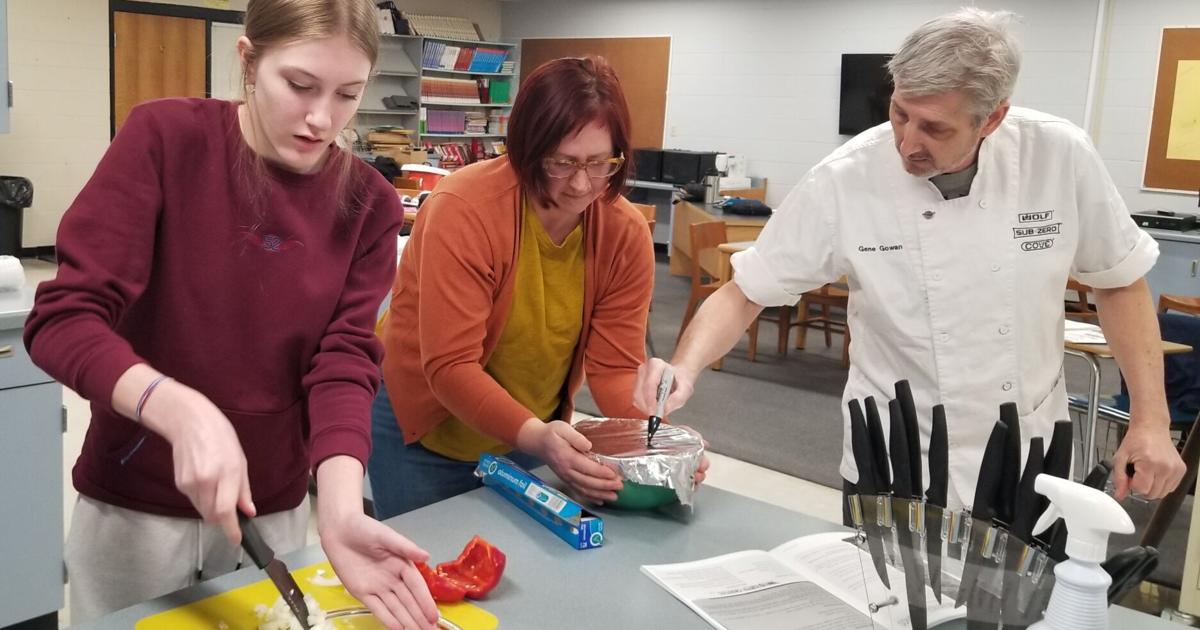
Elementary students in the Cambridge School District are shown how to make recipes by a chef, and then they turn around and become the chefs as high school freshmen.

The Chef in the Classroom program brings in a chef to demonstrate for the young students how to make foods that are mostly tied to other lessons they are learning. Then in high school, the chef comes back to again teach students to make those same recipes and others. The students also learn knife skills and other cooking tips.

“It is kind of a full circle kind of thing,” said Gene Gowan, who serves as the chef.

The Chef in the Classroom is one of the programs organized by Cambridge Farm to School, a volunteer-run organization that assists with programming and facilitates hands-on education in the Cambridge School District and the community. Chef in the Classroom takes place once a year for each grade for elementary students, and for four days during freshman health classes. Elementary students receive a copy of the recipe they learned, and each high school student receives a booklet with recipes and cooking tips.

People are also reading…

“I’m learning a lot of new things in the first day,” freshman Maggie Porter said about Chef in the Classroom.

Freshman Josie Punsel said she was learning new recipes and knife safety and was being exposed to different foods.

“The class is pretty interesting,” she said.

Teacher Antione Gray, whose freshman health classes took part in Chef in the Classroom last month, said he sees several benefits to the program.

“The biggest thing is not a lot of families expose kids to cooking,” he said.

While his students might do some food preparation at home, Gray said, it tends to be more simple fare. Not only is the cooking in Chef in the Classroom more elaborate, it also introduces students to different foods, he said.

“The last thing, though, is it gets them out of the classroom,” Gray said.

Instead of sitting in their normal classroom, the students head down to the school’s food lab for hands-on lessons.

Elementary students get to taste what Gowan makes, and the recipes are usually tied into what they are studying. For example, fourth-graders do a Native American unit, so Gowan made a traditional recipe called “Three Sisters Succotash.” Gowan also shows students how math, science and reading tie in to the kitchen, and where particular food items come from and how they are grown.

Gowan runs a small catering business called Canella Culinary and is a chef in the sales training department at Sub-Zero, which has a farm on its property for growing the produce it uses. He said he gets satisfaction from seeing students try new things and exert a little bit of peer pressure to get others to do so.

“I like interacting with the kids,” Gowan said. “I really enjoy helping them learn where their food comes from and the stories behind it.”

The Cambridge Farm to School program started small and has evolved over the years while its leadership changed. In 2017, new co-chairs Jacy Eckerman and Ben Timp formed a new Farm to School Advisory Committee and partnered with the Cambridge-based Rural Schools Collaborative with the goal of becoming a non-profit organization, which was realized in 2019. There are still three of the founding advisory board members on the current board: Eckerman, Timp and Erica Lien.

In 2012, local parents Robin Kantzler and Grace Leonard became the co-chairs and began to focus on Farm to School programs at the elementary school level. Kantzler and Leonard began Farm to School education and enrichment programs, including Chef in the Classroom, which is modeled after Fort Atkinson’s program. Since 2017, Eckerman has worked with teachers in the elementary school to incorporate the chef program with what students are learning in their classrooms. Eckerman and Gowan expanded the program into the high school health class in 2020.

Currently the farm to school program has three prongs: Chef in the Classroom, maintaining its Perennial Edible & Exploration Garden, and environmental projects such as composting and recycling. Efforts to grow produce to use in school lunches include Project Tomato and the raspberry patch.

The garden also is a community educational space used to host collaborative projects focusing on reuse and sustainable materials, and students can use it to work on independent projects. Eckerman made the garden sign by using plastic bottle caps to create the lettering and design. Using an old billboard and poles, a shelter was built out of reused materials, and pallets were reused for a fence around the pumpkins. Future plans call for a table and benches to be built out of reused materials.

Plans for this year include getting all the structures built for the raspberry growing operation, irrigation systems built and installed, and planting and maintaining the garden to grow a variety of pumpkins to be used as decoration for a fall festival, in addition to herbs and perennial plants that help deter pests. Other plans include maintaining and caring for what was planted last year — lavender, bamboo and perennial flower beds. Future plans include building a tool shed using only reused materials.

Cambridge Farm to School holds community work days one Saturday a month starting in May and is always looking for volunteers for its gardening projects and other programs, Eckerman said. But the fall festival has helped get the organization recognition.

After some false starts due to the COVID-19 pandemic, last fall the organization launched the Cambridge Farm to School Fall Festival, which includes a chili cook-off, 5K run, family games, live music and beer tent, and information about the organization. This year it will take place on Oct. 14 at Westside Park. The festival is a community celebration and raises money to support all the Farm to School programs.

“We’ve worked really hard in the last two years to really get our name out there,” Eckerman said.

“I like interacting with the kids. I really enjoy helping them learn where their food comes from and the stories behind it.”

Gene Gowan, chef, Canella Culinary