
Food in Sicily students explore Sicilian culture, experience tasting and making local foods

Food in Sicily students explore Sicilian culture, experience tasting and making local foods

Learners interested in the Meals in Sicily study away program, scheduled for May possibly 10-31, 2023, are invited to go to an approaching info session on Microsoft Groups.

Members in the analyze abroad expertise can generate 6 Ohio College credits, study about the lifestyle of food stuff in Sicily, and get arms-on practical experience tasting and creating Sicilian dishes.

“Like ice product, cheesecake, and chocolate? What about marzipan, cannoli, and sumptuous pasta? Then, come practical experience the cultural and historic foods methods of Sicily, the Mediterranean’s largest island. We are going to travel Sicily’s jap ‘Greek’ coast to see and taste this special island’s abundant record of food items traditions. You may perhaps even meet the Chef’s Desk star even though browsing Caffè Sicilia in Noto, Sicily,” explained Meals in Sicily Director David Bell, Ph.D., chair and associate professor of linguistics in the College or university of Arts and Sciences.

Intrigued students are invited to join an details session by using Teams at just one of the adhering to dates and times:

  • Wednesday, Jan. 18, at 7:30 p.m.
  • Tuesday, Jan. 24, at 7:30 p.m.
  • Thursday, Feb. 2, at 7:30 p.m.
  • Monday, Feb. 6, at 7:30 p.m.
  • Wednesday, Feb. 16, at 7:30 p.m.
  • Tuesday, Feb. 21, at 7:30 p.m.
  • Monday, Feb. 27, at 7:30 p.m.

Learners Master How to Make Sicilian Dishes

In addition to understanding about wine, olive oil, chocolate, and cheese, a person of the a lot of activities on the Meals in Sicily program is cooking. Learners in will understand how to make two regular Italian dishes: cavateddi al ragù and arancini.

Generating Cavateddi al Ragù


Enjoying their work making cavateddi al ragù, from bottom left: Theresa Moran, Susi Kimbell (director of the Exedra Center), Emily Jones, Sidnie Kiligour, Sefi Monterosso (Exedra Center staff), Jackie Augustine, Lauren Hates, Marco Messina (Exedra Center staff), David Bell, Faith McLaughlin, Maya Roth-Wadsworth, and Emily McCarty.
Making the most of their perform earning cavateddi al ragù, from base left: Theresa Moran, Susi Kimbell (director of the Exedra Heart), Emily Jones, Sidnie Kiligour, Sefi Monterosso (Exedra Middle staff members), Jackie Augustine, Lauren Hates, Marco Messina (Exedra Center team), David Bell, Faith McLaughlin, Maya Roth-Wadsworth, and Emily McCarty.

Cavateddi al ragù is made from cavati, or cavateddi in Sicilian, and tomato sauce. During a new Foods in Sicily software, students gathered at the Exedra Heart in the heart of Ortigia to make the pasta.

“The position is to clearly show how the most straightforward of substances — flour and h2o — can be turned into some thing delicious and healthy. This is the essence of cucina povera, the delicacies of the poor,” mentioned Theresa Moran, a Foods in Sicily college member.

The students had been led in the pasta producing practical experience by Exedra workers member Sefi Monterosso, who showed the students how to make a mound of flour and with even handed drops of water, switch it into a dough, then start to roll and knead it. College students watched Monterosso expertly get up a ball of dough in her arms and then slam it down onto the kitchen area table.

“This a great way to get rid of all your frustrations and anxieties,” Monterosso explained as she pounded the ball of pasta onto the desk, kneading it with the heel of her hand, lifting it, and then hurling it back again down on the table. “This is also essential to establish up the gluten so the pasta isn’t flabby,” she mentioned.

Immediately after loads of kneading, when the dough was sleek, tender and very a little puffy, the learners started rolling out the pasta. They very first slice the dough and then rolled pieces of it out into worms or snakes. Then, they slice the dough snake into shorter parts, utilizing the knuckle on their thumb as a rough measure. Getting a fork, the students swiftly rolled the compact parts a single by a single down the the tines on the again of the fork, collecting them into awaiting platters. The brief parts of dough stop up generating a condition vaguely resembling a pill, roly-poly, or potato bug.

For Monterosso and the other Sicilian staff members, who have been making this pasta for many years, each individual minimal piece of dough is lightly, immediately and efficiently pressed down the back again of the fork and with a flick of the wrist, sent on to the platters. College students usually push the dough as well challenging, and the pasta then does not curl and gets too deeply grooved.

After the college students concluded building the cavateddi, they tossed the pasta briefly with flour to preserve the individual items from sticking. The pasta was then dropped into a big cauldron of boiling water and boiled briefly.

When the pasta pops up to the area of the h2o, it’s time to drain and dress the pasta. First, the pasta is tossed with a minor extra virgin olive oil and then the dish is dressed with a basic crimson sauce created from community tomatoes. Listed here is wherever the grooves from the fork tines are important—the sauce clings to the individual grooves in each and every piece of pasta. Matching the suitable pasta shape to the correct variety of sauce is an critical component of Italian cooking, and the cavateddi go perfectly with the easy sauce of regional tomatoes, garlic, parsley, and chilies, Moran pointed out.

For the remaining contact, the students sprinkled the pasta with grated cheese. Commonly ricotta salata, a usual really hard Sicilian cheese, created from fresh ricotta cheese that is pressed, salted, dried, and aged for 30 times or more, is utilised, Moran included.

Producing Arancini

On the left, Faith Laughlin, Emily McCarty, Liza Gildemeister, Lauren Hayes, Jackie Augustine, and Sefi Monterrosso. On the right, Jackie Augustine and Sefi Monterosso roll the arancini in breadcrumbs while Liza Gildemeister watches with Lauren Hayes in the near foreground.
On the remaining, Faith Laughlin, Emily McCarty, Liza Gildemeister, Lauren Hayes, Jackie Augustine, and Sefi Monterrosso. On the proper, Jackie Augustine and Sefi Monterosso roll the arancini in breadcrumbs while Liza Gildemeister watches with Lauren Hayes in the around foreground.


Arancini are rice balls, just one of the most prevalent Sicilian street food items treats eaten at any time of the working day.  The singular kind is arancino, a diminutive of the term arancia, which indicates “orange,” derived from the classical Arabic word for orange, naranj. Arancini, also identified in Rome as supplì, is a dish that can be traced back again to the Arab conquest of Sicily. These rice balls can be filled with cheese, meat and peas in pink sauce, ham, mushrooms, zucchini, and even with a sweet filling this kind of as a pistachio product.

Arancini also signify an crucial cultural rivalry amongst the western Arab influenced element of the island and the japanese Greek motivated aspect. In Palermo, in western Italy, the rice balls are normally formed like oranges and are termed arancine, applying the feminine plural marker (arancina or arancinu in the singular). In Catania, in jap Italy, normally the rice balls are shaped into triangles like the Sicilian volcano Mount Etna, and their grammatical gender is masculine.

As with all cooking days at the Exedra Centre, pupils in a modern Food items in Sicily working experience commenced by scrubbing their arms and forearms. Then large platters of steaming rice were being brought out, and the learners yet again acquired from Monterosso and the other Exedra staff members, for whom building these rice balls is component of their usual practical experience developing up in Sicily.

To make arancini, first make a little half dome ball in 1 palm and then cautiously insert the filling of choice in the middle of this ball. Fillings can be cubes of ham or cheese or a tablespoon of meat in red sauce. The plan is not to incorporate far too much filling — and not to have also much rice. Then put rice on major of the filling.

The college students practiced cupping their hands collectively and pressing firmly to compact and condition the rice to the perfect shape.

After the rice ball is designed, it is rapidly rolled in a slim flour slurry and then rolled in pretty good breadcrumbs made from Sicilian bread. The arancini are then taken to the kitchen the place they are deep-fried in a vat of olive oil. As quickly as they are browned all around, they are eradicated and put out on towels to soak up the excessive oil — and then eagerly grabbed as a scrumptious rapid lunch or sizzling snack.

“The trick to taking in arancini,” Moran mentioned, “is waiting right up until they are just at the correct temperature so that you can bite via the thin crispy rice shell into the delightful heat handle in the heart.”

Food in Sicily Analyze Absent Program

Food items in Sicily is a college-led software for Ohio College credit. In OHIO study absent courses, college students gain OHIO credit history, choose programs with other OHIO college students and are taught by OHIO school. A student’s fiscal help package deal applies the very same as it would for on-campus courses.

Foodstuff in Sicily is open up to undergraduate and graduate pupils, and learners can earn 6 credit hrs whilst studying how to make mozzarella, training Italian with a “Table and Market” conference with neighborhood social enterprises, supporting with dinners at a neighborhood soup kitchen area, having cooking classes, and going to farms, breweries and wineries. (For further facts see the articles on Singing, Dancing and Churning the Cheese in Sicily in the course of the 2019 excursion, and Foodstuff in Sicily students experience how support modifications people’s lives and  Foods in Sicily pupils explore the ability of community resilience in the course of the 2022 vacation).

Visits to marketplaces and web sites in Ortigia, Italy, include the Catacombs of San Giovanni, the medieval Jewish quarter and Castello Maniace. Day excursions are planned to Catania, Italy, in which college students will stop by the fish current market, historic town middle, Benedictine Monastery, Greek Theater and Cathedral. Students also will hike on Mt. Etna and get pleasure from time on Sicilian beach locations, as perfectly as tour the historic towns of Noto and Taormina

For a lot more details, stop by the Foodstuff in Sicily webpage or contact Bell at belld@ohio.edu.


Study away badge
See additional about Experiential Learning at OHIO.

TikTok: Lawmakers are trying to ban the platform, but it’s part of our culture now

TikTok: Lawmakers are trying to ban the platform, but it’s part of our culture now


CNN
 — 

Gabby Beckford’s plan to visit the British Virgin Islands started with a flurry of searches on what to wear, eat and do in between exploring the islands’ pristine beaches and sapphire waters.

But instead of using Google or other search engines, she turned to TikTok.

“On TikTok, I can search what restaurants to go to, I can see what people ate and their reaction to the food,” says Beckford, 27, who’s visiting the British territory in the Caribbean this week. “I can see what they’re wearing, what the weather’s like.”

Beckford, a travel content creator who splits her time between Seattle and Washington, DC, says TikTok has become a lifeline for her and many other users. She says the short-form video platform is much more than cat videos and posts by “influencers.”

To her it’s a one-stop shop for a wide range of content, from mental health advice to product reviews, all presented in bite-sized clips that don’t require plowing through blocks of text.

Gabby Beckford, 27, uses TikTok as a search engine.

“It’s visual,” she says. “I can tell who posted the content, and whether it’s done with me in mind.”

Beckford’s devotion to TikTok illustrates why US lawmakers and others, who view the platform as a security threat because of its parent company’s roots in China, will have a challenge trying to scrub it from Americans’ digital lives.

In recent weeks more than a dozen US states and the US House of Representatives have banned TikTok from government devices. One US congressman, Mike Gallagher of Wisconsin, called it “digital fentanyl” because of its addictive nature among young users and believes it should be blocked across the United States. Some universities also are restricting access to the app.

But with more than 1 billion global users, TikTok may be too entrenched in our culture to be shut down. It was the most-downloaded app in the United States last year, and its users say its platform is much more than teens watching viral dance or cute animal videos. It’s become a critical tool for content creators, small business owners and many others who have made TikTok an integral part of their lives.

Avid TikTok users tell CNN they’re not spending sleepless nights worrying about the app’s ties to China and whether it poses security risks.

They are more concerned about what they say would be lost in a world without TikTok: business income, entrepreneurial opportunities and a platform – built around short, creative and informational videos – where they can express themselves and connect with others.

TikTok has exploded in numerous ways since its international debut in 2017. It now hosts videos on almost every topic under the sun.

Khamyra Sykes, 16, shares short comedy skits and lifestyle content with her 560,000 TikTok followers. She uses the platform to make money by partnering with clothing brands and doing political ads – like a get-out-and-vote clip for the recent midterm election.

The Atlanta-area resident sometimes cross-posts her TikTok videos on Instagram, where she has 1.5 million followers. Like many other teens, Sykes also watches a lot of TikTok content. Some days, she says she falls asleep to TikTok videos – anything with cuddly puppies or tasty-looking recipes.

Brands consider TikTok key to social media marketing, she says, and many consider the size of creators’ followings and their engagement numbers when signing promotional deals.

Khamyra Sykes, 16, says brands consider creators' TikTok reach and engagement a key metric of social media success.

“If Tiktok was banned in the US, I would lose out on a large part of my fanbase and also brand deals,” Sykes says. “Banning TikTok will cause a huge job loss for creators who depend solely on TikTok for their livelihood, and will have a devastating impact on small businesses that use it for marketing and sales.”

Saman Movassaghi Gonzalez, an immigration attorney in Miramar, Florida, uses TikTok to market her law practice to her 83,000 followers. Her short videos offer a light take on an otherwise heavy subject: In one, an image of her morphs into a fiery superhero who takes flight. “Me on my way to get my client out of immigration deportation/removal proceedings,” the caption reads.

“It’s entertaining and catchy, so it works in getting people’s attention in a short period of time,” Gonzalez tells CNN.

Sometimes, she breaks into dances as informative captions with immigration facts scroll on the screen. The 42-year-old says she’s gained some clients though the app, and checks it hourly to stay on top of messages.

“It fits my personality. There are so many options to showcase who you are through the app, whether it’s short clips, skits or dances,” Gonzalez says. “And I love spreading information to people while trying to make it fun and entertaining.”

Immigration attorney Saman Movassaghi Gonzalez uses TikTok to explain immigration policies. Sometimes, she breaks out into a dance with informative captions in the background.

Like Facebook and Instagram before it, TikTok has become deeply embedded in American culture.

The platform has created bestsellers and hit songs. Millions turn to it for wellness tips and fashion advice. CNN and other media outlets post news clips on TikTok. Rihanna introduced her new baby to the world on TikTok. Some believe Madonna used TikTok to make a recent statement about her sexuality. TikTok has launched countless careers, dance trends and memes.

The app is especially popular with young people. A majority of its users are Gen Z, and a third of them are under 19, says Saif Shahin, an assistant professor of digital culture at Tilburg University in The Netherlands.

But – ask any parent of a teenager – some adults feel the app consumes too much of young people’s attention.

“While most social media apps tend to be addictive, none is more so than TikTok,” Shahin says. “Every day, users spend an average of an hour and a half on TikTok, which is nearly double the average time spent on Facebook or Instagram.”

A girl is holding her smartphone with the logo of the short video app TikTok in her hands.

Can the Chinese government get your data from TikTok? Analyst weighs in

This popularity, experts say, can be a double-edged sword. For example, public health experts have used TikTok to convey important messages during the coronavirus pandemic. The White House has even hosted TikTok influencers for briefings on the pandemic, the war in Ukraine and other pressing topics.

But researchers found TikTok’s search engine has spread misinformation about the pandemic, abortion, school shootings and other topics.

And while TikTok provides resources on mental health, Shahin says it and other social media platforms can heighten attention deficiency, anxiety and depression.

“TikTok has changed some aspects of our lives negatively … it has shortened our attention span and allows for the proliferation of misinformation,” says Cristina Ferraz, founder of Houston-based marketing agency Thirty6five.

“If TikTok were to go away, it would remove one of the free sources of joy, connection and entertainment still available to anyone, anywhere with a Wi-Fi connection,” Ferraz adds. “However, it would also remove access to a platform known to create space for bullying and illicit activities for Gen Z.”

TikTok has made a number of announcements in recent years in an effort to ease concerns about its content, including adding controls to help parents restrict what their children can see on the app.

“TikTok is loved by millions of Americans who use the platform to learn, grow their businesses, and connect with creative content that brings them joy,” a TikTok spokesperson told CNN last month.

In response to concerns about national security, TikTok has said the Chinese Communist Party has no control over its platform and that ByteDance is a private company which is owned mostly by global institutional investors – including Americans.

Taccara and Yinka Lawanson, a couple who go by Ling and Lamb on TikTok, have 3.7 million followers on the platform. When they first joined, they referred to it as “the fast food of social media.”

“It was the app you could go to and feel that you have the creative freedom to be yourself … goofy, playful with no one judging you,” they said in an email to CNN. “It was the app that in 60 seconds or less allowed the user the opportunity to go viral and become a star – which other platforms did not offer at the time.”

The thirtysomething Connecticut couple – she grew up in the US and he’s from Nigeria – share short musings about daily life, including their cultural differences from growing up on opposite sides of the world. Like all social media platforms, they say, TikTok has its pros and cons.

Taccara and Yinka Lawanson, who go by Ling and Lamb on social media, say it's up to individuals to determine the positives and negatives of specific apps based on their needs.

“It’s up to each individual to decide what apps are positive or negative for the purpose in which they are looking to use the app, or what they are looking to get out of it,” they say. “For us, we don’t really have negative viewpoints of TikTok, as it has allowed us the opportunity to build and grow a great community of people around the world.”

Phillip Calvert, a Milwaukee resident who goes by PhilWaukee on TikTok, downloaded the app when he lived in Shanghai, China, in 2018. He didn’t have much choice – he says social media platforms such as Instagram were blocked in the country.

Now that Calvert has moved back to the United States, he’s glad he got an early introduction to TikTok.

“People don’t even ask me for my Instagram anymore, they ask me for my TikTok,” he says. Calvert believes the app, with its steady diet of digestible videos, has become Gen Z’s alternative to television.

“The other day, I asked my 15-year-old cousin to watch TV until I return. He told me, ‘Why would I watch TV when I have TikTok?’ ” he says.

Milwaukee resident Phillip Calvert  downloaded TikTok when he lived in Shanghai, China. He didn't have much choice -- other social media platforms were blocked in the country.

Calvert, who’s in his 30s, earns income by posting travel videos and other content to TikTok. He says he earned his first TikTok payment from a Black History Month partnership.

He’s trying to grow his TikTok following and checks the platform several times a day.

“I don’t wake up in the middle of the night to check it, because I’m on it until the middle of the night,” he says. “If I had to give up all social media and keep one, I’d choose TikTok because it’s the newest, and it’s fascinating to see where this is going.”

All the content creators CNN spoke to say that losing TikTok would be a major setback for their brands.

Calvert is hoping the pushback against his favorite social app will have the opposite effect.

“Sometimes when you take something and you vilify it, it gets bigger and better,” he says.

But the creators also agree that if they’re barred from TikTok, they won’t spend too much time mourning. They’ll move on to the next shiny social platform.

Hospitals should improve their food culture and lead by example

Hospitals should improve their food culture and lead by example

Hospitals could promote a constructive change in ingesting routines by minimizing the availability of processed food items and providing much healthier alternatives, say Brandon Stretton and colleagues

Hospitals are a area of well being and healing. Communities expect hospitals to purpose in a fashion conducive to ideal overall health, to present an example for the relaxation of culture, and be at the centre of evidence based alter. Cigarettes, the moment actively approved by medical doctors, ended up banned in American hospitals in 1991 soon after common proof emerged about the unfavorable health consequences of smoking. This supported a wider cultural change, which led to smoking cigarettes costs subsequently declining by above 10{d2b09b03d44633acb673e8080360919f91e60962656af8ade0305d5d8b7e4889}.1

Modern society presently faces a myriad of health and fitness issues, these kinds of as substantial rates of obesity, type 2 diabetes, and undernutrition owing to the overconsumption of unhealthy foods. In contradiction with the healthful life style practices that hospitals encourage, hospitals often give harmful, processed meals for patients and staff. As with smoking in the previous, hospitals could encourage a optimistic change in taking in routines by modelling wholesome consuming techniques.

Weight problems is growing in prevalence around the world.2 Obesity in switch will increase the threat of sort 2 diabetes mellitus, cardiovascular illness, despair, and some malignancies. The weight problems epidemic consumes just about 10{d2b09b03d44633acb673e8080360919f91e60962656af8ade0305d5d8b7e4889} of complete healthcare a calendar year in the United States, or approximately $147bn (£123bn).23 A most important contributor to the escalating prevalence of being overweight is society’s greater intake of vitality dense, processed foods. Diet is motivated by ecosystem, and disadvantaged populations are most vulnerable to consuming low cost, calorie enriched meals.4 Obesity and micronutrient deficiencies are intertwined with systemic inequity, involved with socioeconomic standing, schooling, and race.25

Overconsumption of vitality dense, but nutritionally weak processed foodstuff results in prevalent malnutrition, the place persons are in a macronutrient surplus but micronutrient deficit. Irrespective of the huge socioeconomic results of processed food items, hospitals have a poor food society that mirrors the external local community ecosystem, which permits weight problems and malnutrition whilst undermining the healing ethos.

Harmful, processed food items are easily readily available in hospitals, and their existence encourages weak having practices for staff members and clients. Confectionary includes above one particular third of food things at some major hospitals in the US and Uk, and onsite quickly food stuff eating places are not unusual staff normally resign to having what is obtainable on web page.67 Similarly, people at hospitals with onsite rapidly food stuff dining establishments are extra possible to eat quickly food stuff and think that these choices are healthier than patients at hospitals with out these stores.8 Not only does this ship an inappropriate message to culture about the acceptability of these food items, it can also create problems for the treatment of inpatients.

There could be money motives for the prevalent availability of unhealthy foodstuff in hospitals, with variable income returns from onsite foodstuff profits. Though these profits may let hospitals to remain fiscally solvent, profiting from providing meals that damage wellness is indefensible. As unhealthy food environments foster harmful weight loss plans, healthcare facility compliance with very poor food society could possibly strengthen unhealthy having methods in society, ensuing in the enhancement of chronic condition that later involves hospital admission, developing a revolving door.

Hospitals have an obligation to model and aid high quality dietary selections. Modifying entry to processed meals in hospitals can transform public impression and increase affected person and team health and fitness without the need of impacting profits or customer gratification. Hospitals may possibly also uncover incentive in the environmental added benefits of switching to unprocessed wholefoods.9 Food items waste is a sizeable contributor to medical center squander, and processed foodstuff with their intensive packaging very likely have significant, damaging international effects.10

As very poor diet program has surpassed tobacco as the leading fundamental cause of loss of life, the bad foods society of hospitals could possibly affect the global load of condition.11 Hospitals ought to aspire to be an example for the rest of society, and the acceptance and provision of processed, unhealthy foods promulgates lousy societal foods society.

Acknowledgments

We thank Kristin Weidenbach, educational editorial supervisor of the Royal Australasian School of Surgeons, for copyediting the last version of this manuscript.

Footnotes

  • Provenance and peer assessment: not commissioned, not externally peer reviewed.

  • Competing interests: none declared.

The Pulse: Food Safety Culture Plans

The Pulse: Food Safety Culture Plans

Very last thirty day period, we polled viewers on whether or not or not their providers have a Food stuff Basic safety Society System. This is what they experienced to say.

Does your company have a foods security lifestyle system?

The almost 50/50 break up is just not astonishing supplied lots of FSQA industry experts are even now searching for clues on how to implement meals basic safety tradition. That is some thing we read a lot at QA’s Meals Basic safety Society virtual convention in December. Test out all of the classes below.

  • Fda & Food stuff Security Society: In this webinar, Frank Yiannas, Deputy Commissioner for Meals Plan and Reaction at Fda, leads a dialogue about why food safety lifestyle is crucial. Moreover, Donald A. Prater, associate commissioner for imported foods protection, Fda Office of Food stuff Coverage and Response, and Conrad Choiniere, director of the business office of analytics and outreach, Fda Center for Food stuff Protection and Applied Diet, explore how Food and drug administration is leveraging foods security culture.
  • Our Beloved Matters In Food stuff Protection Tradition: In this webinar, Catalyst’s Tia Glave and Jill Stuber celebrate the Ideal of food safety culture by sharing our preferred items! With articles or blog posts, social media posts and webinars sharing data weekly, if not daily, about how to improve meals security society, wherever does one particular start off? Sign up for us to master about the most impactful perspectives to infuse and information your food stuff security culture journey!
  • How To Make Foodstuff Basic safety Society By means of Continual Mastering: The mastering setting gives us with an remarkable chance to hook up with the hearts and minds of our personnel, aiding them to obtain meaning in their get the job done and explore their personal alignment to the foodstuff basic safety lifestyle of the organization. In this session, Sage Media’s Austin Welch exhibits how leveraging a combine of adult finding out greatest-procedures, determination principle and curiosity inside your discovering systems will improve training efficacy, critical contemplating capabilities and, in the end, your overarching foods protection lifestyle.
  • Meals Protection Tradition Is A Journey … Not A Destination: There are dozens of techniques within the foodstuff market to determine a robust Food items Protection, but is it that straightforward to outline? What if, as FSQA professionals, we seem at it as a journey filled with issues, detours and smaller wins that incorporate up to gaining invest in-in and producing even larger shifts in how leadership techniques food stuff basic safety? In this session, Dole Contemporary Vegetables’ Amy Parks shares illustrations of what has (or it’s possible has not) labored to establish a stronger foodstuff safety culture working with real-daily life examples from the trenches.

Verify our most current poll: Were you prepared for the Quicker Act sesame regulation that went dwell Jan. 1?

&#13

&#13
&#13
&#13

New Oregon Wastewater Rules Threaten Portland’s Food Cart Culture

New Oregon Wastewater Rules Threaten Portland’s Food Cart Culture

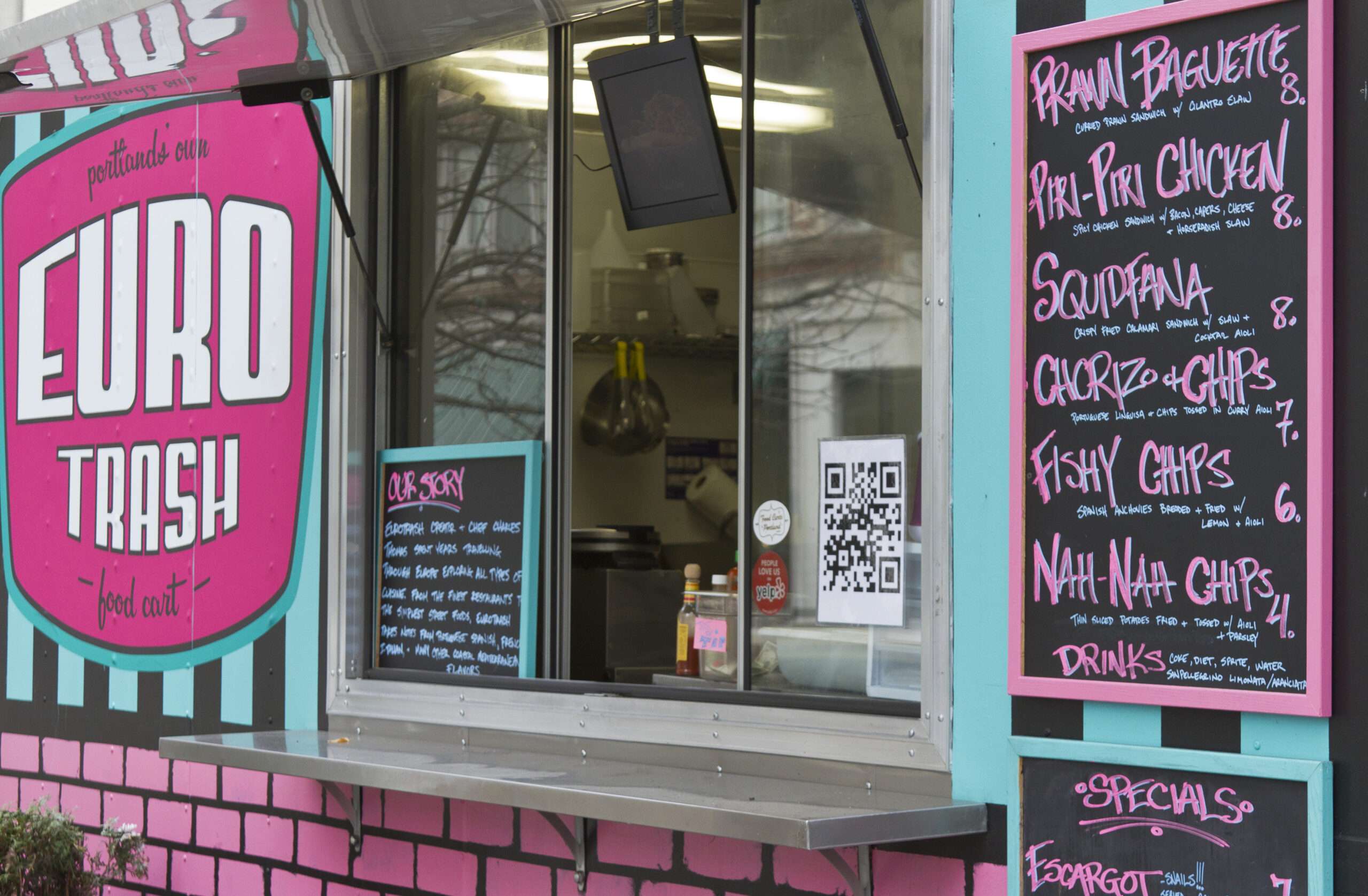
Food stuff carts in Portland, Oregon, are below the gun due to new condition wastewater disposal procedures, Portland Regular described this week. The new guidelines, which debut next week, have compelled some of the city’s environment-renowned carts to close—temporarily, they hope—while they try out to figure out regardless of whether and how to comply.

Portland’s beloved foods carts are mostly stationary vending functions that provide food out of spaces they share with other carts. These areas, recognised in Portland as “pods,” normally function a dizzying array of food items that set most any food items courtroom to disgrace pertaining to the selection and top quality of foods they offer. Website visitors to a pod could possibly uncover a schnitzel cart parked next to other cart distributors promoting steamed bao buns, pizzas, empanadas, meats on sticks, and crepes.

“Section of the cause why carts are so well-known [in Portland]: there is a very low barrier to entry to commencing a single, with decrease upfront expenses and a lot less regulation involved than with brick-and-mortar dining places,” the Regular monthly aspects in its exceptional piece. “But with new laws relating to food carts and food stuff cart pods getting effect on January 1, 2023, some cart homeowners are apprehensive about their capability to preserve their enterprises open up, and some have now designed the conclusion to briefly near, including Meliora Pasta and Papi Sal’s.”

The new policies built information this tumble.

“Setting up in January they have to be connected to a sewage line or have their wastewater pumped on a common foundation,” KGW8 documented in October. “In 2019, the Oregon Wellness Authority applied a new rule that food [] carts and pods can no longer shop wastewater. This is an exertion to slice down on spills which generate overall health and basic safety risks.”

When it comes to industrial food stuff wastewater disposal, the general tactic—from the EPA to state and neighborhood regulations—prohibits companies from dumping untreated wastewater into municipal sewage drains or other waters. As a result, lots of foods businesses—food carts included—hire businesses to dispose of this sort of waste.

Currently, the Month to month points out, Portland carts might dispose of wastewater “by connecting directly to the sewer with a grease interceptor, by accumulating drinking water in the cart’s small onboard wastewater tank and frequently emptying that tank, or by collecting water in a significant wastewater dice adjacent to the tank.” The new principles largely do away with the latter option and make the next possibility prohibitively expensive—which is also an inherent and ongoing issue with the first possibility.

Owners of lots of food carts, which Portland Regular monthly rightly phone calls “the heart” of the city’s food items culture, are battling to figure out how to pay out for the new disposal expenditures. Existing disposal fees for carts have been all-around $80 for every week, in accordance to KGW8, and often involve carts emptying waste consistently into an on-internet site wastewater “cube” that can maintain hundreds of gallons of wastewater and is emptied weekly. But the new procedures, Portland Monthly explains, correctly ban such cubes and only allow carts to retail outlet compact amounts of wastewater in onboard tanks.

Daily wastewater disposal can value $70—several periods the present expense KGW8 reported—and that is if a wastewater hauler that works with meals carts can be uncovered and booked. The Month-to-month reviews there are only two very overbooked haulers in the Portland region. Alternately, hooking up a pod to a municipal wastewater line can cost a assets operator tens of countless numbers of dollars—charges the pod entrepreneurs move alongside to their tenant foods carts.

“I’ve bought a bid for a contractor that’s $30,000, and we’re not gonna do that,” Tess Kies, who owns a food items cart pod, tells the Regular monthly. “I know we will not likely retain [the pod] if the value is outrageous. I’m involved that [a lot of the carts around the city] are going to be put out of enterprise.”

The new wastewater restrictions arrive at a specifically unwelcome time for Portland’s foodstuff carts, which (together with other town eateries) have expert declining revenues during this year’s holiday getaway year. A lot of effectively-favored carts in Portland by now closed for excellent this year—even prior to the new guidelines just take outcome. Yet another issue with the new policies is that even though they have been in the performs for years, some food items cart homeowners say they only located out about them in August. That is 1 motive some house owners, the Monthly reviews, are asking the metropolis to delay enforcement.

I assist retaining city sewers absolutely free of untreated industrial cooking grease and other food waste that can overwhelm them. Remember that in 2014, a “fatberg“—a disgusting blob the length of a Boeing 747 built up of employed cooking oil (along with other gag-inducing waste)—was eliminated, over a interval of many times, from a London sewer it was clogging.

Definitely, while, there should be some other means to avoid sewer fatbergs and the introduction of untreated wastewater into rivers and streams than forcing food items cart entrepreneurs to pay back thousands of bucks in new service fees to dispose of their wastewater. Delaying implementation of the new rules, as some are requesting, looks the minimum the point out, county, and metropolis can and should do. But what about, say, escalating penalties for wastewater spills and dumping? And, specified Portland’s wellness office promises wastewater cubes found at pods are at times hit by cars—leading to spills—why not involve those cubes to be put in parts no auto may perhaps access (e.g., by demanding them to be surrounded by cheap bollards)? Since the alternative—putting very important small foods enterprises in Portland’s crisis-ridden downtown out of business—is no alternative at all.

The Best and Worst Food Culture Moments of 2022

The Best and Worst Food Culture Moments of 2022

It is the tradition at Eater to end the year with a survey of friends, contributors, rovers of the industry, and professional eaters. Even a year like this one. For 2022, the group were asked 12 questions, covering the best meals and the worst moments alongside 2023 predictions and dining standbys. Their answers will appear throughout this week, with responses relayed in no particular order; cut and pasted below.

So far, Year in Eater has covered the best newcomers, restaurant standbys, best meals, saddest closures, and biggest surprises of the year. Now, it’s time for the best — and worst — food moments of 2022.


Adam Coghlan, Editor, Eater London:

Worst: Worldwide Taqueria attempting to a sue Mexican-owned taqueria Sonora for using the word taqueria in its name — dearie me.

Best: Sonora Taqueria having absolutely none of it.

James Hansen, Assistant Editor, Eater London:

Best: The lettuce.

Worst: The various lawsuits, for two reasons. First, their individually egregious circumstances. Second, the way they display the growing corporatisation of power in London restaurants, which manifests daily outside of these moments in the way landlords dictate who can open a restaurant, and where.

Anna Sulan Masing, food writer and Eater London contributor:

Best: lmao. I cannot stop thinking about Cafe Deco/ Anna Tobias’s April Fools menu. The rest of this year has proved how on point that parody menu was. The only thing missing was a bone marrow whisky luge…

Worst: Dickheads and their trademark nonsense. I still can’t believe the (fragility) of Adam Handling and the Frog restaurant debacle (equally ecstatic to see Toad bakery doing so well!). I am incredulous at Taqueria (the restaurant brand) thinking they own that word… I just, no words.

Jonathan Nunn, food writer and Eater London contributor:

Best: I’ve always wanted to have a dish named after me — like Waldorf, or Cobb or whoever Suzette was. So I would have to say my biggest food related achievement this year is asking if E. Pellici if their hash browns could be topped with bolognese and cheese, and them obliging. If you ask for “Hash Browns Nunn” you won’t get anything apart from a confused look, but hopefully if you say it enough, it just might stick.

Worst: It was unfortunately the time I went to Nusr-Et sober, and it was neither good, nor bad, nor funny enough to get even a single good piece of content out of.

Joel Hart, food writer and Eater London contributor:

Best: For me, the first bite of salt fish rice at Singburi. For the industry, Chishuru winning Time Out Restaurant of the Year.

Worst: James Corden being an asshole to waiting staff or, if we can call it a moment, the U.K. government’s signing of a trade deal with Australia that threatens food health and environmental standards, and will damage our agricultural and semi-processed food sectors.

George Reynolds, writer and Eater London contributor:

Best: The Menu is not perfect. Even for satire, the characterisation is basically one-dimensional, and I wish they’d allowed themselves to go further with some of the gnarlier stuff that they brought to the surface. I’d have loved to have seen what Lars Von Trier, say, did with the idea of celebrity chefs mining personal trauma as part of the creative process, or using their own menus to publicly take accountability for abusive behaviour or sexual misconduct. Put it this way: it certainly wouldn’t have been as bloodless as The Menu ended up.

But, man, for someone who aged 26 basically was the Nick Hoult character, this film still hit plenty hard. It is perhaps the first food movie in living memory that actually seems to get its subject matter — the production design is pretty much flawless, all the way down to the name of the island-based restaurant at its heart (Hawthorne?! Chef’s kiss) — clearly the product of a well-documented research process that included input from some of the very culinary icons it essentially exists to mock. It is also a particularly good satire of specifically American fine dining service culture, and of the unique sort of “humour” — humble everyday food? In a fine dining restaurant? Hilarious! — beloved in these institutions. Ralph Fiennes’s line-read of “Taco Tuesday!” is the most I have laughed in a cinema this year.

Most significantly, though, The Menu is a capstone on the idea that being super-into food isn’t the uncomplicatedly cool thing it might once have been (indeed, if it ever was.) Being a certain kind of Food Guy might, in fact, be a little bit basic? TV shows like Billions and Succession have already started digging into this idea; The Menu’s director Mark Mylod is a Succession regular and his frequent, deliberate nods to Chef’s Table aesthetics suggest that he thinks Netflix (and the attendant democratisation of fine dining that it has enabled) is to blame. But in a year where The Bear was a breakout hit, it’s a little more complex than that. One takeaway is that food culture IS pop culture now, and that it will be fascinating to see how that relationship continues to evolve in the years to come. My main takeaway is simpler: please don’t say “mouth feel.”

Feroz Gajia, restaurateur and Eater London contributor:

Best: The London Feeds Itself book launch which was an absurd and joyous night in so many ways. Also going to the Anan collaboration at Rochelle Canteen, it restored my faith in event dinners. It was a truly fun evening that really showed how generosity and quality are all you need at any gathering.

Worst: Going to Salt Bae after he had left London and then being subjected to the weirdest 55-second-baklava-twisting spectacle ever seen.

Angela Hui, food writer and Eater London contributor:

Best: Shameless self-promo alert. I wrote a book! It nearly killed me! It will make you hungry! Please buy it! My friends all wrote excellent food books, too! Buy theirs here and here. In all seriousness, I’m very proud of what I created and it’s mind-blowing to see our books on EOY lists and selling out. In terms of restaurants/food world, people strategically planning shags so they can have Bake Street the next day is absolute genius.

Worst: All these insane/hilarious food accounts’ tributes to the Queen on Twitter here, here and here. Anything that closed because of the national mourning for the Queen’s death is dumb. I don’t give a fuck if you’re sad about the queen, that’s your business, but you cannot tell me that banning the weather, cancelling events, and cancelling flights is any way justifiable. Also, Toad Bakery and Sonora Taqueria being hit with legal action over naming issues that was pretty dumb too.

David Jay Paw, food writer and Eater London contributor:

Best: Anna Sulan Masing’s podcast, “Taste of Place,” for Whetstone. It was great to see the metaphorical envelope being pushed in a year when the fatigue surrounding social issues felt more palpable than previous years.

Worst: The taqueria debacle. Also, the James Corden debacle put the treatment of workers front and centre in a way that doesn’t really get discussed often enough.

Sean Wyer, writer, researcher and Eater London contributor:

Best: The best was also the worst: the shite lettuce bought by a shite newspaper that outlived a shite Prime Minister. Totally, irredeemably naff, but such is our fate.

Worst: 2022 was a big year for food businesses with too much spare cash hiring expensive lawyers to try and force a smaller businesses to change their name. This year’s headline examples — the bakery formerly known as Frog, the restaurant formerly to be known as Otto, and the taqueria still known as Taqueria Sonora — are joint-most-egregious.

Shekha Vyas, food writer and Eater London contributor:

Best: For me, it was Corn Kid. The interview with seven-year-old Tariq, who gained internet fame for expressing his love of corn on the “Recess Therapy” TikTok account, was pure joy. The resulting techno remix is still living rent-free in my head. Also, House of the Dragon star Emma D’Arcy’s pronunciation of “Negroni sbagliato” — simultaneously cementing the Christmas drink of 2022, arousing half of the internet and annoying Italians everywhere.

Isaac Rangaswami, food writer and Eater London contributor:

Best: I thought Toad Bakery’s rebrand was such a classy, defiant way of responding to the legal action thing. I’m so glad that there’s just another tailless amphibian with exactly the same amount of letters.

Worst: I did take some joy in seeing James Corden publicly shamed during the Balthazar thing, before the story got a bit confusing and kept coming back.