
How Philippine Gardening Culture Inspired Efforts To Promote Food Security In Hawaii

How Philippine Gardening Culture Inspired Efforts To Promote Food Security In Hawaii

When Dr. Susan Mercado accompanied her adolescent son from the Philippines to Hawaii in late 2020, she noticed a vacancy for a food systems and resiliency director at the Hawaii Public Health Institute. A former undersecretary of the Philippine health department with decades of experience as a medical doctor and public health expert, she got the job.

This April, under Mercado’s leadership, HIPHI formed the Food Garden Hui. The informal collective, in partnership with the Council For Native Hawaiian Advancement, empowers and enables community-based solutions for increasing access to healthy, sustainable and free food throughout the islands through home and community gardening.

The hui also has support from the Philippine Consulate and the Hawaiian chapter of the Knights of Rizal, a group honoring the principles of Philippine national hero Jose Rizal.

Visa Castillo, member services director of the Council for Native Hawaiian Advancement, preps seedlings from the Food Garden Hui for distribution. David Croxford/Civil Beat/2022

The hui’s quick launch was made possible by the galvanization of initiatives that had been simmering for years and bubbled over when the first wave of the coronavirus pandemic in March 2020 exposed the severity of the islands’ vulnerabilities to food insecurity.

HIPHI and other stakeholders were alarmed at the extent to which older adults comprising about a fifth of the state’s population were already having trouble accessing food because they were housebound, lacked income or had no computer with which to apply for food stamps or other assistance even if they qualified for the benefits.

Philippines Filipino Food Garden Hui Food Insecurity Kupuna
The Older Adults Food Insecurity Index of the UH Center On Aging shows current percentages of kūpuna (aged 65+) facing food insecurity across the Hawaiian islands. University of Hawaii at Mānoa Center on Aging/2022

The classic model of food donation and distribution could feed the hungry during an emergency — at the height of its operations, HIPHI was delivering 1.2 million meals to 8,000 kupuna each week. But this aid was not sustainable, with the University of Hawaii Center on Aging estimating that approximately 16{d2b09b03d44633acb673e8080360919f91e60962656af8ade0305d5d8b7e4889} of those aged 65 and above are affected by food insecurity.

A $40 million U.S. Department of Agriculture grant in 2021 funding a statewide effort spearheaded by UH West Oahu and Kamehameha Schools to make food systems stronger and more equitable further convinced HIPHI that somebody needed to oversee many overlapping projects aimed at providing equitable access to dependable sources of healthy nourishment.

Eating Healthier

In addition to focusing on how to secure longer-term food access, HIPHI began planning how to address the nutritional needs of all demographics in Hawaii, especially those of developing children, Native Hawaiians, Pacific Islanders and people living in poverty.

HIPHI estimates that 40{d2b09b03d44633acb673e8080360919f91e60962656af8ade0305d5d8b7e4889} of people in Hawaii suffer from food-system related diseases such as diabetes and hypertension from eating too much processed food and having too little access to fruits and vegetables as well as sedentary lifestyles.

A pre-pandemic study by the University of Hawaii showed that 30{d2b09b03d44633acb673e8080360919f91e60962656af8ade0305d5d8b7e4889} of hospitalized youth in the islands are obese. The figure is markedly worse now.

Mercado, who previously managed nutrition and urban health equity projects for UNICEF, the World Health Organization, and the Red Cross, arrived with ideas. And studying Hawaii’s particular food security challenges stoked comparative reflections about her home country, where growing produce at home is common.

After witnessing and tackling the extremes of poverty, overpopulation, hunger and malnutrition in the Philippines, Mercado had hope for Hawaii’s situation.

One of the first things she did in her role was to create opportunities for dialogue on food systems and public health. In March, she organized an online “talk story” hosted by the Hawaii Philippines Business And Economic Council between food resiliency workers with diverse affiliations in Hawaii and Dr. Fermin Adriano, then-undersecretary of the Philippine Department of Agriculture.

Officials and community members from the Philippines and Hawaii participated in the meeting, which focused on the need to lessen the state’s vulnerability to swings in food supply and prices amid the pandemic, climate change and the ever-looming possibility of the impacts from war brought to mind by Russia’s invasion of Ukraine.

When Adriano mentioned that the Philippine government was providing seedlings to people with the idea that they would be more likely to start a garden with them, Dexter Kishida, program manager of Honolulu’s food security and resiliency initiatives, saw this as an approach that could work in Hawaii. So did HIPHI.

The Food Garden Hui was launched on April 22, coinciding with Earth Day. Members of the participating groups broke ground for a garden at the Council for Native Hawaiian Advancement headquarters in Kapolei. Honolulu City Councilman Augie Tulba, a Filipino American, captured the event on video to post on social media.

Tulba said his own father grew vegetables like eggplant, moringa and bitter melon leaf at home.

“I want to enable and encourage anyone who can, to grow their own produce, whether in their property or in a community garden,” he said in a statement.

Connecting With The Land

Mercado shares the sentiment.

“Hawaii used to have a food secure, self-sustaining system,” she said. “It’s the most isolated place on Earth, so, there was ancient, Indigenous knowledge about how to survive without destroying the environment. But the generation today, they don’t know this. All they know is they go to Costco and they go to wherever and they buy the food. So when the prices increase, what do you do next? What you do next is you plant what you can eat.”

Philippines Filipino HIPHI CNHA Food Gardens Hui Inaugural Planting Earth Day Kapolei Food Garden Hui
The Filipino and Hawaiian partnership breaks ground at the inaugural planting of the Food Gardens Hui on Earth Day 2022. Council For Native Hawaiian Advancement/2022

The Food Garden Hui is one of the latest efforts to help Hawaii grow healthy food locally since the state currently imports over 80{d2b09b03d44633acb673e8080360919f91e60962656af8ade0305d5d8b7e4889} of its food.

The nascent endeavor is exploring opportunities to bring together people who want to take action by putting plants in the ground without waiting for policies or governmental funding to trickle down.

Another initiative sponsored by HIPHI is the Farm To School Hui, not to be confused with the state’s farm-to-school program aiming to make sure that at least 30{d2b09b03d44633acb673e8080360919f91e60962656af8ade0305d5d8b7e4889} of food served in public schools is from local sources by 2030.

Rufino Magliba, Community Relations Specialist for the Council For Native Hawaiian Advancement and also a Filipino American, explains the goal of the Food Garden Hui.

That group houses the statewide Hawaii Youth Food Council, which provides mentorship and professional development to students who want to track legislative priorities affecting the state’s food system.

Vinnerie Conner, 16, a new member of the council and a junior at Kea’au High School on Hawaii island, grew up poor with a single mother in the Philippines in Davao City, Mindanao.

Conner, her mother and her grandmother grew spinach, taro, and star fruit to supplement humble meals of rice, soy sauce and fish. In the absence of toys or technology, the little girl reveled in the dirt, getting used to the smells emanating from a nearby durian tree in what is known as the durian capital of the Philippines.

She fondly remembers the sense of achievement and happiness she felt when she was 5 years old and managed to grow tomatoes from seeds planted out of the fruit.

When Conner’s mother met an American man and married him, they moved to a 35th floor apartment in Honolulu with no way to farm. She began trying fast food and processed meals, which she found bland and oversalted compared to the fresh ingredients and flavorful cuisine of the southern Philippines.

In 2016, her stepfather, close to retirement from the Navy, moved the family to Hawaii island, putting Conner back in a rural environment. They lived in a house surrounded by what the family nicknamed the “fairy garden” because of the gnome statues punctuating the ferns, ginger roots, orchids, jasmine flowers, and orange trees. She tried to grow some food but felt off-kilter in the cool, mountainous climate that was so different from that of her old home in Davao City.

She jumped at the chance to join the Hawaii Youth Food Council.

“I wanted to get back on it and feel that things that I used to feel during my childhood,” she said. “I really hope that we would educate people about farming. And what we’ve already been doing is giving back to the land and preserving the land.”

‘Just Stick It In The Soil’

Mercado believes that the enthusiasm of the multigenerational Filipino contingent championing food gardens in Hawaii is because home growing is ingrained into Filipino culture, even in urban environments.

She remembers learning to plant from her grandmother, who told her to “just stick it in the soil” when she was a child. And like many other children then and now, she learned “Bahay Kubo,” a popular folk song whose lyrics cite the range of produce that can grow outside a humble, stilted hut.

David Croxford/Civil Beat/2022

“All the things that you eat, you grow it around your house. And that’s a song we learned as children”

— Dr. Susan Mercado

Bahay Kubo

Dr. Susan Mercado of HIPHI, pictured at a recent plant distribution program at Moanalua High School, explains ‘Bahay Kubo,’ a popular children’s song listing the bounty of a humble home garden.

Listen to Audio

The Food Garden Hui administrators have started small, with a little land, water, the power of volunteers and in-kind donations of seedlings, greens and tools from enthusiastic community members. But the group plans to launch a fundraiser next April.

So far, the hui has planted calamansi trees at the Philippine Consulate and distributed greens donated by growers or raised at community gardens in Kapolei on the first Saturday of every month at Princess Ruth Ke’elikolani Middle School. The giveaways have been so popular that the gardens have been completely emptied of their harvests and are in the process of regenerating crops like water spinach.

Philippines Filipino Philippine Consulate Calamansi HIPHI Food Garden Hui
This calamansi tree is one of five planted at the Consulate General of the Philippines in Honolulu. David Croxford/Civil Beat/2022

The hui also has distributed 1,000 units of seed packs and seedlings toward the goal of fostering 1,000 sustainable food gardens in homes.

Like the Farm to School hui, the food garden partnership is trying to help younger generations reconnect with the land and learn how to live off of it.

This year, the Food Garden Hui handed out 500 seedlings at the Turkey Trot Health Fair at Moanalua High School before Thanksgiving weekend. When organizers ran out of containers for the seedlings, a supporter gave them money to buy more.

Hundreds of students streamed down from the benches to the numerous health-related booths set up around the track and field. Filipino students visiting the hui’s booth mentioned that they had an auntie or grandparent who would appreciate a mung bean or a sweet potato plant.

Dr. Susan Mercado introduces a few of the 500 seedlings being distributed at a health fair at Moanalua High School.

Meanwhile, the partnership has helped some people without computers to apply for a windfall of home garden funding that already exists, such as the $5,000 USDA Micro-Grant Program For Small-Scale Agriculture.

More than 170 people won grants last year, the first year of fund disbursal. This time, the Hawaii Department of Agriculture administering the awards has received 7,000 applicants for a total of $3 million in available funds.

‘Edible Gardens’

Back in the Philippines, which has 113 million people to Hawaii’s 1.4 million and over 7,000 islands to Hawaii’s eight, Dr. Mario “Doc Mar” Capanzana, who recently retired as director of the government’s Food And Nutrition Research Institute, said a similar “edible gardens” initiative has taking root in his country.

A project his department launched in 2010 called “Oh My Gulay!” or, “Oh, My Vegetable,” tested a government-designed model for a workplace garden in public-private partnership with a seed provider.

Ten years later, the 13-foot by 49-foot garden of herbs, seasonal goodies such as eggplant and squash still exists, along with aquaponic tanks of tilapia.

“It’s not a big garden, but showcasing that it’s possible, even in the heart of the city,” Capanzana said.

What started as an experiment to generate additional income turned into a fallback supply of fresh food and training opportunities when the pandemic disrupted food imports. The setup has been replicated at a few other regional offices.

Students from Moanalua High School in Honolulu line up at the Turkey Trot Health Fair to accept plant seedlings from the Food Garden Hui. David Croxford/Civil Beat/2022

And, though difficult to enforce or track, a mandate for gardens in public schools has been adopted by the Philippine Department of Education in a national effort to prevent malnutrition.

Doc Mar points to himself as an example of the positive effect of home gardens. After learning how to grow food at work, he began growing lettuce, tomatoes and okra at home.

“It really helps,” he said, adding, “Right now, vegetables are so expensive.”

Hawaii Grown“ is funded in part by grants from the Stupski Foundation, Ulupono Fund at the Hawaii Community Foundation and the Frost Family Foundation.

Food Carts Are the Heart of Portland’s Food Culture. Could January 2023 Regulations Change That?

Food Carts Are the Heart of Portland’s Food Culture. Could January 2023 Regulations Change That?


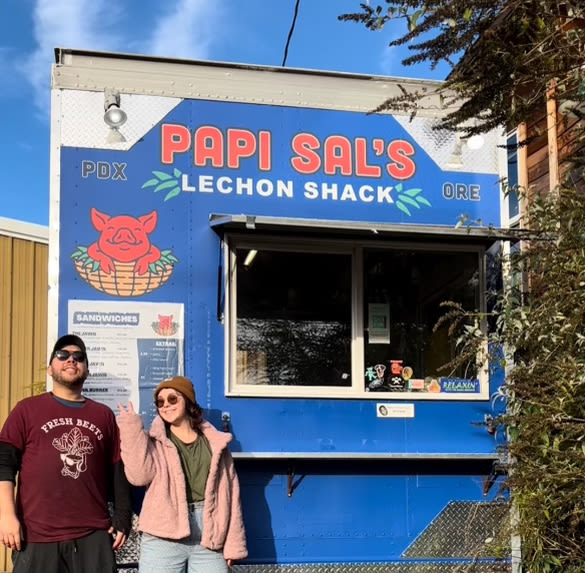
Every local has their tried and true favorites, while tourists eagerly check boxes on their must-try lists in Portland’s thriving food cart scene. There are so many carts in the city that keeping an exact count is impossible—but the number tops 500. A lone cart might spring up next to a corner store, a pod might take root in an empty parking lot, and, lately, luxe pods with beer bars, real bathrooms, and heated, covered seating have proliferated. Carts are as unique as the people who run them; you can get anything from wood-fired Mormon grandma cuisine to Chinese street-food crêpes. Part of the reason why carts are so popular here: there’s a low barrier to entry to starting one, with lower upfront costs and less regulation involved than with brick-and-mortar restaurants. But with new regulations regarding food carts and food cart pods taking effect on January 1, 2023, some cart owners are worried about their ability to keep their businesses open, and some have already made the decision to temporarily close, including Meliora Pasta and Papi Sal’s. 

The trickiest new regulation is one regarding the disposal of wastewater from carts. Wastewater includes water used to wash hands, dishes, and pots, and it may contain grease, bacteria, soap, and food particles. Carts can dispose of wastewater in three ways—by connecting directly to the sewer with a grease interceptor, by collecting water in the cart’s small onboard wastewater tank and frequently emptying that tank, or by collecting water in a large wastewater cube adjacent to the tank. New statewide mobile food unit laws declare that “all operations and equipment must be integral to the unit,” meaning carts can no longer use large wastewater cubes—and that can pose a significant challenge to those businesses. 

“We have had many years of documentation of wastewater spills happening, tanks getting cracked, broken into, and they go into the stormwater drains and into the Willamette,” says Jeff Martin from the Multnomah County Health Department, which enforces the state rules. 

The owners of Meliora Pasta, an Italian-inspired cart that opened in February 2022 and was most recently located at the Bantu Island food cart pod on NE Alberta Street and 15th Avenue, have already made the decision to close temporarily. Co-owner Jim Millar says that when he moved into the Bantu pod last summer, he was told that upgrades would be made by January to allow carts to connect to the sewer, but those upgrades have not yet taken place. Earlier this year, he was sharing a 500-gallon wastewater cube with a neighboring cart, and paid $250 once every three weeks to have it emptied removed by a licensed wastewater removal company. 

Without a sewer connection and without a large wastewater cube, the only option available is to use the cart’s smaller onboard wastewater tank. Under new city rules, cart owners can haul up to 20 gallons at a time themselves, or they can hire a licensed wastewater removal service to empty the onboard tank, which might hold 75 gallons. But some carts can easily go through 50 gallons a day, says Millar. That means some would need a wastewater disposal service to come once a day—and that’s just not feasible with the small number of wastewater disposal operators in town. Due to the cost and logistical difficulty of daily hauling, Millar has decided to close the Meliora Pasta cart for the foreseeable future, opting instead for pop-up dinners at the former Yonder space until he can find an affordable cart space with a sewer hookup.

Though there are many licensed wastewater haulers in the state, there are only two in the area who can handle wastewater for food carts, says Leah Tucker, a former food cart owner who advocates for food carts through the nonprofit she founded, the Oregon Mobile Food Association. The situation is even tougher in rural areas of the state, which may not be able to be serviced by wastewater removal regularly. “Across every industry, there was a massive reduction in staff [during the pandemic],” says Tucker. “The wastewater pumping industry is no different. But mobile units blossomed during that time, because restaurants were closing and restaurateurs wanted to continue doing what they love. We had more units, less pumping … there had to be a break point. You have 400 customers and only two pumping trucks.” 

“It already takes over a week to schedule gray water removal systems,” says Millar. “It’s just not feasible … their schedules are already so full as it is.”

 It’s also expensive to get wastewater tanks pumped frequently. Leo Mendoza, owner of the Taco Gang food cart, went from getting a large cube pumped once a month to a small onboard tank pumped once a week. “It’s triple [what it used to cost] every month,” he says.

Meanwhile, Jess Mummery, co-owner of Papi Sal’s, says their cart closed because Great Notion abandoned plans to build a taproom—which would have included a sewer hookup—and daily wastewater removal would have cost $70 per day. “We were between a rock and a hard place with where to put the cart,” she says. She and business partner John Hatch plan to do Puerto Rican platter pop-ups and will reconsider opening their cart at a new location in the spring, when business tends to pick up.

Though many newer pods are now built with sewer hookups, many older ones rely on wastewater tanks. The cost of connecting to the sewer underground can be high. Rico Loverde, owner of burger cart Monster Smash, and his cotenant, Belmont Station, are facing rent increases for the next two years to cover the $18,000 cost of connecting the cart to the sewer.

Meanwhile, Tess Kies, who owns the food cart pod at 2623 Belmont St, says she found the cost of making improvements prohibitive. “I’ve got a bid for a contractor that’s $30,000, and we’re not gonna do that,” she says. “I know we won’t keep [the pod] if the cost is outrageous. I’m concerned that [a lot of the carts around the city] are going to be put out of business.”

Though these regulations were put in place in early 2020, many food cart owners and food cart pod owners said they were unaware of the regulations until recently, making it particularly hard to adapt to these expensive changes during winter, which is traditionally a slow season for their business. An email from the city in English and Spanish was repeatedly sent to Portland food cart owners—and Loverde reported he didn’t begin receiving that email until late August. 

Martin says the county health department has provided this information to carts in a number of ways. “We [let them know] through our plan review process that you need to plan on having a sanitary sewer connection or regular routine pumping where you don’t rely on a wastewater cube outside of the mobile unit. We would also provide information during inspections. Over the past couple months, we’ve also been using flash notifications [via email] to make sure all mobile units are aware of this,” he says.

But Martin says he doesn’t want carts to close because of the new regulations. “It’s not an immediate closure at all, but we will work with them to make sure that they understand they need to come up with a plan on how they’re going to achieve compliance,” he says—whether that involves doing construction or having more frequent pickups from internal tanks. 

In the meantime, Tucker has filed a request with the health department to give food carts another eight months to comply with the regulations. After all, Tucker notes, the January 2023 guideline was put in place before the pandemic began.

“Nobody had any idea that this was gonna last three years. So by the time the health department or anybody was really able to focus on anything beyond just survival, so much time had passed. And now suddenly we’re looking down the barrel of the three-year mark, and nobody knew [about the guidelines],” says Tucker. “We understand that extenuating circumstances were at hand why we didn’t get the information sooner. But now we need their help—and we need more time.”

Empanada Lady combines Black and Puerto Rican culture for new food experiences

Empanada Lady combines Black and Puerto Rican culture for new food experiences

The colder temperature months, which she affectionately refers to as “coquito period,” are Elisa Milan’s preferred time of 12 months for small business.

The culinary entrepreneur known as the ”Empanada Lady” has captivated a substantial adhering to in Baltimore with her spins on Puerto Rican staples this sort of as empanadas and coquito, a creamy coconut consume ordinarily served chilly in the course of the winter season months. She has some 11,800 followers on Instagram, and her food stuff nearly normally sells out at situations.

“It’s surely occupied,” Milan stated from the kitchen area of her eatery at Motor Property, a blended-use space that combines food ideas, arts and celebration areas on the border of the Station North and Outdated Goucher neighborhoods. “People are celebrating and congregating. I sell bottles of coquito by the gallons.”

Milan, an American who has a Puerto Rican mom and a Black father, has tapped into her blended heritage and designed a burgeoning culinary empire that displays both of those cultures with an undeniable Baltimore aptitude for dishes and drinks. The final result is that she has captivated a massive Black clientele through the mid-Atlantic region. Many have hardly ever had versions of these dishes mainly because Baltimore has not had a significant Puerto Rican local community.

Cooking also can help Milan, 31, bridge the cultural disconnect that she has felt throughout lifetime as a man or woman of Black and Latina heritage.

Born in California, she lived in the Bronx till she was 6 several years aged and then grew up in Baltimore.

“I didn’t mature up with a large amount of Puerto Rican friends. I had Latin homegirls. But not a lot of Puerto Ricans. My Puerto Rican practical experience was from my Puerto Rican spouse and children. My father, who is Black, was not around. There was a disconnect. My Black pals crammed that,” she reported. “Now, I’m equipped to provide them each [Black and Puerto Rican people] with each other. I’m proud. I’m joyful. It feels aligned with my journey. It feels like it is so much far more than the foods. It’s the society, the neighborhood.”

Jessica van Dop DeJesus, author of the 2019 book “The Eating Traveler Guideline to Puerto Rico,” loves what Milan is carrying out in Baltimore.

“This is a fantastic way to expose Puerto Rican delicacies to Maryland,” mentioned van Dop DeJesus, who is primarily based in Brussels. “I never think in the word genuine since I think every single cuisine adapts to its environment and ingredients that are accessible in that sector. I enjoy when cooks play with common substances and flavors to generate a thing new and exciting.”

American Black and Puerto Rican cultures are ripe for cultural fusion because of their shared ancestry and historical past in the United States, exactly where they have historically labored collectively in metropolitan areas these as New York, Chicago and Philadelphia.

“It’s honest to say that in the Northeast, these teams gravitated towards just about every other due to the fact back again then — in the course of the ‘50s and ‘60s — you had to,” reported van Dop DeJesus, who grew up in Puerto Rico and Rochester, New York.

Sign Up for Alerts

Get notified of need to have-to-know
information from The Banner

She recalled that her mom went to Rochester in her early teenagers and labored with the Black group in the ‘60s. That shut doing the job marriage resulted in friendships that led to an incorporation of lifestyle. For illustration, her mother’s dish of neck bones with macaroni and sofrito seasoning arose from the mixing of cultures.

Milan suspects that if she weren’t cooking, she would however be in the health-related field she previously worked with licensing out-of-condition nurses through the Maryland Board of Nursing.

“They did not renew my agreement in 2019 and that’s when I went total time as the Empanada Lady,” she described.

Milan began the company as a dare in 2016, while she was performing as an assistant at a now-defunct yoga studio in downtown Baltimore.

“The owner bet me I couldn’t make revenue cooking foodstuff at a perform event. I brought my grandmother’s empanadas. I offered out, but I broke even. I knew I was in it just after that.”

Milan initially began her business enterprise as Elisa’s Empanadas, but she changed the name to The Empanada Lady just after a few decades.

“No one particular ever called it that,” she recalled. “They would just say, ‘The Empanada Girl.’ I just leaned in and acknowledged it.”

Milan produced enthusiasts out of her generally Black buyers, numerous of whom experienced by no means experienced empanadas ahead of.

Sheri Andrews, 37, has been taking in Milan’s empanadas considering that 2015. Milan’s empanadas are distinct from the types that Andrews utilised to consume from corner suppliers in her indigenous New Jersey.

“It’s pretty nostalgic. But hers are unique. The dough is different, and the filling is distinctive. She does not skimp on the filling at all. She’s supplying you your money’s worth for guaranteed,” claimed the Owings Mills resident. “You can taste the diverse cultures through the spices. Every single tradition has an empanada, but her spices set it apart. It’s just delightful to me.”

Morgan Bryson, 32, has been a longtime close friend of Milan’s considering the fact that substantial college. She was 1st launched to empanadas when Milan’s mother had to be nudged to make the dish for the then-adolescents.

“It would make my day when she would make it. It was a thing you did not arrive across normally,” she recalled.

Milan has taken the empanadas to the future level, in accordance to Bryson, who life in Randallstown.

“She does not complain about making them,” Bryson reported with a chuckle.

And Bryson can promptly place the distinctions involving Milan’s empanadas and all those she has eaten elsewhere.

“I certainly style the big difference. Elisa’s empanadas never taste like a pastry. I have gotten accustomed to her empanadas so a lot that if I had someone else’s, I would say, ‘They’re not accomplishing it right.’”

Milan altered the measurement of her grandmother’s empanadas, which have been lesser. She also stuffed hers with additional meat filling and chunkier pieces of veggies, and gave them a a bit spicier flavor profile. Her mother and grandmother only produced traditional beef empanadas, but she can make these as nicely as empanadas with hen, pork, salmon or shrimp.

“When I very first started out, no one understood anything at all about empanadas,” she recalled, including that she at first started cooking out of the kitchen of her then-Cockeysville apartment. “Being in Baltimore, I’m a large amount of people’s 1st knowledge with the meals and culture.”

Milan characteristics the bigger parts of her empanadas and other dishes to the Black tradition of serving large, elaborate meals.

“It’s the abundance,” she mentioned. “We are fruitful. It displays up in the generosity of our portion sizing. We feel about how we want to take in. If you shell out $40 to $50, you want to have some food for afterwards.”

Milan has also collaborated with Black chef Ericka Loyal to make a seafood salad that retains consumers stumped about what is in the distinctive seasoning mix that coats the hearty, cold dish composed of bounce lump crab meat, shrimp and pasta.

“It gets to be a pleasurable guessing game,” Milan mentioned. “We’re also generous with the part size — just like the empanada. You’re receiving a great deal for what you shell out for.”

Milan’s “nada sauce,” which she serves with her empanadas, is also a nod to mixing Black and Puerto Rican cuisines. Usually, empanadas are served with a mayo ketchup. But Milan amps up her sauce by adding chili powder and lime in addition to her holy trinity of Puerto Rican seasonings: sofrito, sazon and adobo.

“That’s a excellent case in point of the fusion,” Milan said. “Empanadas are not typically spicy. It is a way to increase the spice on the side.”

The nada sauce has gotten so popular, Milan now sells it by the bottle, in addition to serving it with her stuffed empanadas.

Coquito, coconut-based concoction that is similar to eggnog—without the egg by The Empanada Lady.

When it will come to coquito, the Puerto Rican equal of eggnog, Milan totally flips the script and adds alcohols and liquors that are well-known in Black Baltimore communities this sort of as Hennessy, a variety of makes of Cognac and Crown Royal vanilla. She also has nonalcoholic and vegan versions of the consume. Historically, coquito is made with white rum, she defined. National Coquito Day was on Wednesday.

Though Milan has place her blended spin on a lot of Puerto Rican foods, one detail that she will not do — at her family’s ask for — is provide coquito “out of time.” Most users of her relatives are even great with educating workforce how to use altered relatives recipes when cooking for the general public.

“They are satisfied for me. They are rooting for me. My grandmother is declaring, ‘You are sharing recipes.’ She’s happy of me, but she’s tight about it. But my grandmother [who lives in the Bronx] is nevertheless adapting,” Milan said with a giggle. “I explain to her: ‘Mama, they simply cannot do it like me. It’s mine.’ She’s coming all over.”

johnj.williams@thebaltimorebanner.com

Bar Moro, a celebration of Iberian and Mediterranean food culture, now open in Clayton

Bar Moro, a celebration of Iberian and Mediterranean food culture, now open in Clayton

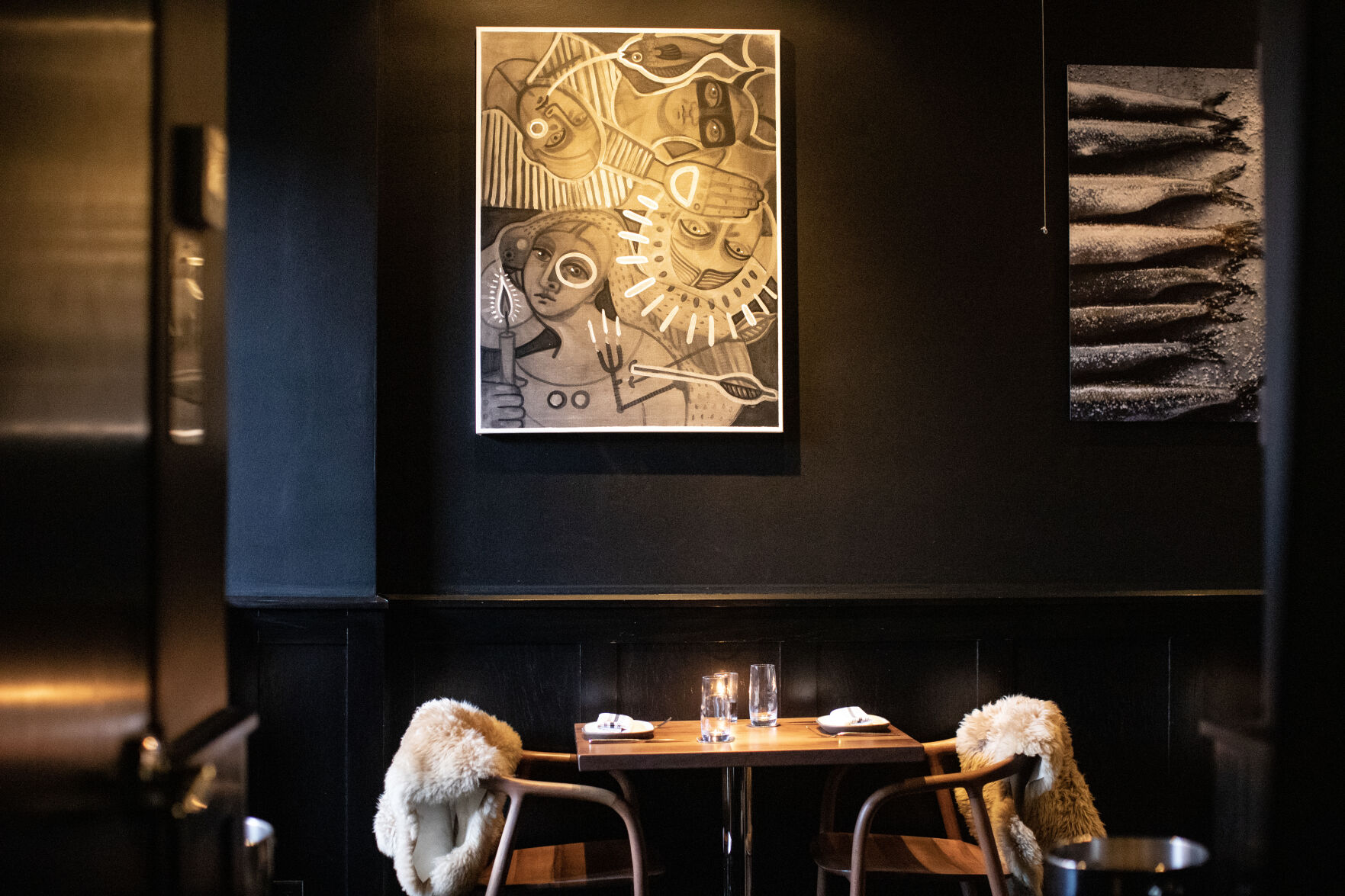
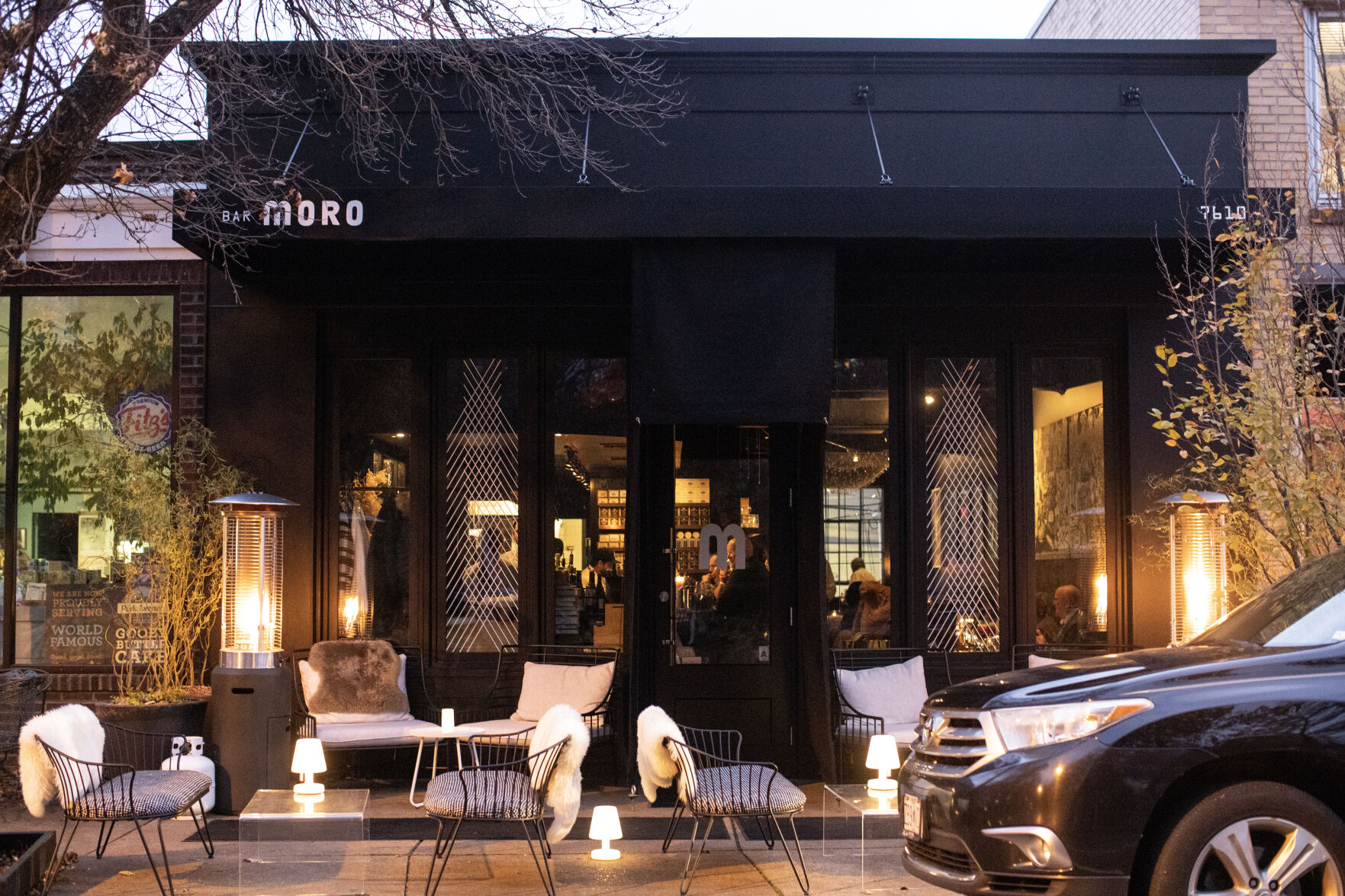
Chef Ben Poremba’s latest highly-anticipated concept recently debuted in Clayton. Bar Moro opened in mid-October and has quickly become a popular destination for Spanish- and Mediterranean-inspired food and drink.


Bar Moro egg

Egg and caviar.


Bar Moro main seating

The dining area at Bar Moro.


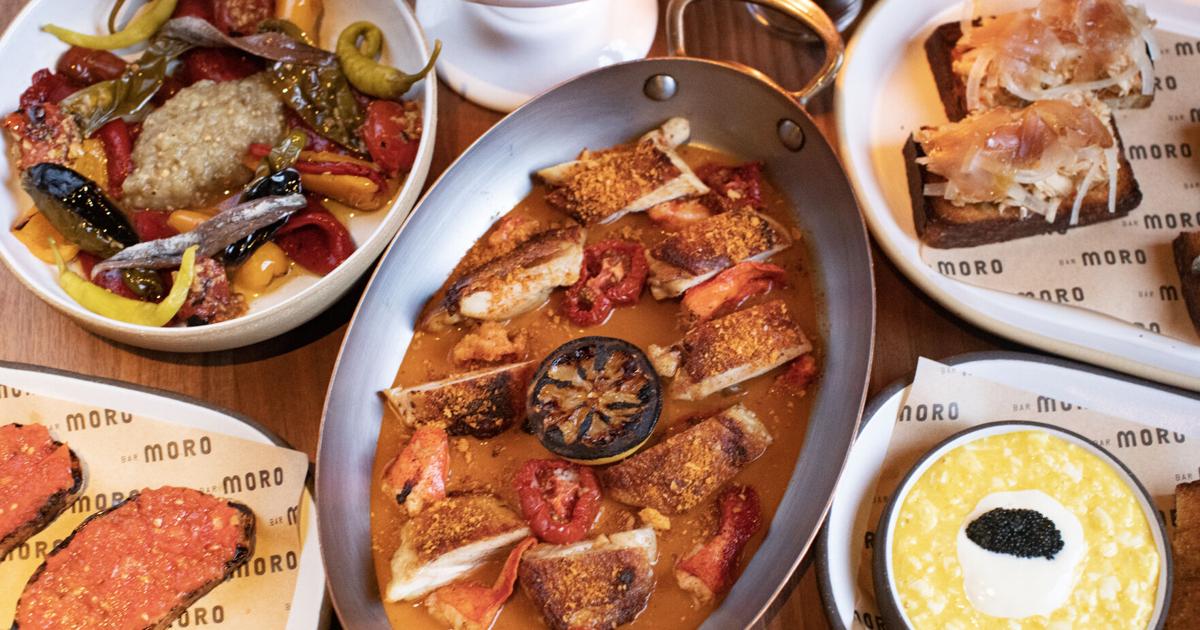
As reported by Feast in October, Moro stands for “moor,” an homage to the cultural traditions of Islamic Spain, the Arabic Mediterranean and Poremba’s Moroccan heritage. Bar Moro falls under the Bengelina Hospitality Group brand (Elaia, Olio, Nixta, etc.) and fills the space previously occupied by Billie-Jean. The bar and restaurant celebrates Iberian and Mediterranean food culture, with offerings including tapas, regional classics and a robust beverage program.

“Bar Moro is an idea that Ben had to represent Spanish cuisine,” says Luciano Racca, who serves as the general manager of Bengelina Hospitality Group. “It’s food at its finest, but in a relaxed environment. While quality is above everything else, it still has a bar feel like you’re in Spain – it’s busy, it’s noisy, it’s alive. That’s the atmosphere we want to transmit. It’s very high-end food and a very cozy experience.”

People are also reading…


BarMoro bar kitchen

The bar and kitchen are integrated.


Bar Moro mar i muntanya

Mar i muntanya – Catalan-style roasted chicken with lobster sauce.


Bar Moro anchovy toast

Anchovy toast.


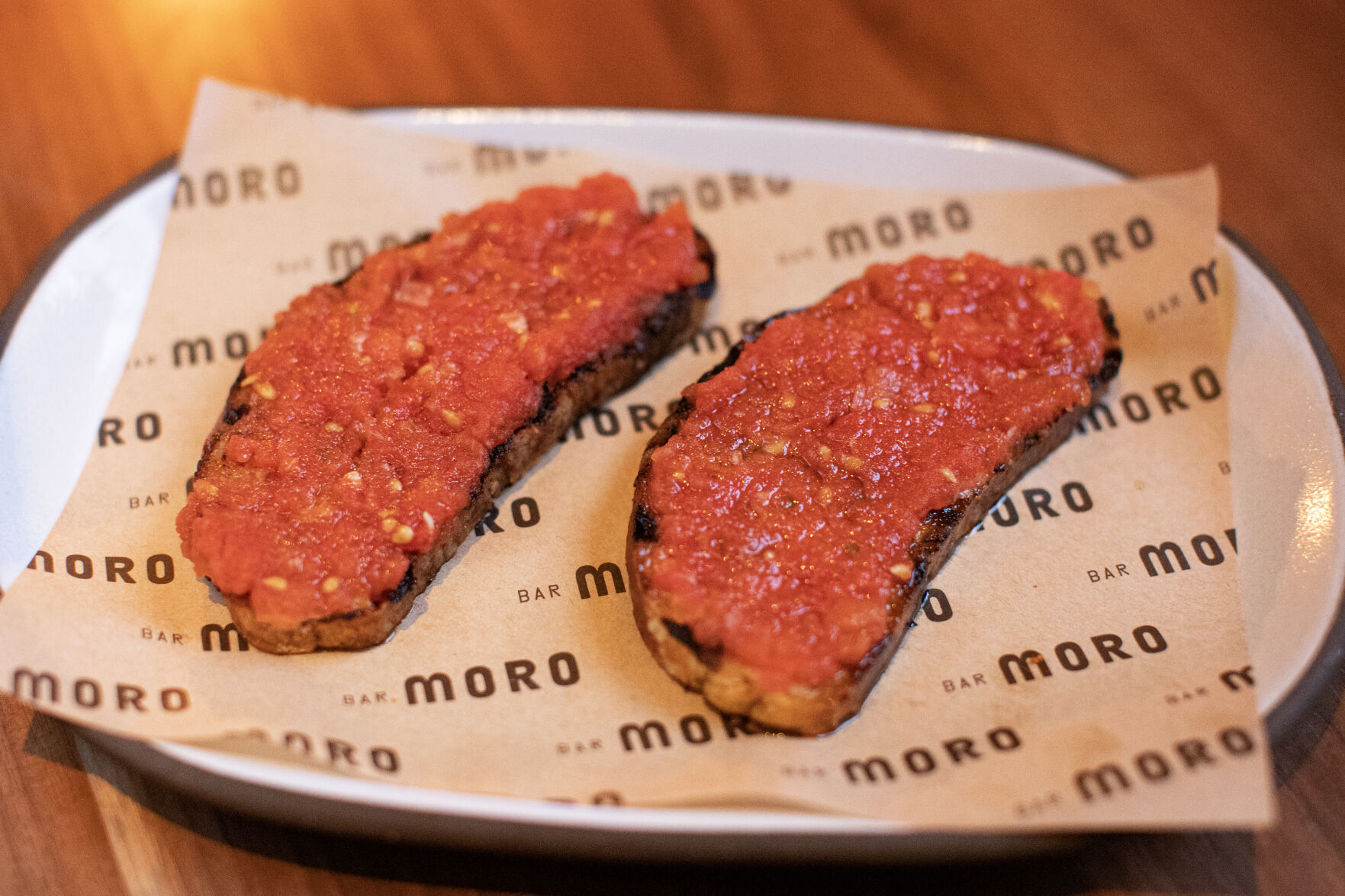
According to Racca, benchmarks of the food menu include traditional dishes such as pan con tomate – “the dish that really opened up the idea of building a Spanish menu.” High-end conservas, or tinned fish, are another highlight alongside hand-sliced jamon iberico and gambas – sustainably raised shrimp delivered fresh daily from Triple J Farm out of Foristell, Missouri.

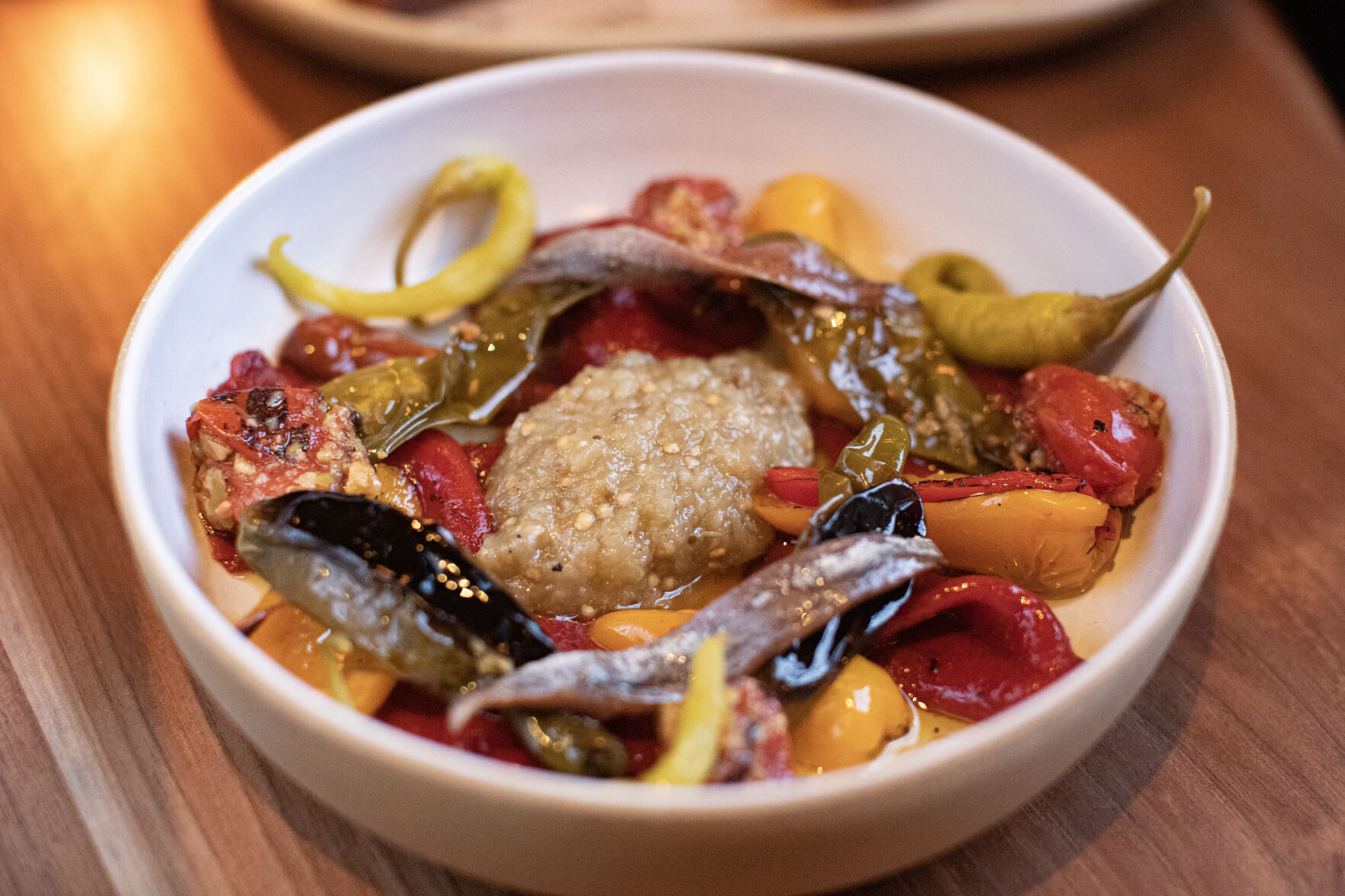
A selection of vegetables and salads include options such as escalavida (Catalan roasted vegetables) with roasted peppers, eggplant, tapenade and anchovies, while large plates include mar i muntanya (Catalan-style roasted chicken with lobster sauce) and arroz negro cremoso – a squid ink rice porridge with chorizo, braised octopus and celery leaf. For dessert, the kitchen offers a basque cheesecake.

Wine selections include curated options from Spain and Portugal, with an emphasis on sherry informed by a winery research trip Racca took to Spain last summer, as well as vermouth. Five different gin and tonic options made with Spanish ingredients are available along with a selection of cocktails, spritzers, shrubs and sangria.

“It’s very exciting to have a Spanish place back in St. Louis,” Racca says. “As with all of his concepts, Ben really loves to put in place something that really speaks the language of what we try to represent, elevating the experience to a level that was very unexpected. That’s the main reason why people should come try it out.”

Bar Moro is open Tuesday through Saturday from 4 p.m. until close – final reservations are taken at 9:30 p.m.

Bar Moro, 7610 Wydown Blvd., Clayton, Missouri, 314-296-3000, bengelina.com/bar-moro

How Instagram Changed Food Culture in 2022, With Dua Lipa’s Help

How Instagram Changed Food Culture in 2022, With Dua Lipa’s Help

ICYMI, there was a vibe shift this year. But that didn’t just happen in fashion — it was in food, too. Taste is always driving food culture — but it now goes beyond what we put in our mouths. Thanks to social media, we have a lens to look at what we eat, what it looks like, where we eat, and even how we eat. Here’s how that has evolved over the last twelve months.

The feed still feeds us

There’s a lot of chatter about how Instagram is dead, but one billion monthly users scroll the app every day — that’s 12.9 percent of the world’s population. Users still fall in line with aesthetic trends across the platform, and the London food scene is no less susceptible. In recent times, it felt like a meal didn’t happen unless it happened on Instagram.

Some venues have decor designed for a selfie backdrop — Gloria in Shoreditch, the Prada-owned Marchesi pasticceria — but the app also acts as a sort of word-of-mouth accelerator. Spots like Max’s Sandwich Shop, Berenjak, and Rita’s have grown, thanks to either a seal of approval from a supermodel, or a bounce in hype. Just like that, a waitlist becomes standard.

RIP the food post. Long live the food post

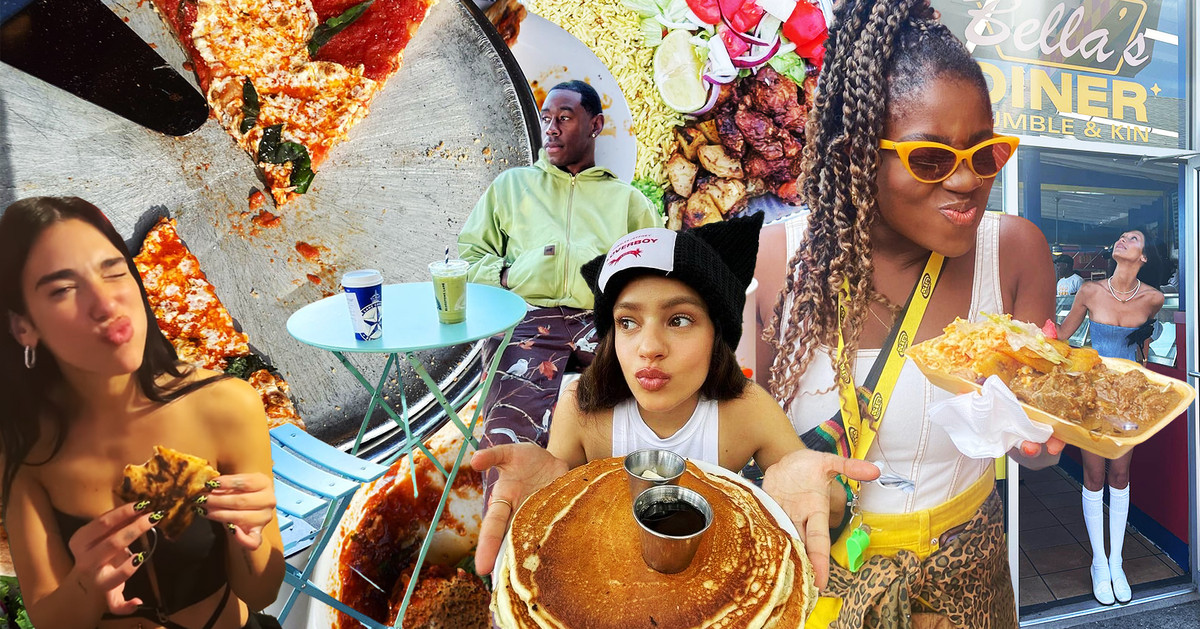
If Instagram is still where we see most images of food, the aesthetic of those images is changing. If, once, plates were viewed from above, perfectly tablescaped, and closer to a photo on a restaurant’s website than one of a much-enjoyed dinner, a more ‘real’ aesthetic spiked this summer, as the selfie has evolved from filtered perfection to a blurred end-of-the-night candid shot. The clumsy photos that would usually be deleted are now posted to main feeds, and a half-eaten, but mouthwatering meal is the way for a chef to promote a dish.

One Eater writer referred to this as “Instagram food’s laissez-faire era,” referencing Taylor Lorenz’s article which announced “The Instagram Aesthetic is Over” back in 2019 — referring to the glossy look. The photo dump (still on Instagram, of course) is its replacement. Tastemakers of a fashionable feed — from Dua Lipa to Bella Hadid and Tyler the Creator, Central Cee, Clara Amfo and Jeremy O. Harris — are now likely to post dumps (of a weekend, a festival, a month) with plates wiped clean, a close up of a distinctly non-glamorous takeaway container just one of the slides. The food shot is always part of the story. If, once, food was seen as something for the hoi polloi, celebrities and influencers are now as keen to show that they have been to a new hyped spot as they are to show off their latest garms.

Supermodel Bella Hadid with a hot dog at a Knicks game in NYC — an Instagram screen shot

Supermodel Bella Hadid with a hot dog at a Knicks game in NYC — on Instagram.
Bella Hadid/Instagram

Other apps flex their influence

TikTok has previously been seen as the relatable ying to Instagram’s yang, with the less glossy aesthetic arguably influencing more at-home videos. But it was BeReal that really made an impact.

Originally launching in 2020, it took off this year. It was the most downloaded app in August, and it was third in the Apple store’s social media category, between WhatsApp and Facebook, by October. A photo sharing app that includes both a selfie and a shot of where the user happens to be, this is a more ‘real’ idea of your day — because you have to post anywhere you are — whether that’s the office, Session House, or that crap Tesco Extra in Haggerston.

BeReal’s look, and vibe, has migrated to Instagram, with users screenshotting BeReals from hyped restaurant tables, or dining tables covered with wfh detritus, and posting them to Stories. BeReal memes, such as one from the pov of Ratatouille’s Remy the Rat, were also a thing. And even England footballers posted some BeReal-like food updates from Qatar in November — see John Stones, Kyle Walker and Dave the cat at a very standard looking restaurant.

Welcome to the chaos era

In a very prescient essay in February, newsletter Blackbird Spyplane hailed the “ungrammable hang zone,” i.e. cafes, restaurants and bars that have never thought about what they look like in a 6cm x 7cm rectangle, and are all the better for it.

“Right now, in year ~15 of the fetish for ‘clean lines’ and ‘understated elegance,’ I wanna hang for hours in a FRUMPY, MISSHAPEN, INVITINGLY INELEGANT place,” wrote one half of the Spy Plane team, Jonah Weiner, waxing lyrical about deeply unphotogenic items, like plastic-wrapped giant cookies.

This idea is now running riot in the gleeful fetishisation of mess on social media — with a crushed beer preferred can over, say, a perfect cocktail, or a crumpled takeaway bag from Tayyabs over any immaculate table setting, a candid shot over anything too posed, and a shaky video over something with the production values of a Hollywood worthy short. Expect more — never less — in 2023.

For decades, Latin culture has influenced American food ways and drink.

For decades, Latin culture has influenced American food ways and drink.

When Maricel Presilla was a child in Santiago de Cuba, her mom fed her pan and avocado, a dish that had been eaten in Latin American countries for centuries. But in 2015, avocado toast, as it has come to be known, gained popularity in the United States, gracing many brunch and appetizer menus.

Avocado toast is an example of how Latin American food and culture have influenced American favorites like tacos, arroz con pollo, plantains, empanadas and skirt steak.

“These are things that are very easy to duplicate and things that are not esoteric. They are not considered weird,” said Presilla, a culinary historian and former owner of Cucharamama in Hoboken.

“What is in a chimichurri sauce?” she asked. “You have parsley, peppers, oregano and garlic. There are onions. Those ingredients are familiar.”

Fried duck empanadas at Sol Y Luna in Mountain Brook, Ala.

The fried duck empanadas at Sol Y Luna in Mountain Brook, Ala., are served with chimichurri sauce and queso fresco.(Bob Carlton/bcarlton@al.com)

Chef Bren Herrera said the beautiful thing about Latin America is that it is not monolithic.

“There are 21 countries that make up Latin America,” said Herrera, an author and activist who hosts Culture Kitchen, a national TV show. “There are countries and islands that are African descent and others that don’t really pull or rely on that ancestry. You get a very diverse palate.”

Presilla, author of Gran Cocina Latina: The Food of Latin America, said the variety available within Latin cuisine is part of what makes it so appealing “We have spicy. We have a version of Italian food because we have so many immigrants from Italy in places like Peru and Brazil. We also have the Japanese in São Paulo in Brazil, Peruvian ceviche.”

There’s a moment when Americans would only talk about Croque monsieur, a hot sandwich made with ham and cheese and originally served in French cafes, she said. Now, they request the Cuban sandwich.

Old World Deli

Cuban Sandwich from Old World Deli
– Photo courtesy of Old World Deli, via Yelp

And the Latin influence on American culture doesn’t stop with food.

The daiquiris, mojitos, and margaritas that create the cocktail culture in the United States are another example of the Latin traditions, Presilla said.

She and Herrera said they are glad the food is gaining popularity because it means more people are interested in the culture.

“I live by this mantra that the way to know a people and culture and their history is through their food,” said Herrera, who is of Cuban and Jamaican descent. “The food tells a beautiful story of what that culture is.”

Presilla, of Weehawken, sits on The Culinary Institute of America’s Worlds of Flavor International Conference and Festival advisory committee. She helps educate others about the history of Latin American Cuisine.

“Latin Americans are so proud of their culinary culture,” she said.

Presilla said Latin cuisine is a mix of cultures steeped in the legacy of slavery. She said that Africa represents the backbone of American foods, noting that 12.5 million people made the transatlantic voyage from Africa as enslaved people. About 400,000 came to the United States, 4 million went to the Caribbean, another 4 million went to Brazil and the rest went to Latin America. “That is the reality of it,” she said.

“This is important to understand,” Presilla said. “That’s a foundation we need to acknowledge as Latin Americans, that so much of our cuisine and so much of the way we eat has to do with West Africa.”

“It is beyond the ingredients alone,” she said.

Jonathan Rigg, a mental health counselor from Bellmawr, thinks about the years growing up eating his Cuban Godmother’s arroz con pollo.

He remembers her making rice similar to Jamaican rice and peas, but it had a coconut flavor.

“The rice was just always so good, the way she would make the chicken with the different types of sazón then, with patacones or fried plantains,” said Rigg, an Afro-Hispanic whose family is from Costa Rica and Jamaica with ancestry in Panama.

Elbita's Cocina

– Josette and Walwyn Jackson run Elbita’s Cocina, a food truck serving Puerto Rican comfort food like fried plantains, arroz con pollo and stewed beans. Alaina Potrikus | abeckett@syracuse.comAlaina Potrikus | abeckett@syrac

“The flavors make it unique,” he said of the cuisine that keeps him connected to his heritage.

Presilla recently came across a high-profile article about chicha morada, a punch made with purple corn from Peru.

“I had been serving that for decades now, and any Peruvian joint they all have that. It’s not news,” she said. “It has been there. But now, because of the article, maybe it will become trendier. So, that is how it happens.”

Herrera agreed. “Latin cuisine in general, regardless of a country, is very heavily rooted in customs and traditions,” she said. “There is always a deep level of history of where it came from, how it got there, why it was eaten.”

Our journalism needs your support. Please subscribe today to NJ.com.

Shaylah Brown may be reached at sbrown@njadvancemedia.com. Follow her on Twitter at @shaylah_brown