Seasonal Produce and What it becomes on your Plate

Seasonal Produce and What it becomes on your Plate

St. Pete has a rhythmic way of eating. The light changes, the breeze from the bay shifts a bit, and the market stalls suddenly tell a different story. We try to listen before we speak at FORTU. What’s good right now? What’s fresh off the boat. Which farms enjoyed a successful week? Then we cook. This is not to be a show-off, but rather to preserve the story. This is a simple and real tour of how “seasonal food” ends up on your plate.

The Key Takeaways

  • St. Pete’s seasonal produce tastes better when you use less ingredients and effort.
  • When sourcing is honest and close, St. Petersburg’s Farm-to-table works.
  • Clean, memorable dishes with local seafood and seasonal vegetables
  • The cooking methods should be light to ensure that the texture and aroma of food are not affected by heat.
  • The menus are adjusted gently each week depending on what’s really great
  • When abundance drives the purchasing and preparation decisions, waste drops can occur

What is in season now in St. Pete and why should I care?

Seasonal produce in St. Pete isn’t just a buzzword. It’s practical. It’s practical.

  • Winter into early Spring: strawberries, citrus, greens and radishes
  • Early herbs, tomatoes, zucchini and peppers
  • Summer: watermelon and mangoes, sweet corn and okra
  • Fall: squash, mushrooms, late tomatoes, leafy herbs

Why should you care? Seasonal produce is easier to cook with. We can use gentler methods and less ingredients.

How can we make St. Pete’s seasonal products into the dishes you love?

Feeling is the first step. Fruit and vegetables are handled the same way as you would at home, when cooking for someone special. Use light hands. Short heat Salt last. We also layer textures.

  • Crisp + creamy
  • Char + Fresh (grilled corn with a raw herb salad)
  • Sweet + tart (ripe mango against lime with a hint chili)

It’s simple. Here, we rely on herbs, acidity and a little smoke. You’ll see that we hold back elements until the very last moment to keep the dish bright.

Where does the “Seasonal Produce in St. Pete”, which sounds so good, actually come from?

The short answer is: nearby. We have a close circle of farmers and fishermen and we supplement when heat or storms get in the way. Some weeks there are plenty, others not so much. We adapt rather than force a set menu. This is the silent promise. We won’t pretend that the tomatoes are happy if they’re not.

Our sourcing compass:

  • When possible, try to travel as little distance as possible
  • Not too early, but within the right window
  • Keep soil and water healthy with responsible practices
  • We need to plan with transparency.

What is FORTU cooking when strawberries and citrus are at their peak?

We build whole plates around citrus when it is abundant and bright. Not just dessert.

  • Citrus + Greens Salad, with toasted seeds and honey-lime dressing, shaved Fennel.
  • Snapper with Charred Citrus, where the fruit kissed and pressed on the fish while it is being cooked.
  • Strawberries Barely Sweet can be folded into chilled rice pudding, or layered over pannacotta.

If you think “that tastes like the sun” when you taste something, then seasonal produce has done its job.

How can we combine Gulf fish with seasonal vegetables in our kitchens?

Local seafood and seasonal veggies go together naturally. The first is quick and delicate. One is delicate and quick. They are paired so that neither of them has to shout.

  • Grilled Grouper over tomato-watermelon panzanella in summer
  • Seared Shrimp, sweet corn, okra and a lemon-chili sauce butter
  • Ceviche is best made when the fish are perfect and the limes at their peak.

We sometimes create a dish around an herb that is fragrant and pungent. Basil or culantro are two herbs that can make a dish go from “good” to “oh.”

Does farm-to table in St. Petersburg really matter, or is this just a fancy label?

Many menus will say “farm to table St. Petersburg”. Fair question. Does it matter? When it’s true, yes. A shorter travel time results in a better texture, and requires less cooling or reheating. This allows us to call the grower, and ask, “Those were perfect peppers, could you send them in the smaller size?” The feedback loop ensures consistency. It may not be identical but it will always be alive.

Will I still be able to taste the season if I am a plant-based person?

Absolutely. The best vegetables don’t require a backup singer to make them interesting. Plant-based plates are built with the same care as traditional plates, but they have different anchors.

  • Tahini + Charred Eggplant with pickled chili and toasted sesame
  • Mushroom rice with herbs, sweet corn and citrus at the finish
  • Heirloom tomato stack layered with flaky salt and toasted sourdough for crunch.

Tell us if you’d like to be vegan. We will avoid butter and honey, and maintain the spirit.

What cooking methods are most compatible with seasonal produce?

We don’t want to overwhelm ingredients with a soft voice. We start with the following methods:

  • Quick saute greens and tender bean
  • Grilling squash, corn and citrus halves on a high-heat grill
  • To balance the dish, use a light pickle.
  • When the product is perfect and needs almost nothing, it’s best to serve it “raw + dressed”.

Heat is an instrument, not a target. If in doubt, we will stop sooner than you expect and let the carryover do the work.

Can a seasonally-based menu help to reduce waste and price?

Yes. You can save money by buying what is in abundance. Seasonal produce from St. Pete is available at fair prices and in peak supply. This allows us to keep our portions large and reduce waste. Herb trimmings are turned into oil. Tomato ends turn into a chilled broth. Citrus peels perfume syrups. They are small things but add up.

What is the FORTU year-round look?

It’s not strictly a calendar. More like a pulse. Here’s an interesting snapshot.

Early Winter to Late Winter

  • Citrus, strawberries and hardy greens
  • Light fish, chilled salads, bright desserts

Late Spring

  • Tomatoes, zucchini, fresh herbs
  • Snapper with “waters” of raw tomatoes, herb sauces and crunchy seeds

Summer

  • Corn, watermelon and okra are all good choices.
  • Grilled everything. Cold noodle salads. Sweet-salty fruit combinations.

Fall

  • Squash, mushrooms, late herbs
  • Slow-sauteed vegetables, deeper broths and roasted roots with citrus relish

We’ll tweak. Storms happen. Heat waves can happen. Heat waves happen. We shift our menus rather than forcing what nature hasn’t sent.

Why do the plates at FORTU change sometimes from week to week?

Seasons don’t change like a light switch. They mix. Then we rotate them. We have a few staple dishes that everyone enjoys. We’ll give the basil a leading role if it suddenly tastes like it just spent a week in Naples. If the corn tastes dull, we’ll leave it out. This flexibility is part and parcel of the promise.

What can you do to taste the season when you visit?

Check out this small list to make your next meal taste like St. Pete.

  • Follow the answer to “What’s new?”
  • Pick at least one dish with raw or lightly-cooked produce
  • Choose whatever fruit or herb is in season to pair with seafood
  • Keep room for a simple, tasty dessert inspired by the market of the week.

Say your preferences aloud if you need guidance: bright, savory or light. We will guide you on the best seasonal route.

FAQs

What does “seasonal products in St. Pete” mean right now?

The seasons change, so think of citrus fruits and greens during the cooler months, herbs and tomatoes in late spring and then mangos, corn and eggplants through the summer.

What is the impact of farm-to-table St. Petersburg on flavor?

We season less because we can protect the texture and aroma of the harvest.

Can you make a seasonal plant-based meal?

Yes. We’ll create a balanced, complete menu based on your specific needs.

Local seafood is always available?

Weather and catch limits are important, but not always. We pivot when the boats are not full, rather than serving mediocre catch.

Why has my favorite dish changed slightly?

Seasons are a blur. First, we honor the ingredients and then the spirit of your favorite dish.

Ask when you’re sitting down if you want to know what the week’s menu is. You’ll see the ingredient that brought everyone to a smile in the kitchen and what it looks like on your FORTU plate.

This post was written by a professional at Fortu. Fortu stands out among the top Restaurants St Petersburg FL, offering an elevated Pan-Asian dining experience in the heart of St. Petersburg, Florida. Celebrating Asia’s vibrant and diverse culture, Fortu introduces bright and bold flavors to a bright and bold city with a menu of locally and sustainably sourced options, from small bites to hearty delicacies. Whether winding down from a beach day or celebrating a special occasion, guests can enjoy a lush, alluring atmosphere and an authentic taste of Asia’s divine cuisine at one of the finest Restaurants In Downtown St Petersburg FL.
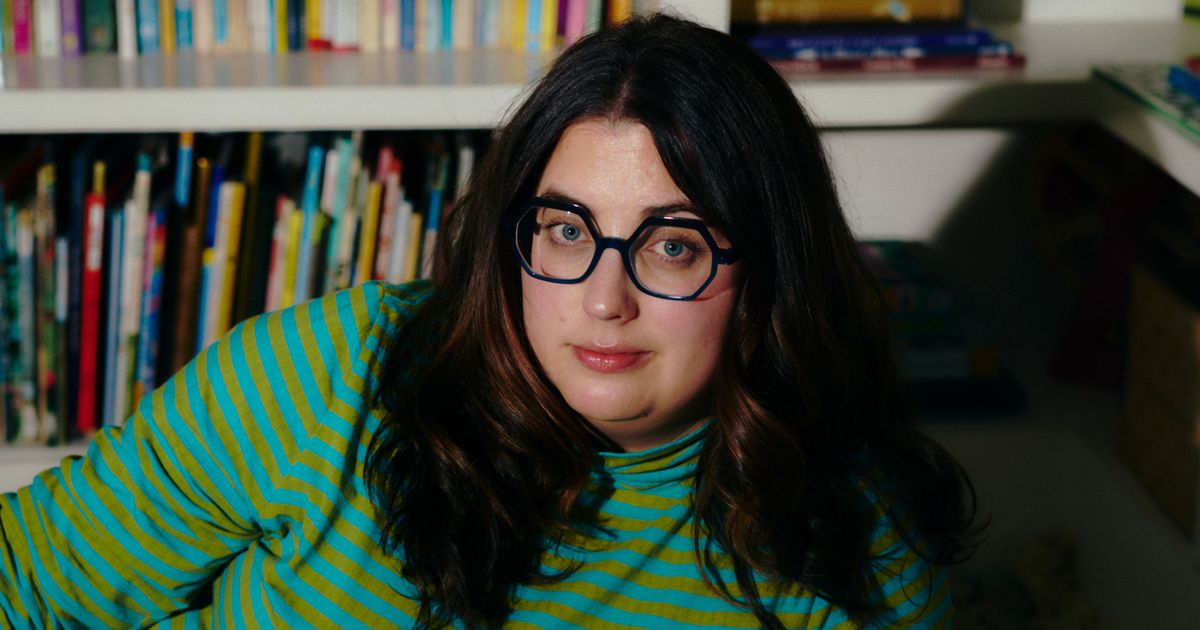
Virginia Sole-Smith on Kids, Weight, and Healthy Eating

Virginia Sole-Smith on Kids, Weight, and Healthy Eating

In an early episode of her podcast, Burnt Toast, Virginia Sole-Smith joked about starting a regular segment called “Can my kid eat that?” where the answer would always be “Yes!” A self-described anti-diet journalist, she wasn’t really joking: “I get a version of this question every single week, so I’m going to keep answering it.” How many days per week can a 2-year-old eat ice cream? “There are seven days in a week. Your child can have ice cream seven days a week. There is no law against this.” What about a 13-year-old who, left to their own devices, would eat an entire box of Oreos? “Pour a glass of milk — so they can dunk them?”

“Oreos come up a lot, man,” Sole-Smith says, laughing while snacking on a bowl of Cheez-Its in her home office in the Hudson Valley. “I mean, I like Oreos fine, but it’s really the fact that you’re not letting yourself have Oreos that makes it feel like Oh my God, I’ll be powerless over them.” She seems more amused than exasperated, though she finds herself repeating this point often — that restricting food only makes us more obsessed with it. A 41-year-old mother of two, she knows her generation has been programmed to believe that allowing their kids unlimited access to sugar and processed foods is unhealthy or even bad parenting. A central premise of her work is that, actually, it isn’t.

I’m a parent of a toddler, and my Instagram feed is full of advice from pediatric dieticians and guides for introducing your baby to kale and branzino. When I first came across Sole-Smith’s newsletter about how we’d all be better off if we chilled out about what’s in our kids’ lunch boxes, it felt like a relief. Since launching Burnt Toast on Substack in 2021, Sole-Smith has gained a following among millennials who recognize that they’d rather not pass on their screwed-up relationships with food and with their bodies to their kids. “We all know the diet culture we grew up with in the ’80s and ’90s did a lot of damage. We don’t want to be like our moms with their point counting,” she says. The problem is that most parents are still deeply afraid of having fat kids.

After publishing her first book, The Eating Instinct, about the U.S.’s cultural relationship to food, Sole-Smith heard from a lot of parents who were trying to do better. “It was clear that they really wanted their kids to feel good about their bodies and have a healthy relationship with food and not get eating disorders — but also to be thin,” she says. It’s not hard to understand why: Her reporting documents the many ways the world is horrible to fat people — children included. But she’s convinced that real progress isn’t possible until we all start to recognize and unlearn our anti-fat bias. Her new book, Fat Talk: Parenting in the Age of Diet Culture, argues that if we really care about raising healthy and happy children, we need to get over our fear of fatness.

Even before my daughter was born, doctors instilled in me the fear that I might make her too big. When I was diagnosed with gestational diabetes, my OB warned that if I didn’t follow a strict diet, the baby would gain too much weight, putting us both at risk for birth complications. The assumption that weight corresponds directly with health is reinforced at every pediatrician appointment, which typically begins with a weigh-in and assessment of where your child falls on the growth chart. And if it weren’t already clear where doctors stand, the American Academy of Pediatrics recently doubled down on its commitment to fatphobia: The organization’s new obesity guidelines recommend diets for kids as young as 2 and weight-loss medication and surgery for adolescents.

If you’ve grown up alongside messaging about the “childhood-obesity epidemic,” it may come as a surprise that the link between weight and health is far less straightforward than we’ve been led to believe. In Fat Talk, Sole-Smith lays out a robust body of research debunking the idea that high body weight alone is a cause of negative health outcomes. “The real danger to a child in a larger body is how we treat them for having that body,” she writes. That’s because it is clear that experiencing weight stigma is associated with all sorts of health issues including heart disease, diabetes, and high cholesterol. Making kids (or anyone) feel bad about their weight — including subjecting them to weight-loss interventions — is not only cruel but demonstrably bad for their physical and mental health.

Sole-Smith wants her readers to understand that there’s no harmless way to keep pursuing thinness — for your child or yourself. She knows it’s a tough pill to swallow. Her inbox is full of emails from women who read her newsletter but find themselves getting stuck. “A lot of them say, ‘I totally get what you’re saying. I don’t want to discriminate against people. But I personally cannot give myself permission to be fat, because I feel better if I’m thin,’” she says. “They’ll attribute it to health, but what they really mean is ‘Society makes my life easier when I’m thin.’”

By obsessing over thinness, Sole-Smith argues, we’re complicit in upholding a pervasive system of oppression with deep roots in racism and classism. But somehow, reading her work still feels more comforting than confrontational. She wants to help us recognize our biases — not to make anyone feel bad. “If I make every thin white woman feel like shit, they’re not going to engage and we’re not going to get anywhere,” she says. Sole-Smith knows that fatphobia is all around us, and she’s not offended by the fact that most people have internalized it. “I try to help people understand that it’s actually not about you,” she says. “I really fundamentally believe it’s a ‘hate the game, not the player’ situation.”

Her own evolution on these topics has been a multi-decade process. She grew up in Connecticut, where her dad was a political-science professor at Yale and her mother worked in insurance. As a thin kid, she didn’t feel like her body was viewed as a problem. “I was a really picky eater,” she says. “I lived on, like, spaghetti, peanut butter and jelly, turkey sandwiches, and strawberry yogurt until I was about 12.” She feels lucky her parents weren’t pushy or panicked about it. But she still had the sense that for the adults in her life, weight was something they had to think about a lot and manage. “When I came home from my freshman year of college, both my parents noticed in subtle ways that I had gained weight,” she says. “They weren’t harsh about it, but it was like, ‘Oh, your shorts are fitting differently.’”

After graduating, Sole-Smith spent the early 2000s writing weight-loss stories for women’s magazines like Glamour and Marie Claire. “That was a time where we weren’t calling them diet stories anymore. We were calling them ‘wellness’ or ‘portion control.’ ‘Eat smarter.’ ‘Eat whatever you want but not sugar,’” she says. Even then, advising women on how to change their bodies didn’t sit right with her. But her real shift of perspective came after her daughter Violet was born in 2013. At 1 month old, Violet stopped eating as a result of medical trauma and had to be put on a feeding tube.

Over the next year, Sole-Smith and her husband struggled to help their infant regain interest in food. “I’d spent my whole career trying to map out rules for how we eat,” she says. “They were all predicated on the idea that someone else knows better than you and if you follow these rules, you will be thin, you will be happy, everything will work.” But when Violet refused to nurse or take a bottle, even her doctors were at a loss. In the end, the approach that worked wasn’t about pressuring or rewarding her to eat. Instead, they had to help Violet relearn how to listen to her internal hunger cues — and trust her to decide when and how much she wanted to eat.

Trusting children to listen to their bodies is now a defining principle of Sole-Smith’s work. Having a baby with a feeding disorder, she learned firsthand that “obsessing over it doesn’t fix it — it makes it worse.” Even for parents fighting far more mundane dinner-table battles, research shows that exerting too much control over what your kid eats — whether it’s pressuring them to eat vegetables or restricting sweets — usually backfires. So what does “healthy eating” for kids look like? When it comes to feeding her daughters, who are now 9 and 5, Sole-Smith’s priority is respecting their autonomy. “It’s the power to say no, to be curious and try new things, and to decide when and how much they want to eat.”

Photo: Yael Malka

She has accepted that the reality of life with young children is sometimes that they eat Cheerios for three meals per day, and it’s fine. “Vegetables are the least important part of it to me,” she says. “They have their whole lives to decide if they want to eat kale.” Her pantry is stocked with Puff’d Cheez-Its, Extra Toasty Cheez-Its, and Goldfish — “Yes, that’s three different kinds of orange crackers” — plus Girl Scout cookies and Chewy chocolate-chip granola bars. A handwritten list of “Family Dinner Rules” hanging in the kitchen includes “No pressure/Listen to your body” and “You don’t have to earn dessert.” It’s not that she doesn’t care at all about nutrition, but she’s convinced that fixating on it leads nowhere good. “We know from research that the nutrition piece tends to work itself out,” she says. “If we’re serving a variety of foods, over the course of a week, kids will hit a lot of different food groups.”

That moms make up the majority of Burnt Toast’s 28,000 subscribers isn’t surprising. “Women are held to more rigid body ideals and parenting ideals,” Sole-Smith says. “We’re socially conditioned to be the ones who make the meal plans and worry about picky eating, and then worry when the pediatrician says they’re too high on the growth chart.” Fat Talk makes clear that our dysfunctional relationship with food is tightly wound up in misogyny and assumptions about motherhood. According to Sole-Smith, in almost every interview she has done with someone who struggled with disordered eating, they mention something their mother said or did that made things worse.

That’s not to say dads have no role in this: Sole-Smith writes that when she asked her readers what was stopping them from taking a nonrestrictive approach to food with their kids, the most common answer was “my husband.” She says a lot of the pushback she gets comes from men. “It’s like a greatest-hits album that they play: ‘It’s bad parenting.’ ‘It’s lack of willpower.’ ‘It’s people who are lazy and don’t care about eating well or exercising.’”

“I sometimes joke that my role in all this is to bring the thin white women along,” Sole-Smith says. It doesn’t bother her that her audience is mainly women: They’re the ones who are open to the change she’s advocating, which is deceptively radical.

For me, the permission to stop stressing about how often my 2-year-old eats only French fries for dinner has been a welcome relief. But after years of telling myself to just eat salad or jog a few more miles, I know I’m still a long way from viewing my body or my daughter’s with anything approaching neutrality. Truly relinquishing control is hard to do. “If you give up chasing weight loss, you invite in all of the shit that comes with being a fat person or even with being a less-thin person,” Sole-Smith says. But she has convinced me that it’s worth it to keep trying. The way she sees it, it’s really about the willingness to give up a little bit — or a lot — of privilege. She knows that’s scary. “But it’s also incredibly liberating.”

How to Lose Weight by Eating More, According to Dietitians

How to Lose Weight by Eating More, According to Dietitians
  • You don’t have to focus on restriction or cutting out food groups to lose weight, dietitians say. 
  • Instead, try adding nutritious foods like protein sources, fiber-rich veggies, and other whole foods.
  • Focusing on what you can eat instead of depriving yourself can help make a diet sustainable. 

Losing weight doesn’t have to feel restrictive — adding healthy options to your diet can be a more effective way to see results than cutting out certain foods, according to dietitians. 

To reduce body fat, you need to be in a calorie deficit, eating fewer calories than you burn off in the form of exercise and activity. But you don’t have to cut out treats, eliminate carbs, or fast for long hours.

Instead, focus on getting enough protein, fiber, and whole foods, so you can enjoy meals while still lowering overall calorie intake to lose weight and keep it off long-term, dietitians said. 

Eating more protein can keep you full and support your metabolism

One way to make your diet more satisfying and support weight loss is to include a variety of protein sources to help you feel full, sports dietitian Angie Asche previously told Insider. 

“Satiety is a big factor,” Asche said. “If your goal is muscle strength and you want to decrease fat, than upping your intake might be helpful.” 

Protein is an essential macronutrient for maintaining tissues like muscle. Evidence suggests getting enough of it can help you lose weight by preserving muscle mass, keeping your metabolism strong as you burn fat. 

The right amount of protein for most people is between 0.5 to 1 gram of protein per pound of body weight, sports dietitian Nancy Clark previously told Insider. 

However, it is possible to eat too much protein, which can cause you to overdo it on calories and won’t lead to additional weight-loss or muscle-building benefits, according to Asche. 

“Anything in excess, if you’re not wanting to gain weight, may not be helpful,” she said. 

Fiber-rich foods help control appetite and keep your digestion healthy 

Another strategy for eating more food and fewer calories is to load up on fiber, a type of carbohydrate found in foods like legumes, fruit, veggies, and whole grains. 

Fiber slows digestion, which can keep you full after a meal to support healthy weight loss. It also feeds the beneficial bacteria in the digestive system known as the gut microbiome, which is linked to benefits like a healthy weight and lower risk of disease. 

High-fiber meals and snacks include oatmeal, black bean wraps, nuts, and rice bowls, according to dietitian Bianca Tamburello. The FDA recommends adults consume 28 grams of fiber per day. 

Fill your plate with whole foods like veggies to cut calories without feeling deprived

A common dieting mistake is focusing on restricting foods to lose weight, which can leave you cranky, hungry, and less likely to stick to your plan, dietitian Jaclyn London previously told Insider. 

Instead, prioritize adding healthy foods to make sure you’re meeting your nutritional needs, she said. 

“Think about ‘more’ — more produce, more fruit,” London said. “The more you can think about including, the more satisfying your meals can be.”

A good starting point is to make the majority of your plate non-starchy veggies like leafy greens, according to Dr. Mark Hyman, a family physician who specializes in a food-as-medicine approach to health.

He said eating more whole foods can help you cut out processed foods, which are less nutritious and linked to a wide range of health issues like heart disease and cancer. Evidence also shows processed foods are “hyperpalatable,” causing you to eat more than intended.

Structuring your meals around nutrient-dense whole foods for about 90{d2b09b03d44633acb673e8080360919f91e60962656af8ade0305d5d8b7e4889} of your diet leaves the remaining space in your calorie budget to treat yourself, dietitian Georgie Fear previously told Insider.

“Think about what foods you enjoy the most and find a frequency that works for you. That’s still a healthy diet,” she said.  

If healthy eating extends our lifespan, why aren’t we forced to do it? | Science & Tech

If healthy eating extends our lifespan, why aren’t we forced to do it? | Science & Tech

The Journal of the American Heart Association recently published an article that estimates the benefits of complying with the World Health Organization’s (WHO) recommendations regarding the consumption of salt. In Australia alone — where the study was conducted — reducing sodium intake by 30{d2b09b03d44633acb673e8080360919f91e60962656af8ade0305d5d8b7e4889} over the next two years could prevent 1,700 annual premature deaths and 7,000 diagnoses of heart disease, kidney disease and stomach cancer.

Another 2021 analysis — published by the scientific journal Circulation — calculated that by meeting the goals of America’s National Salt and Sugar Reduction Initiative, which calls for a 20{d2b09b03d44633acb673e8080360919f91e60962656af8ade0305d5d8b7e4889} reduction in the consumption of packaged foods and a 40{d2b09b03d44633acb673e8080360919f91e60962656af8ade0305d5d8b7e4889} reduction in sugary drinks, about 490,000 deaths from cardiovascular disease could be prevented, along with 750,000 new cases of diabetes over the course of several decades.

The benefits of reducing sugar, salt, fat and heavily-processed foods would result in positive social transformations. Smart public policies are key to this. For instance, public awareness campaigns — such as those that encouraged seat belts in cars to drastically reduce accidents — are highly effective. If the negative consequences of a poor diet are clear, wouldn’t it be possible to achieve progress through nutrition by forcing people to eat healthy?

Manuel Franco, a professor of epidemiology at Johns Hopkins University, points out how he believes that notable reductions in the consumption of salt or sugar can occur: “[These habits] must be produced in the social environment, so that I don’t have to make the decision to choose between a food with a lot of salt and one with a little every time I go eat. That won’t work. People, especially those with fewer resources, have little time to cook and choose healthy options. It’s necessary to have policies that have already made the decision,” he explains.

Franco and other researchers have studied dramatic historical experiences that have led to such decisions being made. For instance, after the fall of the Soviet Union in 1991, the U.S. tightened its embargo against Cuba, which was heavily dependent on the USSR for subsidies. This combination of misfortunes caused an intense economic crisis on the island, known as the “Special Period.”

Cubans went from consuming 3,000 calories a day to around 2,200, while the scarcity of fuel forced them to walk everywhere, or use their bicycles. In a study published by the British Medical Journal, Franco showed that a radical change in lifestyle — which the islanders remember as a miserable period — produced benefits for their health.

The combination of diet and exercise led to a widespread loss of ten pounds per person across the country, improving many important health indicators. An analysis of the health of Cubans between 1980 and 2010 showed that this weight loss contributed to cutting deaths stemming from diabetes in half and those caused by coronary disease by a third. It also reduced the number of strokes.

Despite the positive results of that involuntary experiment, it’s unlikely that any society would support a government that would subject its people to rationing, no matter the improvements to health. In addition, according to nutritionist Juan Revenga, “there’s a very powerful industry around [unhealthy] food products that harms our health. Many jobs depend on it. They exist because the products are bought and they are bought because we like them.”

In recent years — driven by a broadening social and political awareness regarding the impact of diet on health — some measures have been taken that have reduced the consumption of salt and sugar, which, when combined with fat, make them attractive as processed foods. In Spain, the Association of Refreshing Drinks (ANFABRA) has promised a cumulative reduction of 53{d2b09b03d44633acb673e8080360919f91e60962656af8ade0305d5d8b7e4889} in the sugar content of its products between 2020 and 2025.

Last year, the Spanish government placed a limit on the amount of salt allowed in bread. It’s estimated that this single measure will reduce the average Spaniard’s consumption of salt — about nine grams per day — by around 20{d2b09b03d44633acb673e8080360919f91e60962656af8ade0305d5d8b7e4889}. However, even with this reduction, the remaining amount will still be above the two to five grams of salt per day recommended by the WHO.

In 2021, to bring down sugar consumption, the Spanish government increased the sales tax on sugary and sweetened beverages from 10{d2b09b03d44633acb673e8080360919f91e60962656af8ade0305d5d8b7e4889} to 21{d2b09b03d44633acb673e8080360919f91e60962656af8ade0305d5d8b7e4889}. An analysis of this policy by the Barcelona-based ESADE Business School’s Center for Economic Policy revealed that, while this tax hike had no effect on beverage consumption among medium and high-income households, it reduced consumption of sugary drinks by 13{d2b09b03d44633acb673e8080360919f91e60962656af8ade0305d5d8b7e4889} — or 11 liters per household — among the poorest third of Spaniards. It also resulted in a 10.5{d2b09b03d44633acb673e8080360919f91e60962656af8ade0305d5d8b7e4889} decrease in the consumption of high-sugar snacks among this lower-income demographic.

The value of sales taxes to modify behavior has also proven useful with harmful non-food products, such as tobacco. In Colombia, a government-mandated tripling of the price of a pack of cigarettes resulted in a 34{d2b09b03d44633acb673e8080360919f91e60962656af8ade0305d5d8b7e4889} overall decrease in consumption.

Beatriz Blasco Marzal, the general director of ANFABRA, believes that self-regulation “has shown that progress can be made” without limiting change to the “partial measures” that include taxes on soft drinks. She assures EL PAÍS that, in her sector — which accounts for 2.1{d2b09b03d44633acb673e8080360919f91e60962656af8ade0305d5d8b7e4889} of the total caloric intake of Spaniards — the professionals are “committed to reducing the consumption of sugar.”

She notes that drinks containing little or no sugar already account for 60{d2b09b03d44633acb673e8080360919f91e60962656af8ade0305d5d8b7e4889} of the beverage industry in Spain. In addition, she mentions other measures that have been taken by the industry, in partial recognition of the notion that many of the products sold are not completely healthy. “We have a commitment not to advertise our products to children under 13 years of age… and not to sell any type of soft drink in primary education centers and only low-calorie or no-calorie drinks in secondary schools.”

Ramón Ortega, a professor of bioethics at Nebrija University in Madrid, has explored other techniques to condition the behavior of groups of people regarding food, without restricting their freedom. “Paternalism is very present in our lives. One case is the seat belt, which [authorities] force us to use for our own good, without leaving us the freedom to choose… or the prohibition of certain substances, such as heroin.”

Ortega’s conception of “libertarian paternalism” would fall somewhere in the middle of these policies. It would consist of exploiting the biases of the population, in order to increase the probability that people make healthy decisions, without directly forcing them.

“An example is what was done in the cafeterias at Google’s headquarters. To reduce the consumption of soft drinks, they put the vending machines in less visible places than the water coolers,” Ortega explains. “With this measure, Google managed to increase water consumption by 47{d2b09b03d44633acb673e8080360919f91e60962656af8ade0305d5d8b7e4889} [among its employees].”

Other examples of these positive nudges described by Ortega — who recently wrote an article about the subject in The Conversation — are offering meat and fish with salad in school cafeterias, while still giving students the opportunity to buy chips. Or, as was done in some Argentine cities, restaurants were required to remove salt shakes from tables. If customers want extra salt, they must request it.

Ortega acknowledges that these policies “involve a certain level of manipulation, without seeking rational acceptance of the measures.” However, he considers this to be a positive alternative when compared to more restrictive public health measures. He also notes that the food-processing industry also exploits these cognitive biases to guide our behavior, “such as when basic foods — including meat or fish — are placed at the back of the supermarket, to make us pass by other products, such as sweets or chips.”

When the possibility of removing temptation (in the form of unhealthy food) from citizens is raised, an appeal is frequently made to the freedom of choice: for consumers and companies to pick what they wish to purchase and produce. However, such freedom is already conditioned. The large amounts of sugar, salt and fat in processed foods often result in combinations that are not found in nature, which have powerful effects on our brains. For instance, this is why we find water bland compared to sugar-flavored drinks.

Some researchers, such as Ashley Gearhardt, from the University of Michigan and Johannes Hebebrand, from the University of Duisburg-Essen in Germany, have analyzed the addictive capacity of some foods.

Gearhardt suggests that certain products — such as pizza, French fries or hamburgers — share some characteristics with addictive substances. This makes it difficult for us to control their intake, even though we know they’re not good for us. Many foods have been modified so that they generate more intense sensations of pleasure… similar to what happens with the coca leaf when it is processed into cocaine.

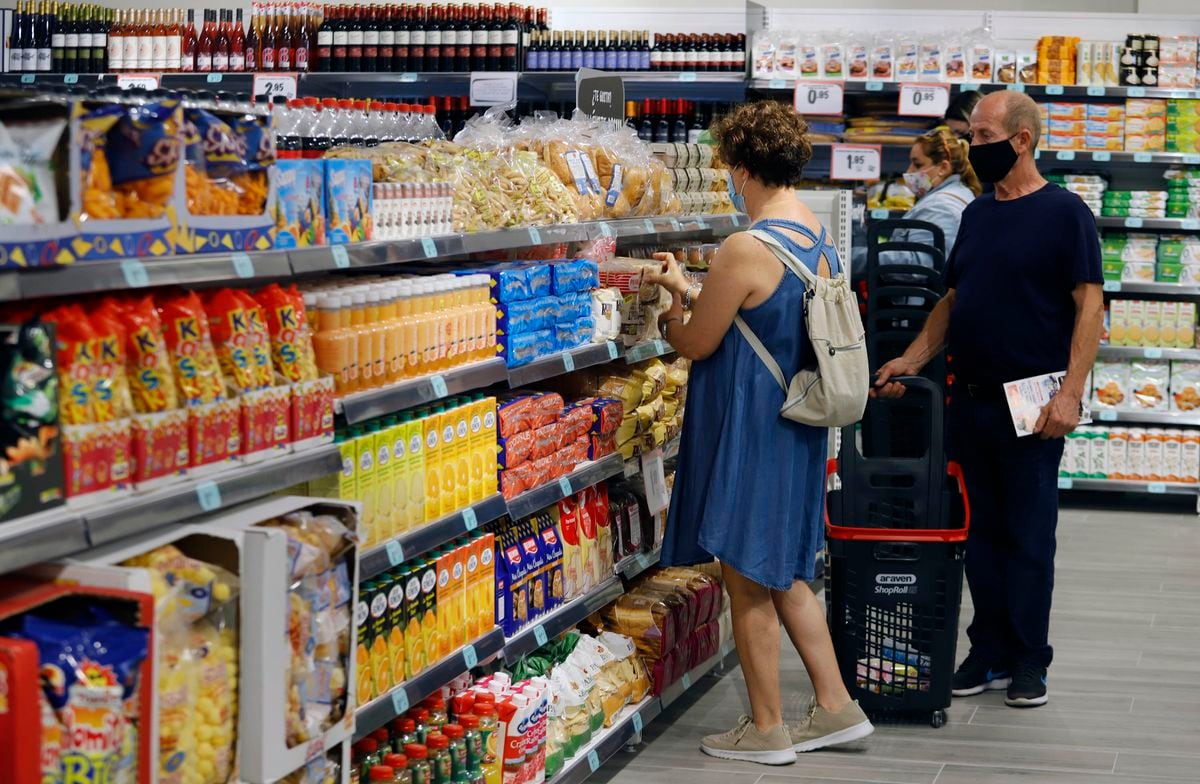
On the other hand, Hebebrand, who disagrees with the term “food addiction,” believes that excessive consumption of certain products is mainly due to their omnipresence in places such as supermarkets, as well as their wide variety, which maintains consumer interest.

Dr. Franco at Johns Hopkins believes that, for today’s consumers, going back to enjoying less-processed foods that contain smaller amounts of salt and sugar will be a long road.

“We’re not all going to become flexitarians overnight, nor are we going to suddenly enjoy bread without salt. We’re not going to be able to dedicate three hours a day to shopping and cooking, because that would require a brutal change in the economy and society.”

In addition, the food industry, “is not only very powerful, but it also feeds us,” Franco notes. “We can live without tobacco… but not without the food industry. We have to live together while we promote changes.”

Revenga — who questions the value of measures such as reducing salt in processed foods, “because they can give the feeling that it’s safe to consume a product that is still unhealthy” — believes that one of the important steps going forward is that, within schools, “they begin to teach what our mothers knew so well: to buy food and to cook it. Nobody knows how to do that anymore.”

Sign up for our weekly newsletter to get more English-language news coverage from EL PAÍS USA Edition

Becoming a flexitarian: the latest in healthy eating

Becoming a flexitarian: the latest in healthy eating

Estimated read time: 5-6
minutes

NEW YORK — Between 2014 and 2018, Americans who converted to a vegan diet exploded by 600{d2b09b03d44633acb673e8080360919f91e60962656af8ade0305d5d8b7e4889}. Remarkably, 71{d2b09b03d44633acb673e8080360919f91e60962656af8ade0305d5d8b7e4889} of Americans have tried at least one plant-based meat alternative, sending plant-based food sales skyrocketing, topping $7 billion in 2020 and continuing to grow — no pun intended.

Plant-based eating plans have become the norm for many, either out of a desire not to eat animals or for health-related issues. Keto, Paleo, Vegan, Gluten Free and Vegetarianism have become well-known terms in the world of dietary restrictions.

For most people, these are not fad diets but rather lifestyle choices. One of those latest trendier lifestyles is based on plant-based eating and is called flexitarian. Just what is it, and how does it work?

What is a flexitarian?

Flexitarian diets or lifestyle is a form of eating focused on primarily plant-based foods while consuming meat and other animal products in moderation. Initially authored by dietitian Dawn Jackson Blatner, it’s an effort to allow people to reap the benefits of plant-based or vegetarian eating without entirely giving up animal products. Hence, the name combines “Flexible” and “vegetarian” as it is more flexible than vegan or vegetarian diets.

Healthline, a health and wellness site, profiles the facets of a beginner’s guide to the flexitarian diet. The main principles include:

Unlike the trend of other fad diets, which ask people to calorie count, and create portion sizes, the flexitarian way is more of a lifestyle than a diet since it doesn’t have set rules.

Sheri Berger, registered dietician and creator of The Plant Strong Dietitian, has consistently practiced a flexitarian diet for at least five years. She describes a flexitarian diet as focusing on eating whole plant foods such as fruits, vegetables, whole grains, nuts, seeds and legumes.

For protein, the focus is on plants such as beans, lentils, or tofu; however, animal protein from chicken, beef, pork, or fish is not entirely excluded; it is just chosen less often.

Melanie Jordan, a Nationally Board-Certified Health and Wellness Coach and founder of Your Health Life Made Easy, has been a flexitarian for more than 20 years — long before it was a known term.

“When I started, I was primarily vegetarian and mixed in fish one to two times weekly,” she says. “Today, I do eat some poultry at times, but still eat a good amount of meals that are only vegetarian or pescatarian. Some flexitarians will occasionally eat red meat, but I am not a fan.”

The flexitarian trend

According to this Plant-Based News article, 47{d2b09b03d44633acb673e8080360919f91e60962656af8ade0305d5d8b7e4889} of young Americans, aged 20 to 39, identify as flexitarians. This was based on a survey of 2,000 Americans commissioned by Sprouts Farmers Market. The poll also found that 43 percent of those who responded considered it to be more than a diet but rather a permanent lifestyle change.

In a statement released about the survey, Sprouts Chief Executive Officer Jack Sinclair offers:

“The interest in plant-based foods and a flexitarian diet is evident — shoppers are more engaged with their food than ever,” he states. “They are seeking innovative and alternative products to mix up the meals they prepare for themselves and their families.

“We believe consumers will remain focused on incorporating healthy foods into their lifestyles to support immunity and overall well-being in the future,” he continues. “This includes introducing consumers to things they never considered before, like plant-based foods and meat alternatives.”

Becoming a flexitarian

The flexitarian lifestyle is not for everyone but is relatively easy to follow since it has no set rules. However, there are some considerations to determine if that is the route to choose.

Berger offers advice to anyone considering making the switch. “Always remember balance when adapting to a flexitarian diet or any diet,” she says. “Since you will be eating less meat, you want to make sure you are swapping in plant protein sources such as beans, lentils, tofu, or tempeh.”

For those unsure of how to achieve a balanced diet, she recommends consulting a registered dietitian, who are the true nutrition experts.

Jordan also recommends that consulting nutritionists and fitness experts will help choose the best lifestyle change. She points to the USDA’s latest Dietary Guidelines for Americans 2020-2025 as a free and helpful resource on guidelines for healthy eating with a nutrient-dense approach.

For those considering the change, she shares that the best way to adapt is “Practice patience with yourself and some experimentation to see where along the flexitarian scale the right balance is for you that matches your lifestyle, preferences and objectives while skewing towards the plant-based, whole grains, nuts, and seeds side.”

Reaping the benefits

Before going flexitarian, one should consider the result and potential benefits. Berger endorses the lifestyle for the benefit to her health.

“A flexitarian diet has helped me to lower my cholesterol levels because I’ve increased fiber and reduced saturated fat,” she notes. “I also find being flexitarian makes it easier to maintain a healthy weight as fruits and vegetables comprise a large portion of the diet, and they are the lowest calorie foods out there!”

Jordan shares that finding something healthy and satisfying simultaneously came with being flexitarian.

“It was the first step in helping me find a healthy eating pattern that worked for me that I could stick with,” she says. “It was like ‘The Three Bears’ for me — vegan was too strict, vegetarian was close but not quite, but flexitarian was the right fit. It also gives me plenty of variety and flexibility in my healthy food choices, so it’s been easy to stick with long-term without feeling deprived or bored.”

The flexitarian conversion also has some famous followers, including Ellen DeGeneres, Meghan Markle, Drew Barrymore and Diane Keaton, and superstar quarterback Tom Brady.

As healthy eating and lifestyle choices constantly evolve, adapting to a plant-based lifestyle is one way many enhance their health through nutrition. For those not ready to embrace life without consuming animal products, becoming a flexitarian can support those health benefits without giving up the occasional hamburger or cheese tray. After all, it’s about being flexible.

Related stories

Most recent Health stories

Kelley Dukat | Wealth Of Geeks

More stories you may be interested in

Does eating in proportion actually help, and with what?

Does eating in proportion actually help, and with what?

That feeding on processed meals, and premature foods can direct to a host of wellbeing concerns is a point effectively-identified. But did you know that not taking in in the right proportions can also lead to the exact? At times, we go overboard, and at other occasions, we may not take in sufficient at food moments, only to indulge in harmful foodstuff a number of times afterwards — habits that can wreak havoc on our lives. So, is there a answer for the exact?

Movie star nutritionist Rujuta Diwekar took to Instagram to share that it is essential to take in in the proper proportions to set an end to pointless cravings, overeating, and bodyweight and weight problems troubles. “Eat your meals in the ideal proportions. Keep a 3:2:1 ratio involving grains: dal/sabzi: pickle/salad/curd,” mentioned Diwekar.

She additional that the only way to get out of this “diet cycle and continue to be match for the relaxation of our lives without the need of depriving ourselves of the goodness of food” is to consume food items in a “state of balance”. “The remedy, for that reason, lies in the ideal proportion, not part,” she added.

Agreeing, Shruti Bhardwaj, senior scientific dietician, Narayana Multi Speciality Hospital, Ahmedabad and informed indianexpress.com that eating in proportion refers to consuming the suitable volume of foods in purchase to preserve a balanced bodyweight and well balanced diet regime. “It means consuming foods from all the diverse food items groups in the correct quantities to deliver the entire body with the vitamins it needs to operate thoroughly,” said Dr Bhardwaj.

So, what is the appropriate proportion?

Calling proportional consuming as “timeless strategy of feeding on our meals”, Diwekar mentioned that it makes it possible for for highest vitamins, enhances style and even appears to be visually-appealing to our eyes. This approach of eating food items, throughout all regions and cultures of our place, employs the subsequent proportions –

50 for each cent of your plate ought to be rice or roti or millets (grains)
35 for every cent really should be dal and sabzi (and meat if non-veg)
15 per cent must be papad/pickle/salad/curd, etcetera.

Preety Tyagi, Lead Wellness Mentor, Nutritionist and Founder of MY22BMI admitted that often men and women think that obtaining just a salad or cutting down carbs or getting only proteins will aid them lose body weight, although wholly forgetting how the process of digestion really operates. “The system calls for all very good groups and all important natural vitamins and minerals to be capable to function adequately. And it is only when our eaten foodstuff is digested appropriately, can we stay balanced and glance youthful,” said Tyagi.

According to Diwekar, here’s how having in this proportion, helps –

– puts an conclusion to dieting and deprivation
– eating plan diversity is constructed in as a default
– appeals to all senses, in particular eyes and taste
– improves digestion and assimilation of nutrients
– ends constipation and bloating even acidity
– increases satiety and will make you experience gentle and energetic

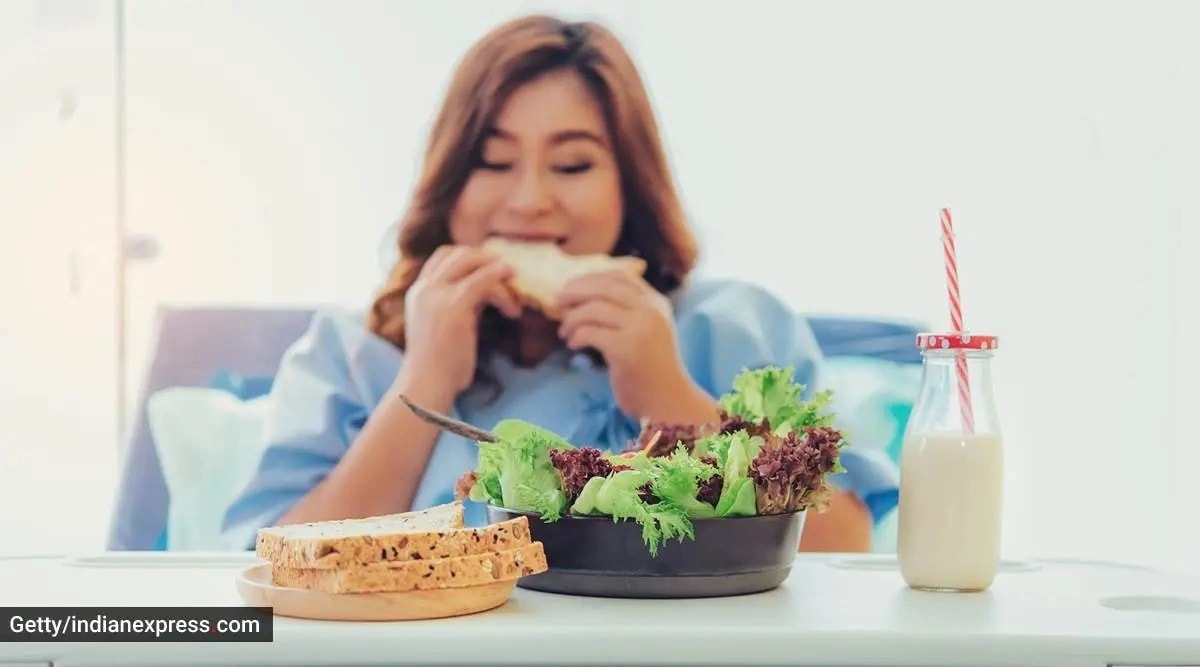
meal Do you have a well balanced meal? (Resource: Getty Visuals/Thinkstock)

What more?

Bhardwaj said that having in proportion can assistance regulate blood sugar degrees, which is crucial for people with diabetes or these at risk of producing the issue. “Eating meals that contain a combine of carbs, protein, and nutritious fats can help preserve blood sugar concentrations steady,” claimed Bhardwaj.

Ingesting in proportion also makes sure that you take in meals from all the various meals teams, which can help give your entire body with the nutrients it needs to functionality thoroughly. According to Bhardwaj, a balanced food plan that includes fruits, vegetables, whole grains, lean proteins, and healthy fats can enable reduce chronic health conditions and advertise in general health and fitness.

📣 For a lot more life-style news, follow us on Instagram | Twitter | Facebook and really don’t miss out on the most current updates!