Amitabh Bachchan once took to social media to talk about his favourite dessert, and in no time, the dish made headlines across India. He shared a post on Twitter featuring archival footage where he was seen discussing the dish with his late father and poet, Dr Harivansh Rai Bachchan. But that’s not all. Later, on his 80th birthday, his wife and actor, Jaya Bachchan, was also seen treating Amitabh Bachchan with delicacy on the sets of his reality show. Can you guess what the dish was? It’s the humble lapsi. Made with broken wheat (or dalia), lapsi is a popular sweet dish from the regions of Uttar Pradesh and Bihar.
Also Read: Best Non-Veg Dishes From Lucknow You Must Try For A Slice Of Royalty
About Lapsi – Amitabh Bachchan’s Favourite Dessert from Uttar Pradesh:
According to several reports, lapsi is one of the iconic dishes of Uttar Pradesh. The word lapsi (or laapsi) is derived from the Sanskrit word “Lapsika,” which means “prepared food.” It is a one-pot meal usually made with dalia, roasted in ghee, and then cooked with water (or milk) and jaggery. You can also replace dalia with atta, sooji, moong greens, besan, and almond flour. Lapsi has a porridge-like consistency and is considered a wholesome meal that can be easily digested. Therefore, it is often a part of children’s and older adults’ diets.
Lapsi Vs Halwa: What Is The Difference Between The Two?
People often confuse lapsi with the classic halwa as both are popular desserts in India. However, there are some striking differences between the two. Let’s take a look.
Ingredients: Halwa can be made with literally anything. Besides the classic suji ka halwa and besan ka halwa, you can also find people preparing the dish with carrots, potatoes, and gourd, to name a few. However, the lapsi recipe strictly restricts the usage of grains and flour.
Consistency: Halwa has a drier consistency, while lapsi is more porridge-like, making it easy to digest for all.
Serving method: You can enjoy halwa both hot and cold, but lapsi is usually served hot, just after preparation.
Also Read: 7 Classic Veg Recipes From Uttar Pradesh That’ll Win You Over
How To Make Up-style Lapsi At Home:
As mentioned earlier, lapsi can be prepared with different types of grains and flour. However, the most popular remains dalia lapsi. Here, we bring you a quick and easy dalia lapsi recipe that can be a part of your everyday diet. You can have lapsi as breakfast, dessert, or a quick meal during busy days.
All you need to do is roast some dalia in ghee and boil it well in water or milk. Then add some jaggery as a sweetener and cook until you get the desired consistency. Finally, garnish it with some nuts and serve hot. That’s it! Click here for the detailed recipe.
Why not recreate Amitabh Bachchan’s wholesome dessert at home and indulge in a delicious treat? Don’t forget to share your feedback with us!
Television personality Sophie Monk, 42, has spent most of her adult life in front of the camera, getting her career break on the reality TV series Popstars with girl group Bardot in 1999. She spent a decade in Los Angeles making films before returning to Australia in 2015.
Monk says she’s found her happy place in Terrigal, on the NSW Central Coast, where she lives with her husband, Josh Gross. A self-described homebody, the Gold Coast native enjoys dining at home with friends and doesn’t mind sending herself up on Instagram for a laugh. Never far from our screens, Monk is a series regular on The Hundred with Andy Lee and is tipped to return later this year as the host of Love Island Australia (both on Nine, owner of this masthead).
Her new role, as ambassador for Tropic Co National Prawn Day on March 18, came about after her husband posted about their love of prawns on his social media accounts. Now she’s swapping high heels for a fishmonger’s apron to hang with the experts at the Sydney Fish Market on Friday, March 17, channelling Paul Hogan’s 1980s shrimp-on-the-barbie tourism commercial for the TikTok generation.
Lettuce burgers, swapping the buns for lettuce, with onions, a large beef patty and lots of mayonnaise and pickles. Photo: iStock
EATING IN
Signature dish and what is your go-to at home
I’ve lived with my husband, Josh, in Terrigal for two years now. It’s where Josh’s family is from. It’s close enough to Sydney but I prefer to be a little further out these days. We’re real homebodies and love to just chill out together. I like to whip up a spaghetti bolognese because you can’t go wrong with a classic like that and I do enjoy my carbs. When we’re trying to be good, we make lettuce burgers, swapping the buns for lettuce. We add egg and it’s very messy – there’s onions, a large beef patty and lots of mayonnaise, tomato sauce and pickles.
My guilty pleasure
My guilty pleasure is going wild on anything that is ultimately bad for you. Whether it’s burgers and chips from our local takeaway shop in Gosford or chocolate cake, I take the time to savour every moment because I love food, and especially the naughty stuff. We are obsessed with Red Rooster. I am not an ambassador. I just love their chicken. I get the family meal and share it with Josh – we live for the cheesy nuggets. Pizza Hut has a great dessert, too – a gooey Hershey’s lava cake. I have been to restaurants around the world, but this is seriously delicious. I am not usually a sweet tooth, but this hits the spot.
Get the latest news and updates emailed straight to your inbox.
Best kitchen wisdom I cling to
My mum is the most amazing cook and I grew up with her making healthy meals every night. But the truth is, I am not the best cook as I’m often travelling for work and eat out a lot. When at home, I keep it simple with meals that are easy to prepare and are still delicious. I have a hack for poaching eggs in the microwave. You crack an egg into a mug, and add water, and blast it for 30 seconds. You’ll get the best-looking egg and it tastes good, too. I also like putting sour cream and avocado on the top of spaghetti bolognese – it’s not really what people do with bolognese but it’s delicious and you should try it. I always look for the quickest pasta to cook as well.
Yellowtail sashimi with jalapeno at Nobu. Photo: Penny Stephens
EATING OUT
My favourite hometown restaurant (and go-to dish):
We always go to Arc in Terrigal. It’s not far from our house. I don’t make a huge fuss when we dine out – we always book at the last minute. The food is beautifully presented, the service is top-notch and the venue is near the beach. I love to order the Atlantic salmon with house Caesar salad, beef carpaccio and roast pork belly with braised fennel.
My favourite hometown cafe
Luna Cafe in Terrigal is a regular go-to. Josh and I love a big breakfast – bacon and eggs. I always order a skim flat white for coffee. We also head there for their burgers and chips.
What’s your favourite place to eat in Australia?
A favourite place to dine is George’s Paragon Seafood Restaurant in Coolangatta – I love the location on the water. The restaurant is known to serve only the freshest produce. I am a big fan of creamy garlic and white wine sauces. The charcoal prawns are a winner here.
Black cod with miso (saikyo yaki) at Nobu. Photo: Simon Schluter
ON THE ROAD
What’s your favourite food city and why?
I spend a lot of time in Melbourne, and I think I have spent more time in restaurants there than in Sydney. My good friend Oscar is a foodie and is always in charge of organising where to eat when I visit. You’ll find me at Clover on Swan Street, Richmond – I always order the honey bread with herbes de provenance, half roast chicken with shallots and mustard, and grilled zucchinis.
Nobu’s Melbourne restaurant is one of their best. I love seafood and will always order the Hiramasa yellowtail sashimi with jalapeno. The Nobu-style seafood ceviche, prawns with spicy garlic sauce, and black cod with miso (saikyo yaki) are outstanding. Nobu always tastes better when someone else is paying because every bite is $10. But for a special occasion, it is worth it [laughs].
Bar Carolina in Toorak Road, South Yarra, is another favourite. I can recommend the oysters with finger lime mignonette, burrata with ‘nduja, barramundi cooked in negroni, truffle chips and their signature Lavender Spritz.
I can also often be found at the Richmond Oyster Bar on Church Street. I order grilled local prawn cutlets, sherry-garlic prawns, the seafood platter and their house-made Golden Gaytime.
Where do you stay when you’re there and why?
When in Melbourne, I like to stay at Crown Towers because the beds are insanely comfortable and the restaurants are great and within easy access. I also love to stay at The Langham and the Park Hyatt in Melbourne. I like to change it up, but these are my three faves.
Black cod with miso (saikyo yaki) at Nobu. Photo: Edwina Pickles
SYDNEY
I have a few favourite restaurants in Sydney. Raw Bar in Bondi is a regular go-to. I love their fresh seafood and prawn rolls. I will always order miso black cod from Toko. And China Lane in Angel Place in Sydney is really good for modern Asian food – from steamed prawn and water chestnut dumplings to steamed WA scallops.
Stay
When in Sydney I like the convenience of Bondi QT, Crown Sydney and the Ace Hotel. I always like to mix up my stays. I’m a homebody naturally, so when I’m staying in these great hotels, I like to enjoy a little bit of the luxury, even if I’m only there for a short time. I love a bit of indulgent junk food from the room service menu: burgers and fries or classic club sandwich or anything else that feels naughty.
Sophie Monk is an ambassador for Tropic Co. National Prawn Day, March 18, 2023
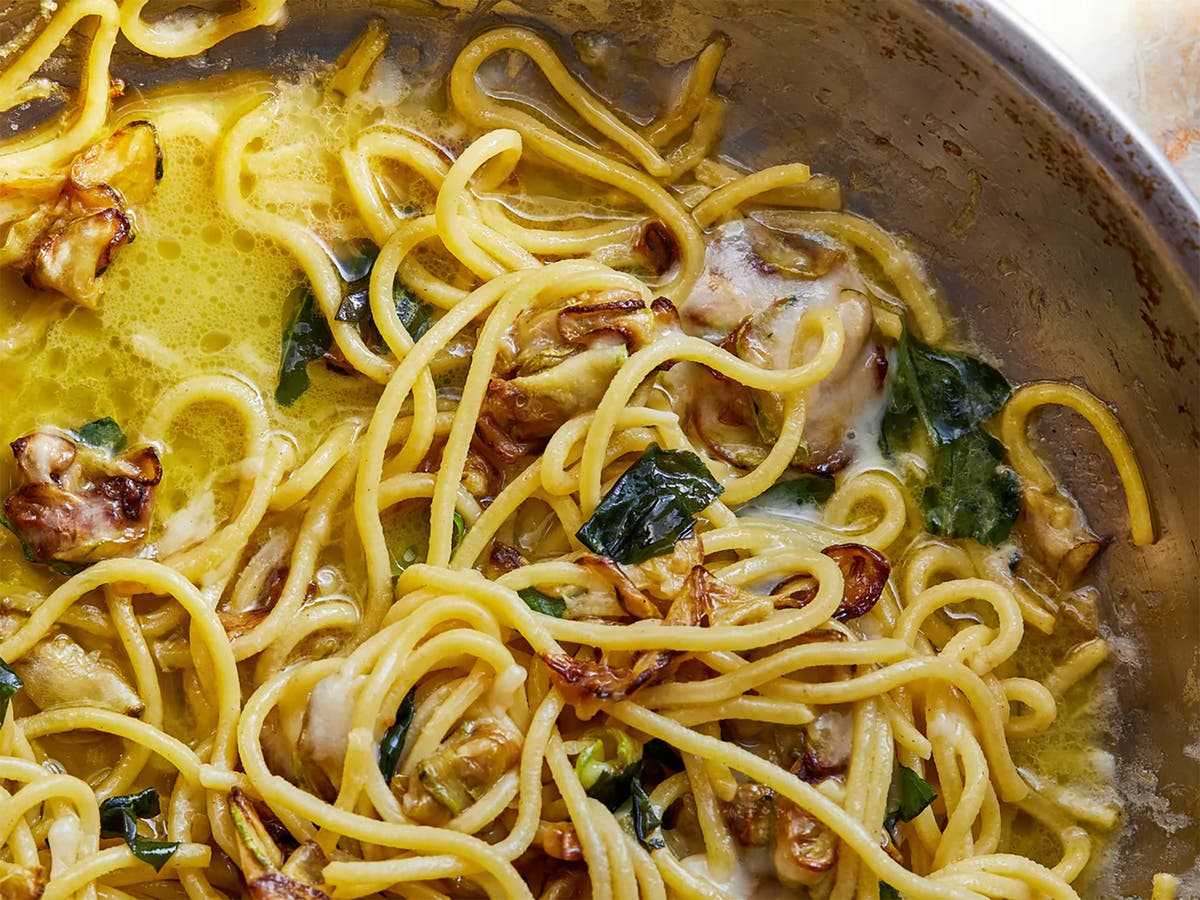
If you’ve seen Stanley Tucci’s Searching for Italy series, you might’ve caught the man himself waxing lyrical about a seemingly humble dish of spaghetti with courgettes – or zucchini to the Italians. In a picture-postcard scene, Stanley samples the dish at a cliffside restaurant with views of the sea, before confidently claiming it’s “one of the best things he’s ever eaten”. The dish in question? That’d be spaghetti alla Nerano.
Spaghetti alla Nerano is a dish of pasta, fried courgettes and cheese that hails from the southern Italian region of Campania. More specifically, the dish’s origins can be traced back to one woman and one Campanian village. That woman is Maria Grazia, who created the dish at her namesake restaurant, Mariagrazia, in 1952. Hidden away in the picturesque fishing village of Nerano, on the sun-kissed Amalfi coast, the restaurant (and the recipe) have been passed down the generations – and both are still going strong today.
The dish itself is a lesson in how to make simple ingredients sing; the original recipe involves little more than pasta, courgettes, Provolone del Monaco cheese and basil. Provolone del Monaco is a buttery, somewhat spicy cow’s milk cheese that’s typical of the Sorrento region, but it’s much harder to find than regular Provolone in the UK. If you can’t find either, a mix of Pecorino and Parmigiano Reggiano cheese works well.
Serves: 4
Prep time: 10 minutes | Cook time: 30 minutes
Ingredients:
400g spaghetti
6 medium courgettes (roughly 1kg), sliced into thin rounds
Handful of fresh basil leaves, torn
200g Provolone (or 100g each of Pecorino and Parmigiano Reggiano), grated.
500ml sunflower oil, for frying the courgettes
50g butter
Salt and pepper, to taste
Method:
Heat the sunflower oil in a large, high sided frying pan. You want the oil to be hot, so test it by dropping in a single disc of courgette and checking if it sizzles.
Once the oil is suitably hot, add your sliced courgettes and deep-fry until golden (you might need to do this in batches depending on the size of your pan).
Remove your courgette rounds with a slotted spoon and drain on kitchen paper, then put them in a bowl and leave to cool to room temperature.
Next, bring a pan of well salted water to the boil and start cooking your pasta – aim for a couple of minutes less than the packet instructions.
While the pasta is cooking, put a frying pan on medium and heat your cooled courgette, stirring occasionally and adding a couple of ladles of pasta water.
Once the courgettes start to soften, add the butter and stir until it melts, breaking the courgettes up with the back of a wooden spoon as you go.
Once your pasta is al dente, drain it (reserving some more pasta water) and add to your pan of courgettes, along with most of the cheese.
Remove your pan from the heat and toss to combine, adding more pasta water if you need (you’re looking for a silky sauce that coats your pasta).
Season to taste, then serve sprinkled with more cheese and some torn basil leaves.
Looking for comfort? Reach for layers
(Pasta Evangelists)
Looking for comfort? Reach for layers. Only today, they’re not in the form of a worn-in jumper or fluffy fleece, but layers of golden fried aubergine, melting mozzarella and smooth tomato sauce. Aubergine parmigiana – or parmigiana di melanzane to the Italians – is a true comfort classic, and for good reason.
From just a handful of ingredients, some gentle frying and a healthy hit of Italian cheese, comes a warming dish rich in savoury flavour. In contrast to many other comfort foods, aubergine parmigiana is also low-carb (and no less delicious for it). It’s very easy to make too, with the only real effort coming from frying the aubergine slices in batches (a crucial step, so don’t rush it).
Like many classic Italian dishes, the origins of parmigiana di melanzane are contested. The regions of Campania and Sicily both claim to have birthed it, but we like to think of aubergine parmigiana as a collaborative effort; it was likely that it did first emerge from the island of Sicily, where Arab colonisers first introduced the aubergine to Italy. The dish was then improved on in Naples with the addition of milky mozzarella.
Serves: 4-6
Prep time: 20 minutes | Cook time: 1 hour
Ingredients:
4 large aubergines
100ml olive oil, for frying and drizzling
300ml homemade tomato sauce or shop-bought passata
300g mozzarella (two balls)
150g parmesan, grated
15g fresh basil leaves, torn
50g breadcrumbs, fresh or dried
Chef’s tip: If you want to make this dish vegetarian, just swap out the parmesan for a vegetarian alternative.
Method:
Prep and fry the aubergines.
Drain the mozzarella and cut into thin slices.
Slice the aubergines into 5mm rounds.
In a deep frying pan, heat two inches of oil until hot.
Fry your aubergines in batches until golden on both sides.
Remove from the pan and drain on a baking tray lined with kitchen roll.
Assemble your parmigiana: in a large rectangular baking dish (pyrex is perfect), make a layer of aubergine slices, overlapping them as you go.
Cover your aubergine base with a thin layer of passata, then top with a quarter of the mozzarella, parmesan and basil.
Repeat the layers in this pattern (aubergine, sauce, cheese) until you’ve used it all up, (don’t worry if you end on a layer of aubergine).
Top with a final dusting of parmesan, a scattering of breadcrumbs and a drizzle of olive oil.
Bake your parmigiana: preheat your oven to 180C (160C fan/gas mark 4).
Once hot, bake your parmigiana for 30 minutes, or until golden.
Remove your parmigiana from the oven and leave to rest, before serving warm.
Chef’s tip: If you have time to get ahead, your parmigiana will benefit from being left to sit for 4-12 hours after the first bake. This intensifies the flavours and helps the parmigiana layers to firm up. When you’re ready to eat, simply reheat at 180C (160C fan/gas mark 4) for 10-15 minutes, then slide under a hot grill for a few minutes until the top is a riot of golden bubbles.
Spaghetti alla chitarra translates to ‘guitar spagehtti’
(Pasta Evangelists)
Spaghetti alla chitarra – which translates to “guitar spaghetti” – is so named because it’s made by pushing a sheet of pasta dough onto a wooden pasta cutter lined with guitar-like wire strings. The chitarra cuts the dough into long strands that resemble a thicker, squarer spaghetti – qualities that make this pasta shape an ideal partner for creamy sauces and chunky meat ragú.
Traditionally made from a fresh flour and water dough, spaghetti alla chitarra is a typical shape of the central Italian region of Abruzzo, as well as its neighbour Lazio (where it’s instead known as tonnarelli). In Lazio, you’ll often find this shape paired with cacio e pepe, but in Abruzzo it’s more commonly served alongside the region’s famous lamb ragú.
Abruzzo’s rocky, mountainous interior is prime sheep-rearing country, and you won’t go far without spotting a flock of hardy sheep roaming the craggy hillsides. It’s no surprise then, that the Abruzzese love to eat lamb. Arrosticini – skewers of lamb roasted over an open fire – are a big favourite, but this lamb ragú with red peppers is the area’s signature pasta sauce. The sweet peppers cut through the rich lamb perfectly, creating a sauce that’s good all year round.
Serves: 4
Prep time: 15 minutes | Cook time: 2 hours
Ingredients:
400g spaghetti alla chitarra, fresh or dried
400g lamb shoulder, cut into small cubes
2 large red peppers, deseeded and cut into thin strips
3 cloves of garlic, thinly sliced
1 tin of peeled plum tomatoes
500ml lamb or chicken stock
125ml dry white wine
2 tbsp olive oil
3 bay leaves
Salt and pepper, to taste
50g grated pecorino, to finish
Method:
Put a large saucepan over a medium heat and add the olive oil. Once hot, add the lamb and fry until evenly browned.
Add the garlic, bay leaves and a pinch of salt, then fry until the garlic is golden (be careful not to let it burn). Pour in the wine and let it reduce by about half.
Add the tomatoes and red peppers, breaking the tomatoes up with the back of a spoon. Pour in half of the stock, stir and bring to a simmer.
Cover and reduce the heat to low, then let everything bubble away for 1½ – 2 hours, until the lamb is tender. Add more stock if it starts to look dry.
Boil a large pan of water. Salt well, add the pasta, stir, then cook until al dente (3-4 minutes for fresh, 2 minutes less than the packet instructions for dried).
Drain the pasta, reserving some cooking water. Transfer the pasta to your pan of ragú and toss until well coated, adding a splash of pasta water to loosen.
Divide between bowls, season with salt and pepper and top with a generous handful of pecorino. Buon appetito!
Pasta alla gricia is one of Rome’s most quintessential pasta dishes
(Pasta Evangelists)
Pasta alla gricia is one of Rome’s most quintessential pasta dishes. Combining guanciale (cured pork cheek), pecorino romano cheese, black pepper and a swish of pasta water into a silky sauce, pasta alla gricia packs a rich, porky punch despite its deceptively simple ingredients list.
Guanciale is the heart and soul of this dish. Across Rome, salumerie counters are piled high with thick slabs of this fat-marbled marvel, which is made from salt-cured pig cheek. Fattier than its famous cousin, pancetta, guanciale releases this deeply flavoured fat when fried – enriching pasta alla gricia with its seriously savoury flavour.
Although it’s less well known than the three other classic Roman pastas: carbonara, amatriciana and cacio e pepe, pasta alla gricia has actually been around for a lot longer. Indeed, pasta alla gricia is commonly thought of as the foundation on which these dishes were built (add egg and you have a carbonara, add tomatoes and you have amatriciana).
As a dish that relies on very few ingredients, using the best quality you can lay your hands on is important – for Romans, it’s not pasta alla gricia unless you use guanciale and pecorino romano. When it comes to picking the right pasta shape, we’d lean towards the sauce-catching ridges of rigatoni, but spaghetti is also a traditional pairing in Rome’s trattorie.
Serves: 4
Prep time: 5 minutes | Cook time: 15 minutes
Ingredients:
400g rigatoni (spaghetti, bucatini or penne would also work well)
250g guanciale, cut into thin batons
120g pecorino romano, grated
2 tbsp olive oil
Salt and freshly ground black pepper, to taste
Chef’s tip: If you’re struggling to find guanciale, replace it with the same amount of good quality, unsmoked pancetta – we promise not to tell any Romans.
Method:
Bring a large pan of water to the boil, salt generously, add the pasta, stir, then cook until al dente (typically 2 minutes less than the packet instructions).
While the pasta cooks, add the oil and guanciale to a large frying pan and put on a medium heat.
Fry gently, until the fat has rendered and the guanciale pieces are starting to turn golden.
Add a ladle of your pasta water to the pan of guanciale, turn the heat down and let it bubble away until the pasta is ready.
Once the pasta is ready, drain, reserving some of the pasta water. Add the pasta to the frying pan along with two-thirds of the cheese and toss well.
Continue adding splashes of the reserved pasta water and tossing everything together until you have a glossy sauce.
Remove from the heat, top with the remaining cheese and a healthy grind of black pepper, then serve immediately. Buon appetito!
In Puglia, one pasta shape dominates
(Pasta Evangelists)
In Puglia, the sun-soaked heel of Italy’s boot, one pasta shape dominates. Named after the ‘little ears’ that each shape is said to resemble, orecchiette (pronounced oh-reck-ee-ET-tay) are a prime example of the region’s simple, rustic cuisine. From a vegan pasta dough of flour, water and salt, Pugliese nonne have been hand-rolling orecchiette since the 12th century. Even today, in the cobbled old town of the region’s capital, Bari, women craft orecchiette on tables along la strada delle orecchiette (an unofficial, but fitting moniker).
Puglia’s classic and most authentic orecchiette dish is orecchiette con cime di rapa – which sees the shape paired with a sauce of garlic, anchovies and cime di rapa. Known in the UK as turnip tops or rapini, cime di rapa has a mustardy, slightly-bitter flavour profile. Once boiled, its bitter-sweetness comes to the fore – making it a perfect match for this salty, savoury sauce.
Although it’s popping up more and more in greengrocers and farmers markets, cime di rapa can sometimes be hard to find in the UK. If you’re struggling to source it, chard, kale and spring greens are all good substitutes.
Serves: 4
Prep time: 10 minutes (plus 1 hour to make the fresh pasta) | Cook time: 20 minutes
Ingredients:
500g turnip tops, tough stalks trimmed and cut into 4cm lengths
8 anchovies
3 garlic cloves, sliced
½ teaspoon red chilli flakes
100ml extra virgin olive oil
50g pecorino cheese, grated (optional)
Salt and black pepper, to taste
400g dried orecchiette
Chef’s tip: If you want to keep this dish vegan, you can leave out the pecorino cheese and anchovies
Method:
Put a large pan of water on to boil for your pasta.
Put half of the olive oil in a wide frying pan with the anchovies and garlic, then put on a low heat.
Warm gently for 6 minutes, or until the anchovies dissolve. Add the chilli flakes, then take the pan off the heat.
Once the pan of water boils, add salt, then throw in the turnip tops and stir.
If you’re using fresh pasta, let the turnip tops boil for 5 minutes, then add the orecchiette and cook for another 3 minutes.
If you’re using dried pasta, add it at the same time as the turnip tops and cook for 2 minutes less than the packet instructions.
Drain your pasta and turnip tops, saving some pasta water, then add them to the anchovy and garlic pan and place over a medium heat.
Toss everything together with a ladle or two of pasta water, until the pasta is well coated.
Serve drizzled with the remaining olive oil and a dusting of grated cheese, if using.
For more delicious recipes and essential guides to right your pasta wrongs, head to the Pasta Evangelists blog, or sign up to receive their authentic fresh pasta recipe boxes on their website, pastaevangelists.com.