Culinary Cruises Target Food Enthusiasts

Culinary Cruises Target Food Enthusiasts

Cruise ships are not generally known for their stellar cuisine—it’s not that the food is bad; it’s just that it’s hard to produce top-notch food for thousands of passengers multiple times a day.

But Holland America Line (HAL) is looking to change that perception by bringing aboard six world-class celebrity chefs to dining venues across their fleet. Each of the executive chefs is a member of the Confrérie de la Chaîne des Rôtisseurs, an international food and wine society.

These special culinary cruises are interactive and attract gourmands looking to learn how to professionally slice, dice and sauté like a master chef through live cooking demonstrations, coffee chats and exclusive chef-hosted dinners, which include that chef’s signature dishes. Passengers who book this program learn new skills, are given recipes and are able to spend time with world-famous chefs.

Panama Canal Cruise with David Burke

David Burke will be on the April 9, 2023 cruise to the Panama Canal. Burke was on “Iron Chef America” and has several restaurants. He’s famous for his clothesline candied bacon and beef tenderloin with lobster dumplings—which he’ll showcase on board. This 20-day cruise starts in Fort Lauderdale and ends in Seattle. Stops in between include visits to Columbia; the Panama Canal; Costa Rica; Guatemala; Mexico; San Diego, Victoria and Vancouver.

Atlantic Coast cruise with Jacques Torres

Jacques Torres, the chocolatier and pastry chef, will be on the Atlantic Coast cruise departing April 18, 2023. Torres is a James Beard award winner and co-host of the show “Nailed It!” and his chocolate surprise dessert will be featured on the cruise. The 11-day cruise stars in Fort Lauderdale and ends in Montreal. Stops include Newport, Bar Harbor, Boston, Nova Scotia and Prince Edward Island.

Alaska Cruise with Andy Matsuda

The May 7, 2023 cruise to Alaska will have chef Andy Matsuda onboard. Matsuda is known for his Japanese cuisine and his sushi is sold at Nami Sushi, Tamarind and Lido Market. His seared albacore tuna and fried soft-shell crab will be feature onboard. This 14-day cruise stars and ends in Vancouver, Canada. It includes Kodiak Island, Valdez, Skagway, Sitka, Ketchikan, Anchorage and Glacier Bay.

Northern Isles Cruise with Rudi Sodamin

The Northern Isles cruise departing on June 18, 2023 will feature chef Rudi Sodamin. He is known for his seafood brasserie, his “food faces” and his signature Salzburger Nockerl, an Austrian-style berry souffle. This 14-day cruise begins and ends in Copenhagen. Stops along the way include Bergen and Alesund in Norway; five stops in Iceland including Akureyri, Ísafjardardjúr, Grundarfjordur, Djupivogur and Reykjavik; and two stops in Scotland, Inverness and Edinburgh.

NGA: Don’t lock us out of healthy food benefit programs

NGA: Don’t lock us out of healthy food benefit programs

The Nationwide Grocers Association (NGA) has written a letter to the White Property urging officials to re-feel it is position on supplemental wellness reward playing cards — and what forms of grocery stores buyers are authorized to use them at.

Correct now, those people with supplemental wellness reward cards — which contain a stipend for the purchase of healthful food items in grocery retailers — just cannot use the playing cards at independent grocery stores.

By excluding the unbiased segment from the software by denying them the systems essential to procedure gains, issuers, together with unique non-public strategies, Medicare Gain plans, and some Medicaid ideas with waivers, are limiting cardholders from shopping at their preferred stores, Stephanie Johnson, vice president, governing administration relations, for the Washington, D.C.-primarily based NGA, stated in the letter to Susan Rice, director of the White House Domestic Plan Council.

“As a result, hundreds of thousands of Individuals who depend on independent grocers, many of whom are in rural and lower-profits regions, are locked out of the method,” Johnson wrote. “Consequently, independents are unable to serve the wants of their shoppers.”

The Medicare Grocery Reward, also identified as a Medicare Meals Allowance or Wellness Foodstuff Card, gives grocery resources for select strategies.

Cardholders can only use the advantage for certain foods like fruits and greens, new salad kits, dairy products, meat and seafood, frozen foods, soup, water, beans and balanced grains, cereals, and staples — which includes flour, sugar and spices, and nutrition bars.

Amongst the omitted goods are chips, desserts, sodas, and liquor. Users often obtain a prepaid debit card or a coupon card that is reloaded monthly or quarterly.

Calling the exclusion of impartial grocers a “rapidly building difficulty in the delivery of private-sector courses aimed at strengthening overall health outcomes,” Johnson reported that wellness insurers and payment solution suppliers have the capability of growing system accessibility to the unbiased phase.

She mentioned, nevertheless, that the parties “are not answering the phone calls of insured men and women and the impartial grocery store sector to make benefits interoperable to the place where plan beneficiaries’ shop.”

The NGA is requesting that the White Household mediate a option among the Facilities for Medicare and Medicaid (CMS), health insurance coverage companies, technologies payment organizations, and the grocery sector.

“Industry members have been advised that these plans are distinctive only to the nation’s major grocery chains and no viable remedy is offered for our field segment,” Johnson claimed. “The consequence is hurt to opposition the place our customers are compelled to shop at our dominant chain competitors, even if they desire their regional grocery keep.”

She additional that independent grocers by now are at a aggressive drawback owing the lack of antitrust law enforcement, and “the exclusion from healthy reward applications only widens the unlevel actively playing industry involving scaled-down impartial grocers and significant national foods retail chains.”

District Bisckuits in North Kansas City has lines out the door for food ‘crafted for the culture’ | KCUR 89.3

District Bisckuits in North Kansas City has lines out the door for food ‘crafted for the culture’ | KCUR 89.3

Guroux Khalifa had $150 to his name when he set out to serve the best biscuits Kansas City ever tasted, he shared.

“A lot of painstaking work, time, love and passion has been put into creating this amazing product. The people who really understand the value and quality of that product have stuck around and grown over the years, even when we have to close down because of COVID,” said Khalifa, the head chef and founder of District Biskuits.

District Biskuits officially opened its first brick-and-mortar location in December 2022 after years of pop-ups and catering. The restaurant, located in North Kansas City, has been highly anticipated, Khalifa said — noting that some of his customers have been around since he started District Biskuits in 2017 as a concept within Lutfi’s Fried Fish on 63rd Street.

“We had a soft opening in November, and there was nothing soft about it,” Khalifa said, laughing. “We had a line out the door and wrapped around the parking lot. The response from the community has been amazing. They’ve really embraced us.”

‘Why you mad though?’

 Guroux Khalifa is the chef and owner behind District Biskuits.

Melo Mile

/

Viewpoint Visuals

Guroux Khalifa is the chef and owner behind District Biskuits.

Before the success of opening a new restaurant, Khalifa was a culinary graduate passionate about cooking and sharing food with others. He worked in restaurants across Kansas City before quickly realizing that he wanted to be his own boss, he shared.

“I started out as a private chef,” Khalifa said, noting that his time at the prestigious Le Cordon Bleu College of Culinary Arts in Atlanta prepared him as a classically-trained chef. “It was difficult because it was only me and my services. I was spread so thin, and there were no opportunities to scale.”

Feeling extreme burnout, Khalifa took a trip to the Dominican Republic. When he came back to the States, he had his epiphany: do something simple, he said.

“My mother would make biscuits growing up, and I’ve taken her process and tweaked it over the past 15 years,” Khalifa said. “… I struck a deal with [Lutfi’s Fried Fish] to operate during the hours that they weren’t open. They opened around 11 o’clock, so I served my chicken biscuits from 7 a.m. to 10:30 a.m.”

Business for District Biskuits in the beginning was extremely slow. Bored in an empty restaurant, Khalifa called into Hot 103 Jamz! to encourage the hosts to try his chicken biscuit sandwiches.

“They had a segment called ‘Why you mad though?’ and I said I was mad because you guys haven’t come and tried these chicken biscuits,” Khalifa recalled. “We were just having a conversation, and afterwards I didn’t think much about it. The next day, a flood of people started coming in.”

District Biskuits went from three customers a day, to 15, to 35, to 50 to a couple hundred customers on the weekends, Khalifa said.

“In a matter of two months, I would have a line wrapped around the building,” he said. “I had to start closing earlier because I was bleeding into the restaurant’s opening time.”

 District Biskuits opened in its first location at 504 Armour Road in December 2022.

Channa Steinmetz

/

Startland News

District Biskuits opened in its first location at 504 Armour Road in December 2022.

When Khalifa started popping up with District Biskuits, his focus was primarily on not letting himself walk away from the business, he recalled.

“Early on in my career, I had an issue with not following through when things weren’t working out the way I wanted them to,” Khalifa admitted. “With this particular concept, I told myself that I was not going to quit. Even if I only served one person a day, I was going to push forward. I am not going to stop.”

Moving to North Kansas City 

It was clear to Khalifa that there was a strong demand for him to open a restaurant of his own.

With the COVID-19 pandemic affecting the food and service industry in 2020, he closed the Lutfi’s Fried Fish pop-up location to focus on catering, other pop-ups and consulting for restaurants.

“That’s how I stayed afloat,” Khalifa said. “This location in North KC became available to me because a friend of mine gave me a call and said that the business he had opened here wasn’t working out. I talked with some of my mentors, and we decided on the spot in November 2021.”

District Biskuits’ colorful location includes both indoor and outdoor seating. Khalifa envisions the space as a place where the community can come together for good food, good music and good drinks, he said, teasing that a cocktail menu is coming soon.

“We have a liquor license, so we will be offering brunch style-cocktails; we also have milkshakes and juices on our beverage menu,” Khalifa noted. “We’re putting a few more tables on our patio and installing our shade sails, lighting and music. We plan to host day parties on the weekends. It’ll be a nice, vibrant environment for people to have a good time.”

District Biskuits’ colorful location in North Kansas City includes both indoor and outdoor seating.

Channa Steinmetz

/

Startland News

District Biskuits’ colorful location in North Kansas City includes both indoor and outdoor seating.

When customers walk into District Biskuits, they are greeted with the tagline “crafted for the culture.”

“It means that this business has been crafted for the culture of Black people, melanated people,” Khalifa explained. “It centers itself around the culture of Kansas City and what it means to be a part of this city.”

From partnering with Black-owned businesses to naming the menu items after iconic Kansas City landmarks and business, Khalifa is passionate about uplifting and celebrating his fellow entrepreneurs, he said.

“If we all help each other, we can win a lot faster,” Khalifa said. “Why rely on outside sources to build up our community when we have so many here?”

The coffee served at District Biskuits is Black Drip Coffee — a local, Black-owned coffee brand. The hot honey sauce on “The Charlie Hustle” sandwich is from Kansas City’s Mother Clucker, and the freshly ground chicken sausage is from Wiener Kitchen in Overland Park.

The most popular menu item at District Biskuits is “The Wonder,” Khalifa’s staple chicken biscuit breakfast sandwich named after the historic Wonder Bread building on Troost Ave.

But don’t ask him to pick his favorite menu item.

“People ask me that all the time, but it’s like choosing your favorite kid — you can’t!” Khalifa said, smiling. “The Wonder is our best seller. The Charlie Hustle sandwich we just introduced has become super popular. People love The Crown, which is our double smash burger. OK, if I had to choose, my personal favorite is the DB Hash; I add a little drizzle of hot honey on the top to give it a kick. Just be sure to come hungry.”

This story was originally published on Startland News, a fellow member of the KC Media Collective.

Abby Lee’s one-pot Malaysian recipes | Food

Abby Lee’s one-pot Malaysian recipes | Food

Malaysia isn’t known for its cold weather, but, when the rainy season arrives in November and December, the temperature does tend to drop – to 25C. During the colder months in Britain, meanwhile, I eat lots of peppery broths spiked with chilli and ginger, and often serve them with “cooling” vegetables to balance the heat, as well as hot-and-sour curries and slow-braised meats. These are dishes to warm the soul and keep you going until the sun returns.

Babi chin, or braised dark soy pork belly

A classic Nyonya dish that’s often served at lunar new year, though a more day-to-day version would simply involve garlic and fermented soya beans. It’s a combination of Chinese and Malay cultures, using the former’s soya beans and the latter’s coriander seeds. Two ingredients that will make a big difference here are good soya bean paste and a thick dark soy. If you like, add a few soaked shiitake mushrooms to the braise, for some extra texture.

Prep 10 min
Marinate 1 hr
Cook 1 hr 45 min
Serves 4

For the braise
600g skin-on pork belly
, cut into 4cm cubes
80ml dark soy sauce
15ml light soy sauce
2½ tsp granulated sugar
1 tbsp vegetable oil
, or other neutral oil
200g round shallots, peeled
Salt and sugar, to taste

For the rempah (paste)
20g coriander root (or stalks)
35g peeled garlic
45g long red chilli
2 tbsp coriander seeds
40g soya bean paste
(or red miso paste)

Put the pork in a bowl with half the dark soy sauce, toss to coat, then leave to marinate at room temperature for an hour.

Meanwhile, make the rempah. Roughly chop the coriander root, garlic and chilli, put them in a food processor with the remaining paste ingredients and blend smooth.

Mix the remaining dark soy, light soy and sugar in a bowl. Put the oil in a deep saucepan on a medium heat and, when hot, add the paste and stir for five to 10 minutes, until you can really smell the aromatics. Add the pork belly and stir to coat each piece. Pour in the soy sauce mixture, swirl a little water in the bowl to pick up any last bits, and add to the pan with the peeled shallots. Top up the water so the pork belly is almost fully covered, bring to a boil, then turn down to a light simmer, cover and cook for an hour and a half.

Season with salt and sugar to taste (different brands of soy sauce have different flavour profiles), and serve with rice.

Ikan assam pedas, or hot-and-sour fish stew

This classic Malay and Minangkabau dish is very aromatic and moreish, and more of a thin broth than a thick curry. It’s traditionally laced with torch ginger flower, a particular fragrance that’s hard to get in the UK, but the more easily found Vietnamese coriander would finish it off nicely. Don’t be afraid of frying the paste in lots of oil: it’s the best way to bring out the fragrance. Similarly, be heavy-handed with the tamarind – this is meant to be lip-smackingly sour.

Prep 15 min
Cook 1 hr
Serves 4

For the rempah
90g red onion, peeled and roughly chopped
80g lemongrass, green tops discarded, the rest roughly chopped
90g long red chilli, roughly chopped
6g shrimp paste (belacan, ideally; otherwise, Thai kapi is widely available)
8 pieces dried kashmiri chilli, soaked in warm water for 15 minutes
½ tsp ground turmeric

For the fish
100ml vegetable oil, or other neutral oil
20g granulated sugar
1 tsp fine sea salt
140g aubergine
, cut into 6cm chunks (they’ll shrink when cooked)
1 plum tomato, cut in half
50g tamarind concentrate (ideally, the light brown south-east Asian type)
120g okra
2
mackerel, cleaned, or 4 x roughly 140g fillets
Chopped mint and coriander, to finish

Put all the paste ingredients in a blender and blitz smooth.

Put the oil in a deep saucepan on a medium heat, then fry the paste, stirring regularly, for about 20 minutes, until the oil separates. Add the sugar and salt, let it caramelise for a couple of minutes, then add the aubergine, tomato, tamarind and 500ml water, bring to a boil, simmer for 15 minutes, then stir in the okra and simmer for five minutes more.

Turn the heat down low, so no bubbles break the surface, then gently poach the fish in the stew for five to seven minutes, until the flesh flakes easily.

Season with extra tamarind, salt and sugar to taste, depending on whether you prefer it more sour, salty or sweet, and serve with rice and chopped mint and coriander.

Chai buey, or mustard green stew

Some of the ingredients are alternatives to traditional ones, but if you have a Chinese supermarket nearby, use salted mustard greens instead of the sauerkraut and kale. Although this is often made using leftover roast meats, it’s a star in its own right and well worth making entirely from scratch.

Prep 15 min
Cook 1 hr 45 min
Serves 4

1 tbsp vegetable oil, or other neutral oil
4 x 280g duck legs
35g piece fresh ginger
, unpeeled, cut into 1cm-thick slices
20g peeled garlic, chopped
12 pieces dried kashmiri chilli (about 10g)
50g carrot, cut into 1cm-thick matchsticks
150g turnip, cut into 1cm-thick matchsticks
120g sauerkraut, ideally with no added flavours
70g vine tomatoes, cut into wedges
½ tbsp white peppercorns, dry toasted and lightly crushed
2½ tbsp light soy sauce
1½ tsp salt
70g kale
, roughly chopped
2½ tbsp tamarind concentrate (ideally, the light brown south-east Asian type)
Sambal belacan, to serve

Put the oil in a deep saucepan on a medium-high heat, then sear the duck legs all over until they are just slightly darker than golden brown. Remove and set aside, leaving the oil in the pan.

Turn down the heat to medium, add the ginger, garlic and dried chilli, and stir for a couple of minutes so they infuse the oil. Add the carrots and turnips, and stir-fry for three or four minutes.

Add the sauerkraut, tomato, crushed white peppercorns, soy sauce, salt and duck legs, then pour in just enough water to cover the duck (depending on the depth of the pan, you’ll need up to a litre). Bring to a boil, then turn the heat as low as possible, cover and leave to simmer very lightly for about an hour and a half. Ten minutes before the end of the cooking time, stir in the kale and tamarind.

Lift out the duck legs and shred all the flesh off the bones. Remove and discard the ginger slices and dried chilli, then stir the duck meat back into the pan and add salt and tamarind to taste – the sourness has to come through here. Serve with rice and our beloved sambal belacan.

Asian-inspired food week highlights AAPI tradition, culture

Asian-inspired food week highlights AAPI tradition, culture

“I feel like in the past three years the Colorado AAPI food and beverage scene has really grown and it’s the time now to really showcase that,” said Joanne Liu.

DENVER — The inaugural Mile High Asian Food Week kicked off this week by highlighting dozens of restaurants around the Denver metro – and you can tempt your tastebuds with traditional cultural foods through Feb. 26. 

Ken Wan’s restaurant is featured in food week – the kitchen has always been a place that feels like home to him because the kitchen is where he has always found his family.

“It would be my goal to show you what my family enjoys to eat,” he said. “I think at the end of the day like food and cooking is very much intertwined with our family in general.”

Wan owns Meta Asian Kitchen with his wife, Doris.

“When I see this dish I think of a culmination of two families coming together and putting something on a plate that’s delicious,” he said. 

It’s a dish they’ve created for Denver’s first Mile High Asian Food Week, as well as their menu, inspired by the people closest to them. 

“Stuff that my mom made or Doris’ dad makes, stuff that kind of came through from our family traditions and I want to keep that tradition alive,” said Wan. 

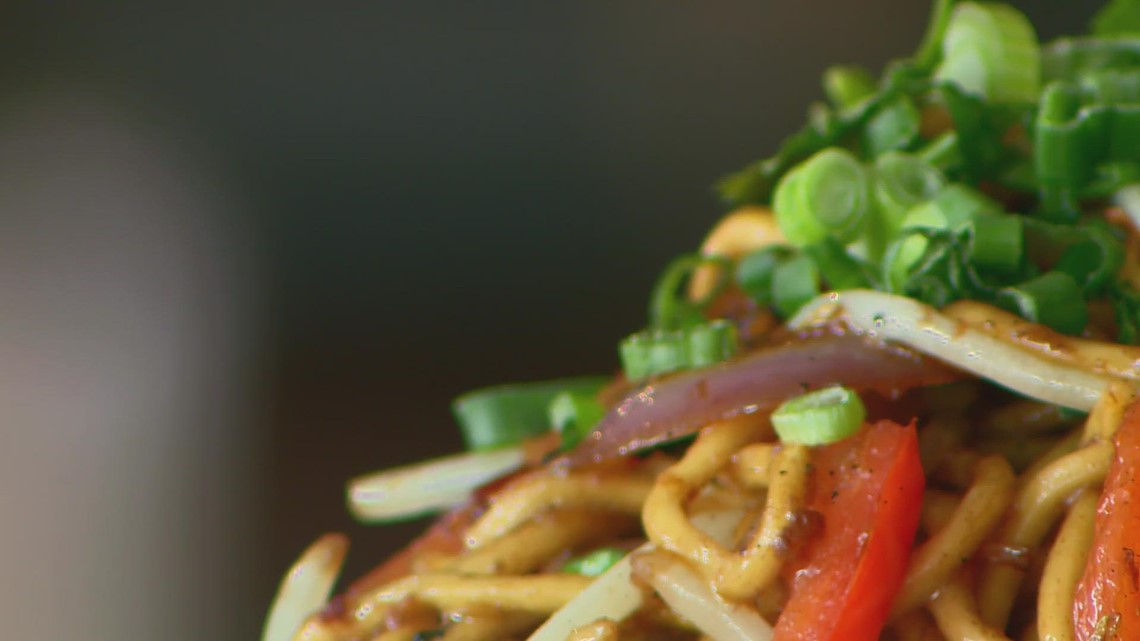
Wan’s XO stir-fried egg noodles will be the restaurant’s special during Mile High Asian Food Week. The XO sauce is a recipe he learned from his father-in-law, who is also a chef. 

“XO sauce is like a luxurious, Cantonese-style sauce,” said Wan. “It has dried scallops, dried shrimp, fried garlic, fried shallots, chili. There’s a lot of good stuff in there.”

For Joanne Liu, Wan’s sister, Chinese food isn’t just about her culture. 

“It symbolizes family and it’s a way we show love and care for one another,” she said. “It kind of brings me back to being raised in a family who owned a Chinese restaurant.”

For 20 years, Joanne and Ken’s parents owned a Chinese take-out spot. 

“They were immigrants to this country and really it was their way to put food on our table, put shelter over our heads, and really care for us and really wanted us to succeed,” said Liu.

“Food was always a big deal to me but my parents never wanted me to pursue it because obviously, they wanted me to be like a doctor, engineer, lawyer, typical Chinese immigrant stuff, you know?” said Wan. 

Ken still decided to follow his heart into the restaurant business and Joanne also found a way to celebrate food, culture, and community. 

“I want to engage in joy. I want to engage in celebration of the Asian culture and Asian foods and this is how I’m engaging with what’s going on today,” she said. 

Liu is the founder of Mile High Asian Food Week.

“Oftentimes people think, ‘Oh there’s no Asian food here. There’s no good Asian food,’ and like granted yeah, it’s not the same as the coastal cities like New York City or San Francisco, but there’s good Asian food here and [we] really want the chance to elevate those businesses,” she said. 

It’s a way to shine a spotlight on the diverse Asian American Pacific Islander (AAPI) food scene she said has been growing in the Denver metro. 

“They all have their own story of why they cook the foods they cook, why they started their businesses… and a lot of times it’s about family,” said Liu. “It’s about their culture, food they grew up on.” 

Around 48 restaurants are signed up for Mile High Asian Food Week, including her brother’s and a food truck called Pho King Rapidos. 

The owner of the food truck, Long Nguyen, also takes a lot of inspiration from his family.

“A lot of the recipes, a good part of the base, or even the specials are from her,” he said.

Long said his menu is Vietnamese at its core, but with an added twist, inspired by special moments in his life. 

“Right here is our sticky icky wings it’s our take on the Cánh Gà Chiên Nước Mắm,” said Nguyen. 

Another dish takes the flavors of a traditional bowl of pho but is wrapped up in a sandwich.   

“It’s an influence from being at home with my family and living in New York with my wife and then every day her and I just thinking about like what can we do differently,” he said. 

He hopes to share his food with the wider community while making his parents proud. 

“You want to take all the hard work that they did and make sure that you’re taking every opportunity they gave you to do something with it,” said Nguyen.

Through food, they’re all carrying on a legacy, lovingly passed down by family. 

“To see that not only am I successful here but I’m happy doing what I do… to her, I think to her it gives her some validation that she was a great mom, you know?” said Wan. 

Both Meta Asian Kitchen and Pho King Rapidos will open brick-and-mortar locations later this year. 

Meta Asian Kitchen is located inside Avanti until April 30. Then, they will open a new location called “MAK Fam” at 39 W. First Ave. in Denver sometime this fall or winter.

Mile High Asian Food Week runs from Wed., Feb 22-26. 

SUGGESTED VIDEOS: Latest from 9NEWS 

https://www.youtube.com/watch?v=videoseries

Onion Shortage Threatens New Chapter In World Food Crisis

Onion Shortage Threatens New Chapter In World Food Crisis

Onion Shortage Threatens New Chapter In World Food Crisis

In accordance to the UN, 3 billion persons around the world simply cannot pay for a nutritious diet program. (Representational)

Lalaine Basa would obtain a kilo of onions to make spring rolls at her catering organization north of Manila. She’s now changed her recipe to use half the amount simply because of soaring prices in the Philippines.

In the Moroccan funds Rabat, Fatima no more time buys onions and tomatoes due to the fact they are also high priced. She receives artichokes to prepare dinner tagine alternatively. “The market is on fireplace,” explained the mom of three.

The encounters of the two females additional than 7,500 miles (12,000 kilometers) apart exhibits how the international disaster about foodstuff provides is getting an alarming twist: threatening to take in components vital to the world’s nutrition.

The fees of wheat and grains have fallen in new months, easing concern over access to some staples. But a combination of factors is now shaking up the vegetable market, the backbone of a healthful, sustainable diet. And at the sharp finish of that is the humble onion.

Prices are soaring, fueling inflation and prompting nations to choose action to safe supplies. Morocco and Turkey have halted some exports, as has Kazakhstan. The Philippines has ordered an investigation into cartels.

Limits have also gone over and above onions to involve carrots, tomatoes, potatoes and apples, hampering availability throughout the world, the United Nations and the Environment Lender warned this thirty day period. In Europe, empty cabinets have pressured British isles supermarkets to ration buys of some fruit and greens following a weak harvest in southern Spain and North Africa.

“Simply just having adequate calories is not excellent sufficient,” claimed Cindy Holleman, a senior economist at the UN’s Food items and Agricultural Business in Rome. “Diet plan high quality is a crucial backlink between foodstuff protection and nutrition. Bad diet plan top quality can direct to different sorts of malnutrition.”

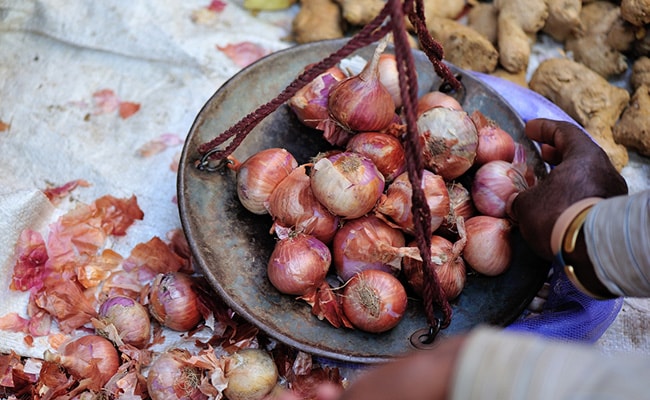
Onions are the staple of cuisines across the entire world, the most eaten vegetable following the tomato (technically a fruit). About 106 million metric tons are generated every year – around the similar as carrots, turnips, chillies, peppers and garlic merged. They’re utilized in almost everything from the foundation flavoring of curries and soups to fried toppings on hotdogs in the US, where by futures trading in them has been banned due to the fact 1958 immediately after an attempt to corner the market.

The jump in prices is a knock-on outcome from disastrous floods in Pakistan, frosts damaging stockpiles in Central Asia and Russia’s war in Ukraine. In North Africa, meanwhile, farmers have battled severe droughts and an raise in the price of seeds and fertilizers.

Lousy temperature has hit Moroccan growers especially tough. At a market place in the Ocean district in central Rabat, Fatima stated vegetable costs keep on being “exuberantly superior” even with the ban on sending onions and tomatoes to West Africa launched by the governing administration this month.

Clutching a bag of artichokes, the 51-calendar year-aged retired federal government worker stated her earnings no more time previous until the close of the month. That monetary squeeze will be felt even tougher during Ramadan, when Muslims traditionally crack their every day speedy with a significant meal before celebrating the Eid holiday break.

“We are ingesting extra lentils, white beans and fava beans and soon we will settle for rice,” reported Fatima, who declined to give her entire identify mainly because of the political sensitivity in Morocco encompassing foodstuff inflation.

Vegetable vendor Brahim has been doing work in the Ocean market place for around 30 several years. Business has been sluggish, he said.

“I thought only solitary adult males acquired vegetables by the piece, specifically the losers,” claimed Brahim, 56. “Now, I bow my head when I see persons who have been buying at my stall for 10, 15, 23 yrs check with me in a broken voice for 1 tomato, one particular onion, 1 potato. Persons are at their boundaries.”

In the Philippines, a dearth of onions has compounded shortages of every little thing from salt to sugar above the very last few months. Prices became so absurdly high that they briefly charge extra than meat, when flight attendants ended up caught smuggling them out of the Middle East. The federal government of President Ferdinand Marcos Jr. has boosted imports to tame the highest inflation in 14 several years.

“I just use the tiniest bits of onions,” reported Basa, 58. Her almost 3-decades-old enterprise in Bulacan province caters for birthdays and weddings. “I have to alter due to the fact I really don’t want to elevate charges too much and get rid of my prospects.”

In Kazakhstan, the spike in selling prices has prompted authorities to faucet strategic stockpiles even though its trade minister urged individuals not to buy onions by the sack amid a stress rush to secure supplies in neighborhood supermarkets.

Which is on prime of an export ban, also introduced in the latest months by Kyrgyzstan, Uzbekistan and Tajikistan – the world’s top rated for every-capita customer thanks to onion-large nationwide dish qurutob. Elsewhere, Azerbaijan is putting “limit” on sales and Belarus will license shipments.

As the cost of getting nutrient-prosperous veggies and fruit soars and incomes struggle to continue to keep up, wholesome eating plans are getting out of attain. Much more than 3 billion people can’t pay for a healthful food plan, the most recent UN figures present.

That will increase up the political agenda globally, and nutrition will be a considerably far more popular element of governing administration considering, stated Tim Benton, investigate director in rising risks at Chatham House in London. He phone calls it a “diet time bomb” which is exploding gradually.

“It really is not just teetering on the edge of famine in the Horn of Africa that must fret us about the current disaster,” he reported. “It is the widespread progress of weak nourishment. Nutrition was by now startlingly bad on a worldwide foundation, beforehand.”

For now, though many governments will fortunately subsidize imports of wheat or flour to continue to keep their persons happy, there’s limited assistance for vegetable growers. The consequence is that the earth creates too much starchy grains, sugar and vegetable oils than the dietary requires, but only about a third of the fruit and veggies essential, Benton said.

Like bread, onions also have shown the probable to ignite civil unrest. In India, which has banned exports on and off for years, substantial charges were being cited for the Bharatiya Janata Social gathering (BJP) getting rid of the vote in New Delhi in 1998. Two many years later, Prime Minister Narendra Modi, in his campaign to achieve reelection, said farmers are his “Top” priority, indicating the tomato, onion and potato.

“The main grains are genuinely essential from a sort of emblematic working of global food security and hunger,” said Benton. “But for numerous countries, it’s these additional factors that issue when it arrives to preserving the populace delighted. This is in a sense the idea of the iceberg.”

(Other than for the headline, this story has not been edited by NDTV employees and is revealed from a syndicated feed.)

Featured Video Of The Day

Video clip: Punches, Kicks At Delhi Civic Human body As AAP, BJP Councillors Fight