Food influencer Half Baked Harvest accused of disregarding, appropriating Vietnamese culture

Food influencer Half Baked Harvest accused of disregarding, appropriating Vietnamese culture

Tieghan Gerard, a food influencer known as Half Baked Harvest, is facing backlash for what some are saying is a lack of respect for a culture’s cuisine — as well as appropriating it for her platform and not responding to criticism. 

Gerard posted a video of her recipe, “25 Minute Banh Mi Rice Bowls,” on Instagram Tuesday, showing viewers how to make coconut rice, ginger-sesame ground chicken, pickled vegetables and cucumber salad. She mispronounced the name of the Vietnamese dish and grouped together various Asian ingredients as “banh mi.”

People were quick to comment on the inaccuracy of the recipe and her incorrect pronunciation. “You guys are going to love these banh mi rice bowls,” she said, pronouncing the dish as “bon-my,” when it’s pronounced as “bun-mee.”

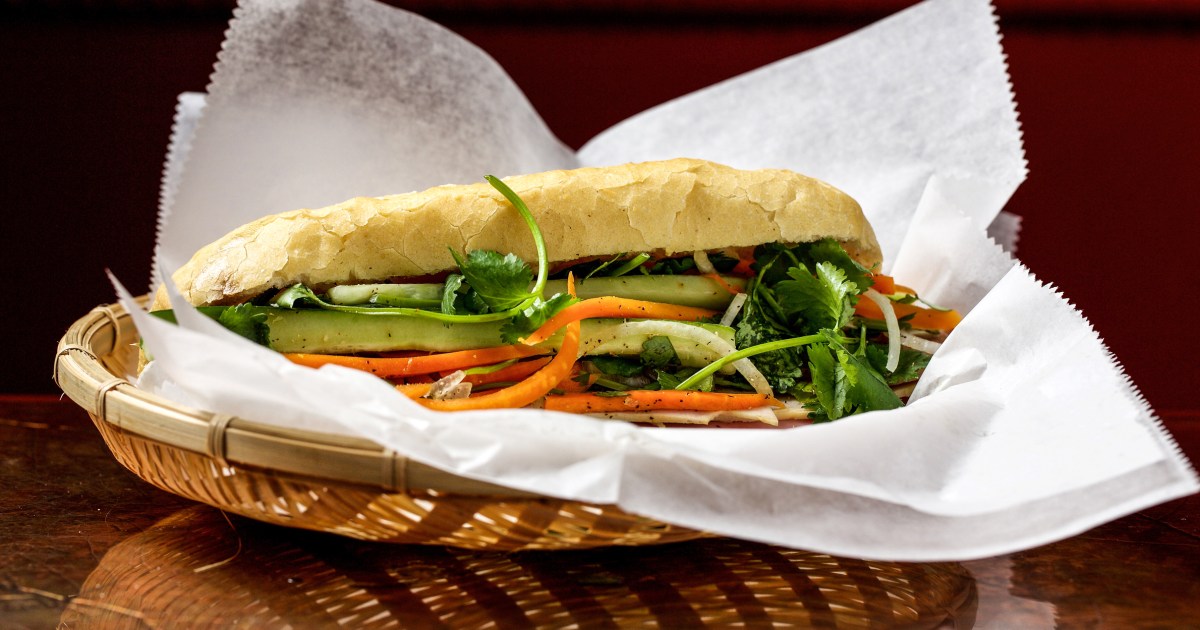
Commenters said they were confused by the name of Gerard’s recipe since it was a rice-based dish using non-Vietnamese sauces and seasonings like Thai basil and sambal chili paste. Banh mi, meaning “bread,” is a short baguette generally topped with sliced meat, pickled carrots and daikon, chilis and cilantro. 

“The ginger/sesame/honey flavors are definitely leaning more heavily into Japanese and Thai cuisine than Vietnamese. Especially the inclusion of Thai basil,” one commenter said on the video, which garnered 1.8 million views.

Hundreds of comments called out Gerard for the dish and her silence around the mispronunciation.

“I love you, your content and recipes. However, please acknowledge the mistake/ you’ve made here and not just sweep it under the rug. People make mistakes and that is OK. Ignoring after knowing what is right is NOT,” one person commented. “You have a platform, make it right.”

“How are you still not addressing this feedback? Makes what you said about listening to your followers seem super disingenuous,” another said.

Gerard, who has 5.2 million followers on Instagram, hasn’t acknowledged the backlash and has continued posting videos and stories on her account. 

“Why not call it Vietnamese-Inspired Rice Bowl or Sweet and Spicy Rice Bowl? You can always mention your influences in the post description,” one commenter said.

Gerard did not respond to NBC News’ request for comment.

This isn’t the first time Gerard has faced backlash for misappropriating Asian cuisine. In February 2021, she was called out for posting a recipe titled “Weeknight ginger pho ga (Vietnamese chicken soup),” TODAY reported.

Fans criticized the dish’s name on Instagram, saying it was not pho but rather a quick noodle dish with chicken and sesame chile sauce. Gerard changed the recipe’s name on Instagram and her website to “easy sesame chicken and noodles in spicy broth,” but her website’s URL still says “chicken-pho.”

“It was never my intention to offend or hurt anyone or the culture. I will make sure to be much more conscious when deciding on recipe titles in the future and be sure to do more research,” she previously said in a statement to TODAY about her noodle dish recipe.

Go city hopping: Enjoy culture, food and urban escapes in Arizona

Go city hopping: Enjoy culture, food and urban escapes in Arizona

The Greater Phoenix area, also known as the Valley of the Sun, is renowned for its year-round sunshine, rich cultural experiences, and staggering natural landscapes, from scenic mountain preserves to the stunning Sonoran Desert. Discover Arizona’s wine and craft beer scene, explore American Indian artor play on some of the best golf courses in the country; here are a few recommendations on where to go and what to do.

Some highlights found in and around Greater Phoenix include parks, resorts and wellness opportunities. South Mountain Park Preserve is the nation’s largest municipally managed park and is a haven for outdoor enthusiasts. While the luxury resort scene in Phoenix includes a long list of historic and modern properties, families can enjoy epic-sized pools with monumental play features while wellness travelers will find spa treatments and fitness programs that add euphoria to vacation days.

Some of the country’s most innovative restaurateurs hone their culinary skills in Phoenix. The best-known restaurants in Phoenix have racked up plaudits and nominations from the James Beard Foundation. In 2022, local chefs and restaurants were named semifinalists in eight different categories. And, the city’s cocktail and craft brew culture continues to grow.

Phoenix has some of the best museums in the country including the galleries and exhibits at the Musical Instrument Museum which draws from a collection of more than 8,000 instruments from around the world. One of Phoenix’s first cultural institutions, the Heard Museum, has grown into an international destination to learn about American Indian art and history, while the Pueblo Grande Museum and Archeological Park is a must-see Phoenix attraction that takes visitors on a path to remnants of a ballcourt and platform created by the Hohokam people who lived in this area from A.D. 450 to 1450. And, at the 140-acre Desert Botanical Garden, more than 50,000 desert plants illustrate the beauty and variety of desert plant life.

Go shopping, gallery hopping and hiking in Scottsdale

With its blend of nature, culture and cuisine, Scottsdale makes for the perfect break

(Visit Arizona)

Famed for its 300 days of sunshine, luxurious resorts and boutique shops, Scottsdale, in the Greater Phoenix area, has much to offer travellers looking for a US city brimming with art, culture and old-world charm.

Scottsdale is located in the beautiful Sonoran Desert at the foot of the scenic McDowell Mountains. It is bordered by Phoenix to the West, the Tonto National Forest to the North, the McDowell Mountains to the East, and the Salt River to the South. The Mcdowell Sonoran Preserve is a protected area, including 200 miles of trails across 30,000 acres of land. Expect to see plenty of Saguaro cacti along the way, native to the Sonoran Desert and emblematic of Arizona. If you’d rather take to the water, you can kayak, standup paddle board or tube down the Lower Salt River, where you’re almost guaranteed to see wild horses grazing along the river banks.

Old Town Scottsdale’s Fifth Avenue is not only home to an award-winning culinary scene that encapsulates cooking styles and cuisine from around the globe, but it also houses dozens of boutique shops, from upscale designer fashions and American Indian jewellery stores to Southwestern furniture shops. Down the road from Fifth Avenue, you’ll find the Arts District, where more than 35 galleries showcase high-end art to local and national work. You can book appointments to check out most of the galleries or participate in the free Thursday evening art walk, where you’ll hop from one gallery to the next, often enjoying wine and snacks along the way and getting the opportunity to speak to local artists.

Explore food, culture and nature in Tucson

Whether you’re a fan of golf, gastronomy or art, laidback Tucson has it all

(Visit Arizona)

Laid-back Tucson is a hot spot for those who yearn for time in nature, and the Tucson Botanical Gardens offer an introduction to the flora and fauna that makes up the desert. Head east on Tanque Verde Road, and you’ll eventually reach the Redington Pass. This high mountain pass, between the Santa Catalina Mountains and the Rincons, has ample hiking trails, and canyons that take you past magnificent mountains and dense barrel-cacti-dotted forests.

With a landscape as spectacular as Arizona’s, it’s no surprise that the state is also home to some of the nation’s most famous golfing destinations. Tucson has more than forty courses, including the Arizona National Golf Club and the Starr Pass Golf Course on the western outskirts of Tucson, with the majestic Catalina Mountains as a backdrop.

Head Downtown, an area steeped in history and famed for its restaurants, bars, eye-opening museums and striking architecture. The Tucson Museum of Art is located in the Presidio district and showcases an extensive Colonial Latin American art collection. The Arizona State Museum also houses the largest collection of Southwest Indian Pottery and more than 25,000 artefacts of American Indian basketry.

Once you’ve finished roaming around the museums Downtown, take advantage of Tucson’s status as a UNECSO City of Gastronomy and refuel with food options inspired by American Indian, northern Mexican-Sonoran, Mission-era Mediterranean, and American Ranch-Style traditions. An excellent option is El Charro Café, the nation’s oldest Mexican restaurant.

If you’re an aviation enthusiast, The Pima Air & Space Museum is essentially an aircraft boneyard, displaying almost 300 aircraft spread over 127 acres, featuring planes from World War Two, the Vietnam war, and more. While for another trip back in time, head to the Trail Dust Town, dotted with old station wagons, stagecoaches, saloons and tobacco shops. This fascinating, atmospheric old town gives you an authentic feel for what life would’ve been like during the Wild West era.

Sip on local wines in Arizona’s internationally-acclaimed winemaking regions

Enjoy a vineyard adventure in Arizona’s must-experience wine country

(Visit Arizona)

There are more than 120 wineries and tasting rooms across Arizona. The wine made here is internationally acclaimed, some have even been served in the White House. In Southern Arizona, you’ll find the towns of Sonoita and Elgin, famed for their unique topography and soil, garnering the attention of sommeliers worldwide. There’s also Willcox in the Southeast, where most of the state’s grapes are grown in larger quantities, and the Verde Valley in north central Arizona, where a wide variety of soils and highly fertile alluvial deposits create near-perfect wine-growing environments.

In Sonoita, you can go wine tasting at the female-owned-and-run AZ Hops and Vines, or, if you find yourself in Willcox, hit up Wines of Willcox: expect plenty of local bottles with picturesque vineyards and mountains as your backdrop. If you’re looking to explore the vineyards of North Central Arizona, Caduceus Cellars, run by one of the state’s leading champions, showcases wine grown primarily from Verde Valley vineyards.

To find out more about Arizona, discover incredible experiences, unmissable events, get travel inspo and plan your trip, head to Visit Arizona. You can fly to Arizona direct via British Airways or American Airlines – find out more here

2023 Chow Chow food festival announces new dates, venue in Asheville

2023 Chow Chow food festival announces new dates, venue in Asheville

ASHEVILLE – A collective of local creatives are hatching plans for how best to showcase and celebrate the flavors of the Southern Appalachians.

This year, the chef-driven event formerly known as Chow Chow Culinary Festival will return with a new name, new dates and a different venue. And the organizers are introducing a contemporary approach to build support for the local, independent and creative food and beverage community that’s driving the region’s industry “to empower economic resilience.”

“The number one thing that sets us apart is our genuinely intense focus on the Southern Appalachian foodways and the history ― the arc — of that narrative. How did we get there and where are we going?” said Chow Chow’s new executive director, Melissa Scheiderer.

Melissa Scheiderer, the executive director for Chow Chow Food and Culture Festival in Asheville.

Scheiderer shared details about what the nonprofit organization’s cooking up for Chow Chow 2023, and why it’s an event weekend not to be missed.

Here are five things to know about this year’s homegrown culinary extravaganza.

More:Asheville food, beverage events getting a big shake-up in 2023

Beat food price inflation with these budget-friendly, plant-based recipes

Beat food price inflation with these budget-friendly, plant-based recipes

When Toni Okamoto was starting her plant-based food journey, like many people, she thought eating healthy had to be expensive.

“I’ve been without a car at times, I’ve worked multiple jobs at times trying to make ends meet, I lived below the poverty line until just a few years ago, and I have found a way, specifically through meal planning, that has helped me get out of debt and become more financially free,” she told CBS News. 

Now, the blogger and social media star shares her money-saving meal tips with more than 570,000 Instagram followers. 

And with inflation affecting shopping staples like eggs and butter, her latest cookbook, “Plant-Based on a Budget: Quick and Easy” (out Tuesday, March 7), shows readers how to make 100 plant-based recipes that save you money and also time, from freezer-friendly and make-ahead breakfasts to one-pot and 30-minute meals. 

“I want to share that it doesn’t have to be a big to-do to incorporate healthier dishes into your family’s dinners, lunches and breakfasts,” she says. “When I think about meal planning, it can be overwhelming, and I wanted to share that it can be a mix of store bought and homemade so that you’re not having to cook from scratch and spend all day Sunday or every night of the week making something nourishing.”

Okamoto also brought her Mexican and Japanese backgrounds into the project with recipes like Sopa de Fideo, which she highlights as one of her favorites in the book. 

“It’s very simple. It’s very affordable. It’s filling, and I grew up eating that as a kid,” she says of the dish. “It reminds me of being a little girl, and I feel like I’m wrapped in a hug from my grandma.”

To help inspire some plant-based, budget-friendly meals in your home, here are 3 recipe excerpts from Okamoto’s book:

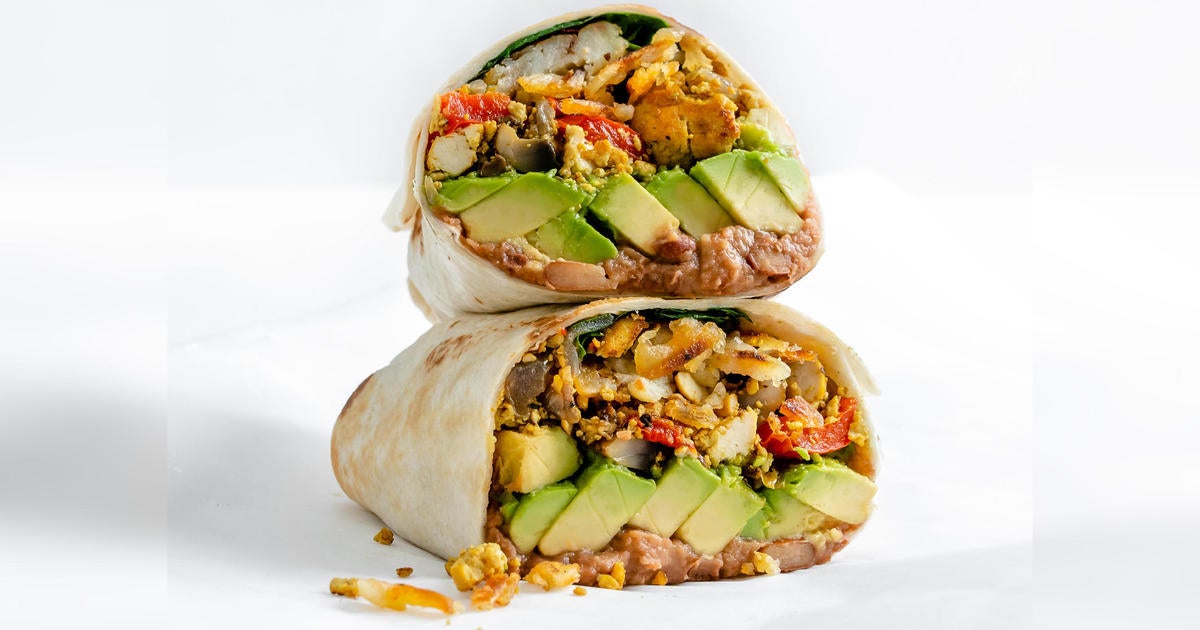
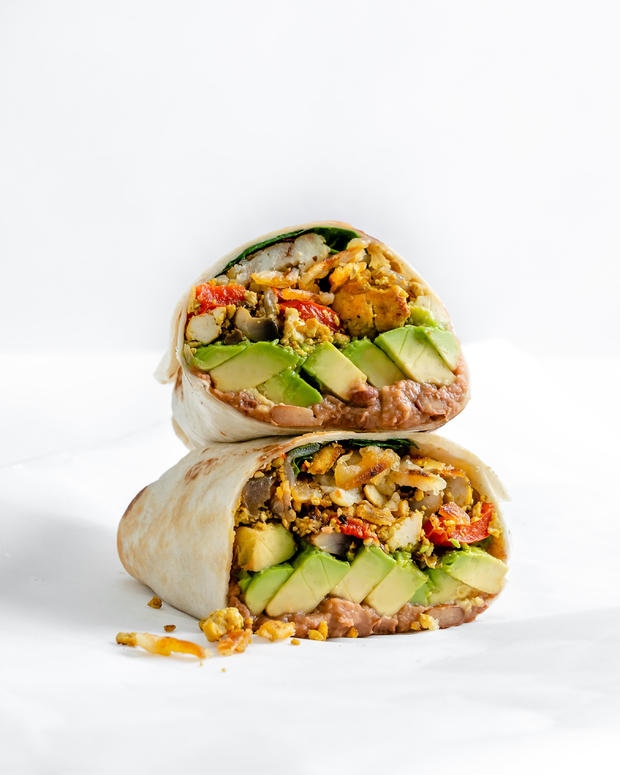
Hash Brown Veggie Breakfast Burritos

Makes 8 burritos | Ready in 20 minutes

Honestly, you can wrap just about anything in a tortilla and it will taste better. Tofu scramble is no exception. With the help of hash browns, refried beans, peppers, and spices, I’ve put a Mexican-inspired twist on this hearty burrito, but you’re welcome to change out this tofu scramble with the version from The Friendly Vegan Cookbook, or simply load up your tortilla with leftover cooked veggies, grains or salad.

Ingredients:
• 2 cups frozen hash brown potatoes
• 1 tablespoon vegetable oil
• 1/2 large yellow or red onion, diced
• 1/2 large red or green bell pepper, diced
• 4-5 cremini or button mushrooms, sliced
• 3 garlic cloves, minced
• 1 1/2 teaspoons ground cumin
• 1/4 teaspoon ground turmeric
• 1 (14- to 16-ounce) package extra- or super-firm tofu, drained and pressed
• Salt, to taste
• 8 burrito-size flour tortillas
• 1 (15-ounce) can vegetarian refried beans

Optional additions and swaps:
• Swap the hash brown potatoes for tater tots
• Swap the oil for 1/4 cup water
• For spice, add 1/2 teaspoon red chili flakes or 1 minced serrano pepper in step 2
• For more flavor, add 1/8 teaspoon smoked paprika in step 3
• For a cheesy flavor, add 1 1/2 teaspoons nutritional yeast in step 3
• Add crumbled cooked Soyrizo in step 6
• Add vegan cheese in step 6

Optional additions for just before serving:
• Diced avocado
• Minced fresh cilantro
• Pico de gallo
• Your favorite salsa or tomatillo salsa 

hash-brown-veggie-breakfast-burritos.jpg
Burritos you can prepare and freeze for easy mornings? Sign us up! 

Courtesy of Toni Okamoto


Directions:
1. Cook the hash brown potatoes according to the package instructions and set aside.
2. In a large skillet, heat the oil over medium-high heat. Add the onion, bell pepper, and mushrooms, and sauté until the bell pepper is tender, 3 to 4 minutes.
3. Stir in the garlic, cumin, and turmeric and cook until fragrant, about 1 minute.
4. Using your fingers, crumble the tofu into the pan and sauté until the tofu is golden, 4 to 6 minutes. Season with salt.
5. Warm the tortillas in the microwave for 15 seconds. (Alternatively, heat individual tortillas in another skillet over medium heat until warmed, about 1 minute.)
6. Slather a spoonful of refried beans onto each tortilla. Fill the tortillas with a generous scoop of the tofu filling and some hash brown potatoes. If you’re serving your burritos right away, you can add avocado, cilantro, pico de gallo, and/or salsa now and roll them up. If you’re freezing your burritos for later (see Toni’s tips), it’s best to add these ingredients after thawing. 

Toni’s tips:
When frozen and reheated, these taste as fresh and delicious as the day they were made. After they’ve completely cooled, wrap each burrito individually in aluminum foil and place in a freezer bag or airtight container. Keep frozen for up to 2 months. To reheat, unwrap and microwave for 3 minutes, flip, and then heat for 3 more minutes. If you don’t have a microwave, you can bake at 400 degrees for about 30 minutes, or until your burrito is heated through. 

Pesto Pasta

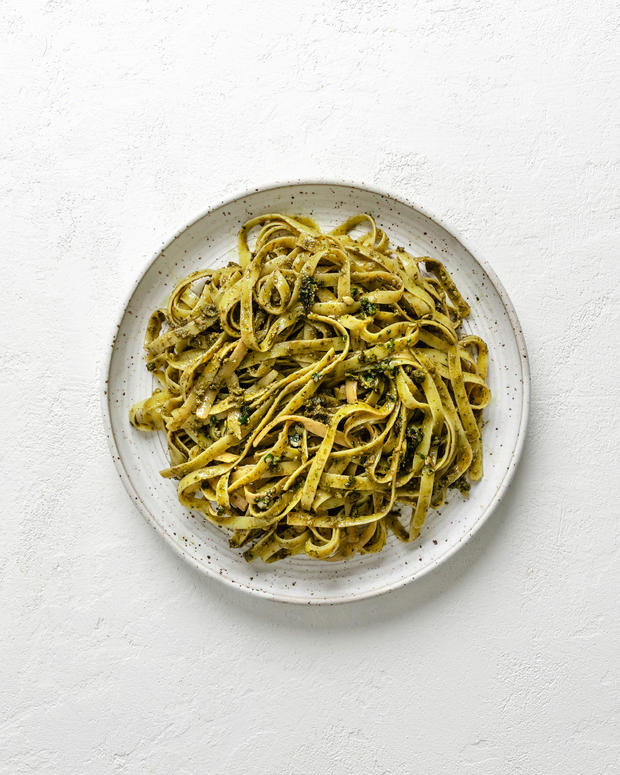
pesto-pasta.jpg
Pine nuts can be expensive. That’s why Toni Okamoto made a pesto recipe that allows for substitutions. 

Courtesy of Toni Okamoto


Serves 4 | Ready in 30 minutes

I love a recipe that allows you to work with ingredients you already have in your pantry, and this Pesto Pasta is just that. While typical pesto calls for expensive pine nuts, this version allows you to use more affordable and readily available pumpkin seeds, sunflower seeds, walnuts or other nuts you have on hand.

Ingredients:
• 1 (1-pound) package your favorite pasta
• 1 1/2 cups tightly packed fresh basil leaves
• 1 cup your choice raw nuts or seeds (walnuts, shelled sunflower or pumpkin seeds, etc.)
• 3 garlic cloves, peeled
• 1/2 cup olive oil
• 1 tablespoon lemon juice
• 1 teaspoon salt
• Black pepper, to taste

Optional additions and swaps:
• Swap the basil for parsley, spinach, arugula, or a combination of any of them
• For spice, add a pinch of red chili flakes in step 2
• Add 2 tablespoons nutritional yeast in step 2
• Add 2 cups your favorite steamed veggies in step 3

Directions:
1. In a large pot, cook the pasta according to package instructions until tender. Drain and transfer to a large bowl.
2. Meanwhile, combine the basil, nuts or seeds, garlic, olive oil, lemon juice, and salt in a blender or food processor, and blend on high until smooth and creamy.
3. Stir the pesto in the pasta. Season with a few grinds of black pepper.

Toni’s tips:
Ice cube trays aren’t just for making ice; try using one to preserve your pesto! Triple or quadruple the pesto in this recipe, pour it into an ice cube tray, freeze it, then pop out your pesto cubes and store them in an airtight container for up to 3 months. To reheat, in a medium pot, add 3 or 4 cubes (or more if you want extra flavor) to a serving of cooked pasta and heat over medium-high heat, stirring until they melt and become a sauce that evenly coats the pasta. 

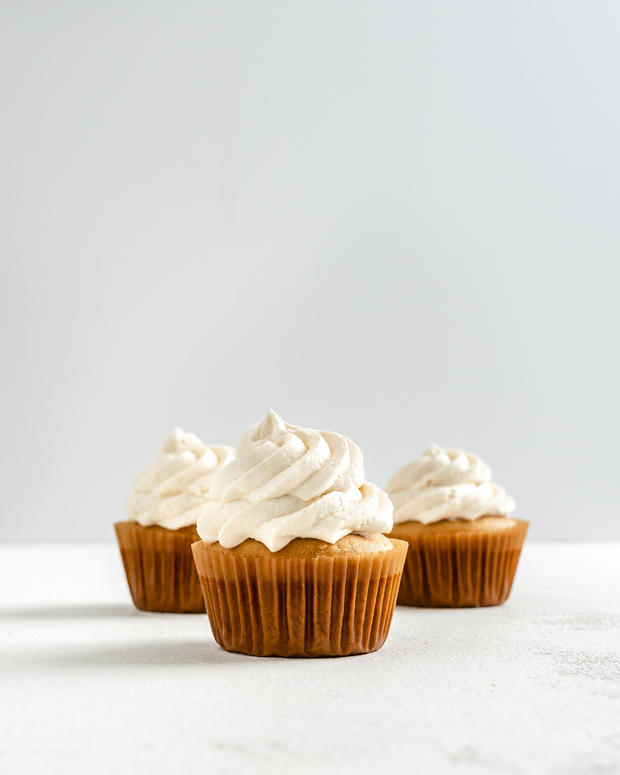
Depression-Era Vanilla Cupcakes

depression-era-vanilla-cupcakes.jpg
Toni Okamoto’s Depression-era vanilla cupcakes skip eggs and dairy for a budget-friendly dessert. 

Courtesy of Toni Okamoto


Makes 12 cupcakes | Ready in 45 minutes

As the name suggests, this type of cake dates back to the Great Depression, when many Americans couldn’t find or afford typical baking ingredients like eggs and butter and had to get creative with pantry staples. I’m all about minimalist baking, so when a simple recipe with easy-to-find ingredients comes along, I hold on to it and never let go.

Ingredients:
• 1 1/2 cups all-purpose or whole wheat flour
• 3/4 cup granulated sugar
• 1 teaspoon baking soda
• 1/2 teaspoon salt
• 2 teaspoons vanilla extract
• 1 teaspoon white or apple cider vinegar
• 1/4 cup + 1 tablespoon vegetable oil
• 1 cup water

Directions:
1. Preheat the oven to 350 degrees. Line a muffin tin with silicone or paper baking cups.
2. In the bowl of an electric mixer (or in a large bowl using a handheld electric mixer), mix together all the ingredients until smooth.
3. Fill each baking cup three-quarters full with batter.
4. Bake for 25 to 30 minutes, or until a toothpick inserted in the center comes out clean. Let the cupcakes cool completely before frosting. 

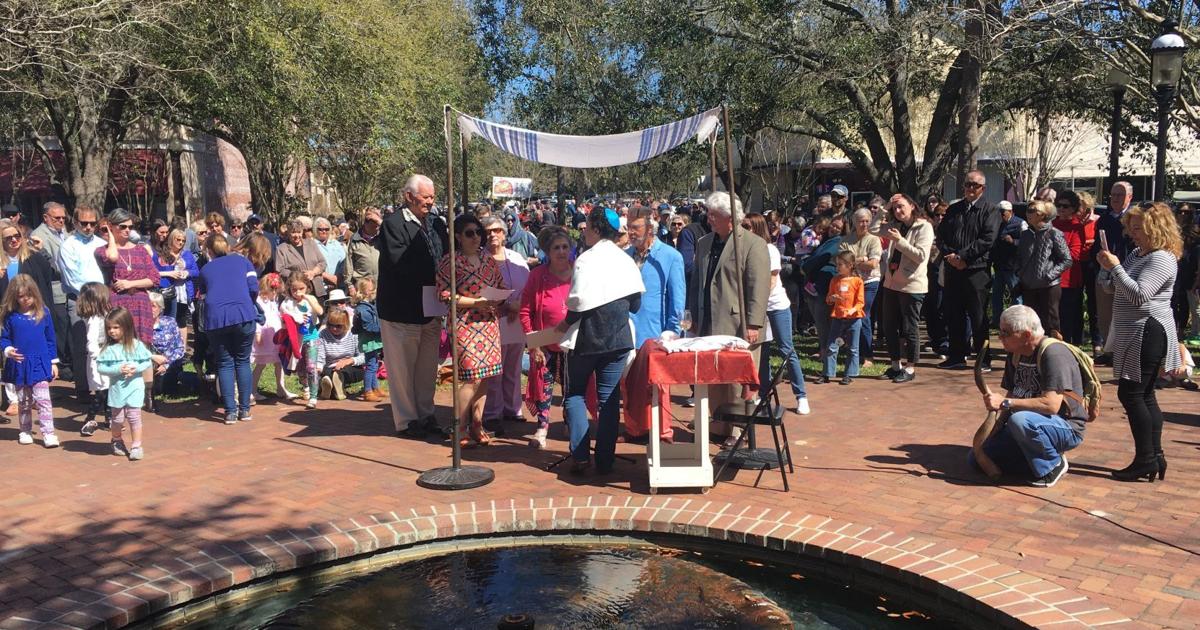
Jewish Food and Culture Festival to raise money for temple restoration | Life

Jewish Food and Culture Festival to raise money for temple restoration | Life

The best way to learn about another culture is to eat its food, says Carla Bluhm, one of the organizers of Sunday’s Jewish Food and Culture Festival in downtown Brunswick.

“This has been shown throughout history when immigrants have shared their cuisine with their towns and cities,” Bluhm said. “This is a great opportunity for us to share through the language of food more about Jewish life and culture.”

‘The Book of Jewish Food’ Tells the Story of Jewish Food and Jewish Life

‘The Book of Jewish Food’ Tells the Story of Jewish Food and Jewish Life

In 1981, at the Oxford Symposium on Food and Cookery, an annual gathering of some of the finest minds in the food world, the cookbook writer Claudia Roden, already famous for her authoritative first book, A Book of Middle Eastern Food, declared, “There is really no such thing as Jewish food.”

Because the Jewish God has a sense of humor, Roden shortly afterward embarked (at the suggestion of her British editor) on a new project about, yes, Jewish food. The Book of Jewish Food: An Odyssey from Samarkand and Vilna to the Present Day (the American edition is subtitled An Odyssey from Samarkand to New York) took 16 years to finish, plenty of time to consider the Jewish food question.

But, I hear you cry, isn’t it obvious? Bagels! Lox! Gefilte fish! The maddeningly complex laws of kashrut, which have been subject to debate for several millennia! Of course there is Jewish food!

Well, yes and no. There are entire communities of Jews, including the one in Cairo in which Roden grew up, who have never eaten bagels and lox. And not all Jews keep kosher. As Roden traveled the world talking to Jews about their food, she realized that everyone had their own personal idea of what made food Jewish. Jewishness isn’t a place. Jews move around too much for that. Jewishness is a state of mind, and Jewish food is often eaten in exile.

For Roden, Jewish food was the dishes her grandparents had brought to Egypt from Constantinople and Aleppo at the turn of the 20th century: kibbeh and little meat and spinach pies and a chicken soup called melokheya, named after the distinctive-smelling leafy green vegetable that floated in it. For a Jew in Samarkand, it would have been khalti barsh, rice mixed with meat and liver and cooked overnight in a linen bag, and for a Jew in Morocco, couscous with stuffed meatballs. Only an American or Canadian would consider bagels and lox central to Jewish cuisine, and they would argue with a Brit about the proper preparation of gefilte fish because in England, instead of serving the fish balls in cold jelly, they fry them. The only common denominator appears to be matzo, unleavened bread of affliction that’s eaten at Passover, and a cookbook devoted to that would be very short and unspeakably sad.

This lack of consensus is a very big problem for someone who is trying to write the definitive book on Jewish food.

At first, Roden thought she would collect every Jewish dish in every Jewish community in living memory, until she realized this quest would probably take her the rest of her life. So she decided to limit the book to the largest and best-known communities and select the very best she could find. She still ended up with 800 recipes.

Not all Jewish dishes are exclusive to Jews. Everybody in countries like Egypt, Lebanon, and Yemen eats falafel, for example. But Roden found that Jews tend to put their own twists on common regional foods to make them conform to the kosher laws, like using oil instead of butter. Sometimes, after leaving — or being expelled — from one country, they would bring their food to another, like the Yemeni Jews who brought a spicy relish from Arabia to Israel where they served it on falafel and therefore made falafel Jewish. Was this relish considered Jewish in Yemen? Would it have ever been served with falafel if not for the Jews?

Instead of trying to be completist or hand down definitive judgments, Roden decided — and this is the reason this book is wonderful — to put all these recipes back in the context in which they were first eaten by Jews. Food becomes a means of time travel. Even if there were no recipes at all, the descriptions of the Jewish communities of the past and what they ate would make the book worth reading.

The places she brings us are almost uniformly beautiful. Most of them no longer exist. Maybe they never did. Roden describes a series of tight-knit communities, some more prosperous than others, where people always keep the door open for their neighbors and an extra seat at the table for a stray visitor or someone going through a hard time. Friday night is a time to gather, to shake off the worries of the workweek and enjoy a glorious meal that took all day to prepare. Even the Eastern European shtetls, which I firmly believe are the source of much inherited trauma for American Jews, are bathed in this golden light. (The lone exception is America, the land of Crisco, difficult to romanticize because it still exists.) Roden did meticulous research, and the pictures she paints are beautifully detailed. But, like those Renaissance artists who gave Biblical characters the faces of people they knew, Roden is really telling the story of her own lost world.

The Zamalek neighborhood of Cairo, where Roden was born, was a close and cosmopolitan community where Jews mingled freely with their Muslim neighbors. They spoke French and ate Syrian food prepared by their Egyptian cooks. Roden’s relatives were all merchants; the family traveled to Europe for several months every year. At home, in the words of Roden’s father, “we spent our time on the balcony talking to passersby.”

In 1951, when she was 15, Roden left Egypt to go to boarding school in Paris, and then, three years later, to London to study painting at Central Saint Martins. In the fall of 1956, in the wake of the Suez Crisis and the failed invasion of Egypt by Israel, Britain, and France, the Egyptian president Gamal Adbel Nasser expelled all foreigners and Jews, some with as little as 24 hours’ notice. Roden’s parents, Nelly and Cesar Douek, joined her and her two brothers in London, and none of them saw Egypt again for 30 years.

In the immediate aftermath of the exodus, the Doueks’ North London home became a place for the exiles from Zamalek to gather. Many of them were passing through on their way to New York or Jerusalem or South America. They were all grieving. In Cairo, very few of them had cooked — everyone had servants — but they still had their family recipes. Roden would learn later on, once she started reading the work of anthropologists, that every family has its own culinary code. “In the selection of dishes,” she writes in the introduction to The Book of Jewish Food, “there is a logic that combines mythological, historic, and moral significance to create a symbol.” Those codes put a particular stamp on each family’s version of a dish. In Egypt, recipes were closely kept secrets. No one ever shared. But in exile, things were different.

“They were desperate,” Roden has recalled to multiple interviewers. “They would say, ‘Please, give me your recipe for that. It’ll be something I’ll remember you for because I might never see you again.’ And for most of those people, we never, ever saw them again. And those recipes were so precious, I found.”

She tells this story the same way every time because it is her origin story. After a while, she began collecting recipes from outside her family’s immediate social circle. She would go to places like carpet stores and the Iranian embassy and ask random people. This has remained her method throughout her life. People always give them to her. No one has ever gotten angry at her for publishing them. Quite often, she gets multiple recipes for the same dish. The Book of Jewish Food is full of variations: This is how the Syrians make it, and this is how the Iranians do it, and this is how you would have found it in Thessaloniki before World War II, when it was still called Salonika.

Roden’s quest for more recipes eventually took her to the British Museum in search of Arab cookbooks. The only ones she could find were from the Middle Ages. She also found a Ph.D. dissertation about a 13th-century cooking manual from what is now Lebanon. It explored not just how to prepare food but also what the food said about the society: which class of people was eating these dishes and which class of people was preparing them and the trade routes that made foreign ingredients available. For Roden, it was an epiphany. “I just realized how food can tell you so much,” she recalled later.

In The Book of Jewish Food, Roden divides the Jewish world into two cultures: the Ashkenazi of Eastern Europe, and the Sephardi of Mediterranean Europe, North Africa, India, and Southwest and Central Asia. (These non-European Jews are also often referred to as Mizrahi.) The two cultures speak differently, pray differently, and eat vastly different food. Although Roden has by now lived most of her life among the Ashkenazim (including marriage to, and then divorce from, a British Jew of Russian descent), she is still very much Sephardi.

Sephardic recipes take up two-thirds of The Book of Jewish Food, and while Roden makes an effort to give Ashkenazi food its due, her heart is clearly not in it: In a New Yorker profile, the writer Jane Kramer points out to Roden that her matzo balls are a spectacular failure (no seltzer water!) and Roden shrugs and “admit[s] to having been less than discerning when it came to some of the Ashkenazi dishes.” In the section on fish, you can almost hear Roden gloat when she shares her discovery that fish and chips, the most beloved food of her adopted country, was not, in fact, invented by an Eastern European Jew, as was widely believed, but brought to London much earlier by Portuguese Jewish immigrants.

This focus on Sephardic food was quite novel in the English-speaking world in 1996 when the book was first published. But in the past quarter-century, Roden’s disciples, notably Yotam Ottolenghi in England and Michael Solomonov in the U.S., have made many converts. At this point, with the slow and painful death of the Jewish deli and the realization that schmaltz, the central fat of Ashkenazi cuisine, can actually kill you, there are probably more Jews eating eggplant, yogurt, and falafel than pastrami.

The overall experience of cooking from The Book of Jewish Food is less like a lesson from your bubbe or your aunties, the way cooking (allegedly) used to be, and more like a choose-your-own-adventure. With 800 recipes, who has time for hand-holding? This can get challenging when you are making a dish you have never seen or even heard of before, especially if you’re a nervous cook like I am.

I did not attempt the kibbeh, even with the aid of YouTube tutorials. Roden writes that it was “the standard by which once upon a time women were judged,” and the pressure was too much. I also did not attempt any of the many pies because, according to Roden, you can’t make just a few, you have to make dozens, and doing it solo instead of with a kitchen full of friends and relatives makes one tend to feel lonesome and sorry for oneself.

I did make anjuli, a cold fish and potato salad from India, because Roden is very enthusiastic and persuasive about the Indian recipes she’s collected. It had a delicate flavor, and now I think coconut milk is a very underrated ingredient in fish salads. The Sephardi rice pudding, which I made the Egyptian way (baked until it developed a brown crust, like the top of a Portuguese egg tart) and then the Spanish way (unbaked and flavored with vanilla and lemon zest), was also very good.

Rice pudding, as it happens, was one of the dishes Roden ate when she finally returned to Cairo after years of exile. It was in a tiny dairy in Sakakini, the neighborhood where her parents had been born, and after she told this to the shopkeeper, he told her the pudding was on the house. That pudding welcomed her home. Was I tasting it now in Chicago in 2023? I didn’t think so — I had been slightly confused by the recipe and I’m quite sure the rice and milk I used had a different flavor. Plus I was eating it standing in my kitchen, not outdoors at a little table staring up at an old palace. Context is everything.

But I could still flip open the book to the description of old Cairo and I could read and imagine the smells of sizzling garlic and crushed coriander seeds with an overlay of rosewater, the domes and minarets, the courtyards behind metal grilles, and the sound of voices from the balcony, the family chatting with the passersby.

Aimee Levitt is a freelance writer in Chicago.