Thanks to an unusual friendship, on March 21, 100 attendees at the Arthur M. Blank Family Foundation in Buckhead tasted some recipes at a Food and Family Ties: Honor Holocaust Memory Through Rescued Recipes dinner. The $1,000-per-person event was a fundraiser for the Museum’s Rubenstein National Institute for Holocaust Documentation, which is responsible for preserving Holocaust artifacts, such as the Fenves family recipe book.
In 2018, James Beard Award-winning Chef Alon Shaya learned about the Fenves family relic at the Holocaust Museum. Since visiting Yad Vashem in Jerusalem, Shaya had been thinking about Holocaust survivors who wrote recipes from memory on scraps of cloth while in concentration camps and the ways that memories of food sustained people. When Shaya learned that Steven was a frequent volunteer with the museum in D.C., he realized it was an opportunity to work one-on-one with someone with a connection to those recipes.
Credit: Courtesy of Andrew Thomas Lee for U.S. Holocaust Memorial Museum.
Credit: Courtesy of Andrew Thomas Lee for U.S. Holocaust Memorial Museum.
Shaya asked Steven to translate the handwritten recipes. (Subotica was on the Hungarian/Yugoslavia border, where Steven says, “even the dogs barked in two languages.” The Fenves family spoke Hungarian and German at home.) He agreed, and worked off a high-resolution copy, as the original, with its embossed cover, is fragile.
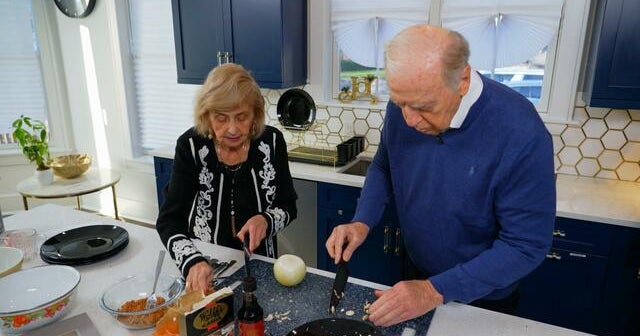
Then, the coronavirus pandemic happened, and the project moved to videoconferencing. In New Orleans, Shaya cooked and sent Fenves dishes, packed in dry ice, that they would discuss over Zoom. Steven gave the chef feedback, and Shaya refined. Steven told Shaya that his favorite dish (both then and now) was semolina sticks that looked like fish sticks. Shaya concocted a Cream of Wheat-type paste and shaped them. Guests at the dinner happily took seconds and thirds of the snack, which was crispy on the outside and gooey on the inside and included an artful dollop of mustard.
Credit: Courtesy of Andrew Thomas Lee for U.S. Holocaust Memorial Museum.
Credit: Courtesy of Andrew Thomas Lee for U.S. Holocaust Memorial Museum.
In addition to the semolina sticks, guests ate potato circles with mushrooms and thyme, a recipe that uses mashed potatoes in a dough. This dish, which Steven remembers as something served when the adults entertained, was also one that Atlanta guests returned to for second helpings. Other dishes included: mushroom paprikash with sour cream; duck liver pate with rye crackers and fig jam; and small dates stuffed with radishes, saffron and scallions. The dessert station was stacked with walnut cream cake, poppy seed pinwheel and apple tart. The evening’s program included copies of a few recipes for folks to try at home.
The Atlanta dinner is one of eight Rescued Recipe dinners the museum is hosting across the country. So far the initiative has raised about $300,000 of its $1 million goal.
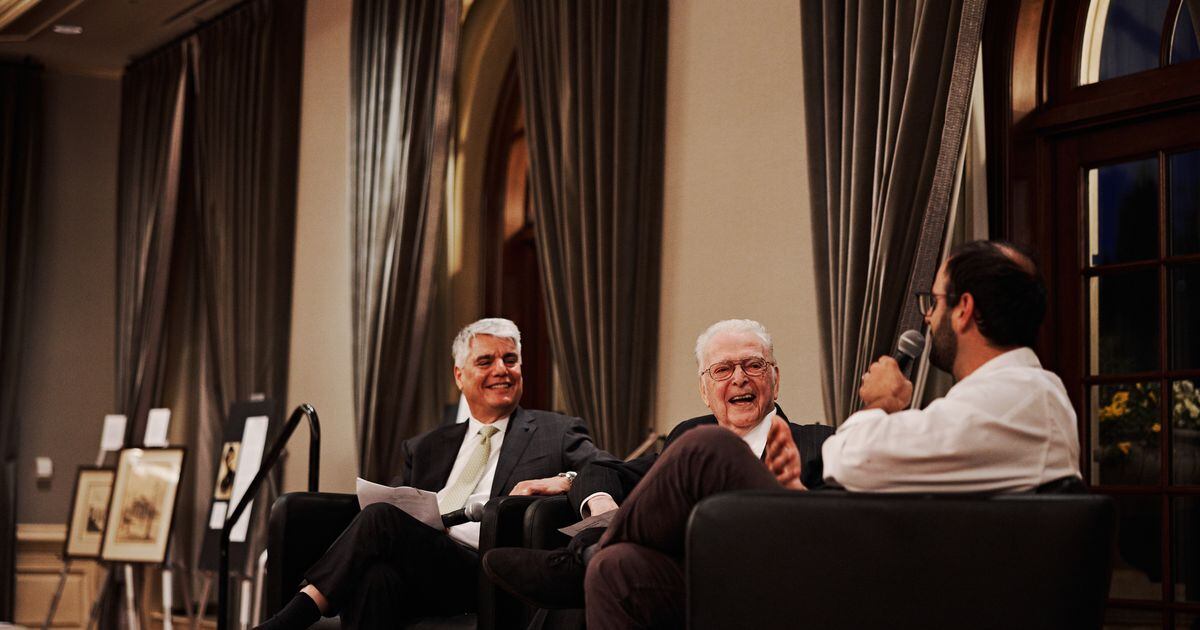
Steven’s son, Gregory L. Fenves, is the president of Emory University (and the first Jewish president of the school). This gave the Atlanta event some elements not available at the other dinners. Steven is not traveling to all of the dinners, but was able to be on stage in Atlanta, in a discussion moderated by Gregory. Because some of Klara’s art hangs in Lullwater House, it was available to display to guests, who got to see up-close what Maris hid all those years.
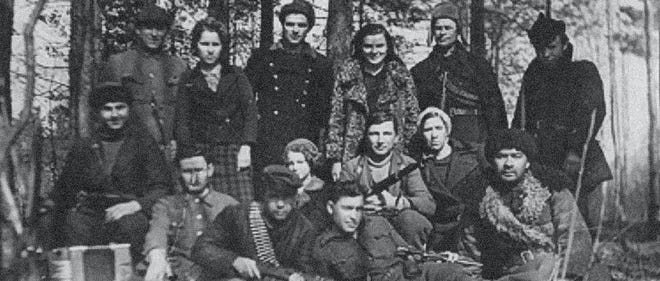
“This is an absolutely fascinating story. The story of survival. It is a story of a righteous Gentile. Maris risked her life just to keep a recipe book and 200 pieces of art, and that she was able to find the family after the war,” says Jed Silberg, the museum’s national philanthropy officer. “It’s incumbent upon us at the museum to preserve and tell the story. We do it for Steven. We do it for every survivor, and it’s important for the future, so that Steven’s past isn’t anyone else’s future.”
For as often as Steven and Shaya have worked together, they discover new things each time they share with others. On the stage with his son and Shaya, Steven recounted how his desire to educate about the Holocaust has ebbed and flowed over the years. He wasn’t actively sharing when Shaya reached out.
“It was a period of painful dormancy. I stopped using my voice,” Steven says to Shaya. “So, I owe you for getting me back to my own story.”
“I had not heard that before. And it makes me feel important. It makes me feel like it was the right thing to do,” Shaya says. “We’re doing more than just cooking food. We’re giving each other purpose.”
For the previous 20 yrs, the Savannah Jewish Federation (SJF) has hosted a movie competition working with the themes of Jewish society. Still, post-COVID, strides have been made to evolve the notion to contain far more than just movies. As a consequence, the Jewish Cultural Arts Pageant hosts a myriad of other occasions as properly, like comedy demonstrates, art receptions, cooking courses, and much more.
Flicks are however a massive aspect of the pageant. In point, this thirty day period currently kicked off with a motion picture for the opening evening reception. In addition to displaying artwork from local Jewish artists, The Jewish Educational Alliance heart hosted the movie “Four Winters,” which informed the story of the younger surviving Jewish partisans who fought the Nazis and their allies deep in just European traces.
But for those who missed the reception, the Cultural Arts Competition features substantially far more films.
Each Thursday, a Food stuff for Believed movie sequence is hosted at 12:30, that includes distinctive films orbiting close to the themes of Jewish culture. “We had a single identified as Israel swings for Gold,” stated SJF Arts and Tips Coordinator Katie Griffith. “It was the tale of the athletes of an Israel baseball crew heading and participating in in the Olympics. And this Thursday, we are participating in ‘The Barn.’ It is a documentary by a girl named Rachel Casper, who was helping tell the story of her grandfather, a Holocaust survivor.”
These film nights will also be joined with a meal for the family members to appreciate. Meals these as lentil shepherd’s pie or even meatless Bolognese.
The following two Fridays, the SJF will be showing small films on Shabbat, a working day when the Jewish neighborhood physical exercises their freedoms by taking a crack from the labors of daily life. “The films by themselves are extremely believed-provoking,” mentioned Griffith. “The 1st week’s topic was about relatives and what unique families appeared like in just the Jewish lens. And then also previous week, we experienced a movie working with the themes of id.”
These shorts will be hosted at Chai’s Coffee Bar. Coffee for the occasion will be absolutely free to the audience.
On March 27, Tzilla Lamberger teams up with the SJF to host a Jewish-themed cooking class. For the class, she will be instructing her viewers how to cook regular Israeli vegetarian food items. Members will check out the chef extraordinaire in motion and be authorized to cook dinner together with her and, of study course, take in what they prepare dinner when it really is all reported and done.
The JAE cautiously prepared a lot of of these films the cultural arts competition shows to assist greatest clearly show the unique elements of Jewish lifestyle. “Savannah is a extremely smaller city, but there are very massive Jewish Movie festivals during the nation,” explained SJF Main Running Officer Jamie Richman. “And so we really depend on their skills. And we see what they are showing at all of their festivals, what the hottest Jewish videos are, and check out to get whichever the most effective readily available.”
“There are quite a few unique themes managing all over the month,” Richman claimed. “We didn’t actually want it to be just a ‘one-note’ we needed to have a thing for every person. We have every little thing from comedies to adore tales to documentaries. There is certainly a good deal of distinct points playing.”
Community partnership activities will be held every Sunday, such as the forthcoming Jewish Academic Alliance’s Open Home on March 19, or the Jewish Comedy Night At Entrance Porch Improv on March 26.
A lot of work was place into ensuring this party permitted absolutely everyone to see what the Jewish local community is about. “The Jewish neighborhood is possibly a person of the oldest, if not the oldest communities that, you know, basically served launched Savannah,” stated Griffith. “You will find so a great deal rich record in this article, and we’re just seeking to share that with the community. Generally, open it up and enable people know that everyone’s invited, everyone’s provided. There’s just so quite a few superior matters that I believe we are just trying to permit men and women delight in and, you know, consider edge of, together with the videos, the comedies, the cooking, the creating, and the artists. We want to emphasize and celebrate that.”
The Jewish Cultural Arts Competition is a need to-see party for the Jewish local community in Savannah. But not all events are cost-free. For the occasions you do have to fork out for, tickets can be bought on the Savannah Jewish Federation web-site.
The event will very last right up until the end of the month and is completely open to the general public. For more info, speak to the SJF at 912-355-8111 or e mail artsandideas@savj.org or go to savj.org.
The best way to learn about another culture is to eat its food, says Carla Bluhm, one of the organizers of Sunday’s Jewish Food and Culture Festival in downtown Brunswick.
“This has been shown throughout history when immigrants have shared their cuisine with their towns and cities,” Bluhm said. “This is a great opportunity for us to share through the language of food more about Jewish life and culture.”
The festival is happening from noon to 3 p.m. this Sunday in Brunswick’s Jekyll Square on Newcastle Street.
The band Klezmer Local 42 from Athens will make a trip down to play the event, Bluhm said, and the public is welcome to enjoy a wide variety of traditional Jewish food and learn about the culture. Proceeds will go toward renovations to Temple Beth Tefilloh, which is nearing 135 years of active use.
“We want everyone to try traditional Jewish foods, most of which is made by people in the congregation,” Bluhm said. “One of our members is making a lot of matzah balls and chicken soup. A lot of women in the congregation are making kugel, we have a couple of people making knish.”
That’s only a small selection of the food on offer, which also includes some Mediterranean salads and bagels with lox, or salmon. Temple Beth Tefilloh’s Rabbi Rachael Bregman said she’s bringing something close to rugelach, which she described as “thumbprint cookies meet croissant.”
Ingredient lists will also be available at every table for those with dietary restrictions. Further, Bregman said good safety is a key part of this festival.
“In light of COVID, our consciousness about food safety and germs has been heightened. So you can expect pre-wrapped food items, so the touching of food is reduced,” she said. “We also think this will move our lines more quickly. When you’re plating each serving, it takes a long time, so this helps and keeps us all healthy.”
The event will also feature a traditional wedding ceremony for a couple renewing their vows — Bregman’s parents.
Kids won’t be left out, Bluhm said, as the temple will also show kids some of the fun activities associated with the holiday of Purim. They’ll get to take play some games and win prizes related to Jewish culture, Bluhm said.
“It’s a new piece for us, this part of the food festival, and it’s part of a larger effort in the community to engage children more, because we are seeing an influx of kids,” said Bregman.
The Purim education piece could also be viewed as a preview for another initiative at the temple — a school for non-Jewish children who want to learn about Jewish Hebrew culture, or whose parents want them to learn. She said the school is opening in a matter of months.
This festival also serves a double purpose as a food drive, Bregman said. The temple invites everyone to bring canned goods to donate.
“If we’re going to have a Jewish food and cultural festival, then we felt it was really important to emphasize some of the key elements of Jewish values. Feeding the hungry is a critical beat,” Bregman said. “And there’s a food overlap with Purim. You give gifts to your friends and to the poor on Purim. By bringing canned goods, we’re both of those marks.”
It’s just a really fun, family friendly time, Bluhm said. She’s a professor and not so much an event planner, but the congregation’s conversations around food, childhood memories and family traditions have been fun. She’s also taken charge of making sure every stall and table has some educational information for the public.
“I need people to puppet me through it. It’s been amazing, the congregation coming together for this and making the food,” Bluhm said.
Restoring the old temple is a big job for a small congregation, Bluhm said.
Mason Stewart is a member of the congregation with a deep knowledge of the temple’s history. It’s extremely important to them, he said, to make sure these renovations and upgrades aren’t a detriment to the building’s historic aspects.
A group of 21 Jewish men came together to found the congregation in 1886, Stewart said, with the temple’s completion coming four years later in 1890.
Temple Beth Tefilloh was designed by famed architect Alfred Eichberg, perhaps the most well-known Jewish architect at the time, Stewart said, at least in the South. Eichberg also designed Brunswick’s Old City Hall; Glynn Academy Annex, intended to replace the original wood school building; and Brunswick Manor, a bed and breakfast in the city’s historic residential district.
Once the temple was complete, Stewart said it was dedicated by Isaac Mayer Wise, the father of American Reform Judaism, followed by a massive party at the Oglethorpe Hotel attended by a who’s who of names at the time.
It’s a rich history that the congregation is very concerned with preserving, he added.
“The major thing is we’re going to add an exit up near the front, we did a security study and because of when the temple was constructed, even though there’s a small door at the front, it’s not adequate in the case of an emergency,” Stewart said. “… If there’s a fire in the foyer, it would block the only reasonable exit, especially for older folks.”
Because of the temple’s historic nature, Stewart said the congregation is working with historic architecture experts and preservationists to avoid hurting that value.
Anyone interested in hearing more can stop by the temple during the festival to listen to an informal talk from Stewart.
“I love how this brings together so many people in the congregational community and the Glynn County community,” Bregman said. “We really value creating spaces where people from all over our community can come together. There aren’t a lot of them.”
In 1981, at the Oxford Symposium on Food and Cookery, an annual gathering of some of the finest minds in the food world, the cookbook writer Claudia Roden, already famous for her authoritative first book, A Book of Middle Eastern Food, declared, “There is really no such thing as Jewish food.”
Because the Jewish God has a sense of humor, Roden shortly afterward embarked (at the suggestion of her British editor) on a new project about, yes, Jewish food. The Book of Jewish Food: An Odyssey from Samarkand and Vilna to the Present Day (the American edition is subtitled An Odyssey from Samarkand to New York) took 16 years to finish, plenty of time to consider the Jewish food question.
But, I hear you cry, isn’t it obvious? Bagels! Lox! Gefilte fish! The maddeningly complex laws of kashrut, which have been subject to debate for several millennia! Of course there is Jewish food!
Well, yes and no. There are entire communities of Jews, including the one in Cairo in which Roden grew up, who have never eaten bagels and lox. And not all Jews keep kosher. As Roden traveled the world talking to Jews about their food, she realized that everyone had their own personal idea of what made food Jewish. Jewishness isn’t a place. Jews move around too much for that. Jewishness is a state of mind, and Jewish food is often eaten in exile.
For Roden, Jewish food was the dishes her grandparents had brought to Egypt from Constantinople and Aleppo at the turn of the 20th century: kibbeh and little meat and spinach pies and a chicken soup called melokheya, named after the distinctive-smelling leafy green vegetable that floated in it. For a Jew in Samarkand, it would have been khalti barsh, rice mixed with meat and liver and cooked overnight in a linen bag, and for a Jew in Morocco, couscous with stuffed meatballs. Only an American or Canadian would consider bagels and lox central to Jewish cuisine, and they would argue with a Brit about the proper preparation of gefilte fish because in England, instead of serving the fish balls in cold jelly, they fry them. The only common denominator appears to be matzo, unleavened bread of affliction that’s eaten at Passover, and a cookbook devoted to that would be very short and unspeakably sad.
This lack of consensus is a very big problem for someone who is trying to write the definitive book on Jewish food.
At first, Roden thought she would collect every Jewish dish in every Jewish community in living memory, until she realized this quest would probably take her the rest of her life. So she decided to limit the book to the largest and best-known communities and select the very best she could find. She still ended up with 800 recipes.
Not all Jewish dishes are exclusive to Jews. Everybody in countries like Egypt, Lebanon, and Yemen eats falafel, for example. But Roden found that Jews tend to put their own twists on common regional foods to make them conform to the kosher laws, like using oil instead of butter. Sometimes, after leaving — or being expelled — from one country, they would bring their food to another, like the Yemeni Jews who brought a spicy relish from Arabia to Israel where they served it on falafel and therefore made falafel Jewish. Was this relish considered Jewish in Yemen? Would it have ever been served with falafel if not for the Jews?
Instead of trying to be completist or hand down definitive judgments, Roden decided — and this is the reason this book is wonderful — to put all these recipes back in the context in which they were first eaten by Jews. Food becomes a means of time travel. Even if there were no recipes at all, the descriptions of the Jewish communities of the past and what they ate would make the book worth reading.
The places she brings us are almost uniformly beautiful. Most of them no longer exist. Maybe they never did. Roden describes a series of tight-knit communities, some more prosperous than others, where people always keep the door open for their neighbors and an extra seat at the table for a stray visitor or someone going through a hard time. Friday night is a time to gather, to shake off the worries of the workweek and enjoy a glorious meal that took all day to prepare. Even the Eastern European shtetls, which I firmly believe are the source of much inherited trauma for American Jews, are bathed in this golden light. (The lone exception is America, the land of Crisco, difficult to romanticize because it still exists.) Roden did meticulous research, and the pictures she paints are beautifully detailed. But, like those Renaissance artists who gave Biblical characters the faces of people they knew, Roden is really telling the story of her own lost world.
The Zamalek neighborhood of Cairo, where Roden was born, was a close and cosmopolitan community where Jews mingled freely with their Muslim neighbors. They spoke French and ate Syrian food prepared by their Egyptian cooks. Roden’s relatives were all merchants; the family traveled to Europe for several months every year. At home, in the words of Roden’s father, “we spent our time on the balcony talking to passersby.”
In 1951, when she was 15, Roden left Egypt to go to boarding school in Paris, and then, three years later, to London to study painting at Central Saint Martins. In the fall of 1956, in the wake of the Suez Crisis and the failed invasion of Egypt by Israel, Britain, and France, the Egyptian president Gamal Adbel Nasser expelled all foreigners and Jews, some with as little as 24 hours’ notice. Roden’s parents, Nelly and Cesar Douek, joined her and her two brothers in London, and none of them saw Egypt again for 30 years.
In the immediate aftermath of the exodus, the Doueks’ North London home became a place for the exiles from Zamalek to gather. Many of them were passing through on their way to New York or Jerusalem or South America. They were all grieving. In Cairo, very few of them had cooked — everyone had servants — but they still had their family recipes. Roden would learn later on, once she started reading the work of anthropologists, that every family has its own culinary code. “In the selection of dishes,” she writes in the introduction to The Book of Jewish Food, “there is a logic that combines mythological, historic, and moral significance to create a symbol.” Those codes put a particular stamp on each family’s version of a dish. In Egypt, recipes were closely kept secrets. No one ever shared. But in exile, things were different.
“They were desperate,” Roden has recalled to multiple interviewers. “They would say, ‘Please, give me your recipe for that. It’ll be something I’ll remember you for because I might never see you again.’ And for most of those people, we never, ever saw them again. And those recipes were so precious, I found.”
She tells this story the same way every time because it is her origin story. After a while, she began collecting recipes from outside her family’s immediate social circle. She would go to places like carpet stores and the Iranian embassy and ask random people. This has remained her method throughout her life. People always give them to her. No one has ever gotten angry at her for publishing them. Quite often, she gets multiple recipes for the same dish. The Book of Jewish Food is full of variations: This is how the Syrians make it, and this is how the Iranians do it, and this is how you would have found it in Thessaloniki before World War II, when it was still called Salonika.
Roden’s quest for more recipes eventually took her to the British Museum in search of Arab cookbooks. The only ones she could find were from the Middle Ages. She also found a Ph.D. dissertation about a 13th-century cooking manual from what is now Lebanon. It explored not just how to prepare food but also what the food said about the society: which class of people was eating these dishes and which class of people was preparing them and the trade routes that made foreign ingredients available. For Roden, it was an epiphany. “I just realized how food can tell you so much,” she recalled later.
In The Book of Jewish Food, Roden divides the Jewish world into two cultures: the Ashkenazi of Eastern Europe, and the Sephardi of Mediterranean Europe, North Africa, India, and Southwest and Central Asia. (These non-European Jews are also often referred to as Mizrahi.) The two cultures speak differently, pray differently, and eat vastly different food. Although Roden has by now lived most of her life among the Ashkenazim (including marriage to, and then divorce from, a British Jew of Russian descent), she is still very much Sephardi.
Sephardic recipes take up two-thirds of The Book of Jewish Food, and while Roden makes an effort to give Ashkenazi food its due, her heart is clearly not in it: In a New Yorker profile, the writer Jane Kramer points out to Roden that her matzo balls are a spectacular failure (no seltzer water!) and Roden shrugs and “admit[s] to having been less than discerning when it came to some of the Ashkenazi dishes.” In the section on fish, you can almost hear Roden gloat when she shares her discovery that fish and chips, the most beloved food of her adopted country, was not, in fact, invented by an Eastern European Jew, as was widely believed, but brought to London much earlier by Portuguese Jewish immigrants.
This focus on Sephardic food was quite novel in the English-speaking world in 1996 when the book was first published. But in the past quarter-century, Roden’s disciples, notably Yotam Ottolenghi in England and Michael Solomonov in the U.S., have made many converts. At this point, with the slow and painful death of the Jewish deli and the realization that schmaltz, the central fat of Ashkenazi cuisine, can actually kill you, there are probably more Jews eating eggplant, yogurt, and falafel than pastrami.
The overall experience of cooking from The Book of Jewish Food is less like a lesson from your bubbe or your aunties, the way cooking (allegedly) used to be, and more like a choose-your-own-adventure. With 800 recipes, who has time for hand-holding? This can get challenging when you are making a dish you have never seen or even heard of before, especially if you’re a nervous cook like I am.
I did not attempt the kibbeh, even with the aid of YouTube tutorials. Roden writes that it was “the standard by which once upon a time women were judged,” and the pressure was too much. I also did not attempt any of the many pies because, according to Roden, you can’t make just a few, you have to make dozens, and doing it solo instead of with a kitchen full of friends and relatives makes one tend to feel lonesome and sorry for oneself.
I did make anjuli, a cold fish and potato salad from India, because Roden is very enthusiastic and persuasive about the Indian recipes she’s collected. It had a delicate flavor, and now I think coconut milk is a very underrated ingredient in fish salads. The Sephardi rice pudding, which I made the Egyptian way (baked until it developed a brown crust, like the top of a Portuguese egg tart) and then the Spanish way (unbaked and flavored with vanilla and lemon zest), was also very good.
Rice pudding, as it happens, was one of the dishes Roden ate when she finally returned to Cairo after years of exile. It was in a tiny dairy in Sakakini, the neighborhood where her parents had been born, and after she told this to the shopkeeper, he told her the pudding was on the house. That pudding welcomed her home. Was I tasting it now in Chicago in 2023? I didn’t think so — I had been slightly confused by the recipe and I’m quite sure the rice and milk I used had a different flavor. Plus I was eating it standing in my kitchen, not outdoors at a little table staring up at an old palace. Context is everything.
But I could still flip open the book to the description of old Cairo and I could read and imagine the smells of sizzling garlic and crushed coriander seeds with an overlay of rosewater, the domes and minarets, the courtyards behind metal grilles, and the sound of voices from the balcony, the family chatting with the passersby.
Holocaust survivors produce cookbook to share Jewish recipes, tales of perseverance
07:17
At 84-yr-outdated Tova Friedman’s dwelling, a few generations get all around a eating room desk for Shabbat meal.
It is a desire that Friedman never ever imagined possible as a five-yr-outdated in Auschwitz-Birkenau concentration camp in Nazi-occupied Poland, the place 1.1 million people today died.
Friday marks 78 a long time because the liberation of Auschwitz.
Eugene Ginter expended his initially 6 decades of lifestyle in the similar extermination camp. The sights and seems of genocide have remaining a permanent mark on both Friedman and Ginter.
Immediately after liberation in 1945, Friedman and Ginter settled in the United States and have been building their lives by means of the households they’ve developed.
They are also passing on traditions to new generations by having their Jewish recipes showcased in the new cookbook, “Honey Cake & Latkes: Recipes from the Old Earth.”
The two 1st satisfied whilst doing work on the reserve, which pairs additional than 100 Holocaust survivors’ stories and features their household recipes.
“Foods, it reminds you of your family members and the really like, like the cheesecake or the babka that my mother would make. You know, it delivers back the recollections of the appreciate that she was transferring,” Ginter said.
Among the the recipes is Ginter’s mother’s “chocolate sandwich” which his mom created for him to assistance him acquire body weight right after liberation. Friedman’s kasha varnishkes are also featured.
First-hand accounts of Auschwitz are turning into scarce as the yrs go by and survivors increase older. Friedman and Ginter know their stories will quickly fade but their hope is that the lessons acquired from these types of an atrocity will not.
“My story can be duplicated by a million and a 50 {d2b09b03d44633acb673e8080360919f91e60962656af8ade0305d5d8b7e4889} youngsters who had been murdered. I was just blessed. I sense just about obligated to speak about them. It truly is like I am bringing them again from their ashes mainly because I signify them,” Friedman stated.
The book was released past September by the Auschwitz-Birkenau Memorial Foundation. All proceeds go instantly to the foundation.
Jericka Duncan
Jericka Duncan is a nationwide correspondent centered in New York City and the anchor for Sunday’s edition of the “CBS Weekend Information.”
Thanks for reading through CBS Information.
Build your cost-free account or log in for far more characteristics.
STACKER (WSYR-TV) — Jewish cuisine has long been influential in the U.S. and global food culture. Diaspora brought traditional Jewish foods across the world.
Over centuries and continents, Jewish foods became part of the places Jews have migrated, just as diverse and rich regional foodways have shaped the evolution and reinterpretation of Jewish food.
Because Ashkenazi Jews (of the Eastern European diaspora) make up most of the Jewish population in the U.S., many familiar Jewish favorites among American Jews and non-Jews hail from Russia, Poland, Germany, and the rest of Central and Eastern Europe.
Less ubiquitous but just as delicious is Sephardi cuisine, which encompasses foods of the Spanish diaspora in North Africa, the Middle East, and the Mediterranean.
In honor of Hanukkah beginning Sunday, December 18, and for eating experiences that can be enjoyed year-round, Stacker compiled a list of 14 global Jewish holiday recipes.
Recipes and their histories were sourced from Allrecipes.com, news reports, Jewish historical sites, and Jewish recipe developers.
Read on to find classic recipes or to discover a new dish or two.
1. Latkes
Credit: Getty
The iconic Hanukkah food is beloved by Jews and non-Jews alike (as most forms of fried potatoes are). But latkes were not always made using potatoes.
After the expulsion of Jews from Sicily in the late 1400s, their traditional fried ricotta pancakes spread to northern Italy. It was only in Eastern Europe in the mid-1800s, after a surplus crop of potatoes, that potato latkes became the fritter of choice for Ashkenazi Jews.
Whether grating the potatoes and onions by hand or using a food processor to cut down on prep time, these latkes fit the bill when topped with applesauce, sour cream, or lox.
A staple at the Passover table and your local diner alike, matzo ball soup is easy to make using matzo ball mix and a few pantry ingredients.
The soup is greatly improved by making a comforting, from-scratch chicken soup or your favorite hearty vegetable stock.
Originally made from the leftover crumbs of matzo, Central and Eastern European Jews made “knoedel.” In the 1930s, Manischewitz began selling matzo ball mix in the U.S., reportedly under the name “Alsatian feathery balls.”
There are few things more enjoyable than a warm, freshly baked challah.
Usually intricately braided with a shiny browned outside, challah is a soft and fluffy egg-based bread, mildly sweet from honey or sugar, that is typically served on Shabbat or with other holiday meals.
Try this challah smeared with butter and drizzled with honey, made into french toast, or used as a sponge for brisket.
Hamantaschen are triangular cookies traditionally made on Purim, and are usually filled with preserves, poppyseeds, prunes or dates, or even chocolate spread.
The shape of the cookie is, like many Jewish foods, symbolic in nature. Most people believe that the triangle mimics the shape of the hat worn by Haman, the villain of the Purim story.
They can be made dairy-free, although some prefer swapping out the vegetable oil with butter for a richer dough.
The cookies are formed by cutting out circles of dough, placing a dollop of your preferred filling in the center, and folding over three sides to form the quintessential three-cornered shape.
Chraime is a Sephardic dish of fish stewed in a spicy tomato sauce made by Jews in North Africa
and the Middle East for Passover, Shabbat, and other holidays.
The name “chraime” comes from the Arabic word for “hot,” though spice levels can be adjusted according to personal taste and availability of chilis.
This recipe blends paprika and cayenne with olive oil and tomatoes, and is stewed for an hour at low heat, making it a relatively easy centerpiece dish without a lot of prep or active cook time.
A singularly comforting Passover and Rosh Hashanah dish, brisket has been an important staple in festive Jewish meals for generations.
In Eastern Europe, brisket was considered by non-Jews to be a less desirable cut of meat, due to its toughness if not cooked over a long period of time.
However, the kosher cut’s lengthy preparation time was not a deterrent for Jews, who could begin cooking the brisket 24 to 48 hours prior to Shabbat or other holidays.
This version of brisket is braised in red wine, herbs, and beef stock for a deep, full-bodied flavor.
Noodle kugel, otherwise known as lokshen kugel, is a light, sweet, and dairy-filled egg noodle
casserole often served on Shabbat or other holidays.
Jewish food historian and recipe developer Joan Nathan writes in “The Jewish Holiday Kitchen” that lokshen kugel originated in Eastern Europe, where it was considered the “official Sabbath dessert.”
It was often baked at the same time as the cholent, or Shabbat stew, which would result in a moister kugel.
This noodle kugel recipe combines sugar with four types of dairies to form a basic foundational kugel; however, it can be dressed up with the addition of raisins, spices, pineapple, or any other dried fruit or nuts.
Fried foods reign supreme on Hanukkah, paying homage to the miracle of the small amount of oil that lit the ancient Temple in Jerusalem for eight days and nights.
Sufganiyot, or round jelly doughnuts, emerged in 1400s Germany, and then spread to Poland and to the rest of the world, where they were designated an official food of Hanukkah in the 1920s.
Making sufganiyot at home is a bit of a project, in part because of the yeasted dough, which rises overnight in the refrigerator, and partially because of the deep-frying.
For the ambitious or committed doughnut lover, however, fresh sufganiyot filled with preserves or sweet cheese cannot be beat.
Like most of the foods on the Passover seder table, charoset is highly symbolic.
Credit: Getty
The chutney-like mixture is usually comprised of fruits, nuts, spices, wine, and honey, but varies regionally.
Ashkenazi Jews in the U.S. typically make an apple and walnut-based charoset, while Sephardi charoset recipes vary greatly, utilizing different combinations of dates, figs, raisins, pine nuts, citrus, and chestnut paste, depending on what is available geographically.
While interpretations of the meaning of charoset vary, the condiment is generally thought to represent the mortar the Jews used to build the pharaohs’ buildings in ancient Egypt.
Stuffed cabbage or vine leaves is a food that is widely dispersed across the Jewish diaspora, morphing and taking on regional and cultural variation over time.
The cabbage rolls are often served on Sukkot, where stuffed foods symbolize the bounty of the autumnal harvest, and on Shavuot, the holiday which celebrates the giving of the Torah—two cabbage rolls next to each other are thought to resemble Torah scrolls.
This Sephardi-style stuffed cabbage recipe includes lamb, cumin, cinnamon, almonds, and currants, and is topped with crumbled feta.
This iconic purple soup gets its vivid color from beets, and can be enjoyed either hot or chilled.
Though borscht is a staple dish across Russia and Poland, it is thought to have originated in Ukraine.
Borscht is not always served as a holiday dish, but often accompanies Shabbat meals, and on Shavuot, borscht is frequently garnished with a dollop of sour cream, since dairy is symbolic of the purity of the Torah.
This easy, Russian-style borscht is vegetarian and very hearty, with beets, potatoes, and red cabbage.
Sometimes known as the “bread of affliction,” matzah is the crunchy, unleavened foundation of the Passover table.
Matzah serves as a reminder that as the Jews fled slavery in ancient Egypt, pursued by Pharaoh’s army, they did not have time to let their bread rise, and instead ate unleavened bread.
Although the process of making matzo at home seems daunting, this recipe provides a simple guide which comes together in under 30 minutes and only requires flour, water, and olive oil.
Keftes de prasa, or fried leek patties, are a Sephardic Hanukkah tradition among Jews in Turkey,
Greece, Southern Europe, and the Middle East.
Leeks have historically played a large part in Sephardic dishes, and spread from their native eastern Mediterranean across Eurasia with the Sephardic diaspora.
Much like Ashkenazi latkes, keftes de prasa are Hanukkah favorites because they’re fried in oil.
Some recipes call for potato, while others, like this one, simply require leeks as the base.
Honey cake is a dense, sweet, and spiced cake, typically baked on Rosh Hashanah, or the Jewish new year.
Honey is an essential component of any Rosh Hashanah celebration, as it represents hope for sweetness in the coming year.
The preparation of honey cake is not complicated, but the ingredients in this recipe, such as cloves, nutmeg, orange juice, coffee and (optional) whiskey, impart a deeply complex palate which offsets the sweetness of the honey.
The cake is best enjoyed with a cup of tea or coffee and poached autumnal fruit like apples or pears.