Recipes rescued from the Holocaust tell the story of pre-war Jewish life

Recipes rescued from the Holocaust tell the story of pre-war Jewish life

Thanks to an unusual friendship, on March 21, 100 attendees at the Arthur M. Blank Family Foundation in Buckhead tasted some recipes at a Food and Family Ties: Honor Holocaust Memory Through Rescued Recipes dinner. The $1,000-per-person event was a fundraiser for the Museum’s Rubenstein National Institute for Holocaust Documentation, which is responsible for preserving Holocaust artifacts, such as the Fenves family recipe book.

In 2018, James Beard Award-winning Chef Alon Shaya learned about the Fenves family relic at the Holocaust Museum. Since visiting Yad Vashem in Jerusalem, Shaya had been thinking about Holocaust survivors who wrote recipes from memory on scraps of cloth while in concentration camps and the ways that memories of food sustained people. When Shaya learned that Steven was a frequent volunteer with the museum in D.C., he realized it was an opportunity to work one-on-one with someone with a connection to those recipes.

Credit: Courtesy of Andrew Thomas Lee for U.S. Holocaust Memorial Museum.

Credit: Courtesy of Andrew Thomas Lee for U.S. Holocaust Memorial Museum.

Shaya asked Steven to translate the handwritten recipes. (Subotica was on the Hungarian/Yugoslavia border, where Steven says, “even the dogs barked in two languages.” The Fenves family spoke Hungarian and German at home.) He agreed, and worked off a high-resolution copy, as the original, with its embossed cover, is fragile.

Then, the coronavirus pandemic happened, and the project moved to videoconferencing. In New Orleans, Shaya cooked and sent Fenves dishes, packed in dry ice, that they would discuss over Zoom. Steven gave the chef feedback, and Shaya refined. Steven told Shaya that his favorite dish (both then and now) was semolina sticks that looked like fish sticks. Shaya concocted a Cream of Wheat-type paste and shaped them. Guests at the dinner happily took seconds and thirds of the snack, which was crispy on the outside and gooey on the inside and included an artful dollop of mustard.

Credit: Courtesy of Andrew Thomas Lee for U.S. Holocaust Memorial Museum.

Credit: Courtesy of Andrew Thomas Lee for U.S. Holocaust Memorial Museum.

In addition to the semolina sticks, guests ate potato circles with mushrooms and thyme, a recipe that uses mashed potatoes in a dough. This dish, which Steven remembers as something served when the adults entertained, was also one that Atlanta guests returned to for second helpings. Other dishes included: mushroom paprikash with sour cream; duck liver pate with rye crackers and fig jam; and small dates stuffed with radishes, saffron and scallions. The dessert station was stacked with walnut cream cake, poppy seed pinwheel and apple tart. The evening’s program included copies of a few recipes for folks to try at home.

The Atlanta dinner is one of eight Rescued Recipe dinners the museum is hosting across the country. So far the initiative has raised about $300,000 of its $1 million goal.

Steven’s son, Gregory L. Fenves, is the president of Emory University (and the first Jewish president of the school). This gave the Atlanta event some elements not available at the other dinners. Steven is not traveling to all of the dinners, but was able to be on stage in Atlanta, in a discussion moderated by Gregory. Because some of Klara’s art hangs in Lullwater House, it was available to display to guests, who got to see up-close what Maris hid all those years.

“This is an absolutely fascinating story. The story of survival. It is a story of a righteous Gentile. Maris risked her life just to keep a recipe book and 200 pieces of art, and that she was able to find the family after the war,” says Jed Silberg, the museum’s national philanthropy officer. “It’s incumbent upon us at the museum to preserve and tell the story. We do it for Steven. We do it for every survivor, and it’s important for the future, so that Steven’s past isn’t anyone else’s future.”

For as often as Steven and Shaya have worked together, they discover new things each time they share with others. On the stage with his son and Shaya, Steven recounted how his desire to educate about the Holocaust has ebbed and flowed over the years. He wasn’t actively sharing when Shaya reached out.

“It was a period of painful dormancy. I stopped using my voice,” Steven says to Shaya. “So, I owe you for getting me back to my own story.”

“I had not heard that before. And it makes me feel important. It makes me feel like it was the right thing to do,” Shaya says. “We’re doing more than just cooking food. We’re giving each other purpose.”

Harvard diet may be the standard for living a long and healthy life

Harvard diet may be the standard for living a long and healthy life

You’ve surely heard of the Mediterranean diet plan and the MyPlate strategy, but what about Harvard University’s Healthier Consuming Plate?

Back again in 2011, nutrition industry experts at the Harvard T.H. Chan College of Public Overall health worked together with researchers at Harvard Wellness Publications to compile an taking in program for best well being.

“In phrases of big long-term illnesses like avoidance of cardiovascular disorder, diverse varieties of cancers [and] Sort 2 diabetes, this way of having is going to be beneficial to avoid all those ailments that are popular in The us, and the entire world,” suggests Lilian Cheung, lecturer of nutrition at Harvard’s faculty of public health and fitness.

Now that the subject areas of longevity and healthy ageing are more common than at any time, persons are hunting for far more means to stay more time, and the Harvard eating plan has discovered its way again into the news cycle.

What is the ‘Harvard diet’?

The Harvard diet is really Harvard’s Nutritious Having Plate, and it can be utilised as a guidebook for “making wholesome, balanced foods,” in accordance to “The Nutrition Source,” a segment of Harvard’s website that offers dietary information.

For the food plan, you really should prioritize greens and fruits for 50 percent of every single food and health supplement the other 50 {d2b09b03d44633acb673e8080360919f91e60962656af8ade0305d5d8b7e4889} with whole grains and healthy proteins.

Here is a thorough breakdown of how to set your plate.

1. Vegetables and fruits really should be well known in most meals (1/2 of your plate)

When plating your greens, “aim for colour and selection,” and eat a bit additional veggies than fruits, the researchers recommend.

Continue to keep in brain that for this food plan: “A potato is not a vegetable from a diet stage of view,” states Cheung.

Why? You might inquire. Very well, “potatoes practically behave like a refined carbohydrate. It will increase your blood sugar,” she provides.

Whole fruits are also significant to incorporate to meals, and Cheung particularly endorses achieving for them more than juice.

2. Include in complete grains (1/4 of your plate)

In comparison to the U.S. Division of Agriculture’s MyPlate strategy, the Harvard eating plan specifies the type of grains that you need to take in. The program strongly encourages ingesting whole grains, as opposed to refined grains.

“Complete grains have a great deal extra nutritional vitamins and also phytochemicals and minerals, which is a great deal more healthy for us and will not likely raise [our] blood sugar so quick,” Cheung suggests.

A couple total grains that you need to look at are:

  • Oats
  • Quinoa
  • Barley
  • Full wheat (such as full wheat bread and pasta)
  • Brown rice

3. Get some wholesome protein (1/4 of your plate)

Extra than most diet programs, the Healthy Having Plate dives into which proteins are healthy for you and which you ought to restrict in your food plan.

Some healthier proteins incorporate:

You must purpose to restrict your crimson meat intake, and fully stay away from processed meats like bacon and sausage if you can, according to Cheung.

4. Cook dinner with nutritious oils (in moderation)

In buy to stay clear of consuming harmful trans fats, you might be advised to not cook with partly hydrogenated oils like margarine and specific vegetable oils.

As a substitute, Cheung recommends reaching for healthier possibilities like:

  • Olive
  • Canola
  • Soy
  • Corn
  • Sunflower
  • Peanut (until you might be allergic)

5. Go for drinking water, tea and coffee in excess of milk

“We were being seriously deliberate in terms of the drinks,” states Cheung. For several years, it was encouraged that persons really should consume a few cups of milk just about every day, she provides.

“We failed to think that it was the most prudent way to go about it, primarily mainly because there are some populations in the U.S. that are lactose intolerant,” says Cheung.

“Even with just the amount of money of calories from ingesting [milk] that way, it would be much more preferable to be consuming h2o, tea or espresso.”

The Harvard diet encourages you to alternate among water, tea and coffee to pair with your meals, specially with minor to no sugar.

On top of that, they propose reducing milk and dairy usage to one to two servings a day and juice to one compact glass for each working day. You need to stay clear of sugary drinks altogether if feasible.

6. Shift your physique

But what can make the consuming approach special is the disclaimer to remain lively, which is just about as prominent as the breakdown of food items and drinks.

“We have to have to be engaging [for] fifty percent an hour a working day, or at least 5 instances a 7 days, in vigorous action,” Cheung notes.

She encourages you to think about engaging in actual physical exercise via brisk strolling and physical fitness courses. Yet, the critical is to avoid getting sedentary for most of your working day.

“We’re all growing older, and we really should sort fantastic patterns while we are younger,” says Cheung, “so they turn into section of our behavior and our routine.”

Don’t Skip: Want to be smarter and additional productive with your income, do the job & existence? Indicator up for our new newsletter!

Get CNBC’s free Warren Buffett Information to Investing, which distills the billionaire’s No. 1 finest piece of guidance for common traders, do’s and don’ts, and three crucial investing rules into a obvious and easy guidebook.

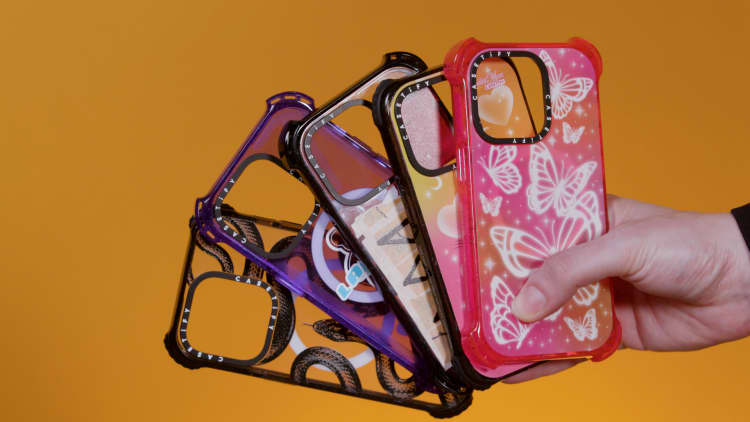
How Casetify turned custom phone cases into $300 million a year in sales

Jewish Food and Culture Festival to raise money for temple restoration | Life

Jewish Food and Culture Festival to raise money for temple restoration | Life

The best way to learn about another culture is to eat its food, says Carla Bluhm, one of the organizers of Sunday’s Jewish Food and Culture Festival in downtown Brunswick.

“This has been shown throughout history when immigrants have shared their cuisine with their towns and cities,” Bluhm said. “This is a great opportunity for us to share through the language of food more about Jewish life and culture.”

‘The Book of Jewish Food’ Tells the Story of Jewish Food and Jewish Life

‘The Book of Jewish Food’ Tells the Story of Jewish Food and Jewish Life

In 1981, at the Oxford Symposium on Food and Cookery, an annual gathering of some of the finest minds in the food world, the cookbook writer Claudia Roden, already famous for her authoritative first book, A Book of Middle Eastern Food, declared, “There is really no such thing as Jewish food.”

Because the Jewish God has a sense of humor, Roden shortly afterward embarked (at the suggestion of her British editor) on a new project about, yes, Jewish food. The Book of Jewish Food: An Odyssey from Samarkand and Vilna to the Present Day (the American edition is subtitled An Odyssey from Samarkand to New York) took 16 years to finish, plenty of time to consider the Jewish food question.

But, I hear you cry, isn’t it obvious? Bagels! Lox! Gefilte fish! The maddeningly complex laws of kashrut, which have been subject to debate for several millennia! Of course there is Jewish food!

Well, yes and no. There are entire communities of Jews, including the one in Cairo in which Roden grew up, who have never eaten bagels and lox. And not all Jews keep kosher. As Roden traveled the world talking to Jews about their food, she realized that everyone had their own personal idea of what made food Jewish. Jewishness isn’t a place. Jews move around too much for that. Jewishness is a state of mind, and Jewish food is often eaten in exile.

For Roden, Jewish food was the dishes her grandparents had brought to Egypt from Constantinople and Aleppo at the turn of the 20th century: kibbeh and little meat and spinach pies and a chicken soup called melokheya, named after the distinctive-smelling leafy green vegetable that floated in it. For a Jew in Samarkand, it would have been khalti barsh, rice mixed with meat and liver and cooked overnight in a linen bag, and for a Jew in Morocco, couscous with stuffed meatballs. Only an American or Canadian would consider bagels and lox central to Jewish cuisine, and they would argue with a Brit about the proper preparation of gefilte fish because in England, instead of serving the fish balls in cold jelly, they fry them. The only common denominator appears to be matzo, unleavened bread of affliction that’s eaten at Passover, and a cookbook devoted to that would be very short and unspeakably sad.

This lack of consensus is a very big problem for someone who is trying to write the definitive book on Jewish food.

At first, Roden thought she would collect every Jewish dish in every Jewish community in living memory, until she realized this quest would probably take her the rest of her life. So she decided to limit the book to the largest and best-known communities and select the very best she could find. She still ended up with 800 recipes.

Not all Jewish dishes are exclusive to Jews. Everybody in countries like Egypt, Lebanon, and Yemen eats falafel, for example. But Roden found that Jews tend to put their own twists on common regional foods to make them conform to the kosher laws, like using oil instead of butter. Sometimes, after leaving — or being expelled — from one country, they would bring their food to another, like the Yemeni Jews who brought a spicy relish from Arabia to Israel where they served it on falafel and therefore made falafel Jewish. Was this relish considered Jewish in Yemen? Would it have ever been served with falafel if not for the Jews?

Instead of trying to be completist or hand down definitive judgments, Roden decided — and this is the reason this book is wonderful — to put all these recipes back in the context in which they were first eaten by Jews. Food becomes a means of time travel. Even if there were no recipes at all, the descriptions of the Jewish communities of the past and what they ate would make the book worth reading.

The places she brings us are almost uniformly beautiful. Most of them no longer exist. Maybe they never did. Roden describes a series of tight-knit communities, some more prosperous than others, where people always keep the door open for their neighbors and an extra seat at the table for a stray visitor or someone going through a hard time. Friday night is a time to gather, to shake off the worries of the workweek and enjoy a glorious meal that took all day to prepare. Even the Eastern European shtetls, which I firmly believe are the source of much inherited trauma for American Jews, are bathed in this golden light. (The lone exception is America, the land of Crisco, difficult to romanticize because it still exists.) Roden did meticulous research, and the pictures she paints are beautifully detailed. But, like those Renaissance artists who gave Biblical characters the faces of people they knew, Roden is really telling the story of her own lost world.

The Zamalek neighborhood of Cairo, where Roden was born, was a close and cosmopolitan community where Jews mingled freely with their Muslim neighbors. They spoke French and ate Syrian food prepared by their Egyptian cooks. Roden’s relatives were all merchants; the family traveled to Europe for several months every year. At home, in the words of Roden’s father, “we spent our time on the balcony talking to passersby.”

In 1951, when she was 15, Roden left Egypt to go to boarding school in Paris, and then, three years later, to London to study painting at Central Saint Martins. In the fall of 1956, in the wake of the Suez Crisis and the failed invasion of Egypt by Israel, Britain, and France, the Egyptian president Gamal Adbel Nasser expelled all foreigners and Jews, some with as little as 24 hours’ notice. Roden’s parents, Nelly and Cesar Douek, joined her and her two brothers in London, and none of them saw Egypt again for 30 years.

In the immediate aftermath of the exodus, the Doueks’ North London home became a place for the exiles from Zamalek to gather. Many of them were passing through on their way to New York or Jerusalem or South America. They were all grieving. In Cairo, very few of them had cooked — everyone had servants — but they still had their family recipes. Roden would learn later on, once she started reading the work of anthropologists, that every family has its own culinary code. “In the selection of dishes,” she writes in the introduction to The Book of Jewish Food, “there is a logic that combines mythological, historic, and moral significance to create a symbol.” Those codes put a particular stamp on each family’s version of a dish. In Egypt, recipes were closely kept secrets. No one ever shared. But in exile, things were different.

“They were desperate,” Roden has recalled to multiple interviewers. “They would say, ‘Please, give me your recipe for that. It’ll be something I’ll remember you for because I might never see you again.’ And for most of those people, we never, ever saw them again. And those recipes were so precious, I found.”

She tells this story the same way every time because it is her origin story. After a while, she began collecting recipes from outside her family’s immediate social circle. She would go to places like carpet stores and the Iranian embassy and ask random people. This has remained her method throughout her life. People always give them to her. No one has ever gotten angry at her for publishing them. Quite often, she gets multiple recipes for the same dish. The Book of Jewish Food is full of variations: This is how the Syrians make it, and this is how the Iranians do it, and this is how you would have found it in Thessaloniki before World War II, when it was still called Salonika.

Roden’s quest for more recipes eventually took her to the British Museum in search of Arab cookbooks. The only ones she could find were from the Middle Ages. She also found a Ph.D. dissertation about a 13th-century cooking manual from what is now Lebanon. It explored not just how to prepare food but also what the food said about the society: which class of people was eating these dishes and which class of people was preparing them and the trade routes that made foreign ingredients available. For Roden, it was an epiphany. “I just realized how food can tell you so much,” she recalled later.

In The Book of Jewish Food, Roden divides the Jewish world into two cultures: the Ashkenazi of Eastern Europe, and the Sephardi of Mediterranean Europe, North Africa, India, and Southwest and Central Asia. (These non-European Jews are also often referred to as Mizrahi.) The two cultures speak differently, pray differently, and eat vastly different food. Although Roden has by now lived most of her life among the Ashkenazim (including marriage to, and then divorce from, a British Jew of Russian descent), she is still very much Sephardi.

Sephardic recipes take up two-thirds of The Book of Jewish Food, and while Roden makes an effort to give Ashkenazi food its due, her heart is clearly not in it: In a New Yorker profile, the writer Jane Kramer points out to Roden that her matzo balls are a spectacular failure (no seltzer water!) and Roden shrugs and “admit[s] to having been less than discerning when it came to some of the Ashkenazi dishes.” In the section on fish, you can almost hear Roden gloat when she shares her discovery that fish and chips, the most beloved food of her adopted country, was not, in fact, invented by an Eastern European Jew, as was widely believed, but brought to London much earlier by Portuguese Jewish immigrants.

This focus on Sephardic food was quite novel in the English-speaking world in 1996 when the book was first published. But in the past quarter-century, Roden’s disciples, notably Yotam Ottolenghi in England and Michael Solomonov in the U.S., have made many converts. At this point, with the slow and painful death of the Jewish deli and the realization that schmaltz, the central fat of Ashkenazi cuisine, can actually kill you, there are probably more Jews eating eggplant, yogurt, and falafel than pastrami.

The overall experience of cooking from The Book of Jewish Food is less like a lesson from your bubbe or your aunties, the way cooking (allegedly) used to be, and more like a choose-your-own-adventure. With 800 recipes, who has time for hand-holding? This can get challenging when you are making a dish you have never seen or even heard of before, especially if you’re a nervous cook like I am.

I did not attempt the kibbeh, even with the aid of YouTube tutorials. Roden writes that it was “the standard by which once upon a time women were judged,” and the pressure was too much. I also did not attempt any of the many pies because, according to Roden, you can’t make just a few, you have to make dozens, and doing it solo instead of with a kitchen full of friends and relatives makes one tend to feel lonesome and sorry for oneself.

I did make anjuli, a cold fish and potato salad from India, because Roden is very enthusiastic and persuasive about the Indian recipes she’s collected. It had a delicate flavor, and now I think coconut milk is a very underrated ingredient in fish salads. The Sephardi rice pudding, which I made the Egyptian way (baked until it developed a brown crust, like the top of a Portuguese egg tart) and then the Spanish way (unbaked and flavored with vanilla and lemon zest), was also very good.

Rice pudding, as it happens, was one of the dishes Roden ate when she finally returned to Cairo after years of exile. It was in a tiny dairy in Sakakini, the neighborhood where her parents had been born, and after she told this to the shopkeeper, he told her the pudding was on the house. That pudding welcomed her home. Was I tasting it now in Chicago in 2023? I didn’t think so — I had been slightly confused by the recipe and I’m quite sure the rice and milk I used had a different flavor. Plus I was eating it standing in my kitchen, not outdoors at a little table staring up at an old palace. Context is everything.

But I could still flip open the book to the description of old Cairo and I could read and imagine the smells of sizzling garlic and crushed coriander seeds with an overlay of rosewater, the domes and minarets, the courtyards behind metal grilles, and the sound of voices from the balcony, the family chatting with the passersby.

Aimee Levitt is a freelance writer in Chicago.

Why Weird Vintage Recipes Found a Second Life Online

Why Weird Vintage Recipes Found a Second Life Online

In recent years, the weird vintage recipe genre really hit its stride on video-based platforms like YouTube and TikTok, where morbid curiosity and a desire to behold the grotesque drives a lot of successful digital media—take Dr. Sandra Lee’s pimple-popping empire as an even less appetizing example.  

“Certain ingredients elicit a gut reaction in people, like mayo in particular,” says Emmy Cho, one of the first auteurs of the genre. Cho is known for her nonjudgmental exploration of a wide array of culinary obscura on her long-running YouTube channel, Emmymade. For her audience of 2.89 million subscribers, she’s prepared beef fudge, which is just straight-up fudge plus a cup of ground beef, and a liver paté centerpiece covered in lemon Jell-O, mayonnaise, and green olives and shaped into a pineapple.

While mayo always strikes a nerve, nothing gets viewers going like Jell-O. The instant powdered gelatin is a key ingredient for many of the most unappetizing vintage recipes, and it makes for an alluring, wobbling, translucent spectacle—that’s also perfect for a thumbnail.  “When you have crystal clear Jell-O with pieces of fruit and vegetables suspended in it, there’s something about it that makes you think, Wow, you can eat that?” Jones agreed, saying  “I haven’t made very many Jell-O recipes, but every time I don’t make one, people comment, ‘Where’s the Jell-O?’” she says. “It’s what the people want.” 

Both Cho and Jones accrued large view counts by daring to eat disagreeable retro creations, but both of them see the videos as more than just shock value. Cho is more interested in the process and cooking techniques involved with these recipes, and she’s always respectful and appreciative of a new edible experience, even if the edible experience is ultimately disgusting. 

Jones, who described to me a long-standing interest in mid-century culture, is keenly aware of how these recipes came to be. She’ll point out the inherent superficiality of promotional recipes (as with a farming conglomerate’s 1960s recipe for avocado pie) and doesn’t shy away from discussing the fraught domestic expectations of women during that period. Just as often, she features vintage recipes she genuinely loves and grew up eating, like the one for cherry delight or her grandmother’s three ingredient chicken and dumplings. “For me, going back into this book that no one has thought about for 50 years and being able to open it, and experience it for myself, is sort of magical,” Jones explains.

Photo by Travis Rainey, Styling by Joseph De Leo

Where do these “weird” recipes actually come from?

To state the obvious: the United States underwent massive and unprecedented changes through industrialization, advances in science and technology, and the growth of a suburban middle class during the 20th century. Companies began directing their advertising toward this middle class through promotional pamphlets and recipe books; a strategy which, according to Lohman, Jell-O first laid out as early as 1905. Following the post-World War II boom in industrialized food and the supermarket’s rise, this type of recipe-based promotion reached its peak. 

29 bestselling Amazon kitchen gadgets to simplify your life in 2023

29 bestselling Amazon kitchen gadgets to simplify your life in 2023

Spending hours chopping and stirring to prepare a delicious meal that gets eaten in 15 minutes can drain the joy out of cooking faster than boiling an egg. If you want to simplify your time in the kitchen, there are hundreds of products on the market today that promise to slice, dice and chop vegetables effortlessly; make the perfect latte; cut an avocado in perfectly even slices; or present you with a beautiful scoop of ice cream. Problem is, many of these claims fall short – their blades are hard to clean, there’s no space in your cabinets to store the “ingenious” item, or in the end it’s so complicated that relying on traditional methods is easier.

“I love kitchen gadgets, but you definitely need to read the reviews,” said Rachel Rotunno, owner of catering event company Grazing Cape Cod in Falmouth, Massachusetts. Her company, which serves Martha’s Vineyard, Nantucket and Cape Cod, creates grazing boards, charcuterie boards and charcuterie tables filled with fresh, local ingredients from farmers, fishermen, bakeries, honey harvesters and more. “Prep is huge,” she said. “We spend four to eight hours prepping for just one event – cutting cheeses, cutting vegetables and making designs with fruits – so I love kitchen gadgets. They save so much time.” Some of Rotunno’s favorites include a cheese grater that suctions to her countertop, a mandolin for chopping, and a silicone oyster “pocket” that offers leverage and protects your hands when shucking. “An automated pot stirrer is also great so I can tend to the other things.”

SKIP AHEAD Best time-saving kitchen gadgets | Best fancy kitchen gadgets | Best practical kitchen gadgets | Best space-saving kitchen gadgets

We’ve weeded through hundreds of kitchen gadgets to find the very best ones that actually claim to do what they say – and make you wonder how you ever lived without them. Our comprehensive list of innovative products are not only time savers but problem solvers and space savers to make life in the kitchen easier and more fun.

Best kitchen gadgets of 2023

Below are 29 top-rated kitchen gadgets that consumers say are saving them time, keeping foods fresher, improving pantry organization, providing a cleaner kitchen and upping their culinary skills all around. All have an average 4-star rating or above and store easily in even the smallest kitchens – and they make great gifts, too.

Best time-saving kitchen gadgets

Fullstar All-in-1 Vegetable Chopper

4.6-star average rating from 18,461 Amazon reviews

This No. 1 bestseller weighs just under 4 pounds and has 5 interchangeable stainless-steel blades to chop onions, dice apples, grate cheese, spiralize zucchini and much more, says the brand. You can also ribbon, julienne or noodle your veggies. The Fullstar chopper has a non-slip base and a removable catch tray to cut down on cleanup. It also comes with a cleaning brush, cleaning scraper, blade storage organizer and a finger guard and cut-resistant gloves.

OXO Good Grips Avocado Slicer

4.6-star average rating from 34,233 Amazon reviews

The average American eats more than 7 pounds of avocados annually, according to the U.S. Department of Agriculture, so this tool could save a lot of time when it comes to slicing, pitting and scooping this popular fruit. According to the brand, it has a non-slip grip, a stainless-steel center that removes the pit with one twist and a blade that cuts the avocado into seven slices. It’s also dishwasher-safe.

Chef’n Cob Corn Stripper

4.2-star average rating from 7,698 Amazon reviews

If you prefer fresh kernels straight from the cob rather than canned corn for your salads, salsa and other recipes, this corn-stripping tool eliminates the struggle. To use, insert the corn into the round cylinder and twist from end to end. The stainless-steel blades remove the kernels and is safe enough for kids to use, says the brand. The Chef’n Cob Corn Stripper is BPA free and dishwasher-safe.

Zulay Premium Apple Corer

4.7-star average rating from 16,220 Amazon reviews

This apple corer gets high marks from reviewers for comfort and efficiency. It has a plastic ergonomic handle that comes in 12 bold colors, along with twin stainless-steel blades that grip the core as the serrated tip slices through the apple. A spring-loaded lever opens the blade halves to release the core. The apple corer can also be used on pears and tomatoes, can remove pits and seeds and is 100{d2b09b03d44633acb673e8080360919f91e60962656af8ade0305d5d8b7e4889} rust-proof, says the brand.

Gidli Heavy-Duty Kitchen Shears/Seafood Scissors Bundle

4.6-star average rating from 8,405 Amazon reviews

These heavy-duty kitchen shears from Gidli cuts through poultry, fish, cooked and raw meat, vegetables, fruit, herbs and more with ease, says the brand. The seafood scissors are specially designed to cut through the tough shells of lobster, king crab, shrimp and other shellfish. The shears and scissors are both made of stainless steel, have ergonomically designed handles and come with a lifetime guarantee.

Kitchen Gizmo Snap N’ Strain Pot Strainer

4.5-star average rating from 27,487 Amazon reviews

This silicone fine mesh strainer lets you drain water from any round pot, pan or bowl with one hand. It is designed with a drainage spout to maximize drainage, says the brand, and is half the size of a colander, which makes it especially ideal for those with limited counter space. The strainer snaps on to round pots, pans and bowls of all sizes, including glass, wood and lipped bowls, says the brand. It’s BPA-free, heat resistant up to 440 degrees Fahrenheit and dishwasher-safe. The Kitchen Gizmo Snap N’ Strain Pot Strainer comes in four colors, including Lime Green, Gray, Orange and Purple.

Thrifty Ice Cream Scoop

4.4-star average rating from 4,834 Amazon reviews

This commercial-grade stainless-steel ice cream scooper was designed to ease the struggle of scooping hard, frozen ice cream and dispensing it as a perfect cylindrical shape into your cone or dish. Push the scooper into the ice cream container, turn it 90 degrees, and pull up on the handle. Two prongs hold on to the ice cream, and when you release the handle, a spring-powered trigger dispenses it.

Kitchen Mama Electric Can Opener

4.3-star average rating from 76,683 Amazon reviews

This portable electric can opener provides a hands-free can-opening solution that is ideal for people with arthritis or other gripping challenges. To use, place it on top of any round can, making sure the blade and gear are on opposite sides of the edge, and push the button. The Kitchen Mama rotates 360 degrees to completely open the can, leaving no sharp edges, says the brand. It runs on 4 AA batteries and comes in five fun colors.

Meyuewal Jar and Bottle Opener Bundle

4.4-star average rating from 22,821 Amazon reviews

There’s nothing worse than struggling to open a jar. This jar opener from Meyuewal has an ergonomic cushioned silicone handle that fits any size hand, even a child’s. It adjusts to four different-sized jars, and its inner rubber lining ensures jars won’t slip when you twist, even when wet, says the brand. The bundle also includes a silicone, easy-grip bottle opener. The bundle pack comes in 13 colors to choose from.

Best fancy kitchen gadgets

Gorilla Grip Magnetic Measuring Spoons

4.8-star average rating from 1,884 Amazon reviews

These measuring spoons have a slip-resistant ergonomic grip and are BPA-free and food- and dishwasher-safe, says the brand. They are also magnetic, so they nest together and stay hitched when stored. The measurement markings are in both Imperial and metric, and each spoon is dual-sided, with an oval, slimmer end to measure solids and fit into spice jars and a round end to measure liquids – eliminating the need to wash in between solids and liquids.

OXO Good Grips Baker’s Dusting Wand

4.8-star average rating from 5,070 Amazon reviews

This duster wand is designed to take the place of large shakers. It can evenly flour baking pans, sprinkle paprika on deviled eggs, dust a souffle with powdered sugar or finish a cappuccino with a bit of cinnamon. It holds between 1 and 2 tablespoons, is made of stainless steel, so it’s rust-proof, and is dishwasher-safe.

Legendary Chef Culinary Cooking Torch

4.5-star average rating from 2,597 Amazon reviews

This handheld butane torch can sear sous vide steaks, melt cheese on nachos, roast tomatoes, caramelize sugar atop creme brulee and more, says the brand. Its body is made of aluminum but you can choose from eight bold colors that accent the torch for a fun look. A safety lock prevents accidental ignition, says the brand, and the handle is designed so your fingers avoid ever touching the flame.

Flafster Kitchen Electric Salt and Pepper Grinder

4.4-star average rating from 11,210 Amazon reviews

Elegantly designed and made of stainless steel, this electric salt-and-pepper set comes in a metal-and-wood caddy and requires 4 AA batteries for each grinder. According to the brand, these grinders can operate using only one hand and are not only useful for grinding Himalayan salt and black peppercorns but other spices as well. You can also adjust the levels between fine, medium and coarse.

Zulay MilkBoss Ultra-Premium Milk Frother

4.6-star average rating from 92,563 Amazon reviews

With the Zulay Milk Frother, serious coffee drinkers will now get their barista-grade cappuccinos, lattes and macchiatos right at home. It works on all types of milk, including soy, almond, half and half, cashew and other dairy products, such as butter, says the brand. It can also be used to mix protein-powder drinks. It’s powered by two AA batteries and comes with its own stand. Zulay also guarantees that it will never rust or break. It comes in 45 bold colors and designs, such as Golden Sunrise, Hearts, Grapefruit, Pink with Gold, and Metallic Green.

Ecolution Micro-Pop Microwave Popcorn Popper

4.4-star average rating from 55,648 Amazon reviews

The healthy alternative to bagged popcorn, the Micro-Pop popcorn maker pops kernels you buy yourself, so there’s no chance of harsh chemicals or preservatives. It comes in two sizes – 1.5 quarts and 3 quarts – and is made of temperature-safe borosilicate glass, says the brand. The lid and borosilicate glass bowl are all dishwasher-safe. It comes in six colors, including Aqua, Yellow, Teal, Hot Pink, Red and Blue.

Kitchy Pizza Cutter Wheel

4.7-star average rating from 37,825 Amazon reviews

Customers love this pizza cutter for its durability and ergonomic design. Because it fits into the palm of your hand, you have more control when slicing through pies, says the brand. It’s dishwasher-safe and also comes with a blade guard to keep your cutter securely stored away when not in use. The Kitchy Pizza Cutter comes in three colors, including Red, Blue and Green.

Hamilton Beach Dual Breakfast Sandwich Maker

4.6-star average rating from 23,645 Amazon reviews

This sandwich maker cooks custom breakfast sandwiches two at a time in as little as 5 minutes, says the brand, making it easy for people on the go. Just build the base of your sandwich on the bottom layer, place an egg and your sandwich’s top layer on the upper cooking plate, and close the lid. It has a countdown timer and a beep will let you know when it’s done. A recipe book with more than 25 recipes is included. All of its removable parts are dishwasher-safe, and at just under 8 inches wide, 10 inches deep and 6 inches high, it’s easy to store or leave on your countertop.

Click & Grow Indoor Herb Garden Kit

4.6-star average rating from 2,084 Amazon reviews

This smart indoor garden lets you grow herbs, vegetables and flowers right on your countertop or windowsill without any sunlight. Just pop in some plant pods (three basil pods are included), fill the water reservoir and plug in the LED light. The lamp automatically cycles for 16 hours on and 8 hours off. The kit measures 9 x 4.9 x 12.5 inches and weighs about 3.5 pounds. Click & Grow also offers more than 50 pre-seeded plant pods for purchase, including cilantro, basil, lavender, wild strawberries, thyme and even chili peppers, or you can purchase seedless pods and drop in your own seeds. The base is available in Beige, Gray or White.

Best practical kitchen gadgets

Dreamfarm Supoon

4.8-star average rating from 4,883 Amazon reviews

The Dreamfarm Supoon lets you scrape, measure, stir, mix, scoop and serve using one spoon. It’s designed with a flat silicone tip, deep scooping head and flexible squeegee sides to make it easy to scrape pans and bowls clean and comes with 15mL tablespoon and 5mL teaspoon measurement lines. The Supoon is safe to use on non-stick cookware, and its silicone tip resists heat up to 500°F. It’s also dishwasher-safe.

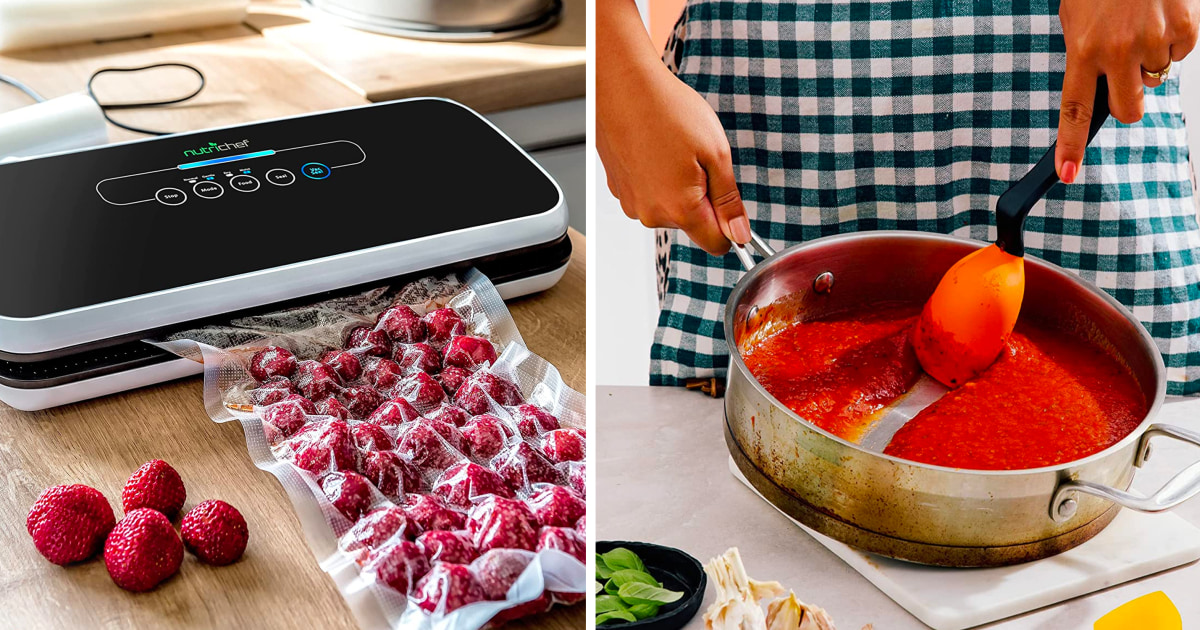
NutriChef Vacuum Air Sealing System

4.3-star average rating from 37,379 Amazon reviews

This system vacuum seals your food in environmentally friendly bags so your food stays free of freezer burn and up to five times longer than zippered baggies or containers, says the brand. It has two modes, based on the type of food you want to seal: Choose the dry option for solid food and the moist option for poached, simmered or steamed food. Consumers gave the NutriChef high ratings for its ability to keep food fresh and its ease of use.

Silicone Utensil Rest with Drip Pad

4.7-star average rating from 32,848 Amazon reviews

This silicone resting pad was designed to stop utensils from dripping all over your countertops while cooking. Its spoon rest has four slots and raised edges to catch all the drips. It can hold spoons, spatulas, ladles, brushes, tongs forks and more, says the brand. It has a non-slip base and won’t be affected by the heat from the stove. It comes in 31 colors to match any decor.

Greater Goods Gray Food Scale

4.6-star average rating from 119,710 Amazon reviews

This smart food scale is excellent for measuring your food portions at home. It has an LCD display and an 11-pound capacity and measures right down to the gram. Best of all, it weighs only 7.5 ounces, has a footprint of only 8×6 inches and is less than an inch high. The Gray Food Scale comes in 11 colors.

Best space-saving kitchen gadgets

MayNest Washable Refrigerator Liners

4.3-star average rating from 13,904 Amazon reviews

Keep your refrigerator shelves clean and moisture-free with these washable liners. They fit standard shelves but can also be trimmed to any size. They also work well in pantries, drawers and as placemats, says the brand. They are made of non-toxic 100{d2b09b03d44633acb673e8080360919f91e60962656af8ade0305d5d8b7e4889} food-grade EVA and are odor- and BPA-free, so it’s safe to place food directly on them. Choose from a pack of 8 or 12 liners in various colors.

Mudeela Pots and Pans Organizer

4.2-star average rating from 15,701 Amazon reviews

If you constantly have trouble finding your cookware when you need it, this iron pot organizer rack will help keep your pots, pans, lids, trays, plates, cookie sheets and cutting boards organized and easy to reach. There are eight tiers, and the dividers are adjustable so you can tailor the racks to fit your cookware.

SpaceAid Spice Drawer Organizer

4.8-star average rating from 2,183 Amazon reviews

This drawer organizer fits into a drawer space that’s 2.5 inches high, making it easy to grab your spices when you need them. It comes with a four-tiered spice rack, 28 square empty glass spice jars, 340 pre-printed spice labels and 46 blank labels, along with a chalk marker to DIY some of your own labels.

HOOJO Refrigerator Organizer Bins

4.7-star average rating from 24,483 Amazon reviews

These shatter-proof BPA-free bins are easy to clean and great for organizing your refrigerator and creating more space. This set comes with eight bins to separate fruit, meat, milk, salad dressing, drink bottles, canned food, condiments and more.

Utoplike Bamboo Kitchen Drawer Dividers

4.5-star average rating from 9,254 Amazon reviews

Organize all the utensils in your kitchen with these expandable drawer dividers made of natural bamboo. Each divider has a built-in spring to keep them in place and adjust easily to match your needs. Both ends of the divider also have pads to protect your drawers.

Meet our expert

At Select, we work with experts who have specialized knowledge and authority based on relevant training and/or experience. We also take steps to ensure that all expert advice and recommendations are made independently and with no undisclosed financial conflicts of interest.

  • Rachel Rotunno is the owner of Grazing Cape Cod, an event catering company specializing in grazing boards, charcuterie boards and grazing tables. They are based in Falmouth, Massachusetts and serve Cape Cod, Nantucket and Martha’s Vineyard.

Catch up on Select’s in-depth coverage of personal finance, tech and tools, wellness and more, and follow us on Facebook, Instagram and Twitter to stay up to date.