
Almond milk benefits for people with sensitive gut

Almond milk benefits for people with sensitive gut

Many people have started suffering from gut issues these days. From Irritable Bowel Syndrome to lactose intolerance and leaky gut syndrome – the list can go on and on. Sensitive gut is a rising health issue these days and needs attention. People have even started switching to different food alternatives that feel healthier for their gut and don’t aggravate existing issues. Having said that, calcium is an important nutrient that can’t be compromised. Milk is an excellent source of calcium and an integral part of our diet, but cow milk may not suit everyone. For people with a sensitive gut, experts often recommend almond milk.

Health Shots got in touch with nutritionist Avni Kaul to understand why almond milk may be better than cow milk for people with a sensitive gut.

Why should people with a sensitive gut switch to almond milk?

First of all, what is almond milk?

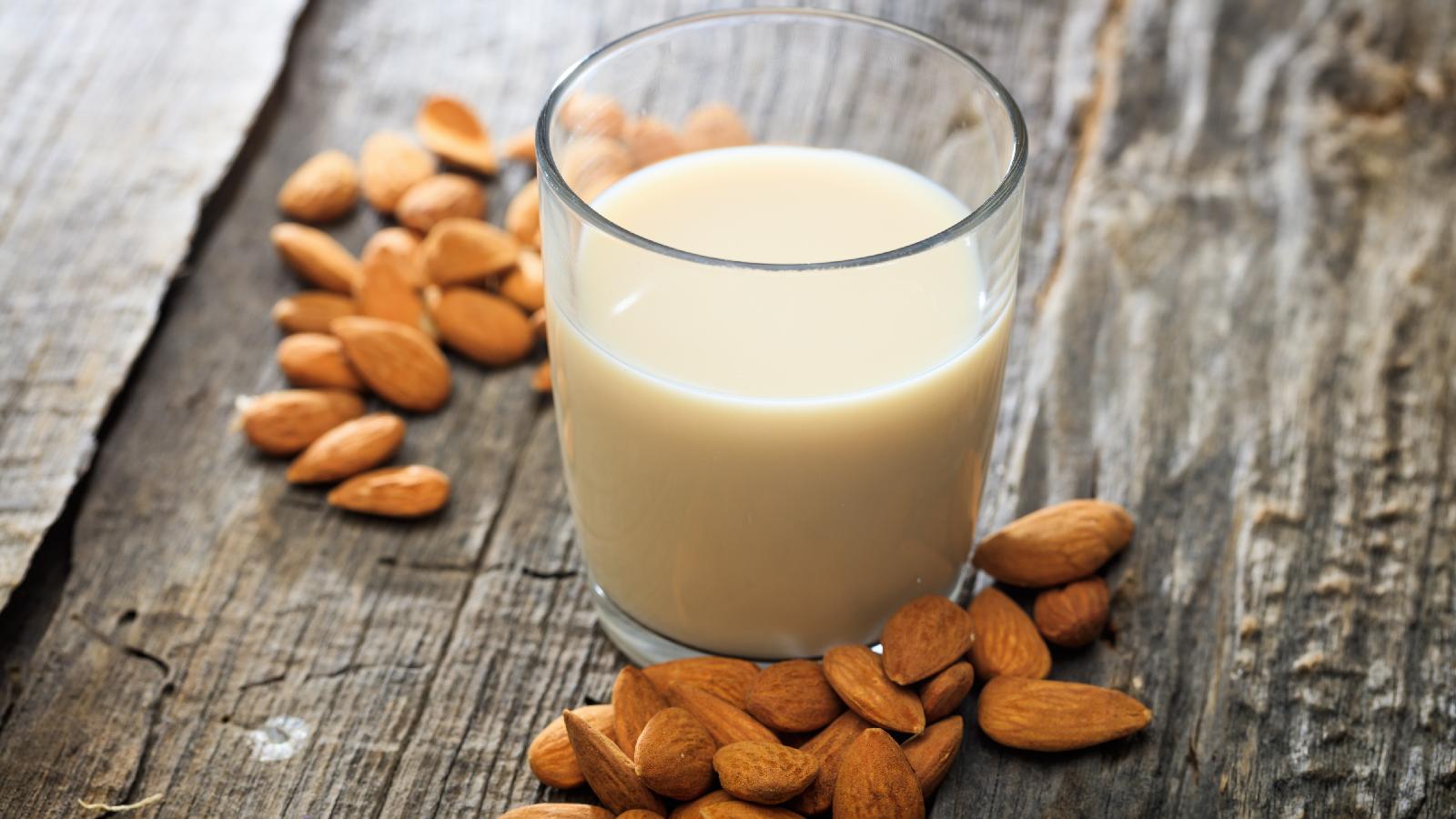
Almond milk is manufactured by mixing almonds with water and then the mixture is strained to take the solids out. It can also be made by adding water to almond butter, “tells the expert.

why almond milk is better than cow milk for people with sensitive gut
Almond milk can be consumed by people with sensitive gut because of the benefits it boosts! Image courtesy: Shutterstock

It consists of a pleasing, nutty flavour and a creamy texture that feels just like the taste of regular milk. Owing to this, it is a popular alternative for people who are following a vegan diet and even for those who are allergic or intolerant to dairy.

Here are a few reasons why almond milk is a safer option for people with a sensitive gut.

1. Contains no cow or buffalo milk

Almond milk is not an animal product, making it an ideal choice for people who have opted for a vegan diet and those individuals who are lactose intolerant or are allergic to milk. Almond milk is free from dairy and has no lactose at all, making it the perfect swap for regular milk for people suffering from lactose intolerance. Alongside, almond milk has high fibre content which aids in healthy digestion. It can help curb issues like constipation and other intestinal disorders whilst keeping your digestive system healthy.

2. Best option for people who are intolerant to milk sugar

“Many people have a high intolerance to milk sugar (lactose) and face issues digesting it properly. In these categories of people, this undigested lactose passes down to the colon where it is the living bacteria ferments it. That further leads to issues like excessive gas, bloating, diarrhoea, and other associated discomforts, “tells the expert.

Also read: Are alternative milks healthier than cow or buffalo milk? Let’s find out

why almond milk is better than cow milk for people with sensitive gut
Try switching to almond milk for a variety of health benefits it boosts. Image courtesy: Adobe Stock

3. Regulates blood sugar levels

If you are a patient with diabetes, drinking milk that is devoid of sugar can be a task. However, almond milk has an ideal amount of carbs which helps the body in converting it to good sugar that is further converted into energy. Opting for almond milk over regular dairy milk can also help in maintaining good heart health.

The bottom line

Almond milk is nutritious and a great option for people who have lactose intolerance. It has low-calorie content and is high in calcium, vitamin D and E, which makes it no less than other drinks.

Good Culture partners with Dairy Farmers of America on probiotic milk

Good Culture partners with Dairy Farmers of America on probiotic milk

Dive Brief:

  • Good Culture has launched a new product line, Probiotic Milks, made with the agriculture collective Dairy Farmers of America (DFA).
  • In a statement, the company said its “disruptive and new take on milk,” which is available in 2{d2b09b03d44633acb673e8080360919f91e60962656af8ade0305d5d8b7e4889} and whole varieties, contains 1 billion probiotic cultures per 12-ounce serving.
  • The launch furthers Good Culture’s aim to grow its portfolio offerings and capitalize on the continuing trends of wellness and gut health, with the help of a leading dairy group.

Dive Insight:

Good Culture is taking probiotics into a new category with the backing of a leading player in the milk space.

The better-for-you cottage cheese and sour cream maker — which has received $81.8 million to date from investors like General Mills and actress Kristen Bell, according to Crunchbase data — last year raised $64 million in a Series C funding round. The company said the funding would go toward launching new products in the cultured foods space.

With this expansion, Good Culture has the opportunity to broaden its reach to a new consumer base.

“With the continued growth and consumer interest in probiotics and gut health, we’re really excited to bring this great-tasting milk with probiotics to store shelves in partnership with the Good Culture brand, which is so well known for producing on-trend, cultured dairy products,” Rachel Kyllo, senior vice president of marketing for DFA, said in a statement.

The decision to work with the DFA gives Good Culture a partner that is highly familiar with the milk space. The dairy giant has a variety of milk brands in its portfolio, including Dean’s, Lehigh Valley Dairy, Dairy Maid Dairy and Kemps.

Once commonly associated with yogurt, probiotics continue to infiltrate new food categories such as snacks and beverages as consumer interest in immunity rises. Nearly half of people consume probiotics in some form each day, with dairy being their preferred way to obtain them, according to a 2022 survey of 16,000 consumers by Chr. Hansen.

Other better-for-you brands have seized on the gut health dairy craze. Danone’s dairy brand Horizon Organic has a milk and yogurt line called Growing Years that contains prebiotics. Kefir, a fermented milk product popularized by brands such as Lifeway, is projected to grow at a compound annual growth rate of 6.4{d2b09b03d44633acb673e8080360919f91e60962656af8ade0305d5d8b7e4889} through 2027, according to a Mordor Intelligence analysis.

But expanding into milk could prove to be challenging. Last year, yogurt giant Chobani debuted lactose-free Ultra-Filtered Milk — featuring 2.5 times more protein than traditional milk — that it discontinued after fewer than three months on the market.

Ben Franklin’s Milk Punch Recipe | Seasonal Food and Country Style Recipes

Ben Franklin’s Milk Punch Recipe | Seasonal Food and Country Style Recipes

I am always looking for something related to the dairy industry to write about. So many of my readers tell me they enjoy knowing what the Pennsylvania Milk Marketing Board is working on and its position on current issues, but they especially like columns about history and unique dairy products.

Sometimes the topics come from research into an entirely different topic, and that is the case for what I am writing about today — milk punch.

Who knew there would be enough out there to write about milk punch?

I bet you are thinking that I am going to write about that baby shower concoction in a punch bowl that contains a block of vanilla ice cream. Well, that’s not it.

Benjamin Franklin, one of the commonwealth’s favorite sons, turned 317 years old on Jan. 17. He enjoyed dairy products, including ice cream, and is even credited with introducing it to the colonies during the hot days of the Constitutional Convention. I note that Ben Franklin was born on Milk Street in Boston, although I doubt that influenced his love of ice cream and milk punch.

In colonial America, desserts and drinks were commonly made with curdled milk and cream.

Two favorite drinks of that time were possets and syllabubs, both similar to a punch.

Possets were made by adding wine or brandy to hot milk, which curdled it, and then following up with sugar and various spices. Curds formed on the top, but the popular way to drink it was to sip the whey from the bottom and then eat the sweet curds later.

Syllabubs combined milk with wine and lemon juice or some other acid. Unlike possets, the curds on the top were eaten first with the liquid consumed last.

Ben Franklin’s milk punch recipe was like the syllabub in that it incorporated lemons (acid to curdle the milk). He used brandy, spring water, lemon juice, sugar, nutmeg and, of course, whole milk.

Franklin’s punch differed from the syllabub in that after letting the mixture stand for a few hours he strained it through a cheesecloth to remove the curds, creating a clear liquid. This process is referred to in the literature as clarification.

Another English favorite punch was made using Earl Grey tea, still popular today, as is Franklin’s variety. It used vodka and rum, the brewed tea, sugar and lemon juice. The mixture is strained, yielding a clear (clarified) beverage.

Did you know that an English milk punch was found in the wine cellar of Charles Dickens at the time of his death in 1870?

Since that time, popular milk punches have been developed using any combination of flavors as can be imagined. The James Beard Foundation reports on a popular strawberry milk punch made with cognac, cream, vanilla syrup, and strawberries or strawberry syrup.

Fortunately, creative bartenders and home entertainers have developed a variety of non-alcoholic punch recipes. Alcohol is not the necessary ingredient for the clarification process, but the milk and citrus are.

Can you make a milk punch at home? Of course.

There are many recipes for non-alcoholic (and alcoholic) milk punches on the internet. If you search “making non-alcoholic milk punch at home,” a lot of resources are available.

Why am I writing about this?

Well, first, I found the topic to be extremely interesting, especially the clarification process (which you can use with both alcoholic and non-alcoholic punches). Second, I try to promote the use of wholesome dairy products in any way that I can. What can be more wholesome than adding milk to a beverage served in a social context?

I hope you will try some milk punch recipes. I am planning on doing so, and I can’t think of anything more enjoyable after a long day of work. And don’t confuse them with the baby shower variety — these punches don’t contain ice cream and are similar to cocktail beverages. If you have a favorite milk punch recipe, pass it along.

The Pennsylvania Milk Marketing Board is always available to respond to questions and concerns. I can be reached at 717-210-8244 or by email at chardbarge@pa.gov.