Holiday dessert recipes from our audience for your sweet tooth : NPR

Holiday dessert recipes from our audience for your sweet tooth : NPR
Clockwise from top left: Jordan Harrison, Jan Kincaid Clifford, Allison Stines and Ellie King share family recipes.

Jordan Harrison, Jan Kincaid Clifford, Allison Stines and Ellie King/Collage by NPR

Clockwise from top left: Jordan Harrison, Jan Kincaid Clifford, Allison Stines and Ellie King share family recipes.

Jordan Harrison, Jan Kincaid Clifford, Allison Stines and Ellie King/Collage by NPR

All Things We’re Cooking is a series featuring kitchen gems from you, our readers and listeners, and the special stories behind them. We’ll continue to share more of your recipes throughout the holidays.

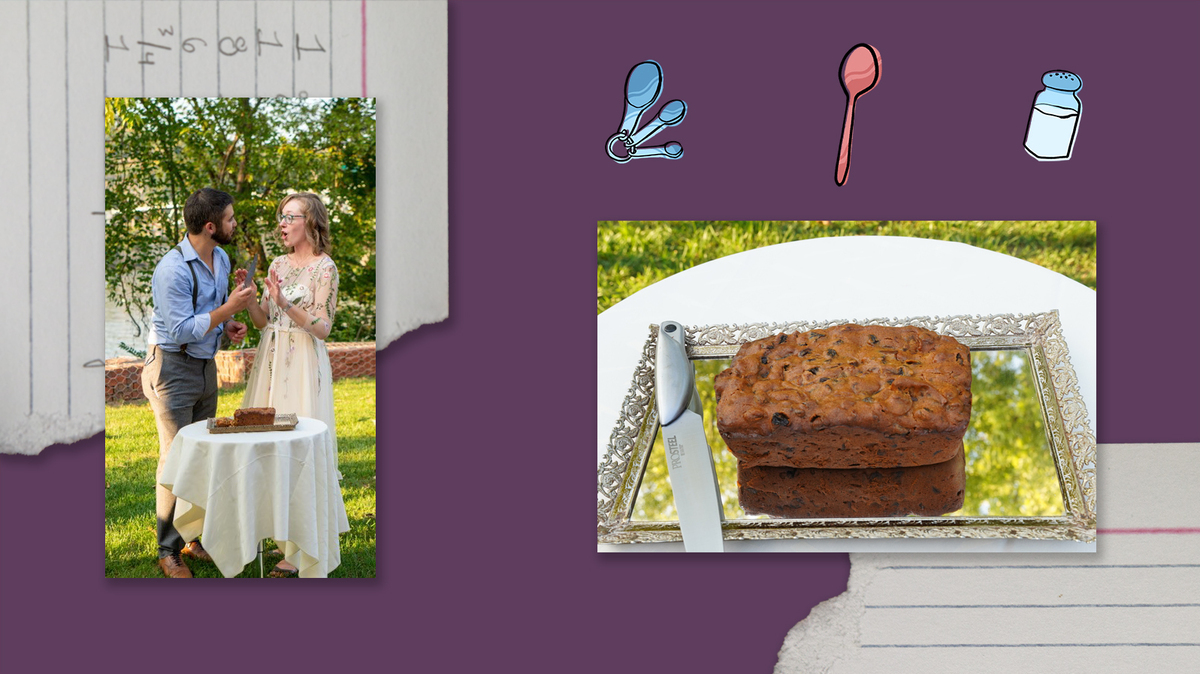
All jokes aside, this fruitcake is legendary. It was even served at a wedding

Parents, kids, aunts and a cousin gather on Black Friday to make a big batch to mail around the country. It’s shared far and wide at Christmastime and was featured on a bike ride across Iowa.

When Ellie King and her husband were married, they had Grandma Phoebe's Famous Fruitcake as their wedding cake.

Ellie King/Collage by NPR

When Ellie King and her husband were married, they had Grandma Phoebe's Famous Fruitcake as their wedding cake.

Ellie King/Collage by NPR

Her father’s fudge recipe brings back childhood memories of the Midwest

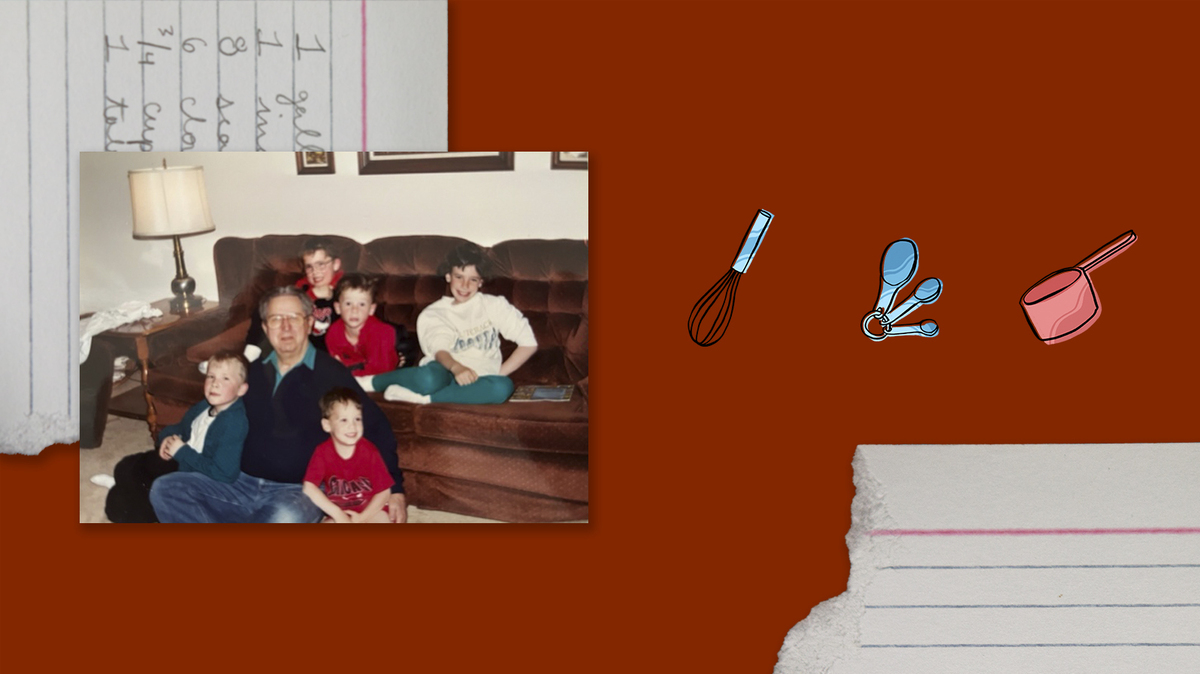
A young Jan Kincaid Clifford wasn’t even tall enough to reach the stove. That didn’t stop her from stirring the pot. And stirring. And stirring. Her dad’s recipe requires patience, but it pays off.

Jan Kincaid Clifford's father with his grandchildren.

Jan Kincaid Clifford/Collage by NPR

Jan Kincaid Clifford's father with his grandchildren.

Jan Kincaid Clifford/Collage by NPR

Zoom and a butter mint recipe bring a mother and daughter together

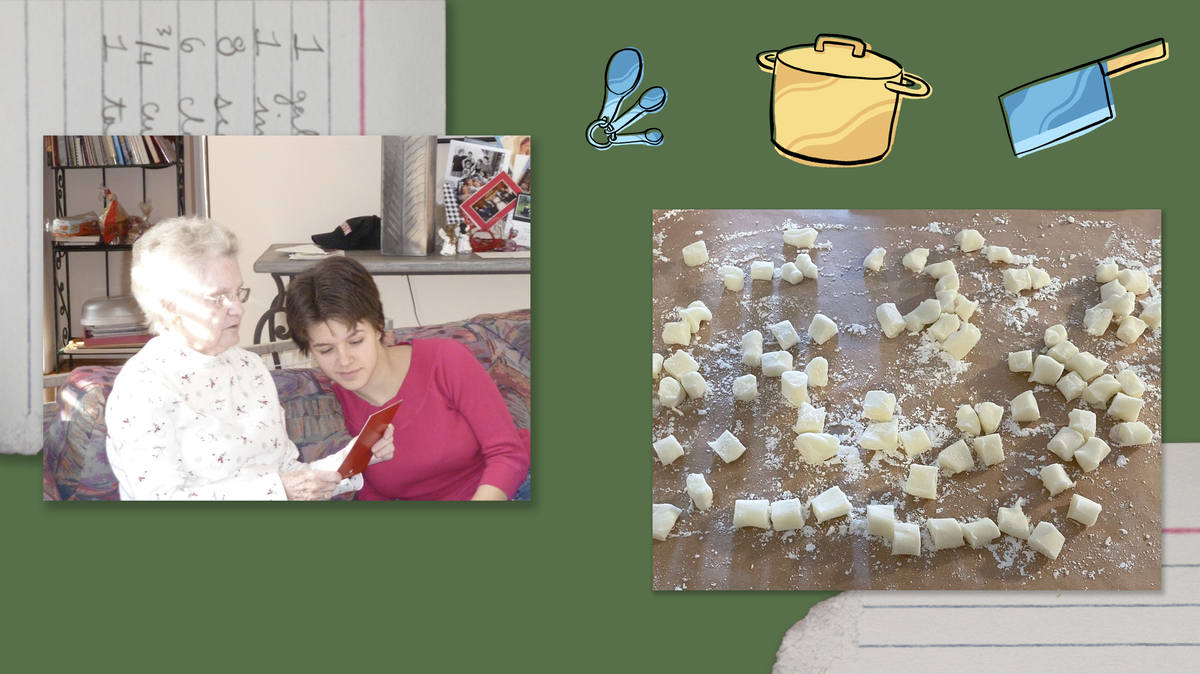
A long-distance video lesson from Mom also offered a chance to write the recipe down. Cold weather and a marble slab work best to cool this homemade confection, which has helped the family bond.

Left: Jordan Harrison with her grandmother. Right: Freshly made butter mints.

Jordan Harrison/Collage by NPR

Left: Jordan Harrison with her grandmother. Right: Freshly made butter mints.

Jordan Harrison/Collage by NPR

How a ‘Martian droppings’ cookie got its out-of-this-world name

Friends, family and co-workers clamor for the quirky, pistachio-flavored pudding cookie treats that come out looking green.

Allison Stines holds a photo of her family while she eats a a family-favorite cookie: Martian droppings.

Allison Stines/Collage by NPR

Allison Stines holds a photo of her family while she eats a a family-favorite cookie: Martian droppings.

Allison Stines/Collage by NPR

ABOUT THIS PROJECT

All Things We’re Cooking is a series highlighting family recipes that have special meaning to you, our readers and listeners. Earlier this year, we asked you to share your most prized recipes and explain why these dishes evoke such fond family memories. Working in collaboration with NPR member stations, we received responses from across the country. We’ve been interviewing some contributors and will continue to share their stories through the holiday season. All recipes and photos were provided by NPR audience members.

CREDITS

Reporting by Wynne Davis, with Isabella Gomez Sarmiento and Maison Tran
Editing by Desiree F. Hicks and Pam Webster
Design and art direction by Daniel Wood, Emily Bogle, Kaz Fantone and Alyson Hurt
Development by Daniel Wood
Project management by Caroline Kelly
Social media engagement by Matt Adams
Audio versions of stories produced by Rose Friedman and Isabella Gomez Sarmiento, with assistance by Maison Tran
Additional editing by Gerry Holmes, Nicholas Charles and Neda Ulaby
NPR member stations collaboration by Franklyn Cater

Veggie side dishes to brighten up your Thanksgiving table from Smitten Kitchen : NPR

Veggie side dishes to brighten up your Thanksgiving table from Smitten Kitchen : NPR

Deb Perelman in her small “smitten” kitchen in New York City’s East Village. “I make it work!” she says. “I like that there’s a lot of light coming in.”

Melissa Block/NPR


hide caption

toggle caption

Melissa Block/NPR


Deb Perelman in her small “smitten” kitchen in New York City’s East Village. “I make it work!” she says. “I like that there’s a lot of light coming in.”

Melissa Block/NPR

NEW YORK, N.Y. — When Deb Perelman started her blog “Smitten,” back in 2003, it was really just a lark: a platform where she could mouth off and vent her twentysomething angst.

“I was living in New York, and I was newly single and going on a lot of bad dates,” she recalls. “And I just liked to tell stories.”

But a month in, she started dating one of her blog readers, Alex Perelman. They got married two years later.

“So I couldn’t write about dating anymore,” she says with a chuckle. “That would have been very awkward for all of us involved.”

From that random beginning, Deb Perelman’s food fame was born.

In 2006, as she experimented more and more in the kitchen, the “Smitten” blog evolved into “Smitten Kitchen,” a blog (which evolved into a website) all about food. To Perelman’s shock, it took off.

“It’s just so crazy,” she says. “I’m really lucky.”

That success led to two best-selling cookbooks (The Smitten Kitchen Cookbook and Smitten Kitchen Every Day), and Perelman has just published her third: Smitten Kitchen Keepers. As she writes in the introduction, these are 100 time-tested, obsessively-tweaked, fuss-free “recipes I hope you’ll keep around for good.”

“Smitten Kitchen Keepers” is Deb Perelman’s third cookbook: 100 recipes that, she writes, “I hope you’ll keep around for good.”

Deb Perelman


hide caption

toggle caption

Deb Perelman

With Thanksgiving just ahead, NPR asked Perelman to suggest ideas for veggie-centric side dishes that can feed a crowd and that are budget-conscious, since food prices are high. (You’ll find recipes for the two dishes she came up with at the bottom of this page.)

We meet on a brisk, sunny morning at the Union Square greenmarket in Manhattan. Perelman is on the hunt for inspiration in the farm stands.

“Did I make a grocery list?” she asks, rhetorically. “No. I’m going on vibes.”

Those vibes prompt her to zero in on baskets of cranberry beans with beautiful, speckled pods — magenta and a pale, creamy green.

She adds a bag of arugula (“should be really nice and spicy”) and some heavy, squat kabocha squash (“it’s a dark orange and it really roasts up nicely.”)

And then, more inspiration! She spies a mound of purple cauliflower and picks out a petite one.

“This one is so cute!” she exclaims. “Small and, like, low-commitment.”

Deb Perelman shops for seasonal veggies at the Union Square greenmarket in Manhattan.

Melissa Block/NPR


hide caption

toggle caption

Melissa Block/NPR

Back at the East Village apartment that Perelman shares with her husband and their two children, 13-year-old Jacob and 7-year-old Anna, she gets to work in their small, well-organized kitchen. There’s minimal counter space; no fancy appliances.

Despite her best-selling cookbooks and her wildly popular website, with its scads of fanatic Deb Perelman disciples, the kitchen is not much of an upgrade from the tiny, humble kitchen she had when she started blogging about food in 2006.

“It’s real life here!” she says, as she labors to extract a sheet pan from a low shelf. “Everything’s a little crowded in the Smitten Kitchen. Gotta move one thing to move another.”

Before turning on the stove, she opens the oven door – a lesson learned from hard experience.

“I always check for toys in the oven, because it’s happened,” she says. “It’s definitely happened before with kids, where they’ve put a rubber ball in, or whatever. Like, literally the worst thing you could possibly smell.”

Today: No toys. All clear.

Vegetables ready for roasting: chopped cauliflower and wedges of kabocha squash. At Thanksgiving, Perelman says, “a recognizable vegetable is like an oasis on a plate.”

Melissa Block/NPR


hide caption

toggle caption

Melissa Block/NPR

One of the dishes Perelman has decided to make is braised winter squash wedges, a recipe from her new cookbook. She calls it a “fork and knife” vegetable dish, perfect for the Thanksgiving table.

“When you’re doing Thanksgiving,” she says, “so many things are like stuffings and gratins and shredded with cream and cheese. Sometimes a recognizable vegetable is like an oasis on a plate.”

Perelman arranges the kabocha squash, sliced into wedges, on a hot sheet pan sizzling with butter and olive oil. When the squash has a dark, crispy glaze, it’ll get a bath of broth and cider vinegar, and be scattered with garlic and herbs. Perelman likes her roasted vegetables with a bit of char.

“Do not skimp,” she advises. “Get the color you want.”

Later, when she takes the squash wedges from the oven, they’ve turned a fiery, deep orange.

“I love the way it looks like flames, almost,” she says.

She layers the wedges on top of tangy plain yogurt, scattered with arugula.

The finished plating of the warm cauliflower and cranberry bean salad and the braised winter squash.

Melissa Block/NPR


hide caption

toggle caption

Melissa Block/NPR

Along with the braised kabocha squash, Perelman has decided to improvise a warm salad with that “cute” purple cauliflower. It gets chopped and roasted, then tossed in a Dijon vinaigrette with the boiled cranberry beans and some emerald green arugula.

Both dishes are a vibrant visual treat.

“I mean we eat with our eyes,” Perelman says. “Why shouldn’t our food look beautiful?”

Ideally, Perelman says, cooking should make you feel triumphant — like you want to do a victory lap.

“You know when you cook something and it’s really good, and you’re like, ‘I did that! I did that!’ ” she says. “I think you should feel that way about cooking.”

Braised Winter Squash Wedges

This is my favorite way to cook winter squash. It takes a cue from fondant, or melting, potatoes, a technique in which thick slices of potato are roasted on both sides before they finish cooking braised in a puddle of broth. From the oven, they’re crisp and somewhat glazed outside, creamy inside, and booming with more flavor than it seems possible to lock inside a potato. Clearly, I’m a fan — but I had no idea that when I applied this technique to big wedges of winter squash I’d never want to cook it another way again.

I add to the pan everything I like with winter squash — thyme, garlic, and cider vinegar, which gets sweet/tangy when cooked and really helps cut through the sweetness of squash — and then I put the whole thing on a plate of tart yogurt and peppery baby arugula. Any slightly syrupy broth left in the pan is poured over everything, and it’s all so good together, you might wonder why you’d ever consider squash a side dish again. This is centerpiece squash, and it wants you to know it.

Serves 4

2¼ to 2½ pounds (1 to 1.15 kilograms) winter squash (about ½ kabocha or red kuri squash)

2 tablespoons (30 grams) unsalted butter

2 tablespoons (25 grams) olive oil, divided

Leaves from 6 sprigs fresh thyme

Kosher salt and freshly ground black pepper

6 garlic cloves, smashed

1 cup (235 grams) vegetable broth

¼ cup (60 grams) apple-cider vinegar

1 cup (230 grams) plain Greek- style yogurt

2 cups (55 grams) baby arugula leaves

Note: If you can find it — you can often buy squash in halves or quarters from a farmers’ market, which is great, because it runs large — kabocha is my favorite here, followed by red kuri squash. Butternut and acorn squash work, too. The peel of winter squash is fully edible, so no need to trim it away.

Heat the oven to 425°F (220°C).

Cut the squash in half and scoop out the seeds and pulp, then slice the halves into 1½-inch wedges. Add butter and 1 tablespoon of the oil to a 10- by- 5-inch baking sheet, and place in the oven until the butter melts, about 2 minutes. Remove the tray from the oven, and roll the butter around so that it evenly coats the pan. Arrange the squash wedges in one layer, and sprinkle with thyme, ½ teaspoon salt, and lots of freshly ground black pepper. Roast for 15 minutes, or until deeply browned underneath. Flip the slices, and season the second side on top with another ½ teaspoon salt and more pepper. Scatter the garlic cloves in the pan, and return the pan to the oven to roast for another 12 to 15 minutes, until the wedges are browned on the second side. Don’t worry if the squash isn’t fully cooked yet. Carefully pour the broth and vinegar into the pan, and roast for another 10 to 15 minutes, until the squash is tender and the liquid is somewhat cooked off.

To serve the squash: Use the back of a spoon to swirl plain yogurt onto a serving platter into a thin layer. Toss the arugula with the remaining tablespoon olive oil and a pinch of salt and pepper, and scatter over the yogurt. Arrange the squash wedges on top, scrape out every bit of pan juice that’s left, and pour it over the squash.

From Smitten Kitchen Keepers: New Classics for Your Forever Files by Deb Perelman. Copyright © 2022 by Deb Perelman. Excerpted by permission of Alfred A. Knopf, a division of Penguin Random House LLC. All rights reserved. No part of this excerpt may be reproduced or reprinted without permission in writing from the publisher.

Warm Cauliflower and Cranberry Bean Salad

(Note: This was a recipe Perelman improvised on the spot. She used fresh cranberry beans, but says you could use any type of canned beans, instead.)

1 small-medium head cauliflower, chopped into 1-inch chunks

1 cup freshly shelled cranberry beans (from about 8 to 12 ounces in pods)

Salt and freshly ground black pepper

Olive oil

Balsamic vinegar and/or white wine vinegar

1 tablespoon coarse (whole seed) Dijon mustard

Handful arugula, roughly chopped

Sharp cheese — like cheddar or pecorino — to finish (optional)

Heat oven to 450. Drizzle olive oil on a large baking sheet and add cauliflower to it. Season with salt and pepper and toss to coat. Roast for 30 minutes, turning over once for even color.

Meanwhile, cook your cranberry beans in simmering lightly-salted water for 20 to 25 minutes, until tender. Drain, rinsing with water to cool slightly.

Whisk together 3 tablespoons olive oil and 2 tablespoons balsamic vinegar, white wine vinegar, or a combination thereof, with Dijon, until evenly combined. Season with salt and pepper.

Scrape cauliflower into a serving bowl and add cranberry beans on top. Pour dressing over to taste and toss lightly to combine. Stir in the arugula. Shave — you can use a peeler — sharp cheese on top, if you wish. Season with additional salt and pepper, as needed.


Mark Bittman has 3 tips for the kitchen : NPR

Mark Bittman has 3 tips for the kitchen : NPR

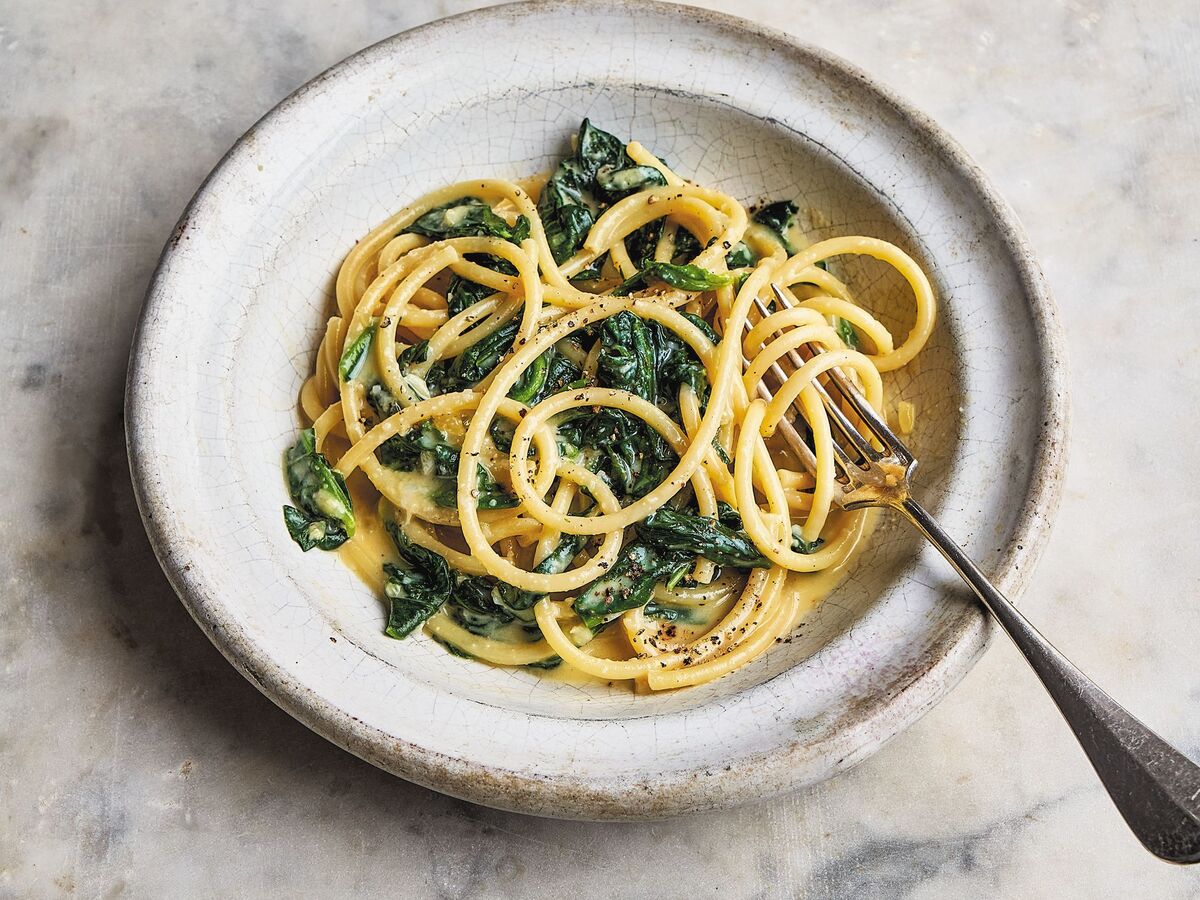
Mark Bittman’s spinach carbonara is a vegetarian twist on a classic Italian dish. He says spinach adds “a variety of different nutrients and just mixes things up a bit.”

Jim Henkens


hide caption

toggle caption

Jim Henkens


Mark Bittman’s spinach carbonara is a vegetarian twist on a classic Italian dish. He says spinach adds “a variety of different nutrients and just mixes things up a bit.”

Jim Henkens

Fast cooking isn’t about skill. It’s about strategy.

That’s according to six-time James Beard Award-winning food writer Mark Bittman. So when he sat down to revise How to Cook Everything Fast, he had an eye toward teaching technique, not just showcasing recipes.

“There are patterns [in cooking] that after you do many times, you begin to recognize and you do automatically. But beginning cooks don’t see those patterns, and they don’t have them laid out for them,” Bittman tells NPR.

And he’s indeed cooked — and written about cooking — many times. He’s the author of numerous cookbooks, and spent decades writing about food for the New York Times.

This is part of All Things Considered‘s “In A Pinch” series, where cookbook authors discuss meals that can be prepared with a handful of ingredients and a little bit of time.

“The attempt in Fast is to say: Here’s how you really need to learn how to cook, here’s how to organize ingredients. Here’s how to use the right technique.”

Bittman breaks down three strategies for faster cooking. His responses have been edited and condensed for clarity.

1. Prepare as you cook

There’s a lot of downtime in cooking. It takes time for the heat that you’re using to be applied to the food that you’re using it on. And you can use that time to do other things that make the whole procedure go more quickly.

2. Keep a well-stocked pantry

There are challenges around cooking besides the cooking itself. And one of them is shopping. To the extent that you can keep a good pantry, you can cook a lot of recipes without shopping. And that’s a real advantage.

3. Always cook more than you need — think leftovers

If you’re cooking beans for a dish, then cook a lot of them and either refrigerate or freeze what’s left. Same with whole grains.

Whenever you can, it almost always pays to cook more, even if it’s just cooking more of the given dish. That’s the kind of thing that veteran cooks know and learn.

Below are three recipes from Bittman’s revised edition of How to Cook Everything Fast that you can try at home when you’re in a pinch. They have been excerpted by permission of Harvest, an imprint of HarperCollins Publishers.

Spinach Carbonara

With the richness of eggs and Parmesan and the fresh bite of lightly cooked spinach, this recipe offers a hearty meatless alternative to more traditional pasta carbonara. You can replace the spinach with escarole, kale, mustard greens, chard or broccoli rabe. Just cut the ones with large leaves and stems crosswise into ribbons and cook a little longer if necessary.

SERVES 4

Salt

3 tablespoons olive oil

1 pound spinach

2 cloves garlic

1 pound any long pasta

3 eggs

4 ounces Parmesan cheese (1 cup grated)

Pepper

Directions

1. Bring a large pot of water to a boil and salt it.

2. Put 3 tablespoons olive oil in a large skillet over low heat.

3. Trim off any thick stems from the spinach.

4. Raise the heat under the skillet to medium-high. Cook the spinach, adding a handful at a time and stirring between batches, until the leaves are just wilted, about 5 minutes.

5. Peel and chop 2 cloves garlic, adding them to the skillet as soon as you can (they’ll cook with the spinach).

6. When the spinach is tender, turn off the heat.

7. When the water boils, add the pasta and cook, stirring occasionally. Start tasting after 5 minutes.

8. Crack the eggs into a bowl.

9. Grate 1 cup Parmesan cheese and add to the bowl; sprinkle with salt and lots of pepper. Whisk with a fork to combine.

10. When the pasta is tender but not mushy, drain it, reserving about 1 cup cooking water. Add the pasta to the spinach and pour in the egg mixture. Toss, adding a splash of cooking water if you want to make it saucier. Taste and adjust the seasoning, and serve.

Stir-Fried Chicken and Chard

Mark Bittman’s stir-fried chicken and chard. The celebrated food writer says stir-fries are an ideal fast meal because they employ a key strategy for quick cooking — maximizing downtime.

Jim Henkens


hide caption

toggle caption

Jim Henkens


Mark Bittman’s stir-fried chicken and chard. The celebrated food writer says stir-fries are an ideal fast meal because they employ a key strategy for quick cooking — maximizing downtime.

Jim Henkens

It might not be the most common green used in stir-fries, but kale takes well to high heat and has a ton of flavor. The leaves soften quickly and acquire wonderful singed brown spots (especially in a cast-iron or carbon steel skillet), while the little bits of the stems form a crunchy counterpoint. Try serving this with soba noodles for something different.

SERVES 4

4 tablespoons good-quality vegetable oil

6 to 8 boneless, skinless chicken thighs (about 1½ pounds)

Salt and pepper

1 inch fresh ginger

2 cloves garlic

4 scallions

1 bunch chard (about 1 pound)

2 tablespoons soy sauce, or more to taste

Sesame oil for serving

Directions

1. Put 2 tablespoons vegetable oil in a large skillet over medium-high heat. Also, slice the chicken into ½-inch strips or chop into bite-sized pieces.

2. Add the chicken to the skillet, sprinkle with salt and pepper, and cook, undisturbed, until it sizzles and releases easily from the pan, about 3 minutes. After that, stir occasionally, until it loses its pink color and browns in places, another 5 to 10 minutes. Also:

  • Peel 1 inch ginger and 2 cloves garlic; chop them together.
  • Trim and chop the scallions, keeping the white and light green parts separate from the dark green tops.
  • Rinse and trim the chard, keeping everything but the toughest stem ends. Cut the leaves across the stem into ribbons as wide or thin as you like.

3. When the chicken is done, add the ginger, garlic, and white and light green parts of the scallions. Cook, stirring, until fragrant, about a minute. Transfer the chicken mixture to a bowl.

4. Add 2 tablespoons vegetable oil to the skillet and turn the heat to high. Add the chard, a handful at a time if necessary to fit it in, and sprinkle with salt and pepper. Cook until the leaves soften and begin to brown slightly, 5 to 7 minutes.

5. Return the chicken mixture to the skillet; add 2 tablespoons soy sauce and ½ cup water and stir until most of the liquid evaporates before turning off the heat. Taste and adjust the seasoning. Garnish with the scallion greens and serve, passing sesame oil at the table.

Skillet Apple Crisp

Mark Bittman’s skillet apple crisp recipe can be used with any fruit and doesn’t require an oven.

Jim Henkens


hide caption

toggle caption

Jim Henkens


Mark Bittman’s skillet apple crisp recipe can be used with any fruit and doesn’t require an oven.

Jim Henkens

When you deconstruct the fruit and topping components of a crisp, you get a beloved dessert in a fraction of the time. And you don’t even have to turn on the oven. The variations provide two of many alternatives and a whole different topping that works on any fruit. Use whatever is in season: peaches, plums, pears, berries—even bananas, mangoes, or pineapple. Cooking time is variable, just a few extra minutes one way or the other; you check for tenderness frequently.

SERVES 4 TO 6

8 tablespoons (1 stick) butter

2 pounds apples

½ cup walnuts or pecans

½ cup rolled oats

¼ cup unsweetened shredded coconut

½ cup packed brown sugar

½ teaspoon ground cinnamon

Salt

Directions

1. Put 1 tablespoon butter in a large skillet over medium heat. Also, core and chop the apples, leaving the skin on.

2. Add the apples to the butter and cook, stirring frequently and adding water 1 tablespoon at a time if the pan starts to look dry, until the apples are tender, 5 to 10 minutes.

3. Put 7 tablespoons butter in another large skillet over medium heat. Also, chop ½ cup nuts.

4. When the butter is melted, add the nuts, ½ cup rolled oats, ¼ cup shredded coconut, ½ cup brown sugar, ½ teaspoon ground cinnamon, and a pinch of salt; toss to coat. Cook, stirring frequently, until the topping is golden and crisp, 6 to 8 minutes.

5. When the fruit is soft, divide it among serving bowls. Scatter the topping over the fruit and serve.