Decorations for Lunar New Year are on display at a shop in Hong Kong. Celebrations start this weekend as millions welcome the year of the rabbit.
Vernon Yuen/NurPhoto via Getty Images
hide caption
toggle caption
Vernon Yuen/NurPhoto via Getty Images
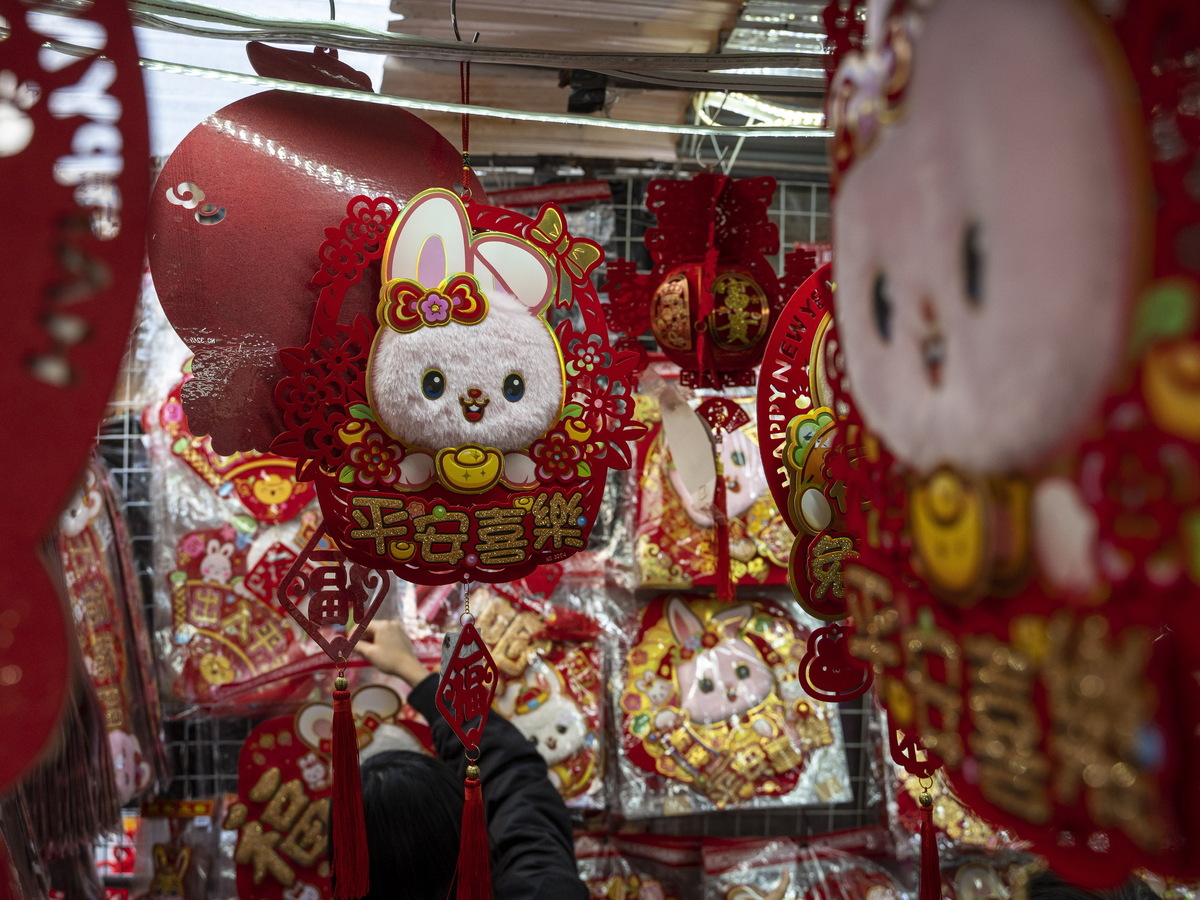
Decorations for Lunar New Year are on display at a shop in Hong Kong. Celebrations start this weekend as millions welcome the year of the rabbit.
Vernon Yuen/NurPhoto via Getty Images
The confetti from Times Square is long gone, but new year celebrations are far from over. For those celebrating Lunar New Year, the party is just getting started.
Sunday marks the beginning of the new year following the lunisolar calendar and what, for many, will be the start of the year of the rabbit.
Lunar New Year is celebrated by more than a billion people, and while traditionally a big holiday in Asian countries, it is also celebrated in communities worldwide. During this time, people pay respect to their elders and enjoy time with their families. Red envelopes stuffed with money are also staples of the holiday – as is a large, bountiful table filled with delicious dishes that have specific meanings.
Ahead of the holiday, NPR’s All Things Considered spoke with chefs around the U.S. about how they celebrate and what they’re making to help inspire your own celebrations.

There are many ways to fold dumplings, but Maggie Zhu of Omnivore’s Cookbook says not to worry about perfection. Folding them like a half-moon works just as well.
Maggie Zhu
hide caption
toggle caption
Maggie Zhu
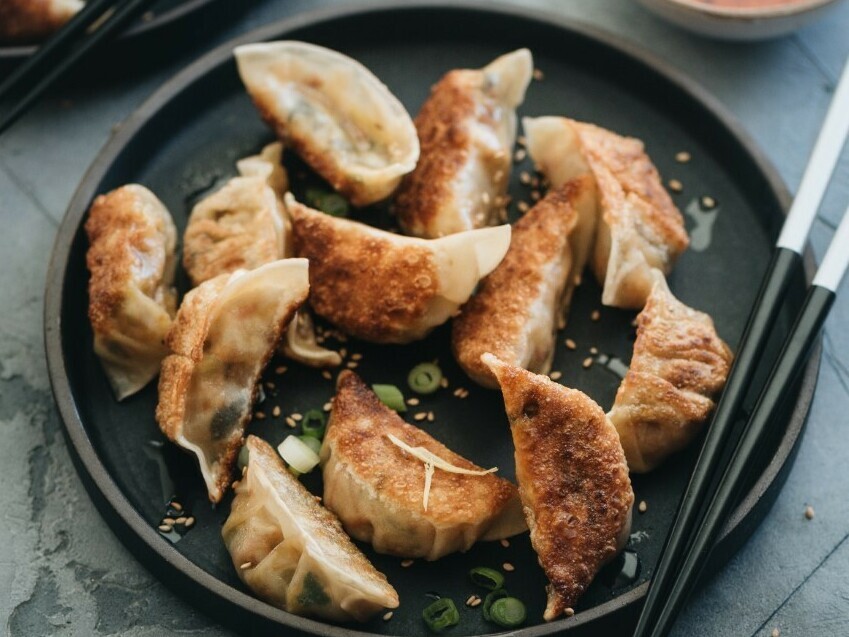
There are many ways to fold dumplings, but Maggie Zhu of Omnivore’s Cookbook says not to worry about perfection. Folding them like a half-moon works just as well.
Maggie Zhu
Maggie Zhu – Omnivore’s Cookbook, New York, N.Y.
Maggie Zhu started her blog Omnivore’s Cookbook nearly ten years ago. Since then she’s shared traditional Chinese recipes that she has adapted for home cooks. Zhu compares her Chinese New Year celebrations to Thanksgiving in the U.S.
“No matter where you live, even when people are overseas or all over the place, it’s always during this week of the holiday, they come back to home and they make a lot of good food to celebrate,” she said. “This is a really special celebration for family using the form of food.”

Noodles and dumplings are two of the most important dishes included on her family’s table every year, Zhu said. Together with her grandparents, parents and cousins, she works to make hundreds of dumplings on New Year’s Eve.
Instead of filling her dumplings with a meat mixture, Zhu opts for a mix of vegetables like cabbage, carrots and dried mushrooms as well as tofu. The recipe comes from her new cookbook, Chinese Homestyle, and offers diners a mix of textures without being overly seasoned.
Zhu said she knows dumplings can be an intimidating dish for people to take on, but her biggest tip is to keep it simple and have fun.
“I feel like one thing is that you just don’t be too strict about how you fold them. Because I know there are actually many, many ways to fold dumplings,” she said. “If this is your first time to make it, I’d say, you know, you don’t have to be perfect. You can simply fold them like a half moon…like a pierogi. There’s nothing wrong with that.”
Maggie Zhu’s recipe for vegetable dumplings
Kevin Tien – executive chef of Moon Rabbit, Washington, D.C.
While many people are looking forward to the year of the rabbit, Chef Kevin Tien is looking forward to the year of the cat, as the Vietnamese zodiac calendar doesn’t include a rabbit.
Tien is the executive chef of Moon Rabbit in Washington, D.C. He said that new year celebrations were very big in his house when he was growing up.
“My family is Buddhist so we do visit Temple around Lunar New Year, especially when we lived with my grandmother,” he said. “What I remember is definitely there was a lot of making sure that we were paying respects to our ancestors or any older family members that have passed away, which means definitely getting a lot of fruit and a lot of different offerings to put on a little memorial thing that we had in our home.”

Cooking was also a big part of Tien’s celebrations and there was one dish his grandmother always made that he now makes today: thit kho tau, a caramelized braised pork belly dish.
“You start by making a caramel in a pot. As soon as you get those beautiful deep amber color caramel, I take it off the heat and then I’ll add fresh chopped garlic, a little bit of ginger and chilies, and then you’ll really get all the aromatics,” he said.
The pork belly then gets added to the pot and coated in the caramel sauce before a can of coconut soda – Tien prefers the Coco Rico brand – is added to the pot and simmers for an hour and a half until the pork is tender.
While the pork is good, Tien said the soft-boiled eggs that go into the pot at the end to soak up the flavor of the pork are what he really loves and remembers when thinking about making the dish at his grandma’s house.
“I would take the egg and I would eat that with a little bit of sauce,” he said. “The egg was where it’s at.”
If you decide to make thit kho tau, Tien said the hardest part of the recipe is making the caramel, which is a process you can’t rush.
“I recommend just going low and slow until the caramel forms because it goes from something that’s this beautiful amber color to burnt sugar if you step away from the pot,” he said. “It’s a labor of love, and I recommend just sitting there and don’t stir it too much. Let the caramel and the sugar form by itself.”
Kevin Tien’s recipe for thit kho tau

Tteokguk, a Korean rice cake soup, is made from a broth that simmers for hours and soft tteok, rice cakes, representing the purity of a clean slate.
Joanne Lee Molinaro/Penguin Random House
hide caption
toggle caption
Joanne Lee Molinaro/Penguin Random House
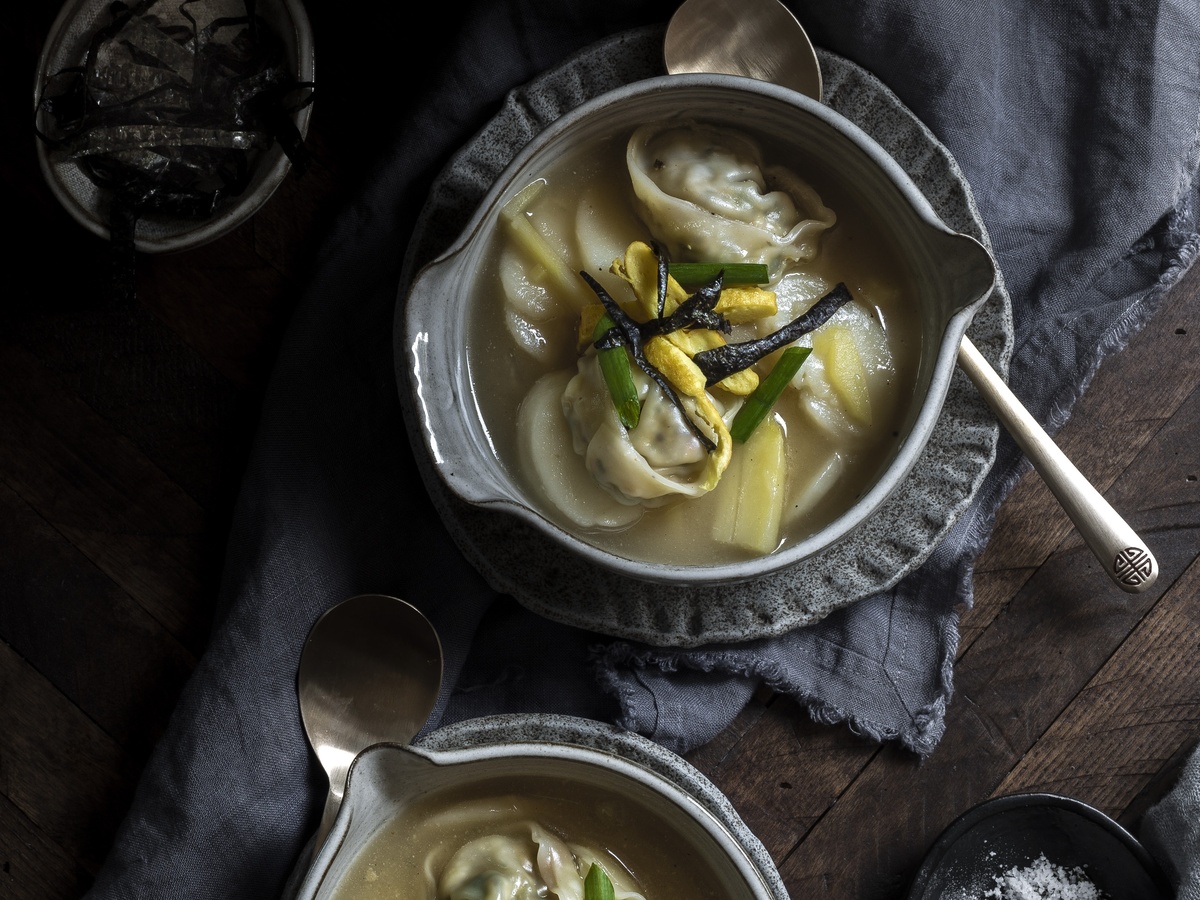
Tteokguk, a Korean rice cake soup, is made from a broth that simmers for hours and soft tteok, rice cakes, representing the purity of a clean slate.
Joanne Lee Molinaro/Penguin Random House
Joanne Lee Molinaro – The Korean Vegan, Agoura Hills, Calif.
When Joanne Molinaro thinks about Lunar New Year, she can’t do so without thinking about her maternal grandmother’s tiny apartment where her family would gather every year and eat tteokguk.
“It’s a rice cake soup, and she would make it for all of us,” Molinaro said. “And, as is very traditional in a Korean home, she didn’t have a table. She had one of those Korean-style tables, which is right on the floor, and she’d have these bamboo mats rolled out for all of us. And we’d show up dressed to the nines in our hanboks, which is traditional Korean dress costume.”
Today, Molinaro is an attorney and the writer and content creator behind The Korean Vegan channels popular on TikTok and YouTube. And she still makes tteokguk for the holiday, though her version is vegan.
“I do a lot of radish in my broth, some white onions in my broth, some white potatoes in my broth to give it a great sense of flavor and also dynamic breadth in the broth, which is really important,” she said.
The broth comes together after simmering for three hours or so. Molinaro said the combination doesn’t just create an incredible flavor, it also keeps the broth a light color which, when combined with the white color of the tteok, the rice cakes, represents the purity of the new year.
“The reason for that, it’s supposed to symbolize the purity of a clean slate. Your new year is starting. There’s no blemishes in it yet, and that is a very comforting feeling, knowing that I have this whole year to start over. And that’s what the white rice cakes are meant to symbolize,” she said.
Joanne Lee Molinaro’s recipe for tteokguk

There are endless flavors of puto – Abi Balingit likes to flavor hers with pandan and anise.
Nico Schinco/Harvest, an imprint of HarperCollins Publishers
hide caption
toggle caption
Nico Schinco/Harvest, an imprint of HarperCollins Publishers
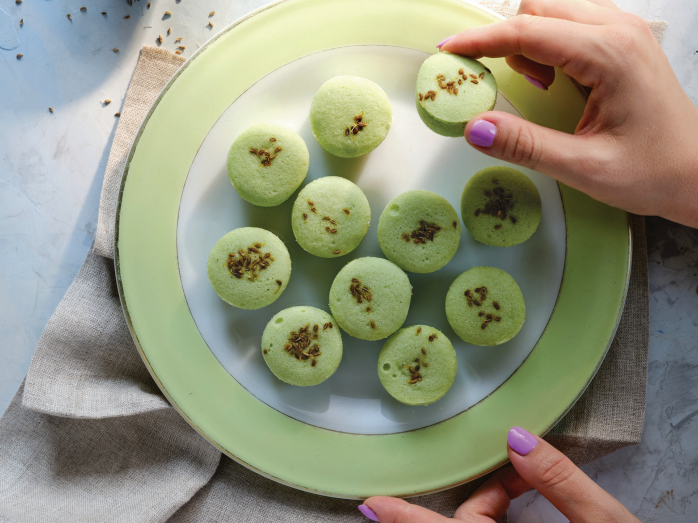
There are endless flavors of puto – Abi Balingit likes to flavor hers with pandan and anise.
Nico Schinco/Harvest, an imprint of HarperCollins Publishers
Abi Balingit – The Dusky Kitchen, Brooklyn, N.Y.
Abi Balingit is a Filipino baker based in Brooklyn, from where she shares her recipes on her blog The Dusky Kitchen. Her time is split into days working in the live music industry doing email marketing and nights baking in her home.
When it comes to Lunar New Year, Balingit said she’s made a new tradition with her friends.
“Here in New York, I really have a nice chosen family of friends, and my really good friend … she’ll always do something for Lunar New Year. Usually, it’s a dumpling party,” Balingit said.
When thinking about what she might bring to this year’s celebrations, Balingit chose pandan and anise puto – bite-sized steamed rice cakes – from her upcoming cookbook, Mayumu: Filipino American Desserts Remixed.
There are countless types of puto available, but for her recipe, Balingit chose to flavor her batter with pandan, both the leaves and the extract to add to the light green coloring of the dessert.
“Pandan is also very like, I guess [a] mainstay traditional Southeast Asian flavor. I grew up eating a lot of pandan desserts which I guess another word for it is screwpine leaves, but it is kind of like vanilla-y pistachio-y flavor.”
She said she likes these steamed cakes for fiestas and parties because they don’t require you to turn on the oven to get their signature light and fluffy texture.
“I just really love this because, with the anise on top of this small little rice cake, you get like a lot of refreshing notes of licorice and a palate cleanser before your next dish,” she said. “I would eat it literally even in between certain bites of really savory food if you just want something to be like, really nice and lightly sweet.”
Abi Balingit’s recipe for pandan and anise puto

Growing up, Rosie Nguyen always picked out a sesame ball as a sweet treat with her family on Sundays. Today she said she brings them to her Lunar New Year celebrations because of all the good memories she associates with them.
Rosie Nguyen
hide caption
toggle caption
Rosie Nguyen

Growing up, Rosie Nguyen always picked out a sesame ball as a sweet treat with her family on Sundays. Today she said she brings them to her Lunar New Year celebrations because of all the good memories she associates with them.
Rosie Nguyen
Rosie Nguyen – Rose Ave Bakery, Washington, D.C.
Growing up, Rosie Nguyen remembers going out to eat with her family on Sundays and hitting up an Asian bakery afterward, where she would always pick out three sweet treats: a sesame ball, a pineapple bun and a milk tea.
“Those two pastries just were always at the end of my meal, and it always tasted right,” Nguyen said.
Today, Nguyen is the founder and head chef behind Rose Ave Bakery, one of the D.C. region’s top Asian bakeries. Every year, the bakery staff creates a special Lunar New Year menu.
“It’s very important for us because, as Asian Americans, I celebrate this with my family, but I love to be a part of every else’s celebration so that they can bring treats to their celebration with their friends and family,” Nguyen said.
For her own gathering, she likes to go back to those treats of her childhood and make sesame balls for her family.
“That’s why I’m bringing it to Lunar New Year these days because it just brings back memories, and it means so much to me,” she said.
Vietnamese people usually opt to put a soft, nutty mung bean filling into their sesame balls, Nguyen said, but she prefers a red bean filling because she is “looking for a little bit more sweetness.”
These crispy treats are simple: a sticky mixture of glutinous rice flour, water and sugar is wrapped around a filling of your choice and coated in sesame seeds before being fried to golden brown perfection. They might not be the most elaborate dessert, but they’re enjoyed by one and all — and that’s really what the holiday is about.
“Food in general brings family together. It brings people together,” Nguyen said. “So for Lunar New Year, specifically, food is a way for family and friends to gather so that they can wish each other good luck, good fortune, prosperity and longevity.”
Rosie Nguyen’s recipe for sesame balls
Edited by Mallory Yu.
Recipes
Vegetable dumplings by Maggie Zhu, makes 50 dumplings
Ingredients
1/4 cup (9 g) dried shiitake mushrooms (7 or 8 small mushrooms)
2 cups (480 ml) hot water, or as much as needed to cover mushrooms
2 tablespoons dried wood ear mushrooms (or 1/2 cup, or 75 g. minced bamboo shoots)
1 small bundle (11/2 ounces, or 45 g) dried rice vermicelli noodles
5 tablespoons peanut oil, divided
4 cloves garlic, minced
1 tablespoon minced ginger
1 cup (110 g) finely chopped carrots (about 4 medium carrots)
2 cups (140 g) shredded cabbage 3 tablespoons soy sauce, divided 1 tablespoon Shaoxing wine 1 teaspoon curry powder
1/2 block (8 ounces, or 227 g) firm tofu, crumbled by hand
1 teaspoon maple syrup (or sugar) 1/2 cup (30 g) finely chopped scallions 50 frozen dumpling wrappers, thawed
Dumpling dipping sauce or Chinkiang vinegar, for serving
Directions
In separate medium bowls, cover the dried shiitake mushrooms and wood ear mushrooms with at least 1 cup (240 ml) of hot water each. Let the mushrooms soak for 20 minutes, or until tender throughout.
Strain and gently rinse the mushrooms with water. Squeeze out the excess water from the shitake mushrooms and rub off any debris. Remove and discard the tough stems of the shiitake mushrooms and mince the caps; this should yield about 1⁄4 cup (35 g) loosely packed minced shiitakes. Remove and discard the tough parts of the wood ear mushrooms and mince the mushrooms if they are big, or thinly slice them if small; this should yield about 1⁄2 cup (70 g) loosely packed minced wood ear mushrooms.
Cook the dried rice vermicelli according to the package instructions. Strain the cooked vermicelli and coarsely chop the noodles into 1⁄2-inch (1 cm) pieces.
In a large nonstick skillet, heat 2 tablespoons of the peanut oil over medium heat until hot. Add the garlic and ginger, stirring a few times to release the fragrance. Add the shiitake mushrooms, wood ear mushrooms, and carrots and cook and stir for 2 minutes. Add the cabbage, 1 tablespoon of the soy sauce, Shaoxing wine, and curry powder. Cook and stir for another 2 minutes, until the cabbage turns tender and all the liquid has evaporated. Transfer to a large plate to cool to room temperature.
Heat another 2 tablespoons of the peanut oil in the same pan. Add the tofu and cook for 1 minute, breaking it up into smaller chunks with a spatula. Add the vermicelli, the remaining 2 tablespoons soy sauce, and the maple syrup. Cook and stir until all the liquid has evaporated, 2 minutes or so. Transfer to a large mixing bowl and let cool to room temperature.
Once the tofu and cabbage mixtures have cooled, add the cabbage mixture to the bowl with the tofu, add the scallions, and stir to mix well.
Thit kho tau by Kevin Tien, serves 6
Ingredients
1.5 lbs skin off pork belly cut into 1 inch cubes
2 tablespoons fish sauce
1 teaspoon freshly ground black pepper
6 large eggs
1 cup sugar
¼ cup water
2 shallots minced
3 red thai chiles sliced into thin rings
1 can Coco Rico soda
1 bunch scallions thinly sliced
Steamed white rice for serving
Directions
Toss the pork belly with the fish sauce and pepper and let it marinade in the refrigerator for at least 1 hour or up to overnight.
Bring a medium pot of water to boil and boil eggs for 6 minutes. While the eggs are boiling, prepare an ice bath. Remove the eggs after 6 minutes and cool in ice bath. Once the eggs have cooled, peel and set aside.
In a dutch oven or other heavy bottom large pot, combine the water and sugar and stir over medium-low heat until the sugar dissolves. Leave the mixture alone without stirring for 5-6 minutes to create a caramel, watching closely as the color changes from light golden to a rich amber color. Once this color is reached, immediately remove the pot from heat.
Add the shallots and thai chilis and leave to cook from the residual heat of the caramel until slightly softened and aromatic, about 2 minutes. Return the pot to medium heat, add the pork belly, and toss it in the caramel to evenly coat.
Stir in the soda, increase the heat to high, and bring to a boil. Lower the heat to maintain a simmer, partially cover, and summer for about 1.5 hours until the pork belly is very tender.
Remove the pot from heat and skim the fat from the top if needed. Place the soft boiled eggs into the sauce to stain them a caramel color and infuse them with the flavor of the pork.
Top with scallions and serve with steamed white rice.
Tteok-mandu guk (rice cake soup with dumplings) by Joanne Molinaro, serves 4
Ingredients
1 tablespoon extra- virgin olive oil
1 teaspoon sesame oil ¼ cup chopped white onion
1 clove garlic, minced 2 teaspoons salt, plus more for serving
1½ cups frozen or fresh garraetteok oval discs
1 Yukon Gold potato, cut into half- moons
3 cups vegetable broth (recipe follows)
4 or 5 Mandoo (recipe follows)
1 teaspoon freshly ground black pepper
For garnish:
Strips of gyerranmari
Nori strips
2 scallions, chopped
Directions
In a large pot, heat the olive oil and sesame oil over medium high heat until hot, about 30 seconds. Add the white onion, garlic, and salt and cook until fragrant, about 2 minutes.
Add the rice cakes and the potatoes and stir to coat evenly with oil. Add the broth and deglaze the bottom of the pot. Bring it to a boil, then reduce the heat to low and simmer until the potatoes are nearly cooked, about 15 minutes.
Add the mandoo (dumplings) at the very end and cook for 1 more minute. Season with salt and pepper to taste.
To serve, garnish with the gyerranmari, nori strips, and scallions.
Vegetable broth, makes 6 cups
Ingredients
2 tablespoons sesame oil
2 carrots, roughly chopped
1 stalk celery, roughly chopped
3 cloves garlic, unpeeled
2 white onions, unpeeled and roughly chopped
4 green onions, untrimmed and roughly chopped
1 russet potato, roughly chopped
½ cup roughly chopped daikon radish, unpeeled
2 large or 3 small dried shiitake mushrooms
2 large or up to 4 small dried porcini mushrooms
7 to 8 leaves light- colored cabbage
1 large sheet dashima (kelp)
1 tablespoon black peppercorns
Directions
In a large soup pot, heat the sesame oil over medium heat. Add the carrots, celery, garlic, onions, potato, daikon, dried mushrooms, cabbage leaves, and dashima to the pot and cook for 2 minutes.
Add 12 cups of water and the peppercorns and bring to a boil over medium- high heat. Reduce the heat to low and simmer for 30 minutes.
Remove the dashima and let the broth simmer until reduced in half, about 3 hours.
Discard the vegetables and pour the stock through a fine-mesh sieve or cheesecloth to strain out any bits and pieces.
Mandoo (dumplings) by Joanne Molinaro, makes 40 to 50 small dumplings
Ingredients
1 tablespoon extra-virgin olive oil
1 tablespoon sesame oil
1 potato, roughly chopped
2 carrots, roughly chopped
4 scallions, roughly chopped
10 cremini mushrooms, roughly chopped
1 cup Baechu Kimchi
2 to 3 cloves garlic, roughly chopped
2 teaspoons salt
1 teaspoon freshly ground black pepper
1 tablespoon soy sauce
1 tablespoon toasted sesame seeds
2 ounces sweet potato vermicelli, cooked according to package directions
1 (16-ounce) block extra-firm tofu, pressed
1 tablespoon soup (light) soy sauce
1 (14-ounce) package dumpling wrappers
Directions
In a large skillet, heat the olive oil and sesame oil over medium-high heat. Add the potato, carrots, scallions, mushrooms, kimchi, garlic, salt, and pepper and cook until the vegetables are soft, about 5 minutes. Add the regular soy sauce to deglaze the pan and cook for 1 more minute.
Scrape all the cooked vegetables into a food processor. Add the sweet potato noodles and pulse 16 to 20 times, until the vegetables are at almost a paste like consistency. Transfer the mixture to a large bowl. Add the tofu and use a fork to mash up the tofu and mix it into the processed vegetables. Season with more salt as needed—this is your last opportunity to season the filling. Use the filling to stuff the dumplings right away or place it in the refrigerator until you are ready to wrap. (The process is easier if the filling has been in the refrigerator for about 1 hour.)
Reprinted from The Korean Vegan Cookbook by arrangement with Avery Books, a member of Penguin Group (USA) LLC, A Penguin Random House Company. Copyright © 2021, Joanne Lee Molinaro
Pandan and anise puto by Abi Balingit, makes 48 puto
Ingredients
1 frozen pandan leaf (optional, but it is ideal to use if you want more of an intense flavor instead of just using the extract alone), thawed and tied into a knot
3/4 cup unsweetened, full- fat coconut milk
1 large egg white, at room temperature
1/4 teaspoon pandan extract
1 cup rice flour
1 tablespoon baking powder
1/4 cup plus 2 tablespoons sugar
1/4 teaspoon kosher salt
1/4 teaspoon plus a pinch anise seeds
Directions
In a small saucepan, bring 1/4 cup water to a boil and then add in the pandan knot, if using. Turn off the heat and let the pandan knot steep in the water for 10 minutes. Remove the pandan knot and set the water aside.
Spray 48 mini muffin molds with nonstick spray and set aside. I like to use silicone molds for steaming these cakes because the aluminum pans tend to be too big for my steamer.
In a large measuring cup, whisk together the pandan-infused water, if using the pandan leaf (if not, use 1/4 cup regular water), coconut milk, egg white, and pandan extract until well combined.
In a medium bowl, whisk together the rice flour, baking powder, sugar, and salt until the baking powder is evenly distributed.
Pour the wet ingredients into the bowl. Whisk until the batter is smooth. Let the batter rest uncovered until some tiny bubbles form at the surface, 5 to 7 minutes. This resting time allows for the flour to better absorb the liquid and helps the puto rise better. While the batter is resting, prepare a steamer by filling a large pot with 2 inches of water and fitting the pot with a steel steaming rack. Bring the water to a boil over medium- high heat.
Fill each muffin cavity with 1 tablespoon of the batter. Sprinkle a couple of the anise seeds on top of each one.
Place the molds on the steaming rack and cover the pot with a lid. Depending on the size of your steamer, you may have to steam the puto in multiple batches and add more water as you go. Steam for 7 to 8 minutes, or until a toothpick inserted in one comes out clean. When you gently touch the tops of the puto they should spring back. Be careful not to burn yourself while testing them for doneness.
Using tongs, remove the molds from the steamer and allow the puto to cool for 1 minute before inverting them onto a plate. Repeat this process until all the puto are cooked.
Serve the puto once they’ve cooled to room temperature. Store any leftovers in an airtight container in the fridge for up to 3 days.
Excerpted from the book MAYUMU: Filipino American Desserts Remixed by Abi Balingit. Copyright © 2023 by Abi Balingit. From Harvest, an imprint of HarperCollins Publishers. Reprinted by permission.
Ingredients
1/3 cup granulated sugar
1 cup hot water (add more if necessary)
1 1/2 cups glutinous rice flour
7 red bean paste
1/4 cup sesame seeds
4 cups vegetable oil
Directions
Dissolve sugar in the hot water. In a bowl, add the rice flour and pour in the syrup. Start mixing with a spatula and then knead with your hands until the dough is formed and is pliable. Wrap with plastic and let rest for 30 mins at room temp
Wet sesame seeds in a bowl, they should be moist. Set aside.
Weigh out red bean paste to 20 grams each, and set it aside on parchment. Weight out sesame balls to 40 grams.
To assemble, flatten out dough in your hands about 2.5 inches wide (keep a small bowl of water to wet hands if necessary) and place red bean filling in the middle and wrap with the dough to form a ball. Gently roll the ball in your hands until smooth.
Coat in the sesame balls and roll in your hands to adhere the seeds.
Fry in oil of 300 F for 10 mins, as the balls start to float, keep moving them around with a slotted spoon or spider. Fry for another 5-7 mins at 350 F to ensure they are crisper and have good structure.
Transfer to a rack or plate lined with paper towels. Let cool for 5-10 minutes. Best enjoyed warm.