7 essential cocktail recipes, including martini, Manhattan and Negroni

7 essential cocktail recipes, including martini, Manhattan and Negroni

Comment

Whenever I entertain friends at my place, I wonder if one of them might challenge me — or rather, challenge my booze collection — by asking for a drink they’ve never had before. Will someone give me a reason to use that bottle of crème de violette I bought a decade ago and have only used two ounces of, or ask me to make something with that weird amaro hidden on the lower shelf? Maybe they’ll want a missionary’s downfall or a flor de jerez or an alamagoozlum, a drink I have never made but really enjoy saying out loud.

It never happens. Even my fellow cocktail-geek friends don’t typically arrive with schemes to throw down the booze gauntlet. They come to hang out, talk, relax and have a good drink, often something comforting and familiar. They want a margarita. They want an old-fashioned. They want something they know and love.

They want something on this list. And if you know how to make these drinks, you’ll be a well-prepared cocktail host, and also well-prepared — if you want to be — to dive deeper down the cocktail rabbit hole.

These drinks are all essentials and all classics. It says something that after 20 years (give or take) of the cocktail renaissance and the explosion of bibulous invention and creativity it brought, the drinks many still regard as the most critical essentials have all been around for much longer. A few of them have been here for more than a century.

Which is not to say that many newer drinks aren’t excellent. But a lot of the best and most enduring newer tipples were built on the foundations these drinks laid, executing their proportions and principles — fresh juices, balanced flavors, quality spirits — in new ways.

All of these essential cocktails are makeable with ingredients easily sourced at your neighborhood liquor and grocery stores, which is certainly part of what’s helped them spread around the world. In making these, you’ll learn a lot about cocktails as a whole. They’ll teach you techniques that apply across the category: how long to mix, how long and hard to shake, how to strain. You’ll learn about balance, you’ll (hopefully) learn not to be afraid of a little bitterness, you’ll learn how salt and sugar act as flavors and enhancers of other flavors, a cheer squad urging their fellow ingredients to greatness.

Make them repeatedly, and they’ll teach you one of the most important lessons for the home cocktailer — what you like. What is your preferred gin-to-vermouth ratio in a martini, a matter that has been opined upon by prime ministers and presidents? Do you agree the Negroni is best as an equal-parts drink, or do you like it better when you boost the gin a bit? Do you prefer to double-strain your daiquiri until it’s a silky froth, or do you kind of like the mouthfeel of the tiny ice chips a single strain delivers? What’s the effect of switching out the vermouths in your Manhattan, or bitters or whiskeys — or maybe an aged rum?

All these questions lead to more questions. See how deep the rabbit hole goes?

There are correct answers to historical questions about these drinks (and each of these drinks can provide a launchpad to explore those fascinating histories, should you be inclined). But there are no “correct” answers to matters of taste. There’s just learning how to make a drink that pleases, using a few ingredients and a few simple tools to mix yourself from here to there, and from there to … wherever next catches your fancy.

So the next time a friend asks you for a drink, you’ll be able to tell them: I got you.

Everyone agrees the martini is an essential drink: Heck, its glass has become the universal sign of the cocktail. Yet for such a canonical beast, the martini is perennially personalized, a drink everyone dials into their own tastes. Gin or vodka? Purists will argue for the former, but vodka has plenty of advocates. Vermouth-to-base-spirit ratio? Debated endlessly, but if you’re using good, well-cared-for vermouth, it’s not to be feared. Shaken or stirred? The latter is the rule, but shaking has advocates. (They’re outliers. Even Bond, James Bond.) Add bitters? Garnish with a lemon twist or an olive? Your call. Try this recipe, adjust to your liking, and then be prepared to adjust and argue about it with every new drinker you encounter for the rest of your life.

If you like it, try: Martinez, Bijou

From various recipes, adapted and tested by M. Carrie Allan.

Click here for a printer-friendly version of the recipe.

  • Ice
  • 2 1/2 ounces dry gin, such as Plymouth, Beefeater or the citrusy Tanqueray No. 10
  • 1/2 ounce dry vermouth, such as Dolin
  • 1 or 2 dashes orange bitters
  • Twist of lemon peel, for garnish

Chill a cocktail (martini) glass or coupe.

Fill a mixing glass with ice, then add the gin, vermouth and bitters (to taste). Stir gently for 20 seconds, then strain into the chilled glass.

Garnish with the twist of lemon peel.

A boozy, classic, deep dive into whiskey and sweet vermouth. These days, most craft-cocktail types opt for rye, which has a spicier profile than bourbon, but the main thing is to pick a whiskey you like and a vermouth that’s worthy of it. (Cocchi Storico Vermouth di Torino is terrific; Carpano Antica can be a little dominant, but if you like its heady vanilla-spice pow, it can also be delicious.) Small but interesting tweaks can happen via new types of bitters (chocolate or pimento makes for a nod toward autumn; Peychaud’s or cardamom will bring out other notes), but orange and Angostura are reliably on point.

From various recipes, adapted and tested by Allan.

Click here for a printer-friendly version of the recipe.

  • Brandied cherry, for garnish, such as Luxardo or Amarena Fabbri brand
  • Ice
  • 2 dashes Angostura and/or orange bitters
  • 2 ounces rye or bourbon whiskey
  • 1 ounce sweet vermouth
  • Twist of orange peel (for its oils; optional)

Chill a cocktail (martini) glass, adding the brandied cherry garnish.

Fill a mixing glass with ice, then add the bitters, whiskey and vermouth. Stir for 20 seconds, then strain into the chilled glass.

Twist the orange peel, if using, over the surface of the drink to express its oils, then discard it.

Dates to: 1919, most likely

Supposedly no one likes a Negroni the first time they taste one, and some drinkers never come around on this bright red flag of a drink. It’s an Italian liqueur that brings that fiery color and throws down the gauntlet: Campari, the deeply bittersweet, orangey and herbal aperitivo that complements equal portions of dry gin and sweet vermouth. It’s boozy, it’s strange, it’s a high-wire balancing act, and once your palate adjusts to the bitterness, you may come to crave it — and regard it as the gateway to drinks incorporating bitter flavors.

If you like it, try: ‘White’ Negroni, Boulevardier, Little Italy

From various recipes, adapted and tested by Allan.

Click here for a printer-friendly version of the recipe.

  • Ice
  • 1 ounce Campari
  • 1 ounce sweet vermouth, such as Cocchi or Dolin
  • 1 ounce dry gin
  • Twist of orange peel, for garnish

Fill a mixing glass with ice, then add the Campari, sweet vermouth and gin. Stir for 20 seconds, then strain into the glass.

Twist the orange peel over the surface of the drink to express its oils, then drop it into the drink.

Perhaps the first and most genre-defining of cocktails, the old-fashioned has been carried back into heavy sipping rotation by the craft-cocktail renaissance and smart bartenders who stopped treating it as a vehicle for transporting bad fruit salad. Good bars opt to leave out the pile of pineapple and neon cherries that were once all too common. You may want a twist of citrus for its fragrant oils, but that’s all the embellishment you’ll need. A little sugar, good whiskey (it can be bourbon or rye-based, depending on your preference) and the spice of bitters to button up the whole thing nice and neat.

If you like it, try: Oaxaca Old Fashioned, Sazerac

From Jason Wilson; adapted by Allan. Tested by Michael Taylor and Allan.

Click here for a printer-friendly version of the recipe.

  • 1 teaspoon granulated sugar (may substitute 1 small sugar cube)
  • 1 teaspoon warm water
  • 2 dashes Angostura bitters
  • Strip of orange or lemon peel
  • 2 ounces bourbon or rye
  • 1 large ice cube

In an old-fashioned glass, combine the sugar, warm water and bitters, then add the citrus peel and muddle.

Add the bourbon or rye, and stir until all the sugar has dissolved.

Add a large ice cube, stir briefly to chill, and serve.

With two ingredients, plus a couple of slices of citrus, the gin and tonic seems so simple it barely warrants a recipe. It’s gin, it’s tonic: Where’s the complication? But the flavors of juniper mixed with the tongue-livening bitter bubble of tonic have made this drink the essential highball for centuries. Its simplicity makes the quality of the ingredients and the right proportions critical. Once you can make the classic, branch out into new gins, tonics and garnishes. (Look to Spain for inspiration; there, variations on the “gin-tonic” are infinite.)

If you like it, try: Tom Collins, Pimm’s Cup, Moscow Mule

From various recipes, adapted and tested by Allan.

Click here for a printer-friendly version of the recipe.

  • Ice
  • A few lime wheels
  • 2 ounces dry gin
  • 3 or 4 ounces good tonic water, such as Fever-Tree

Fill a highball glass with ice, layering in a few lime wheels (to taste).

Add the gin and the tonic, then stir gently.

Crisp, tart and elegantly simple, a good daiquiri is a pale, delicious thing of beauty. The classic version is not frozen, but it is still perfect for drinking beachside or for bringing the beach to where it ain’t. Look for a good Cuban-style light rum (Havana Club, Banks 5 Island) to get you started, and then adjust as you get acquainted with the drink (aficionados sometimes graduate to older rums, but the light is classic). A simple sugar syrup balances out the tartness of the lime and keeps the drink from getting too watered down by its icy shake.

If you like it, try: Mojito, Last Word, Hemingway Daiquiri

From various recipes, including “Smuggler’s Cove: Exotic Cocktails, Rum, and the Cult of Tiki,” by Martin and Rebecca Cate (Ten Speed Press, 2016); adapted and tested by Allan.

Click here for a printer-friendly version of the recipe.

  • Ice
  • 2 ounces white rum, such as Caña Brava
  • 1 ounce fresh lime juice
  • 1/2 ounce rich demerara syrup (see NOTE)

Chill a cocktail (martini) glass.

Fill a cocktail shaker with ice, then add the rum, lime juice and demerara syrup. Seal; shake vigorously for 15 seconds, then strain into the chilled glass; double-strain only if you want to remove the tiny ice shards from the drink. (Some tipplers enjoy them in a daiquiri.)

NOTE: To make the rich demerara syrup, combine 2 cups of demerara or turbinado sugar and 1 cup of water in a small saucepan over medium-high heat. Bring to a brief boil; once the sugar has dissolved, remove the saucepan from the heat. Cool completely before using or storing (in the refrigerator, for up to 2 weeks).

Dates to: Unknown, but likely 1930s to ’40s

Like the daiquiri, the margarita is a classic from the cocktail family known as sours, a simple but delicious clan of drinks in which the DNA is made up of spirit, citrus and sweetener. You should taste the tequila (use a good blanco, which is unaged, or reposado, which is lightly aged), the lime and the sweetness from the orange liqueur; a touch of agave syrup boosts the sweetness and the flavor of the spirit’s origin plant. Salt is optional, but it functions the way it does in cooking, tying the whole package together.

If you like it, try: Mezcal Margarita, Paloma

Adapted from Julio Bermejo’s recipe for Tommy’s Mexican Restaurant, from Robert Simonson’s “A Proper Drink” (Ten Speed Press, 2016). Tested by Allan.

Click here for a printer-friendly version of the recipe.

  • Lime half (for rimming; optional), plus 1 ounce fresh lime juice
  • Large/coarse-grained salt (for rimming; optional)
  • Ice
  • 1 3/4 ounces tequila
  • 1/2 ounce Cointreau
  • 1/4 ounce agave nectar

If you are serving the drink straight up, use a cocktail (martini) glass; if you are serving it on ice, a rocks glass will work. Either way: If you are rimming it with salt, make a small pile of salt on a plate. Rub the lime half around the outside rim of the glass, then roll that rim gently over the salt to create a salt edge.

Add ice to the glass, if using. Fill a cocktail shaker with ice, then add the lime juice, tequila, Cointreau and agave nectar. Seal and shake vigorously for 15 seconds, then strain into the glass.

correction

An earlier version of this story misspelled the name of the margarita recipe source. This version has been updated.
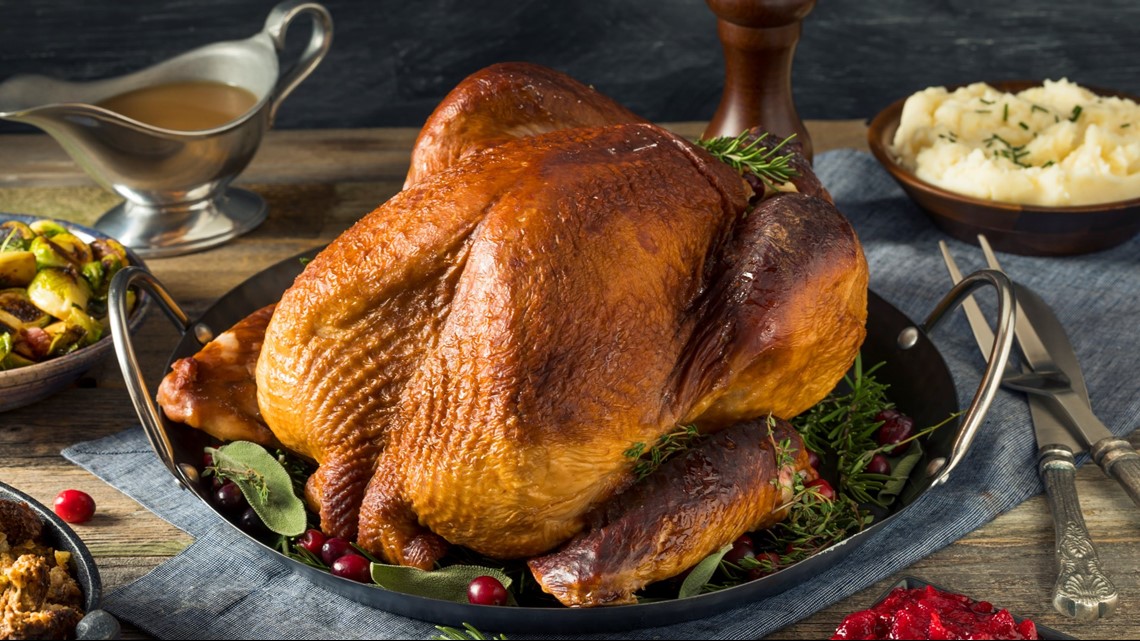
KARE 11 Saturday cooking show tips and recipes

KARE 11 Saturday cooking show tips and recipes

GOLDEN VALLEY, Minn. — Every year, the hosts of the KARE 11 Saturday show throw a big cooking party before Thanksgiving and share their recipes.

This year, the show turns 25.

Bel’s recipe: Sue Erickson’s Prosciutto Stuffing

1 Leek, halved, rinsed, and sliced

1 (6oz) package of sage and herb stuffing mix cubes

1 (14 ½ oz.) chicken broth

3 oz. pine nuts, toasted 

1 pkg. proscuitto, sliced thin crosswise

1 cup shredded parmesan cheese 

Preheat oven to 350 degrees. In skillet, melt butter over medium high heat.  Saute leeks 4 to 5 minutes, set aside.  In large mixing bowl, combine stuffing cubes, broth, pine nuts, cranberries, proscuitto, parmesan, and leeks.  Spoon mixture into a well greased large muffin pan or 2 quart baking dish.  Cover and bake 25 to 30 minutes.  Remove cover and fluff to fork.  Bake an additional 5 to 10 minutes, uncovered.  Serves 6.

Chris’ recipe: Gordon Ramsey mashed potatoes (3 variations)

1kg Yukon Gold or Désirée potatoes, peeled and cut into 1cm cubes

Sea salt and freshly ground black pepper

Variation 1: Mustard Mash

Variation 2: Truffle Mash

30g porcini and truffle paste

Variation 3: Garlic and Herb Mash

2 garlic cloves, peeled and crushed

2 tbsp woody herbs, e.g. rosemary, thyme, sage, leaves finely chopped

2 tbsp soft herbs, e.g. parsley, chives, dill, finely chopped

Bring a pan of salted water to the boil. Add the potatoes and cook for 15 minutes with the lid on.

Meanwhile, if you’re making the regular, mustard or truffle mash, put the butter, milk and cream into a small saucepan and bring to a gentle simmer. For the mustard mash, add the mustards to the warm cream mixture. For the truffle mash, add the truffle paste and truffle oil to the pan instead.

For the garlic and herb mash, heat the butter in a small saucepan, add the garlic and woody herbs, and cook for 2–3 minutes. Pour in the milk and cream and bring to a gentle simmer. Add the soft herbs and cook for another 2–3 minutes.

When the potatoes are cooked, drain in a colander. Put them through a potato ricer as quickly as possible and return them to the saucepan.

Pour over the flavoured cream and mix well. Season to taste with salt and pepper, stir again and serve.

Tips: The hotter the potato when you put it through the ricer, the fluffier the mash, so move fast once the potatoes have been drained.

Bobby’s recipe: Lunds & Byerly’s Wild Rice Waldorf Salad

1 (8 ounce) can pineapple tidbits in own juice

2 Granny Smith apples, diced (2 cups)

2 Red Delicious apples, diced (2 cups)

Drain pineapple, reserving 1 tablespoon of juice

Combine pineapple, wild rice, apples, celery and walnuts in a large bowl.

Stir reserved pineapple juice and remaining ingredients together until sugar is dissolved.

Fold dressing into salad. Refrigerate, covered, several hours.

KARE staff’s favorite Christmas cookies: Julie’s pick: Puff

Cream shortening and sugar until light.

Sift dry ingredients and add alternately with sour cream.

Drop by teaspoonful onto cookie sheets.

Bake at 325 for 8 minutes. Frost while hot.

Brown 1/4 cup butter. Remove from heat and beat in 3 cups *powdered sugar, 3/4 tsp. vanilla and about 3 Tbsp. hot water.

*Start out with half the powdered sugar. Not too thick.

Cookies are very soft. Can add sprinkles after frosting.

Nikki’s pick: The Spritz

John’s pick: Peanut Butter Blossom

48 HERSHEY’S KISSES Milk Chocolates

3/4 cup REESE’S Creamy Peanut Butter

1/3 cup packed light brown sugar

1 1/2 cups all-purpose flour

1/3 cup granulated sugar, for rolling (additional)

Heat oven to 375°F. Remove wrappers from chocolates.

Beat shortening and peanut butter in a large bowl until well blended. Add 1/3 cup of granulated sugar and brown sugar; beat until fluffy. Add egg, milk and vanilla; beat well. Stir together flour, baking soda and salt; gradually beat into peanut butter mixture.

Shape dough into 1-inch balls. Roll in granulated sugar; place on ungreased cookie sheet.

Bake 8 to 10 minutes or until lightly browned. Immediately press a chocolate into the center of each cookie; cookie will crack around edges. Remove from cookie sheet and onto a wire rack. Cool completely.

Kent’s pick: White chocolate macadamia nut 

¾ cup packed light brown sugar

½ teaspoon vanilla extract

½ teaspoon almond extract

2 ½ cups all-purpose flour

1 cup coarsely chopped macadamia nuts

1 cup coarsely chopped white chocolate

Preheat the oven to 350 degrees F (175 degrees C).

Cream butter, brown sugar, and white sugar together in a large bowl until smooth. Beat in eggs one at a time, then stir in vanilla and almond extracts.

Combine flour, baking soda, and salt in another bowl. Gradually stir the dry ingredients into the butter mixture. Fold in macadamia nuts and white chocolate.

Drop dough by teaspoonfuls onto ungreased cookie sheets.

Bake in the preheated oven until golden brown, about 10 minutes.

Ben’s pick: Peanut Butter Cookies with Blackberry Jam

1/3 cup unsweetened cocoa powder, such as

1/8 teaspoon fine sea salt

1 stick (1/2 cup) unsalted butter, at room

temperature, cut into 1/2-inch pieces

3/4 cup creamy peanut butter, at room

3/4 cup, plus 1/4 cup granulated sugar

1/2 packed cup light brown sugar

1 egg, room temperature, beaten

1 teaspoon pure vanilla extract

Put an oven rack in the center of the oven. 

Preheat the oven to 375 degrees. 

Line two baking sheets with parchment paper. 

In a medium bowl, sieve together the flour, cocoa powder, baking soda, and salt.

In a stand mixer, fitted with the paddle attachment, beat the butter, peanut butter, 3/4 cup of the granulated sugar, and the light brown sugar together, scraping down the sides of the bowl as needed, until smooth, about 30 seconds.

Add the egg and vanilla extract and mix until blended. With the machine running on low speed, gradually add the flour mixture until incorporated.

Put the remaining 1/4 cup granulated sugar in a small bowl. 

Form the dough into 1/4 cup-size balls and roll in the sugar. 

Arrange 5 balls of dough, evenly apart, on each baking sheet. 

Using a round 1/4 teaspoon measure, or the thin end of a wooden spoon, make a hole in the center of each ball of dough, 1/2 to 3/4-inch deep. 

Spoon 1 teaspoon of jam into each hole. 

Bake until the dough has spread and the surface of the cookies are crackled, 11 to 14 minutes. 

Cool for 5 minutes and then transfer to a wire rack to cool completely, about 20 minutes. 

Arrange the cookies on a serving dish and serve.

Main Event: The Bird

We know some of you are cooking a turkey for the first time and might have some questions. Karl Benson, owner of Cooks of Crocus Hill, offers up some help. Here are the links:

Turkey Tips: https://blog.cooksofcrocushill.com/karls-turkey-tips/

Stuffing: https://blog.cooksofcrocushill.com/karls-stuffing-tips/

Brine: https://blog.cooksofcrocushill.com/karls-brining-tips/

Watch the latest coverage from KARE11 Saturday in our YouTube playlist:

https://www.youtube.com/watch?v=videoseries

Veggie side dishes to brighten up your Thanksgiving table from Smitten Kitchen : NPR

Veggie side dishes to brighten up your Thanksgiving table from Smitten Kitchen : NPR

Deb Perelman in her small “smitten” kitchen in New York City’s East Village. “I make it work!” she says. “I like that there’s a lot of light coming in.”

Melissa Block/NPR


hide caption

toggle caption

Melissa Block/NPR


Deb Perelman in her small “smitten” kitchen in New York City’s East Village. “I make it work!” she says. “I like that there’s a lot of light coming in.”

Melissa Block/NPR

NEW YORK, N.Y. — When Deb Perelman started her blog “Smitten,” back in 2003, it was really just a lark: a platform where she could mouth off and vent her twentysomething angst.

“I was living in New York, and I was newly single and going on a lot of bad dates,” she recalls. “And I just liked to tell stories.”

But a month in, she started dating one of her blog readers, Alex Perelman. They got married two years later.

“So I couldn’t write about dating anymore,” she says with a chuckle. “That would have been very awkward for all of us involved.”

From that random beginning, Deb Perelman’s food fame was born.

In 2006, as she experimented more and more in the kitchen, the “Smitten” blog evolved into “Smitten Kitchen,” a blog (which evolved into a website) all about food. To Perelman’s shock, it took off.

“It’s just so crazy,” she says. “I’m really lucky.”

That success led to two best-selling cookbooks (The Smitten Kitchen Cookbook and Smitten Kitchen Every Day), and Perelman has just published her third: Smitten Kitchen Keepers. As she writes in the introduction, these are 100 time-tested, obsessively-tweaked, fuss-free “recipes I hope you’ll keep around for good.”

“Smitten Kitchen Keepers” is Deb Perelman’s third cookbook: 100 recipes that, she writes, “I hope you’ll keep around for good.”

Deb Perelman


hide caption

toggle caption

Deb Perelman

With Thanksgiving just ahead, NPR asked Perelman to suggest ideas for veggie-centric side dishes that can feed a crowd and that are budget-conscious, since food prices are high. (You’ll find recipes for the two dishes she came up with at the bottom of this page.)

We meet on a brisk, sunny morning at the Union Square greenmarket in Manhattan. Perelman is on the hunt for inspiration in the farm stands.

“Did I make a grocery list?” she asks, rhetorically. “No. I’m going on vibes.”

Those vibes prompt her to zero in on baskets of cranberry beans with beautiful, speckled pods — magenta and a pale, creamy green.

She adds a bag of arugula (“should be really nice and spicy”) and some heavy, squat kabocha squash (“it’s a dark orange and it really roasts up nicely.”)

And then, more inspiration! She spies a mound of purple cauliflower and picks out a petite one.

“This one is so cute!” she exclaims. “Small and, like, low-commitment.”

Deb Perelman shops for seasonal veggies at the Union Square greenmarket in Manhattan.

Melissa Block/NPR


hide caption

toggle caption

Melissa Block/NPR

Back at the East Village apartment that Perelman shares with her husband and their two children, 13-year-old Jacob and 7-year-old Anna, she gets to work in their small, well-organized kitchen. There’s minimal counter space; no fancy appliances.

Despite her best-selling cookbooks and her wildly popular website, with its scads of fanatic Deb Perelman disciples, the kitchen is not much of an upgrade from the tiny, humble kitchen she had when she started blogging about food in 2006.

“It’s real life here!” she says, as she labors to extract a sheet pan from a low shelf. “Everything’s a little crowded in the Smitten Kitchen. Gotta move one thing to move another.”

Before turning on the stove, she opens the oven door – a lesson learned from hard experience.

“I always check for toys in the oven, because it’s happened,” she says. “It’s definitely happened before with kids, where they’ve put a rubber ball in, or whatever. Like, literally the worst thing you could possibly smell.”

Today: No toys. All clear.

Vegetables ready for roasting: chopped cauliflower and wedges of kabocha squash. At Thanksgiving, Perelman says, “a recognizable vegetable is like an oasis on a plate.”

Melissa Block/NPR


hide caption

toggle caption

Melissa Block/NPR

One of the dishes Perelman has decided to make is braised winter squash wedges, a recipe from her new cookbook. She calls it a “fork and knife” vegetable dish, perfect for the Thanksgiving table.

“When you’re doing Thanksgiving,” she says, “so many things are like stuffings and gratins and shredded with cream and cheese. Sometimes a recognizable vegetable is like an oasis on a plate.”

Perelman arranges the kabocha squash, sliced into wedges, on a hot sheet pan sizzling with butter and olive oil. When the squash has a dark, crispy glaze, it’ll get a bath of broth and cider vinegar, and be scattered with garlic and herbs. Perelman likes her roasted vegetables with a bit of char.

“Do not skimp,” she advises. “Get the color you want.”

Later, when she takes the squash wedges from the oven, they’ve turned a fiery, deep orange.

“I love the way it looks like flames, almost,” she says.

She layers the wedges on top of tangy plain yogurt, scattered with arugula.

The finished plating of the warm cauliflower and cranberry bean salad and the braised winter squash.

Melissa Block/NPR


hide caption

toggle caption

Melissa Block/NPR

Along with the braised kabocha squash, Perelman has decided to improvise a warm salad with that “cute” purple cauliflower. It gets chopped and roasted, then tossed in a Dijon vinaigrette with the boiled cranberry beans and some emerald green arugula.

Both dishes are a vibrant visual treat.

“I mean we eat with our eyes,” Perelman says. “Why shouldn’t our food look beautiful?”

Ideally, Perelman says, cooking should make you feel triumphant — like you want to do a victory lap.

“You know when you cook something and it’s really good, and you’re like, ‘I did that! I did that!’ ” she says. “I think you should feel that way about cooking.”

Braised Winter Squash Wedges

This is my favorite way to cook winter squash. It takes a cue from fondant, or melting, potatoes, a technique in which thick slices of potato are roasted on both sides before they finish cooking braised in a puddle of broth. From the oven, they’re crisp and somewhat glazed outside, creamy inside, and booming with more flavor than it seems possible to lock inside a potato. Clearly, I’m a fan — but I had no idea that when I applied this technique to big wedges of winter squash I’d never want to cook it another way again.

I add to the pan everything I like with winter squash — thyme, garlic, and cider vinegar, which gets sweet/tangy when cooked and really helps cut through the sweetness of squash — and then I put the whole thing on a plate of tart yogurt and peppery baby arugula. Any slightly syrupy broth left in the pan is poured over everything, and it’s all so good together, you might wonder why you’d ever consider squash a side dish again. This is centerpiece squash, and it wants you to know it.

Serves 4

2¼ to 2½ pounds (1 to 1.15 kilograms) winter squash (about ½ kabocha or red kuri squash)

2 tablespoons (30 grams) unsalted butter

2 tablespoons (25 grams) olive oil, divided

Leaves from 6 sprigs fresh thyme

Kosher salt and freshly ground black pepper

6 garlic cloves, smashed

1 cup (235 grams) vegetable broth

¼ cup (60 grams) apple-cider vinegar

1 cup (230 grams) plain Greek- style yogurt

2 cups (55 grams) baby arugula leaves

Note: If you can find it — you can often buy squash in halves or quarters from a farmers’ market, which is great, because it runs large — kabocha is my favorite here, followed by red kuri squash. Butternut and acorn squash work, too. The peel of winter squash is fully edible, so no need to trim it away.

Heat the oven to 425°F (220°C).

Cut the squash in half and scoop out the seeds and pulp, then slice the halves into 1½-inch wedges. Add butter and 1 tablespoon of the oil to a 10- by- 5-inch baking sheet, and place in the oven until the butter melts, about 2 minutes. Remove the tray from the oven, and roll the butter around so that it evenly coats the pan. Arrange the squash wedges in one layer, and sprinkle with thyme, ½ teaspoon salt, and lots of freshly ground black pepper. Roast for 15 minutes, or until deeply browned underneath. Flip the slices, and season the second side on top with another ½ teaspoon salt and more pepper. Scatter the garlic cloves in the pan, and return the pan to the oven to roast for another 12 to 15 minutes, until the wedges are browned on the second side. Don’t worry if the squash isn’t fully cooked yet. Carefully pour the broth and vinegar into the pan, and roast for another 10 to 15 minutes, until the squash is tender and the liquid is somewhat cooked off.

To serve the squash: Use the back of a spoon to swirl plain yogurt onto a serving platter into a thin layer. Toss the arugula with the remaining tablespoon olive oil and a pinch of salt and pepper, and scatter over the yogurt. Arrange the squash wedges on top, scrape out every bit of pan juice that’s left, and pour it over the squash.

From Smitten Kitchen Keepers: New Classics for Your Forever Files by Deb Perelman. Copyright © 2022 by Deb Perelman. Excerpted by permission of Alfred A. Knopf, a division of Penguin Random House LLC. All rights reserved. No part of this excerpt may be reproduced or reprinted without permission in writing from the publisher.

Warm Cauliflower and Cranberry Bean Salad

(Note: This was a recipe Perelman improvised on the spot. She used fresh cranberry beans, but says you could use any type of canned beans, instead.)

1 small-medium head cauliflower, chopped into 1-inch chunks

1 cup freshly shelled cranberry beans (from about 8 to 12 ounces in pods)

Salt and freshly ground black pepper

Olive oil

Balsamic vinegar and/or white wine vinegar

1 tablespoon coarse (whole seed) Dijon mustard

Handful arugula, roughly chopped

Sharp cheese — like cheddar or pecorino — to finish (optional)

Heat oven to 450. Drizzle olive oil on a large baking sheet and add cauliflower to it. Season with salt and pepper and toss to coat. Roast for 30 minutes, turning over once for even color.

Meanwhile, cook your cranberry beans in simmering lightly-salted water for 20 to 25 minutes, until tender. Drain, rinsing with water to cool slightly.

Whisk together 3 tablespoons olive oil and 2 tablespoons balsamic vinegar, white wine vinegar, or a combination thereof, with Dijon, until evenly combined. Season with salt and pepper.

Scrape cauliflower into a serving bowl and add cranberry beans on top. Pour dressing over to taste and toss lightly to combine. Stir in the arugula. Shave — you can use a peeler — sharp cheese on top, if you wish. Season with additional salt and pepper, as needed.

12 Time-Saving Tips for Cooking Thanksgiving Dinner, Chefs Say

12 Time-Saving Tips for Cooking Thanksgiving Dinner, Chefs Say

Thanksgiving is stressful enough with all the prep and planning that goes into enjoying a festive meal with loved ones. From figuring out when to purchase the big bird to nailing down the perfect menu for the Thanksgiving holiday, hosting T-Day requires loads of time to make sure everything tastes as delicious as you intended, your guests have a memorable evening, and everything goes off without a hitch.

While you can plan for every potential hiccup that might arise and disrupt your Thanksgiving dinner preparations, sometimes the unexpected is unavoidable. When such moments occur, it can be difficult to get back on track. Before you know it, hungry guests are knocking down your door as you frantically continue an impossible race against the clock, nervously checking your timer as you gauge the temperature of each dish.

To make your life a little easier, we spoke to professional chefs to get their expert time-saving tips for cooking Thanksgiving dinner. Although their advice can help ensure you can spend fewer hours in the kitchen and more time giving thanks, if you find you’re still crunched for time, you can also look to these 20 Last-Minute Thanksgiving Recipes Everyone Will Love.

shopping list with thanksgiving ingredients
Shutterstock

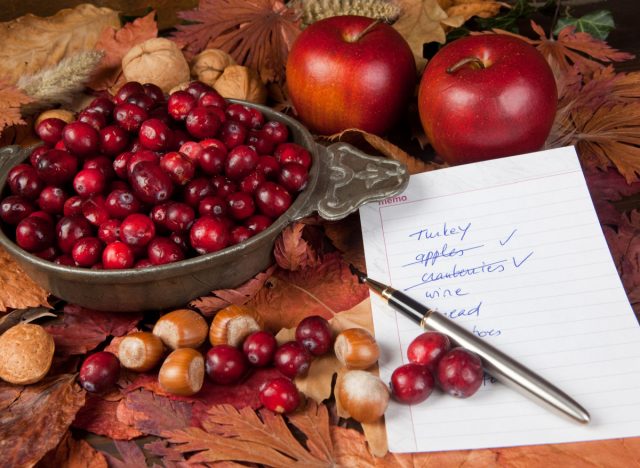
Chef Omar Loney of  Kokomo, a Caribbean restaurant based in Brooklyn, recommends planning out your menu and grocery list ahead of time—preferably at least a week in advance of Thanksgiving. This way, you can make sure you have everything you need and don’t have to scramble to find ingredients at the last minute, while also paying premium prices for them.

“You can buy your nonperishables a few weeks ahead of time, but make sure you have a set list of everything you will need for the days leading up to the big day,” Loney advises.

pre-cut produce
Shutterstock

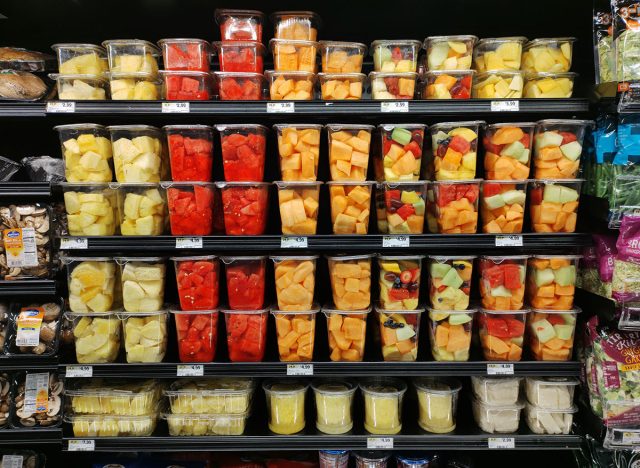
“A lot of time is spent cutting up vegetables, so buying your produce already cut, diced, or shredded can definitely shave off time,” says Erica Barrett, owner of SOCU Southern Kitchen & Oyster Bar.

So, if you’re making a green bean casserole, try picking up frozen green beans, which are already washed and cut. Buying pre-cut sweet potatoes for pie or casseroles can also save you time and energy—because no one wants to wrestle with a spud on Thanksgiving morning.

raw turkey defrosting
Shutterstock

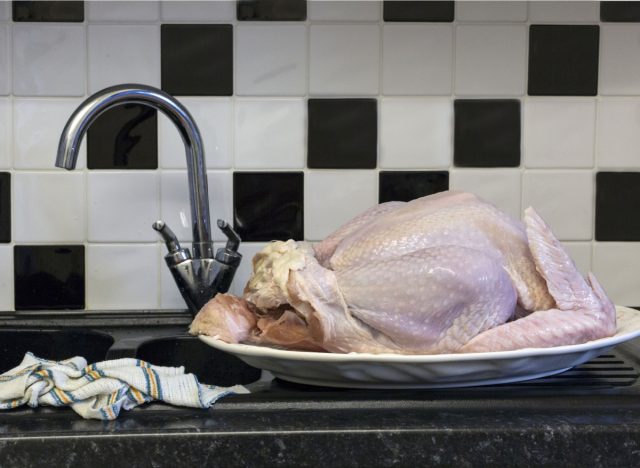
If you are planning on cooking a full traditional turkey for Thanksgiving, make sure you allocate enough time beforehand to thawing and prepping it.

“Some turkeys can take up to six days to defrost. So, make sure you do your research and pay attention to the instructions to be sure you get your turkey done in time,” Loney says. “I recommend not doing it on the day of, because there will be enough other things going on.”

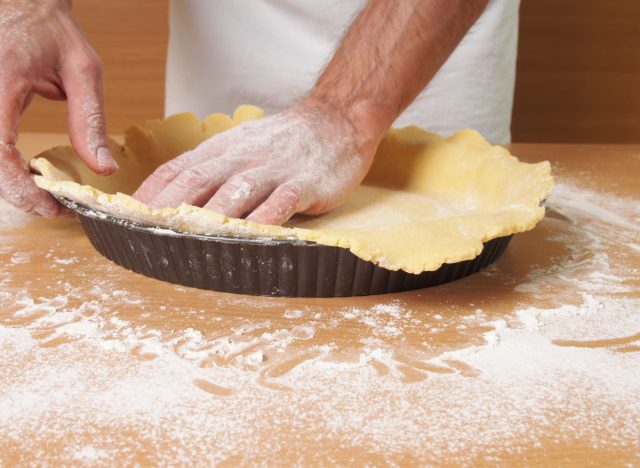
man pressing pastry crust over tin
Shutterstock

Newsflash: Not everything has to be cooked on Thanksgiving day.

“It will make your life a lot easier if you make the desserts—brownies, cakes, pies—the night before, because they won’t go bad from sitting out overnight,” suggests Loney.

Also, make freezer-friendly meals your best friend.

“I’m not talking about TV dinners, but dishes you can make ahead of time that will be ok sitting in the freezer for a few days,” Loney continues. This includes but is not limited to cranberry sauce, gravy, pie crust, and so forth. “Then, all you have to do is thaw them the day before to be ready for Thanksgiving.”

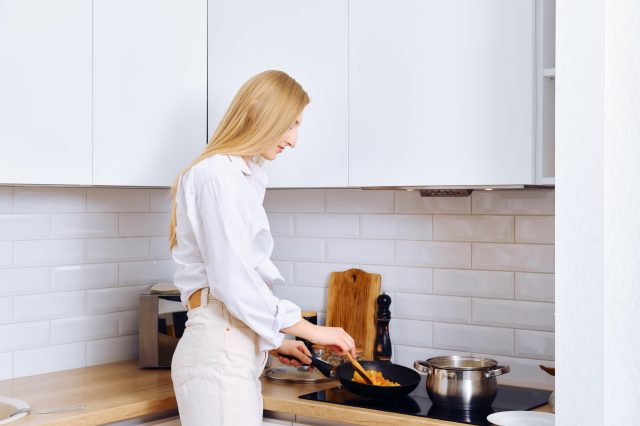
Woman stirring vegetables in a frying pan
Shutterstock

Why sit and wait for your brussels sprouts to cook on the stovetop when you can multitask to make multiple side dishes? You’ll save major minutes by investing in a skillet with different sections.

“Using a multi-sectional skillet allows you to cook multiple dishes at once instead of having to wait for one dish to finish cooking before starting the next,” Barrett says.

Plus, using a multi-sectional skillet instead of multiple pans will save you some clean-up time after Thanksgiving dinner, so you can spend less time scrubbing over the sink.

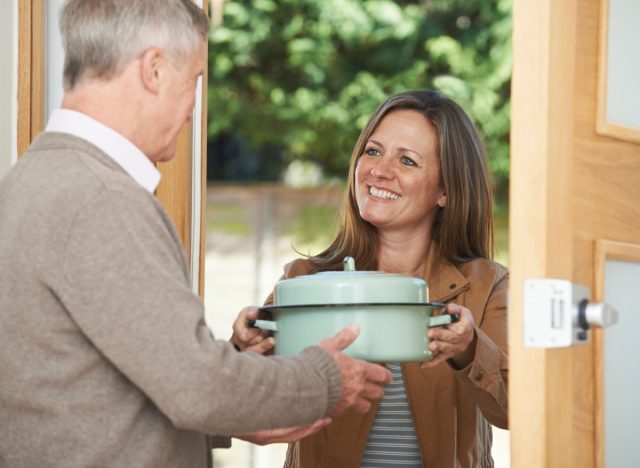
woman giving man food
Shutterstock

When it comes to prepping as big of a meal as Thanksgiving dinner, make sure to delegate.

“This day requires all hands on deck. So, my recommendation is to tell friends or family members that are attending to bring a side dish or a dessert, so that it’s not all up to you to cook everything that will go on the table,” says Loney.

However, if planning to host Thanksgiving potluck style, just make sure to give your guests a heads up a few weeks ahead of dinner. This courtesy will enable them to have enough time to shop and prepare their dishes, too.

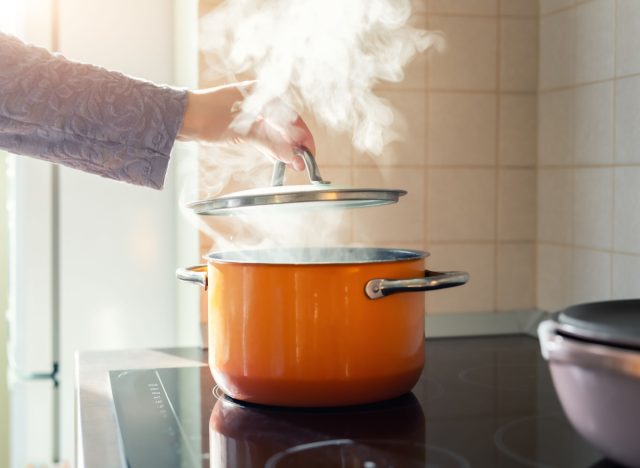
woman putting lid on pot
Shutterstock

Whether it’s stuffing, homemade cranberry sauce, mac ‘n cheese, mashed potatoes, or another mouth-watering stovetop side dish, don’t forget to pop the lid on the pot or pan.

“Your food cooks fasters when you have a lid on top holding the heat inside,” says Ebony Austin, owner of Atlanta-based  Nouveau Bar & Grill.

man cutting potatoes
Shutterstock

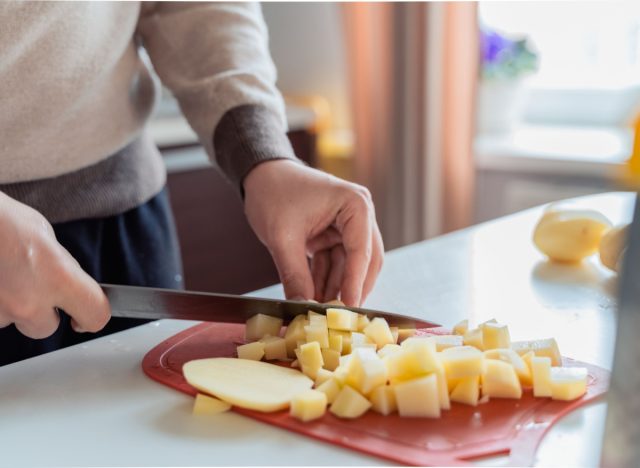
Try to reduce the surface area of your food, Austin recommends. Cutting up veggies or meat into smaller pieces will help everything cook faster.

“This is really important when you are baking any type of dish,” Austin says. “For instance, it’s quicker to bake several pieces of chicken that are cut than it is to bake a whole chicken.”

Another pro tip: “When cooking mashed potatoes, cut the potato into small [cube-shaped] pieces before boiling them, so the potatoes cook faster,” Barrett says.

spices
Shutterstock

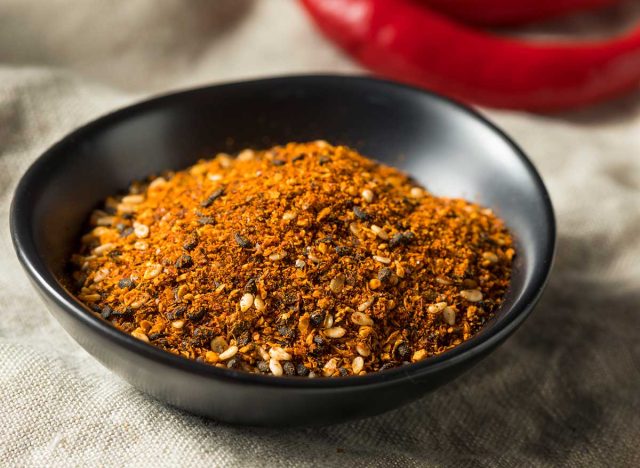
Instead of rummaging through the spice rack or disorganized bottles in your cabinet or pantry, opt for an all-purpose seasoning.

“Using an all-purpose seasoning will stop you from having to sort through your seasonings to find the right one,” Barrett says.

deep frying turkey
Shutterstock

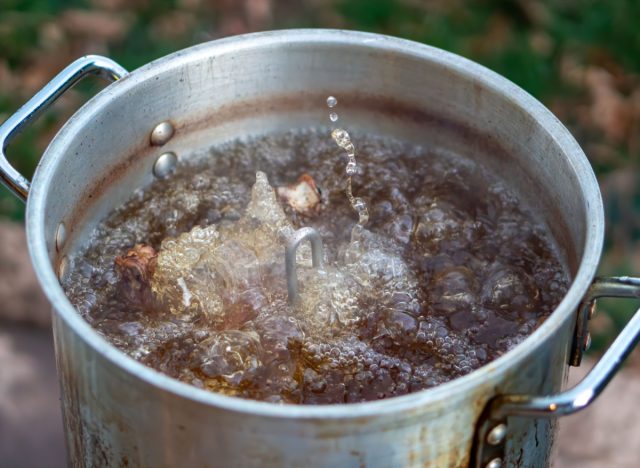
If you have a fryer large enough to fit your bird, put it to good use on T-Day.

“Using the fryer cuts down on cook time significantly,” says Barrett. “Frying a turkey can take up to 45 minutes [depending on its size], as opposed to spending three to four hours cooking a turkey traditionally in the oven.”

roasted turkey with meat thermometer
Shutterstock

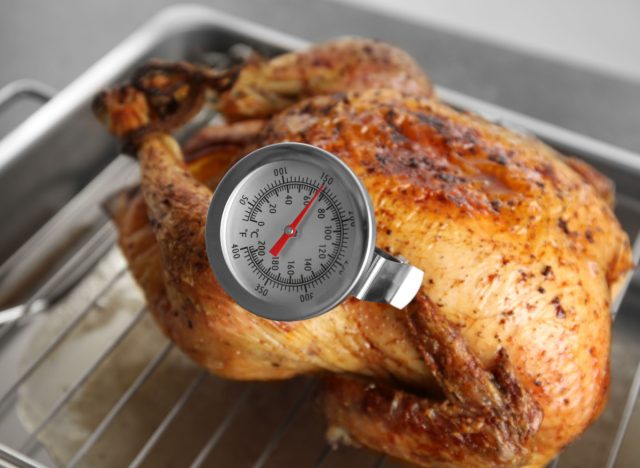
“Cooking at a higher temperature will definitely cook your meat faster,” Austin explains. “But please make sure to use a food thermometer to make sure your meat is all the way done and cooked to your liking.”

FYI: According to the USDA, a turkey needs to reach an internal temperature of 165°F, while beef, pork and lamb should be cooked to at least 145°F for food safety.

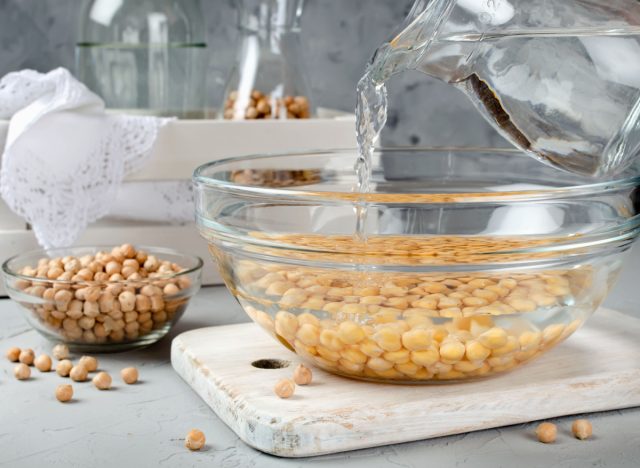
chickpeas soaking in water
Shutterstock

If you plan on serving a dish that calls for any raw legumes—like black beans, pinto beans, or chickpeas—be sure to soak them for at least four hours prior to preparing your dish. Or better yet, make the time to soak them overnight.

“Soaking [legumes] makes them softer and reduces cooking time,” says Austin.

However, to save even more time, you can always buy these items canned instead.

Connecting food to culture | News, Sports, Jobs

Connecting food to culture | News, Sports, Jobs

-Messenger photo by Kelby Wingert

Chef John Sugimura helps FDMS student Ben Touney wrap a Japanese gyoza dumpling on Wednesday afternoon.

Students in the special education classes at Fort Dodge Middle School learned from a pro how to expertly fold Japanese gyoza dumpling wrappers on Wednesday.

Second-generation Japanese-American Chef John Sugimura, a corporate chef with Taher Inc., is visiting the Fort Dodge Community School District this week to share the culture and food of Japan. He spent Tuesday with the culinary arts classes at Fort Dodge Senior High.

“The point is to give them a hands-on foodie experience with a recipe that they’re not familiar with, to open up their world to include Japan,” Sugimura said. “To give them an opportunity to taste something, to smell something, to chop up something that was unfamiliar to them.”

On Wednesday, Sugimura visited the special education classes at FDMS and gave them a tutorial on crafting the perfect gyoza.

“A Japanese dumpling is folded the same way every time,” Sugimura said. “We make it pretty. Japanese cooking is about making pretty food.”

-Messenger photo by Kelby Wingert

Fort Dodge Middle School student Tayt Lind checks out a Japanese gyoza dumpling wrapper he folded with the help of Chef John Sugimura on Wednesday.

Sugimura is an expert in Japanese cuisine and a master sushi chef. He’s competed on “Guy’s Grocery Games” on Food Network and will be competing on the upcoming season of “Iron Chef.”

Sugimura doesn’t just teach students how to make gyoza dumplings — he connects the dumplings to Japan’s culture and how food fits in with its history.

“It’s expanding their horizons and gives them common ground,” Sugimura said. “Most people don’t really know anything about Japanese food.”

“It’s been a joy having him here,” said Chef Nick Sells, Taher chef director for the FDCSD.

Taher has several corporate chefs who travel to different school districts across the country to teach students about different national cuisines and cultures and to bring authentic foods to students, Sugimura said.

-Messenger photo by Kelby Wingert

Students in the special education classes at Fort Dodge Middle School had the opportunity to try some Japanese gyoza dumplings made by Chef John Sugimura on Wednesday.

Gyoza dumplings are the most popular and iconic dish in Japan, he said. During lunch at the middle school and high school at the end of this week, Sugimura will be serving Japanese fried chicken bowls, which he said is probably the second-most popular dish in Japan.

“So they’re getting a really good sample of what Japanese food is about,” he said.

Taher Inc. is the management company that oversees food service across the FDCSD.


Today’s breaking news and more in your inbox


Kitchen Tools and Festive Extras You Need for a Happy Thanksgiving

Kitchen Tools and Festive Extras You Need for a Happy Thanksgiving


This year, we’re thankful for all the usual things: our families, our health, our Netflix subscriptions. And, of course, the meal soon to be set before us—made better by all manner of useful devices, from an otherworldly potato masher to wine that pairs really well with…seeing your extended family for the first time since 2019. Come to think of it, we’d like to give thanks for those things, too.

Products with an “Add to Cart” option are available for purchase through The Shops at Seattle Met.

Viking Hard Anodized Nonstick Roaster, Terra Bella Local


Thanksgiving faux pas number one—besides bringing up the midterm elections in the buffet line—is making it too far into November without nabbing a heavy-duty roaster. If you’ve got a hen with any heft, using one of those last-minute disposable options will feel like mashing potatoes with a toddler fork. This one has you covered up to 25 pounds and comes with the tools you need for carving.


EH Works Canvas Apron, Flora and Henri Local


EH stands for Erica Hanson, whose Seattle-manufactured aprons and accessories are as simple and functional as they are good-looking. Seriously—we’ve seen people look cute in aprons before, but cool feels like a designation reserved for this sturdy canvas number. Which makes it ideal for anyone too distracted by the prospect of stuffing to remember to take the apron off for dinner.


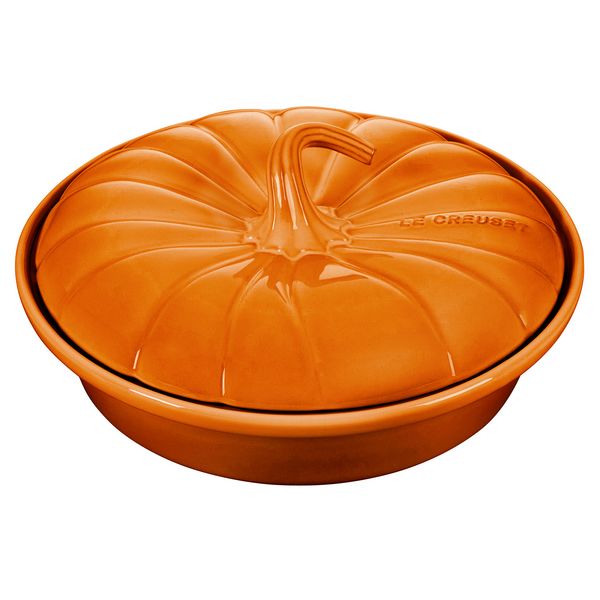
Le Creuset Pumpkin Pie Dish with Lid, Sur la Table Local


$124.95


If your TikTok For You page looks anything like ours, it’s been a parade of gourd-themed cooking vessels since approximately August 30 (if Starbucks can get lost in the pumpkin sauce while it’s still 80+ degrees outside, so can we). Le Creuset’s, in classic French fashion, proved most covetable. Even if you’re not recording it for likes and posterity, it’s hard to imagine a holiday scene quite like lifting this glazed enamel lid to reveal the perfect pie.

Buy Now


Turkey Stuffing Bags, Terra Bella Local


Stuffing is a little like sausage: The squeamish among us have no interest in hearing how it was made. These mesh bags allow your dressing to soak up flavor from the turkey juices (honestly, there has to be a less disturbing way to say that) while making the removal process less, ahem, graphic. And for seasoned chefs unbothered by the prospect of digging bread out of a bird: This way, you won’t waste any of the good stuff.


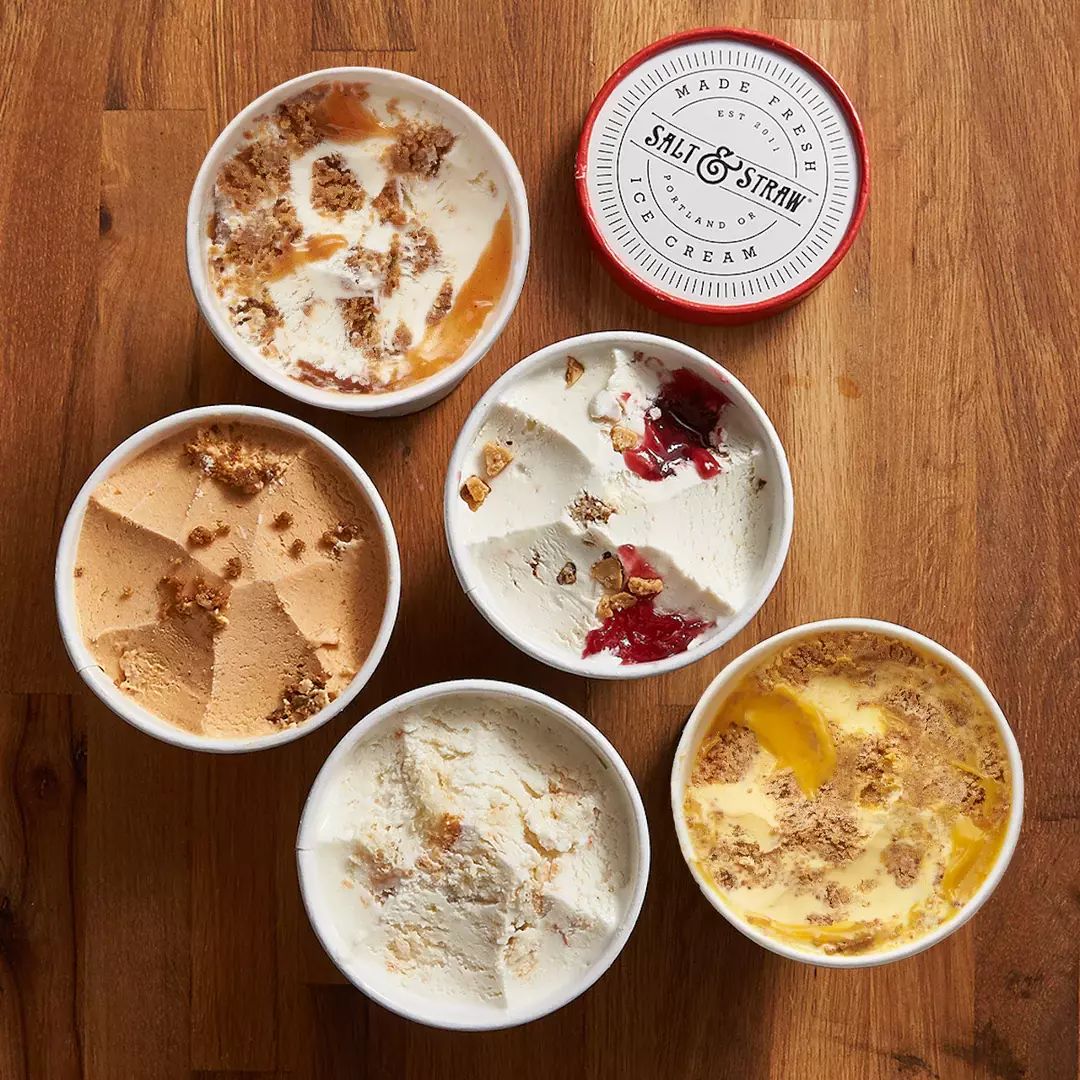
Pints of the Month: Thanksgiving Series, Salt and Straw


$85.00


Salt and Straw’s Thanksgiving flavors—yes, one contains actual turkey—test the limits of the long-held belief that dessert is stored in a separate stomach. Head to one of the Portland-based ice creamery’s Seattle locations to try a scoop, or order the whole meal deal online to subject unwitting family members to the taste test. Though you might want to keep the pint of Parker House rolls with salted buttercream to yourself. 

Buy Now


Le Creuset Heritage Gravy Boat, Terra Bella Local


Gravy: brown, definitely, especially on Thanksgiving. Gravy boat: white. Or maybe Caribbean. Or perhaps Cerise. Whichever color you pick, a bona fide gravy boat—as opposed to, say, the measuring cup you were going to frantically yank out of the cabinet—brings an elevated element of tradition to the table. If you regularly host Thanksgiving, it’s a must.


Laurel White Wine Glasses, Viski Local


$27.99 for two


Whether you’re simply not a wine drinker, or simply a wine drinker who needs more wine glasses, Thanksgiving is the occasion to stock that bar cabinet: Even those with a preference for lagers are likely to eschew brew in the name of tradition. 

Buy Now


World’s Greatest Potato Masher, Terra Bella Local


This spring-loaded, two-in-one instrument efficiently pulverizes potatoes beyond recognition—if the topic of chunky-versus-smooth causes tension at your dinner table, scroll on. 


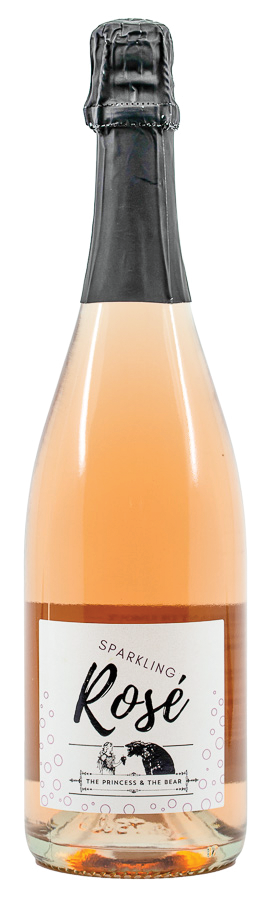
Sparkling Rosé, Princess and Bear Local


$27


When you think of Thanksgiving wine, you probably think of poultry’s traditional white wine pairing, or a festive red—but the folks at South Park wine shop Princess and Bear recommend serving this sparkling rosé from its private label. It’s “substantial enough to hold up to a meal,” but really shines alongside “fruit pies slathered with whipped cream.” 

Buy Now


Trickster Playing Cards Exclusive Edition, Flora and Henri Local


Cards provide an ideal (and tryptophan-friendly) post-dinner diversion. This deck features hand-designed art from Tlingit artist Rico Worl, cofounder of Trickster, a company that strives to promote Indigenous design through “products that non-Native people can wear and appreciate without appropriating”—an especially worthy cause on a day when the true history of colonialism is often grossly misrepresented.


Lift Trivet, Fruitsuper Local


$48.00

Don’t disrespect your carefully chosen cookware by displaying it atop singed oven mitts. This simple, Seattle-designed trivet from Fruitsuper protects surfaces from calamities real and aesthetic, and it still looks good on the table long after the dishes are done.

Buy Now


Le Creuset 9-Quart Signature Round Dutch Oven, Terra Bella Local


Ideally, you’d have a cooking pot in every size Le Creuset has to offer. But for those with a crowd to cook for (and without Mary Poppins cabinets), the extra-large nine-quart provides holiday peace of mind: Just about anything you could think to make will fit with room to spare. 


Pro Leave-In Meat Thermometer, Terra Bella Local


It’s a simple suggestion, but a crucial one: Don’t undercook the bird.