Crispy, flavourful and simply delicious, chips are something that no one can resist biting on. Be it in the evening with a cup of hot chai or at night while binge-watching your favourite show, they always come to our rescue whenever we crave something salty and crunchy. While you’ll find a wide variety of chips in the market, nothing defines comfort best than gorging on some homemade desi munchies. Speaking of desi snacks, banana chips are one such snack that are quite popular in South India. This yummy snack is known for its thin and crispy texture, and makes for a delicious snack to munch on.
Also read: 5 Best Chips Recipes To Prepare At Home: Potato Chips, Banana Chips & More
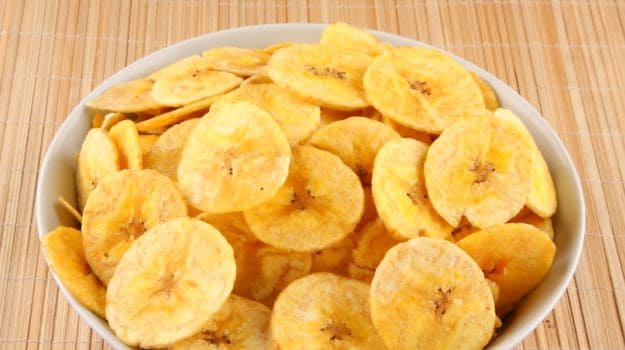
These crispy delights are made from raw unripe bananas and are deep-fried until golden in colour. They can be sweet or savoury in flavour, and are often seasoned with masalas such as red chilli powder and black pepper. While most of us prefer buying this South Indian snack from the market, it’s best to make fresh banana chips at home. Now you may think that making banana chips from scratch requires a lot of time and effort. But what if we tell you that you can easily make this yummy snack at home? Here we bring a simple banana chips recipe that’ll ensure that they turn out to be super crispy.
Here’re Some Tips To Make Crispy Banana Chips At Home:
1. Use The Right Type Of Bananas
Using the right type of bananas helps in ensuring that your banana chips turn out to be crispy. Opt for firm and unripe bananas as they have a low sugar content. If possible, try to get your hands on starchier banana varieties like the Nendran and Saba cultivars.
2. Slice Them Thinly
The next thing to keep in mind while making banana chips is to slice them thinly. Make sure that they are sliced uniformly, as this allows them to cook evenly. The thinner your banana chips are, the crisper they will be.
3. Soak Them In Salt Water
Once you’ve sliced the bananas, soak them in a bowl of salted water for a few minutes. This helps in removing excess starch from the bananas and prevents them from sticking together while frying.
Also read:Bored of Potato Chips? 5 Unique And Delicious Chips Recipes You Should Try At Home
Crispy Banana Chips Recipe: How To Make Crispy Banana Chips
To begin with, add banana slices, salt and turmeric in a bowl and let it set for around 4-5 minutes. Now, give it a good mix and transfer to a colander to drain completely. Heat some coconut oil in a kadhai set on medium flame.
Add the banana slices in small batches and fry until crispy and golden in colour. Once done, transfer onto a paper napkin. Sprinkle some salt and red chilli powder on top and allow them to cool. Store in an air-tight container for up to a week. Serve and enjoy!
For the complete recipe of crispy banana chips, click here.
Try out this recipe and let us know how it worked for you in the comments section below. If you’re looking for more South Indian snacks, click here for some of our best recipes.
José Andrés has made it his personal mission to run toward the fray since a catastrophic earthquake rocked Haiti in 2010. With the formation of his nonprofit World Central Kitchen, the chef and humanitarian has traveled the world along with his team, supporting the organization’s mission to provide food in response to disasters.
Andrés was in Austin this week for South by Southwest (SXSW) during which he gave a keynote about World Central Kitchen. Most recently, the organization was on the ground in Central Europe, providing hot meals to thousands of refugees in and around Ukraine impacted by the ongoing war, and arrived in Turkey and Syria just two days after two devastating earthquakes left millions of people displaced.
The Barcelona-raised chef immigrated to America at 21, rising through the ranks of New York City kitchens before becoming the head chef of Spanish tapas restaurant Jaleo in Washington, D.C. He made the restaurant a culinary destination, and then traveled back to Spain to star in what became one of the country’s most popular cooking shows, and, alongside his ThinkFoodGroup partner, eventually opened more than 30 restaurants. The celebrated chef has been recognized for his work many times over, with four Michelin Bib Gourmands, a two-Michelin-star restaurant, and a National Humanities Medal awarded by President Barack Obama in 2015.
After his SXSW session, Andrés spoke with Eater about his work and the nonprofit’s recently announced cookbook, The World Central Kitchen Cookbook: Feeding Humanity, Feeding Hope, which will publish on September 12. It’ll feature recipes from meals served during mission efforts, like Ukrainian borscht and lahmacun flatbread, as well as recipes shared by chefs and celebrities, including Ayesha Curry, Michelle Obama, and Meghan, the Duchess of Sussex. The author proceeds from the book will go back to World Central Kitchen’s missions.
The cover of The World Central Kitchen Cookbook.Penguin Random House
Eater: You spoke about the need to build longer tables, not higher walls. What did you mean by that?
José Andrés: When America went to help Haiti in the middle of an earthquake, we felt we did good. I was proud of the response. But when we don’t do good in the right way, it creates more mayhem than not. In Haiti, we put hundreds if not thousands of local farmers out of business because the amount of rice that was coming in from America and other countries was so massive that the local farmers had no market anymore. We were supposed to spend money in the country, making sure those farmers made a living, kept planting, and kept improving. What happened was that many of these farmers ended up moving because of a lack of jobs, and immigrating to Central America.
Years later, we saw what happened in Texas when we had thousands of Haitians in a caravan at the border. That story began years ago. We created the problem. We could concentrate on building walls or we could build longer tables. Making sure that our aid did not create more problems, by supporting the local farmers — that would have been the meaning of building longer tables. We can also do that in our own country. Everybody talks about walls in terms of separating countries, and we don’t realize that we have walls even in our communities.
To date, World Central Kitchen has provided more than 250 million meals to people in need. It’s been able to do that under wildly different conditions: natural disasters and war zones. To what would you attribute that success?
What I like about going into these missions is that what we do is very specific. Let’s provide food and water to the people until the system comes back. Being focused is very important. One of the things that happens with very big organizations, the government being the biggest one of all, is there are so many things we need to be working on that there’s no focus. I’ve learned when I go to these emergencies that being focused allows you a certain level of success, because when we all put our best effort into a very specific objective, success is usually within reach.
With each new mission, you’re meeting people during intense times of crisis and providing them with something simple, but necessary: a hot meal. How has your work changed your perspective on food?
I do more than cooking. What I do is try to listen and make the best decision with what we have on hand. What I’ve learned is that when you have plenty of restaurants and people willing to cook, why not do a hot fresh meal instead of an MRE [Meal, Ready to Eat]? It’s not about the fanciness of a fresh meal, it’s that when you decide to cook, you require the entire community to commit, which is very difficult. But that combined effort is what gives people a common goal. They are part of the solution. They’re not sitting in their homes waiting for reconstruction to start or their electricity to come back. We’re doing something to make sure that the goal of going back to “normal” is reached quicker and faster. Feeding people helps get the community back up and running. We bring hundreds if not thousands of people as part of our network, and when people see us on the move, it makes them join the effort. When you see communities reactivating, and making decisions on their own, it’s very powerful.
José Andrés.Cat Cardenas/Eater Austin
How have things changed over the last decade for World Central Kitchen?
With any organization, as you mature, things change, like the way we deliver the food, and how hot the food is. It’s not the same to be feeding in the middle of a hurricane in the Caribbean as in the middle of a snowstorm in Turkey; it’s not the same to deliver by boat, by helicopter, or by amphibious vehicle. But what has been the same from the beginning is that we do the best food we can with what we have.
You’ve spoken about the power of food as a storytelling device, as a way to share and experience each other’s cultures. How does that factor into your work?
In the early days, people will eat anything. Sometimes, if all we can get a hold of is mac and cheese and hot dogs, that’s what we’ll cook. But things will get better every day. Bringing hot meals every day means people trust you more. The first day in Syria became a very chaotic situation. You don’t want to bring the military or police at the start. The first days that you’re there are going to be a little bit of chaos, especially because people didn’t have food for days. They’re hungry and they want to feed their families. When you come back on the second day, the chaos is less. On the third day, you see smiles and people are not so anxious. And if you come back the fourth and the fifth day, they’ll say, “By the way, we also need water,” “This family needs medicine,” or, “These families need baby formula.” All of a sudden, you are building bridges with members of the community who see you are reliable. You are not going there, and just dropping and leaving. You’re there for them. You didn’t come for the photos or because the journalists came. When the photographers and journalists are gone, we keep coming back.
You announced the World Central Kitchen cookbook. What do you want people to take away from it?
This is gonna be one book that is going to lend itself to more books in the years to come. Not everybody’s a chef, and not everybody’s a cook, but the heart of what we are is cooking with feeling. I think it’s a good way to connect with people, the NGO that provides food in emergencies shares the recipes of the people that made the emergency response possible. I think that’s a great way to connect the people that follow us and our kitchen, with people with boots on the ground.
This interview has been edited and condensed for clarity.
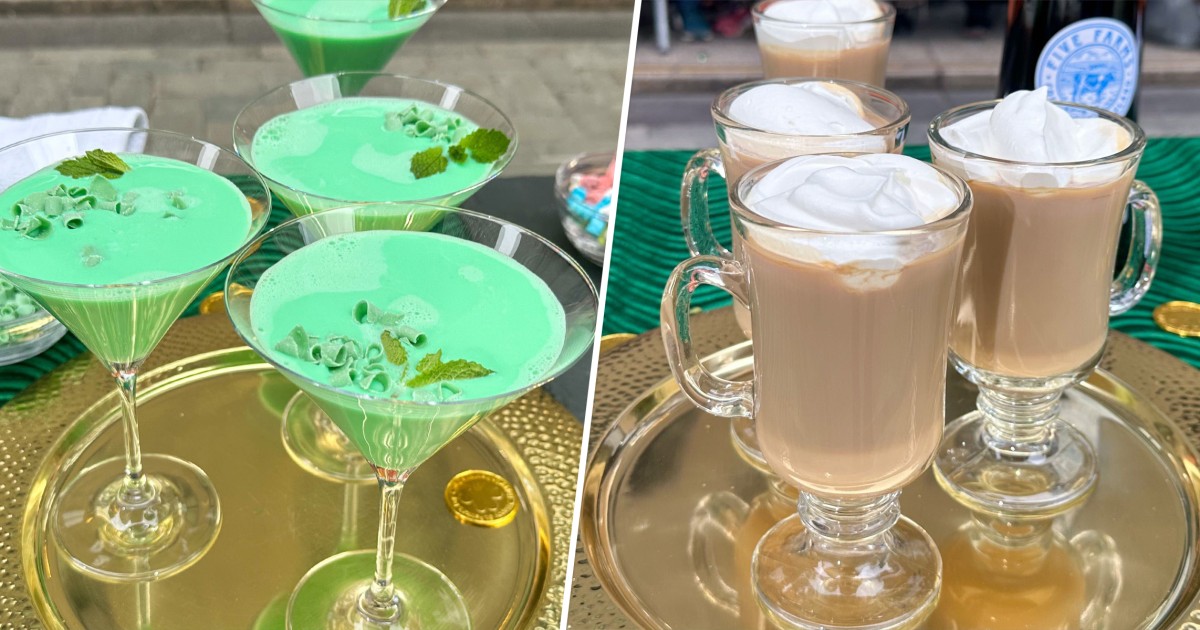
Sommelier and best-selling author Vanessa Price is stopping by the TODAY studio to shake up fun and festive cocktails for St. Patrick’s Day. She shows us how to make marshmallow cereal milkshakes, emerald-hued Grasshoppers, classic Irish coffee cocktails, a bubbly Black Velvet drink, a citrusy Dubliner tipple and a green Chartreuse sipper.
Katie Stilo / TODAY
I love this festive milkshake because I can make the nonalcoholic version for the whole family to enjoy when hosting or add a little Irish vodka to make these more adult-friendly for St. Patrick’s Day festivities.
Katie Stilo / TODAY
This is a classic cocktail typically reserved for after dinner sipping but with its iconic green hue, it’s perfect for sipping anytime on St. Patrick’s Day. First created in 1918 by a bar in New Orleans, it became popular enough to join the International Bartenders Association official list of cocktails. Lesser known today, it’s an easy one to make with a recipe that calls for the three ingredients to be combined in equal parts.
Katie Stilo / TODAY
While the espresso martini may currently be giving this liquor-coffee combo classic a run for its money, this remains the true pot o’ gold standard for St. Patty’s Day imbibing.
Katie Stilo / TODAY
Intricate cocktails have their time and place, but when hosting a large-scale party or simply not in the mood for complicated, a simple drink that you can construct quickly is ideal. Two-ingredient drinks come in many forms and while it may seem counterintuitive, Guinness and Champagne make for a winning combo in the category. As the story goes, the Black Velvet was created by a London steward and was served while the country was in mourning over the 1861 death of Queen Victoria’s husband, Prince Albert, because the dark beer added a somber note to the usually festive Champagne. While that may be this simple cocktail’s origin story, it can certainly be enjoyed on a day of celebration as well!
Katie Stilo / TODAY
Zhuzh up a staple for the holidays! This citrusy take on a Manhattan cocktail was born in the late 1990s New York bar scene, thanks to bartending icon Gary “Gaz” Regan. His book “Joy of Mixology” is a must for any at-home or professional mixologist. For extra St. Patrick’s Day flair, don’t skip the green maraschino cherry garnish!
Katie Stilo / TODAY
Arguably the most popular in the list of green Chartreuse cocktails: the Last Word. This pale-green gin sour is a classic cocktail that was all but lost to history. But with the revival of cocktail culture, this one come back strong. It’s equal parts sharp, sweet and sour, and its ingredient ratios are the equal parts same.
Make sure you pick up the green version of Chartreuse (the yellow version is much sweeter). Yellow Chartreuse is noted with flavors of honey, saffron and anise spice, whereas green Chartreuse shows more prominent flavors of lime, citrus, spice and fresh-cut herbs. Also, in fashion with the Irish holiday, it is a riff on an Irish whiskey cocktail of Prohibition. This cocktail has been lauded by modern mixologists since the rise of cocktail culture up ticked in the 1990s.
If you like those lucky drink recipes, you should also try these:
We independently select these products—if you buy from one of our links, we may earn a commission. All prices were accurate at the time of publishing.
We take our kitchen gear seriously here at Kitchn (I mean, what else would you expect?), and it’s particularly hard not to take Material Kitchen as seriously as its name suggests. In fact, the direct-to-consumer kitchenware brand is behind some of our favorite pans, glassware, and spatulas with superior quality, beautiful form, impressive function, and reasonable prices, to boot. Keep reading to learn more about Material, including our favorite essentials.
What Is Material Kitchen?
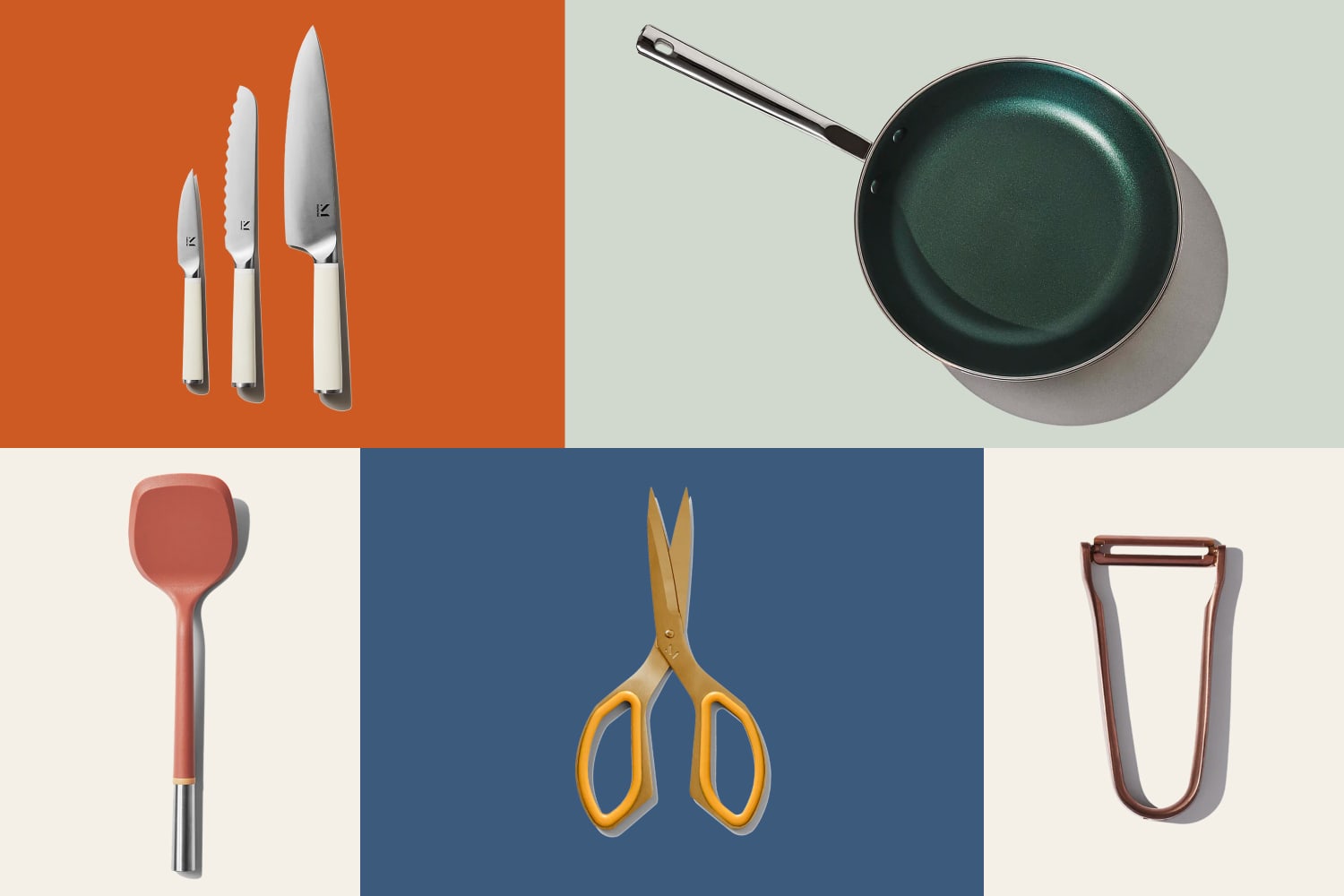
Material Kitchen was born out of necessity. The brand’s founders, Eunice Byun and David Nguyen, didn’t have any experience in the culinary world, but what they did have was experience with kitchen clutter (don’t we all?). Clunky knife blocks and an abundance of unnecessary kitchen tools not only took up precious counter space, but also created the lightbulb moment so many great brands start with. The two saw a lack of affordable, innovative, and good-looking solutions, so they set out to create a line of pared-down, sleek kitchenware.
Material sells beautifully crafted cookware, prepware, and bakeware essentials that don’t sacrifice performance. The brand has high standards when it comes to their products, so you can always expect best-in-class materials, design, and user experience.
Like you would with a hearty boeuf bourguignon or a savory roast chicken, Material takes things low and slow when it comes to developing new products. Each new addition is researched extensively to make sure it’s a value-add, because the last thing we all need is more cabinet clutter. And the result? A small, well-curated selection of thoughtfully designed kitchen essentials any home cook would need.
Where Can You Shop Material Kitchen?
Shopping directly on Material’s site is our preferred way to explore the brand, as it naturally has the biggest selection. You can find some Material products at other retailers including West Elm and Nordstrom, although the offerings will be more limited.
Material products are priced reasonably, especially if you value performance and great design. Prices are not cheap, but are accessible when compared to similar direct-to-consumer brands. With prices ranging from $20 for small kitchen accessories to $295 for cookware sets, there’s something for every budget.
The brand does have sales, so you’ll find great deals. Currently, Material is celebrating its birthday with discounts up to 25 percent now through March 19. The discount depends on your order total, so the more you shop, the more you’ll save. It’s the steepest discount that the brand has offered, making its reasonable prices even more wallet-friendly. There’s no code necessary, and prices already reflect the sale price.
Whether you’re looking to swap in some new knives or are starting to outfit your kitchen from square one, Material is certainly worth a peek. To help you get started, check out eight editor-favorites and best-sellers, below.
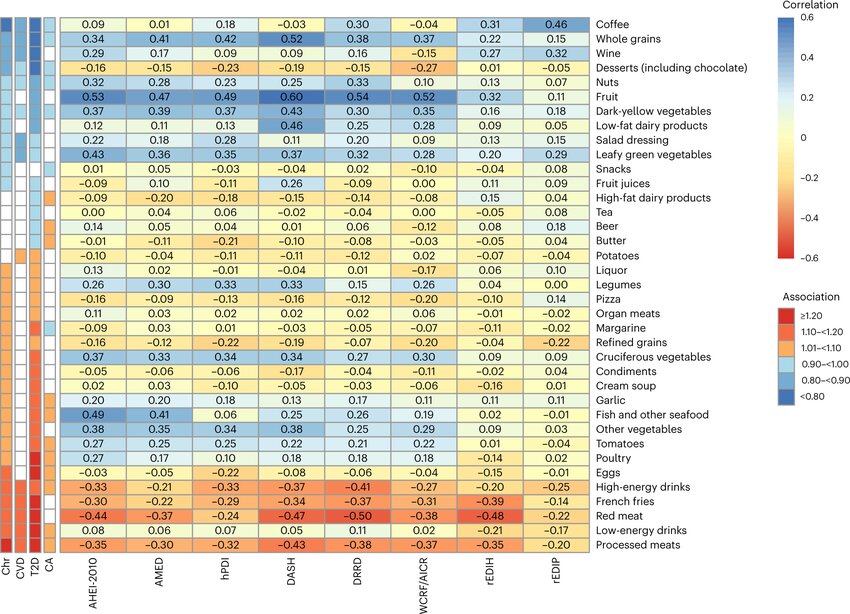
Baseline Spearman’s correlations amongst vitality-modified cumulative ordinary nutritional patterns and foods groups in the pooled data of three cohorts (n = 205,852 contributors) Spearman’s correlation coefficients are proven and highlighted in colour. Food items teams are requested based mostly on the HRs of their associations with important long-term condition. The associations of foods teams (evaluating the 90th with the 10th percentile) with key serious ailment (Chr), major CVD, sort 2 diabetic issues (T2D) or overall cancer (CA) are indicated on the left of the figure. We documented unadjusted P values based mostly on two-sided statistical exams. Major associations (P < 0.05) are highlighted in color according to the magnitude of the HRs. Credit: Nature Medicine (2023). DOI: 10.1038/s41591-023-02235-5
Researchers at the Harvard T.H. Chan School of Public Health in Boston, Massachusetts, have good news for anyone sticking to a healthy diet: Good food choices are associated with a lower risk of developing a chronic disease.
In a robust review of several recommended diets, the study, “Optimal dietary patterns for prevention of chronic disease,” published in the journal Nature Medicine, found that falling in line with any one of them is linked to better health outcomes.
To find the influence of recommended diets on health outcomes, researchers analyzed 32 years of data from 205,852 participants between 25 and 75 years of age when data collection began. The cohorts included 162,667 women from the Nurses’ Health Study and Nurses’ Health Study II and 43,185 men from the Health Professionals Follow-up Study.
Participants regularly reported details about their lifestyle, medical history and food intake, with a median follow-up of 26 years per participant. There were 44,975 major chronic disease events observed, 12,962 major cardiovascular diseases, 18,615 cases of diabetes and 17,909 total cancers.
While individuals in the study were not explicitly adhering to recommended diets, the study categorized reported diets into levels of adherence on a weighted system. It compared health outcomes against levels of adherence to several dietary pattern groups: Alternative Healthy Eating Index-2010, Alternate Mediterranean Diet, Dietary Approaches to Stop Hypertension, Diabetes Risk Reduction Diet, Healthful Plant-Based Diet Index, reversed Empirical Dietary Index for hyperinsulinemia, reversed Empirical Dietary Inflammation pattern, or World Cancer Research Fund/American Institute for Cancer Research diet.
Participants were then ranked by comparison of the top 90th percentile vs. bottom 10th percentile in adherence. Overall the study found that regardless of which diet pattern an individual was most adhering to, being near the top of any of them correlated to lower disease risk. So, for instance, an individual might make it into the top 90{d2b09b03d44633acb673e8080360919f91e60962656af8ade0305d5d8b7e4889} in the Healthful Plant-Based Diet Index but fall below 90{d2b09b03d44633acb673e8080360919f91e60962656af8ade0305d5d8b7e4889} adherence in others due to coffee or wine intake.
Individuals who adhered to guidelines designed to lower the risk of inducing inflammation, high blood insulin levels or diabetes were less likely to develop type 2 diabetes, heart disease and cancer.
Certain food groups were linked to worse health outcomes. Diets that frequently included processed meats, energy drinks, red meat, french fries, and eggs were positively associated with major chronic diseases.
Consuming larger amounts of coffee, whole grains, wine and desserts had lower risk of associated major chronic diseases. However, it should be noted that these were pulled from groups of dietary patterns with many associated food intake strategies. Unfortunately, there was no coffee, whole grain, wine and dessert-based diet to choose from.
More information:
Peilu Wang et al, Optimal dietary patterns for prevention of chronic disease, Nature Medicine (2023). DOI: 10.1038/s41591-023-02235-5
Citation:
Adhering to recommended diets lowers risk of chronic diseases, 32-year study finds (2023, March 16)
retrieved 17 March 2023
from https://medicalxpress.com/news/2023-03-adhering-diets-lowers-chronic-diseases.html
This document is subject to copyright. Apart from any fair dealing for the purpose of private study or research, no
part may be reproduced without the written permission. The content is provided for information purposes only.
When Thattu operated out of a West Loop food hall, it specialised in South Indian road food items. That target built perception in a counter-company setting with shared seating.
But for its hotly predicted future entire-service restaurant in Avondale, Thattu is swapping the “street food” tagline with “comfort food stuff from Kerala, India’s spice yard.” The aim is on the dishes that remind co-owner Vinod Kalathil of his mom who lives in Kerala, India. Kalathil and his spouse Margaret Pak — who’s also the chef and co-operator — make it crystal clear proper on the restaurant’s awning.
The pair needs Thattu to be a location at 3118 N. Rockwell Street, close to the complicated that properties Metropolitan Brewing and across the street from Guild Row, the club of creatives that counts Pak and Kalathil as users. Pak credits another Guild Row member, Chicago journal dining critic John Kessler with telling them about the house across the street.
Kessler has already created about how Kalathil and Pak satisfied. They were each in Las Vegas. Kalathil says he was just there to social gathering. Pak was there for a Tori Amos live performance. The few has given that traveled the world, together with a go to to Kalathil’s family members in India where by Kalathil’s mom passed down relatives recipes to Pak. Framed photographs of all those handwritten recipes will be on exhibit when Thattu opens afterwards this thirty day period, along with Kalathil’s possess pictures. The design details are thoughtful down to the bogs — the all-gender bathroom options signage with two figures, a person dressed in a sari and the other in a dhoti.
The cafe will debut with a counter-services lunch menu which includes a Kerala fried hen sandwich, coriander rooster with appam, and veggie curry of the day.
Vinod Kalathil hold up a frame with a photo of his wife, Margaret Pak and his mother in India alongside photographs of hand-published recipes.Ashok Selvam/Eater Chicago
Kalathil and Pak have also additional to the kitchen area crew. Danny Tervort, who worked at the Thattu stall at Politan Row, is now the chef de delicacies. Pak and Kalathil say it was important to discover an individual they could trust who was also keen to master how to cook Indian foodstuff. Tervort brims with enthusiasm close to great-tuning meal dishes like Perlan pork chops, a bone-in chop with collard greens and smashed yucca. This is a dish inspired by a visit to a pork plantation in Kodagu, formerly known as Coorg, in Karnataka, India. Other dishes could contain Aleppy duck roast and prawns cooked with a Malabar-design and style tamarind sauce.
South Indian society is seemingly owning a moment in The united states. The Oscars acknowledgedRRR for Best First Music for “Naatu Naatu,”bringing a very little awareness to Tollywood, the nickname for India’s Telugu-language movie business. Lots of typically conflate Telugu movies with Bollywood’s Hindi-language motion pictures. Us citizens also do that with Indian foods as Punjabi foodstuff buffets characterize several Americans’ 1st get hold of with Indian delicacies.
Telugu is but 1 of several languages spoken in Kerala. Many others involve English, Kannada, and Malayalam. Vinod and Pak applied the latter on signs outside the restaurant. But just like there is no one particular formal language for South India, there is no official food symbolizing the region. Dosa is most likely the most recognizable food stuff from the region to Us citizens. India’s 5 southern states signify 20 {d2b09b03d44633acb673e8080360919f91e60962656af8ade0305d5d8b7e4889} of the country’s 1.3 billion people today. As 1 would assume, that gives for culinary variety.
There is no dosa on Thattu’s menu. Neither Pak nor Kalathil is basically towards the dish, but there is much more to cook dinner.
To effectively take a look at Kerala’s loaded culinary background, Thattu’s kitchen staff members wants exceptional techniques, like comprehension Indian cooking methods, and how to appropriately sautee foodstuff and infuse them with ghee and spices. To keep and draw in expertise who possess those people talents, Kalathil realized the restaurant required to supply aggressive wages and whole wellbeing care advantages, and so, Thattu will not depend on suggestions and won’t tack on a company cost. “We truly feel that it is the suitable time to acquire the upcoming stage and have a transparent all-inclusive price,” Kalathil states.
Administering a surcharge would have held menu rates decreased, but client pushback has been mounting and they do not want to worry about it. At its pop-ups, Thattu would cost about $12 for its Kerala fried chicken sandwich. They are continue to operating on specific pricing, but the sandwich will value a minor much more, nonetheless stay underneath $16: “Which I assume is even now a wonderful selling price for a hen sandwich,” Kalathil suggests.
Before choosing to come to be a no-tipping cafe, Pak and Kalathil consulted with other eating places and Increase Higher Highway Dining establishments, a countrywide organization that promotes race, gender, and wage fairness at dining establishments. Lula Cafe, Break up-Rail, and Wherewithall are amongst Chicago restaurants that really do not be expecting diners to pay gratuities.
Even now, Kalathil is nervous about how customers will react. For one, Thattu’s selling prices will be bigger versus the levels of competition. Indian dining establishments with giant menus or buffets usually have merchandise with interchangeable sauces that preserve expenses down. Dining places with additional curated and homestyle menus, like Thattu, will will need to cost far more. And a substantial price tag position will usually be a lot more of a trouble for sure intercontinental places to eat. Indian food items is usually the subject of “cheap eats” features.
“We have normally kept a tiny menu and crafted our dishes individually,” Kalathil and Pak say. “Our prospects value that and in typical have not complained about the price.”
Remain tuned for a lot more on Thattu, one particular of Chicago’s most expected openings of 2023.
Thattu, 2601 W. Fletcher Avenue, prepared for a late March opening with lunch.