
3 spicy margarita recipes for drinking in warmer weather

3 spicy margarita recipes for drinking in warmer weather

There are cocktail bars today that seem almost church-like — hallowed spaces where the faithful come to taste and engage in acts of exegesis, analyzing every nuance and extolling how spirit and bitters come together in the glass.

The margarita is not a drink of such bars.

Like most cocktails, the margarita — a combination of tequila, lime and triple sec that has been around since at least the 1930s, with a roster of claimants to its invention — has been endlessly upgraded and complicated by the modern craft cocktail movement. And there are serious and sublime agave spirit bars, in Mexico and domestically, that treat agave spirits, tequila and especially mezcal, as the complex and varied spirits they are.

Still, the vast volume of margaritas is still shaken up and slurped down at countless summer parties, mid-tier bars and Mexican restaurants, places with sunny patios and bottomless baskets of chips and salsa. The blender whirs, the sour mix splooshes and Roberto’s your tío. The deepest contemplation you’ll be doing is wondering how you’re going to get that guacamole stain out of your T-shirt.

But in New Orleans recently, I popped into Vals, the gas station-turned-Mexican-restaurant started by the team that runs celebrated cocktail haven Cure, and we got a round of margaritas that reminded me how good the drink can be. Vals’ frozen margarita was perfectly balanced — tart, sweet, the spirit gentle but present in the flavor, complemented by its Tajín chile-lime-salt rim.

As I sipped, I considered the various mediocre-ritas I’ve encountered — the too-diluted, the cloying, those dragged down by the lemon Pledge flavor of bad sour mix or Splitting Headache brand tequila. Of late, though, the most common problem, for me, has arrived in the form of a relative newcomer: the spicy margarita, in which the heat of chiles is added to the classic template.

The spicy marg is a drink that, done well, is everything I want in warmer weather. The tart-sweet-booze balance takes on a new dimension when peppers enter the scene. Incorporated well, they add complementary flavor and a zing of welcome heat. Overdone, you can end up with a stunt drink, the sort of thing base-jumpers would sip as they plunge off skyscrapers, yelling “EXTREME!” into each other’s GoPros.

Inviting chiles to your margarita is like asking a newbie to your longstanding happy hour: Will they get along with your other friends? Will they dominate the conversation? Will they throw their weight around? If a fight occurs, how do you get guacamole out of cotton?

The best way to make a spicy marg mind its manners will depend on just how much of a hothead you are. I’ve had spicy drinks I loved on the first sip, only to be silently suffering and wishing I had ordered differently by the fifth — palate fatigue can be acute with spicy drinks.

I often opt to add heat in tiny touches — as with that spicy/sour Tajín Clásico on the rim of the frozen margarita at Vals, or chile pepper concoctions doled out in drops. I like Bittermens’ Habanero Hellfire Shrub, which is hot and tart; the Smoked Chili bitters from Hella and Fuego bitters from El Guapo are also good pepper-uppers.

There are also chile liqueurs, such as Ancho Reyes’ original Ancho and the Verde, the former sweet and smoky, the latter retaining more of the raw poblano chile’s green vegetal notes. If you’re looking to try out the liqueurs, you can start by working them into a standard margarita template, replacing or supplementing a portion of triple sec.

The above brands are all worth playing with and generally offer consistency of both flavor and heat-level. The danger of the cheapest method — working with fresh chile peppers — is that it can lack that consistency. As any lover of guacamole knows all too well, peppers are mercurial, especially the common jalapeño. You can get one with a modest burn and then the next one will have all the fire of a tax seminar. Serranos are more reliable, and for the basic version of a spicy margarita (recipe below) I generally use a couple of wheels of it, dropping them into the cocktail shaker with the ice.

Along with that basic template, I’ve provided a couple of spicy margarita variations to try: The Tigerita (or Thai-gerita if you’re feeling cute) incorporates coconut, Thai basil and bird’s-eye chiles into the drink, and the Pineapple-Habanero margarita has three heat sources: fresh habanero and ancho chile liqueur in the drink, and Tajín Clásico on the rim of the glass. Both can be a little zippy or nigh nuclear, depending on how much of the angry little peppers you put in the shaker (as written, the recipes are geared toward milder palates).

Here are some basic guidelines for working with fresh chile peppers to create your own perfect spicy margarita.

  • Know your peppers. Their heat levels are measured in Scoville units, which essentially measure how much capsaicin — the compound in peppers that causes the burn on the tongue — is in the pepper. At 2,000-8,000 Scovilles, the gentle jalapeño quavers before some of the peppers sought by sadomasochistic eaters. Carolina Reapers, currently the hottest known, often measure more than 2 million Scovilles.
  • Chile peppers vary. The variation in peppers isn’t just heat — the burn is only part of their flavor. Habanero and some other high-heat peppers also have sweet tropical fruit notes. Jalapeño is more vegetal, with some of the same bell pepper flavors that can show up in silver tequilas. And then you have ancho chiles (dried poblanos), which are milder and smoky, which can make their flavor a great pairing with a smoky mezcal or add some interest to a standard silver tequila marg.
  • Divide and conquer: The hot stuff in peppers is concentrated in the ribs (the paler fibrous structures that surround the seeds) and the coating of the seeds. Including ribs and seeds in the pepper you put in your margarita will make it hotter; trim them off if you want to avoid that boost.
  • Longer steep, hotter drink. The more time a pepper spends in the mix — especially submerged in alcohol, a natural solvent — the more its flavor and heat will be extracted. In testing drinks, I found that the same amount of chile added to the shaker before the rest of the ingredients, instead of just before shaking, often resulted in a noticeably hotter drink. And if you don’t strain those chile solids out when you pour the drink, it will continue to infuse as you sip.
  • Practice safe slice. Wear protection — glove up if you’re working with anything much hotter than a jalapeño. It’s amazing how easy it is to chop up some hot peppers, wash your hands and go on your merry way, only to be unpleasantly confronted by their compounds’ staying power when you’re taking out your contact lenses later. (Don’t ask how I know this.)

Scale and get a printer-friendly version of the recipe here.

A bright and balanced margarita with adjustable heat (use jalapeño chiles if you want subtle heat; dial it up to serranos or add more chile if you’d like more zip). Blanco tequila works well here, but if you want a smokier version, go with a mezcal, such as Del Maguey Vida or Ilegal Joven.

Where to Buy: Agave syrup is available at many grocery and liquor stores; substitute simple syrup if you can’t find it. Tajín, a chile-lime seasoning salt, is available at many grocery stores, at Latino markets and online.

  • 1 tablespoon Tajín Clásico Seasoning, or more as needed (optional, for garnish)
  • 1/4 ounce agave syrup, plus more for garnish (optional)
  • Ice
  • 2 ounces tequila or mezcal
  • 1 1/2 ounces fresh lime juice
  • 1/2 ounce triple sec, such as Cointreau
  • 1 to 4 small slices jalapeño or serrano pepper
  • Lime wheel or jalapeño slice, for serving (optional)

If using the Tajín, on a small plate, scatter the seasoning. On another small plate, drizzle a circle of the agave syrup the circumference of your rocks glass. Dip the rim of the glass in the syrup, then in the Tajín so the seasoning sticks. (Alternatively, you can swipe a lime wedge around the glass rim before dipping the rim in the spice, but the syrup is more effective in getting the seasoning to stick.)

Add ice to the glass and set it aside.

Fill a cocktail shaker with ice. Add the tequila, lime juice, triple sec, agave syrup and chile slices and shake hard for about 15 seconds. Double-strain into the prepared glass, add a lime wheel or jalapeño slice, if using, and serve.

Scale and get a printer-friendly version of the recipe here.

Think of this spicy margarita riff, with Southeast Asian-inflected flavors and heat, as a Thai-gerita if you prefer. The amount of Thai bird’s-eye chiles you opt to incorporate can make it a gentle or fierce beast. If you can’t find these chiles, you can substitute serranos. The ice can be cubes or one big rock.

Where to Buy: Liber & Co. Toasted Coconut Syrup can be found online, but you can substitute Coco López or Coco Reàl. Thai chiles (often called bird’s-eye chiles) and Thai basil can be found at well-stocked supermarkets and Asian markets.

  • Ice
  • 6 leaves Thai basil, plus additional for garnish (optional)
  • 2 to 4 slices red Thai chiles, plus additional for garnish (optional)
  • Pinch of fine salt
  • 2 ounces tequila or mezcal
  • 1 1/4 ounces fresh lime juice
  • 3/4 ounce Liber & Co. Toasted Coconut Syrup

Add a large ice cube to a rocks glass and set aside.

In a cocktail shaker, combine the Thai basil, chile slices and salt, then fill it with ice. Add the tequila or mezcal, lime juice, and coconut syrup. Shake hard, about 15 seconds, then double-strain into the glass. Garnish with basil leaves and a chile slice, if you like, and serve.

Pineapple-Habanero Margarita

Scale and get a printer-friendly version of the recipe here.

For true spice lovers, this spicy, bright and balanced margarita has three heat sources at work: slices of habanero and a dash of ancho chile liqueur in the drink, and chile-lime salt on the rim. We recommend a smoky mezcal, such as Del Maguey Vida, to stick with the fiery theme, but a blanco or reposado tequila will work well, too. Note: You may want to use gloves when slicing the habaneros.

Where to Buy: Ancho Reyes Original chile liqueur and pineapple gomme syrup (Small Hand and Liber & Co. are both good brands) can be found at well-stocked liquor stores and online. Tajín is available at many grocery stores, at Latino markets and online.

  • 1 tablespoon Tajín Clásico Seasoning, or more as needed, for garnish
  • 1 ounce pineapple gomme syrup, plus more for the spice rim
  • Ice
  • 2 ounces mezcal or tequila
  • 1 ounce fresh lime juice
  • 1/2 ounce Ancho Reyes Original chile liqueur
  • 1 to 2 thin slices habanero chile pepper

On a small plate, scatter the Tajín. On another small plate, drizzle a circle of the pineapple gomme syrup the circumference of your rocks glass. Dip the rim of the glass in the syrup, then in the Tajín, so the seasoning sticks. (Alternatively, you can swipe a lime wedge around the glass rim before dipping the rim in the spice, but the syrup is more effective in getting the seasoning to stick.)

Add ice to the glass and set it aside.

Fill a cocktail shaker with ice. Add the mezcal, lime juice, pineapple syrup, chile liqueur and chile slices. Shake hard for about 15 seconds, then double-strain into the prepared glass and serve.

Recipes from Spirits columnist M. Carrie Allan.
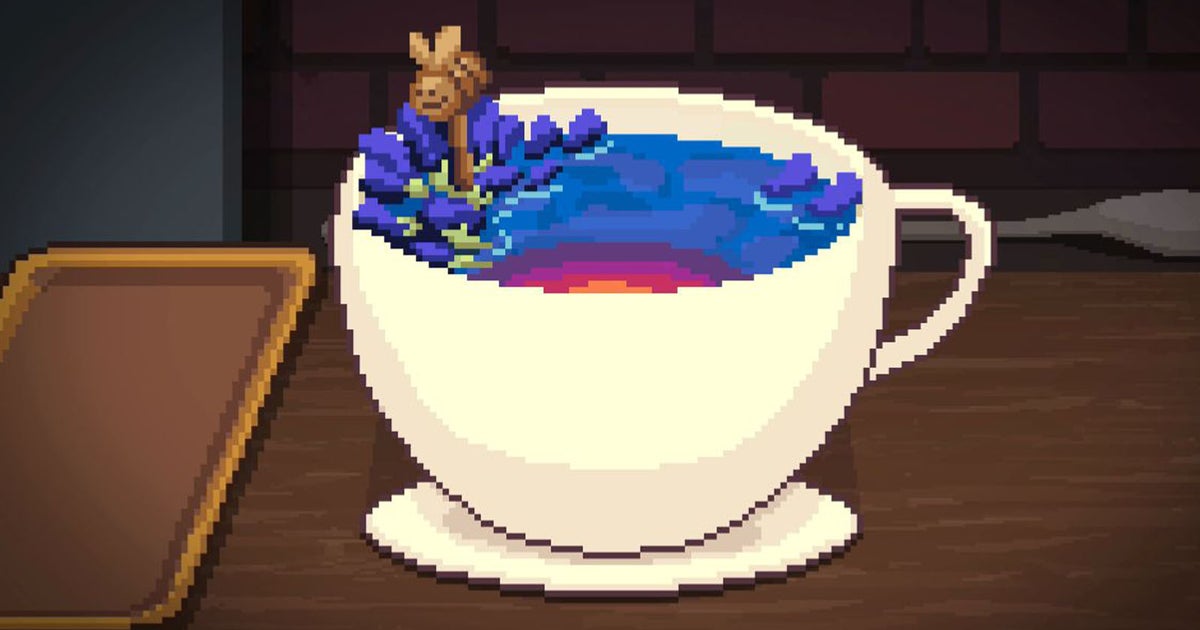
Coffee Talk Episode 2 drink recipe list and how to unlock all special drinks in Hibiscus and Butterfly

Coffee Talk Episode 2 drink recipe list and how to unlock all special drinks in Hibiscus and Butterfly

Knowing all of the drink recipes in Coffee Talk Episode 2: Hibiscus and Butterfly will help you complete the game’s storyline, as well as the Brewpad.

These special drinks not only have unique appearances, but can change pivotal plot moments in Coffee Talk Episode 2: Hibiscus and Butterfly.

Below you’ll find all of the drink recipes for the base ingredients, from Coffee to Milk, along with how to unlock all of the special drinks in Coffee Talk Episode 2 Hibiscus and Butterfly.

If you want to know where some of these special drinks appear in the story mode, then check out our Coffee Talk Episode 2 best endings walkthrough.

On this page:

Drink lists:

Coffee Talk Episode 2: Hibiscus & Butterfly – Announcement Trailer – Nintendo Switch

How to unlock all special drinks in Coffee Talk Episode 2 Hibiscus and Butterfly

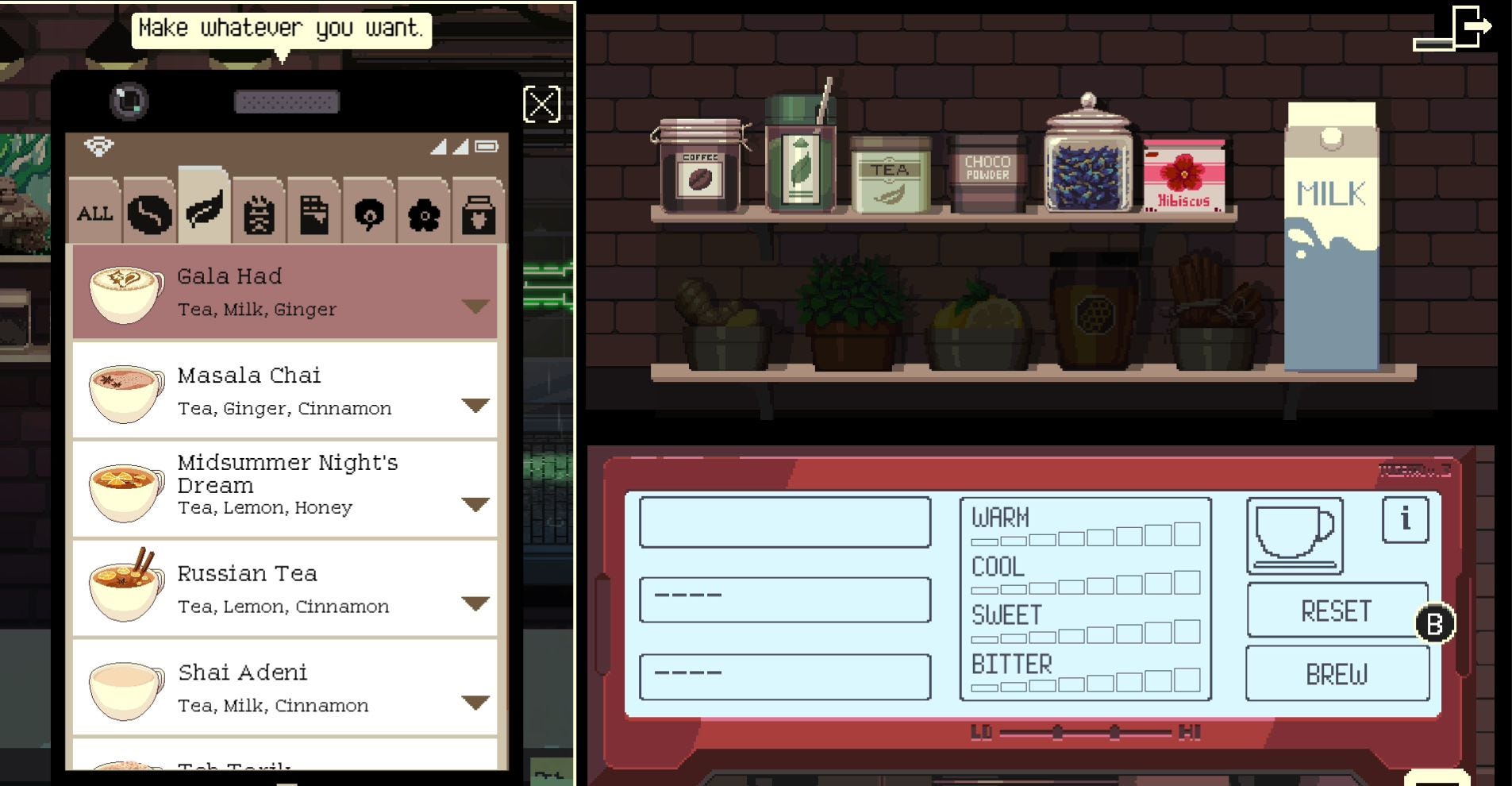
Special drinks in Coffee Talk Episode 2: Hibiscus and Butterfly refers to the drink recipes recorded in your Brewpad, which require you to put three ingredients in a specific order to make. This means that standard drinks, like Honey Chocolate, do not count as a special drink as they’re not recorded in the Brewpad.


Honey Chocolate is not considered a special drink.

You’ll know when you’ve brewed a special drink, because it will usually have a distinct appearance when compared to the standard drinks and, as mentioned, its recipe will be recorded in the Brewpad.

You also only need to brew a special drink once for it to be recorded and this can be done in the Story mode and both Endless modes – Free Brew and Challenge. So, if you’re missing a special drink from your Story mode playthrough, you can easily unlock it by jumping into Free Brew and making it without affecting the storyline.


Unlocking all of the special drinks in Coffee Talk Episode 2: Hibiscus and Butterfly will unlock the Master Brewer achievement.

Coffee-based drink recipes in Coffee Talk Episode 2 Hibiscus and Butterfly

Below you’ll find every special Coffee-based drink recipe, organised by the order they appear in the Brewpad, in Coffee Talk Episode 2: Hibiscus and Butterfly:

  • Black Lemon – Coffee, Coffee, Lemon
  • Black Magic – Coffee, Mint, Honey
  • Caffé Latte – Coffee, Milk, Milk
  • Cappuccino – Coffee, Coffee, Milk
  • Espresso – Coffee, Coffee, Coffee
  • Gingerbread Coffee – Coffee, Ginger, Cinnamon
  • Ginger Latte – Coffee, Ginger, Milk
  • Jahe Tubruk – Coffee, Coffee, Ginger
  • Sugar and Spice – Coffee, Honey, Cinnamon
  • Bee’n Buzzy – Coffee, Honey, Milk
  • Cinnamon Latte – Coffee, Milk, Cinnamon
  • Sweet Coffee – Coffee, Coffee, Honey
  • Queimada – Coffee, Honey, Lemon
  • Jingle Bells – Coffee, Coffee, Cinnamon

Tea-based drink recipes in Coffee Talk Episode 2 Hibiscus and Butterfly

Here you’ll find every special Tea-based drink recipe in the order they appear in the Brewpad of Coffee Talk Episode 2: Hibiscus and Butterfly:

  • Gala Had – Tea, Milk, Ginger
  • Masala Chai – Tea, Ginger, Cinnamon
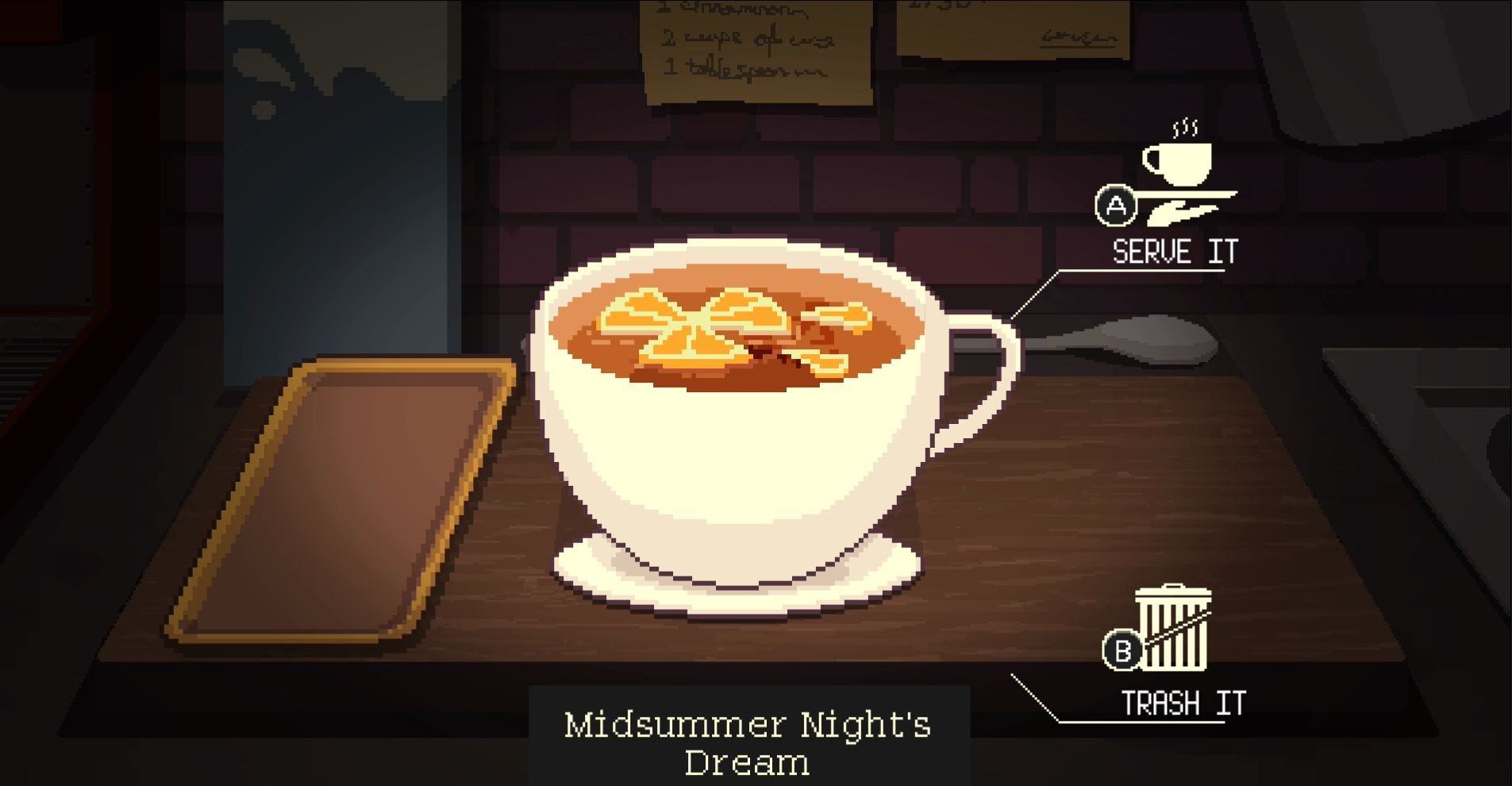
  • Midsummer Night’s Dream – Tea, Lemon, Honey
  • Russian Tea – Tea, Lemon, Cinnamon
  • Shai Adeni – Tea, Milk, Cinnamon
  • Teh Tarik – Tea, Tea, Milk

Green Tea-based drink recipes in Coffee Talk Episode 2 Hibiscus and Butterfly

Here are all of the special Green Tea-based drink recipes, listed in the order they appear in the Brewpad, in Coffee Talk Episode 2: Hibiscus and Butterfly:

  • Cough Syrup – Green Tea, Lemon, Honey
  • Green Tea Latte – Green Tea, Milk, Milk
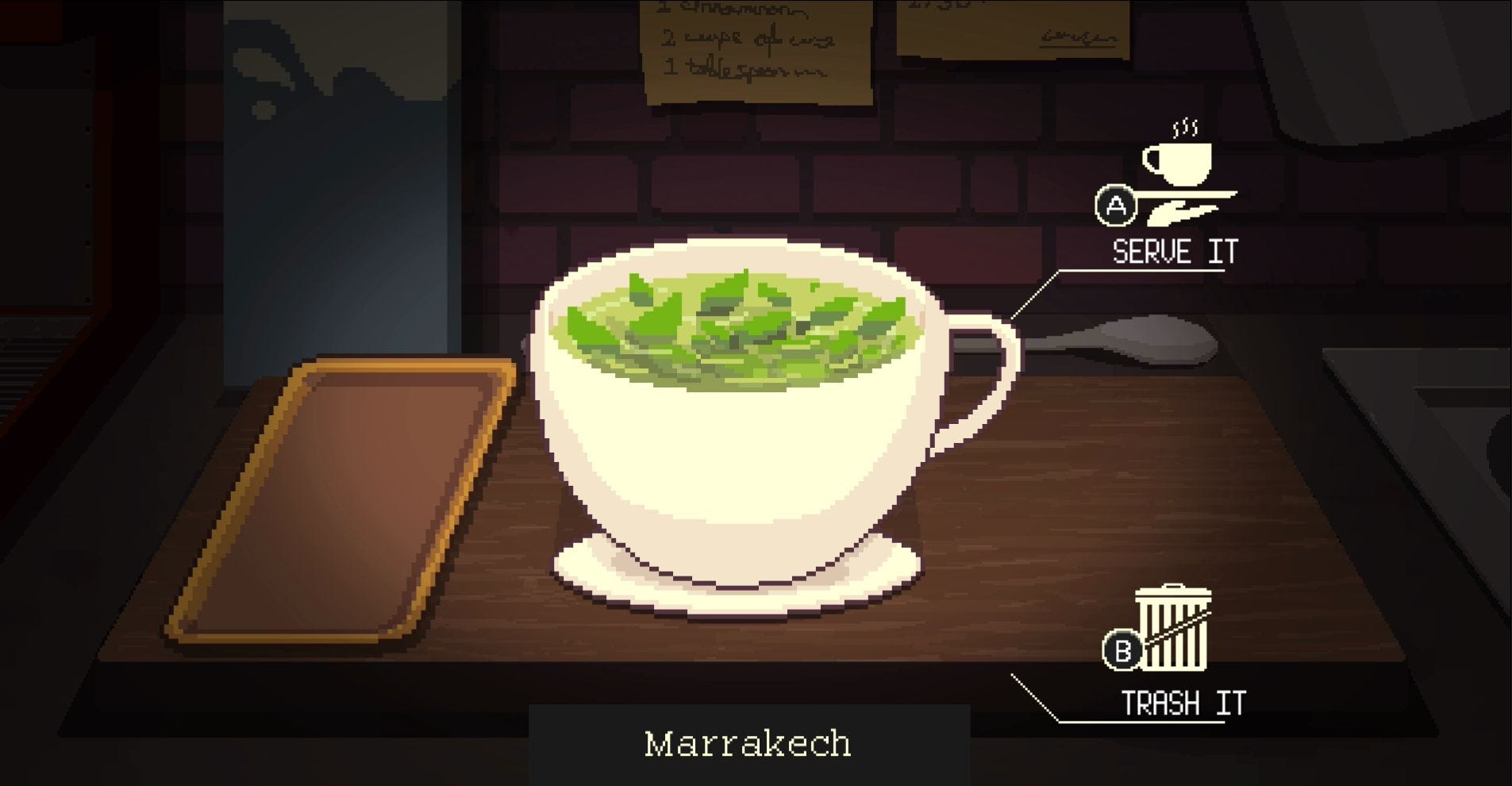
  • Marrakech – Green Tea, Mint, Mint
  • Shin Genmaicha – Green Tea, Green Tea, Ginger
  • The Grinch – Green Tea, Ginger, Cinnamon
  • Matcha – Green Tea, Green Tea, Green Tea
  • “Detox” Tea – Green Tea, Ginger, Lemon
  • “Five Stars!” – Green Tea, Honey, Milk

Chocolate-based drink recipes in Coffee Talk Episode 2 Hibiscus and Butterfly

Below lie all of the special Chocolate-based drink recipes, organised by the order they appear in the Brewpad, in Coffee Talk Episode 2: Hibiscus and Butterfly:

  • Bitter Heart – Chocolate, Ginger, Cinnamon
  • Chocobee Miruku – Chocolate, Honey, Milk
  • Dark Chocolate – Chocolate, Chocolate, Chocolate
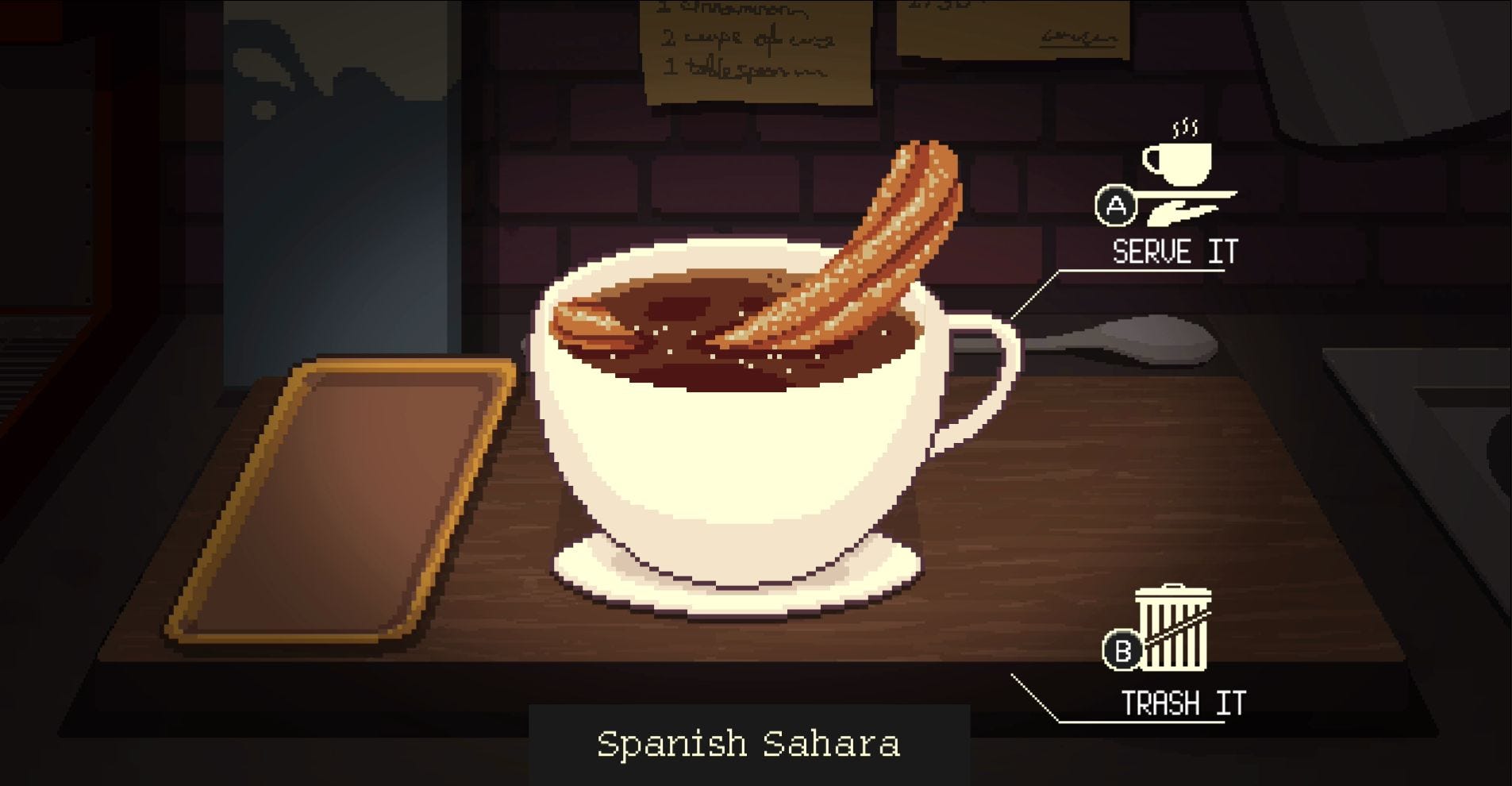
  • Spanish Sahara – Chocolate, Milk, Ginger
  • Spiced Lady – Chocolate, Milk, Cinnamon
  • 299.792.458 – Chocolate, Honey, Ginger
  • After Midnight – Chocolate, Honey, Mint

Blue Pea-based drink recipes in Coffee Talk Episode 2 Hibiscus and Butterfly

Here are all of the special Blue Pea-based drink recipes in the order they’re listed in the Brewpad of Coffee Talk Episode 2: Hibiscus and Butterfly:

  • Butterfly Pea – Blue Pea, Blue Pea, Blue Pea
  • Galaxy Mint-tea – Blue Pea, Mint, Lemon
  • Dreamin’ Blue – Blue Pea, Milk, Honey
  • Aqua’s Tranquilitea – Blue Pea, Mint, Mint
  • Blue Lightning – Blue Pea, Ginger, Ginger
  • Flowerbed – Blue Pea, Honey, Mint
  • Gala Tea – Blue Pea, Milk, Ginger
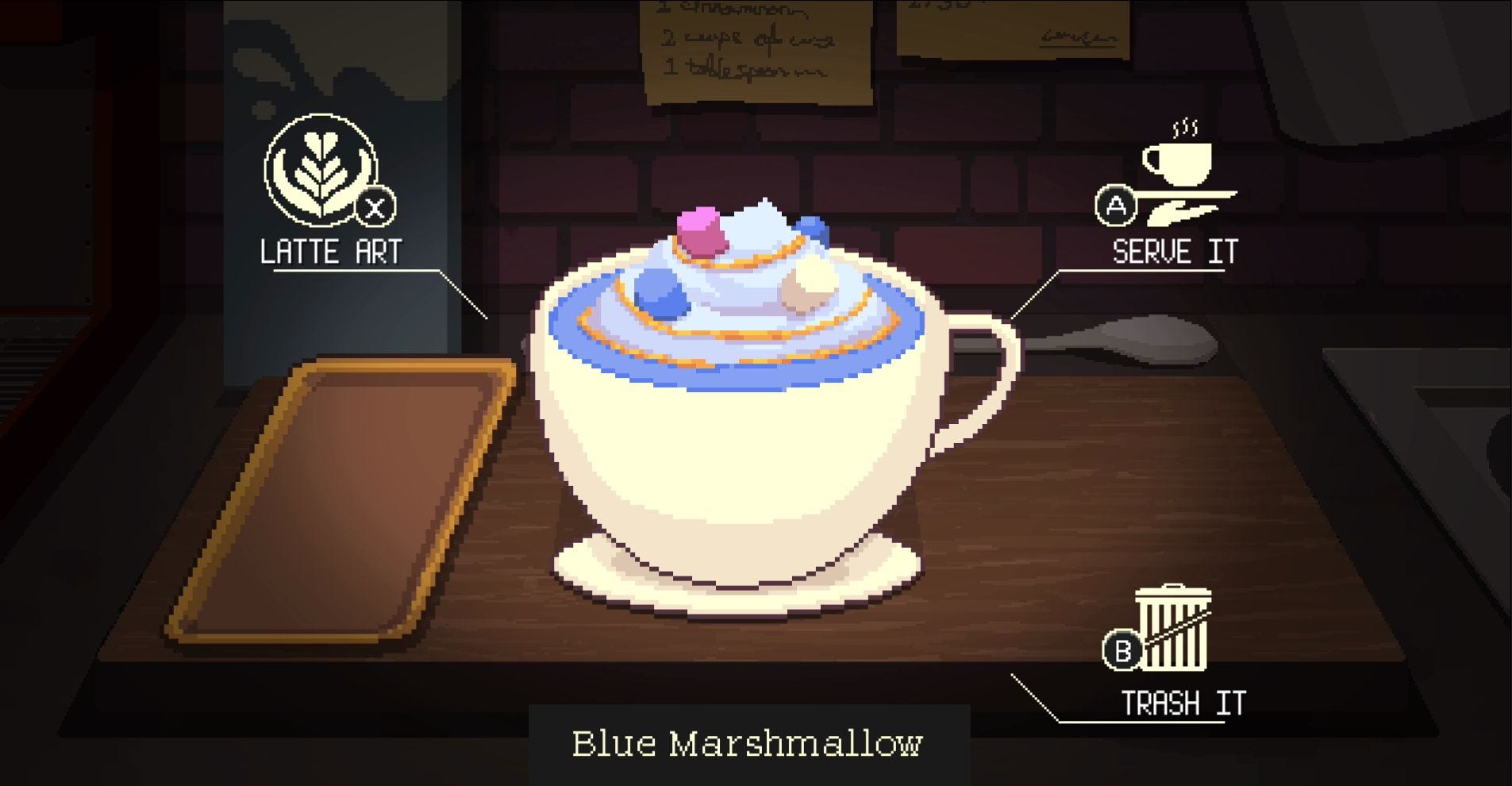
  • Blue Marshmallow – Blue Pea, Honey, Milk

Hibiscus-based drink recipes in Coffee Talk Episode 2 Hibiscus and Butterfly

Below are all of the special Hibiscus-based drink recipes, arranged in the order they appear in the Brewpad, in Coffee Talk Episode 2: Hibiscus and Butterfly:

  • Hibiscus Tea – Hibiscus, Hibiscus, Hibiscus
  • Bissap – Hibiscus, Ginger, Lemon
  • Teh Jahe Rosella – Hibiscus, Ginger, Honey
  • Sweetheart Latte – Hibiscus, Milk, Honey
  • Pink Spice – Hibiscus, Milk, Cinnamon
  • Zobo – Hibiscus, Ginger, Ginger
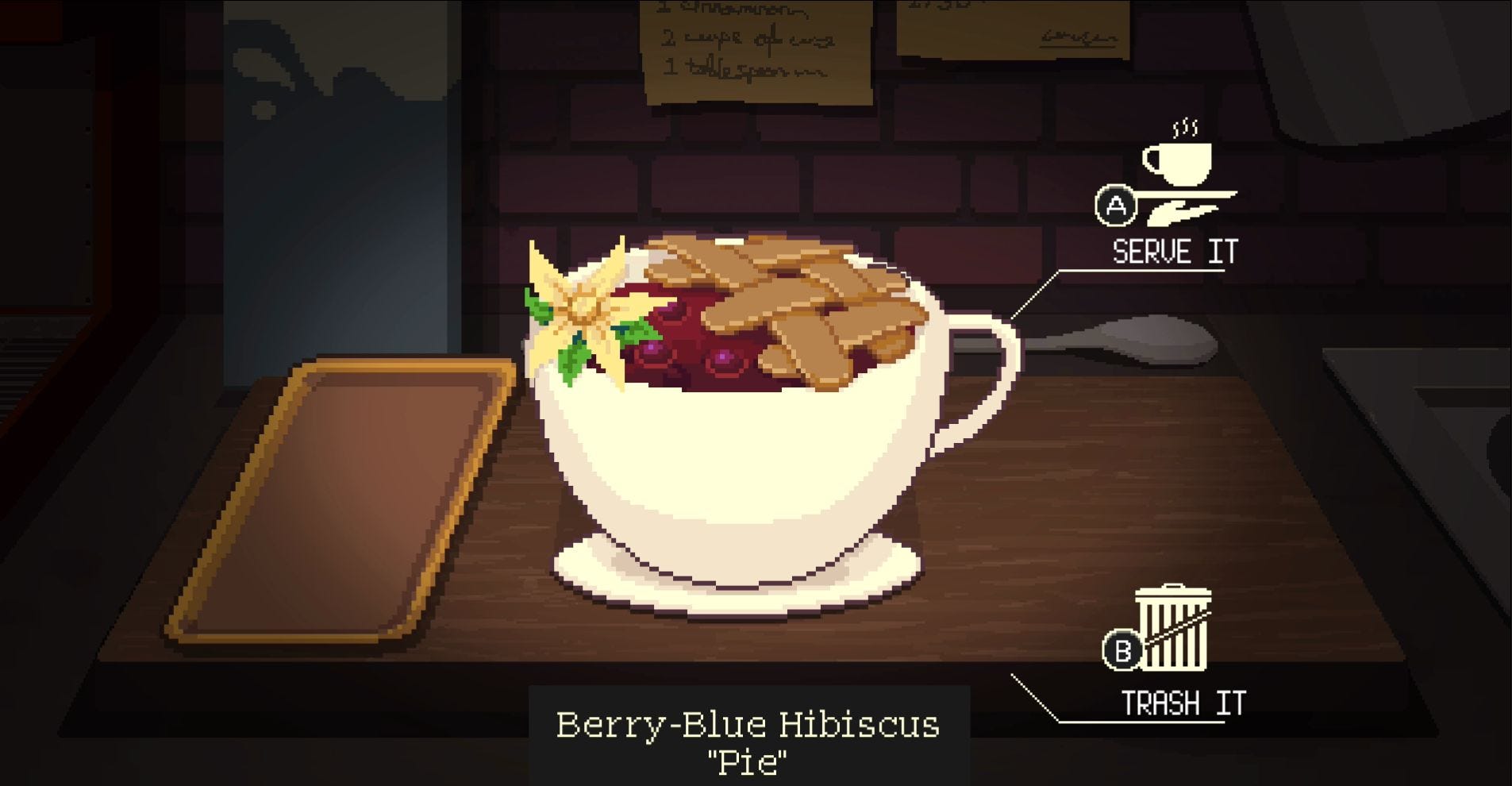
  • Berry-Blue Hibiscus “Pie” – Hibiscus, Honey, Mint

Milk-based drink recipes in Coffee Talk Episode 2 Hibiscus and Butterfly

Here are all of the special Milk-based drink recipes, arranged in their Brewpad order, in Coffee Talk Episode 2: Hibiscus and Butterfly:

  • Bedchamber – Milk, Cinnamon, Honey
  • Le Menthol – Milk, Mint, Lemon
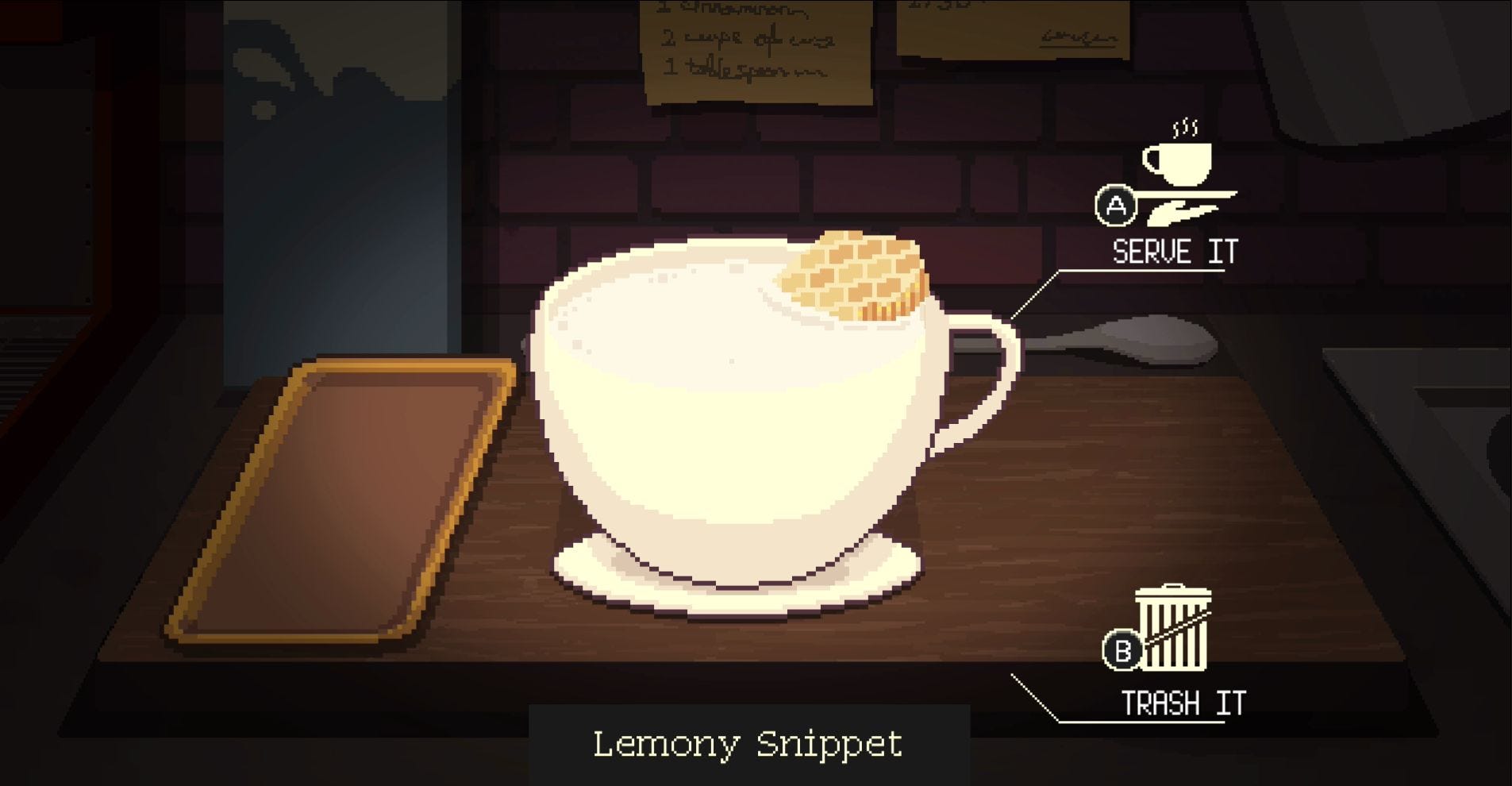
  • Lemony Snippet – Milk, Honey, Lemon
  • Milky Way – Milk, Honey, Mint
  • STMJ – Milk, Ginger, Honey

Good luck unlocking all of the special drinks in Coffee Talk Episode 2: Hibiscus and Butterfly!


ChatGPT’s Cocktail Recipes Are ‘Actually Very, Very Good’

ChatGPT’s Cocktail Recipes Are ‘Actually Very, Very Good’

Two weeks in a row, ChatGPT botched my grocery list. I thought that I had found a really solid, practical use for AI—automating one of my least favorite Sunday chores—but the bot turned out to be pretty darn bad at it. I fed it a link to a recipe for cauliflower shawarma with a spicy sauce and asked it to compile the ingredients in a list. It forgot the pita, so I forgot the pita, and then I had to use tortillas instead. The following week, I gave it a link to a taco recipe. It forgot the tortillas.

How is AI going to revolutionize the world if it can’t even revolutionize my groceries? I vented to my colleague Derek Thompson, who’s written about the technology and its potential. He told me that he’d been using ChatGPT in almost the reverse way, by offering it cocktail ingredients he already had in his pantry and asking for drink recipes. I decided to give it a go, and soon enough I was sipping a pleasant mocktail made with jalapeño and seltzer.

The AI—at least in its free iteration—was pretty bad at gathering information from a random website link in an orderly fashion, but it did a good job playing with the ingredients that I provided. It is adept at a kind of creative synthesis—picking up on associations between words and pairing them in both familiar and novel ways to delight the user. Understanding why could give us a richer sense of how to deploy generative AI moving forward—and help us avoid putting it to wrongheaded, even harmful uses.

In addition to being a dismal grocery shopper, ChatGPT has struggled in the past to do basic math. We think of computers as logical and exacting, but ChatGPT is something different: a large language model that has been trained on big chunks of the internet to create associations between words, which it then “speaks” back to you. It may have read the encyclopedia, but it is not itself an encyclopedia. The program is less concerned with things being true or false; instead, it analyzes large amounts of information and provides answers that are highly probable based on our language patterns.

Some stochasticity or randomness—what the computer scientist Stephen Wolfram calls “voodoo”—is built into the model. Rather than always generating results based on what is most likely to be accurate, which would be pretty boring and predictable by definition, ChatGPT will sometimes choose a less obvious bent, something that is associated with the prompt but statistically less likely to come up. It will tell you that the word pours finishes the idiom beginning with “When it rains, it …” But if you push it to come up with other options, it may suggest “When it rains, it drizzles” or “When it rains, it storms.” As Kathleen Creel, a professor of philosophy and computer science at Northeastern University, put it: “When you give it a prompt, it says, Okay, based on this prompt … this word is 60 percent most likely to be a good word to go next, and this word is 20 percent, and this word is 5 percent.” Sometimes that less likely option is inaccurate or problematic in some way, leading to the popular criticism that large language models are “stochastic parrots”: able to piece together words but ignorant of meaning. Any given chatbot’s randomness can be dialed up or dialed down by its creator.

“It’s actually not in the business of doing something exactly,” Daniel Rockmore, a professor of math and computer science at Dartmouth College, told me. “It’s really in the business of doing something that’s super likely.” That distinction is meaningful, even in the realm of routine chores: Giving me a grocery list that is likely to be right isn’t the same as giving me a grocery list that includes everything I need. But when it comes to putting together a mixed drink based on a set of given ingredients, there isn’t necessarily one right way to do things. “You can get a shitty cocktail, but you kind of can’t get a wrong cocktail,” Rockmore pointed out.

As if to test Rockmore’s theory, Axelrad, a beer garden in Houston, recently ran a special called “Humans vs. Machines,” which pitted ChatGPT recipes against those constructed by human mixologists. The bar prompted ChatGPT to design a cocktail—for example, one inspired by the Legend of Zelda video-game series—and then tested it against one made by a bartender. Patrons could try each concoction and vote for their favorite. The bar ran the competition four times, and the robots and humans ended up tied. ChatGPT’s remake of Axelrad’s signature Blackberry Bramble Jam even triumphed over the original.

Lui Fernandes, a restaurant and bar owner who runs a YouTube channel about cocktail making, has likewise been toying with the technology. He told me that ChatGPT’s recipes are “actually very, very good,” though far from flawless. When he started pushing the limits of conventional ingredients, it “spit out some crazy recipes” that he would then have to adjust. Similarly, when my editor offered ChatGPT an objectively awful list of potential ingredients—Aperol, gin, half a beer, and a sack of frozen peas—it suggested he make a “Beer-Gin Spritz” with a garnish of frozen peas for a “fun and unexpected touch.” (You can always count on editors to attempt to break your story.) ChatGPT may understand based on its training data that vegetables can sometimes work as a drink garnish, like celery in a Bloody Mary, but it couldn’t understand why peas would be an odd choice—even if the drink itself was odd, too.

“Every now and again, it’s gonna throw up something which is totally disgusting that it somehow thinks is an extension of the things we like,” Marcus du Sautoy, a mathematician and professor at the University of Oxford, told me. Other times its choices might inspire us, like in the case of the Blackberry Bramble Jam. It is also, I should say, excellent at writing original recipes for classic and familiar drinks, having read and synthesized countless cocktail recipes itself.

What we’re basically talking about here is creativity. When humans make art, they remix what they know and toy with boundaries. Cocktails are more art than anything else: There are recipes for specific drinks, but they always boil down to taste. In this simple, low-stakes context, ChatGPT’s creative synthesis can help us find an unexpected solution to a quotidian problem.

But this creativity has limits. Giorgio Franceschelli, a Ph.D. student in computer science and engineering at the University of Bologna who conducted a study on these models’ imaginative potential, argued over email that the technology is inherently restricted, because it leans on existing material. It cannot achieve transformational creativity, “where ideas currently inconceivable … are actually made true.”

Although ChatGPT may help us explore our own creativity, it also risks flattening what we produce. Creel warned about the “cultural homogeneity” of cocktail recipes produced by the bot. Similar to how recommendation algorithms have arguably homogenized popular music, chatbots could condense the cocktail scene to one that just plays the hits over and over. And because of how they were trained, AI tools may disproportionately offer the preferences of the English-speaking internet. Fernandes—a Brazilian immigrant who, in tribute to his heritage, chooses to focus on South and Latin American spirits that other bars may overlook—found that the bot struggled to balance cachaça or pisco cocktails. “It wasn’t actually able to give me as good of a recipe as when I asked it about bourbon, rye, or gin,” he said. If we’re not thoughtful about how we use AI, it could lead us toward a monoculture beyond just our bars.

Technology experts and bartenders alike told me that we should think of AI-generated cocktail recipes as a first draft, not a final product. They encouraged a feedback loop between human and bot, to work with it to home in on what you want.

And this advice expands beyond cocktails. Rockmore proposed treating its responses as “a suggestion from someone that you don’t really know but you think is smart” rather than considering the tool to be “the all-knowing master oracle that has to be followed.”

Too often, it seems, we’re turning to AI chatbots for answers, when perhaps we should be thinking of them as unreliable—but fun and well-read—collaborators. Sure, they’ve yet to save me any time when it comes to things that I need done precisely. But they do make a nice spicy margarita.

3 Mai Tai Recipes That Put a Bitter Spin on the Trader Vic Drink

3 Mai Tai Recipes That Put a Bitter Spin on the Trader Vic Drink

When Don the Beachcomber began slinging Zombies and Grog in the 1930s, sparking a decadeslong tiki craze, “bitter” had not yet entered the tiki lexicon. Sour, sweet and spice were the typical trappings of Don’s so-called “Rhum Rhapsodies.” Today, however, thanks to the bittering of the tropical backbar, you’d be hard-pressed to find a tiki bar that couldn’t double as an aperitivo bar.

Indeed, bitter and herbal liqueurs are a perfect match for the layered fruit and spiced notes of tiki, and their eventual pairing was an inevitability. Perhaps the earliest example of their complementary qualities is the Jungle Bird, a late entry into the tiki canon, composed of rum, Campari, lime and pineapple juice. Created in the late 1970s, the drink has become a Trojan horse for the introduction of bitter Italian ingredients into the tiki style, a trend that has only ballooned in recent years.


The Jungle Bird played no small role in the spread of this hybrid approach, better known as aperitiki, but it’s the Mai Tai that has proved to be the blueprint to which bartenders turn time and again to expand tiki’s bitter palate. Jeremy Oertel’s aptly named Bitter Mai Tai, for example, follows in the footsteps of the Jungle Bird by leaning on Campari as the bracing backbone of his crowd-pleasing spin, while Dan Sabo’s Kentucky Mai Tai brings the Mr. Potato Head approach to new heights, retaining only the citrus and orgeat of the original, and introducing Cynar for a welcome note of bittersweet earthiness. (Cynar also stars alongside Jamaican rum in Oertel’s other spin on the template, the Artichoke Hold.) The Disgruntled Mai Tai, meanwhile, builds on the expected combination of ingredients with an ounce of Aperol and an upturned bottle of Underberg for a final bitter touch. 


As the amaro market continues to expand, tiki’s bittersweet side will only continue to evolve. As Anthony Schmidt, partner at San Diego’s False Idol, declares: “I have yet to meet an amaro I didn’t want to make work.”

Perhaps the most riffed-upon cocktail in the tiki canon, the Mai Tai serves as the inspiration for Jeremy Oertel’s decidedly bitter spin. Intrigued by a version he encountered that used Angostura bitters in place of rum, Oertel takes his bitter iteration in a different direction, incorporating vibrant red Campari. A measure of funky Jamaican rum provides extra fortification in this version, a staple of the now-closed Brooklyn bar Dram, where Oertel first created it.

The name of this Mai Tai riff nods to the source of its bourbon base, but that’s not the only update Dan Sabo makes to the original. Mezcal, peach liqueur and Cynar, a bittersweet Italian artichoke liqueur, make an appearance alongside the expected lemon and orgeat.

The Disgruntled Mai Tai takes a cue from European drinking traditions in this playful spin on the tiki classic. To the familiar combination of Jamaican rum, lime, orgeat and Curaçao, Attaboy’s Sam Ross adds an ounce of Aperol as well as an upturned bottle of Underberg for a bitter, bracing final touch.  

18 Best Tequila Cocktails To Make At Home

18 Best Tequila Cocktails To Make At Home

Tequila was once an underrated liquor—outside of Texas icehouses at least—and relegated largely to the college-aged coalition. However, the agave spirit is finally receiving much-overdue attention and admiration by those who love a unique, refreshing cocktail. And it’s about time! While it always comes in handy to have the perfect go-to recipe for iced-down Classic Margaritas and iconic Texas Ranch Waters, there’s so much more that can be done to take tequila to delicious new levels.

We’ve got a frozen peach cocktail that tastes like summer in a sip, a serrano-infused watermelon spritz that goes down way too easy, and even a savory Bloody Maria that will make you rethink the traditional brunch drink. Read on for our 18 best tequila cocktail recipes that perfectly balance sweet, tart, spicy, and more.


Dotdash Meredith


A simpler and fruiter version of a margarita, a paloma is a refreshing choice when you want a tart and sweet drink that looks extra pretty in your glass. You can use sparkling water, such as Topo Chico, or Jarritos if you prefer something sweeter.


Jennifer Causey; Food Styling: Loren Wood; Prop Styling: Christine Keely

Say hello to your new favorite way to make use of in-season peaches. These frozen cocktails are refreshing for a hot day, and don’t forget the chile-lime seasoning for the rim. It’s essential.


Photographer: Fred Hardy II, Food Stylist: Emily Nabors Hall, Props Stylist: Christina Brockman

Perhaps the tequila drink that Texans are the most passionate about, ranch water is perfect in its simplicity. A traditional recipe only calls for three ingredients: tequila of your choice, fresh lime juice, and Topo Chico.


Caitlin Bensel; Food Styling: Torie Cox


This spirited brunch cocktail (that is also a favorite for game days) gives a classic Bloody Mary a Tex-Mex twist. You switch out vodka for tequila instead, and we recommend adding a chile-lime rim.


Dotdash Meredith


If you like margaritas with fruitiness, watermelon is such a delicious addition for a touch of sweetness and flavor. Tip: The watermelon is going to make or break your margarita. We call for a seedless watermelon to streamline the process, but you can also use your favorite farmers’ market find.


Will Dickey

The origin of this version of a margarita must stem back to Texans who prefer a little extra sweetness. Orange juice is the magic ingredient, which happens to pair well with Triple Sec, tequila, and lime juice.


Antonis Achilleos; Food Stylist: Ruth Blackburn; Prop Stylist: Christina Daley


The best blend of tart, sweet, and boozy, these pomegranate-infused cocktails take a couple extra ingredients, but it’s so worth it for the colorful punch of flavor. Plus, they make a festive option during the holiday season.


Antonis Achilleos

Everyone needs a go-to frozen drink recipe for when it starts getting scorching-hot outside in the South. This makes a big batch for sharing.


Antonis Achilleos; Prop Stylist: Thom Driver; Food Stylist: Tina Stamos

With this short ingredient list, you will memorize it after making the recipe just one time. This old-school cocktail calls for orange juice and grenadine for a sweet refresher.


Victor Protasio; Food Styling: Ruth Blackburn; Prop Styling: Christine Keely


This drink is worth getting festive for—during the holidays and all year long. The slightly savory big-batch cocktail includes a surprising ingredient: clamato juice.


Becky Luigart-Stayner

For those who like a slightly less strong cocktail, a spritzer is the way to go. These spritz cocktails are part margarita, part daiquiri. Use store-bought frozen daiquiri mix for ultimate hosting ease.


Katie Jacobs

If you love the taste of a fresh, mint-muddled mojito, but prefer tequila over rum, this recipe offers the best of both worlds.


Antonis Achilleos; Prop Stylist: Christine Keely; Food Stylist: Ruth Blackburn


Dress up a traditional ranch water by adding in a splash of pomegranate juice. It adds a sweet tartness, as well as turns it a party-ready color!


Caitlin Bensel; Food Styling: Torie Cox


No need for pre-made, sugar-laden mixes with this simple go-to margarita recipe. (Homemade always tastes way better.) You can add agave syrup for sweetness if you want, but the orange liqueur provides a good bit.


Victor Protasio; Prop Styling: Audrey Davis; Food Styling: Emily Nabors Hall

Fresh watermelon from your local farmers’ market is going to mellow out the heat of this serrano-infused spritz and add classic summer flavor. Those desiring a weaker sipper can add a splash more of seltzer as needed.


Antonis Achilleos; Prop Stylist: Caleb Clarke; Food Stylist: Emily Nabors Hall


Tequila is just one of the stars in this hilariously liquor-heavy drink. Some people in Tennessee claim this cola-sweetened cocktail actually comes from Long Island, a community in Kingsport, Tennessee, not New York’s peninsula by the same name.


Antonis Achilleos; Food Styling: Ruth Blackburn


A mix of a margarita and paloma, this recipe is just the thing to quench your thirst on a sunny day hanging on the porch. A pinch of salt rounds out the bitterness of the grapefruit and the acidity of the lime.


Greg DuPree; Food Styling: Emily Nabors Hall; Prop Styling: Christine Keely

Fresh mint can easily upgrade any cocktail with just a little bit of muddling. From a glance, this recipe is a pretty basic margarita, but mint takes it to the next level.


Why ‘Water Recipes’ Are Taking Over TikTok

Why ‘Water Recipes’ Are Taking Over TikTok

On Shelby Hobbs’ dresser sits a Lazy Susan filled every flavor of liquid syrup you can imagine, from raspberry to peach Bellini. Beside the syrups is a container packed to the brim with water flavoring packets including Strawberry Nerds and Crush Orange.

Next to the supplies is an empty space for Hobbs’ water bottle. So, whenever she’s thirsty, all she has to do is grab her cup, dump in her flavoring of choice and fill up the bottle with ice and water.

Hobbs’ inspiration for her “Hydration Station” came from WaterTok, a new trend on TikTok whose hashtag has garnered over 100 million views. Across the app, creators are sharing themselves adding liquid and powdered flavorings to their water with the shared goal of drinking more water.

“I’ve been drinking this for about a month now,” the 21-year-old tells TODAY.com. “It definitely helps that everyone else on TikTok is making them, so it helps me think of new flavor ideas. But honestly, I haven’t made a bad one yet. I can mix whatever I want, and it still tastes good.”

But while WaterTok might be helping people like Hobbs stay hydrated, some people are questioning just how healthy the trend really is, as these flavorings can contain large amounts of sugar or artificial sweeteners, and it could be just another diet culture fad masquerading as a hydration aid.

TODAY.com talked to creators and experts to unpack everything you need to know about WaterTok (aka HydrationTok). Here’s what they said.

Breaking down #WaterTok

Many people participating in the trend say WaterTok is putting the fun back into drinking water. This community of hydration enthusiasts shares “water recipes” with various flavoring packets and liquids to create the optimal water-drinking experience.

Haley Staggs, 21, tells TODAY.com that WaterTok has helped her stay hydrated throughout the day.

Staggs first discovered the trend from a TikToker named Tonya, who goes by @takingmylifebackat42 on the app and has “recipes” for piña colada water, Starbucks Pink Drink water, bubble gum water and more, and shares her weight-loss journey.

“Watching her videos, I thought, ‘I should try that,'” Staggs says. “I went and got the packets and different water flavors and just started making waters. Now I drink over 100 ounces of water a day.”

And she’s not alone. Jaycie Adamson, 24, also stumbled upon the trend on TikTok — and hasn’t looked back since.

Adamson had never been a big water drinker, she tells TODAY.com. When she saw the trend, she thought, “Hm, this could help me drink water but not have to add sugar or calories.” (Many of the popular flavorings are sugar- and calorie-free.) She drove 30 minutes to the closest Dollar General and bought flavoring packets to put in her Stanley tumbler.

“I’m usually so bad at drinking water but this has been so nice to just fill it up at my own house and make water flavor combination I want for the day,” she says. “Honestly, I haven’t made any that taste bad. They all taste wonderful.”

The best “recipe” she’s found so far is a combo of the Pink Starburst and Pink Nerds powdered drink mixes.

Through posting her own WaterTok videos, she says she’s also found a community. People will comment on her TikToks asking her to share more of her favorite flavor combinations.

“I can tell when a trend’s taken over and it definitely feels like that’s happening,” she says. “When a lot of people on Amazon start buying something, the price will change. I bought the cotton candy syrup on Amazon for $10 and now on Amazon it’s over $20.

For Hobbs, WaterTok has helped her cut back on sugary drinks. She would turn to drinks like loaded tea over plain water.

“I don’t even realize how much (water) I’m drinking now. And I feel so much better,” she says. “I haven’t had much caffeine since I’ve started drinking water because I think it just gives me like natural caffeine and just makes me feel better.”

A registered dietitian’s take on #WaterTok

Frances Largeman-Roth, RDN, tells TODAY.com that, in general, anything that helps people drink more water is a positive thing — but there are a few caveats to that.

She loves that people are taking their hydration to the next level with this trend. But her No. 1 piece of advice is to stay away from artificially flavored and colored syrups.

“Since these TikToks feature sugar-free syrups, the influencers don’t seem to be adding sugar to their water,” she says. “However, I do think that making your water super sweet isn’t great in the long run as it may put you in the mindset that all beverages need to be overly sweet and flavored to be enjoyed.”

The first thing that Largeman-Roth thought of when she heard about WaterTok, she says, is Crystal Light.

She says that she remembers how popular it was in the ‘80s and ‘90s for moms looking to lose weight to add Pink Lemonade Crytal Light packets to their water — which is why this trend may reek of toxic diet culture.

“I feel like #WaterTok might be the 2023 answer to Crystal Light with people trying to have a pleasurable flavor experience without any calories or carbs (or very few),” she says.

“I think it’s gaining in popularity because lots of people know they should be drinking more water and fewer sweetened drinks like soda, but plain water feels boring to them.

“Plus, it’s a fun thing to make and drink! We went through a coffee phase and a mocktail phase, so it makes sense that as we head toward the summer, we’ll be going through a water phase.”

But while drinking water is important, so is monitoring the amount you consume.

Largeman-Roth says when you drink more water than your kidneys can process, it can lead to hyponatremia, or low sodium levels.

“Sodium is a mineral that is important for the functioning of our heart, so it needs to stay in balance,” she explains. “When we flood our systems with excessive amounts of water, low sodium levels can lead to low heart rate, confusion, drowsiness and headaches.”

The U.S. National Academy of Medicine suggests an adequate intake of daily fluids of about 15.5 cups (3.7 liters) for men and about 11.5 cups (2.7 liters) for women.

Largeman-Roth also warns that if an individual is dealing with disordered eating, they may lean in too drastically to this trend, using excessive water-drinking as a weight-loss tool to trick themselves into thinking they’re not hungry. Instead of allowing themselves to enjoy a banana split now and then, they’ll turn to “banana split water.”

“People definitely use coffee as a replacement for breakfast. Coffee is a beverage, not a meal. The same is true for flavored waters,” she says.

At the end of the day, Largeman-Roth will always encourage people to just drink plain water when they’re looking to hydrate. But, she says, adding ice — either plain or cubes of frozen lemon or watermelon juice — definitely helps to perk it up.

“Or go the au naturel route and make (water) with fresh fruit and herbs,” she says. “And if you’re working out a lot or just sweat a ton, adding a flavored hydration mix can be helpful in staying hydrated.”