For decades, Latin culture has influenced American food ways and drink.

For decades, Latin culture has influenced American food ways and drink.

When Maricel Presilla was a child in Santiago de Cuba, her mom fed her pan and avocado, a dish that had been eaten in Latin American countries for centuries. But in 2015, avocado toast, as it has come to be known, gained popularity in the United States, gracing many brunch and appetizer menus.

Avocado toast is an example of how Latin American food and culture have influenced American favorites like tacos, arroz con pollo, plantains, empanadas and skirt steak.

“These are things that are very easy to duplicate and things that are not esoteric. They are not considered weird,” said Presilla, a culinary historian and former owner of Cucharamama in Hoboken.

“What is in a chimichurri sauce?” she asked. “You have parsley, peppers, oregano and garlic. There are onions. Those ingredients are familiar.”

Fried duck empanadas at Sol Y Luna in Mountain Brook, Ala.

The fried duck empanadas at Sol Y Luna in Mountain Brook, Ala., are served with chimichurri sauce and queso fresco.(Bob Carlton/bcarlton@al.com)

Chef Bren Herrera said the beautiful thing about Latin America is that it is not monolithic.

“There are 21 countries that make up Latin America,” said Herrera, an author and activist who hosts Culture Kitchen, a national TV show. “There are countries and islands that are African descent and others that don’t really pull or rely on that ancestry. You get a very diverse palate.”

Presilla, author of Gran Cocina Latina: The Food of Latin America, said the variety available within Latin cuisine is part of what makes it so appealing “We have spicy. We have a version of Italian food because we have so many immigrants from Italy in places like Peru and Brazil. We also have the Japanese in São Paulo in Brazil, Peruvian ceviche.”

There’s a moment when Americans would only talk about Croque monsieur, a hot sandwich made with ham and cheese and originally served in French cafes, she said. Now, they request the Cuban sandwich.

Old World Deli

Cuban Sandwich from Old World Deli
– Photo courtesy of Old World Deli, via Yelp

And the Latin influence on American culture doesn’t stop with food.

The daiquiris, mojitos, and margaritas that create the cocktail culture in the United States are another example of the Latin traditions, Presilla said.

She and Herrera said they are glad the food is gaining popularity because it means more people are interested in the culture.

“I live by this mantra that the way to know a people and culture and their history is through their food,” said Herrera, who is of Cuban and Jamaican descent. “The food tells a beautiful story of what that culture is.”

Presilla, of Weehawken, sits on The Culinary Institute of America’s Worlds of Flavor International Conference and Festival advisory committee. She helps educate others about the history of Latin American Cuisine.

“Latin Americans are so proud of their culinary culture,” she said.

Presilla said Latin cuisine is a mix of cultures steeped in the legacy of slavery. She said that Africa represents the backbone of American foods, noting that 12.5 million people made the transatlantic voyage from Africa as enslaved people. About 400,000 came to the United States, 4 million went to the Caribbean, another 4 million went to Brazil and the rest went to Latin America. “That is the reality of it,” she said.

“This is important to understand,” Presilla said. “That’s a foundation we need to acknowledge as Latin Americans, that so much of our cuisine and so much of the way we eat has to do with West Africa.”

“It is beyond the ingredients alone,” she said.

Jonathan Rigg, a mental health counselor from Bellmawr, thinks about the years growing up eating his Cuban Godmother’s arroz con pollo.

He remembers her making rice similar to Jamaican rice and peas, but it had a coconut flavor.

“The rice was just always so good, the way she would make the chicken with the different types of sazón then, with patacones or fried plantains,” said Rigg, an Afro-Hispanic whose family is from Costa Rica and Jamaica with ancestry in Panama.

Elbita's Cocina

– Josette and Walwyn Jackson run Elbita’s Cocina, a food truck serving Puerto Rican comfort food like fried plantains, arroz con pollo and stewed beans. Alaina Potrikus | abeckett@syracuse.comAlaina Potrikus | abeckett@syrac

“The flavors make it unique,” he said of the cuisine that keeps him connected to his heritage.

Presilla recently came across a high-profile article about chicha morada, a punch made with purple corn from Peru.

“I had been serving that for decades now, and any Peruvian joint they all have that. It’s not news,” she said. “It has been there. But now, because of the article, maybe it will become trendier. So, that is how it happens.”

Herrera agreed. “Latin cuisine in general, regardless of a country, is very heavily rooted in customs and traditions,” she said. “There is always a deep level of history of where it came from, how it got there, why it was eaten.”

Our journalism needs your support. Please subscribe today to NJ.com.

Shaylah Brown may be reached at sbrown@njadvancemedia.com. Follow her on Twitter at @shaylah_brown

Italian recipes: Savour the unique food culture of Venice

Italian recipes: Savour the unique food culture of Venice

The Venetian tradition of cicchetti is all about small bites. Casual and fun, writer and photographer Emiko Davies shares how to bring a taste of the lagoon city to your kitchen, wherever it may be

Get the latest from Laura Brehaut straight to your inbox

Article content

Our cookbook of the week is Cinnamon and Salt: Cicchetti in Venice: Small Bites from the Lagoon City by Emiko Davies. To try a recipe from the book, check out: Cured sea bass with cumin, gratin scallops with mushrooms, and grilled smoked herring salad.

Advertisement 2

Article content

I feel lucky to have visited Venice for the first (and so far, only) time in winter. Stepping out of the Santa Lucia railway station after an overnight train trip from Nice, there were no crowds. No hustle or bustle. Only the quiet of the canals as I sipped a coffee and ate a pastry in the steely January light.

Article content

When I see photographs of Venice’s piazzas and campos teeming with tourists, I barely recognize them. A friend and I stayed in a hostel on one of Venice’s further flung islands, its name lost to time. But the memory of skimming across the lagoon in a vaporetto as we went to and fro is with me still.

We had recently graduated from university and were travelling on a budget. As it turns out, wandering Venice’s backstreets as we did, stopping at bàcari for cicchetti — snacks designed to be held with one hand (leaving room for a drink in the other), and eaten in one or two bites — was absolutely the right thing to do.

Advertisement 3

Article content

Tuscany-based Australian-Japanese food writer and photographer Emiko Davies has visited Venice often since she moved to Italy in 2005 — including a four-month stint as an intern, restoring etchings and manuscripts at the Armenian monastery’s museum on San Lazzaro island.

During her many trips, Davies has eaten at sit-down restaurants just twice — and only when invited to join somebody already seated.

“The very first trips I took to Venice, I was either a student or I was with a group of students. And so, eating in Venice, I’ve always had people say to me, ‘Oh, it’s so expensive.’ And I’ve thought, ‘That’s ridiculous. It’s so cheap to eat in Venice,’” says Davies, laughing.

“When you eat this way — very casually, bouncing from one cicchetti bar, one bàcaro, to another — it is actually a very economical way to have a great meal in Venice. Because cicchetti are designed to be very democratic, very cheap. Something everyone can afford. And they don’t cost more than one or two euros each. So, you can get a few, you can get a lot, you can get one or two, and still be fed.”

Advertisement 4

Article content

Cinnamon and Salt by Emiko Davies
Cinnamon and Salt: Cicchetti in Venice is Tuscany-based food writer and photographer Emiko Davies’ fifth cookbook. Photo by Hardie Grant Books

Davies’ fifth cookbook, Cinnamon and Salt (Hardie Grant Books, 2022), is an education in cicchetti. Reading it took me back to visiting the lagoon city in 2000. Perhaps better still, it inspired me to experience Venice even more fully through its cicchetti when I have the chance to return.

Cicchetti “are a way of life in Venice.” Davies explores this distinctly Venetian tradition, the city’s unique food culture and rich history in Cinnamon and Salt. The collection of more than 60 recipes — classic, modern and fried cicchetti, small plates, sweets and drinks — concludes with a map of Venice, and a brief guide to her favourite bars and bakeries. “I hope it inspires people to try some of these things, either at home or if they visit Venice to seek them out and try them in Venice,” she says.

Advertisement 5

Article content

These small bites make for an economical way to eat in an otherwise expensive city, but they’re also the perfect way to take it all in. If you, too, want to “taste it all” when you visit a place, cicchetti are ideal for doing just that.

One bar will offer so many different kinds that it’s already hard to choose, says Davies. After narrowing it down to three or four, it’s time to move on to the next bàcaro. “Cicchetti-hopping is really my ideal way to eat my way through a place and get a little bit of a taste of everything. So, for me, this is the most fun way to eat in Venice.”

The cicchetti Davies features in Cinnamon and Salt translate seamlessly from the bàcari of lesser-known Venice to the home kitchen. Many of the bite-size dishes on offer in bars are also commonly enjoyed at home, family-style.

Advertisement 6

Article content

Sarde in saor (sweet-and-sour fried sardines), for example — one of Davies’ favourite cicchetti — can easily morph from bar snack to meal. “That’s something that you could make a big dish of and have at home to eat with your lunch or eat with a salad and it becomes a meal. But it’s also something that you’ll have in a cicchetti bar, and it’s served maybe on a little grilled polenta crostino, or maybe on a slice of toasted baguette or something like that. And so, they do translate well both ways.”

Despite Davies’ love of Venetian food culture, dedicating a cookbook to cicchetti was a friend’s idea. Rosa Salzberg, associate professor of Italian Renaissance history at the University of Warwick, suggested it long ago. But in 2020, over wine and salumi, they finally put pen to napkin: “Food, wine and history in the backstreets of Venice.”

Advertisement 7

Article content

Salzberg wrote a fascinating foreword to the book, in which she connects the dots between Venice’s food traditions and history. Cicchetti aren’t designed for lingering over, Salzberg underscores, “but for a food culture on the move.”

The way this style of eating manifested can be traced back to the Renaissance, when the aristocratic government attempted to prohibit working-class Venetians from gathering over meals. Equally true today, people sharing ideas around a table can be powerful. Fearing that people meeting to eat and drink would lead to social disorder, the government took away the tables.

Having to stand while enjoying a drink and a bite with others meant gatherings were brisker — but no less cheerful, says Davies. “It is one of the things that I really love about the eating culture in Venice. You still have that. You’re standing around with your little nibble and a little glass of wine. And it’s very casual, because you’re just standing there.”

Advertisement 8

Article content

Venice’s top attractions — including Piazza San Marco, the Doge’s Palace and the Rialto Bridge — draw an estimated 25 million tourists each year. In the past, people from afar came to the city for different reasons. Venice’s history — and wealth built on the trade of salt and later, spices — is a big part of what sets its food culture apart from the rest of Italy. The two ingredients in the book’s title — cinnamon and salt — symbolize this history.

“Basically, the wealth that was coming through Venice a thousand years ago, that’s what contributed to it looking as it does today. And that’s what we appreciate when we visit Venice today. And you could say it’s thanks to the spices,” says Davies.

When you consider Venetian cuisine, you may not immediately think of the connections to trade in the Middle Ages. For centuries, people have mingled at the Rialto markets, for instance, as ingredients moved through on their way to the rest of Europe and influenced local food culture.

“Even though it’s not very obvious now, I like to think that there were so many layers over a thousand years, basically, that left their mark on Venetian cuisine and made it what it is now. It makes you think about every bite that you take, what it took for these things to get here on this plate today. It’s quite extraordinary when you think about it that way.”

Advertisement

Get the latest from Laura Brehaut straight to your inbox

Comments

Postmedia is committed to maintaining a lively but civil forum for discussion and encourage all readers to share their views on our articles. Comments may take up to an hour for moderation before appearing on the site. We ask you to keep your comments relevant and respectful. We have enabled email notifications—you will now receive an email if you receive a reply to your comment, there is an update to a comment thread you follow or if a user you follow comments. Visit our Community Guidelines for more information and details on how to adjust your email settings.

4 food and culture events to add that festive cheer to the week ahead

4 food and culture events to add that festive cheer to the week ahead

From new festive menus to an exhibition of luminious sculptures, these events promise to infuse the week ahead with warmth and joy


Christmas cheer

Sly Granny has launched a holiday menu to suit the festive mood. This limited edition selection, spanning small plates, mains, desserts and cocktails, brings the best of Christmas goodies from across the world. You can choose from innovative dishes such as the smoked duck chhundo, goat cheese crostini and roast turkey porchettas, or opt for comforting creations like the butternut squash mac and cheese, chives and sour cream mash. To accompany the food, Sly Granny has also launched cocktails like the Sunset Dazzle, made with gin infused with raw turmeric, Hot Buttered Bourbon, which features bourbon, unsalted butter, demerara sugar and winter spices. Or you could opt for the good ol’ Granny’s mulled wine. This limited edition menu is available at Sly Granny outlets in New Delhi, Dehradun, Bengaluru and Goa till 5 January 2023

 ‘Handle With Care’, at Method Kalaghoda

‘Handle With Care’, at Method Kalaghoda

Into the light

A new exhibition, ‘Handle With Care’, at Method Kalaghoda is presenting a series of light sculptures, grills and furniture made using industrial and metal glass. The works by Yaazd Contractor present a contrasting relationship of materials within each object: cinder and glass, mass-produced prefabricated steel parts and the nearly-extinct art of cold cathode neon, and more. “Method invites the viewer to approach the show not with the perspective of an outsider looking in, doing their best to extract and impose some foreign meaning to the show, but to take on the challenge of looking at the exhibition precisely as the show title suggests: with care,” states the curatorial note. ‘Handle With Care’ can be viewed at Method Kalaghoda, Mumbai, till 3 January 2023, 11 am to 6 pm, (closed on Monday)

Also read: Govinda Naam Mera: A Vicky Kaushal show all the way

Jolly Gift Box at Le15

A jolly festive box

This Christmas, you can indulge in Chef Pooja Dhingra’s limited edition peppermint hot chocolate. It’s perfect to add warmth to the chilly weather and pairs well with Le15’s plum cake. Why should Christmas be all sweet? Le15 is bringing back its gourmet kharis in buttery cinnamon and garlic-chives flavours. There is also a Home Alone gift box with all that you need to pamper yourself and it includes a box of crunchy toffee cookies, and more. There is also a Jolly Gift Box on offer. Available at Le15 stores in Mumbai and online as well.

Chocolate rummy balls, spiced caramel bon bons and Nana's coconut ice  at the Bombay Sweet Shop

Chocolate rummy balls, spiced caramel bon bons and Nana’s coconut ice at the Bombay Sweet Shop

Magical treats

Bombay Sweet Shop is bringing the magic of mithai this festive season. Its limited edition collection features sweets such as chocolate rummy balls, spiced caramel bon bons and Nana’s coconut ice that evoke the nostalgia of childhood. All of the offerings are 100{d2b09b03d44633acb673e8080360919f91e60962656af8ade0305d5d8b7e4889} vegetarian. These come in various gift bags and hampers such as the Cookie & Cheer Box, Magic of Christmas Bag, Secret Santa Hamper, Chocolatey Christmas Hamper, and more. These are available for dine-in and pick-up at the Bombay Sweet Shop, Byculla, Mumbai. Select products are also available online.

Also read: Serendipity Arts Festival turns Goa into site for experimentation

This Iranian-Canadian food stylist is raising awareness with these stunning dishes

This Iranian-Canadian food stylist is raising awareness with these stunning dishes

Armita Hosseini was 11 years old when she immigrated with her family from Tehran to the Greater Toronto Area. “We lived a very comfortable upper-middle-class life in Tehran, but my parents gave that up,” she says. “They knew my opportunities would be limited there because I’m a woman.”

Hosseini, a registered psychological associate, spends her off hours styling plates of food on Instagram. Since Iran’s civil uprising, Hosseini has been posting her support for protesters on social media. Until recently, she would regularly visit Iran to see her extended family and explore its regional food culture. Now, like many Iranians living abroad, she fears for her life and safety if she were to go back. More than 448 people have been killed in the uprising so far, including 29 women and 60 children; 15,000 have been detained and face horrors like torture, rape and potential execution in the course of their incarceration.

“After the death of Mahsa Amini and reading the news about my people getting murdered by the state, I felt helpless watching from the sidelines,” she says. But in October, she came across #CookforIran, a volunteer-led movement in which social media users cook and share Iranian recipes to amplify the plight of protesters. “That’s what got me sketching plate designs again,” she says.

Food styling started as a pandemic hobby. Hosseini has long had a flair for cooking and design, but it turned into a solid side hustle as photos of her intricately plated dishes attracted nearly 10,000 followers on Instagram. Her work is not just about pretty designs: from the start, she’s tied it to meaningful causes. In one past project, “Baking for Beirut”—conceived after an explosion rocked Lebanon’s capital in 2020—she sold namoura, a syrup-soaked semolina cake, to her Instagram followers and raised more than $3,000 for the Lebanese Red Cross.

In her most recent work, the Toronto-based stylist has turned her attention to the uprising in her home country of Iran. The idea is to use food as a vehicle for awareness—not only for her people’s struggle for freedom, but for Iran’s diverse culinary heritage and the enduring roles of food and joy in its culture, even amid heartbreaking conflict.

Her piece features 10 dishes from some of Iran’s most populous provinces. The choice to feature dishes from across the country’s culinary landscape was deliberate. “One way the Iranian regime sows division within the population is by producing propaganda that emphasizes the lines between provinces,” she says. “But with the revolution, for the first time in a long time, people are united no matter where they’re from. That connection is what’s keeping this movement going, and food is an important part of that thread.”

Borani-e-khiar o sumaq (cucumber, sumac and yogurt salad), representing Kurdistan province

Kurdish tribes in this province have been the focus of crackdowns by the Islamic regime during the revolution; Mahsa Amini herself was Kurdish. This deconstructed version of the salad features finely chopped lettuce, cucumber, sprouts and edible flowers in a ring around a pool of homemade yogurt topped with sumac and salt.


Kuku-ye-pesteh (fresh herb pistachio frittata), representing Kerman province

Iran is the world’s largest exporter of pistachios, and Kerman is known for its verdant green pistachio fields. This frittata, filled with fresh herbs like parsley, is a popular dish in the region. Hosseini adds tomatoes, pickles and chopped pistachios and serves it with yogurt on the side.

Kufteye-ye-somagh-e-araki (walnut sumac meatballs), representing Arak, a city in Markazi province

Iranian celebrity chef Mehrshad Shahidi, often described as Iran’s Jamie Oliver, was beaten to death in Arak by security forces during an anti-hijab protest on October 31. Hosseini honours Shahidi’s culinary roots with these meatballs made with fresh tarragon, parsley, cilantro and walnuts, served on fried onions with puffed bread. “This dish brings back nostalgic memories of my grandfather’s farm in Arak, where I spent time running between haystacks and wheat fields,” she says. “The fried onions look like hay to me.”

Salad-e-Shirazi (Shirazi salad), representing Shiraz, a city in Fars province

Shiraz, a vibrant cultural centre known for its wine, gardens, and artists, is home to Hafez, one of Iran’s greatest poets. It’s also a major protest site. This salad of cucumber, tomato, onion, verjuice, olive oil and mint is a go-to for many Iranians. Hosseini designed it to evoke the brightness and liveliness of Shiraz.

Dolmeh-ye-tabrizi (stuffed grape leaves) representing Tabriz, a city in East Azerbaijan province

This dish has Turkish roots, and is a staple in several Iranian provinces. Hosseini fills tidy parcels of grape leaves with beef, rice, fresh herbs, raisins and lentils, wraps them in leek, and draws circles of pomegranate molasses around them. “This dish just brings you joy and makes you happy, like a gift, so I wrapped it like one.”

Baklava, also representing Tabriz

Here, Hosseini reimagines baklava as a bird’s nest on a delicate tree painted in pomegranate molasses. “Some of Iran’s most delicious and sophisticated cooking is from this region,” Hosseini says. “Influenced by the history of the Safavids and Ottomans, this Turkish-speaking city is one of the largest cities in the country.”


Zeytoon parvardeh (olive tapenade) representing the Caspian region.

“In the north, there are green olives everywhere,” Hosseini says. “In between the mountains, with its mild Mediterranean climate, this evergreen region is close to the Caspian Sea. Its recipe are often tangy and sour.” This tapenade is made of olives, walnuts, pomegranate molasses and lime juice.

Pistachio and cardamom halva

Halva is a common dessert throughout Iran, with variations in each region. The theme of this geometric plate is symmetry, representing unity between Iranian provinces.

Pashmak (cotton candy) representing Yazd province

A favourite childhood treat, Iranian cotton candy comes in flavours like sesame, cardamom, orange blossom and rose water. It’s often served with cake or other desserts, as in this winter wonderland design with a rosette pastry and edible flower on top. Yazd, Iran’s centre of Zoroastrian culture and religion, is known for its sweets.

Ballalat (angel hair noodles, eggs with saffron and cardamom) representing Bandar Abbas, a city in Hormozgan province

This sweet, colourful breakfast dish of angel hair with egg and saffron, reflects the flavours of cuisine in this region by the Persian Gulf. Bandar Abbas is a port city with an Iranian navy base. In the third month of Iran’s civil uprising, industrial, gas and oil workers went on strike in this region to support the movement.

To check out more of her work, follow Armita Hosseini on Instagram (@cookingwitharmita).

Asia Mall brings wide variety of cultures and foods in one place

Asia Mall brings wide variety of cultures and foods in one place

To continue reading this article and others for free, please sign up for our newsletter.

Sahan Journal publishes deep, reported news for and with immigrants and communities of color—the kind of stories you won’t find anywhere else.

Unlock our in-depth reporting by signing up for our free newsletter.


Help us reach 50 new sustainers on Giving Tuesday!

A generous group of donors is matching all donations to our end-of-year campaign. They’ve pledged $50,000 to match donations dollar-for-dollar through December 31. Become a Sahan Journal supporter now and double the impact of your gift.


This story comes to you from MPR News through a partnership with Sahan Journal.

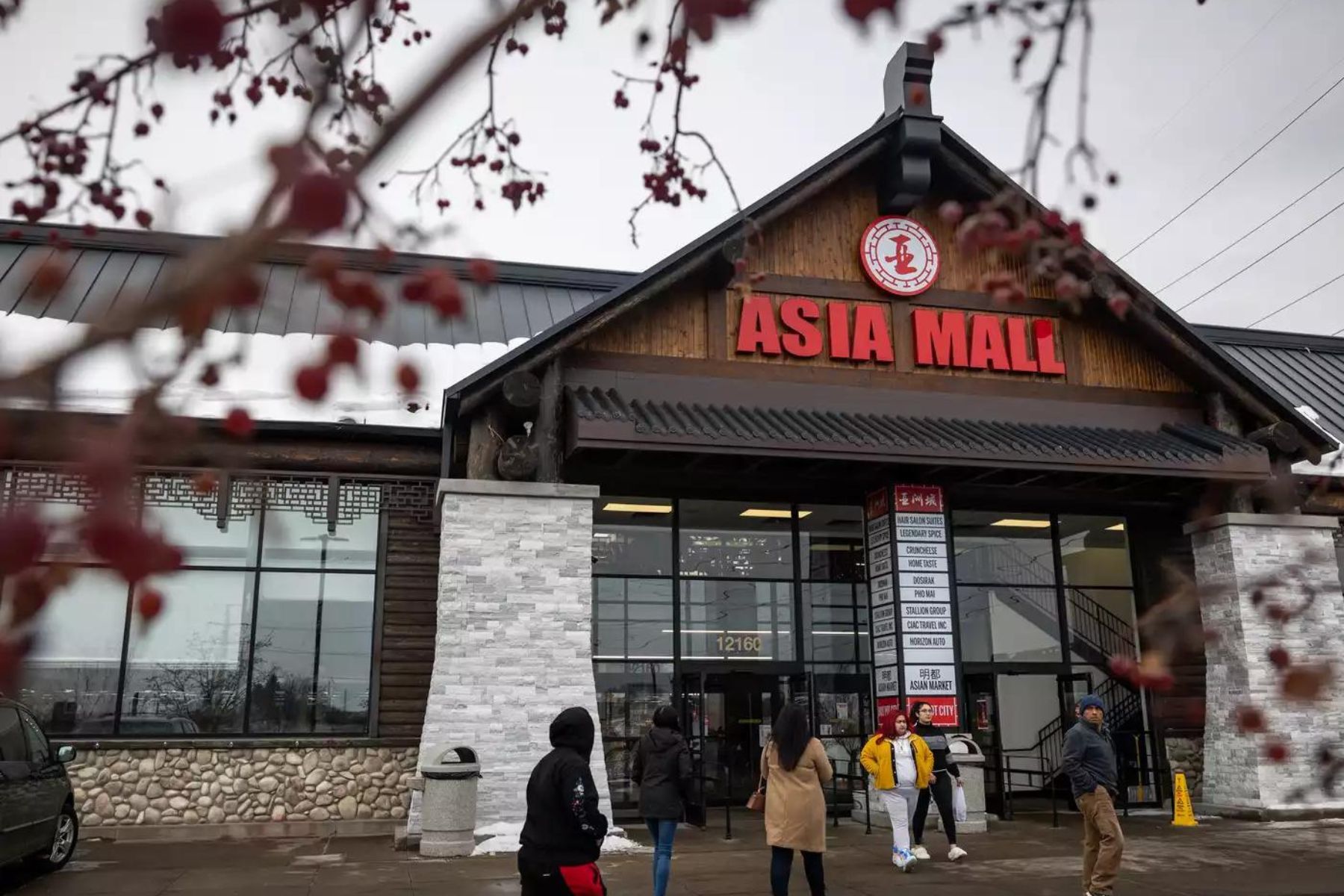
On a Friday morning in Eden Prairie, Minnesota, the new Asia Mall has just opened for the day and is already busy with people ready to grab some food and do their grocery shopping.

Located in a former Gander Mountain sporting goods store just off Interstate 494, organizers say Asia Mall is the first of its kind in Minnesota. The mall has been in its soft opening phase for only about a month now, but it’s become a popular spot for many members of Minnesota’s Asian communities.

MinJoong, 7, sips on strawberry bubble tea while grocery shopping on Friday, December 9, at Asia Mall in Eden Prairie. Credit: Ben Hovland | MPR News

Ramla Tiewala of Edina came out to the mall with her friends that morning to eat at Pho Mai, grab some donuts, and explore the mall. Tiewala is Indian and says she usually has to drive to Brooklyn Center to find South Asian grocery stores and restaurants. Since Asia Mall has opened she says finding her favorite Asian foods has become more accessible to her and is excited to keep coming back.

A taste of home: Park woman shares French culture through food

A taste of home: Park woman shares French culture through food

Photos courtesy of Gerard and Belevender
Marie Wallace is in her happy place making crêpes at The French Cow, a fixture at Eastern Market.

The reason Marie Wallace came to the United States from France and a big reason she remains are about as far apart as her home country and current residence.
“I was 23 and a big Eminem fan,” Wallace recalled. “I loved hip-hop and Eminem. I wanted to write a screenplay; I’m a screenwriter. My dream was to come to Detroit, meet Eminem, give him my screenplay and he would produce it.”
Though she came close — she met Eminem’s manager, Paul Rosenberg, multiple times and, as a singer, worked with Luis Resto, who co-produced the rapper’s Oscar-winning “Lose Yourself,” from the film “Eight Mile” — she has yet to meet the man himself and her screenplay was turned down.
But the rejection turned out to be a blessing in disguise. Wallace at the time was starting a business that has since become a popular Eastern Market destination.
“I’m very passionate about French food, about food in general,” she explained. “I was disappointed when I tasted crêpes here. They’re not the quality I was used to (in France). I had crêpes all the time with my family; we made crêpes constantly.”
In 2008, Wallace mentioned to her husband she’d like to start a crêpe business, but the timing wasn’t right as she was busy raising their two sons.
“Then Good Girls Go to Paris Crêpes opened in Detroit,” she said. “It broke my heart. It was very popular and it got big. People were lining up for crêpes.
“… When I got my divorce, I took my kids there and they said, ‘You should make your own,’” she added.
That’s exactly what she did. Using her own crêpe recipe and with her mother’s help, Wallace set about creating The French Cow crêpes shop.
“I started at Coffee & … on Jefferson and Chalmers,” she said. “I was scared. I didn’t know if people would like it.”
She voiced her concerns to the cafe owner, who encouraged Wallace to give it a try.
“She kept saying, ‘Just do it,’” Wallace recalled. “So each month, I had a pop-up there.”
Though she had some success, the shop wasn’t enough to support her, so she landed a job at Selden Standard in Detroit, which helped her learn more about the industry.
“They hired me knowing I was starting my own company,” she said. “I studied a lot there. I learned about kitchen service. I learned the ropes through Selden. Two years later, I started at Eastern Market.”
Wallace said some customers were skeptical at first. Her savory crêpes, for instance, are made with buckwheat flour, so they come out darker.
“But that’s how we make them in France,” she explained. “Black is for savory, white is for sweet. Little by little, they began tasting them. They say, ‘This is how they’re done in France? OK, let’s try it.’
“Now people are there before we even open, every time,” she continued. “We sell 200 to 350 crêpes, which is a lot. Now I have employees, two to four during the season. I started with just my mother.”
The French Cow currently is a fixture at Eastern Market on Saturdays, though during summer months, hungry patrons can find the shop there three days a week. The French Cow also handles catering requests.
“Anything where we can sell crêpes we are doing,” Wallace said. “I also make baguette sandwiches and sell them at Milwaukee Cafe near New Center.”
Among The French Cow’s most popular savory crêpes are the Pigalle and the Big Mack.
“The Pigalle is inspired from the Red District of Paris,” Wallace said. “It’s delicious, but also a little bit dirty. It’s Swiss cheese, ham, caramelized onions, then I make a homemade cilantro-garlic sauce I put on top.
“The Big Mack has corned beef,” she added. “I named it after a customer who’s Irish, named Cormack. The crêpes have some very strange names because they’re named after things in my life, like The Wallace Boys — Nutella, bananas and walnuts — is named after my sons.”
Another popular sweet crêpe is Jessica’s Secret, featuring homemade rhubarb jam, strawberries and ricotta. But don’t expect to find this tasty treat at the shop during winter.
“I try to do everything seasonal and strawberries are not in season now,” Wallace said. “I use the freshest ingredients. The market is an amazing place to find fresh ingredients all year round. So many people don’t know that Eastern Market is open all year. It’s one of the only cities in the United States that has that.”
Wallace currently is compiling a cookbook, “with crêpes and other things, picturing the authentic French way of living,” she said.
“I feel like sometimes Americans are infatuated (with France) for the wrong reason,” Wallace said. “They fall in love with Paris because of the Eiffel Tower, because it’s so romantic. They don’t dig deep into what the culture really is, of what the feeling of sharing food really is. It’s not that they don’t want to, but now I’m forcing them to. If I ever open a shop, it will be a real culture shock for them, because I will keep it authentic.
“I would love to have my own place in Grosse Pointe Park,” she added. “I would love it to have a Parisian feel where people can walk to it.”

Grosse Pointe Park resident Marie Wallace brings an athentic Parisian food experience to Eastern Market with sweet and savory crêpes inspired by her hometown.

Wallace said making crêpes helps her express her creative side, which knows no limits.
“I’m also a trained actor and screenwriter and a singer,” she said. “I love to decorate. I feel like crêpes may seem odd, but I create a lot when I’m coming up with a menu or decorating the booth creatively at the market. I am a content creator and a constant creator.”
Wallace put her creativity to use during the pandemic by writing the screenplay, “13 Weeks,” for which she is trying to get representation.
“It’s about two people who start a conversation during the pandemic, apart from each other, in different cities,” she said of the romance.
When she’s not peddling crêpes, Wallace, who has lived in Grosse Pointe Park since 2016, enjoys spending time with her two boys, ages 12 and 14, both students at Pierce Middle School.
Learn more about The French Cow on Instagram @thefrenchcow, on Facebook at The French Cow crêpes, by visiting thefrenchcowcrepesshop.net or emailing thefrenchcowcrepes@gmail.com