Tieghan Gerard, a food influencer known as Half Baked Harvest, is facing backlash for what some are saying is a lack of respect for a culture’s cuisine — as well as appropriating it for her platform and not responding to criticism.
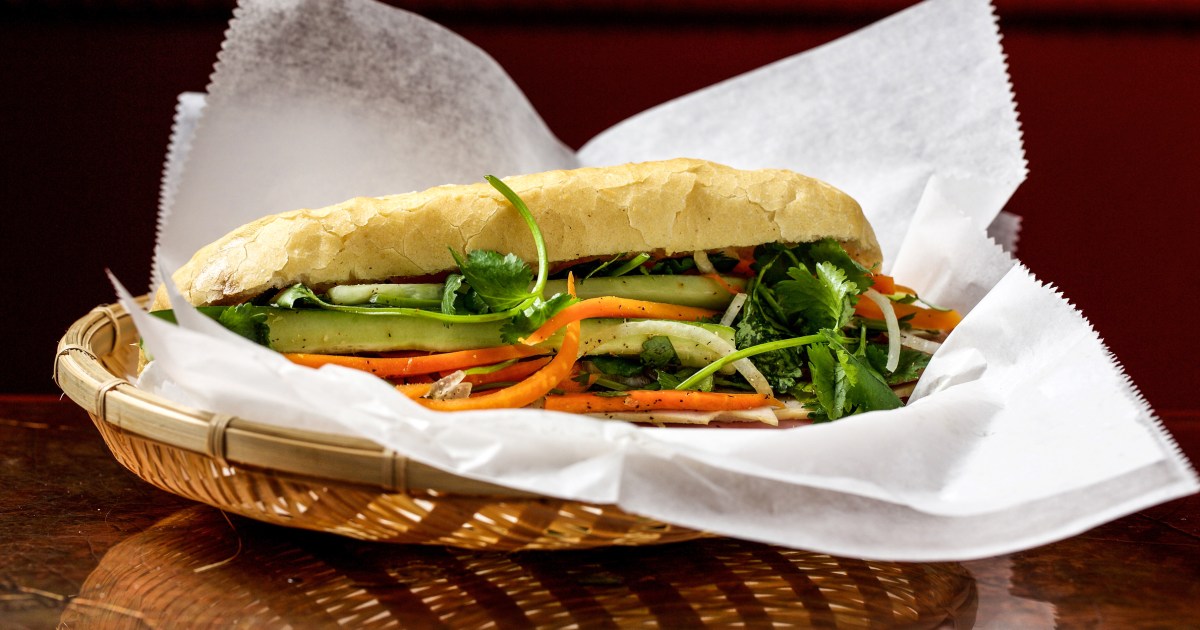
Gerard posted a video of her recipe, “25 Minute Banh Mi Rice Bowls,” on Instagram Tuesday, showing viewers how to make coconut rice, ginger-sesame ground chicken, pickled vegetables and cucumber salad. She mispronounced the name of the Vietnamese dish and grouped together various Asian ingredients as “banh mi.”
People were quick to comment on the inaccuracy of the recipe and her incorrect pronunciation. “You guys are going to love these banh mi rice bowls,” she said, pronouncing the dish as “bon-my,” when it’s pronounced as “bun-mee.”
Commenters said they were confused by the name of Gerard’s recipe since it was a rice-based dish using non-Vietnamese sauces and seasonings like Thai basil and sambal chili paste. Banh mi, meaning “bread,” is a short baguette generally topped with sliced meat, pickled carrots and daikon, chilis and cilantro.
“The ginger/sesame/honey flavors are definitely leaning more heavily into Japanese and Thai cuisine than Vietnamese. Especially the inclusion of Thai basil,” one commenter said on the video, which garnered 1.8 million views.
Hundreds of comments called out Gerard for the dish and her silence around the mispronunciation.
“I love you, your content and recipes. However, please acknowledge the mistake/ you’ve made here and not just sweep it under the rug. People make mistakes and that is OK. Ignoring after knowing what is right is NOT,” one person commented. “You have a platform, make it right.”
“How are you still not addressing this feedback? Makes what you said about listening to your followers seem super disingenuous,” another said.
Gerard, who has 5.2 million followers on Instagram, hasn’t acknowledged the backlash and has continued posting videos and stories on her account.
“Why not call it Vietnamese-Inspired Rice Bowl or Sweet and Spicy Rice Bowl? You can always mention your influences in the post description,” one commenter said.
Gerard did not respond to NBC News’ request for comment.
This isn’t the first time Gerard has faced backlash for misappropriating Asian cuisine. In February 2021, she was called out for posting a recipe titled “Weeknight ginger pho ga (Vietnamese chicken soup),” TODAY reported.
Fans criticized the dish’s name on Instagram, saying it was not pho but rather a quick noodle dish with chicken and sesame chile sauce. Gerard changed the recipe’s name on Instagram and her website to “easy sesame chicken and noodles in spicy broth,” but her website’s URL still says “chicken-pho.”
“It was never my intention to offend or hurt anyone or the culture. I will make sure to be much more conscious when deciding on recipe titles in the future and be sure to do more research,” she previously said in a statement to TODAY about her noodle dish recipe.
The Greater Phoenix area, also known as the Valley of the Sun, is renowned for its year-round sunshine, rich cultural experiences, and staggering natural landscapes, from scenic mountain preserves to the stunning Sonoran Desert. Discover Arizona’s wine and craft beer scene, explore American Indian artor play on some of the best golf courses in the country; here are a few recommendations on where to go and what to do.
Some highlights found in and around Greater Phoenix include parks, resorts and wellness opportunities. South Mountain Park Preserve is the nation’s largest municipally managed park and is a haven for outdoor enthusiasts. While the luxury resort scene in Phoenix includes a long list of historic and modern properties, families can enjoy epic-sized pools with monumental play features while wellness travelers will find spa treatments and fitness programs that add euphoria to vacation days.
Some of the country’s most innovative restaurateurs hone their culinary skills in Phoenix. The best-known restaurants in Phoenix have racked up plaudits and nominations from the James Beard Foundation. In 2022, local chefs and restaurants were named semifinalists in eight different categories. And, the city’s cocktail and craft brew culture continues to grow.
Phoenix has some of the best museums in the country including the galleries and exhibits at the Musical Instrument Museum which draws from a collection of more than 8,000 instruments from around the world. One of Phoenix’s first cultural institutions, the Heard Museum, has grown into an international destination to learn about American Indian art and history, while the Pueblo Grande Museum and Archeological Park is a must-see Phoenix attraction that takes visitors on a path to remnants of a ballcourt and platform created by the Hohokam people who lived in this area from A.D. 450 to 1450. And, at the 140-acre Desert Botanical Garden, more than 50,000 desert plants illustrate the beauty and variety of desert plant life.
Go shopping, gallery hopping and hiking in Scottsdale
With its blend of nature, culture and cuisine, Scottsdale makes for the perfect break
(Visit Arizona)
Famed for its 300 days of sunshine, luxurious resorts and boutique shops, Scottsdale, in the Greater Phoenix area, has much to offer travellers looking for a US city brimming with art, culture and old-world charm.
Scottsdale is located in the beautiful Sonoran Desert at the foot of the scenic McDowell Mountains. It is bordered by Phoenix to the West, the Tonto National Forest to the North, the McDowell Mountains to the East, and the Salt River to the South. The Mcdowell Sonoran Preserve is a protected area, including 200 miles of trails across 30,000 acres of land. Expect to see plenty of Saguaro cacti along the way, native to the Sonoran Desert and emblematic of Arizona. If you’d rather take to the water, you can kayak, standup paddle board or tube down the Lower Salt River, where you’re almost guaranteed to see wild horses grazing along the river banks.
Old Town Scottsdale’s Fifth Avenue is not only home to an award-winning culinary scene that encapsulates cooking styles and cuisine from around the globe, but it also houses dozens of boutique shops, from upscale designer fashions and American Indian jewellery stores to Southwestern furniture shops. Down the road from Fifth Avenue, you’ll find the Arts District, where more than 35 galleries showcase high-end art to local and national work. You can book appointments to check out most of the galleries or participate in the free Thursday evening art walk, where you’ll hop from one gallery to the next, often enjoying wine and snacks along the way and getting the opportunity to speak to local artists.
Explore food, culture and nature in Tucson
Whether you’re a fan of golf, gastronomy or art, laidback Tucson has it all
(Visit Arizona)
Laid-back Tucson is a hot spot for those who yearn for time in nature, and the Tucson Botanical Gardens offer an introduction to the flora and fauna that makes up the desert. Head east on Tanque Verde Road, and you’ll eventually reach the Redington Pass. This high mountain pass, between the Santa Catalina Mountains and the Rincons, has ample hiking trails, and canyons that take you past magnificent mountains and dense barrel-cacti-dotted forests.
With a landscape as spectacular as Arizona’s, it’s no surprise that the state is also home to some of the nation’s most famous golfing destinations. Tucson has more than forty courses, including the Arizona National Golf Club and the Starr Pass Golf Course on the western outskirts of Tucson, with the majestic Catalina Mountains as a backdrop.
Head Downtown, an area steeped in history and famed for its restaurants, bars, eye-opening museums and striking architecture. The Tucson Museum of Art is located in the Presidio district and showcases an extensive Colonial Latin American art collection. The Arizona State Museum also houses the largest collection of Southwest Indian Pottery and more than 25,000 artefacts of American Indian basketry.
Once you’ve finished roaming around the museums Downtown, take advantage of Tucson’s status as a UNECSO City of Gastronomy and refuel with food options inspired by American Indian, northern Mexican-Sonoran, Mission-era Mediterranean, and American Ranch-Style traditions. An excellent option is El Charro Café, the nation’s oldest Mexican restaurant.
If you’re an aviation enthusiast, The Pima Air & Space Museum is essentially an aircraft boneyard, displaying almost 300 aircraft spread over 127 acres, featuring planes from World War Two, the Vietnam war, and more. While for another trip back in time, head to the Trail Dust Town, dotted with old station wagons, stagecoaches, saloons and tobacco shops. This fascinating, atmospheric old town gives you an authentic feel for what life would’ve been like during the Wild West era.
Sip on local wines in Arizona’s internationally-acclaimed winemaking regions
Enjoy a vineyard adventure in Arizona’s must-experience wine country
(Visit Arizona)
There are more than 120 wineries and tasting rooms across Arizona. The wine made here is internationally acclaimed, some have even been served in the White House. In Southern Arizona, you’ll find the towns of Sonoita and Elgin, famed for their unique topography and soil, garnering the attention of sommeliers worldwide. There’s also Willcox in the Southeast, where most of the state’s grapes are grown in larger quantities, and the Verde Valley in north central Arizona, where a wide variety of soils and highly fertile alluvial deposits create near-perfect wine-growing environments.
In Sonoita, you can go wine tasting at the female-owned-and-run AZ Hops and Vines, or, if you find yourself in Willcox, hit up Wines of Willcox: expect plenty of local bottles with picturesque vineyards and mountains as your backdrop. If you’re looking to explore the vineyards of North Central Arizona, Caduceus Cellars, run by one of the state’s leading champions, showcases wine grown primarily from Verde Valley vineyards.
To find out more about Arizona, discover incredible experiences, unmissable events, get travel inspo and plan your trip, head to Visit Arizona. You can fly to Arizona direct via British Airways or American Airlines – find out more here
ASHEVILLE – A collective of local creatives are hatching plans for how best to showcase and celebrate the flavors of the Southern Appalachians.
This year, the chef-driven event formerly known as Chow Chow Culinary Festival will return with a new name, new dates and a different venue. And the organizers are introducing a contemporary approach to build support for the local, independent and creative food and beverage community that’s driving the region’s industry “to empower economic resilience.”
“The number one thing that sets us apart is our genuinely intense focus on the Southern Appalachian foodways and the history ― the arc — of that narrative. How did we get there and where are we going?” said Chow Chow’s new executive director, Melissa Scheiderer.
Scheiderer shared details about what the nonprofit organization’s cooking up for Chow Chow 2023, and why it’s an event weekend not to be missed.
Here are five things to know about this year’s homegrown culinary extravaganza.
Chow Chow Culinary Festival was founded by a group of local visionaries that included James Beard Award–winning chefs Katie Button, Meherwan Irani and John Fleer and East Fork’s co-founder Connie Matisse in 2019.
The change is to better communicate what the event is about, which goes beyond what’s on a plate.
“The term culinary, it makes a lot of sense, but it doesn’t really include all the farmers that are in our ecosystem and the makers and all the creative spirit of Asheville, especially as it relates to food,” Scheiderer said. “We wanted to be inclusive, we wanted to be durable. We know that it’s more than just a food festival, so where we settled was two simple words: food and culture.”
The organization’s Board of Directors has new and returning members representing the local restaurants, food and beverage businesses and community-focused groups.
Shay Brown, of the local events agency Shay & Company, will resume her role as festival director.
It’s a significant change from last year, when the event series spanned over three weekends during the 2022 Summer of Chow Chow.
A condensed calendar
For 2023, the festival will scale back to one weekend, as it was in its debut year. However, the series will be even more robust.
The schedule details will be announced in the upcoming weeks and will include a host of dinners, workshops, performances, tastings, talks and demonstrations.
In addition to food tastings, a wide assortment of beverages will be available that include local, craft spirits and zero-proof drinks, beer, sodas and more.
A new venue
Chow Chow will return to its original home in Pack Square Park in downtown Asheville.
The main stage and maker’s market will be in the open-air venue, and the organizers teased that some festival programming will be hosted across the city.
“The bulk of our events will have this gravity in the heart of downtown Asheville, which I think will be fun and different from the previous years,” Scheiderer said.
The cost
Tickets will go on sale in April ― the exact date to be determined.
The price to pay to mix and mingle with Chow Chow’s chefs, makers, artists, farmers, storytellers and entrepreneurs will vary from low and no-cost events to paid, ticketed sessions.
The cost for each program will be announced later, too.
“We want the event to feel welcoming to folks from different socioeconomic backgrounds, folks who might be interested in food and food culture or dining or agriculture, and folks who just want to learn about the region and the history and want to feel more connected to the place that they live,” Scheiderer said.
The organizers welcome visitors to the area to partake, learn and take what they’ve learned about the Southern Appalachians back to their homes.
Partial proceeds go toward Chow Chow’s mission to generate money in the local economy, which includes paying those working the festival.
“We understand that asking them to step away from their revenue-generating activities of their life is a big sacrifice,” she said. “We are spending, it will probably be close to a quarter to a third of our budget just on honorariums. … We see that as a direct infusion of cash into the community that we are celebrating.”
For announcements about ticket sales, speakers and more, visit chowchowasheville.com and follow on social media, @chowchow_avl.
Tiana Kennell is the food and dining reporter for the Asheville Citizen Times, part of the USA Today Network. Email her at tkennell@citizentimes.com or follow her on Twitter/Instagram @PrincessOfPage. Please support this type of journalism with asubscription to the Citizen Times.
The best way to learn about another culture is to eat its food, says Carla Bluhm, one of the organizers of Sunday’s Jewish Food and Culture Festival in downtown Brunswick.
“This has been shown throughout history when immigrants have shared their cuisine with their towns and cities,” Bluhm said. “This is a great opportunity for us to share through the language of food more about Jewish life and culture.”
The festival is happening from noon to 3 p.m. this Sunday in Brunswick’s Jekyll Square on Newcastle Street.
The band Klezmer Local 42 from Athens will make a trip down to play the event, Bluhm said, and the public is welcome to enjoy a wide variety of traditional Jewish food and learn about the culture. Proceeds will go toward renovations to Temple Beth Tefilloh, which is nearing 135 years of active use.
“We want everyone to try traditional Jewish foods, most of which is made by people in the congregation,” Bluhm said. “One of our members is making a lot of matzah balls and chicken soup. A lot of women in the congregation are making kugel, we have a couple of people making knish.”
That’s only a small selection of the food on offer, which also includes some Mediterranean salads and bagels with lox, or salmon. Temple Beth Tefilloh’s Rabbi Rachael Bregman said she’s bringing something close to rugelach, which she described as “thumbprint cookies meet croissant.”
Ingredient lists will also be available at every table for those with dietary restrictions. Further, Bregman said good safety is a key part of this festival.
“In light of COVID, our consciousness about food safety and germs has been heightened. So you can expect pre-wrapped food items, so the touching of food is reduced,” she said. “We also think this will move our lines more quickly. When you’re plating each serving, it takes a long time, so this helps and keeps us all healthy.”
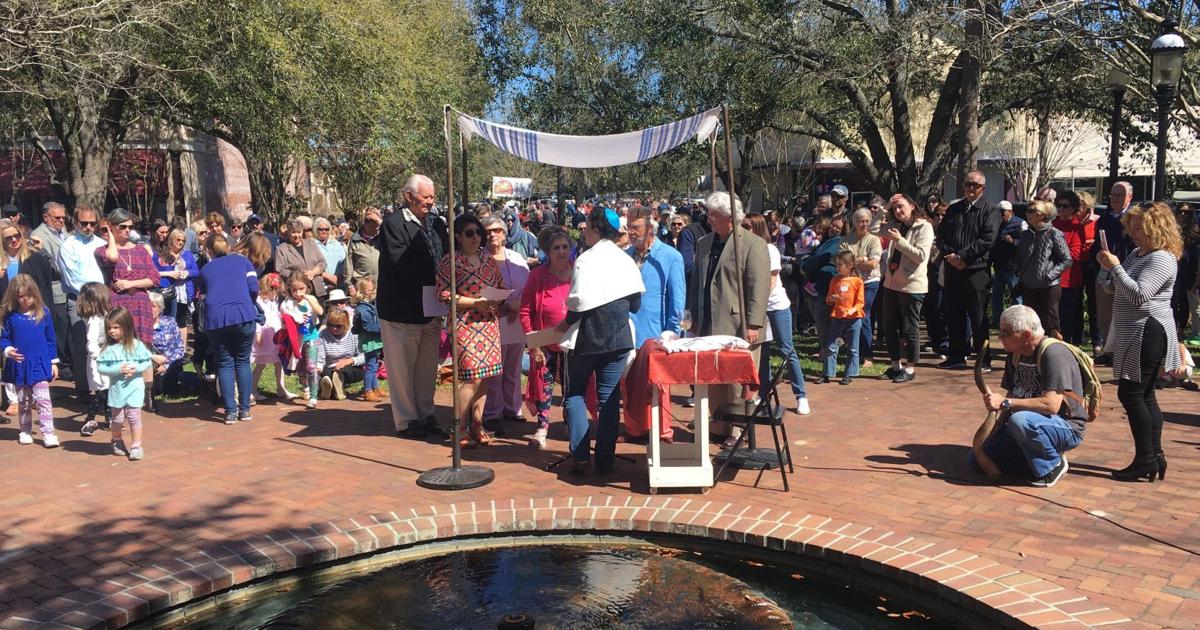
The event will also feature a traditional wedding ceremony for a couple renewing their vows — Bregman’s parents.
Kids won’t be left out, Bluhm said, as the temple will also show kids some of the fun activities associated with the holiday of Purim. They’ll get to take play some games and win prizes related to Jewish culture, Bluhm said.
“It’s a new piece for us, this part of the food festival, and it’s part of a larger effort in the community to engage children more, because we are seeing an influx of kids,” said Bregman.
The Purim education piece could also be viewed as a preview for another initiative at the temple — a school for non-Jewish children who want to learn about Jewish Hebrew culture, or whose parents want them to learn. She said the school is opening in a matter of months.
This festival also serves a double purpose as a food drive, Bregman said. The temple invites everyone to bring canned goods to donate.
“If we’re going to have a Jewish food and cultural festival, then we felt it was really important to emphasize some of the key elements of Jewish values. Feeding the hungry is a critical beat,” Bregman said. “And there’s a food overlap with Purim. You give gifts to your friends and to the poor on Purim. By bringing canned goods, we’re both of those marks.”
It’s just a really fun, family friendly time, Bluhm said. She’s a professor and not so much an event planner, but the congregation’s conversations around food, childhood memories and family traditions have been fun. She’s also taken charge of making sure every stall and table has some educational information for the public.
“I need people to puppet me through it. It’s been amazing, the congregation coming together for this and making the food,” Bluhm said.
Restoring the old temple is a big job for a small congregation, Bluhm said.
Mason Stewart is a member of the congregation with a deep knowledge of the temple’s history. It’s extremely important to them, he said, to make sure these renovations and upgrades aren’t a detriment to the building’s historic aspects.
A group of 21 Jewish men came together to found the congregation in 1886, Stewart said, with the temple’s completion coming four years later in 1890.
Temple Beth Tefilloh was designed by famed architect Alfred Eichberg, perhaps the most well-known Jewish architect at the time, Stewart said, at least in the South. Eichberg also designed Brunswick’s Old City Hall; Glynn Academy Annex, intended to replace the original wood school building; and Brunswick Manor, a bed and breakfast in the city’s historic residential district.
Once the temple was complete, Stewart said it was dedicated by Isaac Mayer Wise, the father of American Reform Judaism, followed by a massive party at the Oglethorpe Hotel attended by a who’s who of names at the time.
It’s a rich history that the congregation is very concerned with preserving, he added.
“The major thing is we’re going to add an exit up near the front, we did a security study and because of when the temple was constructed, even though there’s a small door at the front, it’s not adequate in the case of an emergency,” Stewart said. “… If there’s a fire in the foyer, it would block the only reasonable exit, especially for older folks.”
Because of the temple’s historic nature, Stewart said the congregation is working with historic architecture experts and preservationists to avoid hurting that value.
Anyone interested in hearing more can stop by the temple during the festival to listen to an informal talk from Stewart.
“I love how this brings together so many people in the congregational community and the Glynn County community,” Bregman said. “We really value creating spaces where people from all over our community can come together. There aren’t a lot of them.”
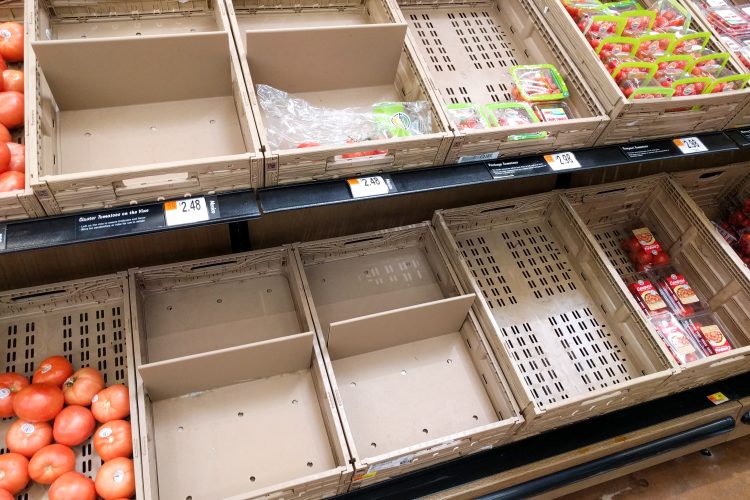
Government advisor Henry Dimbleby has blamed the recent fruit and vegetable shortages in supermarkets on a “weird supermarket culture”.
In a recent statement given to The Guardian, Henry Dimbleby, co-founder of restaurant chain Leon and food strategy advisor for the UK Government, branded recent fruit and vegetable shortages as a “market failure”, blaming Britain’s “weird supermarket culture”.
New Food recently reported that numerous supermarkets have been limiting their sales of various fruit and vegetables as a result of import shortages from Spain and North Africa.
Now, Dimbleby has told The Guardian that other countries in Europe are not having to face the same problems as the UK as they do not have the same “cultural problems”.
“There’s just this weird supermarket culture. A weird competitive dynamic that’s emerged in the UK, and nowhere else in the world has it, and I don’t know why that is,” Dimbleby told The Guardian.
While the shortages themselves caused a stir on social media, the UK’s Environment Secretary, Thérèse Coffey, also generated widespread conversation with a comment about consumers turning to home-grown produce, such as turnips, to navigate empty supermarket shelves.
However, the turnip comments have been labelled “frustrating” by Dimbleby, as he thinks that Brits are concerned about Coffey’s words instead of “structural issues in the food system”.
Dimbleby told The Guardian: “I find it quite frustrating that everyone is suddenly worried about a gap of vegetables in February, when there are much bigger structural issues that need to resolve, and definitely the government on health has very explicitly gone backwards.”
UK committee chair express concern over fertiliser shortages
Predicting that the “market failure” is “going to get worse”, Dimbleby also defined the UK food system as “unique”, explaining that he doesn’t know “another system where the supermarkets have these fixed-price contracts with suppliers”.
“So, basically, you have no effective market. It’s a very difficult one for the government to solve, but it does need to be resolved,” said Dimbleby.
The fruit and vegetable shortages in supermarkets are currently on-going, however, in a statement, Coffey predicted that they “will be a temporary issue that should be resolved in two to four weeks”. However, with Dimbleby stating that the shortages are part of a wider “market failure”, it could take numerous adjustments to get shelves reliably restocked.
Commenting on Dimbleby’s statement, Chris Elliott, Professor of Food Safety and Microbiology at Queen’s University Belfast, noted that “we have come to rely very heavily on supermarkets to secure our food in the UK.
“While the pandemic showed us how well they could do this the stresses and strains continue to mount on the global food system and we need to take a much more holistic view of food security in the UK going forward.
“We need all actors in the food supply system (both private sector and government) to come together and really start to generate a policy fit for purpose,” concluded Elliott.
Byron Gomez has prepared haute cuisine in some of this country’s finest restaurants. But on a recent day, in his food-hall stall on Pearl Street in Boulder, he is savoring something less high-brow, but oh-so-delicious.
He calls it the “chicken oyster.” It’s a moist bit of meat hidden in a crevice behind the backbone of a rotisserie chicken that has rested overnight in Costa Rican spices before being slathered in a taste-bud-shaking secret sauce called Salsa Lizano.
That bit of food that brings him such joy serves as a symbol for a wildly unusual culinary career that has taken Gomez on a full-circle foodie journey in his 34 years.
It began in a modest family kitchen in Costa Rica where, as a toddler, he savored his native country’s foods so much that he would sneak out of his bed to sleep on the kitchen floor.
Hop from there to a Burger King in Long Island where his family had immigrated when he was nine. Gomez was too shy to be good at the counter, but he was moved into food prep because he was an excellent tomato slicer.
Move on to constructing delicate dishes at Michelin-starred fine-dining restaurants owned by a world-famous chef in New York City. Throw in a stint on the culinary competition Top Chef.
All that winds finally to Pollo Tico, Gomez’s fast-casual, self-described “chicken joint” in the Avanti Boulder food hall.
“This introduces my culture and who I am,” Gomez told Colorado Matters host Ryan Warner during a visit to Gomez’s tiny Lizano-bottle-lined kitchen.
The chicken is served up with Costa Rica’s most recognizable dishes — arroz con pollo (chicken and rice), gallo pinto (beans and rice), maduros (fried green plantains), and chayote escabeche (pickled squash). Salsa Lizano goes on everything.
Ryan Warner/CPR NewsSalsa Lizano is an ingredient staple at Pollo Tico in Boulder.
Gomez’s time on Top Chef
These were not the foods that Gomez toiled over when he was a finalist on Season 18 of Top Chef, a brutal competition where the chefs spent 18 hours a day sweating over food challenges and the rest of the time totally closed away from a world in the thick of a pandemic.
As a Top Chef finalist, Gomez showed off his culinary chops learned in top-culinary-world restaurants, including Cafe Boulad and Eleven Madison Park. He prepared a crab dish, a surf and turf entre, a pasta dish seasoned with coffee.
The closest he got to his native cuisine was a Peruvian chicken dish. He is still kicking himself for those choices.
“I was watching the show at home with my bowl of ice cream and yelling at the TV, asking ‘Why did you do that?’”
It was that anger about not highlighting his ethnicity that led him back to his roots.
“I had the most Michelin stars of anyone in the cast,” he said. “But I realized I was cooking other people’s cuisines. Everyone else was rooted in ethnicity, but I was left asking, ‘Well, what am I?’”
Ryan Warner/CPR NewsByron Gomez owns Pollo Tico in Boulder, featuring Costa Rican-styled rotisserie chicken.
Sunday dinners with family
That answer lay in his memories of the big Sunday dinners his family would have in Costa Rica. His mother was well-known for her cooking skills, and friends and relatives would gather at the Gomez home for meals.
The women would be cooking up a feast in the kitchen. The men would be watching soccer as they waited for the meal. And Gomez would be gravitating to the kitchen.
When his family migrated to Long Island, the Sunday feasts continued in an altered form. His family couldn’t get all their native foods, and what they could get didn’t taste the same. Still, other Costa Ricans would gravitate to the Gomez house and pack in for Sunday gatherings.
Gomez’s eventual mentor, Daniel Boulad, the Michelin-starred chef he still calls “papa,” helped him to realize those gatherings were where his culinary dreams might lay. He had instilled in him the idea that he should always continue to test the limits of his skill and creativity.
Gomez landed a job at Café Boulad by highlighting his work ethic and desire to learn. He had no formal culinary training, unless prepping burgers and cooking ethnic dishes at a mom-and-pop café counted. But he had the drive and talent and, after stewing over submitting an application for a month, he was rewarded.
He spent five years working under Boulad. He describes it as a pressure-cooker existence similar to the Hulu culinary drama “The Bear,” or to the late Anthony Bourdain’s portrayal of sometimes hellish working conditions in the book “Kitchen Confidential.”
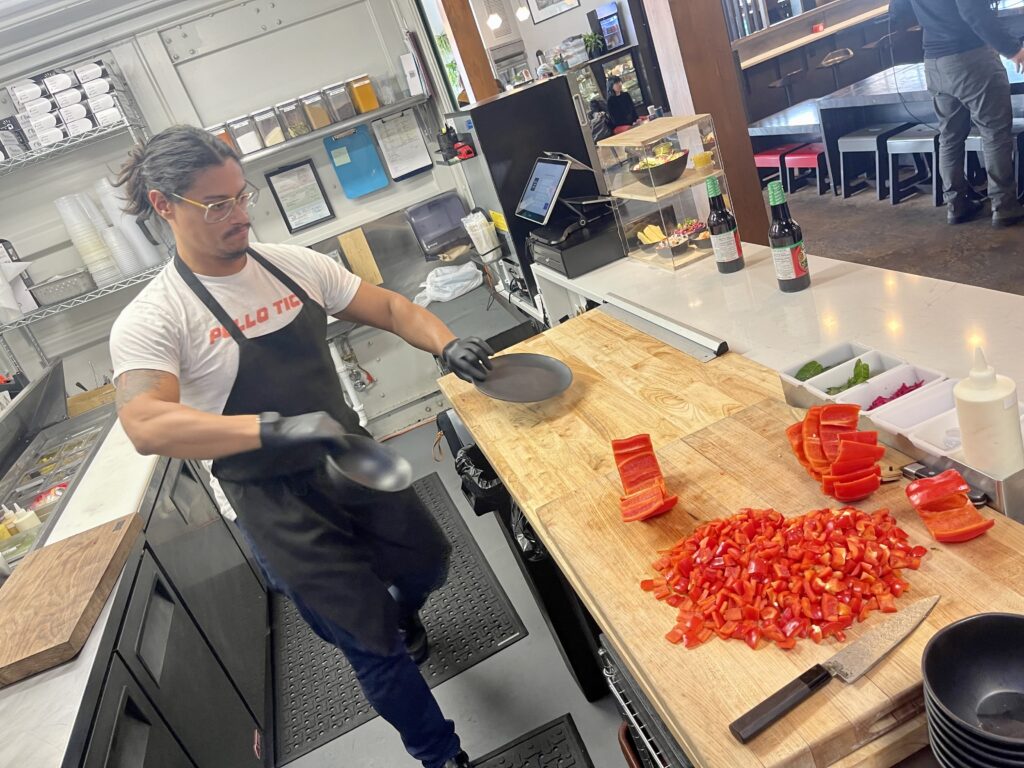
Ryan Warner/CPR NewsChef Byron Gomez working on food prep in Pollo Tico.
The next Shake Shack?
As his own boss now, Gomez still works hard, but can take time to hit the gym every day and to appear on the circuit of food festivals.
He will be at Food & Wine festivals in Aspen and Charleston, South Carolina, this summer. He hopes to secure another slot on Top Chef.
Also on tap in Gomez’ journey is a fine-dining mobile dining room concept that he brainstormed about during the COVID-19 pandemic lockdown. It’s a concept that he said will “flip the rood truck thing on its head.”
He also has plans to open more Pollo Ticos. In fact, he is thinking big about that, too. He believes Pollo Tico could become the next Shake Shack — as soon as patrons figure out that his restaurant is not Pollo Taco, and that Costa Rican food is quite different from omnipresent Mexican cuisine.
“My duty is to bring the beauty of who we are to this country,” he said.