Food tsar blames shortages on UK’s ‘weird supermarket culture’ | Farming

Food tsar blames shortages on UK’s ‘weird supermarket culture’ | Farming

The government’s food tsar has blamed Britain’s “weird supermarket culture” for recent food shortages, calling it a “market failure”.

Experts have criticised ministers for “leaving food policy to Tesco”, and meeting large food chains rather than suppliers, who have been struggling with rising costs while locked into contracts with supermarkets.

Henry Dimbleby, the co-founder of the restaurant chain Leon, who advises ministers on a food strategy for England, said Europe was not facing such issues because they did not have the same cultural problems.

He said: “There’s just this weird supermarket culture. A weird competitive dynamic that’s emerged in the UK, and nowhere else in the world has it, and I don’t know why that is.”

Dimbleby earlier criticised the government’s response to his recommendations, saying it was “not a strategy”.

He said he found the current situation “frustrating” as people were focusing on remarks about turnips, rather than structural issues with the food system. “I find it quite frustrating that everyone is suddenly worried about a gap of vegetables in February, when there are much bigger structural issues that need to resolve, and definitely the government on health has very explicitly gone backwards,” he said.

Dimbleby disagreed with the environment secretary, Thérèse Coffey, who denied that the recent shortages of eggs and vegetables was a “market failure”. He said: “This is a problem of market failure in the specifically British food system. It’s going to get worse. The UK food system is, I think, unique – I don’t know another system where the supermarkets have these fixed-price contracts with suppliers. So, basically, you have no effective market. It’s a very difficult one for the government to solve, but it does need to be resolved.”

Dimbleby said that in the UK lettuce prices in supermarkets were kept stable, whether there was a shortage or a glut, meaning farmers could not sell all their crop when they had too much, or get incentives to produce more during a shortage. He added: “If there’s bad weather across Europe, because there’s a scarcity supermarkets put their prices up – but not in the UK. And therefore at the margin, the suppliers will supply to France, Germany, Ukraine.”

This week, the farming minister, Mark Spencer, held a summit with large food chains but did not invite farming groups.

Timothy Lang, an emeritus professor of food policy at the University of London, said he was “absolutely not in the least” surprised by the recent food shortages. “It’s utterly regrettable,” he said. “This government did nothing because it was ideologically not prepared to consider nuances and difficulties. They’re locked into a minimalist, don’t intervene, leave-it-to-Tesco approach to food policy.”

He accused the government of ignoring Dimbleby’s food strategy, saying: “His final report of our plan dealt very well with household food insecurity and other things like the junk food cycle, advertising marketing, because he thought those were winnable things from this government. And he was ignored.”

Dimbleby believes the problem will get worse, and said he had foreseen this for some time, urging the government to “sort it out”.

He said: “In 2004 there was a particularly bad frost and we had the same issue then. And it will continue to get worse due to climate change. These periods of freak events that used to be not very often, because of climate change are going to happen more and more often. These problems won’t be resolved until we look at what I outlined in my food strategy – we need to fix the problems of climate change, and health, and the way the food markets in the UK are structured leave us vulnerable to this, so we’d better sort it out.”

skip past newsletter promotion

The National Farmers’ Union (NFU) is asking the government to support its call for more workers to pick crops, more affordable and sustainable energy, and fairness in food supply chains. UK growers have been saying since well before the recent shortages in fresh produce became visible that they were facing a string of challenges, some intensified by the pandemic and Brexit.

The NFU estimated fresh produce worth £60m was left to rot in fields last year, as growers could not get enough workers to pick their fruit and vegetables at the right time.

The NFU president, Minette Batters, said: “The consequences of undervaluing growers can be seen on supermarket shelves right now. Shelves are empty. This is a reality we’ve been warning government about for many months. Without urgent action there are real risks that empty shelves may become more commonplace.” She was also critical of the government meeting supermarkets rather than producers.

The Department for Environment, Food and Rural Affairs said: “We agree that the domestic horticulture sector is crucial to the resilience of our food system as well as an important part of our wider economy. We know that farmers and growers are facing global pressures, including from the invasion of Ukraine.

“Our new farming schemes will support farmers to produce food profitably and sustainably, including £600m in grants for equipment to help farmers become more productive. This is part of the significant action we have taken to support the sector so far, alongside allocating 45,000 seasonal workers and wider government support on energy bills through the energy bills relief scheme.

“Although there are currently some issues with the supply of fresh vegetables, caused by the poor weather in Spain and north Africa, the UK has a highly resilient food chain and is well equipped to deal with disruption.”

Good Culture partners with Dairy Farmers of America on probiotic milk

Good Culture partners with Dairy Farmers of America on probiotic milk

Dive Brief:

  • Good Culture has launched a new product line, Probiotic Milks, made with the agriculture collective Dairy Farmers of America (DFA).
  • In a statement, the company said its “disruptive and new take on milk,” which is available in 2{d2b09b03d44633acb673e8080360919f91e60962656af8ade0305d5d8b7e4889} and whole varieties, contains 1 billion probiotic cultures per 12-ounce serving.
  • The launch furthers Good Culture’s aim to grow its portfolio offerings and capitalize on the continuing trends of wellness and gut health, with the help of a leading dairy group.

Dive Insight:

Good Culture is taking probiotics into a new category with the backing of a leading player in the milk space.

The better-for-you cottage cheese and sour cream maker — which has received $81.8 million to date from investors like General Mills and actress Kristen Bell, according to Crunchbase data — last year raised $64 million in a Series C funding round. The company said the funding would go toward launching new products in the cultured foods space.

With this expansion, Good Culture has the opportunity to broaden its reach to a new consumer base.

“With the continued growth and consumer interest in probiotics and gut health, we’re really excited to bring this great-tasting milk with probiotics to store shelves in partnership with the Good Culture brand, which is so well known for producing on-trend, cultured dairy products,” Rachel Kyllo, senior vice president of marketing for DFA, said in a statement.

The decision to work with the DFA gives Good Culture a partner that is highly familiar with the milk space. The dairy giant has a variety of milk brands in its portfolio, including Dean’s, Lehigh Valley Dairy, Dairy Maid Dairy and Kemps.

Once commonly associated with yogurt, probiotics continue to infiltrate new food categories such as snacks and beverages as consumer interest in immunity rises. Nearly half of people consume probiotics in some form each day, with dairy being their preferred way to obtain them, according to a 2022 survey of 16,000 consumers by Chr. Hansen.

Other better-for-you brands have seized on the gut health dairy craze. Danone’s dairy brand Horizon Organic has a milk and yogurt line called Growing Years that contains prebiotics. Kefir, a fermented milk product popularized by brands such as Lifeway, is projected to grow at a compound annual growth rate of 6.4{d2b09b03d44633acb673e8080360919f91e60962656af8ade0305d5d8b7e4889} through 2027, according to a Mordor Intelligence analysis.

But expanding into milk could prove to be challenging. Last year, yogurt giant Chobani debuted lactose-free Ultra-Filtered Milk — featuring 2.5 times more protein than traditional milk — that it discontinued after fewer than three months on the market.

Borsch without a ‘t’: Kyiv chef uses food to reclaim culture

Borsch without a ‘t’: Kyiv chef uses food to reclaim culture

KYIV, Ukraine — Don’t tell Ievgen Klopotenko that borsch is just food. For him, that bowl of beet-and-meat soup is the embodiment of everything Ukraine is fighting for.

“Food is a powerful social instrument by which you can unite or divide a nation,” said Klopotenko, Ukraine’s most recognizable celebrity chef and the man who in the midst of a bloody war spearheaded what would become an unlikely cultural victory over Russia.

“It’s our symbol,” Klopotenko said. “Borsch is our leader.”

If that seems hyperbolic, you underestimate how intrinsic borsch (the preferred Ukrainian spelling) is to this country’s soul. More than a meal, it represents history, family and centuries of tradition. It is eaten always and everywhere, and its preparation is described almost reverentially.

And now, at the one-year mark of the war with Russia, Klopotenko uses the dish as a rallying call for preserving Ukrainian identity. It’s an act of culinary defiance against one of Moscow’s widely discredited justifications of the war — that Ukraine is culturally indistinct from Russia.

Thanks to a lobbying effort that Klopotenko helped lead, UNESCO issued a fast-track decision last July declaring Ukrainian borsch an asset of “intangible cultural heritage” in need of preservation. Although the declaration noted borsch is consumed elsewhere in the region, and that no exclusivity was implied, the move infuriated Russia.

A Russian foreign ministry spokesperson accused Ukraine of appropriating the dish and called the move an act of xenophobia and Nazism.

But in Ukraine, where until a year ago Russian was as widely spoken as Ukrainian, the declaration legitimized a notion that many had struggled to express.

“People started to understand that they are Ukrainians,” Klopotenko said recently while preparing borsch at his Kyiv apartment. From his living room window, the husk of a high-rise gutted by Russian missiles dominated the view.

“A lot of people started to eat Ukrainian food. A lot of people began to discover Ukrainian traditions,” he said.

Klopotenko, 36, is an unlikely figure to grab headlines during a war that has left hundreds of thousands from all sides dead or wounded. But the television chef and restaurateur — recognizable by an unruly head of curls, rapid-fire dialogue and lively fashion sense — began his mission to elevate Ukrainian food years before Russia’s invasion in February 2022.

Though born in Kyiv, Klopotenko had by age 5 spent months at a time living with his grandmother, who had moved just outside Manchester, England. He’d been raised on bland Soviet-era cuisine, and this was a culinary awakening. He encountered waves of new flavors and ingredients, experiences that set him on a path to restaurant work.

His break came in 2015 when he won the television competition “MasterChef Ukraine.” He parlayed that into study at Le Cordon Bleu in Paris and later a successful campaign to overhaul the Soviet-influenced cafeteria menus in Ukrainian schools.

Always in the background was his sense that Ukrainian food — ditto the country’s culture writ large — wasn’t being true to itself. Much of Ukraine’s identity, he felt, from language and food to fashion and architecture, had been subjugated to Russian influences. Before the start of Soviet rule in 1917, Ukrainian cuisine was more diverse and robustly seasoned. That was quashed in favor of a more uniform palate with socialist sensibilities.

Even after the dissolution of the USSR in 1991, Ukraine’s cuisine didn’t quite bounce back. But Russia’s invasion and annexation of Crimea from Ukraine in 2014 was a trigger. Trying to identify and hold onto Ukrainian heritage, Klopotenko and others began researching pre-Soviet Ukrainian cooking, hoping to return it to the mainstream and give people another toehold for reclaiming their culture.

In 2019, he opened his Kyiv restaurant, 100 Rokiv Tomu Vpered (100 Years Ago Ahead), a reference to what Ukrainian cuisine was before Soviet rule, and what it could be again. The menu draws heavily on flavors and ingredients many have forgotten.

Roasted parsnips with smoked sour cream. Buckwheat bread flavored with chamomile. Banosh, a sort of corn porridge topped with cottage cheese, mushrooms and apples.

And, of course, borsch seasoned with the traditional smoked pears. Written records tie the recipe to Ukraine over many centuries. The effort to have it declared a cultural asset began in 2018, when Klopotenko enlisted the help of Maryna Sobotiuk, an adviser to the Ukrainian Ministry of Information Policy and co-founder of the Institute of Culture of Ukraine.

They assembled a dossier that would become the country’s application to UNESCO. Their work took on greater urgency after Russia’s invasion a year ago and received the blessing of Ukraine’s government.

Like Klopotenko, Sobotiuk said it’s a cause much deeper than dinner.

“Our neighbors want to not just take our territory, but also our culture and our history,” she said, calling culinary heritage a soft power with tremendous potential to motivate and inspire. “It is important to give people something they can align with Ukraine except war.”

Darra Goldstein, a food historian and expert in Eastern European cuisines, agreed, noting that the difficulty of delineating culinary boundaries doesn’t diminish the cultural import of the dishes.

“It’s not simply a matter of claiming ownership of a dish, since the precise origins of any given dish are often difficult to trace. Instead, food goes to the heart of national belonging, how people define who they are,” she said.

Borsch, of course, was just the start for Klopotenko. As more Ukrainians have rejected Russian culture since the war began, and consumption of traditional Ukrainian foods has spiked, he and others see an opening for codifying and celebrating more of their own.

Though UNESCO is unlikely to grant similar status to other Ukrainian dishes — chicken Kyiv, garlicky pampushky bread and latke-like deruny enjoy similar popularity — Klopotenko said the next step is to raise the profile of the country’s cuisine as a whole, at home and abroad.

To that end, his cookbook, “The Authentic Ukrainian Kitchen,” which offers modern takes on traditional Ukrainian cooking, will be released this fall in the U.S.

“The war accelerated the growth of Ukrainian culture,” he said. “Russia wanted to kill the culture with the huge invasion, but it’s worked the other way.”

It’s a sentiment shared widely on the streets of the nation’s capital, where restaurants have revamped menus to replace Russian dishes with Ukrainian ones. They’ve been rewarded with packed dining rooms despite rolling blackouts and frequent air-raid warnings.

At Kyiv’s bustling Volodymirsky market — a warren of stalls offering beets, smoked seafood, caviar and mounds of the local, crumbly cottage cheese — Tetyana Motorna has sold pickled fruit and vegetables for decades. She held back tears as she discussed the war and why Klopotenko’s work to secure borsch as a national treasure for her country matters.

“Borsch is everything for Ukrainians,” she said. “The war has made borsch even more important. … With borsch, we prove that we are a separate nation. It confirms us as a nation.”

—-

J.M. Hirsch is the editorial director of Christopher Kimball’s Milk Street and the former food editor of The Associated Press. This reporting was a collaborative effort between AP and Milk Street. Hirsch can be followed @jm_hirsch.

—-

For more AP stories about Ukraine, go to https://apnews.com/hub/ukraine.

District Bisckuits in North Kansas City has lines out the door for food ‘crafted for the culture’ | KCUR 89.3

District Bisckuits in North Kansas City has lines out the door for food ‘crafted for the culture’ | KCUR 89.3

Guroux Khalifa had $150 to his name when he set out to serve the best biscuits Kansas City ever tasted, he shared.

“A lot of painstaking work, time, love and passion has been put into creating this amazing product. The people who really understand the value and quality of that product have stuck around and grown over the years, even when we have to close down because of COVID,” said Khalifa, the head chef and founder of District Biskuits.

District Biskuits officially opened its first brick-and-mortar location in December 2022 after years of pop-ups and catering. The restaurant, located in North Kansas City, has been highly anticipated, Khalifa said — noting that some of his customers have been around since he started District Biskuits in 2017 as a concept within Lutfi’s Fried Fish on 63rd Street.

“We had a soft opening in November, and there was nothing soft about it,” Khalifa said, laughing. “We had a line out the door and wrapped around the parking lot. The response from the community has been amazing. They’ve really embraced us.”

‘Why you mad though?’

 Guroux Khalifa is the chef and owner behind District Biskuits.

Melo Mile

/

Viewpoint Visuals

Guroux Khalifa is the chef and owner behind District Biskuits.

Before the success of opening a new restaurant, Khalifa was a culinary graduate passionate about cooking and sharing food with others. He worked in restaurants across Kansas City before quickly realizing that he wanted to be his own boss, he shared.

“I started out as a private chef,” Khalifa said, noting that his time at the prestigious Le Cordon Bleu College of Culinary Arts in Atlanta prepared him as a classically-trained chef. “It was difficult because it was only me and my services. I was spread so thin, and there were no opportunities to scale.”

Feeling extreme burnout, Khalifa took a trip to the Dominican Republic. When he came back to the States, he had his epiphany: do something simple, he said.

“My mother would make biscuits growing up, and I’ve taken her process and tweaked it over the past 15 years,” Khalifa said. “… I struck a deal with [Lutfi’s Fried Fish] to operate during the hours that they weren’t open. They opened around 11 o’clock, so I served my chicken biscuits from 7 a.m. to 10:30 a.m.”

Business for District Biskuits in the beginning was extremely slow. Bored in an empty restaurant, Khalifa called into Hot 103 Jamz! to encourage the hosts to try his chicken biscuit sandwiches.

“They had a segment called ‘Why you mad though?’ and I said I was mad because you guys haven’t come and tried these chicken biscuits,” Khalifa recalled. “We were just having a conversation, and afterwards I didn’t think much about it. The next day, a flood of people started coming in.”

District Biskuits went from three customers a day, to 15, to 35, to 50 to a couple hundred customers on the weekends, Khalifa said.

“In a matter of two months, I would have a line wrapped around the building,” he said. “I had to start closing earlier because I was bleeding into the restaurant’s opening time.”

 District Biskuits opened in its first location at 504 Armour Road in December 2022.

Channa Steinmetz

/

Startland News

District Biskuits opened in its first location at 504 Armour Road in December 2022.

When Khalifa started popping up with District Biskuits, his focus was primarily on not letting himself walk away from the business, he recalled.

“Early on in my career, I had an issue with not following through when things weren’t working out the way I wanted them to,” Khalifa admitted. “With this particular concept, I told myself that I was not going to quit. Even if I only served one person a day, I was going to push forward. I am not going to stop.”

Moving to North Kansas City 

It was clear to Khalifa that there was a strong demand for him to open a restaurant of his own.

With the COVID-19 pandemic affecting the food and service industry in 2020, he closed the Lutfi’s Fried Fish pop-up location to focus on catering, other pop-ups and consulting for restaurants.

“That’s how I stayed afloat,” Khalifa said. “This location in North KC became available to me because a friend of mine gave me a call and said that the business he had opened here wasn’t working out. I talked with some of my mentors, and we decided on the spot in November 2021.”

District Biskuits’ colorful location includes both indoor and outdoor seating. Khalifa envisions the space as a place where the community can come together for good food, good music and good drinks, he said, teasing that a cocktail menu is coming soon.

“We have a liquor license, so we will be offering brunch style-cocktails; we also have milkshakes and juices on our beverage menu,” Khalifa noted. “We’re putting a few more tables on our patio and installing our shade sails, lighting and music. We plan to host day parties on the weekends. It’ll be a nice, vibrant environment for people to have a good time.”

District Biskuits’ colorful location in North Kansas City includes both indoor and outdoor seating.

Channa Steinmetz

/

Startland News

District Biskuits’ colorful location in North Kansas City includes both indoor and outdoor seating.

When customers walk into District Biskuits, they are greeted with the tagline “crafted for the culture.”

“It means that this business has been crafted for the culture of Black people, melanated people,” Khalifa explained. “It centers itself around the culture of Kansas City and what it means to be a part of this city.”

From partnering with Black-owned businesses to naming the menu items after iconic Kansas City landmarks and business, Khalifa is passionate about uplifting and celebrating his fellow entrepreneurs, he said.

“If we all help each other, we can win a lot faster,” Khalifa said. “Why rely on outside sources to build up our community when we have so many here?”

The coffee served at District Biskuits is Black Drip Coffee — a local, Black-owned coffee brand. The hot honey sauce on “The Charlie Hustle” sandwich is from Kansas City’s Mother Clucker, and the freshly ground chicken sausage is from Wiener Kitchen in Overland Park.

The most popular menu item at District Biskuits is “The Wonder,” Khalifa’s staple chicken biscuit breakfast sandwich named after the historic Wonder Bread building on Troost Ave.

But don’t ask him to pick his favorite menu item.

“People ask me that all the time, but it’s like choosing your favorite kid — you can’t!” Khalifa said, smiling. “The Wonder is our best seller. The Charlie Hustle sandwich we just introduced has become super popular. People love The Crown, which is our double smash burger. OK, if I had to choose, my personal favorite is the DB Hash; I add a little drizzle of hot honey on the top to give it a kick. Just be sure to come hungry.”

This story was originally published on Startland News, a fellow member of the KC Media Collective.

Asian-inspired food week highlights AAPI tradition, culture

Asian-inspired food week highlights AAPI tradition, culture

“I feel like in the past three years the Colorado AAPI food and beverage scene has really grown and it’s the time now to really showcase that,” said Joanne Liu.

DENVER — The inaugural Mile High Asian Food Week kicked off this week by highlighting dozens of restaurants around the Denver metro – and you can tempt your tastebuds with traditional cultural foods through Feb. 26. 

Ken Wan’s restaurant is featured in food week – the kitchen has always been a place that feels like home to him because the kitchen is where he has always found his family.

“It would be my goal to show you what my family enjoys to eat,” he said. “I think at the end of the day like food and cooking is very much intertwined with our family in general.”

Wan owns Meta Asian Kitchen with his wife, Doris.

“When I see this dish I think of a culmination of two families coming together and putting something on a plate that’s delicious,” he said. 

It’s a dish they’ve created for Denver’s first Mile High Asian Food Week, as well as their menu, inspired by the people closest to them. 

“Stuff that my mom made or Doris’ dad makes, stuff that kind of came through from our family traditions and I want to keep that tradition alive,” said Wan. 

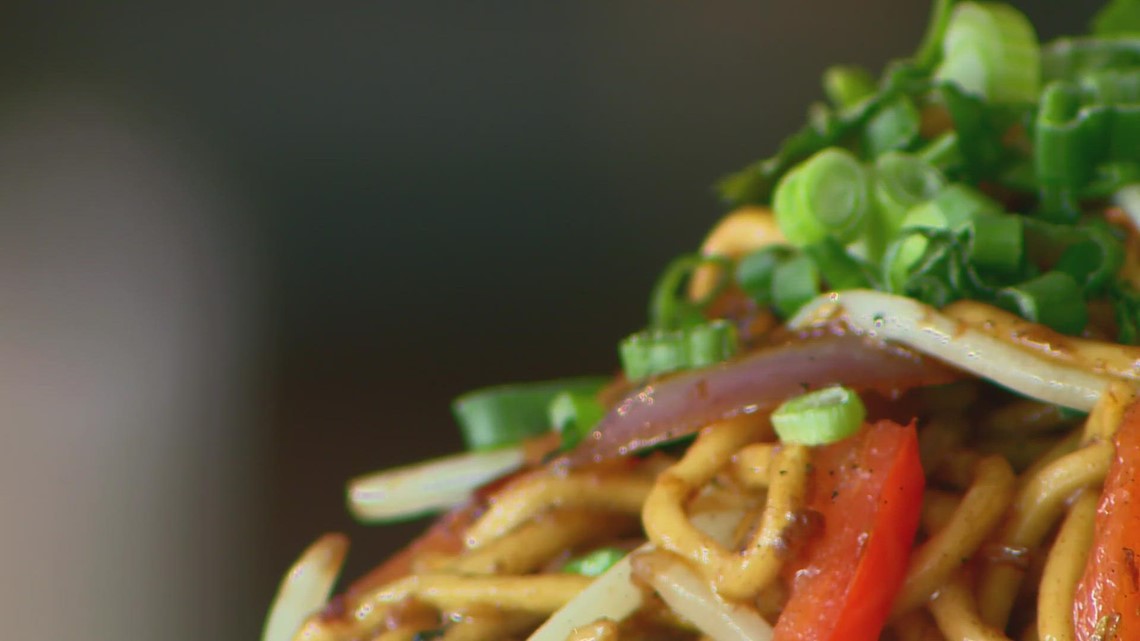
Wan’s XO stir-fried egg noodles will be the restaurant’s special during Mile High Asian Food Week. The XO sauce is a recipe he learned from his father-in-law, who is also a chef. 

“XO sauce is like a luxurious, Cantonese-style sauce,” said Wan. “It has dried scallops, dried shrimp, fried garlic, fried shallots, chili. There’s a lot of good stuff in there.”

For Joanne Liu, Wan’s sister, Chinese food isn’t just about her culture. 

“It symbolizes family and it’s a way we show love and care for one another,” she said. “It kind of brings me back to being raised in a family who owned a Chinese restaurant.”

For 20 years, Joanne and Ken’s parents owned a Chinese take-out spot. 

“They were immigrants to this country and really it was their way to put food on our table, put shelter over our heads, and really care for us and really wanted us to succeed,” said Liu.

“Food was always a big deal to me but my parents never wanted me to pursue it because obviously, they wanted me to be like a doctor, engineer, lawyer, typical Chinese immigrant stuff, you know?” said Wan. 

Ken still decided to follow his heart into the restaurant business and Joanne also found a way to celebrate food, culture, and community. 

“I want to engage in joy. I want to engage in celebration of the Asian culture and Asian foods and this is how I’m engaging with what’s going on today,” she said. 

Liu is the founder of Mile High Asian Food Week.

“Oftentimes people think, ‘Oh there’s no Asian food here. There’s no good Asian food,’ and like granted yeah, it’s not the same as the coastal cities like New York City or San Francisco, but there’s good Asian food here and [we] really want the chance to elevate those businesses,” she said. 

It’s a way to shine a spotlight on the diverse Asian American Pacific Islander (AAPI) food scene she said has been growing in the Denver metro. 

“They all have their own story of why they cook the foods they cook, why they started their businesses… and a lot of times it’s about family,” said Liu. “It’s about their culture, food they grew up on.” 

Around 48 restaurants are signed up for Mile High Asian Food Week, including her brother’s and a food truck called Pho King Rapidos. 

The owner of the food truck, Long Nguyen, also takes a lot of inspiration from his family.

“A lot of the recipes, a good part of the base, or even the specials are from her,” he said.

Long said his menu is Vietnamese at its core, but with an added twist, inspired by special moments in his life. 

“Right here is our sticky icky wings it’s our take on the Cánh Gà Chiên Nước Mắm,” said Nguyen. 

Another dish takes the flavors of a traditional bowl of pho but is wrapped up in a sandwich.   

“It’s an influence from being at home with my family and living in New York with my wife and then every day her and I just thinking about like what can we do differently,” he said. 

He hopes to share his food with the wider community while making his parents proud. 

“You want to take all the hard work that they did and make sure that you’re taking every opportunity they gave you to do something with it,” said Nguyen.

Through food, they’re all carrying on a legacy, lovingly passed down by family. 

“To see that not only am I successful here but I’m happy doing what I do… to her, I think to her it gives her some validation that she was a great mom, you know?” said Wan. 

Both Meta Asian Kitchen and Pho King Rapidos will open brick-and-mortar locations later this year. 

Meta Asian Kitchen is located inside Avanti until April 30. Then, they will open a new location called “MAK Fam” at 39 W. First Ave. in Denver sometime this fall or winter.

Mile High Asian Food Week runs from Wed., Feb 22-26. 

SUGGESTED VIDEOS: Latest from 9NEWS 

https://www.youtube.com/watch?v=videoseries

Mile High Asian Food Week celebrates culture, community and AAPI cuisine

Mile High Asian Food Week celebrates culture, community and AAPI cuisine

Mile High Asian Food Week celebrates culture, community, and AAPI cuisine. Food lovers can experience new Asian dishes, while getting perks like discounts and access to secret menu items. 

“In many Asian cultures, food symbolizes family. It’s the way we show love and care and protection for each other. It’s great that Colorado has this chance to feel inspired, try new foods, go to new spots, or just keep supporting the restaurants they’ve already been supporting,” said Joanne Liu, founder of Mile High Asian Food Week. 

She says it’s also a chance for Colorado to learn about their AAPI neighbors. According to state data, about 3.5{d2b09b03d44633acb673e8080360919f91e60962656af8ade0305d5d8b7e4889} of Coloradans are Asian. 

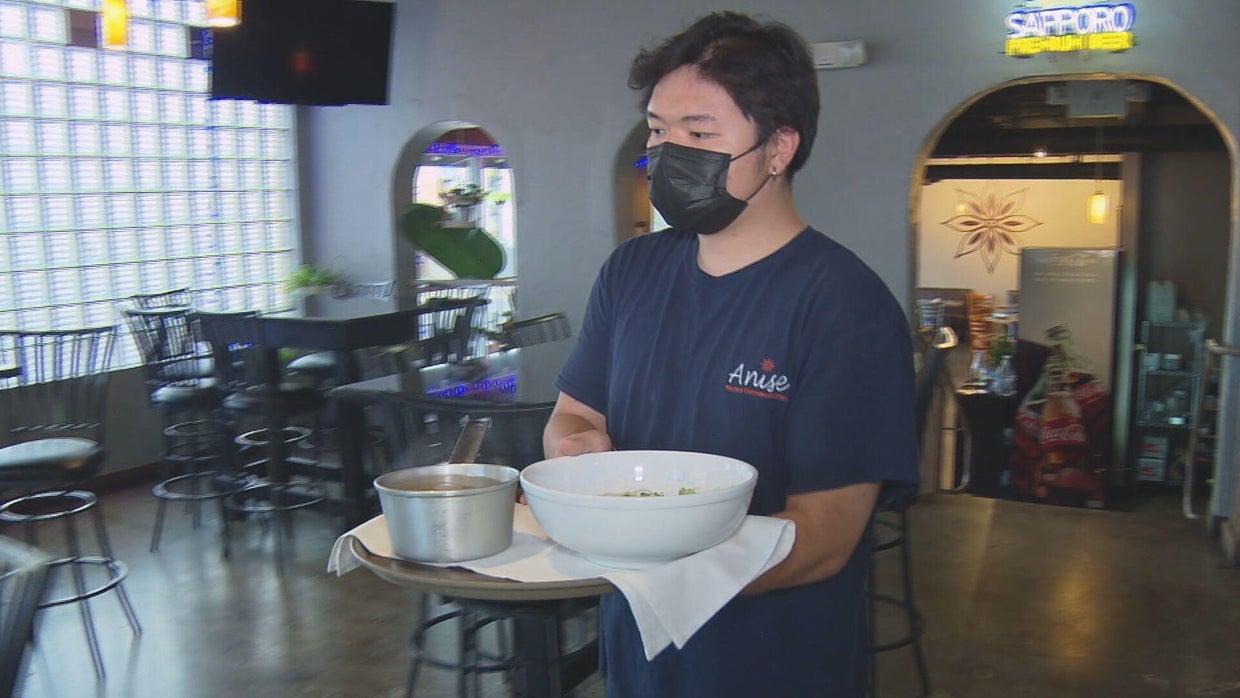
Long Nguyen is a Vietnamese-born restaurant owner in Denver. When he opened Anise, it was a way to make a living. As crowds poured in, Nguyen found a new purpose in sharing not only his love for food but love for his culture. 

“Everybody knows Chinese food or Thai food, Korean food and Japanese food. Vietnamese food is fairly new to the American appetite,” Nguyen said. 

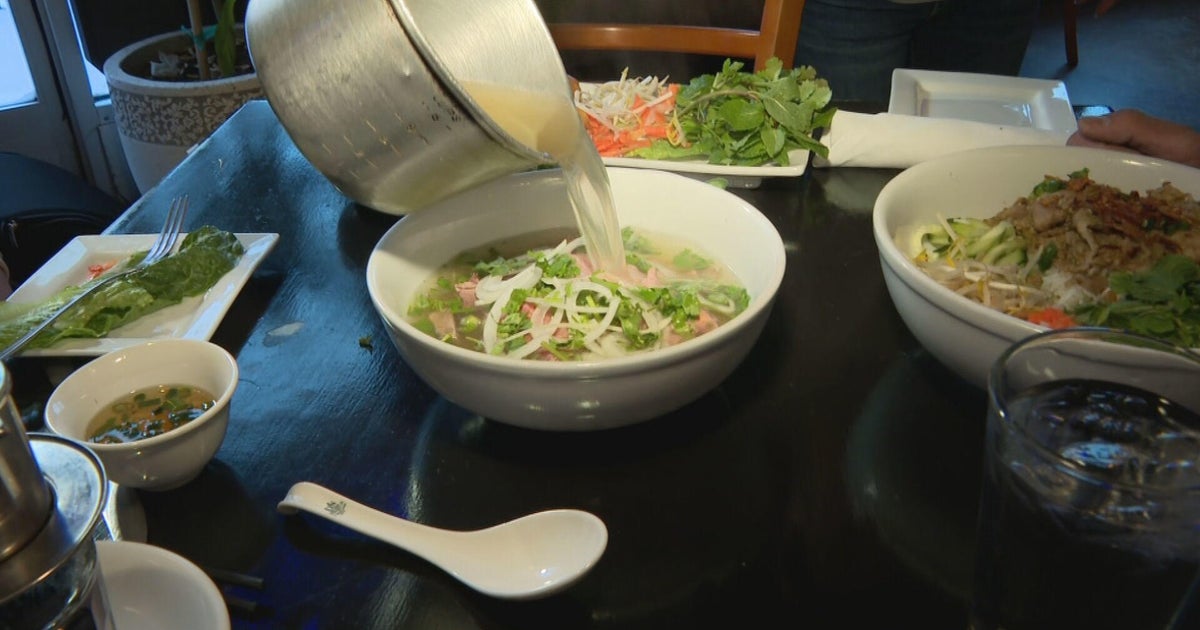
The popularity of pho, a Vietnamese noodle soup, has boomed around Colorado since Nguyen arrived. It’s the most ordered dish at Anise. But when he opened, he didn’t want to have a “pho restaurant.” 

soup.jpg

CBS


“I don’t want to say it’s the best Vietnamese food, but it’s the most famous Vietnamese food. Everybody knows pho!” Nguyen said. “There’s more to Vietnamese food than pho.”

He’s proud to have a menu full of traditional dishes and takes pride in telling diners about each one. Nguyen says he rarely gets to go back to Vietnam now, as his restaurant requires much of his time. 

Food and identity often go hand-and-hand.   

Colorado once celebrated Asian Food Month. When Joanne Liu began the journey to revive Asian Food Week, she had family in mind. 

She showed CBS News Colorado photos from her childhood while enjoying soup dumplings at Chi Lin in Stanley Marketplace, another AFW restaurant. 

Her parents ran a Chinese restaurant. Now, she’s determined to uplift Asian chefs. 

chef.jpg

CBS


“I’m just reminded about my parents and the hard work and perseverance and sacrifices they made in their restaurant,” Liu said. 

She’s overjoyed by #AFW posts on social media of foodies trying new restaurants, especially after the years of challenges this community’s endured.  

“Unfortunately, the bad actors are now very vocal and very brazen about what they do. I think l what is necessary is to speak out against what they say,” said Nguyen. “We are part of American culture now. Asian Food Week is a time to show that our food is different, but it’s good. Different is good.” 

Whether you use chopsticks or a fork, celebrate your plate and the culture it came from. 

“The scene has been growing. It’s very diverse, and it’s just a lot of fun. We really wanted to elevate that,” Liu said. “It’s all about exploration and being able to share that with the Colorado community.”

Mile High Asian Food Week runs through February 26. For more information visit: https://bit.ly/3KvpQtL