Cookies! Baking Tips, Tricks, and Recipes

Cookies! Baking Tips, Tricks, and Recipes
Sparkling Snowflake Cutout Cookies

PHOTOGRAPHY TERRY BRENNAN, FOOD STYLING LARA MIKLASEVICS

‘Tis the season for baking. Making your own holiday cookies can be rewarding and they are always welcome at get-togethers throughout the season, whether you’re hosting or arriving with a delicious plate of treats in hand. Plus, they make great homemade gifts. I have gathered tips and recipes from pros that I have highlighted so you can create with confidence not only this holiday season, but anytime the baking urge strikes throughout the year.

The following classic sugar cookie recipe by cookbook author Georgeanne Brennan will not only make beautiful snowflakes or other wintry shapes now, but you can also make treats for any occasion when you cut the cookies into a variety of other shapes. Twin Cities chef and Saint Paul College Culinary Arts instructor Jason Ross’ tips will help you turn out the cookies you are looking for. And everyone’s favorite chocolate chip cookie can be made soft and chewy or crisp if you have pastry chef and author of “The Baking Answer Book,” Lauren Chatmann’s tips and recipes on hand. Plus, elevate bars with more tricks from Chatmann below.

Cookie Do’s from Chef Jason Ross

Scrape the Bowl to Get Fully Mixed Dough: Do it after adding eggs, adding dry to wet, or wet to dry ingredients. Mixer attachments don’t quite reach the bottom and sides of the bowl, so parts are left unmixed. Use a rubber spatula to stir the unmixed parts back into the dough—and scrape the paddle attachment.

Chill Dough: It makes the batter easier to handle and gives the flour enough time to fully absorb liquid ingredients and make more cohesive dough. For the chocolate chunk cookie recipe here—and any soft cookie—bake from frozen. This will make a tender, crisp cookie that stays chewy. Keep cookie dough balls ready in the freezer during the holidays in case of a “cookie emergency.”

Finish with Salt: Just a few grains sprinkled on top of cookies will hit the palate first, bringing out a surprise flavor. Don’t use enough so you can see it—like a pretzel—rather just enough for a little salt secret.

Cool Cookies on a Rack: Cookies will continue to cook on a hot pan. Unless they are too soft or fragile to handle, lift them off the pans with a metal spatula and cool on a wire rack.

Color Cues: Pay attention to brown color, especially around the edges, and lighter color in the center. This helps determine a perfectly baked cookie. Since cookies are small, a little more or less time makes a big difference. If a few cookies on a tray are done, pull them off to cool and finish cooking the rest of the tray.

Rotate Pans Halfway Through Cooking: All ovens have hot and cool spots, so rotate pans to get even cooking across the tray. Be quick—you don’t want the oven to cool down.

Cookie Spread

The way cookies spread and thin has a big impact on crispness, softness and chewiness.

  • More creaming of butter and sugar will add more air and increase spread; less creaming, less spread and chewier cookies.
  • Lower temperature, even just a few degrees, slows cooking and gives dough more time to spread. Higher temperature will make thicker cookies since it firms up more quickly.
  • More sugar—especially syrupy sugars like honey, molasses or corn syrup—will spread more easily and make softer cookies.
  • Overmixing flour decreases spread and makes doughy cookies.

Must-Have Tools

Scoop: Use a portion control scoop instead of a spoon to avoid messy fingers and quickly and easily scoop balls the same size. Cookies will bake more evenly. Use it for ice cream too!

Digital Scale: It helps especially for measuring flour—the weight difference between cups of flour can be surprising. If you don’t have a scale, avoid compressing flour into the measuring cup; instead spoon it into the cup and level off with the straight edge of a butter knife.

Parchment Paper and Silicon Mats: These both work well and have an impact on cooking besides ease in cleanup: Cookies will spread more on a silicon mat and stay tighter on parchment. Parchment browns cookies a little more nicely, while silicon will yield slightly less crisp cookies. If I had to choose one, it would be parchment, but both have their place depending on the cookie you are baking. If using aluminum pans without either of these, try a little oil spray and possibly dust with flour if you have had trouble with cookies sticking.

More tips from Ross and use your skills with his Chocolate Chunk Cookies recipe here.

Cookie and Bar Tips and Tricks from Lauren Chattman

Tips and Tricks: Soft and Cakey Chocolate Chip Cookies
• Cream butter and sugar together. This will whip some air into the dough, so your cookies will puff up a bit in the oven.
• 1/4 teaspoon of baking powder along with the soda will provide more lift.
• Subtract an egg yolk and use an extra egg white. Egg whites contain more water than yolks which when evaporated in the oven helps cookies rise like little cakes.
• Use twice as much brown sugar as white sugar. Brown sugar, which is slightly acidic, will react with the baking soda in the recipe for a higher rise.
• Add a little extra flour—enough to add structure, but not so much that it will dilute the sweetness of the sugar.
• Chill the dough. Cold dough will spread less in the oven, creating a cakey center.
• Turn up the heat. If a recipe calls for 350°F, increase to 375°F. A hotter oven will allow the cookies to bake before spreading, resulting in cakey centers.

Tips and Tricks: Crisp and Chewy Chocolate Chip Cookies
• Use melted, not softened butter for a dense and chewy texture.
• Subtract an egg white and add an extra egg yolk. Yolks have more fat than whites, which give cookies a fudgy rather than cakey texture.
• Use twice as much white sugar as brown. White sugar, which is neutral rather than acidic like brown sugar, will cause your cookies to spread rather than rise. It will also give your cookies a nice crispness around the edges.
• Turn down the heat. A cooler oven will let the cookies spread without drying out.
• Do not overbake. Cookies will continue to firm up and dry out as they cool off, so pull them out of the oven while they still look a little damp on top.

Find more tips from Chattman and recipes for soft and cakey and crisp and chewy chocolate chip cookies here.

Plus: Elements of science combine to create your perfect treat in her Cakey or Fudgy Brownies Recipes

Sparkling Snowflake Cutout Cookies and Icing

PHOTOGRAPHY TERRY BRENNAN, FOOD STYLING LARA MIKLASEVICS

Sparkling Snowflake Cutout Cookies

Makes 2 to 3 dozen cookies

I like to make snowflake cutouts in different shapes and sizes, then ice some with white frosting and some with blue, and decorate with sparkling white and blue sprinkles. For a variation, use holly-leaf cookie cutters and green food coloring with red hot candies for berries. Like all iced, cutout cookies, these are best eaten within 1 week. —Georgeanne Brennan

For the Cookies
1¾ cups all-purpose flour
½ teaspoon baking powder
¼ teaspoon salt
²⁄³ cup unsalted butter, at room temperature
½ cup sugar
1 large egg
1 teaspoon pure vanilla extract

For the Icing
2 egg whites
4 cups powdered sugar, or more as needed
Blue food coloring or blue gel

  1. For the cookies: Heat oven to 400°F. Line a baking sheet with parchment paper.
  2. In a bowl, whisk together flour, baking powder, and salt. In a separate bowl, beat together butter and sugar until light and fluffy. Beat in egg and vanilla. Add flour mixture in three batches, mixing each time until a smooth, not sticky, ball can be formed. Divide into two balls, wrap in plastic wrap, and refrigerate 15 to 20 minutes.
  3. Flour a rolling pin and lightly flour a working surface. Roll a ball out to a generous ¹⁄8 inch thickness. Using snowflake cookie cutters, cut out several shapes and sizes. Using a metal spatula, transfer to baking sheet, spacing cookies at least ½ inch apart (they will expand as they bake). Shape remaining dough scraps into a firm ball and repeat. Repeat with second dough ball.
  4. Bake 6 to 8 minutes, until delicately browned on bottom and pale golden on top. Remove from oven and let cool on sheet at least 5 minutes. Using a metal spatula, gently loosen cookies and transfer to a flat surface to cool slightly before icing. (If cookies are warm, icing will spread more easily. However, icing when cookies are fully cooled is fine.)
  5. For the icing: In a large bowl, using an electric mixer, beat together egg whites and sugar 5 minutes, until stiff enough to spread. If too stiff, add 1 teaspoon water and beat. If too thin, continue beating and add up to ½ cup powdered sugar.
  6. Divide icing into 2 bowls. To 1 bowl, add 2 drops blue food coloring and mix well with a spoon.
  7. Using a knife or stiff spatula, gently spread icing on cookies. Add sprinkles immediately. Set aside on a flat surface to cool completely.
  8. Arrange cookies in a single layer on a platter and cover loosely with wax or parchment paper. They will keep up to 3 days at room temperature. To store in an airtight container up to 1 week, line container with wax or parchment paper. Place cookies in single layer. Top with a layer of wax or parchment paper and repeat.

A Sweet Gift: Choose a special teacup and saucer set and package it with a bag of cookies and a favorite tea to create a gift for a perfect pause, a quiet minute.

Nutrition info (per serving) Sparkling Snowflake Cutout Cookies: Calories 142 (38 From Fat); Fat 4g (Sat. 3g); Chol 17mg; Sodium 35mg; Carb 25g; Fiber 0g; Protein 1g

More Cookie Recipes

Stenciled Gingerbread Cookies Recipe

Enjoy the seasonal taste of gingerbread in grown-up style—and you don’t need to worry about whether to start with a bite of a little gingerbread fella’s feet or head. (If you want to bake ahead, these cookies can be stored carefully in an airtight container for about two weeks.)

Cranberry Macadamia Nut Cookies Recipe

Keep old cookie friends but make new ones this holiday baking season

Toffee Squares with Pretzel Topping and Hazelnut and Honey Diamonds

PHOTOGRAPHY TERRY BRENNAN, FOOD STYLING LARA MIKLASEVICS

Bars and Brownies

You may think of bar cookies as basic party fare, but if you elevate them by using delicious ingredients and attractive decorations, they make a perfect addition to holiday dessert choices. While they are easy to make, there are some guidelines that Chattman suggests for good results plus recipes.

Raise the (Dessert) Bar

Easy yet delicious and decorative, bar cookies elevate options for serving and gifting, including Toffee Squares with Pretzel Topping and Hazelnut and Honey Diamonds recipes.

Patchwork Bars

PHOTOGRAPHY TERRY BRENNAN, FOOD STYLING LARA MIKLASEVICS

Patchwork Bars Recipe Plus Top Tips for Baking Bars

Elevate easy-to-make bar cookies with festive toppings for any get-together or homemade gift this holiday season

Hungry for More?

Dark Chocolate Sea Salt Brownies Recipe
These intensely chocolate, not-too-sweet brownie bites by cookbook author Georgeanne Brennan are a tasty marriage of chocolate and a hint of savory.

Brown Butter Blondies Recipe

Celebrate with this twist from Twin Cities baker Sarah Kieffer
Green Mediterranean diet is best for reducing harmful visceral fat

Green Mediterranean diet is best for reducing harmful visceral fat

photo of green garden furniture and green plantsShare on Pinterest
A modified Mediterranean food plan, so-named the green Mediterranean diet plan may possibly convey the most rewards to all those on the lookout to shed visceral body fat. Picture credit rating: kolderal/Getty Photos.
  • A recent examine appeared at the wellbeing outcomes of a new variation of the Mediterranean eating plan known as the eco-friendly Mediterranean eating plan.
  • The inexperienced Mediterranean eating plan is far more productive than the original at lessening the amount of money of visceral excess fat all-around inner organs.
  • Visceral unwanted fat has been joined to early mortality and a host of other severe professional medical fears.
  • A essential aspect of the new diet plan is the inclusion of walnuts, which are rich in polyphenols.

A new massive-scale medical intervention demo discovered that a modified Mediterranean diet program — identified as the green Mediterranean eating plan — is far more productive at reducing visceral fat that can encompass and problems organs than the standard Mediterranean eating plan or a generally nutritious eating plan.

All a few diet plans resulted in a reduction of visceral fats, but the green Mediterranean diet plan doubled the benefit of the “traditional” Mediterranean diet plan.

The examine was performed by the Direct-Additionally demo research group. It was led by Prof. Iris Shai of Ben-Gurion University of the Negev, Israel, and Dr. Hila Zelicha, now at the College of California, Los Angeles, aided by colleagues from Italy, Germany, and the United States.

The examine appears in BMC Drugs.

The green Mediterranean diet differs from the first Mediterranean diet plan in its emphasis on polyphenols.

Polyphenols are plant compounds that have been connected to protection from form 2 diabetes, some cancers, and coronary heart ailment. They also surface to guidance mind health and digestion.

Polyphenols are found in darkish chocolate, berries, crimson wine, and tea, as very well as some nuts, this kind of as walnuts.

On the green Mediterranean eating plan, as envisaged in this review, a human being consumes 28 grams of walnuts — about 7 nuts — 3 to 4 cups of inexperienced tea, and 100 milligrams of the aquatic plant Wolffia globosa (Mankai) — also known as “duckweed” — in a smoothie or shake every single working day. All are rich in polyphenols.

If not, the diet regime is the same as the original Mediterranean food plan, but devoid of the usage of crimson and processed meats.

For the 18-thirty day period randomized controlled trial, researchers divided the 294 members into 3 teams:

  • a person group followed a regular Mediterranean (MED) food plan
  • 1 followed a eco-friendly Mediterranean (eco-friendly-MED) diet plan
  • a closing team a person strictly followed nutritious dietary suggestions (HDG).

All teams were supplied life style academic periods and actual physical exercise tips, alongside with a free of charge gym membership.

Scientists provided the walnuts, tea, and Mankai, along with recipes for environmentally friendly smoothies.

Dr. Aaron Cypess, of the Nationwide Institutes of Health’s Nationwide Institute of Diabetic issues and Digestive and Kidney Diseases, was not associated in the review. He praised the research to Health-related News These days:

“The medical demo was executed very well, and these sorts of extended-time period eating plan interventions are incredibly tricky to execute. The study has created quite a few hypotheses that can now be examined relating to the system by which polyphenols have an impact on VAT mass.”

“VAT” stands for “visceral adipose tissue,” which is an additional term for visceral extra fat. “Adipose” describes a entire body tissue that outlets body fat.

At the conclusion of the trial, reductions in visceral fat ended up assessed by way of magnetic resonance imaging (MRI). All a few teams shed a similar volume of overall entire body bodyweight.

Individuals on the eco-friendly Mediterranean diet regime decreased their visceral fats by around 14{d2b09b03d44633acb673e8080360919f91e60962656af8ade0305d5d8b7e4889}. All those on the Mediterranean diet plan misplaced 6{d2b09b03d44633acb673e8080360919f91e60962656af8ade0305d5d8b7e4889}, and the healthier diet group lost 4.2{d2b09b03d44633acb673e8080360919f91e60962656af8ade0305d5d8b7e4889}.

Although one’s over-all weight and visual appearance are generally the metrics by which persons choose eating plans, visceral fat is a much a lot more critical concern.

Dr. Zelicha informed MNT that “in terms of the wellbeing risks related with extra body fat, visceral adipose tissue is significantly much more unsafe than the extra ‘tire’ all around your waist.”

“VAT,” explained Dr. Zelicha, “has been linked to various health and fitness problems, this kind of as high blood stress, being overweight, dyslipidemia, and diabetic issues. It also improves mortality hazard, earning it additional vital to maintain an eye on.”

Visceral fats is deep in the physique and uncovered around internal organs, not like the surface layer of extra fat that we can see.

“Most interventions now available do not goal deep adipose tissue specially,” pointed out Dr. Cypess, “yet rewards of body fat mass decline, in standard, are nonetheless valuable.”

Because it can’t be found, deciding if one has VAT is not a basic endeavor. Even though Dr. Zelicha observed that midsection circumference is a reasonably very good indicator of the presence of VAT, MRI and laptop or computer tomography (CT) scans are the gold specifications for detection.

“However, CT entails ionizing radiation, and MRI has emerged as a highly effective non-invasive prediction tool, but it is very expensive and time-consuming,” she cautioned.

There is even now a want, Dr. Zelicha mentioned, for a improved, simply available, and validated resource for evaluating VAT.

As of the time of writing, the eco-friendly Mediterranean diet plan is the routine that most appreciably lowers visceral extra fat, according to the modern investigation.

As Dr. Cypess famous: “Most diet programs guide to a reduction in the adipose tissue all-around organs. Even in this analyze, the HDG handle arm led to visceral extra fat decline, just not as significantly as the [green Mediterranean] diet plan.”

Since successful meal plans will typically supply at least some reduction in VAT, Dr. Cypess asserted, “the ideal diet plan and physical exercise program is the a person that the person can adhere to for months and a long time into the long term.”

Dr. Zelicha explained that aerobic workouts such as working or cycling have “been shown to be a powerful method for visceral adipose tissue reduction.“

In Prof. Shai’s before analysis, such physical exercise together with walnut consumption amplified the effect of the conventional Mediterranean diet program in cutting down VAT, reported Dr. Zelicha.

“Eating far more plant-centered fat,” advised Dr. Zelicha, “such as olive oil, avocados, nuts, and seeds, and avoiding very simple carbs and trans-fatty acids can enable reduce VAT.”

Luxury for less! 11 delicious, impressive and cheap dishes, chosen by top chefs | Food

Luxury for less! 11 delicious, impressive and cheap dishes, chosen by top chefs | Food

Who needs truffle and caviar? With some leftovers, new tricks and a little ingenuity a dish can look and feel fancy, despite its cheaper ingredients. Whether adding some lavishness to lunchtime, or hosting a chichi dinner, here are 11 top chefs’ recommendations for recipes that are budget-friendly and uncompromisingly luxurious.

Pasta with prawn sauce

Asimakis Chaniotis, executive chef at Pied à Terre, London
When we cook prawns in the restaurant or at home I always keep the heads, with a little bit of prawn meat in them – I put them in a box in the freezer. For two, I would use around 10 prawn heads. Sweat down onion and garlic, then add the prawn heads. Caramelise them a bit and then deglaze either with an aniseed-y alcohol like ouzo, or you can use wine. Reduce that, then add tomatoes and simmer for half an hour. I use a stick blender and pulse, rather than puree, to crush the heads a bit. Simmer for another two minutes, then pass them through a sieve, pressing the heads, to get the maximum flavour, and discard the shells. To make it really fancy, top with herring or trout eggs – much cheaper than caviar – and maybe some basil, then a squeeze of lemon or lime juice.

Chickpea and chorizo stew

Monika Linton, founder of Brindisa, London

Chickpea and chorizo stew.
‘Simple but tasty and hearty’ … chickpea and chorizo stew. Photograph: Ben Monk/Getty Images

This stew was devised for the tiny shop we used to have in Exmouth Market in central London. With only a single electric ring to cook on, we wanted a simple but tasty and hearty dish. It’s quick and easy to make, yet it feels indulgent and rich, and is perfect as we enter the colder months. Heat a splash of olive oil in a large pan, add 200g coarsely cut cooking chorizo, 200g diced pancetta and one finely chopped onion, and fry for three or four minutes. Add a glass of red wine, 400ml sofrito sauce and 400ml water, bring to the boil then simmer for five minutes. Add two 660g jars of chickpeas, two cloves of crushed garlic and two tablespoons of fresh oregano, and simmer for a further five minutes. Season to taste, then eat with good bread.

Spaghetti with mussels

Jacob Kenedy, chef patron of Bocca di Lupo, London

Spaghetti with mussels.
‘As much refinement of flavour as pasta with lobster or clams’ … spaghetti with mussels. Photograph: Burcu Atalay Tankut/Getty Images

This has the glamour of a really good seafood pasta, because it is a really good seafood pasta. I’m amazed at how cheap mussels are when other seafood is so expensive. You can choose to make it with or without tomato; I like to use a bit. Cook spaghetti in well-salted water – not as salty as the sea but maybe as salty as tears. It’s worth investing in good pasta because it doesn’t cost that much more. Cook a bit of garlic and chilli in a pan, then a second later, the mussels. Add a couple of spoonfuls of a tomato sauce, just enough to make the sauce blush. Toss the pasta with the mussels and cook the lot together, adding some good olive oil at the end. You could add a bit of parsley or basil, but I wouldn’t. This is messy and fun, and has as much refinement of flavour as pasta with lobster or clams, but it’s cheap as chips.

Flatbreads with toppings

Roberta Hall-McCarron, chef patron of The Little Chartroom, Edinburgh
You can dress up homemade flatbreads as a starter or a snack to make them look fancy. Flatbreads are quick and easy to make, with bread flour, dried yeast, water, yoghurt, sugar and salt, and here are a couple of ideas for toppings: you can make ricotta easily at home using just milk, cream, lemon juice and salt. Make a piperade – slice onions and peppers and sweat them together with grated garlic. Layer the ricotta, piperade, roasted courgettes and thin slices of salted courgettes, then some chopped toasted hazelnuts. Another option is to make a smoked mackerel paté – mix fillets with some creme fraiche, lemon juice and chives or dill. Put that on the flatbread, then finish it with different pickled vegetables for bright and lovely textures – cucumbers, radish and fennel work nicely – and you can add a bit of fresh apple too. To make an easy pickle, you just need vinegar, water, sugar and a little bit of salt, and you can jazz it up with mustard seeds or peppercorns. It makes you feel as if you’re doing something special at home, but it’s really simple.

Baharat-spiced aubergine parmigiana

Helen Graham, executive chef at Bubala, London

Aubergine parmigiana.
‘Tastes like more than the sum of its parts’ … aubergine parmigiana. Photograph: Mediterranean/Getty Images

Cut an aubergine finely – one aubergine feeds two – then fry until it’s crispy. Make a tomato sauce with garlic, tomato, a little bit of sugar and baharat, which is a spice mix that packs quite a punch. Layer the aubergine and the tomato sauce, your cheese of choice, and then sprinkle it with parmesan (or grana padano to keep costs down), some breadcrumbs, which could just be some old bread, blitzed up, and olive oil. If you want to make it more substantial, you could add in lasagne sheets. Then you just roast it. It makes a really nice centrepiece, which tastes like more than the sum of its parts.

Pea and mint fritters with garlic mayonnaise

Bettina Campolucci Bordi, author of Celebrate: Plant-based Recipes for Every Occasion

Pea and mint fritters.
‘A canapé or a starter’ … pea and mint fritters. Photograph: Anna_Shepulova/Getty Images/iStockphoto

You could do this as a canapé or starter, and it looks really nice on a plate, but it’s so cheap – basically frozen peas, potatoes and onions, and some mint. Boil and mash around 250g potatoes, and caramelise one red onion or some shallots. Put 500g peas into a blender or mash them up, then mix with the mashed potato, onions, a bit of gram flour and some mint, and shape into little fritters. If you want to make it fancy, you can quenelle them – shape between two spoons – then fry. If you want to be really resourceful, you can make the mayonnaise from aquafaba – chickpea water – which you might have saved from another recipe. Add some grated garlic to the mayonnaise, lemon juice and salt and pepper.

Tagliatelle with chicken in cream sauce

Katlego Mlambo, head chef at Kudu, London
Being French-trained, I’m a big fan of butter and cream, and it seems luxurious. A pasta – at the moment tagliatelle is my favourite – with a creamy sauce becomes a blank canvas that allows you to layer on flavours. Fry garlic, ginger and onions, then add about 200ml cream, some mozzarella, a squeeze of lemon juice and some lemon zest to give it a bit of freshness. I like grilled chicken thighs, which have more flavour and don’t dry out as quickly as breast. Marinate them in a quick marinade – olive oil, salt, pepper, garlic, ginger – and grill. I like generous slices, otherwise it could look like a mess in the bowl. Toss it all together, then finish it off with some freshly chopped coriander and another squeeze of lemon juice, then parmesan to make it feel more expensive, or any cheaper hard cheese.

Ham hock congee pie

Erchen Chang, chef co-founder of Bao, London

Ham hock congee pie.
‘Add whatever vegetables you have in your fridge’ … ham hock congee pie. Photograph: Funwithfood/Getty Images

Normally congee – similar to a risotto, but more liquidy – is a cheap, comforting dish, but by putting puff pastry on top and egg-washing it, it is suddenly turned into something different. You can make congee from scratch using any rice, but I would normally use short grain rice. Put a ham hock – one knuckle is enough – and 150g rice in a pot with water or stock. I’ll put in a 1in piece of ginger for flavour, so you can easily pick it out afterwards. Slow cook it for maybe an hour and a half, whisking it to make sure that the rice grain is broken down. Once the ham is cooked, remove and shred it, then return it to the congee. You can add different ingredients – for example, spring onion, or whatever vegetables you have in your fridge. I would add fermented mustard greens – something to give it that sourness. Transfer it to an ovenproof bowl and top with puff pastry, egg-wash it, then pop it in the oven for 20 minutes. You can prepare a big portion to set aside in the fridge or freezer for later, then just put puff pastry on top and pop it into the oven.

Mushrooms on toast

Paul Ainsworth, chef patron of Paul Ainsworth at No 6, Cornwall

When I was a kid we didn’t go to fine dining restaurants, so if my dad was treating us it would be something like a Beefeater. I’d always order the garlic mushrooms on toast, and this is a fancy version. You can get cultivated “wild” mushrooms in supermarkets, made up of mushrooms like oyster and shimeji. Get a loaf from the baker’s and slice it, then rub with olive oil, sea salt and garlic, and toast – if you have a chargrill pan, even better. Pan-fry the mushrooms in butter with garlic, fresh parsley and shallots. You could add a touch of creme fraiche so they become quite creamy. Put it on the toast, then top with a poached egg, drizzled with good olive oil and a pinch of sea salt and pepper. When you cut into the poached egg, the yolk self-sauces the dish. You’ve just got texture, crunch and a very inexpensive dish, but a real looker.

Pasta alla Norcina

Chris Leach, chef co-founder of Manteca, London
This is a dish from Umbria in the north of Italy, using pork sausage. Use any plain pork sausages – as opposed to something like pork and apple – and just crumble them open, cook in a pan with a bit of crushed garlic and a bit of white wine, then add around 100ml double cream. Finish with grated parmesan or grana padano and serve it with any short pasta, such as rigatoni or penne. The cream makes it feel a bit more luxurious. We serve a version of this at the restaurant with black truffles, but you could use cheaper truffle oil. Just a little drop into the cream, white wine and sausage brings out the porkiness.

Hummus breakfast

Eran Tibi, chef patron of Bala Baya, London
This is one of my favourite things to eat – my mum used to make it when we were kids. Take two or three big scoops of hummus and spread around a plate. Fry a bit of garlic, chilli and any spice mix you like – I like ras-el-hanout – for a couple of minutes, then add a spoonful of harissa and a tin of chickpeas with its liquor. Cook for about 10 minutes, and you get this spicy, umami, delicious chickpea stew. You can add whatever you have in the fridge, like leftover meat. While hot, pour it on top of the hummus. Top it with a soft-boiled egg, a couple of pickles and some good toasted bread. It’s warm, wintry, and the chickpeas get velvety and smooth.

Roasted potatoes level up with this crispy Parmesan and garlic recipe

Roasted potatoes level up with this crispy Parmesan and garlic recipe

Every day it seems like a new recipe sets the online food world ablaze and I’m often skeptical of the social media creation. But these Parmesan-crusted crispy potatoes stopped me in my tracks.

Americans love potatoes. In fact, the average American consumes over 100 pounds of potatoes per year, which is double the amount of our second favorite veggie — lettuce. We devour spuds in all shapes and sizes, from whole, to French fried, mashed, smashed, shredded and twice baked. We also adore cheese, whether it’s sharp and nutty, or smooth and creamy. So it’s no surprise the latest internet sensation involves both potatoes and cheese.

And after trying it for myself, I fully understand the passion for these oven fried potatoes.

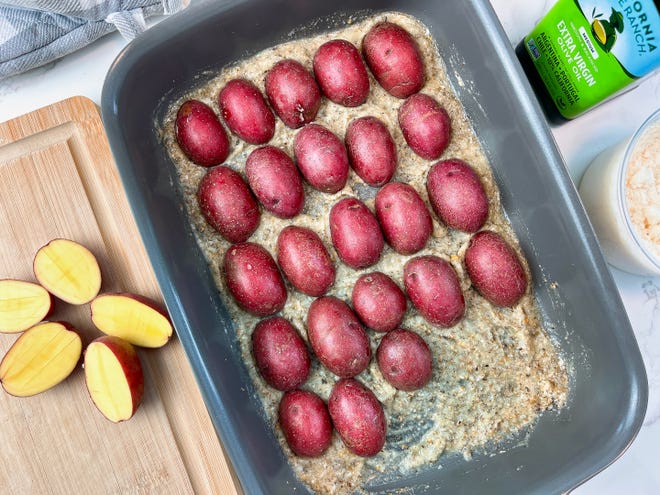
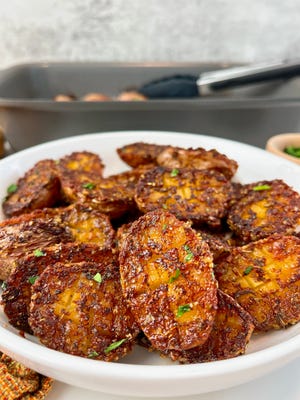
Crispy on the outside and soft in the center, these tubers are buttery, cheesy, herby and completely addictive. They also require only one pan, less than 10 ingredients and less than an hour to make. What’s not to love?

7 kitchen gadgets to streamline your Christmas dinner

7 kitchen gadgets to streamline your Christmas dinner

Christmas dinner may arguably be is definitely the best meal of the year. It’s not exactly a relaxing one to cook, though. There’s a million and one things to roast, bake, boil, flambé, blend and baste. And after all that work the veggies are usually soggy, the turkey is blackened and cooking times previously written in stone are thrown out under the crippling weight of pressure.

But Christmas dinner doesn’t have to be the ultimate test of the human endurance. There is a better way with our pick of the must have gadgets to streamline your Christmas dinner. Trust us, you deserve better.

Instant Pot Pro Plus at Amazon
Lenovo Smart Clock 2 at Currys

Thermapen Classic at Amazon
Stirr at Amazon
Japanese Mandoline at Sous Chef

Kenwood Autograph collection
Coolskin 375 GTX at Amazon

Best for multitasking: Instant Pot Pro Plus: £170

Instant Pot Pro Plus lifestyle

The Instant Pot Pro Plus is a 10-in-one jack of all trades, master of most of them. It’s a pressure cooker, steamer, rice maker, yogurt maker, warmer, sauté-er and probably a few more things we’re yet to discover. The Instant Pot Pro Plus is wirelessly controlled through the Instant Brands Connect app. Open the app, select from one of over 800 recipes and the app will program the pot to cook whatever you want to perfection – all hands free. Yes, that includes crispy roast potatoes and slow cooked meats, ideal for out of sight out of mind cooking.

Best for timings: Lenovo Smart Clock 2: £26

Best Christmas dinner cooking

For the Christmas day chef who simply can’t get their timings right, the Lenovo Smart Clock 2 with Google Assistant is the gadget for you. Multiple reminders and alarms can be set using your voice, a 4in LED display is easy to read, and it also doubles as a nightlight and charging unit. As a bonus, three front-firing 3W speakers lets you listen to music while you cook and blissfully ignore the family members arguing in the living room.

Best for temperatures: Thermapen Classic: £48

Thermapen Classic

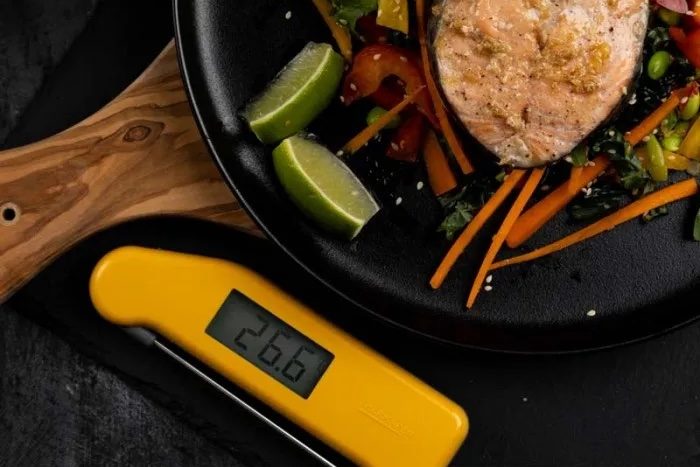
There are a number of smart thermometers out there that’ll give you a perfectly cooked Christmas roast (or BBQ in the summer). The MEATER is a wireless smart meat thermometer that tells you when your food is cooked to perfection via an app. But, at £99, the MEATER is far too pricey for what is a relatively simple task. Not all things need to be ‘smart’, either. For something a little more humble, the Thermapen Classic does everything a thermometer needs to do – that is, to accurately take the temperature – for a much more reasonable £48. The Thermapen Classic is hard wearing, takes the temperature within three seconds to an accuracy of ±0.4 degrees and is water resistant for easy cleaning. What more do you want?

Best for gravy: Stirr: £25

Stirr Christmas gadget

üutensil may sound like it’s a piece of Swedish furniture, but üutensil is a British company who create a whole host of smart and reasonably priced kitchen gadgets. Take the Spudnik for example, a rotating potato masher that should be in the kitchens of everyone who knows that mashed potato IS traditional at a Christmas dinner table. The Stirr is our personal favourite though, a battery powered device that rotates and stirs your sauces and gravies that’s heat resistant up to 120 degrees.

Best for chopping: Japanese Mandoline: £40

Sous Chef kitchen mandoline

Japanese metal doesn’t have to break the bank. This Japanese Mandoline from Sous Chef will slice your veggies and make perfectly thin potatoes for dauphinois for £40. The mandoline from Sous Chef comes with three blade types for all manner of veggie slicing. A fine tooth blade is meant for fruits and salad chopping. The medium tooth is great for shredding carrots and cabbage (and is great for homemade kimchi). A larger blade works well with tougher vegetables, too. Be sure to use a cut resistant glove to safeguard your digits, though.

Best for baking: Kenwood Autograph collection: From £45

Kenwood Autograph food processor

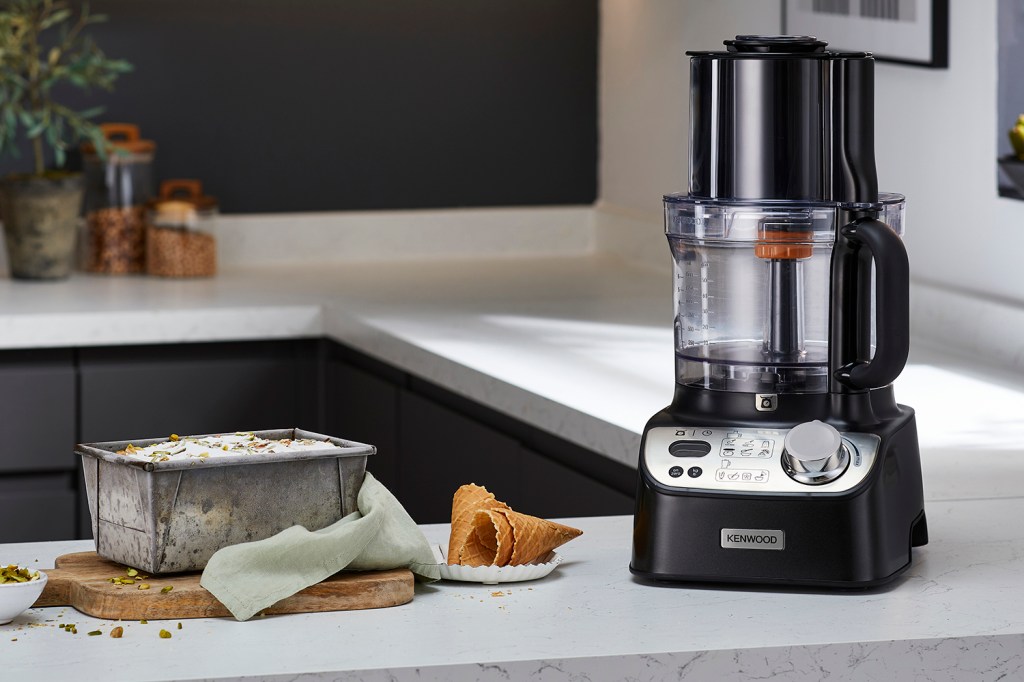
If you’re really pushing the boat out this Christmas by making your own dessert, as opposed to panic buying a soggy cheesecake on Christmas Eve, then the Kenwood Autograph collection will be your best friend this holiday season.

The three piece range includes a stand mixer, multi-purpose food processor and electric hand whisk, and lands in moody matte black and stainless steel. The £45 Autograph Collection QuickMix+ promises 650w of egg-beating power, while the MultiPro XL Weigh+ food processor (£200) combines in-bowl weighing and food blitzing. The Titanium Chef Baker mixer (£600) has 3.5-litre and 5-litre nesting bowls and four stainless steel baking tools. Everything is dishwasher safe, too, making for headache free post-dinner cleaning.

Best for avoiding burns: Coolskin 375 GTX: £27

Coolskin heat gloves

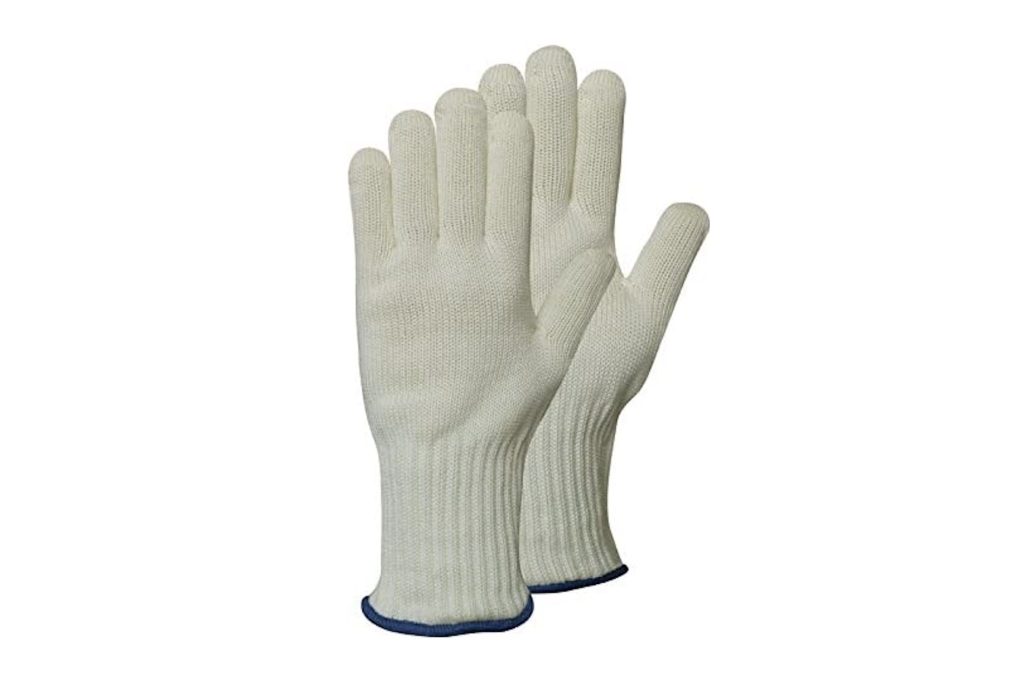
Everyone has at least one war story from Christmas dinner, with the literal scars to prove it. When there’s pandemonium in the kitchen it’s easy to burn yourself on a discarded baking tray or hot pan, so we suggest investing in a pair of industrial grade Coolskin 375 GTX oven gloves. The Coolskin 375 GTX gloves are made from flame-resistant aramid fibres that can withstand temperatures up to 250 degrees. Added wrist protection provides some extra safety, although the gloves aren’t resistant against steam or hot liquid spillage. They’re not exactly aesthetically pleasing either, looking more suited to a building site than a kitchen, but the Coolskin 375 GTX offers high-grade roast dinner protection at a reasonable price.

The Purple Jesus Recipe Gets a Makeover

The Purple Jesus Recipe Gets a Makeover

It goes by many different names: Jungle Juice. Spodie. Trash Can Juice. Grain-alcohol punch. But if you’re in the American South, says Alex Pincus, you’re more likely to know it as Purple Jesus.

“When you threw up, it would be purple,” he explains of the hard-hitting party drink. “And you’d look up from the toilet, saying, ‘Jesus.’”


Yet, from this inelegant memory rises one of the top-selling drinks at Holywater, a playful New Orleans–inspired restaurant in New York’s Tribeca neighborhood. Co-owned by Pincus and his brother Miles, the restaurant draws on maritime themes and offers a $300 “omakase” seafood tower. (The brothers also co-own Grand Banks, an oyster bar located on a wooden schooner docked in the Hudson River, as well as waterfront restaurants Island Oyster and Pilot.)


Arguably, it wouldn’t take much to elevate a drink that’s often hastily mixed in an Igloo cooler. But from the memory of the plastic trough ascends a tall, two-tone highball crowned with a paper umbrella, a high-low whimsy ideal for washing down an order of tater tots topped with caviar.

“It’s nostalgic. We thought of it as celebrating our youth, in a slightly more responsible but still joyful way,” says Pincus of the drink, reinvented with vodka and “purple Kool-Aid syrup,” then topped up with Miller High Life.

The first adjustment was to switch out the base spirit, subbing vodka (they use Tenmile Distillery’s Sinpatch vodka) for the original Everclear. “It’s very hard-core,” Pincus notes of the original formula, “and Everclear’s not legal in New York state.” From there, it was a natural choice to lengthen the drink with the unfussy “Champagne of beers,” which gives the drink a little effervescence and a slight hoppy bitterness.

Although he experimented with a few different colors, he settled on purple Kool-Aid to pay homage to the drink name, which is incorporated by combining the unsweetened drink mix with simple syrup. “The color is nice, and you get the flavor without it being intense.” An ounce of lime juice adds the right amount of tartness. 

While the components came together swiftly, it took several iterations to nail the right format, Pincus recalls; overall, it took about 10 iterations.

“We started in a coupe, served up,” he remembers. “It was kind of funny, but it was hard to get the proportions to work in a drink that size. And it really needs ice to drink properly.” The next stop was a rocks glass, but the drink, at the time still a solid mass of purple, “didn’t feel like a slow-sipping cocktail” in that presentation. 

A Collins glass proved to be the right vessel, but the fine-tuning continued. Crushed ice was swapped out for Kold-Draft cubes, for instance, but the real “aha!” moment came when bartender Eric Trickett floated the beer as a topper instead of mixing it in, giving the drink its distinctive two-tone visual appeal.

“Eric, our bartender, did the float and put the High Life down next to it, half empty,” recalls Pincus. “We all collectively understood that’s how it should be done.” At Holywater, the drink is still served with the half-empty pony on the side, intended as a chaser. 

The end result is an upscale version of a decidedly down-market party drink, and one that’s proved immensely popular with guests. Pincus hazards a few guesses why:

“It’s purple, it’s not too complicated,” he says. Plus, he notes, “people just like the name.”