Delicious, easy-to-make, healthy comfort food recipes by Amal Tamara
27/02/2023
“Comfort food is the foundation of memories. When things are bad, a good meal shared with loved ones may provide a lifetime of peace and warmth.”
The appeal of comfort food stems from its potential to transport us to happier and more familiar times. It conjures up images of home-cooked meals, family get-togethers, and holiday traditions. Especially during tough or stressful times, comfort food has a way of helping us feel good and delivering a sense of warmth and stability. The scents and textures of comfort food are extremely delicious, giving one a feeling of indulgence and pleasure.
Indulge in the warm and familiar flavors that will bring you back to your happiest memories with these recipes by Amal Tamara.
Pumpkin Ada
Ingredients ● Semolina – ½ cup ● Pumpkin – 200grm ● Salt – to taste ● Cardamom powder -1/2 teaspoon ● Jaggery syrup – 1 cup ● Grated coconut – 200 gm ● Cumin powder -1 pinch ● Ghee – 2 tablespoons
Direction ● Peel and grate pumpkin and keep aside ● Pour ghee in to a hot pan and add the grated pumpkin, sauté well ● Then add grated coconut, cardamom, and cumin powder ● Add jaggery syrup and mix well ● Add dry roasted semolina and make it to a smooth dough ● Place small piece of dough in the center of the banana leaf, flatten it using hand ● Fold the leaf into half, tuck the ends of the leaf
● Grill the ada on a pan and serve hot
Banana flower cutlet
Ingredients • Chopped Banana flower – 1 cup • Colocasia – 100 gm • Rock Salt – to taste • Green chili, curry leaf, coriander leaf, ginger, garlic – ½ Teaspoons each • Turmeric powder – 1 or 2 pinch • Chili powder – 1 pinch • Cumin powder -1 pinch • Coriander powder- 1 pinch • Fennel powder – ½ tsp • Coconut oil – 3 table spoons • Brown rice puttu podi- To dip • Shallots – 50 gm
Direction
• Finely chop banana flower and keep in turmeric water • Boil the Colocasia, mash it and keep aside • Into a hot pan add coconut oil, ginger, garlic, curry leaf, shallots and sauté for a while • Add all the powdered masalas and sauté well • Once masalas are cooked, add the chopped banana flower after squeezing all the water out and cook well • Once it cooks add well mashed colocasia and chopped coriander leaves • Switch off the flame and make the mixture into cutlet patties and coat the pattie with brown rice powder and grill it on a tawa and serve hot
Direction ● Finely chop the spinach and vegetables ● In a pan add the finely chopped spinach and vegetables and boil in vegetable stock ● Add salt, pepper, cumin powder and cook well ● Serve hot
—-
Related Posts
Shaadi by Marriott Bonvoy: KARAN JOHAR, TIGER SHORFF & SHIAMAK DAVAR HOSTED THE BIGGEST SANGEET NIGHT
Taj Mahal, New Delhi hosts the 2nd Panel in the ‘She Remains the Taj’ Series
Hops & Slider Festival – Sheraton Grand Chennai Resort & Spa
Coffee after dinner is rarely my thing — I’m perfectly capable of waking up in the middle of the night to doom-scroll without a chemical assist, thank you very much. But my general rule about no caffeine after 4 p.m. goes out the window in one particular circumstance: when it’s being offered in a boozy concoction that’s going to be set on fire.
This does not happen often. Unless you DIY, you’ll have to go looking; the heyday of flambee was decades back. These days, when you encounter booze and coffee in tandem, it’s most often via the ubiquitous espresso martini (vodka, espresso and coffee liqueur), a modern classic. Invented in the 1980s by London bartender Dick Bradsell, it’s best known for Bradsell’s tale of inventing it for an unidentified model, who’d asked him for a drink that would “wake me up and then [mess] me up,” only of course “mess” was not her chosen verb.
I love a potty-mouthed-supermodel origin story as much as the next girl, but the espresso martini doesn’t usually draw me in. I prefer to go further back into the cocktail catalogue. Long before Bradsell’s drink added more confusion to the meaning of the word “martini,” drink makers were mixing their stimulants and depressants into conflagrants. After all, why settle for something that would just “wake you up and then [mess] you up” when you could have something that, if prepared wrong, would also burn the house down?
Setting cocktails on fire adds all sorts of flavor, bringing out the vanilla notes of barrel-aging; mellowing harshness in younger, brash spirits; caramelizing the sugars in syrups; toasting the spices and releasing the aromatic — oh, the hell with it. All of that may be true, but the main reason to set cocktails on fire is that it looks really badass.
James Louie, one of the owners of Huber’s Cafe in Portland, Ore., saw this when he ran across Spanish coffee — a flamed blend of high-proof spirit and coffee — in the late 1970s. He was on a dinner date with his soon-to-be wife at the now-closed Fernwood Inn in nearby Milwaukie and saw how customers were transfixed by the Spanish coffees being served there. “We stole the idea,” he says. “We brought it back but embellished the presentation to make it our own.”
Make it their own they did. The Oxford Companion to Spirits and Cocktails locates the origins of Spanish coffee in Coffee Grog, a drink detailed by Pedro Chicote, a famed Spanish bartender, in his 1928 cocktail book. It came to America in the ’60s and had runs in Massachusetts and Florida, “but found its true home at the venerable Huber’s Cafe in Portland, Oregon.”
The new Oxford guide to cocktails is the drinking buddy you’ve been waiting for
After borrowing it from the Fernwood Inn, Huber’s was still honing the drink when a college friend of Louie’s suggested adding triple sec and a ground nutmeg topping. A customer taught Louie how to light the match that ignites the drink using only one hand, now part of the standard presentation at Huber’s.
For safety reasons, the restaurant eventually enhanced its own enhancements: Originally, they would rim the glass with sugar, add the 151 rum and set it alight, then pour in the triple sec and Kahlua.
But “on a really warm day, the triple sec, even though it was only 30 proof, the room would get warm enough that it would make the triple sec pretty volatile,” Louie says. Back in the early ’80s, a bottle or two of triple sec exploded. Luckily, no one was hurt.
“I would like to say we tried to make it part of the show,” he says jokingly. “The amazing thing is one time when we had a bottle explosion right at the table, and both the man and the woman were covered with triple sec … but that didn’t scare them. They said, ‘We want to go ahead and have our Spanish coffee.’ So we started the whole show over again and they had their Spanish coffee, even though they were kind of sticky.”
A hot toddy won’t cure your cold, but it will warm your spirits
Lest things get stickier, Huber’s changed up its process: Since then, the rum and triple sec are put in the glass, flamed there, then topped with Kahlua (which at 20 percent ABV will not ignite; it douses the fire), then coffee and whipped cream.
Louie estimates that Huber’s serves 200 to 300 Spanish coffees a day, the staff working at impressive speed and volume. “You haven’t reached the black belt of Spanish coffee until you can make three at a time.”
I’ve reached enough of a comfort level making Spanish coffee that I can recommend the process to careful cocktailers. I’m still working up to attempting cafe brulot, a New Orleans tradition dating to the late 1800s, where brandy, citrus and spices are warmed and then ignited in a special bowl.
Traditionally, preparing the drink includes pouring the flaming brandy down a long zest of clove-studded orange peel, “so what you see is the fire going down in a circular motion around that orange peel into the bowl,” says Augie Spicuzza, senior maître d’ at Arnaud’s. The flaming brandy opens up the cells of the orange peel and cloves, adding its flavor to the drink. “You do that three or four times, going back to the bowl and pouring it, all still on fire, then you extinguish it with coffee and add a little sugar.”
Spicuzza says staff work up to making the cafe brulot. “You have to go through multiple training classes before you’re able to do it,” he says, and even then, once you’ve completed the training, you do it with backup from a more-seasoned staffer the first few times you make it for guests.
At Antoine’s, where the drink probably originated, they don’t pour the flaming brandy down the citrus peel. “In a crowded restaurant, we try to keep the fire as much as possible in the bowl,” says Lisa Blount, who handles public relations for the restaurant. Then she sent me a picture of a stunt that more experienced waitstaff have been known to do: splashing the flaming drink onto the tablecloth around the brulot bowl, so that the table appears to be on fire. It’s gasp-inducing, but Blount says it extinguishes itself quickly and barely leaves a mark on the cloth.
I will not be trying that at home. And when I do eventually attempt cafe brulot, I will probably try it outdoors, perhaps sporting an elegant hazmat suit. For now, though, I’ll stick to smaller, delicious fires, using the Spanish coffee template for other conflagrated caffeine.
When working with flaming drinks
Tie your hair back, roll up your sleeves. Don’t let anything on you dangle into the fire. Please don’t send me letters reading, “Duh.”
Drinks will ignite easily if they’re 50 percent ABV (100 proof) or more, but you can get a flame from spirits at 40 percent ABV (80 proof); some lower-proof combinations flame weakly in some circumstances.
Following the proof guidelines above, the template is pretty flexible. Start with a 151 rum and try adding cinnamon, chocolate, or fruit or nut liqueurs with the coffee.
Warmth helps release the fumes that ignite a drink, so it’s good to warm the glass or mug before adding the booze. The warmth will help the drink catch fire, and a pre-warmed mug is less likely to crack.
Work with small portions of your chosen spirits, and keep the bottles well away from open flames. Do not pour from any bottle of spirits into a flaming drink. It’s all too easy for that flame to leap up a high-proof liquid and follow it to the bottle you’re pouring from. (Come on, people. Have you not seen “Die Hard 2”?)
Flaming Alpine Coffee Cocktail
Scale and get a printer-friendly version of the recipe here.
This basic template — an alcoholic mixture high-proof enough to ignite, and a sugared rim, coffee and a dollop of whipped cream — is a highly flexible one, lending itself to a variety of luxurious flavor combinations. You will need a stemmed Irish coffee mug or another heatproof mug, and a kitchen torch or long matches.
Total time: 10 mins, not including making the coffee and whipping the cream.
Make Ahead: You’ll want to have the whipped cream and hot coffee ready before making the drink.
Superfine sugar, to rim the glass
1 ounce 151 rum, preferably Goslings Black Seal
3/4 ounce green Chartreuse
1/2 ounce crème de cacao or another chocolate liqueur
4 ounces hot black coffee
Whipped cream, for serving
Have ready your hot coffee and whipped cream. Warm an Irish coffee (or other heatproof) mug by filling it with boiling water.
Line a saucer with fine sugar. Discard the hot water from the mug, wet the rim of the mug, and dip it into the sugar, rolling it so the sugar sticks to the rim.
Add the rum, Chartreuse and chocolate liqueur to the warmed mug, and swirl to allow the mixture to warm up a bit.
Using a kitchen torch or long match, light the mixture in the glass. Let it flame for 10 seconds or so, swirling it to melt the sugared rim. (It’s okay if the sugar doesn’t melt fully.)
Gently pour the hot coffee over the fire in the mug, top with the whipped cream, and serve immediately.
From Spirits columnist M. Carrie Allan; Tested by M. Carrie Allan.

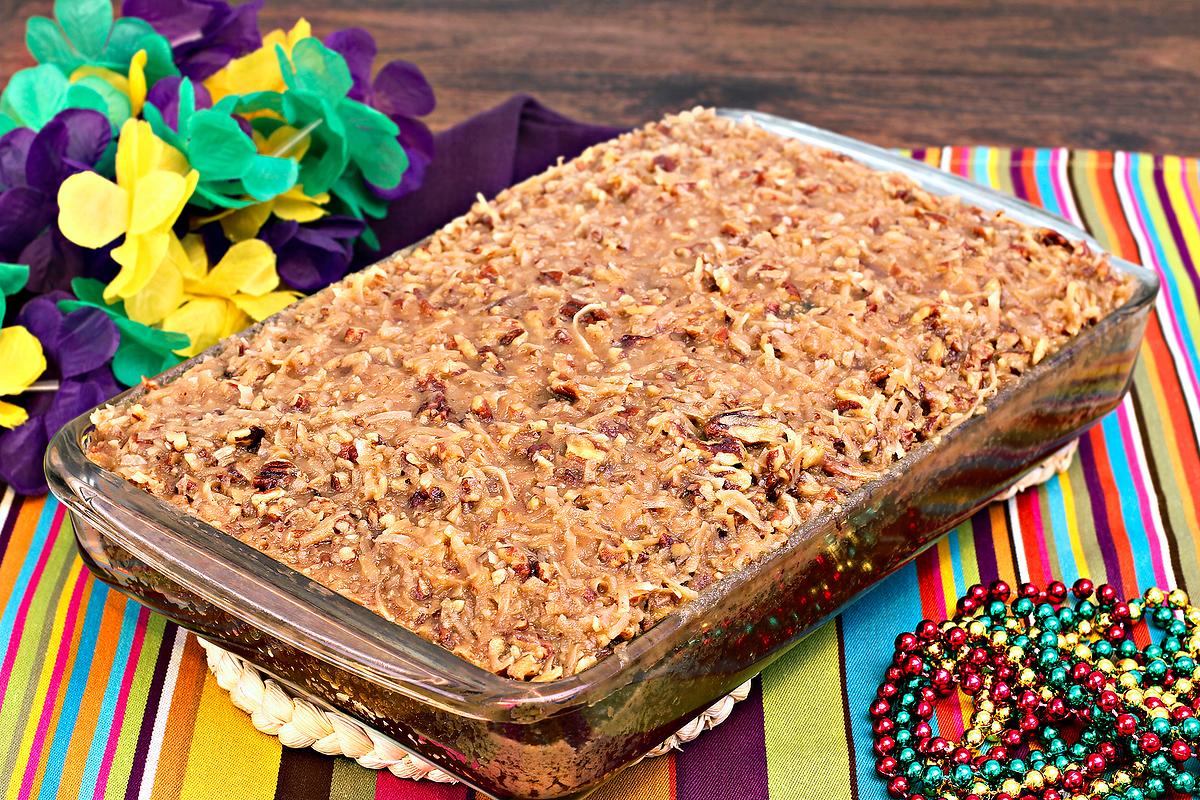
 Cajun cake is a moist (tremendous moist!) cake that was born on the bayou in Cajun country. You can locate this cake all over Louisiana. The Cajun dessert is so moist for the reason that of the coconut pecan topping that soaks into the very hot cake. If you’re a cake lover, you will not be dissatisfied if you make this sweet Cajun cake recipe.

The cake batter is designed with all-intent flour, granulated sugar, baking soda, a pinch of salt, crushed pineapple with its juice and eggs. The batter bakes in the oven for about 30 minutes. When the cake bakes, prepare dinner the coconut topping on the stovetop by stirring together brown or granulated sugar (brown sugar gives it a deeper depth of flavor), evaporated milk, butter, pecans and coconut. Holes are poked into the scorching cake so the topping can soak deep down into the cake. Delish!

You could stir in some floor cinnamon or vanilla extract into the cake batter and/or coconut topping. Whilst we like a superior king cake, this is a exciting and sweet different for your Mardi Gras celebration. Provide the uncomplicated Cajun cake heat, at home temperature or chilly from the refrigerator.

 Delicacies: American 
Prep Time: 10 minutes 
Prepare dinner Time: 35 minutes 
Full Time: 45 minutes 
Servings: Can make 1 cake

 Components

Cake


3 cups all-intent flour

1 1/2 cups granulated sugar

2 teaspoons baking soda

big pinch of salt

1 can (20 ounces) crushed pineapple (do not drain)

2 eggs

Topping


3/4 cup brown sugar or granulated sugar

2/3 cup evaporated milk

1/2 cup (1 stick) butter

1 cup chopped pecans

1 1/2 cups flaked coconut

 Here is how to make it:


Whisk with each other the flour, sugar, baking soda and salt in a mixing bowl. Stir in the undrained pineapple and eggs. Combine until eventually just mixed. Pour the batter into a greased and floured 13×9-inch baking pan. Bake in a preheated 350-degree F oven for about 30 minutes.

Although the cake is baking, mix the sugar, evaporated milk and butter in a saucepot. Carry to a boil and cook dinner, stirring consistently, for 2 minutes. Stir in the pecans and coconut.

Take away the baked cake from the oven and promptly poke holes all more than it with a wooden skewer, then pour the coconut topping in excess of the leading. Unfold to include the cake totally and allow it soak in.

 Notice: 30Seconds is a participant in the Amazon affiliate promotion application and this article incorporates affiliate backlinks, which signifies we may receive a fee or charges if you make a order via individuals one-way links.

 Recipe cooking occasions and servings are approximate. Will need to change cooking and baking measurements? Right here are some kitchen conversion charts. This is how to post your recipes to 30Seconds.

 Choose 30 seconds and be part of the 30Seconds local community, and abide by us on Facebook to get recipes in your newsfeed day-to-day.

 Similar Items on Amazon We Consider You Could Like:
302nd Cellular, Inc. is a participant in the Amazon Providers LLC Associates System, an affiliate advertising program intended to deliver a usually means for us to generate costs by linking to Amazon.com and affiliated internet sites.
This week we will continue on our journey talking about healthy meals. The recipes I have presented last week and today will fit two categories, lower in calories and the use of healthy ingredients in their preparation. My intentions in sharing these recipes are for the busy home cooks who may not have time to spend all day in the kitchen.
I will continue this year to promote both easy recipes and ingredients that will help the cook to reach an enjoyable, delicious meal for whoever may share the family table.
I love salmon and there are a multitude of ways to prepare it but this recipe is one you may enjoy preparing, quick & easy. Next, I love vegetables prepared in many ways, and you may enjoy incorporating them this way with pork. Lastly, I love an egg dish but when combined with veggies this recipe is a winner for dinner or brunch.
I try to stay in sync to what my body needs to eat. Junk foods are easy to consume but for the long haul these foods are not nutritious for body health.
Author Steve Maraboli said this: “By choosing healthy over skinny you are choosing self-love over self-judgment.”
And with this I could not agree more!
Jacqueline Iannazzo-Corser is a contributing writer to The Monroe News, writing about food and recipes. She is a chef, co-owner of Public House, culinary specialist at the Opportunity Center at the Arthur Lesow Community Center, and an adjunct professor of culinary arts at Monroe County Community College. She can be reached at dunbar221@yahoo.com.
Pan-fried Salmon with String Beans
4 filets
Ingredients:
2 tbsp. plus 2 tsp. olive oil, divided
1 1/4 lb. skinless salmon fillet, cut into 4 portions
1 lb. green beans, trimmed (fresh if possible or fresh to frozen)
Salt and pepper to taste
4 cloves of garlic, Minced or thinly sliced
1 small red chile thinly sliced (optional)
2 tbsp. of capers drained, patted dry
Lemon wedges for plate presentation and extra flavor
Directions:
Heat 2 teaspoons oil in a large skillet on medium-high.
Season salmon with ½ teaspoon using the salt and pepper.
Place salmon in skillet, flesh side down and reduce heat to low-medium.
Cook salmon until golden brown and just opaque throughout, 5 to 6 minutes per side.
Heat remaining 2 tablespoons oil in a large, cast-iron skillet on medium-high. Add green beans and cook until browned, approximately 2½ minutes.
Turn with tongs until browned – cooked al dente approximately 3 to 4 minutes.
Remove from heat and toss with ¼ teaspoon salt (if desired) then add the garlic, chile and capers.
Return to low heat and cook tossing until garlic is golden brown approximately 1 to 2 minutes.
Serve with lemon wedges if desired.
Note: Salmon selections vary in local grocery stores. I enjoy Atlantic and Pacific salmon and I feel the price is acceptable. Here is something you may not know from PrideofBristolBay.com:
“There are many different types of salmon — specifically, five types of Pacific salmon and two types of Atlantic salmon. These days, Atlantic salmon is typically farmed, while Pacific salmon species are primarily wild-caught. Wild-caught Pacific salmon are typically considered to be the healthiest salmon”.
Vegetable Glazed Pork Tenderloin
Serves 4
Ingredients:
1 red onion thinly sliced
1 lb. cubed butternut squash (fresh or fresh to frozen)
2 tbsp. olive oil, divided
Salt and pepper to taste
4 to 6-oz portions of pork tenderloin
1/4 cup plus 1 tbsp. balsamic vinegar (divided)
2 tbsp. honey
4 sprigs of fresh thyme or bottled
4 cups of baby arugula
Directions:
Heat oven to 425 degrees.
On a baking sheet with parchment paper toss onions and butternut squash with 1 tablespoon olive oil and 1/2 teaspoon of salt and pepper.
Roast until tender approximately 15 to 18 minutes.
Pat the pork tenderloin dry and season with 1/2 teaspoon each salt and pepper.
Heat a large skillet on medium heat.
Add remaining tablespoon of olive oil and brown pork on all sides.
Remove from skillet and set aside on tray with lined parchment paper.
Let skillet cool slightly then add 1/4 cup balsamic vinegar, honey and thyme to skillet and simmer 1 minute.
Return pork to skillet and turn to coat in sauce by basting.
Transfer skillet to oven and roast until temperature registers 150 degrees for approximately 9 to 10 minutes.
When vegetables are done remove them from the oven and toss with arugula and remaining 1 tablespoon balsamic vinegar.
Remove pork from oven and transfer to cutting board; transfer glaze to a bowl.
Let pork rest 3 to 5 minutes, then slice and serve with vegetables and drizzle with glaze.
Note: You can purchase from your local grocer whole pork tenderloins with a selection of different weights. The recipe calls for 4 to 6 oz. portions but a whole will work as well. If you choose to cook a larger portion adjust ingredients accordingly.
Egg and Veggie Bake
Serves 4
Ingredients:
2 tbsp. olive oil
1 yellow onion chopped fine
1 clove garlic chopped fine
1 tsp. ground cumin
Salt & pepper to taste
1 lb. of medium tomatoes cut in half
8 large eggs
1/4 cup of baby spinach or mixed greens chopped fine
1 Baguette
Butter (optional)
Directions:
Heat oven to 400 degrees.
Heat oil in large, oven-safe skillet on low-medium.
Add in the onion and sauté until golden brown and tender approximately 7 to 8 minutes.
Stir in garlic, cumin and salt & pepper, cook for 1 minute.
Stir in tomatoes.
Transfer contents to oven and roast for 10 minutes.
Remove pan from oven and stir contents.
Create 8 small wells in the vegetable mixture and carefully crack 1 egg into each.
Bake eggs until done approximately 7 to 8 minutes the yolks will be slightly runny.
Top with spinach.
The Baguette:
Preheat the oven to 350 degrees.
Slice the baguette into thin slices diagonally.
Place the slices on a baking sheet with parchment paper and line in a single layer.
Bake for about 10 minutes, until golden and crispy.
No matter whether you are ingesting warm toddies by the fireplace or ordering an old-fashioned at a cozy bar although catching up with good friends in city for the holidays, no alcoholic beverages says winter pretty like bourbon. This booze will support you feel all heat and cozy on the inside of as you sip and participate in your beloved holiday getaway things to do.
If you might be a admirer of bourbon in the wintertime, but get drained of drinking old fashioneds and Manhattans, you may perhaps want to attempt a entertaining new bourbon cocktail for your future gathering. In this article are 9 bourbon cocktails to check out this winter season, and for far more recipe inspiration, look at out 21 Christmas Cookie Recipes So Superior, You Will not likely Want To Share With Santa.
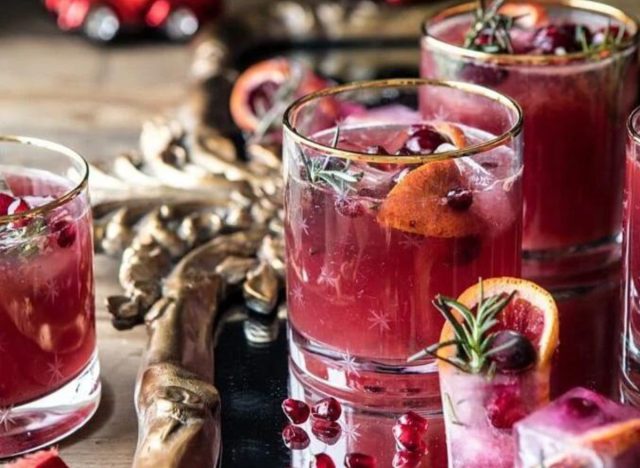
This holiday break-influenced punch features some of your preferred winter flavors of pomegranate and orange, put together with bourbon and Prosecco. This bourbon cocktail is good for impressing a party, and you can even insert a sprig of rosemary for a extravagant touch.
A incredibly hot toddy is a basic wintertime beverage for when you want to warm up, and it can be also a preferred chilly remedy for those people who want a tiny kick of bourbon to support them experience improved. This recipe resembles the common hot toddy, but functions cinnamon and red chili pepper for more spice.
This recipe is related to a basic outdated fashioned, but with a seasonal twist. You may appreciate cozy flavors of cinnamon, cardamom, rosemary, and honey, together with your beloved bourbon of choice.
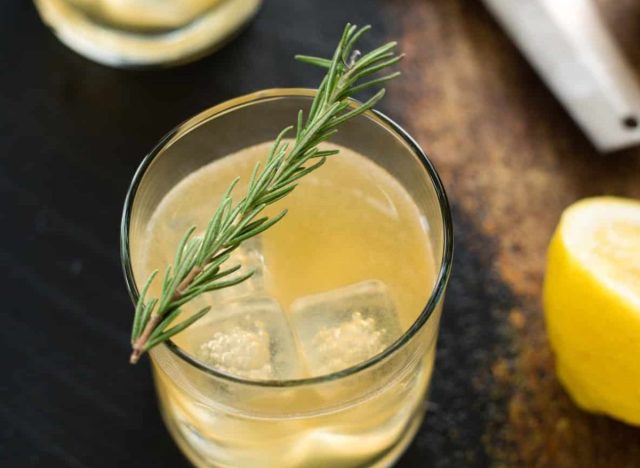
This bourbon cocktail is a single of the lighter, a lot more refreshing possibilities on the listing, for those people who you should not want anything super weighty and boozy. It truly is like your normal bitter, but with some rosemary-infused simple syrup to stability out the tart citrus flavors. This a single is sure to impress those people who enjoy lemon and bourbon alongside one another.
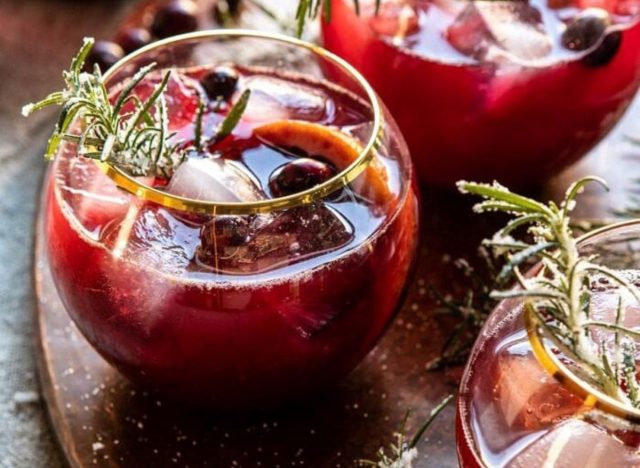
Yet another acquire on a whisky sour, but this time with the seasonal taste of cranberry and orange. This one also goes wonderful with a sprig of candied rosemary on best, which is a go that will make you seem like a qualified bartender with extremely small energy at all.
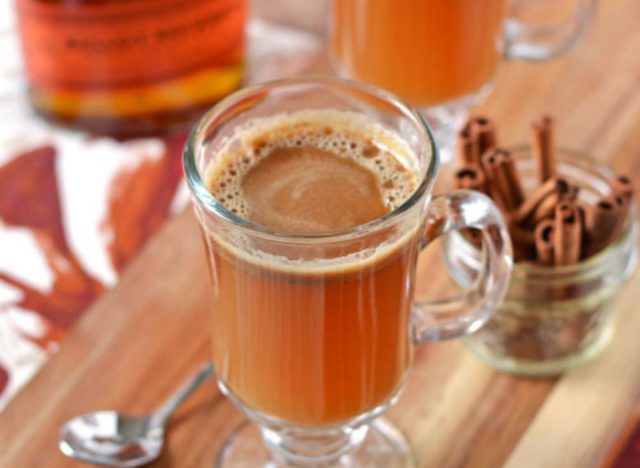
Sizzling buttered bourbon is a mouth watering cozy consume that will warm you proper up from the inside out. It combines apple cider, butter, a range of spices, honey, and bourbon, and this consume can be stored in the fridge and reheated once more anytime you’d like.
This bourbon cocktail is an additional rendition of an previous fashioned, but this time with homemade cinnamon uncomplicated syrup, orange juice, and brûléed oranges. Creating brûléed oranges is easy and calls for incredibly very little exertion, but is a element that will make this consume exceptional.
This bourbon cocktail recipe is basic and requires only 4 components, so it’s a excellent option for starter at-dwelling bartenders. Just get your bourbon of choice, maple syrup, lemon, and floor cinnamon, and you’ve acquired by yourself a cozy winter cocktail.6254a4d1642c605c54bf1cab17d50f1e
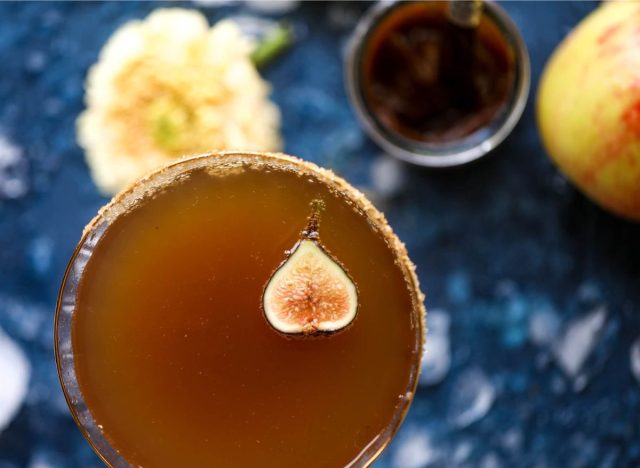
Sure, this is technically an autumn-themed cocktail, but the recipe is much too cozy and scrumptious to not incorporate on your checklist of wintertime drinks. The use of flavors like apple, cinnamon, orange, fig, and ginger will make for a terrific chilly-weather bourbon cocktail to try on your personal or share with friends.
STACKER (WSYR-TV) — Jewish cuisine has long been influential in the U.S. and global food culture. Diaspora brought traditional Jewish foods across the world.
Over centuries and continents, Jewish foods became part of the places Jews have migrated, just as diverse and rich regional foodways have shaped the evolution and reinterpretation of Jewish food.
Because Ashkenazi Jews (of the Eastern European diaspora) make up most of the Jewish population in the U.S., many familiar Jewish favorites among American Jews and non-Jews hail from Russia, Poland, Germany, and the rest of Central and Eastern Europe.
Less ubiquitous but just as delicious is Sephardi cuisine, which encompasses foods of the Spanish diaspora in North Africa, the Middle East, and the Mediterranean.
In honor of Hanukkah beginning Sunday, December 18, and for eating experiences that can be enjoyed year-round, Stacker compiled a list of 14 global Jewish holiday recipes.
Recipes and their histories were sourced from Allrecipes.com, news reports, Jewish historical sites, and Jewish recipe developers.
Read on to find classic recipes or to discover a new dish or two.
1. Latkes
Credit: Getty
The iconic Hanukkah food is beloved by Jews and non-Jews alike (as most forms of fried potatoes are). But latkes were not always made using potatoes.
After the expulsion of Jews from Sicily in the late 1400s, their traditional fried ricotta pancakes spread to northern Italy. It was only in Eastern Europe in the mid-1800s, after a surplus crop of potatoes, that potato latkes became the fritter of choice for Ashkenazi Jews.
Whether grating the potatoes and onions by hand or using a food processor to cut down on prep time, these latkes fit the bill when topped with applesauce, sour cream, or lox.
A staple at the Passover table and your local diner alike, matzo ball soup is easy to make using matzo ball mix and a few pantry ingredients.
The soup is greatly improved by making a comforting, from-scratch chicken soup or your favorite hearty vegetable stock.
Originally made from the leftover crumbs of matzo, Central and Eastern European Jews made “knoedel.” In the 1930s, Manischewitz began selling matzo ball mix in the U.S., reportedly under the name “Alsatian feathery balls.”
There are few things more enjoyable than a warm, freshly baked challah.
Usually intricately braided with a shiny browned outside, challah is a soft and fluffy egg-based bread, mildly sweet from honey or sugar, that is typically served on Shabbat or with other holiday meals.
Try this challah smeared with butter and drizzled with honey, made into french toast, or used as a sponge for brisket.
Hamantaschen are triangular cookies traditionally made on Purim, and are usually filled with preserves, poppyseeds, prunes or dates, or even chocolate spread.
The shape of the cookie is, like many Jewish foods, symbolic in nature. Most people believe that the triangle mimics the shape of the hat worn by Haman, the villain of the Purim story.
They can be made dairy-free, although some prefer swapping out the vegetable oil with butter for a richer dough.
The cookies are formed by cutting out circles of dough, placing a dollop of your preferred filling in the center, and folding over three sides to form the quintessential three-cornered shape.
Chraime is a Sephardic dish of fish stewed in a spicy tomato sauce made by Jews in North Africa
and the Middle East for Passover, Shabbat, and other holidays.
The name “chraime” comes from the Arabic word for “hot,” though spice levels can be adjusted according to personal taste and availability of chilis.
This recipe blends paprika and cayenne with olive oil and tomatoes, and is stewed for an hour at low heat, making it a relatively easy centerpiece dish without a lot of prep or active cook time.
A singularly comforting Passover and Rosh Hashanah dish, brisket has been an important staple in festive Jewish meals for generations.
In Eastern Europe, brisket was considered by non-Jews to be a less desirable cut of meat, due to its toughness if not cooked over a long period of time.
However, the kosher cut’s lengthy preparation time was not a deterrent for Jews, who could begin cooking the brisket 24 to 48 hours prior to Shabbat or other holidays.
This version of brisket is braised in red wine, herbs, and beef stock for a deep, full-bodied flavor.
Noodle kugel, otherwise known as lokshen kugel, is a light, sweet, and dairy-filled egg noodle
casserole often served on Shabbat or other holidays.
Jewish food historian and recipe developer Joan Nathan writes in “The Jewish Holiday Kitchen” that lokshen kugel originated in Eastern Europe, where it was considered the “official Sabbath dessert.”
It was often baked at the same time as the cholent, or Shabbat stew, which would result in a moister kugel.
This noodle kugel recipe combines sugar with four types of dairies to form a basic foundational kugel; however, it can be dressed up with the addition of raisins, spices, pineapple, or any other dried fruit or nuts.
Fried foods reign supreme on Hanukkah, paying homage to the miracle of the small amount of oil that lit the ancient Temple in Jerusalem for eight days and nights.
Sufganiyot, or round jelly doughnuts, emerged in 1400s Germany, and then spread to Poland and to the rest of the world, where they were designated an official food of Hanukkah in the 1920s.
Making sufganiyot at home is a bit of a project, in part because of the yeasted dough, which rises overnight in the refrigerator, and partially because of the deep-frying.
For the ambitious or committed doughnut lover, however, fresh sufganiyot filled with preserves or sweet cheese cannot be beat.
Like most of the foods on the Passover seder table, charoset is highly symbolic.
Credit: Getty
The chutney-like mixture is usually comprised of fruits, nuts, spices, wine, and honey, but varies regionally.
Ashkenazi Jews in the U.S. typically make an apple and walnut-based charoset, while Sephardi charoset recipes vary greatly, utilizing different combinations of dates, figs, raisins, pine nuts, citrus, and chestnut paste, depending on what is available geographically.
While interpretations of the meaning of charoset vary, the condiment is generally thought to represent the mortar the Jews used to build the pharaohs’ buildings in ancient Egypt.
Stuffed cabbage or vine leaves is a food that is widely dispersed across the Jewish diaspora, morphing and taking on regional and cultural variation over time.
The cabbage rolls are often served on Sukkot, where stuffed foods symbolize the bounty of the autumnal harvest, and on Shavuot, the holiday which celebrates the giving of the Torah—two cabbage rolls next to each other are thought to resemble Torah scrolls.
This Sephardi-style stuffed cabbage recipe includes lamb, cumin, cinnamon, almonds, and currants, and is topped with crumbled feta.
This iconic purple soup gets its vivid color from beets, and can be enjoyed either hot or chilled.
Though borscht is a staple dish across Russia and Poland, it is thought to have originated in Ukraine.
Borscht is not always served as a holiday dish, but often accompanies Shabbat meals, and on Shavuot, borscht is frequently garnished with a dollop of sour cream, since dairy is symbolic of the purity of the Torah.
This easy, Russian-style borscht is vegetarian and very hearty, with beets, potatoes, and red cabbage.
Sometimes known as the “bread of affliction,” matzah is the crunchy, unleavened foundation of the Passover table.
Matzah serves as a reminder that as the Jews fled slavery in ancient Egypt, pursued by Pharaoh’s army, they did not have time to let their bread rise, and instead ate unleavened bread.
Although the process of making matzo at home seems daunting, this recipe provides a simple guide which comes together in under 30 minutes and only requires flour, water, and olive oil.
Keftes de prasa, or fried leek patties, are a Sephardic Hanukkah tradition among Jews in Turkey,
Greece, Southern Europe, and the Middle East.
Leeks have historically played a large part in Sephardic dishes, and spread from their native eastern Mediterranean across Eurasia with the Sephardic diaspora.
Much like Ashkenazi latkes, keftes de prasa are Hanukkah favorites because they’re fried in oil.
Some recipes call for potato, while others, like this one, simply require leeks as the base.
Honey cake is a dense, sweet, and spiced cake, typically baked on Rosh Hashanah, or the Jewish new year.
Honey is an essential component of any Rosh Hashanah celebration, as it represents hope for sweetness in the coming year.
The preparation of honey cake is not complicated, but the ingredients in this recipe, such as cloves, nutmeg, orange juice, coffee and (optional) whiskey, impart a deeply complex palate which offsets the sweetness of the honey.
The cake is best enjoyed with a cup of tea or coffee and poached autumnal fruit like apples or pears.