By Phuong Hoang, senior majoring in Hospitality Management at FIU Chaplin School of Hospitality & Tourism Management, specializing in marketing
Born and raised in Vietnam, I have always been exposed to herbs and spices from my mother’s kitchen whether it be at home or through her work as a recipe and menu developer. As much as I am grateful to have a family engrossed in the restaurant industry, I have also dreamed of learning about Western foods and culture, which are considered luxuries back home. So, four years ago, when I heard about the chance to volunteer and possibly work with celebrity chefs and restaurateurs at theFood Network South Beach Wine & Food Festival presented by Capital One (SOBEWFF®), I became a volunteer.
This is my fourth year volunteering and this year the feeling is just as thrilling as when I picked my very first shifts. The whole experience is like going to class in a slightly different setting, learning from potential employers and applying skill sets when handling realistic situations.
As an international student, there are many employment restrictions when it comes to seeking work experience. But at SOBEWFF®, any student can work while earning scholarships. This year is the 22nd anniversary of the Festival. The motto of the Festival is “EAT. DRINK. EDUCATE.” I was able to do that with a hands-on learning experience by taking on various roles that have given me a great head start to test out different aspects of hospitality. For example, working in registration helped me understand the front-facing side of customer service as I greeted and checked in guests. As an inventory clerk, I got a back-of-house perspective from the loading docks.
My story is only one among many other passionate future leaders who are currently pursuing their degree at FIU. Student volunteers come from every major, including engineering, psychology, architecture and even disaster management. In total, more than 1,300 students work about 4,300 shifts at the Festival.
My friend and fellow hospitality student Natalie Garcia is graduating with her bachelor’s in the fall. Natalie has had multiple experiences working with SOBEWFF®, helping out at major iconic events such as the Burger Bash and the Grand Tasting Village. This year, she’s a volunteer lead at Wine Spectator’s Best of the Best taking place at the famous Fontainebleau Miami Beach.
“I have been able to enhance many applicable skills such as teamwork, communication, adaptability, leadership and many more,” Garcia said. “I’ve volunteered in so many different positions because I wanted to try something different every time and expand my knowledge within each role. The most surprising thing I’d say is the number of connections one can make and the amazing memories.”
Nicolas Calvo Lozano is an international student from Colombia pursuing a master of science in hospitality management with a specialization in hospitality real estate development. Lozano has also undertaken different roles including event support, registration, logistics lead and, now, a volunteer recruitment coordinator.
“In the people industry, having the opportunity to be part of SOBEWFF® helps me to expand my creativity, apply my leadership skills, and improve my problem-solving skills. I am a huge fan of all types of events and SOBEWFF® is a unique experience that I couldn’t let pass. How amazing it is to support others and lead people toward a shared goal!” Calvo said.
According to Lozano, his SOBEWFF® experience has helped shape his approach to the customer service industry. From welcoming the first guest on-site, to maintaining a perfect workflow backstage, he says it’s all worth it thanks to the excitement and feeling of success when overcoming challenges on the spot. In addition, he says he’s become great at multitasking, negotiation, and leadership since they’re part of a typical SOBEWFF® day, all while building relationships with industry professionals.
As for me, this is my last Festival. It’s bittersweet, but I have learned a lot and matured over the years with each experience. My biggest advice to other students considering whether or not to volunteer: Just do it. Even if you’re not in hospitality, go ahead and take the opportunity to be a part of it, even if it’s one or two shifts. The experience is worthwhile.
But for now, I’ll cherish my last SOBEWFF® and one day plan to come back as a guest with my mom.
Students still have a chance to be part of the SOBEWFF® volunteer program, by booking an online interview appointment at sobewff.setmore.com
International students Phuong Hoang (left) and Nga Chung BS ’22 volunteer and have fun at the Festival.
I am extremely enamoured by fruit tarts. They always feel celebratory with their glistening tops and flaky bottoms. This one is a perfect combination of almonds, in the way of frangipane, and wonderfully perfumed plums. It is a great dessert to make ahead of time as it will sit happily on the kitchen bench at room temperature.
6 plums, halved and stones removed, sliced 1 egg, for egg wash Demerara sugar, for sprinkling
For the sweet pastry 400g plain flour, plus extra for dusting A pinch of sea salt 2 tbsp caster sugar 250g cold unsalted butter, cubed 1 tbsp white vinegar About 100ml iced water
For the frangipane 75g unsalted butter, softened 75g caster sugar 1 tsp vanilla bean paste or extract 75g almond meal 1 egg 1 tbsp plain flour, sifted
To make the sweet pastry, mix the flour, salt and sugar together in a large bowl. Rub the butter into the flour using your fingertips or a pastry cutter until the mixture is pebbly. You want to rub the butter into flatter pieces rather than into something that resembles breadcrumbs. Drizzle in the vinegar and enough iced water to just bring the dough together. It will still be shaggy, but should hold together when pressed and not be dry or floury. Flatten into a disc, wrap in plastic wrap and refrigerate for at least one hour.
Remove the pastry from the fridge and let it sit at room temperature for 10 minutes to make it easier to roll. Line a 30cm round baking tray with baking paper.
Roll the dough out on a lightly floured work surface into a large circle about 1.5mm thick, massaging the edges as you roll to prevent it from cracking too much. Drape the pastry over the prepared tray and keep refrigerated until needed.
To make the frangipane, place the butter, sugar and vanilla in the bowl of a stand mixer fitted with the paddle attachment. Beat on high speed for about four minutes, until creamy and pale, then beat through the almond meal, egg and flour until combined.
To make the tart, spread the frangipane onto the base of the pastry, leaving a 1.5cm border. Arrange the plums on top of the frangipane filling, then fold the pastry edge over itself to create a ridged edge.
Whisk the egg with 1 teaspoon of water, then brush the egg wash over the pastry edge and scatter generously with demerara sugar. Refrigerate the tart for 30 minutes.
Preheat the oven to 190C.
Bake the tart for 40 minutes or until the pastry is golden. Allow to cool before serving.
Panna cotta with roasted nectarines and blueberries
Panna cotta translates to “cooked cream” and it is one of my favourite Italian desserts. Luckily, it also happens to be one of the simplest. I love it just set – panna cotta should have a good wobble and sit on the plate droopily rather than incredibly stiff. Mine is lightly perfumed with bay and lemon and heavily scented with vanilla. Served with some lightly poached or roasted fruits – nectarines or apricots in summer, rhubarb in spring, and citrus in winter – panna cotta is such an elegant dessert, and an absolute joy to make.
The perfect panna cotta ‘should have a good wobble and sit on the plate droopily’, says Busuttil Nishimura. Photograph: Armelle Habib
Serves 4
500ml pure cream 1 vanilla pod, split and seeds scraped 3 strips lemon peel 1 fresh bay leaf 80g caster sugar 2 titanium-strength gelatine leaves 200g creme fraiche Ice cubes 125g blueberries Boiling water
For the roasted nectarines 5 nectarines, halved and stones removed, cut into wedges 2 tbsp raw sugar
Place the cream in a saucepan with the vanilla seeds and pod, lemon peel and bay leaf. Bring to a simmer over medium heat and cook for two minutes or until slightly thickened – don’t let it boil. Add the sugar and whisk to dissolve, cooking the cream for a further one minute. Remove from the heat.
Meanwhile, soak the gelatine leaves in a bowl of cold water until softened. Squeeze the excess water from the gelatine and whisk it into the cream mixture. Whisk in the creme fraiche, then strain the mixture through a fine sieve into a bowl. Reserve the vanilla pod, bay leaf and lemon peel.
Sit the bowl in a larger bowl filled with ice cubes and whisk the mixture for eight to 10 minutes, until cool. Pour the mixture into a large jug and then divide among four small bowls or ramekins. Chill in the fridge for five hours or until just set. Once the panna cotta has set, cover each bowl or ramekin with plastic or beeswax wrap and return to the fridge.
While the panna cotta is setting, prepare the roasted nectarines. Preheat the oven to 180C. Place the nectarines in a deep baking tray so they are nice and snug and scatter over the sugar. Rinse the vanilla pod, bay leaf and lemon peel that you used to flavour the cream. Add these to the nectarines along with 125 ml of water. Roast in the oven for 30 minutes or until the fruit is tender.
Transfer the nectarines to a large bowl and add the blueberries. Stir to combine and allow to completely cool. You can store the fruit in a container in the fridge until ready to serve.
Dip each panna cotta bowl or ramekin into a bowl filled with boiling water for 20 seconds, then invert onto plates. Serve with the roasted nectarines and blueberries.
Peach custard tart
There is something quite nostalgic, almost child-like, about the combination of peaches and custard. Here I’ve taken that combination and turned it into a rather large peach tart, spiked with lemon and nutmeg, that’s absolutely made for sharing. The pastry and custard can be made well in advance and kept in the fridge until ready to bake.
‘Absolutely made for sharing’: Busuttil Nishimura’s peach custard tart. Photograph: Armelle Habib
Serves 10-12
500g plain flour, plus extra for dusting A pinch of sea salt 1 tbsp caster sugar 300g cold unsalted butter, cubed 1 tbsp white vinegar About 200ml iced water 1 egg, for egg wash 2 tbsp demerara sugar
For the custard 2 egg yolks 100g caster sugar 20g plain flour 20g cornflour 500ml full cream milk 1 vanilla pod, split and seeds scraped
For the peaches 1.2kg peaches (about 8) Iced water A pinch of freshly grated nutmeg 3 tbsp caster sugar Juice of ½ lemon 1 vanilla pod, split and seeds scraped
Mix the flour, salt and sugar together in a large bowl. Rub the butter into the flour using your fingertips or a pastry cutter until the mixture is pebbly. You want to rub the butter into flatter pieces rather than into something that resembles breadcrumbs. Sprinkle the vinegar over the top, then pour over enough iced water to just bring the dough together. It will still be shaggy, but should hold together when pressed and not be dry or floury. Flatten into a disc, wrap in plastic wrap and chill in the fridge for at least one hour.
A slice of nostalgia in the making. Photograph: Armelle Habib
To make the custard, whisk the egg yolks and sugar in a large bowl, until pale and thick. Sift in the flours, mix well and set aside. Warm the milk and the vanilla seeds and pod in a saucepan over low heat (until about 38C on an instant-read thermometer). Strain the milk and add to the egg mixture, just a few tablespoons at a time to begin with, whisking between each addition. After a quarter of the milk has been whisked in, whisk in all of the remaining milk at once. Pour the mixture into a clean saucepan and set over medium heat. Bring to a simmer, whisking constantly as it can scorch easily. Reduce the heat to low and cook, stirring constantly, for two to three minutes, until thick. Transfer to a bowl or container and cover the surface of the custard with plastic wrap. Make sure it is directly touching the custard, to stop a skin forming, then refrigerate until ready to use.
To prepare the peaches, with a knife, cut a shallow cross in the base of each peach. Blanch the peaches in a saucepan of boiling water for 30 seconds to one minute, then drain and refresh in iced water. The skins should now slip away. Cut the peaches in half, remove the stones and slice into wedges. Place in a large bowl with the nutmeg, sugar, lemon juice and vanilla seeds. Toss to combine and set aside.
Preheat the oven to 190C. Line a 40 cm × 25 cm baking tray with baking paper.
Remove the dough from the fridge and let it sit at room temperature for 10 minutes to make it easier to roll. On a lightly floured work surface, roll the dough out into a large rectangle, about 45cm × 30cm, massaging the edges as you roll to prevent it from cracking too much. Drape the pastry over the prepared tray.
Spread the custard over the base of the pastry, leaving a 4cm border. Arrange the peach wedges on top of the custard, then fold the pastry border in towards the tart to create a raised edge. Whisk the egg with one teaspoon of water and brush the pastry edges with the egg wash. Scatter the edges with the demerara sugar and bake for 45to 50 minutes, until the pastry is golden. Serve at room temperature.
In a bowl, combine flour and confectioners’ sugar. Cut in butter until crumbly. Stir in pecans. Press into ungreased 12-inch pizza pan. Bake at 350 F for 12-14 minutes or until crust is set and edges are lightly browned. Meanwhile, in a mixing bowl, beat cream cheese, egg and sugar until smooth. Spread over crust. Bake 8-10 minutes longer or until set. Cool to room temperature.
1-3/4 cups frozen mixed berries, thawed
1/2 cup sugar
2 tablespoons cornstarch
1/4 cup water
2-1/2 cups fresh strawberries, sliced
2 cups fresh blackberries
2 cups fresh raspberries
1 cup fresh blueberries
For topping, process mixed berries and sugar in a blender or food processor until blended. In a saucepan, combine cornstarch and water until smooth. Add mixed berry mixture. Bring to a boil; cook and stir for 2 minutes or until thickened. Set saucepan in ice water for 15 minutes, stirring several times.
Spread berry mixture over cream cheese layer. Arrange fresh fruit on top. Refrigerate for at least 2 hours before slicing.
Recipe by Emma Martin, Shippensburg, Pennsylvania
Tangy Fruit Punch
1 (46-ounce) can pineapple juice
1 (12-ounce) can frozen orange juice concentrate, thawed
In a punch bowl or large container, combine pineapple juice, orange juice concentrate, lemonade concentrate, 1/2 cup water and sugar. Place bananas, strawberries and remaining water in a blender; cover and process until smooth. Stir into juice mixture. Cover and refrigerate. Just before serving, stir in ginger ale.
Recipe by Emma Martin, Shippensburg, Pennsylvania
Sweetheart Scones
4 cups flour
1/2 cup sugar
1 tablespoon baking powder
1/2 teaspoon baking soda
1/2 teaspoon salt
2/3 cup cold butter
1-1/2 cups buttermilk
Red-colored sugar, optional
Cherry, raspberry or strawberry jam
In a large bowl, combine dry ingredients; cut in butter until crumbly. Stir in buttermilk just until moistened. Turn onto a lightly floured surface; knead 10 to 12 times. Roll to 2/3-inch thickness. Cut with a 3-1/2-inch heart-shaped cookie cutter. Place on a lightly greased baking sheet. Sprinkle with sugar if desired. Bake at 425 F for 15-18 minutes or until lightly browned. Remove to a wire rack. Split scones in half. Spread bottom halves with jam; replace tops. Serve warm.
Recipe by Emma Martin, Shippensburg, Pennsylvania
Sour Cream Cake
Chelsea Empet, Pennsylvania’s Susquehanna County dairy ambassador, holds a sour cream cake topped with fresh strawberries for Valentine’s Day.
Submitted
1 cup sugar
1 cup sour cream
1 cup butter
3 eggs
2-1/2 cups flour
1 teaspoon baking soda
1 teaspoon baking powder
1/4 teaspoon salt
For filling, use fruit jam/jelly, icing or fresh fruit (strawberries, blueberries or raspberries).
Beat sugar, butter and sour cream together until light and fluffy. Add eggs. Add remaining dry ingredients and mix thoroughly. Divide batter in half and place in 2 greased 8-inch round or heart-shaped pans. Bake for 30 to 35 minutes at 350 F.
Let cake cool. To assemble, place one cake top side down on a plate. Top cake with a layer of vanilla frosting or jam. If desired, add fresh fruit. Place remaining layer on the cake with the top side up. Spread icing on entire cake. Top with fresh fruit if desired.
It’s hard to believe that it’s already February, but here we are! On Feb. 14, it’s Valentine’s Day — a day to spend time with our loved ones.
While many people think of gifting chocolates, I like to make this two-layer sour cream cake. It’s a recipe passed down from my great-grandma Foster that is a family tradition and is enjoyed by all. The two-layer cake can be filled with icing, your favorite jam or jelly, or fresh fruit. Best of all, this cake includes dairy products, which are packed full of 13 essential nutrients to keep you feeling your best!
Recipe by Chelsea Empet, Susquehanna County Dairy Ambassador
In a bowl, combine milk and pudding mix; mix well. Let stand 2-3 minutes. Add yogurt; mix well. Fold in whipped topping. Refrigerate. Thread fruit onto bamboo skewers; add a mint sprig on the end of each to resemble feathers on an arrow. Serve with dip.
Recipe by Emma Martin, Shippensburg, Pennsylvania
Cherry Cream Pie
1 cup flour
1 cup finely chopped walnuts
1/2 cup butter, softened
1/4 cup packed brown sugar
In a small bowl, combine flour, walnuts, butter and brown sugar. Transfer to 13x9x2-inch baking pan. Bake at 375 F for 15 minutes, stirring once. Set aside 1 cup of crumbs. While warm, press remaining crumbs into a greased 9-inch pie plate, firmly pressing onto bottom and up sides. Chill 30 minutes.
1 (8-ounce) package cream cheese
1 cup confectioners’ sugar
1/4 teaspoon almond extract
1/2 cup heavy whipped cream, whipped
1 (21-ounce) can cherry pie filling
In a small bowl, beat cream cheese, confectioners’ sugar and almond extract until smooth; spread over bottom of crust. Gently fold whipped cream into pie filling. Spread over cream cheese layer. Sprinkle with reserved crumbs. Chill for at least 4 hours before serving.
Recipe by Emma Martin, Shippensburg, Pennsylvania
Cherry Chip Muffins
1-1/2 cups flour
1/2 cup sugar
2 teaspoons baking powder
1/2 teaspoon salt
1 egg
1/2 cup milk
1/4 cup vegetable oil
1 (10-ounce) jar red maraschino cherries
3/4 cup miniature semisweet chocolate chips
1/2 cup chopped pecans
1 cup confectioners’ sugar
Softened cream cheese, optional
In a bowl, combine flour, sugar, baking powder and salt. In another bowl, whisk egg, milk and oil; stir into dry ingredients just until moistened. Drain cherries, reserving 2 tablespoons of juice for glaze (discard remaining juice or save for another use). Chop cherries; fold into batter with chocolate chips and pecans. Spoon batter by tablespoonful into greased or paper-lined heart-shaped or miniature muffin cups. Bake at 375 F for 10-13 minutes or until muffins test done. Cool for 10 minutes; remove from pans to wire racks. Combine confectioners’ sugar and reserved cherry juice to make a thin glaze; drizzle over muffins. Serve with cream cheese if desired.
Recipe by Emma Martin, Shippensburg, Pennsylvania
Sweetheart Fudge Pie
1/2 cup butter
3/4 cup brown sugar
3 large eggs
2 cups semi-sweet chocolate chips
2 teaspoons instant coffee
1/2 cup flour
1 cup nuts
1 unbaked pie crust
Beat butter at medium speed until creamy. Gradually add brown sugar, beating well. Add eggs one at a time, beating after each addition. Melt chocolate chips. Stir into mixture along with coffee. Stir in flour and nuts. Pour mixture into pie crust. Bake at 375 F for 25-28 minutes. Cool completely. Serve with whipped cream of ice cream.
I have made this delicious pie a few times for Valentine’s Day and I decided I’d share it with you.
Recipe by Karen Snyder, Little Falls, New York
Chilled Strawberry Soup
1 cup apple juice
1 cup water, divided
2/3 cup sugar
1/2 teaspoon ground cinnamon
1/8 teaspoon ground cloves
2 cups fresh strawberries
2 cartons (8 ounces each) strawberry yogurt
2 drops red food coloring, optional
Additional strawberry halves, optional
In a saucepan, combine apple juice, 3/4 cup water, sugar, cinnamon and cloves; bring to a boil over medium heat. Remove from heat; cool. Place strawberries and remaining water in a blender or food processor; cover and process it until smooth. Pour into a large bowl.
Add apple juice mixture, yogurt and food coloring if desired. Cover and refrigerate until well chilled. Garnish with additional strawberries if desired.
1 (12-ounce) can reduced-fat evaporated milk, chilled
1 teaspoon vanilla extract
Whole cranberries for garnish
In a saucepan, bring cranberry sauce, cranberry juice and orange peel to a boil; cook and stir until cranberry sauce is melted. Stir in gelatin until dissolved. Refrigerate until mixture is the consistency of egg whites, stirring occasionally.
Place in a mixing bowl with mixer beaters in the freezer. Chill until very cold. Add milk and vanilla to bowl; beat until soft peaks form. Fold into gelatin mixture. Spoon into parfait glasses. Chill 1-2 hours or until set. Garnish if desired.
Recipe by Emma Martin, Shippensburg, Pennsylvania
Strawberry Pear Gelatin
1 (29-ounce) can pears
1 (6-ounce) package strawberry gelatin
1 (8-ounce) package cream cheese, cubed
1 (8-ounce) carton frozen whipped topping, thawed
Mandarin, optional
Drain pears, reserving juice. Chop pears and set aside. Add water to juice to measure 3 cups. Place in a saucepan. Bring to a boil. Transfer to a large bowl. Add gelatin and stir until dissolved. Whisk in cream cheese until smooth. Refrigerate until slightly thickened. Whisk in whipped topping until smooth. Add chopped pears. Transfer to a 13x9x2-inch dish. Cover and refrigerate until firm. Cut into squares. Garnish with mandarin oranges, if desired.
Recipe by Emma Martin, Shippensburg, Pennsylvania
Heart’s Desire Pizza
1 (17.3-ounce) tube large refrigerated biscuits
1 (14-ounce) jar pizza sauce
1-1/2 to 2 cups toppings, including sliced ripe olives, sliced and quartered pepperoni, chopped fresh mushrooms, chopped green and/or sweet peppers
1-1/2 cups shredded Mozzarella cheese
1-1/2 cups shredded Cheddar cheese
Cut eight 6-inch-square pieces of aluminum foil; place on baking sheets. Lightly coat foil with nonstick cooking spray; set aside. On a lightly floured surface, roll each biscuit to a 5-inch square. Cut a 1-inch triangle from center top and place on center bottom, forming a heart. Press edges to seal. Transfer to foil squares. Spoon pizza sauce over dough to with 1/4 inch of edges. Sprinkle with desired toppings and cheeses. Bake at 425 F fo 10-15 minutes or until golden brown.
Layer banana slices and cake cubes in a 13x9x2-inch dish coated with nonstick cooking spray. Place strawberries over cake and press down gently. In a bowl, dissolve gelatin in boiling water; stir in cold water. Pour over strawberries. Refrigerate for 3 hours or until set. Frost with whipped topping.
Cut cookie dough into 1/4-inch slices. On floured surface, roll each slice into a 6-inch rope. Cut half of the ropes in half widthwise. Form into X’s on ungreased baking sheets; seal edges and flatten slightly. Shape remaining ropes into O’s on ungreased baking sheets; seal edges and flatten slightly. Sprinkle with sugar, if desired. Bake at 350 F for 8-10 minutes or until edges are slightly browned. Cool for 3 minutes; remove from pans to wire racks to cool completely.
Recipe by Emma Martin, Shippensburg, Pennsylvania
Success! An email has been sent to with a link to confirm list signup.
Error! There was an error processing your request.
If you have ever tried to re-create a restaurant dish at home, you will almost certainly have been perplexed by the experience. No matter how much care and attention you give to your version, something seems to be missing when you tuck in. What are chefs doing differently? Here, 27 professionals divulge their favourite kitchen trick – the one unexpected riff that keeps them ahead of the pack.
“A little tip for roast potatoes is to put a bit of Marmite in the water when you’re parboiling the potatoes. It gives them a really nice colour and will present you with deep-golden roasties every time.” Simon Shaw, chef patron and creative director at El Gato Negro, Canto and Habas, Manchester
“To thicken curries, soups and stews, add in chopped, boiled sweet potato. It dissolves into the dish, adds sweetness and creates a thick and tasty sauce.” Lisa Marley, chef trainer for ProVeg UK
“For juicy, tender meat, blend fresh celery and add it to your marinades. This helps to tenderise the meat before cooking, giving you the perfect flavour.” Kerth Gumbs, head chef at Fenchurch restaurant, London
Asparagus soaking in iced water before cooking. Photograph: Image Professionals GmbH/Alamy
“When preparing sturdier green vegetables, such as green beans or asparagus, they are ordinarily very dry. I soak them in cold water for at least one hour before cooking in boiling, heavily salted water. Once al dente, I drop them into iced water. The whole process really brings out the colour and ensures a lush, green, crisp vegetable – ideal for adding to salads.” Matt Fletcher, chef de cuisine at Great Central Pub by Matt Fletcher at the Landmark London Hotel
“Here’s how to refresh dying or drying herbs: put ice-cold water and potato trimmings in a cup or glass, then add bunches of coriander, parsley or tarragon that are past their best. They come back to life within 30 minutes of standing in the starchy water.” Michael Carr, executive chef at the Old Vol and the Reindeer, Nottingham
“Rinse scallops in sparkling water instead of still, as the bubbles will remove any hidden grit.” Adebola Adeshina, chef patron at Chubby Castor, Cambridgeshire
“People are always asking me for rice to water ratios. I seldom measure anything so I can’t tell you in cups, but here is a simple trick for measuring the right amount. Stick your index finger perpendicular to the surface of the rice in the pan and add water until it reaches the first joint of your finger. No idea why it works given different sizes of hands and pans, but it does.” Amy Poon, founder of Poon’s, London
Ziplock bags are perfect for keeping dry powdered spices. This one contains turmeric. Photograph: BreakingTheWalls/Getty Images/iStockphoto
“I recommend keeping small quantities of dry powdered spices in jars for immediate use, with the rest stored in ziplock bags, which keep them fresher for longer. That’s how I store my pomegranate powder that I bring back from Punjab.” Nidhi Verma, chef at the Cookaway
“Roasted garlic oil is a fantastic base for all cooking. I roast peeled garlic with oil at about 140C until golden brown, which takes about an hour. Once it has cooled, you can separate the oil from the garlic, make a paste from the garlic and put the oil in a bottle. These will keep in the fridge and add flavour to pretty much anything you are cooking.” Daniel Heffy, chef at Nord, Liverpool
“If you’re cooking burgers on the barbecue or on a grill in your kitchen, push down on the centre of your patty to form a sort of doughnut. This little trick will allow more airflow around the burger, allowing it to cook evenly without the centre swelling up.” Sam Idione, head chef, Roots + Seeds Kitchen Garden, Cirencester Park
“To make your homemade pizza equal to that of Italian pizzerias, try double cooking: first a few minutes in a large frying pan and then in the oven at a very high temperature. This allows the pizza to brown evenly on the surface.” Vittorio Meli, head chef at Zoom East, London
Double cook pizza by giving it a few minutes in a frying plan before putting it in the oven. Photograph: Robert McLean/Alamy
“At the restaurant, we make an emulsion that is perfect for glazing or seasoning blanched vegetables. In a pan, whisk together 20ml of cream with a chicken (or veg) stock cube and bring to a simmer. Add in your vegetables of choice, season with salt, pepper and sugar, and reduce until the veg is glazed. It works perfectly with spinach, cavolo nero and carrots, giving them more of a rich and meaty flavour.” Kevin Dalgleish, chef patron at Amuse, Aberdeen
“When I make chana masala, I create the distinctive colour and flavour by adding a teabag to the curry. Chickpeas tend to dry out when you cook them and a teabag also helps to retain moisture. Just be careful to take it out before serving!” Dipna Anand, chef patron at Dipna at Somerset House, London
“I hate to waste food and I love this little trick to elevate your Chinese or any south-east Asian cuisine: using vegetable skins or ends to flavour your oils. Garlic skin, spring onion ends (washed and dried on a tea towel), clean onion skins and ginger peel work a treat if cooked low and slow (for 30 minutes or so) in a pool of vegetable oil. Then use it to cook stir-fries or anything else. It adds a real depth of flavour, but your guests will have no idea where the deliciousness came from.” Jeremy Pang, chef and founder of School of Wok
“If cooking for two, the easiest thing to do is to buy a steak big enough for both of you, rather than two separate steaks. Sear it in the pan, then put it into a pre-heated oven at 200C (gas mark 6) and immediately turn the oven off. This will cook and rest the bigger cut at the same time, giving you time to pop out for a drink. My timings for each steak are as follows if you live a couple of minutes’ walk from the pub: a generous fillet is time for one pint, a generous sirloin is time for two pints, and a generous côte de boeuf is time for three pints. You will return to a beautifully cooked steak.” Tom De Keyser, head chef at the Hand & Flowers, Marlow
“Toast the rice when making risotto. The key is to add the rice to the pan first, without any oil or butter as this could burn it. You can tell when it’s done when the rice is dry and hot to touch. Doing this ensures the grain is sealed, and doesn’t become mushy as you add the stock.” Manuel Prota, head chef at Jacuzzi, London
“Don’t cook vegetables in plain water. Instead, treat it as a cooking step to increase flavour. Cook any greens in a seaweed broth (use shimaya konbu stock). Always cook carrots in carrot or orange juice where possible, because it really heightens the flavour and brings out the sweetness.” Sam Grainger, owner and chef at Belzan and Madre, Liverpool
Cook vegetables whole, then trim and portion before serving. Photograph: Olha_Afanasieva/Getty Images/iStockphoto
“Try cooking vegetables whole. Roast a whole carrot, barbecue a whole leek, bake a whole beetroot, blanch a whole courgette, simmer whole cabbages. I always do this in the restaurant and at home because you get the maximum flavour out of your ingredient instead of washing the taste and nutrients out into the boiling water and then down the sink. Once cooked, you can then trim and portion.” Kirk Westaway, executive chef at Jaan, Singapore
“There’s an old trick called velveting that works for tenderising cheaper cuts of meat. Mix a teaspoon of baking powder in 250ml water. Pour over your meat (up to about 280g for these measurements) and leave it to marinade for no longer than 15 minutes. Then wash it off and pat dry. This process raises the pH level on the meat’s surface, which will keep it tender and soft when you cook it.” Mike Reid, executive chef at M Restaurants, London and Gaucho, nationwide
“A lot of cake recipes tell you to swap some of the flour for cocoa powder if you want to make a chocolate version, but that makes for a dry cake. I always recommend using cooled hot chocolate as well to keep it moist. Pour two or three tablespoons over each layer and wait until it has soaked in before frosting.”Adeline Vining, baker at Heirloom Cafe, Edlesborough
“I always add a pinch of salt when I create a sorbet. It really helps bring out the flavour of the fruit and enhances acidity.” Jude Sam, head chef at Apothecary East, London
“If you’re making pizza, stretch out your sourdough as normal, then put two or three ice cubes on it before you place it in a pizza oven. The ice melts down to a starchy sauce. Pull it out, add cheese, pop back in and you get this lovely gooey cheesy sauce on the top. It’s quite a traditional technique – the end result is a little like cacio e pepe (cheese and pepper pasta) – but not a lot of people have heard of it and it’s very rarely done.” Paul Foster, chef patron at Salt, Stratford-upon-Avon
“I always cook greens towards the end of a roast dinner. I love to sauté them in a pan with leftover chicken-fat reduction. It’s a great byproduct and makes them super-tasty. Simply collect what comes off the tray from your roast chicken and pass through a strainer. Reduce it down to a stock and it’s ready for your greens.” Aktar Islam, chef patron at Opheem, Birmingham
Soy sauce is very versatile. Photograph: Liudmyla Lysenko/Alamy
“You can do a lot with soy sauce. Brush a whole chicken with it before roasting, to add flavour and help crisp up the skin with gorgeous colour. I also like to add it to gravy, for extra umami flavour.” Judy Joo, founder of Seoul Bird, London
“An older chef, some time ago, urged me to add a dollop of mayonnaise to a hollandaise sauce. This helps the hollandaise keep its consistency for many hours and stops it from splitting. It also allows the sauce to hold its creamy nature during reheating.” Ahmed Abdalla, head chef at Legacy, York
“Spoon out excess fat from stocks, stews, and sauces by skimming a few ice cubes (wrapped in a paper towel or cheese cloth) along the surface of the liquid. The ice helps the fat solidify, making it easier to remove with a spoon (or even a piece of toast).” Sohan Bhandari, head chef at Colonel Saab, London
“Adding white wine vinegar to water while boiling potatoes keeps them firm on the outside and soft on the inside. The acid in the vinegar prevents the pectin from breaking down too quickly in the outer part of the potato and it will remain compact and firm. This is great for making potato salad – or anything where you want to mix the potato with other ingredients.” Giovann Attard, executive head chef at Norma, London
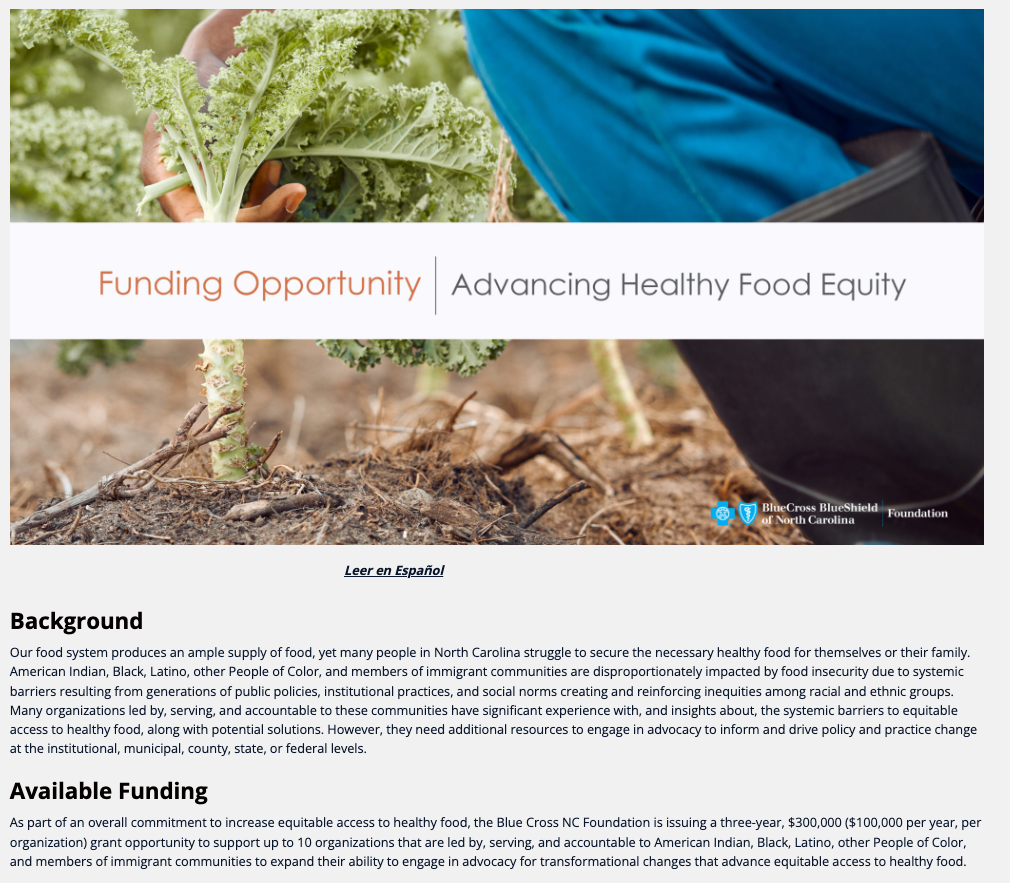
Blue Cross Blue Defend of North Carolina Basis is giving a a few-calendar year, $300,000 grant to progress “healthy foods fairness,” but numerous corporations that operate to increase access to balanced meals in minority populations will need not implement.
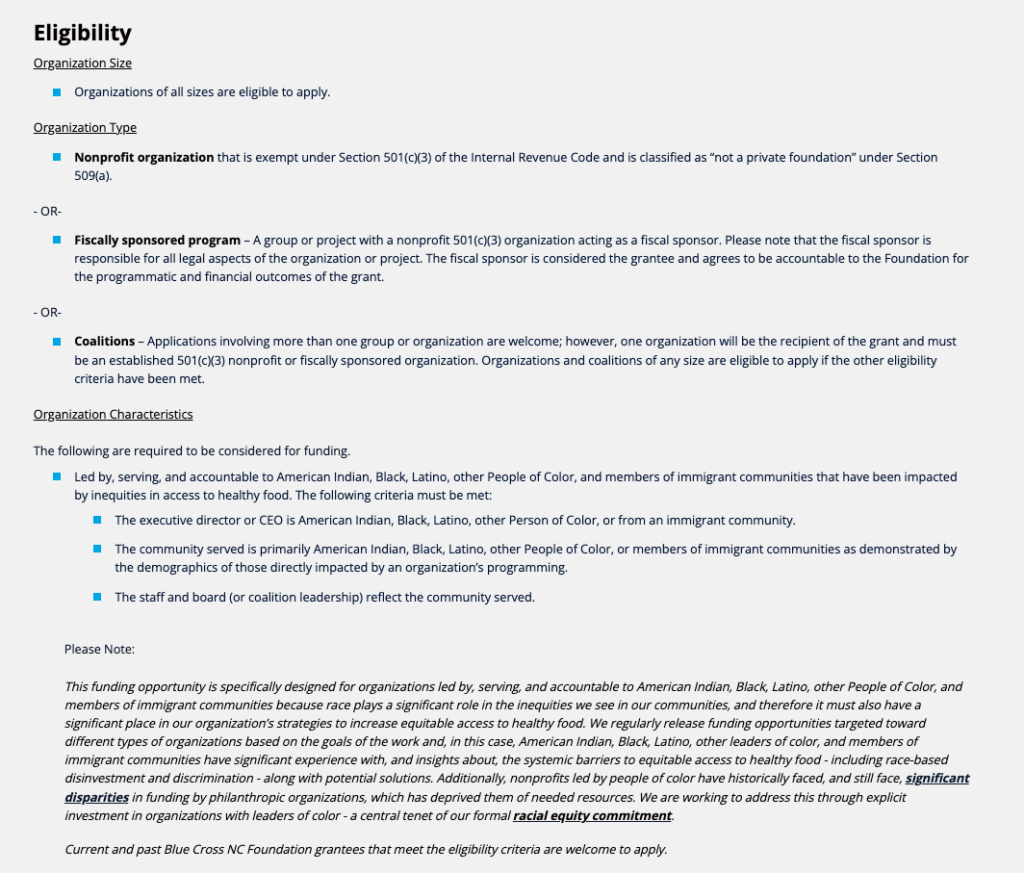
Certainly, some businesses that make use of a majority nonwhite team and have a vast majority-nonwhite board of directors quickly are disqualified from the grant.
Certainly, an business committed to “food equity” that employs mostly black, Latino, and other racial minorities and has a vast majority-minority leadership just cannot get the grant if its CEO is considered white.
This is not some declare critics are earning about the grant, either—it arrives straight from the horse’s mouth, from Blue Cross Blue Shield of North Carolina itself.
“We have received inquiries about eligibility from companies that have a majority people today of coloration employees, and employees leadership, and white CEO,” a basis representative stated in a “Healthy Foods Equity” webinar Feb. 2. “So provided the spirit of this opportunity Sheila and I shared earlier, these businesses are not eligible for this particular option.”
The “Advancing Healthy Foodstuff Equity” grant, which will award $100,000 per 12 months, per organization to up to 10 companies, restrictions eligibility to teams “that are led by, serving, and accountable to American Indian, Black, Latino, other Persons of Colour, and members of immigrant communities.”
Underneath “organization qualities,” the foundation’s webpage lists a few racial requirements: the government director or CEO should be a member of a racial minority or “from an immigrant community” the neighborhood the group serves is primarily racial minority or immigrant and the staff and board “reflect the local community served.”
“Our foodstuff technique makes an ample supply of foods, nonetheless lots of individuals in North Carolina wrestle to protected the important nutritious food items for on their own or their spouse and children,” the foundation’s webpage states. “American Indian, Black, Latino, other Men and women of Colour, and associates of immigrant communities are disproportionately impacted by foodstuff insecurity thanks to systemic barriers ensuing from generations of public guidelines, institutional procedures, and social norms making and reinforcing inequities between racial and ethnic groups.”
The grant aims to develop organizations’ “ability to engage in advocacy for transformational changes that progress equitable access to nutritious food items.” The webpage implies that stringent eligibility prerequisites are required since “nonprofits led by folks of color have historically faced, and even now facial area, considerable disparities in funding by philanthropic businesses, which has deprived them of needed assets.”
The Blue Cross Blue Protect of North Carolina Basis frames the grant as fulfilling “a central tenet of our formal racial equity dedication.”
Dr. Stanley Goldfarb, board chair at Do No Hurt, criticized the grant in a assertion Friday to The Day-to-day Sign. Do No Hurt is an corporation of medical practitioners, nurses, and wellness care experts that speaks out towards medical abuses, significantly in the realm of experimental gender hormones and surgical procedures.
“If at any time there was a lousy strategy, the notion that we ought to start to individual our region together racial strains is amongst the worst,” Goldfarb, a kidney professional, stated. “The approach by the North Carolina Blue Cross Blue Protect organization usually takes divisiveness to a new stage. Even acquiring a leader of an business who is white is adequate to stop the entity, which apparently serves minority communities, from participating in a grant software.”
“Do Individuals seriously want this sort of apartheid?” he asked.
Blue Cross Blue Defend of North Carolina Foundation did not reply to a number of requests for comment on the grant’s eligibility or the criticism about it.
North Carolina Legal professional Typical Josh Stein, a Democrat, declined to comment on the grant’s legality.
Have an feeling about this write-up? To audio off, please email letters@DailySignal.com and we’ll contemplate publishing your edited remarks in our typical “We Listen to You” characteristic. Try to remember to include things like the url or headline of the posting additionally your title and town and/or condition.
The Scholar Existence Center for Belonging and Social Adjust will host the Language of Food items for United Black World Month in the Ohio Union. Credit rating: Katie Fantastic | Asst. Picture Editor
Across the world, folks of any tradition — or language — can typically be united by a person issue: foods.
At Ohio Point out, the Student Life Middle for Belonging and Social Adjust hopes to connect learners as a result of meals to assistance teach and elevate recognition through United Black World Thirty day period with its Language of Food function Feb. 21 from 6-8 p.m. in the Ohio Union.
The CBSC hosts Language of Meals each and every month with unique themes and titles to commemorate unique heritage months, and this year’s United Black Earth Month’s concept is unity. In accordance to the CBSC web-site, the occasion is absolutely free for all students who would like to attend, but those interested in cooking ought to signal up early, as the spots are limited and assigned on a first-arrive, first-provide foundation.
University spokesperson Dave Isaacs mentioned the packages all through heritage and recognition months are designed to convey cultural consciousness and comprehending for all people to occur together as a neighborhood.
“What [heritage and awareness months] are built to do is contact consideration to, emphasize a variety of teams of college students on campus,” Isaacs said. “It is about celebrating the culture and accomplishment of people groups and bridging the campus with each other to motivate understanding in the group.”
Isaacs explained food is a language and a gateway to tradition, and this celebration is a way to develop comprehending, celebrate lifestyle and expose it to many others.
“Food is also a window into a lifestyle,” Isaacs explained. “If you experience the food of a culture, you are dealing with the essence of that tradition. It is so much additional than just placing energy in your mouth.”
Indra Leyva Prepare dinner, assistant director of CBSC and function organizer, explained elements are readily available for learners to prepare any meal of their decision, which they can specify when they sign up for the occasion. Cook claimed the room is pleasant for learners from diverse backgrounds to discuss about the Language of Foods as they cook dinner, connect and master alongside one another.
“The functions offer areas the place students can be their finest selves, deliver plenty of interaction and the possibility for getting connections across communities,” Cook mentioned. “A house where by our learners come to feel brave, about speaking about their very own expertise and when the experiences are validated, which I consider is significant.”
Prepare dinner explained that the theme of unity was chosen since it is something college students will have to tactic and attempt to make. The event’s goal is to go over the commonalities pupils from distinct backgrounds have even though aspect of the Ohio State group.
“We have to have to occur together, and we will need to pay attention to every single other, understand from every single other,” Cook dinner reported. “To produce that unity, coalition, that feeling of neighborhood that we want.”
Isaacs explained though Language of Foodstuff is a celebration of Black people, it also strengthens the overall Ohio Condition group by fostering awareness of Black encounters.
“This method talks about the Black practical experience as it relates to psychological wellbeing and the cultural, societal and historical limitations,” Isaacs reported. “This application is created to carry us together to build cultural knowledge and recognition, so we are 1 community.”
Isaacs stated these celebrations also give a increased comprehending of teams learners may possibly not be a part of.
“It would make us a more powerful establishment when we link,” Isaacs reported. “We are all a part of every other in knowledge.”