Caramelised cabbage stuffed with mushrooms, onions and chestnuts
This is an impressive vegetarian centrepiece inspired by a recipe in an old book called Moldovan Cuisine, in which the cabbage is braised in stock. I prefer steaming cabbages, especially if using the tender sweetheart (AKA pointed) variety. If your cabbage is very big, you may need to steam it for a little longer than the recipe states: use your instinct here. The filling can be made in advance and frozen, then thawed before being stuffed into the cabbage.
Prep 20 min Cook 50 min Serves 4
200g chestnut mushrooms 1 medium pointed cabbage (about 800g) 40g butter or oil 2 banana shallots, finely chopped 100g shiitake mushrooms 50g cooked chestnuts, roughly chopped (or toasted pine nuts or walnuts)
For the sauce 1 small garlic clove, peeled 100ml creme fraiche Salt and pepper A pinch of paprika – I particularly like the smoked stuff
Grate the mushrooms on the rough side of a box grater (this is much easier than chopping them finely). Cut the top 5cm off the sweetheart cabbage and shred it thinly. (If you are using a regular white cabbage, and it is on the large side, cut it in half across the equator – one half will feed four; if yours is a larger party, use both halves and double the filling quantities.)
For the sauce, finely grate the garlic into a bowl, then add the creme fraiche, some salt, pepper and a sprinkle of paprika.
Melt the butter or oil over a medium-low heat, add the shallots and a generous pinch of salt, and cook, stirring often, for 10-15 minutes, until soft and lightly golden.
Add the mushrooms and shredded cabbage, and cook for another five to 10 minutes. Season generously, then add the chestnuts (or nuts). The filling should be very well seasoned.
Trim the stalk off the bottom of the cabbage so that it can stand up stably, but do not take off so much that the layers fall apart. Place the cabbage upright in a steamer (if your steamer is not big enough to accommodate it, use a large colander over a pot of boiling water and cover with a lid) and steam for about 15 minutes (or a little longer if your cabbage is large and its leaves are tightly closed together); you need the cabbage to soften enough to make it easy to stuff.
Heat the oven to 240C (220C fan)/465F/gas 9. Gently prise the leaves open and generously stuff the filling in between them. Brush the outer leaves and any exposed ones with a little oil, then roast for five minutes. It should be charred and delicious-looking; if you feel it needs more colour, give it another five minutes.
Present whole at the table, then cut it into wedges and serve with the garlicky creme fraiche alongside.
Brussels sprouts in miso butter and honey glaze
Olia Hercules’ brussels sprouts in miso butter and honey glaze.
These are inspired by Vichy-style carrots, which are glazed in honeyed butter. If you happen to have any leftovers, they’d make for a very flavourful bubble and squeak.
Prep 10 min Cook 15 min Serves 4-6 (as a side)
500g sprouts 40g butter 1 tbsp miso paste 1 tbsp honey 2 sprigs fresh thyme A pinch of sea salt
If the sprouts are small, leave them be, but cut larger ones in half – I prefer using cut sprouts here, because the miso butter clings to the cut sides more easily.
Put the sprouts and the butter in a wide 20cm frying pan and set over a medium heat. Once the butter has melted, add four tablespoons of water, cover with a tight-fitting lid and leave to cook on a medium-low heat for five minutes.
Remove the lid, add the miso, honey and thyme, and cook for another five minutes, or until you are happy with their softness – my preference is for sprouts that are easy to cut with a regular butter knife – but use your judgment. If at any point the miso and honey look as if they’re going to stick to the bottom of the pan, add a splash of water and deglaze the pan.
When the sprouts are ready, serve immediately or leave them in the pan, ready to reheat quickly later.
Fiona Beckett’s drinks match
Under £10 Chateau Guiot Costières de Nîmes 2019£9.99 (or £7.99 on “mix six”) Majestic, 13.5{d2b09b03d44633acb673e8080360919f91e60962656af8ade0305d5d8b7e4889}. Warm, generous Côtes du Rhône-like red that would go beautifully with the cabbage – it’s not certified organic, but does take a minimal intervention approach.
Over £10 Monsant Comunica La Pua Blanco Celler Comunica 2019 £17.37 Les Caves de Pyrène, £19 The Good Wine Shop, 13.5{d2b09b03d44633acb673e8080360919f91e60962656af8ade0305d5d8b7e4889}. Orange wine would be a terrific pairing with the stuffed cabbage, and this deeply coloured Spanish white garnacha is a great example.
Who needs truffle and caviar? With some leftovers, new tricks and a little ingenuity a dish can look and feel fancy, despite its cheaper ingredients. Whether adding some lavishness to lunchtime, or hosting a chichi dinner, here are 11 top chefs’ recommendations for recipes that are budget-friendly and uncompromisingly luxurious.
Pasta with prawn sauce
Asimakis Chaniotis, executive chef at Pied à Terre, London When we cook prawns in the restaurant or at home I always keep the heads, with a little bit of prawn meat in them – I put them in a box in the freezer. For two, I would use around 10 prawn heads. Sweat down onion and garlic, then add the prawn heads. Caramelise them a bit and then deglaze either with an aniseed-y alcohol like ouzo, or you can use wine. Reduce that, then add tomatoes and simmer for half an hour. I use a stick blender and pulse, rather than puree, to crush the heads a bit. Simmer for another two minutes, then pass them through a sieve, pressing the heads, to get the maximum flavour, and discard the shells. To make it really fancy, top with herring or trout eggs – much cheaper than caviar – and maybe some basil, then a squeeze of lemon or lime juice.
‘Simple but tasty and hearty’ … chickpea and chorizo stew. Photograph: Ben Monk/Getty Images
This stew was devised for the tiny shop we used to have in Exmouth Market in central London. With only a single electric ring to cook on, we wanted a simple but tasty and hearty dish. It’s quick and easy to make, yet it feels indulgent and rich, and is perfect as we enter the colder months. Heat a splash of olive oil in a large pan, add 200g coarsely cut cooking chorizo, 200g diced pancetta and one finely chopped onion, and fry for three or four minutes. Add a glass of red wine, 400ml sofrito sauce and 400ml water, bring to the boil then simmer for five minutes. Add two 660g jars of chickpeas, two cloves of crushed garlic and two tablespoons of fresh oregano, and simmer for a further five minutes. Season to taste, then eat with good bread.
‘As much refinement of flavour as pasta with lobster or clams’ … spaghetti with mussels. Photograph: Burcu Atalay Tankut/Getty Images
This has the glamour of a really good seafood pasta, because it is a really good seafood pasta. I’m amazed at how cheap mussels are when other seafood is so expensive. You can choose to make it with or without tomato; I like to use a bit. Cook spaghetti in well-salted water – not as salty as the sea but maybe as salty as tears. It’s worth investing in good pasta because it doesn’t cost that much more. Cook a bit of garlic and chilli in a pan, then a second later, the mussels. Add a couple of spoonfuls of a tomato sauce, just enough to make the sauce blush. Toss the pasta with the mussels and cook the lot together, adding some good olive oil at the end. You could add a bit of parsley or basil, but I wouldn’t. This is messy and fun, and has as much refinement of flavour as pasta with lobster or clams, but it’s cheap as chips.
Flatbreads with toppings
Roberta Hall-McCarron, chef patron of The Little Chartroom, Edinburgh You can dress up homemade flatbreads as a starter or a snack to make them look fancy. Flatbreads are quick and easy to make, with bread flour, dried yeast, water, yoghurt, sugar and salt, and here are a couple of ideas for toppings: you can make ricotta easily at home using just milk, cream, lemon juice and salt. Make a piperade – slice onions and peppers and sweat them together with grated garlic. Layer the ricotta, piperade, roasted courgettes and thin slices of salted courgettes, then some chopped toasted hazelnuts. Another option is to make a smoked mackerel paté – mix fillets with some creme fraiche, lemon juice and chives or dill. Put that on the flatbread, then finish it with different pickled vegetables for bright and lovely textures – cucumbers, radish and fennel work nicely – and you can add a bit of fresh apple too. To make an easy pickle, you just need vinegar, water, sugar and a little bit of salt, and you can jazz it up with mustard seeds or peppercorns. It makes you feel as if you’re doing something special at home, but it’s really simple.
‘Tastes like more than the sum of its parts’ … aubergine parmigiana. Photograph: Mediterranean/Getty Images
Cut an aubergine finely – one aubergine feeds two – then fry until it’s crispy. Make a tomato sauce with garlic, tomato, a little bit of sugar and baharat, which is a spice mix that packs quite a punch. Layer the aubergine and the tomato sauce, your cheese of choice, and then sprinkle it with parmesan (or grana padano to keep costs down), some breadcrumbs, which could just be some old bread, blitzed up, and olive oil. If you want to make it more substantial, you could add in lasagne sheets. Then you just roast it. It makes a really nice centrepiece, which tastes like more than the sum of its parts.
‘A canapé or a starter’ … pea and mint fritters. Photograph: Anna_Shepulova/Getty Images/iStockphoto
You could do this as a canapé or starter, and it looks really nice on a plate, but it’s so cheap – basically frozen peas, potatoes and onions, and some mint. Boil and mash around 250g potatoes, and caramelise one red onion or some shallots. Put 500g peas into a blender or mash them up, then mix with the mashed potato, onions, a bit of gram flour and some mint, and shape into little fritters. If you want to make it fancy, you can quenelle them – shape between two spoons – then fry. If you want to be really resourceful, you can make the mayonnaise from aquafaba – chickpea water – which you might have saved from another recipe. Add some grated garlic to the mayonnaise, lemon juice and salt and pepper.
Tagliatelle with chicken in cream sauce
Katlego Mlambo, head chef at Kudu, London Being French-trained, I’m a big fan of butter and cream, and it seems luxurious. A pasta – at the moment tagliatelle is my favourite – with a creamy sauce becomes a blank canvas that allows you to layer on flavours. Fry garlic, ginger and onions, then add about 200ml cream, some mozzarella, a squeeze of lemon juice and some lemon zest to give it a bit of freshness. I like grilled chicken thighs, which have more flavour and don’t dry out as quickly as breast. Marinate them in a quick marinade – olive oil, salt, pepper, garlic, ginger – and grill. I like generous slices, otherwise it could look like a mess in the bowl. Toss it all together, then finish it off with some freshly chopped coriander and another squeeze of lemon juice, then parmesan to make it feel more expensive, or any cheaper hard cheese.
‘Add whatever vegetables you have in your fridge’ … ham hock congee pie. Photograph: Funwithfood/Getty Images
Normally congee – similar to a risotto, but more liquidy – is a cheap, comforting dish, but by putting puff pastry on top and egg-washing it, it is suddenly turned into something different. You can make congee from scratch using any rice, but I would normally use short grain rice. Put a ham hock – one knuckle is enough – and 150g rice in a pot with water or stock. I’ll put in a 1in piece of ginger for flavour, so you can easily pick it out afterwards. Slow cook it for maybe an hour and a half, whisking it to make sure that the rice grain is broken down. Once the ham is cooked, remove and shred it, then return it to the congee. You can add different ingredients – for example, spring onion, or whatever vegetables you have in your fridge. I would add fermented mustard greens – something to give it that sourness. Transfer it to an ovenproof bowl and top with puff pastry, egg-wash it, then pop it in the oven for 20 minutes. You can prepare a big portion to set aside in the fridge or freezer for later, then just put puff pastry on top and pop it into the oven.
When I was a kid we didn’t go to fine dining restaurants, so if my dad was treating us it would be something like a Beefeater. I’d always order the garlic mushrooms on toast, and this is a fancy version. You can get cultivated “wild” mushrooms in supermarkets, made up of mushrooms like oyster and shimeji. Get a loaf from the baker’s and slice it, then rub with olive oil, sea salt and garlic, and toast – if you have a chargrill pan, even better. Pan-fry the mushrooms in butter with garlic, fresh parsley and shallots. You could add a touch of creme fraiche so they become quite creamy. Put it on the toast, then top with a poached egg, drizzled with good olive oil and a pinch of sea salt and pepper. When you cut into the poached egg, the yolk self-sauces the dish. You’ve just got texture, crunch and a very inexpensive dish, but a real looker.
Pasta alla Norcina
Chris Leach, chef co-founder of Manteca, London This is a dish from Umbria in the north of Italy, using pork sausage. Use any plain pork sausages – as opposed to something like pork and apple – and just crumble them open, cook in a pan with a bit of crushed garlic and a bit of white wine, then add around 100ml double cream. Finish with grated parmesan or grana padano and serve it with any short pasta, such as rigatoni or penne. The cream makes it feel a bit more luxurious. We serve a version of this at the restaurant with black truffles, but you could use cheaper truffle oil. Just a little drop into the cream, white wine and sausage brings out the porkiness.
Hummus breakfast
Eran Tibi, chef patron of Bala Baya, London This is one of my favourite things to eat – my mum used to make it when we were kids. Take two or three big scoops of hummus and spread around a plate. Fry a bit of garlic, chilli and any spice mix you like – I like ras-el-hanout – for a couple of minutes, then add a spoonful of harissa and a tin of chickpeas with its liquor. Cook for about 10 minutes, and you get this spicy, umami, delicious chickpea stew. You can add whatever you have in the fridge, like leftover meat. While hot, pour it on top of the hummus. Top it with a soft-boiled egg, a couple of pickles and some good toasted bread. It’s warm, wintry, and the chickpeas get velvety and smooth.
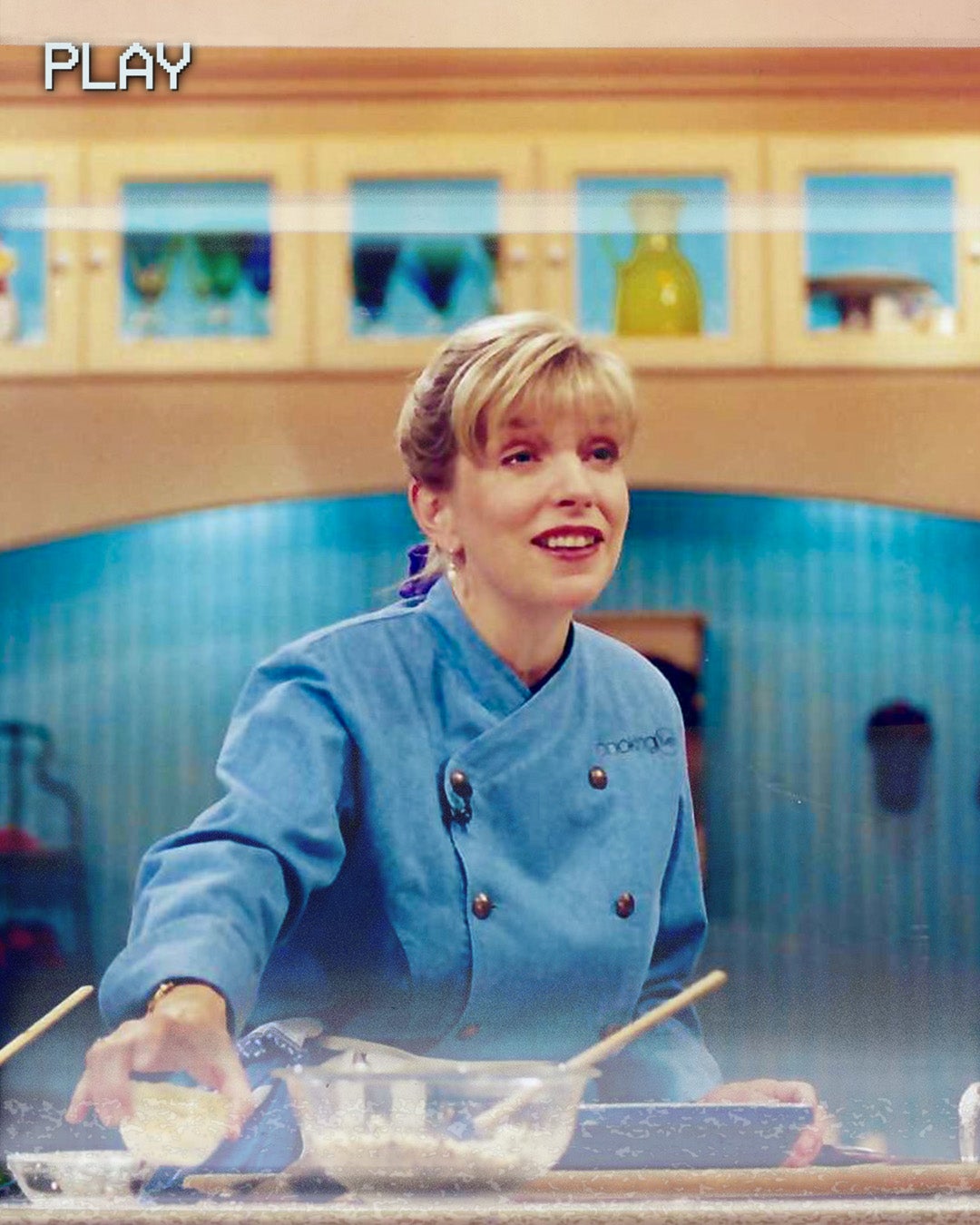
If you were a cooking show fan in the 1990s, you no doubt remember the characters. One hour, Emeril Lagasse was lighting a rum sauce on fire, while the next, Ming Tsai would be explaining the difference between spring rolls and egg rolls on East Meets West. But arguably the decade’s most skilled food TV star—the one whose show introduced the world to Michael Lomonaco, Aaron Sanchez, Anthony Bourdain, and umpteen other famous chefs—was Sara Moulton.
When I think about Moulton’s call-in show, Cooking Live, I remember the chef’s gentle demeanor, incisive cooking tips, and—of course—her signature blonde ponytail. Yet many viewers (myself included) didn’t realize that the Food Network gig was just another feather in Moulton’s already plumy cap. The chef graduated at the top of her class at the Culinary Institute of America, apprenticed at a Michelin-starred restaurant in France, worked the line at fine dining restaurants in Boston and New York City, and cooked professionally for Julia Child and Good Morning America. And decades before test kitchens were cool, she headed up the country’s most prestigious one, at the (defunct) Gourmet magazine. Translation? For more than half a century, Moulton has been a walking encyclopedia of cooking and food culture.
But you know what? I bet kids these days don’t know much about Moulton. Not that she isn’t busy—she hosts Sara’s Weeknight Mealson PBS, writes for various publications, and co-hosts a podcast on Milk Street Radio—she’s just not opening flashy restaurants or killing it on TikTok. Yet with ‘90s dishes suddenly trending in the form of Caesar salad wraps, pizza bagels, and espresso martinis, who better than Moulton, I thought, to weigh in on that decade’s food culture—and the lessons we might learn from it?
That’s how I found myself sitting across from the legend herself at a Manhattan cafe last month. We talked for two hours; she nursed a cappuccino while I typed. For the first time in my career, my interview subject showed up with more notes than I—pages and pages of bulleted anecdotes, which she flipped through as she spoke. Here are the highlights of our conversation.
Benjamin Kemper: When people say “‘90s food,” what comes to mind?
Sara Moulton: We learned so much in the ‘90s. That chiles have flavor and that chipotle is amazing. That there were many, many types of lettuces … Mesclun was king. There was both the rise of cilantro and the hatred of cilantro. Fruit salsas on fish. Lobster rolls. Penne alla vodka. And so many new cheeses. Until the ‘90s, most people knew only cheddar, brie, and boursin, but that changed with California cheesemakers like Laura Chenel. Avocados went mainstream, barbecue and grilling became more elevated, and finally some women were doing the grilling. Finally there were some women, period!
BK: What was new in the restaurant world?
SM: In the ‘80s, the hero of the food world was the writer, but in the ‘90s, it was solidly the chef. And they weren’t just cooking French food at New York restaurants—there were major players around the country. “Farm to table” was getting bigger. Alice [Waters] had done it from a French point of view, but people were finally celebrating American regional cuisine. We were also beginning to appreciate that everycuisine was regional through the work of people like Rick Bayless, Zarela Martínez, Josefina Howard, Mary Sue Milliken, and Diana Kennedy. We realized: There was no one French, Italian, or Thai cuisine.
BK: How did those trends translate into actual dishes?
SM: I wrote a few down. There was Anne Rosenzwieg and her chocolate bread pudding. Éric Ripert—his dishes were so fresh they popped—was putting warm vinaigrettes on fish. It was so unusual at the time! Nobu Matsuhisa made black cod trendy, and chiles had their moment in part thanks to Mark Miller and Stephan Pyles. Not many people know that George Germon and Johanne Killeen brought grilled pizza to the U.S. at their restaurant in Providence, Rhode Island. One thing I think about a lot is how Charlie Trotter was experimenting with and thinking about vegetables in ways that were way ahead of his time.
BK: How was cooking at home in the ‘90s different from today?
SM: This is obvious, but you couldn’t get ingredients on the internet yet, and that was a big handicap. When I was at Gourmet, if we listed an ingredient like sesame oil in a recipe, we had to add an asterisk to note that it was “available at specialty food shops.” But certain specialty ingredients were becoming mainstream, like balsamic vinegar, fresh fennel, and fresh herbs.
BK: What do you miss from that era? What has been lost?
SM: The idea that the ambiance is as important as the food. I don’t want to be jammed in, unable to hear a conversation, to be forced to eat standing up. That’s why I’m not a food truck person, even though I know they’re making some fantastic food. Wow, I just sounded old, didn’t I?
BK: Food Networkwas brand new in the ‘90s. What was it like working there?
SM: I came on board in ‘96. You have to remember, none of us had TV experience. We were petrified. Nervous wrecks. Even Emeril’s first tries were terrible. What I came to understand was, it’s one thing to be on TV with a host and another to be alone. This is going to sound strange, but to me it seemed vulgar, like too much attention on me. For my pilot I cooked fish meunière and asparagus—and never once smiled. When I held the asparagus up to the camera, it was shaking. But I limped along and got better over time. By 1999 I had two live shows on the network.
BK: What did you aim to achieve with your shows?
SM: At the time, more and more women were working, and it was hard to get dinner on the table. So I made it my mission to make people comfortable cooking during the workweek. Both my husband and I grew up with dinner on the table every night. It’s my religion. I trained at CIA, and when I graduated, I was a real snob and thought there was only one way to do things. Boy, was I wrong—I fell in love with home cooks taking their calls. Home cooks are no different from chefs, really: If you cook a recipe over and over again, you get to be damn good! A lot of times, callers taught me something.
BK: I remember there being a real gender divide. Emeril and Bobby Flay were doing their macho thing, grilling and lighting stuff on fire, and then there were shows like yours that were more geared toward busy moms.
SM: They didn’t really want women at Food Network. Every male chef had his own set, graphics, music, and tools. Not me. I had no oven, and the counter came up so high I had to stand on a riser. I remember recommending Michael Lomonaco for a show, and he got his own set.
Emeril and I were pretty good friends. He was a big talent. The next Jesus Christ. And it had to be a man—couldn’t be me. He had cars to drive him anywhere he wanted, while I had to get everywhere myself. I am grateful—I ended up on Food Network, and I did ultimately get my own set, but that’s how they were.
BK: There wasn’t much diversity, either, right? I’ve always wondered how many of the network’s higher-ups at the time were women and people of color.
SM: The executives were mostly men. And everybody was white.
BK: Wow. I guess that was the ‘90s.
SM: It was such a different time. Yesterday I was flipping through some ‘90s Gourmet magazines. I came across the word “Oriental” a few times—and I was like, really?
Another thing that makes me cringe is the whole fat police thing. It was a scam by the sugar lobby. It really impacted people. Everyone was looking at grams of fat and calories, and I created recipes with those things in mind.
BK: Can you leave us with a piece of advice?
SM: Nobody should ever stop learning, and if they do, they’re an idiot.
This interview was lightly edited for clarity and length.
The eight-day celebration of the holiday of Chanukah is quickly approaching. The excitement is in the air, regardless of age or background. Just ask my children, “How many days are left until Chanukah?” and they will tell you the countdown!
This year, the 25th of Kislev, the first candle is kindled in the menorah on Sunday evening, Dec. 18 .
The miracle of Chanukah commemorates the finding of the holy flask of oil in the Holy Temple with the seal of the Cohen Gadol, the high priest, which burned for eight days, in the Temple Menorah, instead of only for one day. Additionally, we remember the victory of the Maccabees, led by Judah Hamaccabee, over the Greeks. Furthermore, Yehudit, the daughter of the Cohen Gadol, risked her life in order to save the Jewish people by seducing the Greek general, tiring him with rich dairy foods, and then killing him. Miracle after miracle, we have witnessed the hand of Hashem, our G-d, save us from persecution.
It is customary to enjoy dairy cuisine, along with foods cooked in oil, such as latkes, on Chanukah in commemoration of the miracle of oil. It is my hope and blessing that we, the Jewish people, merit witnessing again light amidst the darkness in our world and see the rebuilding of our Holy Temple in Jerusalem speedily in our days.
POTATO LATKE WEDGES WITH ZUCCHINI AND SAGE 1 sweet onion, peeled 1 medium zucchini 3 medium baking potatoes, peeled 2 eggs 1/2 tsp. sea salt 1 Tbs. sage 2 Tbs. canola oil
Grate all vegetables with the medium shredding blade of a food processor. Squeeze out any excess liquid. Add eggs and mix together in large mixing bowl. Add seasonings and oil. Toss until well-combined.
Spray a 12-inch skillet with oil spray—lightly coated. Heat pan over moderately high heat. Add the entire potato mixture in order to form one giant latke. Fry for approximately 6-8 minutes, or until the bottom of the latke is golden brown. Lift with a spatula and flip latke (or place a platter over the top and invert it onto the other side) in skillet. Fry for approximately 6-8 minutes until golden brown. Cut into wedges and serve with applesauce (recipe follows), if desired.
HOMEMADE APPLESAUCE 6 tart apples 1/3 cup water 1/3 cup sugar 1/4 tsp. cinnamon
Peel, core, and quarter apples. Place in ice cold water to prevent discoloration. Cook covered in 3-quart saucepan in 1/3 cup water for 30 minutes, or until soft. Add sugar and cinnamon and stir. Simmer 5 minutes. When cool, mash with a spoon if chunky applesauce is desired. A second option is to place a hand blender into saucepan and puree until a fine mixture is achieved.
Yields 4-5 servings.
GREEK SALAD 1 head Romaine lettuce, torn into pieces 2 Roma tomatoes, cubed 1 cucumber, sliced thin 1 red onion, peeled & sliced 1 5-oz. jar black Kalamata olives 2 Tbs. capers (optional) 8 oz. feta cheese, cubed 3 Tbs. red wine vinegar 2 Tbs. extra virgin olive oil 1 Tbs. dried parsley 1 Tbs. dried oregano 1/4-1/2 tsp. sea salt
Place all vegetables into a large mixing bowl. Combine vinegar, oil, and spices in a small mixing bowl. Pour dressing over salad, add feta cheese, and toss together. Transfer to serving bowl.
Makes 6-8 servings.
LOW- FAT FETTUCCINE ALFREDO WITH MUSHROOMS 16 oz. Fettuccine pasta (I prefer the thicker size) 1 1/2 cups fat-free milk 8 oz. low-fat mozzarella cheese 8 oz. fresh mushrooms, sliced thin 2 cloves garlic, minced 4 Tbs. olive oil, divided 1 tsp. sea salt 1/2 tsp. black pepper 2 Tbs. fresh parsley, chopped
Boil and drain pasta, and set aside. In a 3-quart saucepan, over a low flame, combine 2 Tbs. of flour and 2 Tbs. of olive oil. Add milk and cheese, mixing continuously until bubbly.
Saute mushrooms and garlic in 2 Tbs. olive oil in an 8-inch skillet.
Add seasonings and mix altogether. Place pasta onto large serving platter and pour cheese and mushroom mixtures on top. Toss together and serve immediately. Serves 4.
This year’s titles include Watermelon and Red Birds, To Boldly Grow, Budmo! and Diasporican. Illustration by Emily Lankiewicz
Food continues to be a source of comfort, creativity, nostalgia and education, and 2022 brought about some stellar writing on the topic. This year’s crop of best food books runs the gamut of African American, Ukrainian, Chinese and Puerto Rican cookbooks, uniting across cultures, and includes a memoir that exposes the underbelly of the French restaurant kitchen, history books on fermentation and pies, and a searing account of the loss of our food diversity and how we can save it. All told, these ten favorites will inspire and ignite, while teaching us about the importance of diversity and respect.
Koshersoul: The Faith and Food Journey of an African American Jew by Michael W. Twitty
What do Jewish and African diaspora food have in common, and how do they combine to create a unique cuisine? Culinary and cultural historian Michael W. Twitty’s follow-up to his James Beard Award-winning The Cooking Gene examines the intersection of these two dynamic identities and presents an analysis of dual diasporas, a cultural history, and an upsetting examination of bigotry. The personal narratives of Twitty and other Black Jews offer a rich background for 50 innovative recipes, such as Caribbean compote, kosher-Cajun rice dressing and Louisiana-style latkes, although to categorize this as a cookbook would be to deny its cultural and historical significance—and Twitty’s evocative and poetic writing style.
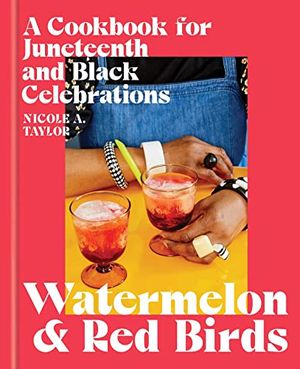
Watermelon and Red Birds: A Cookbook for Juneteenth and Black Celebrations by Nicole A. Taylor
Now that the holiday of Juneteenth, celebrating the emancipation of Black slaves, has cemented its place in the national conversation—and become a federal holiday as of last year—this cookbook by James Beard Award-nominated food writer and home cook Nicole Taylor couldn’t be more timely. As she writes, “I’m a Southern woman, born into a working-class family when crisp white churchgoing gloves and Sunday beer bootleggers (my hometown didn’t have alcohol sales until 2012) were in serious fashion and full deep freezers were a status symbol.” Taylor has always celebrated the holiday with her family, and she artfully details the storied cookouts with overflowing spreads and plenty of “red drink,” sharing 75 recipes that marry traditional African American recipes with modern variations like the Afro egg cream, beef ribs with fermented harissa, and radish and ginger pound cake. There’s also a guide that shares where to find sundries like hot sauces, jams and spices produced by companies with owners from Black, Indigenous or other marginalized communities.
A Waiter in Paris: Adventures in the Dark Heart of the City by Edward Chisholm
“It’s the boundary between two worlds: the Paris you see and the Paris you don’t,” writes Edward Chisholm, an Englishman who moved to Paris in 2012 and spent several years as a waiter while trying to build up his writing career. Now, his debut book, a no-holds-barred memoir detailing his time waiting tables in one of the world’s hottest restaurant cities, reveals what really goes on behind the scenes of fine dining establishments. This book is the next generation of Anthony Bourdain’s Kitchen Confidentialand Stephanie Danler’s Sweetbitter, with Chisholm exposing the often-shocking mayhem of the restaurant kitchen in visceral detail. He deftly uses the Parisian restaurant as a microcosm for France as a whole, with immigrants, people of color and blue-collar workers at the bottom of the food chain.
Sweet Land of Liberty: A History of America in 11 Pies by Rossi Anastopoulo
Ever wonder how apple pie became a symbol of America? Food writer and editor Rossi Anastopoulo slices into the history of pie in the good ol’ US of A, from pumpkin pie on Thanksgiving to apple pie on Independence Day, using the iconic American dessert to tell the story of a country. Still, it’s not all sweet, as she details how molasses pie traces its origin to slavery and Jell-O pie reveals the history of gender disparity in our country. All in all, Anastopoulo shares interesting facts behind 11 all-American pies, like how the first recipe for American apple pie appeared in a 1796 cookbook called American Cookery, which is believed to be the first cookbook ever published in the newly minted United States. The book includes a recipe for each pie, too.
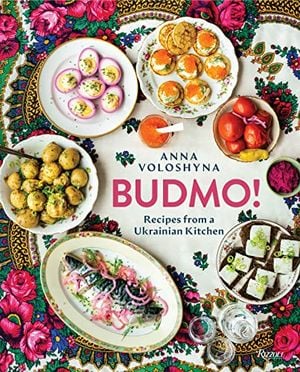
Budmo!: Recipes from a Ukrainian Kitchen by Anna Voloshyna
In this colorful cookbook you’ll find recipes for dishes like cold borscht, dark cherry varenyky and sweet pumpkin rice kasha from Ukrainian native Anna Voloshyna, who moved to California in 2011. Known for hosting pop-up dinners and cooking classes, Voloshyna is also a food stylist, photographer and blogger. In her debut cookbook, she offers modern and American spins on the typical dishes she grew up with, and she also includes details like food origins, customs and traditions in each recipe’s headnote. Budmo, which is how Ukrainians say “cheers,” shares the country’s complicated history that has led up to the current war, while simultaneously celebrating its varied and vibrant cuisine.
Celebrate the rich culture of Ukrainian cuisine with these traditional Eastern European recipes infused with a fresh, contemporary approach for today’s home kitchen, from one of today’s most exciting young chefs of Ukrainian cuisine.
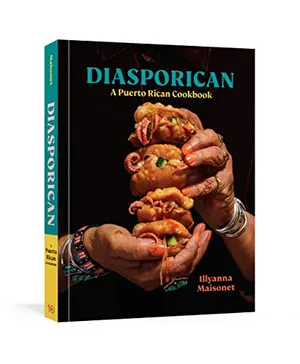
Diasporican: A Puerto Rican Cookbook by Illyanna Maisonet
Part memoir and part cookbook, this debut from our country’s first Puerto Rican food columnist Illyanna Maisonet dives into the author’s personal family recipes, which she painstakingly documented from her extended relatives through the years, and also includes her interpretation of dishes by Puerto Rican friends, chefs and roadside food vendors. There are 90 recipes including traditional Puerto Rican dishes like tostones, pernil and mofongo. Other highlights include sloppy joes and sancocho. But more than just the recipes, Maisonet shares how migration and colonization have influenced and progressed Puerto Rican food, ingredients and techniques. In explaining why her family wraps their pasteles in foil, Maisonet writes in her intimate, conversational style, “When you think of my grandma coming to Sacramento as a 17-year-old mother of two in 1956, you have to wonder where the hell would she have found banana leaves in Northern California?” She posits that this progression is no less authentic than the original method, and that the resourcefulness of Puerto Ricans has evolved their cuisine into what it is today: dynamic and delicious.
Over 90 delicious, deeply personal recipes that tell the story of Puerto Rico’s Stateside diaspora from the United States’ first Puerto Rican food columnist, award-winning writer Illyanna Maisonet.
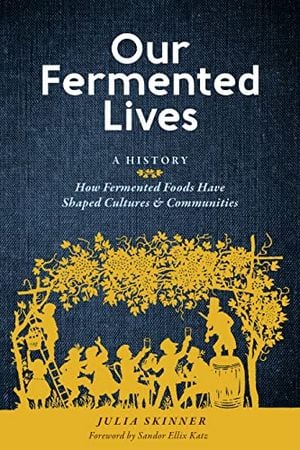
Our Fermented Lives: A History of How Fermented Foods Have Shaped Cultures and Communities by Julia Skinner
Food historian and fermenting expert Julia Skinner details the history of fermentation of foods across cultures, from kimchi to tepache and everything in between, in her latest volume. She details how fermented foods have continually come up across human history, examining the ever-evolving microbiome and food preservation techniques across cultures, while also explaining different fermentation types and their processes. Alongside are 42 historic recipes for fermented foods, including various vinegars, lacto-fermented fruits and vegetables, soy sauce and ketchup.
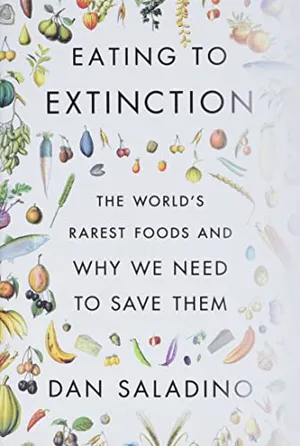
Eating to Extinction: The World’s Rarest Foods and Why We Need to Save Them by Dan Saladino
Food journalist Dan Saladino, who worked for 25 years at the BBC, presents the surprising facts of where our food comes from in his debut book. Did you know that half of our calories come from rice, wheat and corn? Or that 95 percent of the milk we drink in the U.S. comes from just one breed of cow? Astoundingly, only four corporations hold sway over the bulk of the global seed market. When laid bare, these facts reveal a serious problem with our global food chain, starting with the risk of losing our traditional foodways and by no means ending with the danger of vulnerability in the face of climate change. Saladino crisscrossed the globe when writing this book to experience and record our most at-risk foods, from the root vegetable murnong, once a primary food of Aboriginal Australians, to Geechee red peas in Sea Island, Georgia. He weaves the stories of the people who continue to cultivate and consume these near-forgotten foods while simultaneously providing a guide for how to rescue our food system before it’s too late.
The Woks of Life: Recipes to Know and Love From a Chinese American Family by Bill Leung, Kaitlin Leung, Judy Leung and Sarah Leung
The Leungs, who run the “Woks of Life” blog, welcome you into their home, sharing recipes and family memories with humor and aplomb. Each of the four family members brings something to the table: Mom Judy takes care of traditional Chinese dishes, and dad Bill teaches readers how to complete restaurant-style dishes like Cantonese roast duck and beef with broccoli, which he gamely notes, “I cranked out many orders in my day, so I’ve had plenty of practice,” thanks to his time spent working in his parents’ Chinese restaurant. Meanwhile, daughters Sarah and Kaitlin focus on weeknight-friendly meals where vegetables are the star ingredients. The cookbook also includes an intricate guide to Chinese staples and handy tools to stock your kitchen with, plus how-tos on Chinese cooking techniques like velveting.
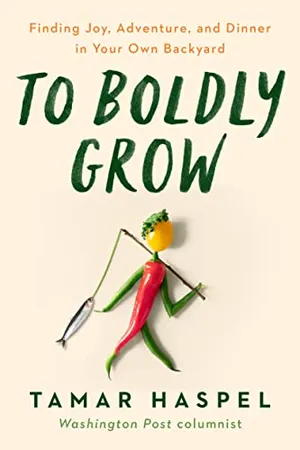
To Boldly Grow: Finding Joy, Adventure and Dinner in Your Own Backyard by Tamar Haspel
While many Americans started “victory gardens” during the pandemic, plenty have fallen by the wayside. Washington Post food columnist Tamar Haspel hopes to change that. When she and her husband left Manhattan for two acres of land in Cape Cod in 2008, they decided to embark on a journey to produce as much of their own food as possible, without assistance. This translates into things like refining their own sea salt, foraging for edible plants and hunting for meat. Haspel aims to show that any of us can feed ourselves from our own backyards, as long as we have ingenuity and the will to try. In the end, the book serves as a guide as much as a memoir, with failures as well as successes documented.
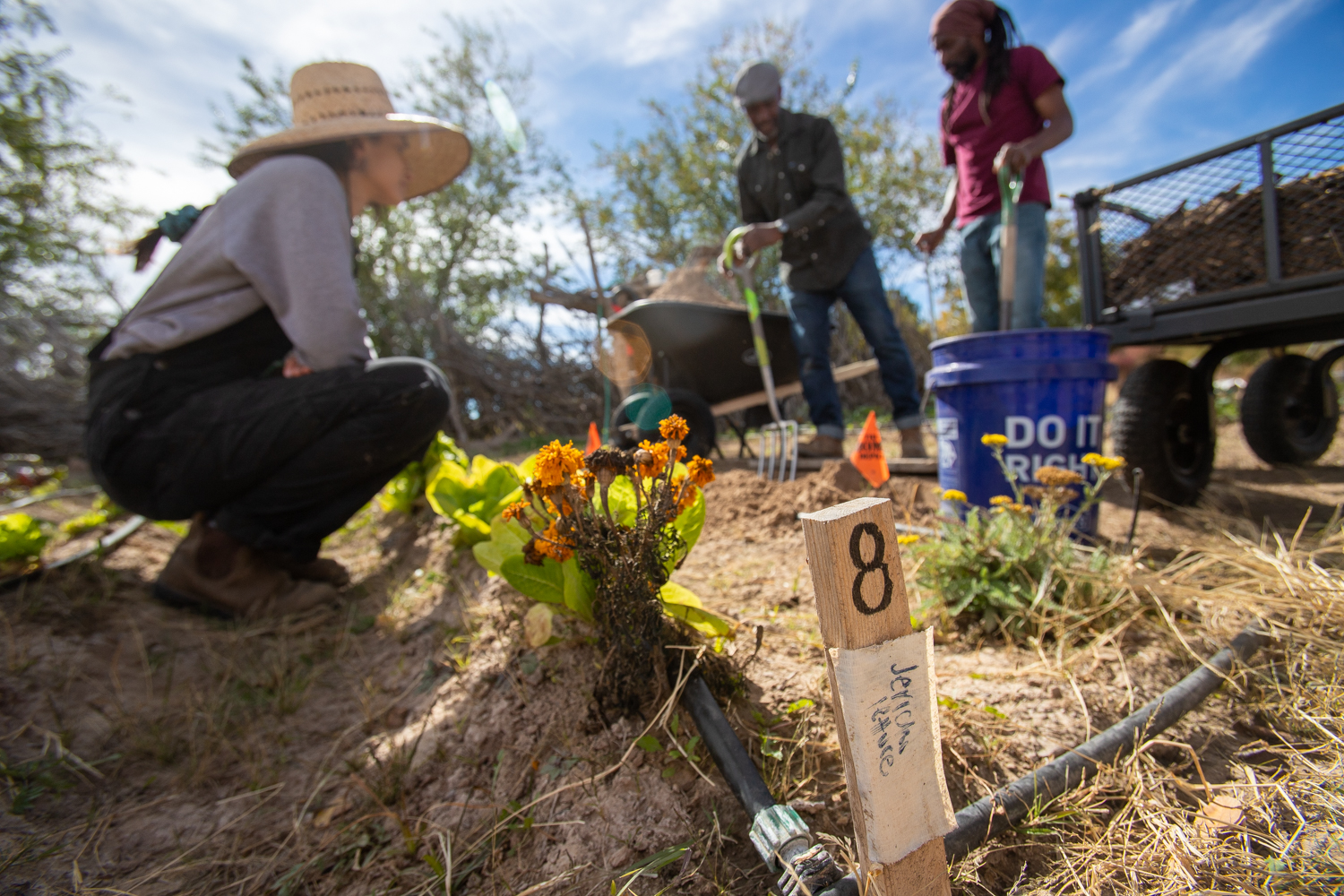
LA UNION, N.M. —Shahid Mustafa is talking about the importance of soil on a chilly November morning on Taylor Hood Farms, as he and Lindsey McKee lead a workshop on regenerative agriculture, a way of farming that focuses on soil health and biodiversity.
Three participants from Las Cruces sit on the raised carrot beds as Chico the bearded, brown billy goat grazes nearby. They’re eager to learn how to grow their own food. But before these students get their hands on a shovel, they learn about how nutrition starts underground.
“Soil is a living entity,” Mustafa said. “It’s not just something you walk on or kick off your shoes. There are more microorganisms in a teaspoon of soil than people on the planet. When you bring life back into soil, consequently that’s what happens with your food. If you ingest that, it becomes part of your own biology.”
That’s the crux of what Mustafa and McKee teach: Healthier soil leads to healthier food, which can lead to healthier people. They’re among a small group of farmers in the Paso del Norte region who are growing food with this mindset.
Research seems to support the link between healthy soil and healthy food. A study published in 2022 shows farms that practiced soil regeneration grew crops with higher levels of vitamins and minerals than farms using conventional farming methods.
The end of World War II ushered a boom in agricultural output, bolstered by improved machinery, genetically-modified seeds and the widespread use of pesticides and chemical fertilizers. But mounting evidence shows many of our fruits, vegetables and grains are less nutritious than they were 40 to 70 years ago: In other words, the apple you’re eating today has fewer nutrients than an apple in 1950.
Taylor Hood Farms in southern New Mexico practices and teaches regenerative agriculture. (Corrie Boudreaux/El Paso Matters)
Mustafa would like to see more research address the connection between farming practices and public health, but doesn’t think it’s a topic that the industrial food system prioritizes.
“In terms of measuring nutrient density, it’s generally not a focus on production because they (industrial farms) grow for volume and they grow for appearance, so it looks a certain way and hopefully the farmer was able to get enough yield to be profitable,” Mustafa said. “But beyond that there’s not a lot of data to support its nutrient value.”
Regenerative farms feed families across the borderland
Mustafa shares a 2.5-acre plot with an artist residency in La Union in southern New Mexico just west of El Paso. Taylor Hood Farms and other small-scale food growers in this area serve customers from El Paso to Las Cruces.
Less than five miles north, Andre Gutierrez of O.G. Farms spent his summer trialing different, drought-resistant melon varieties in a pruned pecan orchard, saving the seeds for next season. In Berino, N.M., just eight miles away from O.G. Farms, Yvonne Diaz of De Colores Farms tends to a field of Mexican June, a white corn historically grown in the Southwest, without using synthetic pesticides. The fruits and vegetables grown on O.G. Farms and De Colores go to distributors like Desert Spoon Food Hub in El Paso that offer weekly grocery boxes for delivery or pickup online.
Andre Gutierrez carries freshly harvested chard at Granja La Capilla in Mesilla, New Mexico on Nov. 5. (Corrie Boudreaux/El Paso Matters)
Most of the farmers from these operations have some kind of connection to La Semilla Food Center, such as Gutierrez, who worked on La Semilla’s farm before starting his own. Established in 2010, the nonprofit center’s programs include farm training, youth camps and produce deliveries.
“We support farmers while they get established and even after establishment,” said La Semilla farm manager Josh Jasso. “Whether that’s stipends to come co-teach and share their knowledge with other beginning farmers or supplies if we can afford them or space.”
On a recent November morning, Jasso checks on a row of rainbow chard, pulling back the tarp that protects the crops from wind and freeze. He points out an assassin bug, which is known for being beneficial to plants because they prey on insects that eat foliage.
La Semilla grows food using organic and regenerative practices, but Jasso said labels are a tricky issue: They help people make decisions when purchasing food, but many people don’t know what those labels entail. The organic certification requires farms to not use prohibited substances – such as synthetic fertilizers – but doesn’t go far enough, he believes.
“Organic practices, even at a large scale, are ripping up the earth and extractive,” he said. “They’re just paying for the label and using the required materials, so it’s not like a mindset. … Regenerative ag is sort of a buzz word right now. The word we use is agro-ecological. It’s about your relationship with soil more than any standards or certificates.”
Josh Jasso sits among beds of chard at La Semilla Farm in Anthony, New Mexico on Nov. 11. (Corrie Boudreaux/El Paso Matters)
At La Semilla, the farmers try to minimize tilling because tilling breaks up soil structure and disturbs mycelium, the network of fungal strands that help plants absorb nutrients and water. This disruption also causes soil to erode faster.
A couple weeks prior, they planted cover crops ofbarley, oats, yellow field peas, clover and bitter vetch. Legumes like peas, clover and vetch have a relationship with soil-dwelling bacteria that fix nitrogen out of the atmosphere and into the soil. Since the crops grown for harvest suck out nitrogen from the soil, it’s essential to replenish the soil for the next crop, Jasso said.
Researchers recently conducted what they call a first-of-its-kind study to test these practices. Published in the journal PeerJ this year, the study analyzed 10 farms across the country that had practiced no-till, cover cropping and crop rotations for at least five to 10 years. The farmers grew peas, sorghum, corn or soybeans on one acre using the regenerative practices, and the same crop on a neighboring plot using conventional farming methods.
The crops grown with regenerative practices had higher levels of vitamins K, E, B1 and B2, the results show. These vitamins are essential for the human diet because they’re involved with building bones, protecting cells from damage and converting food into energy. The regenerative crops also had more calcium, a mineral that supports the development of healthy bones and strengthens teeth.
Desiree Miller, a 22-year-old intern at La Semilla, grew up in El Paso where she didn’t pay much attention to the environment or where her food came from. Fresh fruits and vegetables weren’t a significant part of her diet, she remembers. She came to the farm because she cares about transforming the food system.
While completing her undergraduate degree in environmental biology at the University of Texas at El Paso, she researched the gut microbiome and examined soil nutrients. She didn’t connect the two separate assignments – soil health and human health – until after she graduated and started farming at La Semilla.
La Semilla Food Center in southern New Mexico is training the next generation of food and farm workers, such as Desiree Miller from El Paso (pictured left). (Corrie Boudreaux/El Paso Matters)
Ultimately, she hopes to combine her science background with her knowledge of regenerative farming to make food both healthier and more accessible.
“Getting people to actually see where their food comes from I think would be a big step in addressing nutrition because I think we’re just very disconnected,” Miller said. “Buying stuff from a store just feels like buying a product on a shelf, like any other thing you buy. When you come here and see where your food comes from, you’re like, ‘Oh, I understand what it’s like to be part of an ecosystem.’”
How industrial agriculture affects public health
On a recent tour of O.G. farms, Andre Gutierrez pulls a bunch of radishes from the ground, adding them to the bouquet of leafy fall harvest he’s carrying. There was a freeze overnight, but the hardy root vegetable survived. Under the light of day, the sun now warms the rows of beets, onions, carrots and turnips.
The former landscaper from El Paso started helping his dad care for livestock in Anthony, New Mexico, about 12 years ago, mostly cows and sheep – “expensive pets” he refers to them in jest. He eventually took an interest in growing food.
It’s a good sign when he finds earthworms in the beds, he said. The animals break down organic matter into forms of nutrients that plants can use.
Gutierrez scoops a handful of soil out of a wheelbarrow. It contains fungal compost from Full Circle Mushrooms, a farm that grows specialty mushrooms just north of O.G. Farms.
“In essence, I’m farming the soil and I let the soil do the work,” Gutierrez says.
Andre Gutierrez practices regenerative farming at O.G. Farms in Anthony, New Mexico. (Corrie Boudreaux/El Paso Matters)
Gutierrez grows a variety of fruits and vegetables, and tries to avoid planting the same type of crop in the same bed in back-to-back seasons, a practice called crop rotation.
This stands in contrast to monoculture, the practice of growing a single type of crop on the same plot of land repeatedly. This practice depletes the soil of nutrients and organic matter, which are vital for plant growth. Farmers then lean on synthetic fertilizers to provide their plants the nitrogen, phosphorus and potassium that’s been depleted. But long-term application of synthetic fertilizers can decrease bacterial biodiversity in soil.
Some scientists warn that decades of soil degradation has created a public health problem.
In 2004, researchers from the University of Texas at Austin published a study in the Journal of the American College of Nutrition that analyzed USDA nutrient data published in 1950 and 1999. They found changes in dozens of different crops including strawberries, watermelon, broccoli, asparagus and cucumbers.
Overall, there were declines in protein, calcium, iron and vitamin C, along with other essential vitamins and minerals, though the level of decline varied. Protein is a fuel source and building block for body tissue. Iron is needed for transporting oxygen throughout the body while vitamin C is critical to the growth and repair of body tissue.
When asked what it would take for farmers to transition to more regenerative practices, Mustafa says the agriculture industry doesn’t easily allow farmers to take that financial risk.
“I wouldn’t say it’s the farmer’s fault, especially because they’re so entrenched in their infrastructure,” Mustafa said. “Changing it for us on two acres is a lot easier than someone growing a thousand acres of anything. The amount of input to add or change in terms of how they practice, they’d have to take out a loan and there’s no subsidy supporting that.”
Andre Gutierrez harvests radishes from rows planted between pecan trees at Granja La Capilla in Mesilla, New Mexico on Nov. 5. (Corrie Boudreaux/El Paso Matters)
Mustafa, as well as other farmers and food activists, point to various ways to improve public health through agriculture.
Jasso suggests collaborative relationships between regenerative farms and universities, so farmers and scientists can work directly together to produce more research. The problem, he said, is that many regenerative growers tend to bounce around different plots of land in their lifetime. Soil health and microbial communities are dynamic, so these types of studies would need to be long term, he said.
The Bionutrient Food Association is one organization trying to collect more data. In 2020, the nonprofit published a report that identified mostly positive correlations between soil health and nutrient density. There were significant variations, however, and no single farming practice is a “silver bullet,” said Dan Kittredge, executive director of the Bionutrient Food Association.
The data collected is also used to fine-tune a handheld bionutrient meter, which would allow a grocery shopper to measure the nutrients in their produce before buying. This could incentivize the agriculture industry to grow food for nutrients, Kittredge said.
Shahid Mustafa, left, explains the “double dig” technique to workshop participants at Taylor Hood Farms in La Union, New Mexico on Nov. 5. (Corrie Boudreaux/El Paso Matters)
Mustafa agrees that it’s going to take a combination of factors to change the food system: increasing demand for more nutrient-dense food and educating people. Some people have suggested change through policymaking, such as the investment of federal dollars into regenerative farming practices.
“Policy would be helpful but there’s so much economy tied into this existing infrastructure,” Mustafa says.
He believes it will take the next generation of farmers coming up to help move the needle.
Standing among the carrot beds, Terrill Currington, one of the participants at Mustafa’s workshop, describes eating as a temporary satisfaction for people. They don’t think about how it interacts with their body in the long run, he says.
“It’s not as important to them until they have a health crisis,” Mustafa adds. “That’s when I see, ‘Oh, something happened!’ And now you’re paying a lot more attention.”




/https://tf-cmsv2-smithsonianmag-media.s3.amazonaws.com/filer_public/2d/20/2d209ecc-c4cf-40dc-85c2-45ec0c84c402/food-booklist-v1.jpg "The Ten Best Books About Food of 2022 | Arts & Culture")
:focal(800x602:801x603)/https://tf-cmsv2-smithsonianmag-media.s3.amazonaws.com/filer_public/2d/20/2d209ecc-c4cf-40dc-85c2-45ec0c84c402/food-booklist-v1.jpg)