The best healthy foods to eat for breakfast

The best healthy foods to eat for breakfast

It helps you regulate your appetite, prevent blood sugar swings and fills you up on all the essential nutrients to start your day off right.

Breakfast is often called the most important meal of the day for good reason. It helps you regulate your appetite, prevent blood sugar swings and fills you up on all the essential nutrients to start your day off right.

If you’re looking for healthy breakfast foods, experts say to avoid sugary cereals at the grocery store, fresh pastries from the corner coffee shop and easy grab-n-go options at your favorite bodega. They may be luring you into a tasty trap laced with high amounts of added sugars, calories, refined grains and unhealthy saturated fats.

Regularly consuming these unhealthy ingredients can lead to weight gain and increased risks for high cholesterol, diabetes, chronic inflammation and heart disease.

To make breakfast as healthy as possible, look for the same good foods to eat that you’d have for lunch or dinner, including vegetables, nuts and seeds and some dairy foods, for instance.

Think about those categories as you plan your breakfast. The following superstar food choices can help get you started:

— Avocados.

— Blackberries and blueberries.

— Buckwheat.

— Coffee.

— Eggs.

— Ground hemp, chia or flax seeds.

— Healthy leftovers.

— Leafy greens.

— Mushrooms.

— Nut butters.

— Oat bran.

— Plain Greek yogurt.

— Prunes.

— Steel-cut oatmeal or oat bran.

— Tofu.

— Walnuts.

— Whole-grain bread.

[READ: Heart-Healthy Soups.]

Avocados

Also known as “alligator pears,” avocados provide heart-healthy unsaturated fat that’s often missing from typical Western diets. The fruits are packed with lots of potassium, folate and vitamins E, C, A and K, as well as fiber, which promotes gut health and helps control blood sugar. But that’s not all.

“Avocados also contain the antioxidants lutein and zeaxanthin, which may help to protect our eyes from harmful light waves (i.e., the blue light from our computer screens) that can harm our vision,” says Gabrielle Gambino, a registered dietitian with Weill Cornell Medical Center in New York City.

That means you get extra protection for your eyes with avocados.

A whole medium avocado contains:

— Calories:240.

— Fat:22 grams (15 grams of monounsaturated fat, 4 grams of polyunsaturated fat and 3 grams of saturated fat).

— Fiber:10 grams.

— Protein:3 grams.

Low in sodium and free of cholesterol, these superfoods are also versatile and widely available. Avocados are available year-round and can be purchased fresh in the produce section or frozen in the freezer aisle of the grocery store.

As versatile and yummy as avocados are, be mindful of how much you’re consuming if you live with kidney disease, cautions Anna Chew, a registered dietitian and vice president of nutrition services at Fresenius Kidney Care in San Diego. They’re high in potassium, and those with kidney disease may have trouble keeping their potassium levels balanced if eating them too much.

Here are a few breakfast ideas with avocados:

— Avocado chunks in a morning omelet.

— Mashing avocado and spreading it on toast. You can also combine mashed avocado with white beans to spread it on the toast, says Samantha Cassetty, a registered dietitian nutritionist and a partner with California Walnuts and Sunsweet Growers who’s based in New York City.

— Blending avocado in a green smoothie with kale, bananas, milk and a little honey.

[READ: Healthy Carbs to Eat.]

Blackberries and blueberries

Not to be fooled by their size, these small but mighty fruits pack a powerful nutritional punch with their high fiber, vitamin C, vitamin K, manganese and potassium content.

Blackberries andblueberries are also loaded with antioxidants that support body function at a cellular level. Some of these antioxidants include lutein and zeaxanthin carotenoids, which can promote eye health, and resveratrol, which has been a growing research area of interest for its potential anti-aging and anti-cancer effects.

One cup (5.2 ounces) of fresh blueberries contains:

— Calories:84.

— Fat:0.5 grams.

— Carbohydrates:21.4 grams (including 3.6 grams of fiber and 14.7 grams of natural sugars).

— Protein:1.1 gram.

— Potassium:114 milligrams.

— Vitamin C:14 milligrams.

— Manganese:0.6 milligrams

— Vitamin K:29 micrograms.

One cup (5.1 ounces) of fresh blackberries contains:

— Calories:62.

— Fat:0.7 grams.

— Carbohydrates:14.7 grams (including 7.6 grams of fiber and 7 grams of natural sugars).

— Protein:2 grams.

— Potassium:233 milligrams.

— Vitamin A:310 milligrams.

— Vitamin C:30 milligrams.

Enjoy either berry in a hot or cold cereal, yogurt, a morning smoothie or in whole-grain pancakes or muffins.

“Cooked blackberries make a delicious syrup. Just put them in a little water and bring them to a boil. Try to stick to about a cup of blackberries per serving,” says Dana Hunnes, a senior clinical dietitian at Ronald Reagan UCLA Medical Center in Los Angeles.

As you use fruits and vegetables for your healthy breakfasts, don’t forget that you also can use frozen produce, Cassetty says. This is useful when a certain produce item isn’t in season or you can’t find it fresh. Frozen fruits and veggies are just as healthy as their fresh counterparts. Plus, they’re more budget-friendly, Cassetty adds. Look for frozen versions that don’t have added sugars or salt.

Buckwheat

Whole-grain carbohydrates help fuel the brain for the morning, and buckwheat is brimming with healthy carbs and other important nutrients. Buckwheat seeds come from flowering plants that are then ground into small pieces that can be enjoyed in the form of hot cereal or as a powder for baking flour.

“Buckwheat is a high-fiber, gluten-free alternative to white [refined] flour. Buckwheat is also a good source of magnesium and B vitamins like thiamine, folate and niacin,” says Kristin Gustashaw, an advanced clinical dietitian with Rush University Medical Center in Chicago.

A quarter cup (45 grams) of buckwheat contains:

— Calories:154.

— Fat:1.5 grams.

— Carbohydrates:32.3 grams (including 4.5 grams of fiber).

— Protein:6 grams.

— Iron:1 milligram.

— Potassium:207 milligrams.

The grain has a nutty, sometimes bitter taste, but the flavor is more palatable when it’s roasted or combined with other ingredients. For example:

— Mix buckwheat with other whole-grain flours (such as whole-wheat or brown rice) to make flavorful pancakes or muffins.

— Cook a mixture of buckwheat cereal with brown rice or quinoa for a hot porridge.

Top buckwheat dishes with sweet or savory toppings, such as chopped nuts, fresh or dried fruit and a little honey, or top with shredded cheese, chicken chunks and balsamic vinegar or a drizzle of olive oil.

Coffee

Coffee is sometimes villainized as a morning vice but the truth is, it can be a healthy addition to your breakfast if you’re not adding a lot of extra ingredients to it.

“It could be the healthiest bad behavior out there,” Cassetty says.

Coffee may help improve short- and long-term memory, according to several studies. Plus, the caffeine in coffee is a stimulant, so it can help you feel more focused and alert. Of course, you don’t want to overdo that. If you’re new to drinking coffee, start with one cup to see how it affects you before working up to a max of four cups a day. Cut your coffee intake by lunchtime to avoid any effects by the evening.

Don’t worry if you have to stick to decaf as the health benefits are similar to regular coffee, minus the caffeine.

If you add a lot of sugar, syrups or milks to coffee, that can cut down on the beverage’s health effects, Cassetty cautions. Aim for no more than 1 to 2 teaspoons of sugar (4 to 8 grams) if you don’t want to drink it black. This includes reading the labels of any products you use in coffee to check for sugar amounts.

[SEE: Healthy Meals You Can Make in 10 Minutes.]

Eggs

Eggs are nutrient-dense and high in all of the essential amino acids, which are the building blocks of protein, that keep your hunger at bay and provide fuel for your musclesand organs early in the day.

“Amino acids also support optimal brain signaling and hormone regulation. In general, high protein foods maximize blood sugar control, particularly if we pair them with carbohydrate-rich items in our first meal of the day, such as eggs and whole-wheat toast,” Gambino says.

One large egg contains:

— Calories:72.

— Fat:5 grams.

— Carbohydrates:Less than one gram.

— Protein:6 grams.

Eggs are also rich in minerals, such as calcium, magnesium, phosphorus and potassium; vitamins, such as B and D vitamins; and other nutrients, such as lutein and zeaxanthin. Stick with hard-boiled or poached eggs instead of frying them, which is less healthy.

Here are a few ways to enjoy eggs at breakfast time:

— On top of an avocado half or oatmeal.

— Cooked into an omelet with eggs and veggies.

— Add one or two extra egg whites when cooking two eggs, to add protein and keep you fuller longer.

— Make egg salad avocado toast, which involves mashing an avocado and mixing in a hard-boiled egg before you spread it on whole-grain toast, suggests Chew.

Ground seeds

One of the best foods to eat in the morning is ground seeds, particularly ground hemp, chia or flaxseeds.

“Seeds are excellent sources of plant-based protein, fiber, omega-3 fatty acids, magnesium, iron, calcium and potassium,” Gustashaw says.

One tablespoon of ground flaxseed, for example, contains:

— Calories: 37.

— Fat:3 grams of healthy unsaturated fat.

— Carbohydrates:2 grams (including 2 grams of fiber).

— Protein:1.3 grams.

— Magnesium:27 micrograms.

— Calcium:18 milligrams.

— Lutein and zeaxanthin:45 micrograms.

Gustashaw recommends adding ground seeds to:

— Yogurt.

— Hot cereals.

— Avocado toast.

— Whole-grain pancake or muffin batter.

— Fruit.

Healthy leftovers

If you favor savory breakfasts, leftovers from a nutritious dinner the night before make a healthy choice. Whether it’s baked salmon with quinoa and broccoli, a vegetable stir-fry and brown rice or roasted chicken and sautéed spinach and roasted sweet potatoes, you can give these meals a second life by enjoying them the next morning.

“There’s no wrong time to eat certain foods,” Gustashaw says. “If a food is packed full of nutrition, breakfast is a good time to eat it and it will give you a powerful start to your day.” Chew is also a fan of being adventurous and eating foods that are not traditional to breakfast.

Gustashaw also advises repurposing leftovers to make interesting new breakfast dishes. Options include turning last night’s roasted vegetables into an omelet or wrapping it in a whole-grain tortilla for an on-the-go meal.

Leafy greens

When you think of breakfast, you may not immediately think of leafy greens. But leafy greens can actually make for an easy addition to your breakfast, and you can easily slip them into other foods you’re eating.

Some examples of leafy greens to add to your breakfast include:

— Arugula.

— Kale.

— Romaine lettuce.

— Spinach.

Leafy greens provide benefits like folate, lutein and vitamins A and C. Greens also may help protect your brain, according to a 2018 study published in the journal Neurology. Over an average 4 ½ year period in the study, a daily serving of leafy greens protected memory and cognitive abilities comparable to people 11 years younger.

Here are a few ways to add leafy greens to your morning meals:

— Add a fistful to an omelet.

— Add a cup of spinach or kale to a smoothie.

— Place arugula on top of avocado toast, Cassetty suggests.

Mushrooms

You don’t have to wait until dinner to eat mushrooms. These delicious fungi are high in fiber and are a rich source of plant-based protein, but they’re also good for the gut — they can act as prebiotics that fuel good bacteria in the GI tract. That helps promote good gut health and improve blood sugar control.

A cup of raw chopped portabella mushrooms contains lots of phosphorus, potassium, folate and calcium as well as:

— Calories:80.

— Fat:0.3 grams.

— Carbohydrates:3 grams (including 1 gram of fiber and 2 grams of natural sugar).

— Protein:2 grams.

Add raw mushrooms to a smoothie for an extra nutrition boost and a taste you’ll hardly notice. Or sauté mushrooms to add a savory flavor and texture to an omelet.

Nut butters

Nut butters are made of ground peanuts or ground tree nuts — such as almonds, cashews, pistachios, pine nuts and walnuts. While they’re a staple of lunch and snacks, nut butters are perfect for breakfast too, whether on your whole-grain toast or mixed into a smoothie, oatmeal or whole-grain pancake mix.

A nut butter’s superpower comes from its main ingredients (nuts or peanuts), which are associated with lower body mass and reduced risks for developing chronic diseases, such as heart disease, cancer and diabetes. They’re rich in protein and fiber, which keep you full, plus lots of vitamins, minerals and phytochemicals.

Two tablespoons of almond butter, for instance, contains:

— Calories:200.

— Fat: 18 grams (including 2 grams of saturated fat and 16 of grams unsaturated fat)

— Carbohydrates:6 grams (including 3 grams of fiber and 2 grams of sugar).

— Protein:7 grams.

— Calcium:111 milligrams .

However, it’s important not to overdo it due to their high fat content. Plus, nut butter’s health benefits can be derailed quickly if it includes unhealthy ingredients like sugar. Nut butters are good for you when consumed in moderation; a serving size is 2 tablespoons.

“You want to avoid nut butters made with added sugar and palm or fractionated oils. It’s easy to spot them because those are usually the nut butters that are pre-stirred,” Hunnes says. “Look for the ones you have to mix.”

Oatmeal or oat bran

Steel-cut oats are whole oat kernels, or oat groats, that have been chopped into smaller pieces. They’re packed with beneficial fiber (about 5 grams in a quarter cup of dry oats), namely beta-glucan. That’s a type of fiber found in barley, oats, mushrooms and several other foods.

“It provides sustained, stable energy from complex carbs. That’s important in the morning, so you’ll feel fuller longer and you won’t get an energy crash an hour after eating,” Gambino says. “Beta-glucan also improves cholesterol levels, helping to clear the arteries of potential plaques that could otherwise lead to complications down the road.”

Another oat choice: oat bran, the oat groats’ outer shell.

“Oat bran is awesome for people who don’t like the texture of oatmeal (flattened, steamed oat groats) or steel-cut oats. And for the same amount of calories, you get double the potassium, phosphorus and magnesium; a third more calcium and thiamin; and about 40{d2b09b03d44633acb673e8080360919f91e60962656af8ade0305d5d8b7e4889} more iron than you would in steel-cut oatmeal,” Gustashaw says.

A 3.5-ounce serving of cooked oat bran contains:

— Calories:40.

— Protein:3 grams.

— Fiber:3 grams.

Both oat bran and steel-cut oats are a good base for all kinds of sweet or savory flavors. If you don’t have steel-cut oats or oat bran, you also can use regular oatmeal for similar benefits. Just steer clear of instant oatmeal already prepared with sugar. Cassetty has seen instant single-serve packages of oatmeal with 14 grams of sugar, similar to that in a small candy bar. “I’d rather see someone add a teaspoon of sweetener than eat something that has more sugar than a small candy bar,” she says.

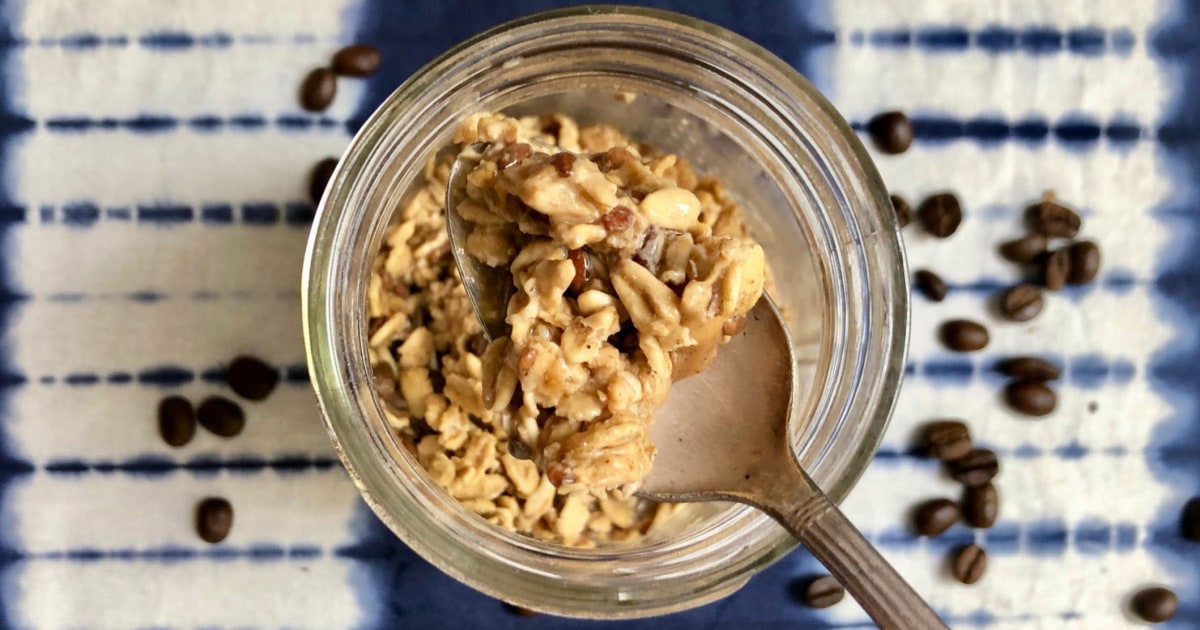
Overnight oats that combine blueberries, steel-cut oatmeal, plain Greek yogurt and walnuts are a terrific way to combine several healthy breakfast foods, Chew says. The fiber this breakfast provides can help lower your risk for stroke, coronary heart disease and high blood pressure, she adds. Try adding cinnamon and nutmeg to boost flavors.

Plain Greek yogurt

Yogurt is heated milk that gets combined with two types of “good” bacteria and then is left to ferment for a few hours. During that time, milk sugars change into lactic acid, which is thicker than milk and has a sharp flavor. This dairy product is a creamy, protein- and calcium-rich breakfast staple for many people.

Try to avoid yogurt with added sugars. Instead, go for plain Greek yogurt, a strained, thicker type of yogurt that’s higher in protein with less sugar than the regular variety. Packed with calcium, potassium and probiotics, Greek yogurt is a versatile and nutritious choice that promotes good gut health and helps control your appetite.

A half a cup of plain nonfat Greek yogurt contains:

— Calories:60.

— Fat:0.3 grams of fat.

— Carbohydrates:4 grams (including 3 grams of natural sugar).

— Protein:10 grams.

— Calcium:111 milligrams.

Enjoy Greek yogurt with fruit, nuts, honey or ground seeds mixed into it. Or, add a dollop of Greek yogurt as you scramble eggs or make whole-grain pancakes or muffins.

Prunes

Prunes are due for an image makeover. While sometimes overlooked, nutrition experts hail them for their health benefits, including at breakfast time. A 2022 study from the American Journal of Clinical Nutrition reported that five to six prunes eaten daily by postmenopausal women helped to preserve bone mass and reduce fracture risk.

— Calories (four prunes):90.

— Fat:0 grams.

— Carbohydrates:24 grams.

— Protein:10 grams.

— Calcium:20 milligrams.

— Potassium: 280 milligrams.

Even though it’s just 2{d2b09b03d44633acb673e8080360919f91e60962656af8ade0305d5d8b7e4889} of our recommended daily calcium intake, the calcium contained in prunes is important as 40{d2b09b03d44633acb673e8080360919f91e60962656af8ade0305d5d8b7e4889} of Americans don’t get their recommended intake of calcium through the foods they eat, according to Oregon State University.

Consider adding prunes with your other healthy breakfast choices, such as in oatmeal dishes. Or, sprinkle them over whole-grain toast with nut butter. You also can enjoy them as a pre-breakfast workout snack.

Tofu

Tofu is a thick, flavorless product of soybean curds that takes on the flavors of other foods and spices you pair with it. It comes in crumbles or blocks that are soft, medium firm or firm, and its texture makes it a popular substitute for eggs or meat.

Tofu is a great breakfast food because it’s a rich source of plant-based protein to help keep you full in the morning, and it contains many other nutrients such as folate (a B vitamin), choline (an essential nutrient) and minerals such as zinc, potassium, phosphorus and selenium.

A 3.5-ounce serving of firm tofu also contains:

— Calories:78.

— Fat:4 grams.

— Carbohydrates:3 grams (including 1 gram of fiber).

— Protein:9 grams.

— Calcium:200 milligrams.

To incorporate tofu into a healthy breakfast, cut it into small chunks and add it to vegetables for a veggie scramble. Or, add it to a breakfast burrito or smoothies, Hunnes says.

Walnuts

In addition to nut butters, a simple handful of nuts will add crunch, flavor and nutrients to your breakfast.

Walnuts in particular will help give your cardiovascular system a healthy start in the morning. The nuts are packed with omega-3 fatty acids, which are powerhouses for the heart and blood vessels. Daily walnut consumption also may help improve your mental health and well-being, according to a trial focused on academic stress that was published in the journal Nutrients.

An ounce of walnuts contains:

— Calories:185.

— Fat:18.5 grams (1.7 grams saturated fat, 13.4 polyunsaturated fat and 2.5 grams of monounsaturated fat).

— Carbohydrates:3.9 grams (including 2 grams of fiber).

— Protein:4.3 grams.

— Calcium:28 milligrams.

— Potassium:125 milligrams

Walnuts are also loaded with vitamin E, folate and magnesium. A few ways to enjoy walnuts in the morning include:

— Baking them with a little honey for a sweet, crunchy yogurt topping.

— Adding them to overnight oats, smoothie bowls and yogurt parfaits.

— Grabbing a handful to take with you for an easy morning snack.

Whole-grain bread

Whole grains are those that haven’t been refined to remove the outer shell (bran) or nutrient-rich germ (or embryo) inside the grain.

Examples of whole grains include:

— Bulgur.

— Oat.

— Quinoa.

— Rye.

— Whole-wheat.

— Farro.

— Teff.

Made into breads, whole grainsare handy breakfast foods that are portable and easy to prepare. They’re also full of nutrients such as fiber, protein and B vitamins.

One slice of whole-wheat bread contains:

— Calories:78.

— Fat:1 gram.

— Carbohydrates:14.3 grams (including 1.2 grams of fiber and 1.8 grams of sugar).

— Protein:3 grams.

— Calcium:40 milligrams.

For a nutritious breakfast, pair a slice or two of whole-grain bread with an egg, half an avocado, nut butter or a slice of your favorite cheese.

To get the healthiest whole-grain breads, you’ll have to read the ingredient label.

“Make sure each grain has the word ‘whole’ next to it,” Hunnes advises. “And watch out for added sugars. Go for the bread with four grams (or fewer) added sugars per slice. That’s still one teaspoon of sugar, but it’s better than 8 grams or more that are common in bread.”

Some final tips on breakfast planning

As you plan your breakfast, aim for a balance of protein, fat and fiber. Envision a plate that can be filled with these suggested serving sizes and items as shared by Chew:

— 3 to 5 ounces of protein, or about the size of your palm.

— A half-cup of fruits and veggies, or the size of your cupped hand.

— One cup of bread or grains, which is about the size of your closed fist.

When you can, try to enjoy local and seasonal produce for a nutrient-packed healthy treat, Chew advises.

More from U.S. News

Heart-Healthy Breakfast Ideas for a Busy Morning

The Best Heart-Healthy Snacks

8 High-Protein Breakfasts That Keep You Full

The Best Healthy Foods to Eat for Breakfast originally appeared on usnews.com

Update 04/21/23: This piece was previously published at an earlier date and has been updated with new information.

Virginia Sole-Smith on Kids, Weight, and Healthy Eating

Virginia Sole-Smith on Kids, Weight, and Healthy Eating

In an early episode of her podcast, Burnt Toast, Virginia Sole-Smith joked about starting a regular segment called “Can my kid eat that?” where the answer would always be “Yes!” A self-described anti-diet journalist, she wasn’t really joking: “I get a version of this question every single week, so I’m going to keep answering it.” How many days per week can a 2-year-old eat ice cream? “There are seven days in a week. Your child can have ice cream seven days a week. There is no law against this.” What about a 13-year-old who, left to their own devices, would eat an entire box of Oreos? “Pour a glass of milk — so they can dunk them?”

“Oreos come up a lot, man,” Sole-Smith says, laughing while snacking on a bowl of Cheez-Its in her home office in the Hudson Valley. “I mean, I like Oreos fine, but it’s really the fact that you’re not letting yourself have Oreos that makes it feel like Oh my God, I’ll be powerless over them.” She seems more amused than exasperated, though she finds herself repeating this point often — that restricting food only makes us more obsessed with it. A 41-year-old mother of two, she knows her generation has been programmed to believe that allowing their kids unlimited access to sugar and processed foods is unhealthy or even bad parenting. A central premise of her work is that, actually, it isn’t.

I’m a parent of a toddler, and my Instagram feed is full of advice from pediatric dieticians and guides for introducing your baby to kale and branzino. When I first came across Sole-Smith’s newsletter about how we’d all be better off if we chilled out about what’s in our kids’ lunch boxes, it felt like a relief. Since launching Burnt Toast on Substack in 2021, Sole-Smith has gained a following among millennials who recognize that they’d rather not pass on their screwed-up relationships with food and with their bodies to their kids. “We all know the diet culture we grew up with in the ’80s and ’90s did a lot of damage. We don’t want to be like our moms with their point counting,” she says. The problem is that most parents are still deeply afraid of having fat kids.

After publishing her first book, The Eating Instinct, about the U.S.’s cultural relationship to food, Sole-Smith heard from a lot of parents who were trying to do better. “It was clear that they really wanted their kids to feel good about their bodies and have a healthy relationship with food and not get eating disorders — but also to be thin,” she says. It’s not hard to understand why: Her reporting documents the many ways the world is horrible to fat people — children included. But she’s convinced that real progress isn’t possible until we all start to recognize and unlearn our anti-fat bias. Her new book, Fat Talk: Parenting in the Age of Diet Culture, argues that if we really care about raising healthy and happy children, we need to get over our fear of fatness.

Even before my daughter was born, doctors instilled in me the fear that I might make her too big. When I was diagnosed with gestational diabetes, my OB warned that if I didn’t follow a strict diet, the baby would gain too much weight, putting us both at risk for birth complications. The assumption that weight corresponds directly with health is reinforced at every pediatrician appointment, which typically begins with a weigh-in and assessment of where your child falls on the growth chart. And if it weren’t already clear where doctors stand, the American Academy of Pediatrics recently doubled down on its commitment to fatphobia: The organization’s new obesity guidelines recommend diets for kids as young as 2 and weight-loss medication and surgery for adolescents.

If you’ve grown up alongside messaging about the “childhood-obesity epidemic,” it may come as a surprise that the link between weight and health is far less straightforward than we’ve been led to believe. In Fat Talk, Sole-Smith lays out a robust body of research debunking the idea that high body weight alone is a cause of negative health outcomes. “The real danger to a child in a larger body is how we treat them for having that body,” she writes. That’s because it is clear that experiencing weight stigma is associated with all sorts of health issues including heart disease, diabetes, and high cholesterol. Making kids (or anyone) feel bad about their weight — including subjecting them to weight-loss interventions — is not only cruel but demonstrably bad for their physical and mental health.

Sole-Smith wants her readers to understand that there’s no harmless way to keep pursuing thinness — for your child or yourself. She knows it’s a tough pill to swallow. Her inbox is full of emails from women who read her newsletter but find themselves getting stuck. “A lot of them say, ‘I totally get what you’re saying. I don’t want to discriminate against people. But I personally cannot give myself permission to be fat, because I feel better if I’m thin,’” she says. “They’ll attribute it to health, but what they really mean is ‘Society makes my life easier when I’m thin.’”

By obsessing over thinness, Sole-Smith argues, we’re complicit in upholding a pervasive system of oppression with deep roots in racism and classism. But somehow, reading her work still feels more comforting than confrontational. She wants to help us recognize our biases — not to make anyone feel bad. “If I make every thin white woman feel like shit, they’re not going to engage and we’re not going to get anywhere,” she says. Sole-Smith knows that fatphobia is all around us, and she’s not offended by the fact that most people have internalized it. “I try to help people understand that it’s actually not about you,” she says. “I really fundamentally believe it’s a ‘hate the game, not the player’ situation.”

Her own evolution on these topics has been a multi-decade process. She grew up in Connecticut, where her dad was a political-science professor at Yale and her mother worked in insurance. As a thin kid, she didn’t feel like her body was viewed as a problem. “I was a really picky eater,” she says. “I lived on, like, spaghetti, peanut butter and jelly, turkey sandwiches, and strawberry yogurt until I was about 12.” She feels lucky her parents weren’t pushy or panicked about it. But she still had the sense that for the adults in her life, weight was something they had to think about a lot and manage. “When I came home from my freshman year of college, both my parents noticed in subtle ways that I had gained weight,” she says. “They weren’t harsh about it, but it was like, ‘Oh, your shorts are fitting differently.’”

After graduating, Sole-Smith spent the early 2000s writing weight-loss stories for women’s magazines like Glamour and Marie Claire. “That was a time where we weren’t calling them diet stories anymore. We were calling them ‘wellness’ or ‘portion control.’ ‘Eat smarter.’ ‘Eat whatever you want but not sugar,’” she says. Even then, advising women on how to change their bodies didn’t sit right with her. But her real shift of perspective came after her daughter Violet was born in 2013. At 1 month old, Violet stopped eating as a result of medical trauma and had to be put on a feeding tube.

Over the next year, Sole-Smith and her husband struggled to help their infant regain interest in food. “I’d spent my whole career trying to map out rules for how we eat,” she says. “They were all predicated on the idea that someone else knows better than you and if you follow these rules, you will be thin, you will be happy, everything will work.” But when Violet refused to nurse or take a bottle, even her doctors were at a loss. In the end, the approach that worked wasn’t about pressuring or rewarding her to eat. Instead, they had to help Violet relearn how to listen to her internal hunger cues — and trust her to decide when and how much she wanted to eat.

Trusting children to listen to their bodies is now a defining principle of Sole-Smith’s work. Having a baby with a feeding disorder, she learned firsthand that “obsessing over it doesn’t fix it — it makes it worse.” Even for parents fighting far more mundane dinner-table battles, research shows that exerting too much control over what your kid eats — whether it’s pressuring them to eat vegetables or restricting sweets — usually backfires. So what does “healthy eating” for kids look like? When it comes to feeding her daughters, who are now 9 and 5, Sole-Smith’s priority is respecting their autonomy. “It’s the power to say no, to be curious and try new things, and to decide when and how much they want to eat.”

Photo: Yael Malka

She has accepted that the reality of life with young children is sometimes that they eat Cheerios for three meals per day, and it’s fine. “Vegetables are the least important part of it to me,” she says. “They have their whole lives to decide if they want to eat kale.” Her pantry is stocked with Puff’d Cheez-Its, Extra Toasty Cheez-Its, and Goldfish — “Yes, that’s three different kinds of orange crackers” — plus Girl Scout cookies and Chewy chocolate-chip granola bars. A handwritten list of “Family Dinner Rules” hanging in the kitchen includes “No pressure/Listen to your body” and “You don’t have to earn dessert.” It’s not that she doesn’t care at all about nutrition, but she’s convinced that fixating on it leads nowhere good. “We know from research that the nutrition piece tends to work itself out,” she says. “If we’re serving a variety of foods, over the course of a week, kids will hit a lot of different food groups.”

That moms make up the majority of Burnt Toast’s 28,000 subscribers isn’t surprising. “Women are held to more rigid body ideals and parenting ideals,” Sole-Smith says. “We’re socially conditioned to be the ones who make the meal plans and worry about picky eating, and then worry when the pediatrician says they’re too high on the growth chart.” Fat Talk makes clear that our dysfunctional relationship with food is tightly wound up in misogyny and assumptions about motherhood. According to Sole-Smith, in almost every interview she has done with someone who struggled with disordered eating, they mention something their mother said or did that made things worse.

That’s not to say dads have no role in this: Sole-Smith writes that when she asked her readers what was stopping them from taking a nonrestrictive approach to food with their kids, the most common answer was “my husband.” She says a lot of the pushback she gets comes from men. “It’s like a greatest-hits album that they play: ‘It’s bad parenting.’ ‘It’s lack of willpower.’ ‘It’s people who are lazy and don’t care about eating well or exercising.’”

“I sometimes joke that my role in all this is to bring the thin white women along,” Sole-Smith says. It doesn’t bother her that her audience is mainly women: They’re the ones who are open to the change she’s advocating, which is deceptively radical.

For me, the permission to stop stressing about how often my 2-year-old eats only French fries for dinner has been a welcome relief. But after years of telling myself to just eat salad or jog a few more miles, I know I’m still a long way from viewing my body or my daughter’s with anything approaching neutrality. Truly relinquishing control is hard to do. “If you give up chasing weight loss, you invite in all of the shit that comes with being a fat person or even with being a less-thin person,” Sole-Smith says. But she has convinced me that it’s worth it to keep trying. The way she sees it, it’s really about the willingness to give up a little bit — or a lot — of privilege. She knows that’s scary. “But it’s also incredibly liberating.”

How can we make our brains prefer healthy food? – study

How can we make our brains prefer healthy food? – study

Frequent sugary food consumption can create the same bodily response as drug addiction, which can be passed down from mother to baby during breastfeeding, a new study has found. 

The peer-reviewed study, published in the journal Cell Metabolism, has found that what someone eats alters their brain’s reaction to food. 

The study explains that the brain can begin associating neutral signs with cravings, similar to Pavlov’s theory of association. Seeing the sign for a favorite patisserie can cause hunger and/or the drive to consume without the presence of hunger. 

The association between the stimuli, in this case the patisserie, and the resulting feeling of hunger or desire for food is subliminally through the central nervous system. In response, the body will release dopamine that will entice future actions.

WHY IS sugar addictive? (credit: DAVID DEWITT/THECOZYCOFFEE)

Sugar creates a strong dopamine response in the brain’s pathways that connect frontal lobe regions and the desire to eat sugar is further fueled by the body’s cells using the glucose for energy consumption.

How does a high-fat diet impact food cravings?

Scientists provided rats with a high-fat diet (HFD) and found that not only did the rats gain weight, but their dopamine signaling and functioning were also altered. The rats’ food preferences also changed.

When the scientists stopped the HFD, the rats showed a decreased desire for food.

The same experiment was carried out on mice and provided similar results. 

Is the same true for humans?

It was previously not tested whether the diet results shown in animals translate to humans. 

The study notes that this is an important question because it extends current models of obesity, which argue that genetic or trait-like factors predispose individuals for weight gain in an environment that is not conducive to weight loss. Furthermore, researchers theorize that if exposure to an HFD rewires brain circuits to impact preference and associative learning, then the cycle of overeating may begin with environmental exposure instead of (or in addition to) a predisposition.

To assess this, healthy, normal-weight participants underwent baseline assessment. Next, the participants were randomly assigned to dietary intervention with a high-fat, high-sugar (HF/HS) or a low-fat, low-sugar (LF/LS) yogurt 2 times a day, in addition to their normal diet, for 8 weeks. Subsequently, all subjects were reassessed (post-intervention session).

Participants were tested on designated days after an overnight fast.

Testing looked at BMI, hunger rating, and a blood draw. Subsequently, the participants received a granola bar for breakfast and performed a fat and sugar concentration preference test and a stop signal task, which tests inhibition responses by asking participants to respond as quickly as possible to a predetermined stimulus but to cease any response when a subsequently presented stop signal is displayed.

After a second blood draw examining glucose level, participants underwent fMRI acquisition during which they carried out a food anticipation and consumption task on a milkshake, showing that when faced with a choice of food products, either for immediate or later consumption, our brain anticipates the likely affect the food will have on us. 

Next participants underwent an associative learning task, learning about the relationship between two seemingly unrelated stimuli becoming connected. 

Results indicated that indeed the results on animals remained true for humans as well. Repeated exposure to energy-dense, HF/HS food, in the absence of body weight or metabolic change, can rewire brain circuits and shift dopamine-dependent associative learning and preference for particular foods. 

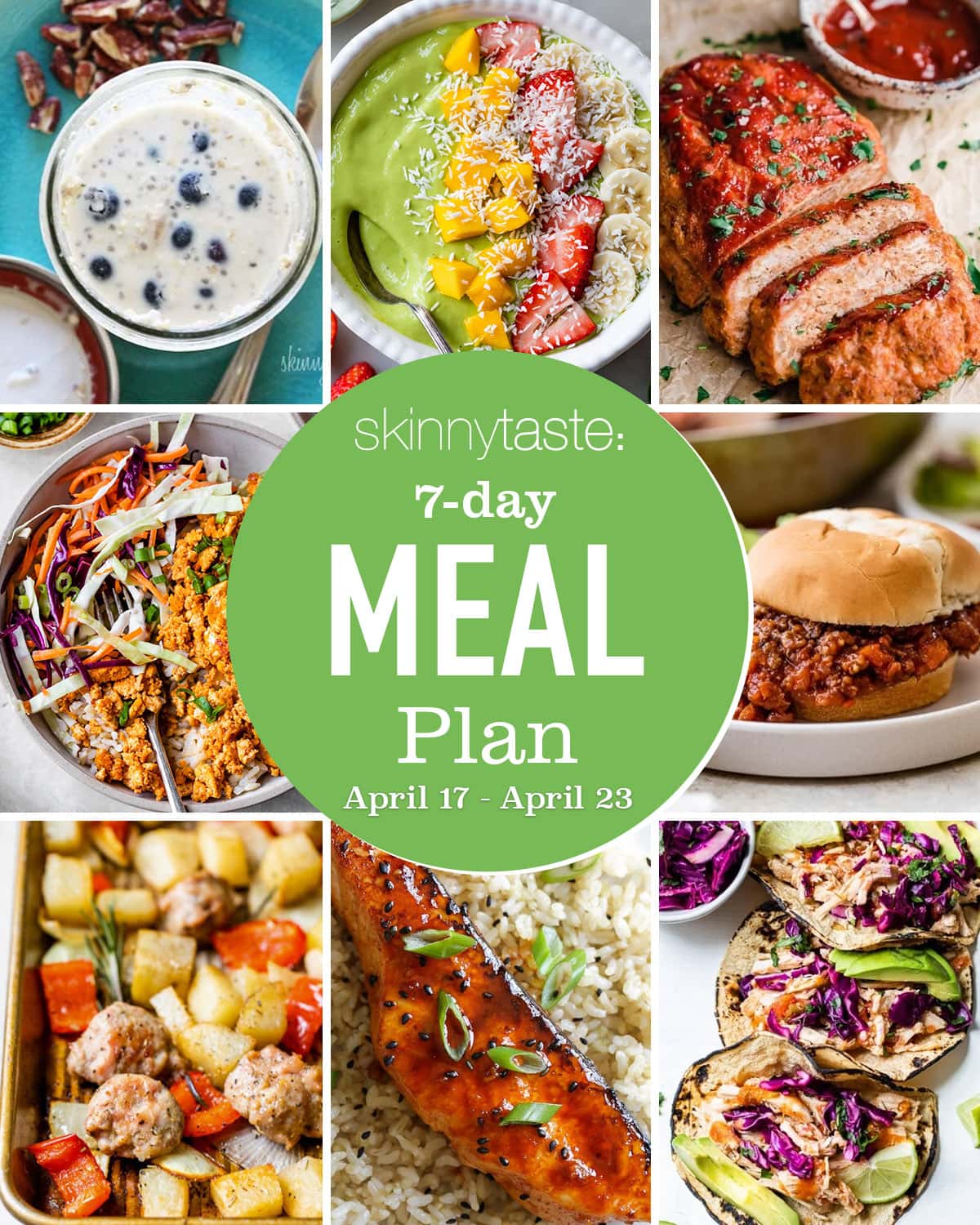
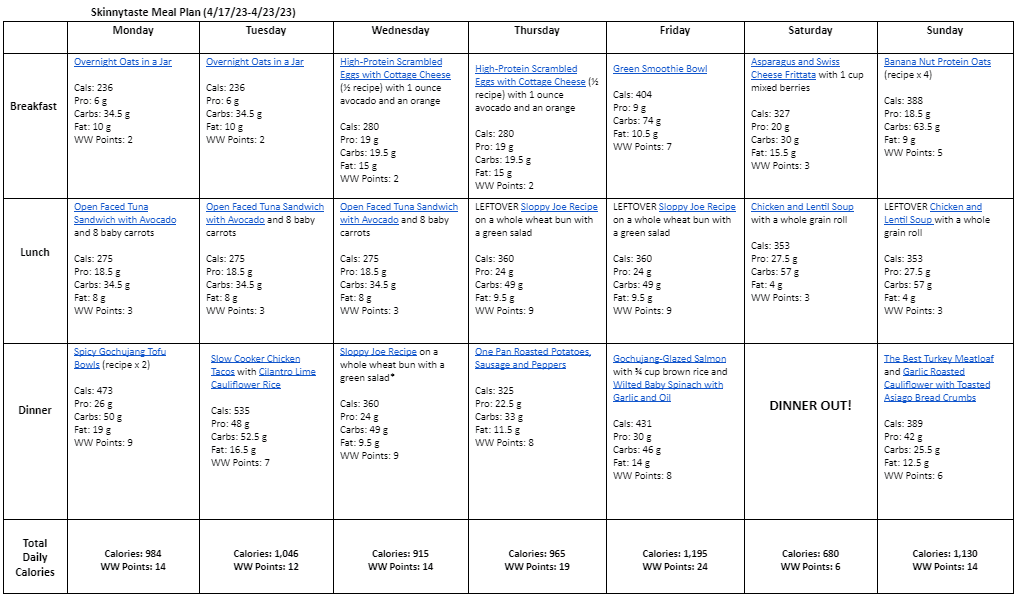
7 Day Healthy Meal Plan (April 17-23)

7 Day Healthy Meal Plan (April 17-23)
This post may contain affiliate links. Read my disclosure policy.

A free 7-day, flexible weight loss meal plan including breakfast, lunch and dinner ideas and a shopping list. All recipes include macros and Weight Watchers points.

7 Day Healthy Meal Plan (April 17-23)

Looking for quick lunch ideas? Try my Tuna Sandwich with Avocado or my Air Fryer Salmon Fish Sandwich. Want to meal prep? Check out my Honey Sriracha Chicken and Broccoli Meal Prep Bowls and my Tofu Poke Bowl. What’s your favorite?

With grocery prices soaring, many of us are having to adjust, scale back and/or get more creative with our meals. One of the absolute BEST ways to stay within a budget and maintain healthy eating habits is to MEAL PLAN. You can get more 5-day Budget Friendly Meal Plans by signing up for Relish+ (get a 14-day free trial here!)

Ultimate Skinnytaste Meal Planner

Skinnytaste Ultimate Meal Planner

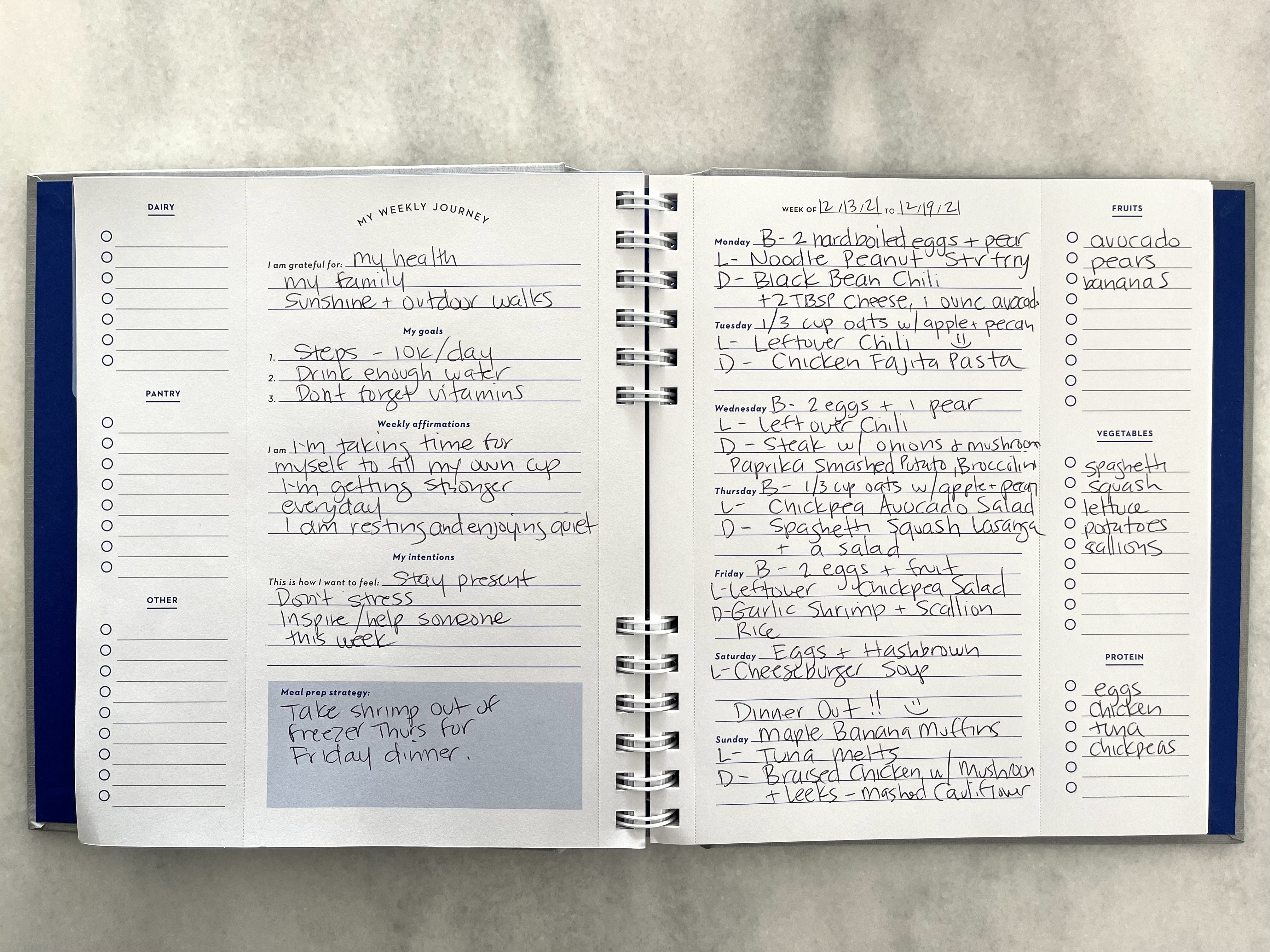
Get the Skinnytaste Ultimate Meal Planner! The 52 week spiral bound meal planner has weekly meal planning grids you can tear out and put on your fridge if you wish, a 12-week meal plan, 30 (15 new) recipes, and tear-out grocery lists. I love starting my week with gratitude, affirmations and intentions, so I included a space for that as well. I hope you will love this as much as I do!

Skinnytaste Ultimate Meal Planner

Buy the Skinnytaste meal planner here:

A note about WW Points

If you’re following Weight Watchers, all the recipes here have been updated to reflect the new Weight Watchers program, with points displayed under the recipe title. The ww button in the recipe card takes you to the Weight Watchers website where you can see the recipe builder used to determine those points and add it to your day (US only, you must be logged into your account). All cookbook recipes in the cookbook index are also updated!

About The Meal Plan

If you’re new to my meal plans, I’ve been sharing these free, 7-day flexible healthy meal plans (you can see my previous meal plans here) that are meant as a guide, with plenty of wiggle room for you to add more food, coffee, beverages, fruits, snacks, dessert, wine, etc. or swap recipes out for meals you prefer, you can search for recipes by course in the index. Depending on your goals, you should aim for at least 1500 calories* per day. There’s no one size fits all, this will range by your goals, your age, weight, etc.

There’s also a precise, organized grocery list that will make grocery shopping so much easier and much less stressful. Save you money and time. You’ll dine out less often, waste less food and you’ll have everything you need on hand to help keep you on track.

Lastly, if you’re on Facebook join my Skinnytaste Facebook Community where everyone’s sharing photos of recipes they are making, you can join here. I’m loving all the ideas everyone’s sharing! If you wish to get on the email list, you can subscribe here so you never miss a meal plan!

Meal Plan:

Breakfast and lunch Monday-Friday, are designed to serve 1 while dinners and all meals on Saturday and Sunday are designed to serve a family of 4. Some recipes make enough leftovers for two nights or lunch the next day. The grocery list is comprehensive and includes everything you need to make all meals on the plan.

MONDAY (4/17)
B: Overnight Oats
L: Tuna Sandwich with Avocado and 8 baby carrots
D: Spicy Gochujang Tofu Bowls (recipe x 2)

Total Calories: 984*

TUESDAY (4/18)
B: Overnight Oats
L: Tuna Sandwich with Avocado and 8 baby carrots
D: Slow Cooker Chicken Tacos with Cilantro Lime Cauliflower Rice
Total Calories: 1,046*

WEDNESDAY (4/19)
B: Scrambled Eggs with Cottage Cheese (½ recipe) with 1 ounce avocado and an orange
L: Tuna Sandwich with Avocado and 8 baby carrots
D: Sloppy Joe on a whole wheat bun with a green salad**
Total Calories: 915*

THURSDAY (4/20)
B: Scrambled Eggs with Cottage Cheese (½ recipe) with 1 ounce avocado and an orange
L: LEFTOVER Sloppy Joe Recipe on a whole wheat bun with a green salad
D: One Pan Roasted Potatoes, Sausage and Peppers

Total Calories: 965*

FRIDAY (4/21)
B: Green Smoothie Bowl
L: LEFTOVER Sloppy Joe on a whole wheat bun with a green salad
D: Gochujang-Glazed Salmon with ¾ cup brown rice and Wilted Baby Spinach with Garlic and Oil

Total Calories: 1,195*

SATURDAY (4/22)
B: Asparagus Frittata with 1 cup mixed berries
L: Chicken and Lentil Soup with a whole grain roll
D: DINNER OUT

Total Calories: 680*

SUNDAY (4/23)
B: Banana Nut Protein Oats (recipe x 4)
L: LEFTOVER Chicken and Lentil Soup with a whole grain roll
D: The Best Turkey Meatloaf and Garlic Roasted Cauliflower

Total Calories: 1,130*

*This is just a guide, women should aim for around 1500 calories per day. Here’s a helpful calculator to estimate your calorie needs. I’ve left plenty of wiggle room for you to add more food such as coffee, beverages, fruits, snacks, dessert, wine, etc.
**Green salad includes 9 cups mixed greens, 3 scallions, ¾ cup each: tomatoes, carrots, cucumbers, chickpeas and 6 tablespoons light vinaigrette.  Set aside 2 servings (with dressing on the side) for Thurs/Fri lunch.

*Google doc

If healthy eating extends our lifespan, why aren’t we forced to do it? | Science & Tech

If healthy eating extends our lifespan, why aren’t we forced to do it? | Science & Tech

The Journal of the American Heart Association recently published an article that estimates the benefits of complying with the World Health Organization’s (WHO) recommendations regarding the consumption of salt. In Australia alone — where the study was conducted — reducing sodium intake by 30{d2b09b03d44633acb673e8080360919f91e60962656af8ade0305d5d8b7e4889} over the next two years could prevent 1,700 annual premature deaths and 7,000 diagnoses of heart disease, kidney disease and stomach cancer.

Another 2021 analysis — published by the scientific journal Circulation — calculated that by meeting the goals of America’s National Salt and Sugar Reduction Initiative, which calls for a 20{d2b09b03d44633acb673e8080360919f91e60962656af8ade0305d5d8b7e4889} reduction in the consumption of packaged foods and a 40{d2b09b03d44633acb673e8080360919f91e60962656af8ade0305d5d8b7e4889} reduction in sugary drinks, about 490,000 deaths from cardiovascular disease could be prevented, along with 750,000 new cases of diabetes over the course of several decades.

The benefits of reducing sugar, salt, fat and heavily-processed foods would result in positive social transformations. Smart public policies are key to this. For instance, public awareness campaigns — such as those that encouraged seat belts in cars to drastically reduce accidents — are highly effective. If the negative consequences of a poor diet are clear, wouldn’t it be possible to achieve progress through nutrition by forcing people to eat healthy?

Manuel Franco, a professor of epidemiology at Johns Hopkins University, points out how he believes that notable reductions in the consumption of salt or sugar can occur: “[These habits] must be produced in the social environment, so that I don’t have to make the decision to choose between a food with a lot of salt and one with a little every time I go eat. That won’t work. People, especially those with fewer resources, have little time to cook and choose healthy options. It’s necessary to have policies that have already made the decision,” he explains.

Franco and other researchers have studied dramatic historical experiences that have led to such decisions being made. For instance, after the fall of the Soviet Union in 1991, the U.S. tightened its embargo against Cuba, which was heavily dependent on the USSR for subsidies. This combination of misfortunes caused an intense economic crisis on the island, known as the “Special Period.”

Cubans went from consuming 3,000 calories a day to around 2,200, while the scarcity of fuel forced them to walk everywhere, or use their bicycles. In a study published by the British Medical Journal, Franco showed that a radical change in lifestyle — which the islanders remember as a miserable period — produced benefits for their health.

The combination of diet and exercise led to a widespread loss of ten pounds per person across the country, improving many important health indicators. An analysis of the health of Cubans between 1980 and 2010 showed that this weight loss contributed to cutting deaths stemming from diabetes in half and those caused by coronary disease by a third. It also reduced the number of strokes.

Despite the positive results of that involuntary experiment, it’s unlikely that any society would support a government that would subject its people to rationing, no matter the improvements to health. In addition, according to nutritionist Juan Revenga, “there’s a very powerful industry around [unhealthy] food products that harms our health. Many jobs depend on it. They exist because the products are bought and they are bought because we like them.”

In recent years — driven by a broadening social and political awareness regarding the impact of diet on health — some measures have been taken that have reduced the consumption of salt and sugar, which, when combined with fat, make them attractive as processed foods. In Spain, the Association of Refreshing Drinks (ANFABRA) has promised a cumulative reduction of 53{d2b09b03d44633acb673e8080360919f91e60962656af8ade0305d5d8b7e4889} in the sugar content of its products between 2020 and 2025.

Last year, the Spanish government placed a limit on the amount of salt allowed in bread. It’s estimated that this single measure will reduce the average Spaniard’s consumption of salt — about nine grams per day — by around 20{d2b09b03d44633acb673e8080360919f91e60962656af8ade0305d5d8b7e4889}. However, even with this reduction, the remaining amount will still be above the two to five grams of salt per day recommended by the WHO.

In 2021, to bring down sugar consumption, the Spanish government increased the sales tax on sugary and sweetened beverages from 10{d2b09b03d44633acb673e8080360919f91e60962656af8ade0305d5d8b7e4889} to 21{d2b09b03d44633acb673e8080360919f91e60962656af8ade0305d5d8b7e4889}. An analysis of this policy by the Barcelona-based ESADE Business School’s Center for Economic Policy revealed that, while this tax hike had no effect on beverage consumption among medium and high-income households, it reduced consumption of sugary drinks by 13{d2b09b03d44633acb673e8080360919f91e60962656af8ade0305d5d8b7e4889} — or 11 liters per household — among the poorest third of Spaniards. It also resulted in a 10.5{d2b09b03d44633acb673e8080360919f91e60962656af8ade0305d5d8b7e4889} decrease in the consumption of high-sugar snacks among this lower-income demographic.

The value of sales taxes to modify behavior has also proven useful with harmful non-food products, such as tobacco. In Colombia, a government-mandated tripling of the price of a pack of cigarettes resulted in a 34{d2b09b03d44633acb673e8080360919f91e60962656af8ade0305d5d8b7e4889} overall decrease in consumption.

Beatriz Blasco Marzal, the general director of ANFABRA, believes that self-regulation “has shown that progress can be made” without limiting change to the “partial measures” that include taxes on soft drinks. She assures EL PAÍS that, in her sector — which accounts for 2.1{d2b09b03d44633acb673e8080360919f91e60962656af8ade0305d5d8b7e4889} of the total caloric intake of Spaniards — the professionals are “committed to reducing the consumption of sugar.”

She notes that drinks containing little or no sugar already account for 60{d2b09b03d44633acb673e8080360919f91e60962656af8ade0305d5d8b7e4889} of the beverage industry in Spain. In addition, she mentions other measures that have been taken by the industry, in partial recognition of the notion that many of the products sold are not completely healthy. “We have a commitment not to advertise our products to children under 13 years of age… and not to sell any type of soft drink in primary education centers and only low-calorie or no-calorie drinks in secondary schools.”

Ramón Ortega, a professor of bioethics at Nebrija University in Madrid, has explored other techniques to condition the behavior of groups of people regarding food, without restricting their freedom. “Paternalism is very present in our lives. One case is the seat belt, which [authorities] force us to use for our own good, without leaving us the freedom to choose… or the prohibition of certain substances, such as heroin.”

Ortega’s conception of “libertarian paternalism” would fall somewhere in the middle of these policies. It would consist of exploiting the biases of the population, in order to increase the probability that people make healthy decisions, without directly forcing them.

“An example is what was done in the cafeterias at Google’s headquarters. To reduce the consumption of soft drinks, they put the vending machines in less visible places than the water coolers,” Ortega explains. “With this measure, Google managed to increase water consumption by 47{d2b09b03d44633acb673e8080360919f91e60962656af8ade0305d5d8b7e4889} [among its employees].”

Other examples of these positive nudges described by Ortega — who recently wrote an article about the subject in The Conversation — are offering meat and fish with salad in school cafeterias, while still giving students the opportunity to buy chips. Or, as was done in some Argentine cities, restaurants were required to remove salt shakes from tables. If customers want extra salt, they must request it.

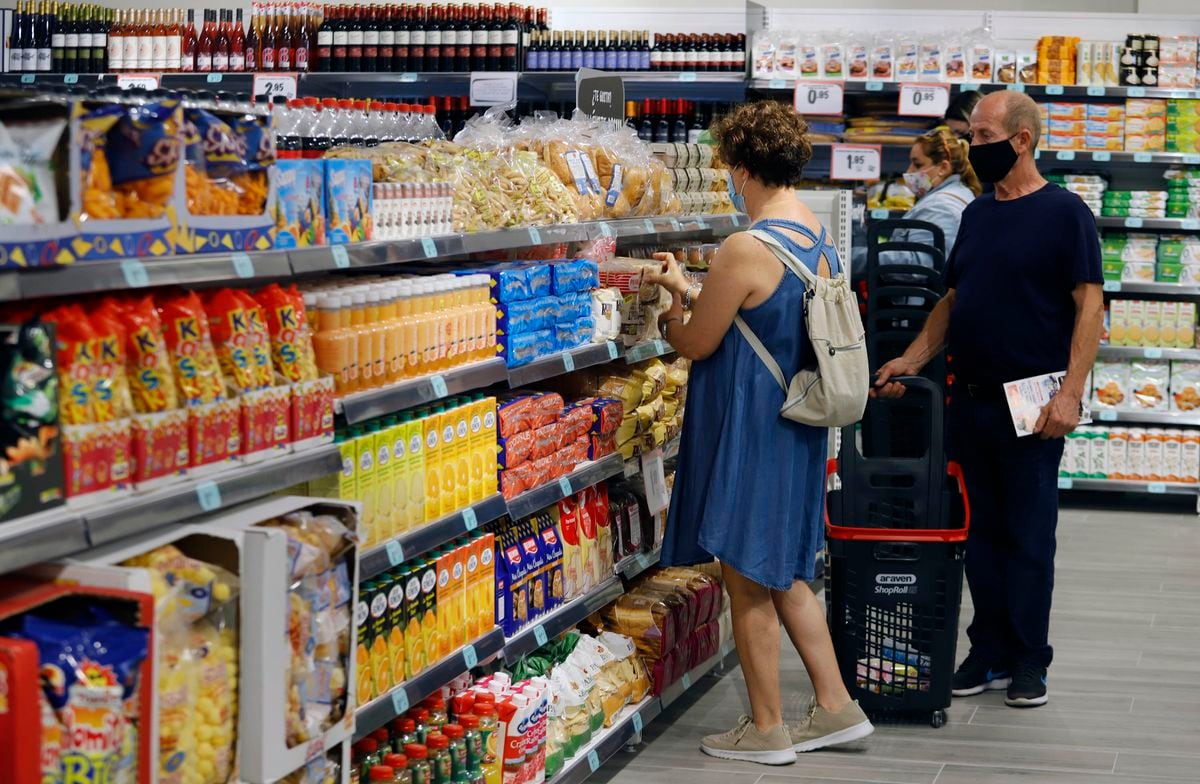
Ortega acknowledges that these policies “involve a certain level of manipulation, without seeking rational acceptance of the measures.” However, he considers this to be a positive alternative when compared to more restrictive public health measures. He also notes that the food-processing industry also exploits these cognitive biases to guide our behavior, “such as when basic foods — including meat or fish — are placed at the back of the supermarket, to make us pass by other products, such as sweets or chips.”

When the possibility of removing temptation (in the form of unhealthy food) from citizens is raised, an appeal is frequently made to the freedom of choice: for consumers and companies to pick what they wish to purchase and produce. However, such freedom is already conditioned. The large amounts of sugar, salt and fat in processed foods often result in combinations that are not found in nature, which have powerful effects on our brains. For instance, this is why we find water bland compared to sugar-flavored drinks.

Some researchers, such as Ashley Gearhardt, from the University of Michigan and Johannes Hebebrand, from the University of Duisburg-Essen in Germany, have analyzed the addictive capacity of some foods.

Gearhardt suggests that certain products — such as pizza, French fries or hamburgers — share some characteristics with addictive substances. This makes it difficult for us to control their intake, even though we know they’re not good for us. Many foods have been modified so that they generate more intense sensations of pleasure… similar to what happens with the coca leaf when it is processed into cocaine.

On the other hand, Hebebrand, who disagrees with the term “food addiction,” believes that excessive consumption of certain products is mainly due to their omnipresence in places such as supermarkets, as well as their wide variety, which maintains consumer interest.

Dr. Franco at Johns Hopkins believes that, for today’s consumers, going back to enjoying less-processed foods that contain smaller amounts of salt and sugar will be a long road.

“We’re not all going to become flexitarians overnight, nor are we going to suddenly enjoy bread without salt. We’re not going to be able to dedicate three hours a day to shopping and cooking, because that would require a brutal change in the economy and society.”

In addition, the food industry, “is not only very powerful, but it also feeds us,” Franco notes. “We can live without tobacco… but not without the food industry. We have to live together while we promote changes.”

Revenga — who questions the value of measures such as reducing salt in processed foods, “because they can give the feeling that it’s safe to consume a product that is still unhealthy” — believes that one of the important steps going forward is that, within schools, “they begin to teach what our mothers knew so well: to buy food and to cook it. Nobody knows how to do that anymore.”

Sign up for our weekly newsletter to get more English-language news coverage from EL PAÍS USA Edition

What to Eat This Week. Healthy Meal Plan for April 17, 2023

What to Eat This Week. Healthy Meal Plan for April 17, 2023

Welcome to Start TODAY. Sign up for our free Start TODAY newsletter to receive daily inspiration sent to your inbox.

You asked, we answered! Hundreds of Start TODAY members told us they wanted more healthy, balanced meal ideas to help them reach their health goals. This dietitian-designed meal plan will help you learn the building blocks of healthy eating gives and gives you the flexibility to ease into spring and summer.

Planning meals is one of the easiest ways to eat healthier, reduce decision fatigue — no more pondering what’s for dinner at 3 PM — and save money by skipping prepared and takeout meals.

This week’s assortment keeps you on track with easy-to-assemble breakfasts and lunches and low-lift dinners. To plan for the week ahead, review the recipes and make a list of any ingredients you need. Consider whether you’ll be cooking dinner every night or if you’ll double — or triple — a recipe to eat as leftovers later in the week. Then head to the store.

With your kitchen stocked and the menu planned, the next step is making your meals. That’s where the real fun comes: Enjoying a range of healthful fare from cold brew oats to creamy pasta to honey mustard-glazed salmon.

What to Eat This Week, April 17

Start TODAY meal plan for the week of April 17, 2023

>>Download this week’s meal plan

Monday

Tuesday

Wednesday

Thursday

Friday

>>Get this month’s workout plan: 30-day walking and resistance band routine

Breakfast

Eating breakfast is associated with better energy and concentration, so get your day off to the right start with these easy-to-make breakfast options.

Baked Eggs in Avocado

Shutterstock

Avocado and eggs go together like peanut butter and chocolate, don’t you think? While the avocado cups are broiling, spread a piece of whole-grain toast with Greek yogurt and top with smoked salmon and tomato. This will bolster the protein, fiber-rich carbs, and veggies in your meal. 

Cold Brew Overnight Oats

Courtesy Frances Largeman-Roth

Cold brew is the clever liquid base in these wholesome overnight oats. While oats are a fiber-rich satisfying breakfast, most people benefit from getting at least 20 grams of protein in the morning. To help hit this goal, pair your oats with a side of plain or low-sugar yogurt.

Whole Grain Toaster Waffle

Spread waffle with Greek yogurt (plain or low sugar) and top with berries.

Get more weekly meal plans

Lunch

This week’s lunches are multi-taskers — both could be transformed into a salad or sandwich. We’ve recommended one of each. Though leftovers are eater’s choice, we think the Edamame-Roasted Corn Succotash would be a perfect packed lunch.

Waldorf Tuna Salad with Greek Yogurt

Carrie Parente

Swapping traditional mayo for Greek yogurt doesn’t just save calories, it also boosts nutrition, providing some calcium and gut-nourishing live and active cultures. We suggest serving this dish over salad greens with whole grain crackers on the side, but you could also stuff it into a whole grain pita and have veggies on the side.

Rotisserie Chicken Sandwich

Spread whole grain bread with mayo and grainy mustard and stack with rotisserie chicken, lettuce and tomato. Serve with baby carrots on the side. For a vegetarian option, use mashed chickpeas.

Dinner

This week’s dinner lineup includes numerous timesaving tactics, such as bottled salad dressing, frozen edamame, and a one-pan dinner. If something catches your eye, make enough for leftovers, the ultimate timesaver.

Sheet-Pan Honey Mustard-Glazed Salmon with Broccoli and Sweet Potatoes

TODAY

A balanced sheet-pan dinner means you don’t have to have multiple dishes cooking at once, and clean up is a breeze.

Edamame-Roasted Corn Succotash

Nathan R. Congleton / TODAY

Since edamame is a plant protein, you can easily serve this dish as a meatless main course. However, if you want another easy protein source, have it with store-bought rotisserie chicken.

 Lemon Tarragon Chicken

FitMenCook(TM)

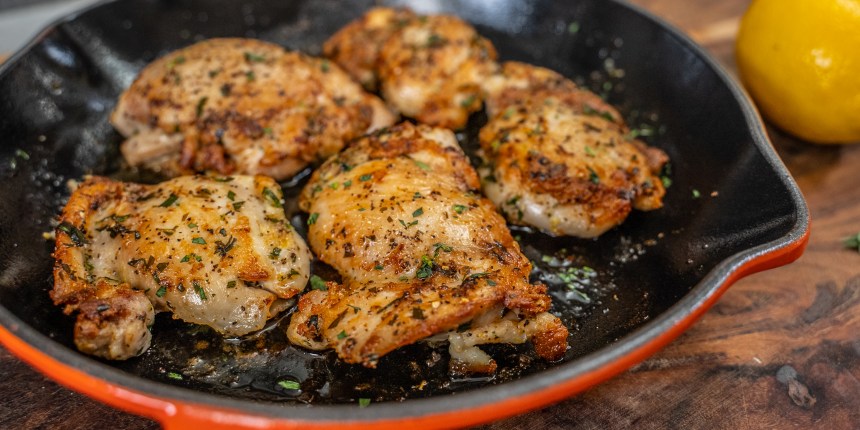
This is a dish that’s hard to mess up. The combo of lemon juice, olive oil and fresh tarragon elevates ordinary boneless chicken thighs in under 20 minutes. Serve over brown rice (from frozen, if desired) and roasted vegetables.

Creamy Kitchen Garden Pasta

Raymond Prado

Pasta is an easy and affordable meal, and this version is the perfect mix of creamy and nourishing. What could be better? 

Caesar Chicken Thighs with Broccoli

Nina Elder

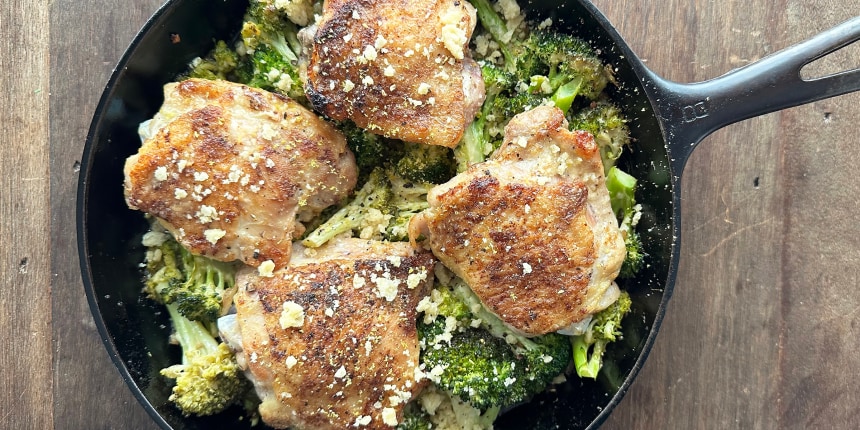
A lettuce-less Caesar? You bet! Store-bought Caesar dressing is an easy way to dress up your next chicken dinner. Since this Caesar has no croutons, serve with a slice of sourdough bread to sop up leftover dressing.

Snacks

Snacks that contain whole food sources of protein and fiber offer a winning formula that keeps you full for hours. Here are a few ideas:

● Medjool dates with nut or nutless butter

● Blueberries over ricotta cheese

● Celery spread with cottage cheese

● Baby carrots dipped in protein-boosted mashed avocado. To make the dip, mash chickpeas or white beans into avocado.

● Apple slices sprinkled with cinnamon and drizzled with tahini

Related: