Freezer Meals: How Long Does Food Actually Keep?

Freezer Meals: How Long Does Food Actually Keep?

The drive to prepare a meal can come in waves. You braise short ribs for hours on Sunday and struggle to gather the will to make ramen on Thursday. On those nights, it helps to have a freezer full of, well, braised short ribs. It’s cheaper than takeout, requires nearly no energy to reheat and feels like an act of care, past you taking care of present you.

The freezer is the best source of fully cooked dishes, homemade meals that need only to be heated through and, of course, desserts for sweet cravings. (It also remains a smart place to store many ingredients.)

And it’s as simple to stack up dishes in your freezer as it is to understand what keeps best and when to eat it.

You can freeze anything, though some foods are better suited and all start to diminish in taste, texture and scent over time. So it’s not exactly a matter of can, but should.

How water turns into ice largely determines what freezes best. As fresh ingredients with a lot of water freeze, their cell walls break, altering their texture. Cooking does something similar, which is why, with their broken cell walls, fully and partly prepared dishes maintain their integrity in the freezer.

The short answer is a year, maximum — not because the food will spoil, but because it’ll taste sad. (The Centers for Disease Control and Prevention has a cold food storage chart, for more precise timelines.) Two to six months is better for ensuring quality. So is wrapping the food tightly. Exposure to freezing air causes food to dehydrate, making it tougher and more bland (commonly known as freezer burn). The oxygen in that air can also cause food to oxidize, causing fats to taste rancid. Follow these tips for ideal food storage and be sure to label and date every item using masking or painter’s tape and a permanent marker, so you’re never left wondering what you have.

As long as your freezer is at or below zero degrees, bacteria can’t grow. The best way to tell if something seems fine to eat is to smell and touch it after it defrosts. If it smells rotten or rancid, and doesn’t feel the way it should — think mushy, mealy fish — trash it. If you’re not sure, take a little nibble. If it tastes good, enjoy.

But remember: The freezer is not a time machine. If leftover stew close to turning in the refrigerator is thrown in the freezer, it won’t thaw into impeccably fresh stew. Once thawed, it’ll return to its iffy state.

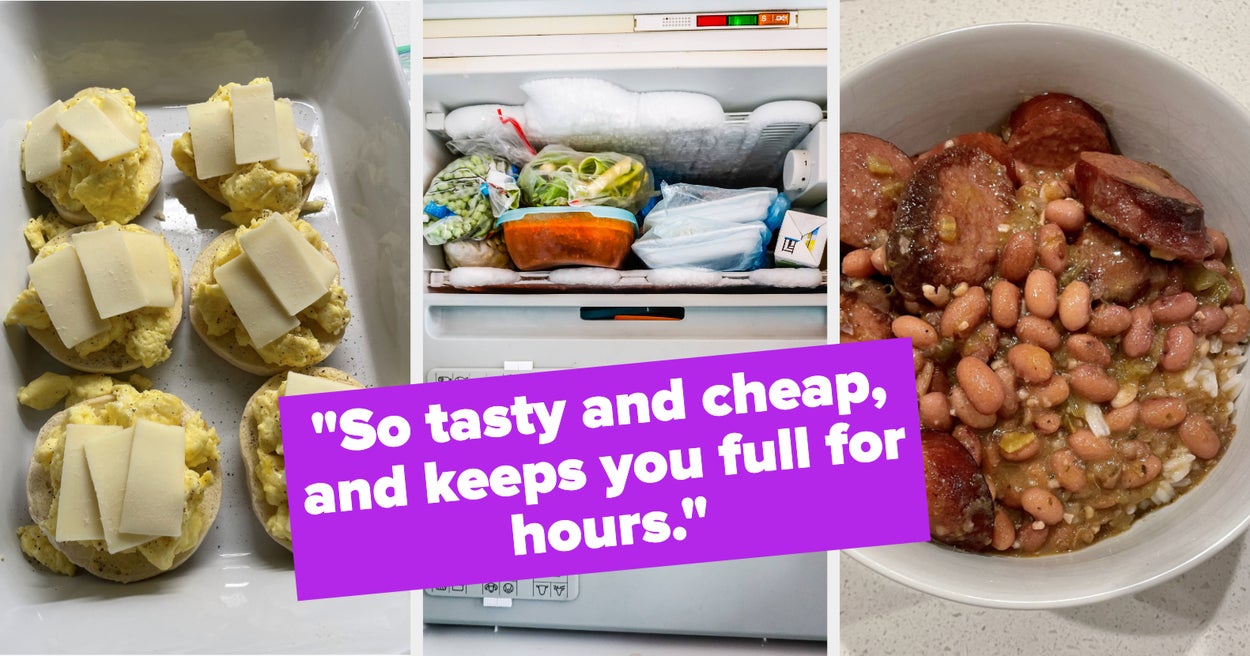
Soups, Stews and Braises: Anything liquid, soft or stored in sauce stays intact in the freezer. Stocks, soups (creamy, chunky or brothy) and stews of all kinds (from curries to chilies) can be ladled into sturdy airtight containers with at least an inch of room at the top. Braised meat or vegetables like collards should be smothered evenly in their sauce. Meatballs hold up especially well if stored in gravy, and from-scratch beans like these oven-braised ones keep their creamy, tender texture when packed with their starchy simmering liquid.

Ideally, thawing would occur overnight in the refrigerator, but these dishes can be quickly defrosted straight from the freezer. Run the sealed container under hot water until the ice block releases, then slide it into a saucepan. Add a scant inch of water, set over medium-high heat, cover, and simmer, occasionally breaking up the ice, until everything bubbles evenly for a few minutes.

Casseroles and Sweet or Savory Pies: Lasagna and anything like it — meat, vegetables or starch layered with sauce — are freezer heroes. Fully cooked casseroles can be wrapped tightly in their dishes, then unwrapped, covered with foil and heated in the oven. Leftovers can be portioned and sealed into smaller containers, then popped out and zapped in the microwave or baked until bubbling. A casserole with cooked components, such as tomato-meat sauce or creamed broccoli and rice, can be assembled in the dish, wrapped and frozen, then cooked through in the oven.

Double-crust pies should be assembled with raw dough and chilled filling. The whole thing should be frozen uncovered until rock hard, then wrapped tightly until it’s baked from its frozen state. Quiche should be fully baked, then frozen whole or in wedges. Thaw in the refrigerator, then heat in the oven.

All Manner of Dumplings: Any two-bite treat wrapped in dough — potstickers, samosas, mandu, pierogies, lumpia, phyllo rolls and the like — falls into a special freezer-friendly category. All can be fully assembled with cooked or raw fillings, then frozen uncovered on a tray until hard before being transferred to airtight containers. Then, boil, pan-fry, steam, deep-fry or bake them straight from their frozen state.

Dessert: Homemade sweets should complement your ice cream stash. Meringue, gelatin, cream desserts like trifles, and delicate baked goods like sponge cake or tuiles don’t hold up well, but nearly every other sweet does. Cookies can be frozen as dough or fully baked. Dough balls and slices should be baked from frozen; ready-to-eat cookies taste fresh when heated in a toaster oven. Cakes and breads can be kept whole or wrapped in slices, and those with a very fine-textured crumb, like this marble cake, keep especially well.

Cupcakes, brownies and other bars, waffles, unfilled cream puffs (and their savory gougères cousins) keep well in airtight containers and thaw quickly at room temperature. For goods meant to be eaten hot, a quick blast in the toaster oven refreshes their crispness.

Stocking a freezer may seem like a task for vigilant planners, but it’s especially helpful for those who don’t plot out a weekly meal plan. Anytime you’ve made too much of a dish that freezes well, wrap leftovers well and throw them in. And anytime you’re just too exhausted to cook, heat them up and be delighted with the meal you so lovingly made.
People Are Sharing The Budget Meals That Get Them Through When They’re Low On Funds

People Are Sharing The Budget Meals That Get Them Through When They’re Low On Funds
“Broke ‘Til Payday”: People Are Sharing The Budget Meals That Get Them Through When They’re Low On Funds

Meals for two (or more) made with pantry, refrigerator staples

Meals for two (or more) made with pantry, refrigerator staples

Seen through the eyes of an 18-year-old, our refrigerator looked pretty sad. Elliot was home a few weeks ago, for one short and oh-so-sweet week during his college spring break, and there he stood, leaning on the refrigerator door, looking in. I stood behind him and realized how desperate the situation was. 

We empty nesters don’t stock the fridge the way we used to. Sure, there are the required things: half-and-half, apples, almond butter, pickles, feta cheese and salad greens. We always have cans of tuna fish, cold seltzer and hot sauce. But Elliot, after finishing his midterms and slogging home, sleeping shamefully late and waking with dreams of bacon and eggs, bagels, strawberries, orange juice and muffins, just stared at the pickles and mayonnaise. 

I felt bad, then, seeing his messy hair and the hopeful face that gave way to disappointment. I made up for the lack of decent breakfast food by calling the corner market and ordering up a breakfast sandwich. I was forgiven, but thoughts of that empty refrigerator and how it’s filled at different times of our lives has stayed with me. 

There’s quite a difference in what we stocked for a houseful of kids (and even just a houseful of the youngest kid), and the food we eat as people with no children in the house. Even though we don’t regularly stock most of what Elliot was looking for that Saturday morning, we do make meals, and pretty good ones, too. They’re just different. 

Dinner in the nest that doesn’t feed children is often late, off-the-cuff, and unhurried. Sometimes, Paul and I take our plates to comfy chairs, pull on a blanket and eat while we talk about the day. No dinner table required. I didn’t think I’d like the empty-nest thing and, in many ways, I’m still adjusting. But those late, quiet and cozy dinners are a perk of having no children in the house. 

Paul and I have gotten good at making up dinners. We are experts at looking in the refrigerator, pushing around the olives, hot sauce and mayonnaise, and making a decent meal.The nice thing about feeding two people? There’s no pressure for a balanced meal. Without young people, without mouths that demand carbohydrates, and without feeling guilty if there aren’t the proper amount of vegetables, we are free. We are free to have cheese for dinner. Or a sandwich. 

One meal Paul and I ate recently, which was born of necessity and which turned out to be a keeper centered around mushrooms. They were bought on a whim, left in a little brown bag, and nearly forgotten in the back of the fridge. We also had a wheel of cheese, the kind you might pick up for guests or to go to a party. (And here’s a happy life tip: You shouldn’t wait for a party to eat a wheel of creamy cheese. You can do that on say, a Tuesday night.) Anyway, with very few options, I sautéed the mushrooms with herbs until they released their liquid and darkened and became crispy. I warmed the cheese and then tumbled the cooked mushrooms over top. We scooped the cheese with spoons, working hard to be sure there was exactly enough cheese to divide it equally among each bite of mushroom. It was a dinner born of what-we-haves, and turned into a food lover’s dream: rich, creamy cheese, crisp, chewy mushrooms, herbs, just a touch of salt. Use spoons to get it all from plate to mouth, as we did, and pile it up on crusty bread. Just do it when it’s late and quiet and you’re very hungry. It tastes best this way. 

I’m adding here a recipe that is good for serving to young people (read: it has carbohydrates and meat) and all the other generations, too. This is a mostly pantry staple meal, made with simple ingredients and with big rewards. I’m practicing for food like this because Elliot will be home from college soon. The cool thing about this dish is that it’s all cooked together: pasta, tomatoes, pancetta and all. Doing so creates a deeply flavorful dish, where the pasta is infused with the tomato, rather than just sitting in it. The pancetta adds a salty, meaty dimension and it’s all finished with a touch of butter — just a bit — for a silky and slightly creamy finish. You’ll notice this recipe calls for dried herbs. I use plenty of dried herbs all winter and into spring, while I wait for my garden to blossom and give the flavorful bits. Until then, there are lots of flavor to be found in jars of herbs. Dried basil has a soft, sweet taste, just right with tomatoes and salty meat. 

Paul and I both love to have a little bit of baked something around the house, a plate on the counter of something buttery and sweet. It’s usually something that’s good with coffee or tea, and OK to nibble on late at night, too. I like to bake scones, because they come together easily and are indulgent enough — but not over the top (no bellies filled with butter cream.) We all are coconut lovers here, and what I love best about it is its ability to go with anything. It’s equally at home with sugar and chocolate as it is with chiles and herbs. It’s kind of like the friend you admire, who can talk to and get along with anyone, from any walk of life. In these scones, unsweetened coconut is lightly toasted and mixed with lemon, sugar and butter to make a tender, sweet and moist treat, perfect for mornings, later afternoons or as a light dessert. You’ll notice the recipe calls for grating cold butter into the flour mixture, a technique taught to me and which I use for anything I want to be flaky and tender, like pie crust, biscuits and scones. 

Elliot is coming home soon. By the time this page is in print, there will be exactly 25 days until he comes home for the summer. Then, he’ll be home for about 60 days. That’s 60 mornings where he will be searching the fridge for bagels and juice, and 60 nights when I’ll be making square meals with grains, protein, vegetables and dessert. 

Yes, I am counting the days. Once he’s home, I’ll savor those days and nights and try hard to keep the fridge stocked with young people food: all the bread, meat, juice and sugar he can eat. 

Crispy Mushrooms and Melty Cheese

Serves 4

Olive oil

4 cups mixed mushroom caps, sliced

Kosher salt

1 large garlic clove, sliced

2 sprigs fresh thyme (or 1 heaping teaspoon dried)

Black pepper

1 4-ounce wheel brie

Crusty bread, for serving

  • Heat the oven to 350 degrees and place the cheese in a small, oven-proof dish. Bake the cheese for 15 minutes. 
  • In a cast-iron or other sturdy skillet, heat a swirl of olive oil over medium-low heat. Add the mushrooms, season with salt and cook, stirring occasionally, until they release their liquid. Stir in the garlic, thyme and black pepper. Continue cooking until the liquid evaporates and the mushrooms become browned and crisp, 10 minutes. 
  • Remove the cheese from the oven and scrape the mushroom mixture over top. Serve right away, with bread for scooping. 

Pasta In Tomatoes, Pancetta and Herbs

Serves 4

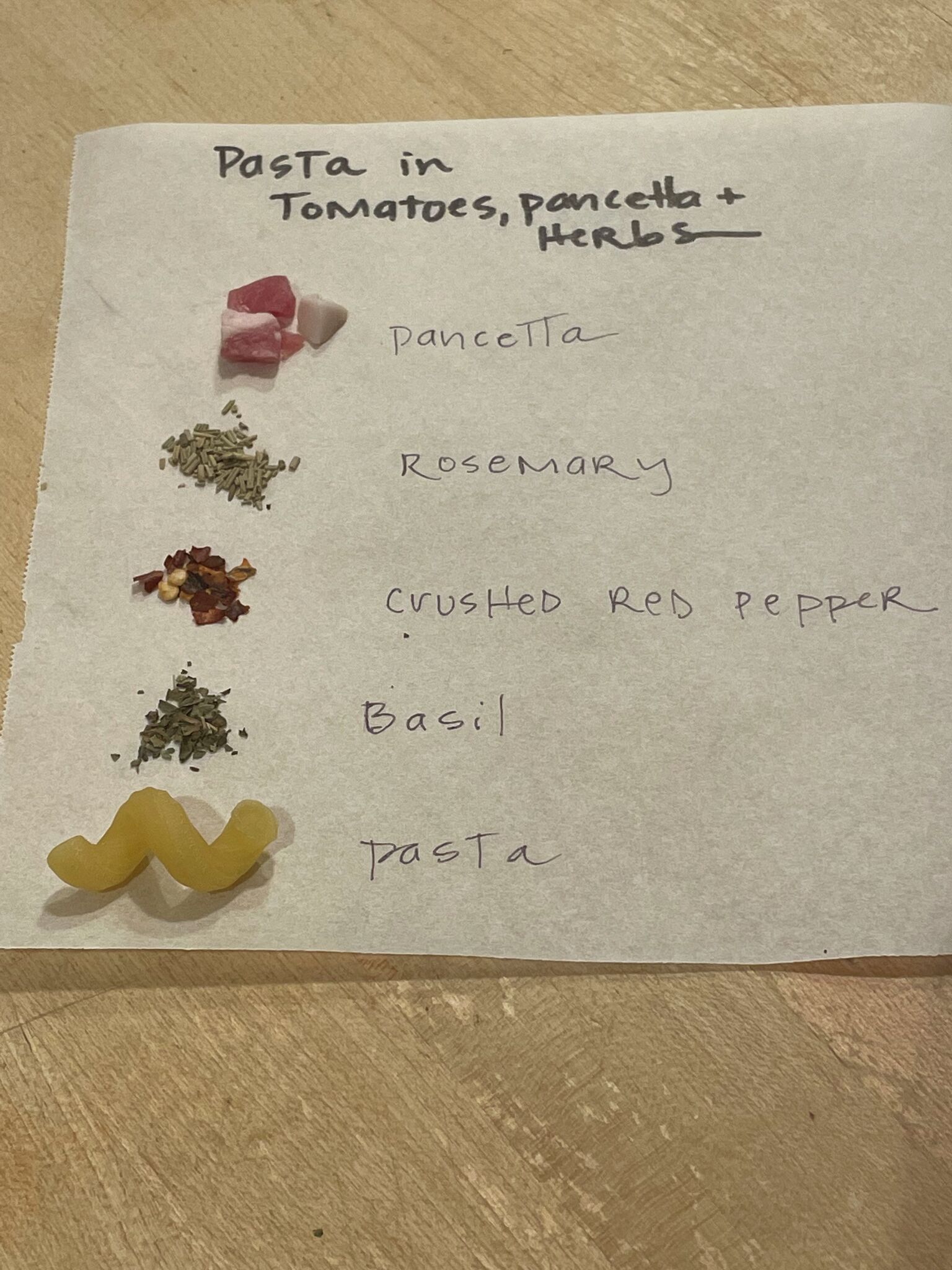
4 ounces pancetta, chopped

1 teaspoon dried rosemary

2 (14-ounce) cans cherry tomatoes, with their juices

3 cups water

Kosher salt

Pinch crushed red pepper

12 ounces pasta, about 3/4 of a standard box

1 tablespoon dried basil

1 tablespoon unsalted butter

Grated Parmesan cheese, for serving

  • In a medium-sized pot set over medium-low heat, cook the pancetta for a few minutes, until it’s rendering its fat and softening up. Add the rosemary and cook until the pancetta is  just beginning to brown around the edges. Remove to a plate and set aside, leaving the rendered fat in the pan. 
  • Add the tomatoes and water, season with salt and bring to a simmer. Add the pasta and stir, cooking for 9 minutes, or just 1 minute less than directed on the pasta package. Stir in the butter and the basil, add the pancetta back to the pan, taste and season with more salt if desired. 
  • Serve right away with plenty of cheese. 

Lemon Coconut Scones

Makes 8

2 cups all-purpose flour

1 tablespoon baking powder

½ teaspoon kosher salt

½ cup sugar

½ cup unsweetened, finely shredded coconut, toasted

Grated zest of one lemon 

1 stick very cold unsalted butter                                                                                                                                                                                                                                                                                                                                                                                                
½ cup half-and-half, plus 1 tablespoon

1 egg

2 tablespoons raw sugar, for topping

  • Heat the oven to 350 degrees and cover a baking sheet with parchment paper. 
  • Whisk together the flour, baking powder, salt, sugar, coconut and lemon zest. Use the large holes of a box grater to grate the stick of butter, then stir it into the flour mixture. Use your fingers to distribute evenly. Pour in the ½ cup half-and-half, add the egg and mix until the dough is just combined.  
  • Turn the dough out onto a work surface and gather it into a ball. Place the dough on the prepared pan and press to a disc that is about 8 inches wide. Use a sharp knife to cut the disc into eight equal pieces (you could also make two smaller discs and create 16 mini-scones.) Separate each piece, just a bit. Brush the tops with the tablespoon of half-and-half and sprinkle the raw sugar over all. 
  • Bake for 20 minutes, until the scones are spongy on top and golden brown on the bottom. If you choose to make smaller scones, bake for 18 minutes. 

Easiest 5-star meals to make in Disney Dreamlight Valley

Easiest 5-star meals to make in Disney Dreamlight Valley

Posted: 2023-04-06T08:00:20

Up to date: 2023-04-06T08:46:22

Disney Dreamlight Valley has over 180 recipes, earning your choice amongst the ideal and the most valuable pretty difficult. So here are the most worthwhile and simplest 5-star recipes you really should be generating in-sport.

Regardless of whether you are on the lookout to complete a couple of quests to gain some Dreamlight or make some a lot more Star Cash, cooking is a useful useful resource in Disney Dreamlight Valley. It can aid you with so numerous areas and is one particular of the most effective resources of the two revenue, boosting friendship ranges, and now hovering.

Article continues soon after advertisement

Having said that, producing superior-high-quality, 5-star foods can be a actual problem in the game, in particular when so lots of are so demanding to make. The good news is, there are a handful of that are perfectly well worth earning, so below are the simplest-to-make meals and the most beneficial 5-star recipes in Disney Dreamlight Valley.

Alternatively, if you are pondering whether you must pick up the game although it is in early accessibility, look at out our review to find out our verdict on no matter whether Disney Dreamlight Valley is worthy of it.

Posting continues soon after advertisement

Disney Dreamlight Valley cookingDisney / Gameloft

5-star recipes are sophisticated but can be undeniably well worth it.

Easiest 5-star recipes to make in Disney Dreamlight Valley

Even though there are a fair couple diverse 5-star recipes that are reasonably effortless to make, the Huge Seafood Platter is our major suggestion due to the fact lemons are simply observed on trees in Dreamlight Valley alongside with the relieve of getting seafood by fishing.

Underneath, we have detailed the most straightforward 5-star foods you can make in Dreamlight Valley alongside with what you will need to have to make them.

a ratatouille, one of the easiest 5-star recipes in disney dreamlight valleyThe Ratatouille is one of the most straightforward foods in Disney Dreamlight Valley.

Most precious 5-star meals in Disney Dreamlight Valley

Specified 5-star meals can make a terrific profit in Disney Dreamlight Valley. We endorse cooking the Potato Leek Soup or Ratatouille because of to the ease of gaining people methods from crops.

Article continues after advertisement

If you are searching to make a couple of additional coins by cooking 5-star foods in Disney Dreamlight Valley, these are the finest meals you can make.

All 5-star recipes in Disney Dreamlight Valley

Down below are all the 5-star recipes you can make in this cozy recreation. There are 20 exclusive foods in full for you to consume, offer, or gift to other people.

Appetizers

Entrees

Dessert

All those are all the 5-star recipes you’ll want to assure that you’re making in Disney Dreamlight Valley. Though gathering the substances, consider a seem at some of our Dinsey Dreamlight Valley guides:

Report continues immediately after ad

How to unlock Simba & Nala in Disney Dreamlight Valley | Disney Dreamlight Valley: How to complete Stars to Guidebook Us | Disney Dreamlight Valley: How to complete Eyes In The Dark | Disney Dreamlight Valley Disney Parks Star Path | How to hover in Disney Dreamlight Valley | Disney Dreamlight Valley recipe listing | How to get Disney Dreamlight Valley Twitch drops | Disney Dreamlight Valley Quality Shop | Disney Dreamlight Valley: How to feed animals | Disney Dreamlight Valley: What is the Purple Potato | Is Disney Dreamlight Valley co-op or multiplayer | How to discover Stitch | Disney Dreamlight Valley: All fish places

5 Simple Swaps for More Nutritious Meals

5 Simple Swaps for More Nutritious Meals

You may have go-to recipes for your meal-prepped lunches and weeknight dinners, but have considered how to shake them up to add some more nutrition? For a low lift, you can give your favorite foods a major nutritional boost.

Do you usually add mayo to your Caesar salad? Try using avocado instead to infuse the dish with heart-healthy fats. And instead of topping that salad with your typical croutons, try getting your crunch factor from antioxidant-rich pecans (toasted, of course).

If you typically use cream cheese and/or sour cream to make your spinach-artichoke dip, try subbing in Greek yogurt to achieve that tangy creaminess with some added protein.

The world is your swappable oyster.

1. Mayo → mashed avocado

Avocados offer creamy-dreamy goodness with a hefty dose of fiber, heart-healthy fats and potassium. The green-hued fruit has undeniable star power that shines through in just about any dish. As if you needed more proof than guac, there are salads with avocado and avocado toast … I could go on and on. So, I will! Mashed avocado makes for a scrumptious spread for sammies and wraps. One important note: It has to be ripe so it’s creamy enough to spread. (If you find it’s too stiff, you may need to mash it in a bowl with a fork before spreading.) I use about 1/4 to 1/3 avocado per wrap, and you can slather it right down the center or around the entire perimeter. If you choose to use it on a sandwich, you may want to toast your bread first so the bread doesn’t break apart. And don’t tell anyone: I even use avocado instead of mayo in my Caesar Dressing.

Caprese Caesar Wrap

Joy Bauer

2. Croutons → toasted pecans

Crunch! Crunch! That’s the sound of crispy satisfaction coming straight from your salad bowl. No, they’re not croutons, they’re toasted pecans, which offer a similar texture and feel but with heart-healthy fats and antioxidants. And the flavor? Buttery, nutty and gently sweet. Note that toasting pecans intensifies the flavor and crunch, so it’s a must. Here’s the easiest way to make toasted pecans.

Grilled Chicken Caesar Salad

Courtesy Joy Bauer

3. Brown rice → farro 

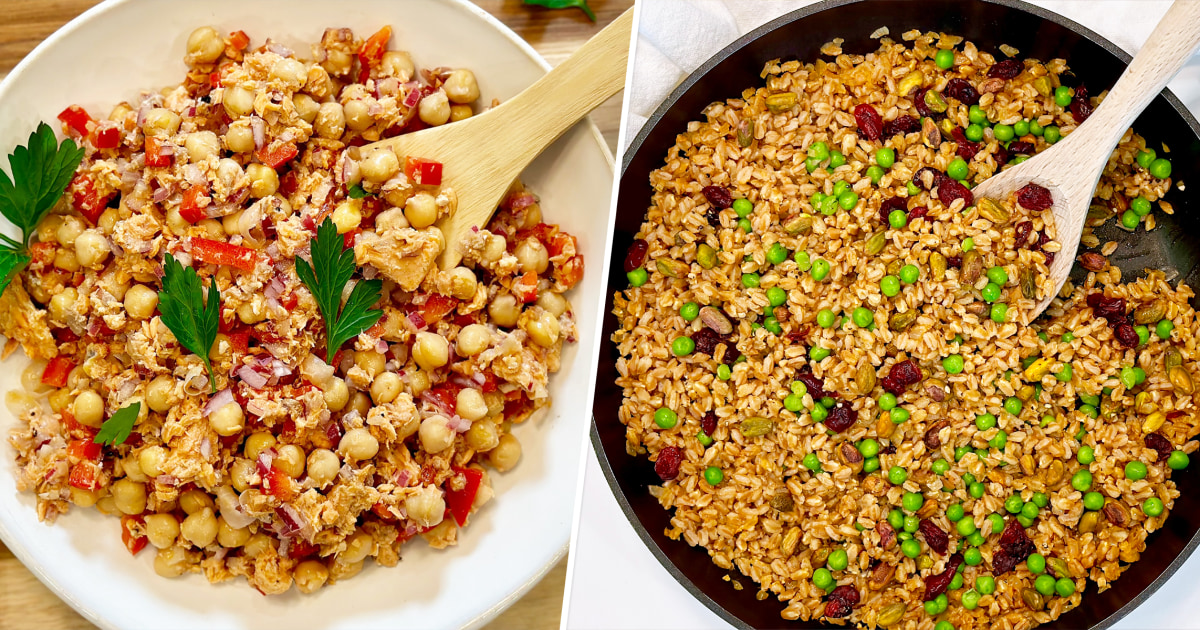
Brown rice is an obvious winner. The whole grain delivers vitamins, minerals and some fiber, and it’s versatile enough to complement to just about any meal. While brown rice has earned a regular spot in many homes, farro is an ancient grain worth getting to know. That’s because it provides more than double the amount of fiber and protein compared to brown rice and is just as easy to make. It has a lighter flavor than brown rice, slightly nutty and a bit sweet (some even say with subtle hints of cinnamon). I love its texture — it’s chewy and puffy, so it’s quite filling and satisfying. It’s an ideal side to meat, chicken and fish, but it’s also great chilled and added to any sort of cold salad. In fact, I make a Farro Pilaf with various aromatics and tasty mix-ins like pistachios and dried cranberries that’s always a crowd-pleaser.

Joy Bauer's Farro Pilaf
Joy Bauer’s Farro PilafJoy Bauer

4. Sour cream → Greek yogurt

Sour cream is the topping of choice for baked potatoes, chilis, tacos and nachos. But I personally have a thing for Greek yogurt when my dish needs a dollop of deliciousness. Unlike regular yogurt, Greek yogurt is strained, making it thicker, tangier and more similar to sour cream in texture and taste, with the added perk of extra protein. Add a spoonful or two to these Loaded Sweet Potatoes or this Butternut Squash Chili, and dig in!

Baked Feta Spinach-Artichoke Dip

Joy Bauer

5. Canned tuna → canned salmon

If you’re going to go fish, why not try canned salmon? All canned fish are packed with protein and are a budget-friendly way to hit your weekly fish quota. And of course, there’s no need for canned tuna to be canned for good, but swapping to salmon offers a number of benefits, including more heart-healthy omega-3 fats and bone-strengthening vitamin D. Now that’s the reel deal! Try this Wild Salmon and Chickpea Salad for a scrumptious fix.

Joy Bauer's Wild Salmon and Chickpea Salad
Joy Bauer’s Wild Salmon and Chickpea SaladJoy Bauer

Give Lenten meals a fresh take with fruity salads

Give Lenten meals a fresh take with fruity salads

When I think of Lent I envision rejuvenation along with fresh options for meal times. This is week No. 3, and my focus is on fruit and how to incorporate these beauties into fabulous dishes to stand alone or pair with a light protein. The freshness of fruits with a protein option makes a meal filled with an abundance of flavors for family and friends. I realize produce is on the expensive side, but you as the home cook can curtail or replace different ingredients by using replacement alternatives that are perhaps less expensive in a recipe.

Salads are a refreshing, nutritional option for lunch and dinner service. I like to pair these beauties with a light soup, crackers, bread sticks or crusty bread, thus keeping the meal to the lighter side during the Lenten season.