ChatGPT’s Cocktail Recipes Are ‘Actually Very, Very Good’

ChatGPT’s Cocktail Recipes Are ‘Actually Very, Very Good’

Two weeks in a row, ChatGPT botched my grocery list. I thought that I had found a really solid, practical use for AI—automating one of my least favorite Sunday chores—but the bot turned out to be pretty darn bad at it. I fed it a link to a recipe for cauliflower shawarma with a spicy sauce and asked it to compile the ingredients in a list. It forgot the pita, so I forgot the pita, and then I had to use tortillas instead. The following week, I gave it a link to a taco recipe. It forgot the tortillas.

How is AI going to revolutionize the world if it can’t even revolutionize my groceries? I vented to my colleague Derek Thompson, who’s written about the technology and its potential. He told me that he’d been using ChatGPT in almost the reverse way, by offering it cocktail ingredients he already had in his pantry and asking for drink recipes. I decided to give it a go, and soon enough I was sipping a pleasant mocktail made with jalapeño and seltzer.

The AI—at least in its free iteration—was pretty bad at gathering information from a random website link in an orderly fashion, but it did a good job playing with the ingredients that I provided. It is adept at a kind of creative synthesis—picking up on associations between words and pairing them in both familiar and novel ways to delight the user. Understanding why could give us a richer sense of how to deploy generative AI moving forward—and help us avoid putting it to wrongheaded, even harmful uses.

In addition to being a dismal grocery shopper, ChatGPT has struggled in the past to do basic math. We think of computers as logical and exacting, but ChatGPT is something different: a large language model that has been trained on big chunks of the internet to create associations between words, which it then “speaks” back to you. It may have read the encyclopedia, but it is not itself an encyclopedia. The program is less concerned with things being true or false; instead, it analyzes large amounts of information and provides answers that are highly probable based on our language patterns.

Some stochasticity or randomness—what the computer scientist Stephen Wolfram calls “voodoo”—is built into the model. Rather than always generating results based on what is most likely to be accurate, which would be pretty boring and predictable by definition, ChatGPT will sometimes choose a less obvious bent, something that is associated with the prompt but statistically less likely to come up. It will tell you that the word pours finishes the idiom beginning with “When it rains, it …” But if you push it to come up with other options, it may suggest “When it rains, it drizzles” or “When it rains, it storms.” As Kathleen Creel, a professor of philosophy and computer science at Northeastern University, put it: “When you give it a prompt, it says, Okay, based on this prompt … this word is 60 percent most likely to be a good word to go next, and this word is 20 percent, and this word is 5 percent.” Sometimes that less likely option is inaccurate or problematic in some way, leading to the popular criticism that large language models are “stochastic parrots”: able to piece together words but ignorant of meaning. Any given chatbot’s randomness can be dialed up or dialed down by its creator.

“It’s actually not in the business of doing something exactly,” Daniel Rockmore, a professor of math and computer science at Dartmouth College, told me. “It’s really in the business of doing something that’s super likely.” That distinction is meaningful, even in the realm of routine chores: Giving me a grocery list that is likely to be right isn’t the same as giving me a grocery list that includes everything I need. But when it comes to putting together a mixed drink based on a set of given ingredients, there isn’t necessarily one right way to do things. “You can get a shitty cocktail, but you kind of can’t get a wrong cocktail,” Rockmore pointed out.

As if to test Rockmore’s theory, Axelrad, a beer garden in Houston, recently ran a special called “Humans vs. Machines,” which pitted ChatGPT recipes against those constructed by human mixologists. The bar prompted ChatGPT to design a cocktail—for example, one inspired by the Legend of Zelda video-game series—and then tested it against one made by a bartender. Patrons could try each concoction and vote for their favorite. The bar ran the competition four times, and the robots and humans ended up tied. ChatGPT’s remake of Axelrad’s signature Blackberry Bramble Jam even triumphed over the original.

Lui Fernandes, a restaurant and bar owner who runs a YouTube channel about cocktail making, has likewise been toying with the technology. He told me that ChatGPT’s recipes are “actually very, very good,” though far from flawless. When he started pushing the limits of conventional ingredients, it “spit out some crazy recipes” that he would then have to adjust. Similarly, when my editor offered ChatGPT an objectively awful list of potential ingredients—Aperol, gin, half a beer, and a sack of frozen peas—it suggested he make a “Beer-Gin Spritz” with a garnish of frozen peas for a “fun and unexpected touch.” (You can always count on editors to attempt to break your story.) ChatGPT may understand based on its training data that vegetables can sometimes work as a drink garnish, like celery in a Bloody Mary, but it couldn’t understand why peas would be an odd choice—even if the drink itself was odd, too.

“Every now and again, it’s gonna throw up something which is totally disgusting that it somehow thinks is an extension of the things we like,” Marcus du Sautoy, a mathematician and professor at the University of Oxford, told me. Other times its choices might inspire us, like in the case of the Blackberry Bramble Jam. It is also, I should say, excellent at writing original recipes for classic and familiar drinks, having read and synthesized countless cocktail recipes itself.

What we’re basically talking about here is creativity. When humans make art, they remix what they know and toy with boundaries. Cocktails are more art than anything else: There are recipes for specific drinks, but they always boil down to taste. In this simple, low-stakes context, ChatGPT’s creative synthesis can help us find an unexpected solution to a quotidian problem.

But this creativity has limits. Giorgio Franceschelli, a Ph.D. student in computer science and engineering at the University of Bologna who conducted a study on these models’ imaginative potential, argued over email that the technology is inherently restricted, because it leans on existing material. It cannot achieve transformational creativity, “where ideas currently inconceivable … are actually made true.”

Although ChatGPT may help us explore our own creativity, it also risks flattening what we produce. Creel warned about the “cultural homogeneity” of cocktail recipes produced by the bot. Similar to how recommendation algorithms have arguably homogenized popular music, chatbots could condense the cocktail scene to one that just plays the hits over and over. And because of how they were trained, AI tools may disproportionately offer the preferences of the English-speaking internet. Fernandes—a Brazilian immigrant who, in tribute to his heritage, chooses to focus on South and Latin American spirits that other bars may overlook—found that the bot struggled to balance cachaça or pisco cocktails. “It wasn’t actually able to give me as good of a recipe as when I asked it about bourbon, rye, or gin,” he said. If we’re not thoughtful about how we use AI, it could lead us toward a monoculture beyond just our bars.

Technology experts and bartenders alike told me that we should think of AI-generated cocktail recipes as a first draft, not a final product. They encouraged a feedback loop between human and bot, to work with it to home in on what you want.

And this advice expands beyond cocktails. Rockmore proposed treating its responses as “a suggestion from someone that you don’t really know but you think is smart” rather than considering the tool to be “the all-knowing master oracle that has to be followed.”

Too often, it seems, we’re turning to AI chatbots for answers, when perhaps we should be thinking of them as unreliable—but fun and well-read—collaborators. Sure, they’ve yet to save me any time when it comes to things that I need done precisely. But they do make a nice spicy margarita.

The best cheap kitchen gadgets in 2023

The best cheap kitchen gadgets in 2023

All products recommended by Engadget are selected by our editorial team, independent of our parent company. Some of our stories include affiliate links. If you buy something through one of these links, we may earn an affiliate commission. All prices are correct at the time of publishing.

The best kitchen gadgets make certain cooking tasks easier without taking over your drawers. What’s more, some of the most useful ones won’t break the bank. All the recommendations on this list are either products I use currently, or more affordable versions of something I decided to splurge on after years of cooking. Not every item is essential, but they’re all things I’ve come to appreciate when I need to get dinner on the table quickly.

Victorinox Honing Steel

Victorinox Swiss Classic Honing Steel

Victorinox

There are few things worse than cooking with a dull chef’s knife. It’s unsafe and a waste of time. You need a way to maintain your blades, and a good place to start is with a honing steel. Contrary to popular belief, a honing steel won’t sharpen your knives; what it will do is realign the blade. With consistent use of one, you can get away with actually sharpening your blades once every six months to a year. Almost any model will do the job, but for an affordable option, consider the 10-inch Swiss Classic Honing Steel from Victorinox. It comes with a comfortable handle that makes mastering the motion of honing a knife easy. Best of all, it costs less than $30.

Lavatools PT12 Javelin Digital Instant Read Thermometer

Lavatools

If you cook meat, you need to get yourself an instant-read thermometer. It will take all the guesswork out of braising, searing and roasting animal protein, making those dishes safer to eat and more delicious.

There are plenty of affordable instant-read thermometers out there, but I like the $27 Lavatools Javelin. It’s not the fastest thermometer on the market – taking about four to five seconds to deliver a temperature reading – but it’s accurate to within a single degree Fahrenheit. The Javelin is also magnetic, so you can stick it on your fridge or knife holder for easy storage. Best of all, the casing is IP65-certified against water and features an antimicrobial coating Lavatools claims will inhibit 99.9 percent of pathogen growth. Oh, and you can buy the Javelin in nine different colors, including a cheerful “Wasabi” green hue.

OXO Good Grips Food Scale

OXO Good Grips Food Scale

OXO

OXO Good Grips Food Scale

OXO’s scale has a handy pull-out display that makes it easy to read the scale even when you have a large bowl on top. Plus, it also comes with an imperial/metric toggle.

After an instant-read thermometer, one of the few items I think everyone should have in their kitchen is a food scale. I know what you’re thinking: aren’t food scales only useful for baking? The answer is no. They will streamline every aspect of your cooking by allowing you to do away with measuring cups, while also giving you more accurate measurements overall. A scale is also essential if you’re calorie counting or tracking your macros.

After trying a few different scales, I like this OXO Good Grips stainless steel model. At under $60, the OXO model is a bit pricier than other food scales but it comes with a few features that set it apart. The first is a handy pull-out display that makes it easy to read the scale even when you have a large bowl on top. Plus, it also comes with an imperial/metric toggle. It’s handsome, too, with a design that’s easy to clean.

Prepworks by Progressive Magnetic Measuring Spoons

Prepworks by Progressive Magnetic Measuring Spoons

Progressive International

I’ll admit, sometimes it’s not practical to use a food scale to sort out ingredients, and you need to turn to a measuring spoon. After owning a few different models over the years, I’ve come to swear by magnetic ones. They’re easier to separate and subsequently easier to clean. Prepworks by Progressive makes a thoughtfully designed set where each spoon features both a round and narrow end. The latter is perfect for measuring spices since it can fit in most jars.

Microplane Professional Series Grater

Microplane Professional Series Grater

Microplane

Microplane Professional Series Grater

Microplanes make it much easier to grate and zest ingredients, and they’re much easier to maneuver over bowls and other dishes than standard box graters.

If you’re like me, you probably bought a box grater at the start of your cooking journey only to find out it’s terrible. I’m here to tell you there’s a better way to grate cheese and zest limes, and it’s called a Microplane. There are a few different variants, but they all offer the same advantages over a box grater. Being smaller, a Microplane is easier to maneuver over bowls and other dishes. As for what model to buy, I like the Professional Series line for its wide blade and clean design. For zesting, you want to go for the “Fine” model. The “Ribbon” variant is also great if you want to shave chocolate and cheese.

Zwilling Handheld Vacuum Sealer Machine

Zwilling Fresh & Save Handheld Vacuum Sealer

ZWILLING

In the last few years, vacuum sealers have become affordable enough that most home cooks can add one to their kitchen. They’re a great way to reduce waste since meat and produce stored in airless bags will last longer. The right one can also help you reduce plastic waste. Zwilling makes an affordable handheld model that supports an ecosystem of reusable bags and containers that are also on the budget-friendly end of the spectrum. The bags are freezer- and dishwasher-safe, so you can easily sanitize them after storing meat in them. The only thing to complain about the Zwilling vacuum sealer is that it charges over micro-USB(!).

Zulay Silicone Utensil Rest

Zulay Silicone Utensil Rest

Zulay Kitchen

Zulay Silicone Utensil Rest

Before moving to Portugal, my neighbor gifted my partner and I a silicone utensil rest. Since then, this simple tool has been an indispensable part of my kitchen arsenal.

Before moving to Portugal, my neighbor gifted my partner and I a silicone utensil rest. Since then, this simple tool has been an indispensable part of my kitchen arsenal. Once you start cooking at the stove, it helps to have all your tools right in front of you. A utensil rest helps with that while reducing the amount of cleanup you have to do afterward. Once you’re done, you can just toss it into the dishwasher. Best of all, you can buy one for about $10.

Cuisinart Electric Kettle

Cuisinart JK-17P1 Cordless Electric Kettle

Cuisinart

Cuisinart JK-17P1 Cordless Electric Kettle

An electric kettle is a must-have kitchen essential, and Cuisinart’s JK-17P1 boils water faster, looks nice on a countertop, and best of all, won’t break the bank.

While an electric kettle is nether essential for cooking or preparing tea and coffee, it can make both those tasks faster, safer and easier. You can spend a lot to buy a kettle with multiple temperature settings, but unless you’re a tea connoisseur, I don’t think that’s a feature most people need. Cuisinart’s JK-17P1 boils water faster, looks nice on a countertop, and best of all, won’t break the bank.

Crate and Barrel Salt Cellar

Acacia Salt Cellar

Crate and Barrel

Acacia Salt Cellar

Crate and Barrel nifty and attractive acacia wood salt cellar comes with an attached lid so that the two parts never get lost or separated.

Shortly after reading Salt, Fat, Acid, Heat, and learning the importance of salting dishes from within, I bought my first box of kosher salt. I didn’t have a good way to store it at the time, so I used a small bowl whenever I went to cook. The problem with that approach was that the salt would dry out if I left the bowl out. A salt cellar solves that by adding a lid to the bowl. Crate and Barrel makes a nifty (and attractive) acacia wood model that comes with an attached lid so that the two parts never get lost or separated.

Tips For Barbecue Cooking While on Charter

Tips For Barbecue Cooking While on Charter
Grilling on a boat
The grill is a system like any others on a boat. It needs to be used and maintained safely.  
LightItUp/stock.Adobe.com

Special delivery: Sign up for the free Cruising World email newsletter. Subscribe to Cruising World magazine for $29 for 1 year and receive 3 bonus digital issues.

No question about it: Bareboat charters and hamburgers go together. Most bareboats have a barbecue grill in the cockpit (they’re scarce in Europe, so check first), and grilling is perfect for no-fuss dinners that keep galley time to a minimum and let you to enjoy the sunset outdoors.

But the grill is a system like any others on a boat. It needs to be used and maintained safely.  

For starters, spend as much time having the check-out crew show you how to operate the grill as they do showing you the engine. Nearly every charter company has done away with charcoal (oh, the horror of live coals!) in favor of propane. Before you leave the check-out dock, have them light the grill to make sure it heats properly, and be sure you have enough propane for the duration of your adventure. Make sure the grill is bolted solidly to the rail so that you don’t feed dinner to the fishies. Also ask if any marinas in your planned cruising area prohibit grill usage; some have safety rules at the dock.

Barbecuing aboard is far different from grilling at home. Your backyard isn’t rolling with passing wakes, and you likely have no stray lines near the home grill, let alone a Bimini top. Safety for the crew and boat is your first concern, followed by perfect burgers, steaks or fish. Never—ever—try to grill while the boat is underway. That’s just asking for trouble. And if you have a flare-up (did you remember to trim all the excess fat from the meat?), a spray bottle with water can knock down the flame. On many grills, simply closing the lid will put out any flares.

Every grill has its own personality, with hot spots, cold spots, being fast or slow to heat, or just plain being cantankerous. Unless you bring a mitt, potholders, a meat thermometer and tongs, you should not expect to find them on board. 

While many propane grills have temperature gauges, trust me on this: You can’t trust them. Better to use the “Mississippi test.” Hold your hand 3 to 4 inches above the hot grill and count one Mississippi… two Mississippi…. Two to three Mississippis before you have to remove your hand is high temp for burgers. Medium is three to four Mississippis, and low heat is six to 10. Propane barbecues should be heated long enough so that the meat sears when it’s placed on the grill.

Want to start a fight? Ask people whether meat should be flipped during cooking. Some chefs say you should flip meat at least twice so that the sear will keep the juices inside and the food won’t end up welded to the grill. But flipping continually is also the easiest way to create a dry burger or steak. If you think something is cooking too fast, just move it to the outside of the grill, where the heat is lower. 

shrimp and scallops being grilled on a boat
There’s nothing quite as enjoyable as the smell of fresh fare sizzling on a grill while watching the sunset in your own semiprivate “backyard” in the BVI.
Andrew Parkinson

Burgers have a tendency to grow upward as they cook, and some chefs try to smash them flat with a spatula. No! Goodbye, juices. Instead, pat them gently. Don’t make them too thin. Make a little dent in the center of each patty before you start grilling, and the problem is solved. That dent also gives you a spot to add some zip with a splash of Worcestershire sauce, which soaks in quickly and gives a distinctive flavor.  

After placing food on the grill, close the lid to circulate the heat evenly—but never leave the grill unattended. Don’t get sucked into watching another boat trying to anchor, or go to fix yourself something rummy and cold.  

And with burgers, don’t forget the bun. It’s hard to beat fresh-from-a-Bahamas-bakery buns. Lightly coat them with butter on the grill side, and watch them like a hawk so that they don’t turn to charcoal. French brioche buns with high egg/butter content are delish, as are toasted onion rolls.

Want to start another fight? Ask someone about seasonings. For burgers, we’ve been successful with a little Kosher or sea salt, ground black pepper, perhaps a dash of garlic powder, all rubbed gently into the meat before grilling. My wife swears by Cavender’s Greek seasoning, which is a good substitute for salt and pepper. Bring it with you because it’s not available everywhere.  

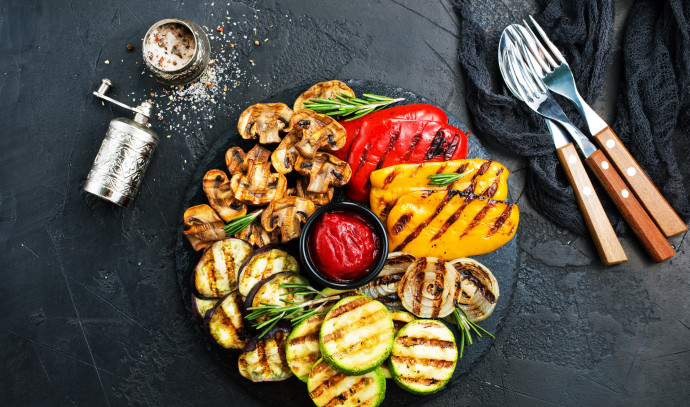
Don’t stop at grilling burgers or steaks. Throw some veggies on the barbie too. Grilled fruit is the new dessert. Grilled watermelon or pineapple is a delight. Brush slices lightly with olive oil, grill for five to six minutes, and turn once. Yum. The same goes for grilled onions or peppers (seasoned with herbs). Or brush peach slices with amaretto, grill two minutes a side, and serve with whipped cream. Mmm. 

As for how long to keep all these things on the grill, the correct answer is: not too long. Grill heat, burger thickness, a breeze blowing—these all affect the cooking time. Instead of using a stopwatch, look for the burger to get juicy or “sweat” on top. At that point, flip the patty, check the time, and cook one or two minutes less than the first side. Cheeseburgers? Add the cheese with about two minutes to go, and close the lid to melt the cheese. 

One last warning: A barbecue takes surprisingly long to cool off, so keep fingers, kids and canvas items far away until it is truly cold. Pay attention to your barbecue and grill safety, and you’ll find yourself humming Jimmy Buffett’s “Cheeseburger in Paradise.”

How can we make our brains prefer healthy food? – study

How can we make our brains prefer healthy food? – study

Frequent sugary food consumption can create the same bodily response as drug addiction, which can be passed down from mother to baby during breastfeeding, a new study has found. 

The peer-reviewed study, published in the journal Cell Metabolism, has found that what someone eats alters their brain’s reaction to food. 

The study explains that the brain can begin associating neutral signs with cravings, similar to Pavlov’s theory of association. Seeing the sign for a favorite patisserie can cause hunger and/or the drive to consume without the presence of hunger. 

The association between the stimuli, in this case the patisserie, and the resulting feeling of hunger or desire for food is subliminally through the central nervous system. In response, the body will release dopamine that will entice future actions.

WHY IS sugar addictive? (credit: DAVID DEWITT/THECOZYCOFFEE)

Sugar creates a strong dopamine response in the brain’s pathways that connect frontal lobe regions and the desire to eat sugar is further fueled by the body’s cells using the glucose for energy consumption.

How does a high-fat diet impact food cravings?

Scientists provided rats with a high-fat diet (HFD) and found that not only did the rats gain weight, but their dopamine signaling and functioning were also altered. The rats’ food preferences also changed.

When the scientists stopped the HFD, the rats showed a decreased desire for food.

The same experiment was carried out on mice and provided similar results. 

Is the same true for humans?

It was previously not tested whether the diet results shown in animals translate to humans. 

The study notes that this is an important question because it extends current models of obesity, which argue that genetic or trait-like factors predispose individuals for weight gain in an environment that is not conducive to weight loss. Furthermore, researchers theorize that if exposure to an HFD rewires brain circuits to impact preference and associative learning, then the cycle of overeating may begin with environmental exposure instead of (or in addition to) a predisposition.

To assess this, healthy, normal-weight participants underwent baseline assessment. Next, the participants were randomly assigned to dietary intervention with a high-fat, high-sugar (HF/HS) or a low-fat, low-sugar (LF/LS) yogurt 2 times a day, in addition to their normal diet, for 8 weeks. Subsequently, all subjects were reassessed (post-intervention session).

Participants were tested on designated days after an overnight fast.

Testing looked at BMI, hunger rating, and a blood draw. Subsequently, the participants received a granola bar for breakfast and performed a fat and sugar concentration preference test and a stop signal task, which tests inhibition responses by asking participants to respond as quickly as possible to a predetermined stimulus but to cease any response when a subsequently presented stop signal is displayed.

After a second blood draw examining glucose level, participants underwent fMRI acquisition during which they carried out a food anticipation and consumption task on a milkshake, showing that when faced with a choice of food products, either for immediate or later consumption, our brain anticipates the likely affect the food will have on us. 

Next participants underwent an associative learning task, learning about the relationship between two seemingly unrelated stimuli becoming connected. 

Results indicated that indeed the results on animals remained true for humans as well. Repeated exposure to energy-dense, HF/HS food, in the absence of body weight or metabolic change, can rewire brain circuits and shift dopamine-dependent associative learning and preference for particular foods. 

Meals for two (or more) made with pantry, refrigerator staples

Meals for two (or more) made with pantry, refrigerator staples

Seen through the eyes of an 18-year-old, our refrigerator looked pretty sad. Elliot was home a few weeks ago, for one short and oh-so-sweet week during his college spring break, and there he stood, leaning on the refrigerator door, looking in. I stood behind him and realized how desperate the situation was. 

We empty nesters don’t stock the fridge the way we used to. Sure, there are the required things: half-and-half, apples, almond butter, pickles, feta cheese and salad greens. We always have cans of tuna fish, cold seltzer and hot sauce. But Elliot, after finishing his midterms and slogging home, sleeping shamefully late and waking with dreams of bacon and eggs, bagels, strawberries, orange juice and muffins, just stared at the pickles and mayonnaise. 

I felt bad, then, seeing his messy hair and the hopeful face that gave way to disappointment. I made up for the lack of decent breakfast food by calling the corner market and ordering up a breakfast sandwich. I was forgiven, but thoughts of that empty refrigerator and how it’s filled at different times of our lives has stayed with me. 

There’s quite a difference in what we stocked for a houseful of kids (and even just a houseful of the youngest kid), and the food we eat as people with no children in the house. Even though we don’t regularly stock most of what Elliot was looking for that Saturday morning, we do make meals, and pretty good ones, too. They’re just different. 

Dinner in the nest that doesn’t feed children is often late, off-the-cuff, and unhurried. Sometimes, Paul and I take our plates to comfy chairs, pull on a blanket and eat while we talk about the day. No dinner table required. I didn’t think I’d like the empty-nest thing and, in many ways, I’m still adjusting. But those late, quiet and cozy dinners are a perk of having no children in the house. 

Paul and I have gotten good at making up dinners. We are experts at looking in the refrigerator, pushing around the olives, hot sauce and mayonnaise, and making a decent meal.The nice thing about feeding two people? There’s no pressure for a balanced meal. Without young people, without mouths that demand carbohydrates, and without feeling guilty if there aren’t the proper amount of vegetables, we are free. We are free to have cheese for dinner. Or a sandwich. 

One meal Paul and I ate recently, which was born of necessity and which turned out to be a keeper centered around mushrooms. They were bought on a whim, left in a little brown bag, and nearly forgotten in the back of the fridge. We also had a wheel of cheese, the kind you might pick up for guests or to go to a party. (And here’s a happy life tip: You shouldn’t wait for a party to eat a wheel of creamy cheese. You can do that on say, a Tuesday night.) Anyway, with very few options, I sautéed the mushrooms with herbs until they released their liquid and darkened and became crispy. I warmed the cheese and then tumbled the cooked mushrooms over top. We scooped the cheese with spoons, working hard to be sure there was exactly enough cheese to divide it equally among each bite of mushroom. It was a dinner born of what-we-haves, and turned into a food lover’s dream: rich, creamy cheese, crisp, chewy mushrooms, herbs, just a touch of salt. Use spoons to get it all from plate to mouth, as we did, and pile it up on crusty bread. Just do it when it’s late and quiet and you’re very hungry. It tastes best this way. 

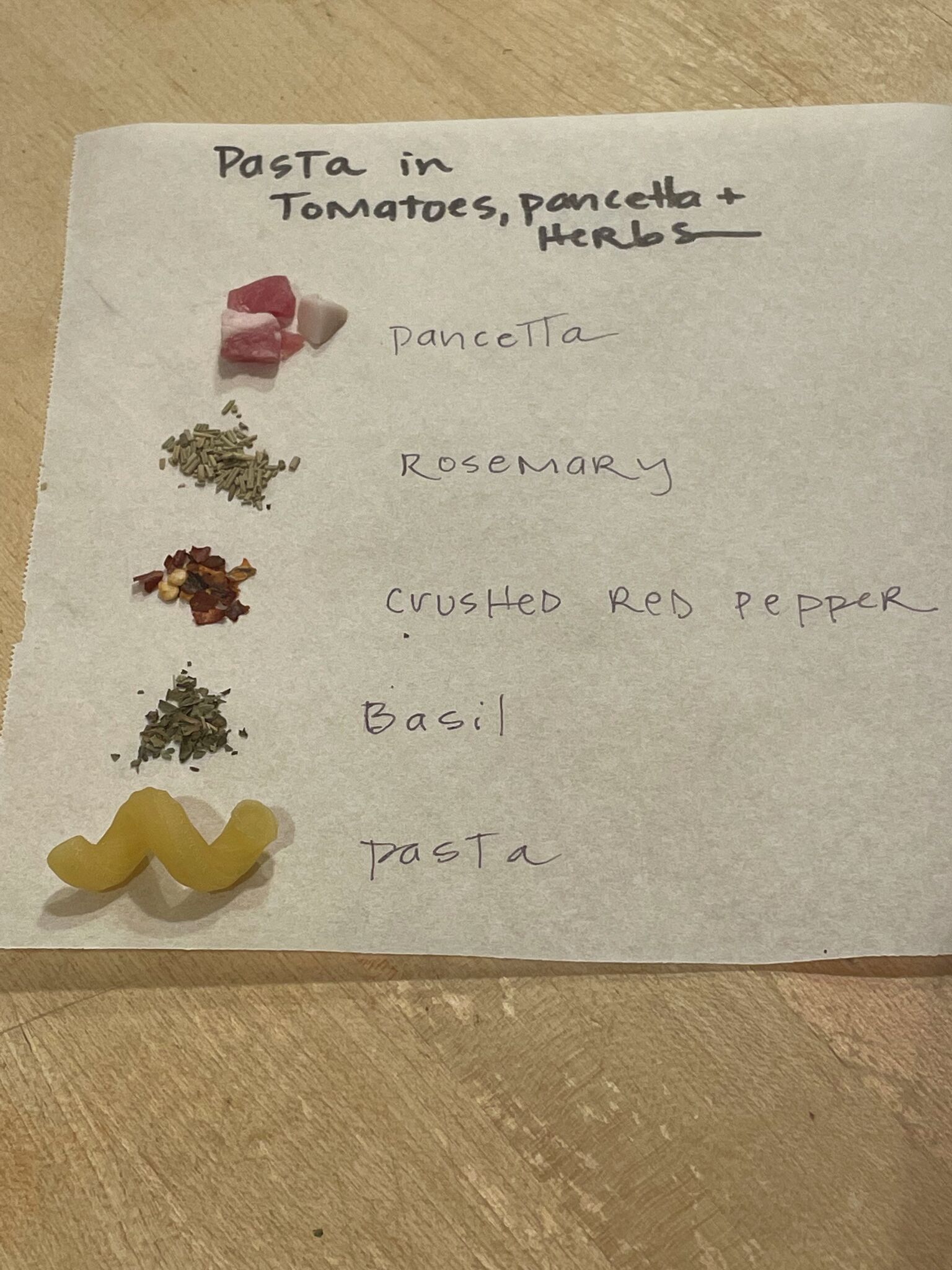
I’m adding here a recipe that is good for serving to young people (read: it has carbohydrates and meat) and all the other generations, too. This is a mostly pantry staple meal, made with simple ingredients and with big rewards. I’m practicing for food like this because Elliot will be home from college soon. The cool thing about this dish is that it’s all cooked together: pasta, tomatoes, pancetta and all. Doing so creates a deeply flavorful dish, where the pasta is infused with the tomato, rather than just sitting in it. The pancetta adds a salty, meaty dimension and it’s all finished with a touch of butter — just a bit — for a silky and slightly creamy finish. You’ll notice this recipe calls for dried herbs. I use plenty of dried herbs all winter and into spring, while I wait for my garden to blossom and give the flavorful bits. Until then, there are lots of flavor to be found in jars of herbs. Dried basil has a soft, sweet taste, just right with tomatoes and salty meat. 

Paul and I both love to have a little bit of baked something around the house, a plate on the counter of something buttery and sweet. It’s usually something that’s good with coffee or tea, and OK to nibble on late at night, too. I like to bake scones, because they come together easily and are indulgent enough — but not over the top (no bellies filled with butter cream.) We all are coconut lovers here, and what I love best about it is its ability to go with anything. It’s equally at home with sugar and chocolate as it is with chiles and herbs. It’s kind of like the friend you admire, who can talk to and get along with anyone, from any walk of life. In these scones, unsweetened coconut is lightly toasted and mixed with lemon, sugar and butter to make a tender, sweet and moist treat, perfect for mornings, later afternoons or as a light dessert. You’ll notice the recipe calls for grating cold butter into the flour mixture, a technique taught to me and which I use for anything I want to be flaky and tender, like pie crust, biscuits and scones. 

Elliot is coming home soon. By the time this page is in print, there will be exactly 25 days until he comes home for the summer. Then, he’ll be home for about 60 days. That’s 60 mornings where he will be searching the fridge for bagels and juice, and 60 nights when I’ll be making square meals with grains, protein, vegetables and dessert. 

Yes, I am counting the days. Once he’s home, I’ll savor those days and nights and try hard to keep the fridge stocked with young people food: all the bread, meat, juice and sugar he can eat. 

Crispy Mushrooms and Melty Cheese

Serves 4

Olive oil

4 cups mixed mushroom caps, sliced

Kosher salt

1 large garlic clove, sliced

2 sprigs fresh thyme (or 1 heaping teaspoon dried)

Black pepper

1 4-ounce wheel brie

Crusty bread, for serving

  • Heat the oven to 350 degrees and place the cheese in a small, oven-proof dish. Bake the cheese for 15 minutes. 
  • In a cast-iron or other sturdy skillet, heat a swirl of olive oil over medium-low heat. Add the mushrooms, season with salt and cook, stirring occasionally, until they release their liquid. Stir in the garlic, thyme and black pepper. Continue cooking until the liquid evaporates and the mushrooms become browned and crisp, 10 minutes. 
  • Remove the cheese from the oven and scrape the mushroom mixture over top. Serve right away, with bread for scooping. 

Pasta In Tomatoes, Pancetta and Herbs

Serves 4

4 ounces pancetta, chopped

1 teaspoon dried rosemary

2 (14-ounce) cans cherry tomatoes, with their juices

3 cups water

Kosher salt

Pinch crushed red pepper

12 ounces pasta, about 3/4 of a standard box

1 tablespoon dried basil

1 tablespoon unsalted butter

Grated Parmesan cheese, for serving

  • In a medium-sized pot set over medium-low heat, cook the pancetta for a few minutes, until it’s rendering its fat and softening up. Add the rosemary and cook until the pancetta is  just beginning to brown around the edges. Remove to a plate and set aside, leaving the rendered fat in the pan. 
  • Add the tomatoes and water, season with salt and bring to a simmer. Add the pasta and stir, cooking for 9 minutes, or just 1 minute less than directed on the pasta package. Stir in the butter and the basil, add the pancetta back to the pan, taste and season with more salt if desired. 
  • Serve right away with plenty of cheese. 

Lemon Coconut Scones

Makes 8

2 cups all-purpose flour

1 tablespoon baking powder

½ teaspoon kosher salt

½ cup sugar

½ cup unsweetened, finely shredded coconut, toasted

Grated zest of one lemon 

1 stick very cold unsalted butter                                                                                                                                                                                                                                                                                                                                                                                                
½ cup half-and-half, plus 1 tablespoon

1 egg

2 tablespoons raw sugar, for topping

  • Heat the oven to 350 degrees and cover a baking sheet with parchment paper. 
  • Whisk together the flour, baking powder, salt, sugar, coconut and lemon zest. Use the large holes of a box grater to grate the stick of butter, then stir it into the flour mixture. Use your fingers to distribute evenly. Pour in the ½ cup half-and-half, add the egg and mix until the dough is just combined.  
  • Turn the dough out onto a work surface and gather it into a ball. Place the dough on the prepared pan and press to a disc that is about 8 inches wide. Use a sharp knife to cut the disc into eight equal pieces (you could also make two smaller discs and create 16 mini-scones.) Separate each piece, just a bit. Brush the tops with the tablespoon of half-and-half and sprinkle the raw sugar over all. 
  • Bake for 20 minutes, until the scones are spongy on top and golden brown on the bottom. If you choose to make smaller scones, bake for 18 minutes. 

Cacio e pepe mac and cheese recipe with a sweet summer granita dessert

Cacio e pepe mac and cheese recipe with a sweet summer granita dessert

Private chef and cooking host Natasha Feldman is adding author to her repertoire.

Feldman joined “Good Morning America” to talk about her new cookbook, “The Dinner Party Project,” and shared two new recipes for cooks at home.

The “Nosh with Tash” creator shared one savory and one sweet treat that will be perfect for summer.

Check out the full recipes below.

Cacio e Pepe Mac and Cheese

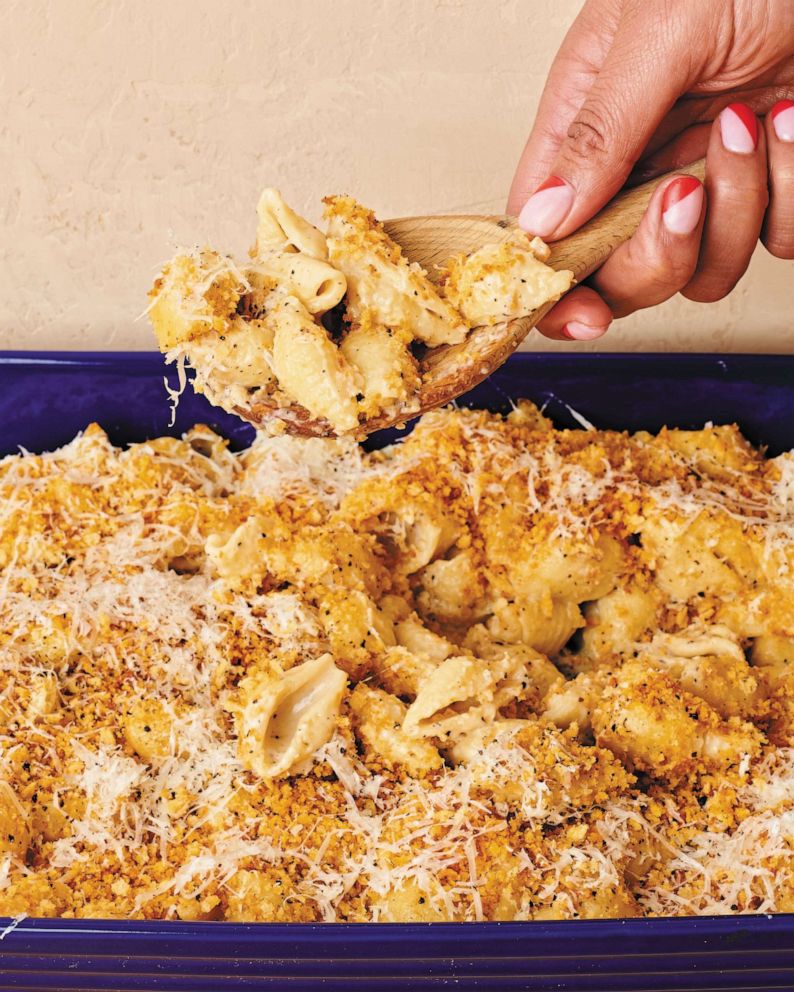
PHOTO: A baking dish of cacio e pepe mac and cheese.

Alana Kysar

A baking dish of cacio e pepe mac and cheese.

“The first time I had cacio e pepe, an Italian pasta dish aptly called ‘cheese and pepper’ because it’s made with only pasta, pecorino, and black pepper, I was skeptical,” she said. “How can so few ingredients be so impressive? Then I believe I blacked out and didn’t return until I had eaten the entire plate of pasta and also the plate. It’s magical to think about how often the best recipes, and the greatest flavors, come from simple, good ingredients. Because mac and cheese is an easy way to make a large quantity of pasta for a crowd, I wanted to bring these two friends together and I’m pretty pleased with the result. This hybrid features a basic white sauce (béchamel) loaded with fresh cracked pepper, lots of pecorino, and toasty bread crumbs to finish!”

1 tablespoon unsalted butter

4 teaspoons salt, divided

1 1/2 tablespoons freshly ground black pepper, plus extra to finish

4 tablespoons (1/2 stick) unsalted butter

4 teaspoons salt, divided

1/4 cup all-purpose flour

1 pound medium-shell pasta

2 cups grated pecorino romano cheese (1/2 pound), plus extra to finish

Preheat oven to 425 degrees.

To make the breadcrumbs: In a large pot over medium heat, melt 1 tablespoon butter. Once melted, add in ¼ teaspoon salt and 1 cup panko bread crumbs. Cook, stirring occasionally, until about half the bread crumbs are toasted a nice golden brown color, about 4 minutes. Set the bread crumbs aside.

To make the mac and cheese: Fill that same pot halfway full with water, add 3 teaspoons salt, and bring to a boil over high heat. While the pasta water is boiling, make the sauce. In a second pot over medium-low heat, add 1 1/2 tablespoons black pepper and stir just until aromatic, about 1 minute. (Yes, the pepper will become super-aromatic really fast. Yes, this is basically DIY pepper spray.) Add in 4 tablespoons butter and heat until melted. Whisk in 1/4 cup flour and 1 teaspoon salt. Slowly, while constantly whisking, add in 3½ cups milk to create a smooth, thin sauce. The sauce will get thicker before it gets thinner; just keep whisking! Crank up the heat to medium and bring the sauce to a boil, stirring occasionally.

This is probably the best time to toss your pasta into the boiling, salty water. Cook the pasta per the instructions on the package. Once the sauce is boiling, reduce the heat to medium-low and cook, whisking occasionally, until it thickens, about 6 minutes. The sauce should be thick enough to easily coat the back of a spoon. Remove the pot from the heat and whisk in 2 cups pecorino.

Once the pasta is cooked, use a slotted spoon to transfer it to the pot containing the sauce. Do not throw away the pasta water. Return the pasta⁄sauce pot to the cooktop and cook over medium-high heat, stirring constantly until all the pasta is well-coated in sauce. Season to taste with additional pasta water. (It’s salty, remember? And starchy, which will help create a sauce that will coat the pasta well. Win-win.)

Pour the mac and cheese into an ungreased 9 x 13-inch baking dish and top with the bread crumbs and a generous sprinkling of black pepper. Bake until the sauce is bubbling and the bread crumbs are a deep golden brown, 15 to 20 minutes.

Finish with some extra pecorino for good measure. Let rest for 5 to 10 minutes before serving—burnt mouths are a dinner-party bummer.

A cheesy pasta dish is always best fresh. In a pinch, you can make the sauce in advance and add pasta water to thin it out just before tossing the pasta in it. The bread crumbs can be made up to a day in advance and stored in an airtight container at room temp.

The less water you use for boiling the pasta, the starchier and more awesome your pasta water will be.

Can you use parmesan if you can’t find pecorino? Yeah, your dish will be less salty and tangy and a little nuttier . . . but still super-tasty.

This has a lot of pepper in it, obviously, so if you have a coffee grinder, that’s the most efficient way to get the quantity needed.

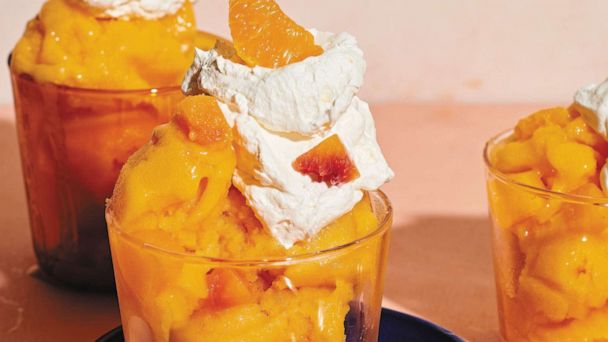
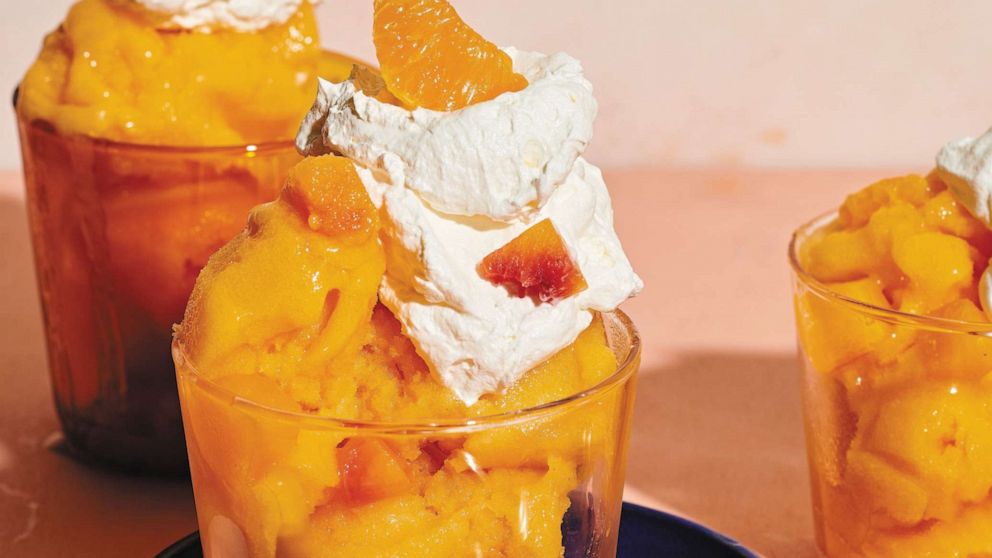
PHOTO: Natasha Feldman's orange dream granita.

Alana Kysar

Natasha Feldman’s orange dream granita.

Serves: 6
Total time: 5 hours ( includes 4¼ hours of mostly hands-off freezing time)

“Granita — an Italian shaved ice — is a miraculous thing,” she said. “It somehow strikes this perfect balance between rich and creamy and refreshing and icy. When I was testing this recipe at first, I made it with just oranges (using Orange Julius as my inspiration). But I found the recipe always remained a smidge too icy and not as exciting as I wanted. I then thought really hard about this nostalgic Orange Julius, Creamsicle flavor profile and I thought, ‘AHA! Peaches!’ and that was when the magic happened. The peaches add subtle sweetness and, more importantly, aid in creating a creamy texture — perfection.”

Ingredients
3/4 cup sugar
3/4 cup fresh orange juice (from 3 to 4 oranges)
1 teaspoon vanilla extract
1/4 teaspoon salt
2 1/4 cups chopped ripe juicy peaches (about 3 peaches)
1 large orange, peeled and seeds removed
1 tablespoon fresh lemon juice

Whipped Topping
1 cup heavy whipping cream
Fruit, like orange or peach slices, optional

To make the granita: Clear room in the freezer for a 9 x 9-inch baking dish. Leave it in there to get cold before using. In a small pot, combine ¾ cup sugar, ¾ cup orange juice, 1 teaspoon vanilla, and ¼ teaspoon salt over medium heat. Stir until the sugar dissolves, about 3 minutes. Set aside. In a blender or food processor, whiz up the peaches and orange with 1 tablespoon lemon juice until smooth, about a minute. Add the sugar mixture from the pot into the blender and blend again.

Pour the granita mixture into the frozen baking dish. Once every hour over the course of about 4 hours (or until the granita is firmly frozen), stir/scrape the mixture with a fork, reaching all the way to the bottom of the dish, to create small shavings.
Optional (but heavenly): Before serving, scoop the granita into a blender or food processor and process it until really smooth and almost tacky, like sorbet. Divide the granita among 6 cups and put the cups in the freezer for 5 to 30 minutes before serving.

To make the whipped topping: Whip the cup of cream to medium peaks using a hand mixer—no sugar needed. Divide the cream evenly over the granita. Top with fruit for flair as desired, and serve.

Tips and Timing
Make the granita up to a week in advance and store in an airtight container in the freezer. Make sure it is fully fluffed before tucking it into bed for the week. Whip the cream up to 4 hours before serving and store in the fridge in a bowl covered with plastic wrap.
If it’s not peach season, use frozen peaches!

Recipe reprinted with permission from “The Dinner Party Project” by Natasha Feldman. Copyright © 2023 by Natasha Feldman. Reprinted by permission of Harvest, an imprint of HarperCollins Publishers.