Indian Cooking Tips: How To Make Street-Style Crispy And Khasta Samosa

Indian Cooking Tips: How To Make Street-Style Crispy And Khasta Samosa

Be it any occasion, festival or celebration, samosa is always the star of snacks platter. We can never get enough of this classic Indian street food, no matter how many times we have it. It’s available in every nook and cranny of the country, and is even prepared in household kitchens. While making samosa is a fairly easy job, but not everyone is able to replicate the same street-style samosa at home. Do you also often find your homemade samosa turning soggy? Do you wonder why the samosas available in all the street shops are so crispy and not yours? You will get your answers today.

(Also Read: How To Make Street-Style Chicken Biryani In Just 30 Mins)

In a video posted on YouTube channel ‘Cook With Parul’ we found out some amazing tips to make street-style samosa that are khasta and crispy. We noted down the recipe with tips for your reference. So without wasting any time. Let’s get started.

Also Read: 5 Tricks To Make Perfect Street-Style Aloo Tikki

Street-Style Samosa Recipe I How To Make Crispy Samosa At Home:

1.Start with dough for samosa. Knead dough with maida, a dash of salt, crushed ajwain and some oil. Some people add ghee but it is oil that gives more crispiness to the samosa than ghee. Add water gradually to knead the dough.

Tip: Always remember to keep the dough tight, not soft. If the dough is soft, the samosa will turn soft soon after frying. Also ensure that the dough is not too rough. 

2. Let the dough rest for around 15 minutes. 

Tip: Spread some ghee on the dough after it has rested for some time. This will ensure that the outer layer is khasta and crispy. 

3. Make stuffing for the samosa. Saute jeera, hing, crushed whole coriander seeds (dhaniya), ginger, green chillies and peas. Then add crushed boiled potatoes. 

Tip: You should roughly crush the potatoes, not grate it or cut into pieces. 

4. Add seasonings like coriander powder, red chilli powder, cumin powder, turmeric powder and garam masala. Also add salt, amchoor powder/chaat masala, kasuri methi and chopped coriander leaves. 

Tip: Roast the masala well. There should not be any water/moisture left. Saute till dry and let the mixture cool down.

5. Now divide the dough into small parts and roll into small thin rotis. Cut each roti into half. Dab some water on the ends so that it doesn’t open while frying. Place stuffing and seal into the shape of a samosa.

Tip: 1 spoonful of aloo mixture is enough. The stuffing should not be too much or too less. Also, leave the rolled and shaped samosas out in the open for some time before frying.

6. Fry the samosas till crispy brown.

Tip: Fry on medium flame so that samosas cook well to the core and turn out crispy. 
And your perfect samosas are ready!

Also Read: How To Make Pav Bhaji In A Pressure Cooker

Watch the complete recipe video of street-style samosa here:
 

Featured Video Of The Day

Bread Pizza Recipe | How To Make Bread Pizza

Cooking Rice Noodles Like A Pro Is Easy With These Tips

Cooking Rice Noodles Like A Pro Is Easy With These Tips

Rice noodles are becoming a favorite because of to their gluten-no cost character. A staple component in Asian delicacies, rice noodles have to have precise expertise to cook them. Like pasta, they arrive in a variety of shapes and dimensions that need varying cooking occasions. If you’re new to making Asian recipes with rice noodles, cooking it can be scary. These noodles need several cooking approaches. On the other hand, with a few handy ideas, you can ace the process

Over the earlier couple of decades, gluten-cost-free diet plans have attained much reputation. If you are a fan of noodles, then take into consideration rice noodles. The use of noodles made from rice might be traced again hundreds of many years in several Asian areas. These are delightful and absolutely free of charge of gluten. If you have not sampled them nonetheless,  the most straightforward way to devour them is at an eatery. But practically nothing beats a perfect handmade meal. Rice noodles can be a true bear for newbie cooks attempting to make this delicacy for the 1st time at property. Inexperienced cooks frequently discover rice noodles disappointing due to the fact they immediately become inedible mush if they usually are not properly organized. Frequent dilemmas contain regardless of whether or not to use sizzling h2o and whether or not to soak the rice noodles to start with. Oh, do not be concerned. In this article are a number of tips of the trade for making perfect rice noodles, just like a skilled Asian chef.

Right before you begin, you must know that rice noodles, like pasta, arrive in different styles and dimensions. So, firstly, discover the form you are utilizing. The three frequent varieties are vermicelli, fresh new rice noodles, flat rice noodles and bigger, wide flat noodles. 

Soaking vermicelli rice noodles

Common Vietnamese and Thai dishes aspect them frequently. Use these ultra-skinny rice noodles in salads, stir-fries, and soups. This variant has a rough texture. Pour area-temperature water into a huge bowl. Drop the vermicelli into the drinking water, and allow it sit for a few minutes until eventually it turns opaque. Pull the noodles aside with your fingers to individual them. Get the noodles drained. When generating noodle soup, carry the broth to a boil, blend in the noodles, and right away take out from warmth. Make confident to provide right away.

Draining the h2o from noodles, Image Resource: Unsplash

Recommendations to prepare dinner flat rice noodles

To start, fill a bowl with drinking water at place temperature. Insert pad thai or flat rice noodles. Go away in the h2o for at minimum 10 minutes. Toss the noodles in a strainer and operate your fingers via them to take away excessive h2o and reduce them from sticking. Coat the noodles in neutral oil, these as rice bran oil, if you is not going to be cooking them right away. When planning a recipe for stir-fries, flat rice noodles must not be boiled. They are inclined to change into a mushy mess when thrown into a wok. Introducing a bit of drinking water to your pan halfway by cooking will permit the noodles to steam cook dinner with no overheating.

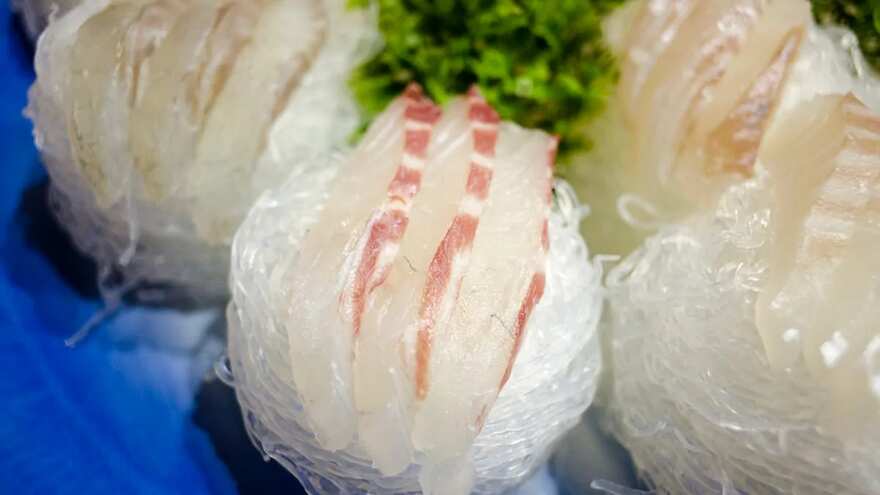
Korean dish with rice noodles and raw fish, Graphic Source: Pexels

On the other hand, new rice noodles are significantly extra delicate than their dried counterparts. These come pre-oiled for sale most of the time. You can usually discover them in your neighborhood supermarket’s refrigerated section or a speciality retailer. Cooks want to work out caution to avoid ruining a batch of clean rice noodles. This variation is fantastic for ending off any meal. You can even convert off the warmth to avoid overcooking refreshing rice noodles. To protect against overmixing, gently toss the noodles with a spatula.

A resolution to the sticking dilemma

Sticky rice noodles are a standard culinary blunder. A fall or two of rice bran oil will reduce cooked noodles from sticking alongside one another as they sit. Drizzle some oil in excess of the noodles and toss them gently to evenly unfold the oil. This must aid in preserving them from clumping alongside one another.

Gordon Ramsay’s Ultimate Cookery Course: Free Video Lessons

Gordon Ramsay’s Ultimate Cookery Course: Free Video Lessons

Our definition of budget cookery may differ from celebrity chef Gordon Ramsey‘s.

True, the world famous restauranteur and cookbook author speaks of cheap cuts with messianic zeal, but the episode of Gordon Ramsey’s Ultimate Cookery Course dedicated to Food on a Budget, above, also finds him paying a call to Lina Stores‘ SoHo location to discuss ham, sausages, and salami with the late “deli maestro” Antonio Saccomani.

It’s not exactly Costco.

Nor can we buy bone-in Lamb with fried bread as a cost conscious dish, though the accompanying milk soaked fried bread – homemade croutons really – will cost slightly less to make this year, as the USDA is predicting that dairy prices will fall after 2022’s historic levels.

As long as we’re at peace with the idea that the man is not ever going to be found stretching rice and beans to feed a family of four for a week when there’s leftover risotto to be resurrected as arancini, the series is a goldmine for chefs of all budgets and experience levels.

It’s not so much the final dishes, as the short cuts and best practices on the journey.

His “chef in Paris” might indeed kill him for uglying up a dish with deliciously humble pan scrapings, but his ironclad maxims to waste nothing and use available ingredients will benefit home chefs with an eye on the bottom line, as well as pros in high end restaurants where profit margins turn on a knife’s edge.

In an age when any fool can Google up dozens of foolproof methods for cooking rice, sometimes it’s reassuring to get this sort of intel straight from the lips of a globally recognized expert. (We’re big fans of Julia Child’s scrambled eggs…)

How does your method measure up against Ramsey’s freely shared secret for cooking perfect rice?

Weigh out 400 grams of rice on a kitchen scale

Rinse with cold water

Season with salt and pepper, and – going up the food chain a bit – 3 pierced cardamom pods and a star anise

Add 600 grams of water (that’s a 1:1.5 ratio for those playing along without kitchen scales or the metric system) 

Bring to a boil, and steam, covered for 8-10  minutes 

No peeking!

Remove pot from heat and fluff

Such universal tips are the most persuasive reason to stick with the series.

Ramsey’s rapid fire delivery and lack of linked recipes may leave you feeling a bit lost in regard to exact measurements, temperatures, and step by step instructions, but keep your ears peeled and you’ll quickly pick up on how to extend fresh herbs’ shelf life and keep cut potatoes, apples and avocados looking their best.

Other episodes reveal how to grease cake tins, prevent milk from boiling over, remove baked-on residue, peel kiwis and mangos, determine a pineapple’s ripeness, seed pomegranates, skin tomatoes, and keep plastic containers stain-free…

Seriously, who needs TikTok when we have Gordon Ramsey 2012?

Ramsey’s advice to bypass expensive wine when cooking those comparatively cheap cuts of meat low and slow gets a chef’s kiss from us. (In full disclosure, we would happily swig his braising vintage.)

As to the slow-cooked duck, truffles and caramelized figs with ricotta, we must remind ourselves that the series is over 10 years old. These days even eggs feel like a splurge..

Perhaps some stress free cooking tips will lower our stress level over this week’s grocery expenditures?

Here too, there seems to be some discrepancy in Ramsey’s definition and the general public’s. His idea of stress free is achieved through lots of prepwork

If your idea of de-stressing involves skinning & deboning a salmon or making homemade fish stock, you’re in luck.

Obviously the end product will be delicious but the phrase “chili chicken with ginger & coriander” activates both our salivary glands and our impulse to order out…

Watch a full playlist of Gordon Ramsay’s Ultimate Cookery Course here.

Related Content 

Watch Anthony Bourdain’s First Food-and-Travel Series A Cook’s Tour Free Online (2002-03)

Watch 26 Free Episodes of Jacques Pépin’s TV Show, More Fast Food My Way

How Cooking Can Change Your Life: A Short Animated Film Featuring the Wisdom of Michael Pollan

– Ayun Halliday is the Chief Primatologist of the East Village Inky zine and author, most recently, of Creative, Not Famous: The Small Potato Manifesto and Creative, Not Famous Activity Book. Follow her @AyunHalliday.

Cambridge students gets cooking with Chef in the Classroom

Cambridge students gets cooking with Chef in the Classroom

Elementary students in the Cambridge School District are shown how to make recipes by a chef, and then they turn around and become the chefs as high school freshmen.

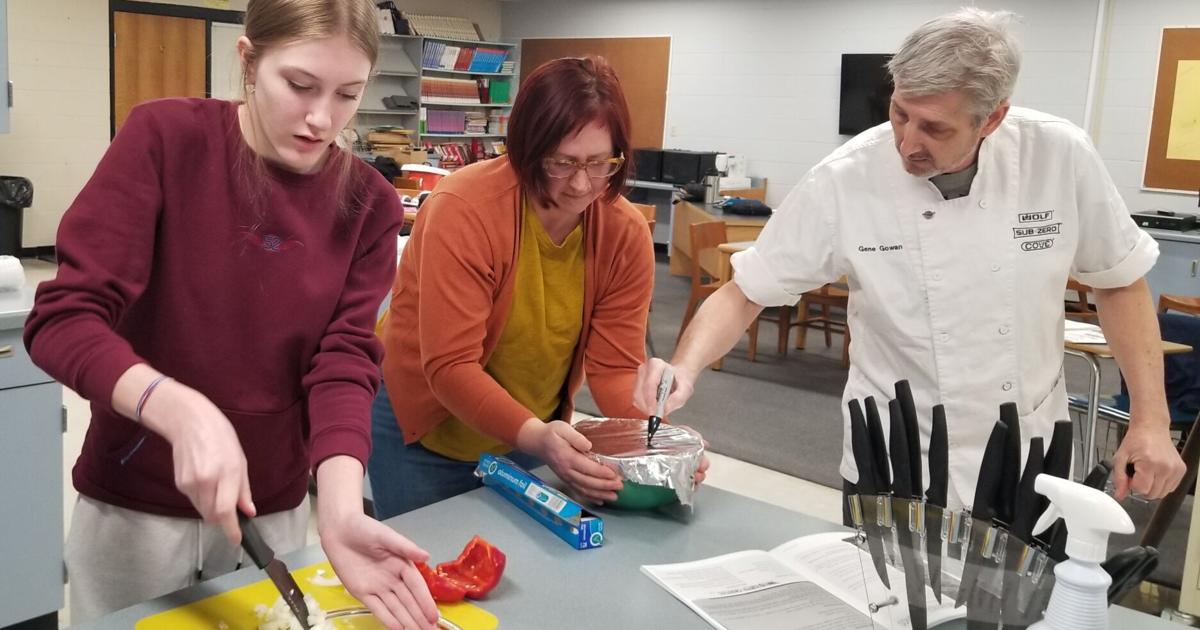
The Chef in the Classroom program brings in a chef to demonstrate for the young students how to make foods that are mostly tied to other lessons they are learning. Then in high school, the chef comes back to again teach students to make those same recipes and others. The students also learn knife skills and other cooking tips.

“It is kind of a full circle kind of thing,” said Gene Gowan, who serves as the chef.

The Chef in the Classroom is one of the programs organized by Cambridge Farm to School, a volunteer-run organization that assists with programming and facilitates hands-on education in the Cambridge School District and the community. Chef in the Classroom takes place once a year for each grade for elementary students, and for four days during freshman health classes. Elementary students receive a copy of the recipe they learned, and each high school student receives a booklet with recipes and cooking tips.

People are also reading…

“I’m learning a lot of new things in the first day,” freshman Maggie Porter said about Chef in the Classroom.

Freshman Josie Punsel said she was learning new recipes and knife safety and was being exposed to different foods.

“The class is pretty interesting,” she said.

Teacher Antione Gray, whose freshman health classes took part in Chef in the Classroom last month, said he sees several benefits to the program.

“The biggest thing is not a lot of families expose kids to cooking,” he said.

While his students might do some food preparation at home, Gray said, it tends to be more simple fare. Not only is the cooking in Chef in the Classroom more elaborate, it also introduces students to different foods, he said.

“The last thing, though, is it gets them out of the classroom,” Gray said.

Instead of sitting in their normal classroom, the students head down to the school’s food lab for hands-on lessons.

Elementary students get to taste what Gowan makes, and the recipes are usually tied into what they are studying. For example, fourth-graders do a Native American unit, so Gowan made a traditional recipe called “Three Sisters Succotash.” Gowan also shows students how math, science and reading tie in to the kitchen, and where particular food items come from and how they are grown.

Gowan runs a small catering business called Canella Culinary and is a chef in the sales training department at Sub-Zero, which has a farm on its property for growing the produce it uses. He said he gets satisfaction from seeing students try new things and exert a little bit of peer pressure to get others to do so.

“I like interacting with the kids,” Gowan said. “I really enjoy helping them learn where their food comes from and the stories behind it.”

The Cambridge Farm to School program started small and has evolved over the years while its leadership changed. In 2017, new co-chairs Jacy Eckerman and Ben Timp formed a new Farm to School Advisory Committee and partnered with the Cambridge-based Rural Schools Collaborative with the goal of becoming a non-profit organization, which was realized in 2019. There are still three of the founding advisory board members on the current board: Eckerman, Timp and Erica Lien.

In 2012, local parents Robin Kantzler and Grace Leonard became the co-chairs and began to focus on Farm to School programs at the elementary school level. Kantzler and Leonard began Farm to School education and enrichment programs, including Chef in the Classroom, which is modeled after Fort Atkinson’s program. Since 2017, Eckerman has worked with teachers in the elementary school to incorporate the chef program with what students are learning in their classrooms. Eckerman and Gowan expanded the program into the high school health class in 2020.

Currently the farm to school program has three prongs: Chef in the Classroom, maintaining its Perennial Edible & Exploration Garden, and environmental projects such as composting and recycling. Efforts to grow produce to use in school lunches include Project Tomato and the raspberry patch.

The garden also is a community educational space used to host collaborative projects focusing on reuse and sustainable materials, and students can use it to work on independent projects. Eckerman made the garden sign by using plastic bottle caps to create the lettering and design. Using an old billboard and poles, a shelter was built out of reused materials, and pallets were reused for a fence around the pumpkins. Future plans call for a table and benches to be built out of reused materials.

Plans for this year include getting all the structures built for the raspberry growing operation, irrigation systems built and installed, and planting and maintaining the garden to grow a variety of pumpkins to be used as decoration for a fall festival, in addition to herbs and perennial plants that help deter pests. Other plans include maintaining and caring for what was planted last year — lavender, bamboo and perennial flower beds. Future plans include building a tool shed using only reused materials.

Cambridge Farm to School holds community work days one Saturday a month starting in May and is always looking for volunteers for its gardening projects and other programs, Eckerman said. But the fall festival has helped get the organization recognition.

After some false starts due to the COVID-19 pandemic, last fall the organization launched the Cambridge Farm to School Fall Festival, which includes a chili cook-off, 5K run, family games, live music and beer tent, and information about the organization. This year it will take place on Oct. 14 at Westside Park. The festival is a community celebration and raises money to support all the Farm to School programs.

“We’ve worked really hard in the last two years to really get our name out there,” Eckerman said.

“I like interacting with the kids. I really enjoy helping them learn where their food comes from and the stories behind it.”

Gene Gowan, chef, Canella Culinary

Tips for cooking rice 3 different ways

Tips for cooking rice 3 different ways

What is the best way to cook rice?

Knowing how to make rice is a valuable skill for not only a professional chef but also a home cook and those looking to slim down their budget by eating at home. From its low cost to wide availability in most places, rice has a plethora of benefits, making it a staple in homes and restaurant kitchens worldwide. 

While rice seems like a simple dish, one wrong step or measurement leads to a gummy texture or burnt pan. Fortunately, with several methods of cooking rice, you can find your preferred choice and eat perfect rice whenever you want. Check out these tips for cooking rice in three different ways.

In this article: Lekue Microwave Rice, Grain and Quinoa Cooker, Cuisinart Multiclad Pro Triple Ply Stainless Saucepan and Aroma Housewares Digital Cool-Touch Rice Cooker and Food Steamer.

Tips for cooking rice

Choose your method

There are numerous ways to cook rice, from the boiling method to the oven to the instant pot. However, the most popular methods are on the stovetop, microwave, or rice cooker. Each yields a slightly different texture and involves a unique process.

Consider the type of rice

Whether you’re new to cooking rice or have made it for years, you might be surprised to hear how many varieties of rice are available across the globe. There are over 100,000 types of rice, each necessary for a particular dish. For example, Arborio rice may look like the classic white rice you’re used to eating, but it’s actually best for risotto. Brown rice contains a heartier texture and usually requires more water than the average white rice recipe. But, if you’re looking to make white rice for your burrito bowl or to accompany the chicken at dinner, opt for medium or long-grain white rice.

Always rinse the rice

Regardless of the variety or method, it’s essential to rinse the rice until the water runs clear. Rice contains starch that, if left on, will result in a gummy mess. It’s most common to rinse the rice in a bowl or with a fine mesh strainer.

How to cook rice in the microwave

You don’t need fancy equipment to cook white rice in the microwave. Although if microwaving is your method of choice, you may want to consider investing in a microwaveable rice cooker. If you use a microwave, it’s best to follow the manufacturer’s instructions. 

Here are the instructions for cooking white rice with only a microwave-safe bowl. 

Directions:

  • Add 1 cup of rinsed rice to a bowl.
  • Add 2 cups of room-temperature water.
  • Microwave it uncovered for 15 to 25 minutes. The time will depend on the wattage of your microwave. For 1000 to 1200 watts, start with 15 minutes. For 700 to 900, start with 20 minutes.
  • The rice is done when the water is absorbed and the rice is tender. If there is still water, add another 1 to 2 minutes until done.

How to cook rice on the stove

Directions:

  • Add 1 cup of rinsed rice to a saucepan.
  • Add 2 cups of water. If you’re cooking a larger batch, use 2 parts water and 1 part rice.
  • Bring the water to a boil. 
  • Cover the pan and reduce the heat to low.
  • Cook at a light simmer for 15 minutes. Do not lift the lid and let the heat escape.
  • Turn off the heat, keep the pan covered and let the rice rest for 10 minutes.

How to cook rice with a rice cooker

Directions:

  • Add 1 cup of rinsed rice to a rice cooker.
  • Add 1 cup of water. If you’re cooking a larger batch, use 1 part water and 1 part rice.
  • Follow the instructions on your rice cooker. For simple models, it may only require turning the power switch on. However, advanced models may have options for white rice, brown rice or quick cook. 
  • Do not open the rice cooker until it’s finished.

Best products to cook rice

Best Lekue Microwave Rice, Grain and Quinoa Cooker

Lekue Microwave Rice, Grain and Quinoa Cooker

Cook rice and grains of all sizes in this tested microwave cooker in minutes. Plus, it’s carefully designed to ensure water doesn’t boil over and cause a mess in the microwave.

Sold by Amazon

Best Cuisinart Multiclad Pro Triple Ply Stainless Saucepan

Cuisinart Multiclad Pro Triple Ply Stainless Saucepan

This saucepan is designed for even heat distribution along the bottom and sidewalls to ensure rice is cooked properly every time. It also comes with a tightfitting lid and cool grip handles.

Sold by Amazon

Best Tiger 5.5-cup Micom Rice Cooker

Tiger 5.5-cup Micom Rice Cooker

Effortlessly cook an entire pot of rice for dinner with just the touch of a button, thanks to this rice cooker. As a bonus, it also features other settings to slow cooker or simultaneously steam while making rice.

Sold by Amazon

Best Aroma Housewares Digital Cool-Touch Rice Cooker and Food Steamer

Aroma Housewares Digital Cool-Touch Rice Cooker and Food Steamer

For user-friendly programming and multifunctional use, consider this all-in-one rice cooker and food steamer. The programmable timer is helpful if you want to set it in the morning and have it ready for dinner.

Sold by Amazon

Best Botan Musenmai 5-pound Calrose Rice

Botan Musenmai 5-pound Calrose Rice

This medium-grain rice is ideal for a plethora of dishes. Plus, the bag outlines foolproof instructions for this particular rice, whether you’re using the stove or a rice cooker.

Sold by Amazon

Want to shop the best products at the best prices? Check out Daily Deals from BestReviews.

Sign up here to receive the BestReviews weekly newsletter for useful advice on new products and noteworthy deals.

Bre Richey writes for BestReviews. BestReviews has helped millions of consumers simplify their purchasing decisions, saving them time and money.

BestReviews spends thousands of hours researching, analyzing and testing products to recommend the best picks for most consumers.

Copyright 2023 BestReviews, a Nexstar company. All rights reserved.

Cooking Tips: 5 Simple Yet Superb Ways To Use Leftover Aloo Gobhi Sabzi

Cooking Tips: 5 Simple Yet Superb Ways To Use Leftover Aloo Gobhi Sabzi

Aloo gobhi is one of the most commonly made vegetables in Indian households, and that’s why it is also found left over most often. We are never surprised to get a sandwich for breakfast, stuffed with last night’s aloo gobhi sabzi. And we don’t mind it because we love this delicious dish anyway. Simple to make and full of flavours, with the right amount of crunch from shallow fried gobhi, this sabzi is at the heart of every traditional Indian thali. But if you want to enjoy this dish again in the next meal in different forms, the following recipes are perfect. 

Here’re 5 Easy Recipes To Use Leftover Aloo Gobhi: 

1. Aloo Gobhi Paratha – Our recommendation 

Stuffed parathas always work their charm on us in the morning. And what can be better than the full-of-flavours stuffing our favourite aloo gobhi sabzi? We suggest adding chopped onions to the sabzi before mashing it to be rolled into the paratha. Trust us, this aloo gobhi paratha will win your heart. 

Also Read: Use Your Leftovers To Rustle Up This Tasty Chicken Salad Wrap

2. Aloo Gobhi Toast 

This dish needs no introduction. It’s almost a staple in every Indian household. All you have to do is place a handful of slightly mashed sabzi on buttered bread slices and toast to make a hearty sandwich. But if you ask us, the best way to make aloo gobhi toast is by toasting the sandwich in ghee on tawa, desi style! 

3. Aloo Gobhi Tikki 

Surprised? Yes, this sabzi can be turned into a lip-smacking crispy tikki that will be a show-stealer in your evening tea-time session. Mix the leftover aloo gobhi sabzi with some mashed boiled aloo, and add some tiny torn bread pieces to absorb the moisture from the sabzi. Throw in some green chillies, salt and chaat masala, and make some scrumptious tikkis from the mixture in a matter of minutes. 

Also Read: 5 Yummy Ways To Use Your Left Over Parathas

604r3foo

Tikki is one of the most loved snacking options. Image Credit: iStock

4. Aloo Gobhi Bread Pakoda 

Another snack from aloo gobhi that will surprise and impress you at the same time. Just replace the usual aloo stuffing with mashed aloo gobhi sabzi, place it in between diagonally cut bread slices, dip in seasoned batter and fry it to golden glory. Bread pakoda never fails to please us, and this version will also do the same. Plus, you have a quicker recipe to make bread pakoda for snacks now! 

5. Aloo Gobhi Roll 

We love rolls for the convenience of eating them. Use last night’s aloo gobhi sabzi to make rolls for your or your kids’ tiffin boxes to eat on the go. Make a large, thin chapati and break pour whisked egg on one cooked side. Flip and cook from the other side again. Once done, smear the roti with green chutney and tomato sauce, and roll it with aloo gobhi sabzi, sliced onions and green chillies inside. You will love this roll for a quick brunch or lunch. 

Also read: How To Use Leftover Food? 5 Interesting Breakfast Recipes You Can Make The Next Day

These recipes will reignite your love for aloo gobhi sabzi. Try them and let us know which one was your favourite.  

Featured Video Of The Day

Honey Chilli Chicken Popper Recipe | How To Make Honey Chilli Chicken Popper