
Borsch without a ‘t’: Kyiv chef uses food to reclaim culture

Borsch without a ‘t’: Kyiv chef uses food to reclaim culture

KYIV, Ukraine — Don’t tell Ievgen Klopotenko that borsch is just food. For him, that bowl of beet-and-meat soup is the embodiment of everything Ukraine is fighting for.

“Food is a powerful social instrument by which you can unite or divide a nation,” said Klopotenko, Ukraine’s most recognizable celebrity chef and the man who in the midst of a bloody war spearheaded what would become an unlikely cultural victory over Russia.

“It’s our symbol,” Klopotenko said. “Borsch is our leader.”

If that seems hyperbolic, you underestimate how intrinsic borsch (the preferred Ukrainian spelling) is to this country’s soul. More than a meal, it represents history, family and centuries of tradition. It is eaten always and everywhere, and its preparation is described almost reverentially.

And now, at the one-year mark of the war with Russia, Klopotenko uses the dish as a rallying call for preserving Ukrainian identity. It’s an act of culinary defiance against one of Moscow’s widely discredited justifications of the war — that Ukraine is culturally indistinct from Russia.

Thanks to a lobbying effort that Klopotenko helped lead, UNESCO issued a fast-track decision last July declaring Ukrainian borsch an asset of “intangible cultural heritage” in need of preservation. Although the declaration noted borsch is consumed elsewhere in the region, and that no exclusivity was implied, the move infuriated Russia.

A Russian foreign ministry spokesperson accused Ukraine of appropriating the dish and called the move an act of xenophobia and Nazism.

But in Ukraine, where until a year ago Russian was as widely spoken as Ukrainian, the declaration legitimized a notion that many had struggled to express.

“People started to understand that they are Ukrainians,” Klopotenko said recently while preparing borsch at his Kyiv apartment. From his living room window, the husk of a high-rise gutted by Russian missiles dominated the view.

“A lot of people started to eat Ukrainian food. A lot of people began to discover Ukrainian traditions,” he said.

Klopotenko, 36, is an unlikely figure to grab headlines during a war that has left hundreds of thousands from all sides dead or wounded. But the television chef and restaurateur — recognizable by an unruly head of curls, rapid-fire dialogue and lively fashion sense — began his mission to elevate Ukrainian food years before Russia’s invasion in February 2022.

Though born in Kyiv, Klopotenko had by age 5 spent months at a time living with his grandmother, who had moved just outside Manchester, England. He’d been raised on bland Soviet-era cuisine, and this was a culinary awakening. He encountered waves of new flavors and ingredients, experiences that set him on a path to restaurant work.

His break came in 2015 when he won the television competition “MasterChef Ukraine.” He parlayed that into study at Le Cordon Bleu in Paris and later a successful campaign to overhaul the Soviet-influenced cafeteria menus in Ukrainian schools.

Always in the background was his sense that Ukrainian food — ditto the country’s culture writ large — wasn’t being true to itself. Much of Ukraine’s identity, he felt, from language and food to fashion and architecture, had been subjugated to Russian influences. Before the start of Soviet rule in 1917, Ukrainian cuisine was more diverse and robustly seasoned. That was quashed in favor of a more uniform palate with socialist sensibilities.

Even after the dissolution of the USSR in 1991, Ukraine’s cuisine didn’t quite bounce back. But Russia’s invasion and annexation of Crimea from Ukraine in 2014 was a trigger. Trying to identify and hold onto Ukrainian heritage, Klopotenko and others began researching pre-Soviet Ukrainian cooking, hoping to return it to the mainstream and give people another toehold for reclaiming their culture.

In 2019, he opened his Kyiv restaurant, 100 Rokiv Tomu Vpered (100 Years Ago Ahead), a reference to what Ukrainian cuisine was before Soviet rule, and what it could be again. The menu draws heavily on flavors and ingredients many have forgotten.

Roasted parsnips with smoked sour cream. Buckwheat bread flavored with chamomile. Banosh, a sort of corn porridge topped with cottage cheese, mushrooms and apples.

And, of course, borsch seasoned with the traditional smoked pears. Written records tie the recipe to Ukraine over many centuries. The effort to have it declared a cultural asset began in 2018, when Klopotenko enlisted the help of Maryna Sobotiuk, an adviser to the Ukrainian Ministry of Information Policy and co-founder of the Institute of Culture of Ukraine.

They assembled a dossier that would become the country’s application to UNESCO. Their work took on greater urgency after Russia’s invasion a year ago and received the blessing of Ukraine’s government.

Like Klopotenko, Sobotiuk said it’s a cause much deeper than dinner.

“Our neighbors want to not just take our territory, but also our culture and our history,” she said, calling culinary heritage a soft power with tremendous potential to motivate and inspire. “It is important to give people something they can align with Ukraine except war.”

Darra Goldstein, a food historian and expert in Eastern European cuisines, agreed, noting that the difficulty of delineating culinary boundaries doesn’t diminish the cultural import of the dishes.

“It’s not simply a matter of claiming ownership of a dish, since the precise origins of any given dish are often difficult to trace. Instead, food goes to the heart of national belonging, how people define who they are,” she said.

Borsch, of course, was just the start for Klopotenko. As more Ukrainians have rejected Russian culture since the war began, and consumption of traditional Ukrainian foods has spiked, he and others see an opening for codifying and celebrating more of their own.

Though UNESCO is unlikely to grant similar status to other Ukrainian dishes — chicken Kyiv, garlicky pampushky bread and latke-like deruny enjoy similar popularity — Klopotenko said the next step is to raise the profile of the country’s cuisine as a whole, at home and abroad.

To that end, his cookbook, “The Authentic Ukrainian Kitchen,” which offers modern takes on traditional Ukrainian cooking, will be released this fall in the U.S.

“The war accelerated the growth of Ukrainian culture,” he said. “Russia wanted to kill the culture with the huge invasion, but it’s worked the other way.”

It’s a sentiment shared widely on the streets of the nation’s capital, where restaurants have revamped menus to replace Russian dishes with Ukrainian ones. They’ve been rewarded with packed dining rooms despite rolling blackouts and frequent air-raid warnings.

At Kyiv’s bustling Volodymirsky market — a warren of stalls offering beets, smoked seafood, caviar and mounds of the local, crumbly cottage cheese — Tetyana Motorna has sold pickled fruit and vegetables for decades. She held back tears as she discussed the war and why Klopotenko’s work to secure borsch as a national treasure for her country matters.

“Borsch is everything for Ukrainians,” she said. “The war has made borsch even more important. … With borsch, we prove that we are a separate nation. It confirms us as a nation.”

—-

J.M. Hirsch is the editorial director of Christopher Kimball’s Milk Street and the former food editor of The Associated Press. This reporting was a collaborative effort between AP and Milk Street. Hirsch can be followed @jm_hirsch.

—-

For more AP stories about Ukraine, go to https://apnews.com/hub/ukraine.

District Bisckuits in North Kansas City has lines out the door for food ‘crafted for the culture’ | KCUR 89.3

District Bisckuits in North Kansas City has lines out the door for food ‘crafted for the culture’ | KCUR 89.3

Guroux Khalifa had $150 to his name when he set out to serve the best biscuits Kansas City ever tasted, he shared.

“A lot of painstaking work, time, love and passion has been put into creating this amazing product. The people who really understand the value and quality of that product have stuck around and grown over the years, even when we have to close down because of COVID,” said Khalifa, the head chef and founder of District Biskuits.

District Biskuits officially opened its first brick-and-mortar location in December 2022 after years of pop-ups and catering. The restaurant, located in North Kansas City, has been highly anticipated, Khalifa said — noting that some of his customers have been around since he started District Biskuits in 2017 as a concept within Lutfi’s Fried Fish on 63rd Street.

“We had a soft opening in November, and there was nothing soft about it,” Khalifa said, laughing. “We had a line out the door and wrapped around the parking lot. The response from the community has been amazing. They’ve really embraced us.”

‘Why you mad though?’

 Guroux Khalifa is the chef and owner behind District Biskuits.

Melo Mile

/

Viewpoint Visuals

Guroux Khalifa is the chef and owner behind District Biskuits.

Before the success of opening a new restaurant, Khalifa was a culinary graduate passionate about cooking and sharing food with others. He worked in restaurants across Kansas City before quickly realizing that he wanted to be his own boss, he shared.

“I started out as a private chef,” Khalifa said, noting that his time at the prestigious Le Cordon Bleu College of Culinary Arts in Atlanta prepared him as a classically-trained chef. “It was difficult because it was only me and my services. I was spread so thin, and there were no opportunities to scale.”

Feeling extreme burnout, Khalifa took a trip to the Dominican Republic. When he came back to the States, he had his epiphany: do something simple, he said.

“My mother would make biscuits growing up, and I’ve taken her process and tweaked it over the past 15 years,” Khalifa said. “… I struck a deal with [Lutfi’s Fried Fish] to operate during the hours that they weren’t open. They opened around 11 o’clock, so I served my chicken biscuits from 7 a.m. to 10:30 a.m.”

Business for District Biskuits in the beginning was extremely slow. Bored in an empty restaurant, Khalifa called into Hot 103 Jamz! to encourage the hosts to try his chicken biscuit sandwiches.

“They had a segment called ‘Why you mad though?’ and I said I was mad because you guys haven’t come and tried these chicken biscuits,” Khalifa recalled. “We were just having a conversation, and afterwards I didn’t think much about it. The next day, a flood of people started coming in.”

District Biskuits went from three customers a day, to 15, to 35, to 50 to a couple hundred customers on the weekends, Khalifa said.

“In a matter of two months, I would have a line wrapped around the building,” he said. “I had to start closing earlier because I was bleeding into the restaurant’s opening time.”

 District Biskuits opened in its first location at 504 Armour Road in December 2022.

Channa Steinmetz

/

Startland News

District Biskuits opened in its first location at 504 Armour Road in December 2022.

When Khalifa started popping up with District Biskuits, his focus was primarily on not letting himself walk away from the business, he recalled.

“Early on in my career, I had an issue with not following through when things weren’t working out the way I wanted them to,” Khalifa admitted. “With this particular concept, I told myself that I was not going to quit. Even if I only served one person a day, I was going to push forward. I am not going to stop.”

Moving to North Kansas City 

It was clear to Khalifa that there was a strong demand for him to open a restaurant of his own.

With the COVID-19 pandemic affecting the food and service industry in 2020, he closed the Lutfi’s Fried Fish pop-up location to focus on catering, other pop-ups and consulting for restaurants.

“That’s how I stayed afloat,” Khalifa said. “This location in North KC became available to me because a friend of mine gave me a call and said that the business he had opened here wasn’t working out. I talked with some of my mentors, and we decided on the spot in November 2021.”

District Biskuits’ colorful location includes both indoor and outdoor seating. Khalifa envisions the space as a place where the community can come together for good food, good music and good drinks, he said, teasing that a cocktail menu is coming soon.

“We have a liquor license, so we will be offering brunch style-cocktails; we also have milkshakes and juices on our beverage menu,” Khalifa noted. “We’re putting a few more tables on our patio and installing our shade sails, lighting and music. We plan to host day parties on the weekends. It’ll be a nice, vibrant environment for people to have a good time.”

District Biskuits’ colorful location in North Kansas City includes both indoor and outdoor seating.

Channa Steinmetz

/

Startland News

District Biskuits’ colorful location in North Kansas City includes both indoor and outdoor seating.

When customers walk into District Biskuits, they are greeted with the tagline “crafted for the culture.”

“It means that this business has been crafted for the culture of Black people, melanated people,” Khalifa explained. “It centers itself around the culture of Kansas City and what it means to be a part of this city.”

From partnering with Black-owned businesses to naming the menu items after iconic Kansas City landmarks and business, Khalifa is passionate about uplifting and celebrating his fellow entrepreneurs, he said.

“If we all help each other, we can win a lot faster,” Khalifa said. “Why rely on outside sources to build up our community when we have so many here?”

The coffee served at District Biskuits is Black Drip Coffee — a local, Black-owned coffee brand. The hot honey sauce on “The Charlie Hustle” sandwich is from Kansas City’s Mother Clucker, and the freshly ground chicken sausage is from Wiener Kitchen in Overland Park.

The most popular menu item at District Biskuits is “The Wonder,” Khalifa’s staple chicken biscuit breakfast sandwich named after the historic Wonder Bread building on Troost Ave.

But don’t ask him to pick his favorite menu item.

“People ask me that all the time, but it’s like choosing your favorite kid — you can’t!” Khalifa said, smiling. “The Wonder is our best seller. The Charlie Hustle sandwich we just introduced has become super popular. People love The Crown, which is our double smash burger. OK, if I had to choose, my personal favorite is the DB Hash; I add a little drizzle of hot honey on the top to give it a kick. Just be sure to come hungry.”

This story was originally published on Startland News, a fellow member of the KC Media Collective.

Asian-inspired food week highlights AAPI tradition, culture

Asian-inspired food week highlights AAPI tradition, culture

“I feel like in the past three years the Colorado AAPI food and beverage scene has really grown and it’s the time now to really showcase that,” said Joanne Liu.

DENVER — The inaugural Mile High Asian Food Week kicked off this week by highlighting dozens of restaurants around the Denver metro – and you can tempt your tastebuds with traditional cultural foods through Feb. 26. 

Ken Wan’s restaurant is featured in food week – the kitchen has always been a place that feels like home to him because the kitchen is where he has always found his family.

“It would be my goal to show you what my family enjoys to eat,” he said. “I think at the end of the day like food and cooking is very much intertwined with our family in general.”

Wan owns Meta Asian Kitchen with his wife, Doris.

“When I see this dish I think of a culmination of two families coming together and putting something on a plate that’s delicious,” he said. 

It’s a dish they’ve created for Denver’s first Mile High Asian Food Week, as well as their menu, inspired by the people closest to them. 

“Stuff that my mom made or Doris’ dad makes, stuff that kind of came through from our family traditions and I want to keep that tradition alive,” said Wan. 

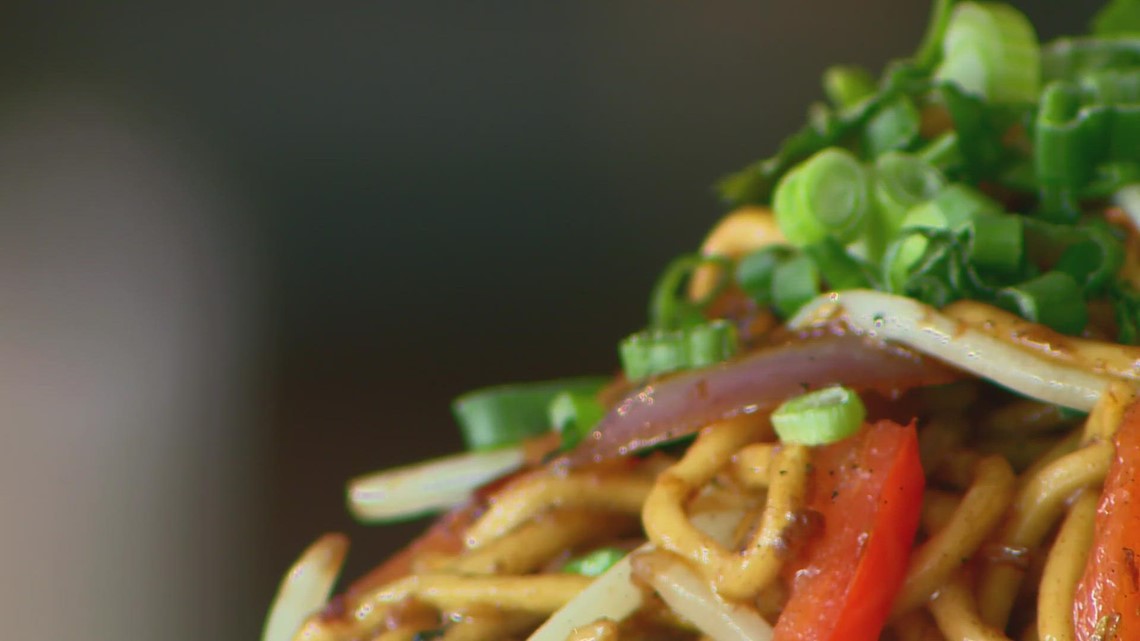
Wan’s XO stir-fried egg noodles will be the restaurant’s special during Mile High Asian Food Week. The XO sauce is a recipe he learned from his father-in-law, who is also a chef. 

“XO sauce is like a luxurious, Cantonese-style sauce,” said Wan. “It has dried scallops, dried shrimp, fried garlic, fried shallots, chili. There’s a lot of good stuff in there.”

For Joanne Liu, Wan’s sister, Chinese food isn’t just about her culture. 

“It symbolizes family and it’s a way we show love and care for one another,” she said. “It kind of brings me back to being raised in a family who owned a Chinese restaurant.”

For 20 years, Joanne and Ken’s parents owned a Chinese take-out spot. 

“They were immigrants to this country and really it was their way to put food on our table, put shelter over our heads, and really care for us and really wanted us to succeed,” said Liu.

“Food was always a big deal to me but my parents never wanted me to pursue it because obviously, they wanted me to be like a doctor, engineer, lawyer, typical Chinese immigrant stuff, you know?” said Wan. 

Ken still decided to follow his heart into the restaurant business and Joanne also found a way to celebrate food, culture, and community. 

“I want to engage in joy. I want to engage in celebration of the Asian culture and Asian foods and this is how I’m engaging with what’s going on today,” she said. 

Liu is the founder of Mile High Asian Food Week.

“Oftentimes people think, ‘Oh there’s no Asian food here. There’s no good Asian food,’ and like granted yeah, it’s not the same as the coastal cities like New York City or San Francisco, but there’s good Asian food here and [we] really want the chance to elevate those businesses,” she said. 

It’s a way to shine a spotlight on the diverse Asian American Pacific Islander (AAPI) food scene she said has been growing in the Denver metro. 

“They all have their own story of why they cook the foods they cook, why they started their businesses… and a lot of times it’s about family,” said Liu. “It’s about their culture, food they grew up on.” 

Around 48 restaurants are signed up for Mile High Asian Food Week, including her brother’s and a food truck called Pho King Rapidos. 

The owner of the food truck, Long Nguyen, also takes a lot of inspiration from his family.

“A lot of the recipes, a good part of the base, or even the specials are from her,” he said.

Long said his menu is Vietnamese at its core, but with an added twist, inspired by special moments in his life. 

“Right here is our sticky icky wings it’s our take on the Cánh Gà Chiên Nước Mắm,” said Nguyen. 

Another dish takes the flavors of a traditional bowl of pho but is wrapped up in a sandwich.   

“It’s an influence from being at home with my family and living in New York with my wife and then every day her and I just thinking about like what can we do differently,” he said. 

He hopes to share his food with the wider community while making his parents proud. 

“You want to take all the hard work that they did and make sure that you’re taking every opportunity they gave you to do something with it,” said Nguyen.

Through food, they’re all carrying on a legacy, lovingly passed down by family. 

“To see that not only am I successful here but I’m happy doing what I do… to her, I think to her it gives her some validation that she was a great mom, you know?” said Wan. 

Both Meta Asian Kitchen and Pho King Rapidos will open brick-and-mortar locations later this year. 

Meta Asian Kitchen is located inside Avanti until April 30. Then, they will open a new location called “MAK Fam” at 39 W. First Ave. in Denver sometime this fall or winter.

Mile High Asian Food Week runs from Wed., Feb 22-26. 

SUGGESTED VIDEOS: Latest from 9NEWS 

https://www.youtube.com/watch?v=videoseries

Mile High Asian Food Week celebrates culture, community and AAPI cuisine

Mile High Asian Food Week celebrates culture, community and AAPI cuisine

Mile High Asian Food Week celebrates culture, community, and AAPI cuisine. Food lovers can experience new Asian dishes, while getting perks like discounts and access to secret menu items. 

“In many Asian cultures, food symbolizes family. It’s the way we show love and care and protection for each other. It’s great that Colorado has this chance to feel inspired, try new foods, go to new spots, or just keep supporting the restaurants they’ve already been supporting,” said Joanne Liu, founder of Mile High Asian Food Week. 

She says it’s also a chance for Colorado to learn about their AAPI neighbors. According to state data, about 3.5{d2b09b03d44633acb673e8080360919f91e60962656af8ade0305d5d8b7e4889} of Coloradans are Asian. 

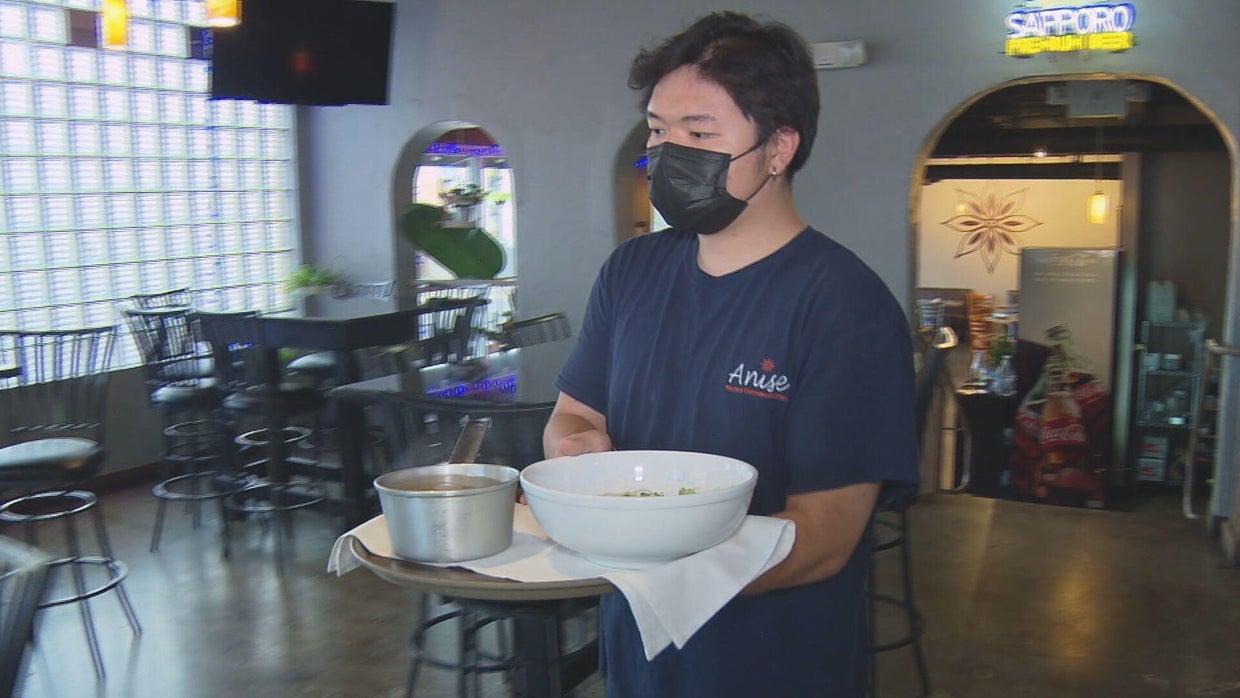
Long Nguyen is a Vietnamese-born restaurant owner in Denver. When he opened Anise, it was a way to make a living. As crowds poured in, Nguyen found a new purpose in sharing not only his love for food but love for his culture. 

“Everybody knows Chinese food or Thai food, Korean food and Japanese food. Vietnamese food is fairly new to the American appetite,” Nguyen said. 

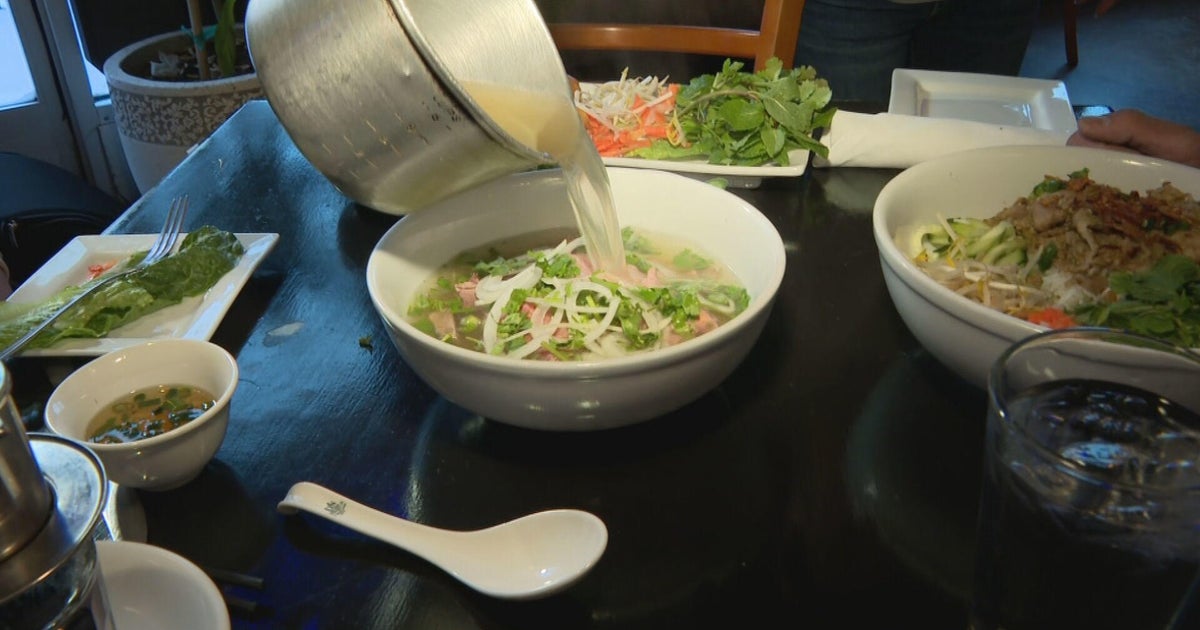
The popularity of pho, a Vietnamese noodle soup, has boomed around Colorado since Nguyen arrived. It’s the most ordered dish at Anise. But when he opened, he didn’t want to have a “pho restaurant.” 

soup.jpg

CBS


“I don’t want to say it’s the best Vietnamese food, but it’s the most famous Vietnamese food. Everybody knows pho!” Nguyen said. “There’s more to Vietnamese food than pho.”

He’s proud to have a menu full of traditional dishes and takes pride in telling diners about each one. Nguyen says he rarely gets to go back to Vietnam now, as his restaurant requires much of his time. 

Food and identity often go hand-and-hand.   

Colorado once celebrated Asian Food Month. When Joanne Liu began the journey to revive Asian Food Week, she had family in mind. 

She showed CBS News Colorado photos from her childhood while enjoying soup dumplings at Chi Lin in Stanley Marketplace, another AFW restaurant. 

Her parents ran a Chinese restaurant. Now, she’s determined to uplift Asian chefs. 

chef.jpg

CBS


“I’m just reminded about my parents and the hard work and perseverance and sacrifices they made in their restaurant,” Liu said. 

She’s overjoyed by #AFW posts on social media of foodies trying new restaurants, especially after the years of challenges this community’s endured.  

“Unfortunately, the bad actors are now very vocal and very brazen about what they do. I think l what is necessary is to speak out against what they say,” said Nguyen. “We are part of American culture now. Asian Food Week is a time to show that our food is different, but it’s good. Different is good.” 

Whether you use chopsticks or a fork, celebrate your plate and the culture it came from. 

“The scene has been growing. It’s very diverse, and it’s just a lot of fun. We really wanted to elevate that,” Liu said. “It’s all about exploration and being able to share that with the Colorado community.”

Mile High Asian Food Week runs through February 26. For more information visit: https://bit.ly/3KvpQtL

Black business owners, farmers create changes in food culture

Black business owners, farmers create changes in food culture

Soul food has been a staple of traditional African-American culture dating back to the 17th century.The tasty, hearty meals often lead to several health problems in the Black community.There are several people in Central Florida hoping to change the food culture, while preserving its soul, by preparing our favorite meals in a healthier way.One of those community members is Zak Wallace. He and his wife, Robyn, opened The Local Green. It’s Disney World’s first Black-owned food truck offering vegan, vegetarian and pescatarian meals.”It’s green, it’s healthy, it’s fun, you know, it’s light,” Wallace said.Located on the West Side in Disney Springs, the Wallace family opened their plant-based food truck in the spring of 2022 with one goal in mind, educating the Black community on ways to eat healthier.”Even though I started with my Black community in mind knowing our culture’s challenges, I was just tired of us being the first to die. Seeing my elders in my village late 60s, early 70s and hearing the stories, it’s like dang, you just retired and now, you know, it’s only five or seven years before you pass? That’s just so unfortunate,” he said.African Americans have higher chances of developing diabetes, hypertension, heart disease and cancer.It’s why Dr. David Spurlock, from AdventHealth Orlando, says small changes to your diet, such as eating plant-based foods, can make a big difference.”If we really stress in the community, prevention, prevention, prevention, yeah, it might taste different until you get it down right. I’d rather have not-as-good of tasting something, or something different, than having a stroke,” Spurlock said. “My community deserves healthier food options as well. It’s not that we don’t like it. It’s just that we haven’t been exposed to it,” Zak Wallace, The Local GreenAbout 20 miles away from The Local Green is another community leader who encourages people to eat green.Ray Warthen and his wife, Cherette, are planting change.They own Infinite Zion Farms. It’s located at the corner of South St. in Parramore. It’s one of Orlando’s oldest, historically Black neighborhoods.Warthen is a fifth-generation farmer. He and his family opened this in honor of his late father who died 13 years ago from prostate cancer.He’s teaching the community how to grow their own organic produce and showing them better ways to eat the food they love.”I’m also letting other people know when they come in here, with that little can of soda and potato chips, we’re not eating that here. I’m not giving you Coca-Cola. Here’s an apple juice, here’s something more healthy,” Warthen said. “We’re seeing the dynamic shift from both the mental mindset and the physical feeling of people eating fresh produce from the farm. They have more energy, they feel more vibrant. I feel it myself,” he said.Warthen, Wallace and Spurlock say it’s about taking proactive steps to avoid these devastating health conditions.”Let’s say you take the macaroni and cheese out and double up on spinach. Well, you’re already talking about positive effects in terms of weight loss and decrease in obesity,” Spurlock said. “Let thy food be thy medicine and let thy medicine be thy food. God created these beautiful, wonderous plants for us to eat and thrive on,” Wallace said.

Soul food has been a staple of traditional African-American culture dating back to the 17th century.

The tasty, hearty meals often lead to several health problems in the Black community.

There are several people in Central Florida hoping to change the food culture, while preserving its soul, by preparing our favorite meals in a healthier way.

One of those community members is Zak Wallace.

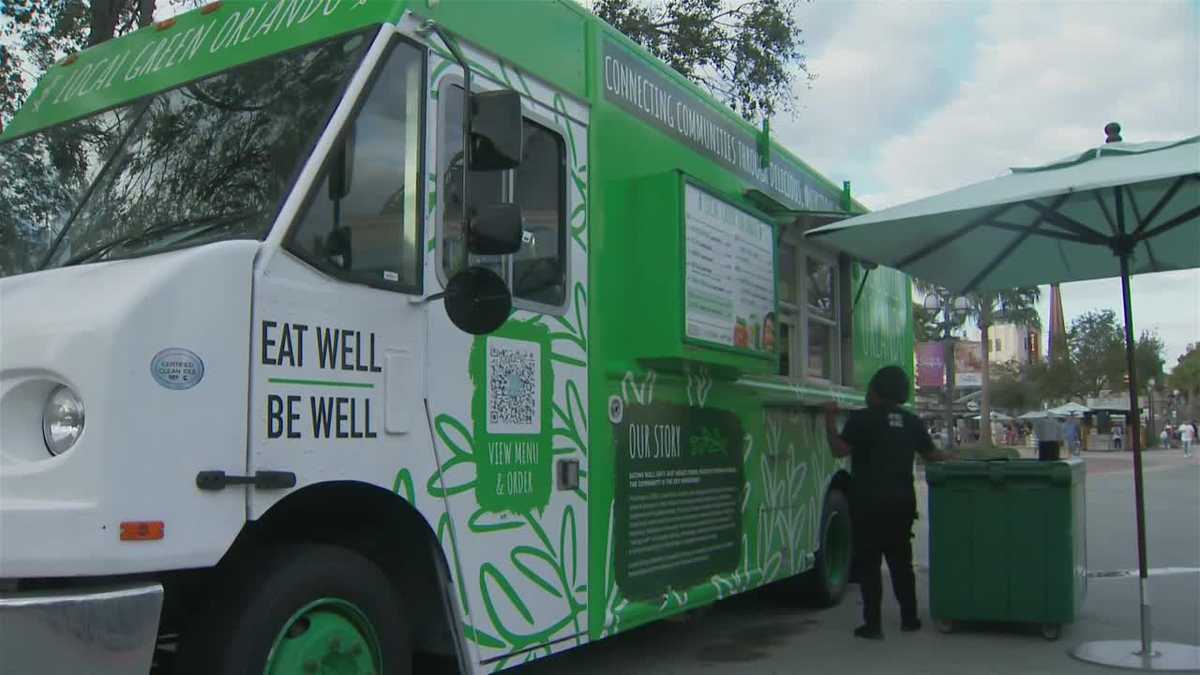
He and his wife, Robyn, opened The Local Green. It’s Disney World’s first Black-owned food truck offering vegan, vegetarian and pescatarian meals.

“It’s green, it’s healthy, it’s fun, you know, it’s light,” Wallace said.

Located on the West Side in Disney Springs, the Wallace family opened their plant-based food truck in the spring of 2022 with one goal in mind, educating the Black community on ways to eat healthier.

“Even though I started with my Black community in mind knowing our culture’s challenges, I was just tired of us being the first to die. Seeing my elders in my village late 60s, early 70s and hearing the stories, it’s like dang, you just retired and now, you know, it’s only five or seven years before you pass? That’s just so unfortunate,” he said.

African Americans have higher chances of developing diabetes, hypertension, heart disease and cancer.

It’s why Dr. David Spurlock, from AdventHealth Orlando, says small changes to your diet, such as eating plant-based foods, can make a big difference.

“If we really stress in the community, prevention, prevention, prevention, yeah, it might taste different until you get it down right. I’d rather have not-as-good of tasting something, or something different, than having a stroke,” Spurlock said.

“My community deserves healthier food options as well. It’s not that we don’t like it. It’s just that we haven’t been exposed to it,” Zak Wallace, The Local Green

About 20 miles away from The Local Green is another community leader who encourages people to eat green.

Ray Warthen and his wife, Cherette, are planting change.

They own Infinite Zion Farms. It’s located at the corner of South St. in Parramore. It’s one of Orlando’s oldest, historically Black neighborhoods.

Warthen is a fifth-generation farmer. He and his family opened this in honor of his late father who died 13 years ago from prostate cancer.

He’s teaching the community how to grow their own organic produce and showing them better ways to eat the food they love.

“I’m also letting other people know when they come in here, with that little can of soda and potato chips, we’re not eating that here. I’m not giving you Coca-Cola. Here’s an apple juice, here’s something more healthy,” Warthen said.

“We’re seeing the dynamic shift from both the mental mindset and the physical feeling of people eating fresh produce from the farm. They have more energy, they feel more vibrant. I feel it myself,” he said.

Warthen, Wallace and Spurlock say it’s about taking proactive steps to avoid these devastating health conditions.

“Let’s say you take the macaroni and cheese out and double up on spinach. Well, you’re already talking about positive effects in terms of weight loss and decrease in obesity,” Spurlock said.

“Let thy food be thy medicine and let thy medicine be thy food. God created these beautiful, wonderous plants for us to eat and thrive on,” Wallace said.

Global affair: OSU students return home with food, culture at International Bazaar | Entertainment

Global affair: OSU students return home with food, culture at International Bazaar | Entertainment

Saani Mohammed stands below a connected banner of international flags in traditional Ghanaian attire and basks in the exposure for his country.

Finally, he feels seen, he said.

Not just a statistic or body walking across Oklahoma State University’s campus.

Mohammed finally acted as if he was home. He was. Kinda.

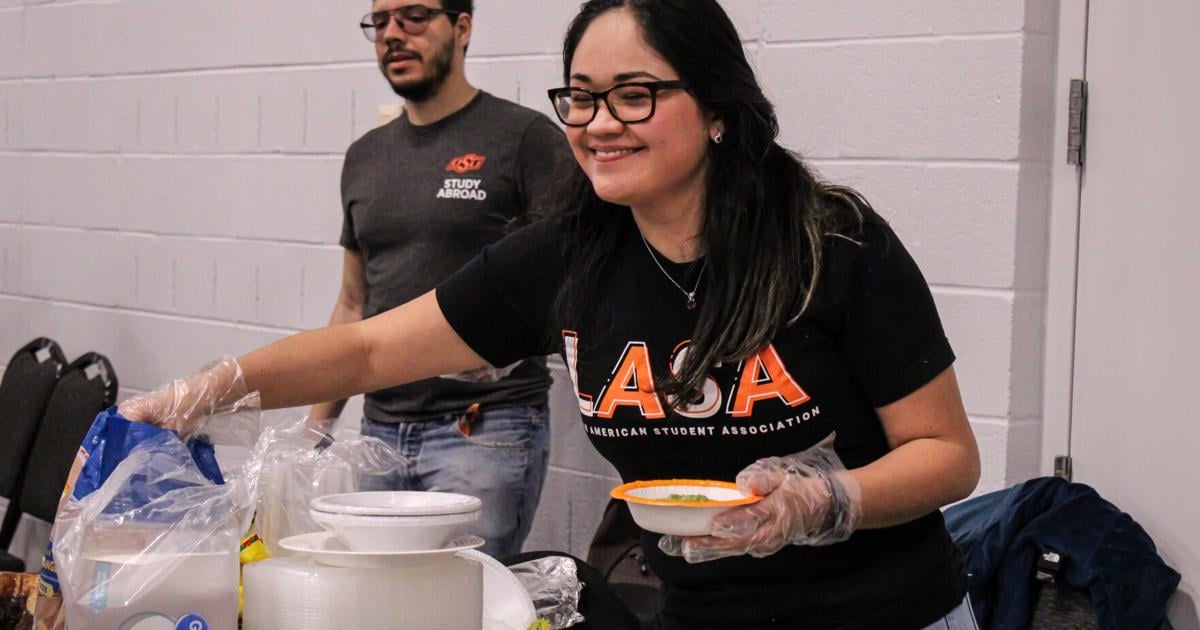
OSU’s International Student Organization hosted its annual International Bazaar, a three-hour fun fest filled with dozens of global foods, strong flavor and music, on Saturday afternoon in the Wes Watkins Center.

“This is big exposure for us,” Mohammed said. “Mostly Africa is not portrayed in the positive light. But we have our food here. Some of us have our national cultural dresses. People seem them and they’re like, ‘Who are these people?’ Then we talk about it. It makes us feel included.”

More than 200 students and Stillwater residents bounced from 12 booths and sampled deserts and entrees from more than 12 countries or regions.

It’s times like Saturday that show food and community can bring folks together.

“The purpose of today is to show Stillwater community the diversity of international students that we have here on campus,” Salome Suarez, International Student Organization president said. “Each area club has prepared different dishes from their own country. We want everybody to see how the dishes are from other parts of the world.”

Foods ranged from the Bangladeshi students’ tandoori chicken to the Latino American students’ cheese empanadas. Lots of desert, too.

Within hours, the exhibit hall transformed into a multicultural kitchen.

Tim Huff, ISO’s adviser, said the event began more than three decades ago. It’s one of ISO’s five annual events and the purpose remains.

“It gives all these students a home,” Huff said. “They feel like they belong when they’re here. You can see them just relax and get into it. It’s very important to see the true nature and culture of these kids because they settle in here.”

Many of the foods appeared similar. Lots of chicken and different meats. But cultural differences appeared in the bite and the food’s preparation.

The Nepalese Student Organization sold about 750 momos, steamed dumplings filled with chicken and vegetables.

Niranjan Pokhrel, a horticulture master’s student from Nepal said the group started making the food at 6 p.m. Friday night. The job wasn’t finished until 3:30 a.m.

It’s no easy task.

“It takes a lot of effort to make that,” he said. “It’s also a skill thing. Not everyone can make it. We had some people’s friends and seniors were really good at making it.”

In Persian culture, kitchens are the realm of women, Yaser Shamsi, Iran native and doctorate student in OSU’s English department, said. Men perform tasks of manual labor such as moving large pots. But women make the food.

“Even looking at the way people celebrate things and the way people cook (are different),” Shamsi said. “You can cook the same ingredient when you just buy it from a shop like Walmart. But when it goes home and it goes through the process that happens in the kitchen, it is the culture, the background and the people that makes the final dish that you see here.”

His wife made most of the Iranian items, such as falafel.

“Having a community of Iranian people just makes me feel as if it’s not that far away from family,” Shamsi said. “OSU is really international friendly. This is one of the events that I really appreciate.”

OSU boasted 1,519 international students in fall 2022, according to OSU international student statistics provided to The O’Colly.

Mayank Talreja, a master’s student from India, represents OSU’s largest international community. The country’s 418 students make it OSU’s biggest international population.

The Indian Student Association also won the event’s best desert content with its kalakand, an Indian milk cake.

“That is what encourages us and gives me a motivation to do something for students,” Talreja said. “We help students transition their life from India to a new country here. It’s been great that a lot of friends are here from our country.”

ISO will also host its Culture Night on April 8 in the Seretean Center for the Performing Arts, another opportunity for OSU’s international students.